Carbapenem-resistant Enterobacteriaceae (CRE) are reported with increasing frequency worldwide, largely due to the global spread of bacterial carbapenemases.Reference Nordmann, Naas and Poirel 1 , Reference Nordmann and Poirel 2 Antibiotic treatment options for CRE involve compounds that are both less effective and more toxic than β-lactam antibiotics.Reference Karaiskos and Giamarellou 3 The most commonly reported CRE are carbapenem-resistant Klebsiella pneumoniae (CRKP), which are responsible for primarily hospital-acquired infections.Reference Pitout, Nordmann and Poirel 4
Falagas et alReference Falagas, Tansarli, Karageorgopoulos and Vardakas 5 reported that bacteremia due to CRE (Escherichia coli and K. pneumoniae) was associated with a 2-fold higher risk of fatal outcome compared to bacteremia with carbapenem-susceptible Enterobacteriaceae.Reference Falagas, Tansarli, Karageorgopoulos and Vardakas 5 Proposed hypotheses for this increased mortality include (1) more severe comorbidities among patients with CRE, (2) increased virulence of carbapenemase-producing strains, (3) lower effectiveness and higher toxicity of drugs used for treatment of these infections, and (4) lower probability of receiving appropriate initial antibiotic therapy (IAT) in patients infected with CRE.Reference Fraenkel-Wandel, Raveh-Brawer, Wiener-Well, Yinnon and Assous 6 – Reference Vardakas, Rafailidis, Konstantelias and Falagas 9
We hypothesized that increased awareness of CRE in recent years may have led to an optimization of empiric treatment and to a reduction in mortality among patients with CRE infections. Therefore, we aimed to assess the relationship between mortality, carbapenem resistance, and appropriateness of IAT among hospitalized adult patients with bacteremia caused by K. pneumoniae, and we sought to determine whether the proportion of CRKP patients receiving appropriate IAT changed over time.
METHODS
This meta-analysis is reported according to the Preferred Reporting Items for Systematic Reviews and Meta-Analyses (PRISMA) guidelines.Reference Moher, Liberati, Tetzlaff, Altman and Group 10
Study Criteria
We included cohort and case-control studies published after 1994 in adult populations hospitalized in acute-care hospitals or intensive care units (ICUs). This period was chosen because carbapenem resistance in K. pneumoniae was very rare before 1995 and because K. pneumoniae carbapenemase (KPC) was first identified in 1996.Reference Walther-Rasmussen and Hoiby 11 We only included studies with mortality data available specifically for patients with CRKP and CSKP bacteremia (ie, ≥1 positive blood culture). In studies with multiple comparison groups, the group most similar to the CRKP patients in terms of resistance was chosen (eg, extended-spectrum β-lactamase [ESBL]–producing isolates were preferred over non-ESBL producers). Authors were asked to provide subpopulation data when these were not included in the published article. Studies involving <10 patients per group, those without a control group or with an uninfected control group, and those not evaluating any of our prespecified mortality outcomes were excluded.
We defined carbapenem-resistance according to the US Centers for Disease Control and Prevention (CDC) criteria: nonsusceptibility to at least 1 carbapenem or documentation that the isolate possesses a carbapenemase. 12 Thus, patients with carbapenemase-producing but carbapenem-sensitive K. pneumoniae were considered CRKP. Because study definitions of CRKP differed, we included studies in which up to 10% of patients in the comparison group had carbapenem-resistant strains, if the study compared carbapenemase-producers to nonproducers. We accepted investigator definitions of appropriateness of IAT.
Search Methods
With the help of a professional librarian we searched the MEDLINE and EMBASE (OvidSP), CINAHL (EBSCOHost), and the Cochrane Database (Wiley) through August 31, 2016. We used medical subject headings (MeSH) and terms for antibiotic resistance AND Klebsiella AND infections AND cohort studies (Supplementary Table S1). Conference proceedings of IDWeek (2014 and 2015), the Interscience Conference on Antimicrobial Agents and Chemotherapy/American Society for Microbiology (ICAAC/ASM, 2014–2016), and the European Congress of Clinical Microbiology and Infectious Diseases (ECCMID) (2014–2016) were also screened. Finally, reference lists of included studies and studies cited in previous reviews were screened.Reference Falagas, Tansarli, Karageorgopoulos and Vardakas 5 , Reference Vardakas, Rafailidis, Konstantelias and Falagas 9 Furthermore, 2 independent reviewers performed abstract screenings and full-text reviews. Reviewers were not blinded for author, institution, or journal names. No language restrictions were applied.
Data Extraction and Management
The following data were abstracted: study design, country, study year(s), type of hospital/wards, patient characteristics (ie, age, Charlson comorbidity index, Acute Physiology and Chronic Health Evaluation II [APACHE II], and Pitt bacteremia score), types of carbapenemases, number of patients receiving appropriate/inappropriate IAT, bacteremia sources, definitions of study groups, and outcomes. For each subgroup, we extracted outcome data, either directly from the article or by requesting additional data from the authors. For studies reporting multivariable analyses, we extracted adjusted odds ratios (OR) for carbapenem-resistance and mortality as well as the variables used for adjustment. Data were entered by 2 independent study authors respectively to ensure accuracy, and discrepancies were resolved by consensus.
Risk of Bias
For this study, 2 independent reviewers assessed each selected study regarding risk of bias using the Newcastle-Ottawa quality assessment scale. Any disagreement was resolved by consensus. Sensitivity analyses were performed among different strata of studies according to risk of bias.
Outcomes
The primary outcome was mortality. Acceptable definitions for mortality included all-cause in-hospital mortality (preferred), all-cause mortality at 14–30 days after diagnosis, or intensive-care related mortality. Secondary outcomes were mortality at days 21–30, infection-attributable mortality, and receipt of appropriate IAT.
Analysis
For our primary outcome, 2 analyses were performed. For the primary analysis, we compared mortality between patients with CRKP and CSKP bacteremia, including subgroup analyses for cohort versus case-control studies and for studies stratified by type of carbapenemase. For the secondary analysis, we compared mortality between patients with and without appropriate IAT. For those with appropriate IAT, we then compared mortality between patients with CRKP and CSKP bacteremia. To assess the impact of IAT on mortality between CRKP and CSKP, a meta-regression using the difference in the proportion of appropriateness of IAT between patients with CRKP and CSKP as a covariate was performed. To assess trends in the appropriateness of IAT over time, we performed a second meta-regression with the midyear of participant recruitment as a covariate. Primary and secondary analyses as well as subgroup analyses were all prespecified in the study protocol, whereas meta-regressions were not.
In all analyses, ORs were used as effect measures, and P<.05 was considered statistically significant. For the primary and secondary analyses, DerSimonian and Laird random-effects models in RevMan 5.3 software (Nordic Cochrane Centre of the Cochrane Collaboration, Copenhagen, Denmark) were used to obtain pooled estimates of the unadjusted and adjusted ORs, including 95% confidence interval (CI).Reference DerSimonian and Laird 13 The Q statistic was used to test for heterogeneity; P≤.10 was considered statistically significant. Heterogeneity was quantified using I2.Reference Higgins, Thompson, Deeks and Altman 14 OpenMeta[Analyst] software was used for the random-effects meta-regressions.
RESULTS
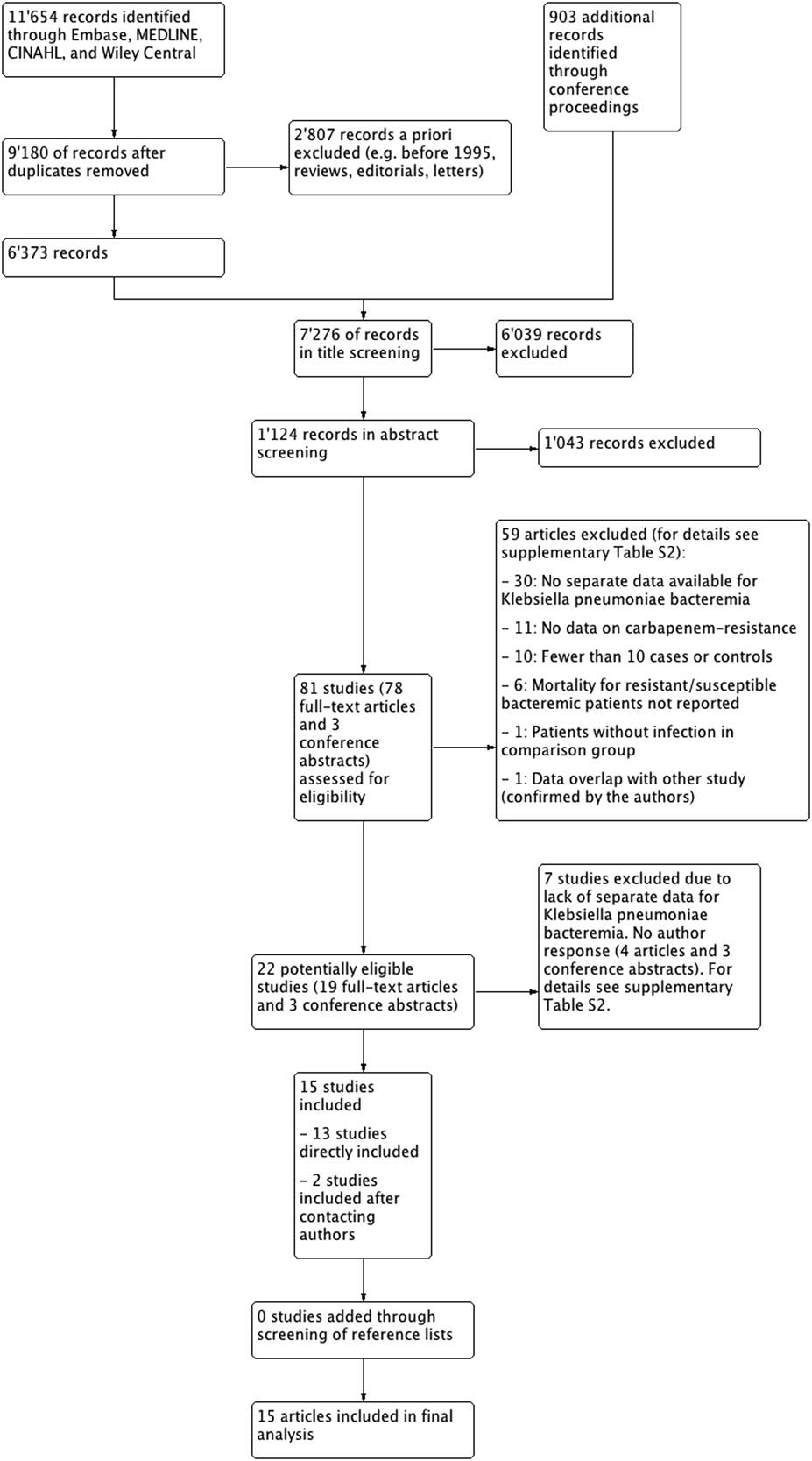
We retrieved a total of 9,180 unique references and 903 conference abstracts. Overall, 81 studies were selected for full-text review, and 13 met our inclusion criteria. For 9 additional studies, authors were contacted for additional data; thus, 2 studies were included after sufficient data were submitted, resulting in a total of 15 included studies (Figure 1). Studies excluded during full-text review are listed in supplementary Table S2.
Results of literature search and flow diagram.

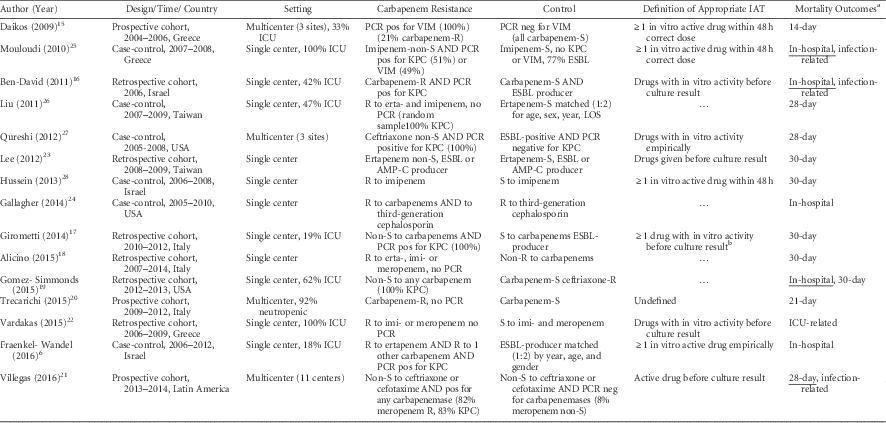
Of the 15 included studies, 9 were cohort studiesReference Daikos, Petrikkos and Psichogiou 15 – Reference Lee, Wu, Lin, Ko, Tsai and Yan 23 and 6 were case-control studies.Reference Fraenkel-Wandel, Raveh-Brawer, Wiener-Well, Yinnon and Assous 6 , Reference Gallagher, Kuriakose, Haynes and Axelrod 24 – Reference Hussein, Raz-Pasteur and Finkelstein 28 One study included only patients with hematologic malignanciesReference Trecarichi, Pagano and Candoni 20 ; all others studied general acute-care populations. The definition of CRKP included nonsusceptibility to at least 1 carbapenem in 8 studiesReference Alicino, Giacobbe and Orsi 18 – Reference Trecarichi, Pagano and Candoni 20 , Reference Vardakas, Matthaiou, Falagas, Antypa, Koteli and Antoniadou 22 – Reference Gallagher, Kuriakose, Haynes and Axelrod 24 , Reference Liu, Chang, Chia, Kuo, Wu and Lee 26 , Reference Hussein, Raz-Pasteur and Finkelstein 28 ; carbapenemase-production in 3 studies Reference Daikos, Petrikkos and Psichogiou 15 , Reference Villegas, Pallares and Escandon-Vargas 21 , Reference Qureshi, Paterson and Peleg 27 ; and carbapenem nonsusceptibility combined with carbapenemase production in 4 studies.Reference Fraenkel-Wandel, Raveh-Brawer, Wiener-Well, Yinnon and Assous 6 , Reference Ben-David, Kordevani and Keller 16 , Reference Girometti, Lewis and Giannella 17 , Reference Mouloudi, Protonotariou and Zagorianou 25 Appropriateness of IAT was reported by 11 studies and was either defined as administration of ≥1 active substance within 48 hours after first blood culture,Reference Daikos, Petrikkos and Psichogiou 15 , Reference Mouloudi, Protonotariou and Zagorianou 25 , Reference Hussein, Raz-Pasteur and Finkelstein 28 or was assessed before susceptibility test results were available.Reference Fraenkel-Wandel, Raveh-Brawer, Wiener-Well, Yinnon and Assous 6 , Reference Ben-David, Kordevani and Keller 16 , Reference Girometti, Lewis and Giannella 17 , Reference Villegas, Pallares and Escandon-Vargas 21 , Reference Vardakas, Matthaiou, Falagas, Antypa, Koteli and Antoniadou 22 , Reference Qureshi, Paterson and Peleg 27 2 studies lacked a definition (Table 1).Reference Trecarichi, Pagano and Candoni 20 , Reference Lee, Wu, Lin, Ko, Tsai and Yan 23 7 studies reported bacteremia sources (Supplementary Table S3).Reference Fraenkel-Wandel, Raveh-Brawer, Wiener-Well, Yinnon and Assous 6 , Reference Daikos, Petrikkos and Psichogiou 15 , Reference Gomez-Simmonds, Greenman and Sullivan 19 , Reference Villegas, Pallares and Escandon-Vargas 21 – Reference Lee, Wu, Lin, Ko, Tsai and Yan 23 , Reference Liu, Chang, Chia, Kuo, Wu and Lee 26 Among 9 studies reporting age by resistance group, 1 reported a marginally higher age (median, 58 vs 55 years) for the CRKP subgroup.Reference Gomez-Simmonds, Greenman and Sullivan 19 The Charlson comorbidity index was available for 4 studies, of which one reported a higher score for patients with CRKP.Reference Lee, Wu, Lin, Ko, Tsai and Yan 23 Pitt bacteremia or APACHE II scores were reported in 4 studies; among them, 3 reported a higher score for CRKP than for CSKP-infected patients.Reference Vardakas, Matthaiou, Falagas, Antypa, Koteli and Antoniadou 22 , Reference Mouloudi, Protonotariou and Zagorianou 25 , Reference Liu, Chang, Chia, Kuo, Wu and Lee 26
Characteristics of and Definitions Used in Studies Included for the Quantitative Synthesis (n=15)

NOTES. IAT, initial antibiotic treatment; ICU, intensive care unit; PCR, polymerase chain reaction; VIM, verona integron-encoded metallo-β-lactamase; KPC, Klebsiella pneumoniae carbapenemase; ESBL, extended-spectrum β-lactamase; HC, healthcare; Pos, positive; Neg, negative; R, resistant; S, susceptible.
a In case of multiple mortality outcomes, the underscored mortality definition was used for the meta-analysis.
b KPC treated with colistin, tigecycline or gentamicin (strain had to be sensitive), together with imipenem, meropenem, or tigecycline.
Carbapenem-Resistance and Mortality
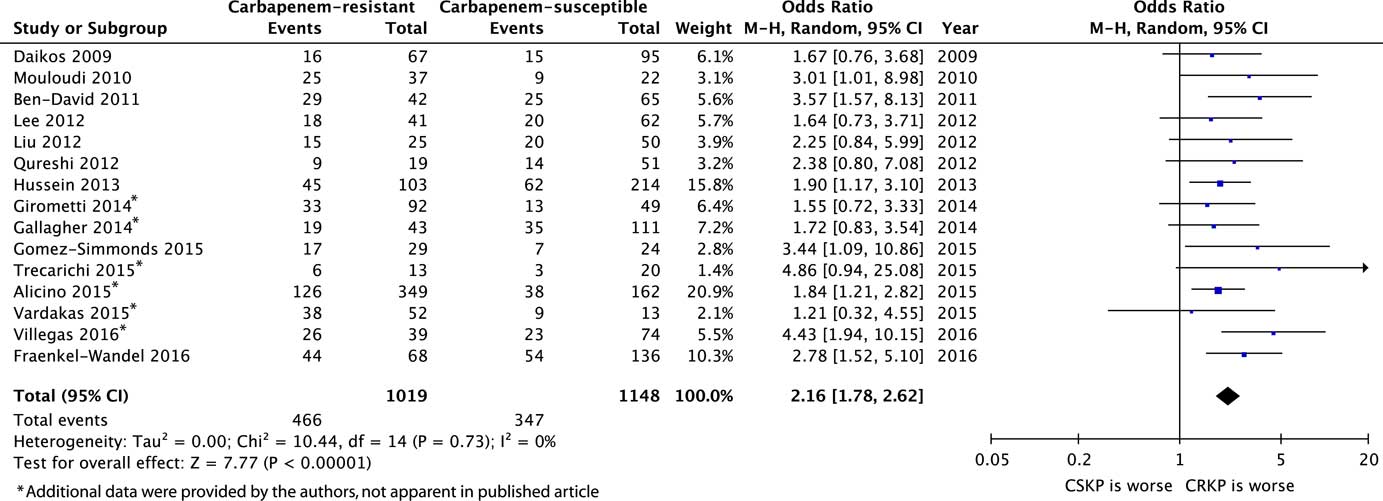
For the primary analysis of the primary outcome, a total of 2,167 patients were observed among the 15 included studies, 1,019 with CRKP bacteremia and 1,148 with CSKP bacteremia. Mortality was higher among CRKP-infected patients than among CSKP-infected patients (unadjusted OR, 2.16; 95% CI, 1.78–2.62; I2=0) (Figure 2). Mortality was similarly increased for CRKP versus CSKP patients among cohort studies (9 studies; 1,288 patients; OR, 2.16; 95% CI, 1.64–2.86) and case-control studies (6 studies; 879 patients; OR, 2.18; 95% CI, 1.63–2.93). The OR for mortality was 2.92 (95% CI, 2.15–3.95) for CRKP versus CSKP patients among studies involving primarily KPC-producing strains (ie, >80%: 8 studies and 838 patients).Reference Fraenkel-Wandel, Raveh-Brawer, Wiener-Well, Yinnon and Assous 6 , Reference Ben-David, Kordevani and Keller 16 , Reference Girometti, Lewis and Giannella 17 , Reference Gomez-Simmonds, Greenman and Sullivan 19 , Reference Villegas, Pallares and Escandon-Vargas 21 , Reference Mouloudi, Protonotariou and Zagorianou 25 – Reference Qureshi, Paterson and Peleg 27 No significant difference in mortality was identified when infections due to verona integron-encoded metallo-β-lactamase (VIM)–producing K. pneumoniae were compared to those due to CSKP (2 studies; 202 patients; OR, 1.51; 95% CI, 0.77–2.94).Reference Daikos, Petrikkos and Psichogiou 15 , Reference Mouloudi, Protonotariou and Zagorianou 25
Forest plot of random-effects model looking at unadjusted mortality of carbapenem-resistant Klebsiella pneumoniae (CRKP) versus carbapenem-susceptible K. pneumoniae (CSKP) bacteremia.

Appropriateness of IAT and Mortality
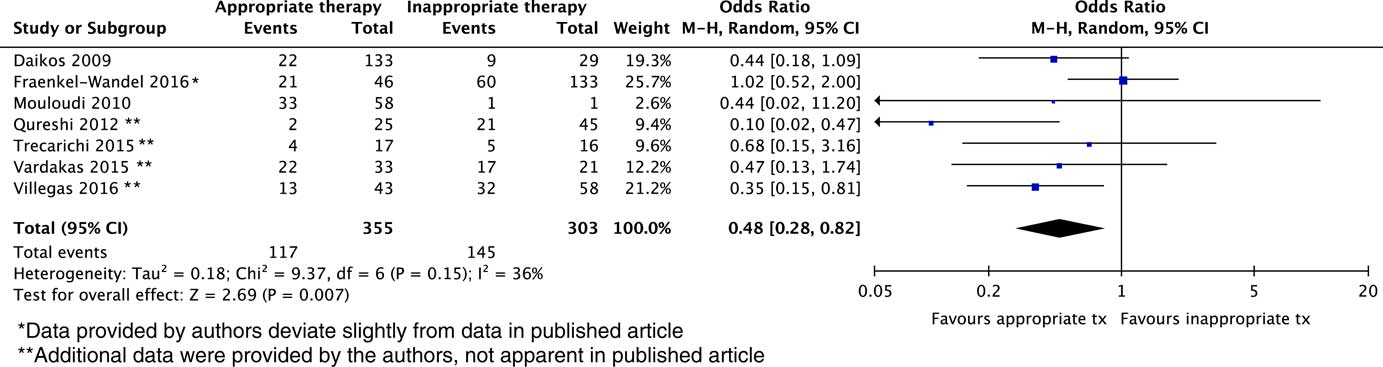
For the secondary analysis of the primary outcome, 7 studies including 706 patients provided information on mortality stratified by appropriateness of IAT.Reference Fraenkel-Wandel, Raveh-Brawer, Wiener-Well, Yinnon and Assous 6 , Reference Daikos, Petrikkos and Psichogiou 15 , Reference Trecarichi, Pagano and Candoni 20 – Reference Vardakas, Matthaiou, Falagas, Antypa, Koteli and Antoniadou 22 , Reference Mouloudi, Protonotariou and Zagorianou 25 , Reference Qureshi, Paterson and Peleg 27 In 3 studies, this information was not available for all patients, resulting in the exclusion of 48 of 706 (6.8%) patients. The 48 excluded patients included 20 CRKP-infected patients (17 of whom died) and 28 CSKP-infected patients (15 of whom died). Compared to inappropriate IAT, appropriate IAT was associated with an OR for mortality of 0.48 (95% CI, 0.28–0.82; I2=36%) (Figure 3). In these 7 studies, the OR for mortality of CRKP compared to CSKP patients was 2.66 (95% CI, 1.83–3.87). In the subgroup of patients receiving appropriate IAT (n=355), the OR was reduced to 2.21 (95% CI, 1.29–3.81).
Forest plot of random-effects model looking at mortality of Klebsiella pneumoniae bacteremia among patients with and without initial antibiotic treatment (IAT).

Multivariable Analyses
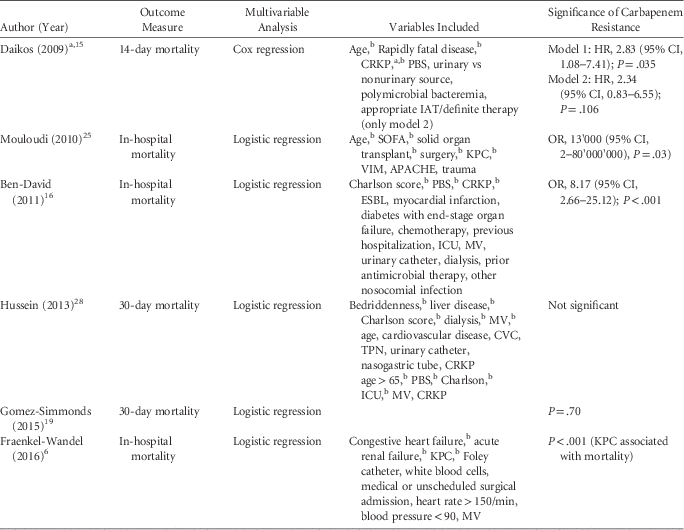
Overall, 6 studies performed multivariable analysis regarding mortality. Among these, 3 studies found a significant association between carbapenem-resistance or KPC-production and mortality.Reference Fraenkel-Wandel, Raveh-Brawer, Wiener-Well, Yinnon and Assous 6 , Reference Ben-David, Kordevani and Keller 16 , Reference Mouloudi, Protonotariou and Zagorianou 25 Another study reported carbapenem-resistance to be significantly associated with mortality only when appropriateness of IAT was not included as a covariable.Reference Daikos, Petrikkos and Psichogiou 15 Furthermore, 2 studies found no association between carbapenem-resistance and mortality.Reference Gomez-Simmonds, Greenman and Sullivan 19 , Reference Hussein, Raz-Pasteur and Finkelstein 28 Other variables associated with mortality were markers of underlying disease severity (in all 6 studies) and age (in 3 of 4 studies where age was a covariate). Because only 2 studies reported the adjusted OR (and one the adjusted hazard ratio) for mortality associated with carbapenem-resistance, we did not calculate a pooled adjusted OR (Table 2).
Results of Studies Performing Multivariable Analyses Regarding Carbapenem Resistance and Mortality Among Patients With Klebsiella pneumoniae Bacteremia

NOTES. ICU, intensive care unit; KPC, Klebsiella pneumoniae carbapenemase; VIM, verona integron-encoded metallo-β-lactamase; ESBL, extended-spectrum β-lactamase; PBS, Pitt bacteremia score; IAT, initial antibiotic treatment; MV, mechanical ventilation; SOFA, sepsis-related organ failure assessment; APACHE, acute physiology and chronic health evaluation; CVC, central venous catheter; TPN, total parenteral nutrition; OR, odds ratio; HR, hazard rate; CI, confidence interval; CRKP, carbapenem-resistant Klebsiella pneumoniae.
a For the multivariable analysis, Daikos et al used a minimal inhibitory concentration of >4 µg/mL for both imi- and meropenem as definition for CRKP (VIM production was nonsignificant in univariable analysis). CRKP was significant in model 1 but not in model 2.
b Significant.
Secondary Outcomes
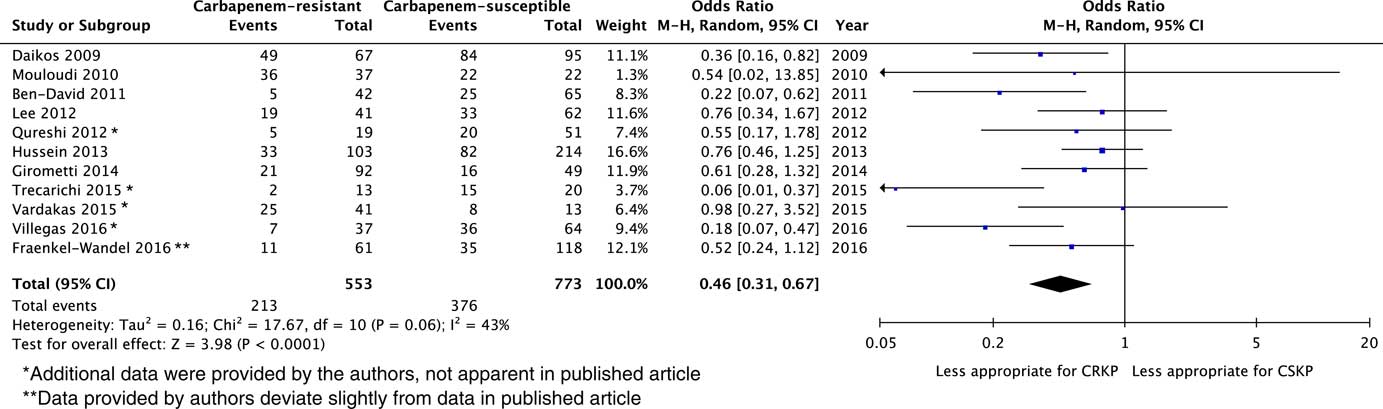
Regarding secondary outcomes, the pooled OR for mortality on day 21 to day 30 of CRKP versus CSKP patients was 2.04 (9 studies; 1,416 patients; 95% CI, 1.61–2.59).Reference Girometti, Lewis and Giannella 17 – Reference Villegas, Pallares and Escandon-Vargas 21 , Reference Lee, Wu, Lin, Ko, Tsai and Yan 23 , Reference Liu, Chang, Chia, Kuo, Wu and Lee 26 – Reference Hussein, Raz-Pasteur and Finkelstein 28 For infection-attributable mortality, the pooled OR was 4.49 (95% CI, 2.02–9.96; 3 studies; 279 patients).Reference Ben-David, Kordevani and Keller 16 , Reference Villegas, Pallares and Escandon-Vargas 21 , Reference Mouloudi, Protonotariou and Zagorianou 25 In addition, 7 studies reported the numbers of appropriate IAT among patients with CRKP and CSKP bacteremia.Reference Fraenkel-Wandel, Raveh-Brawer, Wiener-Well, Yinnon and Assous 6 , Reference Daikos, Petrikkos and Psichogiou 15 – Reference Girometti, Lewis and Giannella 17 , Reference Lee, Wu, Lin, Ko, Tsai and Yan 23 , Reference Mouloudi, Protonotariou and Zagorianou 25 , Reference Hussein, Raz-Pasteur and Finkelstein 28 After contacting the corresponding authors, this information was available for 4 additional studies.Reference Trecarichi, Pagano and Candoni 20 – Reference Vardakas, Matthaiou, Falagas, Antypa, Koteli and Antoniadou 22 , Reference Qureshi, Paterson and Peleg 27 Again, data were missing for 48 patients from 3 studies.Reference Fraenkel-Wandel, Raveh-Brawer, Wiener-Well, Yinnon and Assous 6 , Reference Villegas, Pallares and Escandon-Vargas 21 , Reference Vardakas, Matthaiou, Falagas, Antypa, Koteli and Antoniadou 22 In our pooled analysis, CRKP patients were less likely to receive IAT then CSKP patients (11 studies; 1,326 patients; OR, 0.46; 95% CI, 0.31–0.67; I2=43%) (Figure 4).
Forest plot of random-effects model looking at proportion of patients with appropriate initial antibiotic treatment (IAT) among patients with carbapenem-resistant Klebsiella pneumoniae (CRKP) and carbapenem-susceptible K. pneumoniae (CSKP) bacteremia.

Meta-Regression
All 11 studies reporting the appropriateness of IAT among CRKP and CSKP were included in our meta-regression analyses. The difference in the proportion of patients receiving appropriate IAT in CRKP- and CSKP-infected patients was significantly associated with increased mortality (per 10% fewer CRKP patients receiving IAT; OR, 1.28; 95% CI, 1.04–1.58; P=.02). After adjusting for appropriateness of IAT, the estimate for mortality associated with carbapenem-resistance was 1.62 (95% CI, 1.12–2.37; P=.01) (Figure 5). In the second meta-regression, the proportion of CRKP patients receiving appropriate IAT did not change over time (ie, per year; OR, 0.95; 95% CI, 0.90–1.01; P=.13).
Random-effects meta-regression evaluating the association between carbapenem-resistance and mortality (y-axis), adjusted for the difference in appropriate initial antibiotic treatment (IAT) (x-axis, in percentage points). Circle size represents study sample size.

Risk of Study Bias and Publication Bias
For sensitivity analyses, 5 studies were categorized as moderate riskReference Daikos, Petrikkos and Psichogiou 15 , Reference Alicino, Giacobbe and Orsi 18 , Reference Villegas, Pallares and Escandon-Vargas 21 , Reference Vardakas, Matthaiou, Falagas, Antypa, Koteli and Antoniadou 22 , Reference Qureshi, Paterson and Peleg 27 and 10 were categorized as low risk (Supplementary Table S4). All-cause mortality was comparable between the 2 groups, with a pooled OR of 2.22 (95% CI, 1.74–2.84) for low-risk studies and 2.09 (95% CI, 1.46–2.98) for moderate-risk studies.
Visual inspection of the funnel plot for our primary outcome suggests that smaller studies with an OR for mortality between CRKP and CSKP patients <2 may be missing (Supplementary Figure S1). Indeed, 2 of 10 studies were excluded because mortality data were provided for too few patients; 1 of these 2 studies reported a higher mortality in the CSKP group (5 of 7, 71%) than in the CRKP group (7 of 14, 50%), translating into an OR of 0.4 (P=.35).Reference Bartoletti, Giannella and Caraceni 29
DISCUSSION
Across 15 studies performed over almost a decade on 4 different continents, we found that carbapenem-resistance was significantly associated with higher mortality among hospitalized adult patients with bacteremia due to K. pneumoniae. Our analysis suggests that the continuing challenge of providing appropriate initial antibiotic treatment (IAT) for patients with CRKP bacteremia is an important contributor to this increased mortality.
The median overall case fatality rate associated with bacteremic CRKP infection was 46%. This very high case fatality rate, and the greater mortality associated with CRKP relative to CSKP, were consistent across included studies. Our estimates are lower than those from a previous meta-analysis that used the risk ratio as an effect measure.Reference Falagas, Tansarli, Karageorgopoulos and Vardakas 5 This finding may be due to the different inclusion criteria used by Falagas et al (eg, inclusion of patients with Escherichia coli) or to the categorization of carbapenemase-producing isolates as CRKP irrespective of phenotypic carbapenem resistance. The statistical homogeneity of our results, and fact that the OR for infection-related mortality was higher than the all-cause in-hospital or mortality on day 21 to 30, suggests that the resistant infection itself is mainly responsible for the increased mortality.
Proposed explanations for this increased mortality include (1) more severe comorbidities among patients with CRE, (2) increased virulence of carbapenemase-producing strains, (3) lower effectiveness and higher toxicity of antibiotics required for treatment, and (4) lower probability of receiving appropriate IAT in patients infected with CRE. Our meta-regression suggests that appropriateness of IAT is one of the most important contributors to this effect, and our findings support other work highlighting the importance of IAT in sepsis.Reference Paul, Shani, Muchtar, Kariv, Robenshtok and Leibovici 30 For instance, both Tumbarello et alReference Tumbarello, Viale and Viscoli 31 and Kang et alReference Kang, Kim and Wan 32 found lack of appropriate IAT to be an important predictor of 30-day mortality in patients with CRKP bacteremia. Zilberberg et alReference Zilberberg, Shorr, Micek, Vazquez-Guillamet and Kollef 33 found similar results among patients with sepsis due to MDR gram-negative bacteria.
Our finding that patients with CRKP are less likely to receive appropriate IAT is congruent with other studies of patients with infections due to multidrug-resistant or ESBL-producing gram-negative bacteria.Reference Zilberberg, Shorr, Micek, Vazquez-Guillamet and Kollef 33 , Reference Schwaber and Carmeli 34 Our failure to identify a change over time in the proportion of patients with CRKP who received appropriate IAT emphasizes the challenges of reliably delivering appropriate IAT for these patients while conserving broad-spectrum antibiotics. A measure that would increase the number of patients with appropriate IAT might include integrating more complex risk stratification scores into decisions regarding empiric antibiotic treatment.Reference Tumbarello, Trecarichi and Tumietto 35 , Reference Lodise, Ye, Keyloun, Zhao and Gillard 36 Rapid diagnostic tests have also been shown to reduce the time to appropriate antibiotic administration, at least for methicillin-resistant Staphylococcus aureus. Reference Davies, Gordon, Tong, Baird and Davis 37 Similar approaches for resistant gram-negative bacteria are promising.Reference Evans, Hujer and Jiang 38
The relatively low risk for mortality associated with infections due to CRKP after adjustment for appropriate IAT (OR, 1.6; 95% CI, 1.1–2.4) should be interpreted with caution. The high and imbalanced case fatality in patients with missing data for appropriateness of IAT may have led to an underrepresentation of the severely ill, particularly among CRKP, resulting in an underestimate of the impact of carbapenem resistance. In the subgroup analysis of patients receiving appropriate IAT, the OR for mortality associated with carbapenem-resistance was higher (OR, 2.2; 95% CI, 1.3–3.8). Also, we did not have sufficient information to adjust for the impact of different underlying comorbidities in CRKP and CKSP patients. CRKP patients tended to have more comorbidities; however, in 3 of 5 studies where multivariable models adjusted for underlying illnesses, the OR for mortality comparing carbapenem-resistant and susceptible infections increased in multivariable models.Reference Fraenkel-Wandel, Raveh-Brawer, Wiener-Well, Yinnon and Assous 6 , Reference Ben-David, Kordevani and Keller 16 , Reference Mouloudi, Protonotariou and Zagorianou 25 This finding suggests that differences in underlying comorbidities may not be an important factor in increased mortality.
We identified a consistently higher mortality with CRKP infections, regardless of whether carbapenem-resistance was mediated by carbapenemase production, which argues against the hypothesis that increased mortality in CRKP is attributable to increased virulence associated with carbapenemase production.Reference Fraenkel-Wandel, Raveh-Brawer, Wiener-Well, Yinnon and Assous 6 However, a recent study comparing mortality of bacteremic patients with carbapenemase-positive CRE to those with carbapenemase-negative CRE did show higher mortality in those infected with carbapenemase-producing strains, independent of underlying comorbidities, severity of illness, and differences in antibiotic treatment.Reference Tamma, Goodman and Harris 39 The numbers in this study were small, and the minimal inhibitory concentrations for carbapenems were higher in the carbapenemase-positive group, but this does suggest possible increased virulence associated with carbapenemase production. Our results could provide a partial explanation for the underlying difference in mortality between patients with CRKP and CSKP after adjusting for appropriateness of IAT in our study. Notably, in this context, we identified an increased risk of mortality associated with KPC-producing K. pneumoniae infections but not with VIM producers. This finding may indeed be explained by differences in virulence; another possible explanation is that VIM producers had a lower proportion of carbapenem-resistant strains.Reference Daikos, Petrikkos and Psichogiou 15
The strengths of our analyses are the sensitive search strategy and the restriction to 1 type of infection and 1 particular pathogen. The inclusion of studies from Europe, Asia, and the Americas evaluating data over almost a decade increases the reliability and generalizability of our results. Another strength is the compilation of previously unpublished data regarding the association of appropriate IAT and patient mortality, which allowed us to perform a meta-regression.
Our study has several limitations. Included studies were observational, and some were of only moderate quality. Variability in multivariable methods did not permit us to pool data on adjusted ORs; however, in 4 of 6 studies, carbapenem resistance was independently associated with increased mortality. Studies used different definitions for carbapenem resistance, and the microbiological breakpoints regarding carbapenem resistance for CRE have changed within the observed time period, both for the Clinical and Laboratory Standards Institute (CLSI), and the European Committee on Antimicrobial Susceptibility Testing (EUCAST).Reference Hombach, Bloemberg and Bottger 40 Definitions of appropriateness of IAT were somewhat variable, and exact mechanisms of resistance were not available for a substantial fraction of infecting organisms in several studies. The source of bacteremia was not reported for several studies, and in others there were differences between the source of CRKP and CSKP infections, which may have impacted both the choice of initial antibiotic therapy and mortality. Finally, our power to detect clinically significant differences was limited. Because studies were performed in different geographic areas at different times during the emergence of CPE, our ability to identify changes over time in appropriateness of IAT or mortality due to CRKP was limited.
In summary, carbapenem-resistance is associated with a clinically and statistically significant increase in mortality in hospitalized adult patients with K. pneumoniae bacteremia. Compared to patients with CSKP, those with CRKP are less likely to receive appropriate IAT, which is a major contributor to the difference in mortality between these 2 groups.
ACKNOWLEDGMENTS
We are very grateful to all the study authors who provided additional information: Yohei Doi, Kevin Escandon-Vargas, Jason Gallagher, Daniele Roberto Giacobbe, Ming-Hsun Lee, David Raveh-Brawer, Enrico Maria Trecarichi, Konstantinos Vardakas, and Maria Virginia Villegas.
Financial support: This work was supported by the Swiss National Science Foundation (grant no. 158728 to P.K.).
Potential conflicts of interest: All authors report no conflicts of interest relevant to this article.
SUPPLEMENTARY MATERIAL
To view supplementary material for this article, please visit https://doi.org/10.1017/ice.2017.197.