Introduction
It is well established that depressive and anxiety symptoms often co-occur in patients with a primary diagnosis of either a depressive or anxiety disorder (Brown et al. Reference Brown, Campbell, Lehman, Grisham and Mancill2001; Wiethoff et al. Reference Wiethoff, Bauer, Baghai, Möller, Fisher and Hollinde2010). This particular co-morbid symptomatology can complicate treatment and lead to worsening outcomes (Joffe et al. Reference Joffe, Bagby and Levitt1993; Zajecka & Ross Reference Zajecka and Ross1995; Fava et al. Reference Fava, Alpert, Carmin, Wisniewski, Trivedi and Biggs2004; Wiethoff et al. Reference Wiethoff, Bauer, Baghai, Möller, Fisher and Hollinde2010). Given the high overlap of depressive and anxiety symptoms, it is important to understand the extent to which psychotherapies designed for the treatment of depression can additionally ameliorate symptoms of anxiety.
Although depression and anxiety disorders are classified separately in the DSM, high rates of co-occurring symptoms of anxiety and depression, genetic links, and similarities in the etiology and course of the disorders have led some to consider anxiety and depression as part of a coherent spectrum (Goldberg et al. Reference Goldberg, Krueger, Andrews and Hobbs2009). Despite the evidence of co-occurrence, few studies have examined the efficacy of psychological treatments designed for targeting comorbid anxiety and depressive disorders simultaneously (Smits et al. Reference Smits, Minhajuddin and Jarrett2009). This may be due to treatment efficacy literature being mainly structured by a psychiatric disorder. Thus, effective psychological and pharmacologic therapies have been developed for the treatment of depression or anxiety disorders separately and the effects of these treatments cannot be extended to symptoms of comorbid disorders.
Previous meta-analyses have shown that varied psychotherapies such as cognitive behavioral therapy (CBT), interpersonal psychotherapy (IPT), problem-solving therapy (PST), and possibly psychodynamic psychotherapy, as well as pharmacotherapies such as SSRIs and MAOIs are effective for treating depression (De Maat et al. Reference De Maat, Dekker, Schoevers and De Jonghe2006; Malouff et al. Reference Malouff, Thorsteinsson and Schutte2007; Cuijpers et al. Reference Cuijpers, Geraedts, van Oppen, Andersson, Markowitz and van Straten2011, Reference Cuijpers, Sijbrandij, Koole, Andersson, Beekman and Reynolds2013b). Meanwhile, among anxiety disorders, CBT administered alone or in combination with pharmacotherapy have been the most widely-studied and proven efficacious treatments for anxiety symptoms (Furukawa et al. Reference Furukawa, Watanabe and Churchill2004; Hunot et al. Reference Hunot, Churchill, Silva de Lima and Teixeira2007; Acarturk et al. Reference Acarturk, Cuijpers, van Straten and de Graaf2009; Sanchez-Meca et al. Reference Sanchez-Meca, Rosa-Alcazar, Marin-Martinez and Gomez-Conesa2010; Cuijpers et al. Reference Cuijpers, Sijbrandij, Koole, Huibers, Berking and Andersson2014).
The high prevalence of co-morbid depression and anxiety spurred several meta-analyses examining whether CBT for the treatment of anxiety disorders reduces comorbid depressive symptoms. These meta-analyses demonstrate that CBT for Generalized Anxiety Disorder (GAD), Social Anxiety Disorder, and Panic Disorder significantly reduces depressive symptoms compared with control conditions, with effect sizes ranging from 0.60 to 1.00 (Mitte, Reference Mitte2005; Hunot et al. Reference Hunot, Churchill, Silva de Lima and Teixeira2007; Hofmann & Smits, Reference Hofmann and Smits2008; Acarturk et al. Reference Acarturk, Cuijpers, van Straten and de Graaf2009; Sanchez-Meca et al. Reference Sanchez-Meca, Rosa-Alcazar, Marin-Martinez and Gomez-Conesa2010; Cuijpers et al. Reference Cuijpers, Sijbrandij, Koole, Huibers, Berking and Andersson2014). In addition, a recent meta-analysis comparing the effects of treatments designed for anxiety disorders with depression treatments directly, found no differences between the two treatments on depression outcomes (Cuijpers et al. Reference Cuijpers, Cristea, Weitz, Gentili and Berking2016).
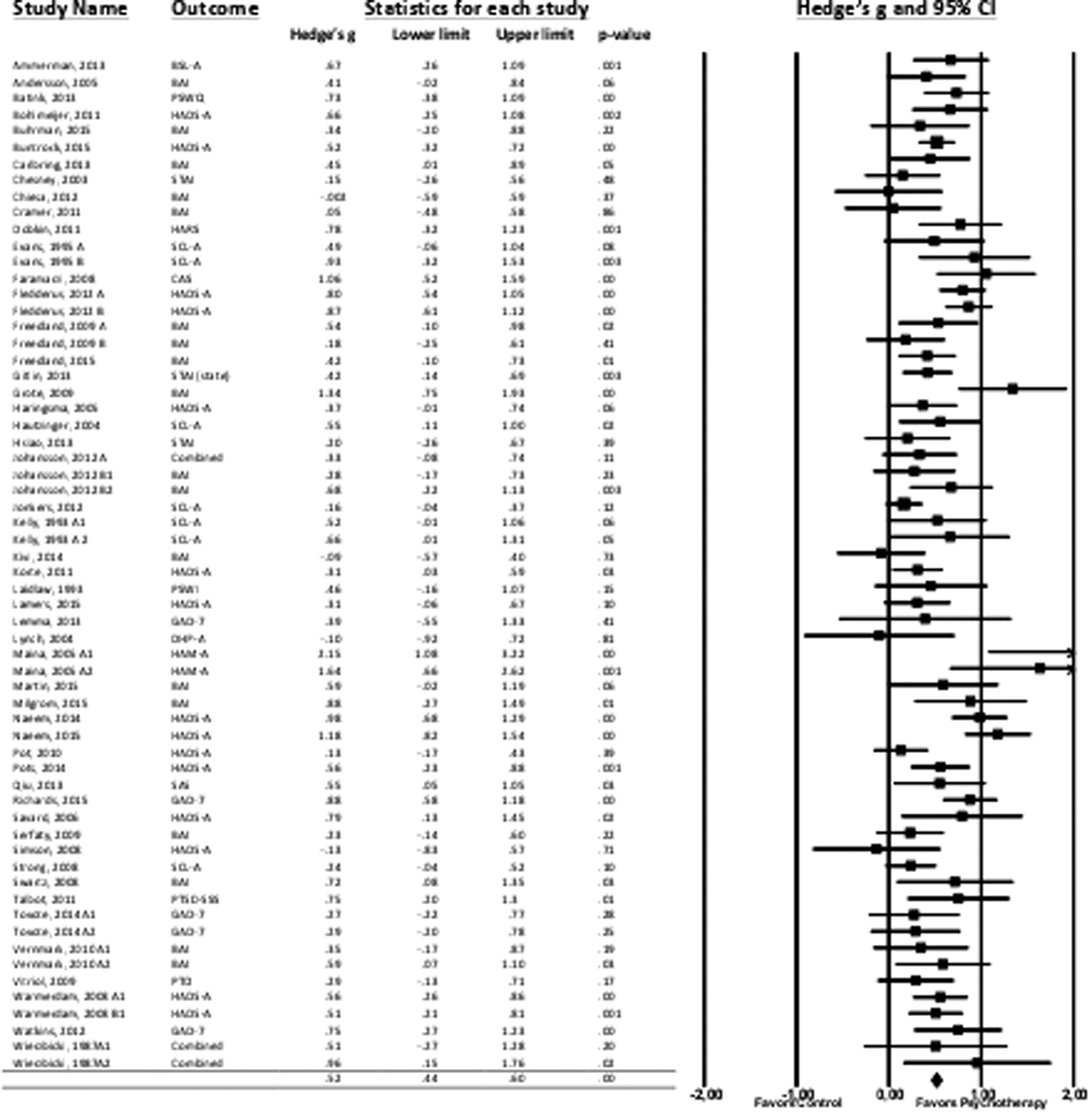
Although this provides robust meta-analytic evidence that treatments designed for and studied in populations with anxiety disorders also significantly reduce depressive symptoms, data on whether typical psychotherapies for depression also reduce symptoms of anxiety have not yet been aggregated. Individual randomized controlled trials (RCTs) have shown mixed results with equal numbers of studies indicating a significant reduction in anxiety symptoms between depression psychotherapy and control conditions (e.g., Serfaty et al. Reference Serfaty, Haworth and Buszewicz2009; Bohlmeijer et al. Reference Bohlmeijer, Fledderus, Rokx and Pieterse2011; Buntrock et al. Reference Buntrock, Ebert, Lehr, Riper, Smit and Cuijpers2015; Milgrom et al. Reference Milgrom, Holt, Holt, Ross, Ericksen and Gemmill2015) as demonstrating no significant difference between depression psychotherapies and control conditions (e.g. Chesney et al. Reference Chesney, Chambers, Taylor, Johnson and Folkman2003; Lynch et al. Reference Lynch, Tamburrino, Nagel and Smith2004; Chiesa et al. Reference Chiesa, Mandelli and Serretti2012; Lemma & Fonagy, Reference Lemma and Fonagy2013; Buhrman, et al. Reference Buhrman, Syk, Burvall, Hartig, Gordh and Andersson2015), and a few studies even finding negative effects (see Fig. 2). Since individual RCTs have limited statistical power, aggregating these data would provide more robust evidence for whether depression psychotherapies ameliorate anxiety symptoms. This information could be valuable to clinicians to better support their treatment selections. Thus, this meta-analysis aims to examine whether the effects of psychotherapies for depression compared with control conditions reduces post-treatment anxiety symptoms, in addition to post-treatment depressive symptoms. It also examines the relationship between depression and anxiety symptoms after psychotherapeutic treatment.
Methods
Identification and study selection
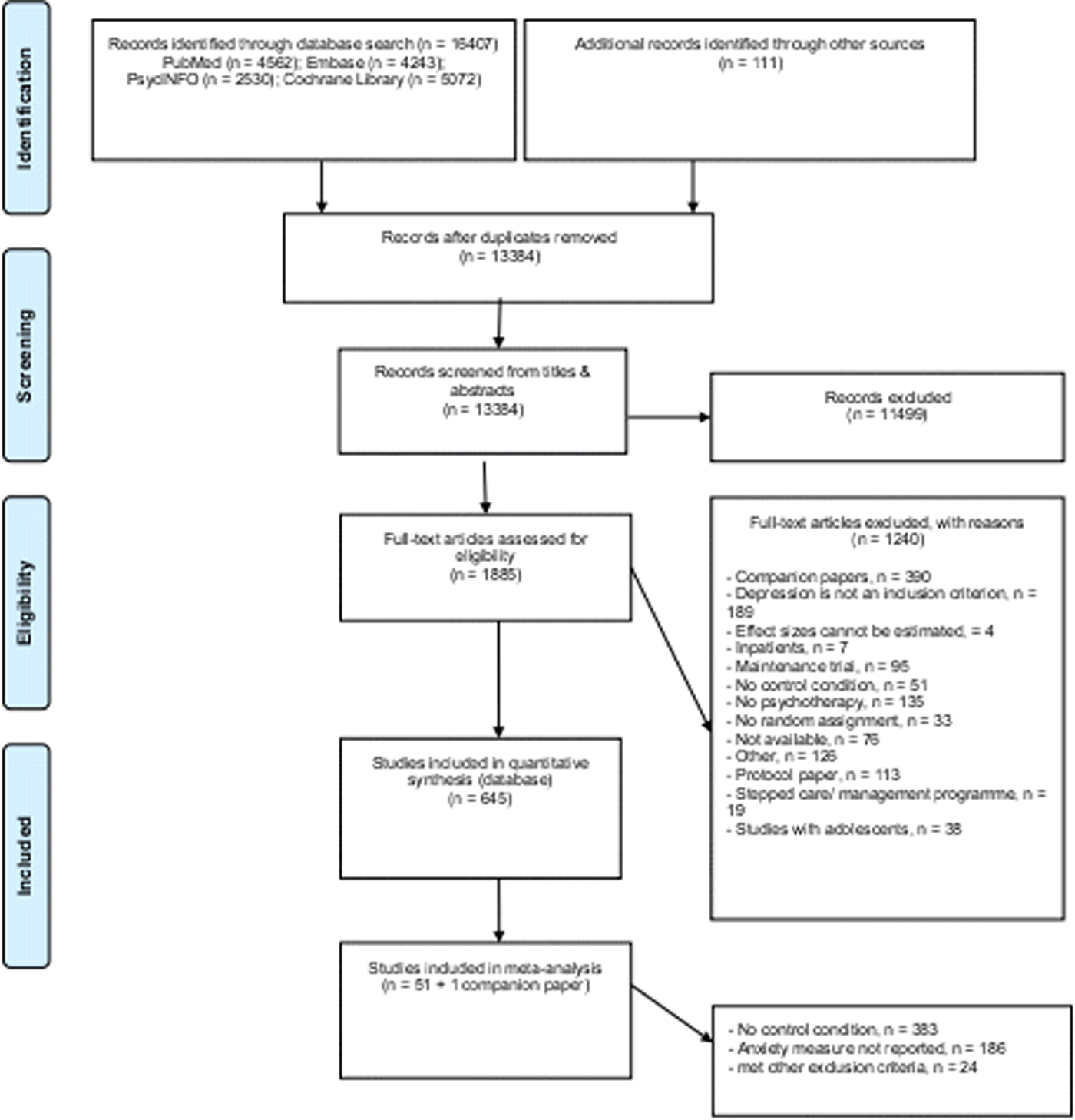
A database of RCTs on psychological treatment of adult depression was utilized for study identification and selection. This database has been described elsewhere (Cuijpers et al. Reference Cuijpers, van Straten, Warmerdam and Andersson2008) and has been used in a series of previously published meta-analyses (http://www.evidencebasedpsychotherapies.org). It was developed through comprehensive literature searches (from 1966 to January, 1 2016). During these searches, 16 365 abstracts were examined for inclusion from PubMed, PSYCinfo, EMBASE, and the Cochrane Registry of Controlled Trials, and previously conducted meta-analyses. Studies on the treatment of adult depression were examined for inclusion. From the 16 407 abstracts identified and examined against inclusion and exclusion criteria (13 384 after duplicate removal), 1885 full-text articles were retrieved for potential inclusion in the database. A total of 645 studies met criteria, were incorporated in the database, and were then checked for inclusion in this meta-analysis.
This study includes RCTs comparing psychotherapeutic treatment aimed at treating depression compared with control conditions (wait-list, pill placebo, care-as-usual, other) for adults with a primary diagnosis or elevated symptoms of depression established by a standardized diagnostic interview or a standardized clinician or self-report measure of depressive symptoms, which utilize a continuous measure of anxiety (general symptoms). No language restrictions were applied. Psychotherapeutic treatment was defined according to previously delineated criteria (Cuijpers et al. Reference Cuijpers, van Straten, Warmerdam and Andersson2008) and included interventions in which either verbal communication between a therapist and client was central to the psychotherapy, or psychological treatment in book or internet format which clients work through individually supported by a therapist (by telephone or e-mail). Usual care was defined as patients receiving the same care they would have received if they never entered the trial.
Studies of patients under 18 years, those with an intellectual disability, or that included less than three treatment sessions were excluded. RCTs not reporting outcome scores on a continuous, validated measure of anxiety symptoms were excluded as effect sizes that pertain to this studies’ main question could not be calculated. Studies of patients with co-morbid medical diagnoses or post-partum depression (special populations) were not excluded.
Quality assessment and data extraction
Quality of the included studies was assessed using four criteria of the Cochrane collaboration's ‘risk of bias’ tool (eds Higgins & Green, Reference Higgins and Green2011) which assesses study validity by examining possible sources of bias within the RCTs. This included assessing whether (1) randomization was adequately generated, (2) and properly concealed, (3) if appropriate measures were taken to prevent knowledge of the treatment allocation to parties, and (4) if appropriate methods for handling missing data were utilized. A negative score was given to a study when quality criteria were not handled adequately or there was not enough information to rate the item.
Data extracted from the published papers included continuous outcomes on depression or anxiety symptom scales and reported characteristics of the studies such as recruitment method (community or clinical populations) target group of the study (adults or other populations like comorbid medical diagnosis or older adults), and depression inclusion criteria. We also reported several facets of the psychological treatment: treatment delivery (group, individual, guided self-help), treatment length and type of psychotherapy (CBT or other). ‘Other’ psychotherapy includes IPT, PST, psychodynamic psychotherapy, and others. These were combined since too few studies are available within each treatment to analyze them separately. Two independent raters performed the data extraction (EW, AK).
Meta-analysis
Effect sizes indicating the difference between psychotherapy and controls on post-treatment anxiety or depression outcome measure scores were calculated (Hedges’ g) by subtracting the average post-treatment anxiety score of the psychotherapy group from the average post-treatment anxiety score of the comparison group and dividing by the pooled standard deviation. The same calculation was conducted for post-treatment depression scores. If post-treatment effect sizes were not reported, mean depression or anxiety symptom change from pre-treatment to post-treatment was utilized. Effect sizes of 0.8 are considered large, 0.5 moderate, and 0.2 and below are considered to be small (Cohen, Reference Cohen1988).
Whenever possible, effect sizes associated with the intention-to-treat samples were utilized, however when not available, completer samples effect sizes were used. If two depression or anxiety measures were utilized, an average effect size was computed. In the event that two control groups were utilized in a single RCT, care-as-usual was chosen as the control as it mimics real-world practice. If CAU was not available, then another control condition was chosen as the comparison. In order to minimize overestimation of the effect sizes, wait-list controls were not chosen as the comparison condition when another control was available because they produce significantly larger effect sizes (Furukawa et al. Reference Furukawa, Noma, Caldwell, Honyashiki, Shinohara and Imai2014).
The Comprehensive Meta-analysis program (CMA version 3) was utilized to calculate pooled mean effect sizes. Random effects models were chosen for all analyses as we expected some heterogeneity between studies. In addition to standardized effect sizes, we also calculated the numbers-needed-to-treat (NNT) using the Kraemer & Kupfer (Reference Kraemer and Kupfer2006) formula. The NNT designates the number of patients that would need to be treated with psychotherapy to have one additional positive outcome compared to a control condition.
Heterogeneity between included studies was examined by calculating I 2, which quantifies heterogeneity uncovered by the Q-statistic and reports (in percentages) how much overall variance is attributed to between-study variance. An I 2 of 25% indicates low heterogeneity, 50% moderate heterogeneity, and 75% indicated high heterogeneity. The 95% confidence interval (CI) around I 2 is also calculated using the non-central chi-square approach in the heterogi module of STATA (Ioannidis et al. Reference Ioannidis, Patsopoulos and Evangelou2007; von Hippel, Reference von Hippel2015).
Subgroup analyses were conducted to determine how varying sample and study characteristics influence the difference between psychotherapy and control conditions in treating anxiety symptoms. Subgroup analysis was conducted using the mixed effect model, which pools subgroups of studies using the random effects model, and tests for subgroup differences by using the fixed effects model. Subgroups were pooled according to the type of psychotherapy utilized, method of recruitment, format of the psychotherapy, study eligibility criteria (including depressive symptoms v. diagnosis of depression), type of control condition, study quality, and inclusion of special populations.
In order to understand the relationship between depression and anxiety outcomes, additional metaregression analyses were conducted in CMA. Bivariate analysis examined the relationship between depression effect sizes and anxiety effect sizes (with anxiety ES as the dependent variable). Multivariate metaregression analysis examined this relationship while controlling for relevant study and clinical characteristics. Because studies included varying lengths of treatments, metaregression analysis examined number of treatment sessions as a moderator of treatment outcomes.
Publication bias was assessed in several ways. First, a funnel plot of effect sizes was visually inspected to see whether a larger number of trials clustered in the bottom right, which would indicate publication bias. Duval and Tweedie's trim-and-fill procedure was utilized in order to calculate the approximate number of studies missing from the funnel plot and transform this into an effect size corrected for publication bias. Egger's test of the intercept, which quantifies bias detected in the funnel plot, was performed using procedures outlined by Hedges & Olkin (Reference Hedges and Olkin1985).
Results
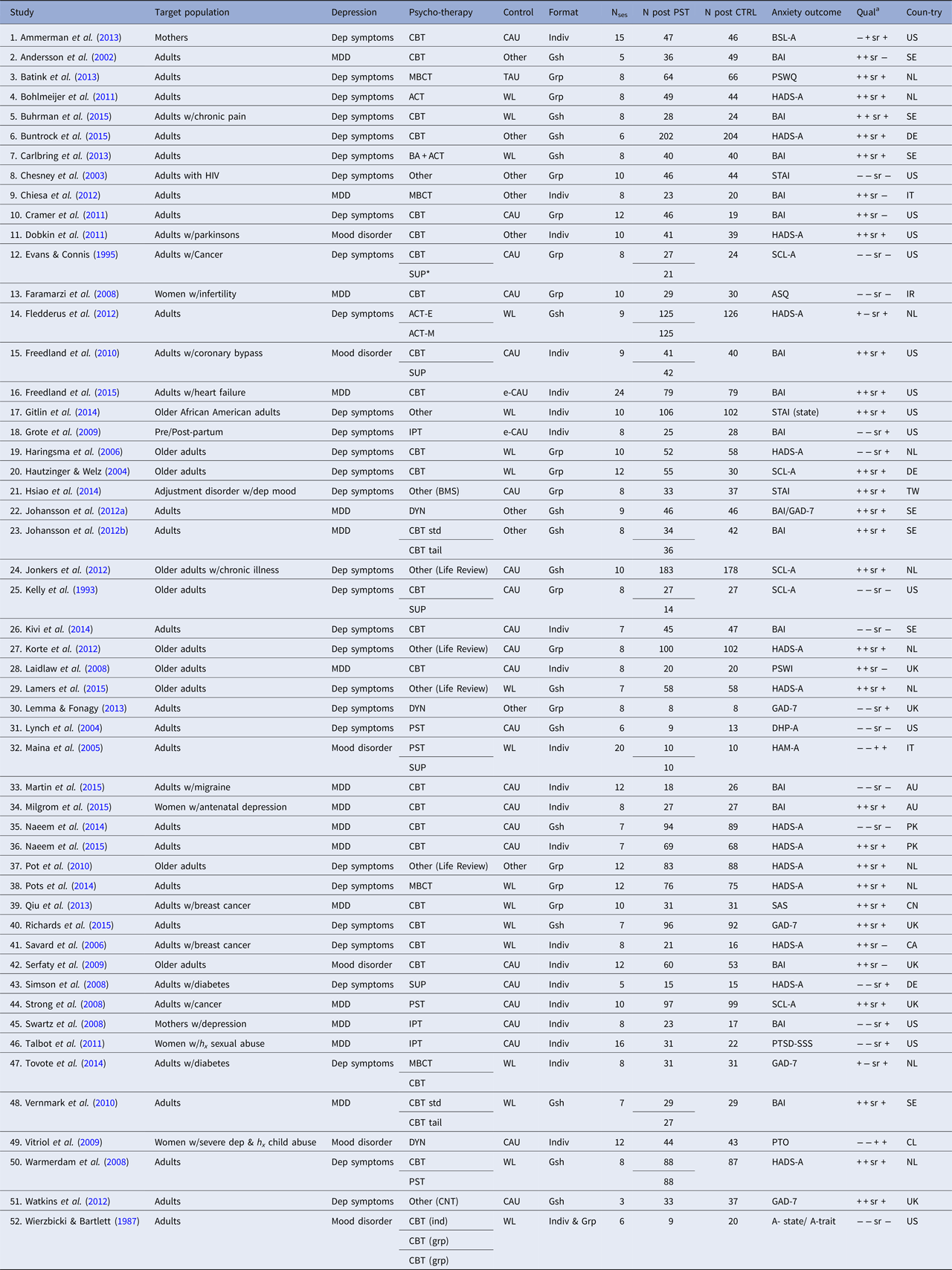
From the 645 studies included in the database, a total of 52 studies met the inclusion criteria for this meta-analysis. Three hundred eighty-three studies were excluded for not having control conditions, 186 studies did not have anxiety measurements, and 24 were excluded for other reasons (e.g. could not extract data). The PRISMA flowchart outlining the inclusion process is presented in Fig. 1. Specific design and clinical characteristics of the studies are presented in Table 1.
Flowchart of study inclusion.

Selected characteristics of studies examining the effects of psychotherapy for depression on anxiety

a In this column a positive or negative sign is given for four quality criteria, respectively: allocation sequence; concealment of allocation to conditions; blinding of assessors for anxiety outcomes; and intention-to-treat analyses.
N at post-treat, N for anxiety analysia; Guided self-help, online or book intervention with contact from therapist.
Clin, Clinical Sample; Comm, Community Sample, CBT, Cognitive Behavior Therapy; ACT, Acceptance and Commitment Therapy; MBCT, Mindfulness Based Cognitive Therapy; SUP, Supportive psychotherapy; IPT, Interpersonal Psychotherapy; BMS, Body, Mind, Spirit Psychotherapy; DYN, Psychodynamic Psychotherapy; Indiv, Individual; Grp, Group; Gsh, guided self-help; CAU, Care-as-Usual; WL, Wait-list; BSL, Brief Symptom Inventory; BDI, Beck Depression Inventory; MADRS, Montgomery Åsberg Depression Scale; CES-D, Center for Epidemiologic Studies Depression Scale ; HAM-D, Hamilton Rating Scale for Depression ; PHQ-9, Patient Health Questionnaire; EPDS, Edinburgh Post-natal Depression Scale; HADS, Hospital Anxiety Depression Scale; GDS, Geriatric Depression Scale; IDS, Inventory of Depressive Symptomatology; SCL, Symptom Checklist; DHP, Duke Health Profile (depression); D30, Depression scale from the Minnesota Multiphasic Personality Inventory. BAI, Beck Anxiety Inventory; STAI, State-trait Anxiety Inventory; ASQ, Anxiety Screening Questionnaire; GAD-7, Generalized Anxiety Disorder 7; PSWI, Penn State Worry Inventory; HAM-A, Hamilton Rating Scale for Anxiety; PTSD-SSS, Modified PTSD Symptom Scale Self-Report; PTO, Post-traumatic Stress Disorder Assessment.
Characteristics of included studies
A total of 52 RCT trials with 62 comparisons between psychotherapy (3072 patients) v. control conditions (2665 patients) and reporting post-treatment anxiety symptom inventories were included in this meta-analysis. Out of the 52 included trials, 22 were aimed at adults in general, nine trials focused on older adults, 13 trials included adults with medical diseases, and eight trials were aimed at another specific group such as post-partum depression. A total of 30 studies recruited participants from community sources, 12 trials recruited strictly from clinical populations, and 10 trials recruited in another manner or used a combination of methods.
Various psychotherapies for depression were examined in the included trials. Of the 62 comparisons about half (n = 33) utilized CBT as the psychotherapy and 29 examined other types of psychotherapy (Table 1). The control condition comparison groups also varied: care-as-usual was examined in 29 comparisons, wait-list in 23 comparisons, and another type of control such as attention-controls or psychoeducation in 10 comparisons. In terms of psychotherapy format, 26 comparisons delivered treatment via individual psychotherapy, 17 comparisons used group therapy (one additional trial used both individual and group treatment), and 17 comparisons utilized guided self-help. The number of treatment sessions ranged from three to 20 in the active interventions (mode: 8). Most studies were conducted in Europe or North America, and seven were conducted in other countries.
Measurements included in the trials included commonly used self-report measures of anxiety symptoms. Fourteen studies (15 comparisons) administered the anxiety subscale of the Hospital Anxiety and Depression Scale (HADS), 16 studies (19 comparisons) administered the Beck Anxiety Inventory (BAI) alone or in combination with another anxiety scale, 20 studies used other valid anxiety scales. Most of the included measures target general symptoms of anxiety and do not pertain to specific anxiety disorders, allowing for thorough comparison. Two studies used the Penn State Worry Scale (PSWS), which is often used in studies of GAD, but assesses more general symptoms of anxiety. Two other studies utilized scales specifically for the measurement of PTSD symptoms (Meyer et al. Reference Meyer, Miller, Metzger and Borkovec1990). For this reason, a sensitivity analysis was conducted excluding these studies.
Measurements of depression included common self-report and clinician-rated measurements with a majority of trials utilizing the CES-D, HAM-D, or BDI alone or in combination with another depression measure. Ten studies used other validated depression measures.
Quality assessment
Study quality of the included trials varied: 34 out of 52 studies used an adequate generation of the randomization sequence, 33 studies reported allocating participants to conditions by an independent party, 50 studies reported using self-report outcomes and two blind assessors, and 37 studies utilized intention-to-treat samples indicating that missing data were handled appropriately. Thirty-five studies scored positive on three or four items of the risk of bias, and the remaining 17 studies scored positive on 0–2 items.
Anxiety outcomes
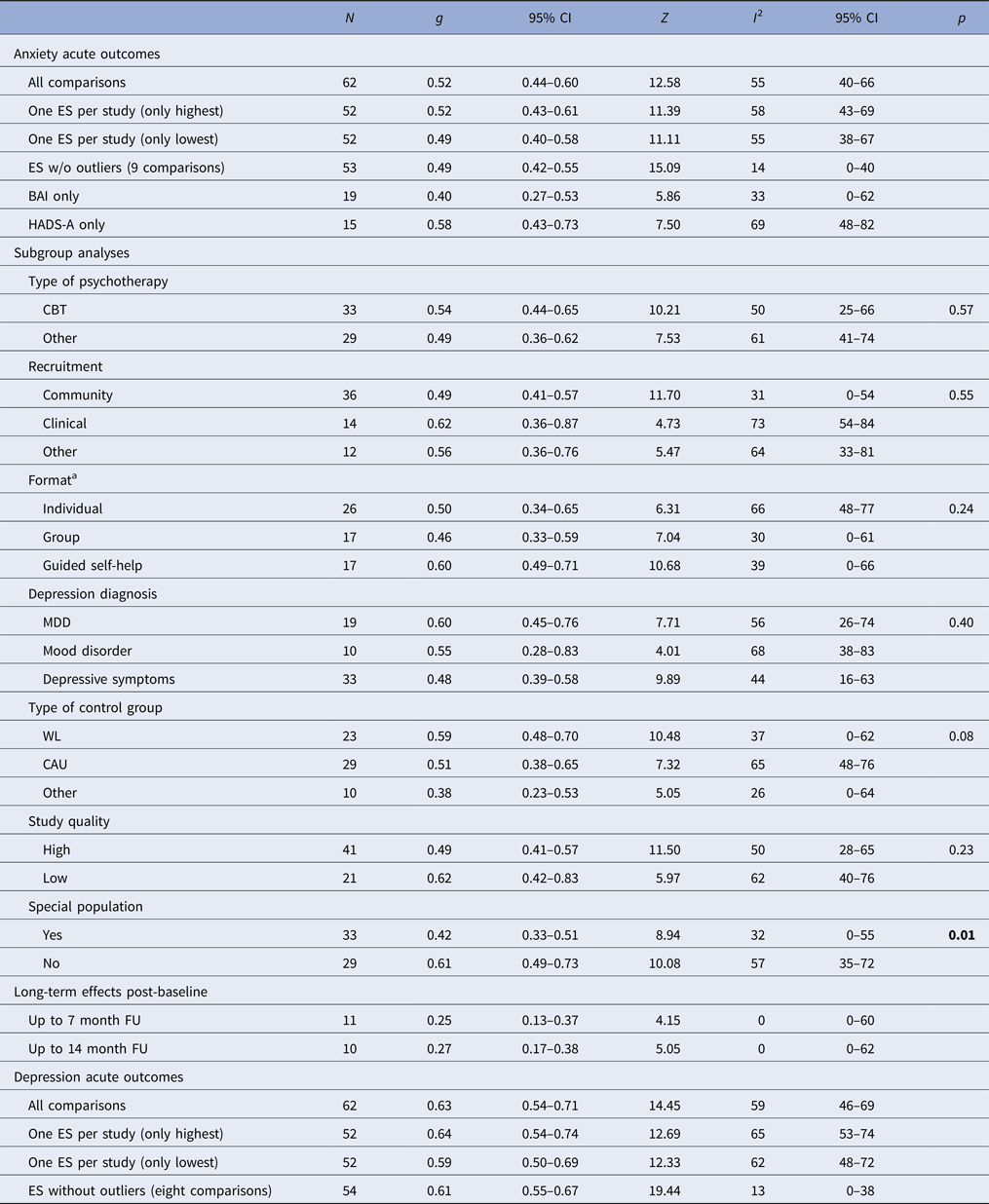
Differences between psychotherapy and control conditions on post-treatment anxiety symptoms were examined in 62 comparisons and the pooled effect size showed significantly lower anxiety symptoms in psychotherapy conditions than in control conditions at post-treatment (g = 0.52; 95% CI 0.44–0.60; NNT = 3.50) (Table 2, Fig. 2). Moderate heterogeneity was observed (I 2 = 55%, 95% CI 40–66). Outliers (nine comparisons), with CIs positioned outside of the pooled effect CIs were omitted from the analysis and an effect size of g = 0.49 (95% CI 0.42–0.55; I 2 = 14, 95% CI 0–40) was observed (Table 2). Multiple comparisons from a single study were included in 10 trials, thereby violating the independence assumption. Because this may artificially reduce heterogeneity, two additional sensitivity analyses including only one effect per study (the highest, then the lowest) were conducted. In both sensitivity analyses, effect sizes and heterogeneity differed little from the original analysis (Table 2). A further sensitivity analysis excluding studies utilizing PTSD measures found similar effect sizes (g = 0.52; 95% CI 0.44–0.60).
Results of meta-analysis of psychotherapy v. control conditions

a The Wierzbicki & Bartlett (Reference Wierzbicki and Bartlett1987) study was removed from the analysis because both group and individual psychotherapy formats were utilized.
Forest plot of included studies.

Additional analyses were conducted to examine effect sizes by specific anxiety measures. Examining only studies using the BAI revealed an effect size of g = 0.40 (95% CI 0.27–0.53). Studies that utilized the HADS-A produced an effect size of g = 0.58 (95% CI 0.43–0.73).
The funnel plot and Duval and Tweedie's trim and fill procedure showed evidence for little publication bias. In addition, Egger's test of the intercept was not significant (p = 0.32). When adjusting for missing studies/small sample bias the effect size estimate was similar to the observed effect size (g = 0.50; 95% CI 0.42–0.59).
Depression outcomes
Secondary analysis examined the overall effect size of psychotherapy compared with control conditions on outcome depression scores in 62 comparisons (Table 2). The pooled effect size was g = 0.63 (95% CI 0.54–0.71; NNT = 2.82) and heterogeneity between studies was moderate (I 2 = 59%; CI 46–69). Eight outliers were omitted from the meta-analysis and an effect size of g = 0.61 (95% CI 0.55–0.67; I 2 = 13%, 95% CI 0–38) was observed. Inspection of the funnel plot and Duval and Tweedie's trim and fill procedure indicated minor publication bias. Egger's test of the intercept was not significant (p = 0.07). After adjustment for missing studies the effect size was similar to the observed effect size (g = 0.57; 95% CI 0.47–0.66).
In addition, eight studies examined multiple psychotherapy interventions in one trial. Analyses utilizing only the highest and then the lowest effect sizes per study were conducted (Table 2).
Subgroup and metaregression analysis
Subgroup analyses (see Table 2) showed no significant differences in effect sizes when examining differences in recruitment method, depression inclusion criteria, psychotherapy format, or study quality. The analysis did indicate a trend toward studies with wait-list control groups displaying higher effect sizes on anxiety than studies utilizing CAU or other control conditions (p = 0.08). In addition, studies on the general population had a significantly higher effect size than those studies with special populations, such as comorbid medical disorders (p = 0.01).
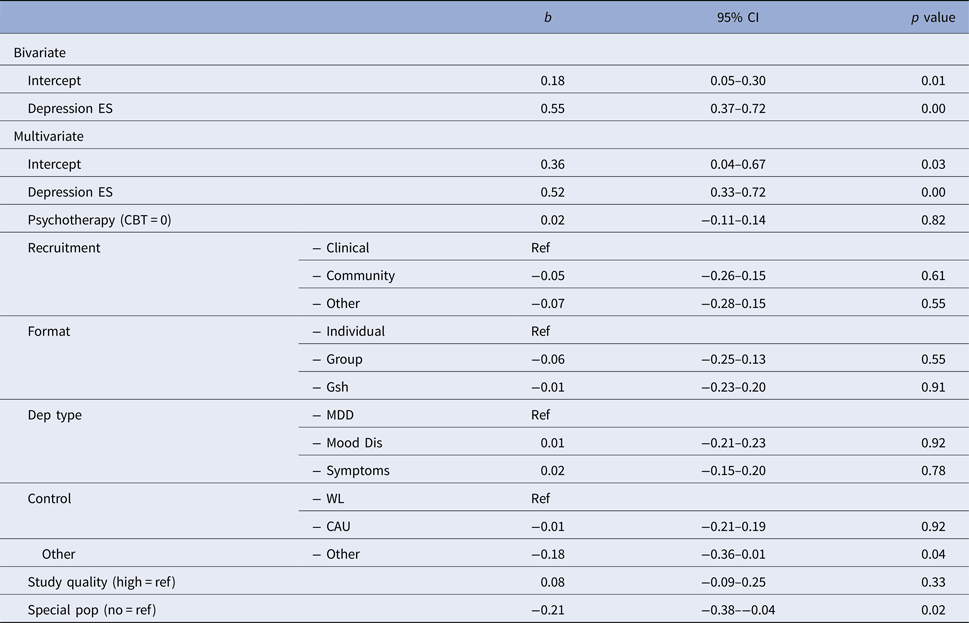
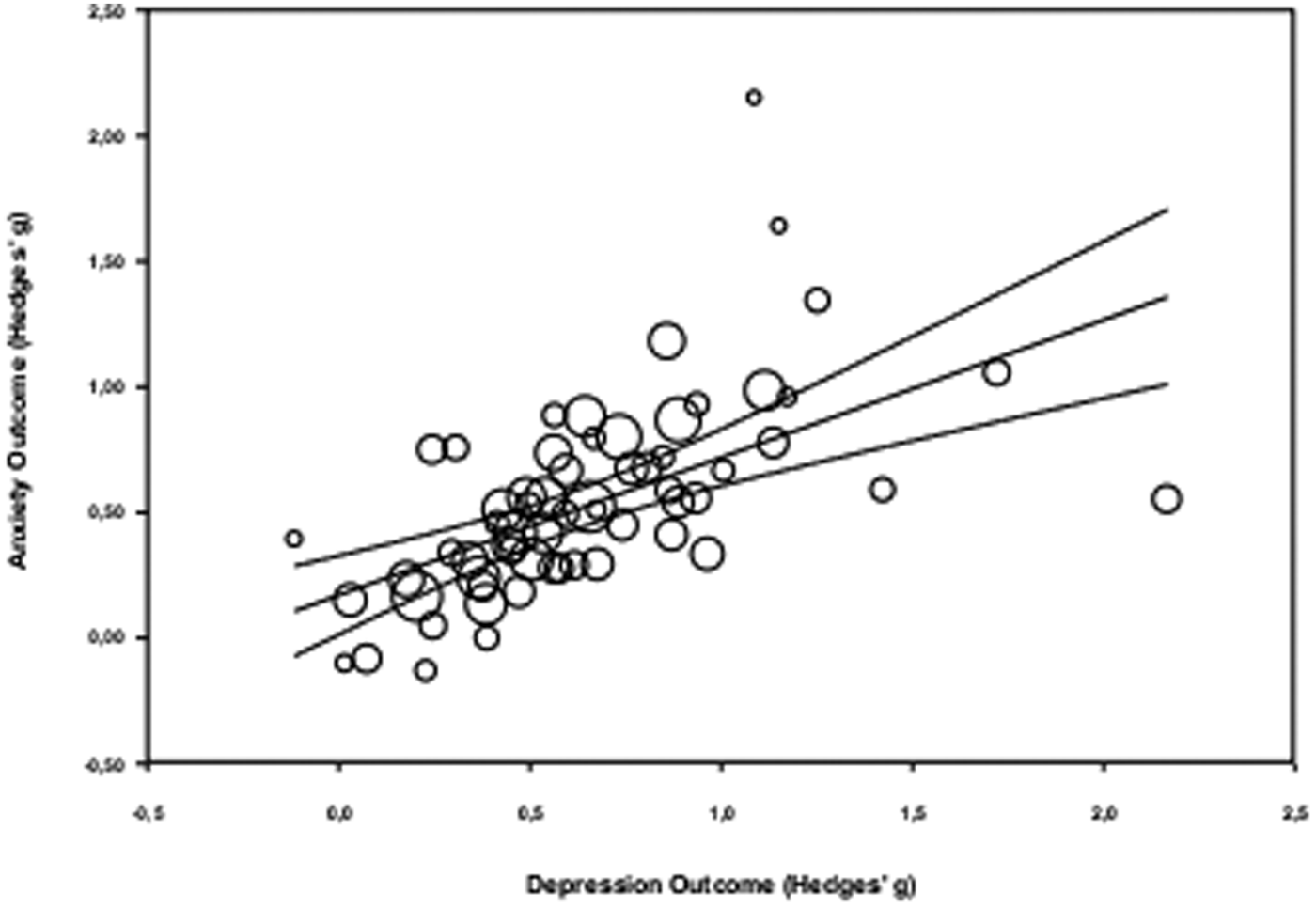
Bivariate metaregression analyses examining associations between anxiety effect sizes and continuous variables revealed a significant association between depression and anxiety effect sizes at post-treatment (Table 3, Fig. 3). Additional multivariate metaregression analysis showed depression effect sizes remained significantly associated with anxiety effect sizes at post-treatment after controlling for study and clinical characteristics (Table 3). Additionally, a number of treatment sessions did not predict anxiety outcomes between psychotherapies and control conditions (b = 0.00; p = 0.78).
Results of metaregression analysis

Metaregression of anxiety effect sizes on depression effect size.

Long-term follow-up
Studies without wait-list control conditions, indicating participants never received the intervention, and that reported long-term outcomes on anxiety measures were included in follow-up analysis. The pooled effect size signifying the difference between psychotherapy and control conditions in anxiety symptoms up to 7 months post-baseline was g = 0.25 (95% CI 0.13–0.37), and up to 14 months post-baseline was g = 0.27 (95% CI 0.17–0.38) (Table 2).
Discussion
Our results indicate that, when comparing effect sizes, depression treatment (psychotherapy) is almost as effective at reducing comorbid anxiety symptoms as it is at reducing depressive symptoms. Moderate to large effect sizes were observed for anxiety symptoms (g = 0.52; NNT = 3.50) and for depression symptoms (g = 0.63; NNT = 2.82) with moderate heterogeneity and little evidence that publication bias affected the results. Long-term follow-up assessments revealed a small lasting effect up to 1 year after baseline assessment (g = 0.27), although this should be interpreted with some caution since studies used naturalistic follow-up. For patients with commonly comorbid depression and anxiety symptoms, choosing which treatment to utilize may be challenging. However, these results suggest that common evidence-based psychotherapies for depression can ameliorate anxiety symptoms, and may be sufficient for reducing anxiety symptoms without adjunctive treatments. However, this meta-analysis was not able to discern if a specific psychotherapy for depression is more effective at treating anxiety symptoms than others or if these psychotherapies are equivalent to utilizing psychotherapies designed to treat anxiety symptoms.
In comparison with previous meta-analyses, anxiety and depression effect sizes found in this sample are comparable to those reported in meta-analyses specifically examining the effects of psychotherapy for anxiety or psychotherapy for depression. Anxiety symptom effect sizes reported here are similar, although slightly lower, than those previously reported in meta-analyses of psychotherapies specifically targeting anxiety which have shown large effect sizes (between 0.71 and 0.84) (Hunot et al. Reference Hunot, Churchill, Silva de Lima and Teixeira2007; Hofmann & Smits, Reference Hofmann and Smits2008; Acarturk et al. Reference Acarturk, Cuijpers, van Straten and de Graaf2009; Sanchez-Meca et al. Reference Sanchez-Meca, Rosa-Alcazar, Marin-Martinez and Gomez-Conesa2010; Cuijpers et al. Reference Cuijpers, Sijbrandij, Koole, Huibers, Berking and Andersson2014). This study found moderate effect sizes of g = 0.52; however, the prior meta-analyses focused on patients diagnosed with anxiety disorders and may include patients with more severe anxiety symptoms. This indicates the validity of the finding that psychotherapy targeting depression also ameliorates anxiety symptoms.
Similarly, depression effect sizes reported here were equivalent to previous meta-analyses which reported effect sizes of psychotherapy for depression v. control conditions between 0.56 and 0.82 (Gloaguen et al. Reference Gloaguen, Cottraux, Cucherat and Blackburn1998; Ekers et al. Reference Ekers, Richards and Gilbody2008; Sanchez-Meca et al. Reference Sanchez-Meca, Rosa-Alcazar, Marin-Martinez and Gomez-Conesa2010; Cuijpers et al. Reference Cuijpers, Geraedts, van Oppen, Andersson, Markowitz and van Straten2011, Reference Cuijpers, Driessen, Hollon, van Oppen, Barth and Andersson2012, Reference Cuijpers, Berking, Andersson, Quigley, Kleiboer and Dobson2013a). While not all depression trials comparing psychotherapies and controls provided anxiety measures and could be included in this meta-analysis, the sample of trials included here are representative in terms of effect sizes.
Subgroup analysis revealed that studies without special populations exhibited significantly higher effect sizes than studies that included special populations, such as those with a comorbid medical diagnosis or post-partum depression. This may be due to the varying populations included or high statistical heterogeneity between the studies. Consistent with previous research, studies with a wait-list control group displayed a trend towards higher effect sizes than studies utilizing other control conditions (Furukawa et al. Reference Furukawa, Noma, Caldwell, Honyashiki, Shinohara and Imai2014). No other significant subgroup analyses were identified (including no difference in effect sizes based on the type of psychotherapy, depression inclusion criteria, and control group utilized). It was not possible to examine the effectiveness of the included psychotherapies separately due to the low number of studies meeting criteria per psychotherapy included, therefore providing insufficient statistical power to examine this adequately. Examining whether specific types of psychotherapy were equally effective for the treatment of anxiety symptoms was not the main aim of the study. However, subgroup analysis depicted similar outcomes between CBT and the other psychotherapies included. Future research should examine which specific psychotherapies are optimal for reducing anxiety symptoms.
Separate analysis on anxiety measures found that the BAI produced lower effect sizes than the HADS-A. Although these were both moderate effect sizes, the differences may be related to study characteristics or to differences in the specific measures; however, studies including both measures are needed to examine this further. In addition, there is some heterogeneity among all anxiety measurements included. Although only validated measures of general anxiety symptoms were utilized (with the exception of the two studies utilizing PTSD measures), the potential effect of including specific measures could not be assessed in this meta-analysis due to insufficient numbers of studies per anxiety measurement.
In addition multivariate metaregression, controlling for clinical and study characteristics, demonstrated a significant association between outcome depression and anxiety scores. This provides support that anxiety and depression are highly connected, however the mechanisms of how depression psychotherapies treat anxiety symptoms, whether certain components of the psychotherapies are more effective than others, and whether depression and anxiety symptoms remit sequentially or simultaneously, is still unclear and should be explored further using RCTs and individual patient data meta-analyses.
Although this meta-analysis provides robust evidence that psychotherapies for depression significantly reduce anxiety symptoms compared with controls, there are several additional limitations to consider when interpreting these results. Only half of the studies met all quality criteria, thus, a majority of the trials included had a considerable risk of bias. The studies scoring as lower quality had a higher effect size (although not significantly) than those scoring as higher quality studies. Thus, study results should be interpreted with some caution. Second, although the meta-analysis includes considerable comparisons, several of the subgroup analyses were conducted with few studies. Thus, finding few significant differences in subgroup analyses might be due to low statistical power and may not indicate that effect sizes for these groups are equivalent. Further analysis of differences in subgroups should be conducted as the evidence accumulates.
Furthermore, because this meta-analysis was conducted on secondary outcome measures, no anxiety symptom inclusion criteria were required. This implies that baseline anxiety scores for some of the sample may not be in the clinical range. However, because of the high levels of comorbidity between anxiety and depressive symptoms, it is expected that a majority of patients included in these studies had elevated symptoms of anxiety. Nonetheless, these results may not pertain to patients with diagnosed comorbid mood and anxiety disorders and further analysis including patients with elevated symptoms of both should be conducted when enough evidence warrants analysis.
Despite these limitations, this meta-analysis provides evidence for utilizing psychotherapies for depression to treat patients with comorbid anxiety symptoms. When patients present with a main complaint of depression, but exhibit general comorbid anxiety symptoms, psychotherapies for depression can reduce symptoms of anxiety without supplementary treatments. Although this establishes that psychotherapies for depression reduce anxiety symptoms on average (possibly through common factors), not all participants with comorbid anxiety symptoms or disorders will benefit from psychotherapy for depression and certain treatments may be more efficacious for treating anxiety symptoms than others (specific factors). Thus, future research should continue to examine which treatments, study, and individual characteristics may affect treatment response for participants exhibiting comorbid depression and anxiety.
Acknowledgements
The authors would like to thank Eirini Karyotaki for her helpful comments and input.
This research received no specific grant from any funding agency, commercial or not-for-profit sectors.
Conflict of Interest
None.