Dilated cardiomyopathy in children causes heart failure and may have a poor prognosis. After diagnosis, the 1-year transplant-free survival rate has been reported to be between 69 and 82% and the 5-year transplant-free survival rate between 54 and 72%.Reference den Boer, van Osch-Gevers and van Ingen 1 , Reference Towbin, Lowe and Colan 2 Around 35% of the children, however, develop chronic dilated cardiomyopathy and around 35% recover, with the highest recovery rates seen in children aged 1–6 years at diagnosis.Reference den Boer, van Osch-Gevers and van Ingen 1
To assess the impact of disease on patient life, functional status assignment by a physician and patient-reported health-related quality of life have been used, and may contain important prognostic information. In adults, the NYHA Classification is used to categorise heart failure functional class and has been strongly associated with outcome;Reference Gradman, Deedwania and Cody 3 , 4 furthermore, in adults with heart failure, health-related quality of life is affected as compared with healthy, age-matched controls, but also as compared with other chronically ill patients.Reference Hoekstra, Lesman-Leegte, van Veldhuisen, Sanderman and Jaarsma 5 – Reference Juenger, Schellberg and Kraemer 7 In addition, health-related quality of life has been shown to be an independent predictor for mortality.Reference Hoekstra, Jaarsma, van Veldhuisen, Hillege, Sanderman and Lesman-Leegte 8
In children with heart failure secondary to dilated cardiomyopathy, such data are largely lacking. To assess functional class, the New York University Pediatric Heart Failure Index has been developed.Reference Connolly, Rutkowski, Auslender and Artman 9 This score, however, has not been related to clinical outcome in dilated cardiomyopathy yet. In children, the effect of dilated cardiomyopathy on health-related quality of life is largely unknown. An explorative study investigating parent-reported health-related quality of life in children visiting the paediatric cardiology clinic for various diseases reported on a small subgroup of 17 children with cardiomyopathy.Reference Walker, Gauvreau and Jenkins 10 Using the Child Health Questionnaire-Parent Form 50, cardiomyopathy patients scored worse compared with all other patients attending the cardiology clinic on “physical functioning”, “general health perceptions”, and “parental impact – emotional”.
The use of health-related quality-of-life questionnaires in children enables a structural assessment of patients’ physical and psychosocial functioning reported by parents. As parents “know their child best”, we hypothesised that parents’ assessment of their child’s health-related quality of life, on an internationally validated questionnaire, provides valuable information about a child’s functioning, which may have prognostic value; furthermore, we hypothesised that physicians’ assessment of heart failure severity, using a validated heart failure severity score, also provides prognostic information.
The present study had two aims. First, to evaluate health-related quality of life in children with dilated cardiomyopathy. Second, to assess the predictive value of health-related quality-of-life subscales and the heart failure severity score on the risk of death and heart transplantation at diagnosis and during follow-up.
Materials and methods
The institutional review boards of the seven participating centres approved the study protocol. Parents and children⩾12 years of age gave their written informed consent.
From 1 October, 2010 until 1 March, 2015, all eligible children were asked to participate in this prospective study. Children were either included at dilated cardiomyopathy diagnosis or were followed-up for a previously diagnosed dilated cardiomyopathy in one of the participating tertiary paediatric cardiology centres. Dilated cardiomyopathy was defined as fractional shortening ⩽25% and left ventricular end-diastolic dimension z-score >2 for body surface area. Dilated cardiomyopathy could be idiopathic or secondary to other causes. Patients with CHD, neuromuscular disease, or with parents who were unable to read the Dutch language were excluded.
Study entry was defined as the first time that a health-related quality-of-life questionnaire was completed. Patients were seen at 3–6-month intervals. At each visit, parents were asked to complete a health-related quality-of-life questionnaire, and during the same visit the paediatric cardiologist completed the New York University Pediatric Heart Failure Index.Reference Connolly, Rutkowski, Auslender and Artman 9 This index assesses heart failure severity on the basis of symptoms and medications used. The score ranges from 0 to 30; a higher score represents more severe heart failure. Demographics were recorded, and the socioeconomic status was determined using parents’ occupation and categorised into the following: low, elementary occupations; middle, middle-level occupations; or high, high-level scientific occupations, according to the Dutch classification system. 11 The highest occupation of either parent was recorded. Follow-up ended either at 15 September, 2015 or when a patient reached the age of 18 years or at the combined primary end point of death and heart transplantation.
Health-related quality-of-life questionnaires
Health-related quality of life was assessed by age-specific questionnaires: the Infant Toddler Quality of Life questionnaire for patients aged 0–4 years and the Child Health Questionnaire-Parent Form 50 for patients aged 4–18 years. Both questionnaires consisted of subscales (Table 2a and 2b). Subscale scores ranged from 0 to 100, with a higher score representing better quality of life. Normative data from Dutch healthy children are available for both questionnaires.Reference Raat, Bonsel, Essink-Bot, Landgraf and Gemke 12 , Reference Raat, Landgraf, Oostenbrink, Moll and Essink-Bot 13
Health-related quality of life was evaluated on two different time points in the disease course. First, in patients at dilated cardiomyopathy diagnosis and second in patients after 1 year or more since diagnosis. These time points were chosen, because event rates in paediatric dilated cardiomyopathy differ markedly between the 1st year of diagnosis and from 1 year after diagnosis onwards,Reference Alexander, Daubeney and Nugent 14 and health-related quality of life may differ according to parents and patients who need to cope with a recent diagnosis, compared with patients who have been diagnosed a long time ago.
To compare both age groups (0–4 and 4–18 years) and to predict outcome, individual subscale scores were transformed to percentage of predicted using the mean of the corresponding normal population. Using this transformation, only scores on comparable subscales from both questionnaires were combined – that is, “physical functioning”, “bodily pain”, “general behaviour”, “general health perception”, “parental impact – time”, “parental impact – emotional”, and “family cohesion”.
Statistical analysis
The distribution of continuous variables was tested using the Kolmogorov–Smirnov test. Almost all health-related quality-of-life subscales were non-normally distributed, and are therefore reported as medians and interquartile ranges (IQR). The medians of patients were compared with normal values using the one-sample Wilcoxon Signed Rank Test. To compare age groups, medians – as percentage of predicted – were compared using the Mann–Whitney U-test. Using univariable time-dependent Cox regression analysis, we assessed the predictive value of the health-related quality-of-life subscales – as percentage of predicted – and the New York University Pediatric Heart Failure Index at the end point. For this analysis, data of all visits were included (n=515 in 90 different patients). The maximum number of covariates used in the multivariable time-dependent Cox regression analysis was the number of events divided by 10. Proportional hazard assumptions were tested and were not violated. The hazard ratios of the health-related quality-of-life subscales were calculated per 10% of the predicted values (10 units of the original scale). For readability, hazard ratios of health-related quality-of-life subscales were transformed to values >1.00, using the following formula: 1/hazard ratio. For descriptive data analyses, we used IBM SPSS Statistics for Windows, version 21.0 (IBM Corp., Armonk, New York, United States of America). For advanced statistical analyses of repeated measurements and survival data, R environment was used (R version 3.1.1, 2014-07-10). Testing was performed using two-sided tests, and statistical significance was defined as p <0.05.
Results
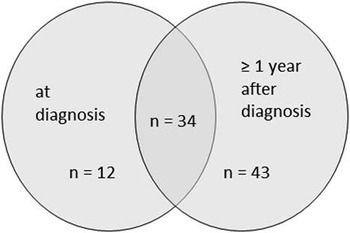
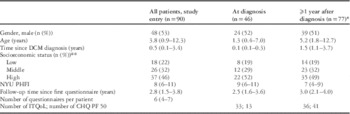
We included 90 children in our study (median age 3.8 years, IQR 0.9–12.3, Table 1). Parents reported their child’s health-related quality of life at several time points during follow-up. At the same visit, the physician scored heart failure severity on the New York University Pediatric Heart Failure Index. In total, 515 health-related quality-of-life questionnaires were completed over 4.5 years, 226 Infant Toddler Quality of Life questionnaires, and 312 Child Health Questionnaire-Parent Form 50, with a median of 6/patient (range 1–13). Accordingly, 498 New York University Pediatric Heart Failure Index ratings were completed, and 3.3% were missing. To analyse health-related quality of life at two time points in the disease, we describe the results of two cross-sectional groups – n=46 questionnaires of children included at dilated cardiomyopathy diagnosis and n=77 children whose parents completed a questionnaire at least 1 year after diagnosis; a total of 34 children were represented in both groups (Fig 1).
Venn diagram of patients included in this study. At diagnosis, parents of 46 children completed a health-related quality-of-life (HRQoL) questionnaire; ⩾1 year after diagnosis, parents of 77 children completed a HRQoL questionnaire.

Cross-sectional characteristics of children with dilated cardiomyopathy at study entry (n=90), diagnosis (n=46), and⩾1 year after diagnosis (n=77).

CHQ PF 50=Child Health Questionnaire-Parent Form 50; DCM=dilated cardiomyopathy; ITQoL=Infant Toddler Quality of Life questionnaire; NYU PHFI=New York University Pediatric Heart Failure Index
* In total, 34 children were also represented in the group “at diagnosis”
** Socioeconomic status was missing in nine cases; continuous variables are represented as medians (interquartile range)
Health-related quality-of-life results at diagnosis
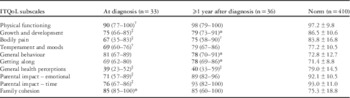
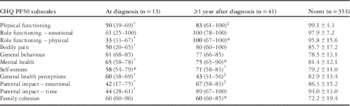
Of the 90 children, 46 were newly diagnosed with dilated cardiomyopathy (median age 1.3 year, IQR 0.4–7.0). Their first questionnaire was completed at a median of 1.4 months after diagnosis (IQR 1.1–3.1). In all, 33 children were between 0 and 4 years of age (Table 2a) and 13 children were between 4 and 18 years of age (Table 2b).
Health-related quality of life by parent reports: results of infants and toddlers, 0–4 years old, with dilated cardiomyopathy at diagnosis and⩾1 year after diagnosis.

ITQoL=Infant Toddler Quality of Life
Higher scores represent better functioning. Patient values are presented as medians (interquartile range) and norm values as mean±SD
p-value for comparison with age-specific norm values. Bold values are significantly different from norm values
*p<0.05; †p<0.01; ‡p<0.001
Health-related quality of life by parent reports: results in children aged 4–18 years with dilated cardiomyopathy at diagnosis and⩾1 year after diagnosis.

CHQ PF50=Child Health Questionnaire-Parent Form 50
Higher scores represent better functioning. Patient values are presented as medians (interquartile range) and norm values as mean±SD
p-value for comparison with age-specific norm values. Bold values are significantly different from norm values
*p<0.05; †p<0.01; ‡p<0.001
Comparison with the norm
At diagnosis, results of almost all subscales on both age-specific questionnaires were significantly lower compared with the normal population (Infant Toddler Quality of Life: 7/10, and Child Health Questionnaire-Parent Form 50: 8/11). Parents of children aged 0–4 years showed the largest difference compared with the normal population on “general health perception”. Notably, better “family cohesion” was reported in this age group (Table 2a). Parents of children aged 4–18 years showed the largest differences on “physical functioning”, “role functioning – physical”, “parental impact – emotional”, and “parental impact – time” (Table 2b).
Comparison between age groups
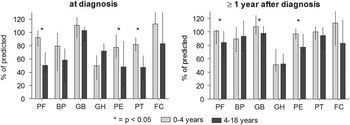
At the time of diagnosis, we found that parents of older children (4–18 years) scored significantly worse than parents of young children (0–4 years) on the subscales “physical functioning”, “parental impact – emotional”, and “parental impact – time” (Fig 2).
Differences between age groups. ( a ) differences in health-related quality of life (HRQoL) at diagnosis between 33 infants and toddlers (0–4 years old) and 13 children (4–18 years old); results are percentages of predicted values. ( b ) differences in HRQoL⩾1 year after diagnosis between 36 infants and toddlers (0–4 years old) and 41 children (4–18 years old); results are percentages of predicted values. BP=bodily pain; FC=family cohesion; GB=general behaviour; GH=general health perceptions; PE=parental impact-emotional; PF=physical functioning; PT=parental impact-time; *=p<0.05 between age groups.

Health-related quality-of-life results ⩾1 year after diagnosis
Parents of 77 children completed a questionnaire at least 1 year after diagnosis, at a median time of 1.5 years after diagnosis (range 1–16 years, Table 1). Between age groups, the time since diagnosis was significantly different – patients aged 0–4 years were at 1.2 years after diagnosis (IQR 1.0–1.6), whereas patients aged 4–18 years were at 3.4 years after diagnosis (IQR 1.3–7.8, p=0.004).
Comparison with the norm
Parents of children aged 4–18 years scored lower on more than half of the subscales (6/11), with the largest difference compared with the normal population on “general health perceptions”. In contrast, parents of children aged 0–4 years had lower scores on three subscales – that is, “growth and development”, “bodily pain”, and “general health perceptions”. Parents of young children with dilated cardiomyopathy scored their children better than the normal population on “general behaviour” and “getting along”. The other subscales were comparable with the normal group.
Comparison between age groups
At least 1 year after diagnosis, we found that parents of older children scored their children significantly worse than younger children on “physical functioning”, “general behaviour”, and “parental impact – emotional” (Fig 2). Notably, parents of young children scored their children higher than the normal population on “general behaviour”, and parents of older children scored them comparable with the normal population.
Cardiac outcome and follow-up
In children included at diagnosis, n=46, the median New York University Pediatric Heart Failure Index was 9 (IQR 6–11). For children who subsequently reached an end point (n=4), the median New York University Pediatric Heart Failure Index was 11 (IQR 9–14) compared with 9 (IQR 6–11) for those without an end point. At least 1 year after diagnosis, the median New York University Pediatric Heart Failure Index was 7 (IQR 4–9). For children who subsequently reached an end point (n=15), the median New York University Pediatric Heart Failure Index was 11 (IQR 8–12) compared with 6 (IQR 3–9) for those without an end point (n=62).
The median follow-up time since the first questionnaire to the end of the study or an end point was 2.8 years (IQR 1.5–3.8). During the study, 15 patients reached an end point – all were transplanted (1.3 years (IQR 0.9–2.2) since completing the first questionnaire; 3.2 years (IQR 2.5–6.2) since diagnosis). All 15 children are included in the cross-sectional group >1 year after diagnosis (n=77). In the group of newly diagnosed children (n=46), four children reached an end point – all after 1 year since diagnosis.
Of these 15 children, 87% had a Class I and 13% a Class IIa indication for heart transplantation at the time of listing and at the time of transplantation. At the time of listing, 20% had Stage D heart failure, and all of them were dependent on inotropes. At the time of transplantation, 40% had Stage D heart failure – four patients were on mechanical circulatory support and two patients were dependent on inotropes.
Predictors for outcome
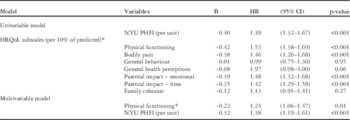
For predicting the risk of death and transplantation, all available measurements were used – that is, 515 health-related quality-of-life questionnaires and 498 New York University Pediatric Heart Failure Index results in 90 different patients including 15 end points. Using univariable time-dependent Cox regression, the subscales “physical functioning”, “bodily pain”, “parental impact – emotional”, “parental impact – time”, and the New York University Pediatric Heart Failure Index were each significant predictors for the risk of death and heart transplantation. For the multivariable model, “physical functioning” was used as it reflects the child’s actual physical ability and had the highest hazard ratio in univariable analysis. The multivariable model showed that “physical functioning” and the New York University Pediatric Heart Failure Index were both independently predictive of the risk of death and heart transplantation (Table 3). A decrease in physical functioning by 10% of the predicted value resulted in a hazard ratio of 1.24 (95% confidence interval (CI) 1.06–1.47), indicating a 24% higher risk for a patient with a score of 80% versus a patient with a score of 90% of the predicted value; one point higher score on the New York University Pediatric Heart Failure Index resulted in a 38% higher risk of death and heart transplantation (hazard ratio 1.38, 95% CI 1.19–1.61).
Results of univariable and multivariable time dependent Cox regression analyses

CI=confidence interval; HRQoL=health-related quality of life; NYU PHFI=New York University Pediatric Heart Failure Index
* For readability, 1/HR are presented
Discussion
This is the first study that systematically investigated health-related quality of life and the New York University Pediatric Heart Failure Index in a relatively large cohort of children with dilated cardiomyopathy. It clearly demonstrates that health-related quality of life is severely impaired, and that parent-reported “physical functioning” and the New York University Pediatric Heart Failure Index as assessed by the physician are independently predictive of the risk for death and heart transplantation.
At diagnosis, patients of both age groups scored worse on physical, psychosocial, and parental impact subscales compared with normal values. Older children scored significantly worse than younger children. More than 1 year after diagnosis, health-related quality of life was still impaired, but to a lesser extent than at diagnosis, and again was more impaired in older than in younger children.
The differences between age groups may have several explanations. First, impairments may be more obvious in older than in younger children because their daily-life activities and range of skills are more diverse. Moreover, older children are normally more independent, but when they become ill, parents need to accept their caretaking role and be more in control again, which may be disruptive for family routines. In contrast, parents of young children are used to an active caregiving role during daily life, whether their children are healthy or diseased. This shift in the locus of control has previously been described in older children with chronic illnesses.Reference Tong and Kools 15 Second, older children are cognitively able to realise and experience the impact of the disease themselves, as demonstrated by the lower scores on “mental health” and “self-esteem”. Thus, parents of older children have to cope with more physical and psychosocial impact than parents of young children.Reference Uzark and Jones 16 This effect was demonstrated by the larger effect on parental impact in patients aged 4–18 years, both at diagnosis and ⩾1 year after diagnosis. Third, ⩾1 year after diagnosis, older patients had dilated cardiomyopathy for a longer period and may have been “growing into deficit”. This phenomenon has been described in children with other diseases, and means that psychological problems on higher cognitive functions, such as emotion regulation, may develop over time, because these functions need to mature.Reference Aarsen, Paquier and Reddingius 17 Finally, it may also be related to the severity of heart failure. Of the 77 children studied ⩾1 year after diagnosis, 15 reached the end point, of whom 10 were >4 years old. Furthermore, highest recovery rates have been described in children aged 1–6 years;Reference den Boer, van Osch-Gevers and van Ingen 1 thus, the group with younger children may include more children who eventually recover. Considering these results, patients at highest risk for psychological problems – that is, those at diagnosis and older children with chronic disease (⩾1year after diagnosis) – may benefit most from timely referral to a psychosocial support team.
As we described two cross-sections in which we had no complete cases, we cannot draw firm conclusions about the development of health-related quality of life from diagnosis to >1 year after diagnosis. Nevertheless, we speculate that health-related quality of life improves after the 1st year of diagnosis. Our data clearly showed the severe impairment at diagnosis. Scores on several subscales were also impaired ⩾1 year after diagnosis, but then the difference from the norm was less extreme, and especially in the young age-group several subscales were comparable with the norm. This improvement was not explained by the number of children who reached an end point, because all 15 children with adverse outcome were represented in the group ⩾1 year after diagnosis. This indicates that parents may be adapting to the knowledge that their child has dilated cardiomyopathy and may rate their child’s disabilities with different intensity. This phenomenon may be explained by response shift, which means that parents change their internal standards towards health-related quality of life in case of chronical illness.Reference Rapkin and Schwartz 18 This has also been described in children with sequelae of complex CHD who rate their health-related quality of life on some subscales as normal as compared with healthy controls.Reference Dulfer, Bossers and Utens 19 Another factor, which may contribute to the improvement of health-related quality-of-life scores in the young age group is a high recovery rate. Previously, we reported a recovery rate of 69% in 1–6-year-olds at a median time of 1 year after diagnosis.Reference den Boer, van Osch-Gevers and van Ingen 1 We suspect that the improvement in clinical condition accompanying this recovery is also reflected in the health-related quality-of-life scores in the young age group.
Previous studies in adults with heart failure have shown that self-reported health-related quality of life was predictive of mortality.Reference Hoekstra, Jaarsma, van Veldhuisen, Hillege, Sanderman and Lesman-Leegte 8 As far as we know, this is the first study in children with dilated cardiomyopathy showing that health-related quality of life, as reported by parents, was predictive of the risk of death and heart transplantation. Moreover, we demonstrated for the first time that the New York University Pediatric Heart Failure Index, as assessed by the physician, was predictive of the risk of death and heart transplantation. Earlier reports in adults and children have shown that the presence of congestive heart failure and higher NYHA functional class were related to adverse outcomes.Reference Towbin, Lowe and Colan 2 , Reference Nohria, Tsang and Fang 20 The direct association between NYHA and physical health-related quality of life is a limitation for the use of both markers in the prediction of outcome.Reference Hoekstra, Jaarsma, van Veldhuisen, Hillege, Sanderman and Lesman-Leegte 8 The New York University Pediatric Heart Failure Index may be a more discriminative measure of functional status in children, because it is a 30-points index focussing on heart failure symptoms and medication use, rather than patients’ physical functioning.Reference Connolly, Rutkowski, Auslender and Artman 9 In this study, we demonstrated in multivariable analysis that both the New York University Pediatric Heart Failure Index as well as the health-related quality-of-life parameter “physical functioning” independently predicted outcome. We obtained health-related quality of life and the New York University Pediatric Heart Failure Index frequently during follow-up and found that their predictive values were constant over time. Therefore, these two predictors can be used from diagnosis onwards and during follow-up in paediatric dilated cardiomyopathy.
In the present study, no deaths occurred and all end points were reached more than 1 year after diagnosis. This is in line with our previous report, indicating a conservative approach to listing for transplantation.Reference den Boer, van Osch-Gevers and van Ingen 1 We have shown a low transplantation rate in the 1st year after diagnosis without an increase in mortality as compared with other cohorts. In the next few years, transplantation rates were comparable with other cohorts. Listing strategies in general followed the American Heart Association guidelines.Reference Canter, Shaddy and Bernstein 21 According to these recommendations, 83% had a Class I and 13% a Class IIa indication at listing for transplantation, underscoring the severity of disease in children who underwent transplantation.
The few studies that have been performed concerning health-related quality of life in children with dilated cardiomyopathy have included mainly small cohorts.Reference Walker, Gauvreau and Jenkins 10 , Reference Menteer, Beas, Chang, Reed and Gold 22 – Reference Wilkinson, Landy and Colan 24 The group of Menteer described reduced health-related quality of life in two small subgroups of children with heart failure (n=15 and n=11), but used another health-related quality-of-life questionnaire, which limits comparison with our results.Reference Menteer, Beas, Chang, Reed and Gold 22 , Reference Sabati, Szmuszkovicz and Herrington 23 Walker et al performed an explorative study in the out-patient clinic and included a subgroup of 17 children with cardiomyopathy aged 5–17 years.Reference Walker, Gauvreau and Jenkins 10 They found significantly lower scores on “physical functioning”, “general health perception”, and “parental impact – emotional”, in line with our findings. They reported a significantly higher score on “family cohesion”, which is in contrast with the results in the older age group of our cohort. Nevertheless, “family cohesion” was better in infants and toddlers in our study. Clinical experience shows that the seriousness of the disease may either “bring families closer together” or “tear them apart”. Finally, the Pediatric Cardiomyopathy Registry reported limited results on the Child Health Questionnaire-Parent Form 50 in children with cardiomyopathy.Reference Wilkinson, Landy and Colan 24 On average, they reported impaired health-related quality of life, with more physical problems than psychosocial problems, and suggested improvement over time in functional status. Finally, they suggested that poorer functional status might be a risk factor for subsequent death and heart transplantation. Our study adds to the existing data by clearly demonstrating the predictive value of functional status on outcome, by demonstrating improvement over time, but less in older children and by demonstrating the independent predictive value of a paediatric heart failure score on outcome.
Limitations
This study had some limitations. First, the number of events was only 15, limiting the number of variables in the multivariable analysis to only two. The “physical functioning” subscale was most relevant, but it would be interesting to test other significant subscales. Similarly, it would be worthwhile to study other variables, besides the New York University Pediatric Heart Failure Index, such as biomarkers or echocardiographic parameters, but it requires a larger cohort with more end points. Second, the median follow-up time was almost 3 years. Therefore, the outcome results need to be interpreted at a mid-term follow-up time. Finally, the treating physicians who recorded the New York University Pediatric Heart Failure Index scores were not blinded to the results. However, these were not registered in the clinical file of the patients, and were not a part of the clinical evaluation and treatment decisions. Therefore, it is unlikely that this has caused bias in eligibility for transplantation decisions.
Conclusions
In children with dilated cardiomyopathy, health-related quality of life is severely impaired at diagnosis and ⩾1 year after diagnosis. Children ⩾4 years of age had lower health-related quality of life than children <4 years of age. “Physical functioning” as reported by parents and heart failure severity using the New York University Pediatric Heart Failure Index are independent predictors for death and heart transplantation. Our findings corroborate the use of such parameters in, composite, end points in future studies in paediatric dilated cardiomyopathy.
Acknowledgements
None.
Financial Support
This study was supported by a grant from “Stichting Hartedroom” (Rotterdam, the Netherlands), “Stichting Spieren voor spieren” (Amsterdam, the Netherlands), and “Zeldzame ziekten fonds” (The Hague, the Netherlands) (SdB). The funders had no influence on the design and conduct of the study, in the collection, analysis, and interpretation of the data, in writing and reviewing the manuscript, and in the decision to submit the manuscript for publication.
Conflicts of Interest
None.
Ethical Standards
The authors assert that all procedures contributing to this work comply with the ethical standards of the relevant national guidelines on human experimentation and with the Helsinki Declaration of 1975, as revised in 2008, and has been approved by the institutional committees of all participating centres – Erasmus University Medical Center, University Medical Center Utrecht, Academic Medical Center Amsterdam, Leiden University Medical Center, Free University Medical Center Amsterdam, University Medical Center Groningen, and Radboud University Medical Center.