Even historical questions that aim too high can have their purpose.
Christian Meier (Reference Meier and Schneider2005, 41)Classicists, even more than other humanists, are taught to be minimalists. It behoves individuals who seek to contribute to a field of scholarship that is more than 2,000 years old to work carefully, and to make modest claims – if their aims are solely to impress their colleagues, and/or to add a brick to what is now a skyscraper of Knowledge. German classicists, perhaps, are even more likely to seek minimal results, for the German university world that was for so many 19th-century decades the pace-setting home of Altertumswissenschaft definitely frowned on speculative pronouncements, comparing across cultural units, or permitting those with less-than-perfect language skills to barge into the fray. The land of specialized philology has long preferred its scholarship in neat linguistic boxes, so much so that specialists in Attic, classical Greek and scholars of New Testament Greek did not, for many years, have much to say to one another (this was also a function of the fact that the former were fleeing the once-dominant theological faculty, while the latter remained its core). Even more have German classicists and ‘orientalists’ too generally been instructed to tend their own linguistic gardens; by imitating the classicists, the latter also made themselves the models of scientific learning, over the whole period between about 1830 and 1933.
But as was already clear early in the 19th century, minimalism is rarely enough. There are big and important historical questions the wider public wants addressed; even careful classicists, and orientalists, not to mention the more daring iconoclasts who occasionally surface in these fields, are enticed, or provoked, to take them on. Questions of origin, in particular, are too enticing, full of implications, and likely to bring the interpreter glory (or book sales) to ignore – and their many complicated aspects make them ideal for scholars trained, on the one hand, to find the minutest flaw in someone else's argument, and eager, on the other, to build a grandiose new theory on the backs of a different set of ‘facts’. They are, indeed, open-ended and enticing enough to draw in individuals I call maverick provocateurs, people who skip the decades of careful linguistic work and head straight for the Land of Great Explanations. The greatest, most vexed, and most heavily freighted of these origin questions is the one around which the books reviewed in this essay circle, namely the question of the origin of ‘the Greek miracle’ in the Near East. And as we shall see, it has once again drawn some German classicists – from careful philologists to maverick outsiders – into becoming maximalists in spite of themselves.
The essay below will seek to make sense of some of this new work, and the debates that course through it, especially for those who do not regularly read the German literature. I open it with the acknowledgement that I am not a classicist, or an archaeologist, or a scholar of ancient ‘oriental’ history, archaeology or literature. I am a modern intellectual historian, one who specializes in the history of humanistic scholarship, especially in Germany and Austria, and the author of two studies which have brought me into contact with the debates above as they unfolded in the last two centuries (Marchand Reference Marchand1996; Reference Marchand2009). What I want to do in this essay, then, is not to pass judgement on the merits of the authors’ arguments as they relate to the history and literature of the ancient world, but rather to show why such debates are both intractable and seemingly unavoidable. Some of the reasons for this lie in the nature of the evidence, which even though it has greatly increased in quantity, especially through the efforts of ‘orientalists’ and archaeologists, remains fragmentary and difficult to date and interpret; there are even more intractable problems with attempts to place the Homeric epics into this world, in part because no one knows if Homer actually meant to write about real events, people and places. Nor are any two scholars likely to give equal weight to the same purported similarities – which some will read as telling proof of borrowing and others judge only as possible proof, or as a coincidental, or unimportant, cultural commonality. Trying to identify the extent of Greek borrowing, or, to put it more gently, exchange with the Orient puts the philologist or archaeologist into the uncomfortable position of having to rely on at least some sources in translation; as neither classicists nor orientalists can monopolize the subject, inevitably romantics (like Friedrich Creuzer), entrepreneurs (like Schliemann), forgers (like Annius of Viterbo) and polemicists (like Martin Bernal; see Bernal Reference Bernal1987) rush in, only to be countered by outraged minimalists – who are often right, but not nearly as interesting to talk to. And finally, different individuals will construe the question differently in part because of its larger implications for European history. For it has long been understood that the question of Greek autonomy is very much related not only to the question of where Europe's borders actually lie, but also to the question of Europe's secular identity itself. That, of course, is a maximalist question par excellence; but by no means an incidental one these days, even for specialists in ancient history and literature.
The moderate case for Kulturgemeinschaft
The proper place to begin this discussion is with the work of Walter Burkert, whose Die Griechen und der Orient appeared originally in Italian (as Da Omero ai Magi. La tradizione orientale nella cultura greca) in 1999. Burkert has not made the full leap from minimalist to maximalist claims, but he is well aware that this short, synthetic book belongs to a recent trend towards adopting a broader, more intercultural view of Greek and European origins, which has the added benefit of offering a useful response to critics of European hubris and prejudice. ‘It appears that recently inter-cultural perspectives are finally taking hold, and decisively modifying our picture of Greek cultural creativity. In the growing global society’, he writes,
Europe is a small peninsula, inhabited by a dwindling minority, surrounded by increasingly self-conscious majorities. Even more instructive is the transformed situation [since the 1950s] in the USA, where the so-called West [Abendland] is gradually being lost from sight. Criticism, in part outspoken, aggressive criticism, is directed against what is presumed to be the European past's intellectual uniqueness, the ‘dead white men’, and therefore explicitly against its cultural foundations, that is, against the Greeks as the oldest of the ‘dead white men’ (Burkert Reference Burkert2009, 11).
Burkert then explicitly mentions Bernal's Black Athena, and its claims that European, and especially German, racism lie at the heart of classicists’ refusal to acknowledge Egypt's contributions to the Greek miracle. I believe Burkert is the only one of our German authors to mention Bernal (the controversy over whom was far more vigorous in the US than in Europe), and virtually alone among members of his generation of classicists he argues that criticisms of Bernal notwithstanding, ‘one shouldn't leave it at that’ (ibid., 12), but pursue the question of Greece's Near Eastern debts, without ignoring either the evidentiary problems or a historiography which may leave neither minimalists nor maximalists occupying the moral high ground. And that is precisely what his Die Griechen und der Orient attempts to do.
The central claim of Burkert's slim volume is that there is no justification, now, to treat the ancient Greeks in isolation; though there are naturally gaps in the evidence, and transitions, processes of transmission and transformations that we cannot explain, they belonged to the world of the Egyptian pyramids, the gardens of Babylon and the Persian Magi. As he states on the final page, this rootedness in a ‘Near Eastern–Mediterranean Koiné’ should not diminish Greek cultural achievements in our estimation, or call into question the debts European culture owes to them (Burkert Reference Burkert2009, 133). In five chapters – treating, successively, the spread of writing, Homer, eastern ‘wisdom’ literature and cosmology, Orphic and other mystery cults, and Greek–Persian relationships – Burkert demonstrates the similarities between cultures which point toward the existence of a proto-historical Mediterranean cultural community (Kulturgemeinschaft), one that ‘continually brought forth new contacts and forms of stimulation’ (Burkert Reference Burkert2009, 72). He draws chiefly on texts, among which are numerous ‘oriental sources in translation’, helpfully listed in a separate bibliography at the book's end, in addition to secondary literature composed by a roughly equal number of classicists and orientalists – though in the former category the list tilts heavily to the iconoclasts (the author with the most entries is the ‘orientalizing’ Oxford Hellenist M.L. West). There is some historiography here, and it is well informed, though not pursued in detail or systematically; there is similarly some theory, though it is so skilfully woven into his discussions of specific subjects that readers might overlook it. I would like to draw attention to two significant features of Die Griechen which open the way for a discussion of our other books: first, Burkert's self-consciousness about the controversial nature of his subject and his claims, and second, the care he takes in reiterating and bolstering the case for a Near Eastern–Mediterranean Kulturgemeinschaft.
Burkert's insights into these questions surely have much to do with the somewhat unconventional subjects he has chosen to research. Throughout his career, Burkert, now retired from the University of Zurich, has focused his attention on ancient Greek religions, a subject that brought him in touch with three things most German classicists have long avoided: anthropology, Anglo-French scholarship and the Orient. Indeed, there is a powerful tradition of avoiding religion, comparisons with Naturvölker, and other ‘irrational’ matters in German classical scholarship, one that stems from the 19th century's affection for the rational, secular and beautiful Greeks, and is partly justified by the claim that philologically grounded studies of a single culture are more valuable and lasting than are speculations about human nature, which vary according to individual interpreters. Of course, there is also what I will call an iconoclastic classicist tradition in the German-speaking world, one that is better known to us, but was marginalized in its day – that is the one that includes Friedrich Creuzer and J.J. Bachofen, and lesser-known scholars like Albrecht Dieterich, Richard Reitzenstein, Otto Kern and Erwin Rohde. Though his scholarship is much less subject to censure by his contemporaries than was the case for these scholars (Wilamowitz detested them all), Burkert belongs to this iconoclastic tradition – how could a classicist who penned a book chapter entitled ‘Werewolves around the tripod kettle’ (Burkert Reference Burkert1972) be anything else? But it is instructive that it was in pursuit of Greek religious life that Burkert has come to appreciate the importance of Near Eastern cultural models and exchanges, and to accept a low date (ca 660 B.C.) for the writing down of the Homeric epics. For if religion (and especially mystery religion) allows Burkert to break out of an old-fashioned philhellenism, it also, like the low date for Homer, and correspondingly high dates for parts of the Avestan Gathas, for Egyptian mystery cults, for Phoenician writing and for the dispersion of the Gilgamesh epic, creates the possibility for formative Assyro-Persian–Phoenician–Egyptian cultural influence to be exerted on the Greeks at a moment of known historical contact between peoples.
In Burkert's chapter entitled ‘Homer as a poet of the orientalizing era’, the author notes that despite centuries of speculation, ‘“Homer and the Orient” has remained a topic for outsiders’ (Burkert Reference Burkert2009, 29). Those who have dared to handle this hot potato include William Gladstone, Schliemann, and a series of irreverent, early 20th-century Assyriologists, including Peter Jensen, Hugo Winckler and Adolf Jeremias, who were (although Burkert does not say so) collectively known as ‘pan-Babylonists’. Burkert rightly notes that the overdrawn astral theories of these men hurt, rather than helped, the cause of examining similarities between the Homeric epics and the epic of Gilgamesh; it is only recently, after the publication of the oldest and most important Akkadian epic, Atrahasis, in 1969, that scholars have been pressed to reopen the question of Hesiod's borrowings, and to reflect again on probability that Homer, too, knew something of Assyrian literature. Similarly, the subject of the Greek mystery cults’ Egyptian roots is very old, and one beloved by Romantics from Friedrich Creuzer to (Nietzsche's friend) Erwin Rohde and Jane Harrison – but anathema to defenders of Greek ur-rationality like Wilamowitz and Ivan Linforth (Burkert Reference Burkert2009, 82–83). The problem of Greek philosophers’ borrowings from oriental cosmologies and wisdom literature was raised by the Greeks themselves, as well as by Christians and Jews, seeking to make Plato a Greek-speaking Moses, but only really gained scholarly ground after 1945, when progress in Babylonian and Hittite studies made possible new perspectives – like Uvo Hölscher's 1953 Anaximander und der Anfang der Philosophie and Martin West's commentaries on Hesiod (Burkert Reference Burkert2009, 56–58). And, despite Herodotus’ interest in the Persian Magi,
The critical scholarship of the nineteenth century, which espoused the autonomy of the classical and which took over from the Enlightenment a pronounced distaste for the magical, here, as elsewhere, made a skeptical resistance [to appreciating these texts] pervasive. It was recognized that there were a considerable number of later forgeries, which appeared historically worthless, the Pseudo-Berossos, Pseudo-Manetho, Pseudo-Zoroaster – these were only really interesting as typical indices of the decadence of late Hellenism (Burkert Reference Burkert2009, 115).
He might have quoted here Albrecht Dieterich, who, more than a century ago, complained that discovery of a ‘Mithraic liturgy’ had not been taken seriously because it was found buried in a collection of magical papyri; from such texts, he insisted, ‘the great men of literary history and scientific theology snatch back their clean hands to prevent them from being soiled. I wish they knew how many treasures lie hidden in this terrifying rubbish heap’ (Dieterich Reference Dieterich1903, 29). But then again, Dieterich's work, like that of his younger contemporary Richard Reitzenstein, is now generally seen as having fallen into the Hermes Trismegistus trap; that is, as having insisted that a later text contains elements of an earlier tradition without confirming evidence of early dates, and chiefly for the purpose of taking away someone else's claim to originality (Marchand Reference Marchand, Ruehl and Gildenhard2003). Archaeologists will not be surprised to learn that one man's rubbish heap is another's treasure trove, but the question remains whether or not it is useful to try to tackle the evidentiary problems, or whether or not it is defensible not to try.
What makes interpreting the archaic even more difficult is that our Greek examples are so much richer and our texts more complete, and, as Burkert acknowledges, the Greeks seem to have developed a large, diverse and theoretically ambitious corpus of writings in the remarkably short time between Homer and Aeschylus; moreover, no one has yet identified any Greek work as a direct translation of an oriental treatise, poem or liturgical work. In the absence of fixed Near Eastern dates, we continue to depend on Herodotus and Thucydides, which, as Reinhold Bichler points out, inclines us to think in terms of Greek events (Bichler Reference Bichler, Rollinger and Ulf2004). Throughout the text Burkert can be seen to be negotiating these problems, by juxtaposing motifs, structures or specific plot lines rather than invoking what he calls ‘Kling Klang Etymologien’; one passage of Eudemus, he claims, ‘sounds almost like a translation’ (Burkert Reference Burkert2009, 75) of a Babylonian astronomical text. He describes the structure of the gods’ realms, as described in the Iliad on the one hand, and the Atrahasis on the other, as ‘remarkably similar’ (Burkert Reference Burkert2009, 42). ‘Could this too be simply a coincidence?’ (ibid., 53) he asks of the contemporaneous founding of the first Greek ‘library’ and Ashurbanipal's library at Nineveh. His unusually early dating of the fragmentary Cypria as contemporary with, if not older than, the Homeric epics, and his insistence on an early date for the Gathas (which may be contemporary with Zoroaster himself; some scholars have recently suggested a date for him in the era 1100–900 B.C., though Burkert wisely avoids giving a fixed date) make possible the pre-existence of a proto-Homeric epic (perhaps written in Aramaic) and Plato's borrowing of ideas from the Persians (see Burkert Reference Burkert2009, 43–46, 119–20). His most general argument is a probabilistic one:
It should be taken into consideration that, if in a single case we accept the incorporation of eastern phenomena into the Greek epics, the dam breaks, and more linkages, including linguistic borrowings, become more probable, indeed, can themselves now hardly be denied, even if in individual cases certain proofs cannot be had (Burkert Reference Burkert2009, 35).
But why break the dam? Here we have to enter into the realm not only of scholarly competences and objectives, but also of larger cultural convictions. Another reason scholars have so long resisted or played down discussions of Greece's debts to – or, to soften the blow, integration into – an ancient Near Eastern cultural community (Kulturgemeinschaft) is that classical Greece has so long been considered the founding moment in European cultural history, perhaps even, as Christian Meier still believes, the moment which launched a thousand (and more) poets and thinkers, industrialists and capitalists, colonizers and revolutionaries, who made Europe what it is (a baggy concept to which we will return). Greece's isolation and autonomy was, as Burkert rightly claims, something of a fetish for 19th-century scholars (Burkert Reference Burkert2009, 10), which of course made countering the fetish more attractive to iconoclasts, and not even particularly palatable to orientalists, many of whom shared the philhellenic sentiments of the classicists (Marchand Reference Marchand2009, 53–84). What is the point, then, of suggesting that oriental literature may have served Greeks as ‘elementary instruction’ (Anfangsunterricht) (Burkert Reference Burkert2009, 54) or that Greek cosmology should not be isolated from that of the contemporary Near East (ibid., 72)? Partly, Burkert seems to want to suggest (though very quietly) a new definition of ‘the classical’; he asks, on page 9: ‘Why must “classic” be thought together with isolation?’, though the closest we get to another model is this: ‘The Greeks pursued farther what was already under way’ (ibid., 26), a formulation that may most closely fit with recent findings (see Rollinger and Ulf Reference Rollinger and Ulf2004), but which does not offer a very satisfying answer to those seeking to ground present-day polemics. Burkert is willing to stop there; but as usual, there are more insistent, or daring, maximizers on hand to shore up that dam, on the one hand, or blast it open, on the other.
Inside the philhellenist echo chamber
Christian Meier's Kultur, um der Freiheit Willen. Griechische Anfänge – Anfang Europas? is one of the most passionate defences of the Greek ‘dam’ I have encountered in recent decades. Meier, professor of ancient history at the University of Munich, has struggled elsewhere, at least a bit, with painful topics, such as how to write the history of the Holocaust (Meier Reference Meier and Schneider2005). But in this volume he evinces no interest in tackling the criticisms of Bernal, and rather dismissively shakes off feminist and postcolonial critiques of the classical tradition. Although he wears his commitment to making Greece relevant to European cultural history today on his sleeve, his view of how that relevance is to be construed is completely different from Burkert's. What Meier wants is for Europeans (a category that seems to exclude Americans) to recognize the Greeks as the founders of all that is unique to European civilization, something he suggests is unitary and unique, but defined in numerous vague, contradictory and historically deeply problematical ways. In what is an unabashedly neo-Hegelian introduction, he advises Europeans to seize hold of this ‘special path’ (Sonderweg) lest the continent lose its uniqueness, and be swallowed up, presumably by globalized anti-culture, created in Hollywood or perhaps Bollywood. In a book written for non-specialists, and, the author acknowledges, one that took him a very long time to write, Meier insists on the continuity of European culture, from the Greeks to the present. ‘Never’, he argues, ‘was there a Stunde Null’ (Meier Reference Meier2009, 9), a reference to the supposed ‘zero hour’ in late 1945 when Nazism was magically eradicated and German democracy began from scratch. Indeed, Europe in his definition is this culture, and as this culture defines the beginning of Europe, wherever it remains, there Europe lives. Through the book Meier returns again and again to the work and wisdom of Jacob Burckhardt, but it is a single phrase from the introduction to Burckhardt's Griechische Kulturgeschichte that might be the motto of his book: ‘Until we become barbarians again, we cannot divorce ourselves from the ancient world’ (Meier Reference Meier2009, 14). It is hard not to feel that Meier's maximalist vision ends up essentially threatening his readers with embracing his form of 19th-century philhellenism, or losing their continental identity, their culture and perhaps their freedom entirely.
For a student of the history of German philhellenism, this book is a vexatious throwback to the past. One might excuse Meier for gliding over historiographical debates in a volume for a popular audience, except that his un-self-critical Graecophilia ends up feeding readers such a limited, prettified and, in some respects, ideologically suspect image of ‘the glory that was Greece’. Meier allows himself to generalize broadly in insisting that the key value of the Greeks was the pursuit of individual freedom, and asserts that they and their heirs alone really wanted to pursue lives free from domination; he acknowledges Greek borrowings and cites Burkert, but then puts on his minimalizing cap and claims these borrowings were incidental, unimportant and late (note that he dates the Homeric epics to the end of the 8th century, and the Cypria to about 650 B.C.; Meier Reference Meier2009, 83, 87). Though Meier admits that the political cultures of Greeks residing in Sicily, Sparta, Egypt and the Persian Empire did vary, he insists that ‘the Greeks’ were completely different from the other inhabitants of the Near East, and preserved their longing for freedom (some difficulties such as the tyrannies, Sparta's militarism, Greek willingness to accept Roman rule are skated over as ‘transitional’ or not ‘essential’ aspects of Greekness). While every other people linked culture to domination (shades of ‘oriental despotism’), Greek property owners insisted upon maintaining their autonomy, and as far as the citizens were concerned, their political equality.Footnote 1 We cannot really tell how long they preserved this, as Meier's history essentially stops with the Peloponnesian Wars, harking back to a hallowed 19th-century tradition of defining as not essentially Greek the whole of the Hellenistic period. In fact, Alexander is hardly mentioned at all, and when he does pop up, in the introduction, he is called ‘the Macedonian king’ (‘der Makedonenkönig’) and not really treated as a Greek at all (Meier Reference Meier2009, 52–55).Footnote 2 Not surprisingly, too, Greek religion, and especially the mystery cults, receive short shrift, and in fact even the ‘irrational’ and ‘agonal’ aspects of Greek culture Burckhardt detailed in his Griechische Kulturgeschichte are sidelined here, in favour of emphasizing ancient Greece's contributions to democracy, individualism, rational science, philosophy, poetry and drama. All of this adds up to a very partial, Athenocentric picture of the ancient Greeks, and one that, despite Meier's claim that ‘What the Greeks were, was what they became in the course of their history’ (Meier Reference Meier2009, 68), seems to insist on an essential and immutable Greek Eigenart or identity. Glenn Bowersock has recently written, ‘The eternal Greek is as alien to us today as he was to the Greeks themselves’ (Bowersock Reference Bowersock and Bowersock2009, 119) – but Meier's text makes one wonder.
Meier's rhetorical strategies are instructive. He frequently offers leading questions (the subtitle itself is an example), which then seem to have been proved, even without his application of evidence. Here is one: ‘Could it be that the inspiration of this culture, formed for freedom's sake, which expressed itself in so broad a set of legacies, at least in part explains why medieval and modern Europe were continually fascinated by [the Greeks]?’ (Meier Reference Meier2009, 24). Well, it could be, but that would take a lot of close examination of medieval and modern classicism and philhellenism, and I am afraid that Meier would find that there were many factors that attracted medieval and modern Europeans to Greek culture other than the value it attached to freedom, not to mention democracy, which even most European philhellenes abhorred. And there is a further problem: Meier never defines freedom, which means that he misses the important distinction the 19th-century French philosopher Benjamin Constant saw in what he called ancient and modern forms of liberty: while the ancients championed the right to participate in the polis, they thought freedom compatible with the subjection of the individual to the dictates of the community; the moderns, on the other hand, came to champion the individual's freedoms from the dictates (religious or otherwise) of the majority (Constant Reference Constant and Constant1988). There are surely also important differences over time and space in what the Greeks themselves thought ‘freedom’ meant; Arnaldo Momigliano, for one, thought that the ideal of individual freedom (what Constant would have identified as ‘modern’ freedom) was very likely a product not of the age of Greek democracy, but of the era after Philip's conquest of Athens (Humphreys Reference Humphreys and Humphreys2004, 35).
Returning to the question of reception: as for the moderns, who really only felt the need to learn Greek after Byzantium's fall, they found Greece's myths compelling and its artistic and architectural products beautiful; they found Greek historians gripping storytellers and conveyors of human truths. Probably central to the appeal of the classical world was that it was different, and in many respects opposed, to the Christian–clerical one, though of course the two could be blended. Many a libertine, or a homosocial young man, latched onto the Greeks to find at least bookish companionship. The greatest and most influential of the German philhellenes, J.J. Winckelmann, was surely one of these – for Winckelmann, strikingly, freedom is only one of many reasons for Greek greatness, the others being Greece's favourable natural surroundings, this-worldly orientation and taste for beauty.Footnote 3 Nietzsche, of course, liked Greek pessimism, and Burckhardt championed Greek (and Renaissance) individualism. One could go on indefinitely, finding some for whom freedom surely was central, such as Schiller and Byron, and others, like George Grote or Stefan George or Richard Strauss, who championed other Greek virtues (or vices). Perhaps one common denominator is that learned Europeans have generally found the Greeks attractive because they believed in self-cultivation (something Werner Jaeger emphasized in Paideia (Jaeger Reference Jaeger1934)), something which can be done, at least to a certain extent, even in the absence of personal freedom. But that is a pretty weak foundation on which to build a Sonderweg, and it may not even be a defensible generalization.
Returning to this Sonderweg, I found it odd, and slightly troubling, that Meier does not remind his non-academic readers that this term is precisely the one that German historians, since at least 1945, have employed in the search for Germany's ‘special path’ from the premodern to the modern world, the one that led it to provoke the Great War and perpetrate the Holocaust. Yes, recent research has underlined the many problems with the Sonderweg thesis, the responsibility of other players for the outbreak of war in 1914, the widespread collaboration of non-Germans with Hitler's regime, and the all too many other recent instances of attempted genocide worldwide. But to erase all differences between Germany and Britain, Spain and Switzerland, just to give a few examples, and to define ‘Europe’ culturally rather than geographically, does beg some important questions, and in fact ends up in tautology (European culture is based on the Greek will to freedom; culture that is not inherited from the Greeks is not really European). This makes it impossible to ask such questions as: does Romania (once home to many Greeks) count as European, even though it has never really been home to any sort of democracy? What about Australia? Which was the true European, Thomas Jefferson or Napoleon? Is soccer part of European culture? Meier's insistence that ‘Europe’ begins in Greece also subtly diminishes the importance of all intervening contributions to European culture, and to its supposed love of freedom, such as Roman law, Jewish and Christian scripture, the Catholic Church, the Reformation, the English Civil Wars, the French (and American) Revolutions, colonization, and the Industrial Revolution. Some of these questions are dealt with, if glancingly, in Meier's From Athens to Auschwitz, where the essay ‘Athens and Rome. The origins of Europe's special path’ makes the same case as this book, though without Meier's obsessive return to the concept of freedom (Meier Reference Meier and Schneider2005, 61–101). But even in that volume, Meier simply suggests, in a Hegelian sort of way, that Athens prepared both for Auschwitz and for the EU, which leaves us with a rather meaningless understanding of Greek influence (viz. it shaped modern history because it happened first), and one that avoids answering the old questions – which aspects of European ‘civilization’ and which purveyors of it made fascism, genocide and world war thinkable? In any event, Meier's perspective offers us a very prettified, and teleological, view of Greek culture, and of European history as well.
Perhaps Meier's exaggerated but, after all, not unconventional Graecophilia stands out particularly to a scholar who has strong feelings about the dangers of ‘the tyranny of Greece over Germany’, to invoke the title of E.M. Butler's important study of 1935, and to an American who has helped to write a world-civ textbook (Butler Reference Butler1935; Marchand Reference Marchand1996, 302–75; Tignor et al. Reference Tignor, Adelman, Aron, Kotkin, Marchand, Prakash and Tsin2002; also Sünderhauf Reference Sünderhauf2004). But one would think that Meier would be at least knowledgeable enough about the history of his discipline to realize that his picture of Greek Eigenart was already under siege in the later 19th century, in part by his hero Burckhardt. As Bowersock has recently noted, though Burckhardt's Griechische Kulturgeschichte appears only to cover the early portion of Greek history, the fact that he draws on many later sources to form his image of ‘the’ Greeks means that he builds a composite picture that includes less respectable elements Meier omits (Bowersock Reference Bowersock and Bowersock2009, 110–17). Or Meier could have turned to another popular treatise of the prewar era, Adolf Deissmann's Licht vom Osten (Reference Deissmann1908), a book whose purpose was to show that the Hellenistic Levant, from which Jesus and Paul came, was also a Greek world. Based on recently excavated papyri, Deissmann's book sought to do away with what he called the ‘primeval prejudices of the Atticizers’, inculcated in Gymnasium Greek (Deissmann Reference Deissmann1908, 39). At just about the same time, Paul Wendland, professor of classical philology at the universities of Kiel, Breslau and then Göttingen, was celebrating the contributions archaeology had made to destroying what he also called ‘Atticist’ prejudices (Wendland Reference Wendland1907, 3). Like Burkert and Burckhardt, Deissmann and Wendland did love Greek and the Greeks, but they were not conventional philhellenes – and they sought to make the Greek world larger, weirder and more porous with respect to other influences than many of their contemporaries. In their day, and especially between about 1880 and 1910, they experienced and responded to a huge wave of orientalist and archaeological challenges to the old picture of the ancient Mediterranean, as well as challenges to the leading role played by classicists in elite education. But in many respects, these Atticist predilections were reborn in the 1920s, in a movement known as ‘the Third Humanism’, which sought to return high classical Greece to its normative role in German culture. Many of the individuals whose work Meier cites in his (very stripped down) footnotes – Helmut Berve, Richard Harder, Wolfgang Schadewaldt, Bruno Snell – can be connected with this movement, and the first two served the Nazi regime faithfully, as Volker Losemann showed in 1977 (Losemann Reference Losemann1977; Reference Losemann and Näf2001, 84–88). Berve in particular wrote some atrociously racist stuff, some of which was, and some of which was not, removed from his work after 1945. In Near Eastern studies, Berve is infamous for having described the study of the Orient, in 1935, as useless, insofar as it dealt with ‘alien races of peoples, alien to our essential being, and therefore in their deeply different nature incomprehensible to us’ (quoted in Losemann Reference Losemann and Näf2001, 83–84; shorter version translated in Hauser Reference Hauser, Gunter and Hauser2005, 453). If Meier is not aware of the prehistory of some of his claims, and of some of the authorities he quotes, perhaps at least his readers should be.
Raoul Schrott, orientalizing provocateur
This is not to say, however, that all of the dangers, or prejudices, can be laid at the door of those who champion Greek autonomy. The next book on our list has been, by far, the most controversial of them all, and demonstrates quite clearly another means of coping with, or capitalizing on, the fragmentary, refractory and disciplinarily divided nature of our sources for the pre- and protohistorical Mediterranean world. In December 2007, one of Germany's most widely circulated newspapers, the Frankfurter Allgemeine Zeitung (FAZ), published a four-page article by the Austrian author Raoul Schrott. In this article, entitled ‘Homer's secret is unveiled’, Schrott, a writer, poet and sometimes professor of comparative literature, described how he had spent two years working on a translation of the Iliad, only to conclude that Homer could not possibly have been heir to an ancient Mycenaean oral tradition, but rather must himself have been a writer, and one who had read the great Akkadian epic of Gilgamesh (Schrott Reference Schrott2007). More than that: Homer must have used Karatepe, a city in Assyrian-dominated Cilicia, as his model for Troy. This sensationalizing essay – in which Schrott was allowed much more space than usual contributors to the FAZ's feuilleton – laid out the basic claims of Schrott's book, Homers Heimat. Der Kampf um Troia und seine realen Hintergründe, which appeared a few months later. Here Schrott extended his claims, arguing that Homer was likely to have been a scribe in the Assyrian court of Ashurbanipal, one of many Greeks who formed part of the ‘multicultural constellation’ of Cilicia, where Hittites, Hurrians, Phoenicians, Greeks and Assyrians mixed (Schrott Reference Schrott2008, 141). A scribe rather than a singer, Schrott's Homer is said to have read the Gilgamesh epic and so thoroughly acquainted himself with local history that he could rewrite the story of the Assyrian conquest of the Hittite city of Azatiwada (Karatepe) as a story of the Achaeans’ triumph over the Trojans. Exploiting the many unknowns in the history of the composition of the poem, and leaning heavily on the work of Burkert, West and the Innsbruck classicist Robert Rollinger, Schrott tries to show that Homer was a sort of 7th-century Berossus, a man between two cultures and the very embodiment of Burkert's ‘Near Eastern–Mediterranean cultural community’ (Schrott Reference Schrott2008, 333–34). It is icing on the iconoclastic cake that Schrott thinks Homer's prudishness with respect to sexuality might even point to his having been a eunuch.
Immediately following the publication of the FAZ essay, a huge controversy broke out, led by outraged classicists. The latter were incensed not only by Schrott's claims, but by the FAZ's sensationalist coverage – and its strong implications that Schrott might be the new Schliemann, a layman who had once again bested the professionals and made them look fools. More vexation was whipped up by a follow-up article entitled ‘We are children of the Orient’, a phrase that particularly irritated Christian Meier, who responded by writing a piece for the Neue Zürcher Zeitung entitled ‘We are children of the Occident’ (Meier Reference Meier2008). In an interview for Deutschlandradio, Joachim Latacz, professor of classical philology at the University of Basel and himself no stranger to Trojan controversies (Latacz Reference Latacz2004), called Schrott's work ‘comically nutty fantasizing’ (irrwitzige Fantasterei) and accused Schrott, ‘a layman with respect to classical scholarship’, of throwing together facts out of context. ‘In order to judge [the Homeric question] one must have studied classics. If one has not – and Herr Schrott certainly has not – then one cannot speak about such things professionally and therefore not make a very great impression on the world of specialists’ (Latacz Reference Latacz2007). An even more impassioned (and far longer) attack on Homers Heimat, and on Schrott's translation of the Iliad, was penned by University of Trier professor Paul Dräger, who quotes Wilamowitz, that arch-foe of dilettantism (and of ‘orientalizing’), at the beginning and end of his review, and insinuates that Schrott's vulgar and mundane renderings of Homer's poetry illustrate the depths to which the German educational system has sunk (Dräger Reference Dräger2008, 1, 58, n. 87). One is tempted to agree with the assessment of a (lay) contributor to the debate on Die Welt Online: this debate
is highly interesting, especially for its laying open to view the indignation of the Fachwelt . . . The classical Greek culture of the Polis is in many ways seen as the foundation for ‘Europe’ in the sense of ‘the European Enlightenment’, and the allergic reaction to every impugning of this foundation demonstrates the angst, the dread which surrounds the ‘achievements’ of the ‘European Enlightenment’. Especially the interpretation of the ‘unique, Greek cultural miracle’, and the vehement refusal of the idea that at that time cultural imports from the Hamito-Semitic-Oriental world might have taken place, are instructive (Narjesus 2008).
On the other hand, one can see how those who have numerous scholarly objections to Schrott's wildly overdrawn and sensationalized claims feel aggrieved that the media are giving this book so much play. Again, we have the problem of the minimizers and the maximizers, the problem of how to treat self-promoting trespassers on this interdisciplinary no-man's-land – and the problem of so much ideological baggage being loaded onto the archaic cart.
Unquestionably, some of our ‘orientalizers’ must be rueing what they sowed, for Schrott's theories were certainly enabled by Burkert and West's late date for the Iliad (ca 660 B.C.), and Rollinger himself apparently drew Schrott's attention to Cilicia, and to mentions there of ‘Danaer’ and ‘Achaier’ – stereotypically inspiring genius by making a simple sketch on a paper napkin (Schrott Reference Schrott2007).Footnote 4 And they, too, have chimed in as the controversy has unfolded, with Burkert, for example, pointing out that though the lord of Karatepe calls his Volk Danuna, written DNN in western Semitic, there is no certainty that this (or the city name Adana) has anything to do with Danaer. Burkert notes other problems – the very long distance from Karatepe to the nearest port at Tarsos (more than 100 kilometres away), the very scant traces of Greek presence in Cilicia in this period – and argues against explaining all the ‘oriental’ elements in the epics by reducing them to the biography of this one single scribe (Burkert Reference Burkert2008). Rollinger, more positively, praises Schrott for ‘daring to cast his gaze across the fences’ and for drawing attention to the Assyrian Empire's border zones, where archaeological and ancient oriental sources suggest important forms of East–West contact were occurring, beginning in the middle of the 8th century B.C. Rollinger pleads for his colleagues not simply to dismiss Schrott's ideas because he is not a professional classicist, but emphasizes that Homer was, after all, a poet, and that makes all speculation about the epics’ ‘real’ underpinnings essentially, and probably eternally, just that (Rollinger Reference Rollinger2008). One wonders if Schrott feels at all responsible for having put the scholars he has borrowed so much from in such ticklish positions.
One of the instructive things about the debate is that underlying it, and circulating around it, are not only disciplinary anxieties, clashes between provocateurs (Schrott) and iconoclasts (Rollinger and Burkert) and philhellenic philologists, and long-lasting conflicts about how to interpret texts and artefacts (back to the problems of dating, and ‘Kling Klang’ etymologies) but also the question of Turkey's entry into the EU (Tagesspiegel 2008). This is a question of very great import, and a question that provokes deep emotional responses in some Europeans on both sides of the question. In some respects, it echoes another set of conflicts of about 100 years ago, as Turkophile supporters of Germany's alliance with the Ottoman Empire, such as Carl Heinrich Becker, sought to demonstrate that the Islamic world, like Europe, was heir to classical and Judaeo-Christian traditions (Marchand Reference Marchand2009, 361–65). As Meier himself noted, there are easier and older ways to claim Homer as a product of the Near East; since antiquity, numerous cities on the coast have claimed him as their native son (Meier Reference Meier2008). But Schrott wanted to push the envelope further to the east, something that makes him, too, something of a throwback to the fin de siècle. For Schrott, though he fashions himself a Schliemannesque outsider, reminds those who know the history even more of those pan-Babylonists who, as Burkert observed, pushed their arguments so far as to make them absurd, and to undermine the credibility of more moderate attempts to break out of the philhellenist echo chamber.
Indeed, there is a hubris and a will-to-controversy about Schrott which reminds one not only of Martin Bernal, but of the now-forgotten Hugo Winckler, Assyriologist and (not coincidentally) the first excavator of the Hittite capital, Hattusa. Winckler was a discontented and not particularly distinguished Gymnasium student; he took up the study of cuneiform in 1881; that is to say, when it was still in relative infancy. He did not take to the study of pure grammar, and began inventing plans to rethink the history of the eastern Mediterranean, plans of which his mentors disapproved, in part because they required the crossing of so many disciplinary boundaries (Mar-chand Reference Marchand2009, 237–39). By 1889 he was raging against classicizing philistines, who looked down their noses at those who studied the ancient Orient, ‘from which [the Greeks and Romans] have taken all high culture's achievements’, and insisting that ‘the wall between classical antiquity and the “barbarians” should not exist for researchers, just as one never existed for the cultural and spiritual life of both areas’ (Winckler Reference Winckler1889, v, ix). Here, in embryo, is the most extreme version of ‘orientalizing’ iconoclasm, whose admonitions for scholarship Schrott, surely unwittingly, echoed in his comment to the daily Tagesspiegel: ‘The Greek philologists and the Assyriologists have up until now hardly taken notice of one another; in literary studies as opposed to archaeology or ethnology the Occident and the Orient are still ideologically and culturally separated’ (Schrott quoted in Tagesspiegel 2008).
This was true in 1889, but it is less true today, judging not only by Burkert, but also by the collection of essays edited by Rollinger and Christoph Ulf, both of the University of Innsbruck, Griechische Archaik. Interne Entwicklungen – externe Impulse. These essays, arising from a conference in 2001 (Rollinger and Ulf Reference Rollinger and Ulf2004), carefully treat individual cases of Greek borrowing and blending. The subjects are too diverse and specific to detail here, but suffice it to say that most authors find lines of connection thicker and more numerous than previously believed, but no direct modelling or significant, demonstrable translation of ‘oriental’ role models. For example, Kurt A. Raaflaub (2004) discusses Phoenician influences on the emergence of Greek poleis, emphasizing the complex processes of adaption and transformation, and Alberto Bernabé (Reference Bernabé, Rollinger and Ulf2004) argues that while the Greeks undoubtedly borrowed elements from Hittite literature, the way in which they restructured these myths illustrates how entirely different the two world views remained. Richard Rollinger's extremely careful comparison of Homeric and ancient Near Eastern pacts or agreements demonstrates how much can be learned from these comparisons, and makes moderate claims for similarities as well as for differences (Rollinger Reference Rollinger, Rollinger and Ulf2004, 409–16). Peter W. Haider (Reference Haider, Rollinger and Ulf2004) makes a rather stronger case for eastern indebtedness in tracking the influence on the archaic Greeks of Egyptian arts and crafts. The unfortunate thing is that such moderate claims will never stir up the interest of the general public, as does Schrott, and as did Winckler's friend Peter Jensen, who made another stab at edgy popularity by publishing, in 1910, a book entitled Moses, Jesus, Paul. Three variations on the Babylonian man-god Gilgamesh (Jensen Reference Jensen1910). It is not likely that Schrott's thesis is going to be upheld – it is absurd, on the face of it, to think Ashurbanipal would want to pay a scribe to write a poem in Greek about events that transpired in his world, and so much of the Iliad reflects values, practices, names, places and beliefs that fit the Aegean world that it is hard to explain how a court-appointed eunuch could have composed it, as Meier points out, in his leisure hours (Meier Reference Meier2008). But it remains to be seen what role Schrott's book will play in the history of classical and orientalist scholarship: will it encourage endeavours like Rollinger and Ulf's Griechische Archaik, or will it discourage them, pushing iconoclasts underground, or to further extremes? We will have to wait and see.
Ernst Herzfeld: the challenges of orientalist minimalism
If being an ‘orientalizing’ classicist – bounded on the one side by maximizing provacateurs and on the other by narrowly focused and Greece-fetishizing philologists – is no easy matter, being an archaeologist of the ancient Near East has, for a very long time, been a similarly difficult career. In Ann C. Gunter and Stefan R. Hauser's volume of essays about Ernst Herzfeld, Ernst Herzfeld and the development of Near Eastern studies, 1900–1950 (Gunter and Hauser Reference Gunter and Hauser2005a), we get to know, intimately, one of these creatures, and learn, in stunning detail, just how difficult it was to be an oriental archaeologist in the first half of the 20th century. This story will be nothing short of astonishing for those followers of Edward Said who seem to believe that orientalists have always been friends of the powerful and wielders of great cultural influence – though many of its essays also demonstrate just how contingent Herzfeld's career was on the global political developments of his lifetime. For Herzfeld, despite his remarkable collection of skills, wide range of interests and unique opportunities to see and excavate remote sites, lived a life of many frustrations and failed plans, of publications postponed (and in many cases never completed) and of publics and patrons who did not understand or appreciate him. In many ways, this volume offers more food for thought than other recent collections devoted to influential orientalists (Calder Reference Calder1990; Schipper Reference Schipper2006), for together the essays offer a detailed account of what it was like to be a student of Near Eastern material culture in an era of declining (but still potent) philhellenism, and of the heady last days of colonialism.
Herzfeld was a tremendously complicated scholar and person, one whose many virtues and vices are given full play in this book. He was mercurial and meticulous, snobbish and sensitive, ambitious and egomaniacal, yet willing to spend years in remote regions, often in positions of financial or scholarly dependency. He was, importantly, trained as an architect, not as a philologist, and although he did master an astonishing array of difficult languages (including Elamite, Akkadian, Aramaic, Old Persian, Arabic and Hebrew), he seems always to have been sensitive about his lack of formal credentials. He was also very much a minimalist, in the sense that he was obsessed with the collection and description of facts, details and minor artefacts, and hesitant to draw larger conclusions from them. His minimalism tells us a great deal, about the kind of training he received, about his modesty as a scholar, and about his aversion to many of the sweeping claims being made about Asian art and ethnicity in his era. But it does not explain his ambitions, which were truly staggering in scope. With little money and ever-tenuous institutional support, he managed to make pioneering visits to early Byzantine sites in Cilicia, and important archaeological forays in Syria and Iraq (especially Samarra) as well as Persia (especially Pasargadae and Persepolis). He obtained Europe's first chair in Near Eastern archaeology at the University of Berlin in 1920, but he spent most of that decade in Iran, where he played an important role in the establishment of the antiquities service and the passing of laws for the protection of monuments. In 1935 he was denounced by a former colleague, an ardent Nazi, who accused Herzfeld, ‘a typical international Jew’, of giving away Persian artefacts to the crown prince of Sweden, and for other illegal dealings in Persian artefacts; Herzfeld was guilty, on both counts, though his actions were probably not very different from those of other ‘orientalist’ excavators of his day (another way in which his career illuminates larger phenomena). But he could not resume excavations at Persepolis, nor could he reoccupy his Berlin chair (Gunter and Hauser Reference Gunter, Hauser, Gunter and Hauser2005b, 29–31).Footnote 5 Fortunately, his international reputation landed him appointments first, briefly, at University College London, and then at the Institute for Advanced Study in Princeton, where he worked until his death in 1948.
During his lifetime, Herzfeld published numerous articles (some of a rather popular nature) and books (most extremely specialized and detailed). He was not particularly good at rigorous excavation (Root Reference Root, Gunter and Hauser2005, 40), nor was he a good teacher, nor did he have the ability to work well with more than a handful of individuals.Footnote 6 He suffered, as one commentator describes it, from ‘a serious information overload that seems to have reduced his attention span dramatically. He was constantly, uncomfortably, perhaps even guiltily, aware of all of the things he wanted to say about other subjects’ (Hillenbrand Reference Hillenbrand, Gunter and Hauser2005, 421). His combination of high ambition and scholarly minimalism goes a long way to explain the high reputation he continues to enjoy among archaeologists of the Near East – and the fact that he is virtually unknown outside that circle. Yet Herzfeld's career perhaps deserves to be better known, as it illustrates some interesting features of the history of archaeology in the 19th and 20th centuries.
First of all, Herzfeld's early (though not unopposed) deployment to excavations in the Near East suggests the generally low level of scholarly competence necessary, at the 20th century's turn, for engaging in ‘oriental’ (as opposed to classical) archaeology. Though Herzfeld did learn many languages, and understand many contexts, most of his learning was done on the job, in the field, or in museum basements, or through exceedingly short excavations (his dig at Pasargadae lasted only 28 days). This is true of virtually every other archaeologist working in the Near East at the time – certainly of Walter Andrae, excavator of Assur, and of Albert von Le Coq, leader of several of Germany's expeditions to Chinese Turkestan (Marchand Reference Marchand2009, 387–93, 416–26). In an era which might be called that of the archaeological ‘open door’, because Europeans, thanks to colonial inroads, could now travel, excavate, and pilfer so freely (ibid., 157–68), there were literally thousands of sites to explore – no wonder Herzfeld ranged so widely, and suffered from ‘overload’. And yet there were relatively few willing to take on the physical hardships, and academic challenges, of choosing a career as an orientalist–excavator, for funding was hard to come by and largely private, and the philologists back home largely looked upon fieldworkers as providers of data, and not as candidates for university professorships.
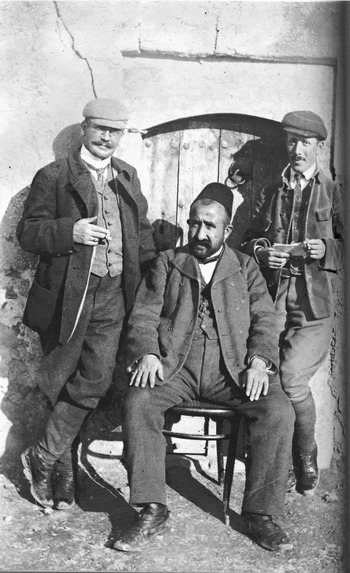
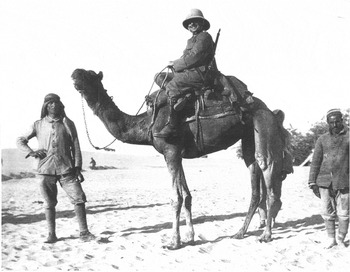
Second, Herzfeld's career demonstrates how long it took for European scholars, not to mention the general public, to assimilate the huge explosion of publications and excavations concerning the ancient Near East beginning about 1880. This explosion, which I have called elsewhere the Second Oriental Renaissance (Marchand Reference Marchand2009, 157–215), entailed the overturning of the conventional understanding of the ancient Near East as filtered through the eyes of the Old Testament and the Greeks – but understanding and accepting it was by no means easy, in part because some of its advocates (like the pan-Babylonists mentioned above) were radical maximizers (and some of them racists to boot), and thus written off by an academic world whose scholarly ideals were still very much defined by (minimizing) classical philologists. Herzfeld participated in this renaissance, and both benefited from it and suffered from its incompleteness in his formative years. Much of the material Herzfeld turned up was very unfamiliar to scholars back home, many of whom remained hostile to the idea that Semitic cultures could have produced anything that deserved to be called art, or to be put in a national museum. The man who knew most about Islamic art in Herzfeld's youth was Friedrich Sarre (figure 1), a private collector and connoisseur who had donated part of his collection to the Royal Museums in Berlin so that there would be Islamic art on display (Marchand Reference Marchand2009, 395, 398). The important excavations at Samarra executed by Sarre and Herzfeld between 1910 and 1913 were Germany's first truly scholarly investigations of an Islamic site, and followed many years of excavating in which non-classical ruins were hastily destroyed in the rush to find Greek stuff. Herzfeld became an internationally acclaimed authority with respect to a number of different fields – Islamic art, Persian art and archaeology, Persian epigraphy, and Syrian prehistory, just to mention a few – but he had relatively few people to talk to, or models he could use to defend the importance of his work and its relevance to a still very Eurocentric public. Merely to compare him to his near contemporary Theodor Wiegand (figure 2), excavator of numerous Near Eastern classical sites, and the moving spirit behind the building of the Berlin Pergamon Museum, is to illustrate, in part, the very different cultural and institutional power occupied by orientalists and classicists, even in the 1920s and 1930s (Wenk Reference Wenk1985).
The young minimalist Ernst Herzfeld (left) with his mentor Friedrich Sarre (right) and the Iraqi scholar Daud al-Chalabi (seated) in Mossul, Iraq, 1907 (taken from the exhibition catalogue Das Große Spiel. Archäologie und Politik zur Zeit des Kolonialismus (1860–1940), ed. by Charlotte Trümpler (Kröger Reference Kröger and Trümpler2008, 276)).

Trained as a classical archaeologist, Theodor Wiegand spent much of his career excavating in ‘the Orient’. During the Great War, he worked with the German–Turkish Monument Protection Commando (pictured here), securing monuments as well as seeking artefacts that the Ottomans could sell to offset their debts (Strachan Reference Strachan2003, 711) (taken from Marchand Reference Marchand1996, 253).

Third, for reasons that remain obscure, but may have something to do with his heritage, Herzfeld resisted racialist thought, despite its pervasiveness in the fields he studied. When others, including the maverick Austrian art historian Josef Strzygowski (whose importance this volume underplays), put forward grand theories of Iranian–Aryan cultural and ethnic diffusion, Herzfeld resisted, and although he very much championed Iran as the great centre of Asian prehistoric culture, he repeatedly rejected the intermixing of archaeology and racial anthropology, preferring more general comparative and cultural diffusionary approaches (Root Reference Root, Gunter and Hauser2005, 234–38; Hauser Reference Hauser, Gunter and Hauser2005, 533–47). Reading between the lines, one might find evidence in several essays that Herzfeld was actually trying to find points of Semitic–‘Aryan’ cultural mixing; he evidently made a special effort to locate the few Fortification tablets written in Aramaic rather than in Elamite cuneiform, and emphasized too the Aramaic roots of Old and Middle Persian (Dusinberre Reference Dusinberre, Gunter and Hauser2005, 153–54; Skjaervø Reference Skjaervø, Gunter and Hauser2005, 300–7). Another interesting set of clues emerges from Trudy Kawami's discussion of Herzfeld's work on Parthian art, where she shows that the archaeologist insisted on early dates and an association with the Magi for the monuments at the Parthian site of Kuh-e Khwaja, perhaps hoping to ‘unit[e] his European self with the East that had brought him such scholarly success and personal satisfaction’ (Kawami Reference Kawami, Gunter and Hauser2005, 190). Although no contributor takes on the Nabokovian task of interpreting Herzfeld's two-volume Zoroaster and his world – a massive hodge-podge of etymologies and cross-cultural linkages that revels in its own minimalism – I wonder if here, too, the point was to position Zoroaster in a multicultural Mediterranean world. In the introduction, Herzfeld gently rejects his mentor Eduard Meyer's early date for Zoroaster, which allows him subtly to invalidate attempts at inventing an exclusively ‘Aryan’ origin for what will be Christian–individualist–Western ideas, and to insist on the importance of the period 500–700 for all world religions (Herzfeld Reference Herzfeld1947, 29).Footnote 7 He does not explicitly mention Judaism, but cites the book of Job, a text in which, of course, the relationship between God and the individual is paramount. The enormous effort Herzfeld invested in writing Zoroaster, at the end of his life, and when so many other unfinished projects called out to him, suggests to me that he was keenly aware of the importance of making a non-racial Iran a critical moment in a world history which linked East and West – but lacked both the courage, or the hubris – as well, perhaps, as the audience – to put his claims forward in maximalist form.
Thus we return, in quite a different way, to the problems with which we began: the problem of minimizers and maximizers, the problem of Greek–Near Eastern relationships and the problem of making models for present-day European culture based on our speculations about the Mediterranean world in the archaic era. The books reviewed above demonstrate that this debate is by no means over; we will continue these battles, in part because the evidence will never suffice to convince all parties, and in part because the debate is, in complicated ways, bound up with our understanding of what (and where) Europe is, and what it should be, questions that have become harder to answer the more that Christendom has vanished – or, more accurately, taken on a new global geography – and the EU has expanded eastward. Archaeologists will find these volumes in many respects unsatisfying, in part because archaeological evidence is used so infrequently, and in part because – with the except of Peter Haider's essay (Haider Reference Haider, Rollinger and Ulf2004) – they ignore the crucial subject of Greek art and its relationship with Near Eastern forms, in Winckelmann's wake one of the most canonical ways of posing the question about Greece's debts to the East, and one where there is a considerable amount of evidence (especially pottery) that might be brought to bear on the subject. I doubt, in fact, if readers who have formed an opinion about Greek, or European, autonomy will change their minds as a result of reading any of these books. But, as a means of taking our current scholarly temperature, these books tell us something interesting, and that is that for all our modernness, many of us still care very deeply about the ancient world, and especially about the Greeks.
Acknowledgements
I would like to thank Jeannette Marchand for her extremely helpful comments on an earlier draft of this essay, and especially for suggesting the idea of classical scholarship's tendency to minimalism; I am indebted to R.L. Gordon for his enormously erudite comments and corrections. I would also like to thank Alexander Gramsch for inviting me to write this essay, and for helping me to polish it. The opinions expressed, and any remaining errors, however, are my own.