INTRODUCTION
There is growing attention to the identification and treatment of sport-related concussions (SRCs). According to the National Collegiate Athletic Association (NCAA) Injury Surveillance System, there has been a 50% increase in the concussion rate reported from the 1988–1989 season to the 2003–2004 season (Hootman, Dick, & Agel, Reference Hootman, Dick and Agel2007). Currently, NCAA institutions are required to have a concussion management program in place that includes a cognitive assessment, among other things (Parsons, 2014a, Reference Parsons2014b). Given these guidelines, baseline testing has become standard best practice for many sports concussion programs (Iverson, Reference Iverson2007; McCrory et al., Reference McCrory, Meeuwisse, Dvorak, Aubry, Bailes, Broglio and Vos2017; Valovich McLeod, Fraser, & Johnson, Reference Valovich McLeod, Fraser and Johnson2017). Ensuring validity of baseline testing is important as it is only useful as a comparative measure if it is an accurate reflection of normal functioning (Grindel, Lovell, & Collins, Reference Grindel, Lovell and Collins2001). However, several factors have been shown to have an influence on these baseline assessments, including sleep, emotional difficulties, history of attention deficit hyperactivity disorder (ADHD), learning disorders (LDs), and stress (Reference Iverson, Gardner, Terry, Ponsford, Sills, Broshek and SolomonIverson et al., Reference Iverson, Silverberg, Mannix, Maxwell, Atkins, Zafonte and Berkner2015a, Reference Iverson2007; Makdissi et al., Reference Makdissi, Davis, Jordan, Patricios, Purcell and Putukian2013; Putukian, Riegler, Amalfe, Bruce, & Echemendia, Reference Putukian, Riegler, Amalfe, Bruce and Echemendia2018). Obtaining a baseline assessment that reflects a non-impaired comparison for return-to-play decisions can help to ensure that athletes are not returned to play too soon following an injury. Prematurely returning to play can be associated with an exacerbation of symptoms as well as a higher likelihood of re-injury (Guskiewicz et al., 2003; McCrory, Reference Brandt and Benedict2001).
Sleep in Student Athletes
Sleep can influence baseline performance but has received less research attention even though difficulties with sleep are common among both college students and athletes. Demands on collegiate student athletes, including academics, practices, and travel for games, may result in disrupted sleep patterns. A 2015 report found that 29% of student athletes surveyed reported sleep difficulties and over 50% reported that these sleep problems impacted their academic performance (American College Health Association, 2015). A recent systematic review highlighted that student athletes report concussion-like symptoms in their everyday lives (Iverson et al., Reference Iverson, Silverberg, Mannix, Maxwell, Atkins, Zafonte and Berkner2015b). This constellation of symptoms can be nonspecific, resulting from increases in emotional difficulties, stress, exercise, and poor sleep quality (Iverson et al., Reference Iverson, Silverberg, Mannix, Maxwell, Atkins, Zafonte and Berkner2015b). In this sample of non-concussed high school athletes, sleep symptoms were the most frequently endorsed symptoms with significant numbers of both males and females reporting fatigue, sleeping less than usual, and trouble falling asleep (Iverson et al., Reference Iverson, Silverberg, Mannix, Maxwell, Atkins, Zafonte and Berkner2015b).
Sleep and Cognitive Performance
Sleep has a negative impact on cognitive performance across a variety of patient populations. Several review papers on the neurocognitive consequences of sleep deprivation have consistently shown decreases in attention, executive functioning, psychomotor speed, vigilance, and working memory (Goel, Rao, Durmer, Reference Bucks, Olaithe and Eastwood2013; Simpson, Gibbs, & Matheson, Reference Bubu, Brannick, Mortimer, Umasabor-bubu, Sebastião, Wen and Anderson2017). One meta-analysis found that individuals experiencing sleep difficulties are at a higher risk for both cognitive decline and Alzheimer’s disease (Bubu et al., Reference Bubu, Brannick, Mortimer, Umasabor-bubu, Sebastião, Wen and Anderson2017). Further, research has demonstrated a dose–response relationship between sleep restriction and cognitive performance in the domains of sustained attention, working memory, and cognitive throughputFootnote 1 performance (Van Dongen, Maislin, Mullington, & Dinges, Reference Van Dongen, Maislin, Mullington and Dinges2003).
Research specifically on the relationship between sleep and cognitive functioning in adolescents/college-aged individuals has been more limited. Adults and children with sleep-disordered breathing and other sleep disorders have shown executive dysfunction (O’Brien, Reference O’Brien2011). Additionally, in children and adolescents, poor sleep quality has been associated with poor attention, working memory, impulse control, and diminished executive functioning skills (Beebe, Reference Beebe2011). In healthy individuals, sleep loss and sleep deprivation have been associated with increased severity of symptom reporting and worse performance on a task of visual memory, reaction time, and visual motor speed compared to those getting normal sleep (Stocker, Khan, Henry, & Germain, Reference Stocker, Khan, Henry and Germain2017). Taheri and colleagues (2012) examined the short-term, acute impact of total sleep deprivation on cognitive functioning in collegiate male athletes. Results revealed that reaction time was significantly slower following sleep deprivation than it was at baseline, prior to sleep deprivation (Taheri & Arabameri, Reference Taheri and Arabameri2012). However, understanding the impact of less extreme forms of sleep disruption, such as sleeping less than normal, on cognitive functioning, might be more widely applicable to a college athlete population.
Sleep and SRC
Sleep difficulties might have important implications both for performance at baseline and following an SRC. Some research has demonstrated that low sleep quality the night prior to baseline testing is associated with subjective perception of overall difficulties, as measured by self-report symptom measures, but not objective neurocognitive effects (Mihalik et al., Reference Mihalik, Lengas, Register-Mihalik, Oyama, Begalle and Guskiewicz2013; Silverberg, Berkner, Atkins, Zafonte, & Iverson, Reference Silverberg, Berkner, Atkins, Zafonte and Iverson2016). Additionally, one sleep laboratory study demonstrated that this was also the case when comparing concussed to non-concussed athletes (Gosselin et al., Reference Gosselin, Lassonde, Petit, Leclerc, Mongrain, Collie and Montplaisir2008). Concussed athletes reported more sleep symptoms and worse sleep quality compared to control athletes; however, no objective differences in sleep disturbance (measured by polysomnographic variables) or cognitive impairment were found (Gosselin et al., Reference Gosselin, Lassonde, Petit, Leclerc, Mongrain, Collie and Montplaisir2008). One study has contradicted these findings, showing some objective performance differences between athletes with and without sleep difficulties at baseline (McClure, Zuckerman, Kutscher, Gregory, & Solomon, Reference McClure, Zuckerman, Kutscher, Gregory and Solomon2013). Overall, there is clear evidence that subjective reports of difficulties, as measured by overall symptom reporting, are increased at baseline for athletes getting insufficient sleep, while evidence of objective performance differences is variable.
Sleep difficulties may also have an impact on post-concussion performance. A study by Kostyun and colleagues (2014) reported that short sleep duration (<7 hr) was associated with higher self-reported symptoms, but not with any objective test performance on the ImPACT. In one study, concussed athletes reporting symptoms from the sleep cluster of the Post-Concussion Symptom Scale (PCSS) performed significantly worse on a neurocognitive composite of memory tests than concussed athletes not reporting sleeping difficulties (Guty & Arnett, Reference Driller, Mah and Halson2018). Another study by Sufrinko and colleagues (2015) found that pre-injury sleep disturbances were predictive of post-injury symptom total and worse performance on visual memory and reaction time as compared to the control group post-injury.
Gaps in the Literature
Presently, one of the most consistent findings on sleep and baseline performance is that athletes getting less sleep prior to baseline self-report significantly more symptomatology. However, currently there is no clear understanding of what types of symptoms are associated with less sleep. Previous exploratory factor analysis has led to the identification of four symptom clusters on the PCSS: affective, cognitive, physical/somatic, and sleep (Kontos, Elbin, et al., Reference Kontos, Elbin, Schatz, Covassin, Henry, Henry, Pardini and Collins2012; Merritt, Meyer, & Arnett, Reference Merritt, Meyer and Arnett2015). Identifying whether there are differences in the PCSS total symptom score reported across each of these symptom clusters could highlight what types of interventions would be most helpful for these athletes. Further, previous research has generally used a theoretically derived cutoff of 7 hr of sleep to categorize athletes with sleep difficulties prior to a concussion. Yet, given the unique patterns of sleep difficulties in both college athletes and students, it might be beneficial to use an empirically derived value, based on a normative sample, so difficulties that are experienced over and above peers can be specifically examined.
Further, to our knowledge, no previous work has compared athletes with insufficient sleep at baseline to concussed athletes with sufficient sleep. SRC is known to have an impact on cognitive functioning, such that concussed athletes’ performance is worse than non-concussed athletes on tests of attention and concentration, verbal learning, verbal memory, divided attention, and global cognitive deficits (Belanger & Vanderploeg, Reference Belanger and Vanderploeg2005; Broglio & Puetz, Reference Broglio and Puetz2008; Echemendia & Julian, Reference Echemendia and Julian2001). These areas overlap with the areas of functioning also thought to be impaired due to poor sleep. Therefore, it is possible that athletes getting insufficient sleep may be performing similarly to athletes who have sustained a concussion, complicating the picture when interpreting post-concussion findings.
Current Study
The current study sought to examine the relationship of sleep difficulties with self-reported symptoms and objective neuropsychological test performance in two ways. First, we examined differences between athletes getting either sufficient or insufficient sleep the night prior to a baseline on these outcome measures. Next, we examined whether insufficient sleep the night prior to a baseline assessment resulted in a similar pattern of symptom reporting and neuropsychological test performance as athletes sustaining a concussion. In the current study, athletes were tested at baseline and/or post-concussion on a comprehensive neuropsychological test battery. Ratings of symptoms on the PCSS were assessed for PCSS total symptom score, total symptom score in the four symptom clusters (sleep, physical, cognitive, and affective), and headache. Performance on neurocognitive test composites for memory and attention/processing speed were evaluated.
Specific Aims and Hypotheses
Aim 1
To examine whether there are subjective differences in self-reported symptoms, or objective performance on two neurocognitive composites, between a group of insufficient sleepers (≤5.78 hr) or sufficient sleepers (>7.07 hr) at baseline.
Hypothesis 1
In line with previous research, we predict that, compared to athletes with sufficient sleep at baseline, those with insufficient sleep will report higher PCSS total symptom scores overall and for each symptom cluster. However, we predict that the sufficient and insufficient groups will not significantly differ on objective neuropsychological outcome measures.
Aim 2
To examine differences between athletes getting insufficient sleep the night prior to baseline assessment and athletes getting sufficient sleep the night before a post-concussion assessment on both symptom reports and performance on a neurocognitive test battery.
Hypothesis 2
Athletes reporting insufficient sleep at baseline will not significantly differ from athletes reporting sufficient sleep post-concussion in terms of both self-reported symptoms and objective test performance.
METHODS
Participants
This was a longitudinal prospective research study that is part of the sports concussion program at our large Division 1 university. Athletes who participated in the sports concussion program between 2002 and 2018 were included in this study. All participants were referred for concussion testing either prior to their participation in collegiate athletics and/or after sustaining an SRC. Referrals were made by an athletic trainer or team physician. The evaluation at either time point included a hybrid neuropsychological test battery, as well as psychosocial questionnaires. For both aims, participants were divided into two groups based on hours slept the night prior to the neuropsychological evaluation (baseline or post-concussion). These groups were empirically derived based on the mean and standard deviation of hours slept the night prior to the baseline in the sample of all participants who responded to that question at baseline (n = 772, M = 7.07, SD = 1.29). The sufficient sleep group consisted of anyone getting more hours of sleep than the mean in our sample (>7.07 hr) and the insufficient sleep group consisted of anyone getting less than or equal hours of sleep to one standard deviation below the mean in our sample (≤5.78 hr).
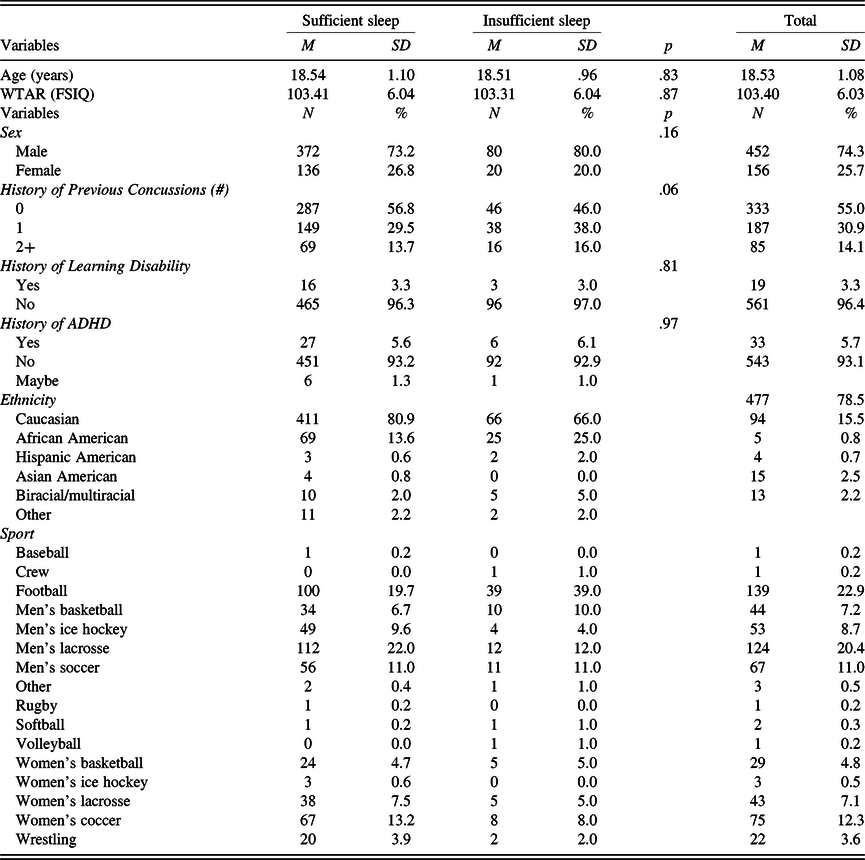
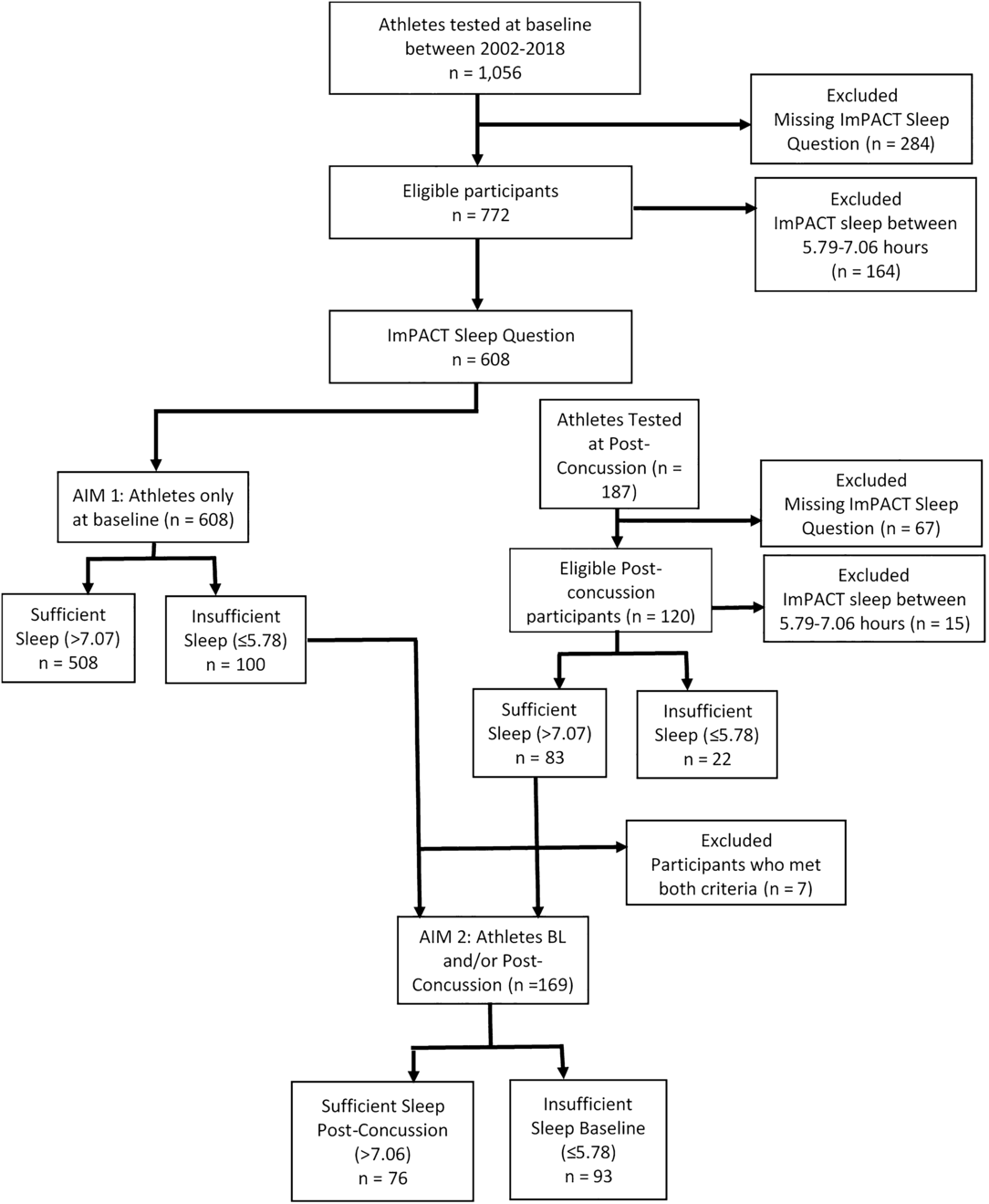
For Aim 1, athletes were selected from the total sample of athletes completing a baseline assessment (n = 1,056). Athletes were excluded if they were missing data for the ImPACT question related to prior night’s sleep (n = 284). Additionally, given how the two sleep groups were created, any athlete sleeping between 5.77 and 7.06 hr the night prior to a baseline was excluded from the analyses (n = 163). This resulted in a final sample of 608 athletes for Aim 1 of the study (insufficient sleep = 100, sufficient sleep = 508). The mean age of the participants was 18.52 years old (SD = 1.08) with a range from 17 to 22. There were no baseline differences between these two groups on Wechsler Test of Adult Reading (WTAR) mean Full Scale IQ (FSIQ) estimate, number of previous head injuries, history of LD or ADHD.
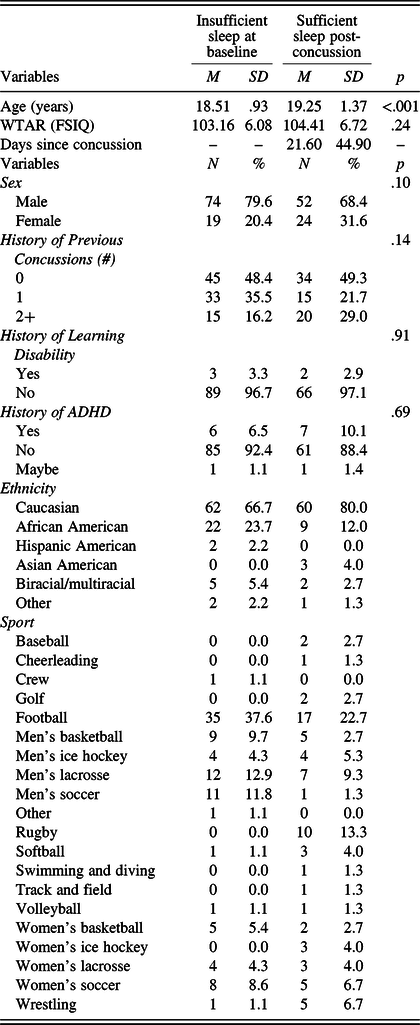
For Aim 2, athletes were included if they completed a baseline and/or post-concussion assessment. Given the nature of this sport concussion program, there were instances of athletes completing a baseline assessment, but never experiencing a concussion and therefore not completing any post-concussion assessments. Alternately, there were also cases where athletes were not referred to our program for baseline testing but were referred if they did sustain a concussion; therefore, they would only have the post-concussion assessment(s). Thus, the sample of participants included for Aim 2 of the study consisted of any individual who completed a baseline assessment and met criteria for insufficient sleep and any individual who completed a post-concussion assessment (days since injury: M = 21.60, SD = 44.90, Mdn = 7.00, range = 1–243) and met criteria for sufficient sleep. Any athlete who was tested at both time points, and simultaneously met both criteria, was removed from the analysis (n = 7). The mean age of participants included for analyses for Aim 2 was 18.83 years (SD = 1.20) with a range from 17 to 22. There was a total of 169 athletes (insufficient at baseline = 93, sufficient at post-concussion = 76) included in the analyses for Aim 2 of the study. There were no differences between these two groups on WTAR mean FSIQ estimate, number of previous head injuries, history of LD or ADHD. The post-concussion sample was significantly older than the baseline sample. Athletes are referred for baseline prior to their first year of play, thus athletes referred for concussion following injury are inherently referred later in their careers (and thus when they are older).
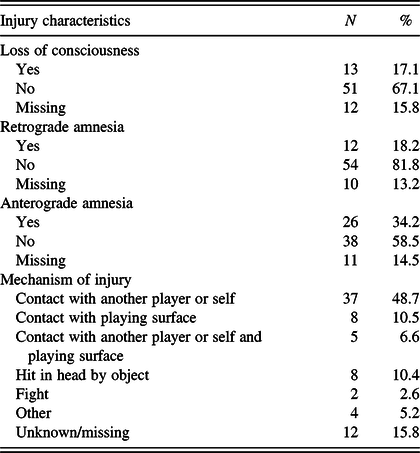
Demographic data are provided in Tables 1 (Aim 1) and 2 (Aim 2). Injury characteristics for the post-concussion sample are provided in Table 3. Figure 1 provides a flowchart of inclusion and exclusion criteria for each aim.
Participant demographic variables for sufficient sleep at baseline, insufficient sleep at baseline, and all athletes at baseline (Aim 1)

Participant demographics for Aim 2

Post-concussion sample (sufficient sleepers) injury characteristics

Flowchart of participants included in analyses.

Procedures
Baseline and post-concussion testing were completed as part of the sports concussion program at our university. This program is based on the “Sports as Laboratory Assessment Model (SLAM)” (Bailey, Barth, & Bender, Reference Bailey, Barth and Bender2009). Athletes are referred by their athletic trainer or team physician at baseline and/or post-concussion. Concussion was defined according to the following criteria: an injury to the head resulting from a trauma or biomechanical force wherein brain function is disrupted as evidenced by any alteration in mental status and/or post-concussion signs or symptoms at the time of injury, posttraumatic amnesia lasting less than 24 hr, and/or loss of consciousness lasting 30 min or less (Mild Traumatic Brain Injury Committee, 1993; Ruff, Iverson, Barth, Bush, & Broshek, Reference Ruff, Iverson, Barth, Bush and Broshek2009). The neuropsychological test battery was administered by undergraduate research assistants or graduate students who were supervised by a Ph.D.-level clinical neuropsychologist. This study was approved by the University’s Institutional Review Board and informed consent was collected from all participants.
Measures
The ImPACT test includes the PCSS which is a self-report of types of symptoms and severity of symptoms, demographic and other background questions, and neurocognitive testing modules used to derive four neurocognitive composite scores. The PCSS consists of 22 items which are rated on a 7-point Likert scale ranging from 0 to 6 (0 = no symptoms, 6 = severe symptoms). These 22 items can be further grouped together into four common “clusters” (cognitive, physical, affective, and sleep) and headache based on previous factor analysis (Merritt, Meyer, & Arnett, Reference Merritt, Meyer and Arnett2015). The outcome measures for subjective, self-reported difficulties in this study were the PCSS total symptom severity, the four symptom cluster scores, and a headache rating. Additionally, hours of sleep the night prior to the baseline or post-concussion assessment was determined using a question on the ImPACT test that asks participants “how many hours did you sleep last night?”. Reponses to this question were used to create the two sleep groups described above. Measuring sleep with a single-item self-report measure is a cost-effective and practical way to measure sleep that has been used in several previous research studies examining sleep in athletes (Girschik, Fritschi, Heyworth, & Waters, Reference Girschik, Fritschi, Heyworth and Waters2012; Kostyun, Milewski, & Hafeez, Reference Kostyun, Milewski and Hafeez2015; McClure et al., Reference McClure, Zuckerman, Kutscher, Gregory and Solomon2013; Mihalik et al., Reference Mihalik, Lengas, Register-Mihalik, Oyama, Begalle and Guskiewicz2013). Self-report of a single night’s sleep has been shown to be moderately correlated (r = .47) with sleep measured using actigraphy and, when comparing self-report of sleep from the night before, a community sample overestimated sleep by only 18 min compared to polysomnography (the gold standard measurement) (Girschik et al., Reference Girschik, Fritschi, Heyworth and Waters2012; Silva et al., Reference Silva, Goodwin, Sherrill, Arnold, Bootzin, Smith and Quan2007).
The paper-and-pencil tests were: the Brief-Visuospatial Memory Test-Revised (BVMT-R) (Benedict, Reference Benedict1997), the Comprehensive Trail-Making Test (CTMT) (Reynolds, Reference Reynolds2002), a modified version of the Digit Span Test (Weschler, Reference Weschler1997), the Hopkins Verbal Learning Test-Revised (HVLT-R) (Brandt & Benedict, Reference Brandt and Benedict2001), the Penn State University Cancellation Test (Echemendia & Julian, Reference Echemendia and Julian2001), the Stroop Color-Word Test (Trenerry, Crosson, DeBoe, & Leber, Reference Trenerry, Crosson, DeBoe and Leber1989), and the Symbol-Digit Modalities Test (SDMT) (Smith, Reference Smith1991). The computerized tests were the ImPACT (Lovell, Collins, Podell, Powell, & Maroon, Reference Lovell, Collins, Podell, Powell and Maroon2000) and the Vigil/W Continuous Performance Test (Cegalis & Cegalis, Reference Cegalis and Cegalis1994).
Two neurocognitive composites were created using the indices from each test from the battery described above. These two composites were the objective performance outcome measures used in our study. The indices from the ImPACT test are the Verbal Memory Composite, Visual Memory Composite, Visual Motor Speed Composite, and Reaction Time Composite. The three indices that were used from the Vigil/W Continuous Performance Test were Vigil-Total Omissions, Vigil-Total Commissions, and Vigil-Average Delay. For the paper-and-pencil neuropsychological tests, the following indices were used: the HVLT-R Total Immediate Recall and HVLT-R Delayed Recall, the BVMT-R Total Immediate Recall and BVMT-R Delayed Recall, the SDMT Total Score, the Stroop Word Time (Stroop 1) and the Stroop Color-Word Time (Stroop 2), the Penn State Cancellation Test Total Correct, the CTMT “Simple” time and the CTMT “Executive” time, and Digits Span Forward and Backward total digits.
Statistical Analyses
All analyses were conducted with the Statistical Package for the Social Sciences (SPSS), Version 24.0 (IBM Corp., 2017).
Scores on all neuropsychological test measures were standardized to z-scores using published baseline norms from a large sample of college athletes (Age: M = 18.48, SD = 1.01) from a Division I university (Merritt et al., Reference Merritt, Meyer, Cadden, Roman, Ukueberuwa, Shapiro and Arnett2016). Norms from Merritt et al. (Reference Merritt, Meyer, Cadden, Roman, Ukueberuwa, Shapiro and Arnett2016) were used for all test measures except the ImPACT test, since norms for this test were not provided in the previous paper. Therefore, we created separate norms, from a reasonably equivalent sample to calculate z-scores for the ImPACT test indices. A more detailed account of deriving these z-scores has been described in previous work (Riegler, Guty, & Arnett, Reference Riegler, Guty and Arnett2019). z-scores for all tests were created such that higher scores indicated better performance.
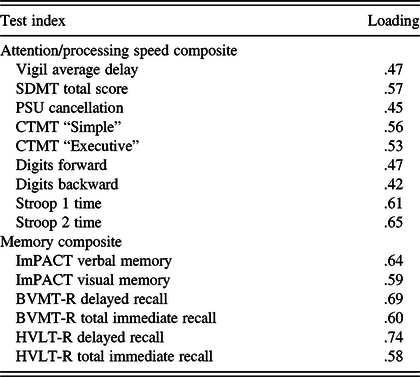
Principal components analyses (PCA) were used to identify and compute composite scores for conceptually related test indices (attention/processing speed and memory tests). For the PCA of attention/processing speed tests, the following indices were included: Vigil Average Delay, SDMT Total, Stroop 1 and 2 Time, Penn State University (PSU) Cancellation, CTMT “Simple”, CTMT “Executive”, Digits Forward, and Digits Backward. Of the 13 tests entered into the analysis, 9 of the variables loaded above .40 and were thus retained for the final attention/processing speed composite. The indices eliminated included: Vigil Commissions (.26), Vigil Omissions (.35), ImPACT Visual Motor Speed Composite (−.33), and ImPACT Reaction Time Composite (.08). A comparable PCA was conducted with the following memory indices: ImPACT Verbal Memory Composite, ImPACT Visual Memory Composite, BVMT-R Total Immediate and Delayed Recall, and HVLT-R Total Immediate and Delayed Recall. All of the variables loaded above .40 and were retained for the final memory composite. The loadings for the retained tests for each composite can be found in Table 4.
Retained tests from PCA for each composite score and their loadings

RESULTS
Aim 1
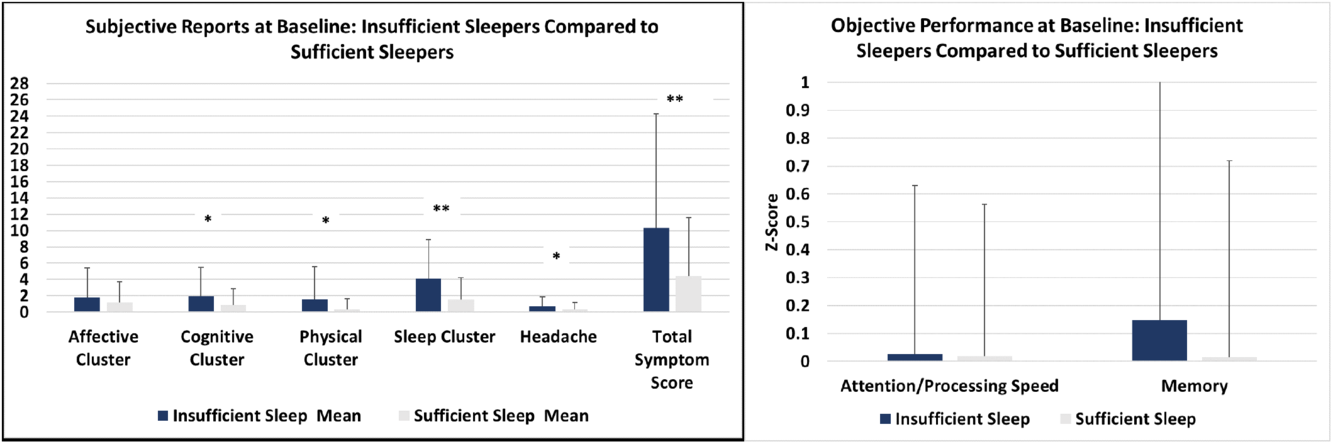
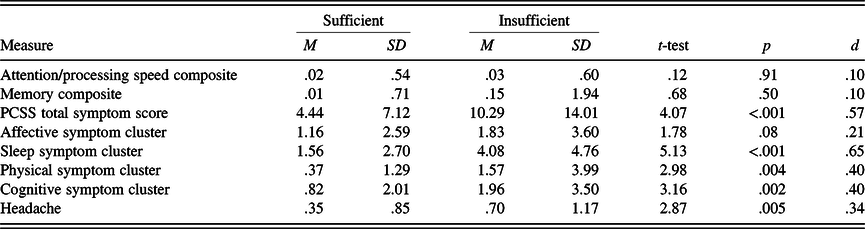
Independent samples t-tests were conducted to examine differences between the sufficient and insufficient sleep groups at baseline on self-report symptoms and two neurocognitive composites. Results revealed that, compared with those athletes getting sufficient sleep, those getting insufficient sleep the night prior to baseline assessment reported significantly more overall symptoms, t(109.26) = 4.07, p < .001, d = .57; sleep cluster symptoms, t(111.79) = 5.13, p < .001, d = .65; physical cluster symptoms, t(103.10) = 2.98, p = .004, d = .40; cognitive cluster symptoms, t(112.23) = 3.16, p = .002, d = .40; and headache, t(120.41) = 2.87, p = .005, d = .34. No significant effect was found for the affective symptoms cluster, t(120.07) = 1.78, p = .08, d = .20. There were no significant differences between the sufficient and insufficient sleep groups on either of the neurocognitive composites: memory composite, t(104.26) = .68, p = .50, d = .10, and processing speed/attention composite, t(601) = .12, p = .91, d = .10. These results are shown in Figure 2 and Table 5.
Results from Aim 1 of the study for objective and subjective differences between sufficient and insufficient sleepers.

Mean performance at baseline on individual test indices and composites

M = mean, SD = standard deviation, * indicates p < .05. PCSS = Post-Concussion Symptom Scale. All cognitive indices are have been standardized to z-score; PCSS indices are raw scores.
Aim 2
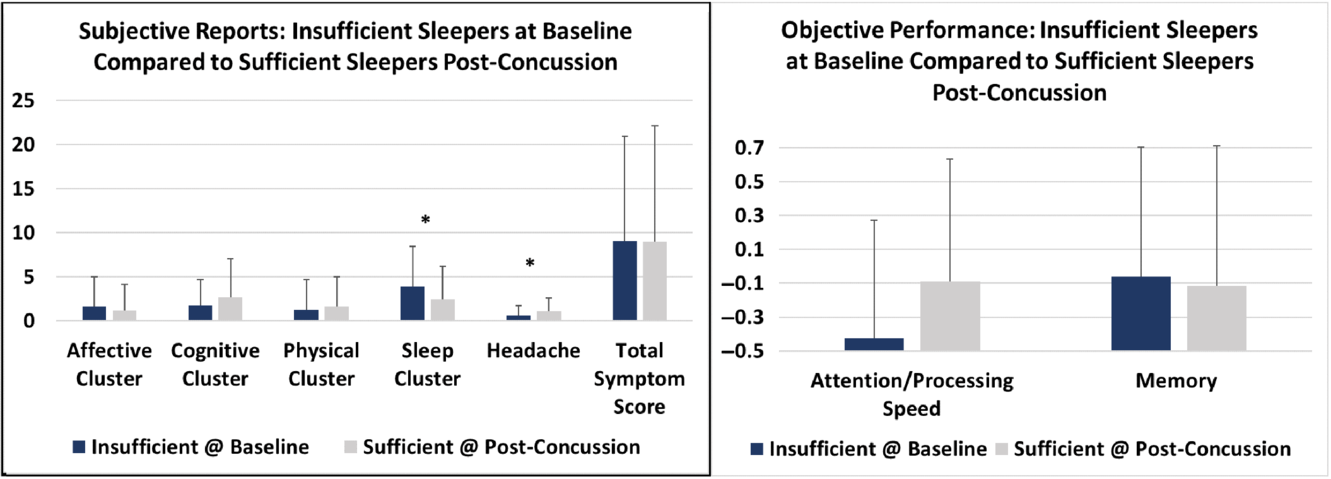
Independent samples t-tests were conducted to examine differences between the insufficient sleep group at baseline and the sufficient sleep group post-concussion on self-reported symptoms and two neurocognitive composites. There were no significant differences between the groups on the following outcome measures: overall symptoms, t(167) = .03, p = .98, d = .004; affective symptom cluster, t(167) = .88, p = .38, d = .14; cognitive symptom cluster, t(127.78) = −1.71, p = .10, d = −.26; physical symptom cluster, t(167) = −.71, p = .48, d = −.11; memory composite, t(106) = .48, p = .63, d = .10; or attention/processing speed composite, t(106) = .06, p = .95, d = .01. The groups did significantly differ on the sleep symptom cluster, t(167) = 2.22, p = .03, d = .35, and headache, t(138.22) = −2.44, p = .02, d = −.39Footnote 2 . This difference was such that the post-concussion group reported a higher severity of headache and the insufficient sleep at baseline group reported more sleep difficulties. These results are shown in Figure 3 Footnote 3 .
Results from Aim 2 of the study for objective and subjective differences between insufficient sleepers at baseline compared to sufficient sleepers post-concussion.

DISCUSSION
Contributions from the Current Study
Previous research has provided mixed results related to the impact of poor sleep on baseline neuropsychological assessment. Some researchers have found that, while athletes subjectively are experiencing more overall symptoms as a result of poor sleep, this has no impact on cognitive performance, while others have found that poor sleep impacts both subjective report of difficulties and objective performance deficits. The current study explored this issue using a more rigorous method to operationalize “insufficient” compared to “sufficient” sleep. Rather than using a theoretically derived cutoff of 7 hr, we grouped our sample into sufficient and insufficient sleepers based on the mean and standard deviation of a large normative sample of college athletes at baseline. Examining differences between these two groups revealed that, compared with sufficient sleepers at baseline, insufficient sleepers reported significantly more overall symptoms and more symptoms from each of the five symptom clusters of the PCSS but did not demonstrate any significant differences on objective test performance. Further, our study explored whether athletes getting insufficient sleep the night prior to a baseline were significantly different on symptom report and cognitive testing than athletes with sufficient sleep before their post-concussion assessment. The results showed that these groups of athletes were not significantly different in either their symptom reporting of cognitive, physical, affective, total symptom score, or cognitive test performance. The only differences between groups were that insufficient sleepers at baseline reported more sleep symptoms than sufficient sleepers post-concussion and sufficient sleepers post-concussion reported worse headache than insufficient sleepers at baseline. The fact that the insufficient sleep group reported more sleep symptoms is expected, given that the nature of the grouping is based on sleep therefore, unsurprisingly insufficient sleepers report more subjective sleep difficulties. Further, headache is a hallmark symptom of concussion, and previous research has shown that it is one of the most common symptoms following concussion (Merritt, Rabinowitz, & Arnett, Reference Merritt, Rabinowitz and Arnett2015). Thus, it is to be expected that following concussion athletes are reporting a greater severity of headache. In sum, the effect of insufficient sleep at baseline made athletes appear similar to a concussed athlete with sufficient sleep.
There are a few potential explanations for why athletes who do not get enough sleep prior to testing might appear concussed from self-report and objective testing. Athletes who report insufficient sleep may also be characterized by a more long-standing pattern of poor sleep, and both short-term sleep deprivation and long-term chronic sleep issues have been demonstrated to impact cognitive functioning in a variety of literatures (Bucks, Olaithe, & Eastwood, Reference Bucks, Olaithe and Eastwood2013; Lim & Dinges, Reference Lim and Dinges2012; Lo, Groeger, Cheng, Dijk, & Chee, Reference Lo, Groeger, Cheng, Dijk and Chee2016). Additionally, non-concussed athletes with insufficient sleep reported similar levels of post-concussion symptoms as concussed athletes. Post-concussion symptoms are heterogeneous and nonspecific to concussion, and an individual can experience dizziness, mental fogginess, irritability, and mood symptoms for a variety of reasons. Additionally, issues with sleep are comorbid with mood disorders, chronic headache, and self-reported cognitive problems (Baglioni et al., Reference Baglioni, Nanovska, Regen, Spiegelhalder, Feige, Nissen and Riemann2016; Benca, William, Thisted, & Gillin, Reference Benca, William, Thisted and Gillin1992; Dosi, Figura, Ferri, & Bruni, Reference Dosi, Figura, Ferri and Bruni2015; Vaessen, Overeem, & Sitskoorn, Reference Vaessen, Overeem and Sitskoorn2015).
These findings have important implications for both assessment and treatment for athletes both at baseline and post-concussion. The results from this study indicate that an athlete who was administered a baseline assessment after an insufficient night of sleep could underperform cognitively and report elevated symptoms that would skew any comparison post-concussion. An athlete could be identified as returned to baseline functioning, but such a determination could be driven solely by the lower cognitive performance and higher symptom scores at baseline (due to insufficient sleep), rather than the return to the athlete’s true normative functioning. There may need to be consideration of prior night’s sleep when determining whether a baseline is a valid comparison and whether it should be administered to athletes who endorse insufficient sleep. Future work could explore whether potential performance and symptom adjustments based on sleep prior to testing should be considered when assessing change from baseline to post-concussion.
The results of our study also show that poor sleep is related to both symptom reporting and cognitive performance at baseline and highlights the importance of assessing sleep at baseline. There are several validated sleep questionnaires that capture duration, quality, and patterns of sleep, and such measures are brief and easy to administer. Some common sleep questionnaires such as the Pittsburgh Sleep Quality Index, the Sleep Hygiene Index, and the Epworth Sleepiness Scale assess different aspects of sleep patterns and daily fatigue and have been validated in nonclinical populations (Buysse et al., Reference Buysse, Iii, Monk, Hoch, Yeager and Kupfer1991; Driller, Mah, & Halson, Reference Driller, Mah and Halson2018; Mastin, Bryson, & Corwyn, Reference Mastin, Bryson and Corwyn2006). Such instruments could be incorporated as part of baseline assessments to flag athletes who may need sleep-related interventions.
Previous research on post-concussion risk factors and outcomes has often focused on non-modifiable athlete characteristics such as diagnosis of ADHD or LD and history of prior concussions. Sleep is a modifiable aspect of behavior that is treatable both through pharmacological and behavioral intervention. Behavioral treatment for sleep disturbances may be more desirable for athletes given the side effects of pharmacological interventions and the impact that this could have on performance. Additionally, evidence suggests that behavioral interventions for sleep issues, specifically Cognitive Behavioral Therapy for Insomnia (CBT-I) has equivalent short-term effects as pharmacological interventions and superior long-term effects (Riemann & Perlis, Reference Riemann and Perlis2009). There is also evidence that pre-injury sleep debt and reduced neurocognitive reserve as a result of chronic sleep difficulties may lead to exacerbated deficits following concussion (Sufrinko 2015). Targeted sleep interventions could then be viewed as part of a holistic approach to athlete health and coordinated care. Such treatment would not only be helpful as a preventive measure against potential worse outcomes following concussive injuries but also provide benefits to athletic performance, cognitive functioning, emotional and physical health, and overall well-being.
LIMITATIONS
One of this study’s main limitations is that sleep is assessed with self-report of a single night’s sleep. Such an index only addresses sleep quantity and does not capture other helpful subjective measures such as sleep quality and timing, fatigue, or diagnosed sleep disorders. However, self-report of a single night’s sleep is still a valid measure of sleep as it is comparable to sleep measured with actigraphy and polysomnography and has been used in previous research to characterize sleep (Girschik et al., Reference Girschik, Fritschi, Heyworth and Waters2012; Kostyun et al., Reference Kostyun, Milewski and Hafeez2015; McClure et al., Reference McClure, Zuckerman, Kutscher, Gregory and Solomon2013; Silva et al., Reference Silva, Goodwin, Sherrill, Arnold, Bootzin, Smith and Quan2007). Therefore, it is not clear from the current results whether such issues or longer-term disruptions in sleep may be related to elevated symptom reporting or deficits in cognitive performance at baseline. The inclusion of more thorough measures of sleep quality, patterns, and fatigue would further elucidate the relationships between sleep disturbances and baseline impairments. Additionally, future work could further explore how such deficits at baseline may be related to worse outcomes following concussion. Future work should also explore how more objective measures of sleep quality, such as sleep testing, would provide additional evidence for a direct relationship between sleep, baseline performance, and outcomes following concussion.
CONCLUSIONS
The present study demonstrates that sleep is related to elevated symptom reporting and deficits in cognitive performance at baseline in such a way that non-injured athletes look similar to concussed athletes. These findings highlight the importance of assessing sleep at baseline and how interventions focused on sleep should be integrated into care plans for athletes. Future research should further examine the validity of using baseline assessments as a comparison when the athlete has had insufficient sleep the night prior and whether adjustments should be made based on such information. Additionally, sleep is a modifiable behavior and is a prime candidate for early identification and treatment in athletes pre-injury. Not only would such procedures be beneficial to non-injured athletes, but such preventative measures could be additionally helpful for athletes who have sustained a concussion. Empirically validated treatments for sleep disturbances, such as CBT-I, are effective and can be implemented as part of an athlete’s overall coordinated care. Our study demonstrates the importance of assessing for sleep issues as part of an athlete’s baseline and post-concussion care so that athletes who may be experiencing sleep difficulties can be referred for more rigorous assessment of sleep and specialized treatment. Further, our study demonstrates a potential need to adjust how baseline assessments are utilized when an athlete has been assessed with insufficient sleep.
ACKNOWLEDGMENTS
The authors do not have a financial investment in this study or the outcome of the data to report.
CONFLICT OF INTEREST
The authors have nothing to disclose.