


Background
At the beginning of 2025, an estimated 305 million people were affected by humanitarian crises, a significant increase from 78 million in 2015. 1 Many of the regions impacted a decade ago continue to experience prolonged and complex emergencies (CEs). In 2023, 59 armed conflicts were recorded, the highest number since the end of World War II. In the most fragile states, such conflicts have an average duration of 11 years. 1 These communities are not only enduring the consequences of violence. They are also among the most vulnerable to the health effects of climate change, including droughts, fires, flooding, and environmental degradation.
A CE, often used interchangeably with the term “complex humanitarian emergency,” is defined as an event or series of events that threaten the health, security, or well-being of a community, often involving populations that are already vulnerable and lack the capacity to withstand and recover from such shocks. 2 It is characterized by the widespread or total collapse of state structures due to internal or external armed conflict, a humanitarian crisis that exceeds the capacity of any single agency to manage effectively, generalized violence and significant loss of life, large-scale population displacement, and political or military interference that obstructs humanitarian access and places health care workers at risk. 2 , 3
Concurrently, non-communicable diseases (NCDs), particularly cardiovascular disease (CVD), represent an increasingly significant global health burden. In 2021, NCDs accounted for approximately 43 million deaths, comprising 75% of all non-pandemic-related mortality. 4 In 2021, 18 million people died from an NCD before the age of 70 years; 82% of these premature deaths occurred in low- and middle-income countries. CVD remains the leading cause of death among NCDs, accounting for approximately 19.41 million total deaths globally in 2021. 4
This scoping review aims to identify and characterize public health interventions targeting CVD within the context of current CEs. Specifically, the review seeks to describe the epidemiological study designs employed in these settings, to synthesize both quantitative and qualitative findings related to cardiovascular public health responses, to outline the range of strategies and interventions implemented, and to highlight key research challenges and gaps in the existing evidence.
Thus, this review was guided by the following research questions:
-
1. What epidemiological evidence is available on the burden, risk factors, and outcomes of CVD among adult populations affected by CEs?
-
2. What public health interventions have been documented for CVD prevention, diagnosis, treatment, and continuity of care in CE settings?
-
3. What operational and health-system barriers affect CVD management in CEs?
-
4. What evidence gaps remain for future research, policy, and humanitarian health response?
Methods
This scoping review was conducted in accordance with the Preferred Reporting Items for Systematic Reviews and Meta-Analyses extension for Scoping Reviews (PRISMA-ScR) checklist, 5 as completed and attached in Appendix 1. The review protocol was registered with the Final-Year Thesis Committee of the Department of Medicine at the Universidad de Oviedo for the 2024-2025 academic year. This study is based exclusively on open-access secondary data and did not involve human participants or identifiable personal information; therefore, ethical approval was not required.
Search Strategy
Searches were performed to include articles published in the last 10 years up to April 30, 2024 (from 2014 to 2024). The search was conducted in the PubMed and Directory of Open Access Journals (DOAJ) databases using the Nested Knowledge search system. 7 The screening of the articles was performed using a dual-independent screening strategy. All findings and any disagreement related to article selection were reviewed and finalized by the last author.
Additionally, an extra search was conducted on ReliefWeb and Google Scholar, using the first 100 results from the search engine and the same search strategies. All reference lists of the included articles, for which full texts were obtained and reviewed, were also screened for potential inclusion.
PubMed was selected as the primary biomedical database because of its relevance to cardiovascular disease, noncommunicable diseases, epidemiology, and public health. ReliefWeb was included because it is a targeted humanitarian information platform that captures disaster, conflict, and complex emergency contexts that may not be fully represented in conventional databases. The Directory of Open Access Journals was included to broaden retrieval of peer-reviewed open-access literature, including journals that may overlap with other indexing platforms. Google Scholar and reference-list screening were used as supplementary search methods to identify additional academic literature.
The scoping review employed a Boolean search strategy using the keywords:
((complex emergency) OR (complex humanitarian emergency)) AND ((cardiovascular disease) OR (coronary) OR (ischemic heart disease) OR (hypertension) OR (non-communicable disease)).
Medical Subject Headings (MeSH) terms were also applied where available to enhance the comprehensiveness of the search. Detailed search strategies and outcomes are provided in Appendix 2.
Inclusion Criteria
This review included peer-reviewed articles and gray literature, encompassing expert opinions, quantitative and qualitative studies, as well as systematic reviews. Eligible studies focused on adult populations affected by CEs, including internally displaced persons (IDPs), and were set in countries listed in the 2024 Emergency Watchlist. 6
For study selection, CE settings were operationalized as contexts characterized by armed conflict, political instability, population displacement, humanitarian access constraints, disrupted governance, or health-system disruption. These elements were treated as interrelated manifestations of complex emergencies rather than as separate eligibility categories.
Exclusion Criteria
Articles were excluded if they did not fall within the scope of the review, were conducted in settings unrelated to a CE, or addressed diseases not relevant to the review objectives. Research limited to pediatric populations was also excluded, as the review focused on adult health.
We excluded studies conducted exclusively among refugee populations, as these groups are situated within the social, economic, and health care infrastructures of host countries, which differ substantially from conditions in active CEs. Our focus was on in-situ populations who remain within the affected regions, as they represent the least reported and least studied groups in the literature.
Studies conducted in low- and middle-income countries that did not relate to the CE context were similarly excluded. In addition, press releases were not considered due to their lack of methodological detail and their tendency to reiterate information already presented in primary sources.
Data Extraction and Critical Appraisal
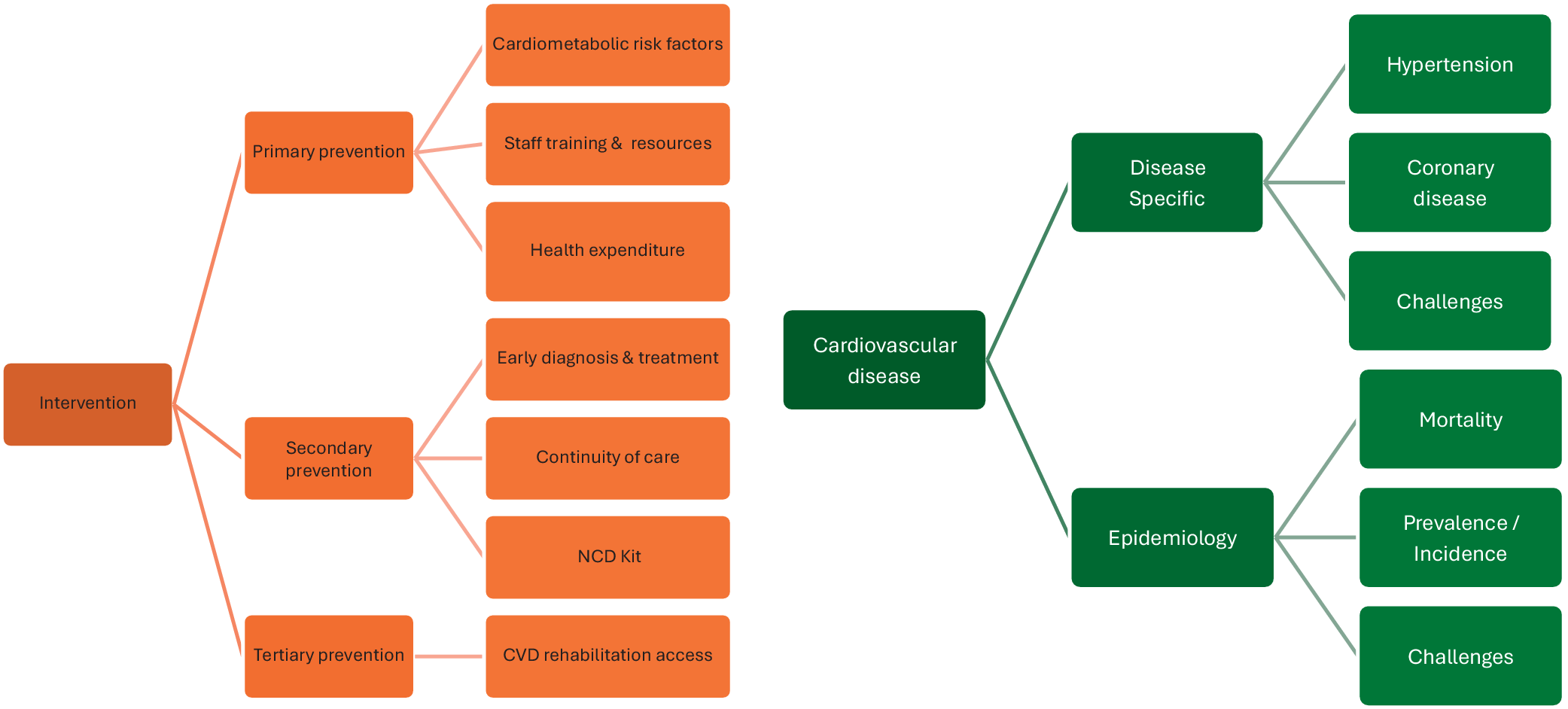
Full-text screening and data extraction were conducted using Nested Knowledge software. 7 Study characteristics were tagged and grouped into relevant classifications, as shown in Figure 1 and reported in the results section.
Study characteristics tagged, data extracted, and grouped from the included studies.

Figure 1 Long description
Figure 1 presents two hierarchical classification structures used to tag, extract, and group information from the included studies. The first structure classifies public health interventions. The main category, “Intervention,” divides into three levels of prevention: Primary prevention, comprising cardiometabolic risk factors, staff training and resources, and health expenditure. Secondary prevention, comprising early diagnosis and treatment, continuity of care, and the noncommunicable disease kit. Tertiary prevention, comprising access to cardiovascular disease rehabilitation. The second structure classifies the cardiovascular evidence. The main category, “Cardiovascular disease,” divides into: Disease-specific evidence, comprising hypertension, coronary disease, and challenges. Epidemiological evidence, comprising mortality, prevalence or incidence, and challenges.
Methodological quality was assessed using the JBI 2020 tools (Joanna Briggs Institute Critical Appraisal Tools),Reference Hilton 8 which provide item checklists for each study design, allowing classification as either High Risk or Low Risk of bias. Several of the included studies were Expert Opinion or Letter to the Editor and therefore lacked a detailed methodology section; these were classified as High Risk of bias, as shown in Appendix 3.
Results
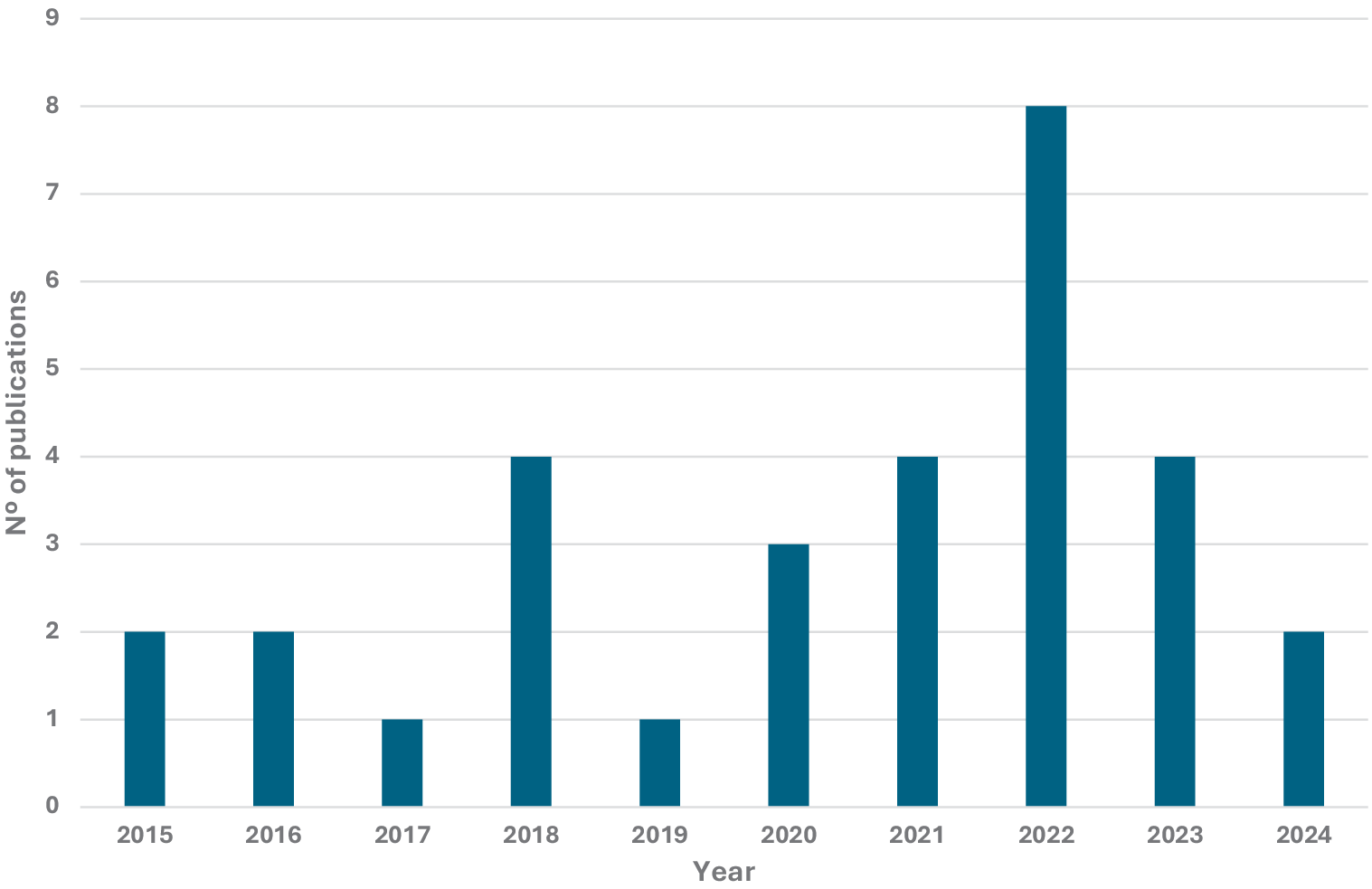
Appendix 4 shows the PRISMA flow diagramReference Page, McKenzie and Bossuyt 9 , Reference Tricco, Lillie and Zarin 10 of the review process. The original search yielded 528 publications for screening after the automated removal of 33 duplicate articles. As shown in the PRISMA flow diagram, 493 articles were excluded based on predefined criteria. The remaining 35 underwent full-text review, resulting in the exclusion of 3 studies due to irrelevant diseases, 2 that did not address a CE, and one that focused exclusively on a refugee population. This led to the inclusion of 29 articles. One additional study was identified through expert recommendation,Reference Tonelli, Wiebe and Nadler 11 and another through reference list screening,Reference Jawad, Vamos and Najim 12 bringing the final total to 31 included articles. Figure 2 displays the distribution of studies by publication year, with 21 studies published between 2020 and 2024 and 10 studies published between 2014 and 2019. All selected articles were published in English. Only one study was conducted in a Spanish-speaking setting.Reference González-Rivas, Mechanick and Ponte 13 Notably, 28 additional articles addressing refugee populations were excluded, as they did not reflect the conditions of CEs targeted in this review.
Articles included by year of publication.

Figure 2 Long description
Figure 2 is a vertical bar chart showing the number of included articles published each year from 2015 to 2024. The annual counts are: 2015, 2; 2016, 2; 2017, 1; 2018, 4; 2019, 1; 2020, 3; 2021, 4; 2022, 8; 2023, 4; and 2024, 2. The total is 31 articles. Publication output was highest in 2022, with eight articles. Twenty-one articles were published from 2020 to 2024, compared with 10 from 2015 to 2019.
In the critical appraisal process, 20 articles (64.5%) were classified as having a low risk of bias, 3 (9.7%) as having a high risk due to methodological limitations, and 8 (25.8%) as having a high risk due to the absence of a clearly defined methodology, as outlined in Appendix 3.
The 31 studies included in this review displayed a range of methodological and thematic characteristics, as shown in Table 1. Systematic reviews were the most common study type (35.5%), followed by expert opinions (25.8%), cross-sectional studies (12.9%), literature reviews and qualitative studies (each 9.7%), retrospective studies (6.5%), and a single case report (3.2%). Most studies adopted a global perspective (64.5%). In contrast, others focused on specific countries or regions, notably those in the Eastern Mediterranean Region (22.6%), including Syria, Sudan, the Philippines, Ukraine, Venezuela, South Sudan, and the Democratic Republic of Congo. CVD was a central focus in the majority of studies (80.6%), with an equal proportion addressing non-communicable diseases more broadly. Within the cardiovascular domain, hypertension was the most frequently studied condition, particularly in relation to its incidence, prevalence, and health care access, while coronary artery disease received comparatively less attention. Nearly all studies examined aspects of primary (90.3%) and secondary prevention (93.5%), including interventions related to health expenditure, training of health care personnel, operational constraints, and control of cardiometabolic risk factors. Fewer studies addressed tertiary prevention, particularly in terms of cardiovascular rehabilitation and access to long-term care (9.7%). The overall evidence base remains limited and fragmented, reflecting significant gaps in the literature on public health interventions for CVD in CE settings.
Characteristics of the included studies

Table 1. Long description
The table consists of three columns: Category, Characteristic, and Studies n (%).* Type of study: Systematic review 11 (35.5), Literature review 3 (9.7), Qualitative study 3 (9.7), Retrospective study 2 (6.5), Cross-sectional study 4 (12.9), Case report 1 (3.2), Expert opinion 8 (25.8).* Country: Philippines 1 (3.2), Eastern Mediterranean Region (E M R) 7 (22.6), Syria (included in E M R) 4 (12.9), Democratic Republic of the Congo 1 (3.2), Sudan (included in E M R) 2 (6.5), South Sudan 1 (3.2), Ukraine 2 (6.5), Venezuela 1 (3.2), Global perspective 20 (64.5).* Disease studied: Cardiovascular disease 25 (80.6), Non-communicable diseases in general 25 (80.6).* Hypertension: Incidence/prevalence 9 (29.0), Mortality 2 (6.5), Health care 13 (41.9).* Coronary artery disease: Incidence/prevalence 2 (6.5), Mortality 3 (9.7), Challenges 1 (3.2).* Prevention: Primary 28 (90.3), Secondary 29 (93.5), Tertiary 3 (9.7).* Primary prevention: Control of cardiometabolic risk factors 11 (35.5), Operational considerations 17 (54.8), Health care personnel training and resources 12 (38.7), Health expenditure 15 (48.8), Challenges 11 (35.5).* Secondary prevention: Early diagnosis and treatment 16 (51.6), Continuity of care 16 (51.6), Interagency Health Kit 6 (19.4), W H O Noncommunicable Diseases Kit 5 (16.1).* Tertiary prevention: Access to C V D rehabilitation 3 (9.7).
* Type of study: Systematic review 11 (35.5), Literature review 3 (9.7), Qualitative study 3 (9.7), Retrospective study 2 (6.5), Cross-sectional study 4 (12.9), Case report 1 (3.2), Expert opinion 8 (25.8).
* Country: Philippines 1 (3.2), Eastern Mediterranean Region (E M R) 7 (22.6), Syria 4 (12.9), Democratic Republic of the Congo 1 (3.2), Sudan 2 (6.5), South Sudan 1 (3.2), Ukraine 2 (6.5), Venezuela 1 (3.2), Global perspective 20 (64.5).
* Disease studied: Cardiovascular disease 25 (80.6), Non-communicable diseases in general 25 (80.6).
* Hypertension: Incidence/prevalence 9 (29.0), Mortality 2 (6.5), Health care 13 (41.9).
* Coronary artery disease: Incidence/prevalence 2 (6.5), Mortality 3 (9.7), Challenges 1 (3.2).
* Prevention: Primary 28 (90.3), Secondary 29 (93.5), Tertiary 3 (9.7).
* Primary prevention: Control of cardiometabolic risk factors 11 (35.5), Operational considerations 17 (54.8), Health care personnel training and resources 12 (38.7), Health expenditure 15 (48.8), Challenges 11 (35.5).
* Secondary prevention: Early diagnosis and treatment 16 (51.6), Continuity of care 16 (51.6), Interagency Health Kit 6 (19.4), W H O Noncommunicable Diseases Kit 5 (16.1).
* Tertiary prevention: Access to C V D rehabilitation 3 (9.7).
Note: Percentages were calculated using the total number of included studies as the denominator (n = 31). Some categories are not mutually exclusive; therefore, percentages may not sum to 100%.
Discussion
Non-communicable diseases, particularly CVDs, require consistent and long-term follow-up due to their chronic progression. However, this need stands in direct contrast to the realities of CEs, where health systems are often overwhelmed, fragmented, and unable to provide sustained care. In such settings, the disruption of infrastructure, limited resources, and ongoing insecurity create significant barriers to the continuity of care and the management of chronic conditions.Reference Ruby, Knight and Perel 14
Epidemiology of CVD in CEs
The studies with the prevalence of CVD are summarized in Table 2. The epidemiology of CVD in CEs shows significant associations with demographic and psychosocial factors. Studies showed higher rates of CVD and hypertension among women and those over 60 years old in CEs.Reference Greene-Cramer, Summers and Lopes-Cardozo 15 -Reference Ratnayake, Wittcoff and Majaribu 17 Hypertension was also linked to being female, older, overweight, and exposed to stress, while CVD was associated with age over 60, excess weight, and psychological distress.Reference Greene-Cramer, Summers and Lopes-Cardozo 15 In Greene-Cramer et al.,Reference Greene-Cramer, Summers and Lopes-Cardozo 15 CVD prevalence was higher among IDPs than locals across all age and sex groups. However, hypertension was more common in the local population. Both local and displaced women had higher prevalence, with local women showing nearly double the hypertension rate of local and displaced men (45.3% vs. 24.4% and 21.7%). Risk analysis among conflict-affected adults revealed adjusted odds ratios for CVD of 2.12 for overweight individuals, 3.17 for those experiencing psychological distress, and 5.22 for those aged over 60.Reference Greene-Cramer, Summers and Lopes-Cardozo 15
Prevalence of CVDs in the included articles

Table 2. Long description
The table consists of 10 columns: Articles, Geographic region, Type of intervention, Population, Data collection duration, Sample size, H T N consultations per 10,000 (less than 2 months), H T N prevalence (percent), C V D prevalence (percent), and Newly diagnosed H T N.
* Salazar M et al. (Zamboanga, Philippines): Various health centers using SPEED syndromic database; population attending health centers; September 11, 2013 to March 24, 2014; N = 1065; 1.8 H T N consultations per 10,000; other data points are blank.
* Greene-Cramer B et al. (Donbas, Ukraine): Household survey on N C Ds; randomly selected population over 30 years old; May to June 2018; N = 1,400; 33.1 percent H T N prevalence; 24.5 percent C V D prevalence.
* Ratnayake R et al. (Beni Region, Democratic Republic of the Congo): Diagnostic and treatment program for H T N and diabetes; I D Ps and host community residents; April to October 2018; N = 833; 88.7 percent H T N prevalence; 97.3 percent newly diagnosed H T N.
* Mazurenko O et al. (De-occupied territory, Ukraine): Mobile clinic; rural population; 12 days between April and May 2022; N = 478; 27.8 percent H T N prevalence; 12.1 percent C V D prevalence.
Note: Estimates in this table are presented descriptively and should not be interpreted as directly comparable prevalence estimates.
Salazar et al.Reference Salazar, Law and Winkler 18 reported on the use of the SPEED (Surveillance Post Extreme Emergencies and Disasters) system, developed by the Philippine government and WHO in 2011, during an armed conflict in Zamboanga City. Deployed across 49 health care facilities, the system recorded hypertension as the fifth most common consultation, with rates declining from 1.8 to 0.3 per 10,000 within 2 months. While SPEED effectively monitored communicable diseases, it lacked data on mortality and NCDs, limiting its overall scope.
Ratnayake et al.Reference Ratnayake, Wittcoff and Majaribu 17 launched a hypertension and diabetes program in the Democratic Republic of Congo, enrolling 833 patients, of whom 92.9% had hypertension, with most newly diagnosed (96.9%). The average blood pressure was 160.25 mmHg. Among the participants, 68.3% were women, and 31.7% were under 40 years old. The program achieved disease control in 71% of patients, at a cost of $115 per person. Mazurenko et al.Reference Mazurenko, Roshchin and Slychko 16 reported that in a mobile clinic operating in a formerly occupied area in Ukraine, hypertension was the leading reason for consultation (27.6%), followed by cardiovascular or peripheral vascular diseases (12.1%). All patients had pre-existing conditions and were already under follow-up before the occupation. Most hypertensive (65.9%) and cardiovascular (75%) patients were women over 60, primarily with coronary artery disease or arrhythmias.
Across the studies, combatants were likely excluded due to access barriers or conflict-related deaths, while younger men may have fled as refugees. This may have introduced sampling bias, leading to an overrepresentation of older adults and women. Indeed, women comprised 70% of participants in Greene-Cramer et al.,Reference Greene-Cramer, Summers and Lopes-Cardozo 15 68% in Ratnayake et al.,Reference Ratnayake, Wittcoff and Majaribu 17 and 79% in Mazurenko et al.Reference Mazurenko, Roshchin and Slychko 16
Geographical Distribution
The most represented region in the literature is the WHO-designated Eastern Mediterranean Region (EMR), accounting for 22.6% of the studies in our review. This is lower than the 48.9% reported in broader NCD reviews.Reference Ngaruiya, Bernstein and Leff 19 The EMR hosts 58% of the world’s refugees, and of its 22 territories, 13 are directly or indirectly affected by conflict.Reference Burki 20 , 21 The region leads in CVD research and interventions in CEs, exemplified by the creation of the WHO-NCD Risk Factor Collaboration.Reference Slama, Lee and Aragno 22
Nevertheless, the Americas and Africa remain underrepresented in the literature, despite experiencing a growing burden of CVD and increasing armed conflicts.Reference Ngaruiya, Bernstein and Leff 19 Figure 3 illustrates the countries included in the 2024 emergency watchlist, highlighting those with the most significant risk of humanitarian emergencies. In Africa alone, disability-adjusted life years (DALYs) due to non-communicable diseases rose by 67% between 1990 and 2017.Reference Gouda, Charlson and Sorsdahl 23 Much of the existing research on CVD focuses on low- and middle-income countries but outside the context of CEs. Studies often focused on refugee populations in the EMR or on historical European conflicts, such as the Bosnian and Croatian wars,Reference Jawad, Vamos and Najim 12 , Reference Bausch, Beran and Hering 24 , Reference Doocy, Lyles and Tappis 25 all of which were excluded from this review, highlighting a significant gap in current knowledge.
Countries included in the 2024 Emergency Watchlist with greatest risk of humanitarian emergencies. Source: 2024 Emergency Watchlist. 6

Figure 3 Long description
Figure 3 is a world map of 20 places included in the 2024 Emergency Watchlist. Solid yellow identifies the ranked top 10: Burkina Faso, Mali, Niger, Sudan, Ethiopia, South Sudan, Somalia, the Democratic Republic of the Congo, Myanmar, and the Occupied Palestinian Territory. Yellow diagonal hatching identifies the unranked second half: Haiti, Ecuador, Nigeria, Chad, the Central African Republic, Yemen, Syria, Lebanon, Afghanistan, and Ukraine. Most highlighted locations are concentrated in sub-Saharan Africa and the Middle East, with additional locations in South Asia, Southeast Asia, Europe, the Caribbean, and South America. An inset enlarges Lebanon and the Occupied Palestinian Territory.
CVD Focus
Hypertension and coronary artery disease were the two most frequently referenced CVDs identified in the reviewed literature.
Hypertension
Hypertension, most commonly defined as blood pressure above 140/90 mmHg on 2 separate readings,Reference González-Rivas, Mechanick and Ponte 13 , Reference Mazurenko, Roshchin and Slychko 16 , Reference Ratnayake, Wittcoff and Majaribu 17 was addressed in 64.8% of the included studies, with 3 focusing exclusively on this condition in CEs.Reference Jaung, Willis and Sharma 26 -Reference Ansbro, Issa and Willis 28 According to 2019 WHO data, the prevalence of hypertension among adults aged 30 to 79 was relatively consistent across regions, ranging from 30.3% in the Western Pacific to 41.6% in Europe. 29 These global figures suggest that any region facing a CE may require support for CVD management. In Ukraine, 1 cross-sectional study reported a hypertension prevalence of 38%, aligning with WHO estimates.Reference Greene-Cramer, Summers and Lopes-Cardozo 15
Coronary artery disease
Only 6 studies mentioned coronary artery disease, with none specifically focusing on it. While some noted links between armed conflict, acute stress, and myocardial infarction,Reference Hayman, Sharma and Wardlow 30 data on cardiovascular-related deaths remain scarce. As highlighted by several authors,Reference Ngaruiya, Bernstein and Leff 19 , Reference Jaung, Willis and Sharma 26 mortality is often underreported or misclassified in crisis settings due to disrupted systems and the difficulty of confirming causes of death. Overall, although prevalence and risk factors are discussed, evidence on cardiovascular mortality in CEs remains extremely limited.
Public Health Intervention
Primary prevention
Cardiometabolic risk factors. Approximately 35.5% of the reviewed articles addressed cardiometabolic risk factors. While food aid in CEs has traditionally focused on preventing malnutrition, it often overlooks the needs of individuals with obesity or conditions requiring low-sodium diets.Reference Ansbro, Issa and Willis 28 , Reference Asgary, Garland and Ro 31 Price inflation and food shortages further limit access to nutritious food, increasing reliance on aid distributions. Consequently, several authors recommend that non-communicable diseases (NCDs) and specific dietary needs be considered in the planning of food assistance.Reference González-Rivas, Mechanick and Ponte 13 , Reference Salazar, Law and Winkler 18 , Reference Keasley, Oyebode and Shantikumar 27 , Reference Garry, Checchi and Cislaghi 32
Restricted mobility during conflict, whether due to insecurity or sociocultural constraints, was identified as a barrier to maintaining physical activity, particularly for women in CE settings.Reference Salazar, Law and Winkler 18 , Reference Jaung, Willis and Sharma 26 , Reference Keasley, Oyebode and Shantikumar 27 In addition, both acute and chronic stress were associated with a higher risk of cardiovascular events,Reference Jawad, Vamos and Najim 12 , Reference Ngaruiya, Bernstein and Leff 19 alongside increased engagement in harmful behaviors such as alcohol and tobacco use.Reference Jawad, Vamos and Najim 12 , Reference Greene-Cramer, Summers and Lopes-Cardozo 15 , Reference Keasley, Oyebode and Shantikumar 27 , Reference Garry, Checchi and Cislaghi 32 The swift expansion of the tobacco industry in CE settings has led some authors to call for regulatory measures to limit its impact.Reference Jawad, Vamos and Najim 12 , Reference Roberts, Patel and McKee 33 , Reference Patel, Kiapi and Gomez 34
Training health care personnel. In studies evaluating program implementation in Yemen and Libya, up to 80% of health care workers reported never having received training on NCDs.Reference Kiapi, Alani and Ahmed 35 Several authors, therefore, emphasize the importance of developing specific training programs for CEs to facilitate the proper use of medications or equipment.Reference Jawad, Vamos and Najim 12 , Reference Ratnayake, Wittcoff and Majaribu 17 , Reference Jaung, Willis and Sharma 26 Training local volunteers to educate and monitor the population has also proven helpful in overcoming both cultural barriers and gender barriers, especially in cultures where women cannot be seen by male health care workers.Reference Jaung, Willis and Sharma 26
Health spending and intervention costs. In 2024, humanitarian funding reached a record 43 billion USD, yet the gap between available resources and actual needs was the largest ever recorded.Reference Rieger, Pearson, Nelson-Pollard and Belcher 36 Several authors have emphasized that limited funding hinders both the effectiveness of interventions and the ability to conduct robust research.Reference Ruby, Knight and Perel 14 , Reference Ansbro, Issa and Willis 28 , Reference Asgary, Garland and Ro 31 , Reference Garry, Checchi and Cislaghi 32 Cost remains a significant barrier to care in CEs; for example, 55% of residents and 71% of internally displaced persons cited cost as the main obstacle to health care access in Mazurenko et al.Reference Mazurenko, Roshchin and Slychko 16 Garry et al.Reference Garry, Checchi and Cislaghi 32 found that many frontline health professionals observed a disconnect between donor-driven programs and the real health needs of affected populations, particularly in addressing NCDs and CVDs.
Secondary prevention
Early diagnosis and treatment. Establishing screening programs for NCDs, including CVDs in CEs, raises important ethical considerations, particularly when follow-up treatment may not be feasible.Reference Aebischer Perone, Martinez and du Mortier 37 This presents a dilemma: whether to prioritize continuity of care for individuals already diagnosed. Given the chronic nature of these conditions, patients require ongoing management, in contrast to many communicable diseases, which typically involve short-term interventions.Reference Saeed, Schwartz and Hunt 38
Continuity of medical care. Continuity of care refers to the sustained monitoring and treatment of patients throughout the course of their illness.Reference Jaung, Willis and Sharma 26 In CEs, this continuity is often disrupted due to insufficient funding, population displacement, and the destruction of health systems. Attacks targeting health care infrastructure and personnel further undermine the delivery of care.Reference Garry, Checchi and Cislaghi 32 , Reference Saeed, Schwartz and Hunt 38 These challenges leave many individuals who were previously under regular treatment without access to essential medications or their usual health care providers.
NCD kit. The WHO Noncommunicable Diseases Kit (NCDK) was developed in 2016 to address gaps in NCD care not covered by the Interagency Emergency Health Kit, particularly in countries of the Eastern Mediterranean Region.Reference Slama, Lee and Aragno 22 , Reference Alani, Miller and Waweru 39 Designed to serve 10,000 people for 3 months, the kit includes medications, equipment, and disposables, with an estimated cost of up to USD 15,000.Reference Slama, Lee and Aragno 22 It aims to maintain treatment continuity and prevent complications from disrupted care during CEs, while also serving as a cost-effective, recovery-oriented intervention attractive to funders.Reference Slama, Lee and Aragno 22 The kit has been implemented in Yemen, Libya,Reference Kiapi, Alani and Ahmed 35 Sudan,Reference Alani, Miller and Waweru 39 and South Sudan.Reference Alani, Miller and Waweru 39 Evaluation of literature review findings highlights the importance of context-specific adaptation.
In Yemen, bureaucratic delays and unfamiliar medications led to expired supplies and resistance from both health workers and patients, although the WHO label improved acceptance.Reference Kiapi, Alani and Ahmed 35 In Sudan, the kit was well received and effectively addressed medicine shortages, with no issues reported regarding the quality of generics or the origin of the drugs.Reference Alani, Miller and Waweru 39 In South Sudan, 55% of the contents remained unused due to overlapping donations, patients not being previously diagnosed for NCD, and limited knowledge among health care staff about NCD care.Reference Alani, Miller and Waweru 39 These studies emphasize the importance of assessing the local context prior to implementation and tailoring the intervention to the specific realities on the ground. The effectiveness and acceptability of such interventions are shaped by the existing health system and population expectations before the emergency.Reference Garry, Checchi and Cislaghi 32 , Reference Alani, Miller and Waweru 39
Tertiary prevention
Only three articles mentioned the concept of CVD rehabilitation during CEs, emphasizing the gap in this field. The prevailing focus on acute crisis response often means that rehabilitation is not prioritized, despite acknowledgments of limited resources and a shortage of trained professionals in areas such as palliative care.Reference Ansbro, Issa and Willis 28
Challenges to Intervention and Research
Recent years have seen a modest rise in publications on CVD in CEs, with 68% of studies published in the last 5 years. Despite this progress, significant research gaps remain. The absence of rigorous experimental studies limits the development of evidence-based recommendations, a challenge that has been repeatedly noted in the literature. While systematic reviews provide valuable insights, the lack of high-quality primary data continues to hinder effective response planning in resource-limited and unstable settings.
One of the most pressing challenges is ensuring the safety of health care and research personnel in volatile environments, where humanitarian efforts may be obstructed by conflict actors.Reference Garry, Checchi and Cislaghi 32 Many health care providers are experienced in stable low- and middle-income country settings or refugee care, but lack specific or specializing training for the unique demands of CEs.Reference Ansbro, Issa and Willis 28 Widespread disruptions to medication supplies, treatment continuity, and health care infrastructure have been reported, particularly among displaced populations.Reference Ruby, Knight and Perel 14 , Reference Mazurenko, Roshchin and Slychko 16 , Reference Ngaruiya, Bernstein and Leff 19
In some regions, such as Sudan, health care is centralized in tertiary facilities, which limits access to primary care; 70% of the health workforce is based in urban areas.Reference Ansbro, Issa and Willis 28 , Reference Verjee, Galad and Chang 40 , Reference Saeed, Mohammad, Zamel, Ahmed and Waleed 41 Additionally, limited disease awareness among the population, particularly in the case of NCDs that often remain undiagnosed, reduces care-seeking behavior.Reference Ngaruiya, Bernstein and Leff 19 , Reference Ansbro, Issa and Willis 28 , Reference Garry, Checchi and Cislaghi 32
Recent evidence from conflict-affected settings highlights that CVD management in CEs is constrained not only by clinical capacity but also by disrupted access to essential medicines, including cardiovascular drugs; disruptions to domestic pharmaceutical manufacturing; collapse of the pharmaceutical supply chain; and interruptions to long-term care pathways.Reference Verjee, Galad and Chang 40 In Sudan, a cross-sectional study among 300 CE-affected participants found that 56.7% reported poor medication accessibility, 50.0% reported difficulty obtaining medicines because of high prices, 55.7% reported that pharmacies outside Khartoum were running low on essential medicines, and 51.3% faced difficulty reaching health care facilities because of fuel and transport shortages; consequently, 65.7% reported health deterioration due to medication unavailability.Reference Saeed, Mohammad, Zamel, Ahmed and Waleed 41
Comparable findings from Ukraine indicate that armed conflict disrupted medication supply, diagnostic capacity, and specialist workforce availability, which reduced hypertension control and impaired treatment adherence. Adaptive strategies, including decentralized primary care, task-sharing, targeted community screening, telemedicine follow-up, and reimbursement programs for essential medicines, may help maintain continuity of cardiovascular prevention and chronic disease management during prolonged crises.Reference Bilousova, Tkachenko and Kozhuharyova 42 , Reference Korzh 43
The absence of reliable pre-conflict health data, loss of electronic medical records, and variability between CE contexts further complicate response planning.Reference Ratnayake, Wittcoff and Majaribu 17 Asgary et al.Reference Asgary, Garland and Ro 31 highlight the tension between conducting research and prioritizing direct aid, noting that limited resources and time-sensitive access make it challenging to implement methodologically sound studies. Nonetheless, generating robust data is essential to improve the effectiveness of future humanitarian interventions.
Recommendations
This literature review echoed the emphasis of several authors on the need for standardized, practical guidelines tailored to CE settings.Reference Ngaruiya, Bernstein and Leff 19 , Reference Ansbro, Issa and Willis 28 Research on single-dose cardiovascular medications in refugee contexts has shown promising results, offering advantages in terms of transport, storage, and simplified administration, particularly where trained staff are limited.Reference Ansbro, Issa and Willis 28 , Reference Murphy, Willis and Ansbro 44 Strengthening primary care and prevention for non-communicable diseases is a consistent recommendation, moving beyond hospital-based models that focus only on acute or fatal cases, and aiming to build more resilient health systems post-crisis.Reference Jawad, Vamos and Najim 12 , Reference Ruby, Knight and Perel 14 , Reference Salazar, Law and Winkler 18 , Reference Ansbro, Issa and Willis 28 , Reference Aebischer Perone, Martinez and du Mortier 37 , Reference Alani, Miller and Waweru 39 , Reference Murphy, Willis and Ansbro 44 , Reference Jobanputra, Boulle and Roberts 45 Finally, it has been proposed to reevaluate the criteria that collected data must meet to be considered valid and to question whether the methodological rigor required in stable situations is truly applicable to CE contexts.Reference Garry, Checchi and Cislaghi 32 , Reference Bilousova, Tkachenko and Kozhuharyova 42
Limitations of the Review
This study has several limitations. Data collection in the context of CEs is inherently challenging due to insecurity, instability, and disrupted systems. By excluding refugee populations from our search, we may have missed a substantial body of literature. However, focusing solely on refugees may overlook the experiences of those who could not evacuate or were internally displaced, as well as those who died during the early phases of the crisis. Refugees often no longer accurately represent the realities within conflict zones, as they may have access to resources in host countries. Those who remain behind, such as internally displaced individuals or those who have died, are less frequently studied but are central to understanding health challenges during CEs. The heterogeneity and limitations of the included studies also prevented the pooling of data suitable for meta-analysis. Additionally, given the rapidly evolving nature of CEs, new conflicts, such as those in Iran or Syria, may have arisen after the cutoff date for this review, further underscoring the difficulty of conducting timely, high-quality research in such settings. Nevertheless, this highlights the urgent need for more robust and adaptive research in these environments.
We acknowledge that the absence of Scopus, Web of Science, and Embase is a limitation of the review. However, we believe that the combined use of PubMed, DOAJ, ReliefWeb, Google Scholar, and reference-list screening was appropriate for the scoping nature of the review and for capturing literature across both health and humanitarian sources.
Conclusions
This scoping review highlights the growing recognition of CVD as a critical yet underaddressed health concern in complex emergencies CEs. Despite increasing prevalence and well-established risk factors, the current evidence base remains fragmented, with significant gaps in research, intervention design, and implementation. Most identified studies were non-experimental, and regions such as Africa and the Americas are notably underrepresented. Epidemiological data remain limited, typically reporting high rates of hypertension and general CVD, particularly among women, older adults, those who are overweight, and individuals exposed to stress, factors further worsened by internal displacement and restricted access to care. The deployment of the WHO Noncommunicable Diseases Kit (NCDK) has highlighted the importance of tailoring interventions to local contexts, shaped by pre-crisis health infrastructure and sociocultural dynamics. However, knowledge gaps still far outweigh certainties. These challenges are rooted in the volatile nature of armed conflict and the long-term care demands of chronic diseases like CVD. Moving forward, the development and implementation of standardized, evidence-based protocols must be prioritized, supported by sustained funding and rigorous pre-intervention assessment, to strengthen cardiovascular care in these fragile settings.
Supplementary material
The supplementary material for this article can be found at http://doi.org/10.1017/dmp.2026.10427.
Author contribution
All authors contributed substantially to the design, data collection, data analysis, and risk assessment; drafted the article and reviewed the final manuscript; gave final approval of the version to be published and agreed to be accountable for all aspects of the work.
Funding statement
This research received no funding for writing this paper.
Competing interests
None.
Disclaimer
This article was developed as part of the final-year thesis project for the Faculty of Medicine at the University of Oviedo.


 Open access

