Introduction
The topic of child health has long occupied a prominent place in the development literature (Dasgupta, Reference Dasgupta1993, Chapter 4). This reflects a widespread appreciation that poor infant health, if not corrected in the early days of life, tends to persist into adulthood, and this in turn has economic costs in the form of low productivity, low life expectancy and an unhealthy work force. Since today’s child is tomorrow’s adult, much of the nation’s future welfare depends on today’s children being healthy and well-nourished. This is of particular importance in the Indian context where there is a large mismatch between its impressive recent record on several macro-level economic indicators (e.g. gross domestic product growth rates, growth of real income and foreign direct investment) and the poor state of child health (Maitra & Ray, Reference Maitra and Ray2013). India’s record on child health is very poor compared with that of many other developing countries, including not only high-growth Asian countries such as China and Vietnam (Ray & Sinha, Reference Ray and Sinha2015), but also much poorer countries with inferior economic records such as those in sub-Saharan Africa. A significant feature of India’s poor child health record is its failure, until recently, to prevent mothers’ ill health from being transmitted to their offspring. The Integrated Child Development Scheme (ICDS) and the Janani Suraksha Yojana (JSY) do attempt early interventions. However, while the ICDS appears to be having a significant effect on the nutritional status of pre-school children (i.e. 0- to 6-year-olds), the JSY has been less effective in increasing antenatal care and in-facility births (see Jain (Reference Jain2015) for a critical evaluation of the former, and Lim et al. (Reference Lim, Dandona, Hoisington, James, Hogan and Gakidou2010) for the latter). This stands in sharp contrast to the effective early interventions being made in China (Ray & Mishra, Reference Ray and Mishra2012).
This study considered the health of children in the southern Indian state of Andhra Pradesh. The principal aims were three-fold: (a) to examine if shocks experienced by a woman in pregnancy have effects on the short- and longer-term health of her child, (b) to examine if the principal welfare schemes in India, i.e. the Midday Meal Scheme (MDMS) and the National Rural Employment Guarantee Scheme (NREGS), are helping to ameliorate the adverse effects, if any, of in utero shocks on child health, and (c) to compare the strengths of the child health effects of these two schemes. The choice of these welfare schemes was largely due to their parallel and contemporaneous nature in India. Although the MDMS was started somewhat earlier than the NREGS, the former became fully operational only around the time the NREGS came into existence. While the MDMS targeted school-going children directly by providing free midday meals at school, the NREGS benefited such children by providing employment to their parents. Both had an income effect, with the former allowing the parents to save on meals for their children, thus leaving them more money to spend on other things, while the latter provided additional resources directly to parents by offering them employment. There are other welfare schemes in India such as the ICDS and the JSY programme, but their goals are different from those considered here and, thus, were not included in the main analysis of the study. For instance, while the ICDS aims to improve the nutritional intake of pre-school children, the JSY aims to reduce maternal and neonatal deaths in India. Also, the JSY was not rolled out in all districts, nor was it purposefully phased. Thus, the precise estimation of its impact would have been difficult in the current context.
The study had two strands. The first looked at the health effects of exogenous shocks on child health, and the second examined the effectiveness of government welfare schemes in ameliorating these effects. There have been a number of recent attempts to investigate the effects of various types of exogenous shocks, such as drought and influenza epidemic, on child health (see, for example, Almond, Reference Almond2006; Neelsen & Stratmann, Reference Neelsen and Stratmann2011; Torche, Reference Torche2011; Currie & Vogl, Reference Currie and Vogl2013; Datar et al., Reference Datar, Liu, Linnemayr and Stecher2013; Lin & Liu, Reference Lin and Liu2014; Kumar et al., Reference Kumar, Molitor and Sebasian2014; Hernández-Julián et al., Reference Hernández-Julián, Mansour and Peters2014; Lazzaroni & Wagner, Reference Lazzaroni and Wagner2016; Dasgupta, Reference Dasgupta2017). In line with this recent research, the present study traced back shocks to its fetal origins (Barker, Reference Barker1990, Reference Barker1995). The Fetal Origins Hypothesis suggests that in utero exposure to adverse environments affects the fetus and impairs fetal development with long-lasting impacts on child cognitive (Nelson, Reference Nelson2010) and non-cognitive skills (Krutikova & Lilleor, Reference Krutikova and Lilleor2015).
There are two main channels through which early-life shocks may impact child health outcomes in later years: (a) income shocks: weather shocks, along with crop failure shocks, could lead to unexpected negative income shocks, which in turn affect maternal and fetal nutrition through reduced food consumption, and (b) disease shocks: child nutrition and health may also be affected through increased water contamination or vector-borne illnesses. However, the evidence on disease shocks is somewhat ambiguous. Water scarcity during drought increases the prevalence of diarrhoea and infectious diseases (Bandyopadhyay et al., Reference Bandyopadhyay, Kanji and Wang2012), but, theoretically, the incidence of water-borne diseases might decrease during the dry seasons (Rabassa et al., Reference Rabassa, Skoufias and Jacoby2012). In the end, what happens to child health will ultimately depend on the relative strengths of income shocks and disease shocks (Jacoby et al., Reference Jacoby, Tiwari and Skoufias2013).
Previous studies have evaluated the effectiveness of the government welfare schemes considered in this study (see Dreze & Goyal, Reference Dreze and Goyal2003; Khera, Reference Khera2006; Singh et al., Reference Singh, Park and Dercon2014, on MDMS; and Dreze & Khera, Reference Dreze and Khera2009; Reddy et al., Reference Reddy, Tankha, Upendranadh and Sharma2010; and Dutta et al., Reference Dutta, Murgai, Ravallion and Walle2012, on NREGS). These studies concluded that, in India, the schemes promote household welfare through an income effect, which offsets the effects of early childhood shocks.
The present study was based on the rich information contained in the household panel data set provided by the Young Lives Survey (YLS) from Andhra Pradesh, which is a pro-poor sample (i.e. there was a bias in the sample selection towards poorer areas, which were over-represented in the data set). The panel nature of the data over three waves was particularly convenient as the first wave (2002) took place before either of the two schemes (MDMS and NREGS) came into effect, while both schemes had just come into existence at the time of the second wave (2007), but had spread in breadth and depth by the time of the third wave (2009). The (almost) concurrent nature of the two schemes, though aimed at different target groups, makes a comparison of their effects of particular policy interest.
The MDMS and NREGS
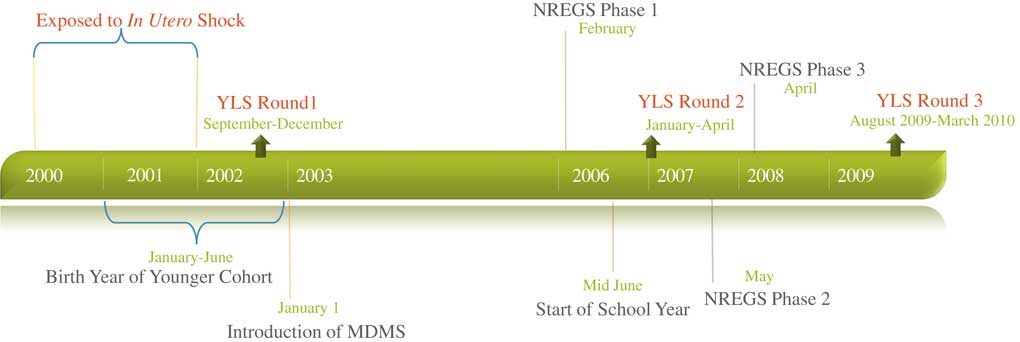
The MDMS can be traced back to mid-1995 when the government of India launched the ‘National Programme of Nutritional Support to Primary Education’. Under this programme, all government schools and government-aided primary schools were to offer midday meals. In November 28th 2001 the Supreme Court ordered all state governments to provide cooked midday meals in primary schools within 2 years. This happened quickly in some states, but less quickly in others. Andhra Pradesh started providing midday meals in January 2003 to children in all primary and upper-primary public and private-aided schools. By 2006, the MDMS became the largest school feeding programme in the world. The timeline in Fig. 1 shows the span of the MDMS and the major events associated with the data.
Timeline of events based on the Young Lives Survey of India (YLS 2002, 2007 and 2009), based on Singh et al. (Reference Singh, Park and Dercon2014) and Dasgupta (Reference Dasgupta2017).
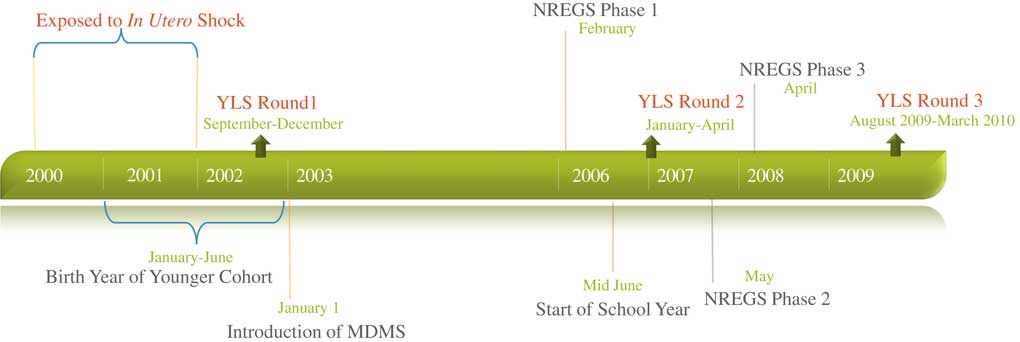
The NREGS came into effect in February 2006 with the enactment of the National Rural Employment Guarantee Act 2005. Under the NREGS, which is restricted to rural areas, the government guarantees to provide at least 100 days of waged employment in a financial year to every household whose adult members (18 years of age or above) volunteer to do unskilled manual work. However, a number of households have worked for more than 100 days under NREGS, and this is especially true for Andhra Pradesh. A statutory daily minimum wage of Rs.120 at 2009 prices was specified for the 100 days of paid employment. A positive consequence of the NREGS was that in districts where the scheme was in force, the statutory daily minimum wage acted as a floor for all types of employment, including work outside NREGS. The period 2006–2008 witnessed a rapid expansion in the coverage of the NREGS so that by 2010 the government hailed it as ‘the largest and most ambitious social security and public works programme in the world’. In Andhra Pradesh the expansion of the NREGS across the YLS sample took place in three phases. As documented in Fig. 1, the first phase of the scheme came into effect in February 2006 and covered only four districts: Cudappah (later known as Kadapa), Anantapur, Mahbubnagar and Karimnagar. The second phase started in May 2007 and the district of Srikakulam was added during this period, and the third phase started in April 2008 and the district of West Godavari was brought under the administration of the NREGS. It is important to note that the National Food for Work Programme, which was launched on 14th November 2004, was later subsumed into the NREGS. There is no evidence that the two programmes existed side-by-side, and this is further shown by the fact that about 85% of YLS households did not earn any income from the food-for-work programme between 2002 and 2006 (i.e. between Phases 1 and 2).
While the two welfare schemes are government sponsored, there are some significant differences between them. The NREGS is restricted to rural areas, unlike the MDMS. The MDMS is directed at school children and its effects do not extend to families without children enrolled in government schools. The NREGS, in contrast, is applied much more widely, even to households not involved in NREGS employment, by improving rural infrastructure in the districts where the NREGS is in force. Consequently, while the health effects on children are expected to be direct under the MDMS (see Afridi, Reference Afridi2010), through the provision of a nutritional school feeding programme, the health effects under NREGS are indirect and longer term, via the increase in household spending power. It is, however, important to note that the net nutritional effect of the welfare schemes is somewhat ambiguous. The impact of school meals may even be negative if they are largely a substitute for food that was originally provided at home, and if the quality of the school meal is inferior to the food that would have been consumed at home (Khera, Reference Khera2006). Sahai (Reference Sahai2014) noted some of the wider problems and challenges faced by the MDMS. Similarly, there could be negative effects on the children of the participating households under the NREGS since less time may be available for child care or the preparation of food (Narayanan, Reference Narayanan2008). This is especially true of women from poorer household who participated in intensive public works programme under the NREGS. The mechanism by which family income might affect child anthropometric outcomes was beyond the scope of this paper.
Methods
Data and sample
Data were from the household panel data set of the Young Lives Survey (YLS) conducted in Andhra Pradesh, India. This longitudinal data set was collected through household surveys in three phases in 2002, 2007 and 2009–2010. Panel data were selected for the younger children in the YLS born between January 2001 and June 2002, who were aged 6–18 months in 2002, 4–5½ years in 2007 and 7–8½ years in 2009. Younger cohorts were more useful for the analysis since they were exposed to both MDMS and NREGS at ages between 48 and 65 months (see Fig. 1). The sample was restricted to those children who participated in all waves and who had complete information on all control variables (the overall attrition rate by the third round was 2.3% for the younger cohort). The sample comprised 20 sub-districts (sentinel sites or mandals), which were the primary sampling units for the survey.
A distinctive feature of the YLS sample was that it provided information on the prevalence of different types of shock during pregnancy, namely, weather shock (mainly drought), crop failure shock or any multiple shocks (i.e. if the caregiver had experienced more than one event). In general, Andhra Pradesh is vulnerable to cyclones, floods and drought. During 2000–2001, approximately 69% of the state experienced moderate drought that led to agrarian distress in many villages. Moreover, moderate and severe intensity cyclones can be expected every 2–3 years.
A child was considered to have received a self-reported in utero shock if a primary caregiver reported affirmatively to the following question, asked in the first round of the YLS: ‘When you were pregnant with [name of child] were there any big changes or events that decreased the economic welfare of your household?’ (see also Dercon & Porter, Reference Dercon and Porter2014). The sensitivity of the results to different types of in utero shocks (e.g. weather or crop failure shocks) or multiple shocks was tested. Although these are preferred measures of in utero shock, district-wise percentage deviation of average annual rainfall in the child’s birth year from normal rainfall was also tested. The effects of in utero shocks on child health were analysed using child anthropometric z-scores. The YLS collects height and weight measurements, which are age-standardized according to WHO growth charts. The z-scores for weight-for-age, height-for-age and BMI were calculated and potential outlier cases with z-scores beyond the [−5, +5] range excluded.
To assess the effects of the two welfare schemes two indicators of exposure were created from self-reported measures at the household level:
(a) If a child had access to the MDMS between January and April 2007 (i.e. in the second YLS round) this was referred to as ‘MDMS 2007’. The 2006–2007 school year began in mid-June 2006. Note that although the official age of enrolment is 5, some parents enrol their children in public school before the age of 5 in order to benefit from the MDMS programme. In particular, children who were between the ages of 4 and 6 during the second round of the YLS had received a meal (Singh et al., Reference Singh, Park and Dercon2014).
(b) If a child had access to the MDMS between August 2009 and March 2010 (i.e. in the third YLS round) this was referred to as ‘MDMS 2009’. Similarly, variation of the expansion phase of the NREGS, as presented in Fig. 1, was used. Since the NREGS is only implemented in rural districts, the sample was restricted to rural areas when analysing the NREGS data.
The effect of the number of days household members worked in the NREGS on child health outcomes was assessed. In the second round of the YLS, the number of NREGS days worked for each working member of the household was computed between February 2006 and January 2007. In the third round, this number was calculated for between July 2008 and June 2009 in order to capture both the peak and lean agricultural seasons in Andhra Pradesh. It was found that only 33% of the households had at least one member of the household who worked under the NREGS in 2006, but by 2009 this number had increased to 51%. The total number of NREGS days worked by members of the household during 2006–2007 was used as the first indicator, and this was referred to as ‘number of NREGS days 2006’. The second indicator was total number of NREGS days worked by members of the household during 2008–2009, referred to as ‘number of NREGS days 2008’. The sensitivity of the results to the different definitions of NREGS exposure was investigated. This was a binary variable that took the value of 1 if any member of the household was employed under the scheme in the preceding 12 months (i.e. an individual who had registered and taken up waged work under the scheme) and 0 otherwise.
The goal of the study was to investigate whether the two welfare schemes could compensate for early nutritional deprivations caused by shocks when the child was at the fetal stage in the uterus between 2000 and 2001 before the intervention. At the time of the second round of the YLS in 2007, households would have had access to both programmes for a maximum of 1 year. However, by the third round of the survey in 2009, households had access to both programmes for a maximum of 3 years and children were aged between 7 and 8 years (see Fig. 1) – long enough for both schemes to cushion the impact of early childhood shocks. Hence, the main focus of this study was on the impact of the two welfare programmes on child health in 2009.
Conceptual framework
The conceptual framework of the study relied on a ‘child health production’ function, which represents the technology available to the households to transform inputs (e.g. market-purchased nutritional inputs and health services) into health. The production function also depends on health endowment of the child and household and environmental characteristics. Child health is assumed to affect a household utility function as it is embedded in household’s home-produced goods. Standardized anthropometric z-scores were used as measures of child health. The ‘health production model’ can be described as follows:
 $$H_{{it}} \, {\equals}\, H\left( {N_{{it}} ,X_{i} ^{'} ,Z^{{{\minus}1}} ,C_{{it}} ,U_{{it}} } \right)\quad \left( {i\, {\equals}\, 1,...,N;\,\,t\, {\equals}\, 1,...,T} \right)$$
where H
it
is the health of child i at time t; N
it
is the child’s food intake or resources invested in caring for the child by parents or caregivers through their employment;
 $$X_{i} ^{'} $$
is a vector of time-invariant demographic and community characteristics (e.g. gender, birth order, caste, parent’s or caregiver’s education and community structures); Z
−1 captures in utero conditions such as shocks during pregnancy and can be thought of as an exogenous shock to the child health production function. The variable C
it
denotes time-varying regressors (e.g. age, economic status and population density). Population density in particular will capture any heterogeneity in areas with respect to the economic development (e.g. development associated with phase-wise implementation of NREGS in Andhra Pradesh) that affects child health either directly or indirectly by affecting household income. In this way, the study can also possibly mitigate the issue arising from the fact that phase-wise implementation of the MDMS or NREGS was not completely random. The variable U
it
is a vector of unobserved attributes of the child, parents, household and community, which could also affect child health. The study hypothesizes that access to MDMS and/or the NREGS employment, captured by N
it
, affects child health through an increase in economic welfare at the household level (see, for example, Afridi, Reference Afridi2010; Singh et al., Reference Singh, Park and Dercon2014; Dasgupta, Reference Dasgupta2017). However, these policy variables were not primarily included in the main specification (as they might be endogenous) but were included in subsequent specifications to see if their inclusion offset adverse effects.
The OLS model was used as a benchmark in this study. Based on the conceptual framework outlined in Eqn (1), two models used for estimation were specified in a linear form as follows:
 $$H_{{i3}} \, {\equals}\, \alpha {\plus}\beta _{1} X_{i} ^{'} {\plus}\beta _{2} Z^{{{\minus}1}} {\plus}\beta _{3} C_{{i3}} {\plus}\eta _{d} {\plus}{\epsilon}_{i} $$
 $$H_{{i3}} \, {\equals}\, \alpha {\plus}\beta _{1} X_{i} ^{'} {\plus}\beta _{2} Z^{{{\minus}1}} {\plus}\beta _{3} C_{{i3}} {\plus}\beta _{4} W_{i} {\plus}\beta _{5} (Z^{{{\minus}1}} {\times}W_{i} ){\plus}\eta _{d} {\plus}{\epsilon}_{i} $$
where
 $$X_{i} ^{'} $$
is a vector of child and household characteristics and all were from Round 1 of the YLS (2002); Z
−1 refers to self-reported shocks during pregnancy and C
i3 is a measure of age, economic status and population density in the community; W
i
is a dummy variable referring to access to the MDMS (or the number of NREGS days) and η
d
is a vector of sub-district fixed-effect that is intended to control any district-specific time-invariant confounders (e.g. distance to nearest health facility, supplementary nutrition such as ICDS and other forms of support to women such as JSY and a presence of a public or private school). The study also included ICDS at the community level to see if the inclusion changed the result. In Eqn (2), the primary coefficient of interest was β
2, which quantifies the impact of in utero shocks on the health outcomes of children. The two-way interactions between Z
−1 and W
i
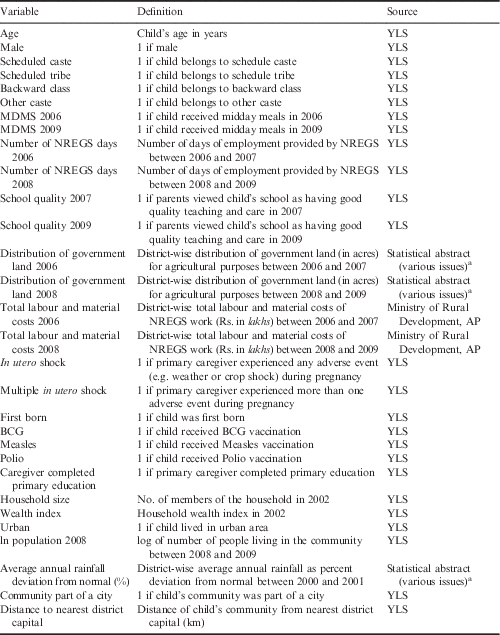
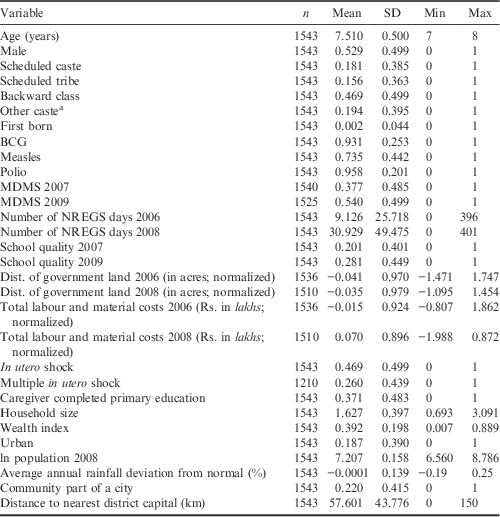
in Eqn (3) show whether welfare schemes are able to compensate for the effect of early childhood shocks. In light of policy interest, the study also examined the heterogeneous effect of welfare schemes in mitigating adverse shocks and estimated Eqn (3) by gender of the child and caregiver’s education. Nonetheless, demographic and community characteristics and fixed effects were included one-by-one in the regressions to observe the influence of each of these controls on the coefficients of interest. The preferred specification was the one that included the full set of controls. Standard errors in all regressions were clustered at the sub-district level. A full list of the variables included in the regression, along with the data sources, is presented in Table 1.
Definition of study variables and sources of data
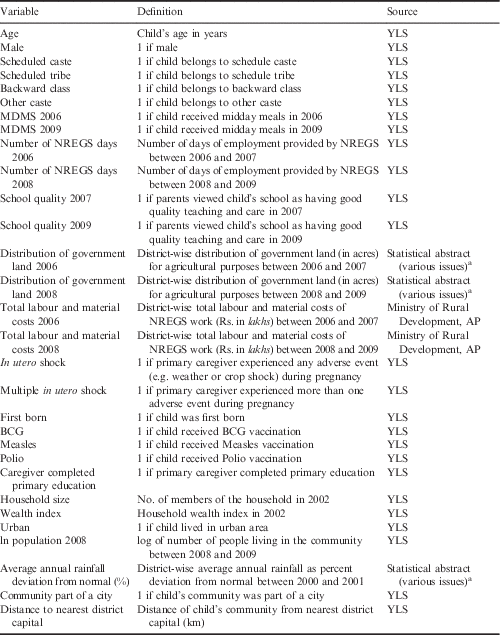
aMinistry of Statistics and Programme Implementation, AP, Government of India
The estimations of Eqns (2)–(3) present a series of challenges. The first is related to the shock measure, which is a self-reported binary variable that equals 1 if a mother or a primary caregiver reports having experienced any shock while pregnant and 0 otherwise. The self-report of the in utero shock may be correlated with unobservables (e.g. unobserved ability bias), leading to biased estimates. The exogeneity of the in utero shock was checked (see Results section) and there was no evidence that self-reported shock was correlated with unobservables. Another potential challenge is related to the self-selection mechanism. The enrolment of children in a public school instead of a private school in order to benefit from the MDMS and the number of NREGS days worked by a household in a year are likely to be endogenous, which could hinder a causal interpretation of the results. More importantly, the number of NREGS days worked by each household member was taken from the job card of the household and this information was aggregated to the household level. Omitted variables such as ability to perform hard, manual labour (which is the nature of NREGS work), getting sick and choosing not to go to work could influence the number of days an individual works for NREGS and could therefore influence the number of days a household works for NREGS in the aggregate. In the case of the MDMS, however, existing evidence suggests that self-selection by survey households into the school meal programme through physical relocation or any other channel is not of concern. This is because 96.9% of the sampled children were enrolled in a public primary school within their village of residence and 97.8% of all children currently enrolled in a public primary school had resided within the same household for all of the preceding 12 months (Afridi, Reference Afridi2010). In addition, the programme is likely to be an incentive only for poorer households, and children from these households would typically enrol in a public school anyway (Singh et al., Reference Singh, Park and Dercon2014). In any case, the study addressed endogeneity problems caused by self-selection into both programmes by estimating Eqn (3) with an instrumental variable (IV) framework, which could reasonably handle other concerns such as unobserved child, household and community characteristics. Unobserved factors (e.g. parental concern) might directly affect child health, as outlined in the theoretical framework, and could be correlated with other regressors in Eqn (3).
To achieve identification of the MDMS, school quality was used as this was likely to be correlated with the quality of school meal, which leads to participation in the school feeding programme, but may not directly affect child health. In the working sample, about 20% of households viewed schools as good quality in 2007 and the number only increased to 28% in 2009. For the school quality measure, a binary variable was generated that was equal to 1 if the parents viewed the school as having a combination of good quality teaching and care, and 0 otherwise. Two indicators of school quality were used: one for the 2007 survey and one for the 2009 survey. In order to determine the effect of number of days worked under the NREGS programme on child health, the variations between districts and over time in the distribution of government land and total labour and material costs of the NREGS works were used as study instruments. The distribution of government land is part of the Indian Land Reforms Act 1972, and basically facilitates the distribution of surplus land among poor landless workers. The distribution of surplus land makes it easier for poor workers to enhance their earnings and thus reduce their participation in public works programmes. Accordingly, four variables were constructed: (a) the amount of government land distributed in districts between 2006 and 2007 as IV for the number of NREGS days 2006; (b) the amount of government land distributed in districts between 2008 and 2009 as IV for the number of NREGS days 2008; (c) total labour and material costs disbursed in districts between 2006 and 2007 as IV for the number of NREGS days 2006; and (d) total labour and material costs disbursed in districts between 2008 and 2009 as IV for the number of NREGS days 2008.
Instrument validity
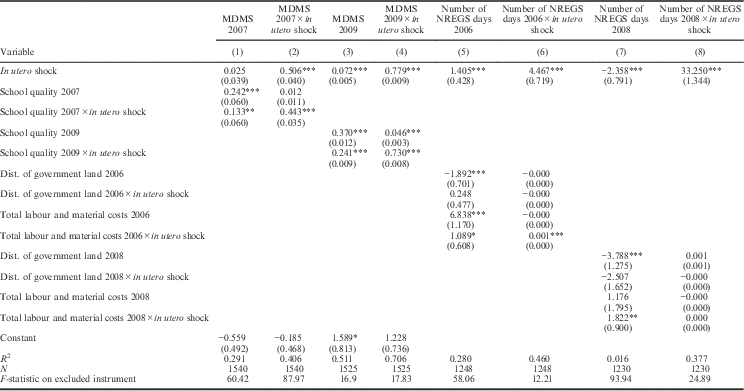
Clearly, for an instrument to be valid it should be correlated with the endogenous explanatory variables, MDMS and the number of NREGS days and satisfy the exclusion restriction. The first-stage regression estimates for Eqn (3) can be found in Table 2. As expected, school quality was found to be strongly positively correlated with access to the MDMS in 2007 and 2009. Given the nature of the dependent variable (number of NREGS days) negative binomial regression models were estimated. The relevance of this model over the Poisson model was verified with the Likelihood ratio test (p<0.001). As expected, an increase in the distribution of government land acts as a disincentive for households to participate in the NREGS, with the negative effect strengthening sharply in 2008 compared with 2006. In utero shock experienced by a child is generally associated with increased participation in both the MDMS and NREGS, with the strength of the association being much larger in the latter. Additionally, the study used interactions between in utero shock and instruments as valid IVs for interaction between welfare schemes and in utero shock. If the instruments were valid, then interaction terms between in utero shock and instruments were valid IVs for interaction terms of welfare measures and in utero shocks (see Singh et al., Reference Singh, Park and Dercon2014). All these instrumental variables had strong explanatory power in that they had very high F-statistics. The Hansen test for over-identification indicated that the distributions of government land and total labour and material costs in districts were valid (p-values varying between 0.19 and 0.53).
Results of the first stage of the regression analysis using various endogenous variables
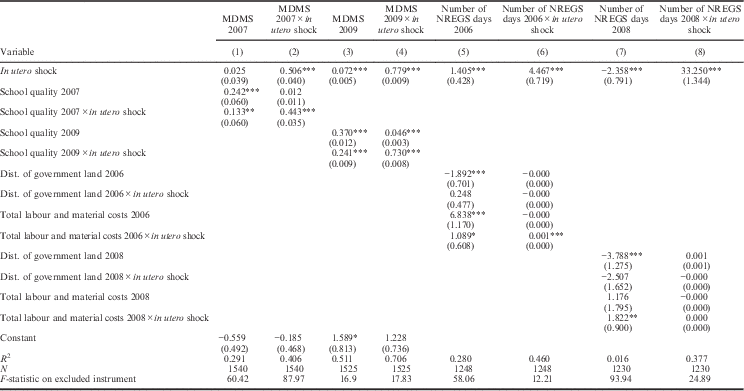
Columns (1)–(4) of the table show the parameter coefficients for the linear probability models. Probit models provide similar results. Columns (5)–(8) report the marginal effects of the negative binomial regression models. Robust standard errors, clustered at the sub-district level, in parentheses. All specifications include sub-district fixed effects (except columns (5)–(8)), urban areas, child characteristics, household and caregiver’s characteristics and community characteristics. Coefficients on age, sex of child, caste, first born, child vaccination and urban dummies, caregiver’s education, wealth index and household size, ln population 2008, community part of a city and distance to nearest district capital are not reported here.
*p<0.10; **p<0.05; ***p<0.01.
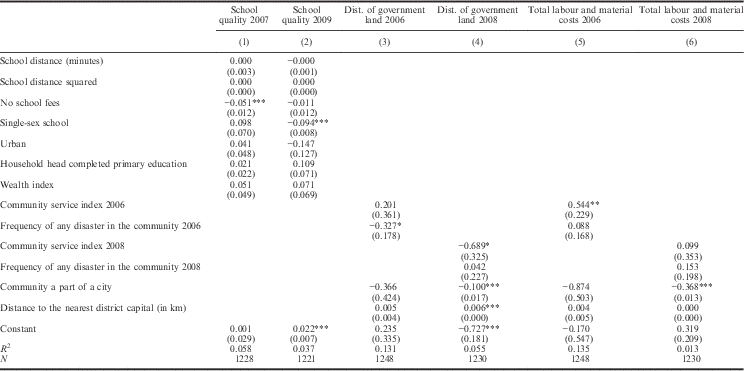
While the relevance of instruments was verified through the first-stage regression, the exclusion restriction could not be tested in the situation of two endogenous variables and two instruments, especially in regard to school quality. School quality, for instance, is likely to be correlated with school distance, economic status and location of residence, which are very likely to directly affect child health. This can lead to violation of the exclusion restriction. However, the distribution of government land and the total labour and material costs of NREGS work in the district are clearly driven by administrative issues and are unlikely to be related to the residuals in a model of child health. Instead, an attempt was made to provide evidence that the instruments were unlikely to violate the exclusion restriction (Table 3). Whether observable household, school and community characteristics (acting as a proxy for unobserved variables) were correlated with the probability of a household reporting the quality of school, the distribution of government land and total labour and material costs in the district were tested (see also Wooldridge, Reference Wooldridge2000). Columns (1)–(2) of Table 3 show the regressed binary variables for whether parents viewed their child’s school as having a combination of good quality teaching and care during 2007 and 2009 on predetermined measures such as school distance, school distance (squared), dummy variables for no school fees, single-sex school, household characteristics and location of residence. The study also controlled for sub-district fixed effects. None of these characteristics was found to be significantly correlated with school quality. Furthermore, columns (3)–(6) show the regression of the amount of government land within the district along with the total labour and material costs during 2006 and 2008 on the determinants listed in Table 3. The results suggest that the community service index had a significantly positive effect on total labour and material costs in 2006, but that the effect weakened in 2008. While significantly positive coefficient estimates are plausible, they do not suggest any violation of the requirements for the exogeneity of the chosen instruments (the distribution of government land, total labour and material costs) for the NREGS, since neither the community service index nor distance to the nearest district capital was likely to be correlated with household characteristics. Thus, Table 3 provides evidence in favour of exogeneity of the chosen instruments.
Assessment of the validity of the study instruments
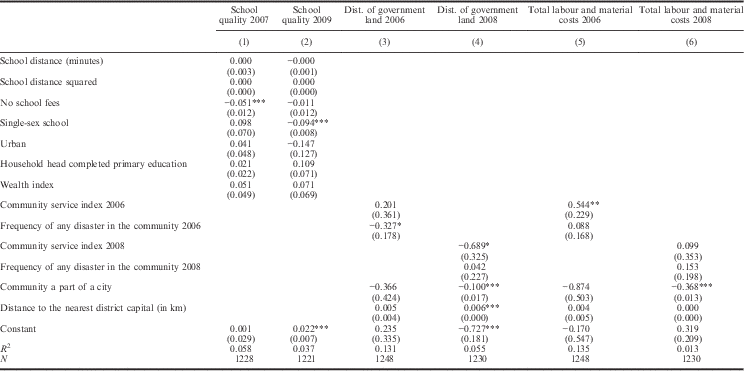
Columns (1)–(2) of the table show the parameter coefficients for the linear probability models, while columns (3)–(6) report the parameter coefficients for the OLS models. Robust standard errors, clustered at the sub-district level, in parentheses. Samples in columns (1) and (2) are restricted to households whose children were enrolled in public school. Samples in columns (3)–(6) restricted to rural areas. Variables such as household education, community part of a city and distance to nearest district capital are from Round 1 of the YLS. The study constructed community service indices for YLS Rounds 2 and 3 separately from various service indicators in the community (e.g. access to post-office and banks, sources of drinking water and electricity facilities) using principal component analysis. All specifications (except columns (3)–(6)) included sub-district fixed effects.
*p<0.10; **p<0.05; ***p<0.01.
Results
Descriptive statistics of study sample
Table 4 presents the summary statistics of the variables used in the regression analyses. A significant percentage of children (47%) in the Andhra Pradesh YLS sample had experienced in utero shocks. There was a steady increase in consumption of midday meals represented by the indicators in MDMS between 2007 and 2009 – from 38% to 54% – though nearly half the sample of children were either in private or government schools with no midday meals. The coverage of the NREGS increased over the period 2006–2008. The mean number of days worked under the NREGS in 2006 was about 9 days; by 2008 this had increased to 30 days. This reflects the effectiveness of the programme in increasing participation in NREGS employment in rural areas. There was a sharp increase in the administrative outlay on labour and material costs from 2006 to 2008, which is consistent with the increased coverage of the NREGS over this period. Note, however, that Mukhopadhyay et al. (Reference Mukhopadhyay and Sharan2015) showed that in Rajasthan the performance of the NREGS, after its initial impressive performance, which coincided with the time period considered here (2006–2009), declined sharply after 2010. Moreover, Liu and Barrett (Reference Liu and Barett2013), using all-India data from the 66th round of the National Sample Survey (July 2009–June 2010), found that NREGS jobs were not ‘pro-poor’ but exhibited a middle-class bias. This was supported by Bhattacharjee (Reference Bhattacharjee2017) who, in a recent review of the NREGS, argued that the programme ‘has not been able to make a dent in rural poverty’ (p. 29) and suggested ‘some innovative ways to help improve the outcome of the scheme’ (p. 29).
Descriptive statistics of study sample, Andhra Pradesh YLS
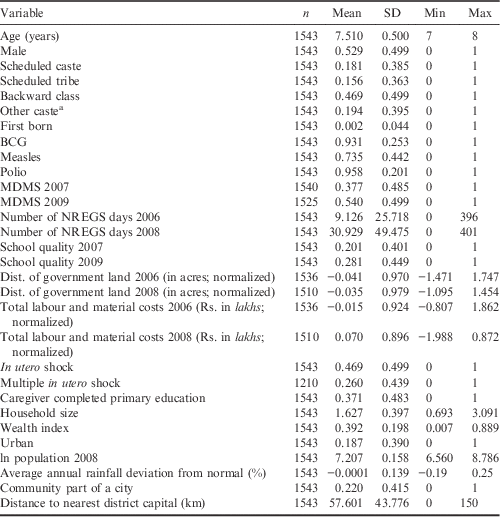
Dummy variables for being male, first born and child vaccination, in utero shock and caste, urban areas, household and caregiver’s and community characteristics are from Round 1 of the YLS.
Note that zero values were found for the number of days worked under NREGS in both 2006 and 2008, which might seem to skew the average to be really low. Instead, these zero values were retained in order to avoid censoring bias in the regressions.
a Reference category.
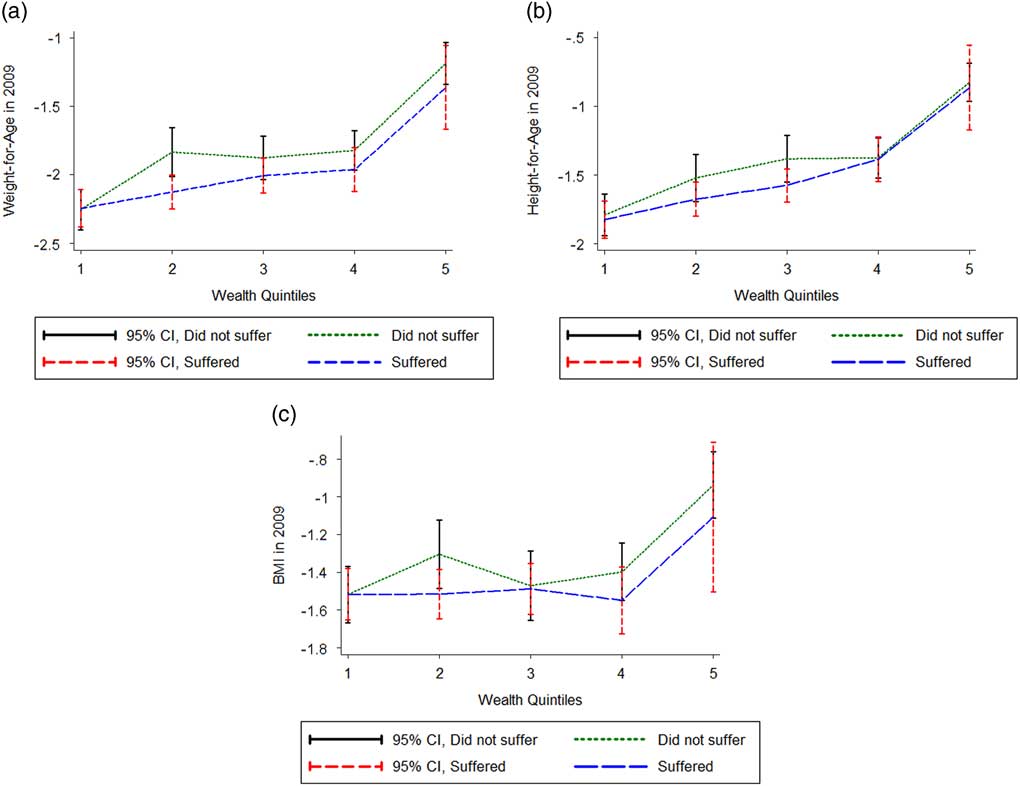
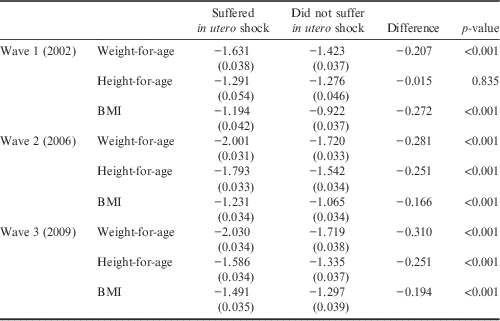
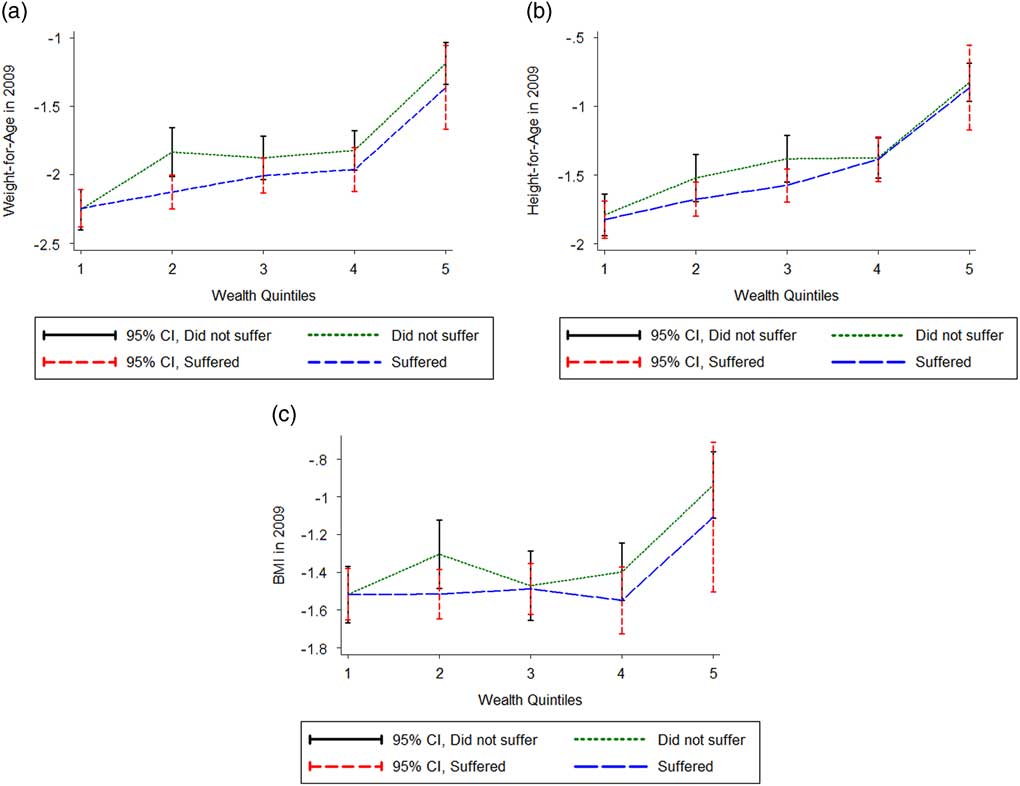
Table 5 shows child anthropometrics for each of the three waves of the YLS data, by whether children experienced in utero shocks. The findings suggest that children who had experienced in utero shocks reported worse health status in all three waves than those who did not suffer such shocks, and on all three measures of child health. The difference was statistically significant in most cases. It is also clear that all three measures of child health have been deteriorating over time. Figure 2 presents the picture in 2009 disaggregated by wealth quintiles, again showing that in 2009 children experiencing in utero shocks had a worse health status, but confirming that child health generally improved with household affluence, irrespective of in utero shock.
Child anthropometrics in 2009 by whether they experienced in utero shock and by wealth quintiles.
Child anthropometrics by in utero shock and YLS wave
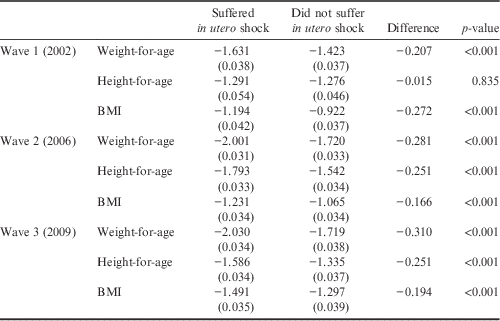
All values are z-scores with standard errors in parentheses.
*p<0.10; **p<0.05; ***p<0.01.
In utero shocks and child health outcomes
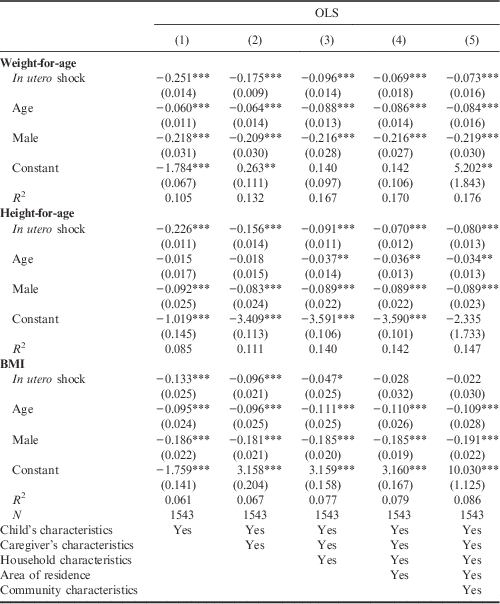
Table 6 shows the effect of in utero shocks alone on the three child health outcomes using Eqn (2), and by child, caregiver, household and community characteristics. The preferred specification is in column (5), which includes all covariates. It was found that the adverse effect of in utero shocks on child health was quite strong under the five alternative specifications (i.e. columns (1)–(5)). The exception was child BMI, where the effect was only significant in the first three specifications. This suggests that the adverse effect of in utero shocks on child BMI was restricted to certain households residing in particular regions. This points to the need for targeted intervention. The results did not alter when district-wise percentage deviation of average annual rainfall from normal was included (not reported here). The robustness of the estimates to different types of shocks, such as crop failure, weather shock or any multiple in utero shocks, was explored. The (unreported) results suggested that the effect of weather shock was the weakest and that of multiple in utero shocks the strongest. Since the results were robust to alternative measures used to define in utero shock, the apparent impact of different (alternative) types (measures) of shock are not discussed further.
Effect of in utero shock on child health outcomes in 2009
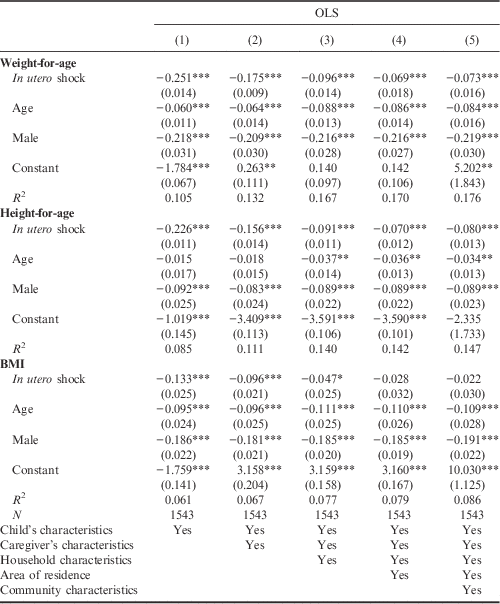
The table shows parameter coefficients for the OLS models using Eqn (2). Robust standard errors, clustered at the sub-district level, in parentheses. Coefficients on caste, first born, child vaccination and urban dummies, caregiver’s education, wealth index, household size, ln population 2008, whether community part of a city and distance to nearest district capital are not reported here. All specifications include sub-district fixed effects.
*p<0.10; **p<0.05; ***p<0.01.
Effect of welfare schemes
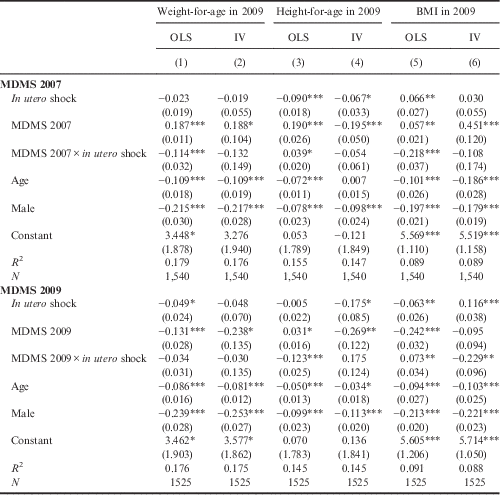
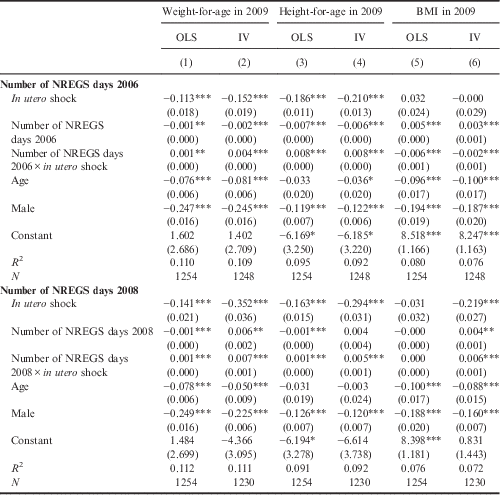
Tables 7 and 8 show the interaction between the MDMS and NREGS schemes, respectively, and an indicator variable for in utero shock, providing direct evidence for whether the two welfare schemes are able to compensate for the adverse impact of in utero shock. This is the preferred model. The instrumented results for all health measures are reported in columns (2), (4) and (6) of each table. The tables only report specifications that included all covariates to reserve space.
Heterogeneous effects of MDMS 2007 and 2009 on child health outcomes in 2009
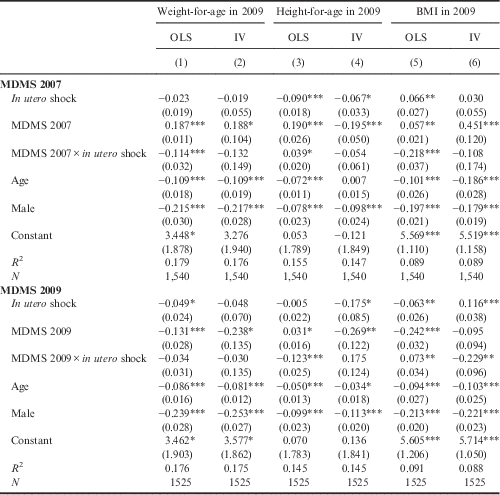
The table shows parameter coefficients for the OLS and IV models using Eqn (3). Robust standard errors, clustered at the sub-district level, in parentheses. All specifications include sub-district fixed effects, urban areas, child characteristics, household and caregiver’s characteristics and community characteristics. Coefficients on caste, first born, child vaccination and urban dummies, caregiver’s education, wealth index, household size, ln population 2008, community part of a city and distance to nearest district capital are not reported here.
*p<0.10; **p<0.05; ***p<0.01.
Heterogeneous effects of ‘number of NREGS days 2006 and 2008’ on child health outcomes in 2009
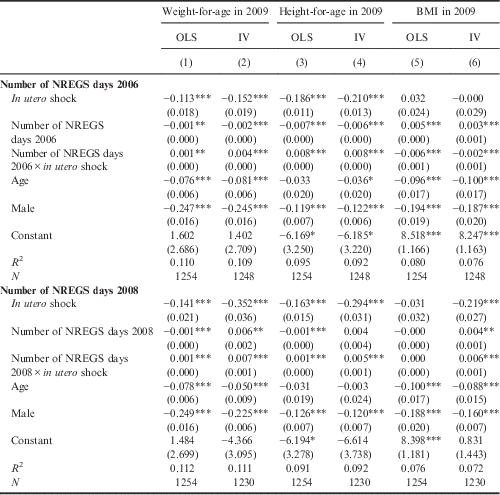
The table shows parameter coefficients for the OLS and IV models using Eqn (3). Robust standard errors, clustered at the sub-district level, in parentheses. Sample restricted to rural areas. All specifications include sub-district fixed effects, child characteristics, household and caregiver’s characteristics and community characteristics. Coefficients on caste, first born, child vaccination and urban dummies, caregiver’s education, wealth index, household size, ln population 2008, community part of a city and distance to nearest district capital are not reported here.
*p<0.10; **p<0.05; ***p<0.01.
Taking into account different specifications, significant and negative effects of in utero shock on all three health measures (with a few exceptions) were found. Consistent with the findings of Singh et al. (Reference Singh, Park and Dercon2014), the MDMS dummy for 2007 had a positive impact; this effect was statistically significant in both the OLS and IV results for all three health measures (with a few exceptions). Nevertheless, the coefficient estimates of the dummy variable for MDMS 2009 and the number of NREGS days were mostly negative and statistically significant in both the OLS and IV models. The IV coefficients were often larger in absolute value relative to their OLS counterparts, indicating a plausible endogeneity bias driven by self-selection that resulted in the attenuation bias in the OLS coefficients. This was particularly the case for the MDMS.
Between MDMS and NREGS, however, the coefficient estimate for interaction terms for the latter was generally positive and more statistically significant than for the former. Virtually no compensatory effects of school meals was found (with a few exception), while the reverse was true for the NREGS. This was particularly observed for weight-for-age and height-for-age (see Table 8). The results for child BMI were mixed. Contrary to the findings of Singh et al. (Reference Singh, Park and Dercon2014), this suggests that the MDMS has failed to target the poorer (and more malnourished) children compared with the NREGS. A likely explanation is that Singh et al.’s study was restricted to much younger children with an average age of 5.5 years; hence, the effects of the MDMS might be more effective. Alternatively, in Singh et al.’s study the MDMS could be picking up the effects of other supplementary nutrition support for younger children of below 5, such as the ICDS. It is also possible that, as reported earlier, the nutritional aspect of the school feeding programme is controversial; and hence, the impact in reducing the adverse effect is stronger in the NREGS than in the MDMS.
A few additional channels may drive the results. First, it could be the case that the compensatory effects of school meals are operating through the channel of catch-up growth and consequently child health outcomes are less responsive to interventions with age (see Boersma & Wit, Reference Boersma and Wit1997). To test this channel, the study re-estimated Eqn (3) and limited the sample to those who enrolled in school at age 5 in order to reduce bias driven by enrolment at a younger age. The (unreported) results did support the explanations to some extent. Specifically, the impact of the programme in 2007 on height-for-age was positive and statistically significant (in both OLS and IV models), while this effect became weaker or even reversed in sign by 2009. Second, whether there was non-random attrition in the sample that drove the results was also investigated. It could be the case that children who experienced in utero shock were particularly responsive to the programme, but dropped out of the sample before 2009. Attrition bias (with and without child deaths) on the three health measures was investigated and two complementary tests calculated: the attrition probit test (Fitzgerald et al., Reference Fitzgerald, Gottschalk and Moffitt1998) and the Becketti et al. (Reference Becketti, Gould, Lillard and Welch1988) test (BGLW test hereafter). In the attrition probit test, the dependent variable took the value of 1 for households who dropped out of the sample after the first round (i.e. YLS 2002) and 0 otherwise. Explanatory variables included lagged outcome variables along with a range of child and household characteristics. If lagged dependent variables were statistically significant, it suggested that attrition bias might be present in child anthropometric models (see Outes & Dercon, Reference Outes and Dercon2008, for details). In the BGLW test, the determinants of three health measures in Round 1 of the YLS were estimated separately using control variables measured in Round 1, the attrition dummy and the interaction of the attrition dummy with other explanatory variables. An F-test on the joint significance of the attrition dummy and the interaction variables indicated the attrition bias.
The attrition probit test provided no evidence of attrition bias except for the child BMI model (unreported). Further, when estimating the probit models for attrition, excluding child deaths, the original patterns uncovered for child anthropometrics did not disappear. On the contrary, the BGLW tests provided no evidence of significant biases in child anthropometrics except for weight-for-age. Taken together, this mixed evidence (see also Outes & Dercon, Reference Outes and Dercon2008) can be interpreted as an indication that, while the pattern of attrition could lead to attrition bias, the current rates of attrition in YLS for Andhra Pradesh are modest enough not to lead to biased inferences.
Nevertheless, Table 8 suggests that although the effect of the interaction between the number of NREGS days and in utero shock was positive and statistically significant in 2007, it increased sharply in size and significance in 2009 (all in the IV models). The results therefore constitute important evidence that households’ response to in utero shock through employment under the NREGS 2007 is significant in mitigating the adverse effects of the in utero shock. While programme delivery has improved with time (e.g. in general, the average days available under the NREGS have increased with time), the ameliorating effect appears to fade as the child grows. This is particularly seen in the case of height-for-age. These results were unchanged when an alternative definition of the NREGS was used. This could be related to two factors. First, Erlend et al. (Reference Erlend, Sambit, Rajasekhar and Manjula2012) found that the effect of the NREGS on agricultural wages was strongest during 2006–2007 (i.e. Phases 1 and 2) but was muted by 2008–2009 (Phase 3). They argued that initial wages were much higher in Phase 3 districts compared with Phases 1 and 2 districts. Therefore, low statutory wage rates, which are equal across all districts in a state, have had much less of an impact in these districts. Since there is a strong link between NREGS income and the nutritional status of the household (Jha et al., Reference Jha, Bhattacharyya and Gaiha2011), any positive income effect on child growth has been depleted by the weakening of the effect of NREGS on agricultural wages. Second, it could be related to catch-up growth. This idea is also supported by evidence provided by Crookston et al. (Reference Crookston, Schott, Cueto, Dearden, Engle and Georgiadis2013), who identified catch-up in height-for-age for children up to age 8 in Ethiopia, Peru, India and Vietnam.
Endogeneity test of self-reported in utero shock
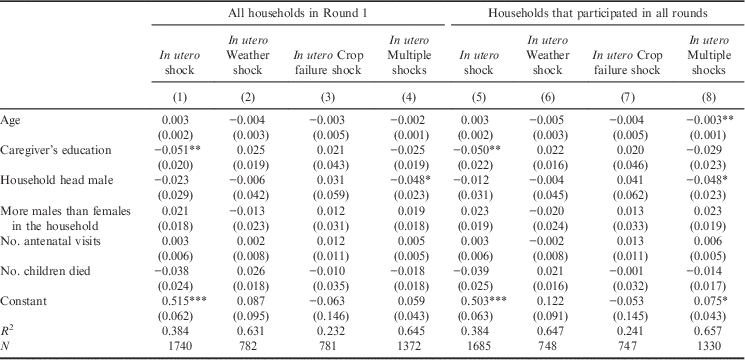
Self-reported in utero shock could suffer from endogeneity bias. To alleviate this concern, self-reported in utero shocks were regressed on the observable characteristics of the household such as primary caregiver’s age and schooling, number of antenatal visits, number of children that died and economic status, using all households from Round 1 of the YLS. The analysis was repeated restricting it only households who participated in all three waves (columns (5)–(8)). The results (Table 9) suggest that none of these variables had a statistically significant coefficient (with a very few exceptions), ruling out the possibility of selective reporting based on observable characteristics of the household (see also Dercon & Porter, Reference Dercon and Porter2014). In order to ensure that the results were not contaminated by recollection bias, a similar exercise was conducted using mother fixed effects. When mother’s or primary caregiver’s characteristics were excluded from the regression models similar results were found (results not shown).
Determinants of self-reported in utero shock
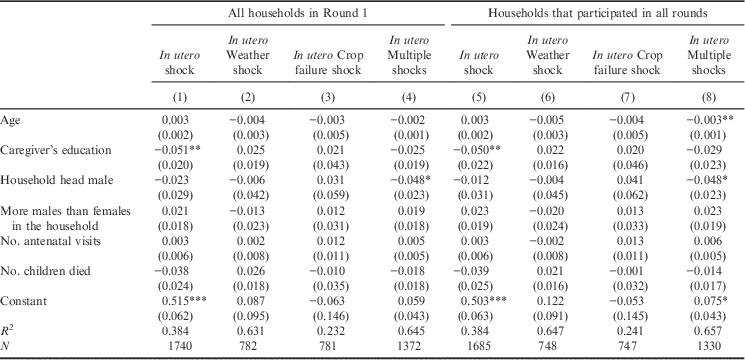
The table shows parameter coefficients for the linear probability models. Probit models provide similar results. Robust standard errors, clustered at the sub-district level, in parentheses. All specifications include wealth index and sub-district fixed effects.
*p<0.10; **p<0.05; ***p<0.01.
However, there are several potential channels that nullify the exogeneity assumption such as selective mortality and selective migration. The former channel suggests that, because the study included a sample of children who had survived, this will understate the true negative effects of in utero shock (Currie, Reference Currie2009). If weaker fetuses are more likely to die in utero due to a shock, then the stronger, healthier fetuses are more likely to survive, potentially leading to a healthier population in adulthood. To test this, the effect of different types of in utero shocks on an indicator variable for whether the respondent was a female was estimated. Since males require more maternal resources to form and carry full-term than females and tend to be more fragile in utero, during periods of fetal stress the gender ratio skews female (Hernández-Julián et al., Reference Hernández-Julián, Mansour and Peters2014). The sample was restricted to the first wave. The (unreported) results did not support the fetal loss channel, even if children experienced more than one shock. It is worth noting that there is no information on still-births or voluntary abortion in the YLS, which could also drive the positive selection of the sample.
The migration channel suggests that a household might migrate to another district prior to child birth in response to extreme weather conditions or women delaying fertility patterns during dry seasons. Moreover, factors that influence the migration decision of the household, such as job opportunities, are likely to improve household living standards, and hence child health through a higher level of household income. Consequently, the composition of children may change due to positive selection and would lead to potential bias in the estimates. However, more than 80% of households included in the sample had been living in the same location when the first survey was conducted and 50% of households lived in the same village that the child was born in, whereas 40% lived outside the village but in the same district. The low mobility in the YLS is generally confirmed in the literature about shocks in early childhood (Dasgupta, Reference Dasgupta2017). Nevertheless, the migration channel was tested – in particular, in utero shock by wealth quintiles (see also Hernández-Julián et al., Reference Hernández-Julián, Mansour and Peters2014). The (unreported) results suggest that child anthropometrics did vary by wealth quintiles. Specifically, the child health effect of shock was larger for children born to mothers in the top two wealth quintiles for weight-for-age and child BMI, but the reverse was true for height-for-age. Thus, the results suggest that it is wealthier families who face the largest impacts of in utero shock, which leads to the conclusion that the results are not contaminated by selective migration mechanism.
Effect of multiple in utero shocks
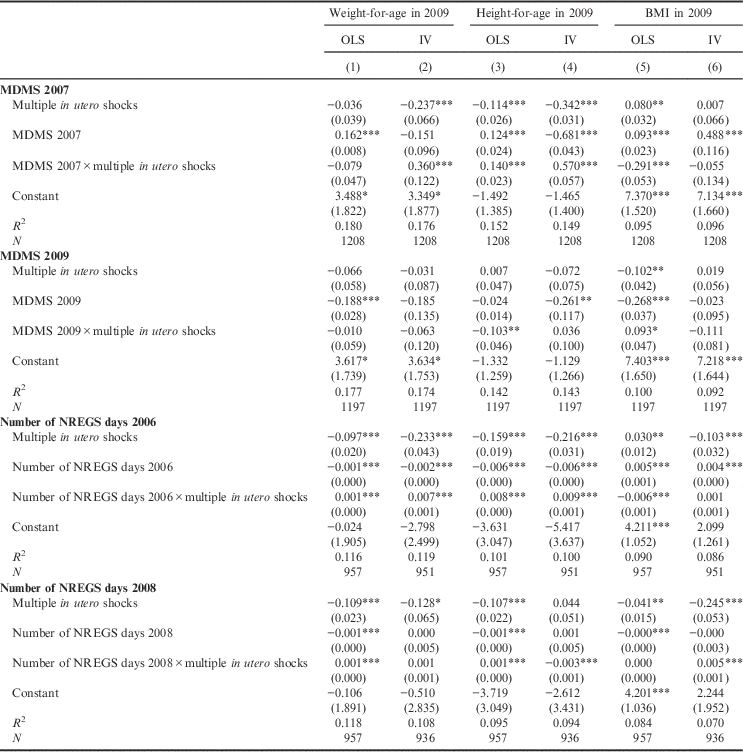
The impact on health is expected to be larger if children have experienced more than one shock in utero. Thus, the effect of multiple in utero shocks was explored using the same outcomes as the previous regressions (Eqn (3)). The results, reported in Table 10 suggest that, for infants exposed to multiple in utero shocks, the adverse impact of malnutrition worsened in the case of MDMS 2007 but was statistically insignificant for MDMS 2009. Unlike the results in Table 7, the negative impact of multiple in utero shocks was compensated by school meals in 2007, especially for weight-for-age (in the IV model) and height-for-age (in both the OLS and IV models). However, the effect of the interaction between MDMS 2009 and multiple in utero shocks remained (mostly) statistically insignificant. The analysis of multiple in utero shocks was repeated for the number of NREGS days. The results, reported in Table 10, were qualitatively similar to those presented in Table 8 (with a few exceptions).
Child health outcomes in 2009 of multiple in utero shocks and exposure to the MDMS and NREGS
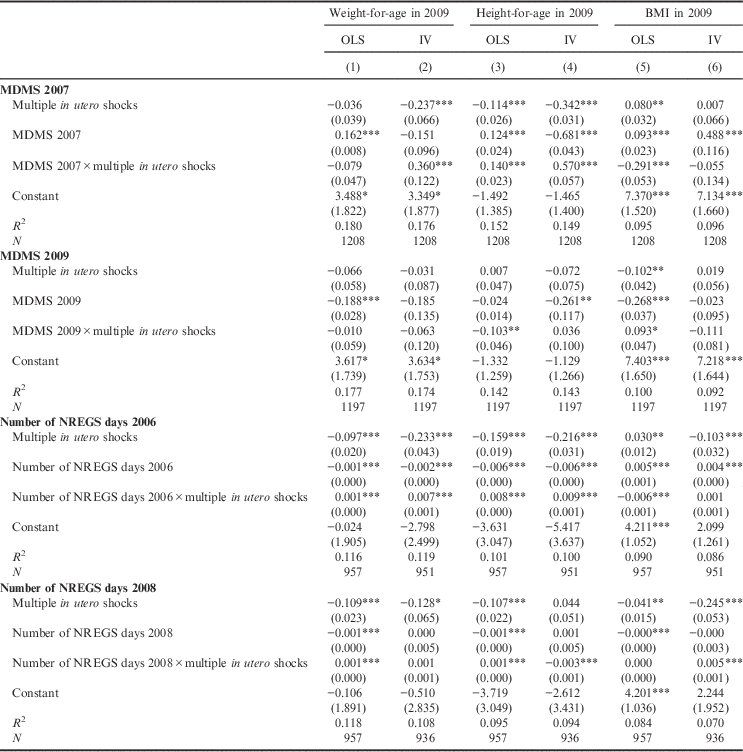
The table shows parameter coefficients for the OLS and IV models estimated using Eqn (3). Robust standard errors, clustered at the sub-district level, in parentheses. All specifications include sub-district fixed effects, urban areas, child characteristics, household and caregiver’s characteristics and community characteristics. Coefficients on age, sex of child, caste, first born, child vaccination and urban dummies, caregiver’s education, wealth index and household size, ln population 2008, community part of a city and distance to nearest district capital are not reported here.
*p<0.10; **p<0.05; ***p<0.01.
Participation in the programmes
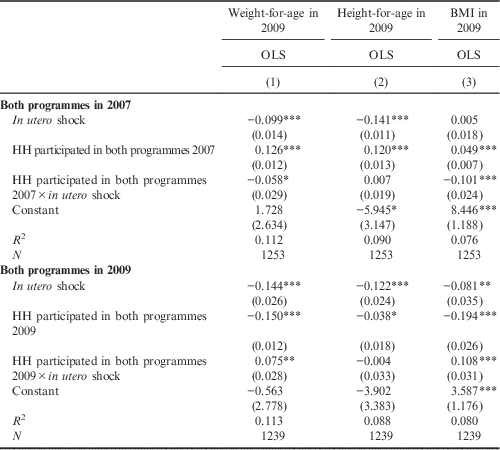
The possibility that households participated in both welfare programmes was assessed using Eqn (3), controlling for those households that are enrolled in the two programmes in 2007 and 2009. More specially, child health outcomes were regressed on a set of variables that include a dummy variable for households that participated in both programmes and the interaction between programme participation dummies and in utero shock. The reference category was households that didn’t participate in either programme or those that participated in one or the other. In the working sample, about 18% of the households participated in both programmes. Together with the information on the timing of being enrolled in the programme, the results may have additional implications for the co-ordination of these welfare programmes. Note that the working sample was restricted to rural areas since the NREGS programme was not available in urban areas. The results, presented in Table 11, suggest that the impact of in utero shock was negative and statistically significant for both weight and height. The results for child BMI are mixed. However, the negative impact of in utero shock was compensated partially by both programmes only in 2009, especially in the case of weight-for-age and child BMI, but not for height-for-age. The results suggest that if a household participated in both welfare programmes (as opposed to alternative choices), the compensatory effect of both programmes taken together became stronger over the years. Note that the study was unable to report IV estimates due to lack of potential instruments for both programmes. Consequently, the results should be treated with caution.
Effect of co-ordination of the welfare schemes on child health outcomes in 2009
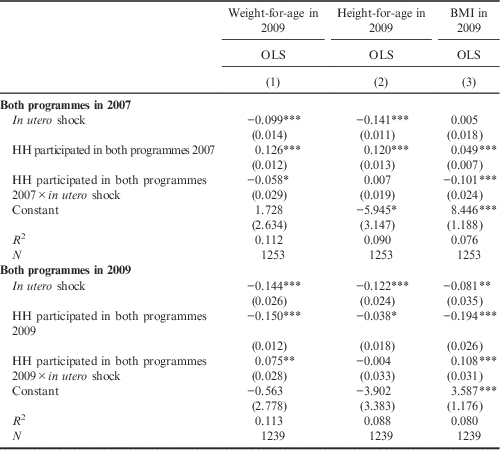
Sample restricted to rural households that participated in both welfare programmes.
HH, household head.
The table shows parameter coefficients for the OLS models using Eqn (3). Robust standard errors, clustered at the sub-district level, in parentheses. However, IV regressions were not reported due to lack of potential instruments for both programmes simultaneously. All specifications include sub-district fixed effects, child characteristics, household and caregiver’s characteristics and community characteristics. Coefficients on age, sex of child, caste, first born, child vaccination and urban dummies, caregiver’s education, wealth index and household size, ln population 2008, community part of a city and distance to nearest district capital are not reported here.
*p<0.10; **p<0.05; ***p<0.01.
Underestimation of the NREGS effects
The effects of the NREGS could have been underestimated because the wage from employment was divided between household members. To check this, Eqn (3) was used restricting the working sample to a single child. The results (not reported) show that the magnitudes for the interaction terms measuring the effects of mitigation became slightly larger in the case of ‘number of NREGS days 2006’, especially for weight-for-age and child BMI. Similar patterns were found for ‘number of NREGS days 2008’ (with a few exceptions), further supporting the idea that the effects of the NREGS might be weakened in the presence of siblings.
Heterogeneous effects by gender
The robustness of the effect of child gender on the results presented in Tables 7 and 8 was investigated. The results (not reported) suggested that boys and girls were both negatively affected by in utero shock (see also Kumar et al., Reference Kumar, Molitor and Sebasian2014), but the effect was stronger (in most cases) for girls. This could not be entirely due to gender bias since the Indian government banned fetal sex discrimination in 1996. However, the practice of abortion of girl fetuses may still be prevalent, so its effect cannot be ruled out. Moreover, a central result reported in Table 8, namely, the significant mitigating impact of the number of NREGS days, was robust to both gender groups, but not for all health outcomes. This is a significant result from a policy viewpoint since the NREGS was never explicitly designed to promote child health, especially in drought-affected areas. This result acquires significance in the light of attempts by the current Modi government to scale down the NREGS programme. Another interesting observation about this finding is that there is a gender-based difference between the NREGS 2006 and 2008. For example, the ameliorative effect of ‘number of NREGS days 2006’ was always much stronger for the girl child than the boy child, and similar patterns were found for ‘number of NREGS days 2008’. This feature should be seen against the background of the finding that, while over time the NREGS was becoming more effective in protecting child health from in utero shocks, the MDMS was becoming less effective and needed better design and more targeted intervention.
Heterogeneous effect of caregiver’s education
The study estimates by the education level of the child’s caregiver, i.e. between households where the carer completed primary education and those where she didn’t, were disaggregated. The ameliorative effect of the MDMS 2007 in reducing the child health effect of in utero shock was statistically significant for the children of mothers with less than primary schooling for the three child health measures (all in the IV models, results not reported). Similar patterns were observed for the MDMS 2009. While the ameliorative effect of ‘number of NREGS days 2006’ in reducing the effect of in utero shock was statistically significant for the children of mothers with primary schooling, for weight-for-age (OLS model) and height-for-age (OLS and IV models) the effect of the NREGS programme was generally neutral between the carer who completed primary education and those who didn’t for ‘number of NREGS days 2008’, especially in the case of weight-for-age. Taken together, these findings reflect the particular importance of welfare schemes in ameliorating the adverse child health effects of in utero shocks in households whose members had no formal education (see also Dasgupta, Reference Dasgupta2017).
Discussion
This study, based on Young Lives Survey (YLS) data obtained in the Indian state of Andhra Pradesh, provides evidence that in utero shocks experienced by children have an adverse effect on their weight-for-age and height-for-age. The study exploited a unique feature of the data set that allowed different types of in utero shocks to be distinguished, and found that the adverse effect was the strongest in case of multiple in utero shocks.
The study also compared the effects of two government welfare schemes – the MDMS and NREGS – in mitigating the adverse effects of in utero shocks on child health. While previous studies have examined the effectiveness of each of these schemes in isolation, the present study attempted to compare them over a concurrent time period. The comparison between MDMS and NREGS brings out several interesting and significant findings. While the effectiveness of the MDMS in mitigating the adverse effects of in utero shocks on child health was statistically insignificant, the reverse was the case for the NREGS. Though not explicitly designed to protect and promote child health, unlike MDMS, the NREGS was, between 2006 and 2009, playing a role that was more effective than the MDMS in acting as a buffer against in utero shocks to the child. However, the study found evidence that the effects of the NREGS were weakened by the presence of siblings. The study also tackled the potential endogeneity of both the principal determinants of interest, namely the shocks experienced by the fetus in the mother’s womb, and the two welfare schemes. In establishing robustness of the qualitative results to departures from the exogeneity assumptions, the paper provides evidence that the chosen instruments satisfied the criteria for their validity. As the study used panel data, a test of attrition bias was applied to show that, while bias was present, it was not strong enough to reverse the qualitative conclusions of the study. The study also found that the negative impact of in utero shock was compensated for by both programmes only in 2009, but not for all health measures.
The results point to the role that either scheme can play in protecting children from the effects of in utero shocks on their future health. There is a need for both schemes and, more crucially, for greater co-ordination between them in delivery and coverage. At a time when the NREGS is being curtailed in India, the fact that it has been playing a role that it was originally not designed to do is a result of some significance.
Acknowledgments
The authors gratefully acknowledge the Associate Editor and the anonymous reviewer whose constructive suggestions helped to improve this paper immensely.
Ethical Approval. The authors assert that all procedures contributing to this work comply with the ethical standards of the relevant national and institutional committees on human experimentation and with the Helsinki Declaration of 1975, as revised in 2008.
Conflicts of Interest. The authors have no conflicts of interest to declare.
Funding. This research received no specific grant from any funding agency, commercial entity or not-for-profit organization.