Introduction
CHD affects approximately 1% of births in the United States. Reference Hoffman and Kaplan1,Reference Reller, Strickland and Riehle-Colarusso2 Of those infants born with CHD, 1 in 4 will have a critical heart defect requiring surgical or catheter intervention in the first year of life. Reference Oster, Lee and Honein3 With advances in CHD care, the majority of these infants born are expected to live into adulthood. Many patients with CHD require surgical procedures involving a median sternotomy Reference Pundi, Johnson and Dearani4–Reference Tribble, Merrill and Derryberry7 that can result in pain, limited movement, and prolonged recovery. Data examining the physical dysfunction and physical therapy needs post-discharge following a sternotomy in children and adults with CHD are limited. The available rehabilitation pathways following cardiac surgery can vary greatly by age.
Focused attention on the neurodevelopmental impact of CHD has resulted in recommendations for early involvement in rehabilitation therapies, initiation of early mobility, parental holding practices in the cardiac ICUs, and individualised developmental care plans. Reference Lisanti, Vittner and Peterson8,Reference Lisanti, Uzark and Harrison9 These practices aim to mitigate the chronic impact of limited activity, altered sensory experiences, and restricted age-appropriate play associated with extended hospital stays in infancy. Additionally, there is evidence supporting serial screening and involvement in physical and occupational therapies to promote motor skill acquisition and avoid neurodevelopmental delays in children. Reference Rogers, Malik and Fogel10
For adults with acquired cardiac disease, cardiac rehabilitation is currently a standard of care and is proven to reduce patients’ morbidity and mortality while also improving their quality of life. Reference Mampuya11 Despite growing evidence highlighting the benefits of cardiac rehabilitation programmes for individuals with CHD, Reference Rhodes, Curran and Camil12,Reference Rhodes, Curran and Camil13 referrals for outpatient rehabilitation are inconsistent, leading to underutilisation of this intervention. Reference Curran, Flanagan and Goncerz14 Traditional cardiac rehabilitation programmes have strict admission criteria that may deem many patients ineligible, either due to age or diagnosis. Inconsistent referral practices and lack of standardised rehabilitative care for this population may lead to persistent physical dysfunction and further contribute to developmental delay in this already at-risk population.
This study aims to understand the physical impact of cardiac surgery and identify rehabilitation needs of patients with congenital and paediatric acquired heart disease across the lifespan.
Materials and methods
This study is a retrospective analysis of patients with CHD who underwent cardiac surgery via median sternotomy and presented to their initial cardiac surgery post-operative clinic between January 21, 2022, and August 18, 2023. All post-operative patients were evaluated by a physical therapist as part of the standard of care. Patient demographics, clinical data, and physical therapy evaluation and treatment records were reviewed. Single-ventricle patients during the interstage period were excluded because these patients follow a different post-operative pathway at this institution. Patients that did not receive a sternotomy were excluded. This study was approved by the Institutional Review Board at our centre and deemed exempt (STUDY00002394).
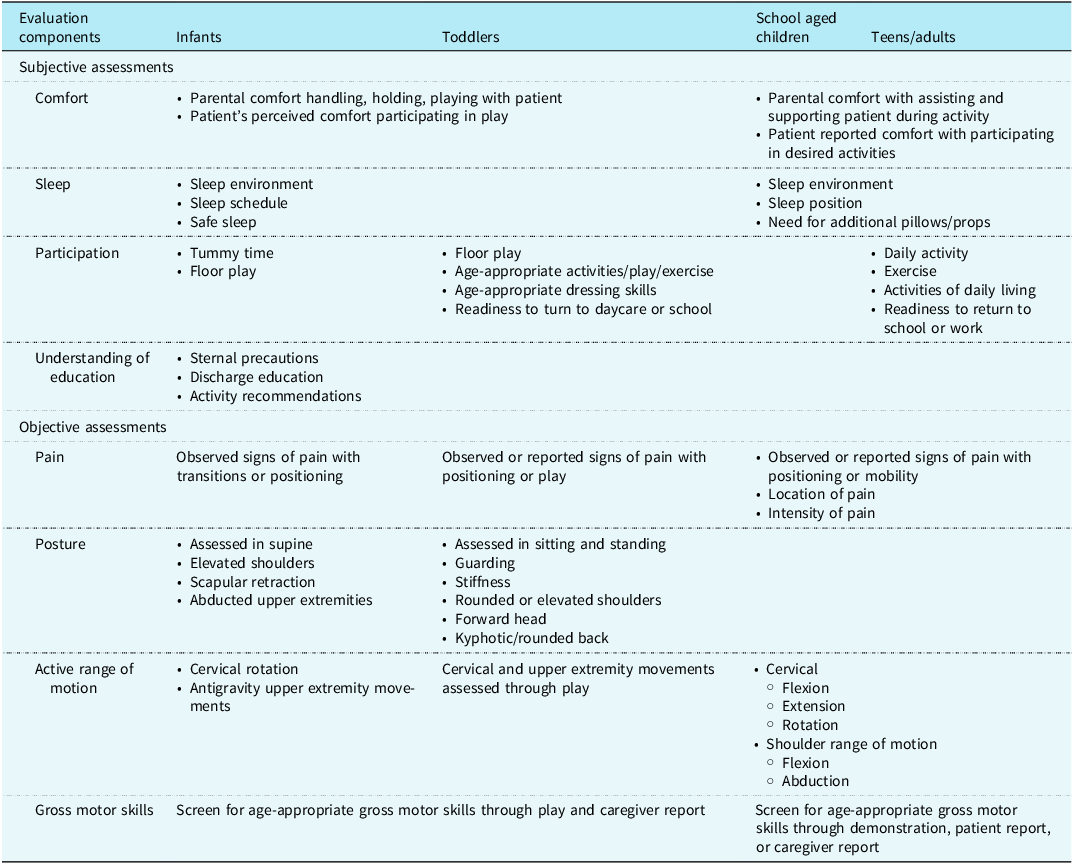
All patients were evaluated by a licenced physical therapist after sternotomy and chest tube suture removal. These evaluations included a subjective assessment of patient and caregiver reports of comfort, sleep, and participation in daily activities. Patient and caregiver understanding of sternal precautions and post-operative activity recommendations was also discussed, with special attention to patient-specific activity goals. Objective assessment included pain, posture, range of motion, and gross motor skills. Postural assessments included resting posture and changes in posture during activity as appropriate. For infants, resting posture was assessed in the supine position, looking for elevated shoulders, scapular retraction, and upper extremity abduction. For older patients, posture was assessed in both sitting and standing positions, looking for guarding or stiffness, rounded or elevated shoulders, forward head or trunk, and kyphotic or rounded back. Range of motion was assessed with a focus on cervical and shoulder active range, as these areas were most impacted by postural guarding. Gross motor skills were assessed using directed therapeutic play, observation, and parent report (Table 1).
Post-opeartive clinic physical therapy evaluations

Descriptive statistics were reported for demographics, hospitalisation characteristics, and outcomes. Length of stay is reported in median[interquartile range] days. All other variables are presented as proportions. Chi-square and Fisher’s exact test were utilised to analyse discrete variables. The Kruskal–Wallis test was used to analyse length of stay. Statistical analyses were performed using R and RStudio (version 4.3.2). 15 All statistical tests were two-tailed, and a p-value <0.05 was considered significant.
Results
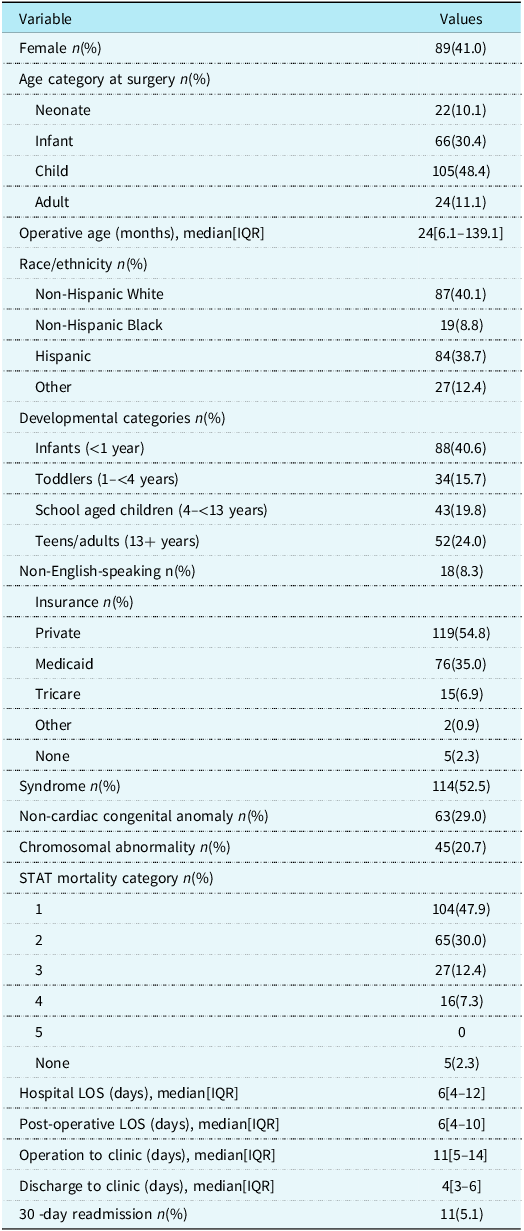
A total of 217 patients were identified. Patients were grouped by age into developmentally appropriate categories: 88 (40%) infants (<1 year), 34 (16%) toddlers (1–3 years), 43 (20%) school aged children (4–12 years), and 52 (24%) teens and adults (13 years and older). Sixty-three (29%) patients had a non-cardiac congenital abnormality, 45 (21%) had a chromosomal abnormality, and 114 (53%) were diagnosed with a syndrome. Median post-operative LOS was 6[IQR: 4–10] days. Patients were seen in post-operative clinic a median of 11[IQR: 5–14] days following surgery (Table 2).
Patient characteristics

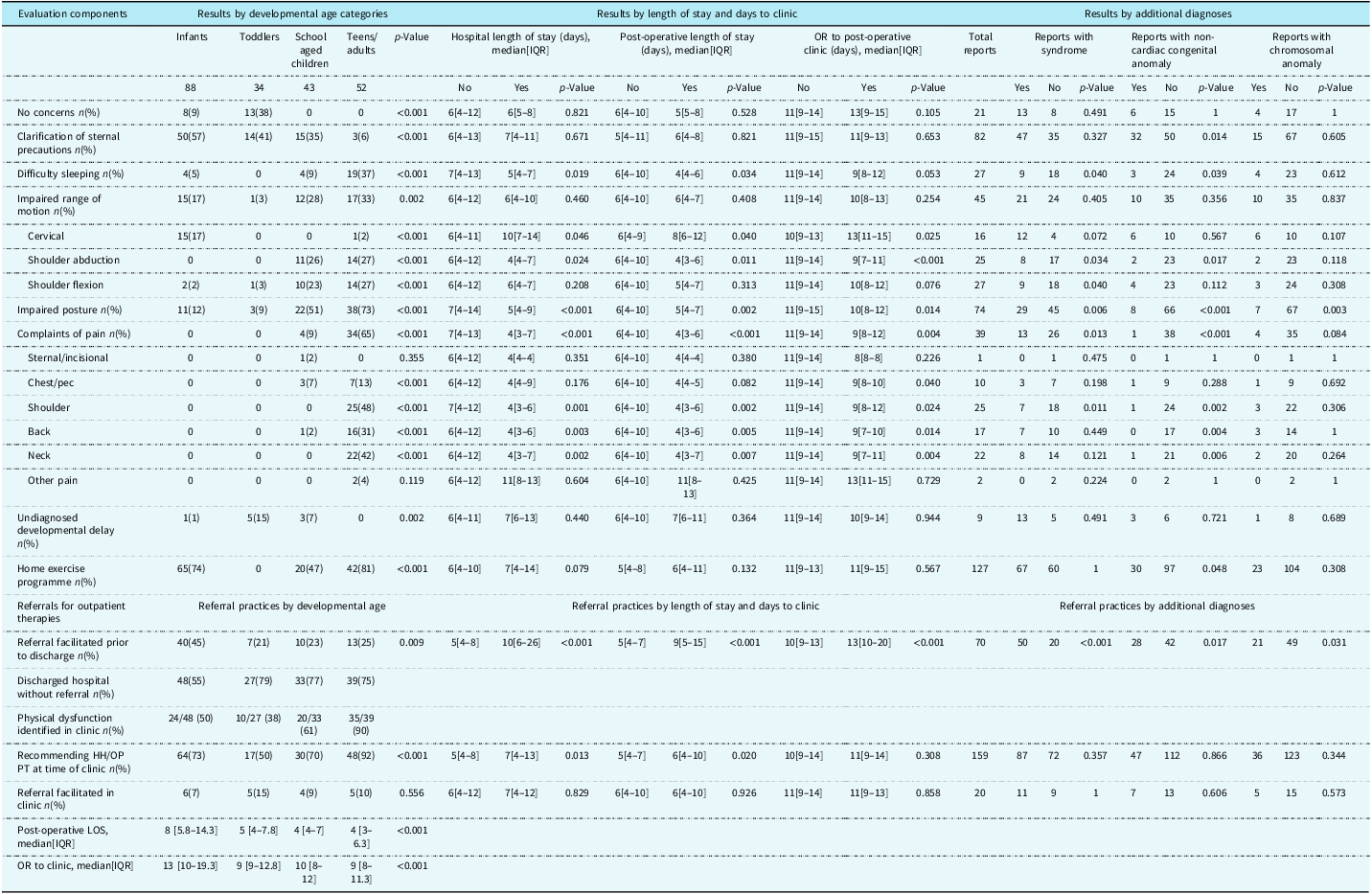
Nine per cent of infant caregivers and 38% of toddler caregivers presented to clinic with no post-operative mobility questions or concerns, while there were no caregivers of school aged or teen/adult patients that reported no concerns (p < 0.001). All patients without reported concerns were assessed to have no persistent physical dysfunction and had returned to age-appropriate motor performance.
Subjective assessments revealed that overall 38% of caregivers and patients needed clarifications of sternal precautions and activity recommendations, with 57% of caregivers of infants, 41% of caregivers of toddlers, 35% of caregivers of school aged patients, and 6% of teens and adults requiring clarifications (p < 0.001). A total of 12% of patients reported sleep disturbances and difficulty returning to preferred sleep positions: 5% of infants, 0 toddlers, 9% school aged patients, and 37% teens and adults (p < 0.001).
Physical therapy objective evaluations identified persistent postural impairments in a total of 74 (34%) patients: 12% infants, 9% toddlers, 51% school aged patients, and 73% teens and adults (p < 0.001). Range of motion impairments were identified in 17% infants, 3% toddlers, 28% school aged patients, and 33% teens and adults (p = 0.002). Cervical range of motion impairments primarily impacted the infant population and in only one patient in the teen and adult group (p < 0.001). Of the 45 patients presenting with range of motion impairments, 71% had limited shoulder range of motion, either through shoulder abduction, flexion, or both. Shoulder flexion impairments were noted in 2% infants, 3% toddlers, 23% school aged patients, and 27% teen and adult patients (p < 0.001). Infants and toddlers were not impacted by shoulder abduction limitations; however, this deficit was seen in both school aged patients (26%) and teen/adult patients (27%) (p < 0.001).
During physical therapy evaluation in clinic, no persistent pain was identified or elicited in the infant and toddler populations, while 9% school aged and 65% of teens and adult patients reported pain (p < 0.001). Of the 38 patients reporting pain, 1 patient complained of persistent incisional or surgical site pain, 26% reported chest muscle pain, 66% reported shoulder pain, 45% reported back pain, and 58% reported neck pain. Of note, 28 (74%) reported more than one area of musculoskeletal pain.
A total of 147 (68%) patients were discharged home after surgery with no recommendations for follow-up outpatient rehabilitation services: 33% infants, 18% toddlers, 22% school aged patients, and 27% teens and adults. Of the 48 infants discharged home without referrals, 50% were identified as having persistent physical dysfunction or developmental delay in post-operative clinic and were recommended for outpatient physical therapy. Ten (38%) of the 27 toddlers discharged home without referrals were recognised in post-operative clinic as benefiting from additional physical therapy services, 5 (50%) of which were due to previously undiagnosed developmental delay. Of the 33 school aged patients discharged without rehabilitation referrals, 20 (61%) were found to have persistent physical dysfunction in clinic. Of the 39 teens and adults discharged home without referrals, 35 (90%) of these patients were recommended for additional physical therapy services once assessed in post-operative clinic. Referrals for therapies were facilitated in clinic, and home exercise programmes were provided to bridge the gap between the clinic visits and the initiation of outpatient rehabilitation services.
No significant differences were found in likelihood of persistent physical dysfunction and outpatient physical therapy referral prior to discharge from hospital based on the Society of Thoracic Surgeons STAT mortality category, race, ethnicity, primary language, or insurance type (supplemental tables 2–5). Patients with additional diagnoses were more likely to receive outpatient physical therapy referrals prior to discharge compared to those with only CHD. Of the 70 patients who received referrals prior to discharge, 71% were diagnosed with a syndrome (p < 0.001), 40% with a non-cardiac congenital anomaly (p = 0.017), and 30% with a chromosomal anomaly (p = 0.031). Among the 39 patients that reported pain, those with a syndrome were less likely to report pain (13 (33%), p = 0.013) as were those with non-cardiac congenital anomaly (1 (3%), p < 0.001). Similarly, of the 74 patients with postural impairments, significantly fewer were seen in those with an additional syndrome (29 (39%) p = 0.006), non-cardiac congenital anomaly (8 (11%) p < 0.001), or chromosomal anomaly (7 (9%) p = 0.003).
Patients with longer hospital length of stays, which included days they were admitted to the hospital pre-operatively (median 10[7–14] days vs 6[4–11], p = 0.046) and longer post-operative length of stays (median 8[6–12] days vs 6[4–9], p = 0.04), as well as longer time from surgery to clinic (median 13[11–15] days vs 10[9–13], p = 0.025), were more likely to exhibit cervical range of motion impairments. Referral to outpatient physical therapy prior to discharge followed this pattern as well (all p < 0.001).
In contrast, shorter lengths of stay and shorter intervals to post-operative clinic were linked to greater physical dysfunction. Patients with impaired posture at follow-up had shorter hospital length of stays (median 5[4–9] days vs 7[4–14], p < 0.001), shorter post-operative length of stays (median 5[4–7] days vs 6[4–10], p = 0.002), and shorter time from surgery to clinic (median 10[8–12] days vs 11[9–15], p = 0.014). Similar patterns were observed in patients reporting pain, impaired shoulder abduction range of motion, and difficulty sleeping (Table 3).
Clinic physical therapy evaluation results and referral practices

Discussion
In a congenital heart surgery post-operative clinic, significant rehabilitation needs were identified including needs not identified prior to discharge. This gap in need recognition inhibits patients from receiving appropriate rehabilitation referrals. Persistent physical dysfunction, if not addressed, could impact long-term outcomes and quality of life. Physical therapy as an integrated part of post-operative clinic supports patients during surgical recovery by providing ongoing screening, skilled assessment, and intervention in the subacute phase of recovery.
The infant population was more likely to receive referrals for continued therapies following discharge, especially those with longer hospital stays. For the hospitalised infant, focus on neuroprotection and individualised developmental care plans with targeted motor interventions are considered crucial to facilitate developmental milestone acquisition. Reference Butler, Huyler, Kaza and Rachwal16,Reference Wolfe, Caprarola and Clark17 This mindset contributes to increased physical, occupational, and speech therapy consultations. Reference Ubeda Tikkanen, Nathan and Sleeper18 Consequently, outpatient physical therapy referrals at discharge disproportionately favoured the infant population, despite the higher prevalence of pain and physical dysfunction in older patients. While focus on neuroprotection and infant developmental outcomes are important, it may be inadvertently limiting rehabilitation resources and attention as patients age.
All patients benefit from early involvement of physical and occupational therapy to promote mobility. Initiating rehabilitation services during hospitalisation has shown to positively impact functional outcomes, reduce morbidity, and decrease length of stay. Reference Mungovan, Singh and Gass19 The use, duration, and intensity of post-operative rehabilitation services in the cardiac ICU vary across programmes, Reference Clarke, Milburn, Menzies and Drury20 but universal use of high-frequency post-operative physical therapy is a standard of care at this centre for all ages. The rehabilitation goal is to return patients towards baseline functioning prior to discharge. Although decreased length of stay post-operatively overall improves patient outcomes by decreasing risks of hospital-acquired complications, Reference Hasan, Bechenati and Bethel21 shorter hospital stays also limit the availability of skilled directed mobility progression during this phase of recovery. This may be a contributing factor to the significant postural and range of motion impairments seen in post-operative clinic. Facilitating referrals and early initiation of outpatient therapies may lead to faster return of function. Delaying physical therapy referrals in hopes of self-resolving impairments could result in persistent pain, immobility, and decreased quality of life.
While standardised rehabilitation pathways exist for adults with acquired cardiac dysfunction, Reference Mampuya11 no such pathways exist for patients (paediatric and adult) with CHD requiring surgical intervention and rehabilitation as a resource remains underutilised. Reference Curran, Flanagan and Goncerz14 As seen in previous studies and reinforced with our data, paediatric patients with additional comorbidities were more likely to be referred for therapy services, largely to support developmental progression. Reference Ubeda Tikkanen, Nathan and Sleeper18 Outpatient rehabilitation therapy resources dedicated to the return of function following cardiac surgery can be limited due to age, diagnosis, or geography. Reference McRae, Lyman, Staropoli and Huang22 Physical therapy in the post-operative clinic provides a vital opportunity for screening, assessment, and intervention in the subacute recovery phase. It provides space to address individual needs and facilitate patient and caregiver education. It also allows for the opportunity for patients and caregivers to voice mobility questions or concerns since discharge and collaborate with physical therapy to navigate any unforeseen obstacles in their recovery. The cardiac intensive care and step-down units are not conducive environments for providing in-depth patient and caregiver education. Reference Mannarino, Michelson, Jackson, Paquette and McBride23,Reference Lee and Koo24 Conversely, the clinic setting offers a less stressful environment for assessment and ensures the patients receive necessary education and resources making it an ideal location to conduct additional education interventions.
American Heart Association guidelines highlight the importance of ongoing developmental assessment and surveillance, highlighting that early identification and intervention is critical. Reference Marino, Lipkin and Newburger25 Specifically, in school aged children, motor deficits are found to have a significant negative impact on health-related quality of life. Reference Vogel, Hinkle and Cassedy26 Developmental delays can be difficult to assess in the acute post-operative period. In our post-operative clinic, previously undiagnosed developmental delays were identified in nine patients (one infant, five toddlers, and three school aged children), highlighting the need for early detection and intervention. Although this represents only 4% of patients seen, it underscores the value of offering additional screening during the surgical recovery process to avoid gaps in care.
This study was limited by the fact it was a single-centre study; therefore, the ability to generalise the findings is unclear. Screening practices during primary care or other follow-up appointments are unknown and could identify persistent physical dysfunction. The extent to which these impairments are self-resolving is also unknown. Rehabilitation representation in the clinic was limited to physical therapy, with no available interventions for feeding, cognitive, communication, or fine motor concerns. Referrals for these concerns helped meet patient needs in these areas; however, care delivery in clinic was not available.
The creation of a standardised rehabilitation pathway for patients with paediatric acquired heart defects and CHDs, including seamless transition between the rehabilitation on the ICU and outpatient rehabilitation, has the potential to maximise patient outcomes. Frequent physical therapy touchpoints throughout a patient’s surgical journey enhance recovery. Interventions and screening practices tailored to patients in every stage of life may mitigate physical dysfunction, prevent secondary impairments, and improve quality of life. Further research is needed to determine the best rehabilitation practices to optimise patient outcomes.
Integration of physical therapy in the congenital heart surgery post-operative clinic allows for identification of persistent physical dysfunction, provides additional resources for patients and families, and bridges the gap between acute care discharge and initiation of outpatient rehabilitation services. Facilitating timely referrals for rehabilitation services maximises mobility in the subacute post-surgical stage, accelerating physical recovery and enhances the continuum of care.
Supplementary material
The supplementary material for this article can be found at https://doi.org/10.1017/S1047951126111627.
Acknowledgements
None.
Author contribution
Dr. Sarah Mabe Barr conceptualised and designed the study, coordinated data collection, drafted the initial manuscript, and revised the manuscript.
Hitakshi Modi reviewed and revised the manuscript.
Kimberly Krauklis and Laura Morton contributed to conceptualising the study and reviewed and revised the manuscript.
Dr. Charles Fraser Jr. and Dr. Carlos Mery performed the surgical procedures that were part of the study, contributed to conceptualising the study, and reviewed and revised the manuscript.
Dr. Andrew Well carried out the initial analyses and reviewed and revised the manuscript.
Dr. Michael Taylor provided critical evaluation and review of the manuscript and guided revisions.
All authors approved the final manuscript as submitted and agreed to be accountable for all aspects of the work.
Financial support
This research received no specific grant from any funding agency, commercial or not-for-profit sectors.
Competing interests
None.