Introduction
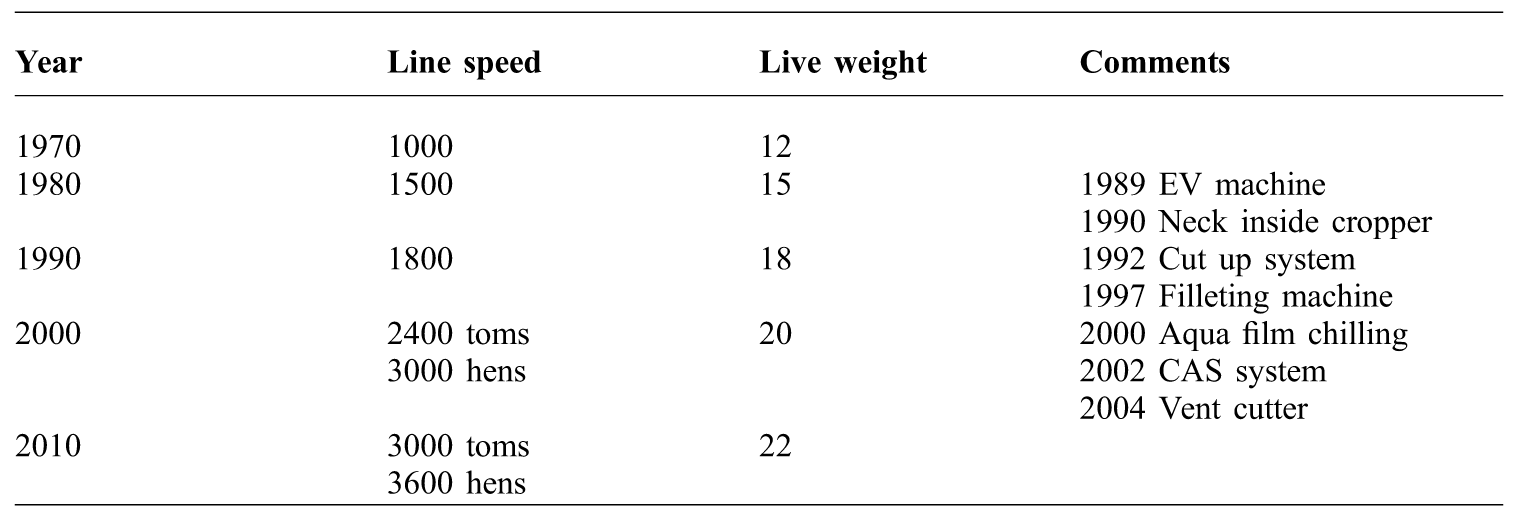
Impressive increases in turkey line speed have been possible due to advancements in meat research, engineering, computers and other related areas. Overall, these developments have contributed to an increase in line speed (Table 1), but more important is the significant increase in processing capacity per line; i.e. from 12,000 kg per hour in 1970 to 72,000 kg today. Examples of significant machine development in the processing plant are also listed in Table 1, and will be discussed below.
Turkey line speed and weights over the past 40 years.
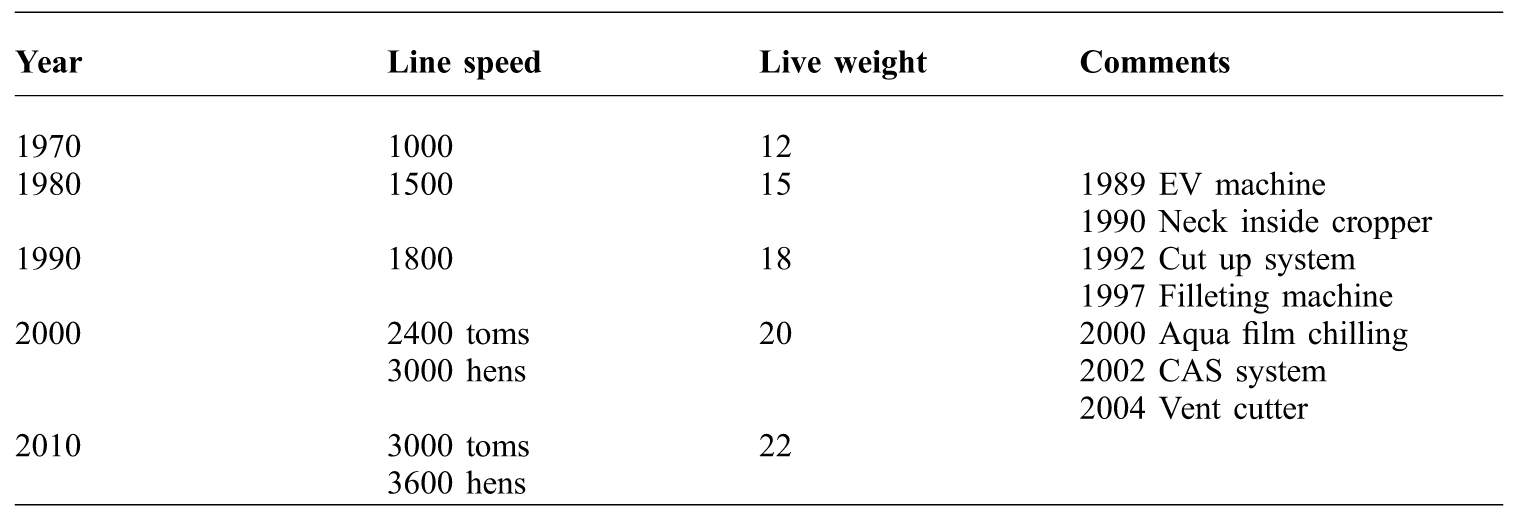
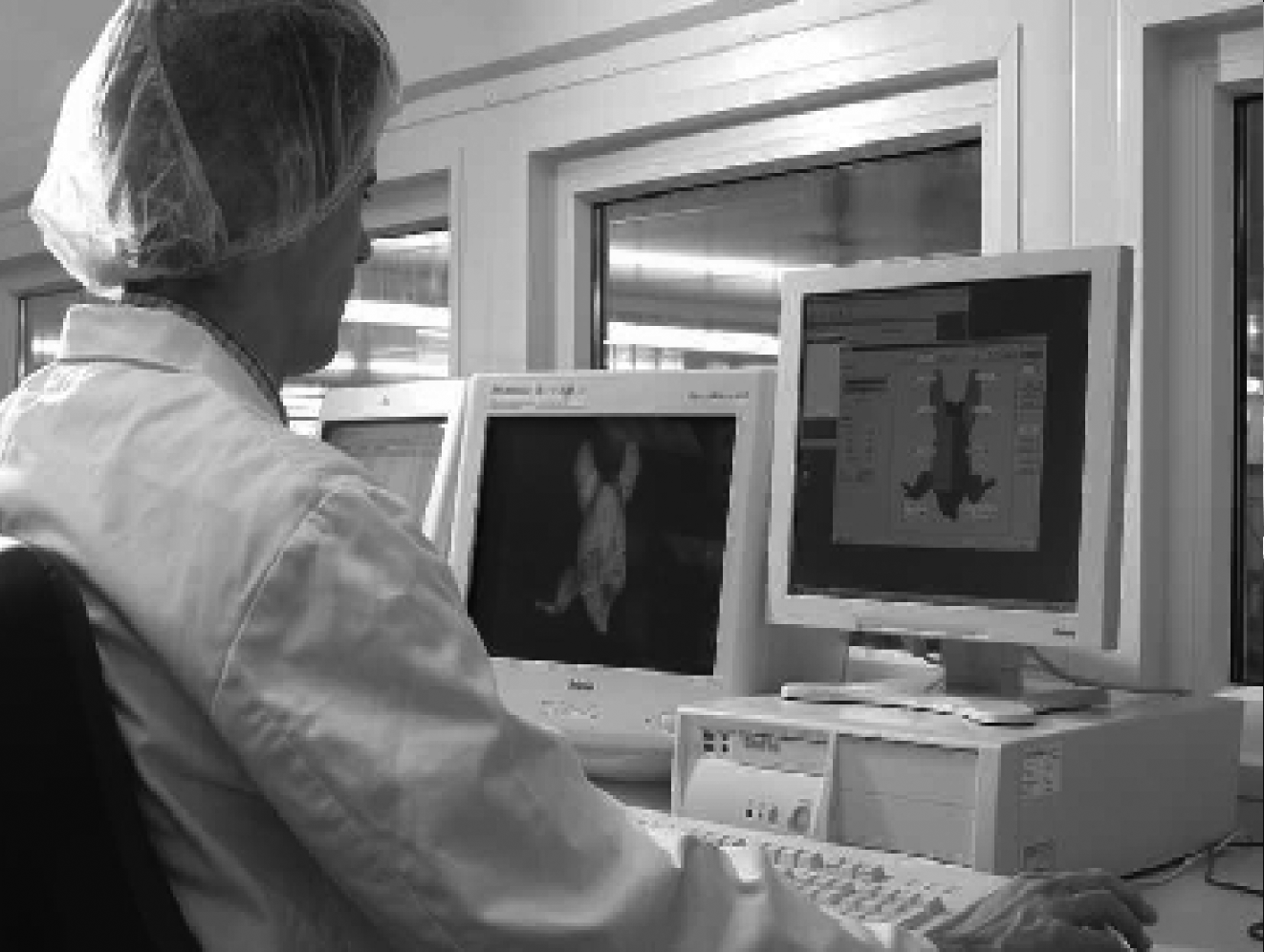
It is interesting to compare this to broiler processing where the industry experienced an increase from 4,500 kg per hr in 1970, to 36,000 kg per hr for a single line (Barbut, Reference BARBUT2010). The ability to increase line speed has also been due to developments in related areas such as computers which today feature high speed data acquisition at low cost (e.g. a small inexpensive new hand held telephone, can do much more than a room full of components/tubes did half a century ago). The use of mac÷hine vision to inspect a turkey line (Figure 1) is a good example of affordable technology that assists managing high speed lines. Robotics is another example of technology that found applications in the meat industry.
Use of an automated image analysis system for poultry evaluation at a processing plant. (courtesy of Stork Inc.)

An example includes the Robo Batcher that uses a lifting arm to pick up meat cuts (moving on a conveyor belt) and arrange them in trays. The system pre-measures the weights of numerous incoming cuts, optimizes the best combination to achieve a certain package weight, and neatly positions the cuts in a tray, and can process about 100 cuts per minute with significantly lower give-away compared to manual tray packing.
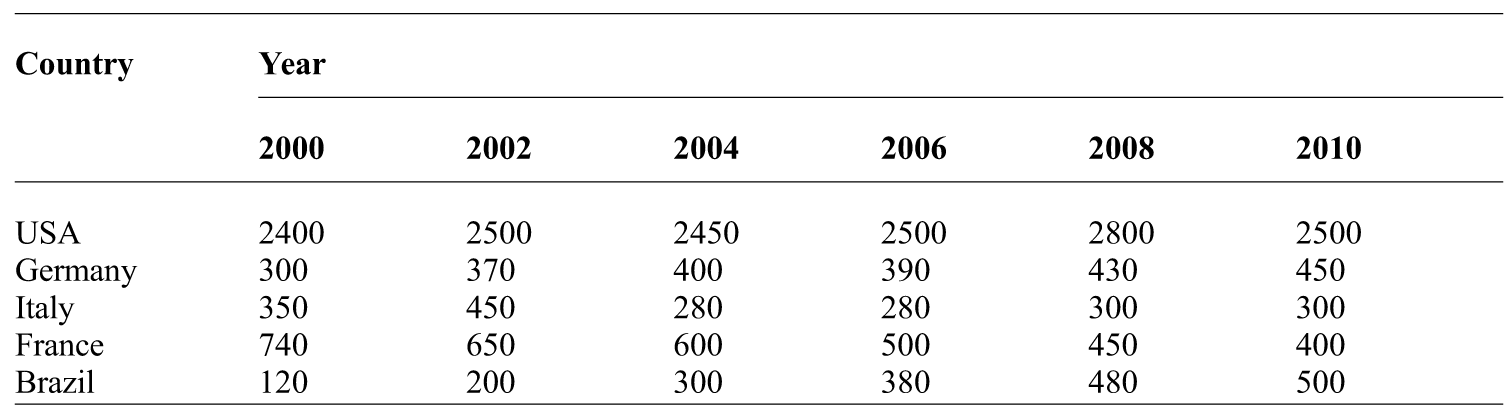
In the muscle biology area scientists have gained a deeper understanding of muscle contraction and the relationships between protein structure and functionality. In terms of meat harvesting technology, such information helped gain insight into rigor processes and design better and faster maturation chilling processes. It is also important to remember that turkey meat consumption has changed from a seasonal pattern (e.g. Thanksgiving, Christmas, (Case et al., Reference CASE, MILLER and WOOD2010)) to a year round business. Overall, turkey meat consumption is now pretty much steady in most major producing countries (Table 2). A few exceptions are the increase of about four fold in Brazil's production, 65% increase over the past year in England (DEFRA, 2012), and a decrease of about one half in France.
Turkey meat production (x 1000 metric tons) in selected major producing countries.
Data adopted from Anonymous, 2011.
Overall, the basic steps in turkey primary meat processing include: delivering the birds to the plant, unloading, stunning and bleeding, de-feathering, evisceration, inspection, chilling, and possible deboning; all can have a great effect on meat quality and yield. The introduction of equipment to automate most of these processes will be discussed below.
Loading and unloading
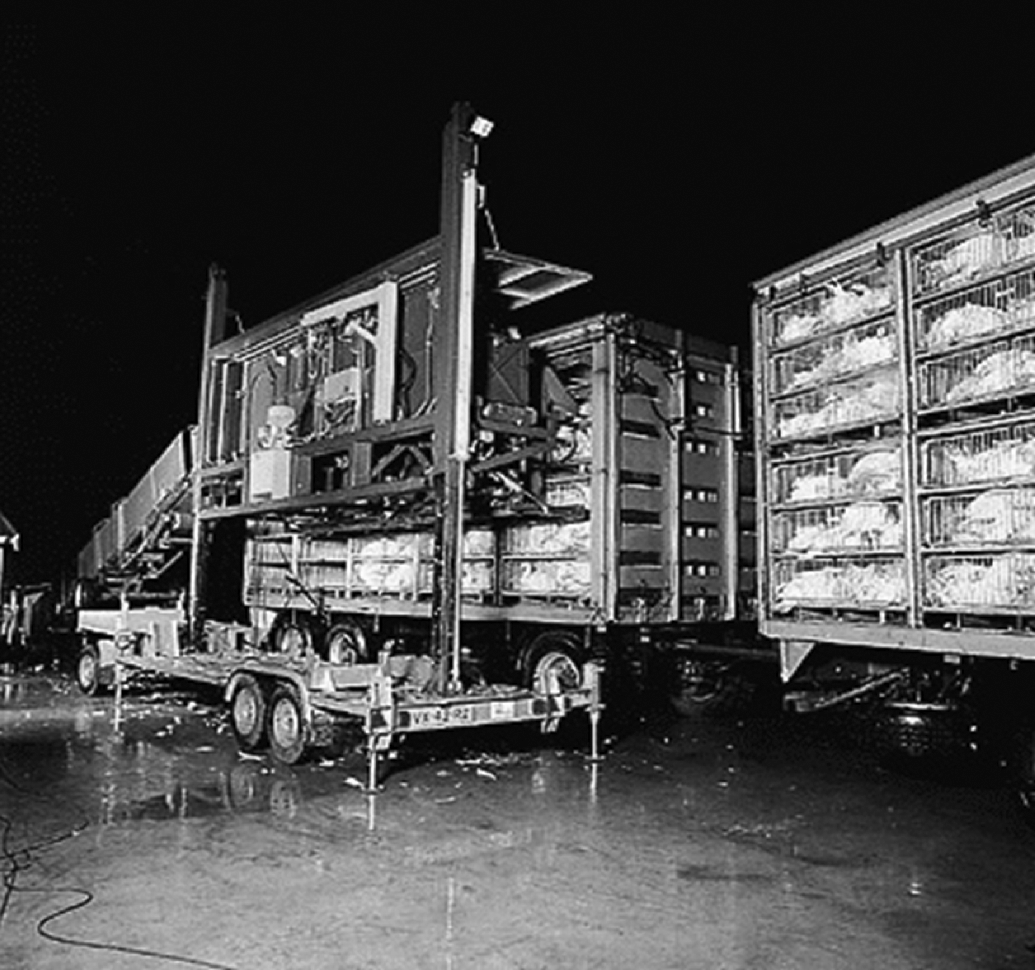
Transporting turkeys from the farm to the processing plant requires gathering and loading the birds onto a truck. In the past, all was done manually where workers were catching the birds, placing them into crates and loading the crates onto a truck. This is still done in some parts of the world, but more mechanisation is seen in many places. The most common is a conveyor belt which is used to load the birds onto the truck (Figure 2).
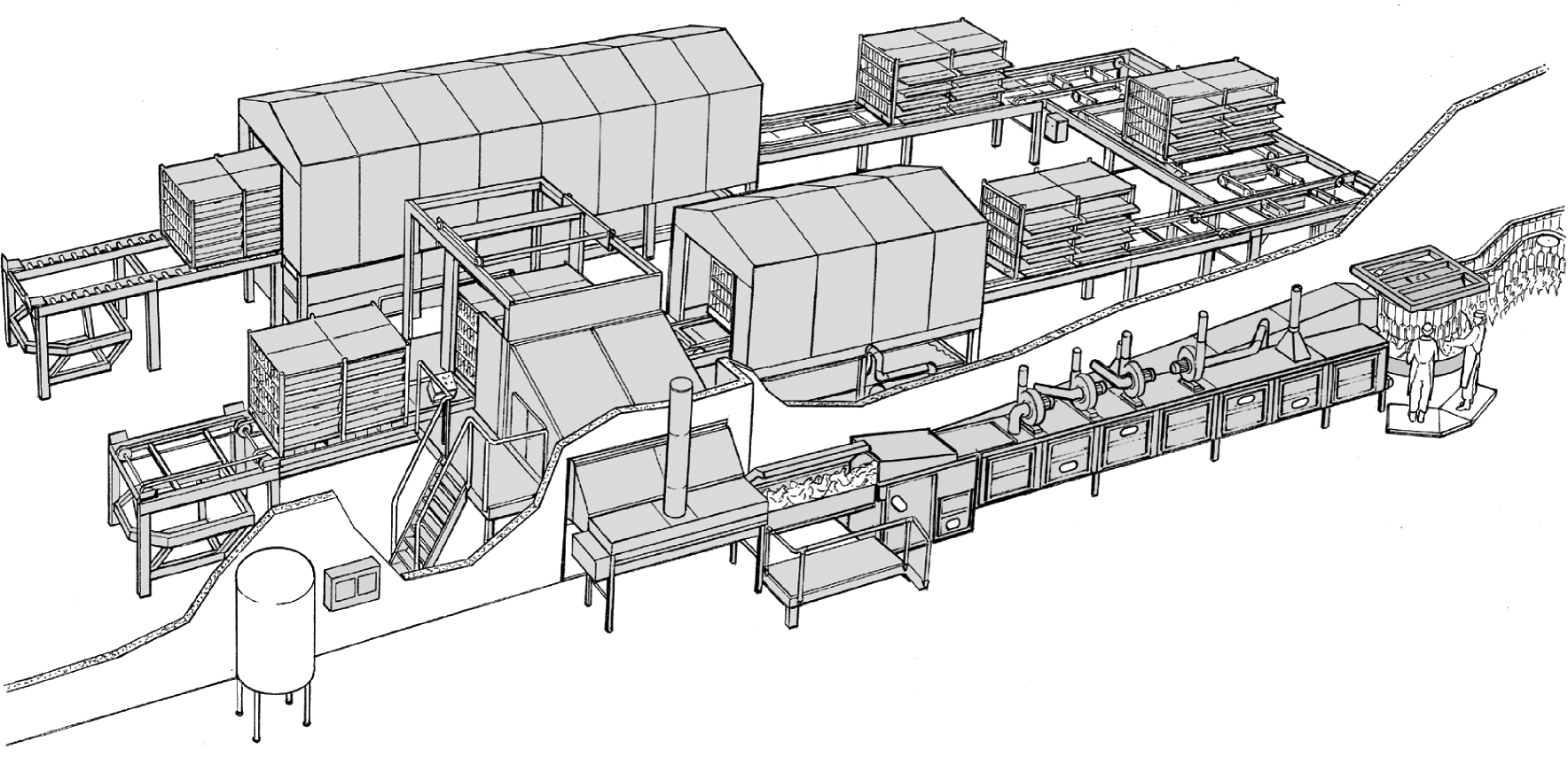
As birds are getting heavier (Table 1; expected weight for toms in 2015 is 23.5 kg) it is more difficult to catch, lift and place them in a crate. Handling a heavier bird is also more risky in terms of bruising, damaging wings/legs, as well as the worker's safety. There are several systems on the market, and the example shown here has definitely provided major improvement in terms of handling live birds, and maintaining meat quality. During the transportation phase, adequate air flow is required to keep the birds in their comfortable zone without having cold or hot spots. Once the truck arrives at the processing plant, proper and easy to perform unloading can be a challenge. Again, in the past, all was done manually by people getting the birds out of the crates. This can still be seen today where people either pull out the birds from cages fixed to the truck, or after crates have been removed from the truck. In some plants where turkeys are removed from the truck, employees stand on a moving platform which can move up and down to help reach the higher cages. A fully automated system has also been developed (Figure 3) and it is actually tied to the next step of stunning. In this system the module (e.g. pack of six crates) is unloaded with a fork lift and placed on a conveyor belt. The module is then moved toward a tipping bay and then cages are slowly tilted so the birds slide onto a flexible conveyor belt on which they can walk/be moved to the controlled atmosphere stunning area (CAS). Another system on the market today consists of stunning the birds inside the cages or directly on the truck and by that, avoiding handling and shackling conscious birds, as will be discussed below.
Loading of turkeys at the farm.
Automated unloading and controlled atmosphere stunning systems at the processing plant. The part on the left bottom corner is where the cages are tilted and birds slide onto a conveyor belt.
(courtesy of Marel)
Stunning
The two main systems include electrical and gas stunning (note that some use no stunning, but this is mainly reserved for religious slaughtering). Within each system, one can find variations in the conditions applied (e.g. high versus low electrical voltage and different gas mixtures, respectively). Meat quality can be greatly affected by these processes, and the rate of postmortem pH decline as well as ultimate pH, depend on factors such as stress level prior to and during the process (Barbut et al., Reference BARBUT, SOSNICKI, LONERGAN, KNAPP, CIOBANU, GATCLIFFE, HUFF-LONERGAN and WILSON2008). Currently, electrical stunning is the most widely used method around the world. Application is within a water bath, where turkeys are moved on a shackle line while their front part comes into contact with a brine solution. As indicated above, there are quite a few differences in the conditions used. For example, in North America the settings usually involve lower voltage and higher frequency. While in Europe, higher voltages and lower frequencies, with longer dwell time, are typically used. These differences are related to regulations and meat quality issues (Wilkins and Wotton, Reference WILKINS and WOTTON2002). When high frequency stunning is used there is a greater effect on the central nervous system and lesser on the peripheral nervous system. This can reduce incidences of damage to fragile bones/blood vessels (i.e. reduce bone fractures, and blood splashes in breast and thigh meat, respectively); both can later translate to less trimmings. New regulations implemented in 2013 in the European Union require administering a certain mA per bird, instead of only using voltage and frequency parameters. In the case of turkeys, 250mA if < 200 Hz is used, and 400mA if > 200 Hz (EU, 2009).
Controlled atmosphere stunning for turkeys was commercially introduced about 10-20 years ago and currently is used much more in Europe but is also gaining ground in the US (i.e. some industry estimates put it at 25%). Also in this stunning procedure there are significant variations in the way it is applied. Some are using a single phase CAS (i.e. anoxia by applying argon/nitrogen with < 2% oxygen; or hypercapnic anoxia by applying N2 with CO2, and < 2% residual O2), while others use a two phase approach (first stage hypercapnic hyper-oxygenated anesthetic phase with elevated CO2 an÷d O2, followed by a euthanasia phase with high CO2 in air). As discussed by Coenen et al. (Reference COENEN, LANKHAAR, LOWE and MCKEEGAN2009) the two phase approach, and more specifically the presence of high O2 concentration (30%) in the first stage, is associated with an absence/minimum of potentially distressing behavioural responses (measured by electroencephalogram and analyzing the correlation dimension factor). This also translates to significant reduction in convulsions (measured as severe wing flapping) compared to the single phase CAS (Abeyesinghe et al., Reference ABEYESINGHE, BEMMEL, KRANEN, WATHES, LANKHAAR, WHITE, MCLEMAN, MCKEEGAN, DEMMERS and LOWE2007). The stunning is done in a specially designed tunnel (Figure 3) where gas concentrations can be precisely controlled. In the two phase system there are windows located along the tunnel so employees can monitor the process and make sure gas concentrations are adequate to prevent convulsions (i.e., also important for monitoring animal welfare issues). Stunning turkeys on the truck can be a cheaper alternative, in terms of investing in infrastructure, but only allows the use of a single gas (e.g. CO2), less precision of gas concentration and consistent control of time from stunning to shackling. The advantages of CAS in terms of animal welfare are: no conscious bird shackling, no interference of people (unloading) and the claim that overall it is potentially a more humane stunning method if low/no convulsions occur in conscious birds (Coenen et al., Reference COENEN, LANKHAAR, LOWE and MCKEEGAN2009). Overall, the industry today is definitely moving to more automation in this part of the process, aiming at improving welfare, working conditions, increasing efficiency and reducing damage to the birds.
Scalding and plucking
These operations were automated about 2-3 decades ago and there have not been any major developments in the plucking area over the past few years. One notable development that has been introduced to the broiler scalding operation is the so called aero-scalder which utilises steam instead of hot water. This has not yet been used on a large scale in turkey processing operations. This concept has been developed (among other reasons) to save on energy and water consumption in the plant and indeed has been shown successful in various broiler processing plants. The traditional scalding operation in both turkey and broiler operations utilises hot water where the carcasses are immersed in hot water to loosen the feather follicles. Currently the average scalding temperature for turkeys in Europe is about 52-54°C while in the US it is 60°C. As there is also a relationship between temperature and time in this operation, the US operation is usually shorter. As for the plucking operation, the carcasses are then passed via rotating rubber fingers that rub the feathers off the bird (Barbut, Reference BARBUT2002). This has been an automated process for many years, and improvements in plucking have been mainly due to developments in finger configuration, elasticity, and positioning. However the basic drum type arrangement (for holding the rubber fingers) has not been changed too much. Overall both operations are designed to keep up with the turkey processing line speed (note that in a broiler processing the scalding and plucking operations are programmed to work at speeds of up to 12,000 to 13,000 broilers per hour).
Evisceration
Different degrees of automation can be seen in plants around the world. The systems can range from totally manual to a semi and a fully automated one (Figure 4).
The introduction of the first mechanical eviscerator has helped to increase line speed by about 50% (Table 1) and represents a major way to reduce labour and inefficiency. A modern machine (running at 3,000 bph) can save about ten people per shift. In front of the fully automated system shown here, there is also a vent cutter and/or opener which is/are used to automatically make an incision. This is a critical point in trying to minimize faecal contamination during the process. Over the past few years a lot of attention has been directed towards improving the precision of the cut. Semi-automated evisceration systems include some parts of the automated system and are more common in North America whereas fully automated evisceration systems are common in Europe. The degree of automation is decided by management, but generally speaking it is perceived that in N. America there are more problems with gall bladder rupture (and contamination) so companies prefer to do the withdrawing step manually. The evisceration process is followed by inspection where the viscera and carcass are presented together to an inspector to ensure that the carcass is free of disease. In some lines the viscera is still attached to the carcass, and in others it is displayed on another tray that moves alongside the carcass (the latter can improve the hygiene of the final product). The inspection stage is usually followed by additional rinsing and cleaning of the abdominal cavity prior to the chilling operation. In the 1990's automated inside cleaner/cropping devices were introduced (Table 1) to help plant's personnel. The devise looks like a long screw that rotates and sprays water while going through the abdominal cavity. It moves down and cleans the inside and eventually the tip comes out from the neck area. The device can replace four people out of the six doing the job manually on a typical line; the remaining two people have a much easier job of mainly inspection and only working on a few carcasses that need more attention.
Automated evisceration equipment for turkeys, (courtesy of Stork).
Chilling
The two main methods include water and air chilling; some combination of the two can also be seen. Choosing one over the other depends on the processing plant location, availability and cost of water/electricity, yield desired, scalding method/temperature previously used, etc. Understanding the biochemical changes taking place within the muscle during chilling, as well as the heat and mass transfer parameters, are crucial in obtaining a consistent product (i.e. rigor mortis processes are still taking place during the chilling phase). For example, very fast chilling can result in cold-shortening, while too slow chilling rate will result in high microbial counts (Barbut, Reference BARBUT2002; Huezo et al., Reference HUEZO, NORTHCUTT, SMITH, FLETCHER and INGRAM2007).
Water chilling can be applied in a few ways. The simplest is placing the birds in a water bath, usually supplemented with ice and waiting for the temperature to drop (e.g. to around 4°C). This is a batch operation suited for small operations. A more advanced method is to have a continuous operation where a long, relatively wide, water tank with a large screw or paddles is used. About 30-40 years ago, a counter-flow design started to appear on the market. By doing so, the industry has also achieved better hygienic quality as the clean water, coming from the front, helps to wash off more microorganisms while the carcasses are moved towards the front (clean very cold water source). Other developments that have been introduced include a multistage chiller (2 to 3 separate tanks) where the birds are moved through the tanks and the water from the previous tank is allowed to drip prior to placing the product in the next tank (Allen et al., Reference ALLEN, CORRY, BURTON, WHYTE and MEAD2000). This has also helped to raise the hygiene quality of the product as it does in the scalding tank area (not discussed here). The way the product is moved forward can be by a screw type auger or by big paddles in the so called drag-chiller; in both cases it is important to control the time birds spend in the chiller. Another development/improvement has been the introduction of agitation by either air bubbles (from the bottom) or water jet streams along the tank. Usually water chilling is done until the carcass reaches an internal temperature of 2-4ºC. However, there are some processes (e.g., in the USA) that will use water chill to about 15-20ºC, debone the major parts and use a tumbler (with/without CO2) to complete the chilling operation.
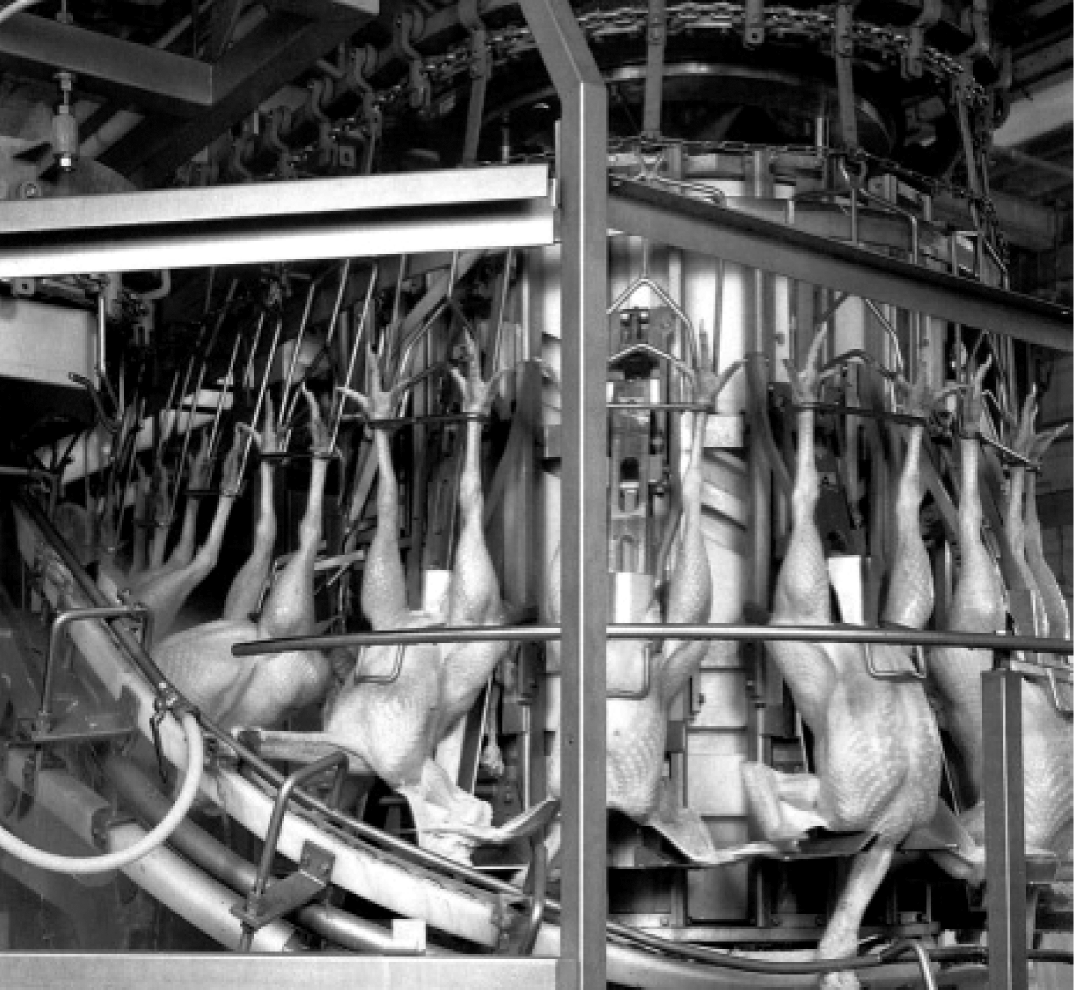
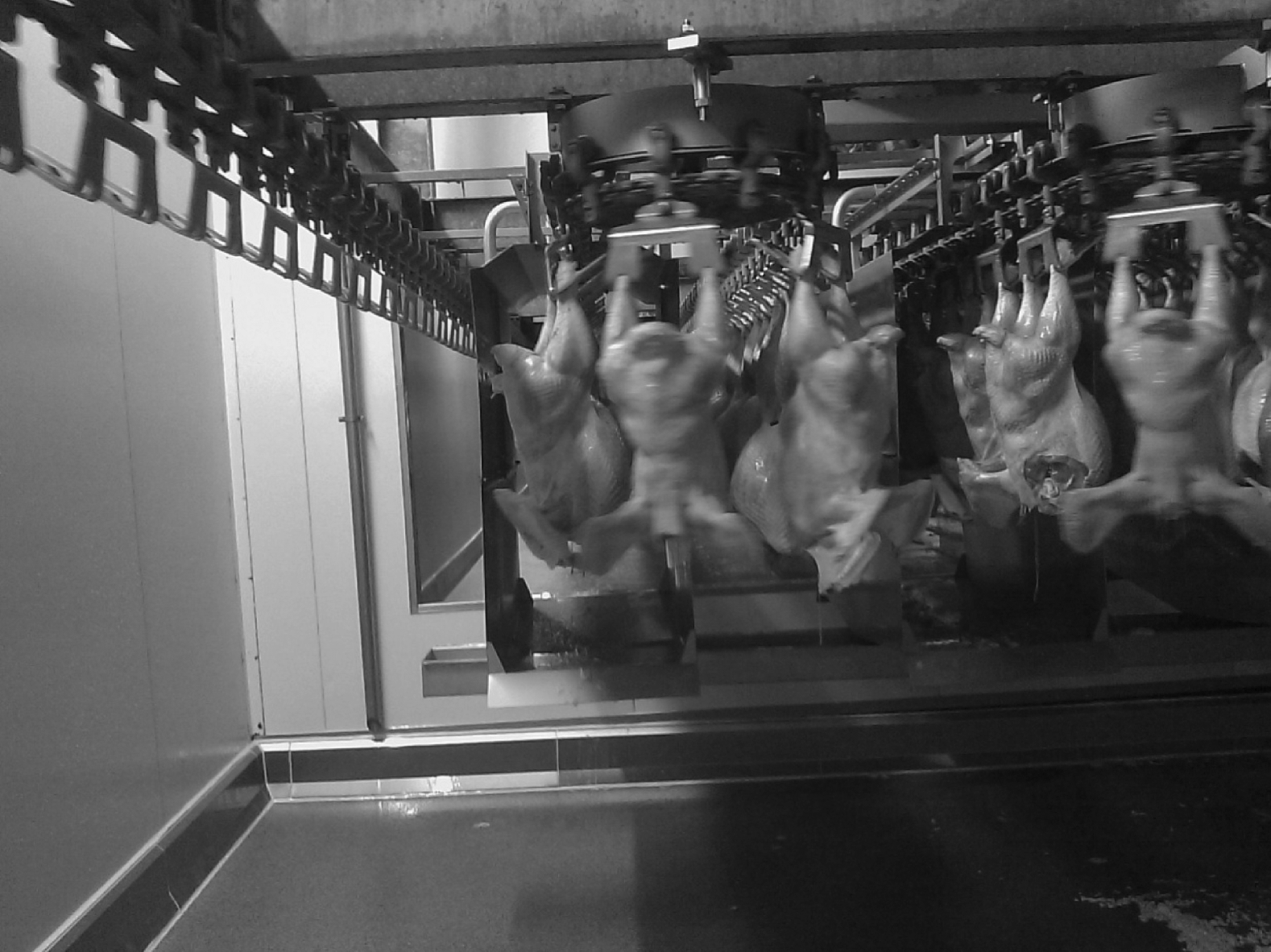
Large scale air-chilling commercial operations started to appear 25 years ago and today are common in Europe and some other places where water cost is high and/or where red-water use is not allowed in the plant. Air chilling is applied as the birds are either moving on a shackle line (Figure 5; continuous operation) or put on carts which are placed in chilling rooms. The air speed, temperature and relative humidity are critical factors in determining the rate of chilling. Applying water sprays at strategic location(s) is important in minimizing moisture loss from the exposed surface (note: water spray cabinets are usually positioned at the turning points of a line, close to a wall, where temperature is kept slightly above freezing). This can help restrict the 1-3% weight loss in regular air chill to 0.5-1.0%. During the in-line air chilling operation the carcasses are continuously moved on the shackle line (within the chill tunnel) where forced air at relatively high velocity is introduced. The chilling area can be built to accommodate several levels/stories and by that saving space and cost; however, one should be careful that water from the upper level does not drip on birds at a lower level. In a typical plant, the line extends to a few kilometres (i.e., depending on the size of the plant and speed required). Another advantage of this configuration is that birds stay on the line and are traceable from the beginning of the process. Therefore the data capture at the beginning of the process (Figure 1) can be used for early planning of end product use. In addition it is important to realise that manual rehanging can cost 5-10 cents/bird, as well as such a line eliminates piling of products at different locations.
Air chilling of turkeys on a continuous moving line.
(courtesy of Marel).

Mechanical filleting
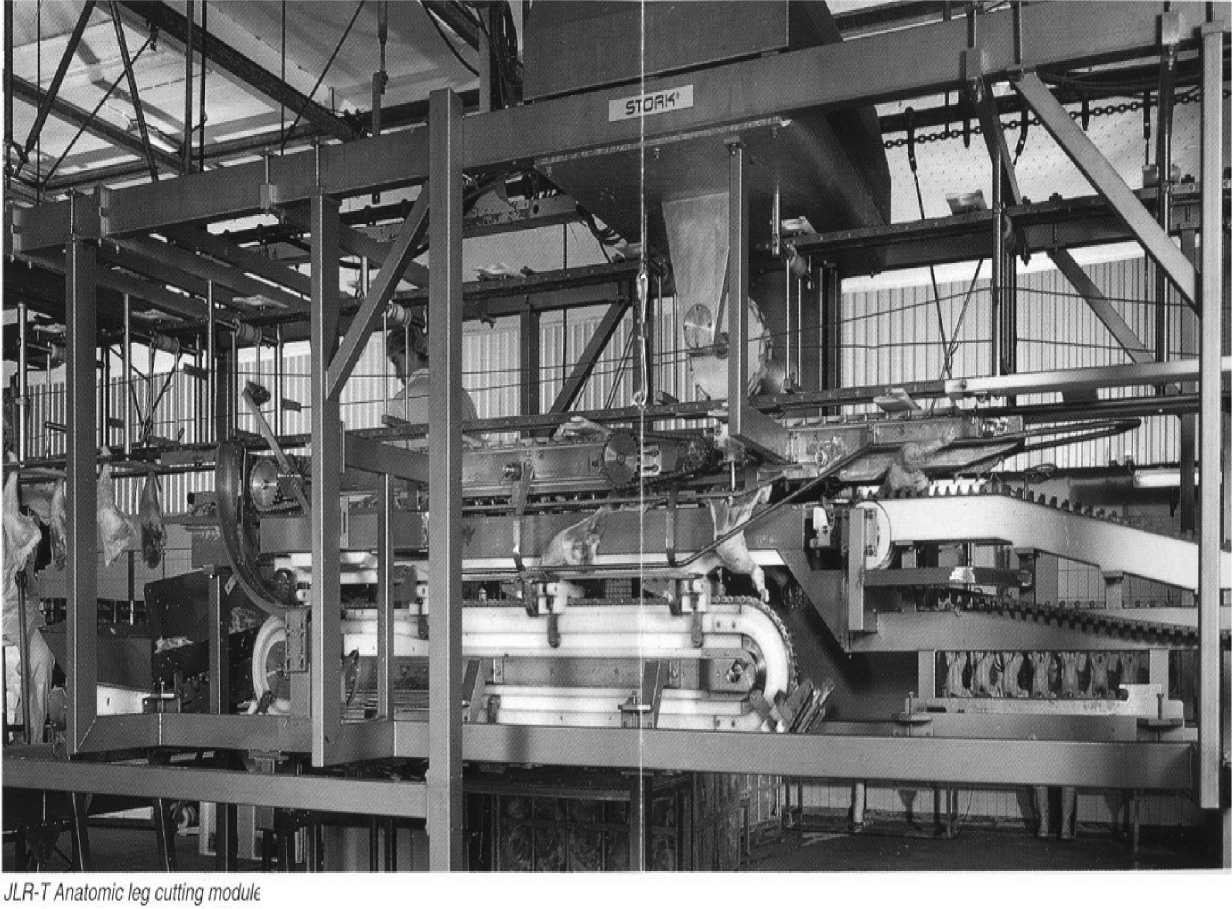
This is becoming increasingly popular where labour cost and availability are an issue. It also helps in terms of handling large birds. Over the past decade significant improvements have been made in enhancing the recovery and quality of the fillets, line speed, yield, and efficiency. All are related to better designs and precise machining of the automated equipment (note: numerous patents exist in this area). The demand for mechanical filleting/deboning started to appear as soon as the market shifted towards more cut up parts and deboned poultry meat. One of the most significant turning points was the introduction of poultry nuggets where fast food operations asked for certain boneless cuts. In the past, all cutting was done manually where each worker was responsible for cutting all the parts. Later it was realised that a line approach, where each worker is responsible for one section, is faster and more efficient. That was the time when the cone system and the slow moving shackle line were introduced into the deboning area (employees are cutting while the birds slowly moved in front of them). These systems are still being supplied by all poultry processing equipment manufacturers. However, increased labour costs and repetitive injury problems (e.g., carpal tunnel syndrome) have put pressure on the industry to develop automated lines. The next development was the introduction of modular cut up lines based on cutting and splitting the carcass in pre-determined locations. This is usually done by stretching/bending a specific joint and cutting with a fixed circular blade while the birds are moving on the shackle line. Advanced lines also include sensors that enable the system to select birds of a certain weight range for cut up or by-passing a specific cutting module. Deboning of meat, such as breast meat fillets and leg meat require more sophistication (in terms of automation) and has benefitted from the development of carriers that can rotate at different angles to achieve precision positioning for accurate cutting (e.g., no/minimal bone content) as well as high yield. The introduction of such equipment was not without difficulties and at the beginning meat processors were complaining about low yield and/or low quality (e.g., muscle fragmentation) as compared to hand deboning. However, further developments have helped to bring the automated filleting/deboning equipment to a high precision level (Figure 6).
Automated breast filleting machine for turkey meat.
(courtesy of Stork).
Such an automated filleting machine can process about 2,000 breast portions from hens, or about 1,800 from toms per hour. It can generally save about 10 people on the line (i.e. the automated cutting machine still needs employees to rehang the so-called breast caps, as well as place them in the right position). In addition, development of x-ray machines, and/or sensors, based on visible light, to detect potential bone fragments have been very helpful especially when automated equipment (and also manual deboning) is used. Currently most large/medium size processors have one or a few of those sensors in line, as fast food chains and major supermarkets add this requirement to their specifications.
The area of leg meat deboning has also seen major developments. Some machines are working by pushing out the leg bone while others are designed to first preform several strategic cuts prior to pulling the drumstick meat away from the bone. The most common machine utilises a diaphragm where the thigh joint is pushed through a rubber diaphragm while the meat remains on the product's holder; processing of 2000-3000 pieces per hour is possible. The meat coming out requires inspection and some trimming which is mostly done manually. Some turkey processors then send this deboned thigh meat into a so called ‘3 mm drum separator’ where the small pieces of hard connective tissue are easily removed and the meat is sold as ground/fine texturized product. Other equipment manufacturer offer an automated module for turkey leg meat deboning that actually removes the meat more like an employee at the plant will do it (i.e. by cutting at strategic positions and then removing the meat from the bones). Such equipment can usually run at 1,500-1,800 legs per hour and can save about 10 people on the leg processing operation, as well as about 5 on the drumstick cutting. Note: the exact number of people depends on the skills and speed of the employees working on a manual deboning line; however it should be mentioned that is getting more and more difficult to get such skilled people to work on the deboning line. Overall, the characteristics of the meat and its temperature are important points that should be taken into account when using mechanical leg meat deboning and/or breast meat filleting. If for example the meat is too cold, pulling it from the bone might result in rupturing the muscle itself and hence poor deboning yield. Thus, a good understanding of the relationships between the physical characteristics of the muscle, age of the bird, stress prior to slaughter, and environmental conditions are essential.
Full-in-line-processing
In-line-processing or keeping the birds on a continuous line (no dropping) has been introduced as an approach to improve the plant's efficiency. At the same time it can provide valuable tools for plant managers as turkeys are loaded onto identified/marked shackles and kept that way until the end of the process. By weighing and grading the birds (using an automated image analysis system) at the beginning of the process, decisions concerning marketing (e.g. cutting up or selling as a whole bird) can be made a few hours prior to the actual cutting/deboning phase. The advantage of such a system is also the ability to monitor every segment of the process in real-time, and act immediately before the situation gets out of hand. In a conventional poultry processing plant, data is commonly collected during the day, from different areas, and only summarized at the end of the shift. An overview of the entire production day is only available the following day or week. Some commercially available computerised systems on the market today can track individual birds on the line, monitor data from each working station (e.g. evisceration, cutting station) and even provide real time feedback to an individual employee (e.g. the data can be used to signal that additional training is needed). The system can be programmed to include a traceability function; i.e. a requirement by a number of large supermarket chains today. As the system is used to monitor production (weight, temperature, time, etc.) it can also be used to continuously optimize the process. The best operation for such a system is when all birds stay on the shackle line (or transfer to subsequent shackle lines) so data capture at the beginning of the process, can be used for decision making towards the end of the line. The continuous line also eliminates bottlenecks where piles can be accumulating for an undisclosed amount of time, resulting in unpredicted temperature fluctuations, and pressure on birds at the bottom of the pile. The elimination of handling the product by workers can also result in less cross-contamination and incidences of Salmonella and Campylobacter spreading. Overall, integrating the whole process costs money but obviously has big advantages in terms of increasing productivity, efficiency, traceability and yield for large volume plants.
Conclusions
Understanding ante- and post-mortem processes as well as their relationships to meat quality are very important in designing equipment and processes for the turkey industry. As more emphasis is put today on quality, obtaining a consistent product at the end of a high speed line is essential in marketing top quality turkey meat. The industry has progressed at a tremendous pace over the last five decades (about 600% in volume processed per line) and is currently producing a diverse array of products for the fresh and further processed market. Gains achieved so far would suggest that further improvements in line speed and quality would continue in the future. These achievements will be best realised by processors working together with knowledgeable equipment manufacturers capable of understanding the whole farm to fork process and providing integrated solutions.