Introduction
Obesity is typically prevented through dieting and exercise regimens, and these two measures are related to the individual's surroundings (Sallis et al., Reference Sallis, Grosman, Pinski, Patterson and Nader1987). Moreover, on theoretical grounds, lifestyle-related obesity (henceforth, obesity) – like most social and personal problems (smoking, substance abuse, etc.) – seems to involve a substantial component of deficient self-control (Tangney et al., Reference Tangney, Baumeister and Boone2004). In the context of the present study, ‘self-control’ means a continuous and conscious endeavour to lose weight that leads to a modification of the daily habits that are responsible for current obesity and the failure of previous weight-loss efforts (Kan, Reference Kan2007). This term is synonymous with what Frank (Reference Frank1988) termed ‘commitment’. Effective weight-loss interventions should enable participants to acquire social support through a social network (Sallis et al., Reference Sallis, Grosman, Pinski, Patterson and Nader1987). Such support should promote the participants' self-control and commitment to weight loss, and aid in the elimination of habits that lead to obesity.
Factors influencing the maintenance of a healthy weight and lifestyle
Obesity researchers recognize the importance of not only biological but also environmental and behavioural factors in sustaining a healthy lifestyle. Thus, future policies aimed at addressing obesity should involve interventions that mitigate unhealthy behavioural and environmental influences (Cutler & Glaeser, Reference Cutler and Glaeser2005; Christakis & Fowler, Reference Christakis and Fowler2007; Eid et al., Reference Eid, Overman, Puga and Turner2008; Hill et al., Reference Hill, Peters, Catenacci and Wyatt2008; Li et al., Reference Li, Harmer, Cardinal, Bosworth, Johnson-Shelton, Moore, Acock and Vongjaturapat2009; Yakusheva et al., Reference Yakusheva, Kapinos and Weiss2011). Specifically, people with deficient self-control require support from others and the environment in their continuous and conscious efforts to adopt and maintain the behaviours that prevent obesity. These behaviours include consuming an optimal amount of food; paying attention to the amount of fat and salt in one's diet, particularly while preparing one's own meals; and avoiding a sedentary lifestyle (Sallis et al., Reference Sallis, Hovell and Hofstetter1992; Komlos et al. Reference Komlos, Smith and Bogin2004; Cutler & Glaeser, Reference Cutler and Glaeser2005). In order for the participants of a weight-loss programme to develop strong self-control, the intervention needs to be targeted accurately and demonstrate clearly to recipients the factors involved in successful weight loss.
Studies using behavioural modification theories have demonstrated the considerable influence of social relationships and social support – for example, from one's spouse and friends – on dieting and exercising (Sallis et al., Reference Sallis, Grosman, Pinski, Patterson and Nader1987, Reference Sallis, Hovell and Hofstetter1992; Prochaska et al., Reference Prochaska, DiClemente and Norcross1992; Marcus & Simkin, Reference Marcus and Simkin1994; Unger & Johnson, Reference Unger and Johnson1995; Deforche & De Bourdeaudhuij, Reference Deforche and De Bourdeaudhuij2000). The peer effect, in terms of social interactions with friends, family and acquaintances within a social network, has been shown to influence weight problems (Wallston et al., Reference Wallston, Wallston and DeVellis1978; Cutler & Glaeser, Reference Cutler and Glaeser2005; Christakis & Fowler, Reference Christakis and Fowler2007; Cohen-Cole & Fletcher, Reference Cohen-Cole and Fletcher2008; Fowler & Christakis, Reference Fowler and Christakis2008; Renna et al., Reference Renna, Grafova and Thakur2008; Trogdon et al., Reference Trogdon, Nonnemaker and Pais2008; Ali et al., Reference Ali, Amialchuk and Heiland2011; Fortin & Yazbeck, Reference Fortin and Yazbeck2011; Yakusheva et al., Reference Yakusheva, Kapinos and Weiss2011; Dale et al., Reference Dale, Williams and Bowyer2012).
In recent years, the importance of peer support through expansive social networks for weight loss has been enthusiastically examined in light of the obesity pandemic. At least three dimensions of support have been identified: the existence and quantity of social relationships, the structure of those relationships and their functional content. The first two dimensions are more correctly conceived of as aspects of a social network, while the last dimension captures the behaviours by which one person actually supports another (Sallis et al., Reference Sallis, Grosman, Pinski, Patterson and Nader1987; Manski, Reference Marcus, Rakowski and Rossi1993; McDowell & Newell, Reference McDowell and Newell1996; Steptoe & Ayers, Reference Steptoe, Ayers, Sutton, Baum and Johnston2005). Social relationships and support have a long-standing association with health. Instrumental, emotional and ongoing support have been shown to be important to sustained behaviour change and health in research involving people living with chronic conditions, such as diabetes, cancer, cardiovascular diseases, mental illness and HIV/AIDS (Boothroyd & Fisher, Reference Boothroyd and Fisher2010). Conversely, social isolation has been shown to predict mortality and morbidity (House et al., Reference House, Landis and Umberson1988; Brummett et al., Reference Brummett, Barefoot, Siegler, Clapp-Channing, Lytle and Bosworth2001; House, Reference House2001). In particular, peer support can provide assistance with daily management tasks, provide social and emotional support to stay motivated and deal with the stress chronic disease often brings, and help people stay connected to clinical care and improve outcomes in self-management (Boothroyd & Fisher, Reference Boothroyd and Fisher2010).
An important mediator in the relationship between self-control and individual behaviour is ‘locus of control’ (LOC). Locus of control refers to generalized expectations about the determinants of one's circumstances. On the basis of their experiences and learning history, individuals come to expect that future outcomes will be determined by either internal factors such as their own actions or characteristics (i.e. internal locus of control) or by external factors and opportunities not dependent on their own efforts or abilities (i.e. external locus of control) (Rotter, Reference Rotter1954, Reference Rotter1966; Contrada & Goyal, Reference Contrada, Goyal, Sutton, Baum and Johnston2005). This theory forms the basis for an important idea in the field of behaviour modification: an individual's health behaviour might successfully be modified by promoting an internal LOC (Nir & Neumann, Reference Nir and Neumann1995). Researchers have found strong and consistent correlation between an external LOC and failure to comply with healthful behaviours (Wallston et al., Reference Wallston, Wallston and DeVellis1978; Macgregor et al., Reference Macgregor, Regis and Balding1997; Fujita & Noguchi, Reference Fujita and Noguchi2009).
The need for a short scale to measure social support in the weight-loss context
Many interventions have been conducted using these basic social support and LOC theories, but research findings have not always been consistent (Sallis et al., Reference Sallis, Grosman, Pinski, Patterson and Nader1987; Gorin et al., Reference Gorin, Wing, Fava, Jakicic, Jeffrey and West2008; Bahr et al., Reference Bahr, Browning, Wyatt and Hill2009; Finnerty et al., Reference Finnerty, Reeves, Dabinett, Jeanes and Vögele2010). With regard to social relationships, for instance, some people lose weight if supported in terms of diet and exercise by co-operative spouses, while others, naturally, are influenced by a shared environment of obesity-promoting habits and traditions. Dieters may be unaware of these influences and may not understand why they fail to lose weight despite their best efforts. This inconsistency is primarily due to the shortcomings of the instruments used to measure the influences of social relationships on obesity (Brownell & Stunkard, Reference Brownell and Stunkard1981; Black & Lantz, Reference Black and Lantz1984; McLean et al., Reference McLean, Griffin, Toney and Hardeman2003; Yakusheva et al., Reference Yakusheva, Kapinos and Weiss2011). The instruments used in these previous studies were not designed to directly address the self-control problems of people with excess weight. Further, these instruments typically have an excessively large number of questions (Funch et al., Reference Funch, Marshall and Gebhardt1986; Sallis et al., Reference Sallis, Grosman, Pinski, Patterson and Nader1987; Karlsson et al., Reference Karlsson, Sjostrom and Sullivan1995; Yata et al., Reference Yata, Yokoda and Takama2003; Gruber, Reference Gruber2008; Sherrill-Mittleman et al., Reference Sherrill-Mittleman, Klesges, Lanctot, Stockton and Klesges2009). Consequently, respondents might have submitted unreliable or inappropriate responses to questions on self-control, because people with poorly regulated self-control often show impatience and destructive patterns of persistence when confronted with a large number of questions (Stunkard & Messick, Reference Stunkard and Messick1985; Baumeister & Heatherton, Reference Baumeister and Heatherton1996; Kan, Reference Kan2007; Tangney et al., Reference Tangney, Baumeister and Boone2004; Wills et al., Reference Wills, Isasi, Mendoza and Ainett2007). An additional shortcoming of these instruments is that they fail to adequately measure psychological adjustment to, and compliance with, healthy behaviour, both of which need to be examined in a weight-loss study to assess participants' degree of self-control (Tangney et al., Reference Tangney, Baumeister and Boone2004; Carver, Reference Carver2005).
In order to overcome these shortcomings, a short scale titled ‘Social Relationships to Prevent Obesity’ (SRPO) was developed in this study. Through items that place as little burden on respondents as possible, the scale examines the social relationships that support self-control with regard to weight loss, taking into consideration family- and community-based physical activities and dietary habits and the social-communication environment. This short scale is one of the first scales developed to measure the degree of, and trends in, social support for self-control by using a minimum number of items related to weight-control interventions.
The objective of the present study was to develop and evaluate the validity and reliability of the SRPO. For this purpose, it uses secondary data from Takada et al. (Reference Takada, Nakamura, Furukawa, Takahashi, Nishimura and Kosugi2011). The SRPO is a refined and extended version of a previous scale titled ‘Social Support to Counter Obesity’ (SSCO; Takada et al., Reference Takada, Takahashi and Kosugi2010); the SRPO differs from the SSCO in that the latter does not explicitly measure social support that promotes self-control.
Methods
Source of secondary data: the Takada et al. (Reference Takada, Nakamura, Furukawa, Takahashi, Nishimura and Kosugi2011) study
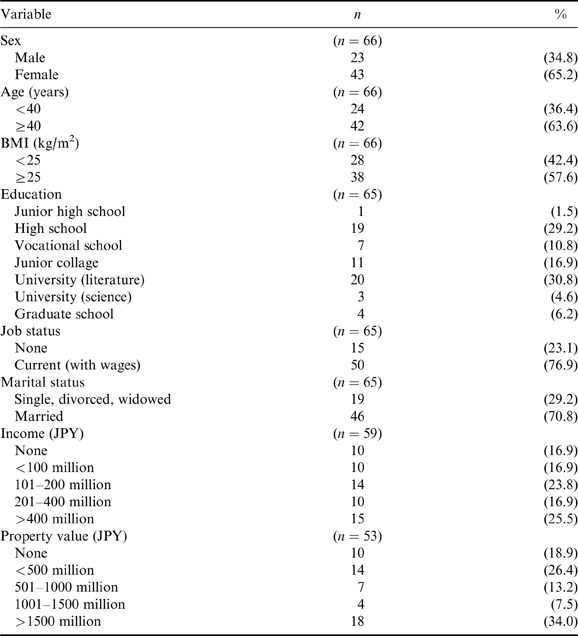
In a previous study, a tele-care intervention for weight loss was assessed through a randomized controlled trial. The participants were registered members of a community health club in Kyoto, Japan, recruited through a public advertisement. They were all obese but otherwise healthy men and women between 20 and 70 years old who met the study's strict eligibility requirements (for more details, see Takada et al., Reference Takada, Nakamura, Furukawa, Takahashi, Nishimura and Kosugi2011). There were 118 participants at baseline, and 21 dropped out before the intervention started. The participants were administered a questionnaire in person at a health check-up conducted as a part of the study. The questionnaire included the SRPO and questions on dietary habits, such as (1) number of meals, snacks, instances of eating out, and alcoholic drinks consumed; (2) regular eating of breakfast; and (3) late-night meals. The questionnaire also requested information about descriptive variables, including sex, age, body mass index, education, job status, marital status, income and value of property owned (see Table 1). The remaining participants were randomized into two groups – a tele-care group and a self-help group – matched by age, sex and body mass index. Of the 97 participants, only 66 completed the SRPO because some participants who were retired could not respond to some questions about level of support from employers (response rate: 55.9% [66/118]). The data from the 66 participants who completed the SRPO were used in the present study. The reliability and validity of the SRPO were examined using the participants' baseline data before the tele-care or self-help interventions. The research was approved by the ethics committee of the Graduate School of Medicine, Kyoto University. Analyses were conducted using SPSS v. 15.0 (SPSS Inc., Chicago, IL, USA).
Summary statistics of respondents: 20- to 70-year-old obese men and women, Kyoto, Japana

a Data source: Takada et al. (Reference Takada, Nakamura, Furukawa, Takahashi, Nishimura and Kosugi2011).
Composition of the SRPO Scale
To develop this short scale, existing instruments were reviewed and items were chosen that addressed peer support for weight loss and social interaction that promotes constructive behaviour and adjustment. Items were chosen from the following instruments, all of which have been shown to have good reliability and validity.
Social Adjustment Scale
Two questions were taken from the 54-item Social Adjustment Scale (Weissman & Bothwell, Reference Weissman and Bothwell1976), which is one of the few scales designed to measure adjustment to community living among both psychotherapy patients and healthy individuals (McDowell & Newell, Reference McDowell and Newell1996). The first question was ‘How many times in the last two weeks have you gone out socially? For example, visited friends, gone to movies, bowling, church, restaurants, etc.?’ The available response options ranged from 1 (None) to 5 (More than three times). The second question was ‘How much time have you spent on hobbies or spare time interests during the last two weeks? For example, bowling, sewing, gardening, sports, reading?’ The response options ranged from 1 (I did not spend any time on hobbies or watching TV) to 5 (I spend a lot of time on hobbies almost every day).
Rand Social Health Battery
Two questions were adapted from the eleven-item Rand Social Health Battery (Donald & Ware, Reference Donald and Ware1984), which is one of the few social health scales not designed for use with patients. This scale records social interactions and resources for social support but does not evaluate the subjective experience of support (McDowell & Newell, Reference McDowell and Newell1996). The first question was ‘To how many volunteer groups or organizations do you belong (e.g. church, temple or shrine groups; clubs in the community; or parent groups)?’ The response options ranged from 1 (None) to 5 (More than three groups or organizations). For the second question – ‘How active are you in the affairs of the groups or clubs to which you belong?’ – the response options ranged from 1 (Do not belong to any groups or attend any meetings) to 4 (Very active, attend most meetings).
Social Support and Exercise Survey and Social Support and Eating Habits Survey
Two questions were taken from the Social Support and Exercise Survey and two from the Social Support and Eating Habits Survey. These instruments are two of four separate scales (with 43 total items) designed to assess social support for diet and exercise (Sallis et al., Reference Sallis, Grosman, Pinski, Patterson and Nader1987). These scales were developed using a behavioural modification theory known as the ecological model (an approach characterized by its focus on levels of influence from the individual to the community; Sallis et al., Reference Sallis, Grosman, Pinski, Patterson and Nader1987; Ståhl et al., Reference Ståhl, Rütten, Nutbeam, Bauman, Kannas and Abel2001; Uechi, Reference Uechi2006). Two originally separate items – ‘My family or friends exercised with me’ and ‘gave me helpful reminders to exercise’ – were combined in the SRPO. Three other items were adopted verbatim: (1) ‘My family or friends helped plan activities around my exercise’, (2) ‘My family or friends reminded me not to eat high fat, high salt foods’, and (3) ‘discussed my eating habit changes with me’. The response options ranged from 1 (Strongly disagree/Not at all) to 5 (Strongly agree/Very often).
Medical Outcomes Study Social Support Survey
Two questions were taken from the twelve-item Medical Outcomes Study Social Support Survey (Sherbourne & Stewart, Reference Sherbourne and Stewart1991), which, though designed for use in chronically ill patients, is also universally applicable owing to its sound validity and reliability, despite being relatively short (McDowell & Newell, Reference McDowell and Newell1996). This instrument attempts to determine how often various kinds of support are available to the respondent. The following two items were chosen: ‘[How often do you have] someone to get together with for relaxation?’ and ‘[How often do you have] someone to prepare your meals if you were unable to make them yourself?’ The response options ranged from 1 (None of the time) to 5 (All of the time).
Since this was an exploratory study, a simple re-translation of the above items was employed, taking Japanese culture into consideration. It was explained to participants that ‘family’ was defined as ‘relatives who were also members of the household’. ‘Environment’ was defined to include both people and physical surroundings: siblings, family members, colleagues, co-workers, neighbours and the shared environment (Rotter, Reference Rotter1966; Manski, Reference Manski1993; Christakis & Fowler, Reference Christakis and Fowler2007, Cohen-Cole & Fletcher, Reference Cohen-Cole and Fletcher2008; Yakusheva et al., Reference Yakusheva, Kapinos and Weiss2011).
Further, to ensure that the participants faced no inconvenience in giving their responses, the questions and response options were modified to be as brief as possible. The researchers attempted to use as few items as possible in the scale by combining related items and eliminating redundancies. Furthermore, the original scale used response options ranging from 1 (None) to 8 (Does not apply); the number of options was reduced to make the scale easier for participants to complete. The responses of all items were summed. It was hypothesized that a higher score on the SRPO indicates a greater amount of social support and social interaction that promotes self-control.
The exploratory version of the SRPO originally contained fouteen questions. Four questions concerned the number of athletic facilities within a convenient distance and the level of health support from the participant's employer. These items were prepared by referring to the Social Functioning Schedule (Remington & Tyrer, Reference Remington and Tyrer1979), which is intended to assess the problems experienced in normal social functioning (such as work problems and problems in relationships with others at work, home and elsewhere) and the SLOTH model (Pratt et al., Reference Pratt, Macera, Sallis, O'Donnell and Frank2004), which is intended to enhance health through public announcements, health promotion programmes, worksite interventions and the like. However, since these items had poor response rates, they were omitted from the scale.
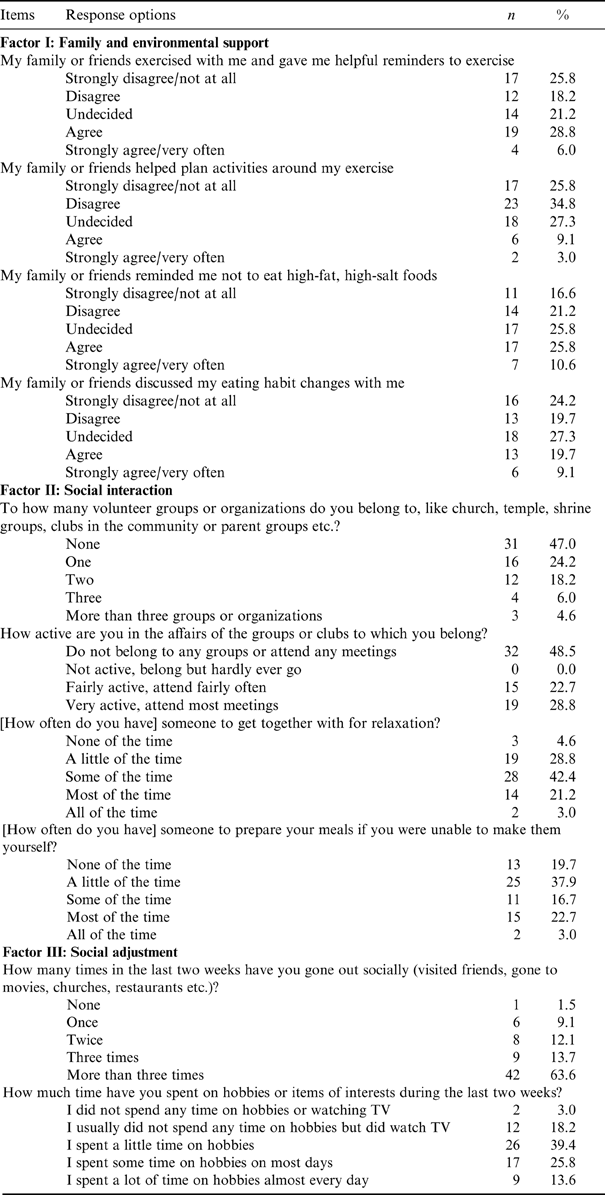
The final version of the SRPO contained ten items that were carefully chosen to effectively capture the key aspects of the scales from which they were taken (for more details, see Table 2).
Items and response options for the SRPO scale (N=66)
Results
Factor analysis
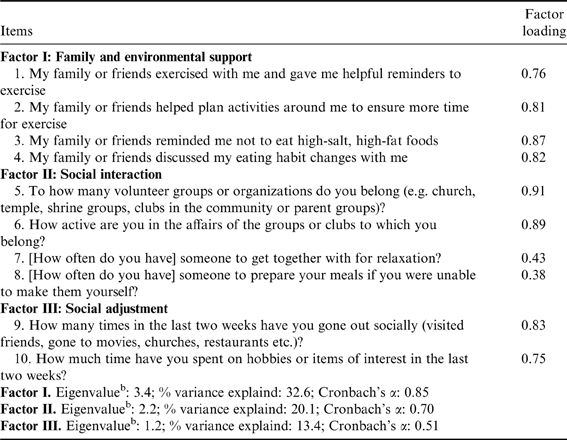
Confirmatory factor analysis was used to examine whether the data fitted the model previously hypothesized by the researchers (French et al., Reference French, Yardley, Sutton, Sutton, Baum and Johnston2005). To confirm construct validity, factor loading was calculated. A value of 0.40 or greater is generally considered acceptable for this purpose. Confirmatory factor analysis revealed that the ten items of the SRPO can be clustered into three factors. Factor I (covering the four questions from the Social Support and Exercise Survey and the Social Support and Eating Habits Survey) was called ‘family and environmental support’. Factor II (covering the two questions from the Rand Social Health Battery and the two questions from the Medical Outcomes Study Social Support Survey) was called ‘social interaction’. Factor III (covering the two questions from the Social Adjustment Scale) was called ‘social adjustment’. The items, final factor loadings, explained variances and eigenvalues are presented in Table 3.
Results of factor analysis of the SRPO scalea
a A higher score on the SRPO indicates a higher degree of social support.
The Kaiser–Meyer–Olkin measure of sampling adequacy=0.66. Bartlett's test of sphericity=264.03; p<0.01.
b Eigenvalues are the variances of the factors; a value over 1 indicates that factor analysis can be performed.
High factor loading values indicate high consistency among the items of the scale. The Kaiser–Meyer–Olkin measure of sampling adequacy is used to test whether the partial correlations among variables are small. The results of this test can vary between 0 and 1, and values closer to 1 indicate that factor analysis is appropriate. The Kaiser–Meyer–Olkin value was 0.66 so factor analysis was undertaken. Bartlett's test of sphericity indicated that the factor model was appropriate (p<0.01) (Table 3).
Reliability
Reliability was assessed by examining the scores of the tele-care and self-help groups using Cronbach's α, the generalized formula used to express the internal consistency of a test. Higher internal consistency can also mean higher test–retest reliability (McDowell & Newell, Reference McDowell and Newell1996), and a value of 0.70 or above is generally considered adequate. The Cronbach's α values for the SRPO were 0.77 and 0.73 for the tele-care and self-help groups, respectively. In terms of internal consistency, Cronbach's α coefficients were high for the tele-care and self-help groups (Table 4).
Means, standard deviations and coefficients of the SRPO scores across groups
Validity
One of the ways of establishing a scale's validity is to determine whether its scores are positively related to scores obtained on other scales that measure related or similar constructs. As the tele-care intervention utilized in the previous study was based on the Transtheoretical Model (which is effective in designing behaviour modification interventions), various original scales and theories related to this model were utilized to assess the validity of the SRPO: the Stages of Change Theory, the level of Motivation for Exercise (Prochaska & DiClemente, Reference Prochaska and Diclemente1983; Marcus et al., Reference Marcus, Rakowski and Rossi1992), Decisional Balance for Exercise Scale (Marcus & Simkin, Reference Marcus and Simkin1994) and the Self-Efficacy for Exercise Scale (Prochaska et al., Reference Prochaska, DiClemente and Norcross1992). In the previous study, the participants were administered these scales along with the main questionnaire at the health check-up (see Takada et al., Reference Takada, Nakamura, Furukawa, Takahashi, Nishimura and Kosugi2011, for details).
Construct validity
Marital status and improvements on the Motivation for Exercise Scale were used to confirm construct validity. The stages of change and the level of motivation for exercise theories are significant core factors of the Transtheoretical Model, which describes stages along a continuum of behavioural change and the participant's motivation at each stage (1: not intending to exercise, 2: intending to exercise within 6 months, 3: intending to exercise next month, 4: sustaining exercise for 6 months or less, 5: sustaining exercise for over 6 months) (Marcus et al., Reference Marcus, Rakowski and Rossi1992). These levels express the degree to which one is prepared for lifestyle modifications related to exercise. The level of motivation for exercise is strongly correlated with the level of social support (Prochaska et al., Reference Prochaska, Norcross and Diclemente1994). Thus, these two variables – marital status and improvements in the level of motivation for exercise – could be used to represent social-relationship elements that prevent obesity by promoting exercise (Ruggiero & Prochaska, Reference Ruggiero and Prochaska1993; Glanz et al., Reference Glanz, Patterson, Kristal, DiClemente, Heimendinger, Linnan and McLerran1994; Vallis et al., Reference Vallis, Ruggiero, Greene, Jones, Zinman and Rossi2003). First, the model was constructed with already collected data, to estimate whatever outcomes possible considering the flexibility of these data. Then, to evaluate the model's validity, split sample validation was performed. Although split sample validation is an accepted method, researchers should ideally collect new data to confirm model fit (Katz, 1999). In split sample validation, the full sample is split into two groups of approximately equal size and results of each group are compared. Therefore, in the current study, to confirm the validity of the scale and suitability of the analytical methods used, the sample was split into randomly selected groups and whether the previously obtained findings were robust verified. For further confirmation, analyses were conducted with randomly selected subgroups of 33 participants each.
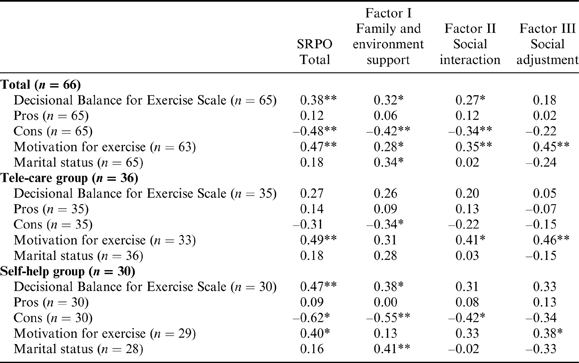
A high degree of association was found between the SRPO and scores obtained on the Decisional Balance for Exercise Scale (Table 5). This instrument measures what people think the pros and cons of exercise are. The SRPO score was significantly and negatively correlated with the scores for the ‘Cons’ subscale of this instrument, which measures perceived disadvantages of exercise, and Factor I of the SRPO positively associated with the marital status. The SRPO score was also found to be positively and significantly correlated with the level of motivation for exercise.
Correlations between the SRPO factors and other indices
Pros/Cons: perceived advantages/disadvantages of exercise.
Values are scores at baseline.
*p<0.05; **p<0.01.
The correlation between the scores on the Decisional Balance for Exercise Scale and the SRPO confirm the SRPO's validity. Although Factor III by itself had little correlation with the score for the Decisional Balance for Exercise Scale, a higher total score on the SRPO, including Factor III, was found to correlate with a significantly higher score on the Decisional Balance for Exercise Scale (Table 5). Moreover, the level of motivation for exercise was significantly correlated with family and environmental support, social interaction and adjustment (Factors I, II and III) and with the SRPO total score. Further analysis revealed that the tele-care and self-help groups also had similar correlations as with the full sample. Another randomly selected group indicated that the reliability was similar to that reported above (Group 1 α=0.81, Group 2 α=0.67; results not shown in Table 5). Thus, split-sample validation suggests that the scale is well calibrated (Table 5). Thus, the SRPO's construct validity is substantiated by the high correlations between the SRPO and the level of motivation for exercise and between the SRPO and the Decisional Balance for Exercise Scale (Yata et al., Reference Yata, Yokoda and Takama2003).
Concurrent criterion-related validity
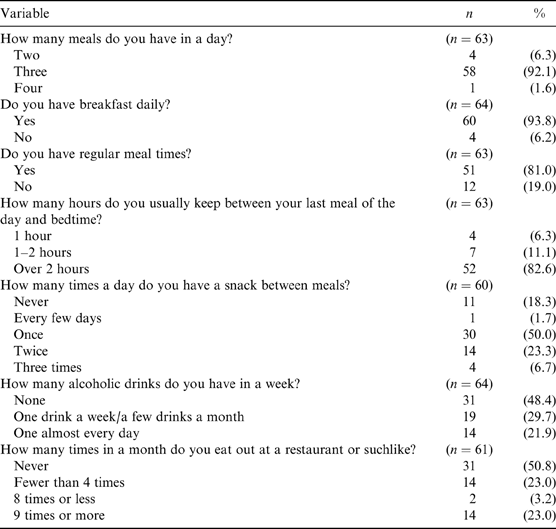
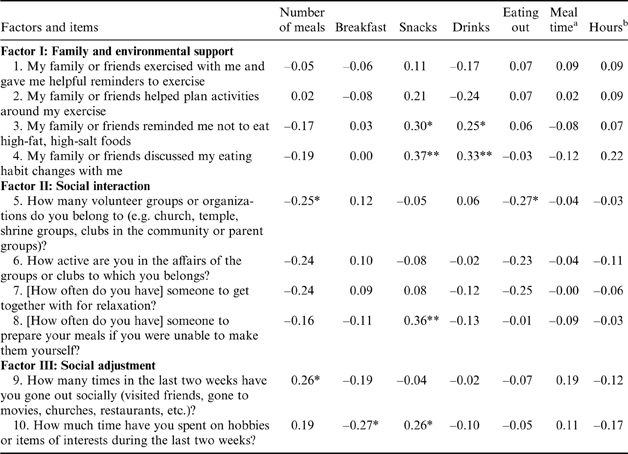
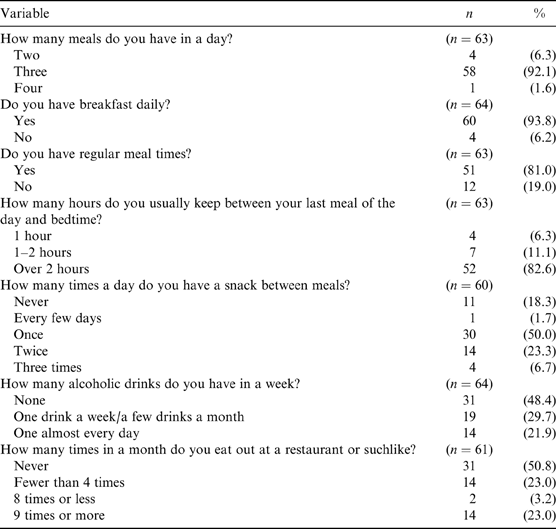
To determine concurrent criterion-related validity, using two-tailed Pearson correlations, correlations between the SRPO and data obtained from the questions about eating habits were examined: (1) number of meals, breakfast daily, regular meal times, the hours between the last meal of the day and bedtime, (2) the number of snacks and alcoholic drinks consumed, and (3) instances of eating out. The responses to the questions pertaining to eating habits are shown in Table 6, and the correlations between eating habits and SRPO items are shown in Table 7. Items 3 and 4 of the SRPO, both of which concern eating habits, were significantly correlated with the number of times snacks and alcohol was consumed. Item 8 and 10 also were significantly correlated with consumption of snacks. Items 5 and 9 were significantly correlated with the number of meals. Item 5 was significantly correlated with instances of eating out. Item 10 was significantly correlated with consumption of breakfast and snacks. No items significantly correlated with regular meal time and the hours between the last meal of the day and bedtime.
Descriptive statistics: dietary habits of the respondents
Significant correlations between eating habits and SRPO items
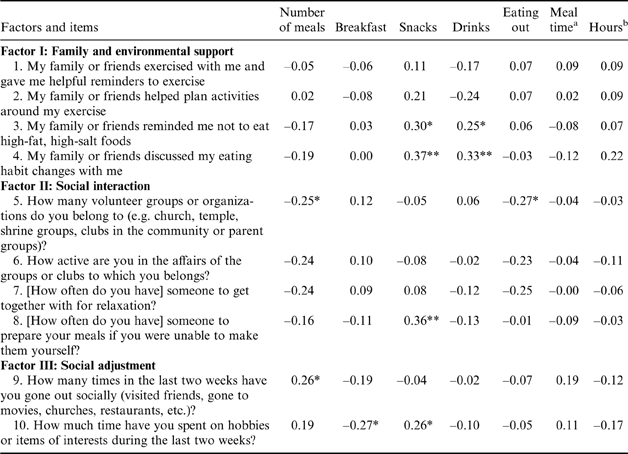
a Meal time: regular meal times.
b Hours: the hours between the last meal of the day and bedtime.
*p<0.05; **p<0.01.
The association between eating habits and the SRPO is proved by the following correlations: (1) The presence of cordial relations with family members was inversely related to drinking and positively correlated to eating snacks. (2) The number of social activities and participation in social affairs was inversely related to the number of meals and instances of eating out and directly related to eating snacks. (3) The time spent on hobbies was directly related to the number of meals, consumption of snacks and inadequate breakfasts. The correlations between items for social adjustment or communication in the SRPO and items on dietary habits suggest that the quality and quantity of a person's food intake may be affected by the person's relationships with his or her supporters. Moreover, the response to each question on dietary habits was significantly correlated with Factors I, II and III of the SRPO (Table 7).
Discussion
Advantages of the SRPO scale
Many instruments have been developed in studies on weight control, but these contain a bewildering number of items on many different aspects, including the physical and psychosocial (Stunkard & Messick, Reference Stunkard and Messick1985; McDowell & Newell, Reference McDowell and Newell1996). Because the SRPO contains fewer items with high factor-loading values, validity and reliability, it is a more useful and convenient instrument for study participants and researchers than previous scales. The response rate in the Takada et al. (Reference Takada, Nakamura, Furukawa, Takahashi, Nishimura and Kosugi2011) study (55.9%) shows that the participants faced no inconvenience in providing responses, except for the excluded questions described above. Health information and knowledge helps people to choose a healthier lifestyle by improving their understanding of the relationships between health behaviour and health outcomes (Kenkel, Reference Kenkel1991). The protective health effects of social relationships may be as important as the negative effects of established risk factors, such as smoking, obesity and high blood pressure (House et al., Reference House, Landis and Umberson1988; Boothroyd & Fisher, Reference Boothroyd and Fisher2010). Each item in the SRPO provides information about key health behaviours in social relationships. To convince the clinical practitioner in weight control of the SRPO's usefulness, it would be helpful to show that the SRPO directly correlates with the decisional balance for exercise in the Transtheoretical Model.
This study finds that the quantity and quality of social relationships are positively related to marital status. It seems that the SRPO score might be influenced, in implicit or explicit ways, by a spouse, family members or other important people outside the family through a peer effect (Wallston et al., Reference Wallston, Wallston and DeVellis1978). In terms of LOC, it was assumed that a higher SRPO score would indicate greater environmental influence or the presence of a large number of high-quality social relationships. This effect could result in a dependency-related tendency, perhaps caused by the influence of strong relationships with others, such as a spouse, siblings, family members, colleagues, co-workers and neighbours, and the effect of the shared environment (Wallston et al., Reference Wallston, Wallston and DeVellis1978; Macgregor et al., Reference Macgregor, Regis and Balding1997; Renna et al., Reference Renna, Grafova and Thakur2008; Fujita & Noguchi, Reference Fujita and Noguchi2009; Fortin & Yazbeck, Reference Fortin and Yazbeck2011; Yakusheva et al., Reference Yakusheva, Kapinos and Weiss2011). Although Nir and Neumann (Reference Nir and Neumann1995) reported no significant differences in weight loss between those with internal and external LOC during the post-intervention period of their study, the internal group gained less weight than the external group did. This evidence leads to the conclusion that internal LOC has a long-term effect and that modification of an external LOC is required to bring about meaningful change.
The importance of peer support has policy significance. Group-level interventions might be more cost-effective, successful and open to variation than individual interventions (Christakis & Fowler, Reference Christakis and Fowler2007; Fowler & Christakis, Reference Fowler and Christakis2008; Renna et al., Reference Renna, Grafova and Thakur2008; Trogdon et al., Reference Trogdon, Nonnemaker and Pais2008; Bahr et al., Reference Bahr, Browning, Wyatt and Hill2009; Cobb et al., Reference Cobb, Graham, Byron, Niaura and Abrams2011; Fortin & Yazbeck, Reference Fortin and Yazbeck2011; Yakusheva et al., Reference Yakusheva, Kapinos and Weiss2011). Several studies have examined policy interventions targeted at altering the environment in such a way as to increase people's physical activity levels (Sallis & Owen, Reference Sallis and Owen1998; Ståhl et al., Reference Ståhl, Rütten, Nutbeam, Bauman, Kannas and Abel2001; Pratt et al., Reference Pratt, Macera, Sallis, O'Donnell and Frank2004; Roux et al., Reference Roux, Pratt, Yore, Yanagawa, Van Den Bos and Brownson2008; Li et al., Reference Li, Harmer, Cardinal, Bosworth, Johnson-Shelton, Moore, Acock and Vongjaturapat2009; Cobb et al., Reference Cobb, Graham, Byron, Niaura and Abrams2011; Montes et al., Reference Montes, Sarmiento, Zarama, Pratt, Wang and Jacoby2012). Results from the current study suggest that individuals who have high SRPO scores at baseline are more influenced by their spouses, family members and friends. When conducting a weight-loss intervention, special attention should be paid to the possibility that a self-control problem might be interfering with weight loss for participants who express the characteristic of external LOC and who have spouses, close family members or friends who are obese or have untreated obesity-related disease. Moreover, it is possible that participants' attitudes towards future obesity risks (i.e. obesity-related behaviour, sedentary lifestyle, impatience, indifferent attitude towards risk aversion, obesity-related family eating traditions and food choices) can be measured with the SRPO in future weight-control studies (Yakusheva et al., 2010; Pachucki et al., Reference Pachucki, Jacques and Christakis2011; Takada et al., Reference Takada, Nakamura, Furukawa, Takahashi, Nishimura and Kosugi2011). Effective weight-loss interventions that incorporate the acquisition of social support through a reliable social network should be used as an aid for self-control and a strong commitment to weight loss. Additionally, participants should be encouraged to develop a reliable social network that helps them maintain healthier habits.
Limitations
This study had some limitations. First, the items on the number of convenient athletic facilities and employer support were deleted because of their extremely poor response rates. Many participants could not respond to questions about employer direction and support because they were retired or owned their own businesses. However, the literature shows that these two factors play an important role in preventing obesity (Sallis et al., Reference Sallis, Hovell and Hofstetter1992). Second, the participants in the Takada et al. (Reference Takada, Nakamura, Furukawa, Takahashi, Nishimura and Kosugi2011) study were recruited through a public advertisement, so there may have been a self-selection bias, although participants were subsequently randomized into the tele-care and self-help groups. If the SRPO is to be employed in a particular population, demographic characteristics, in particular, potential confounding factors such as age and job status should be taken into consideration. Third, as this scale was constructed by selecting items from other scales, the direct correlation between weight loss and scores on this scale may not strongly reflect the relationship between weight loss and self-control in social relationships, because we did not examine correlations between weight loss and other variables that have been previously shown to be related to weight loss. Fourth, it is necessary to determine the intrinsic differences between individuals who can and cannot develop and maintain strong self-control for healthy behaviours and devise a means to measure these differences.
Applications
The SRPO has moderate validity, reliability and clinical utility in examining how social relationships support self-control with regard to weight loss or obesity prevention. Thus, it can be used as a screening tool in weight-loss interventions. The SRPO can also be used to examine the social environment and self-control problems in obese people, factors that should be considered when conducting a weight-loss intervention since obese people may have self-control problems that interfere with weight-loss plans (Kan, Reference Kan2007).