PS01.01 Development of a scale to assess the attitudes of nursing students toward elderly with dementia in Japan
Miwa Yamamoto1; Sachiko Matsui2; Yusuke Sakurai3
1Adult & Elderly Nursing, School of Health Sciences, Faculty of Medicine, Tottori University, Yonago, Japan; 2Doctoral Course, Graduate Student, Tottori University, Yonago, Japan; 3Master's Course, Graduate Student, Tottori University, Yonago, Japan
Introduction: The increasing population of elderly with dementia in Japan poses a serious public health issue that must be addressed. Behavioral and psychological symptoms of dementia (BPSD) can affect and influence care provided by caregivers. Thus, examining caregiver attitudes toward elderly with dementia is warranted.
Objectives: The purpose of this study was to develop a scale to assess the attitudes of nursing students toward elderly with dementia.
Methods: We developed a 24-item scale to assess the attitudes of nursing students toward elderly with dementia based on Kogan's scale (1961). Odd numbered items have a negative score, whereas even numbered items have a positive score.
Subjects: Subjects were second and third year nursing students. Questionnaires were distributed to students of a nursing university in April (first survey; n = 151) and July (re-test as second survey; n = 138).
Analysis: The factor structure was confirmed after exploratory factor analysis (maximum likelihood method: promax rotation) to assess construct validity. The criteria of sample validity for the factor analysis aimed at a Kiser-Meyer-Olkin (KMO) measure value of >60.0%. The inclusion of items was applied to a factor loading of greater than about 0.4 without any difficulty in interpretation. The factor analysis was analyzed by each odd numbered and even numbered item.
Ethical considerations: This study was approved by the ethics committee of Tottori University.
Results and considerations: For odd numbered items, explanatory factor analysis applied to the first and second surveys revealed two factors among six items for each survey (first survey, n = 151; second survey, n = 138; KMO of both surveys, about 0.7; Bartlett test, p<0.001). With respect to even numbered items, the first and second surveys revealed four factors among nine items for each survey (first survey, n = 146; second survey, n = 138; KMO of both surveys, about 0.7; Bartlett test, p<0.001). Thus, the scale has a negative score for six items and a positive score for nine items in order to assess the attitudes of nursing students toward elderly with dementia in Japan.
PS01.02 Stress symptom factors in nurses with dilemmas regarding the use of physical restraint and the nurse's experience living together with elderly patients
Miwa Yamamoto1; Sachiko Matsui2; Yusuke Sakurai3
1Adult & Elderly Nursing, School of Health Sciences, Faculty of Medicine, Tottori University, Yonago, Japan; 2Doctoral Course, Graduate Student, Tottori University, Yonago, Japan; 3Master's Course, Graduate Student, Tottori University, Yonago, Japan
Introduction: In 2000, Japan established long-term care insurance, a system created in response to society's major concern regarding the aging population and how to care for them. In addition, the Ministry of Health, Labour and Welfare passed a bill prohibiting the physical restraint of elderly receiving treatment under the long-term care insurance program. Nonetheless, at many general hospitals in Japan, physical restraint is not illegal when treating patients under medical care insurance. Therefore, this phenomenon―whereby restraints are actively used for practical purposes but are not in compliance with current regulations ― leaves nurse facing an ethical dilemma. Nurses, as front-line providers of healthcare, are under enormous stress to deliver effective and humane service. Given this background, nurses, particularly those working in general wards, are likely to experience stress when facing restraint for people with dementia. Moreover, nurse's stress is influenced by individual experience living together with elderly.
Objective: The purpose of this study was to clarify stress symptom factors in nurses with dilemmas regarding physical restraint of older people and the nurse's experience living together with elderly.
Methods/ Subjects: Participants were 167 nurses at general wards (excluding emergency, psychiatry, pediatrics, obstetrics, and outpatient wards, operating rooms, and intensive care units).
Statistical analysis: Exploratory factor analysis was performed using the maximum likelihood method with a promax rotation to confirm the factor structure and assess construct validity.
Ethical considerations: The study was conducted with approval from the ethics committee of Meiji University of Integrative Medicine.
Results and conclusions: To test the validity of item selection and stress symptom factors, items were subjected to factor analysis. Of the 18 items, 12 items were used for analysis after excluding three with a factor loading of 0.45 and three that were difficult to interpret. Three factors with a characteristic value of 1 were extracted; the Kaiser-Meyer-Olkin measure value was 0.88 (p<0.000), and the cumulative contribution ratio was 67.8%. Explanatory factor analysis revealed three stress symptom factors, including “Depression” stress, “Unconcern” stress, and “Over stressing”.
PS01.03 Factor analysis of eating-related problems among dementia patients
Shunishiro Shinagawa1; Kazuki Honda2; Tetsuo Kashibayashi3; Kazue Shigenobu4; Kazuhiko Nakayama1; Manabu Ikeda2
1Department of Psychiatry, Jikei University School of Medicine, Tokyo, Japan; 2Department of Neuropsychiatry, Kumamoto University, Kumamoto, Japan; 3Rehabilitation Nishi-Harima Hospital, Hyogo, Japan; 4Asakayama Hospital, Osaka, Japan
Background: Eating-related problems are commonly observed among dementia patients and result in high caregivers’ burden. There are varieties of eating-related problems and underlying mechanisms of each symptom are still unclear. Appropriate classification of these problems is important to understand underlying mechanisms and to develop therapeutic approach.
Aim: The aim of this study is to determine a possible classification of eating-related problems and to reveal background of each factors.
Method: 208 consecutive patients with a diagnosis of any type of dementia from four hospitals are included in this study. Care staffs are asked to report any kind of eating-related problems. After the pilot research, 24 items of eating-related problems are extracted. We conducted a factor analysis of these 24 items, and compared demographic background between those who presented each items and those who do not.
Result: Four factors were obtained. Factor 1 was overeating, factor 2 was swallowing problems, factor 3 was appetite problems, and factor 4 was obsession to foods. Factors 2 and 3 were more frequent. Each of the factors were associated with different background including MMSE, CDR, and neuropsychiatric symptoms.
Conclusion: This study suggested that these eating-related problems should be separately considered in understanding of underlying mechanisms.
PS01.04 White matter hyperintensities are associated with the secerity of late-life somatoform disorders and executive functions
Keisuke Inamura1; Shunichiro Shinagawa1; Tomoyuki Nagata1; Kenji Tagai1; Norifumi Tsuno2; Kazutaka Nukariya1; Kazuhiko Nakayama1
1Psychiatry, Jikei University, Tokyo, Japan; 2Psychiatry, Kagawa University, Kagawa, Japan
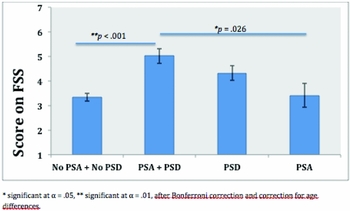
Objective: Medically unexplained symptoms are often seen in the elderly. Recently, correlations between medically unexplained symptoms and somatoform disorders (SDs) have been reported. The existence of many interactive psychiatric etiologies is known among SDs. Late-life SDs might be influenced by some etiological factors caused by aging processes, such as structural changes in the brain and cognitive dysfunctions. Under such circumstances, we investigated the presence of subcortical white matter hyperintensities (WMHs), which increase with aging, and hypothesized that subcortical WMHs are related to the disease severity of late-life SDs. Furthermore, we confirmed whether cognitive dysfunction influences this process.
Methods: To evaluate these hypotheses, we examined patients with medically unexplained symptoms who met the criteria for undifferentiated somatoform disorder and divided the patients into three groups according to the degree of subcortical WMHs: grade 0, grade 1, and grade 2. The subcortical WMHs were rated using Fazekaz grading. Differences in symptom severity and cognitive functions were compared among the three groups.
Results: The grade 2 group had the severest symptoms. Furthermore, the grade 2 group had lower cognitive function scores than the other groups.
Conclusions: The present study showed that the presence of subcortical WMHs in patients with late-life SDs was a predictor of disease severity. Moreover, cognitive dysfunction appeared to play a role in the advancement of disease severity.
PS01.05 Neural correlates of compensation mechanism for unawareness of deficits in Alzheimer's disease
Kenji Tagai; Shunichiro Shinagawa; Hidehiro Kada; Keisuke Inamura; Tomoyuki Nagata; Kazuhiko Nakayama
Tokyo, Japan
Objective: Unawareness of deficits in Alzheimer's disease (AD) is considered to be associated with mainly executive dysfunction and memory disturbance. However, the mechanism is complicated and non-unitary phenomenon such as the concept of “implicit awareness”, and the neural correlates remains unclear. We hypothesized that compensation mechanism might play an important role in the unawareness of deficits in AD. Accordingly, we investigated the unawareness of deficits among patients with mild AD and amnestic mild cognitive impairment (a-MCI) from the viewpoint of compensation mechanism.
Methods: Fifty-six patients with mild AD and a-MCI were evaluated of their awareness using Anosognosia Questionnaire for Dementia (AQ-D). Thirty-seven patients with AQ-D scores <32, who have relatively preserved awareness, in other words, were not fully ‘anosognosia’ subjects underwent SPECT with n-isopropyl-p-[123I] iodoamphetamine. We investigated the relationship between AQ-D score and SPECT using SPM12 software.
Results: AQ-D score was significantly correlated with hypoperfusion in right inferior frontal gyrus (IFG) and hyperperfusion in bilateral superior parietal lobule (SPL), left precuneus (Pcs) and right posterior cingulate gyrus (PCG).
Discussion: Previous studies have reported that IFG was associated with unawareness of deficits in AD. IFG is a part of executive control network involved in top–down attention processes, such as monitoring one's behaviour. Furthermore, since SPL is also a part of this network, hyperperfusion of SPL might compensate hypoperfusion of IFG. Both Pcs and PCG are a part of default mode network related to autobiographical memory retrieval. Memory retrieval is the main factor of awareness of deficits same as executive function. Hyperperfusion of these areas also might compensate IFG through different network.
PS01.06 Self-neglect in adults in later life
Paul Kingston1; Lesley Hayes2; Susan Benbow1
1University of Chester, United Kingdom; 2Staffordshire University, United Kingdom
Objective: Professionals who work with older people see people who self-neglect. It is essential that this complex and challenging phenomenon is well understood and the service response is effective. This study aims to enhance understanding, and identify ways to work with those who self-neglect.
Methods: Coroners in England and Wales investigate deaths in circumstances such as where the cause is unknown or unnatural; a statement of how death occurs forms part of the conclusion (verdict) to the investigation (Ministry of Justice (MOJ) 2014a). The conclusion ‘Cause of death aggravated by lack of care, or self-neglect’ (MOJ 2014) has been analysed and none, occasional and high users were sampled. Independent Chairs (ICs) who chair Safeguarding Adults Boards are responsible for the strategic direction of safeguarding within local authorities. They commission Serious Case Reviews (SCRs) to investigate and report on abuse/neglect that has caused serious harm/death and where concerns exist about services. Semi-structured interviews (with 2 coroners and 8 ICs), questionnaires and SCRs were thematically analysed.
Results: Professionals’ role requirements lead to different conceptions of self-neglect. Coroners have cases where self-neglect is implicated, but make little use of the conclusion: those interviewed could not draw on specific cases, but were able to discuss self-neglect generally. ICs readily identify self-neglect. It often features in SCRs. Some common themes relating to intervention arise: sporadic contact with a wide range of supportive and intervention services; decline of support/intervention offered; service response where services are declined; lack of effective alert systems and of integrated response mechanisms were identified. Although self-neglect does not constitute abuse, ICs commonly view it within safeguarding and capacity frameworks.
Conclusion: The prevalence of self-neglect is uncertain; coronial conclusions and SCRs are poor indicators of occurrence. The sporadic nature of cases and different conceptualisations hinder development of a coherent service response to those who self-neglect. Professionals need to transcend traditional boundaries, to enable the evolution of a common interpretation of self-neglect and to facilitate proactive and collaborative working.
PS01.07 Intimate sexual relationships in older people with dementia
Paul Kingston; Rumandeep Tiwana; Susan Mary Benbow
CH1 F1SL, United Kingdom
Objective: Dementia in the 21st century is a challenge for individuals, families, and professionals. Frequency of sexual activity may decrease with age but many people remain sexually active into later life (Benbow & Beeston, 2012). There has been little discussion or research related to intimate sexual relationships among older people: it is often perceived as a non-issue or a topic of embarrassment. Many people wish to maintain their sexual relationship despite developing dementia. It is important to encourage people to discuss and talk about intimate sexual relationships, especially when one person in the couple has dementia, to identify the challenges and barriers faced when wishing to continue with an intimate sexual relationship. Within the literature, little attention is paid to this area: it is often overlooked or avoided by professionals and relatives who may be reluctant to discuss or support the sexual aspects of relationships.
Methods: For my PhD an iterative interactive approach will be used to co-construct a narrative around the issue of intimate sexual relations. Due to the sensitive nature of the research this method is an alternative to traditional interviewing. This approach allows participants to actively construct an in-depth reflection on intimate sexual relationships amongst older people with dementia, and challenges negative attitudes. Participants will take part in three separate interviews. The initial interview will allow for a rapport to be built between the participant and researcher, which will help facilitate further discussion in second and third interviews. Participants will be asked to complete short questionnaires, including Satisfaction with Life and/or Quality of Life and Marital Satisfaction Questionnaire.
Results: Interviews will be transcribed and analysed using a qualitative data analysis (QDA) computer software package (NVivo) designed for working with rich text-based and/or multimedia information. Preliminary themes will be drawn for the data. Themes may include: potential barriers to continuing with an intimate sexual relationship, potential concerns and possible supports.
Conclusion: Raising awareness amongst professionals and relatives of the sensitive issue of intimate sexual relations is important. This can be achieved by improving education aiming to increase professionals’ confidence in understanding and discussing sexual relationships in older people with dementia: this is a significantly neglected area.
PS01.09 Effect measurement of the neural effect of switching from donepezil to galantamine based on near-infrared spectroscopy (NIRS) findings in patients with Alzheimer's disease
Masaru Mimura; Mizuki Oka; Shogo Hotta; Ryo Shikimoto; Shutaro Nakaaki
Neuropsychiatry, Keio University School of Medicine, Tokyo, Japan
Object: A number of neuroimaging studies have addressed the specific effect of treatment with cholinesterase inhibitors (Ch-EIs) on the frontal lobe in patients with Alzheimer disease (AD). However, the neural effects of Ch-EIs on both apathy and executive dysfunction remain unclear. We examined whether NIRS is useful of effect measuring changes in apathy and executive dysfunction in response to switching from donepezil to galantamine therapy in AD patients.
Methods: We conducted a 24-week, prospective, open-label study for AD patients treated with galantamine who did not respond to previous treatment with donepezil. NIRS was performed at the study baseline and after 12 and 24 weeks, and behavior and cognitive assessments including the Mini Mental State Examination, the Alzheimer Disease Assessment Scale for Japanese-cognitive subscale, the Frontal Assessment Battery, the Neuropsychiatry Inventory Brief Questionnaire Form (NPI-Q), and the Dysexecutive Questionnaire (DEX) were conducted at three time points.
Results: After galantamine therapy, the NPI-Q scores (apathy, irritability, and aberrant motor symptoms) and the DEX score improved significantly. Differences between oxy-Hb measured by NIRS during the initial fluency task at 0 weeks and at the end of 12 weeks, and between 0 weeks and at the end of 24 weeks is Ch27 (a site located in the left superior frontal gyrus and left middle frontal gyrus).We identified significant correlations between the changes in mean oxy-Hb concentrations measured by NIRS in some regions of the frontal lobe, including the left middle frontal gyrus and left inferior frontal gyrus (Ch28, Ch 29) during the task at 0 weeks and after 12 weeks, 24 weeks of the intervention and the improvements in apathy scores on the NPI-Q and improvements in total DEX scores.
Conclusion: Our study suggests that switching from donepezil to galantamine therapy may the frontal lobe function, which is associated with both apathy and executive dysfunction in AD patients. NIRS is a useful tool for detecting the treatment effects of cholinesterase inhibitors in AD patients.
PS01.10 Evaluation of titers of antibodies against peptides of subunit (NR1-NT, NR2B-NT2) of glutamate receptor with enzyme-linked immunosorbent assaystudies in psychiatric patients with anti-thyroid
Takahiro Ikura1; Omi Katsuse1; Yuhei Chiba1; Yukitoshi Takahashi2; Hiroshige Fujishiro3; Mituhiro Takeno1; Maasa Hama1; Ayuko Kamada1; Tomoyuki Saito1; Yoshio Hirayasu1
1Yokohama City Kanagawa Ken, Japan, 2Shizuoka City Shizuoka Ken, Japan; 3Nagoya City Aichi Ken, Japan
Psychiatric patients with anti-thyroid antibodies (PPATs) present various psychiatric symptoms. Some PPATs were reported having antibodies against the Glutamate receptor (GluR), which is composed of GluRζ1 and GluRε2 subunits. It is still unclear whether there is any relationship between the neuropsychiatric (NP) symptoms of PPATs and anti-GluR antibodies. NP systemic lupus erythematosus (NPSLE) is a typical autoimmune disease. A previous report has showed a high prevalence of anti-GluR antibodies in the CSF in NPSLE, compared to that of non-NP SLE.
We have quantitatively evaluated the titers of anti-GluRζ1 and anti-GluRε2 antibodies with ELISA in the serum and CSF of 26 PPATs and 5 NPSLE patients.We have investigated the correlation between those in the serum and CSF.We have divided the PPATs; GroupA, higher than or equal to the median titer of anti-GluRζ1 antibodies and higher than equal to the anti-GluRε2 antibodies in the CSF, and GroupB: less than the median titer of anti-GluRζ1 antibodies and less than the median anti-GluRε2 antibodies in the CSF. The prevalence of psychiatric symptoms has also been compared between GroupA and GroupB.
The correlation coefficients between anti-GluRζ1 and anti-GluRε2 antibodies were 0.4254 (P = 0.030) in the serum and 0.9171 (P<0.001) in the CSF of PPATs. Those were 0.9035 (P = 0.014) in the serum and 0.9953 (P<0.001) in the CSF of NPSLE patients. GroupA showed significantly higher prevalence of hallucination (45% versus 0%, P = 0.018) and delusions (73% versus 27%, P = 0.039) than GroupB. The mechanism of production of anti-GluRζ1 and anti-GluRε2 antibodies in the serum and CSF could be different between PPATs and NPSLE patients.Anti-GluRζ1 antibodies and anti-GluRεcould be associated with the development of hallucinations and delusions in PPATs.
PS01.11 Prevention of postoperative delirium - a prospective nurse-led intervention on surgical wards in a general hospital
Torsten Kratz; Manuel Heinrich; Eckehard Schlauß; Albert Diefenbacher
Berlin, Germany
Objective: Delirium is a frequent postoperative complication in older and cognitively impaired patients in general hospitals. Delirium is associated with prolonged hospital stay, higher costs and more intensive caregiver burden as well as with an increased risk of nursing home placement after discharge. We wanted to study whether the implementation of a specialized delirium nurse on a surgical ward leads to a reduction in the frequency of postoperative delirium.
Methods: In an open-label monocentric study on two surgical wards of a general hospital, first the prevalence rate of postoperative delirium in patients older than 70 years was assessed (March to August 2011). During the following intervention phase (September 2011 to June 2012) a trained geriatric nurse (delirium nurse) implemented delirium-preventative measures in accordance with the Hospital Elder Life Program (HELP). The second surgical ward provided standard treatment as usual as an in-house control.
Results: Overall 20.2%, 95% CI [14.6, 26.4] of patients on both wards without special intervention developed postoperative delirium. By implementing preoperative screening measures and specific interventions by a delirium nurse, the incidence of postoperative delirium was reduced to 4.9%, 95% CI [0.0, 11.5]. The interventions were validation, improving sleep quality, cognitive activation, early mobilisation, improving sensory perception and optimising food and fluid intake. Most important predictors of postoperative delirium were Mini Mental Status Exam results, age and preoperative infection.
Conclusion: The establishment of a specialised delirium nurse as well as the implementation of simple preoperative care measures increased postoperative attention, cognitive activation and is associated significantly with reducing risk of postoperative delirium in older and cognitively impaired inpatients.
PS01.12 Ageism among nurses in oncology
Sarah Schroyen1; Pierre Missotten1; Guy Jérusalem2; Chantal Gilles3
1Psychology of Aging Unit, University of Liège, Belgium; 2Department of Medical Oncology, CHU Sart-Tilman, Liège, Belgium; 3CHU Sart-Tilman, Liège, Belgium
Objectives: This study has two aims: (1) to replicate the results of preceding studies (Madan, Aliabadi-Wahle, & Beech, 2001; Protière, Viens, Rousseau, & Moatti, 2010) showing that encouragement for medical treatment is lesser for elders patients compared to the young one; (2) to analyze if negative attitudes towards elderly would be associated to a more negative aging vision.
Methods: Subjects were 76 nurses working in oncology (M age = 33, 88 years). They receive four written cases. The first one was about a patient (40 vs 70 years old) with lung cancer: nurses are asked if they would support this patient to follow a new immunotherapy on a Likert-type scale from 1 (no support) to 7 (support). The three other clinical cases were about a patient of 35, 55 and 75 years old suffering from a breast cancer: all clinical parameters are strictly equivalent, the age was the only change. They were to note if they support a chemotherapy treatment and a breast reconstruction. Then, nurses had to complete a validated questionnaire to assess their aging vision (FSA-R; (Boudjemad & Gana, 2009).
Results: Concerning immunotherapy, results clearly show a decline of encouragement for a patient of 70 years, in comparison to one of 40 years (p <.001). However, the older the nurses are, the more they encourage a patient of 70 years (p = .01). Concerning aging vision, no difference was observed (p = .51). About chemotherapy and breast reconstruction, older patients (since 55 years old!) are less encouraged than their younger counterpart (respectively, p <.005, p <.001). As observed for immunotherapy, the older a nurse was, the more they encourage elderly for chemotherapy (p = .02). Nevertheless, it's not observed for breast reconstruction (p = .59). Eventually, no effect of aging vision was observed for chemotherapy (p = .67). However, a more negative aging vision is observed for nurses who encourage less frequently a breast reconstruction for a patient of 75 years old in comparison to one of 35 years (p = .003).
Conclusion: We confirm that clinical encouragement are less frequent when it concerns elderly patients than younger one. Nevertheless, our analyses shows that the older the nurse was, the more they encourage older patients. Eventually, we have observed that a negative aging vision is associated with less encouragement for breast reconstruction. It's interesting to note that this difference of aging vision is not observed for curative treatment.
PS01.15 Clinical progression in subjective cognitive impairment and mild cognitive impairment is predicted by episodic memory and aβ42, but not by personality
Birgitta Ausén1; Gunnar Edman2; Ove Almkvist3; Nenad Bogdanovic4
1Department of Neurobiology, Care Sciences and Society, Karolinska Institutet, Stockholm, Sweden; 2Department of Psychiatry, TioHundra AB, Norrtälje Hospital, Stockholm, Sweden; 3Department of Neurobiology, Care Sciences and Society, Karolinska Institutet, Department of Psychology, Stockholm University Stockholm, Sweden; 4Department of Geriatric Medicine, Oslo University Hospital, Oslo, Norway
Objective: The aims of this study were twofold: first, to investigate differences in cognition, personality and CSF biomarkers (Aβ42, T-tau, P-tau) between memory clinic patients with varying degrees of cognitive impairment, but not dementia; second, to analyse which variables predict conversion to dementia at follow up after three years.
Methods: Results from neuropsychological tests, personality self-ratings and levels of CSF biomarkers were examined at baseline in 21 patients with subjective cognitive impairment (SCI) and 30 with mild cognitive impairment (MCI) who were followed-up as part of clinical routines. Patient groups were compared to 26 controls in cognitive and personality measurements. Logistic regressions were calculated to find out which variables predict dementia at follow-up after three years.
Results: At baseline, converters to dementia (1 SCI; 14 MCI) had significantly lower results than non-converters and controls in tests of episodic memory, verbal- and executive functions. Compared to non-converters they also had pathological (< 550 ng/L) levels of CFS Aβ42. Non-converters scored significantly lower than controls in test of episodic memory, verbal- and executive functions, but had no pathological CSF biomarkers. In personality measurements both converters and non-converters had significantly higher levels of traits related to neuroticism (somatic anxiety, psychic anxiety, stress susceptibility, verbal aggressivity) and extraversion (detachment; inversely related), than controls. At follow-up after three years low performance in episodic memory and low β-amyloid at baseline predicted conversion to dementia.
Conclusion: Results confirm the usefulness of CSF biomarkers in combination with episodic memory tests for prediction of dementia three years before diagnose. Personality, particularly high neuroticism and low extraversion, has an independent function in characterizing individuals who are at risk of dementia, but does not predict disease progression.
PS01.16 A survey of the public's ability to recognize depression and their choices for treating depression
Haegyung Chung1; Hwang-Bin Lee2
1Psychiatry, VHS Medical Center, Seoul, Republic of Korea; 2Psychiatry, Seoul National Hospita, Seoul, Republic of Korea
Objective: To provide the educational background and contents of campaign to promote mental health literacy about depression, we assessed the public's recognition of depression and their choices for treating depression.
Method: A cross-sectional survey of 381 participants was carried out using the Beck Depression Inventory(BDI), the vignette of a person with depression and the list of questions about: rating the severity of their own depression to determine the self awareness of depression, what they identified as the problem of the vignette of a person with depression, their choices for solving the problem, their knowledge of depressive disorder, and their beliefs about the effectiveness of various treatment methods of depression.
Results: The self-rated depression severity was proportionate to the severity of BDI depression screening test. For the depression vignette, most of the participants recognized the presence of some sort of problem, however less than 50 % of those surveyed correctly identified depression. The rates of recognizing depression are different for different kinds of occupation and different severity of their own depression. Only 33.8% of those surveyed chose the psychiatric treatment for solving the problem. The rates of choosing a psychiatric treatment as a means of problem solving varied depending on several sociodemographic characteristics such as, age, economic status, occupation, and the psychiatric history. Those who recognized depression were more likely to choose a psychiatric treatment. These surveys found that most people believed depression to be treatable. Medications for depression were generally viewed less favorably. In contrast, most of those surveyed were in favour of counselling and psychotherapy. Only 6.4% of those questioned knew the neurobiological etiology of depressive disorder. Those who had more medical knowledge about depressive disorder were more likely to choose a psychiatric treatment.
Conclusion: A high public level of mental health literacy would make early recognition of and appropriate intervention in depression more likely. Our findings can be adapted to mental health policy to improve public recognition of depression and understanding of psychiatric treatments.
PS01.17 Do pharmacies contribute to dementia patient's safe use of herbs /dietary supplements?
Hilde Risvoll1; Hamideh Movahedi1; Frauke Musial2; Kjell Halvorsen1; Marit Waaseth1; Trude Giverhaug3
1Institute of Pharmacy, The University of Tromsø - The Arctic University of Norway, Tromsø, Norway; 2NAFKAM, The University of Tromsø - The Arctic University of Norway, Tromsø, Norway; 3RELIS, University Hospital of Tromsø, Tromsø, Norway
Objective: We have previously shown that 46% of patients attending our outpatient memory clinic used herbs/dietary supplements. While 74% of these patients received help administering their prescribed medications, only 35% received help administering their herbs/supplements despite the fact that potential interactions with prescribed medicine were identified in 10% of these cases. The aim of this study was to describe pharmacy employees’ attitude, knowledge and ability to help dementia patients to obtain safe use of such products.
Methods: The study was a descriptive cross-sectional survey involving pharmacy employees in eight Norwegian municipalities. Exclusion criteria: no direct customers contact; unable to answer questions in Norwegian.
Results: 105 pharmacy employees responded the electronic questionnaire. The response rate was 51%. Six percent were trained to communicate with customers with dementia. Eight percent had experienced dementia patients using herbs/dietary supplements incorrectly and 80% reported on patients unable to receive important information due to dementia. Five percent reported ability to have producer independent information for all the herbs/dietary supplements sold in their pharmacy. Few (21) had participated on herbs/dietary supplements courses at work; however increased upselling were often the purpose of these courses. Fifteen percent had upselling of herbs/dietary supplements as a part of their daily routine, and 35% reported offering herbs/dietary supplements to customers on their own initiative. Most respondents placed the responsibility to routinely assess for drug-herbs /dietary supplements interactions with the regular general practitioners. Most employees (88%) were aware of risks regarding use of these products, 16% checked for interactions as a routine, but 90% both supplied information on possible side effects/interactions and asked patients who bought herbs/dietary supplements about prescribed medications at least sometimes.
Conclusion: Most pharmacy employees lacked education on how to serve dementia patients. Product information on herbs/dietary supplements were mainly given by the manufacturer. The employees did not see themselves as dementia patient's main safe guardians, but referred to general practitioners. Many, but far from all, employees took responsibility by checking for interactions and giving out information about possible side effects.
PS01.18 Caregiving burden and gain among adult-child caregivers caring for parents with dementia in China: The partial mediating role of filial piety
Hua Yu; Helen Edwards2
1School of Nursing, Kunming Medical University, Kunming, China; 2School of Nursing, Queensland University of Technology, Brisbane, Australia
Objective: The majority of family caregivers in China are adult children. A strong sense of filial piety is one of the most important reasons for the heavy reliance on adult-child caregivers. The aim of this study was to examine the mediating role of filial piety between the care recipient's behavioural and psychological symptoms of dementia (BPSD) and the caregiver's burden and/or gain where adult-child caregivers are caring for parents with dementia in China.
Methods: Using Kramer's caregiver adaptation model as the research framework, 401 adult-child caregivers caring for parents with dementia were recruited from hospitals in China. They completed four standardized questionnaires: Neuropsychiatric Inventory Questionnaire (NPI-Q) severity subscale, Filial Piety Scale (FPS), Positive Aspects of Caregiving (PAC), and Zarit Caregiver Burden Interview (ZBI). Linear regression analysis and the Sobel test were used to analyse the mediating effect of filial piety.
Results: Results of the linear regression analysis revealed that the correlation between care recipient's BPSD and caregiver burden reduced from β = 0.43 to β = 0.38 when controlling for filial piety. However, the change was small, and the Sobel test was not significant (Z = 1.52, p = 0.13). The results of the linear regression analysis also revealed that the absolute value of the correlation between care recipient's BPSD and caregiver gain reduced from β = −0.53 to β = −0.40 when controlling for filial piety. The Sobel test was significant (Z = −3. 51, p < 0.01), indicating that filial piety partially mediated the relationship between care recipient's BPSD and caregiver gain.
Conclusion: The findings suggest that the effect of care recipient's BPSD on caregiver's gain may be related to the level of filial piety among adult-child caregivers in China. This may point to the need to develop interventions that target filial piety.
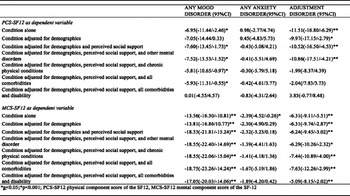
PS01.19 Association of depression with hospital length of stay or readmission for/following total hip and knee arthroplasty: A systematic review
Keiko Kurita1; James Slover2; Joseph Nicholson3; Joseph Bosco2; Richard Iorio2; Heather T Gold1

1Population Health, New York University, New York, United States; 2Orthopaedic Surgery, New York University, New York, United States; 3Health Sciences Library, New York University, New York, United States
Objective: In 2014 US surgeons performed over 1.4 million total knee and hip arthroplasties (TKA, THA) in patients with arthritis. Depression is both prevalent in patients undergoing TKA and THA and associated with adverse functional outcomes after surgery. However, resource utilization after TKA and THA in patients with depression measured by length of stay (LOS) and hospital readmissions, a significant cost to the procedure, is not well defined. Our systematic review examines the association between depression diagnoses or symptoms and extended (LOS) or readmission following primary TKA and THA in adults with arthritis.
Methods: Using PubMed, PsycINFO, and EMBASE, we identified all articles pertaining to knee or hip replacement and depression, depressive symptoms, or mood disorders. Included studies were published after 1990 and articles, conference abstracts, or letters that reported on original data with statistical findings regarding a relation between depressive symptoms or diagnosis with LOS or hospital readmission.
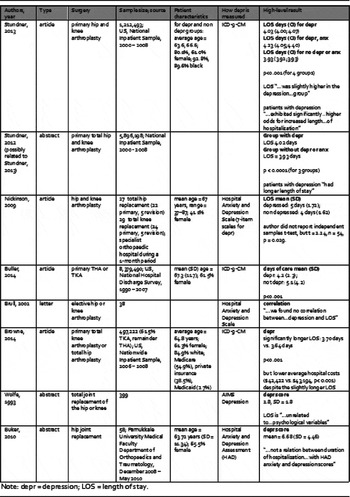
Results: We identified 993 articles (Figure 1). After excluding articles by title, abstract, or text for not meeting final inclusion criteria, eight were included in our analysis, all of which reported hospital LOS only. None reported readmission. Half (n = 4) used US data, 37.5% (n = 3) used ICD-9 diagnosis of depression and 37.5% (n = 3) used the Hospital Anxiety and Depression Scale (Table 1). Sample sizes ranged from 38 to over 8 million patients. Average ages reported were 63.6 to 67.3 years old, and most were women. Statistical techniques included multivariable regression, correlations, and independent samples t-tests. Half (n = 4) that reported diagnoses or symptoms of depression were associated with longer LOS's whereas 37.5% (n = 3) did not find a significant association. Over 20 articles did not meet criteria of which some suggested a possible trend toward longer LOS.

Conclusion: Results from the included studies are mixed regarding the association of depression with hospital LOS following TKA or THA. Studies vary in the analytic methods and measurement of depression, making meta-analysis impossible for quantifying any potential effect of depression diagnoses or symptoms on hospital LOS. No studies were found that examined the relationship between depression and hospital readmission. More definitive research is needed to better understand how depression may influence patient healthcare utilization after TKA and THA.
PS01.20 The functional status and quality of life of patients with Korsakoff syndrome living in long-term care facilities: Design of an observational study
Ineke J. Gerridzen1; Karlijn J. Joling1; Ruth B. Veenhuizen1; Els M. Verschuur2; Cees M. Hertogh1
1Department of General Practice & Elderly Care Medicine, VU University Medical Centre, Amsterdam, Netherlands; 2HAN University of Applied Sciences, Arnhem and Nijmegen, Netherlands
Objective: Patients with Korsakoff syndrome (KS) residing in specialized long-term care facilities (LTCFs) often show challenging behavioral problems like lack of awareness of their deficits, aggression, and apathy. Moreover, due to cognitive and psychiatric disorders, patients are often unable to perform all domains of informed decision-making and may be considered to be partially competent. These problems put a heavy strain on care professionals and may lead to prescription of psychotropic drugs. Good estimates of the prevalence of behavioral symptoms and the use of psychotropic drugs in patients with KS residing in LTCFs are scarce. Also, the functional status, quality of life and needs of care of this group of patients have hardly been studied yet. The aim of this study is to describe the functional status, behavioral problems, the use of psychotropic drugs, quality of life and capacity of patients with KS living in specialized LTCFs.
Methods: A cross-sectional, descriptive study, recruiting 250 patients with KS living in specialized LTCFs in the Netherlands will be conducted. Primary outcomes include functional status as measured with sections of the Resident Assessment Instrument for Long-Term Care Facilities and Home Care (RAI-LTCF and RAI-HC), behavioral problems as measured with the Neuropsychiatric Inventory Questionnaire (NPI-Q) and Apathy Evaluation Scale (AES-10), awareness of deficits as measured with the Patient Competency Rating Scale-Clinician Form and -Patient Form (PCRS) and quality of life as measured with the Manchester Short Assessment Quality of Life (MANSA). Furthermore, prescription of psychotropic drugs will be derived from patients’ records and capacity will be judged by the responsible nurse and physician.
Conclusion: The results of this study will provide an evidence base to develop specific guidelines for care of institutionalized patients with KS. Ultimately, this may help care professionals in better managing challenging behavioral problems and reducing inappropriate prescription of psychotropic drugs and, subsequently, increasing quality of life of these patients.
PS01.21 Influence of white matter hyperintensity, medial temporal atrophy on cognitive function in depressed elderly with apolipoprotein E4 allele
Hyun-Ghang Jeong; Seung Hyun Kim; Sook Haeng Joe
Psychiatry, Korea University GURO Hospital, Seoul, Republic of Korea
Objective: Many depressed elders report coexisting memory complaints. We aim to investigate the association between white matter hyperintensity and depressive symptoms and the relationship between medial temporal atrophy and apolipoprotein e4 allele in depressed elders with cognitive dysfunction.
Method: We obtained brain MRIs and apolipoprotein E genotyping for 25 healthy elders, 40 mild cognitive impairment subjects and 80 mild Alzheimer's disease subjects. White matter hyperintensity was assessed by the modified Fazeka's scale and medial temporal atrophy was assessed by the Sheltens’ scale. The Geriatric Depression Scale, a 30-item self-questionnaire, was used to evaluate depressive symptoms of subjects.
Results: White matter hyperintensity inversely correlated with depressive symptoms (r = 0.466; p = 0.044). However, this correlation was not significant in elders with clinically significant depression when subjects were classified into two groups by the GDS score of 15. Medial temporal atrophy is significantly prominent in non-depressed elders with apolipoprotein e 4 allele (3.26±1.8 for APoE e4 negative and 4.27±1.7 for APoE e4 positive; p = 0.037). We could not find difference of medial temporal atrophy according to presence of apolipoprotein e 4 allele in depressed elders (3.55±2.21 for APoE e4 negative and 4.87±1.89 for APoE e4 positive; p = 0.552).
Conclusion: The white matter hyperintensity and presence of apolipoprotein allele 4 are possibly mediate depressive symptoms and cognitive dysfunction in the elders, and their impacts are likely to be different according to the severity of depression.
PS01.22 Evaluation of the dementia ABC education program
Anne Marie M. Rokstad; Betty Døble
Norwegian National Advisory Unit on Ageing and Health, Vestfold Hospital Trust, Tønsberg, Molde University College, Molde, Norway
Objective: For systematic improvement of competence and skills in nursing staff providing dementia care the Dementia ABC education program was developed by Norwegian National Advisory Unit on Ageing and Health. The program has three main components; (1) a collection of booklets presenting information about dementia (2) in-house discussion groups meeting regularly to reflect on the topics presented in the booklets (3) two annual workshops run by professional trainers. The objective of the study was to evaluate the effect of the education program on the participants’ experience of job satisfaction and self reported skills in person-centred dementia care.
Method: The study was a longitudinal survey following participants in the Dementia ABC education program. The program lasted for 24 months and data were collected at baseline (T1), after finishing the first (T2) and second (T3) collection of booklets and three to six months after finishing the program (T4). Descriptive data on the participants were collected and a standard questionnaire (Sund, 2003) was used to evaluate psychosocial workplace environment and job satisfaction. The Person-centred Care Assessment Tool (P-CAT) (Edvardsson et al., 2010, Rokstad et al., 2012) was used to evaluate nursing staff's experience of person-centeredness in their own practice. All participants (N = 2211) starting the program 2009–2011 were invited to take part in the study. Descriptive analyses were made on sample characteristics and paired sample T-tests were made to analyse changes in mean scores of job-satisfaction and person-centeredness.
Results: A total of 1795 participants (81%) from 90 municipalities in Norway accepted the invitation to take part in the study. The mean age was 45 years and 97 % were women. The participants worked in nursing homes (58%) sheltered accommodations (17%) day care centres (2%) and home nursing care (20%). A significant positive change in the mean score of P-CAT was found both at T2; 0.81 (p<0.01) and T3 0.78 (p<0.01). This positive change was sustained at follow-up (T4). No significant changes were found in scorings of job satisfaction.
Conclusion: The evaluation of the Dementia ABC education program identified significant positive change in scorings of person-centeredness in nursing care as rated by the participants indicating a possible effect of the systematic training lasting for 30 months.
PS01.23 Healthcare-seeking behaviors of patients with dementia in Incheon City: A preliminary study
Jae-Myeong Kang1; Byeong Kil Yeo1,2; Seong-Jin Cho1; Seo-Eun Cho1; Seonkyung Yun2; Jiyoung Kim2; Yeongkyung Kim3; Hyejin Yoon2
1Department of Psychiatry, Gil Medical Center, Gachon University, School of Medicine, Incheon, Republic of Korea; 2Incheon Metropolitan Dementia Center, Incheon, Republic of Korea
Objective: The number of patients with dementia has increased two-fold over the past 20 years, while the healthcare costs for patients with dementia has doubled over the past 10 years in Korea. However, the healthcare-seeking behavior of patients with dementia has not been studied in Korea. Therefore, we aimed to conduct a preliminary study in order to evaluate the healthcare-seeking behavior of patients with a recorded diagnosis of dementia in Incheon city.
Methods: Sixty pairs of caregiving and care-recipient individuals from local dementia centers participated in this study. A questionnaire was administered regarding healthcare-seeking behavior, healthcare utilization, and delayed visits for health-care services. The questionnaire administered to all participants included a modified version of Seoul Activities of Daily Living (S-ADL), Seoul Instrumental Activities of Daily Living (S-IADL), Korean version of Zarit Burden Interview (ZBI-K), and the Center for Epidemiologic Studies Depression Scale (CES-D).
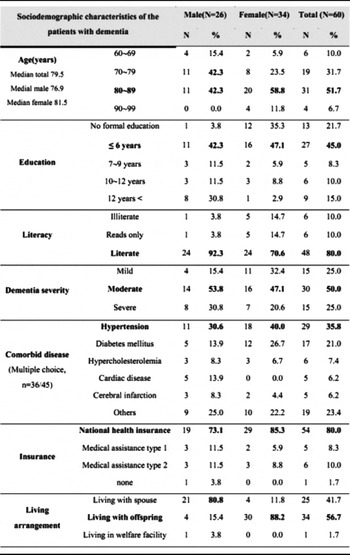
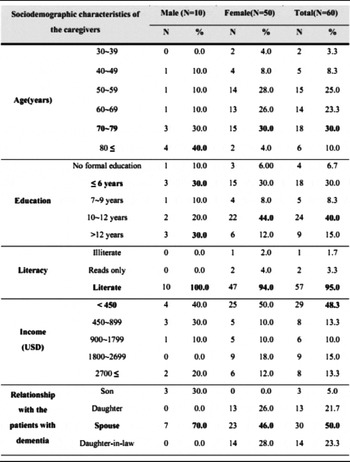
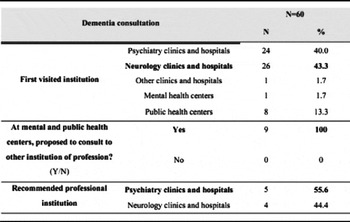
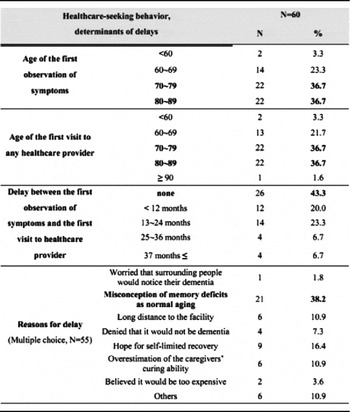
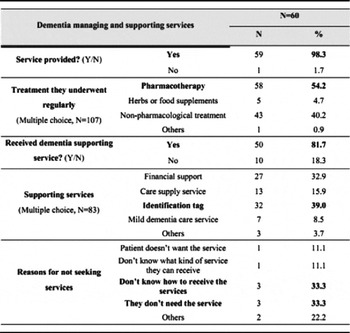
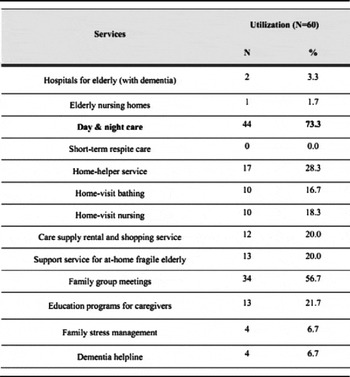
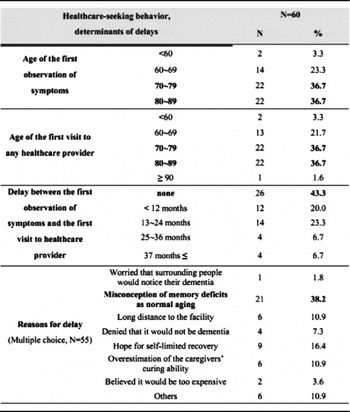
Results: Out of 60 patients enrolled, 34 were female (34%) and 31 (51.7%) were aged >80 years. Twenty-seven patients (45%) were educated for <6 years, 48 (80%) were literate, 30 (50%) had moderate dementia, and 54 (80%) had national health insurance. Thirty-four patients (56.7%) lived with their offspring and 25 (41.7%; 21 males and 4 females) with their spouse. Healthcare was sought because of memory deficits (33.3%), psychiatric symptoms (28.3%), cognitive impairments other than memory deficits (18.3%), and impairments in daily living (11.7%). A majority of the patients (83.3%) visited neurology and psychiatry clinics and hospitals, while the others (13.3%) visited public health centers. The median delay between symptom onset and the first visit to a health provider was 9.6 months, and the factors associated with the delay were misconception of memory deficits as normal aging (21, 38.2%), hope for self-limited recovery (9, 16.4%), low accessibility to health-care providers (6, 10.9%), and overestimation of the caregivers’ curing ability (6, 10.9%). Patients with dementia were regularly managed with pharmacotherapy (58, 98.3%) non-pharmacological treatment (43, 72.9%), herbs or food supplements (5, 8.5%). In addition, 49 patients (81.7%) underwent dementia supporting service including an identification tag (33, 39.8%), financial support (27, 32.5%), and care supply service (13, 15.7%). Fifty-eight patients (96.7%) visited professional caregivers and they spent an average of 860 USD for treatment during last year. Caregivers spent 100 hours of care (44, 73.3%) per week and its cost is equivalent to around 1,200 USD. Forty-four patients with dementia and their caregivers were serviced with day & night care service (73%), 34 (56.7%) went to family group meetings, 17 (28.3%) received home-helper service, 13 (21.7%) underwent education programs for caregivers, 12 (20%) received care supply rental and shopping service, and 12 (20%) received support service for at-home fragile elderly. Some caregivers reported moderate to severe burden (ZBI score, 41–60, 48.3%) arose from increasing demented patients’ dependency (53.3%) and time consumed while imparting care (38.3%). Twenty-nine caregivers were suffering from definite depression (CES-D ≥ 25; 48.3%), while 15 were suspected to be suffering from probable depression (CES-D, 16–24; 25%).
Conclusion: Patients with dementia mainly sought treatment at hospitals and clinics and some sought other dementia support services. However, there was a considerable delay in visiting these professional service providers, and many caregivers expressed moderate to severe mental and financial burden.
Socio-demographic data of participants (patients with dementia)

Socio-demographic data of participants (caregivers)

Type of healthcare institutions participants visited

Healthcare-seeking behavior, determinants of delays
Utilization of dementia managing and supporting services

Utilization of specific dementia supporting services

PS01.24 Personality trait and treatment response in major depression
Hyoshin Kang1; Doh Kwan Kim1; Shinn-Won Lim1; Sang Ha Kim2; Woo Jae Myung1
1Psychiatry, Samsung Medical Center, Seoul, Republic of Korea; 2Psychiatry, The Catholic University of Korea College of Medicine, Seoul, Republic of Korea
Objective: For many years personality pathology was considered to associate with a poor outcome in depression. However, a review relating personality disorder (PD) to treatment outcome reported whether or not personality pathology significantly worsens outcome appeared to depend on study design. Recently, in a number of publications, it has been suggested that the outcome of depression treatment with comorbid PD may not be necessarily negative as previously expected. The impact of personality trait on the treatment outcome for depression remains debate. The aim of this study was to examine the relationship between personality trait and the outcome of pharmacotherapy of major depressive disorders.
Methods: A total of 178 patients with major depressive disorder were recruited for this study. Patients were attending the Clinical Trial Program of the Samsung Medical Center Geropsychiatry Clinic. Diagnosis was determined according to the Structured Interviews for DSM-IV (SCID-I). All patients were assessed using the Korean version of the Millon Behavioral Diagnostics (K-MBMD) coping scale at baseline, as well as rated on the Hamilton Rating Scale for Depression (HDRS) at baseline and 6 weeks. The MBMD is a self-report questionnaire designed to assess a variety of traits and health behaviors that may affect adjustment to illness and medical treatment. In this study, we focused on the coping styles subscales, which allowed for the investigation of nonclinical personality trait. Patients were instructed to take SSRIs or non-SSRIs, and treatment response was defined as ≥50% decrease in HDRS scores at six weeks.
Results: After six weeks of antidepressant treatment, 84 patients (63%) were responders in a SSRIs treatment group and 32 patients (73%) were responders in a non-SSRIs group according to the HDRS score. Compared with non-responders, responders exhibited significantly lower introversive personality trait in SSRIs group and showed higher sociable and confident personality trait in non-SSRIs group, respectively.
Conclusion: These findings suggest that personality trait such as introversive, sociable, and confident is associated with poorer response to antidepressant treatment in major depressive disorder. The result of this study will help clinicians to improve their understanding of the relationship between specific personality trait and treatment outcome.
PS01.27 Family caregivers´ experiences on meaning their life – Alzheimer´s disease study based on the longitudinal diaries
Nora Ruokostenpohja1; Tarja Välimäki1,2; Anne Koivisto3
1University of Eastern Finland, Kuopio, Finland; 2University Hospital, Kuopio, Finland; 3Kuopio University Hospital, Kuopio, Finland
Objective: Our aim was to describe caregivers` manifestations of meaning and explore how they find meaning in their life during the first year of caregiving after their family member was diagnosed with Alzheimer's disease. The salutogenic approach, according to which meaning is considered a factor motivating individuals (Antonovsky 1987), was used as the theoretical framework in this study.
Methods: This is part of the ALSOVA follow-up study of persons with Alzheimer's disease and their family caregivers (n = 240) (2002 - 2020). Inductive content analysis was used to explore spousal caregivers’ unstructured, diaries (n = 57) written in two week period.
Results: Caregivers experienced meaning as a personal emotion, which was manifested as optimistic attitude, gratitude and hope. A good relationship between the caregiver and the care recipient, solitude time for themselves and ability to use supportive services were important elements in finding meaning.
Conclusions: The process of finding meaning in caregiving was powerful during the first year after Alzheimer’ disease diagnosis. Caregivers’ ability to find meaning in new life situation as primary carers, helps them to continue their life. Caregivers’ diaries have not used widely as a research method. Diaries afford depth interpretations of caregivers` life alongside of quantitative research. Further, diaries reveal a wide array of subjective aspects in caregiving.
PS01.28 White matter abnormalities evidenced through deterministic tractography in bipolar disorder
Gilberto Alves2; Luiza D.A.D. Carvalho1; Paulo Barros1; Yago Martins1; Pedro Cantal1; Caio Lucena1; Christian Knöchel2; Claudia Schmied2; Britta Reinke2; Andreas Reif2; Viola Oertel-Knöchel2
1Faculty of Medicine, Federal University of Ceara, Fortaleza, Brazil; 2Department of Psychiatry, Psychosomatic Medicine and Psychotherapy, Goethe-Universität Frankfurt am Main, Frankfurt am Main, Germany
Background: Bipolar disorder (BD) has been related to changes in frontal and limbic neuronal circuits and loss of integrity of the white matter (WM). Magnetic resonance with tractography has been considered a promising neuroimaging method to investigate neurobiological features associated with BD. This study aims at investigating WM microstructural changes in BD through the virtual delineation and deterministic tractography.
Methods: A sample of 62 subjects (controls = 32; patients = 30) was investigated using the program TrackVis version 0.5.2 and 0.6.2 Diffusion Toolkit (available for download at http://www.trackvis.org/). Fractional anisotropy (FA), mean fiber length and mean volume were computed for the right and left fornix. The level of significance adopted was p < 0.05.
Results: The control group exhibited higher FA in the right fornix when compared with patients (p = 0.02). Lower FA values were also observed in the late onset [(LOD)(onset disease > 23 years)] in comparison with the early onset [(EOD)(onset disease < 23 years)] BD group both in the left (p = 0.043) and right (p = 0.008) fornix. The EOD group also presented higher fiber length than the LOD (pLF = 0.027 and pRF = 0.002). Lower FA values were also observed among men (pLF = 0.004; pRF = 0.015). After controlling for nuisance variables (gender, age and education), lower FA values remained in the right, but not in the left fornix of BD subjects in comparison with controls. No differences were found between patients and controls with respect to volume and fiber length. The right fornix exhibited higher mean volume among men (p = 0.045). No significant differences in the tract volume or length were observed between patients and controls in the unadjusted analysis. Age correlated inversely with the fornix length, bilaterally. The current findings evidenced WM loss of integrity in the fornix of BD subjects. These alterations may be associated with age of onset, aging and gender differences among BD subjects.
Conclusion: Our findings confirm tractography as one useful tool in the investigation of the BD neurobiology. Further studies are necessary to confirm the specificity of such findings.
PS01.29 Visual hallucinations are more common in early-onset than late-onset Alzheimer's disease
Hibiki Tanaka1; Wei-Tseng Chen2; Mamoru Hashimoto1; Ryuji Fukuhara1; Yutaka Hatada1; Yusuke Miyagawa1; Kazuhiro Kawahara1; Manabu Ikeda1
1Department of Neuropsychiatry, Faculty of Life Sciences, Kumamoto University, Kumamoto, Japan; 2Department of Psychiatry, National Cheng Kung University Hospital, Tainan, Taiwan, Republic of China
Objective: Visual hallucinations are one of the core features in dementia with Lewy bodies (DLB), and also appear in patients with Alzheimer's disease (AD). Previous studies had suggested that cortical changes in occipital or parietal lobe were associated with visual hallucinations in AD. Additionally, some neuroimaging investigations revealed that patients with early-onset AD (EOAD) exhibited a more reduction of gray matter in the parietal lobe than those with late-onset AD (LOAD). On the basis of these findings, we hypothesized that patients with EOAD, as compared with those with LOAD, would have higher levels of visual hallucinations because of severe parietal lobe dysfunction.
Methods: Patients with probable AD (diagnosis based on NINCDS/ADRDA criteria) who had attended Kumamoto University hospital between April 2007 and November 2012 and who had been followed up for the next two years were included in this study. We put into the EOAD group if patients were under 65 years old, and into the LOAD group if they were over 70 years old at the first assessment. Visual hallucinations were evaluated using the Neuropsychiatric Inventory (NPI). The NPI was assessed annually for three years. The cumulative prevalence of visual hallucinations was defined as the proportion of patients developing the symptom on at least one assessment.
Result: The mean age at first assessment of EOAD group (n = 27) and LOAD group (n = 131) was 59.1 and 79.3 years, respectively. Over the course of 2 years, the cumulative prevalence of visual hallucinations in EOAD was significantly higher than LOAD (25.9% vs. 7.6%, OR = 4.24, 95% CI = 1.45–12.42, p = 0.009). The cumulative prevalence of visual hallucinations was not associated with any factors (gender, education, disease duration, MMSE score at baseline or medication use) other than age at onset.
Conclusion: Previous research has estimated the prevalence of visual hallucinations at 13% in AD patients. On the other hand, this study revealed higher prevalence of visual hallucinations in EOAD patients, suggesting that visual hallucinations are important symptoms for diagnosis not only of DLB but also of EOAD.
PS01.30 Ethical challenges - trust and leadership in dementia care
Rita Jakobsen; Venke Sørlie
Research Department, Lovisenberg Diachonal University College, Oslo, Norway
Introduction: To meet and take care of people with dementia implicate professional and moral challenges for caregivers. Using force happens daily, however staff also encounter challenges with the management in the units. Managing the caretaking function is also significant in how care takers experience working in dementia care. The purpose of this study is to explore the caregiver´s experiences with ethical challenges in dementia care settings and the significance of professional leadership in this context.
Method: The design is qualitative and data appear through narrative interviews. 23 caretakers participated in the study. The transcribed interviews were subjected to a phenomenological-hermeneutic interpretation.
Ethical considerations: The respondents were assured anonymity and confidentiality in the publication of the data. Ricoeur´s method for interpretation ensures anonymity as the researcher relates to the data as one collective text. The study is part of a larger research project in ethics, in its entirety approved in line with the Helsinki Convention.
Results: The findings show that the caretakers experienced inadequacy. Some of them described a negative work atmosphere where they experienced that their leaders did not take them seriously. Because of this, informal negative sub-groups functioned as an exclusive debriefing arena. Some of the informants described the opposite experience where the leaders actively supported them.
Discussion: The analyses of the findings are discussed in light of the concepts of trust and mistrust in leadership.
Conclusion: There is a correlation between the ledership and the caregivers experience of being in difficult situations.
PS01.31 TIME – Targeted Interdisciplinary Model for Evaluation and treatment of neuropsychiatric symptoms: A qualitative study
Bjørn Lichtwarck1; Irene Mari Røen1; Sverre Bergh1; Willy Lichtwarck2
1Centre for Old Age Psychiatric Research, Sykehuset Innlandet Hospital Trust, Ottestad, Norway; 2Høgskolen i Sør-Trøndelag, Trondheim, Norway
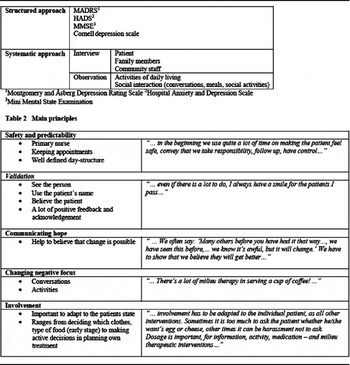
Objectives: Nearly all nursing home patients with dementia experience neuropsychiatric symptoms. We have conducted a pilot study with an intervention which includes both a rigorous assessment and the treatment of neuropsychiatric symptoms. This model, Targeted Interdisciplinary Model for Evaluation and treatment of neuropsychiatric symptoms (TIME), is based on the theoretical framework of cognitive behavioral therapy (CBT). In the pilot study there was a significant and sustainable reduction in agitation and affective symptoms in the patients, as well as reduced caregiver burden. In this presentation we report from the qualitative part of the pilot study where we examined the properties of the model and possible facilitators and barriers to the implementation.
Methods: We included 30 patients with dementia and serious agitation in nine nursing homes in Norway and their staff. The first part of the intervention consisted of a three hours lecture for the staff about dementia, neuropsychiatric symptoms and MIND. In addition, we gave three more hours of lecture for 1–2 nurses from each nursing home, teaching more details about the intervention. TIME was then implemented in three stages: A registration-observation stage which includes history, examination and observation of the patient. A staff guiding stage consisting of a structured reflection meeting where a detailed plan for the patient is worked out. The plan is then put into action in the evaluation stage. After the intervention we interviewed 14 of the caregivers divided into two different focus groups using a semistructured interview guide. The interviews were transcribed and analysed based on systematic text condensation where meaningful themes were extracted.
Results: Four themes emerged: (1) The caregiver's lack of trust in their own knowledge and skills in problem solving; (2) The importance of a structured way to learn from each other on a daily basis; (3) The value of learning a simple and structured manual-based method; (4) An engaged leader seems to be the most important facilitator for implementation of the model.
Conclusion: This study shows that the intervention by TIME is a systematic and simple tool for the nursing home staff to deal with neuropsychiatric symptoms. The model seems to shift the way of learning for the caregivers from traditional adaptive learning to more developmental and reflection based learning. The caregivers trust in their own skills and knowledge increased. An engaged leader facilitates the intervention.
PS01.32 Disease patterns of antipsychotic use among elderly persons in Taiwan
Chia-Lun Kuo1; I-Chia Chien1,2; Ching-Heng Lin3
1Tsaotun Psychiatric Center, Ministry of Health and Welfare, Nantou, Republic of China; 2National Yang-Ming University, Taipei, Republic of China; 3Taichung Veteran General Hospital, Taichung, Taiwan, Republic of China
Background: This study aimed to analyze the disease patterns of antipsychotic (AP) use among elderly persons in Taiwan.
Methods: The National Health Research Institutes (NHRI), which was in charge of the National Health Insurance claims database, provided a database of 1 000 000 random subjects, about 4.5% of the total population (22.6 million), to perform a related health service study in 2005. 96,851 persons older than 65 years on 1 July 2005 were included in this study. We identified the prevalence and disease patterns of AP use among the study subjects in 2005.
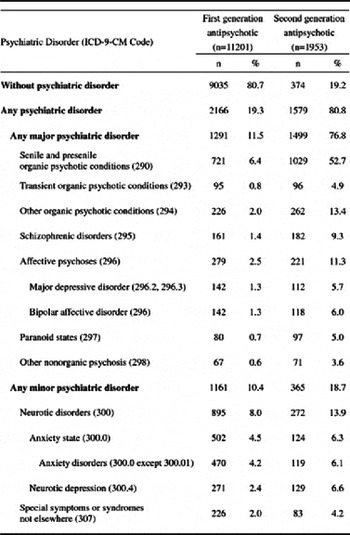
Results:Table 1 shows the proportion of psychiatric disorders among subjects with FGA and SGA use. The numbers of subjects using FGA and SGA were listed. Psychiatric disorders were commonly found in SGA users (80.8%), while only 19.3% FGA users had psychiatric disorders (n = 2166). The proportion of major psychiatric disorder was 11.5 % in FGA users and 76.8 % in SGA. Among the major psychiatric disorders, the disorder that accounted for higher FGA use was senile and presenile organic psychotic condition, ICD-9-CM code 290 (6.4%). Those disorders accounting for higher use of SGA were senile and presenile organic psychotic condition and other organic psychotic conditions (52.7% and 13.4%, respectively). Among the minor psychiatric disorders, neurotic disorders such as neurotic depression and anxiety state were associated with higher AP use, 8.0% in FGA and 13.9% in SGA respectively. In the proportion of medical disorders among subjects with FGA and SGA, FGA was much more commonly prescribed in non-psychiatric disorders, while the prevalence of SGA use in non-psychiatric disorders was relatively low. Higher FGA use was for diseases of symptoms, signs, and ill-defined conditions (28.3%); the digestive system (25.3%), the circulatory system (14.6%), and the respiratory system (15.6%). Higher SGA use was for diseases of the circulatory system (38.8%); the nervous system and sense organs (19.5%) and the respiratory system (17.4%).
Proportion of psychiatric disorder among subjects with antipsychotic use

Conclusions: 80.8% of SGA users had at least one psychiatric disorder, while only 19.3% in FGA users. 76.8% of SGA and 11.5% of FGA users were with at least one major psychiatric disorder. On the other hand, FGA was used more commonly than SGA in minor psychiatric disorders. Further investigation of the indications and diagnoses of patients with AP prescription is required.
PS01.33 Burden of behavioral and psychiatric symptoms in people screened positive for dementia in primary care – results of the Delphi-study
Jochen René Thyrian1; Tilly Eichler1; Johannes Hertel1; Diana Wucherer1; Adina Dreier2; Bernhard Michalowsky1; Ingo Killimann1; Stefan Teipel1; Wolfgang Hoffmann1,3
1Rostock/ Greifswald, German Center for Neurodegenerative Diseases (DZNE), Germany; 2Institute for Community Medicine, University of Greifswald, Greifswald, Germany; 3Institute for Community Medicine, University of Greifswald, Greifswald, Germany
Background: There is limited knowledge about the range and effects of neuropsychiatric symptoms shown by persons with dementia (PWD) living in the community and their related caregiver burden.
Objective: (a) “to examine neuropsychiatric symptoms in PWD in primary care in regard to frequency, severity and burden to caregiver, (b) compare PWD with and without symptoms in regard to sociodemographics, care- and disease-related variables, (c) identify variables associated with symptoms.
Methods: Assessment of the Neuropsychiatric Interview (NPI), sociodemographics and disease–related variables in a general physician-based epidemiological cohort of n = 248 people screened positive for dementia above 70, living at home and their caregivers.
Results: In preliminary analyses neuropsychiatric symptoms were frequent in PWD. Prevalences of dysphoria/ depression, apathy and agitation/ aggression were each more than 30%. The severity of neuropsychiatric symptoms in people screened positive for dementia in primary care is moderate with a mean NPI score of m = 11.91. (SD = 16.0). Overall, caregiver distress is low, indicated by a total distress score of m = 5.94 (SD = 7.2, range 0–39). Common or frequent symptoms are not necessarily the most distressing symptoms.
Conclusions: Neuropsychiatric symptoms are common in people screened positive for dementia in primary care. While frequency, severity and perceived distress might be low in the total sample, we identified the dimensions delusions, aggression, anxiety, disinhibition and depression to be perceived “severely” to “extremely” distressing in more than 30% of the caregivers affected. The association between ADL and symptoms needs further attention in care.
PS01.34 Designing process evaluation of cluster randomized controlled trials to evaluate psychosocial interventions in dementia care
Daniela Holle; Sven Reuther; Rabea Graf; Ute Segscheider-Rosier; Margareta Halek; Martina Roes
German Centre for Neurogenerative Diseases, Witten, Germany
Objectives: In the past decades many psychosocial interventions have been developed and tested in dementia care using (cluster) randomized controlled trials (CCT-RCT), however in most of these studies a systematic process evaluation is missing. This limits the validity of the results because a process evaluation provides an insight into the so called “black box” of an intervention study, and contributes an understanding to what extend the intervention is implemented into daily practice. One reason for that might be the limited knowledge how to design a process evaluation. Theoretical models from implementation science can support researchers to outline methodologically rigor process evaluations addressing delivery, receiving, and maintenance of the intervention in CCT or RCT.
Methods: The aim of the ongoing FallDem-study (stepped-wedged cluster randomized controlled trial) (Reuther et al. 2014) is to overcome unmet needs of people with dementia, and thus reduce the high prevalence of challenging behaviors of residents. The parallel conducted process evaluation of the FallDem-study (Holle et al. 2014) investigates to what extent dementia-specific case conferences are adopted by professional caregivers in 12 nursing homes in Germany. For this the “process evaluation model” from Grant et al. (2013) was combined with the “adoption model” of Grol and Wensing (2004). Grant´s model considers the “delivery of intervention”, the “response and reach of individuals” and “the response of clusters towards the intervention” as important topics to analyse while conducting CCT/ RCT studies, whereas the model of Grol & Wensing enables one to graduate the adoption stages of implementation processes.
Results: Through merging the two models the topics of the “process evaluation model” are related to each other and it can be analyzed whether the target population of the FallDem-study overcomes the turning point from “THINKING” about dementia specific case conferences towards “DOING” dementia specific case conferences in daily care of people with dementia.
Conclusion: The FallDem-study represents one possibility how to address the “black box” of intervention studies within a process evaluation of a cluster-randomized controlled trial, which might be a blueprint for other researchrs testing psychosocial interventions in dementia care.
PS01.35 Defining the delayed treatment effect of dementia specific case conferences in nursing homes – new territory in mixed method research
Daniela Holle; Sven Reuther; Martina Roes; Rabea Graf; Ute Segscheider-Rosier; Diana Trutschel; Margareta Halek
German Center of Neurodegenerative Diseases, Witten, Germany
Objective: Measuring the effect of psychosocial intervention in dementia research is often a challenge because researchers must address complex interventions and heterogeneous care settings. The ongoing FallDem-study is a stepped-wedged, cluster randomized controlled trial evaluating the effect of dementia specific case conferences (DSCC) in 12 nursing homes (Reuther et al. 2014; Holle et al. 2014). Due to the complexity of a DSCC it can be expected that the treatment effect doesn´t reach 100% effectiveness at the start of the intervention. Nursing staff must learn how to conduct DSCC and time is necessary to adopt the practice to the new knowledge. As such a delay in treatment effect has a great influence on the estimation of the effect size, clear knowledge is needed about the time point at which a DSCC shows its full effect size to avoid methodological pitfalls.
Method: A process evaluation comprising longitudinal elements, in which quantitative and qualitative data will be gathered, is conducted alongside the FallDem-effectiveness study to address the time-point at which the DSCC shows it´s full effect size. Data pertaining the (1) delivery of DSCC, the (2) acceptability of DSCC by nursing staff and the (3) adoption of DSCC by nursing homes are assessed. For data analysis, data from the three domains will be integrated in the statistical analysis of the FallDem effectivessness study through blending (Bazely et al. 2012), meaning a new variable (time combined with success of implementation) will be integrated. As a conclusion the normally used linear mixed effects-model (Reuther et al. 2014 within SWD has to be adapted using gained information with the aim to estimate the effect more closed to the truth. To archive this aim, data integration will be performed in a transformative manner (Bazely et al. 2012) using quantized qualitative coding, which can be analyzed in relation to each cluster.
Results: Results of the process evaluation will exemplarily be represented for one of the 12 nursing homes. It will be demonstrated how those results are used to design the linear mixed-effect model of the FallDem effectiveness study. Methodological challenges of doing such a mixed method study will also be discussed.
Conclusion: Using the results of a process evaluation to define the delayed treatment effect of psychosocial interventions in dementia research, new methodological pathways in healthcare research will be explored that have not been widely used to data.
PS01.36 Distress in care aides and its relation to psychological factors and behavioral symptoms
Jean Vezina; Veronique Angers
Psychologie, Université Laval, Québec, Canada
Objective: Measuring the effect of psychosocial intervention in dementia research is often a challenge because researchers must address complex interventions and heterogeneous care settings. The ongoing FallDem-study is a stepped-wedged, cluster randomized controlled trial evaluating the effect of dementia specific case conferences (DSCC) in 12 nursing homes (Reuther et al. 2014; Holle et al. 2014). Due to the complexity of a DSCC it can be expected that the treatment effect doesn´t reach 100% effectiveness at the start of the intervention. Nursing staff must learn how to conduct DSCC and time is necessary to adopt the practice to the new knowledge. As such a delay in treatment effect has a great influence on the estimation of the effect size, clear knowledge is needed about the time point at which a DSCC shows its full effect size to avoid methodological pitfalls.
Method: A process evaluation comprising longitudinal elements, in which quantitative and qualitative data will be gathered, is conducted alongside the FallDem-effectiveness study to address the time-point at which the DSCC shows it´s full effect size. Data pertaining the (1) delivery of DSCC, the (2) acceptability of DSCC by nursing staff and the (3) adoption of DSCC by nursing homes are assessed.
For data analysis, data from the three domains will be integrated in the statistical analysis of the FallDem effectivessness study through blending (Bazely et al. 2012), meaning a new variable (time combined with success of implementation) will be integrated. As a conclusion the normally used linear mixed effects-model (Reuther et al. 2014 within SWD has to be adapted using gained information with the aim to estimate the effect more closed to the thruth. To archive this aim, data integration will be performed in a transformative manner (Bazely et al. 2012) using quantized qualitative coding, which can be analyzed in relation to each cluster.
Results: Results of the process evaluation will exemplarily be represented for one of the 12 nursing homes. It will be demonstrated how those results are used to design the linear mixed-effect model of the FallDem effectiveness study. Methodological challenges of doing such a mixed method study will also be discussed.
Conclusion: Using the results of a process evaluation to define the delayed treatment effect of psychosocial interventions in dementia research, new methodological pathways in healthcare research will be explored that have not been widely used to data.
PS01.37 Efficacy of a web-conference based group intervention for family caregivers of individuals living with dementia
Jean Vezina; Caroline Camateros
Psychologie, Université Laval, Québec, Canada
Objective: It is estimated that 76 million individuals will be living with dementia by 2030 (World Health Organization, 2012). In most cases, family caregivers will offer ever increasing support to their loved ones as the disease progresses, often at the expense on their own well being (World Health Organization, 2012). There is a growing need for efficacious and accessible interventions aimed at decreasing the high rates of distress among family caregivers of individuals living with dementia. The following study offered a web-conference based group intervention to family caregivers. They were encouraged to develop and use emotional regulation strategies in order to diminish their psychological distress. The ultimate objective of such a program is promote healthy coping strategies and stress management among caregivers, thus allowing them to continue caring for their loved ones.
Methods: Daughters and wives of individuals living with dementia were recruited into the study. They completed pre-test questionnaires and a short training session with the web-conference platform (PIANO). Participants then met in groups of 4 or 5 caregivers (N = 31) for psychotherapy sessions once a week over a period of 13 weeks. All sessions were held in real-time online and were moderated by a certified psychologist. The intervention content was based on a cognitive-behavioral approach. Participants then completed post-test questionnaires, as well as a 3 month follow-up.
Results: Preliminary results indicate that the majority of participants (mean age = 63.7), were comfortable using a computer and reported that at-home participation was useful. Most specify that the online intervention was comparable to a conventional group program and said they would recommend it to a friend. The group format was appreciated by many participants who underlined the importance of feeling understood by others. Results with regards to changes in the use of emotional regulation strategies and the effect on such changes on distress will also be discussed, as will participant's reactions when faced with their loved ones cognitive decline and behavioural difficulties.
Conclusion: Preliminary results are encouraging and indicate that web conferences are a viable method of diffusion for interventions aimed at family caregivers.
PS01.38 Existential anxiety in patients with dementia: An unexplored phenomenon?
Alka R. Goyal1,2; Knut Engedal2; Siren Eriksen2,3
1Psychogeriatri, Department of Psychiatry, Section of Old Age Psychiatry, Vestre Viken Hospital Trust, Lier, Psychogeriatri; 2Norwegian National Advisory Unit on Ageing and Health, Vestfold Hospital Trust, Tønsberg, Norway; 3Psychogeriatri, Faculty of Health Sciences, Buskerud and Vestfold University College, Kongsberg, Norway
Objectives: Anxiety is often reported in patients with dementia (PWD), and has often been unidentified by the patients’ caregivers. Due to overlapping of symptoms, it might be difficult to distinguish between symptoms of anxiety and depression in PWD. Thus, anxiety in dementia is a complex phenomenon, and understudied. There is a scarcity of literature investigating anxiety in dementia from the perspectives of clinicians. We aim to present the results of a pilot study which was intended to provide an input to design an interview guide. The main objective of the study was to describe the experiences of anxiety in patients with dementia from clinicians’ perspectives.
Methods: Qualitative, individual, semi-structured interviews with seven experienced clinicians (two psychogeriatricians, two nursing home physicians, two specialist psychologists and one psychiatric nurse) working with elderly people (65 years and above) were conducted. Data was analyzed by content analysis inspired by Graneheim and Lundman (Graneheim and Lundman, 2004).
Results/ Findings: Three main categories emerged (1) the nature of anxiety in dementia; (2) anxiety versus depression; and (3) management of anxiety in dementia. Anxiety in patients with dementia was seen as existential in nature. Due to progressive impairment in cognition, the patients lose overview of their day-to-day life, and often experience the world as incomprehensible, complex and unpredictable which may lead to feeling of insecurity, restlessness and fear of being abandoned. With careful observations of patients’ overall behavior and multi-disciplinary assessment, the clinicians stated that it may be possible to differentiate between symptoms of anxiety and depression in patients with dementia. Anxiety in patients with dementia can often be prevented or reduced by different care interventions such as creating a secure social environment and framework. However, in co-existence with depression it may be difficult to attenuate anxiety symptoms by care measures alone in patients with dementia.
Conclusion: Anxiety in patients with dementia is often been overlooked by the clinicians. The phenomenon existential anxiety in patients with dementia is yet to be explored. It could be of importance to investigate the nature of anxiety from the perspectives of patients with dementia and their caregivers.
PS01.39 The correlation of perceived quality of life and functional connectivity in patients of late-life depression
Shwu-Hua Lee1; Chemin Lin1; Chih-Mao Huang2; Ho-Ling Liu3; Tatia Mei-Chun Lee4
1Psychiatry, Keelung Chang Gung Memorial Hospital, Keelung City, Republic of China; Psychiatry, Keelung Chang Gung Memorial Hospital, Keelung City, Republic of China; 2College of Biological Science and Technology, National Chiao Tung University, Hsinchu, Taiwan, Republic of China; 3Department of Imaging Physics, University of Texas MD Anderson Cancer Center, Houston, Texas, United States; 4State Key Laboratory of Brain and Cognitive Science, Institute of Clinical Neuropsychology, Hong Kong, Hong Kong
Background: Decreased quality of life is a well-known phenomenon in patients of late-life-depression (LLD). However, the neural brain network subserving this perception is not well-understood. Throughout the brain networks, the salience network (SN) is known for its emotional and cognitive control over attentional processing. Thus, we hypothesize the correlation exists between the function of SN and the perceived quality of life.
Methods: Thirty-six late-onset non-demented patients of LLD and 32 elderly controls underwent resting state functional magnetic resonance imaging (fMRI). The functional connectivity map was delineated by with seed-based analysis with seeds in the right and left anterior insular regions (RAI and LAI).
Results: Compared to normal controls, the LLD group showed general significant decreased FC in several brain areas. Specifically, the FC in the right fusiform and left inferior orbital-frontal cortex within the SN was positively related to total scales and subscales of SF-36, respectively, after controlling for the effect of age, gender and depression severity.
Conclusions: Decreased FC of the SN in patients of LLD imparted poorer perceived quality of life on these patients. This finding may provide the neuroscientific basis for cognitive behavior therapy in the treatment of LLD.
PS01.40 Influence of Alzheimer's disease into lexical semantic abilities
Nilda Henriquez, Education, University Andres Bello, Santiago, Chile
Objective: The slow and yet constant evolution on dementia of the Alzheimer type (DAT) has become the major problem of our society. The disorders in the lexical semantic abilities are often cited in the second stage of the DAT and may have a profound impact in daily activities. Therefore, this study aims to evaluate, by cognitive tests, the decline of these capacities experienced by DAT patients.
Method: My research submitting 20 DAT patients, at an early stage of the illness, to cognitive tests, along with a longitudinal study (12 months after) of the control group with matched subjects. In order to test the “encoding and lexical semantic level” the “verbal fluency test” was used (letter initial fluency and semantic fluency), “narrative discourse” and “oral and written descriptive discourse”. In order to measure the “coding, “word lists” were used. In order to evaluate these exams, two levels of analysis were considered: a traditional approach and an analysis on inter-individual differences. For the statistical treatment, we used the SPSS 16 version software; and correlation, test X2 and ANOVAs were calculated.
Results: The statistical analysis showed a great heterogeneity and variability among them. The DAT patients showed a decline in lexical semantic abilities, especially under time limits and when the task requires further attention. There is also an evidence of semantic loss, a loss of precise concepts and decline of executive function. The decline does not depend only on the person but also on the type of task (narrative or descriptive discourse), contexts (words with and without context).
Conclusion: The results showed that the DAT performances in lexical semantic abilities declines in the DAT are not only quantitative but also qualitative. The decline of encoding is generally lined to a disorder in the semantic organization; especially facing complex information or when the information contains many details, which worsens it under time limit. These declines show difficulty to access the lexical semantic stock that converts into an anomia affecting spontaneous expression on the DAT patients.
PS01.41 Anxiety symptom is linked to new-onset suicide ideation after six months follow-up in outpatients with major depressive disorder
Hong Jin Jeon; Jung-Yoon Heo; Ji Hyun Baek; Kiwon Kim
Psychiatry, Samsung Medical Center, Sungkyunkwan University School of Medicine, Seoul, Republic of Korea
Background: Suicide risk evaluation is one of the most challenging initial assessment of patients with major depressive disorder (MDD). Initial risk evaluation might be insufficient in predicting emergence of suicide ideation during the maintenance period. We aimed to elucidate factors associated with emergence or persistence of suicide ideation 6 months after initiation of outpatient treatment in patients with MDD.
Methods: A total of 300 participants with MDD defined by DSM-IV-TR criteria underwent face-to-face interview at baseline and follow-up phone interview at 6 months after the initial interview. Severity of depression, suicide ideation, and anxiety were evaluated.
Results: Among participants who did not report any suicidal idea at baseline, 10.9% reported suicide ideation at the 6-month phone interview, while 28.4% of participants who reported suicide ideation at baseline reported suicide ideation at the phone interview. No significant difference in remission rate of depression was observed between the groups, but those without suicide ideation at baseline had a higher rate of symptom improvement at the 6-month phone interview. After controlling for age, sex, baseline severity of suicide risk and depression and lifetime history of suicide attempts, emergence of suicide idea was significantly associated with anxiety level at baseline (t = 2.127, p = 0.039) and severity of depression symptoms at 6 month (t = -3.028, p = 0.004); and the persistence of suicide idea was associated with severity of depression symptoms at 6 month (t = -4.962, p < 0.001).
Conclusion: Anxiety at baseline needs to be carefully evaluated in assessing suicide risk of patients with MDD.
PS01.42 Quality of life assessments in nursing homes: Proxies tend to attenuate extreme self-ratings of the residents towards moderate scores
Ruslan Leontjevas1,2 Steven Teerenstra3; Peter Verboon1; Martin Smalbrugge4; Raymond Koopmans2; Debby Gerritsen2
1Faculty of Psychology and Educational Sciences, Open University of the Netherlands, Heerlen, Netherlands; 2Department of Primary and Community Care, Center for Family Medicine, Geriatric Care and Public Health, Netherlands; 3Department of Epidemiology, Biostatistics, and HTA, Radboud University Nijmegen, Medical Centre, Nijmegen; 4Department of Nursing Home Medicine, EMGO Institute for Health and Care Research, VU University Medical Center, Amsterdam, Netherlands

Background: Self-reporting on health-related quality of life (HRQoL) is impeded in many nursing home (NH) residents because of cognitive and physical impairments. Different studies show lower HRQoL proxy reports compared to self-reports, particularly, in residents with dementia. However, there is a lack of insight into whether this pattern exists across the whole range of self-reports. A study in hospital patients revealed an attenuation tendency in proxy-reports: When self-reports were relatively high, proxies provided lower HQRoL compared to self-reports. On the contrary, proxies provided higher scores when self-reports were relatively low (Dinglas, Gifford et al. 2013).
Aim: To explore whether an attenuation tendency exists in HRQoL assessments in NH residents of dementia special care (DCS) and somatic units.
Method: Baseline data were used of a multidisciplinary intervention trial on 16 somatic units and 17 dementia special care (DSC) units (Gerritsen, Smalbrugge et al. 2011). To assess HRQoL, the European Quality of Life-5 Dimensions was administered to the resident (client-client scores), and to the caregiver from two perspectives: the caregiver's own perspective of the resident's HRQoL (proxy-proxy), and the caregiver's estimation of the view of the resident (proxy-client). The Dutch tariff was used for utility scores (Lamers et al, 2006). Mixed models for the differences between client-client and both proxy scores as a function of client-client score were used to explore the attenuation tendency.
Results: Of 582 included residents, 512 (67%) were female. DSC residents were slightly older (age M, 83.7; SD, 7.9; N = 256) than somatic residents (age M, 77.2; SD, 8.5; N = 326). Mixed models with random effects for NH units and subjects nested within units revealed an attenuation tendency in proxy reports. The strength (slope, see the chart) did not differ between DSC and somatic units across the range of self-reports. There was a slightly stronger attenuation tendency for the proxy-proxy scores (slope, 0.69; 95%CI 0.63 to 0.75) compared to proxy-client scores (slope, 0.55; 95%CI 0.48 to 0.63).
Conclusion: Over the whole range of HRQoL scores provided by NH residents, proxies tended to attenuate very high or low resident scores towards moderate HRQoL scores. A proxy-client perspective may be preferred above a proxy-proxy perspective for the purpose of estimating client scores using proxy scores.
PS01.43 Relationship between apathetic symptoms, depressive symptoms and executive cognitive functioning in nursing home residents: An eight-month longitudinal study
Ruslan Leontjevas1,2 Lily Fredrix1; Nele Jacobs1; Raymond Koopmans2; Debby Gerritsen2
1Faculty of Psychology and Educational Sciences, Open University of the Netherlands, Heerlen, Netherlands; 2Department of Primary and Community Care, Center for Family Medicine, Geriatric Care and Public Health, Radboud University Nijmegen, Medical Centre, Nijmegen, Netherlands
Background: Apathy and depression share common symptoms, are difficult to distinguish, and are among the most prevalent mental disorders in nursing homes (NH). Adequate distinction of the disorders is needed because of different treatment strategies and the risk of apathy due to depression treatment (Leontjevas, et al., 2013). Cross-sectional studies (McPherson et al., 2002) show an association of executive cognitive functioning (ECF) with apathy but not with depression. Longitudinal research is needed for more insight into whether ECF can be used to discern apathy from depression in NH residents.
Aim: To longitudinally explore the relationship between apathy, depression and ECF in NH residents.
Method: Pre-intervention data of a multidisciplinary intervention trial in 16 somatic units and 17 dementia special care (DSC) units were used with three time points (0, 4, and 8 months) (Gerritsen, et al., 2011). Instruments for apathy, AES-10 (Leontjevas, et al., 2012), and depression, CSDD (Alexopoulos et al., 1988), were administered to care staff. For ECF, the FAB (Dubois et al., 2000) was administered to the residents.
Results: 314 DSC residents (age M, 82.9; SD, 6.9) and 295 somatic residents (77.3; 12.9) were included. Mixed models with random effects for NH units and subjects nested within units, accounting for repeated measures, showed, over 8 months, increased apathy in DSC units (AES, +3.1; 95% CI, 1.9 to 4.3) and in somatic units (AES, +1.7 ; 95% CI, 0.6 to 2.8). During 8 months, depression decreased and ECF worsened with no difference found between DSC and somatic units (CSDD, -1.1; 95% CI, -1.7 to 0.0; FAB, -1.1; 95% CI, −1.6 to −0.5). Across all three time points, better ECF was associated with less apathy (−0.6; 95% CI, −0.8 to −0.5, adjusted for depression), but not with depression (0.0; 95% CI, −0.1 to 0.1, adjusted for apathy).
Conclusion: In DSC and somatic NH residents, apathy increases and depression decreases over time. Given its relationship with apathy, a decline in executive cognitive functioning can be used to indicate the need for a comprehensive apathy assessment.

PS01.44 No reductions in vitamin concentration in early Alzheimer's disease without vascular disease
Ingun D. Ulstein1; Thomas Bøhmer2
1Department of Old Age Psychiatry, Oslo University Hospital, Asker, Norway; 2Department of Medical Biochemistry, Oslo University Hospital, Oslo, Norway
Background: Studies have suggested an association between the cognitive decline in dementias like Alzheimer's disease (AD) and deficits in several vitamins. Should these deficiencies be causative for the AD development, such deficiencies ought to be present in patients with mild cognitive impairment (MCI) or in the very early stages of Alzheimer's dementia.
Aim: To study nutritional aspects like vitamins in patients diagnosed with MCI, mild Alzheimer's dementia and healthy controls.
Material and method: Seventy-six patients (26 diagnosed with MCI and 48 with mild dementia) and 63 cognitively intact age-matched persons (32 spouses or cohabitants of the patients and one sister) were included and underwent the same cognitive testing and somatic examination as the patients. The levels of Vitamin A, B1, B6, folate, B12, C, D and E were compared between the three groups MCI, mild dementia and controls.
Results: There were no significant differences in the levels of the vitamins B1, B6, B12 and folic acid, or the vitamins A, E, C or D when comparing patients with MCI or mild dementia with healthy controls.
Conclusion: The hypothesis of an association between early cognitive impairment and nutrients was not supported. Low levels of vitamins found in earlier studies are probably more likely associated with acute minor disease which might rapidly reduce the s-vitamin concentrations.
PS01.45 Apolipoprotein E epsilon 4 allele is associated with aberrant topology of large scale functional networks in cognitively normal elderly persons: A graph theoretical analysis
Yoo Hyun Um; Soo-Hyun Ju; Hyun Kook Lim
Department of Psychiatry, Catholic Medical College, The Catholic University of Korea, Seoul, Republic of Korea
Objective: Although previous studies demonstrated altered structural network topologies in the cognitively normal older adults with apolipoprotein E epsilon 4 (APOE4), effects of APOE4 on the large scale functional network topologies are not yet clear. The aim of this study is to investigate the distinctive association pattern of APOE4 on the large scale functional network topologies using the graph theory analysis.
Methods: One hundred cognitively normal older adults with APOE4 (N = 50, APOE4 (+)) without APOE4 (N = 50, APOE4 (−)) underwent resting state functional magnetic resonance imaging. Functional brain networks were constructed by thresholding functional correlation matrices of 90 regions. Network properties such as normalized path length, clustering coefficients, nodal betweenness, and the hub structures were calculated using graph theoretical approaches
Results: We found that both the APOE4 (-) and the APOE4 (+) groups showed a small-world organization of functional networks. In addition, the normalized clustering coefficient and modularity of the APOE4 (+) group were lower as compared to that of the APOE4 (-) group. The regional nodal betweenness of hippocampus, precuneus, inferior and middle temporal lobe were lower in the APOE4 (+) group compared with the APOE4 (-) group. The normalized clustering coefficients and modularity of the APOE4 (+) group were negatively associated with the age.
Conclusion: Our results of aberrant functional network topologies of the APOE4 (+) group and their distinctive correlation patterns with the age may reflect the earlier detrimental effect of the APOE4 on the entire functional network properties in the cognitively normal older adults.
PS01.46 Expansion of the reducing use of sedatives (reduse) project to Australian nursing homes
Juanita L. Westbury; Gregory Peterson; Ivan Bindoff
School of Medicine (Pharmacy), University of Tasmania, Hobart, Australia
Objective: For over 30 years, concern has been raised over the overuse of psychotropic medication, particularly antipsychotics and benzodiazepines (‘sedatives’) in nursing homes. The Reducing use of Sedatives (RedUSe) project was developed as a multi-strategic, interdisciplinary initiative aimed to promote the quality use of sedative medication. The key strategies of RedUSe, namely audit & feedback, education and medication review, were tested in a controlled 6-month trial of 25 nursing homes in 2009. The intervention significantly reduced the rates of antipsychotic and benzodiazepine use and doubled the number of sedative dosage reductions. In addition, the rate of new sedative prescribing in intervention homes was reduced to a quarter of the rate observed in control homes. In 2013, the Australian Government awarded substancial funding to expand RedUse to 150 nursing homes nationally. This abstract decribes how the RedUse project was evaluated and enhanced before expansion.
Methods: A thorough assessment of the barriers and enablers associated with the RedUSe trial was performed in line with the Theoretical Domains Framework (TDF). Qualitative methodology comprising of two focus groups with nurses and pharmacists was selected to ascertain key barriers and enablers. Behavioural change techniques were subsequently identified and were tested in a pilot phase comprising of 27 nursing homes across three states for 6 months.
Results: The main barriers to the RedUSe project were the belief that sedative medications improved resident quality of life, poor physician engagement and unclear roles of health practitioners in reviewing sedatives. The RedUSe project was enhanced by the development of a customised educational program which challenged beliefs about sedatives and clearly defined health practitioner roles in sedative medication review processes. The training was delivered via two facilitated interactive small group workshops which combined one didactic lecture, case studies and small group activities. Academic detailing was delivered to inform and engage physicians.
Conclusions: The TDF proved an effective tool to identify the key barriers and enablers to the RedUSe project, facilitating the incorporation of several novel behavioural change techniques.
PS01.47 The impact of psychotropic reduction, via a multifaceted intervention, on nursing home residents and care staff
Juanita Westbury1; Daniel J. Hoyle1; Ivan Bindoff1; Lisa Clinnick2; Gregory Peterson1
1School of Medicine (Pharmacy), University of Tasmania, Hobart, Australia; 2School of Nursing, Midwifery and Paramedicine, Australian Catholic University, Ballarat, Australia
Objective: Psychotropic medications (predominantly antipsychotics and benzodiazepines) are commonly prescribed in nursing homes (NHs). Antipsychotics are often used to treat behavioural symptoms and benzodiazepines are frequently given for sleep disturbances and anxiety. Despite modest efficacy and the risk of severe adverse effects, evidence suggests that psychotropics are not regularly reviewed and dose reduction attempts are avoided due to fears that these symptoms will deteriorate. Previous psychotropic reduction programs have lacked resident and staff outcome monitoring and reporting. This potentially misses findings of positive or unchanged outcomes which could have significant implications on the barriers to psychotropic reduction. The aim of this research is to assess the impact that psychotropic reduction has on residents and staff of NHs within a multifaceted intervention to improve psychotropic prescribing (the Reducing the Use of Sedatives; RedUSe project).
Methods: The RedUSe project consists of repeated educational sessions supported by auditing and benchmarking of psychotropic prescribing, and multidisciplinary psychotropic reviews. This prospective cohort study aims to recruit over 200 residents taking regular antipsychotics and/or benzodiazepines from approximately 30 NHs involved in the RedUSe project. The primary outcome will be the impact that psychotropic reduction has on behavioural symptoms. Secondary outcomes include quality of life, social engagement, rate of falls, and caregiver burden and job satisfaction. Primary and secondary outcomes will be assessed at baseline and four months after the intervention to detect relationships with changes in psychotropic usage.
Results: Baseline and four month results will compare residents who do and do not have their psychotropic medication reduced. Staff-related outcomes will be examined to detect relationships with resident behaviours and overall change in psychotropic use. These results will be available for presentation at the 2015 International Psychogeriatric Association International Congress.
Conclusion: The translation of psychotropic reduction into resident and staff outcomes will address the absence of clinical monitoring and reporting from similar psychotropic reduction programs.
PS01.48 Trends in psychotropic drug use in patient with dementia in Dutch nursing homes between 2003 and 2011
Sytse Zuidema1; Raymond Koopmans2; Jos Schols3; Wilco Achterberg4; Cees Hertogh5
1Department of General Practice, University of Groningen, University Medical Center Groningen, Groningen, Netherlands; 2Department of Primary and Community Care, Center for Family Medicine, Geriatric Care and Public Health, Radboud University Medical Centre, Joachim en Anna, Center For Specialized Geriatric Care, Nijmegen, Netherlands; 3Department of Health Services Research and Department of General Practice, Maastricht University, Maastricht, Netherlands; 4Department of Public Health and Primary Care, Leiden University Medical Centre, Leiden, Netherlands; 5Department of General Practice and Elderly Care Medicine, VU Medical Center, Amsterdam, Netherlands
Objective: Over the last decade, there is increasing evidence of limited efficacy and considerable adverse events and risks of psychotropic drugs that resulted in recommendations of international guidelines not to use psychotropic drugs as a first-line approach in the treatment of neuropsychiatric symptoms (NPS). On this background, we investigated whether psychotropic drug use (PDU) in people with dementia in Dutch nursing homes has changed over time.
Method: Relevant Dutch studies were searched through Pubmed review, including cross-sectional studies and baseline data of cohort studies or controlled trials. Patient characteristics and data about mean use of different groups of psychotropic drugs (antipsychotics, anxiolytics, hypnotics, antidepressants, anti-dementia drugs) were derived from the papers. Regression analyses were carried out to calculate mean change of PDU over time.
Results: Nine Dutch studies were available. Patient characteristics such as age, sex, dementia stage and the level of neuropsychiatric symptoms were more or less similar between the studies. During this period, the total amount of PDU did not change over time between 2003 and 2011. There was a slight decrease of the use of antipsychotics (8% in 8 years), balanced by an increase of the use of anxiolytics (5%) and anti-dementia drugs (8%).
Conclusion: Despite of the known adverse effects and risks of psychotropic drugs and the increased focus on the use psychosocial interventions as first-line approach to target NPS in dementia, the total amount of PDU has not decreased over time. There was only a slight decrease of the use of antipsychotic drugs. Increased focus on implementation of effective interventions to decrease NPS and PDU in patients with dementia is necessary to decrease PDU on a national level. More in-depth analysis of trends of PDU using individual patient data to correct for relevant patient factors is recommended.
PS01.49 The association between baseline differences and mortality in trials of atypical antipsychotics in dementia: A meta-regression analysis
Sytse Zuidema; Tessa Hulshof; Hendrika Luijendijk
General Practise (Elderly Care), University Medical Center Groningen, Groningen, Netherlands
Background: In 2005, a meta-analysis of 15 randomized placebo-controlled trials showed that atypical antipsychotics were associated with an increased risk of mortality in patients with dementia. Consequently, health authorities warned against their use. However, many trials had baseline differences that might explain the meta-analytic findings.
Objective: To explore whether the association between baseline differences and mortality could be estimated with a meta-regression analysis.
Methods: We abstracted from the articles: 1) randomization features; 2) trial characteristics; and 3) six baseline characteristics that predict death, that is higher mean age, neuropsychiatric symptom (NPS) score and MMSE score, and higher percentage of male, non-white and vascular/ mixed dementia patients per treatment group. Each characteristic was scored as high risk if higher or unclear in active treatment group, and otherwise as low.
Results: Randomization procedures were poorly described in all 15 trials. Two trials did not present a baseline table at all. We found that not high percentage of males in the active treatment group but studies with a high percentage of females yielded a pooled increased risk of death. The other variables predicted an increased risk of mortality as expected. For each of the six baseline characteristics there were more studies that scored high risk. We then calculated a sum-variable ‘baseline differences’ per study that indicated the number of variables that predicted death (0–6). Both studies that included a haloperidol group in addition to an atypical antipsychotic group scored 2 or lower, and eight of the other studies had a score of 4, 5 or 6. In a meta-regression analysis of 12 trials, this sum-variable predicted the risk of mortality (beta 0.29; 95% CI −0.05 to 0.7).
Conclusion: Unfavorable baseline characteristics in the atypical antipsychotic group might have mistakenly suggested an increased mortality rate in randomized placebo-controlled trials.
PS01.50 The elderly suicide prevention program (ESPP): A review 10 years after its territory-wide implementation in Hong Kong
Joshua Tsoh1; Helen Chiu1; Sandra Chan2; Tony Leung2; Yeates Conwell3
1Psychiatry, The Chinese University of Hong Kong (CUHK), Psychiatry, Prince of Wales Hospital, Psychogeriatric Working Group, Headquarters, The Hospital Authority of Hong Kong, Hong Kong, Hong Kong; 2Psychiatry, The Chinese University of Hong Kong (CUHK), Hong Kong; 3Psychiatry, Center for Study and Prevention of Suicide, University of Rochester, Rochester, NY, United States
The “Elderly suicide prevention program” (ESPP)” is an evidence-based public health program launched in Oct 2002–2004 in Hong Kong to address the specific needs of suicidal elders. The ESPP adopts a multifaceted model (treatment of depression, gatekeeper training, aftercare for suicide attempters, and case management), and operates at two tiers: the first tier is predominantly primary care providers and NGOs; the second tier comprises specialist psychogeriatric service in the form of a Fast Track Clinic (FTC) and a community treatment team of suicide prevention nurses (SPNs). In this study, 28 year’ data were gathered (18 years before and 10 years after ESPP was fully rolled out in 2004) on suicide rates in males, females, both genders and in the young-olds (aged ≤75) and old-olds. Contemporary broad social economic factors in Hong Kong were also studied. Poisson Regression was performed to analyze if availability of ESPP was independently related to elderly suicide rate in Hong Kong.
PS01.51 Gait speed with cognitive distraction as a test for mild cognitive impairment
Sarah Eden; Clifford M. Singer
Geriatric Neuropsychiatry, Acadia Hospital, Bangor, United States
Introduction: Investigators have shown an association between slower gait and lower executive function test scores. Hausdorff and colleagues found that older adults with Alzheimer's disease walked more slowly and with greater gait variability than older adults without the disease, concluding that executive cognitive impairment was significantly associated with gait deficits. Similarly, a study by Blodgett et al., used two gait tasks to detect change over time in patients with Alzheimer's disease. They used the timed “Up & Go” test (TUG) and a gait speed test to measure an individual's performance at two time points, before and after treatment for Alzheimer's disease., They found that the TUG could detect change in performance over time in various levels of severity of dementia from Alzheimer's disease. We therefore hypothesized that measuring gait speed while patients performed a concentration task might be sensitive to mild cognitive impairment. We undertook this pilot study to determine whether we could detect gait slowing while multitasking with simple technology, such as a mobile phone stop-watch function, so that it could be replicated in any memory clinic setting.
Methodology: Patients were recruited from the Older Adult Mood and Memory Clinic of Acadia Hospital in Bangor, Maine (United States). They were independently ambulatory, had stable gait and balance and could recite the months of the year forwards and backwards. Based on performance on the Montreal Cognitive Assessment (MoCA), 29 subjects were divided into 3 groups: mild to moderate dementia with probable Alzheimer's disease, mild cognitive impairment with possible Alzheimer's disease and normal cognition. They were asked to do the standard TUG (rise from chair, walk 10 feet, turn, return to chair and sit down) while being timed with the stop-watch function of an iPhone. They then repeated the TUG while reciting the months of the year from January to December. Next, they did the TUG while reciting the months in reverse order, starting with December. Finally, they performed the standard TUG, without any cognitive task, a second time (fourth trial overall) in order to control for order effects of fatigue and practice. The two standard TUG scores were averaged for the analysis.
Results: Linear trends were seen in these pilot data, indicating slower gait speeds with cognitive tasks in all three groups. The slowing of gait speed appeared to be proportionate to the severity of cognitive impairment and difficulty of the task. That is, lower MoCA test scores were associated with slower times on TUG, particulalry with the reverse months task. Of interest is that we did not see a trend for slower times on the standard TUG in the dementia group, indicating no gait slowing when not performinig a simultaneous concentration task. However, the difference in TUG times between standard TUG and the TUG performed with the reverse sequence task was 8.5 seconds in the dementia group, 4.7 seconds in the MCI group and only 3.0 seconds in the normal elderly group. The data are shown in the following table:

Conclusions: Although our sample size is too small for definitive conclusions, there are linear trends in the data that support our hypotheses. We found trends in the data suggesting the following:
1. The severity of cognitive impairment does not affect standard TUG times, at least not from the range of normal cognition to mild to moderate dementia (e.g. no trend in times for standard TUG).
2. Gait speed while performing concentration tasks may slow in proportion to both the severity of cognitive impairment and difficulty of the task (e.g. slowing of TUG times with more cognitive impairment, especially with the more difficult task).
3. The differences in gait speed are large enough to be detected in the clinic with simple methodology.
We believe this methodology has potential to assess cognitive reserve in the diagnostic assessment of patients with milld cognitive impairment. Our next step is to enlarge our sample size using slight modifications in methodology in order to determine whether this methodology adds sensitivity and specificity to cognitive measures alone in the diagnosis of mild cognitive impairment and dementia from Alzheimer's disease.
PS01.52 Validation of size/ weight attribute test to evaluate semantic dementia in the Korean population
Young-Sung Cho1; Yongjoon Yoo2; Soowon Park1; Inhye Kim1; Jihye Lee1; Junghae Youn3; Jun-Young Lee1
1Department of Psychiatry and Behavioral Science, Seoul National University College of Medicine and SMG-SNU Boramae Medical Center, Seoul, Republic of Korea; 2Seoul National University College of Medicine, Seoul, Republic of Korea; 3Yongmoon Graduate School of Counseling Psychology, Seoul, Republic of Korea
Introduction: Early diagnosis of dementia and the correct categorizing of its subtype, which is critical to appropriate allopathic treatment and possible cure, is therefore essential for the well-being of the affected population.Unfortunately, no valid test yet exists for the evaluation of semantic dementia, a form of dementia commonly found in FTLD patients. Thus, we sought to validate the Korean version of Size/Weight Attribute Test (SWAT), which had originally been developed by Warrington and Crutch.
Methods: A Korean version of the Size/Weight Attribute Test (SWAT) is developed. SWAT-K examines the subject's capacity to retrieve semantic—especially attributive—knowledge of different objects and compare them. Patients with semantic dementia, a form of dementia commonly found in FTLD patients, are known to perform more poorly at tasks that require attributive knowledge than AD patients. The authors examined the validity and reliability of the SWAT-K in 95 elderly outpatients (67 normal controls, mean age 71.72 ± 5.44 years; 18 mild AD patients, mean age 79.44 ± 4.68 years; 10 mild SD patients, mean age 71.90 ± 5.24 years).
Results: The SWAT-K test was able to effectively not only between normal control and AD patients (Mdifference = 7.38, SE = 1.20, p <. 001), but also between AD and SD patients (Mdifference = 5.06, SE = 1.78, p = .015). Meanwhile, the sBNT, a typical confrontational naming test, could only distinguish between AD patients from NC (Mdifference = 4.74, SE = 0.610, p < .001) but not between AD and SD patients (Mdifference = 0.17, SE = 0.938, p = .983). At a cutoff score of 21/30, SWAT-K showed better diagnostic validity for SD (sensitivity 90.0%, specificity 92.5%) than did BNT (sensitivity 77.8%, specificity 89.6%). Internal consistency was good (rICC = .827, p < .001).
Conclusion: The results indicate that SWAT-K is a sensitive and reliable test for diagnosing patients with SD. SWAT-K will be a better alternative to sBNT at providing the appropriate diagnoses to Korean SD patients.
PS01.53 Mortality risk associated with antipsychotics in the treatment of BPSD in Hong Kong
Helen F. K. Chiu
Psychiatry, The Chinese University of Hong Kong, Hong Kong, Hong Kong
Concern over the use of antipsychotics in the management of Behavioral and Psychological Symptoms of Dementia (BPSD) arose after the U.S. Food and Drug Administration (FDA) issued a black box warning that the use of antipsychotics to treat behavioral disturbances in patients with dementia was associated with greater mortality and greater risk of stroke. However, there may be cross-cultural difference in this finding. In Hong Kong, there was one previous study on the association between mortality and antipsychotic use in patients with dementia, and it was found that antipsychotic case was not associated with an increased mortality risk (Chan et al., 2011).
Objectives: To compare the incidence and relative risk of mortality between older adults with dementia receiving antipsychotics with those who were not treated with antipsychotics in the psychiatric service in one cluster in Hong Kong.
Method: This is a retrospective cohort study. Inclusion criteria for patient selection were
Patients aged 65 years or above, diagnosed with dementia
First attended the psychiatric service in the study period from 1 January 2008 to 31 December, 2012.
Medical records of all eligible patients are retrieved for screening, review and data collection. For included subjects, their sociodemographic data, and relevant clinical data, including diagnoses, case summaries, laboratory results, radiological results, drug prescription record, risk factors and history of cerebrovascular accident (CVA) will be recorded. The index date is defined as the date of the first antipsychotic prescription for the case group, or the date of the first psychiatric assessment for the control group. The observation period will last for two years. In case that the patient died, developed CVA, defaulted follow-up, transferred out from the clinic, the case was closed, or there was a change in antipsychotic regime, these cases will be censored during analysis. Mortality rate among these patients will be calculated, and the profile between the subjects and controls will be compared for risk factor identification.
Results and Discussion: Findings of the study will be presented and discussed.
PS01.54 Widening gap in the excess mortality in elderly with bipolar affective disorder
Yi-Ju Pan
Department of Psychiatry, Far Eastern Memorial Hospital, Taiwan
Objective: People with serious mental illness were found to have higher mortality rates than general populations (Hoang et al., 2011; Wahlbeck et al., 2011). This mortality gap may be getting wider in recent years (Chang et al., 2011; Lawrence et al., 2013). In selected groups of elderly patients, antipsychotic medications were shown to contribute to the increase in the mortality rates (Huybrechts et al., 2012; Wang et al., 2005). With the huge increase in the use of antipsychotics as maintenance therapy for bipolar affective disorder (BPD), it remains undetermined whether excess mortality would be further increased in elderly patients with BPD over the past years. Therefore, we aim to compare the standardised mortliaty ratios (SMRs) between two cohorts of elderly patients with mood disorder (BPD vs. unipolar depressive disorder) to depict possible differences in the change of excess mortality between selected groups of elderly patients with mood disorders over the years.
Methods: Persons 65 years old and over who were diagnosed with BPD or unipolar depressive disorder were identified in the National Health Insurance Research Database in Taiwan. Two nationally representative cohorts (2003 cohort, 2008 cohort) were each established as those who were diagnosed in 2003 and in 2008 respectively. SMRs were calculated for the three-year observation period (2003–2006 for the 2003 cohort; 2008–2011 for the 2008 cohort), using a proxy database definition of death status and age- and gender-specific mortality statistics for the Taiwanese population in 2004/2005 and 2009/2010 respectively (Chang et al., 2010; Wu et al., 2010).
Results: For elderly patients with unipolar depressive disorder in Taiwan, the SMR for the 2008 cohort (1.221, 95%CI (1.192, 1.250)) remains similar with that for the 2003 cohort (1.232, 95% CI (1.201, 1.263)). However, for those with diagnosis of BPD, the SMR is 1.654 (95% CI 1.557, 1.756) for the 2008 cohort (n = 6569) while that for the 2003 cohort (n = 4467) is 1.466 (95% CI 1.359, 1.579) which reveals a widening gap in the excess mortality in this group of elderly patients with BPD over the study years.
Conclusions: Through comparisons between the two cohorts (2003, 2008), this study showed a nearly 20% increase in the gap of excess mortality rates for elderly patients with BPD over the study years. In the meantime, SMR for elderly patients with unipolar depressive disorder remained relatively stable. Whether and to which extent the increase in the use of antipsychotic medications as maintenance treatment of BPD contributes to this phenomenon remains to be determined.

PS01.55 Frequency of neuropsychiatric symptoms in mild cognitive impairment and the impact in functionality
Marcela Romo Guardado1; Ismael Aguilar Salas2; Oscar Ugalde2
1Psychogeriatrics Department, Instituto Nacional de Psiquiatría “Ramón de la Fuente”, Tijuana, Mexico; 2Psychogeriatrics Department, Instituto Nacional de Psiquiatría “Ramón de la Fuente”, Mexico City, Mexico
Background: Mild cognitive impairment (MCI) is defined as the presence of memory deficit, corroborated by neuropsychological tests, with preservation of functionality and without criteria for dementia. Functionality is the capacity to be independent in the basic (BADL) and instrumental (IADL) activities of daily living. MCI is the intermediate state between normal cognitive function and clinical probability of dementia. The clinical features in dementia include neuropsychiatric symptoms (NPS), but these can be present before cognitive symptoms, therefore NPS may be predictors of dementia development.
Objective: To describe thefrequency of NPS in patients with MCI and determine the impact of these in their functionality.
Methods: Patients of 60 years that attended the National Institute of Psychiatry “Ramón de la Fuente” with diagnosis of MCI in a period of 6 months. We applied the Neuropsychiatric Inventory (NPI), Katz Index and the Lawton and Brody scale. The Spearman and Pearson correlation was use between NPI and the Lawton Brody scale.
Results: 21 patients were included in the sample, 20 of them were women with a mean age of 76 years. In all patients at least one neuropsychiatric symptom was present; depression was the most frequent (76%), followed by irritability and anxiety. All patients were dependent in at least one IADL. The correlation between NPS and IADL was Pearson = 0.635 (p 0.002), Spearman = 0.637 (p 0.002)
Conclusion: The frequency of NPS in MCI is high because all patients presented at least one. The results show that depression is the most frequent symptom, concurring with the results of the Cardiovascular Health Study and Baquero et al. We also found a direct relationship between severity of NPS and IADL. The NPS in MCI can be a predictor for dementia, so we suggest that in the initial study of a DLC the presence of NPS be evaluated.

PS01.56 Differences in verbal and visual episodic learning curves predict MCI outcomes twelve months later
Mathew J. Summers1; Nichole Saunders2; Shannon Klekociuk2
1School of Social Sciences, University of the Sunshine Coast, Sippy Downs, Wicking Dementia Research & Education Centre, University of Tasmania, Hobart, Australia; 2Wicking Dementia Research & Education Centre, University of Tasmania, Hobart, Australia
Background: Recent research indicates that Mild Cognitive Impairment (MCI) is longitudinally unstable, with a significant proportion of clinically identified cases of MCI reverting to an unimpaired status at subsequent assessment (Brodaty et al., 2013, de Jager and Budge, 2005, Han et al., 2012, Klekociuk et al., 2014, Ravaglia et al., 2006, Summers and Saunders, 2012). The aim of the present study was to examine the capacity of a single time point assessment of verbal episodic learning (Rey Auditory Verbal Learning Test - RAVLT) and verbal episodic learning (Paired Associates Learning – PAL) to differentiate between longitudinally stable and progressive variants of MCI from cases that display recovery 12 months later.
Methods: A composite sample of 233 adults aged 60+ years were drawn from two existing (2006–2010 and 2011–2013) longitudinal clinical studies of MCI (healthy controls = 59; MCI variants = 164; AD = 10). Stability of diagnosis for each participant was determined on the basis of performance stability over two comprehensive neuropsychological battery conducted within 12 months. Performance on the RAVLT and PAL at initial assessment was examined relative to final outcome diagnosis 12 months later.
Results: Repeated measures ANOVA identified significant differences between the visual and verbal learning curves in groups defined by diagnostic outcome 12 months later: control and recovered-MCI groups displayed intact learning curves; persistent na-MCI and unstable MCI groups displayed mildly lowered learning curves; longitudinally persistent a-MCI, persistent a-MCI+, and cases progressing from MCI to AD, all displayed significant learning curve decrements; the lowest learning curves were seen in the confirmed AD referent group.
Conclusions: The use of episodic memory tasks to assess learning over repeated trials may enhance predictive diagnosis of outcome in suspected cases of MCI, thereby enhancing MCI diagnostic accuracy.
PS01.57 Examining the potential mediating influence of the apolipoprotein Ε4 allele on late life education improvement in cognitive function: The Tasmanian Healthy Brain Project (THBP)
Mathew J. Summers1; Megan Lenehan2; Nichole Saunders3; Jeffery Summers4; James Vickers3
1School of Social Sciences, University of the Sunshine Coast, Sippy Downs, Wicking Dementia Research & Education Centre, University of Tasmania, Hobart, Australia; 2School of Medicine (Psychology), University of Tasmania, Launceston, Australia; 3Wicking Dementia Research & Education Centre, University of Tasmania, Hobart, Australia; 4Research Institute for Sport and Exercise Sciences, Liverpool John Moores University, Liverpool, United Kingdom, School of Medicine (Psychology), University of Tasmania, Hobart, Australia
Background: The Tasmanian Healthy Brain Project (THBP) is a world-first prospective study designed to examine the potential beneficial effect of later life education on cognitive function in healthy older adults (Summers et al., 2013). This study examines the influence of genetic factors, namely apolipoprotein (APOE) in mediating the beneficial effect of late life education on cognitive function. The ε4 allele of the APOE gene confers increased risk for dementia in carriers (Corder et al., 1993), hence it is possible that the e4 allele may reduce potential beneficial effects of education based interventions.

Methods: Changes in episodic memory, working memory, executive function and language processing in 444 older adults participating over 4 years in the Tasmanian Healthy Brain Project were examined. We examined participants who undertook university study and demonstrated increased CR (intervention) against a group who did not engage in further education and did not display a change in CR (control). Both groups underwent genetic screening, with the results of the genetic testing enabling APOE non-ε4 carriers to be compared directly against ε4-carriers across both intervention and control groups.
Results: Multiple group Latent Growth Curve Modelling revealed no significant group differences in the trajectory of scores in episodic memory, working memory or executive function between the four groups (control non-ε4 carrier, control ε4-carrier, intervention non-ε4 carrier, or intervention ε4-carrier). However, the intervention non-ε4 carrier group had significantly increased rate of change in language function than the control non-ε4 carrier group, with the intervention ε4-carrier group displaying a significantly higher intercept than the control non-ε4 carrier group for working memory capacity.
Conclusions: In a group of older adults with improved cognitive reserve resulting from attending university, we have identified a significant improvement in language processing capacity over time but not in episodic memory, working memory or executive function. In the present study we examined the potential mediating influence of the APOE ε4 allele on cognitive function over time in the THBP study. The results indicate that there are no differences in episodic memory, language processing, working memory, or executive function performances of control or intervention participants groups by whether or not they carry the APOE ε4 allele. These results suggest that in healthy older adults, the previously identified beneficial effect of further education on cognitive reserve and language processing capacity is not affected or mediated by the APOE gene.
PS01.58 Association between attachment style and size of peer social networks of nursing home residents with dementia
Anne-Nicole Casey1; Lee-Fay Low2; Yun-Hee Jeon3; Henry Brodaty4;
1Dementia Collaborative Research Centre - Assessment and Better Care/ Centre for Healthy Brain Ageing, UNSW Australia, Sydney, Australia; 2Faculty of Health Sciences, The University of Sydney, Sydney, Australia; 3Sydney Nursing School, The University of Sydney, Sydney, Australia; 4Dementia Collaborative Research Centre - Assessment and Better Care/ Centre for Healthy Brain Ageing, UNSW Australia, Sydney, Australia
Objectives: 1) To describe nursing home residents’ self-reported attachment style and 2) to investigate associations between attachment style and self-reported peer network size.
Methods: Data were collected for 27 residents with dementia aged 68–92 years (M = 82.6) in a 94-bed nursing home. Residents identified relationships with co-residents and completed a measure of attachment style (Bartholomew, 1991). Peer social network size was defined as the number of relationships identified with other residents. Social network analysis was used to explore relationship data. Spearman's Rank Order correlations were used to investigate associations between network size and attachment style.
Results: Fifteen residents were able to complete attachment measures. Nine residents (60%) identified with Dismissive attachment style, three (20%) with Secure style, two (13.3%) Anxious style and one (7%) Fearful style. Dismissive style indicates less anxiety and more avoidance in relationships, featuring a positive view of self and a less positive view of others. Secure style indicates a positive view of self with less anxiety and a positive view of others with less avoidance. Peer social network size ranged from 0 to 18 residents (Mdn = 0, IQR = 0 – 2). Network size was strongly negatively associated with Dismissive style (ρ = −.70, p = .003) and was strongly positively associated with Secure style (ρ = .74, p = .002). Model of Other attachment profile scores (n = 14) were strongly positively associated with network size (ρ = .69, p = .007).
Conclusion: Residents identifying with a Secure attachment style and a more positive model of other perceived a greater number of social ties with co-residents. Residents with a Dismissive style perceived fewer ties. The perceived size of peer social networks of nursing home residents with dementia is associated with their self-reported attachment style. Understanding resident attachment style and perceptions of social connectedness can guide individualized relational approaches in person-centered dementia care practice.
PS01.59 Comparison of MMSE, MoCA and GPCog in early diagnosis of dementia
Alessandro Pirani1; Davide Zaccherini2; Cristina Tulipani2; Andrea Fabbo3; Francesca Neviani4; Mirco Neri4
1Alzheimer's Association Francesco Mazzuca, Memory Clinic, Health County of Ferrara, Italy; 2Memory Clinic, Health County of Ferrara, Cento, Italy; 3Dementia Programme, Health Trust, Health County of Modena, Italy; 4Chair of Geriatrics, University of Modena and Reggio Emilia, Modena, Italy
Background: One action strongly promoted from scientific societies is the detection of dementia in its prodromal stages (Mild Cognitive Impairment–MCI), codified in DSM 5 as “mild neurocognitive disorders”. For decades, MMSE has been the cross-cultural basic tool for assessing dementia but has a well-known low sensitivity in detecting MCI. Recently, MoCA was introduced specifically to assess MCI (www.mocatest.org). GPCog is a brief tool designed for primary care (www.gpcog.com.au) whose cognitive section has a 5-item subtest for assessing memory similar to MoCA. Our aim is to evaluate the performance of these three tests in detecting MCI.
Methods: The sample consisted of subjects (Ss) referring to a memory clinic for cognitive impairment and a control group without cognitive impairment. Exclusion criteria were: psychiatric disorders, CHF, COPD, diabetes, sensory impairments, and lack of an informant. The Ss were evaluated with CIRS (Cumulative Illness Rating Scale), MMSE (Total Score - TS and TS adjusted for age and education), MoCA (normal score: ≥ 26/30), GPCog (normal score: 9/9), IADL (normal score: 8/8), CDR (Clinical Dementia Rating scale). To ameliorate sensitivity, the spelling backward of MMSE was not administered as recommended. All the Ss with cognitive impairment were examined with neuroimaging (CT or MRI). Characteristics of the whole sample were: 179 Ss, Females 51%; age 71.6 ± 8.1; education 7.9 ± 4.
Results: According to CDR and DSM 5, the sample was classified in three subgroups: 1) normal (CDR0, 43 Ss); 2) MCI (CDR 0.5, 110 Ss); 3) Mild dementia (CDR 1, 26 Ss). Table 1 reports comparison of demographics, cognitive and functional test scores in the three subgroups. A ROC curve was applied to MMSE both scores, MoCA, GPCog (cognitive section) against DSM 5 dementia diagnosis. Table 2 reports Area Under the Curve (AUC). The ROC curves of MoCA, GPCog and MMSE - TS showed very similar slopes that are superior to MMSE TS adjusted for age and education. All the AUC values were significant: MoCA reported the best performance however GPCog and MMSE - TS, respectively, showed very slight differences.


Conclusions: MoCA and GPCog have similar performance in detecting MCI and appear superior to MMSE. Nevertheless when MMSE is administered without spelling backward and with a score not adjusted for age and education, it may detect MCI. Psychometric tools with a 5-item subtest for assessing memory confirm to be more sensitive of MMSE in early diagnosis of dementia.
PS01.60 A proposal for a web platform designed to help general practitioners (GPs) in managing dementia (www.generalpractitionerdementia.net)
Alessandro Pirani1; Lucia Benini1; Rita Marchi1; Riccardo De Gobbi1; Bruno Franco Novelletto1; Katrin Seeher2; Henry Brodaty2
1Primary Care, SIMG Ferrara, Ferrara, Italy; 2Dementia Collaborative Research Centre, University of New South Wales, Sydney, Australia
Background: Dementia is the most devastating non-infectious global epidemic affecting 44 million people worldwide and expected to rise to 115 million by 2050 (The Global Impact of Dementia 2013–2050. ADI, 2013). Dementia presents challenges to general practitioners (GPs) from diagnosis through to behavioral symptoms and end-of-life care. We aim to provide a cross-cultural web platform to help GPs during the course of dementia.
Methods: We developed websites to support GPs in our countries to manage dementia (www.gpcog.com.au, www.dementiaresearch.org.au/general-practice.html, www.demenzemedicinagenerale.net) focusing on key areas, each with tools and guidelines: 1) diagnosis; 2) prevention and treatment; 3) care planning with Family Carers; 4) living positively with dementia; 5) Long Term Care Facilities (LTCF) and end-of-life care; and 6) useful contacts.
Results: The platform developed consists of 6 windows (Figure 1). 1) Diagnostic tools: a “case-finding” diagnostic algorithm based on DSM5 with tools for detecting cognitive impairment (GPCog, 5-Item GDS, Symptom Dementia Screener - SDS); 2) The Clinicians’ Corner: guidelines for prevention and management 3) The Family Carers’ Room: manuals, education tools, information on Social Welfare and Community Services; 4) One Recreation Minute: contributions regarding arts, culture and dementia; 5) The LTCF: guidelines for patient safety care, care planning, pain assessment, end-of-life care; and 6) Links–Contacts.
Figure 1.

Conclusions: GP societies interested to help their members and others working in primary care to manage dementia may consider modifying this web platform for their needs and national health care systems and adapting the tools for smartphones which can support GPs anywhere to care for their patients and family carers.
PS01.61 Concerns of using Mini-Cog as a dementia screening tool for Chinese elders
Kar-Choi Chan1; Joel Sadavoy2
1The Chinese University of Hong Kong, Shatin, Hong Kong; 2Department of Psychiatry, University of Toronto, Toronto, Canada
Introduction: Mini-Cog has been regarded as an easy-to-administer and reliable short screen of for cognitive impairment with sound psychometric properties. It consists of a delayed-recall (DR) test and a distractor test (clock-drawing-CDT), and takes 2–5 minutes to complete. A positive screen is defined as either a zero score in the 3-item recall or 1–2 item recall combined with an abnormal CDT. The Mini-Cog is said to be relatively free of language, educational and cultural bias (Lorentz et al., 2002). However the utility of the Mini-Cog for screening ethnic elders with minimal or no education has yet been systematically explored.
Methods: Ninety-six community-dwelling Chinese elders were recruited from seven social programs in Toronto and screened for possible dementia and depression. The feasibility and the limitations of using Mini-Cog as the screening tool were also evaluated. Participants’ feedback on the acceptability of the Mini-Cog and their resistance to future Mini-Cog screening were collected through evaluative questionnaires. Fisher Exact test was used to assess whether there was significant association between refusal to attempt the Mini-Cog and key variables including participants’ literacy; resistance to Mini-Cog re-screening; difficulty understanding Mini-Cog instruction; and performance on the DR part of the Mini-Cog.
Results: Of the 96 participants, 10 (10.4%) refused to attempt the CDT part of Mini-Cog, because of expressed difficulty in writing and drawing. Of those 10, 7 reported having no education, one had primary education, and 2 could not recall how many years of education they had completed. Overall, there were 9 participants who expressed unwillingness to future Mini-Cog testing. Significant associations were found between participants’ refusal to attempt CDT and illiteracy (p = 7E-0; p<0.001) and resistance to future Mini-Cog testing (p = 0.4958; p<0.05). Participants’ refusal to attempt the CDT part of Mini-Cog was independent of their difficulty in understanding Mini-Cog instruction or their DR performance during screening.
Conclusion: The results suggest that there may be limitations of applying Mini-Cog to elders with minimal education. This concurs with earlier findings (Nitrini et al., 2004; Leung et al., 2005; Pinto & Peters, 2009) about the negative effect of illiteracy on CDT performance. Further study is needed to explore possible modifications to the CDT distracter component of Mini-Cog for elders with no education.

PS01.62 Do the elderly feel older after exposure to negative aging stereotypes?
Manon Marquet; Pierre Missotten; Stéphane Adam
Psychology of Aging Unit, University of Liège, Liège, Belgium
Objective: In contemporary Western societies, the majority of older people perceive themselves younger than their chronological age (e.g. Westerhof & Barrett, 2005). In 2013, Hughes et al. showed that older adults reported feeling older after taking a memory test or simply expecting it. Our objective was to check whether the elderly feel older after being exposed to ageist stereotypes and if this effect depends on their view of aging.
Methods: At baseline, 58 people (Mean age = 66.47±5.73) indicated their subjective age (SA), i.e. how old they feel mentally (cognitive vitality) and physically in general. They also completed a scale assessing self-perceptions of aging (SPA; Laidelaw et al., 2007). A second measure of SA (Time 1) was taken after an experimental manipulation. One group of people (negative stereotypes: n = 28) was invited to watch a video that described research confirming memory decline with age. They were told that the present study was designed to follow-up on these results. The other group (control group: n = 30) was told that the study aimed to understand how verbal information was processed. The third measure (Time 2) was taken when participants had completed three memory tests. Concerning analyses, as done in Levy et al.'s studies (e.g. Levy & Myers, 2004), the SPA variable was dichotomized at the mean, creating negative and positive SPA groups. A mixed-design analysis of variance was then computed, with repeated measures corresponding to the differences between Time 1 and 2 and SA at baseline.
Results: We observed a significant Time × Group × SPA interaction for the mental SA (p = .01) but not for the physical SA (p = .93). Tukey's test shows a difference between groups only at Time 2: people in the experimental group felt significantly older (p = .02) than people in the control group, only when they have more negative SPA (Figure 1a). No difference emerge for people with positive SPA at Time 2 (Figure 1b).
Conclusion: Negative stereotypes about age-related memory decline led people to feel mentally but not physically older than their chronological age, particularly if they have more negative SPA. Moreover, it seems that this effect appears only when people have completed tasks putting them at risk to confirm the fact that memory declines with age. Knowing that a younger subjective age is associated with better health-related outcomes (e.g. decreased-mortality risk; Kotter-Grühn et al., 2009), it seems necessary to control societal negative stereotypes.
PS01.63 The relationship between BPSD and pain in patients with severe dementia - data from the Swedish BPSD-registry
Vanja Bränsvik; Sibylle Mayer; Eva Granvik; Lennart Minthon; Katarina Nägga
Clinical Memory Research Unit, Department of Clinical Sciences, Malmö, Lund University, Malmö, Sweden, Memory Clinic, Skåne University Hospital, Malmö, Sweden, Malmö, Sweden
Objective: Behavioral and Psychological Symptoms of Dementia (BPSD) are common features of dementia. Following severe cognitive decline is the inability to verbalize basic needs and experience of pain. The Swedish BPSD-registry is a quality registry providing a working tool for the management of BPSD in nursing homes. Registry data is obtained through repeated assessments of the presence and severity of BPSD in an individual by means of the Neuropsychiatric Inventory (NPI-NH). The analysis of basic needs and current health status is performed through a checklist which includes a question about pain. Based on the results of the assessments, a care plan is created for each patient. As pain is a current phenomenon in the elderly, it is important to estimate the degree of pain, which may be associated with BPSD.
Methods: Cross sectional data was retrieved from the BPSD-registry containing information on 23 311 cases covering the period from May 2010 to February 2015. Extracted data includes information on age, sex, dementia diagnosis, total NPI-scores, NPI sub item scores, information on the presence of pain and the prescription of analgesic drugs. Significant BPSD was defined as a subscore >3 for each NPI item.
Results: 23 311 cases were included in the study. The mean (SD) age was 83.6 (7.7) years and 65.7% were women. 75% of the cases had significant BPSD. 7 651 (32.8%) cases were considered to experience pain at baseline. 79.7% of these were prescribed analgesics. Cases with experience of pain had a significantly higher mean (SD) total NPI score of 30.0 (23.9) points, compared to cases with no pain with 20.8 (23.9) points, corrected for age (ANCOVA; p<0.001). The percentage of significant BPSD was higher in all twelve sub items of the NPI in cases with pain (Chi-square, p<0.001).
Conclusion: Data from the Swedish BPSD-registry reveals that BPSD is common in cases with severe dementia. Almost one third of the individuals studied were in pain even though a majority were treated with analgesics. Cases with pain had more BPSD than those without pain. Hence, pain may be concealed by BPSD in persons with advanced dementia and the management of pain may be inadequate due to an inability to identify pain. The results draw attention to the importance of identifying, preventing and treating pain in individuals with severe dementia to minimize the rise of BPSD.
PS01.65 Meaning of space and intersubjectivity in dementia
Adelheid Hummelvoll Hillestad
Lovisenberg Diaconal University College, Osla, Norway
Objective: The overall aim is to illuminate how space and spatiality affects interactions in a dementia ward: a) to shed light on how the residents use the units’ rooms and how this may affect the interaction between the residents b) is to explore how insight of space and spatiality may increase our understanding everyday life in a dementia ward. The theoretical framework is based on phenomenology and theories of space.
Design and method: Explorative design. The study was carried out in two dementia-wards over a one-year period of fieldwork. Snapshot design and architectural drawings were used to register the residents’ whereabouts and movements in their common rooms. A comparative analysis has been done.
Results: The observations in the dementia units revealed two different patterns of interaction. In one unit the community of residents had an atmosphere characterized by mutual acknowledgment. The residents care for one another and laugh together, for example when they don't remember what they are supposed to be doing or when they can't find what they are looking for. In the other unit the residents had a more confrontational way of relating to one another. There was less tolerance for fellow residents’ behaviour, for example when someone kept repeating questions, fiddled with the tablecloth or wandered aimlessly sarcastic remarks and ridicule could follow. The differences between the units were influenced by the architectural design and the nursing staffs’ organizational culture. The mutual acknowledgment unit had a separate living room, kitchen and dining room where the residents may sit as they wish. The staff generally did not interfere in the residents’ whereabouts and their movements within the unit. They also included the residents in their daily tasks and were present in the residents’ communal space.The less tolerant unit had one big common room for all activities. There were two dining tables and the staff divided the residents between those who could eat by themselves and those who couldn't. The residents were given permanent seats but their place at a table may change depending on their functional ability. This was a source of conflict between the residents. The staff followed daily routines and were less inclined to include the residents in their daily activities. They were also less present and active in the common room.
Conclusion: This finding demonstrates that space and spatiality are both concrete and abstract, and are continuously produced.
PS01.66 Spousal caregivers’ depressive symptoms cause pchological stress unrelated to the severity of Alzheimer's disease
Tarja Välimäki1; Janne Martikainen2; Anne Koivisto3
1Nusing Science, University of Eastern Finland, Neurology of Neuro Center, Kuopio University Hospital, Kuopio, Finland; 2Pharmaeconomics and Outcomes Research Unit, Scool of Pharmacy, Kuopio, Finland; 3Neurology of Neuro Center, Kuopio University Hospital, Neurology, Institute of Clinical Medicine, Kuopio, Finland
Objective: To investigate family caregiver long-term psychological distress after Alzheimer's disease (AD) diagnosis in a family member.
Methods: Family caregivers (n = 236) and persons with AD were prospectively followed up to 3 years after AD diagnosis. Caregivers’ psychological distress was assessed using the General Health Questionnaire (GHQ). Furthermore, caregiver depressive symptoms and sense of coherence, along with AD patient measurements were evaluated annually after baseline visit. General Estimation Equation models were applied to study associations of these baseline factors to caregiver GHQ.
Results: After 3-year follow-up period, spousal caregivers’ GHQ was significantly higher (P < .001) than in the non-spousal caregivers. The difference in GHQ scores was associated by depressive symptoms (P < .001) at baseline, and the depressed spouses suffered more severe distress than non spousal caregivers over the observation period. Also, patient behavioral symptoms, caregivers’ sense of coherence at baseline predicted the trajectory of caregiver GHQ during follow-up.
Conclusion: Spousal and depressed caregivers of AD patients report higher and increasing psychological stress as compared to non-spousal and non-depressed caregivers. The current study highlights the need for evaluating AD caregiver mental health and level of coping.
PS01.67 ROM-GPS: Routine Outcome Monitoring - Geriatric Psychiatry and Sciences: A naturalistic cohort study of the effectiveness of outpatient geriatric treatment for depression and anxiety
Rob van den Brink1; Richard Oude Voshaar1; Ton Dhondt2; Willeke van der Plas3
1Psychiatry, University Medical Center Groningen, Groningen, Netherlands; 2Geriatric Psychiatry, Mental Health Organization North-Holland-North, Heerhugowaard, Netherlands; 3Geriatric Psychiatry, Mental Health Organization Friesland, Leeuwarden, Netherlands
Background: Affective disorders, by which we mean unipolar mood, anxiety and somatoform disorders, are the most prevalent psychiatric disorders in older people. These disorders reduce the quality of life and physical health, and increase medical consumption. Treatments offered in geriatric mental healthcare for these disorders often have not been studied adequately in the type of patients seen in daily care practice, in whom comorbid somatic disorders, frailty and cognitive disorders are prominent. It therefore remains unclear to what extent the routinely offered treatments are effective and what possibilities there are for improvement. Routine Outcome Monitoring (ROM) has the potential to shed light on these questions by its systematic monitoring of treatment progress in all patients treated, but falls short in practice because of high drop-out rates, unreliable diagnostic information, and limited number of parameters assessed.
Objective: The ROM-GPS study intends to overcome the above limitations by combining the strengths of ROM and naturalistic cohort studies. ROM-GPS pays special attention to the specific characteristics of an elderly population, which include frailty and cognitive disorders. The primary research questions are: 1) what is the effectiveness of treatments offered in outpatient geriatric psychiatry for mood, anxiety and somatoform disorders, and 2) what are the determinants of this effectiveness? Primary outcome is change in psychopathology, as assessed by remission of the disorder and extent of symptom reduction. Secondary outcomes are drop-out from treatment and recurrence of clinically relevant symptoms (in year after end of treatment).
Method: An advanced ROM system is implemented in which: diagnostics are performed systematically (with the MINI) and independent from treatment staff; assessments are carried out and coordinated by trained ROM assistants; follow-up assessments coincide with changes in treatment; relevant aspects of vulnerability and resilience of the patient are assessed before and after treatment; and a follow-up assessment is conducted one year after end of treatment.
Population: The population consists of patients of geriatric psychiatric outpatient departments who are diagnosed at intake with a unipolar mood disorder, anxiety disorder or somatoform disorder, and who give informed consent for the supplementary study assessments. Representativeness of the study sample will be tested by comparison (on age, gender and MINI diagnosis at intake) with the non-participating patients of the outpatient departments.
Setting: The study is performed at geriatric psychiatric outpatient departments of the Mental Health Organizations Friesland, North-Holland-North, and the University Medical Center Groningen. Study inclusion started January 2015. The aim is to extend the study to other geriatric psychiatric outpatient departments participating in our regional Geriatric Psychiatry Network, and to include 900 patients.
PS01.68 Development and validation of the Korean version of RI-24
Ran Kyung Yoo1; Inhye Kim1; Soowon Park1; Hyungyu Park1; Jihye Lee1; Junghae Youn2; Jun-Young Lee1; Hee-Yeon Jung1
1Department of Psychiatry and Behavioral Science, Seoul National University College of Medicine and SMG-SNU Boramae Medical Center, Republic of Korea; 2Yongmoon Graduate School of Counseling Psychology, Seoul, Republic of Korea
Introduction: Impairment in memory, especially with storing new information, is a specific symptom of AD. The cued recall task, recalling new information with hints, seems to have better sensitivity to discriminate AD from concurrent factors such as advanced age, anxiety, depression, general illnesses, and medications. Thus, we have developed and validated RI-24 (Le test de rappel indicé 48 items) based on RI-48, both comprising of cued recall tasks, developed by Adam and colleagues.
Methods: RI-24, a short version of RI-48, kept the same procedure of RI-48, comprising with encoding phase with immediate cued recall followed by delayed cued recall phase. To test the validity and reliability of this test, RI-24 and a part from Assessment Scale Cognitive Behavior Section (ADAS-cog) were administered to 91 participants (33 NC, mean age72.21±5.36 years; 30 MCI, mean age 74.63±4.58 years; 28 AD, mean age 78.36±6.13 years).
Results: Compared to ADAS-cog, the RI-24 had no ceiling effect and distinguished between NC, MCI, and AD more effectively (p <.001). With the cut-off score of 11/24, the RI-24 had a good sensitivity of 82% and an excellent specificity of 100% to detect AD. In addition, the RI24 showed high reliability (inter rater reliability = .96, test retest reliability = .86, p < .001) and half time was taken to administer RI-24 than RI-48.
Conclusion: We have concluded that RI-24 can discriminate AD patients from NC better than ADAS-cog memory task and, is efficient to use in clinical context.
PS01.69 A diadic intervention for person with dementia and their carers: A case-control study
Andrea Fabbo1; Rabih Chattat2; Francesca Neviani1; Martina Monzani3; Alessandro Pirani4; Cinzia Sgarbi5; Mirco Neri6
1Dementia Programme, AUSL Modena, Italy; 2Psychology, University of Bologna, Bologna, Italy; 3Geriatrics, University of Modena and Reggio Emilia, Modena, Italy; 4Primary Care, AUSL Ferrara, Cento, Italy; 5Psychology, AUSL Modena, Modena, Italy; 6Geriatrics, University of Modena and Reggio Emilia, Modena, Italy
Background: Psychoeducational interventions for cares of persons with dementia are considered as the first step in supporting caregivers, moreover interventions need to be targeted to subjective needs of carers and take into account the person with dementia. Little is known about the additional effect of carers interventions on person with dementia state. (Parker et al., 2008; De Routrou et al., 2011).
Objective: The objective of this study is evaluate the efficacy of a short psychoeducational intervention for carers in addition to the usual anti-dementia drug therapy on the wellbeing of the dyads of persons with dementia and their carers.
Methods: A randomized case-control study in a memory clinics setting. Inclusion criteria for person with dementia are: MMSE score range between 12 and 27; to be under a treatment with Anti Cholinesterase Inhibitors (ACheI) drugs, lasting at least 6 months; with at least one dimension of NPI scoring 6 or more (frequency x severity). During the study period, 77 carers who meet the criteria had been invited to take part in the study. 23 refused and those who gave their agreement had been randomized into 2 groups: 27 receive the psycho-educational intervention and 27 follow the usual treatment. The intervention group received 3 sessions of psychoeducational intervention (once a week) targeted to needs and problematics area. The indices of primary outcomes were: the NeuroPsychiatric Inventory (NPI) to assess patients’ behavior problems; the Sense of Competence Questionnaire (SCQ) for caregivers. As secondary outcomes for the patients both the MMSE and the IADL have been assessed while for caregivers the Caregivers Needs Assessment for Dementia (CNA-D) and burden (Zarit Burden Interview) had been measured. All these indices had been administered before intervention, at the end of intervention (1 month) and at follow-up (3 month after the end of the interventions). Caregivers and person with dementia are asked for their informed consent to take part in the study.
Results: At follow-up the results show a significant decrease on NPI scores and a significant increase on the SCQ scores toward the control group. On secondary outcomes only caregivers show a significant change on measures of needs and burden.
Conclusion: The result of the study outline that a short psychoeducational intervention, targeted to needs of caregivers, reduce behaviorals problems in person with dementia and increase sense of competence of the caregivers.
PS01.70 Development and evaluation of a Dutch version of share: An intervention for community-dwelling people with dementia and their caregivers
Maddy Blokland1; Iris Van Asch2; Maaike Doornaar2; Anne Margriet Pot3
1Trimbos-Instituut, Utrecht, Netherlands; 2Netherlands Institute of Mental Health and Addiction, Utrecht, Netherlands; 3World Health Organization, Geneva, Switzerland
Objective: In the Netherlands, an evidence-based intervention for both the person with dementia and their caregiver focusing on shared decision making about future care did not exist. Therefore, an adapted Dutch version of the dyadic intervention SHARE was developed and evaluated in a pilot study.
Method: Mixed-method design, using questionnaires (n = 20) and in-depth interviews (n = 10) with dyads and two focus groups (n = 11; with case managers and therapists).
Results: 20 dyads completed the intervention. Results of the pilot study show a significant effect on positive affect (p = .003) of the person with dementia. Trends were found for self-efficacy of the caregiver (p = .110) and stress experienced by the person with dementia (p = .101). Furthermore, the intervention was well received among dyads and therapists, although the intervention needed some further adjustment.
Conclusion: The intervention seems to be feasible, the next step is conducting a Randomized Controlled Trial.
PS01.71 Counseling program for caregivers of people with Alzheimer's disease: A case study
Audrey Clesse1; Pierre Missotten1; Bénédicte Guillaume2; Stéphane Adam1
1University of Liège, 2Liège, Belgium
It is widely recognized that living day-to-day with a family member with Alzheimer's disease is a difficult situation for the relatives. Burden generated by this disease can lead to psychological and physical exhaustion for the caregiver, called burnout. Several health studies have shown that caregivers are a population at risk, particularly in terms of depressive symptoms (Covinsky et al., 2003), psychological distress (Pinquart and Sörensen, 2003) or health problems (King et al., 1994; Schulz et al., 1997). They also present a higher risk of mortality than noncaregivers (Schulz and Beach, 1999). Given these results, we understand the major interest of establishing support program to offer therapeutic monitoring for people caring for a relative with dementia.
We present Mrs C.G's case study, who followed the counselling program developed by Adam et al. (2009). This program aims to meet the specific demands of the caregiver by providing informative elements about the disease, relevant advice based on cognitive functioning through the specific profile of the patient and real daily challenges experienced by the caregiver. The “stress management approach” proposed by Zarit et al. (1987) induces the use of coping strategies focused on problem solving.
The comparison between pre and post-intervention brings us positive elements, particularly in enhancement of the caregiver's quality of life, of his sense of competence and efficiency in managing the disease on a daily basis. About burnout, which was the primary focus this intervention, we find that emotional exhaustion tends to decrease during the counselling sessions. A particularly important finding relates to family changes made throughout the therapy, questioning the organization of family dynamics.
These positive results show the importance of developing support programs for caregivers adapted to their needs. Moreover, training therapists for this purpose seems essential because it requires a comprehensive and holistic clinical approach, given the neuropsychological, cognitive behavioural and systemic components involved.
PS01.72 An integrated treatment for late-life depression with white matter changes: A case report
Kuei-Yu Liang1; Yu-Tsung Liu1; Chung-Chi Ho2
1Toufen Township, Taiwan, Republic of China; 2Miaoli City, Taiwan, Republic of China
Objective: Late-onset late-life depression (LLD) is characterized as depression occurring after the age of 60–65 years. Increasing clinical evidence shows a link between LLD and cerebral white matter hyperintensities (WMHs), the most common form of a cerebrovascular disease (CVD) (de Groot et al., 2000; Taylor et al., 2013; Hermann et al., 2008). If vascular depression is pathophysiologically linked to CVD, treatments for CVD should modify the course and outcome of depression (Alexopoulos et al., 1997). Recent studies have suggested the potential efficacy of cilostazol-augmented therapy for geriatric depression accompanying WMHs (Baba et al., 2007; Takahashi et al., 2008). Aspirin may have neuroprotective effect in addition to antiplatelet effect (Ovbiagele and Saver, 2006).
Method: Case report.
Result: Mr. A was a 75-year-old widowed Taiwanese male with hypertension. Over the previous 5 months, Mr. A had become increasingly depressed. He complained of low energy, decreased interest, difficulty falling asleep, poor appetite, and thought of death. He also reported unsteady gait, falls, and progressive urinary incontinence. He scored 17 of 30 on the Mini-Mental State Examination (MMSE) in the first visit of geriatric psychiatry clinic. Brain magnetic resonance imaging (MRI) demonstrated both periventricular and deep white matter changes. Escitalopram 10 mg/d was prescribed after the initial diagnosis of major depressive disorder. Cilostazol 100 mg/d and aspirin 100 mg/d were added from the third week. Meanwhile, Mr. A received physical therapy to address the balance and walking problems. Intensive individual psychotherapy also helped him to deal more effectively with the problems associated with depression. Furthermore, social interventions including helping with rehousing, referral for domiciliary services, and referral to support group were implemented. Seven weeks later, his mood returned to euthymic and his MMSE score was 25. No more urinary incontinence was observed, and his festinating gait improved gradually.
Conclusion: The early detection of neurological deficits that are accompanied by depression is crucial, particularly in late-onset LLD. In the present case study, the combination of escitalopram plus cilostazol and aspirin showed a favorable treatment response. A biopsychosocial intervention facilitated the remission of vascular depression. Additional studies are warranted to explore new therapeutic regimens for patients with LLD accompanying WMHs.
PS01.73 Transition towards small-scale care for people with Korsakoff disease: Residents, formal and informal caregivers
Anne Margriet Pot1; Bernadette Willemse1; Sandra Geerlings2
1Program on Aging, Trimbos-Institute, Utrecht, Department of Clinical Psychology, VU University, Amsterdam, Long Term care & Dementia, World Helath Organization, Genève, Switzerland; 2Saffier De Residentiegroep, Den Haag, Netherlands
Objective: Small-scale group living home care is developed to provide nursing home care for people with dementia in a more homelike environment focusing on residents’ psychosocial well-being. This care concept is now also used for people with Korsakoff disease. However, the effects have not been studied for this target group. The purpose of this study therefore is to investigate the effect of a transition from a traditional nursing home to a small-scale group living home on a residents with Korsakoff and their informal and formal caregivers. Before the transition, 73 residents were living in the nursing home and 84 residents in the small-scale group living home after.
Methods: Data were gathered using surveys with healthcare staff about the residents (T0:n = 69; T1:n = 79) and their work (T0:n = 25; T1:n = 30) and informal caregivers (T0:n = 30;T1:n = 36) and interviews with residents (T0:n = 25;T1:n = 35) before and four months after the transition.
Results: Analyses show that after the transition, residents, overall, did not perceive their quality of life to be better while their formal caregivers did. The formal caregivers also observed less depressive and neuropsychiatric symptoms. Furthermore, residents were not more satisfied with the facility while their informal caregivers were. With regard to how formal caregivers perceived their job, it was found that after the transition, staff are found to perceive improvements in their work environment (e.g. less job demands) and their job-related well-being (e.g. less emotional exhaustion).
Discussion: The results indicate that the care concept has positive effects on staff working with residents with Korsakoff syndrome. The results found with regard to resident's well-being are mixed. A repeated measurement, longer after the transition, will be conducted to gain further insight in this issue.
PS01.75 A sense of usefulness in young onset dementia: A qualitative study into its importance
Debby Gerritsen1; Deliane van Vliet1; Marjolein de Vugt2; Christian Bakker1; Anke Persoon1; Myrra Vernooij-Dassen; Raymond Koopmans4
1Primary and Community Care, Radboud University Medical Center, Nijmegen, Netherlands; 2Maastricht University Medical Center, Maastricht, Netherlands; 3Radboud University Medical Center, Nijmegen, Netherlands; 4Primary and Community Care, Radboud University Medical Center, Nijmegen, Joachim & Anna, Center For Specialized Geriatric Care, Nijmegen, Netherlands
Objective: This study intends to explore the aspects of daily life that give people with young onset dementia (YOD) a sense of usefulness and can preserve their self-esteem. Knowledge on these potential empowerment opportunities can facilitate healthcare to better connect to strengths and reciprocation in the daily life of YOD patients and caregivers.
Methods: Eight focus groups were conducted; 4 with people with YOD and 4 with informal caregivers. The YOD groups consisted of 12 males and 8 females in total, with a mean age of 63.50 (SD = 6.51). Educational level was low (33.3%), middle (41.6%) or high (25.0%). The mean age of caregivers was 61.38 (SD 9.29) and the groups consisted of 12 males and 20 females in total. The transcriptions were entered into Atlas.ti, a software program used to support the analysis of qualitative data. Inductive qualitative content analysis was carried out to derive codes, categories and themes from the data.
Results: The following themes emerged: keeping engaged, loss in daily life, coping and adaptation and external support. Feeling useful was partly associated with loss as a consequence of dementia, e.g. losing the ability to work or the parenting role. Retaining a sense of usefulness was considered important and possible by having social roles and/or doing functional activities, such as housekeeping, doing chores or watching the grandchildren. However, the need for pleasant activities seemed just as important and increased over time, while the need to be useful diminished over time. Active coping styles, the support of the primary caregiver and support services may play a facilitating role in feeling useful, whereas passive and avoidant coping styles, a lack of understanding of the environment and losing social contacts may play a negative role.
Conclusion: The findings show that it is important for people with YOD to have the opportunity to feel useful; especially in the early stages of dementia. Caregivers should be informed about opportunities to feel useful for people with YOD and ways to stimulate and involve them in activities.
PS01.76 Characteristics of nursing home residents with extreme agitation: The Waalbed III study
Debby Gerritsen1; Annelies Rouwenhorst1; Martin Smalbrugge2; Roland Wetzels1; Hans Bor1; Sytse Zuidema3; Raymond Koopmans4
1Primary and Community Care, Radboud University Medical Center, Nijmegen, Netherlands; 2Department of General Practice and Elderly Care Medicine/EMGO + Institute, VU University Medical Center, Amsterdam, Netherlands; 3Department of General Practice, University of Groningen, University Medical Center, Groningen, Netherlands; 4Primary and Community Care, Radboud University Medical Center, Nijmegen, Joachim en Anna, Center for Specialized Geriatric Care, Nijmegen, Netherlands
Objective: Agitation is a key feature in people with dementia and an important reason for admission to a nursing home (NH). Although many NH residents with dementia show agitation to some extent, there is a group with very severe or even extreme agitation. There is hardly any literature about the prevalence and characteristics of these residents who may pose a large burden on (in)formal caregivers. The Waalbed III study focuses on the prevalence, characteristics and quality of life of this group. The current presentation regards the characteristics of a group of residents with extreme agitation as compared to those without agitation.
Methods: Data of four studies in NH residents with dementia was combined into one dataset of 2076 residents: the Waalbed-I study (N = 1332), the Waalbed-II study (N = 290), the Dementia Care Mapping study (N = 318), and GRIP on challenging behavior (N = 659). Residents with severe/extreme agitation were defined as those scoring in the upper 10 percent of the Cohen Mansfield Agitation Index total score, or having a score of 6 (several times a day) or 7 (several times an hour) on at least 5 CMAI-items. This resulted in a group of 348 residents. 216 residents had no agitation, i.e. had a CMAI total score of 29.
Results: In the severe agitation group, mean age was lower (81.6 years vs. 83.0, p = 0.03), duration of stay was shorter (25.1 months vs. 35.5, p = 0.00), severity of dementia was different (p = 0.0), with more residents in Global Deterioration Scale (GDS) stage 6 and less in GDS 5 and 7. Sex and marital status were not statistically different between the groups. The prevalence of psychotropic drug use was higher in the severe agitation group (78.1% vs. 41.1%, p = 0.0), more specifically antipsychotics (52.3% vs. 13.1%, p = 0.0); antidepressants (36.0% vs. 19.6%, p = 0.0) and hypnotic/anxiolytic drugs (33.9% vs. 13.6%, p = 0.0). No differences were found for antiepileptic drugs and cholinesterase inhibitors.
Conclusion: When comparing a group of nursing home residents with dementia having severe/extreme agitation to a group without agitation, several important differences emerged in these preliminary analyses. At the conference, multivariate logistic regression analyses will be presented that include behavioral aspects which are distinct from agitation (e.g. apathy) as covariates. These will provide further insight into the specific characteristics of these generally highly burdened residents whose behavior is highly challenging for their care providers.
PS01.77 Longitudinal comparisons of global measures of cognitive, behavioral and functional decline in frontotemporal dementia
Chiadi Onyike1; Kalyani Kansal1; Halima Amjad2
1Psychiatry and Behavioral Sciences, Baltimore, United States; 2Geriatric Medicine and Gerontology, Johns Hopkins University School of Medicine, Baltimore, United States
Objective: We compared rates of change in bedside tests of cognitive, behavioral and functional status in behavioral variant frontotemporal dementia (bvFTD).
Methods: Data are from the National Alzheimer Coordinating Center. We included bvFTD subjects with more than one visit (n = 270). Baseline (means) age was 63.2 years, with illness duration 8.2 years, follow-up 2.8 years, and MMSE score of 22.8. Cubic polynomial mixed effects models were used to characterize change over time for MMSE, Neuropsychiatric Inventory Questionnaire (NPI-Q), Functional Activity Questionnaire (FAQ), Geriatric Depression Scale (GDS) and Clinical Dementia Rating sum of boxes (CDR-SB). We calculated z-scores from published norms (Shirk et al. 2011; Pfeffer et al. 1982; Yesavage et al. 1982; O'Bryant et al. 2010), to compare tests (except for NPI-Q, which has no norms). Linear mixed effects models were used to compare slopes of change for early, middle and late disease (0–3, 3–6, 6–9 years), and mild, moderate and severe disease (CDR < = 1, CDR 2, CDR 3).
Results: The variation explained by the cubic polynomial functions of time was 72–80% for MMSE, FAQ, and CDR-SB, and 20% for both NPI-Q and GDS. Polynomials for NPI-Q and GDS were horizontal. MMSE showed minimal change in the first 1.5 years, and accelerated to a maximum slope 9 years after onset. FAQ and CDR-SB had their maximum slopes at onset, with asymptotic behavior at 7 and 10 years, respectively. In all 3-year periods, MMSE, FAQ and CDR-SB had significant slopes, and differed from the flat trajectories of NPI-Q and GDS. CDR-SB changed faster than MMSE in early and middle stages, and FAQ in all stages. MMSE changed faster than FAQ in the middle and late stages. The MMSE changed faster than FAQ in mild and moderate bvFTD (the FAQ slope was non-significant in moderate dementia).
Conclusion: Large residual variations for NPI-Q and GDS likely relate to the transient and treatable nature of behavioral disorders in dementia. The MMSE is less useful in the earliest stage owing to ceiling effects, when both FAQ and CDR-SB show steep changes. The FAQ ceases to be useful earlier than the MMSE and CDR-SB, due asymptotic behavior.
PS01.78 Dementia phenotypes associated with TDP43 versus mixed TDP43/Alzheimer pathology
Kalyani Kansal1; David Irwin2; Olga Pletnikova3; John Trojanowski4; Peter Rabins1; Juan Troncoso3; Murray Grossman2; Chiadi Onyike1
1Psychiatry and Behavioral Sciences, Johns Hopkins University School of Medicine, Baltimore, United States; 2Neurology, Perelman School of Medicine, University of Pennsylvania, Philadelphia, United States; 3Neuropathology, Johns Hopkins University School of Medicine, Baltimore, United States; 4Pathology and Laboratory Medicine, Perelman School of Medicine, University of Pennsylvania, Philadelphia, United States
Objective: Neuronal inclusion bodies consisting of TAR-DNA binding protein 43 (TDP43) define a large subclass of frontotemporal degeneration (FTD) (Neumann et al. 2006), but have also been identified in 19 to 57% of Alzheimer disease (AD) cases (Josephs et al. 2013). The relative contributions of amyloid, tau, and TDP43 to the clinical phenotype have not been clarified, and comparisons between subjects with TDP43 pathology and those with mixed AD and TDP43 have not been reported. We report a comparison of the clinical characteristics of FTD-TDP43 cases (n = 26) to those of cases with mixed AD and TDP43 pathology (n = 12).
Methods: Samples derive from the Johns Hopkins and University of Pennsylvania brain banks. Subjects were classified by immunohistochemical analysis of brain sections and neuropathologic diagnostic criteria (Cairns et al. 2007; Mirra et al. 1991; H. Braak & E. Braak 1995). AD staging was based on the neuropathologic criteria, whereas TDP43 staging was based on the scheme devised by Josephs and colleagues (Josephs et al. 2013). Retrospective demographic and clinical data were collected with a structured chart abstraction form. FTD-TDP43 cases had negligible amyloid and tau pathology. Half the “mixed” AD and TDP43 pathology cases had a primary neuropathological diagnosis of AD (i.e., AD-TDP43; TDP43 stage 2, CERAD 3, Braak 4–6), and the other half a primary diagnosis of FTD-TDP43 (i.e., TDP43-AD; TDP43 stage 5, CERAD 1–2, Braak 0–4 (Braak 5–6 in one case)).
Results: The FTD-TDP43 cases were younger at illness onset than the mixed cases (55.0 vs. 66.2 years); the groups did not differ in gender distribution or illness duration. TDP43-predominant cases (i.e., TDP43 + TDP43-AD) had higher frequency of abnormal eating behaviors (91% of the cases) than did the AD-TDP43 cases (0%). A few TDP43 cases, and no mixed cases, had irritability/agitation (17% cases) and psychosis (21%) in the first year. Mixed cases had more prevalent amnesia than the TDP43 cases (100% vs. 65%).
Conclusion: AD and TDP43 pathologies appear to make separable contributions to the clinical phenotype, whereas an earlier report suggested AD with TDP43 pathology does not overlap clinically with FTD (Jung et al. 2014). AD pathology is associated with an older age at onset and memory dysfunction, while TDP43 pathology is associated with abnormal eating behavior and early appearance of psychosis. These findings have implications for AD and FTD diagnosis, prognosis and treatment.
PS01.79 Anti-dementia drugs adherence in patients with dementia in Korea
Jae Nam Bae; Ji Hyun Roh; Won-Hyoung Kim; Jin Woo Cho
Department of Psychiatry, Inha University Hospital, Incheon, Republic of Korea
Objectives: This study examines anti-dementia drugs adherence rate and associated factors with medication adherence in patients who were diagnosed with dementia through the nationwide project in Korea for early detection of dementia.
Methods: This study enrolled a total of 133 patients, who were diagnosed as dementia through utilization of the following examinations performed at the Namgu Dementia Center in Incheon from 1 January 2012 to 31 December 2012: the Korean version of the Consortium to Establish a Registry for Alzheimer's Disease Assessment Packet (CERAD-K), Mini-Mental State Examination (MMSE-KC), the Geriatric Depression Scale (GDS-K), and the original version of Clinical Dementia rating (CDR). Telephone interviews were done with principal caregivers of patients who were diagnosed as dementia at least 18 months before. Out of 133 patients, 83 caregivers of patients completed telephone interview. Interview questionnaires were made in order to evaluate anti-dementia drug adherence and associated factors with medication adherence. The medical records of patients were also examined.
Results: Of those 83 dementia patients, 62 (72.9%) patients were currently being treated with anti-dementia drugs, and 54.8% of patients were being treated at the psychiatric clinic. Anti-dementia drug adherent patients had significantly higher satisfaction rate for the early detection program (Adjusted OR = 41.18, p<0.01) compared with medication non-adherent patients. Causes of non-adherence were a mistrust of dementia diagnosis and treatment (28.6%), worsening of physical illness (19.0%), adverse effects of anti-dementia drugs (14.3%), and burdens for the cost of treatment (9.5%).
Conclusion: Satisfaction for the early detection program is important associated factor of a patient's anti-dementia drug adherence. Moreover, psycho-education or public advertising that reduce the mistrust of dementia diagnosis can enhance anti-dementia drug adherence.
PS01.81 Development of a diagnostic marker for depression using acoustic features of voice in the elderly: A pilot study
Ki Woong Kim1; Taehyun Kim2; Hyesue Jang3; Jongwoo Hong2; Kayoung Kim2; Subin Lee4; Jeongsoo Park4; Jongkyu Shin4; Ziwon Hyung4; Soyune Kim3; Jin Yeong Choe3; Ji Won Han2 Kyogu Lee4
1Neuropsychiatry, Seoul National University Bundang Hospital, Seongnam, Psychiatry, Seoul National University College of Medicine, Seoul, Republic of Korea; 2Neuropsychiatry, Seoul National University Bundang Hospital, Seongnam, Republic of Korea; 3Brain and Cognitive Science, Seoul National University College of Natural Sciences, Seoul, Republic of Korea; 4Graduate School of Convergence Science and Technology, Seoul National University, Seoul, Republic of Korea
Objectives: Although depression is a major health problem around the world, the diagnosis of depression largely depends on patient's report or clinician's judgment. Human voice, which provides ample information about the speaker's emotion, can be a diagnostic marker of depression since acquisition of data is simple and some acoustic features of voice were reported to be changed as a person became depressive. Therefore, we investigated acoustic features of voice as a diagnostic marker of depression in the elderly.
Methods: All subjects were 60 years or older who participated in the Korean Longitudinal Study on Cognitive Aging and Dementia (KLOSCAD) or visited neuropsychiatry clinics of Seoul National University Bundang Hospital from September 2014 to March 2015. We recorded the voice of 58 euthymic controls (23 men and 35 women) and 48 depressive patients (15 men and 33 women) using smart phone while he or she were reading 15 standard sentences (5 neutral, 5 positive mood induction, 5 negative mood induction) in the following order; neutral – negative – neutral – positive – neutral. We extracted acoustic features from the recorded voices such as the Mel-frequency Cepstral Coefficient (MFCC), root mean square (RMS), zero crossing rates (ZCR), spectral centroid and fundamental frequency (F0). We evaluated the diagnostic accuracy of each acoustic features using Receiver Operating Characteristic (ROC) analysis.
Results: In men, overall combined AUC was 0.9050. Each combined AUC by mood induction states was 0.8923 in the first neutral statements, 0.9365 in the negative mood induction statements, 0.9663 in the positive mood induction statements, 0.9216 in the second neutral statements after the negative mood induction statements that may be influenced by the carryover effects of the negative mood induction statements, and 0.9398 in the third neutral statements after the positive mood induction statements that may be influenced by the carryover effects of the positive mood induction statements. In women, overall combined AUC was 0.7978. Each combined AUC by mood induction states was 0.8177 in the first neutral statements, 0.7775 in the negative mood induction statements, 0.8673 in the positive mood induction statements, 0.8072 in the second neutral statements after the negative mood induction statements that may be influenced by the carryover effects of the negative mood induction statements, and 0.8308 in the third neutral statements after the positive mood induction statements that may be influenced by the carryover effects of the positive mood induction statements.
Conclusions: Acoustic features of voice reading the standard mood induction sentences can be a diagnostic marker of depression with good accuracy in the elderly.
PS01.84 A candidate marker, serum pro-brain derived neurotrophic factor, for antidepressant response
Shinn-Won Lim1; Hyoshin Kang2; Woojae Myung3; Doh Kwan Kim3
1Psychiatry (Biology), Samsung Medical Center, Seoul, Republic of Korea; 2Psychiatry (Psychology), Samsung Medical Center, Seoul, Republic of Korea; 3Psychiatry, Samsung Medical Center, Seoul, Republic of Korea
Objective: Brain-derived neurotrophic factor (BDNF) has been mainly known as a neurotrophic factor, relating to hippocampal neurogenesis after antidepressant administration. Also, it has been studied that serum BDNF content is related to depression etiology and antidepressant treatment, but they are controversial. Recently it was reported that proform of BDNF is related to apoptosis by binding to p75 NTR (neurotrophin receptor) and may facilitate long term depression. Our hypothesis is that the two forms of BDNF (proform-) and total (proform plus mature form) are related to depression etiology and antidepressat response in elderly depressed patients.
Methods: Thirty elderly patients, diagnosed as major depressive disorder according to criteria for depression of DSM-IV, entered a 6 week clinical trials with SSRI, documenting clinical variables and plasma drug concentrations. Antidepressant Responde was defined as < 7 score of HAM-D. Patients and 30 normal volunteers were drawn venous blood at forenoon. Proform BDNF immunoreactivity was determined using western blot methods and total BDNF content using ELISA. Comparison between two groups was analyzed using t-test or Mann-Whitney test according thier normality in SPSS.
Results: Proform BDNF immunoreactivity and total BDNF contents was not differed between normal controls and depressed patients. After 6 week of SSRI trial, proform BDNF immunoreactivity was increased in responders than in non-responders (p = 0.04, t test).
Conclusions: We present that proform BDNF in serum is possible as a candidate biomarker for SSRI response. Further studies should elucidate the molecular mechanism of the two types of BDNF in serum related to SSRI action.
PS01.85 Benefits of a computer-based cognitive training program for elderly subjects with mild Alzheimer's disease
Nicole B. Costa; Flavia Aramaki; Juliana Cecato; Bárbara Stella; Isadora Araújo; Ivan Aprahamian; José Martinelli
Geriatrics Division, Faculty of Medicine of Jundiaí, Jundiaí, Brazil
Objective: Cognitive training (CT) is a non-pharmacological intervention for elderly subjects with Alzheimer's disease (AD). This study evaluated the benefits to attention, memory, language and praxis of a computer-based CT program using the Apple iPad softwares in subjects with AD.
Methods: A prospective study was conducted with 76 elderly of both sexes with mild AD that underwent a detailed clinical and neuropsychological assessment. Subjects were evaluated at baseline and 6 months after. They were divided into three groups: an experimental group (EG) received a computer-based CT of 6 months duration; an active control group (AG) received health information sessions during 6 months and no intervention; and a control group (CG), which received no intervention.
Results: The EG showed a better performance on language, attention, praxis and perception, compared to the other groups. The EG achieved a better performance in the MMSE scores with a mean increase of 2.1 points (p<0.0001). The CG and AG showed a worse performance, with a mean loss of -6.7 and -1.14 points, respectively. In addition, EG presented a discrete increase at the total score of the CAMCOG (1.1 points) compared to the other groups (p<0.0001).
Conclusion: This data suggests that computer-based CT showed benefits to elderly with mild AD.
PS01.86 Stress assessment in the elderly by the Perceived Stress Scale (PSS)
Isadora B. Araújo; Alana Castelani; Tainara Soler; Bárbara Stella; Nicole Costa; Rahyssa Marrasini; Ivan Aprahamian; José Martinelli
Geriatrics Division, Faculty of Medicine of Jundiaí, Jundiaí, Brazil
Objective: To assess the degree of stress by the Perceived Stress Scale (PSS) to which the elderly are submitted.
Methods: A cross-sectional study with a quantitative approach of 89 outpatient elderly from both sexes. Levels of stress were assessed by the Perceived Stress Scale (PSS). The Mini-Mental State Examination (MMSE) and the verbal fluency (VF) were used to evaluate cognitive status, and the Geriatrics Depression Scale (GDS) evaluated the presence of depression. The influence of education on the PSS score was tested by the Kruskal-Wallis. The Mann-Whitney test was used to analyse the scores of cognitive instruments, the GDS, and the PSS in different age groups (younger and older elderly). Correlation between cognition and depression and the PSS were analysed by the Pearson test.
Results: When subjects were stratified by age groups, older elderly presented with higher levels of stress than the younger ones (p<0.002). There was a statistical difference between education and the MMSE (p<0.0001) and between education and the GDS (p = 0.033). It was also found a moderate significant correlation between the GDS and the PSS (p<0.0001) and the VF with the letter “M” and the PSS (p <0.006).
Conclusion: Higher age can be a risk to stress among elderly subjects. There is a correlation between depressive symptoms and executive function and stress in the elderly.
PS01.87 Genome-wide association study of clinical course of major depressive disorder
Woojae Myung1; Jihye Kim2; Shinn-Won Lim2; Junbae Choi1; Hong-Hee Won2; Seonwoo Kim2; Jong-Won Kim3; Doh Kwan Kim1; Kim Kiwon1
1Departments of Psychiatry, Samsung Medical Center, Sungkyunkwan University School of Medicine, Seoul, Republic of Korea; 2Center for Clinical Research, Samsung Biomedical Research Institute, Seoul, Republic of Korea; 3Laboratory Medicine and Genetics, Seoul, Republic of Korea
The clinical course of depressive disorder is variable. It ranges from months to years, a single episode of illness to a recurrent episode. However, only a few factors have been shown to be associated with clinical course. Especially the genetic factors that influence the clinical course remain unclear despite the heritability that has been shown by family studies. In this study, we conducted a genome-wide association study of episode duration of major depressive disorder. A total of 390 patients with major depression were followed up to the remission of current episode and included in the analysis. We identified a significant association in depressive patients between episode duration and rs1719605 (nominal P = 8.45e-9) and rs3114672 (nominal P = 2.80e-8), which are located in LEPREL1 gene. This study demonstrated the potential of genome-wide association study to discover genes that could mediate clinical course of depressive disorder.
PS01.88 The relationship of nutrition to cognitive function in older adults: A systematic review of RCTs
Sophie Chen1; Henry Brodaty1; Fiona O'Leary2
1UNSW, Kensington, Australia;2 USYD, Camberdown, Australia
Objectives: Diet and nutrition may play an important role in neurocognitive health in older adults. Whether and how effective can single nutrients, or diet patterns can be protective against cognitive decline, remains unclear. In this paper we review data from randomized controlled trials relating either signal nutrients or dietary pattern to the risk of cognitive decline, MCI or dementia in older adults. We focus on the following areas: vitamin D, vitamin B, antioxidants, omega 3 fatty acids, and different dietary patterns including the Mediterranean diet.
Methods: We systematically reviewed studies on vitamin D, vitamin B, antioxidants, omega 3 fatty acids, and dietary patterns including the Mediterranean diet, DASH diet, low calorie diet that were investigated in relation to neurocognitive health, including incidents of MCI and dementia in older adults. We searched MEDLINE, EMBASE and SCOPUS for published literature, excluding cross-sectional studies, cohort studies and laboratory trials. We focused on RCTs as they provide the best basis for guiding treatment and prevention strategies. Quality assessment and analysis used Cochrane risk of bias tool as well as NHMRC assessment of quality tool and grades of recommendation by looking into factors including consistency, generalizability and applicability of evidence to Australian Healthcare context.
Results: In total, 69 RCT studies were retrieved for systematic review. Research findings are inconsistent even for those mostly studied nutrients including vitamin D, vitamin B and antioxidants. Studies indicated a low fat low calorie diet was not significantly related to change in cognitive function except for the DASH diet combined with a weight reduction program, however the body of evidence was weak due to factors such as small sample size of the study. A few RCT studies suggested no significant association between omega 3 fatty acids intake being protective of cognitive decline while others provide evidence of the opposite. Increasing evidence supported the Mediterranean diet as being beneficial for neurocognitive health in elderly people and according to PREDIMED-NAVARRA trial results recently published by Valls-Pedret et al, compare to low fat diet group, the intervention group who had the Mediterranean diet supplemented with extra virgin olive oil (1 L/week) or mixed nuts (30 g/d) for median 4.1 years had significantly improved in certain cognition test performance.
Conclusion: There is currently insufficient RCT evidence to confirm a relationship between nutrients including vitamin B group, antioxidants, vitamin D, omega-3 fatty acids and cognitive function. Although some have shown positive results, the findings have not been consistent or of poor quality. Adequate supplementation dose also need to be researched with higher study quality on nutrient of interest. There is moderate evidence supported the Mediterranean diet as being protective of cognitive decline, calling for more RCTs to be done in this area and care taken in application in clinical practice.
PS01.89 Development and initial evaluation of the internet-based self-management intervention ‘Partner in Balance’ for spousal caregivers of people with early-stage dementia
Lizzy M. M. Boots1; Marjolein de Vugt1; Gertrudis Kempen2; Frans Verhey1
1Psychiatry and Neuropsychology, Maastricht University, Maastricht, Netherlands; 2Health Services Research, Maastricht University, Maastricht, Netherlands
Introduction: People with dementia increasingly depend on informal caregivers. Internet-based self-management interventions hold considerable promise for meeting the educational and support needs of early-stage dementia caregivers (EDC) at reduced cost.
Aim: The purpose of this study was to develop and evaluate an online self-management program for EDC to improve caregiver self-efficacy.
Methods: Based on the MRC framework for the development and evaluation of complex interventions, the study used a stepwise approach to explore caregiver needs, and develop and validate the content by means of (1) a focus group study with dementia caregivers (n = 28), (2) an interview study with dementia care professionals (n = 12) and (3) individual prototype interviews with EDC (n = 2). Furthermore, a pilot evaluation was conducted with EDC (n = 17) to test the feasibility and preliminary effects on self-efficacy of the online self-management program. Subjective participant feasibility scores ranged between 54–234. Scores of ≥145 were viewed as good feasibility.
Results: The different steps provided information about the needs of potential users regarding the content and delivery of the program. This resulted in the newly developed ‘Partner in Balance’ program (Figure 1). At the start of the pilot evaluation, technical difficulties resulted in a high drop-out rate (41.2%). A feasibility score of 208 was found, indicative of good feasibility. The convenience of completing the program at home, the tailored content and the guidance were appraised positively. Preliminary effects on caregiver self-efficacy (p<0.05) were promising.
Overview of methods used to define the online self-management intervention

Conclusions: The integrative approach allowed us to develop a program based on the needs of the target audience and existing evidence. Adaptations were made to the program to limit the amount of technical difficulties and prevent high drop-out rates. Confirming the feasibility and preliminary effectiveness is a valuable step toward examining the efficacy of this newly developed intervention, as recommended by the MRC framework.
PS01–90 Deal-ID study: Dealing with daily challenges in dementia - an innovative approach to assess caregiver functioning in the flow of daily life
Rosalie J.M. van Knippenberg; Marjolein E. de Vugt; Rudolf W. Ponds; Inez Myin-Germeys; Björn van Twillert; Frans R.J. Verhey
Department of Psychiatry and Neuropsychology, School for Mental Health and Neurosciences. Maastricht University, Netherlands
Objective: Accurate assessment of caregiver functioning is of great importance to gain better insight into daily caregiver well being and to prevent high levels of burden in a later stage. However, traditional retrospective measures are highly susceptible to recollection bias (Stone et al., 2000) and do not provide information about fluctuations in mood and symptoms over time and across different situations. The Experience Sampling Methodology (ESM) is an innovative approach that offers the possibility to assess subjective experiences and events within the moments of daily life (Delespaul, 1995; Hektner et al., 2007). In the present study the feasibility of performing ESM in spousal caregivers of people with dementia was examined.
Methods: Thirty-one caregivers participated in the study and collected ESM data for six consecutive days. ESM was implemented using an electronic ESM device that was pre-programmed to generate ten random beeps a day. After each beep, short reports of the caregiver's current mood state and context (e.g. activity, social company, location) were collected. After ESM data collection general experiences with the ESM device were evaluated. Feasibility was assessed by examining compliance and by subjective participant ratings of the difficulty, time burden, and overall acceptability of the methodology.
Results: Results show a high compliance rate of 78.8% (1466/1860). Only one participant was noncompliant with the ESM procedure. Participants considered the ESM device to be a user-friendly and easily accessible device in which they could accurately describe their feelings and experiences. Moreover, participants reported that they did not experience the use of the device as too burdensome or time-consuming. Participation in the study did not affect their mood, daily activities or contact with other people. Looking at the ESM data in more detail, personalized patterns of mood and its relationship to contextual factors were revealed (see figure 1)
Conclusion: The PsyMate is a feasible method to support caregivers in clinical practice. In addition to standard retrospective measurements, it offers new opportunities to gain more insight into the daily lives of people with dementia and their caregivers. It also offers new opportunities to tailor caregiver support interventions to the specific needs of the caregiver.

PS01.91 Social risk and factors related in the elderly in a psychiatric acute ward
Luisa Baladon; Antoni Serrano-Blanco; Araceli Basanta; Abelló Bárbara; Josep Sanchis; Jorge Cuevas-Esteban
Acute Ward, Parc Sanitari Sant Joan De Déu, Sant Boi De Llobregat, Spain
Objective: Social isolation has been related to detrimental health effects in older adults, including high mortality risk, dementia, morbidity, and higher risk for re-hospitalization or falls. (1)The aim of the study is to assess the social risk of the elderly patients who have been admitted in a psychiatric acute ward last year, and to analyze the relationship among social risk, and socio-demographic characteristics of patients, somatic morbidity, psychiatric diagnosis and caregiver burden.
Methods: Design: cross-sectional study. Sample: patients over 65 (n = 108), who were admitted in the Psychiatric acute ward of Parc Sanitari Sant Joan de Déu (Spain), between May 2013 and April 2014.
Instruments: participants were assessed during the hospitalization period with Social Risk Gijon Scale, MINI International Neuropsychiatric Interview and DSM-IV criteria for Dementia for clinical diagnostic, Charlson Comorbidity Score, Zarit, and sociodemographic data (education level, marital status, living situation, employment status). Social Risk Gijon Scale was the dependent variable. We first performed univariate logistic regressions. In the final multivariate model we included all those variables that were significant (P≤0.200) in univariate analysis. All analysis were carried out with STATA12.
Results: A hundred and eight patients were included. The mean age was 73.60 (SD = 1.07), 50.94% were women, 28.60% were widows, 36.80% were living alone, 52.2% did not graduate from primary school, and 82.86% were retired. The mean Charlson score was 1.24 (95%CI = 0.89–1.59), and 66.67% had caregiver burden. At discharge, 57.69% has been diagnosed with a Psychotic Disorder, 41.75% with a Major Depressive Disorder, and 2.88% with a Substance Dependent Disorder.
The mean Gijon score was 11.25 (95%CI = 10.59–11.91), being an intermediate social risk. Having a diagnosis of substance related disorder, psychotic disorder, or caregiver burden, were associated with higher social risk.
Conclusions: In a Spanish psychiatric acute ward, patients over 65 years old, have an intermediate social risk. According to our results, we may start focusing in elderly people with higher risk such as patients with psychotic or substance related disorders and helping families with high caregiver burden.
PS01.92 Neuropsychiatric syndromes in nursing home patients with severe dementia: Results from factor analysis based on a large cohort derived from the Swedish BPSD-registry
Sibylle Mayer1; Eva Granvik2; Lennart Minthon3; Katarina Nägga3
1Clinical Memory Research Unit, Department of Clinical Sciences, Malmö Lund University, Malmö, Sweden; 2Memory Clinic, Skåne University Hospital, Malmö, Sweden; 3Clinical Memory Research Unit, Department of Clinical Sciences, Malmö Lund University, Memory Clinic, Skåne University Hospital, Malmö, Sweden
Background: Treatment of behavioural and psychological symptoms of dementia (BPSD) is one of the major challenges in dementia care. BPSD is a broad description of an inhomogeneous group of symptoms. Several studies have shown the importance of delineation of BPSD sub-syndromes for a better understanding and treatment of BPSD. The aim of this study was to define BPSD sub-syndromes in a large cohort of nursing home patients from the Swedish BPSD-registry. Different aspects of the results, such as type of dementia, age, gender and treatment strategies will be investigated.
Method: The Swedish BPSD-registry, initiated in 2010, is a working tool for the multidisciplinary staff at dementia care units. For observation of frequency and severity of (BPSD) the Neuropsychiatric Inventory nursing home version, NPI-NH, is used in the registry. Supplementary checklists provide additional information about the patient. Based on these results the staff creates an individual care plan. Data from 12 987 patients was retrieved from the Swedish BPSD-registry. All patients had a minimum of one clinically significant neuropsychiatric symptom (NS), defined as NPI-subscore > 3. Principal component analysis was used for factor analysis with Varimax rotation.
Results: The most common NS in the total population were agitation (47.3%), aberrant motor behaviour (45.7%) and irritability (41.9%). Preliminary data showed a four factor solution based on the NPI-results in the total population, explaining 55.8% of the common variance: 1. Behavioural factor (agitation, disinhibition, irritability; 25.7% of variance); 2. Psychotic factor (delusion, hallucination; 10.7% of variance); 3. Anxiety factor (anxiety, motor aberrant behaviour, sleep disturbance; 10.5% of variance); and 4. Emotional factor (depression, apathy, eating problems; 8.9% of variance). The four factors were stable across a majority of dementia diagnoses, but there were some differences in factor loadings among the groups.
Conclusion: Factor analysis revealed four groups of NS in patients with severe dementia at nursing homes. Behavioural symptoms were common and stable across dementia diagnoses. We will further elaborate the findings and their importance for BPSD treatment at the presentation.
PS01.93 Evaluating collaboration within dementia networks
Maddy Blokland; Marjolein Veerbeek; Bernadette Willemse
Program on Aging, Trimbos Institute, Utrecht, Netherlands
Background: In the Netherlands the number of people with dementia is growing and people are expected to live at home for as long as possible. This marks the importance of good teamwork between all professionals working with people with dementia. In almost all regions in the Netherlands different partners that are involved in the care for people with dementia work together in so called dementia networks. The collaboration between these partners do not always run smoothly. It is likely that factors such as communication, trust and leadership, play an important role in adequate functioning of dementia networks. However, these factors are not accounted for in existing evaluation tools for dementia networks.
Objective: The aim of our study was twofold:
1. To investigate which factors play an important role in collaboration within dementia networks.
2. To develop indicators that could be used by dementia networks to evaluate collaboration.
Method: Qualitative interviews and observations were carried out within five dementia networks. In each network, seven network partners were interviewed and several forms of consultation were observed to identify the factors that play an important role in successful collaboration. The identified factors were then translated into indicators.
Results: Seven factors, consisting of 22 elements in total, seemed to play an important role in collaboration within dementia networks: 1) easily accessible collaboration, 2) experiencing added value from each other, 3) clarity about the role of each partner, 4) giving priority to the network, 5) competences of the network coordinator, 6) a shared view, 7) transparency and openness of the network for new partners. A total of 62 indicators were formulated, which could be used by dementia networks to evaluate how teamwork between partners goes and where improvements could be made. To improve use of these indicators by dementia networks, a digital tool was developed.
Discussion: Future research should investigate whether dementia networks succeed in actual improvements in collaboration between partners based on the results of the tool. It should also be investigated how other types of networks could benefit from the results of the current study.
PS01.94 Seniors helping seniors
Mary Guerriero Austrom1; Ellen Brown2; Steven Brown3; Sujan Gao3; Hugh Hendrie4
1Psychiatry and Indiana Alzheimer Disease Center, Office for Diversity Affairs, Indiana University School of Medicine, Indianapolis, United States; 2Catholic Charities Indianapolis, United States; 3Biostatistics, Indiana University School of Medicine, Indianapolis, United States; 4Psychiatry and Indiana Alzheimer Disease Center, Indianapolis, United States
As the elder population increases so does interest in ensuring they remain healthy and functional. A focus of research has been on the effect of remaining engaged in activities as one ages. Elderly people who remain engaged are healthier and report higher levels of life satisfaction. Several aspects of engagement have been studied including physical exercise, cognitive activities and social involvement. All appear to have some beneficial effects but the benefits seem to be dependent on a number of, as yet, not easily measured variables such as motivation. A major area of interest has been productive activity defined as any activity that produces goods or services, whether paid for or not. Activities included in this definition are volunteering, working and caregiving. Productive activity has considerable potential not only for the recipient but also for the volunteer, which is identified as meaningful or valued activities for older adults, even older adults with mild memory problems (Boyle et al., 2010; Lu et al., 2013). As the aging demographic increases the need for services also increases. Thus, to understand the factors in volunteering which provide both the best care for the recipient and the best outcomes for the volunteer including well being becomes a priority. The Senior Companion Program (SCP) is reported as an example of the importance of staying engaged in productive activities. We describe the SCP and an educational program to teach 90 Senior Companions (SC) about dementia, effective communication and non-pharmacological interventions to use with their clients. Of the SC in this study 60% were over age 70; 82% were African American; 94% were female and 51% live below the poverty line themselves. SC provide companionship and care 15–40 hours per week to 2–3 seniors needing care. Outcomes: 1. You can “teach an old dog a new trick”. SC were very engaged in learning and applying new information to their roles. 2. While the mean testing scores at time 1 and 3 time points were relatively close (66% and 69% respectively), 56% showed improvement in AD Knowledge Scale scores. The individuals that improved were similar to individuals who did not improve in regards to education and age, although all three caregivers who had at least a college degree did show improvement. 3. Specific questions on the AD Knowledge Scale showed marked improvement over time while several others showed decreases. 4. SC are very committed to their clients and report benefits of volunteering on their own health and life satisfaction.
PS01.95 Care costs and its determinants of care dependent elderly people who receive home care with and without cognitive impairment within and across ten European countries
Hein Van Hout; Henriette van der Roest
Amsterdam, Netherlands
Background: The share of older persons with cognitive impairment with and without dementia is expected to double in OECD countries between 2010 and 2050. Although resource use and care costs of persons with dementia are well documented, it is not clear whether the larger group of persons with cognitive impairment have comparable resource use and how this compares to care dependent but cognitively intact persons.
Objectives: The first aim was to compare the health care costs of care dependent community dwelling elderly people with and without cognitive impairment across 10 European countries. The second aim was to investigate which determinants influence the health care expenditure and whether these differ between persons with and without cognitive impairment.
Methods: Data used were collected with the Minimum Data-Set Home Care instrument on 3618 participants from 10 countries. Resource use over three months was calculated for paramedical and preventive care, medical care, home- and supportive care, medication and informal care and valued according to 2014 Dutch cost tariffs. The mean costs for participants across and within the countries were calculated by One-way Anova analysis. The multi-level interaction analysis explored the differential determinants on the health care costs between cognitive unimpaired and impaired participants. A linear regression was performed to estimate the effect of the determinant on the health care costs.
Results: Across countries, mean care costs during three months were €4661 for cognitively unimpaired participants and €7979 for cognitive impaired participants, and €8007 for persons with dementia or Alzheimer's disease. Significant differences were found between cognitive impaired participants and cognitive unimpaired participants, except for Sweden, Finland and Denmark. Main cost driver was home- and supportive care with mean costs of €2322 for cognitive unimpaired participants and €3702 for cognitive impaired participants. Four interaction effects were found for determinants that significantly differed between cognitive unimpaired and cognitive impaired participants; activities of daily living, depression, health instability and the total amount of diseases. The costs in Euro (€) per increase of score of the determinant were higher in the cognitive unimpaired group compared with the cognitive unimpaired group.
Conclusion: This study showed that health care costs of older home care users with cognitive impairment and users with dementia incurred comparable costs. Both groups incurred almost twice the costs compared to home care users without cognitive impairment. Costs differed significantly across and within European countries indicating substantial impact of culture and National Health Service configurations.
PS01.96 Diagnosibility of computerized neuropsychological and reference diagnoses system of dementia in an older population
Guk-Hee Suh, Hallym University College of Medicine, Seoul, Republic of Korea
Background: Dementia had been arbitrarily diagnosed with no guidance how to define abnormalities such as amnesia, intellectual decline, aphasia, apraxia and so on. DSM-5 proposed 2 standard deviation (SD) as a guidance for dementia. In 2003, the Cognitive Assessment and Reference Diagnosis System (CARDS) was developed using the 2 SDs as a guidance. It incorporates in a single instrument all the information required to make an accurate clinical diagnosis of dementia, its subtype, depression and delirium, to present reference diagnoses just after completion of tests, and to detect early dementia. This study aims to verify the diagnostic capability of the CARDS.
Methods: The CARDS was administered to 56 dementia patients (38 Alzheimer's disease, 18 vascular dementia) as well as 40 nondemented subjects. To evaluate the sensitivity and specificity of the CARDS, we compared the CARDS diagnosis with the clinician's diagnosis on dementia, Alzheimer's disease, vascular dementia and depression. To test diagnostic capability of the CARDS in the diagnosis of early dementia, we compared mean scores of total and subscales in the CARDS of GDS stage 3 group with those of GDS stage 4 group.
Results: The CARDS demonstrated high levels of sensitivity and specificity in the diagnosis of dementia, AD, VaD and depression. Mean CARDS scores for total and subscales (amnesia, aphasia, agnosia) in GDS stage 3 group were significantly different from those of GDS stage 4 group. (p < 0.001).
Conclusion: We demonstrated that CARDS is valid instrument not only for dementia diagnosis but also for detection of early dementia.
PS01.97 National opinion survey on dementia: Knowledge, attitudes and beliefs
Pedro Machado Dos Santos; Constança Paúl
Biomedical Sciences at the Abel Salazar Biomedical Sciences Institute, University of Porto, Porto, Portugal
Objective: This national survey's main goal was to characterise and analyse beliefs, knowledge, and attitudes of the Portuguese population regarding dementia in a comparative perspective (national and international level). Moreover the study aimed at identifying and comparing the views of general public, health professionals and parliament members, to inform and support mental health research and policy making.
Method: An advisory group including academics and representatives of the Mental Health National Program was set up to draft the survey questions, based on previous researches. The survey was uploaded online on the Directorate-General of Health website and a link sent to related institutions and shared on social networks. The survey was cascaded by inviting recipients to further share it. Preliminary data collected between 10 December 2014 and 20 January 2015 were analysed, from a national sample of adults (age 18 and over).
Results: 951 responses were included. 71.9% of respondents were aged under 45, 75.5% were female, and 34.0% were health professionals. Nearly half of the respondents (44.9%) knew someone with dementia due to professional reasons, and 36.1% have or had relatives with dementia. Among a list of eight diseases dementia was the third biggest health fear after cancer and stroke. Around a quarter of the subjects (26.1%) said dementia was the condition they feared the most. Almost one third of the sample (32.7%) believes there is currently a reliable diagnostic test to determine early stages of dementia. Results also reveal that over 92.7% of respondents in Portugal say that if they were exhibiting confusion and memory loss, they would want to see a doctor to obtain a diagnosis. Over 98.2% would want the same if a family member were exhibiting those symptoms. Nevertheless, nearly a quarter of the respondents (26.9%) considered that most people who live in their community believes that people with dementia must leave/stop attend ing ceremonies and social parties. According to the respondents point of view, only 7.3% of people in their community consider that dementia is a fatal disease, but about half (52.6%) believe that it causes much suffering to the sick person, 62.0% that it is a condition that causes greater social stigma in comparison to other diseases, and 92.8% that it is a disease that brings a great burden to the family.
Conclusions: The survey results will provide key information for evidence-based decision-making and contribute to a more efficient allocation of available health resources for dementia care. While building on international learnings, the availability of national data will contribute to refine key areas for intervention and to establish priority actions in dementia care policy, including awareness-raising, education, prevention and treatment.
PS01.99 Enhancing skills for diagnosing and supporting individuals with dementia in primary care
Dawn Brooker; Michal K. Herz
University of Worcester, Association for Dementia Studies, United Kingdom
Objective: In line with the United Kingdom's guidance to reach diagnostic levels of 66%, NHS ENGLAND (Birmingham, Solihull and Black Country Area Team) approached the association for dementia studies (ADS) to develop and deliver training session for GP's to be rolled out across the region with the aim of enhancing the skills of GP's around diagnosis of dementia in the region.
Learning outcome:
• Awareness of different cognitive screening tools
• Introduce different diagnostic tools and consider their application
• Understand the key elements of involving life history information as part of the diagnostic process
• Understand the importance of positive communication pre and post diagnosis with the person with dementia and family members
• Explore post diagnostic support options in the local community
Methods: Following consultation, a two hours session was developed. The session was delivered by three senior lectures. The session was constantly revised and updated, notably as a new national guidance was published to support GP's diagnosing Dementia during the session. The teaching used a mixed methodology with a combination of quizzes, group work, case studies, video and experiential work, alongside discussions.
Results: Each cohort was designed to support up to 20 participants, offering the potential to reach 200 GPs. across the ten cohorts, over 150 participants attended the training and 23 were known to have registered but not attended. Based on these figures, attendance was 76% of the maximum potential of 200. Out of the participants, 86% completed feedback forms. The overall feedback was very positive, with 57% of GP reporting having their expectations fully met, and 42% partially met. Comments made by the participants indicated that the courses have had an impact on the participants with regards to all five of the learning outcomes. The relatively short duration of the courses did limit the depth of information that it was possible to cover with the participants, which in many cases has left them wanting that next level of detail.
Conclusion: Short and focused training can enhance GP's levels of confidence to approach the topic of discussing and diagnosing dementia with people in their clinics.
PS01.100 Season of birth in Inuit suicide victims born in traditional or modern lifestyle are different
Karin Sparring Björkstén1; Peter Bjerregaard2
1NVS, Karolinska Institutet, Psychiatry South Stockholm, Stockholm County Council, Stockholm, Sweden; 2National Institute of Public Health, University of Southern Denmark, Copenhagen, Denmark
Objective: There is growing evidence that the season of birth has an impact on a number of conditions such as longevity (Doblhammer and Vaupel, 2001), cardiovascular disorder (Barker, 2007), bipolar disorder and schizophrenia (Torrey et al., 1997) and suicide (Chotai and Salander Renberg, 2002, Dome et al., 2010, Kettl et al., 1997, Salib, 2001, Salib and Cortina-Borja, 2006). A few studies from the Northern hemisphere have shown that persons born in the spring and summer were at greater risk to commit suicide than others. A correlation with suicide and light available at birth has been proposed. Greenland is one of the most extreme human habitats with regard to light, and has a high suicide rate. There are few places where detailed and reliable population data from people born in a traditional lifestyle are available. Greenland is one of them. The aim of this work was to assess whether the season of birth had an impact on suicide in a cohort of Inuit born in a traditional lifestyle, and in a cohort born in modern lifestyle.
Methods: Suicide victims born 1903–1950 were compared with those born in 1961–1980. Official mortality registers for the years 1968–2007 were used, and data were adjusted in relation to births in the general population. Rayleigh's test for circular distributions was used to assess the season of birth in suicide victims (Zar, 1999).
Results: Persons born in the traditional lifestyle during in March-June were much less likely to commit suicide than those born during other periods of the year. There was no statistically significant seasonal variation for those born in modern lifestyle. The suicide rate increased from low rates to about 140 suicides/100 000 person-years in the 1980s.
Conclusions: The cause of the intriguing finding that Inuit born March-June in traditional Greenland were less likely to commit suicide is unknown. Artificial light, changes in nutrition and human gut flora and seasonal infections at the time of birth may be involved. When assessing the impact of the season of birth, we suggest that not only the season but also the conditions at the time of birth are considered.
PS01.101 A community outpatient model for the treatment of depression: The Baycrest Psychiatric Day Hospital Intervention Training Manual
Kenneth Schwartz; Robert Madan
Psychiatry, Baycrest, Toronto, Canada
The goals of the Baycrest Psychiatric Day Hospital Intervention Training Manual (2014) are to help in the development of effective treatment models of depressed older adults which assumes greater importance with a growing and underserviced aging population struggling to cope with multiple losses and psychological stressors, to share the clinical knowledge and experience that Baycrest Psychiatric Day Hospital for Depressed Elderly has accumulated in over 29 years of operation, and to assist health care professionals with ideas in developing, organizing and implementing a similar multi-component and multidisciplinary psychiatric day hospital or intensive outpatient community treatment model.
The Baycrest Psychiatric Day Hospital uses a combination of integrated and cognitive behavioral group and individual therapies, along with various other nonpsychotherapy group treatments and antidepressant medications. Marital and family therapy are also employed, when required. Treatments occur four days a week over four months in a therapeutic social milieu comprised of 20 patients and interdisciplinary staff. Weekly follow-up psychotherapy groups are offered. Individual sessions for psychotherapy and/or medication management are offered on as needed basis.
The Psychiatric Day Hospital for Depression opened in 1986. Effectiveness is demonstrated by its longevity, waiting list for admission, recently conducted focus groups for patients and their families, and the results of quantitative outcome studies (Conn, et al, 2000; Mackenzie, et al, 2006). A previous qualitative paper describes the utility of concurrent group and individual psychotherapy in this setting (Schwartz, 2004). In this presentation, detailed case illustrations will demonstrate how combined use of medication, group and individual therapies in a supportive millieu contribute to symptom reduction and psychological growth of depressed older adults (Schwartz & Madan, 2014).
Elderly adults require additional treatment considerations because of medical co-morbidity, cognitive decline, lack of social support, adverse responses to medications, and polypharmacy (Blazer, 2003). As well, depressed elderly are often social isolated. Given the extraordinary current and projected growth of the elderly population and the relationship between wellness, perceived isolation, and social engagement (Cornwell & Waite, 2009), the use of groups and group therapy is indicated with this population. The Baycrest Psychiatric Day Hospital for Depressed Elderly provides a more comprehensive treatment than routine outpatient therapy in a setting that is less intensive, less expensive and more community focused than inpatient care.
PS02.01 Measuring severity of psychotic depression in older adults by nurses: Use of the PDAS
Tom Vermeulen, University Psychiatric Hospital Duffel, Antwerp, Belgium
Late-onset psychotic depression is a severe and invalidating psychiatric condition. In older adults approximatly 30–40% of major depression have psychotic features. As a consequence, the prevalence of psychotic depression may rise due to ageing of the population in Western society. According to some authors, psychotic depression is a distinct entity, apart from major depression without psychotic features (Swartz & Shorter, 2007; Østergaard et al., 2014). PD distiguishes itself from depression with the prescence of delusions, in most cases mood-congruent. The content mostly involves guilt, disease and disaster (Gournellis, Oulis, Howard, 2014). Moreover, PD has a more invalidating symptomatology and more psychomotor disturbances. Also, more agitation, cognitive, mental and behavioral problems are reported (Østergaard et al., 2014). In older adutls, other symptoms a relatively more present, e.g. hypochondria and agitation (Gournellis, Oulis, Howard, 2014). The severity of PD is generaly measured with severity scales for major depression (e.g. Hamilton Depression Rating Scale). These scales tends to overestimate the depressive symptomatology and underestimate the psychotic features (Østergaard et al., 2014; Park et al. 2014). Measurement in most cases is done by a psychiatrist. With the validation of a Dutch version of the Psychotic Depression Assessment Scale (PDAS), we measured inter-rater variability between psychiatrists and nurses. Nurses could play a vital role in the follow-up of patients with psychotic depression. A measure of the severity of the condition could ameliorate communication between nurses and psychiatrists. In this presentation we discuss preliminary results of our reseach and offer guidelines on the use and measuresment of psychotic depression by nurses.
PS02.02 Addressing neuropsychiatric symptoms of Parkinson's disease with a multidisciplinnary approach
Adriana P. Hermida, Emory University, Atlanta, United States
Objective: Describe the impact of a two-day comprehensive care clinic program for Parkinson's disease to identify non-motor symptoms.
Background: The neuropsychiatric symptoms of Parkinson's disease have the potential to be more debilitating than the motor features of the disorder and usually prompt patients to earlier institutionalization. Non-motor symptoms are often missed during routine visits even though non-motor symptoms have a more negative impact on quality of life than motor symptoms as Parkinson's disease (PD) progresses. Patients who believe that PD is only a neurological disorder often avoid psychiatric care. The Comprehensive Care Clinic (CCC) at Emory University incorporates psychiatric care in their inter-disciplinary evaluation giving the patients the opportunity to address their emotional difficulties and get appropriate treatment improving their quality of life.
Methods: The Emory PD Comprehensive Care Clinic (PD CCC) provides interdisciplinary team-based assessment and treatment of PD patients. Referrals to the clinic come from within the university health system, community providers, and patient self-referrals through word of mouth and support groups. The presence or absence of non-motor symptoms is not a requirement for participation in the PD CCC. During a 2-day evaluation, patients are evaluated by providers in sleep, psychiatry, medicine, speech and language therapy, physical therapy, occupational therapy, social work, neuropsychology, nursing, and movement disorders. Data were collected to describe the PD CCC patients. A subgroup completed the PDQ-39 to assess quality of life (QOL) at the initial evaluation and at 6 months.
Results: Ninety-five patients participated in the PD CCC (60% men, 75% white, mean age 68 yrs (range 38–97), UPDRS part III mean score 23.8 (range 3–72). Of these, 79% were diagnosed with a psychiatric condition, 76% with cognitive dysfunction, 98% with a sleep disorder, and 95% with autonomic dysfunction. Additionally, 86% received recommendations for rehabilitation therapy. At 6 months, among 12 patients who completed the PDQ-39, a significant improvement in overall QOL (decrease in PDQ-39 score) was detected (pre mean 0.220 ± 0.107, post 0.166 ± 0.129, p-value 0.050). Subset scores for mobility (pre mean 0.175 ± 0.141, post 0.123 ± 0.113, p-value 0.054) and ADL independence (pre mean 0.295 ± 0.173, post 0.219 ± 0.156, p-value 0.056) also improved.
Conclusions: The Emory PD CCC model is effective in detecting non-motor conditions in PD patients. Treatment of the psychiatric co-morbidities improves quality of life in PD patients who otherwise would not have had a psychiatric evaluation and treatment. Incorporating psychiatric care as a routine visit for neurodegenerative illnesses such us PD offers the opportunity of addressing the complex neuropsychiatric comorbidities of this debilitating disorder.
PS02.03 Effects of a day-structuring exercise programme on exacerbated BPSD – the exercise-carrousel-RCT
Tim Fleiner1; Wiebren Zijlstra1; Peter Häussermann2
1Institute for Sport- and Movementgerontology, German Sport University, Cologne, Germany; 2Geriatric Psychiatry and Psychotherapy, LVR-Hospital Cologne, Cologne, Germany
Objective: Based upon a link between physical inactivity and BPSD, it is recommended to treat BPSD not by physical or chemical immobilization, but by tailored physical activation programmes (Scherder et al., 2010; Christofoletti et al., 2011). Therefore this trial seeks to investigate the effects of a day-structuring exercise programme on BPSD in clinical old age psychiatry dementia care.
Methods: A single-centre RCT (N = 80) is conducted in three special dementia care units of an old age psychiatry hospital. Enrolled patients receive either a two-week exercise programme, or a two-week social stimulation programme in addition to usual care. Due to the provision of four day-structuring exercise-sessions in the course of an intervention day, the exercise programme for the study-group is called exercise-carrousel. The primary objective, the effects on BPSD, is assessed via Neuropsychiatric Inventory (Cummings et al., 1994), Cohen-Mansfield Agitation Inventory (Cohen-Mansfield et al., 1989) and the Alzheimer's disease Cooperative Study-Clinical Global Impression of Change (Schneider et al., 1997). As secondary outcomes the effects on caregiver burden, routine- and on-demand psychotropic medication, patients’ circadian motor behaviour, diurnal cortisol-levels and brain-derived neurotrophic factor-levels assessed.
Results: Patients of a pilot-project (N = 16) participated in 68% (SD = 35) of the exercise sessions, which implies a physical activity rate of 135 minutes per week. Analysis of the single participation rates showed a wide range from nearly zero to a 100%>participation. Dividing the patients in subgroups with higher and lower participation rates led to a group of frequent-exercisers (n = 11) and infrequent-exercisers (n = 5) with a mean activity rate of 182 minutes and 43 minutes per week, respectively. In addition to the results of the pilot project, first results of the ongoing RCT on BPSD and patients’ circadian motor behaviour will be presented.
Conclusion: First results demonstrate a good feasibility of a day-structuring exercise programme in inpatient dementia care. It is expected that the results of the RCT will significantly contribute to further developments in physical activation in dementia care, possibly leading to decreased BPSD, caregiver burden, less use of constraints and psychotropic medication.
PS02.05 The health related quality of life impact of mental disorders in without dementia elderly people in primary care
Luisa Baladon1; María Rubio-Valera2; Antoni Serrano-Blanco1; Ana Fernández3
1Parc Sanitari Sant Joan de Déu, Spain; 2Sant Joan de Déu Foundation, Sant Boi de Llobregat, Spain; 3Faculty of Health Sciences, University of Sydney, Sydney, Australia
Background: Health Related Quality of Life (HRQoL) is a subjective outcome measure commonly used to evaluate the impact of mental disorders and physical conditions, and provides a multidimensional perspective encompassing patient's emotional, physical and social functioning. Lower HRQoL, which is associated to multimorbidity (Fortin et al., 2004, 2006), has been related with higher service utilization (Chen and Li, 2009). Moreover, changes in HRQoL predict mortality in older adults (Otero-Rodríguez et al., 2010). There is a lack of studies to allow comparisons of specific disease impact in vulnerable subpopulation as the elderly considering the effects of wide range of potential confounding variables such a gender, age, perceived social and disability.
Aim: The aim of the study is to describe the specific impact of any mood, any anxiety and any adjustment disorder in the HRQoL in a sample of non demented elderly people in Primary Care (PC).
Methods: Cross-sectional survey, conducted in 77 PC centers in Catalonia (Spain), 1,192 patients over 65 years old. HRQoL was assessed using the Spanish version 2.0 of the SF–12. Mental disorders were assessed through face-to-face evaluations using the Structured Clinical Interview for DSM-IV Axis I Disorders, Research Version and the Mini International Neuropsychiatric Interview; chronic physical conditions were noted using a checklist; and disability through the Sheehan Disability Scales.
Results: Both in men and in women, after adjustment for demographics, perceived social support, all comorbidities and disability, mental disorders do not impact on PCS-SF12. Mood disorders were those with the greatest impact on MCS-SF12 with a significant reduction of 17.05 (men) and 16.59 (women), followed by adjustment disorders with a reduction of 5.09 (men) and 12.35 (women) after full adjustment. In men, anxiety disorders didn't have an impact on HRQoL.
Conclusions: Mood disorders were the more disabling condition after full adjustment in both genders. Regarding the different conditions, there were gender differences in the profile of impact in HRQoL. The principal one is that anxiety disorders didn't have an impact on HRQoL in men. Efforts are needed to develop strategies to improve the detection and treatment of mental disorders in the elderly in PC, mainly affective disorders, in order to improve their wellbeing.
Effect of each mental disorder on HRQOL adjusting by sociodemographics (age and living alone), perceived social support, chronic physical conditions, comorbid mental disorders and disability in men

PS02.06 Quality of relationship amongst couples in dementia as related to sense of coherence
Manuel Gonçalves-Pereira; Maria J. Marques
CEDOC, Nova Medical School/ FCM-Universidade Nova de Lisboa, Lisbon, Portugal
Objective: In couples, caregiving experiences in dementia usually occur within long-standing relationships preceding the onset of the illness and evolving as it progresses. The quality of relationship (QR) and Antonovsky's salutogenic construct of sense of coherence (SOC) are assumed to promote and protect health in stressful situations, such as dementia. SOC refers to the extent to which a person considers his/her life as comprehensible, manageable and meaningful. We aim to understand individual experiences amongst persons with dementia (PwD) and their spouses, but also the way in which these experiences interact over the course of dementia within couple relationships.
Methods: We studied six couples living at home when one spouse has been diagnosed with dementia. We used a qualitative research approach (combining in-depth individual and joint interviews), triangulated with measures of QR and SOC. The method was informed by a literature review on the role of QR and SOC within dementia.
Results: Results highlight the importance of listening to both spouses, in a dyadic perspective, while acknowledging the voice of PwD themselves despite methodological challenges. Aspects of prior relationship impact on caregiving dynamics and on how the care-giver and care-recipient roles are experienced. At the same time, the experience of living with dementia impacts on the relationship, often causing change or loss which is difficult to accept or adjust to. Couples described their experience of dementia as a process, which could be mapped onto the chronological events that took place. Diagnosis played an important role on the SOC's comprehensibility component (life makes sense). Carers’ SOC may be weakened by not having internal or external resources at their disposal. For example, good pre-caregiving and current relationship was associated with carers’ ability to cope, namely on SOC's manageability (problems will be bearable) and meaningfulness (life is viewed as a challenge). The impact of dementia on relationships centered around communication. However, the extent to which couples communicated openly was more related to previous communication styles than to how well they were adapting to dementia.
Conclusion: Our findings suggest that for those working with couples living with dementia, an understanding of QR and SOC prior to diagnosis may encourage positive patterns of care, foster successful adaptation to changing needs, and support in-home arrangements as long as possible.
PS02.07 Creating situations which enable occupation of people with dementia – interdisciplinary strategies in nursing homes
Katharina Maria Roese, Department of Medical Sociology and Rehabilitation Science, Charité Universitätsmedizin, Potsdam, Germany
Objective: From an occupational science perspective, occupation is closely related with participation and health (Wilcock, 2006) and can be defined as a scope of daily doing that is interwoven with the sociocultural and physical context (Kielhofner, 2008). The occupations of people with dementia are undergoing a change. In the course of the disease people are often moving to nursing homes. Conditions, procedures, and care routines in nursing homes are creating opportunities and restrictions for occupation. Strategies of the staff are the “key to participation and engagement in human occupation” for people with dementia (Holthe et al., 2007, S.105). Interdisciplinary strategies for facilitating occupation in nursing homes are not well examined. This study aimed to explore interdisciplinary strategies which were used or considered as important for supporting residents’ occupation.
Methods: Using the constructivist grounded theory methodology (Charmaz, 2014) and an occupational science perspective data were collected in two German nursing homes. Episodic interviews were conducted with nineteen occupational therapists, nurses and care assistants. With ethnographic-participant observations, different occupational situations for residents with dementia were studied. In an iterative research process, data were coded and continually compared. Several methods, data and perspectives were triangulated (Flick, 2014). Ethical approval was obtained.
Results: ‘Creating situations which enable occupation of nursing home residents with dementia’ represents the central interdisciplinary strategy. For creating such occupational situations, the staff use ‘respect and emotional work’, ‘take on perspectives and get an idea of the residents’, ‘pre-structure occupational situations’, use ‘gradual and situational adaptation of the occupation and situation’ and ‘balance out dichotomies’. Changing perspectives on occupation of people with dementia constitute an important condition for enabling occupation. This includes the use of flexible norms and an unprejudiced and sensitive view for recognizing a wide range of residents´ occupation.
Conclusion: Research with an occupational science perspective supports to develop an understanding about the supporting conditions for occupation and to identify interdisciplinary strategies for enabling occupation of nursing home residents with dementia. Reflecting perspectives on occupation is essential for enabling strategies.
PS02.08 Differences regarding the provision of case conferences in dementia- specialized versus non-specialized care units: Results from a cross-sectional study
Rebecca Palm1; Diana Trutschel1; Michael Simon2; Sabine Bartholomeyczik3; Bernhard Holle1
1German Center for Neurodegenerative Diseases e.V. (DZNE), Site Witten, University Witten/Herdecke, Faculty of Health, Scool of Nursing Science, Witten, Germany; 2University of Basel, Faculty of Medicine, Institute of Nursing Science, Basel, Inselspital Bern University Hospital, Nursing & Midwifery Research Unit, Bern, Switzerland; 3University Witten/Herdecke, Faculty of Health, Scool of Nursing Science, Witten, Germany
Background: The aim of dementia-specialized care units (DSCUs) is to provide high quality care for residents with dementia and severe challenging behavior in nursing homes. In Germany DSCUs receive additional funding to finance higher staffing ratios and implement dementia specific care interventions. One of these interventions is case conferences, a measure to develop a common understanding of the case. They are an important prerequisite for planning, providing and evaluating tailor-made interventions. Because of their better resources, we expect that DSCUs provide case conferences more often than non-DSCUs.
Methods: Data were derived from the DemenzMonitor study in 2013. DSCUs were defined as care units exclusively for residents with dementia and severe challenging behavior who receive additional funding compared to units without a specialization and additional funding. We matched residents from DSCUs and non-DSCUs with a genetic search algorithm over all potential covariates including the characteristics that serve as admission criteria for DSCUs. Whether residents did receive a case conference since admission was investigated. In a generalized mixed model we calculated the chance to receive a case conference in each group. After matching clustering was accounted for with a mixed model.
Results: 246 residents living in 12 nursing homes on DSCUs were compared with 246 residents from non-specialized care units from 24 NHs. After matching, the residents from the DSCUs and non-DSCUs did not differ significantly with regard to dementia diagnosis, challenging behavior, mobility and care dependency. In the DSCU group, for 94% (n = 224) of the residents a case conference was provided; in the non-DSCU group 84% (n = 207) received a case conference. After adjusting for clustering, no significant difference between DSCUs and non-DSCUs was found.
Discussion: In our sample, case conferences appear to be a widespread and frequently used intervention in NH residents with severe challenging behavior in DSCUs as well as in non-DSCUs. DSCUs did not provide case conferences more often than non-DSCUs in residents with similar characteristics. Our study results indicate that difference in the frequency of case conferences between DSCUs and non-DSCUs were too small to be detected and are likely not a distinctive feature of DSCUs.
PS02.09 Belgian children and adolescents’ views on the elderly
Allison Flamion, Psychology of Ageing Unit, University of Liège, Belgium
Objectives: Aims of this study were: (1) to collect the views that children and adolescents (Ch&Ad) have about ageing; and (2) to measure the influence of individual factors (i.e., gender, level of education, and average frequency and quality of contacts with grandparents) on the youngsters’ views on the elderly.
Methods: Subjects were 1151 French-speaking Belgian Ch&Ad selected from three age groups (7–9, 10–12, and 13–16 years). During a classroom session, they were asked to complete a newly developed individual questionnaire including: (1) two different scales assessing views on ageing, one adapted from the Fraboni Scale of Ageing-Revisited (FSA-R), the other one from the third section of Children's Views of Ageing (CVOA), and (2) five open questions such as “Give the five words that come to your mind when you think of an elderly person”. The scales were adapted to the French language and to the specific age group using both a Likert-type scale and a visual-analog scale (VAS).
Results: The scales had a good internal consistency (alphas >0.66 in all cases and often >0.80) and were all highly correlated (r, 0.42–0.64). Ageism, defined as negative stereotypes against the elderly, is relatively weak in our Ch&Ad sample in comparison with Dayez's survey (2014) performed in adult persons in the same region. Statistical analyses (ANOVA and ANCOVA) showed that three factors influence Ch&Ad's views on the elderly (p <.001 in all cases): age, quality of contacts with grandparents, and to a lesser extent, gender. Girls’ views are slightly more positive than boys’. Ageism is significantly greater in adolescence (13–16 years) than in previous ages (7–9 and 10–12 years) and is weakest in 10–12 year-old children. Most importantly, quality but not frequency of contacts with grandparents strongly influences Ch&Ad's views on the elderly: the more positive youngsters assess contacts with their grandparents the least ageism they show.
Conclusion: Summarized, there is a strongly positive influence of quality of contacts with grandparents (but not frequency of contacts) on youngsters’ views on the elderly. Robinson & Howatson-Jones (2014) highlighted this correlation in their recent review without providing specific research data. Our study is highly supportive of their suggestions. Future work will dissect the components of this relationship in more details (e.g. collect parents’ information about the grandparents-child relationship and/or their personal views on aging).
Number of relapses/recurrences, observed time and year incidence in each serum level group

PS02.10 Lithium serum level in maintenance treatment in elderly with bipolar disorder
Wenika Soebhag1; Frits Oostervink2; Isis Groeneweg1; Rob Kok3
1Department of Old Age Psychiatry, Bavo-Europoort, Parnassia Psychiatric Institute, Rotterdam, Netherlands; 2Department of Old Age Psychiatry, GGZ Haagstreek (Rivierduinen), Leidschendam, Netherlands; 3Department of Old Age Psychiatry, Parnassia Psychiatric Institute, The Hague, Netherlands
Objective: Bipolar disorder is a chronic and severe condition characterized by manic/hypomanic, mixed, and depressive episodes. As it is often a very debilitating disease, also in older people (Oostervink et al., 2014), adequate treatment is crucial. Lithium is regularly recommended as first-line treatment for acute mania and prophylaxis of bipolar disorder. In younger adults adequate lithium serum levels for maintenance treatment ranges from 0.6–0.8 mmol/l (Goodwin and Jamison, 2007). There is controversy about this range in older people. Some clinicians suggest a lower plasma level (0.4–0.8 mmol/l) (Forester et al., 2006). Studies comparing serum levels of lithium in older people in relation to relapse/recurrence rate of bipolar disease are scarce. Therefore, in this study our aim is to compare the prophylactic efficacy of lithium in the range < 0.6 mmol/l with ≥ 0.6 mmol/l.
Methods: This retrospective cohort study examined over a period of 5 years lithium serum levels and the occurrence of relapses or recurrences in both in- and outpatients (≥ 55 years). Information on lithium serum levels, co-medication and frequency of relapses were gathered from the electronic patient files. Three groups of patients were differentiated by serum level: ≤ 0.39 mmol/l, 0.4–0.59 mmol/l and ≥ 0.60 mmol/l.
The main outcome measure was the occurrence of a relapse or recurrence (manic, hypomanic, depressive, or mixed episode), which was defined as: the start or dose increase of a mood stabilizer, antidepressant, benzodiazepine or antipsychotic to treat a new affective episode, hospitalization or the therapist's notes in the patient file that the patient is having a new affective episode. Serum levels changed during the observation period. We recorded the time in years each subject stayed in one of the three serum level groups and in which serum level group the relapse/recurrence occurred. The year incidence of a relapse/recurrence was calculated by dividing the number of relapses/recurrences in each group by the cumulative duration of the observation period in years. IBM-SPSS was used for all statistical analyses.
Results: Sixty patients with bipolar I (n = 51) or bipolar II (n = 9) disorder (DSM-IV-TR criteria) were included. The mean age was 70.5 years (SD = 8.4), 43 subjects were female. Forty-one patients had 85 relapses/recurrences. The other 19 patients had no relapses. The results are presented in Table 1. The differences were not statistically significant. Table 1. Number of relapses/recurrences, observed time and year incidence in each serum level group.
Conclusion: Relapse/recurrence rates were twice as high in patients with lithium serum levels ≤ 0.39 mmol/l compared with patients with serum levels of 0.4–0.59 mmol/l and ≥ 0.60 mmol/l. However, the difference was not statistically significant, probably due to the lack of power. Our preliminary results suggest no lower prophylactic efficacy in elderly patients with serum levels between 0.4–0.59 mmol/l, compared with serum levels of ≥ 0.60 mmol/l.
PS02.11 One year cohort study: The difference of subjective and objective autonomic function in Alzheimer's disease and dementia with Lewy bodies and normal subjects
Carol Sheei-Meei Wang1; Wen-Chen Ouyang2; Hsueh-Jen Ho3; Pai-Lien Chen4; Pei-Fang Chien5; Nien-Tsen Hou6; Ying-Che Huang6
1Department of Psychiatry, Tainan Hospital, Department of Health Executive Yuan, Department of Psychiatry, National Cheng Kung University Hospital, National Tainan Institute of Nursing, Tainan, Republic of China; 2Department of Psychiatry, Changhua Christian Hospital and Healthcare System, Lutung Christian Hospital, Changhua, Department of Nursing, College of Medicine and Life Science, Chung Hwa University of Medical Technology, Republic of China; 3Department of Nursing, National Tainan Institute of Nursing, Tainan, Taiwan, Republic of China; 4Biostatistics Department, Family Health International, Chapel Hill, United States; 5Department of Psychiatry, Tainan Hospital, Department of Health Executive Yuan, Republic of China; 6Department of Neurology, Tainan Hospital, Department of Health Executive Yuan, Tainan, Taiwan, Republic of China
Objective: Autonomic dysfunction impacts the daily life and activities of people with dementia, especially in Dementia with Lewy bodies (DLB) and Parkinson's disease (Allan et al 2007, Allan et al 2006). Yet, autonomic dysfunction in DLB is considered a supportive feature, but is not part of the core criteria for diagnosis (McKeith et al 2005). The autonomic dysfunction in early Alzheimer's disease (AD) comparing normal controls (NC) is discordant from past studies (Allan et al 2005, Allan et al 2007, Juan Idiaquez et al 2002, Del-ser et al 1996). The aim of this study is to use a one-year cohort study to assess and compare the subjective scale, modified Autonomic Symptoms Scale (ASS), and objective measures of autonomic function in people with AD, with DLB and in NC.
Method: Twenty-nine AD, 16 DLB and age-matched 48 NC, 60–90 years of age, without severe systemic disease, were included in the study. AD or DLB diagnostics is according to DSM-IV-TR, NINCDS-ADRDA, and the Consortium on Dementia with Lewy Bodies criteria. The CDR ratings of AD or DLB participants ranged from 0.5 to 2. All subjects received the ASS assessment and a series of objective autonomic function tests, which include (1) orthostatic blood pressure (BP) change in 2min, 5 min and 10 min; (2) Heart rate response to deep breathing (HRdb); (3) Heart rate variability (HRV): low frequency (LF), high frequency (HF), and LF/HF); (4) the other autonomic functions in resting state: Electromyographic Activity of muscle (EMG); Skin Temperature (ST); Blood Volume Pulse (BVP); and Galvanic Skin Response (GSR), by using Procomp 5 Infiniti System. One year later, all subjects received the same series of tests. Mann-Whitney U tests were used to evaluate the one year difference of subjective autonomic symptoms and objective autonomic functions within each individual group. Kruskal-Wallis Tests and, ANCOVA adjusting with age and gender were used to compare the differences among groups.
Results: (1) ASS: One year later, DLB apparently increases more autonomic symptoms (p<.001). The sub-items of ASS all increase in DLB. In the AD and NC groups, the ASS total score shows no significant difference one year later. (2) Orthostatic BP: One year later, only the DLB group shows more diastolic BP drop at 10 min (p = .039). (3) HRdb: For each group, there is no significant difference one year later. (4) HRV: There is no significant HRV difference for each group as comparing the measures at the baseline to one year later. The DLB group has more HF reduction than the NC group one year later (p = .046). (5) Other autonomic tests: As comparing one year change within each group, only BVP in the NC group shows a significant increase (p = .038).
Conclusion: DLB has more autonomic symptoms as time advances, especially on cardiovascular autonomic dysfunction.
PS02.12 Evaluating the characteristics of public and commercial buildings that support their use by people with dementia
Richard Fleming; Kirsty Bennett
School of Nursing, University of Wollongong, Wollongong, Australia
Objective: Improving our understanding of the role of the built environment in supporting people with dementia is an essential component of the development of dementia friendly communities. While there has been significant progress in our ability to design dementia friendly residential and health care buildings (Fleming and Purandare, 2010) our understanding of the desirable characteristics of public and commercial buildings remains embryonic. This paper describes the development and testing of an audit tool for evaluating the characteristics of buildings that assist people with dementia to carry out their daily tasks.
Method: The development of the tool brought together information from research on the evaluation of residential aged care facilities for people with dementia (Fleming, 2011), the existing literature on evaluating public spaces and buildings used by people with dementia (Keady et al., 2012; Mitchell and Elizabeth, 2006) and views from those responsible for public buildings, people with dementia and their carers. The development of the tool involved an iterative process of drafting questions and then assessing their usefulness via walk throughs of buildings by a team comprising people with dementia, their carers, town planners, graphics designer, occupational therapist, physiotherapist and community development officers.
Results: The consultations with the team revealed the inadequacy of using simple checklists to evaluate the built environment. The building is experienced dynamically as the person identifies it from a distance, approaches it, enters it, moves through it, carries out the required task and exits. The tool developed comprised 40 questions arranged around principles found to be useful in the design of aged care facilities; safety, visual access, familiarity, size, variety of spaces, support for movement and engagement, stimulus reduction and stimulus enhancement. The questions are completed at each stage of the journey to, through and from the building. The inter-rater reliability, based on its use in 60 commercial or public buildings, will be reported. The data gained from the inter-rater reliability study provides insight into the strengths and weaknesses of typical commercial and public buildings that may be used by people with dementia.
Conclusion: The tool provides a means of evaluating key characteristics of a building that determine the support it provides to people with dementia as they use it.
PS02.13 The correlates of slow gait and its relation with social network among the elderly in Singapore
Saleha Shafie; Shazana Shahwan; Mythily Subramaniam; Edimansyah Abdin; Janhavi Vaingankar; Louisa Picco; Rajeswari Sambasivam; Yunjue Zhang; Siow Ann Chong
Research Division, Institute of Mental Health, Singapore, Singapore
Objective: This study aimed to identify socio-demographic correlates of slow gait speed among Singapore elderly residents and to examine the relationship between slow gait speed and the elderly residents’ social network.
Methods: Data was collected as part of the Well-being of the Singapore Elderly (WiSE) study, a cross-sectional population-based study conducted in 2013. Participants were randomly selected from a national database of Singapore citizens and Permanent Residents aged 60 years and above. Trained interviewers administered the adapted 10/66 research protocol through face-to-face interviews to 2565 respondents and their informants. The gait test was completed by 2192 participants. Socio-demographic characteristics and social network were measured using the socio-demographic and risk factor questionnaire.
Results: The mean (SE) gait speed was 0.75 (0.006) meters/second. Slow gait was defined as walking speed 1 standard deviation (SD) below the age and sex specific mean gait. Multiple logistic regression analysis found that residents who were Indian (versus Chinese) (OR: 1.9), with no formal education (OR: 5.8), or some primary level education (OR: 3.1) (versus tertiary), retired (versus employed) (OR: 4.1) and obese (versus non-obese) (OR: 1.9) were significantly more likely to have slow gait speed. Those aged 75–84 years (versus 60–74) (OR: 0.6) were significantly less likely to have slow gait speed. After adjusting for socio-demographic factors and obesity status it was found that those with slow gait speed had significantly less frequent contact with their children and other relatives (OR: 2.0) as well as neighbours (OR: 1.9); and had no friends (OR: 1.6). They were also less likely to attend religious meetings (OR: 2.5) and community or social group meetings (OR: 2.7).
Conclusion: Elderly residents’ socio-demographic factors were found to be associated with gait speed. Those with slow gait had less frequent contact with people in their social network and this places them at risk of being socially isolated and its concomitant consequences. Gait speed can be included as a routine assessment tool to identify at-risk groups for interventions which aim to keep the elderly socially engaged and healthy.
PS02.14 Ariane: Offering a thread in the subjective world of the patient
Cédric van Moorsel, Clinique St Jean, Department of Geriatric Psychiatry (Ariane), Brussels, Belgium
Elderly persons that develop progressive depressive and psychotic symptoms in addition to cognitive impairment are often hospitalized for a work-up where a specialist will diagnose and treat a set of objective diseases of the patient. However, at the time of hospitalisation, the elderly patient is often ‘lost’ because he is ruptured from his relations with his environment and alienated, even from his own self. At Araine we offer a complementary approach focused on the care of the subjectivity of the elderly patient. Our multidisciplinary team consists of a psychiatrist, general practitioner, psychologist, social assistant, physical therapist, occupational therapist, speech therapist, diet specialist, pharmacist and a nursing team. At first we observe the patient for up to ten days to become familiar with the subjective world of the patient. This is crucial, as we don't demand or expect anything from the patient. This time enables the patient to settle down in his new environment. We try to signify our presence beside the patient and try to reach out to him. When one embodies this presence, one can start giving a direction to the treatment. The second step is a ‘family reunion’. Here, we insist the family, or any significant other, come participate in an open discussion, which always turns out to be a very intimate moment. This meeting is not a prepared or directed moment. We try to welcome what emerges, try to welcome the words and to reconstruct a story. The aim of this meeting is to verbalize the deceptions, resentments and sufferings but also to talk about love and allow transference. It is also the ideal moment for the patient to reconnect with his outside world. We also stimulate the patient and his family to visualize a new future. The multidisciplinary team uses this information to help the patient rebuild multiple projections of his own personality outside of the objective fact that he is an old person with a psychiatric disorder. These projections will help the patient to make sense of the relational changes that are happening to him. At this point the multidisciplinary team can work with the patient to plan a future that is corresponding with his personal desire taking into account his own reality and relationships with the outside world.
PS02.15 Eligibility for electroconvulsive therapy of the elderly is influenced by age and sex
Andreas Raether; Karin Ademmer
Dept. of Geriatric Psychiatry, Schloß Winnenden Clinic, Winnenden, Germany
Objective: We seek to improve the supply and the needs of elderly people with pronounced depressive syndromes by means of electroconvulsive therapy (ECT).
Methods: Over a 10-year period (2005–2014) all ECT treatments (n = 3231) conducted in our clinic have been compared with respect to age, sex, and season.
Results: There was a preponderance of old (> 65 yrs.) and old-old people with a striking gap between younger and older patients. We find a cumulation of ECT treatments during the months oriented towards winter solstice, especially in elderly male patients.
Conclusion: The eligibility for ECT in our clinic seems to reflect relevant differences of characteristics of pronounced depressive syndromes with respect to age, gender, and time of year.
PS02.16 Successful collaboration in dementia care from the perspectives of healthcare professionals and informal carers: Results from a focus group study in Germany
Astrid Stephan1; Ralph Möhler1; Anna Renom-Guiteras2; Gabriele Meyer1
1School of Nursing Science, Witten/ Herdecke University, Witten, Institute for Health and Nursing Science, Martin Luther University Halle-Wittenberg, Halle (Saale), Germany; 2Institute of General Practice and Family Medicine, Witten/ Herdecke University, Witten, Germany
Objectives: Informal carers of persons with dementia are in contact with numerous healthcare professionals in a complex health and long-term care system and successful collaboration seems to be essential. We therefore investigated the perceptions of healthcare professionals and informal carers regarding successful collaboration and sought to describe perceived obstacles and facilitators.
Methods: As part of the European 7th framework project RightTimePlaceCare, focus groups were performed with healthcare professionals and informal carers of persons with dementia. Qualitative content analysis was applied by two researchers.
Results: Five focus groups were conducted with a total of 30 participants between October and November 2011. The derived categories were sorted into three overarching themes: collaboration between healthcare professionals and informal carers, collaboration among healthcare professionals and the impact of the environment. Healthcare professionals and informal carers largely agree on what facilitates or impedes successful collaboration between them. Making the initial contact appears to be challenging. While healthcare professionals are waiting to be contacted, informal carers hesitate to seek assistance, often due to internal barriers. A permanent contact person or institution, well-trained healthcare professionals who have an insightful attitude, and establishing trustful relationships are regarded as facilitators. Interestingly, the relational perspective is more clearly emphasised by healthcare professionals than by informal carers, which may be attributed to the absence of a permanent contact person. Important features of successful collaboration among healthcare professionals are undisturbed information relay, clear responsibilities, motivation and aims, and a personal relationship between professionals. Rapid staff turnover, insufficient time resources and conditions specified by the health and long-term care system causing financial competition between providers, are mentioned as important, system-related barriers.
Conclusions: Healthcare professionals and informal carers had comparable perceptions of successful collaboration among them. Both perceived the initial contact particularly challenging. A permanent contact person (e.g., a case manager) might improve collaboration among all parties involved but is not regularly available, and further constraints determined by the healthcare system may considerably hinder successful collaboration.
PS02.17 Demographics and intervention possibilities in a female Turkish speaking sample
Sandra I. R. Evans; Leah White
Mental Health of Older People, ELFT, London, United Kingdom
The Hackney Diagnostic Memory Clinic plays a key role in effectively diagnosing dementia within the community. This service evaluation examines the demographics in a sample of Turkish females referred to the memory clinic and the potential need for interventions in this at risk population. London based studies have shown that first generation Turkish females are likely to be monolingual and have lower levels of education as compared to the general population, which can be a barrier to independence and employment and promotes social isolation. Physical and mental health issues are also a concern with increased rates of long-term limiting illness in younger age groups. Turkish females referred for cognitive assessment over a one-year period were identified and compared to the corresponding referral population. They were found to be younger on average, frequently widowed or separated, with low education and previous employment rates. The majority required an interpreter for the assessment and diagnostic outcomes demonstrated higher rates of mood or neurotic disorders, and lower rates of dementia. Research has suggested that poor physical health, illiteracy, depression and social isolation are risk factors for dementia, therefore following a cohort may help determine any increased future risk within the population. These findings can potentially be extrapolated to other similar ethnic groups and may reflect a need for culturally appropriate primary prevention services.
PS02.18 The prediction model for behavioral and psychological symptoms of dementia in Alzheimer's disease: Preliminary study
Baik Seok Kee1; Young Chul Youn2; Young In Kim1; Sung Young Park1
1Psychiatry, Chung Ang University, Seoul, Republic of Korea; 2Neurology, Chung Ang University, Seoul, Republic of Korea
Background: Behavioral and Psychological Symptoms of Dementia (BPSD) in Alzheimer's disease are major factors of the stress not only to the caregivers but also to the patients themselves.
The purpose of this study is constructing the prediction model through a comprehensive approach for factors that can affect the occurrence of BPSD.
Methods: The subjects were 293 patients who were diagnosed as a probable or possible Alzheimer type dementia under the diagnostic criteria for DSM-IV-TR as well as NINCDS-ADRDA from March 2011 to December 2012. We selected the most frequent 3 BPSDs of the patients, and evaluated the effects of demographic factors including age, sex, family history, education, and cognitive & biological factors including Mini-Mental State Examination (MMSE), Clinical Dementia Rating scale (CDR), visual and hearing difficulty, cerebral injury, activity daily living (ADL), instrumental ADL, antidementia medication on these BPSDs. To verify the factors to predict each BPSD and construct the prediction model, we did the logistic regression analysis.
Results: The most frequent 3 BPSDs were depression, apathy and anxiety, of which identified risk factors were hearing difficulty, brain injury, lower ADL, poor IADL and lower MMSE score. The frequency of the hearing difficulty is higher in the depression, brain injury and lower ADL are in the anxiety, and poor IADL is in the apathy and anxiety. The prediction model using the logistic regression for depression is ‘y = 1.273–1.618×hearing (if normal, 1; if not, 0) +0.024×IADL’; apathy is ‘y = -4.463+0.060×IADL-0.450×MMSE’; and anxiety is ‘y = 1.753+1.476×brain injury (if exist, 1; if not, 0)-0.16×ADL+0.049×IADL’.
Conclusions: Although an insufficient number of subjects and statistical limitations, this study reveals that the BPSDs are influenced by biological and cognitive factors. We expect further studies that could suggest the strategy of intervention for BPSDs.
PS02.19 A descriptive study of elderly bipolar disorder patients admitted in a psychiatric acute unit
Pau Camell-Galí; Jorge Cuevas-Esteban; Luisa Baladón-Higueras
Parc Sanitari San Joan de Déu, Sant Boi de Llobregat, Barcelona, Spain
Background: Between 4% and 17% of older patients in psychiatric settings suffer a BD. This population carries significant morbidity, mortality, economic burden, and poor responses to standard treatment; therefore, late life bipolar disorder represents a tremendous challenge to clinicians. Unfortunately, the study of geriatric bipolar disorder has been relatively neglected in comparison to the younger population.
Objective: Due to a scarcity of literature about Bipolar disorder in the elderly, our goal is to describe the sample of patients with bipolar disorder aged >65 years who have entered into an acute psychiatric ward.
Methods: It was a one-phase observational study. Our sample consisted of 109 patients aged over 65 years old admitted to the psychiatric acute ward of Parc Sanitari Sant Joan de Déu (Spain) between May 2013 and April 2014. Participants were assessed during the hospitalization period with MINI INTERNATIONAL NEUROPSYCHIATRIC INTERVIEW, BUSH-FRANCIS Catatonia Rating Scale, DSM-IV criteria for Dementia for clinical diagnostic, Hamilton Anxiety Rating Scale, Young Mania Rating Scale, Cummings NPI, Yesavage Scale for depression, Barthel index of activity of daily living, Charlson comorbidity score and the EuroQoL-5D for quality of life. Other sociodemographic data such as level of education, employment status and marital status were collected. Statistics were performed using STATA 12.
Results: 17% of patients were diagnosed with bipolar disorder (n = 19): 12 of them had a maniac episode, 6 had a depressive episode and 1 a mixed episode. The mean age was 71.8 years, 63% were women. The hospitalization duration average was 33.8 days. An average of 4.4 comorbid somatic diseases was observed. 89% of patients (n = 16) had a previous diagnosis of bipolar disorder, while 11% (n = 2) had it of depression. 9 patients had psychiatric comorbidity. The Barthel IADL increased an average of five points during the hospitalization time. The average score of the Hamilton was 14.5, while the average of Cummings NPI total score was 42.8. 15 patients (79%) scored for Catatonic symptoms.
Conclusion: The sociodemographic and clinical presentation of bipolar patients in the elderly suggests that there may be differences to consider with respect to young age or to other mental illnesses; therefore, further studies and controlled trials are needed to assess these specific characteristics.
PS02.20 Meta-analysis of survival duration and years of life lost in frontotemporal dementia
Kalyani Kansal1; Manisha Mareddy2; Kelly Sloane1,3; Alexa Minc4; Peter Rabins1; John McGready5; Chiadi Onyike1
1Psychiatry and Behavioral Sciences, Johns Hopkins University School of Medicine, Baltimore, United States; 2JSS Medical College, Mysore, India; 3Neurology, Perelman School of Medicine, University of Pennsylvania, Philadelphia, United States; 4Health and Human Behavior Program, Brown University, Providence, United States; 5Biostatistics, Johns Hopkins Bloomberg School of Public Health, Baltimore, United States
Objective: Survival duration is incompletely characterized in frontotemporal dementia (FTD). Individual reports on life expectancy in FTD indicate that survival duration varies according to the phenotype, but no formal comparisons have been made. This study is a meta-analysis of survival durations in clinically defined FTD, extracted from 27 studies identified in a systematic search of the medical literature.
Methods: Mean and median survival durations, and Years of Life Lost (YLL) calculated using country-specific life expectancy tables, were meta-analyzed using a mixed-effects approach, with pairwise comparisons of coefficients used to examine between-phenotype differences. Alzheimer's disease (AD) data derived from the selected studies were included the analyses.
Results: 22 studies (1340 subjects) provided means data and 7 (1621 subjects) medians data. Mean survival duration was 2.5 years in FTD with amyotrophic lateral sclerosis (FTD-ALS), and 6.2–8.5 in the other FTD phenotypes. Median survival duration was 2.3–3.2 years in FTD-ALS, and 7.5–12.2 years in the other phenotypes. Mean survival estimates were longest in behavioral variant FTD (bvFTD, 8.19 years) and nonfluent aphasia (PNFA, 8.13 years) groups, whereas median survival was longest in semantic dementia (SD, 12.22 years). Progressive surpranuclear palsy (PSP, mean 6.40, median 7.83) had similar or shorter durations than PNFA and SD. AD had shorter mean survival duration (6.84 years) than bvFTD, and longer median survival (11.95 years vs. 9.57 years). YLL was highest in FTD-ALS, after adjusting for mean age at illness onset. PSP and corticobasal degeneration (CBD) had much lower YLL than FTD-ALS, whereas YLL for bvFTD was intermediate.
Conclusion: The data indicate that FTD phenotypes differ in their associated survival durations, with FTD-ALS having the shortest survival and YLL. Our data suggest that FTD survival is comparable to that in AD. The hierarchy of FTD survival durations varied some according to the metric, which may reflect asymmetric shape of the underlying distributions, or differences in study methods.
PS02.21 Accounting for physical health in neuropsychological test norms with regression-based techniques
Ingvar Bergman1; Kurt Johansson2; Ove Almkvist3; Catarina Lundberg1
1Department of Clinical Neuroscience, Division of Psychology, Karolinska Institutet, Karolinska University Hospital, Traffic Medicine Centre, Karolinska University Hospital, Stockholm, Sweden; 2Traffic Medicine Centre, Karolinska University Hospital, Department of Neurobiology, Care Sciences and Society, Division of Clinical Geriatrics, Stockholm, Sweden; 3Department of Neurobiology, Care Sciences and Society, Division of Alzheimer Neurobiology Center, Karolinska Institutet, Karolinska University Hospital, Huddinge, Department of Psychology, Stockholm University, Stockholm, Sweden
There is a need for improved normative information in particular for older persons. The object of the present study was to provide normative information on seven cognitive tests used in a sample representing the general older driving population, when uncontrolled and controlled for physical health. Medical and neuropsychological data from 463 healthy Swedish car drivers, aged 65 to 84 years, were collected. The examinations included a questionnaire on medical conditions, a medical investigation, and a neuropsychological examination of visual scanning, mental shifting, visual spatial function, memory, reaction time, selective attention and simultaneous capacity. Hierarchical regression analyses demonstrated that, when uncontrolled for health, old age was associated with significant impairment in all seven tests. Education was associated with significant advantage for all tests except most reaction time subtests. Women outperformed men on selective attention. Controlling for health did not consistently change the associations with education, but eliminated the significant negative influences of age on verbal free recall and simple visual reaction time, and generally weakened them for the remaining test variables, indicating rises in normative scores of up to 0.36 SD of the residuals. It was concluded (1) that individual regression-based predictions of expected values have the advantage of allowing control for the impact of health on normative scores in addition to the adjustment for multiple demographic and performance-related variables and (2) that norms controlled for physical health have the potential to classify functional status more accurately, to the extent that these norms diverge from norms uncontrolled for physical health.
PS02.23 Depressive symptoms in mild cognitive impairment subtypes: A follow-up study
Arturo X. Pereiro Rozas; Sabela Mallo; David Facal; Cristina Lojo-Seoane; Onésimo Juncos-Rabadán
Developmental Psychology, University of Santiago de Compostela, Santiago de Compostela, Spain
Objective: Depressive symptomatology (DS) is commonly reported in mild cognitive impairment (MCI) and often showed as a risk factor and/or prodrome of dementia (Chan et al., 2011; Hsiao & Teng, 2013). There is evidence of greater depressive symptomatology in multidomain amnestic MCI (Somme et al., 2013), multidomain non-amnestic (Busse et al., 2006), and in multidomain subtypes, whether or not amnesic (Hidaka et al., 2012). Our purpose was to analyze longitudinally the intensity variation of DS in MCI amnestic and non-amnestic subtypes, alongside the depression scores in healthy controls (HC).
Methods. 85 adults over 50 years old with subjective memory complaints recruited in primary care health centers and who completed baseline and the first and second follow-up (temporal intervals average of 18 months) from a larger longitudinal study on cognitive decline composed the sample.
After diagnostic process at baseline assessment, four groups were obtained: amnestic single domain MCI (sda-MCI, n = 28), amnestic multiple-domain MCI (mda-MCI, n = 14), non-amnestic multiple-domain (mdna-MCI, n = 13) and healthy controls (HC, n = 33). The MCI diagnostic groups met the general criteria outlined by Albert et al. (2011). The 15-item version of the Geriatric Depression Scale (GDS) was administered to evaluate DS (Yesavage et al., 1983).
Results. A 4×3 repeated measures ANCOVA (with age as covariate) were performed to test group differences (i.e., four groups) among baseline and follow up evaluations (i.e., Time1, Time2, and Time3). A significant main effect of Group factor was observed, F(1,3) = 3.06; p = .033; ŋ p2 = .094 observed power = .698, showing higher DS in mdna-MCI. Interaction between Group and Time showed a marginally significant p-value [Roy's largest root = F(3,83) = 2.86; p = .041; ŋ p2 = .094; observed power = .667]. A significant increase of DS in Time3 on Time2 was observed only for the mdna-MCI, F(2,82) = 3.79; p = .026; ŋ p2 = .085; observed power = .676, that indicated higher DS at Time3 in mdna-MCI than in sda-MCI and HC groups, F(3,83) = 3.94; p = .011; ŋ p2 = .125; observed power = .815.
Conclusion. Our results support higher intensity of DS across time in multiple-domain MCI subtypes, and DS increase (after 36 months) in the non-amnestic multiple-domain subtype, which appears to be the MCI subtype more prone to conversion to dementia types with higher prevalence of neuropsychiatric symptoms.


PS02.24 Evidence for practice effects on episodic memory performance in mild cognitive impairment subtypes: Exploratory analysis from a follow-up study
Arturo X. Pereiro Rozas; Cristina Lojo-Seoane; Sabela Mallo; Onésimo Juncos-Rabadán; M. Campos-Magdaleno; David Facal
Developmental Psychology, University of Santiago de Compostela, Santiago de Compostela, Spain
Objective: The effect of practice (EoP) has been reported on intact older adults (Beglinger et al., 2005; Rabbitt et al., 2008) and seems to be largely absent in patients with dementia (Helkala et al., 2002). What happens in mild cognitive impairment (MCI) patients remains largely unknown and disposable evidences refer basically to amnestic subtype (aMCI) (Duff et al., 2011). Our purpose is to analyze the course of episodic memory (EM) performance of four groups (three MCIs and a healthy control) to trace evidence of EoP on verbal episodic memory in a follow-up study with 3 assessments (average interval of 18 months).
Methods: 88 adults over 50 years old (mean = 69.08; SD = 9.26) with subjective memory complaints, recruited from primary care health centers and who completed baseline assessment and first and second follow-ups, composed the sample. Groups were similarly affected by attrition. The MCI diagnostic groups met the general criteria outlined by Albert et al. (2011). Four groups were obtained at baseline measurement: single domain aMCI, sda-MCI (n = 30), a multiple domain aMCI, mda-MCI group (n = 13), a multiple domain non-aMCI, mdna-MC group (n = 12), and healthy control, HC group (n = 33). The Spanish version of the CVLT (Benedet and Alejandre, 1998) was administered to evaluate the following EM variables: Immediate Recall (IR), Short Delay Free Recall (SDFR), Long Delay Free Recall (LDFR), Free Recall Intrusions (FRI), False Positives (FP), and Perseverations (PER).
Results: Repeated measures ANCOVAs 3 (Time) × 4 (Groups), with age as covariate, were performed for each of the CVLT variables. Main effect of Time factor was found for two variables (LDFR: F(2,82) = 4.68; p = .012; ŋp2 = .103; observed power = .773, and SDFR: F(2,82) = 4.75; p = .011; ŋp2 = .104; observed power = .779). Only a significant Time*Group interaction was found for SDFR, F(3,83) = 3.42; p = .021; ŋp2 = .110; observed power = .752, pointing to an increased performance in Time2 and Time3 with respect to Time1 only in the sda-MCI group. Bonferroni pairwise comparisons for the other two memory performance measures (i.e., IR and LDFR) showed similar trends over time. No significant Time or Time*Group interaction effects for the recall and recognition errors (i. e., FRI, FP, PER) were found.
Conclusion: Our results provide evidence for the existence of subtle EoP only for HC and sda-MCI but not for mda-MCI. Furthermore, the EoP were observed only in successful EM scores, not for errors in recall and recognition.
PS02.25 Capacity test in financial activities of elderly: Preliminary study
Kiyoko Iiboshi1; Ken Kohriyama1; Yuka Kato2; Teruyuki Matsuoka2; Jin Narumoto2; Yoko Yeguchi3; Taishiro Kishimoto3; Masaru Mimura3; Kazuya Awazu4; Hiroyuki Iwamaru5
1Clinical Psychology, Shigakukan University, Kagoshima City, Japan; 2Psychiatry, Kyoto Prefectural University of Medicine, Kyoto, Japan; 3Neuropsychiatry, Keio University School of Medicine, Tokyo, Japan; 4IIJ Gloval Solutions, Tokyo, Japan; 5Japan Healthcare Vertical Solutions Architect, Cisco Systems G.K, Tokyo, Japan
Objective: Neuropsychological testing is considered to be one of the best ways to detect deficits in cognitive and financial capacity, however such tests should be administered by a trained tester and therefore it is difficult to disseminate widely Telecommunication technologies may overcome such difficulties (Timpano et al. 2013). We developed a test to qualify the capacity in financial activities of elderly (CTFE) that can be applied remotely. We compared performance of this test in person (CTFE-in person) versus via two-way video system (CTFE-remote) that is available in the cloud. We also performed a questionnaire survey to assess elderly's acceptance of CTFE-remote.
Methods: CTFE consists of five components; hearing and visual ability, orientation, capacity to consent, memory, and mood state. Each component consisted of 2 to 5 items, totaling 17 items. The capacity to consent included Telephone Executive Assessment Scale; TEXAS (Bauer et al. 1994), and Clock Drawing Test (Royall et al. 1998). The other components included listening and reading words, recall words, writing present date, and description about recent mood. Twenty-three normal healthy elderly (14 men and 9 women, age between 62 and 82years) performed CTFE-in person and CTFE-remote. The two tests were administered over 2-week intervals.
Results: No statistically significant differences were found in the total score and subordinate scores between CTFE-in person and CTFE-remote. Regarding acceptance of CTFE-remote, 64% participants did not feel any fear or strain, 61% felt relaxed to talk with the tester in the monitor, and 56% wanted to use it in the future. For those who felt uncomfortable during the CTFE-remote, they said they felt it difficult to ask questions to the tester in the monitor, and felt somewhat uneasy about new technologies.
Conclusion: The study suggests that CTFE-remote have the reliability with CTFE-in person. In addition the acceptance of the CTFE-remote was high, in that majority of the participants felt the test comfortable and had no fear conducting the test via two-way video system. The next step is to see if the test would be validated and acceptable among the patients with mild cognitive impairment and Alzheimer's disease.
PS02.27 Physical activity and depressive symptoms in the elderly: A population-based study
Clóvis Alexandrino-Silva1; Salma Ribeiz1; Lucas Bassolli2; Cássio Bottino1
1Old Age Research Group (PROTER), Department of Psychiatry, University of São Paulo, Brazil; 2National Counsel of Technological and Scientific Development, São Paulo, Brazil
Objective: To examine the sociodemographic characteristics of the overall sample of 1,176 subjects aged 60 years old or more living in the community and evaluate the association between physical activity and depressive symptoms in these individuals.
Methods: This study was conducted in the West region of the city of São Paulo, Brazil. We estimated the prevalence of depressive symptoms within a household community sample of 1,176 subjects aged 60 years old or more and their association with physical activity. The Center for Epidemiologic Studies Depression Scale (CES-D) was used, and the score greater than or equal to 16 was used as the cutoff point for depressive symptoms. Cognitive decline according to the Mini Mental State Examination (MMSE), taking into account the level of education, was used as an exclusion criterion. The following sociodemographic characteristics were analyzed: gender, age, marital status, race, level of education, and employment. Continuous variables were expressed as central tendency and dispersion measures, whereas categorical variables were described as absolute and relative frequency. The proportion of subjects in different groups according to the CES-D score was analyzed by chi-square test. All analyzes were done in SPSS v. 22. We assumed a significance level of 0.05.
Results: Of the 1,176 subjects aged 60 years old or more, 64.5% were female and 35.2% male. The sample mean age was 70.2 ± 7.3 years. Over 52% of individuals were married and 27.4% were widowed. With regard to race, 44.5% were white and 41.1% were mixed-race. Level of education was coded as “never studied” (16.9%), primary (53.4%), secondary (14.8%), professorship/high school/technical college (8.9%) and university degree (2.2 %). Almost 70% of subjects were retired. In the assessment of depressive symptoms and physical activity, 57.2% of subjects were excluded due to cognitive decline according to the MMSE. Thus remained 642 individuals, of which 36.1% did not practice physical activity and had CES ≥ 16, compared with 27.8% who practiced physical activity and presented CES ≥ 16 (p = 0.07).
Conclusion: Our findings showed a lower association of depressive symptoms among those subjects who practiced physical activity, highlighting the role of exercise as a potential ally in the prevention of depression in the elderly.
PS02.28 Resting-state synchrony between the retrosplenial cortex and anterior medial cortical structures relates to memory complaints in subjective cognitive impairment
Fumihiko Yasuno1; Hiroaki Kazui2; Akihide Yamamoto3; Naomi Morita4; Katsufumi Kajimoto5; Masafumi Ihara5; Akihiko Taguchi5; Kiwamu Matsuoka1; Jun Kosaka1; Toshihisa Tanaka6; Takashi Kudo7; Masatoshi Takeda7; Kazuyuki Nagatsuka5; Hidehiro Iida8; Toshifumi Kishimoto1
1Department of Psychiatry, Nara Medical University, Kashihara, Japan; 2Department of Psychiatry, Osaka University Medical School, Japan; 3Department of Investigative Radiology, National Cerebral and Cardiovascular Center, Japan; 4Department of Radiology, National Cerebral and Cardiovascular Center, Japan; 5Department of Neurology, National Cerebral and Cardiovascular Center, Japan; 6Department of Psychiatry, National Cerebral and Cardiovascular Center, Japan; 7Department of Psychiatry, Osaka University Health Care Center, Suita, Japan; 8Department of Investigative Radiology, Osaka University Health Care Center, Suita, Japan
Subjective cognitive impairment (SCI) is a clinical state characterized by subjective cognitive deficits without cognitive impairment. To test the hypothesis that this state might involve dysfunction of self-referential processing mediated by cortical midline structures, we investigated abnormalities of functional connectivity in these structures in individuals with SCI using resting-state functional magnetic resonance imaging (MRI). We performed functional connectivity analysis for 23 individuals with SCI and 30 individuals without SCI (nSCI). To reveal the pathophysiological basis of the functional connectivity change, we performed MRI-diffusion tensor imaging. Positron emission tomography (PET)-amyloid imaging was conducted in 13 SCI and 15 nSCI subjects. Individuals with SCI showed reduced functional connectivity in cortical midline structures. Reduction in white matter connections was related to the reduced functional connectivity, but we found no amyloid deposition in individuals with SCI. Our results do not necessarily contradict the possibility that SCI indicates initial cognitive decrements, but imply that reduced functional connectivity in cortical midline structures contributes to overestimation of the experience of forgetfulness.
PS02.30 Does anxiety predict cognitive decline in the elderly? Findings from the PATH through life study
Richard N. Arthur; Moyra E. Mortby; Richard A. Burns; Kaarin J. Anstey
Centre for Research on Ageing, Health and Wellbeing, Australian National University, Canberra, Australia
Objective: Research has started to consider the longitudinal association between anxiety and cognitive function in the elderly. There is no consensus about whether anxiety predicts cognitive decline. Conflicting results from past research may, in part, be explained by methodological limitations in some studies, including small or biased samples, short study period, unclear distinction between state and trait anxiety, and failure to control for confounding covariates. This study addresses these limitations and investigates the longitudinal association between persistent anxiety and cognitive decline in community dwelling, older adults.
Methods: Drawing data from the PATH through life study (Anstey et al., 2012), associations between anxiety and cognitive function were investigated in 1,590 cognitively healthy, older adults (baseline: 49% female; mean age: 62; mean education: 14 years). Observations were taken over three waves at four-yearly intervals. Measures included the Goldberg anxiety and depression scales, Symbol Digit Modalities, Digit Span Backwards (DSB), Immediate and Delayed Recall, Spot the Word, and Mini Mental State Examination (MMSE). Associations were investigated using Latent Growth Curve Modelling (LGCM), while controlling for gender, age, education, and depression.
Results: Persistent anxiety was associated with initial cognitive performance for MMSE (β = −.126, p = .036), and DSB (β = −.063, p = .034). In the adjusted model, persistent anxiety was associated only with the intercept for MMSE (β = −.134, p = .040). Persistent anxiety was not associated with the population trajectories in any of the cognitive measures.
Conclusion: In an epidemiological sample of community dwelling, older adults, persistent anxiety was not associated with population-level change in a range of cognitive functions. To our knowledge, this study is the first to address a number of methodological limitations associated with the investigation of the association between persistent anxiety and cognitive decline using a methodologically rigorous LGCM approach.
PS02.31 Do patients with dementia become sensitive to cold?
Kyoko Kai1; Manabu Ikeda2; Mamoru Hashimoto2; Ryuji Fukuhara2; Hibiki Tanaka2; Yutaka Hatada1; Yusuke Miyagawa1; Kazuhiro Kawahara1; Tomohisa Ishikawa2; Seiji Yuki2
1Department of Psychiatry and Neuropathobiology, Kumamoto University Graduate School of Medical Science, Kumamoto, Japan; 2Department of Neuropsychiatry, Faculty of Life Science, Kumamoto University, Kumamoto, Japan
Objective: Patients with dementia sometimes behave in their daily life as if they are sensitive to cold. For example, they shut up windows without an air-conditioner on a hot summer day. This behavior may cause not only troubles with their families but also severe physical symptoms such as dehydration and heatstroke. However, to our knowledge, there have been no reports discussed about this behavior, so called “sensitive to cold phenomenon”, in patients with dementia. The aims of the present study were 1) to investigate whether this phenomenon is common in patients of dementia and 2) to clarify the related factors with this phenomenon.
Methods: We studied 297 consecutive outpatients with dementia (diagnosis based on DSM-III-R criteria; study period: June–September 2014; mean age 78.4±8.4 years) who attended Kumamoto University Hospital and 30 normal elderly (NE) subjects (mean age 80.1±5.0 years). We assessed the presence of sensitive to cold phenomenon by using the caregiver-based questionnaire consisted of 10 items that originally designed. In addition, we examined subjects’ general physical conditions including thyroid functions, cognitive function by MMSE, and neuropsychiatric symptoms by Neuropsychiatric Inventory (NPI). The patients with dementia were divided into two groups, sensitive to cold group and non-sensitive to cold group. To examine the related factors with sensitive to cold phenomenon, patients’ background characteristics (age, gender, educational attainment, type of dementia), general physical conditions, MMSE, and NPI were compared between two groups.
Results: Overall, 98 patients with dementia (33.0%) showed being sensitive to cold, whereas only 5 NE subjects (16.1%) had this phenomenon. Patients with the phenomenon were significantly younger than those without. MMSE score was lower and the rates of “anxiety”, “apathy”, “abnormal behavior”, and “sleep disorder” of NPI subset were higher in sensitive to cold group than those in non-sensitive to cold group. There were no significant differences in patients’ other background characteristics and physical conditions between two groups.
Conclusion: We found that sensitive to cold phenomenon is a common neuropsychiatric symptom in patients with dementia. This symptom might be associated with patients’ cognitive decline and neuropsychiatric conditions rather than their physical conditions.
PS02.32 Relations with neuropsychiatric symptoms and activity of daily living in frontotemporal dementia
Kazuhiro Kawahara1; Ryuji Fukuhara2; Yusuke Miyagawa3; Yutaka Hatada3; Hibiki Tanaka4; Mamoru Hashimoto4; Manabu Ikeda4
1Department of Child and Adolescent Psychiatry, Kohnodai Hospital, National Center for Global Health and Medicine, Chiba, Japan; 2Department of Neuropsychiatry, Faculty of Life Sciences, Kumamoto University, Japan; 3Department of Neuropsychiatry, Graduate School of Medical Science, Kumamoto University, Kumamoto, Japan; 4Department of Neuropsychiatry, Faculty of Life Sciences, Kumamoto University, Japan
Background: Frontotemporal dementia (FTD) is divided into three subtypes by clinical symptoms; behavioral variant frontotemporal dementia (bv-FTD), in which changes in personality and social conduct predominate and two language subtypes, semantic dementia (SD) and progressive nonfluent aphasia (PNFA). Previous reports have showed that activity of daily living (ADL) in FTD was different from Alzheimer's disease. FTD is known to have more severe behavioral and neuropsychiatric symptoms than AD. Therefore, we hypothesized that neuropsychiatric symptoms would impact on ADL in FTD.
Objective: The aim of this study was to examine the association between ADL and neuropsychiatric symptoms in bv-FTD, SD and AD.
Methods: A total of 72 subjects (18 patients with bv-FTD, 23 with SD and 31 with AD) were recruited from the cohort who had visited Kumamoto University outpatient clinic between July 2007 and December 2013. For evaluating to neuropsychiatric symptoms, we used the neuropsychiatric Inventory (NPI). For evaluating basic and instrumental ADLs, we used scales of the Physical Self-Maintenance Scale (PSMS) and the Instrumental ADL (IADL).
Results: The bv-FTD subjects had a lower score of PSMS than SD (P with Bonferroni correction < 0.001) and AD subjects (P with Bonferroni correction = 0.004). The IADL score of bv-FTD subjects was significantly lower than that of SD subjects (P with Bonferroni correction = 0.004). We found that the bv-FTD subjects have more difficulties in dressing and grooming than SD and AD subjects. Although we did not find a significant relationship between the NPI and PSMS scores in AD subjects (r = −0.28, P = 0.130), there were significant associations between the NPI score and the PSMS score in bv-FTD (r = −0.57, P = 0.014) and SD subjects (r = −0.53, P = 0.010). Likewise the NPI score was correlated with IADL score in bv-FTD (r = −0.63, P = 0.005) and SD subjects (r = −0.61, P = 0.002) though the NPI score was not found to have significant correlation in AD subject (r = −0.33, P = 0.066).
Discussion: The present results showed that ADL was more severely impaired in bv-FTD than either in SD or in AD and neuropsychiatric symptoms might have some influences on ADL in bv-FTD and SD.
PS02.34 Ideomotor limb apraxia as a staging tool in individuals with Alzheimer's disease (ILIAD)
George Grossberg; William D. Soulsby; Nezar El-Ruwie; Katelyn Anderson; Shravan Gatla; Safa Najmi; Alexander Chen; John Chibnall
Department of Neurology and Psychiatry, Saint Louis University School of Medicine, Saint Louis, United States
Objectives: Ideomotor apraxia (IMA) is known to affect individuals who have Alzheimer's disease (AD). Combined with classic symptoms of impaired cognitive function, IMA can make a more definitive diagnosis of probable AD. However, apraxia is a condition that is technically difficult to diagnose and quantify. The Postural Knowledge Test (PKT), developed by Mozaz and colleagues, was created for clinicians as a simplified test to identify ideomotor limb apraxia in Multiple Sclerosis but demonstrated potential utility as a screening tool in AD (Mozaz et al., 2006; Mozaz et al., 2002). The ILIAD study is a pilot study designed to investigate potential correlation between the PKT and MMSE (a standard clinical test to screen for cognitive memory loss).
Methods: Study subjects were accrued with mild, moderate, and severe AD (who may or may not have been receiving treatment for AD or have had symptoms of IMA) and were then administered the MMSE by one examiner followed by the PKT to a second examiner who was blinded to the results of the first test.
Results: 77 subjects with mild, moderate, and severe AD (25, 26, and 26, respectively) met study criteria. Correlation was demonstrated between the MMSE and PKT at 0.835 between mild, moderate, and severe AD groups. Correlation between MMSE and PKT-1 and PKT-2 (transitive and intransitive) separately was 0.819 and 0.793, respectively.
Conclusion: This data suggests that significant correlation exists between the MMSE (memory loss) and PKT (ideomotor apraxia). This data suggests that these two tests may be used in conjunction in clinical practice to yield a more definitive diagnosis and more accurate staging of probable Alzheimer's disease. Furthermore, similar correlation existed between the MMSE and two arms of the PKT test (PKT-1 and PKT-2) separately suggesting that administration of only one arm of the PKT test may be necessary clinically, thus saving valuable time in a busy clinical practice.
PS02.36 Do the relative and person with dementia agree about the emotional climate in their family?
Heidi Bjørge1; Ingun Ulstein2; Kari Kvaal2
1Department of Health, Oslo and Akershus University College, Oslo, Norway; 2Psyschogeriatric Department, Oslo University Hospital, Oslo, Norway; 2Department of Health, Institute of Nursing, Oslo, Norway
Background and aim: Relational factors have been extensively investigated related to the concept of Expressed Emotion (EE) and assessed by means of the time consuming Camberwell Family Interview (CFI) that takes up to three hours to perform and rate. The CFI only focuses on how the relative is experiencing the diseased family-member. We have therefore developed a short self-report questionnaire Felt Expressed Emotion Rating Scale (FEERS) focusing on items associated with EE that can be filled in by the relative as well as the patient. The aim of this study has been to investigate the agreement between relative and patient when it comes to the FEERS items that cover feelings of “criticism”, “being worried”, “being treated as an independent person”, “being appreciated”, “feelings of being controlled” and “feeling of being respected” by the other.
Method: The FEERS was filled in by 119 patients, mean age 75.6 years (SD 6.9), and their spouses, mean age 72.2 years (SD 7.7). 66 % of the patients were females and their mean MMSE was 21.2 (SD 3.7).
As we assumed a better correlation between the relatives and patients FEERS scores the less cognitively impaired the patients were, we divided the patients in two groups according to the median MMSE scores; 22.
Results: The correlation between the relatives and patients single FEERS-item scores were only significant for “worried” (R = 0.22, p = 0.02) and “being appreciated” (R = 0.24, p = 0.01). When we divided the patients in two groups according to the median MMSE scores, we found correlation on “criticism” (R = 0.35 p = 0.005), “being appreciated” (R = 0.26, p = 0.04) for the more cognitively intact patients. For the less cognitively intact patients, the correlation between relatives and patient increased for “worried” (R = 0.31, p = 0.02).
Conclusion: Regardless of cognitive function there were mutual feelings of being appreciated among the participants. For the less cognitively impaired patients, there was a moderate agreement between patients and relatives criticism, whereas the more cognitively impaired the patients were, the stronger was the agreement in feelings of being worried. Consequently, health professionals should address the patients’ cognitive function when working with patients’ and relatives’ relational attitude.
PS02.37 Age and sex differences in temperament and character dimensions in a French non-clinical population
Benjamin Calvet1; Marion Péricaud2; Matthieu Parneix3; Adrien Jouette2; Magali Bricaud3; Jean-Pierre Clément1
1INSERM U1094, INSERM, Faculté de Médecine, Université de Limoges, Pôle Universitaire de Psychiatrie de l'Adulte et de la Personne Âgée, Limoges, France; 2Pôle Universitaire de Psychiatrie de l'Adulte et de la Personne Âgée, Limoges, France; 3Pôle de Territoire, CH Esquirol, Limoges, France
The authors examined age and sex trends in the 7 dimensions and 25 facets assessed by the Temperament and Character Inventory collected between 2006 and 2014. This cross-sectional study sought to better understand personality differences according to age and sex cohorts in a French non-clinical community sample (1181 participants). Our results showed a significant decline of Novelty Seeking, Reward Dependence with age. In contrast, Harm Avoidance and Self-Transcendence scores increased with age. Women scored higher than men in Harm Avoidance, Reward Dependence and Cooperativeness. Men between 18 and 29 years old reported higher Novelty Seeking whereas older women had higher Harm Avoidance. Among all the dimensions of the TCI, only Self-Directedness presented a consistent Gender × Age interaction. Our study suggested that there would be personality specific features in men and women. In addition, there would be personality changes with age in both temperament and character dimensions. In our French non-clinical sample, these changes differed when compared to studies in other countries. These differences might be due to genetic factors and/or life experience.
PS02.38 Relationship between two personality assessment inventories (TCI and NEO PI-R) in old individuals
Benjamin Calvet1; Magali Bricaud2; Jean-Pierre Clément1;
1INSERM U1094, INSERM, Faculté de Médecine, Université de Limoges, Pôle Universitaire de Psychiatrie de l'Adulte et de la Personne Âgée, Limoges, France; 2Pôle de Territoire, CH Esquirol, Limoges, France
Relationships between the seven dimensions of the Cloninger's psychobiological model (1993) and the five factors of the Costa and McCrae model (1990) were examined in this study of 54 elderly from French general population. The dimensions of Temperament (Novelty Seeking, Harm Avoidance, Reward Dependence, Persistence) and Character (Self-directedness, Cooperativeness, Self-transcendence) from the Cloninger's model were measured by the Temperament and Character Inventory whereas the five factors of Costa and McCrae model (Neuroticism, Extraversion, Openness to experience, Agreeableness and Conscientiousness) were evaluated using the NEO PI-R. Correlation and multiple regression analyses have highlighted that some dimensions of the Temperament and Character predict some dimensions of Big Five and vice versa. As a result, due to their relationship with temperamental dimensions of psychobiological model, the Big Five model could be related to brain monoaminergic activities.
PS02.39 Cognitive and functional decline and neuropsychiatric symptoms in mild cognitive disorders
Charlotte A. B. Brys1; Patricia De Vriendt1; Ellen Gorus2
1Department of Gerontology, Vrije Universiteit Brussel, Brussels, Belgium; 2Department of Gerontology, Vrije Universiteit Brussel, Department of Geriatrics, Universitair Ziekenhuis Brussel, Brussels, Belgium
Objective: Mild cognitive impairment (MCI) is seen as a preclinical stage of Alzheimer's dementia, as it is associated with an increased risk of developing dementia. In dementia, cognitive functioning, activities of daily living (ADL) and neuropsychiatric symptoms (NPS) are extensively investigated. Only a few studies on these domains are conducted in MCI. Furthermore, limitations in ADL are traditionally measured on the level of instrumental (i-) ADL, while in MCI, more subtle changes in advanced (a-) ADL, high level activities, might appear before i-ADL declines. Basing a diagnosis of MCI solely on cognition and i-ADL results in many false positives and negatives. Current study explores the presence of and the relationship between cognition, ADL and NPS in cognitive healthy controls, MCI and AD.
Methods: Fifty cognitive healthy controls (mean age 79.5 ±5.1), forty-eight patients with MCI (mean age 80.4 ±4.7), and forty-five patients with mild AD (mean age = 80.7 ±5.1) were recruited in two university Geriatric Day Hospitals. Participants were evaluated with the Mini Mental State Examination, the Cambridge Examination for Mental Disorders of the Elderly, the Neuropsychiatric Inventory Questionnaire (except for the cognitive healthy controls, due to the absent of a proxy) and the a-ADL tool.
Results: Significant differences were observed between the three groups for cognitive measurements and a-ADL. Surprisingly, the presence of NPS in MCI and AD is, except delusions and aberrant motor behaviour, not significantly different. When looking for the correlations between the three domains, for the sample as a whole, significant correlations were found between: a-ADL and cognition (−.171<r<−.665; p<.05); a-ADL and NPS (.285<r<.296; p<.01); cognition and NPS (r = .221; p<.01). For the groups separately, a more diffuse pattern with less significant correlations was found.
Conclusion: NPS and cognitive and functional decline, measured on a-ADL level, might constitute important signs of MCI. To diagnose MCI, it is important to use a battery of relevant tests, based on cognition, a-ADL and NPS. Longitudinal research is needed to determine the usefulness of these three domains for prediction of conversion of MCI to dementia.
PS02.40 Findings from the older adult care living labs in Flanders (Belgium)
Charlotte A. B. Brys1; Lien Pots2; Juul Lemey3; Ellen Gorus1; Patricia De Vriendt4; Marc Jegers5; Ezra Dessers6
1Department of Gerontology Vrije Universiteit Brussel, Brussels, Belgium; 2Research Group OPIH, Vrije Universiteit Brussel, Brussels, Belgium; 3Department of Nursing, Artevelde University College, Ghent, Belgium; 4Department of Gerontology Vrije Universiteit Brussel, Brussels, Department of Occupational Therapy, Artevelde University College, Ghent, Belgium; 5Interuniversity Center for Health Economics Research, Brussels-Ghent, Belgium; 6Centre for Sociological Research, KU Leuven, Leuven, Belgium
Objective: To tackle the challenge of the growing number of older persons, the Flemish government made a call for Care Living Labs (CLLs) and projects to be tested on these platforms. The aim is to create new care concepts, services, processes and products, in cooperation with the end-users, and to test them in real life settings. Six CLLs with 23 projects are funded.
Methods: A content analysis of the submitted proposals was performed to explore the views on different domains: program goals, target groups, networks, work organization and technology. This was complemented by semi-structured interviews with the initiators and coordinators of the CLLs and projects.
Results: CLLs can be grouped in those with more “social” objectives for elderly in general and those with more (para) medical objectives in a specific pathology group. The partnerships of CLLs differ in complexity and governance. The goal of creating sustainable platforms is not explicitly taken on board from the start of CLLs. All CLLs mention the use of information and communication technology to exchange data between actors and to provide services to the older adults. Only one CLL mentions work organization as a key topic, although it was also referred to in a few projects from other CLLs. Projects focus on more specific goals, of which some not necessarily directly in line with the objectives of the program. Although all CLLs and projects mention the importance of informal care, only four CLLs and some projects directly focus on this group. The mix of partners in some projects is sometimes less intersectoral than one would expect from the program objectives.
Conclusion: The call to launch CLLs is innovative in nature developing a living lab infrastructure on which projects can be run. It aims for a broad and social perspective on elderly care and fits into social innovation perspectives. It also calls for bottom-up proposals. The results suggest that CLL initiators and projects have given their particular meaning to what is to be understood as innovative elderly care.
Mapping and observation

PS02.41 Milieu therapy for depression – experiences from a psycho-geriatric ward: A pilot study
Ulrike Sagen; Marit Nåvik
Department of Psychiatry, Telemark Hospital, Skien, Norway
Background: Norwegian national guidelines for treatment of depression (Nasjonale faglige retningslinjer IS-1561) recommend hospitalization for old patients with severe depression. Treatment at the psycho-geriatric department, Telemark Hospital, consists of pharmacological and psychological treatment in addition to milieu therapy. Literature on milieu therapy for old persons with depression is scarce. Previous studies have focused on specific milieu therapeutic interventions, e.g. music (Maratos et al., 2009), reminiscence (Pinquart et al., 2012) or physical activity (Rimer et al., 2012), but we could not find any literature describing the complexity of the daily communication and interaction between depressed patients and staff in a ward.
Methods: Qualitative group-interviews. Twenty-two staff members participated in four interview sessions with 10–15 participants each time. An interview-guide was developed centering on different aspects of milieu therapy for persons with depression. Data was collected from discussion, dialogue, reflections and statements regarding staff's experience from the milieu therapeutic interventions in the psycho-geriatric ward.
Results: 1. Mapping and observation (table 1) were considered a first step in order to get a picture of who the person is, of his/her personality, family, friends, important life events, earlier coping strategies. 2. Activities of daily living in the ward are utilized to enhance the patients’ ability of coping, by e.g. serving meals, washing own clothes, watering flowers, working in the garden, participating in social activities. 3. Main principals for milieu therapy were described as Safety and Predictability, Validation, Communicating Hope, Changing negative Focus, Involvement during the whole therapy process (table 2). 4. Milieu therapy was described as a continuous process requiring flexibility, creativity, individual approach and balance of support and pressure.
Conclusion: This pilot study provided descriptions of the milieu therapeutic interventions in a psycho-geriatric hospital ward. Active and systematic observations, mapping, supportive communication and involvement in an individual and dynamic process are highlighted in the daily cooperation with the patients.
PS02.43 Cultural formulation interview (CFI) as an important tool for the care optimization in older adults: A case study
Tatyana Shteinlukht, Department of Psychiatry, University of Massachusetts Medical School, Worcester, United States
This case presentation will focus on how the Cultural Formulation Interview (CFI) assisted to optimize assessment and care of a 75 year old Russian Jewish immigrant the former Soviet Union with bipolar affective disorder by:
1. Allowing distinguishing between culturally distinctive symptoms and diagnostic criteria.
2. Clarifying cultural perception of the cause of illness.
3. Indentifying culturally relevant stressors and supports.
4. Clarifying how the cultural and religious beliefs impact the patient's perception of the illness and affect help seeking.
5. Clarifying how the cultural beliefs impact the expectations of the patient and her family for the provider and heath care institution.
6. Clarifying on how the cultural beliefs impact the boundaries between the patient, family and provider.
PS02.45 Prevalence of depression, dementia and psychotropic utilization among older patients with atrial fibrillation
Tu N. Nguyen1; Sarah Hilmer1; Robert Cumming2
1Departments of Clinical Pharmacology and Aged Care, Royal North Shore Hospital, Kolling Institute of Medical Research, University of Sydney, Australia; 2School of Public Health, University of Sydney, Sydney, Australia
Background: Atrial fibrillation (AF), depression and dementia are common in older patients and their coexisitence could complicate pharmacological treatment and increase adverse effects (Camm et al, 2010; Hilmer et al, 2007). Pharmacological treatment of AF, including anticoagulants and antiarrhythmics could have interactions with psychotropic medication (Gnjidic et al, 2013; Nadkarni et al, 2012; Sayal et al, 2000; Wenzel-Seifert et al, 2011).
Objective: To study in older inpatients with AF the prevalence of depression, dementia, and psychotropic utilization concomitant with anticoagulants and long-QT antiarrhythmics, and to investigate whether psychotropic utilization is associated with adverse outcomes.
Methods: A prospective observational study was performed on a cohort of patients aged ≥65 years with AF admitted to Royal North Shore Hospital, Sydney, Australia. Dementia and depression were defined by diagnosis in medical records. Frailty was determined using the Reported Edmonton Frail Scale and the Charlson Comorbidity Index (CCI) was used to assess comorbidities. All participants were followed up for any bleeding events, stroke and death during 6 months after recruitment.
Results: A total of 302 participants were recruited, mean age 84.7±7.1, 50% female, 53.3% frail, mean CCI 3.8±2.2. The prevalence of depression and dementia was 7.3% and 8.9% respectively. Upon discharge, the prevalence of psychotropic prescription was 32.2% for any psychotropic, 17.3% for antidepressants, 7.6% for antipsychotics, 9.3% for hypnotics, 3.8% for anxiolytics. The prevalence of polypharmacy was 89.4%. Anticoagulants were prescribed in 55.7% participants for stroke prevention. The prevalence of long QT antiarrhythmic prescription was 20.8%. The prevalence of concomitant using of psychotropics-anticoagulants was 14.5% and psychotropics-long QT antiarrhythmics 6.6%. Among participants prescribed anticoagulants, there was no difference in bleeding between those taking psychotropics and those not taking psychotropics (9.5% versus 11.8% respectively, p = 0.78), as well as stroke (2.4% in those taking psychotropic versus 1.7% in those not taking psychotropic, p = 1.00). Although not statistically significant, Cox regression analysis controlling for age, frailty status and CCI suggested that the probability of death over six months might be increased in participants using psychotropic medication (HR 1.71, 95% CI 0.97–3.00).
Conclusion: There was a significant prevalence of dementia, depression and psychotropic utilization among older patients with AF. There may be implications for potential drug-drug and drug-disease interactions and prognosis.
PS02.46 The screening accuracy of the PHQ-2 in post-stroke elderly patients
Lynnette Tan; Aaron Ang
Psychological Medicine, Tan Tock Seng Hospital, Singapore, Singapore
Background: The accuracy of the Patient Health Questionnaire-2 (PHQ-2) for screening and assessment of depression in elderly post-stroke persons in Asian countries has not been previously addressed. Thus, the purpose of this study was to evaluate the test performance of the PHQ-2 for detecting depression and adjustment disorders in elderly post-stroke patients.
Methods: A prospective study of screening accuracy was conducted in consecutive elderly patients (65 years and older) admitted to the Department of Rehabilitation Medicine, Tan Tock Seng Hospital, an inpatient rehabilitation setting, following a stroke. 107 patients aged 65 years or older participated; all completed the PHQ-2 and underwent the Structured Clinical Interview for Depression (SCID). The assessments were conducted at discharge (between 2–6 weeks from stroke diagnosis). Sensitivity, specificity, area under the receiver operating characteristic (ROC) curve were calculated for the PHQ-2 for the combination of major depression and adjustment disorders.
Results: Two thirds of participants were male, with a mean age of 72.3 years. 86% were Chinese, 7.5% were Malay, 3.7% were Indian and 2.8% of other ethnicities. 4.7% were depressed and 8.4% were diagnosed with adjustment disorder using the SCID. The PHQ-2 had an area under the curve (AUC) of 0.83 (95% confidence interval [CI], 0.73–0.94) for major depression and adjustment disorder combined. The maximal discrimination between patients with adjustment disorder or depression and patients without was reached for a PHQ-2 score of three or more.
Conclusions: Our study suggests that the PHQ-2 is a good screening tool for depression and adjustment disorders for use in the Asian elderly post-stroke population. Screening for depression and related disorders is important as early intervention and treatment where necessary may limit the impact of post-stroke depression on subsequent functional impairment and quality of life.
PS02.47 Exercise training in very older adults with mild cognitive impairment improvements on BDNF peripheral levels and cognition
Kyung Phil Kwak, Dongguk University Gyeongju Hospital, Gyeongju, Republic of Korea
Objectives: We investigated to evaluate efficacy of exercise on cognition in very older adults with MCI and to analyze the effects of an exercise program on peripheral BDNF levels.
Methods: The participants were 102 patients with MCI assigned randomly to exercise program therapy group and a control group. 121 participants (75~91 years old) were randomized to a sequence of 48 session of exercise training. The main goal was to analyze the effects of a 24-week program on peripheral BDNF levels in very elderly with MCI. Cognitive functions were assessed by MMSE, GDS, BNT, block design, semantic fluency and matrix reasoning prior to and after the intervention. Results; The study results showed a significant improvement of BDNF (p<.05) peripheral concentrations. Cognitive functions also presented significant (p<.05) improvements for trained group; MMSE (1.83), GDS (0.71), BNT (3.11), block design (12.46), semantic fluency (1.23) and matrix reasoning (3.21).
Conclusions: Exercise training is an effective method for impovement of BDNF level and cognition in very older adults with MCI.
PS02.50 The association between SI treatment and suicidality in elderly patients with major depression: A systematic review
Edward Kokoaung, Central Adelaide Local Health Network, Adelaide, Australia
Background: Suicide among the elderly is an emerging public health issue. In Australia, suicide is a leading cause of death, most notably amongst elderly men over the age of 75. Depression is one of the main causes of suicide in older people. Selective serotonin reuptake inhibitors are considered to be a safe pharmacological therapy in the management of depression in adults. The risk of suicidality/suicide associated with the use of antidepressants in older people is unclear.
Objectives: The objective of this review was to determine the association between treatment with selective serotonin reuptake inhibitors and suicidality/suicide in older people who suffer from major depression.
Inclusion criteria:
• Types of participants: Consideration was given to studies that included older people aged 60 years and over, regardless of gender or ethnic background, with Diagnostic and Statistical Manual of Mental Disorders Fourth Edition or equivalent diagnostic criteria for Major Depressive Disorder without psychotic features.
• Types of intervention(s)/phenomena of interest: The review considered treatments using any selective serotonin reuptake inhibitors medication. Comparators included placebo or a different class of antidepressants including monoamine oxidase inhibitors or tricyclic antidepressants.
• Types of studies: This review considered both experimental and observational study designs including randomized controlled trials, non-randomized controlled trials, prospective and retrospective cohort studies and case control studies.
• Types of outcomes: The primary outcome measures of interest in this systematic review were worsening or emergent suicidal ideation, attempted suicide and completed suicide. For this systematic review, the term ‘suicide attempt’ referred to potentially self-injurious behavior with a non-fatal outcome.
• Search strategy: A three-step search strategy was employed that aimed to locate both published and unpublished studies in the English language. An initial search in PubMed was followed by a second search using all identified keywords and index terms across multiple databases and grey literature sites. Finally, the reference list of all identified reports and articles were searched for additional studies.
• Methodological quality: Critical appraisal was undertaken by two independent reviewers using the standard critical appraisal instrument from the Joanna Briggs Institute. Mata-Analysis of Statistical Assessment and Review Instrument. The McMaster Quality Assessment Scale for Harms was used to analyse reporting quality on suicide related harm.
• Data collection: The primary data on the number of emergent or worsening of suicidal ideation, attempted suicide and completed suicides, in both arms of randomized controlled trials and observational studies was extracted using the standardized data extraction tool from the Joanna Briggs Institute Mata-Analysis of Statistical Assessment and Review Instrument. Baseline demographic data on each study was collected for presentation in tabular format.
• Data synthesis: The data from randomized controlled trials and observational studies was pooled separately in statistical meta-analysis using RevMan V 5.1 software (The Cochrane Collaboration). Population demographic and other study characteristics were presented in tables and as a narrative summary.
Results: Following critical appraisal, eight randomized controlled trials and five observational studies (i.e. population cohort and retrospective case control studies) with data on suicide-related events were included in the systematic review. Based on the data on from two randomized controlled trials involving a total of 1281 older people treated with selective serotonin reuptake inhibitors compared to placebo, the OR for the risk of emergent suicidal ideation was 0.52 (95% CI 0.14–1.94) Chi2 = 0.19, I2 = 0. There was no difference in the risk of suicide attempt between older depressed people treated with selective serotonin reuptake inhibitors compared to other antidepressants with OR = 1.0 (95% CI0.14–7.10) Chi2 = 3.88, I2 = 23%. Chi2 results indicated non-significant heterogeneity among the experimental studies. In terms of completed suicide, meta-analysis of two observational studies of seven to 11 years of selective serotonin reuptake inhibitor exposure, the risk ratio (RR) was 1.06 (95% CI 0.68–1.66) Chi2 = 34.81, I2 = 94%. In a meta-analysis of three observational studies of 2–11 years of selective serotonin reuptake inhibitor exposure, the RR for attempted suicide was 1.18 (95% CI 1.10–1.27) Chi2 = 14.75, I2 = 93% in selective serotonin reuptake inhibitor exposed elderly patients compared to no treatment group. The results of Chi2 tests indicated presence of significant heterogeneity among the included observational studies.
Conclusions: This study found some evidence that suggests increased risk of suicide attempt and suicide in older people with major depression who are on selective serotonin reuptake inhibitor treatment over two to 11 years compared to no treatment. Despite the presence of heterogeneity, the findings of this review raise important clinical implications such as the need to monitor suicide risk regularly in this vulnerable population.
Implications for research: The quality of clinical trials may be improved by including both active and passive surveillance using clinical and research rating scales to accurately assess risk of suicide in all clinical trials involving antidepressants and other psychotropic medications.
Implications for practice: Routine assessment of suicide risk is highly recommended prior to the commencement, change in dose or cessation of selective serotonin reuptake inhibitors treatment in the elderly and youth alike in daily clinical practice. In older people, the need for longer term maintenance selective serotonin reuptake inhibitors treatment must be clearly justified and the risk of suicide is regularly monitored.
PS02.52 Values of the minimal clinically important difference for the neuropsychiatric inventory questionnaire (NPI-Q) in individuals with dementia
Tzung-Jeng Hwang, National Taiwan University Hospital, Taipei, Taiwan
Objective: To estimate the minimal clinically important difference (MCID) for the Neuropsychiatric Inventory Questionnaire (NPI-Q), a widely used measure of behavioral and psychological symptoms of dementia (BPSD) and the associated caregiver stress in patients with dementia in nursing care.
Methods: Forty-five patients from a dementia care facility were recruited. Ten professional caregivers (nurses) who spent at least 32 hours per week with the patients were recruited as valid informants. An anchor-based (mean change scores) and a distribution-based (standard error of measurement, SEM) approach were used to determine the MCID for the severity and distress subscales of NPI-Q. The global ratings of the BPSD on a 7-point Likert-type scale rated by 10 professional caregivers during the six-month follow-up visits were used as external reference.
Results: The range of MCIDs was 2.77–3.18 points and 3.10–3.95 points on the severity and distress sub-scales, respectively, of the NPI-Q. Patients in the highest tertile for NPI-Q severity score at baseline had greater MCID scores in severity (3.62) and distress (5.08) compared to patients in the lowest tertile (severity and distress scores of 2.40 and 3.40, respectively). There were no significant differences in mean one-month NPI-Q change scores between patients with improved and those with deteriorated BPSD.
Conclusions: This study provides preliminary results of the MCID for severity and distress subscale of NPI-Q in dementia patients in a primary care facility over a one-month period. The MCID values can guide clinicians and researchers in determining whether change scores in NPI-Q within a group of patients with dementia are beyond measurement error and have clinical importance.
PS02.53 Depressive symptoms in older primary care patients: Results of the “prevention and treatment of depression in elderly” study in Brazil
Cassio M. C. Bottino1; Salma Ribeiz1; Lucas Bassoli2; Clovis Alexandrino-Silva1
1Psychiatry, University of Sao Paulo, Brazil; 2National Counsel of Technological and Scientific Development, Sao Paulo, Brazil
Objective: To compare sociodemographic characteristics of a representative sample of the Brazilian elderly population, composed of 1,176 subjects aged 60 years or more, living in the West region of the city of São Paulo, Brazil, in regard to the presence or not of depressive symptoms.
Methods: This study was conducted in the West region of the city of São Paulo, Brazil. We estimated the prevalence of depressive symptoms within a household community sample of 1,176 subjects aged 60 years old or more, using the Center for Epidemiologic Studies Depression Scale (CES-D). The cutoff point used to consider the presence of depressive symptoms was CES-D ≥ 16. Two groups were created: 1. subjects who presented CES-D ≥ 16; and 2. individuals who scored less than 16 on the CES-D. Both of them were compared for the following sociodemographic characteristics: gender, age, marital status, level of education, and employment. Continuous variables were expressed as central tendency and dispersion measures, whereas categorical variables were described as absolute and relative frequency. The proportion of subjects in different groups according to the CES-D score was analyzed by chi-square test. All analyzes were done in SPSS v. 22. We assumed a significance level of 0.05.
Results: 40.5% of female compared with 25.5% of male presented CES-D ≥ 16 (p <0.0001), showing a proportion of approximately 1.6 times greater for women to present depressive symptoms. Being married was positively associated with a higher frequency of depressive symptoms, compared to those subjects who were not (being widowed, single or divorced/separated legally) (p <0.0001). Regarding employment status, being retired was highly associated with the frequency of depressive symptoms compared to subjects who are currently working (p = 0.02). Level of education and race were not statistically significant.
Conclusion: The results of this study are consistent with the current medical literature. Being female, not being married and being retired are important risk factors for depressive symptoms. We hope these findings will contribute to family and health professionals to provide greater support for the elderly in these most vulnerable conditions.
PS02.54 Development of a needs-oriented guidance tool for the end-of-life care of people with severe dementia
Holger Schmidt; Yvonne Eisenmann; Raymond Voltz; Klaus Maria Perrar
Department of Palliative Medicine, University Hospital of Cologne, Cologne, Germany
Objective: The loss of speech as a common symptom in severe dementia is a challenging issue for providing optimal end-of-life care because people affected are often unable to communicate their needs and wishes verbally (WHO, 2012). Although many significant issues related to the disease have been identified, empirical data indicates that care for people with end-stage dementia is often inadequate (Hendriks et al., 2014). Our study aimed to develop a guidance tool for residential care by analysing the needs of people with severe dementia at the end-of-life. This tool should help care teams to improve recognition of needs and to implement a need-oriented dementia care.
Methods: In order to develop the guidance tool we performed:
(I) A systematic review analysing the current status of research concerning this topic.
(II) A qualitative analysis using the grounded theory approach. Data were collected via participant observation of residents with severe dementia and group discussions with carers and family members.
(III) National and international symposia with experts from different fields of dementia care to discuss the results.
Results: The systematic review (I) identified a total number of ten studies and showed the paucity of empirical findings on the needs of people with severe dementia (Perrar et al. 2015). For the qualitative analysis (II) participant observations of 30 residents, nine group discussions and three supplementary individual interviews with carers and family members were performed in nursing homes in Germany. Data analysis generated a multitude of needs divided into different categories (physical, psychosocial and spiritual). Study results stressed the importance of individual person-centered care in people with severe dementia. Results were brought together to develop a first draft of the guidance tool that was discussed and complemented by experts within two national and one international symposia (III). The final version consists of a comprehensive concept for need-oriented dementia care both at an individual as well as at a system level.
Conclusion: The guidance tool provides an important contribution to improve the end-of-life care for people with severe dementia. Future research should focus on appropriate options for implementation into practical use and its impact on the quality of life of people affected.
PS02.55 Depressive symptoms and cognition: Preliminary results from a population-based study
Cássio Bottino1; Salma Ribeiz1; Clóvis Alexandrino-Silva1; Lucas Bassolli2
1Psychiatry, University of Sao Paulo, Brazil; 2National Counsel of Technological and Scientific Development, São Paulo, Brazil
Objective: To evaluate the association of cognitive deficit and depressive symtoms in a sample of elderly from the community according to their depressive symptoms.
Methods: This study was conducted in the West region of the city of São Paulo, Brazil. We estimated the prevalence of depressive symptoms within a household community sample of 1,190 subjects aged 60 years old or more. We used the D-10 scale that is a screening tool for depressive symptoms in the community. This scale is composed of 10 questions (score from 0 to 10), and we used score greater or equal to 5 as the cutoff point. Cognitive status was evaluated according to the Mini Mental State Examination (MMSE), taking into account the level of education. The following sociodemographic characteristics were analyzed: gender, age, marital status, race, level of education, and employment. Continuous variables were expressed as central tendency and dispersion measures, whereas categorical variables were described as absolute and relative frequency. The proportion of subjects in different groups according to the CES-D score was analyzed by chi-square test. All analyzes were done in SPSS v. 22. We assumed a significance level of 0.05.
Results: Of the 1,190 subjects aged 60 years old or more, 64.7% were female and 35.3% male. The sample mean age was 70.2 ± 7.3 years. Over 52% of individuals were married and 27.4% were widowed. With regard to race, 45.9% were white and 40.6% were mixed-race. Level of education was coded as “never studied” (17.6%), primary (67.3%), secondary (18.7%), professorship/high school/technical college (11.1%) and university degree (2.1%). More than 73% of subjects were retired. MMSE mean score was 22.80 (SD = 4.67). We splited the sample in 2 groups according to their D-10 score (D-10≥5 or D-10˂5). In the first group, there were 417 (39.5%) individuals and in the second group there were 704 (59.8%) participants. Individuals (N = 128) with cognitive deficit were excluded (MMSE score lower than 18 points) and 60% of them had D-10≥5 (p = 0.001).The median MMSE score of the D10≥5 and the D10<5 groups were 25 (18–30) and 26 (18–30) respectively with no significant statistical difference (p = 0.24).
Conclusion: Our preliminary findings showed a possible association of cognitive decline and depressive symptoms according to D-10 score in individuals with cognitive deficit.
PS02.57 Dementia knowledge monitor – development and validation
Anke Persoon; Debby Gerritsen
ELG, Radboudumc, Nijmegen, Netherlands
Objective: The number of people with dementia is increasing in our aging society and so is the need to be cared for. Nursing staff in home care and nursing home care often care for people (not yet) diagnosed with dementia. Shanahan et al (2013) developed a test for unqualified care staff which is keeping pace with the expanding field of dementia and which incorporates biopsychosocial and person centered models of care. Our aim was to develop a measure that gives insight into the knowledge of nursing care staff on three themes: a) the person with dementia, b) caring for someone with dementia and c) the living conditions. Because the living conditions but also the severity of dementia usually differs in home care and nursing home care, we aimed for two measures: one for each setting.
Methods: To develop and validate the nursing home care measure, we first organized an expert panel of psychologists. Then, this measure was adjusted to the home care setting and looked at by an expert panel of geriatric nurses and psychologists in three delphi rounds. Internal consistency, construct validity, and bottom and floor effect were established by means of a pilot (n = 114) and intra rater agreement was conducted after two weeks (n = 40). Finally, items were adjusted or deleted if necessary.
Results: Two measures were developed, each consists of three scales and each scale contains three subscales (respectively 59 and 57 items). Cronbach's alpha's were between 0.42 and 0.74. Items with a test retest kappa's < 0.4 were deleted (2x) or adjusted (17x), depending on the number of percentages good answers. Pearson's correlation with dementia knowledge test was 0.543 (p = 0.000).
Conclusions: Two dementia knowledge monitors are developed and validated successfully for two different settings (home care and nursing home care). We adjusted some items guided by the validation results. Therefore, it is important to establish the validity again in the future.
PS02.58 Positive psychiatry of aging: The fountain of health initiative
Beverley Cassidy, Dr Beverley Cassidy MD, FRCP(C), Canada
Background: With a burgeoning seniors population, and insufficient HR to meet needs, an international call for a “Positive Psychiatry of Aging” for illness prevention and successful aging has been made. The Fountain of Health Initiative is a Canadian project offering new evidence on successful ageing and cognitive/mental illness prevention targeting the public and clinicians.
Methods: The FoH initiative is a Nova Scotia seniors mental health promotion project developed over the past 5 years, offering 5 key messages disseminated to the public, care providers and patients. Several major research projects currently underway will be reviewed. National directions through the CCSMH will also be discussed.
Results: We found significantly increased clinician knowledge pre- to post- educational sessions, and good uptake of FoH materials. Feedback to date on the FoH clinical materials by mental health providers, family physicians and seniors themselves has been positive. A knowledge synthesis grant leading to national practice guidelines is being pursued.
Conclusions: The Fountain of Health Initiative is an important Canadian project offering new evidence about mental and cognitive health promotion to the public and to clinicians. The project forms the basis of an application for an initiative for the development of national practice guidelines in this area.
PS02.59 Guided self-help for generalized anxiety disorder in older adults
Philippe Landreville1; Patrick Gosselin2; Sébastien Grenier3; Carol Hudon4; Dominique Lorrain5
1École de Psychologie, Université Laval, Centre de Recherche du CHU de Québec, Québec, Canada; 2Département de Psychologie, Université de Sherbrooke, Centre Affilié Universitaire (CAU) CSSS-IUGS, Sherbrooke, Canada; 3Département de Psychologie, Université de Montréal, Centre de Recherche, Institut Universitaire de Gériatrie de Montréal, Montréal, Canada; 4École de Psychologie, Université Laval, Centre de Recherche de L'institut Universitaire en Santé Mentale de Québec, Québec, Canada; 5Département de Psychologie, Université de Sherbrooke, Centre de Recherche sur le Vieillissement, CSSS-IUGS, Sherbrooke, Canada
Objective: This study is an evaluation of guided self-help based on cognitive-behavioral principles (CBT-GSH) for the treatment of generalized anxiety disorder (GAD) in older adults.
Methods: Three older adults aged from 66 to 70 and diagnosed with GAD were included in a single-case experimental multiple-baseline design across participants. Data was collected using daily self-monitoring, standardized clinician ratings and self-report questionnaires at pre-test, post-test and 6-months and 12 months follow-up. Treatment consisted of awareness training, worry interventions, relaxation training, pleasant activities scheduling, and relapse prevention. Participants used a manual presenting weekly readings and at-home practice exercises. They also received weekly supportive phone calls from a therapist.
Results: At post-test, participants showed improvement on symptoms of GAD, on psychological process variables targeted by treatment (intolerance of uncertainty, negative problem orientation, cognitive avoidance, and perceived usefulness of worry) and secondary variables associated with GAD (anxiety, depression, sleep difficulties, cognitive functioning, and disability). These results were generally maintained at 12 months after the end of treatment.
Conclusion: The results of this study suggest that CBT-GSH is both feasible and effective for the treatment of GAD in older adults.
PS02.60 Personality features in late-life panic disorder: Prevalence and treatment outcome
Bernice Gulpers1; Richard Oude Voshaar1; Gert-Jan Hendriks2; Frans Verhey3; Mirjam Kampman2; Bas van Alphen4
1UMCG, Groningen, Netherlands; 2Nijmegen, Netherlands; 3MUMC, Maastricht, Netherlands; 4Heerlen, Netherlands
Objectives: Comorbid personality disorders are assumed to negatively interfere with treatment outcome of affective disorders. Data on late-life panic disorder, however, remain unknown. We examined the prevalence of maladaptive personality features as well as their effect on treatment outcome by age and by treatment modality.
Method: We administered the Personality Diagnostic Questionnaire to 138 younger (18- 60 years) and 60 older (≥ 60 years) patients treated for panic disorder with agoraphobia. All younger adults and 31 older persons received manualized CBT; 17 older persons received paroxetine. The impact of personality features on either agoraphobic cognitions (Agoraphobic Cognitions Questionnaire) or avoidance behaviour (Mobility Inventory Avoidance Scale) was examined by repeated measures ANCOVAs adjusted for sex, duration of illness and baseline disease severity. Interaction between personality and age was examined among those treated with CBT (n = 169); interaction between personality and treatment- modality among the older subgroup (n = 48).
Results: Fifty-four percent of older and 70% of younger patients scored above the cut-off for any personality disorder. Cluster A and C were most prevalent in old age (36% and 38%, respectively). Comorbid personality features did not impact on CBT outcome in both age groups. In later life, personality features negatively interfered with the course of avoidance behaviour when treated with paroxetine, but not when treated with CBT.
Conclusion: Maladaptive personality features are highly prevalent in patients with a panic disorder seeking treatment, and also in later life. In contrast to general beliefs, neither in younger nor in older persons do these features interfere with manualized CBT.
PS02.61 Development and validation of the four item Cornell scale for depression in dementia (CSDD-4) for screening depression in nursing homes
Yun-Hee Jeon1; Zhixin Liu2; Zhicheng Li1; Lee-Fay Low3; Lynn Chenoweth4; Daniel O'Connor5; Elizabeth Beattie6; Tanya Davison5; Henry Brodaty4
1Sydney Nursing School, University of Sydney, Australia; 2National Prescribing Services, Sydney, Australia; 3Faculty of Health Sciences, University of Sydney, Sydney, Australia; 4Dementia Collaborative Research Centre and Centre for Healthy Brain Ageing Research Centre, UNSW, Sydney, NSW, Australia; 5Department of Old Age Psychiatry, Monash University, Melbourne, VIC, Australia; 6Faculty of Health, School of Nursing, Queensland University of Technology, Brisbane, QLD, Australia
Objective: Depression is highly prevalent among nursing home residents. However, it is often under-detected, under-diagnosed and under-treated largely because limited resources and workforce capacity interfere with adequate depression assessment. The aim of this study was to develop and validate a short version of the Cornell Scale for Depression in Dementia (CSDD-19) for routine screening for detection of depression in a nursing home setting.
Methods: Four steps were used: 1) Descriptive analysis of pooled resident data from 5 nursing home studies that used CSDD-19 (n = 671) to identify patterns of responses and missing data on individual CSDD items; 2) Analysis of 4 studies (n = 556) to assess CSDD-19 for its unidimensionality, item fit, and differential item functioning using the Rasch model (Andiel, 1995; Wright & Mok, 2000), which uses an unconditional maximum likelihood procedure (Wright & Panchapakesan, 1969), to develop a shorter version, the CSDD-4; 3) Validation of the CSDD-4 against the DSM-IV using the 5th study of 115 residents and through expert consultations; and 4) Evaluation of the clinical utility of the CSDD-4 using an independent cohort of 92 nursing home residents recruited from 14 facilities in 2 capital cities.
Results: Based on the statistical results of these studies and expert consensus, 4 items from the original CSDD-19 were found to be most suitable for screening of depression: anxiety, sadness, lack of reactivity to pleasant events, and irritability. Our new CSDD-4 highly correlated with the original scale (n = 474, r = .831, p < .001), with acceptable internal consistency (Cronbach's alpha = 0.70). Investigation of the area under the ROC curves (AUC) showed no significant difference between CSDD-19 and CSDD-4 in Steps 3) and 4). At the cutoff score of less than 2, the sensitivity and specificity of the CSDD-4 were 81% and 51% respectively for the total sample (n = 92), of which 50% had dementia, with an AUC of 0.73 (p < .001).
Conclusion: CSDD-19 has been widely used for the assessment and management of depression among older people with dementia, and sometimes for those without dementia. However problems exist with the administration of CSDD-19 by nursing home care staff. Our much shorter version, the CSDD-4, is valid for routine use in screening of depression in nursing homes. Its adoption is more feasible and practical for nursing home staff, which in turn may trigger more comprehensive assessments and plans of management for depression.
PS02.62 A qualitative study on problems hampering community-dwelling patients with dementia to live at home
Theresa Thoma-Lürken1; Michel Bleijlevens1; Monique Lexis2; Luc de Witte3; Jan Hamers1
1Health Services Research, School for Public Health and Primary Care (Caphri), Maastricht University, Maastricht, Netherlands; 2Research Centre for Technology in Care, Zuyd University of Applied Sciences, Heerlen, Netherlands; 3Health Services Research, School for Public Health and Primary Care (Caphri), Maastricht University, Maastricht, Research Centre for Technology in Care, Zuyd University of Applied Sciences, Heerlen, Netherlands
Objective: Worldwide the number of people with dementia (PwD) is increasing. The majority of PwD prefer to remain in their own home for as long as possible, which is in line with the policy of many western countries intending to avoid institutionalization. However, at some point PwD become particularly vulnerable for nursing home (NH) admission. To support PwD to live at home for as long as possible, innovative solutions are required to cope with (practical) problems causing NH admission. To tailor solutions to the needs of PwD and their informal caregivers, it is important to gain insight into problems which directly threaten PwD's potential to stay at home.
Methods: A qualitative explorative study by means of six focus group interviews with formal caregivers of community-dwelling PwD (e.g. case managers, nurses, GP, occupational therapists), informal caregivers of PwD and experts in the field of assistive technology (e.g. researchers, providers) was conducted. Alongside these interviews a literature search within PubMed and PsycINFO was done focusing on predictors, risk factors and reasons for NH admission in PwD.
Results: Overall, 28 formal caregivers, 6 informal caregivers and 9 experts participated in the interviews. The following problem areas were most consistently described: informal caregiver/social network related problems, safety-related problems, decreased self-reliance and behavioral problems. The problems with regard to safety, self-reliance and informal caregiver/social network can be seen as domains that directly threaten independent living of PwD, whereas behavioral problems are likely to have an indirect impact by influencing the direct ones. Overall, these results were in line with predictors, risk factors and reasons for NH admission as described in the literature, except for safety issues which were not specified as such in the literature.
Conclusions: Based on the results, solutions aiming to support community dwelling PwD should focus primarily on the creation of a safe living environment, the support of self- reliability skills, and support of or compensation for insufficient availability of informal caregivers/social network. Formal caregivers supporting community dwelling PwD should prioritize the identification of these problem domains and should have insight in possible solutions they could recommend. More research is needed on how formal caregivers can be guided in the process from problem identification to tailored solutions.
PS02.63 Quality in residential care from a consumer perspective: The importance of personhood
Rachel Milte; Wendy Shulver; Maggie Killington; Clare Bradley; Maria Crotty
Rehabilitation, Aged and Extended Care, Flinders University, Adelaide, Australia
Background: There are significant numbers of people with cognitive impairment living in residential care, however limited information is available on their perspective on the meaning of “quality” in residential care services.
Objective: To describe the meaning of quality residential care from the perspective of people with cognitive impairment and their family members.
Design: Qualitative data collection via in-depth interviews and focus groups was undertaken with people with cognitive impairment living in residential care or the community (n = 15), and their family members (n = 26). Thematic analysis was undertaken to identify key themes.
Results: The key theme of personhood was identified as the overarching concept of importance to both people with cognitive impairment and their family members and as the foundation for quality care. There were subtle differences in how this concept was expressed by people with cognitive impairment compared to their family members. Supporting this overall theme for the people with cognitive decline was the extent to which they had (or wanted) choice, freedom and self-determination, access to meaningful activities and opportunities to feel like a useful and valued member of society, and respect for possessions and personal space. For the family members, the overarching concept of personhood was achieved through providing individualised care, meaningful activities, and supportive healthcare and medical management.
Conclusions: There were subtle differences in the concepts of good quality residential care identified as important to people with cognitive impairment and their family members, however the key theme of personhood was identified as highly important to both groups. This emphasises the importance of psychological and social characteristics of care in providing a good quality residential care experience from the perspective of consumers with cognitive impairment.

PS02.64 Do Burundians have a more positive perception of older people than immigrants or Belgians?
Manon Marquet1; Pierre Missotten2; Desiderate Nindaba1; Sarah Schroyen1; Audrey Clesse1; Stéphane Adam1
1Psychology of Aging Unit, Liège, Belgium; 2University of Liège, Liège, Belgium
Objective: It is often assumed that Asian cultures tend to have a more positive attitude toward old age as compared to Western cultures, due to the cultural generalization of collectivism vs individualism. Likewise, we can hypothesize that African cultures have a more positive view of older people than Western cultures. To test this assumption, we conducted a survey among Burundians and Belgians.
Methods: Twenty-nine Belgians living in Belgium (BE/BE – Mean age: 35.24 ± 8.02), 29 Burundians living in Belgium (BU/BE – Mean age: 37.07 ± 9.77) and 32 Burundians living in Burundi (BU/BU − Mean age: 33.22 ± 7.59) were included in this study. Attitudes towards aging were assessed using two self-reported measures. First, participants were asked the following question (Levy and Langer, 1994): “What are the first five words that come to mind when you think of an older person?” Twenty-four independent raters scored responses on a Likert scale ranging from −5 (very negative) to +5 (very positive). These ratings allowed us to compute a mean score for participants, depending on the words they had produced. Then, participants completed the French version of the Fraboni of Ageism Scale-Revised (Boudjemadi and Gana, 2009). Higher scores indicate more ageist attitudes.
Results: Non-parametric statistical analyses were realized. Concerning the mean score for the five words, BE/BE (μ = 0.03 ± 1.00) and BU/BE (μ = −0.22 ± 1.60) obtain neutral scores that don't differ significantly from each other. Moreover, BU/BU (μ = -1.42 ± 1.05) exhibit a negative score that was significantly lower (p < .001) than those of the two other groups. Concerning FSA-R, BE/BE and BU/BE have lower scores than BU/BU (p < .001 and p = .005).
Conclusion: Contrary to our hypothesis, the results reveal that BU/BU have more ageist attitudes in comparison with BE/BE and BU/BE. A possible explanation for this result is the modernization of society. In fact, people living in modern societies (i.e., assessed in terms of societal development in health, education, income, and levels of urbanization) have more favorable perceptions of the status of older people (Vauclair et al., 2014). On this subject, we know that Belgium is a more modern country as compared to Burundi, which is still developing. Particularly, BU/BU were people living in Bujumbara, the capital of the country in which the shift towards modernization is more present. Therefore, this societal modification may explain why BU/BU have a more negative view of older people.
PS02.65 Norwegian version of Rating Anxiety in Dementia scale (RAID-N): A reliability and validity study
Alka R. Goyal1; Sverre Bergh2; Knut Engedal3; Marit Kirkevold4; Øyvind Kirkevold5
1Centre of Old Age Psychiatry Research, Innlandet Hospital Trust, Ottestad, Norwegian National Advisory Unit on Ageing and Health, Vestfold Hospital Trust, Tønsberg, Norway; 2Centre of Old Age Psychiatry Research, Innlandet Hospital Trust, Ottestad, Norway; 3Norwegian National Advisory Unit on Ageing and Health, Vestfold Hospital Trust, Tønsberg, Norway; 4Department of Nursing Sciences, Faculty of Health and Society, Oslo University, Norway; 5Centre of Old Age Psychiatry Research, Innlandet Hospital Trust, Ottestad, Norwegian National Advisory Unit on Ageing and Health, Vestfold Hospital Trust, Tønsberg, Faculty of Health, Gjøvik University College, Faculty of Health, Care and Nursing, Gjøvik, Norway
Background: Dementia specific anxiety scales are lacking in Norwegian language. The aim of the study was to investigate the validity and inter-rater reliability of the Norwegian version of Rating Anxiety in Dementia (RAID-N) scale.
Methods: The validity of the RAID-N scale was tested in a sample of 102 patients with dementia (PWD) from seven nursing homes in Norway. One psychogeriatrician (N = 50) and one doctor competent in nursing home medicine (N = 52) ‘blind’ to the RAID-N score diagnosed anxiety in the patients according to DSM-5 criteria of Generalized Anxiety Disorder (GAD). Receiver Operating Curve (ROC) was conducted to assess the best cut-off point for the RAID-N, and Area Under the Curve (AUC) was calculated. Inter-rater reliability was tested in a subgroup of 53 patients by Intraclass Correlation (ICC), Cronbach's α and McNemar test.
Results: Twenty- eight out of 102 (27.5 %) participants met the criteria of GAD. The mean RAID-N score for the patients with GAD was 16.07 (SD 6.3) and without GAD 8.73 (SD 6.4) (p ˂ 0.001). A cut-off score of 10/11on the RAID-N scale gave a sensitivity of 85.7%, specificity 67.6% and accuracy 72.5% to identify clinical significant GAD in PWD. Inter-rater reliability on overall RAID-N items was good (0.82 at ICC) with a satisfactory internal consistency (Cronbach α = 0.81). McNemar test indicated no systematic bias (p = 1) between the two raters.
Conclusions: The RAID-N scale has fair validity and inter-rater reliability, and could be useful to assess anxiety in PWD. More studies are needed to investigate the optimal cut-off score for the RAID-N scale from different settings such as geriatric psychiatric department and/ or community dwelling.
PS02.68 Post-stroke fatigue in patients with post-stroke depression and apathy
Elles Douven; Julie Staals; Syenna Schievink; Sebastian Köhler; Robert J. van Oostenbrugge; Frans Verhey; Pauline Aalten
Maastricht, Netherlands
Objective: Fatigue is a major complaint after stroke, with a large impact on daily functioning and quality of life. Post-stroke fatigue (PSF) interferes with rehabilitation processes and often hampers return to work. Neuropsychiatric syndromes such as post-stroke depression (PSD) and post-stroke apathy (PSA) are also frequent after stroke, and many symptoms of these syndromes are overlapping with fatigue. It is thus hypothesized that stroke patients with symptoms of depression or apathy may also have a substantial level of fatigue. The present study is a sub-study of the Maastricht CASPER study: Cognition and Affect after Stroke, a Prospective Evaluation of Risks. The primary objective of this study is to assess whether fatigue after stroke is more frequent in patients with comorbid PSD, PSA, or both and to examine the direction of this relationship.
Methods: The present study included 152 patients with ischemic or hemorrhagic stroke who all received a neuropsychiatric assessment 3 months after stroke and follow-up measurements at 9 and 15 months post-stroke. PSF was assessed with the Fatigue Severity Scale (FSS). Based on scores on the Hospital Anxiety and Depression Scale (HADS), Apathy Evaluation Scale (AES), and the Neuropsychiatric Inventory (NPI), patients were classified into four subgroups: a PSA group, PSD group, comorbid (i.e. both PSA and PSD) group and a group with neither PSA nor PSD.
Results: At baseline (3 months after stroke), levels of fatigue were significantly higher in the group with both PSA and PSD in comparison to the group with only PSA and the group without PSA and PSD, but not in comparison to the group with only PSD. The group with only PSA was significantly older in comparison to the group with only PSD, therefore age was taken into account as a covariate in the analysis. Collection of follow-up data will be finished in July 2015, including analyses focusing on bi-directional relationships between PSF, PSD and PSA.
Conclusion: Preliminary results of the present study indicate that PSF is particularly present in patients with both PSA and PSD, and patients with only PSD, suggesting that PSF is more associated with PSD than with PSA. Follow-up data are needed to provide information about the causality of the relationship between these syndromes.
PSF levels compared between the four subgroups

PS02.69 Baseline and longitudinal grey matter changes in newly diagnosed Parkinson's disease: ICICLE-PD study
Elijah Mak1; Li Su1; Guy Williams2; Rachael Lawson3; Alison Yarnall3; Duncan Gordon4; Owen Adrian5; Khoo Tien6; David Brooks7; James Rowe8; Roger Barker9; David Burn3; John O'Brien1
1Department of Psychiatry, University of Cambridge, Cambridge, United Kingdom; 2Wolfson Brain Imaging Centre, University of Cambridge, Cambridge, United Kingdom; 3Institute of Neuroscience, Newcastle University, Newcastle, United Kingdom; 4Medicine of the Elderly, Western General Hospital, Edinburgh, United Kingdom; 5Brain and Mind Institute, Department of Psychology, University of Western Ontario, London, Canada; 6Griffith Health Institute and School of Medicine, Griffith University, Gold Coast, Australia; 7Division of Brain Sciences, Imperial College London, London, United Kingdom, Department of Clinical Medicine, Positron Emission Tomography Centre, Aarhus University, Aarhus, Denmark; 8Department of Clinical Neurosciences, Behavioural and Clinical Neuroscience Institute, University of Cambridge, Cognition and Brain Sciences Unit, Medical Research Council, Cambridge, United Kingdom; 9John van Geest Centre for Brain Repair, University of Cambridge, Cambridge, United Kingdom
Background: Mild cognitive impairment in Parkinson's disease (PD-MCI) is associated with progression to dementia (PDD) in some patients. Determining structural imaging biomarkers associated with prodromal PDD may allow for the earlier identification of those at risk, and allow for targeted disease modifying therapies
Methods: 105 non-demented subjects with newly diagnosed idiopathic Parkinson's disease (PD) and 37 healthy matched controls had serial 3T structural MRI scans with clinical and neuropsychological assessments at baseline which were repeated after 18 months. The MDS Task Force criteria were used to classify the PD subjects into PD-MCI (n = 39) and PD with no cognitive impairment (PD-NC) (n = 66). Freesurfer image processing software was used to measure cortical thickness and subcortical volumes at baseline and follow-up. We compared regional rates of cortical thinning and subcortical atrophy over 18 months.
Results: At baseline, PD-MCI demonstrated widespread cortical thinning relative to controls and atrophy of the nucleus accumbens compared to both controls and PD-NC. Regional cortical thickness at baseline was correlated with global cognition in the combined PD samples. Over 18 months, PD-MCI demonstrated faster rates of cortical thinning in frontal and temporo-parietal cortices including hippocampal atrophy relative to PD-NC and healthy controls, while PD-NC showed accelerated frontal cortical thinning compared to healthy controls.
Conclusion: Although loss of both cortical and subcortical volume occurs in non-demented PD, our longitudinal analyses revealed that PD-MCI shows more extensive atrophy and faster rate of cortical thinning comparing to PD-NC. In particular, an extension of cortical thinning in the temporo-parietal regions in addition to frontal atrophy could be a biomarker in therapeutic studies of PD-MCI for progression towards dementia.

PS02.70 Development of an online social support intervention for people with dementia and their caregivers
Alieske Dam1; Lizzy M.M. Boots1; Marjolein E. de Vugt1; Martin P.J. van Boxtel2; Frans R.J. Verhey2
1Department of Psychiatry and Neuropsychology/ School for Mental Health and Neuroscience, Maastricht, Netherlands; 2Department of Psychiatry, Maastricht University, Maastricht, Netherlands
Objective: There has been growing awareness that informal care is essential to manage dementia care cost in the future. Caregivers are increasingly asked to draw upon their social network for assistance and support. Therefore, interventions aiming to mobilise and improve social support are highly needed. Recently, we have developed an online social support tool for persons with dementia and their caregivers. In preparation of the development trajectory of this online social support tool we examined the feasibility of social support uptake in a qualitative interview study.
Methods: Open-ended interviews with 10 caregivers and 17 members of their existing social networks were conducted to delineate facilitating factors and barriers to draw upon existing social networks for assistance and support.
Results: Preliminary analyses demonstrate a variety of factors influencing the uptake of social support. Facilitating factors that stimulated social support uptake were: living in a close community, being open about the disease, and trust in other people, while factors that impeded use of social support were: time-constraints, fear to burden other people, irrational thoughts regarding others’ abilities (cognitive biases), personality and individual values such as autonomy and trust. Interviews with network members revealed that others are eager to help, but frequently have no insight into what kind of support is required at which convenient time-point.
Conclusion: A persisting support paradox is observed, that is, partners experience a high threshold to ask for support, while people in the social environment are willing to offer assistance. In order to bridge this gap partners of persons with dementia and people in the social environment should become aware of each other's needs and abilities in an earlier phase of the disease process.
PS02.71 Unmet needs of community-dwelling people with dementia in primary care and the benefit of a formal dementia diagnosis
Jochen René Thyrian1; Tilly Eichler1; Johannes Hertel1; Steffen Richter1; Diana Wucherer1; Bernhard Michalowsky1; Stefan Teipel2; Ingo Killimann2; Adina Dreier; Wolfgang Hoffmann3
1Rostock/ Greifswald, German Center for Neurodegenerative Diseases (DZNE), Greifswald, Germany; 2Rostock/ Greifswald, German Center for Neurodegenerative Diseases (DZNE), Rostock, Germany; 3Rostock/ Greifswald, German Center for Neurodegenerative Diseases (DZNE), Greifswald, Institute for Community Medicine, University of Greifswald, Greifswald, Germany
Objectives: To provide optimal care for people with dementia, the individual's unmet needs have to be identified and comprehensively addressed. Main objectives are (1) to describe the number and types of unmet needs of community-dwelling primary care patients in Germany screened positive for dementia and (2) to examine whether formally diagnosed patients have less unmet needs than undiagnosed patients.
Methods: DelpHi-MV (Dementia: life- and person-centered help in Mecklenburg-Western Pomerania) is an on-going general practitioner-based, randomized controlled intervention trial. The present analyses are based on the baseline data of 180 patients of the intervention group with completed standardized, computer-assisted needs assessment until 7 October 2014 (preliminary data).
Results: (1) Patients screened positive for dementia had on average 8.2 ± 4.5 unmet needs. The majority of unmet needs occurred in the action fields “nursing treatment and care”, “social counselling and legal support”, and “pharmaceutical treatment and care”. (2) Formally diagnosed patients had significantly less unmet needs than patients without diagnosis (7.4 ± 4.0 vs. 8.6 ± 4.6), independently of age, sex, living situation, cognitive impairment, functional status, and depression.
Conclusions: The results emphasize the importance of a comprehensive needs assessment that allows the identification of unmet needs as the basis for a tailored intervention plan. Patients seem to benefit from the presence of a formal diagnosis. However, the number of unmet needs in formally diagnosed patients was still high. The presence of a formal dementia diagnosis is not sufficient to ensure optimal treatment and care; further measures – such as Dementia Care Management – need to be taken.
PS02.73 Prognosis of depression in the elderly (PRODE): Results from the one year follow-up examination
Tom Borza1; Knut Engedal1; Sverre Bergh2; Jūratė Šaltytė Benth2; Geir Selbæk1
1Norwegian National Advisory Unit on Ageing and Health, Vestfold Hospital Trust, Tønsberg, Norway; 2Centre for Old Age Psychiatric Research, Innlandet Hospital Trust, Ottestad, Norway
Objective: There are few studies on the course of major depression and the risk factors for recurrence of depression among elderly people in the Nordic countries. The aim of the PRODE-study is to examine the short- and long-term prognosis of elderly patients with depression admitted to departments of old age psychiatry. We now report results from the one year follow-up examination.
Method: PRODE is a multicenter, observational and longitudinal study of elderly depressed patients with a one and three year follow-up. Nine departments of old age psychiatry in Norway used the same standardized instruments to collect data of the patients on depression and other mental health issues, cognition, physical health, use of medications, function in activities of daily living and quality of life.
Results: The study included 160 inpatients. At inclusion the mean age of the study population was 76.1 years (SD = 6.8) and 72.5% were females. At discharge from the departments of old age psychiatry the mean days of stay was 66.4 (SD = 45.7). One year after inclusion, seven patients had withdrawn their consent and seven patients were dead. Of the remaining 146 patients, a new diagnosis of dementia had been established in 12 patients. The mean MMSE score was 26.1 (SD = 4.7), and the mean MADRS score was 11.0 (SD = 9.3). Sixteen of the patients had been admitted to permanent stay in nursing homes. Preliminary analyses indicate that about one third of the patients had a “good outcome” of depression, defined as no depression at follow-up and no recurrence during the follow-up period. Further details on which patients characteristics were associated with a good outcome of depression or with recurrence and other negative outcomes will be presented.
Conclusion: Depression in the elderly is difficult to treat and is often of chronic or recurrent nature. Among elderly depressed patients admitted to departments of old age psychiatry, about one third had a good outcome in terms of depression one year after inclusion to the study. This presentation will focus on patient characteristics relevant for the course of depression in the elderly.
PS02.74 Assessing nursing staff knowledge of appropriate psychotropic medication use in nursing homes – validation of the older age psychotropic quiz
Donnamay T. Brown; Juanita Westbury
School of Medicine, University of Tasmania, Hobart, Australia
Objective: Psychotropic medications are widely used in nursing homes, with their use often influenced by nursing staff. Furthermore, nurses frequently decide whether residents take these medications PRN or ‘as required’. For this reason, it is vital that nursing staff have adequate knowledge of the effectiveness and risks associated with these medications. Currently, no measure of this knowledge is available. The Older Age Psychotropic (OAP) quiz has been developed to fill this gap. The objective of this study was to validate the OAP.
Methods: The 10-item OAP is a 4-option multiple choice questionnaire with a fifth “don't know” option for each question. It was constructed after literature review and consultation with specialist health practitioners and nursing staff. Psychometric testing of this instrument was conducted, with a range of validity and reliability measures considered.
Results: Three distinct groups were selected for the OAP psychometric testing and validation: 36 first-year nursing students, 35 aged-care nursing staff and 25 pharmacist consultants. Their mean correct scores out of 10 were 1.08 (SD = 0.91) for students, 5.37 (SD = 2.16) for staff and 8.60 (SD = 1.38) for pharmacists. Internal validity was assessed using principal component analysis. All 10 items loaded onto a single factor with an eigenvalue greater than 1, which accounted for 51.47% of variance. A single item was identified with a low communality value of 0.13 (Question 5), while all other items had moderate to high correlations, indicating strong internal validity. In the absence of other similar questionnaires, construct validity was considered using the ‘contrasted groups’ method. If valid in this measure, the OAP would distinguish between the three selected groups, whose pre-existing knowledge of psychotropic medications differs. A Kruskal-Wallis H test showed that significant differences existed between groups, χ2 (2) = 74.43, p <.001. Post-hoc analyses found significant differences (p <.001) for all three post-hoc comparisons, confirming adequate construct validity. Internal consistency was assessed using Cronbach's alpha to determine the level of reliability of the OAP. The Cronbach's alpha score was 0.89 for the 10 items, indicating a high level of internal consistency. Data for test-retest reliability is currently being collected.
Conclusion: Psychometric analyses support the OAP's validity and reliability for use with nursing staff at nursing homes.
PS02.75 Staff knowledge of appropriate psychotropic medication use in nursing homes
Donnamay T. Brown; Juanita Westbury
School of Medicine, University of Tasmania, Hobart, Australia
Objective: Prescribing of antipsychotics and benzodiazepines in nursing homes continues at a high rate despite acknowledged adverse effects. There is evidence that nursing staff influence the prescribing of these agents. Furthermore, nursing staff are responsible for the administration of PRN, or ‘as required’, psychotropic medications. Thus, it is important to ensure nurses have adequate knowledge about the limited benefits and risks of psychotropic medications so that an informed decision can be made when choosing to recommend and/or administer them. The Reducing Use of Sedatives (RedUSe) intervention aims to promote appropriate administration of antipsychotics and benzodiazepines in nursing homes principally through nurse education.
Methods: Twenty-four nursing homes in three Australian states took part in the RedUSe nursing staff training, consisting of 2 one-hour sessions 3 months apart. A total of 337 staff attended at least one session, with 142 attending both. Approximately 60% of the cohort were registered nurses (RNs) and 40% were enrolled nurses (ENs). A small proportion of professional carers also attended (7% in session 1 and 2% in session 2). Staff knowledge of psychotropics was assessed using the 10-item Older Age Psychotropic (OAP) quiz. Staff knowledge was assessed at two time points; pre-intervention, and again during the 3 month session.
Results: On average, nursing staff scored 4.98 (SD = 2.18) correct and 3.78 (SD = 1.76) incorrect out of 10 at baseline. There was significant increase in correct responses to 7.38 (SD = 1.96; p<.001) and incorrect responses almost halved to 2.05 (SD = 1.71; p<.001) following training. Uncertain or “don't know” responses also significantly decreased after training, (Pre: M = 1.20, SD = 1.78; Post: M = 0.57, SD = 1.01; p = .001). A significant improvement was consistently found for both RNs (Pre: M = 5.46, SD = 0.21; Post: M = 8.10, SD = 0.18, p<0.001) and ENs (Pre: M = 4.92, SD = 0.25; Post: M = 6.92, SD = 0.25, p<0.001). Two questions (“The recommended medication for long-term treatment of anxiety is older people is:” and “Quetiapine is mainly used to treat:”) presented some difficulty for staff at both pre- and post-testing, with almost half of staff recording incorrect or uncertain responses to these questions.
Conclusion: Staff knowledge of appropriate psychotropic medication use increased for nursing home staff after the RedUSe educational sessions, with significant improvement shown in both RN and EN scores.
PS02.76 Psychotropic drug prescription in nursing homes (proper study): Do physician- and nurse-related factors matter?
Claudia Smeets1; Debby Gerritsen1; Martin Smalbrugge2; Klaas van der Spek1; Steven Teerenstra1; Roland Wetzels1; Sytse Zuidema3; Raymond Koopmans1
1Radboud University Medical Center, Nijmegen, Netherlands; 2VU Medical Center, Amsterdam, Netherlands; 3University Medical Center Groningen, Groningen, Netherlands
Objective: Neuropsychiatric symptoms of nursing home patients with dementia are frequently treated with psychotropic drugs, despite limited efficacy and risks of serious side effects. It is known that the use of psychotropic drugs is not only associated with patient-related, but also with environmental factors. The aim of this study was to explore the association of these factors, including the so far understudied role of physicians and nurses, with the prescription of psychotropic drugs.
Method: We conducted the explorative cross-sectional observational PROPER I study (PRescription Optimization of Psychotropic drugs in Elderly nuRsing home patients with dementia) (Van der Spek et al., 2013) in 12 Dutch nursing homes in a sample of 559 patients with dementia, 112 nurses, and 25 physicians. We collected data on psychotropic drug use and various variables regarding the patients’ physical and psychosocial environment. We explored the influence of these variables on the use of the different psychotropic drug classes by logistic regression analysis, both univariate and by multivariate multilevel modeling.
Results: Patients had a mean age of 84 years (range 62–100, SD 6.5), 74% was female. 25% of the patients used antipsychotics, 29% antidepressants, 15% anxiolytics, and 13% hypnotics. Nurses’ emotional distress showed statistically significant ORs for several clusters of neuropsychiatric symptoms in each of the psychotropic drug classes, but these appeared to be strongly correlated to the severity of these symptoms, which are patient-related. For other environmental factors, only contact with patients as measured with the Maastricht Work Satisfaction Scale for Healthcare (Landeweerd et al., 1996) contributed to the prescription of antidepressants (OR 1.50, 95% CI 1.00–2.25) and the number of minutes physician-care per patient contributed to the prescription of antipsychotics (OR 0.96, 95% CI 0.93–1.00). The relative absence of statistically significant findings was consistent regardless of the choice of statistical modeling strategy and class of psychotropic drugs.
Conclusion: Although these findings need to be confirmed in larger studies, they suggest that the contribution of environmental factors to the prescription of psychotropic drugs is rather limited. This is valuable for the development of interventions to improve prescription.
PS02.77 Inter-rater reliability of the dementia-specific quality of life measurement qualidem for people with mild to severe and very severe dementia
Martin N. Dichter1; Christian G.G. Schwab1; Gabriele Meyer2; Sabine Bartholomeyczik3; Margareta Halek4
1German Center for Neurodegenerative Diseases (DZNE), Witten, School of Nursing Science, Faculty of Health, Witten/ Herdecke University, Witten, Germany; 2School of Nursing Science, Faculty of Health, Witten/ Herdecke University, Witten, Institute of Health and Nursing Science, Medical Faculty, Martin Luther University Halle-Wittenberg, Halle (Saale), Germany; 3School of Nursing Science, Faculty of Health, Witten/ Herdecke University, Witten, Germany; 4German Center for Neurodegenerative Diseases (DZNE), Witten, School of Nursing Science, Faculty of Health, Witten/ Herdecke University, Witten, Germany
Objective: The objective of the present study was the development of a user guide for the dementia-specific measurement QUALIDEM and the evaluation the inter-rater reliability of QUALIDEM. The measurement consists of two consecutive versions, one for mild to severe and one for very severe dementia.
Method: The study was conducted in two steps: In a first step, a QUALIDEM user guide was developed based on eleven cognitive interviews with 16 nurses experienced in dementia care. In a second step, the item distribution and inter-rater reliability of the QUALIDEM was evaluated in a field test including 55 people with mild to severe and 36 people with very severe dementia from 9 nursing homes. The people with dementia were assessed four times by blinded proxy-raters. Proxy-raters were nurses and nursing assistants (n = 40) who know the people with dementia well. The proxy-ratings were guided by a trained researcher and followed the user guide. The intra-class correlation coefficients (ICC) and corresponding 95% confidence intervals (CI) were calculated for each QUALIDEM-Subscale separately.
Results: The user guide includes definitions and examples for each item. The distribution of the responses of all 40 QUALIDEM items (n = 40) was examined, indicating floor or ceiling effects for 13 items. The QUALIDEM subscales showed strong inter-rater reliability based on the single-measure ICC for absolute agreement. The ICC values for people with mild to severe dementia for the subscales care relationship, positive affect, negative affect, restless tense behavior), positive self-image, social relations, social isolation, feeling at home and having something to do ranged between 0.91 (CI: 0.87 – 0.94) to 0.95 (CI: 0.92 – 0.97). For people with very severe dementia (care relationship, positive affect, negative affect, restless tense behavior, social relations, social isolation) the ICC values ranged between 0.64 (CI: 0.49 – 0.77) to 0.91 (CI: 0.85 – 0.95). The strong results for inter-rater reliability were confirmed by a second analysis excluding the items with floor and ceiling effects.
Conclusion: The results indicate an accurate inter-reliability of the QUALIDEM. Thus, the study provides meaningful evidence for further development of the measurement and its future use as outcome measure of intervention studies.
PS02.78 Use of psychotropic drugs in community-dwelling persons with dementia: Evidence from general practioners’ reports of the local authority for health of Modena
Andrea Fabbo1; Luc Pieter De Vreese1; Oreste Capelli2; Luigi De Salvatore1; Monica Lorenzini2; Silvia Riccomi2; Lara Rovesta1; Valentina Solfrini2
1Dementia Programme, Modena, Italy; 2Clinical Governance, Local Agency for Health of Modena, Modena, Italy
Aim: Analysis of 4,237 modules collected in 2013 by the General Practioners to check the frequency of prescription and side effects of three classes of drugs commonly used in people with dementia (PWD) [cholinesterase inhibitors (ChEI) or Memantine (Mem); antipsychotics (AP) and antidepressants (AD)], and relate these data to some indicators deemed important for the quality of care and the quality of life of community-dwelling PWD and their family: dementia severity; disease progression (“Improved”, “Stable”, “Worsened”) over a one-year period, presence/absence of behavioral and psychological symptoms of dementia (BPSD) and level of the family's coping with in-home care (“Good”, “With some difficulties”, “Largely Insufficient”).
Materials and methods: Age was divided into eight subgroups (<65, 65–69, 70–74, 75–79, 80–84, 85–89, 90–94, >95). The grading of cognitive impairment was performed by means of the MMSE scores categorized into: absent (≥ 27); mild (26–21), moderate (20–15); moderate-severe (14–10); severe (9–3); very severe (2–0). Psychotropic drug use has been distinguished into seven subgroups: monotherapy (ChEI/Mem, AP and AD), anti-dementia therapy in association with AP and/or AD; AP therapy combined with AD. Data were analyzed using SPSS (version Windows 21) and p values <0.05 were considered statistically significant. Where appropriate, MANOVAs were adjusted for age and gender.
Results: The mean age (±SD) of the 4,237 registered PWD is 85.5 (±7.4) years (median: 86 years). There are 2,989 females (70.1%) with an average age of almost three years higher than male patients (F (1,4235) = 142.8; p < 0.0001). Less than 20% of this study sample (n = 770; 18.2%) assume a symptomatic anti-dementia drug of whom nearly ⅓ (35.4%) in monotherapy. 1,304 PWD (30.9%) are treated with AP of whom only 48.5% in monotherapy. Of the 2,148 patients under AD therapy, more than one half (59.5%) is in monotherapy. Prevalence rates of side effects are relatively low (anti-dementia: 5.3%; AP: 6.05%; AD: 3.07 %) with no statistically significant differences neither for age, gender or dementia severity. When drug consumption was analyzed in function the dementia severity, at least three findings have emerged worthy of mention. First, 21.1% of the Alzheimer patients with an available MMSE score (144/681), are treated with ChEI/Mem alone or combined with AP or AD, despite an advanced stage of the disease (MMSE<10). Second, 69.3% of PWD (707/1019) under AP treatment are in the more advanced stages of disease (MMSE <14). For example, 257 out of 289 PWD (46.7%) with a MMSE score between 2–0, is on regular AP drug therapy. As a matter of fact, the mean (±SD) MMSE scores were significantly lower in AP treated patients compared to those without AP therapy (9.9 (±7.6) vs. 14.1 (±7.6), F(3, 3435) = 174.8; p<0.0001). By contrast, the difference in mean (±SD) MMSE scores, albeit statistically significant (F (3.3434) 104.03; p<0.0001) was minimal (12.4 ± 8.3 vs. 13.5 ± 7.5) between patients treated (53.7%; n = 1,845) and not treated with AD (46.3%; n = 1,591). The prevalence of BPSD amounted to 17.4% (n = 694). Patients with BPSD were found to be on average more cognitively deteriorated compared to those without BPSD: MMSE 10.8 (±7.6) vs. 13.3 (±7.9) (F (3.3386) = 109.7; p <0.0001). Comparing the presence of BPSD with the use of psychotropic drugs considered in toto, it appears that more than half of the patients with BPSD is treated with AP (60.2%) or AD (58.4%), while only 20,9% of patients with BPSD assumes a ChEI/Mem alone or in combination. By contrast, 88.6%, 86.6% and 68.2% of PWD in monotherapy with ChEI/Mem, AD and AP respectively, do not display BPSD, with a significant drug x BPSD interaction, only for PWD with AP therapy (F (3.3428) = 5.85; p = 0.0003). The analysis of the three classes of psychotropic drugs in function of the disease progression shows that 57.7% of the PWD in AP therapy are considered “worsened”; while almost ½ of the Alzheimer patients treated with anti-dementia or AD, are considered “stable” (ChEI: 47.3%; AD: 49.1%). The percentages of patients under ChEI/Mem treatment in association with AP and/or AD judged “worsened” by the GPs, are higher than those in monotherapy: ChEI + AP + AD: 57.3%; ChEI + AP: 59.6%; ChEI + AD: 54%; AP + AD: 60.7% vs. ChEI: 42.8%; AP: 53.5%; AD: 41.8%. The accuracy of these ratings can also be inferred from the significantly lower mean (±SD) MMSE scores (9.9 ± 7.6) in the “worsened” subgroup compared to those who received a positive clinical judgement: “Improved” (19.4 ± 7.5) or “Stable” (15.1 ± 7.8) (F (3,3432) = 153.3; p<0.0001). Age also appears influential on the disease progression; the “worsened” patients turn out to be older (86.1 ± 7.0) compared to those judged as “stable” (84.9 ± 7.5) or “improved” (83.13 9.8) (F (3,4233) = 11.2, p<0.0001). GPs consider families’ coping capabilities in the vast majority of cases (72.4%) “good”. 35.7% and 24.7% of families considered “in difficulty” or “no longer able to provide in-home care” assist PWD with BPSD of clinical relevance. The percentage of family carers with “good” coping decreases with increasing dementia severity (from 66.2% for PWD with MMSE 25–21 to 43.3% for patients with MMSE 2–0). Of note, 30.1% and 40% of families’ caring for PWD treated with AP was judged by the GPs with “some” or with “very great” difficulties, respectively.
Conclusions: These GPs’ reports provide valuable data regarding psychotropic drug treatment in PWD living at home. First of all, there is a disproportionate use of AP and AD compared to the reported prevalence of BPSD. The frequent prescription of AD probably stems from at least two factors. First, and in accordance with the literature, there is an increasing trend to use AD drugs in the treatment of BPSD in light of the unfavorable risk-benefit profile of the AP. Second, Trazodone, is classified as an AD (ATC N06AX) though its prescription very often aims at tranquilizing the patient or at inducing sleep. A second finding noteworthy, there are no significant differences in the disease progression in Alzheimer patients with or without ChEI/Mem therapy even though their prescription seems to favor the absence of BPSD and a better level of sustainability of in-home care by the family in particular in the case of monotherapy. By contrast, both the presence of BPSD and the prescription of AP are associated with a poor prognosis in terms of disease progression and families’ endurance in caring for the PWD at home does not seem to be positively influenced by the use of AP.
PS02.79 Cost- effectiveness of two forms of case management compared to a control group for persons with dementia and their informal caregivers
Hein Van Hout, VUMC, Amsterdam, Netherlands
Objective: To evaluate the costs and cost-effectiveness of two types of case management for people with dementia and their informal caregiver compared to persons without access to case management.
Methods: Design: Economic evaluation from a societal perspective embedded within a prospective, observational, controlled, cohort study. Setting: Community-based intervention in the Netherlands. Participants: A total of 521dyads of persons with dementia and their primary informal caregiver. Intervention: Case management provided within one care organization (intensive case management, ICM), case management by several care organisations with a network coordinator (Linkage model, LM), and a group with no access to case management (control). Measurements: Health and social service use, neuropsychiatric symptoms (NPI), general health of the informal caregiver (GHQ-12), and quality adjusted life years (QALY) of the patient and informal caregiver were measured over a 24-month period. Inverse-propensity-score-weighted models were used to correct for differences in outcomes between the control group and the two case management models.
Results: A total of 521 dyads participants [JB1] participated. Although not significant [K2], ICM and LM incurred 40% respectively 25% less costs compared to controls. Informal care costs were significantly lower in the ICM model compared to the control and LM. For all outcomes, the probability that the ICM was cost-effective in comparison with LM and the control group was larger than 0.95 at a threshold ratio of 0 EUR/incremental unit of effect.
Conclusion: This study provides evidence that the ICM is cost-effective compared to a control group and the LM. However, the findings should be interpreted with caution since this study was not a randomized controlled trial.
PS02.80 Appropriateness of psychotropic drug use for neuropsychiatric symptoms in patients with dementia: The proper I-study
Klaas Van Der Spek1; Debby Gerritsen1; Martin Smalbrugge2; Marjorie Nelissen-Vrancken3; Roland Wetzels1; Claudia Smeets1; Sytse Zuidema4; Raymond Koopmans1
1Primary and Community Care, Radboud University Medical Centre, Nijmegen, Netherlands; 2Department of General Practice and Elderly Care Medicine, VU Medical Center, Amsterdam, Netherlands; 3Dutch Institute for Rational Use of Medicine, Utrecht, Netherlands; 4Department of General Practice, University Medical Center, Groningen, Netherlands
Objectives: To explore the appropriateness of psychotropic drug (PD) use for neuropsychiatric symptoms (NPS) in nursing home patients with dementia regarding the overall appropriateness; aspects of appropriateness; and the appropriateness of different psychotropic drugs (antipsychotics, anxiolytics, hypnotics, antidepressants, antiepileptics and antidementia drugs).
Methods: In this cross-sectional study, PD use for NPS was explored in a Dutch sample of nursing home patients with dementia using one or more PDs for NPS. Appropriateness of PD use was assessed using the Appropriate Psychotropic drug use In Dementia (APID) index. The APID index applies criteria based on drug formularies to score information about individual PDs from patients’ medical records. This index encompasses seven different aspects of appropriateness, i.e. indication, evaluation, dosage, drug-drug- interactions, drug-disease interactions, duplications and therapy duration.
Results: 559 patients used a total of 576 PDs. Indication, evaluation and therapy duration contributed the most to the inappropriate use. 10% of the PDs scored fully appropriate according to the APID index, 35% of the PDs had an appropriate indication, 46% an appropriate evaluation and 58% an appropriate therapy duration. Antidepressants were used the most appropriate, antiepileptics the most inappropriate.
Conclusions: The majority of the PDs used were inappropriate on one or more aspects. Especially clinical aspects, i.e. indication, evaluation and drug therapy, contribute to the inappropriateness of PD use. Clinicians could be alert on these aspects in their daily care. Future research could focus on ways to improve PD use.
PS02.82 Prevalence of psychiatric disorders in the elderly in rural and urban areas in Germany
Friederike Tornau1; Gaby Bruchmann1; Georg Juckel2
1LWL - Psychiatry Association Westfalia-Lippe, Münster, Germany; 2Department of Psychiatry, Psychotherapy and Preventive Medicine, LWL-University Hospital, Ruhr-University Bochum, Bochum, Germany
Objective/Purpose: In the substantially aging German society the epidemiology of geriatric mental health problems is an important public health issue. Knowledge about morbidity development in different regional settings is essential to meet the requirements for effective provision of health care services. Therefore we generated epidemiological findings regarding geriatric mental health in the elderly population in an urban and a rural region in the district of Westfalia Lippe. We focused on the following major geriatric psychiatric illnesses: dementia (including subtypes), depression, psychosis, and addiction.
Method: The analysis uses billing data of all statutory health insurances (90% of population) of an urban and a rural region in Germany - city of Bochum and district Gütersloh - both located in North Rhine Westphalia. The resulting database covers a period of five years. The database provides information about the development of prevalence of dementia (diagnostic codes of ICD-10-GM: F00, G30, F01), addiction (F10, F13), schizophrenia (F20), and affective disorders (F31, F32, F33) in elderly and oldest old individuals. The database includes data from more than 20,000 patients over the age of 59 from the two regions. Descriptive analyses were performed as well as further group comparisons were conducted for urban-rural-comparison, age, sex, and diagnosis.
Results: The results suggest that place of residence has effects on the prevalence of diseases in the population. However, these are difficult to explain because of differences in age structure and health services of the specific region. Nevertheless, these factors seem to interact especially for people with mental illnesses.
Conclusion: To conclude, the current findings provide insights about the enabling and disabling factors regarding appropriate diagnoses of mental illnesses in the elderly. Considering demographic structures and regional factors seems essential in predicting future patient volumes and future patient needs.
PS02.83 Ethnic German resettlers - the health care utilization of geriatric psychiatric in-patients
Friederike Tornau1; Gaby Bruchmann1; Georg Juckel2
1LWL - Psychiatry Association Westfalia-Lippe, Münster, Germany; 2Department of Psychiatry, Psychotherapy and Preventive Medicine, LWL-University Hospital, Ruhr-University Bochum, Bochum, Germany
Objectives: Due to their history and status in Germany, ethnic German resettlers are a group of special characteristics and interest. Compared to locals without a history of migration, ethnic German resettlers show differences in the psychiatric characteristics as well as in the health service utilization. Since multi-morbid older patients with serious psychiatric disorders are a vulnerable group, there is a high necessity for research in this group of patients. The purpose of the present study is to identify and compare the health service utilization of ethnic German resettlers and locals without migration experience in geriatric psychiatric patients, who have reached a degree of severity in the psychiatric disease, which made a hospitalization necessary.
Methods: In two psychiatric hospitals in Westphalia-Lippe (Germany) data from approx. 1,500 patients over the age of 60 were screened. Anonymized merging with ambulatory data from the statutory health insurance was realized via MD5-Hash-method. Descriptive analyses of age and gender distribution in the sub-groups as well as analysis of diagnostic spectra were performed.
Results: Compared to local geriatric patients without migration experience, ethnic German resettlers show differences in their health service utilization. Reporting one special result, female Polish patients with a diagnosis of an affective disorder visit general physicians more frequently, whereas their male Polish counterparts do not show this tendency.
Conclusion: The results show differences in the diagnostic spectrum and the health services utilization in ethnic German resettlers. A better cultural and migration experience understanding by health care professionals would be helpful for those patients.
PS02.84 Education and enriched environment in childhood: Links to dementia in Aboriginal Australians
Cecilia C. Minogue1; Suncica Lah2; Kylie Radford3; G.A. (Tony) Broe4
1School of Psychology, Sydney University, Neuroscience Research Australia, ARC Centre for Excellence in Cognition and its Disorders, Sydney, Australia; 2School of Psychology, Sydney University, ARC Centre for Excellence in Cognition and its Disorders, Sydney, Australia; 3Neuroscience Research Australia, ARC Centre for Excellence in Cognition and its Disorders, School of Medicine, University of New South Wales, Sydney, Australia; 4Neuroscience Research Australia, School of Medicine, University of New South Wales, Sydney, Australia
Objective: The prevalence of dementia among indigenous Australians is three times higher than the general Australian population. Fewer years of education in childhood has been linked to dementia in older age. This study aimed to investigate the relationship between years of education and dementia in Indigenous Australians. It also aimed to investigate the links between cognitive decline in later life and factors that may enhance, or detract from, education and environmental enrichment in childhood.
Methods: A representative sample of 336 Aboriginal Australians, 60 years and older, completed a structured interview about experience across the lifespan. This interview included a comprehensive range of questions about education and other forms of cognitive stimulation in childhood. A total score was calculated for overall participation and exposure to enriching activities outside of school (e.g. traditional cultural activities, reading, sport and games). Diagnosis of dementia (NIA-AA “all cause” dementia criteria) was made by consensus of three or more clinicians using comprehensive medical assessment data.
Results: 45 participants were diagnosed with dementia, predominantly Alzheimer's dementia. Mean years of education among those with dementia (M = 8.39, SD = 3.46) was significantly lower than those who were cognitively intact (M = 9.48, SD = 2.69; F(1,292) = 5.66, p = .018). Fewer years of education were significantly associated with dementia (OR = 0.66, 95% CI, 0.46–0.93). Those with dementia left school at a significantly younger age (M = 13.97, SD = 2.03) than those who were cognitively intact (M = 14.7, SD = 1.08; F(1, 284) = 11.33, p. = .001). Younger school leaving age was significantly linked to dementia (OR = 0.59, 95% CI, 0.43–0.82). Traditional learning, sport, reading and participation in community events were not significantly associated with dementia. However, a higher total score for enriching activities was associated with more years of education. Paternal education and occupation were used as a proxy measures for socioeconomic status but not significantly associated with dementia in later life.
Conclusion: Our results support previous findings that education is associated with dementia. This suggests school and other formal education is protective against cognitive decline later in life for Aboriginal Australians. Further study of enriched environment is warranted.
PS02.85 The influence of psychosocial factors on late-onset depression in older people with a history of childhood abuse
Ilse Wielaard, GGZ inGeest / Department of Psychiatry and EMGO+ Institute for Health and Care Research, VU, Amsterdam, Netherlands
Objective: Recently, Comijs et al. (2013) found that childhood abuse was associated with the first onset of depression after the age of 60. Little is known about the factors that are involved in this late onset of depression. Loneliness, social network and partner status could be factors that are associated with the late onset of depression in childhood abused older persons. Therefore, the purpose of this study was to investigate whether the association between childhood abuse and late onset depression in older persons can be explained by psychosocial factors.
Methods: Baseline measurements were used from the Netherlands Study of Depression in Older persons (NESDO). We included 499 participants (aged 60–93, mean 70.5 years) consisting of three groups: no depression (N = 132), early-onset depression (onset <60 years, N = 242) and late-onset depression (onset 60 years and older, N = 125). Loneliness, social network size and partner status were the psychosocial factors we included.
Results: Depressed participants, either early- or late-onset, reported more loneliness, had more often a small social network and had a higher percentage ‘having no partner’ compared to the non-depressed group. Regression analysis, adjusted for putative confounders, yielded a significant association between childhood abuse and both early- and late-onset depression. When loneliness and social network size were added to the model the association between childhood abuse and late-onset depression was no longer significant, whereas the association between childhood abuse and early-onset depression remained significant
Discussion: Loneliness and social network size explained the association between childhood abuse and late-onset depression, but not the association with early-onset depression. This might indicate that older persons with a history of childhood abuse become more vulnerable for depression when psychosocial factors change with age. It also shows the importance of detecting childhood abuse, and the focus on (changing) psychosocial factors in the treatment of late-onset depression.
PS02.86 Awareness and challenging behaviour in neurodegenerative diseases: Different perspectives
Sandra Zwijsen1; Linda Clare2; Ineke Gerridzen1; Ruth Veenhuizen1
1Department of General Practice & Elderly Care Medicine, VUMC - EMGO+, Amsterdam, Netherlands; 2College of Life and Environmental Sciences - Psychology, Washington Singer Laboratories, REACH: The Centre for Research in Ageing and Cognitive Health, Exeter, United Kingdom
Challenging behaviour in neurodegenerative diseases is still highly prevalent and poorly understood. The focus of this poster is on the possibilities of integrating the concept of ‘awareness’ as an explanatory factor in models for challenging behaviour. The relation between specific awareness phenomena and behaviour of people in different stages of dementia will be explored. The focus of theories and interventions for challenging behaviour in the last decades has predominantly been on developing psychosocial theories and interventions for challenging behaviour. Although from a psychosocial viewpoint, knowledge on awareness and on how people with dementia experience the world is essential, research on the effects of neurological damage on these abilities is lacking. Next, there are specific types of neurodegenerative diseases in which impaired awareness is well-known. Impaired awareness in Korsakoff syndrome is associated with several forms of challenging behaviour, lower rehabilitation outcomes and more emotional distress. Care needs for patients with Korsakoff syndrome will be explained from the perspective of impaired awareness. Although the manifestations differs from Korsakoff patients, impaired awareness is a specific clinical problem in Huntington's disease. In the existing literature, the origin of this deficit is under debate. On the poster, the relation between awareness deficits and challenging behaviour will be explored.
PS02.87 Challenging behaviour and the biopsychosocial model: Is there something missing?
Sandra Zwijsen1; Linda Clare2; Ineke Gerridzen1; Ruth Veenhuizen1
1General Practice & Elderly Care Medicine, VUMC - EMGO+, Amsterdam, Netherlands; 2REACH: The Centre for Research in Ageing and Cognitive Health College of Life and Environmental Sciences - Psychology, Washington Singer Laboratories, Exeter, United Kingdom. On this poster, the possible knowledge gap on how neuropsychological functioning influences perception, awareness and the way people with dementia experience the world will be further examined. In recent years, the focus in caregiving for people with dementia has shifted from a disease-oriented point of view to a more person-oriented view in which individuality and quality of life are the cornerstones. Many interventions have been developed that aim at either improving quality of life or diminishing challenging behaviour of people with dementia. The idea behind most interventions for is to pay more attention for the way people with dementia experience the world and themselves. It is often proposed that better adjustment to the biopsychosocial needs of the person with dementia will result in the person being more comfortable, less anxious and consequently less prone to exhibit challenging behaviour. Although there are many theories and interventions that address the psychosocial side of experience and awareness in dementia, not much is known about the influence of biological factors like inflammation, cardiovasculair diseases or neurological damage. What is more, although many interventions claim to take the experience of the person into account, knowledge on how neurodegeneration influences how people with dementia experience the world is mostly lacking. Neuropsychological research into perception and behaviour of people with dementia is limited to early stage Alzheimer's disease, but nevertheless implies the deteriorated cognitive functioning might directly influence behaviour, awareness and the way people with dementia experience the world. Up until now, behaviour is often seen as one of the few ways to get an insight into the experiences of people with dementia. Without knowledge on how perception, interpretation and the ability for response control are altered in dementia, behaviour of people with dementia can easily be misinterpreted.
PS02.88 Results from the clinical course of cognition and comorbidity in MCI (4C-MCI) study
I. Ramakers; R. Hamel; PJ Visser; S. Köhler; R Melis; M. Olde Rikkert; S. Oosterveld; N. Sistermans; W. van der Flier; P. Scheltens; Y. Pijnenburg; T. Koene; P. Aalten; F. Verhey
Alzheimer Center Limburg, Department of Psychiatry & Neuropsychology, School for Mental Health and Neuroscience, Maastricht University
Objective: To investigate cognitive impairment and the course of decline in Mild Cognitive Impairment (MCI) and to detect factors that can influence the course and other important outcomes in this population.
Methods: Therefore, the Clinical Course of Cognition and Comorbidity in MCI (4C-MCI) study was initiated. Within the framework of the 4C-MCI study we performed multiple studies, both cross-sectional, retrospective, prospective and a meta-analysis.
Results: Our meta-analysis focused on the rate of domain-specific cognitive decline in future dementia converters (n = 2249). We showed that measures for episodic memory and global cognitive functioning seem most promising for early detection of dementia, as decline in these domains was almost twofold compared to decline in other domains during an average four year before dementia diagnosis. In our retrospective cohort, we found that the trajectories of converters to AD dementia (n = 143) and non-converters (n = 676) started to differ already seven (episodic memory) to three (executive functioning and verbal fluency) years prior to dementia diagnosis, while performance on mental speed did not differentiate between groups. In this cohort (n = 635), we also investigated the existence of statistically derived cognitive subtypes and studied their prognostic value for dementia. We distinguished five subtypes: two subtypes did not fulfil criteria for any impairment, the non-memory impairment subtype had the highest dementia risk and developed most often non-AD dementia, while the two amnestic impairment subtypes most often developed AD dementia, regardless of whether recognition memory was impaired or not. In our prospective study, we examined the association between the severity of total comorbidity and cognitive decline and/or conversion to dementia (n = 315). We found that the severity of comorbidity is related to lower performance on speed dependent cognitive tests at baseline, but also to faster decline on these tests over a three-year period. However, severity of comorbidity was not related to an increased risk of conversion to dementia. In the same cohort we investigated determinants of Health-related Quality of Life (HRQoL). Our results indicated that emotional functioning, and especially depressive symptoms, is related to lower HRQoL in memory clinic visitors. In addition, lower HRQoL in MCI was also related to physical functioning, yet this was not the case in people with only subjective cognitive impairment.
Conclusions: These findings give insight into the complex interplay of factors in a clinical MCI population and indicate that the use of a multifactorial disease model, including cognitive, somatic and neuropsychiatric factors will optimize early recognition of dementia and identify new targets for interventions aimed at both preventing future cognitive decline and improving current HRQoL.
PS02.89 Fragilty in relationship to symptoms of apathy and depression in patients with cognitive impairments: Findings from the 4C study
A. Bour; R. Hamel; P. Aalten; R. Melis; M. Olde Rikkert; P. Scheltens; N. Sistermans; Y. Pijnenburg; F. Verhey; I. Ramakers
Alzheimer Center Limburg, Department of Psychiatry & Neuropsychology, School for Mental Health and Neuroscience, Maastricht University
Background: Apathy and depression are very common in patients with cognitive impairments and are associated with steeper cognitive decline, and higher morbidity and mortality. In addition, frailty is often described in patients with cognitive problems, and is considered to be a prodromal sign for losing functional independence and of increased mortality risk. The relation between frailty and affective symptoms in people with cognitive problems remains largely unknown. The goal of this study was to investigate the associations between frailty on the one hand and symptoms of apathy and depression on the other in cognitively impaired patients.
Methods: We performed a cross-sectional study in 427 memory clinic patients with subjective cognitive decline (n = 142), mild cognitive impairment (n = 173) or dementia (n = 112). Patients were derived from the Dutch multicenter 4C study. Frailty was defined according to Fried's criteria. A score of 2 (out of 5) or higher was considered as frail. Symptoms of depression and apathy were measured using subscales of the informant-based Neuropsychiatric Inventory (NPI).
Results: Compared to non-frail patients, frail patients were older (p<0.001), had a lower MMSE score (p<0.001), had more often a diagnosis of dementia (p<0.013). In addition, frail patients more often had symptoms of depression (42 vs. 24%, p = 0.001) and apathy (41 vs. 29%, p = 0.04), compared to non-frail patients. Patients with depression or apathy were more often frail compared to patients without affective symptoms. Logistic regression analyses showed that frailty was significantly associated with apathy (Odds Ratio (OR) 1.8 (95% CI 1.3–2.7)), independent of depression. In addition, frailty was associated with depression (OR = 2.3 (95% CI 1.4–3.7)), independent of apathy. These associations remained significant after correction for age and MMSE score (apathy: OR = 1.6 (95% CI 1.01–2.6); depression: OR = 2.1 (95% CI 1.3–3.4)).
Conclusions: In patients suffering from cognitive complaints and deficits, frailty is independently associated with both depression and apathy. Further longitudinal research into the causality of these complex and interrelated entities is necessary and might create treatment opportunities to reduce disease burden and dependence of cognitive impaired patients.

PS02.90 Age differences in post-error sequential effect: Insights from a Simon task
Arturo X. Pereiro-Rozas1; Byron Bustamante-Granada2, María Aránzazu Cisneros-Vidal2; Onésimo Juncos-Rabadán1
1Developmental Psychology, University of Santiago de Compostela, Santiago de Compostela, Spain; 2Health sciences, Universidad Técnica Particular de Loja, Loja, Ecuador
Objective: After an error, the Reaction Time (RT) typically is slower and the subsequent response accuracy improves (Ridderinkhof, 2002). This so called Post-error sequential effect (PESE) must be studied carefully in Simon tasks since most of the errors occur in incongruent trials and therefore it may be confused with the congruency effect (Van der Borght et al., 2014). Some evidence exists that older adults have an increased RT-PESE (Dutilh et al, 2013) but age differences in the effect evaluated from the accuracy still remains scarce.
Method: RT and error number (NEs) in a Simon task performed by 165 subjects were analyzed (mean = 53.87; SD = 29.85). Five age groups were considered (G1 = 17–19; G2 = 20–30, G3 = 65–74; G4 = 75–85; G5 = 85–97). RTs and NEs were Log transformed to yield a normal distribution.
Results: A 3×2×5 repeated measures ANOVAs were performed to test age group differences among Consistence level (i.e., neutral, consistent, and inconsistent) and Previous Accuracy (i.e., correct vs wrong response) for RT and NEs. For RT, a significant main effect of Consistence, F(2,119) = 139.39; p<.001; ŋp2 = .701; observed power (OP) = 1.0, Previous Accuracy, F(1,120) = 28.13; p<.001; ŋp2 = .190; OP = 1.0, and Age Group, F (4,120) = 24.81; p<.001; ŋp2 = .453; OP = 1.0, factors were found. A significant interaction were also found between Consistence*Previous Accuracy factors, F (2,119) = 5.51; p = .005; ŋp2 = .085; OP = .844. Bonferroni pairwise comparisons (BPC) pointed to significant higher RTs in incongruent condition than in the other two, despite of the Previous accuracy and, significant higher RTs after wrong responses in neutral and congruent conditions but not for inconsistent condition. For NEs, a significant main effect of Consistence, F(2,121) = 243.98; p<.001; ŋp2 = .801; OP = 1.0, Previous accuracy, F(1,122) = 255.63; p<.001; ŋp2 = .677; OP = .929, and Age group F(4,122) = 23.91; p<.001; ŋp2 = .440; OP = 1.0 factors were found. A significant interaction were also found between Consistence*Age group, F (8,244) = 2.10; p = .036; ŋp2 = .064; OP = .837, and Consistence*Previous accuracy, F (2,121) = 167.51; p<.001; ŋp2 = .735; OP = 1.0; BPC pointed to significant higher errors in Neutral condition than in the Consistent condition, despite of Previous accuracy. Higher levels of accuracy were found subsequent to wrong responses in all experimental conditions.
Conclusions: Our results support the existence of a close relationship between Consistence level and PESE. Interactions of age and PESE were not found.