Introduction
Since 2005, the World Health Organization (WHO) has recommended an inter-pregnancy interval (IPI) of at least 24 months after a birth before starting a next pregnancy, in order to reduce the risk of adverse pregnancy outcomes. After a fetal death, an IPI of at least 6 months should be observed for the same reason. A WHO expert meeting called for more studies on the mechanisms behind the effects of birth spacing on maternal and infant health in different regions to discover plausible causal relations (WHO, 2005). Studies following the consultation meeting that refer to a preceding live birth have contributed to a consensus that women should postpone the next pregnancy for at least 24 months (WHO, 2005; Norton, Reference Norton2005; Conde-Agudelo et al., Reference Conde-Agudelo, Rosas-Bermudez and Kafury-Goeta2006, Reference Conde-Agudelo, Rosas-Bermodez, Castaño and Norton2012; Bhalotra & Van Soest, Reference Bhalotra and Van Soest2007; Da Vanzo et al., Reference DaVanzo, Hale, Razzaque and Rahman2007). The rationale is that this interval provides the mother with sufficient time to recover from pregnancy and breast-feeding. Despite this consensus, however, several issues remain.
Firstly, analyses of the effect of IPI on infant mortality (see, e.g., meta-studies by Rutstein, Reference Rutstein2008; Kozuki et al., Reference Kozuki, Lee, Silveira, Victora, Adair and Humphrey2013) often use the interval between the delivery of the previous infant and the conception of the index child, thus excluding possible fetal deaths (miscarriage, stillbirth) as a preceding event. This issue is pertinent as parents have a desire to quickly compensate for an adverse pregnancy outcome (Spiers et al., Reference Spiers, Onstand and Guntheroth1996; Smits & Essed, Reference Smits and Essed2001; Lindström & Kiros, Reference Lindström and Kiros2007; Bhalotra & Van Soest, Reference Bhalotra and Van Soest2007). Even more important is the fact that a prior fetal death removes pregnancies from the ‘population at risk’ of infant mortality. This selection effect might lead to biased results.
Secondly, studies that did seek to identify the optimum IPI following a fetal death have shown contradictory results on pregnancy outcomes and infant mortality. Studies in high-income countries (Smith et al., Reference Smith, Pell and Dobbie2003; Stephansson et al., Reference Stephansson, Dickman and Cnattingius2003; Love et al., Reference Love, Bhattacharya, Smith and Bhattacharya2010) showed that an IPI of less than 6 months did not have adverse effects on the next pregnancy. Studies in low-income countries (DaVanzo et al., Reference DaVanzo, Hale, Razzaque and Rahman2007, Reference DaVanzo, Hale, Razzaque and Rahman2012) did find the expected negative effects and showed that short IPIs after a fetal loss increase the risk that the next pregnancy will be lost. There is clearly a need for more evidence on this relation.
This study makes three contributions to the field: it extends the research on the effects of IPI on neonatal mortality in poor countries in sub-Saharan Africa; it applies a model specification that can be applied to data from demographic and health surveys in other countries; and it uses a Heckman selection model to control for selection bias by simultaneously estimating the combined effect of IPI lengths and the type of event that started the interval on both pregnancy survival and neonatal mortality.
Theoretical framework
The impact of IPI length on the risk of fetal and neonatal mortality is still debated (Stephansson et al., Reference Stephansson, Dickman and Cnattingius2003; Den Draak, Reference Den Draak2003; Bhalotra & Van Soest, Reference Bhalotra and Van Soest2007; Conde-Agudelo et al., Reference Conde-Agudelo, Rosas-Bermodez, Castaño and Norton2012). The substantive body of research shows conflicting evidence on the association between IPI and pregnancy outcomes. Part of the variation in outcomes is due to the use of birth intervals rather than pregnancy intervals (Miller, Reference Miller1991). The use of IPI is preferred, because there is evidence that the impact of IPI duration differs according to the type of pregnancy outcome that preceded the index pregnancy (Conde-Agudelo et al., Reference Conde-Agudelo, Rosas-Bermudez and Kafury-Goeta2006, Reference Conde-Agudelo, Rosas-Bermodez, Castaño and Norton2012; DaVanzo et al., Reference DaVanzo, Hale, Razzaque and Rahman2007, Reference DaVanzo, Hale, Razzaque and Rahman2008). Three preceding pregnancy outcomes – a live birth of a surviving infant, a live-born child dying in infancy and a fetal death – are important because the mechanism underlying the effect of intervals on pregnancy outcomes might differ depending on the start of the interval. The theoretical argument is as follows.
After a live birth, an IPI of less than two years is associated with an increased risk of adverse perinatal outcomes and neonatal mortality. In the literature, two causal mechanisms for these adverse effects can be found: maternal depletion and sibling competition. Pregnancies and lactation lead to both nutritional and folate depletion from which the mother will recover only after a longer interval (King, Reference King2003; Allen, Reference Allen2005). Her weaker health also increases the risk of vertical transmission of infections from mother to child during the pregnancy. Sibling competition occurs as short intervals lead to overlap between the breast-feeding of the older sibling and the next pregnancy, and also increase the risk of horizontal transmission of infections between siblings.
A review of the effects of spacing (Conde-Agudelo et al., Reference Conde-Agudelo, Rosas-Bermodez, Castaño and Norton2012) shows evidence for some depletion mechanisms. Current evidence does not confirm the ‘effects of short IPI on maternal anthropometric status, anaemia and micronutrients to support the maternal nutritional depletion hypothesis’ (ibid., p. 97). However, the researchers found strong evidence for the existence of folate depletion during the first 3 or 4 months after the delivery and growing evidence for the associations between short IPI, folate depletion and adverse perinatal outcomes. Support was also found for the association between short intervals and higher risks of adverse perinatal outcomes through a vertical transmission of infections or as a result of cervical insufficiency causing a higher risk of a preterm birth (Basso et al., Reference Basso, Olsen, Knudsen and Christensen1998, pp. 99–100). The review also shows evidence for sibling competition. If the previous child stays alive and the mother becomes pregnant while still breast-feeding, some indications were found that this causes suboptimal lactation for the next child, which could increase the risk of adverse neonatal outcomes (Conde-Agudelo et al., Reference Conde-Agudelo, Rosas-Bermodez, Castaño and Norton2012, p. 101). In addition, in this situation the (underweight) newborn is at a higher risk of further health problems due to infectious diseases spread by the older sibling.
Sibling competition does not occur if the older sibling does not survive infancy (the second possible previous pregnancy outcome). Yet, studies that analysed the effects of a short IPI on increased risk of neonatal mortality or infant mortality according to the survival status of the previous sibling gave conflicting results. Either the risks were lower or higher if the older sibling did not survive, or no significant difference was found (Lindström & Kiros, Reference Lindström and Kiros2007; Conde-Agudelo et al., Reference Conde-Agudelo, Rosas-Bermodez, Castaño and Norton2012). Conde-Agudelo et al. (Reference Conde-Agudelo, Rosas-Bermodez, Castaño and Norton2012, p. 102) concluded that the effects of a short IPI seem to be a little stronger if the older sibling has died, which would point to causal mechanisms other than sibling competition or vertical transmission of diseases.
The third preceding event – a fetal death – has received far less attention from researchers studying neonatal and infant mortality. The WHO (2005) recommendation that an IPI should be of at least 6 months was based on only one study. A number of subsequent studies investigated the risk of a recurrent pregnancy loss. The evidence about the effect of IPI duration on this recurrence – a kind of fetal death trap – is contradictory. Among these studies, Love et al. (Reference Love, Bhattacharya, Smith and Bhattacharya2010) found that women in Scotland who conceived within 6 months after an initial early fetal death had the best reproductive outcomes and lowered complication rates in a subsequent pregnancy. For Bangladesh, DaVanzo et al. (Reference DaVanzo, Hale, Razzaque and Rahman2007) found that IPIs beginning with a non-live birth were generally more likely to end with another non-live birth, and that short IPIs (<6 months) are associated with higher risks of infant and child mortality. A follow-up study (Da Vanzo et al., Reference DaVanzo, Hale, Razzaque and Rahman2012) revealed a slightly different pattern by showing that even though shorter IPIs following a miscarriage are more likely to result in a live birth, these shorter IPIs are associated with a higher risk of neonatal mortality for infants born after them. Results presented by Steer (Reference Steer2007) indicate that an IPI of less than 6 months, even when the last pregnancy ended in a miscarriage, leads to higher risks of infant and child mortality and pregnancy complications. The same observation was made by Smits and Essed (Reference Smits and Essed2001), who also found that IPIs shorter than 7 months are an independent risk factor for an extremely preterm birth and neonatal mortality. Other studies, however, did not find statistical evidence showing that after a previous spontaneous or induced abortion, a short IPI duration was associated with increased risks of fetal death and neonatal mortality (Stephansson et al., Reference Stephansson, Dickman and Cnattingius2003; Conde-Agudelo et al., Reference Conde-Agudelo, Belizán, Breman, Brockman and Rosas-Bermudez2005; Makhlouf et al., Reference Makhlouf, Clifton and Roberts2013).
Thus, in the case of a surviving newborn infant, the literature shows convincing evidence for the adverse effects of short IPIs on the perinatal outcomes of the next pregnancy due to depletion and sibling competition. The fact that short intervals do not have less impact when the previous sibling died in infancy means that there are other probable causes of recurrent neonatal mortality. Depletion and sibling competition are absent if the previous pregnancy ended in a fetal death, yet there is evidence that short intervals could lead to recurrent fetal deaths or higher odds of neonatal mortality in the next pregnancy.
Long intervals also have adverse effects. The association between IPIs of longer than 59 months and higher maternal morbidity (high blood pressure and excess protein in the urine, both of which are symptoms of pre-eclampsia), adverse pregnancy outcomes (low birth weight, complications during the delivery) and perinatal and neonatal mortality is not controversial. Two hypotheses are put forward for those associations: a reduced fecundity at older age of the mother, and physiological regression. The age of the mother is considered to be of paramount importance in pregnancy outcome and infant survival analyses (Anderson et al., Reference Anderson, Wohlfahrt, Christens and Melbye2000; Cleary-Goldman et al., Reference Cleary-Goldman, Malone, Vidaver, Ball, Nyberg and Comstock2005). Older women tend to have fewer reproductive egg-cell stocks and are thus more likely to have longer pregnancy intervals as an effect of sub-fecundity (Jolie et al., Reference Jolie, Sebire, Harris, Robinson and Regan2000; Ibisomi, Reference Ibisomi2008). The physiological regression hypothesis argues that older mothers gradually lose their childbearing capacity when the length of the IPI exceeds five years. This reduced condition for physiological capacity for pregnancy and delivery also applies to the youngest group of mothers (nulliparous in particular), who are at the start of their childbearing (Zhu et al., Reference Zhu, Rolfs, Nangle and Horan1999, Reference Zhu, Grigorescu and Thu2006; mentioned in Conde-Agudelo et al., Reference Conde-Agudelo, Rosas-Bermodez, Castaño and Norton2012). In analysing the effects of intervals, it is therefore important to also distinguish between long and medium intervals and to separate nulliparous women.
Whatever the exact causal pathways from short and long intervals, the fact that there might be overlap between the causes of both fetal and neonatal death creates a theoretical and methodological concern. The theoretical concern is that the fetuses that survive the pregnancy despite either a short or long interval might have unobserved features that give them better chances of surviving the first month. The methodological concern is that this would lead to an underestimation of the effect of short and long intervals on the probability of dying in the first month (Sartori, Reference Sartori2003). This issue of selection bias is dealt with in the Methods section.
Risks of fetal and neonatal mortality are not only determined by the IPI and the reproductive history of the mother. The health and morbidity of mother and her newborn are also determined by the quality of the local health system and the socioeconomic position of the mother, considering the major causes of worldwide neonatal deaths: infections (sepsis, pneumonia, tetanus, diarrhoea), 35%; preterm births, 28%; and asphyxia (loss of heartbeat caused by deprivation of oxygen in utero or during delivery), 23% (Lawn et al., Reference Lawn, Wilczynska-Ketende and Cousens2006). An adequate, accessible and affordable health care system might contribute to reducing the antenatal and perinatal mortality risks through regular check-ups of pregnant women by skilled birth attendants (Dewey & Cohen, Reference Dewey and Cohen2004). This might account for the inconclusiveness of the research on the adverse effects of short intervals after a fetal death, which were found in developing but not developed countries. Post-abortion and antenatal care will reduce these adverse effects and it will be easier to avoid unwanted pregnancies or access safe abortions in developed countries (Barbier et al., Reference Barbier, Axinn and Thornton1999; Santelli et al., Reference Santelli, Rochat, Hatfield, Timajchy, Colley and Curtis2003).
The analysis in this article focuses on the impact of IPI duration after three types of previous pregnancy outcomes on neonatal death. Control variables are included (proxies for wealth, health-seeking behaviour of the mother and her attitude towards her last pregnancy) as they are also associated with the survival chances of neonates (Mosley & Chen, Reference Mosley and Chen1984; WHO, 1997; Khanal et al., Reference Khanal, Gavida, Adhikari, Misra and Karkee2014; McKinnon et al., Reference McKinnon, Harper, Kaufman and Bergesin2014; Mutenga, Reference Mutunga2004; Van Geertuyden et al., Reference Van Geertruyden, Thomas, Erhart and D’Alessandro2004).
Regional context and research population
After the recovery from the devastating effects of the 1994 genocide, the Rwandan government formulated ambitious development objectives in its Vision 2020 strategic policy paper (MINECOFIN, 2000) and in successive poverty reduction papers (MINECOFIN, 2000, 2007, 2013). Priority was given to reducing population growth by improving reproductive health, and to stimulating economic growth, improving the health and education level of the population, enlarging social protection of the very poor and achieving the Millennium Development Goals.
With substantial assistance from donors, the government succeeded in reconstructing important infrastructure, including that of health facilities. Since 2006, the nationwide establishment of community-based health care facilities and a health insurance system has contributed to the rapid adoption and use of health care by the population. Rebuilding the infrastructure is not completed, as 51 of the 416 regional departments still have no health centre. In addition, much still has to be done to further improve the equipment and services provided. Electric power, for instance, is still absent from 15% of these health facilities (MINECOFIN, 2013).
Access to health centres is still constrained. In the DHS of 2010, 60% of respondents mentioned at least one obstacle. The most important one (mentioned by 53%) was getting money for treatment, and the second (26%) was the distance to the health centre. Despite the health insurance, an additional payment of RWF 200 (US$0.35) at each visit is required, except for the very poor. At a district hospital, out-of-pocket costs are 10% of the treatment fee (Lu et al., Reference Lu, Chin, Lewandowski, Basinga, Hirschhorn and Hill2012). According to the latest DHS in 2010, 71% of the respondents had health insurance in 2010.
In 2010, nearly 70% of women had their child with the assistance of a skilled service provider, almost always a community health centre nurse, up from 30% five years earlier. Almost all women went for some form of medical check-up in a later stage of their pregnancy. The percentage rose to 98% in 2010, but only 35% went for all four visits recommended by the WHO. Many women (73%) used iron supplements against anaemia, took an intestinal parasite drug (39%) or received protection against neonatal tetanus (79%) during their last pregnancy. The strong growth in antenatal treatment of pregnant women and in deliveries with skilled medical assistance probably relates to the introduction of a performance-based payment of community health centres in 2006 (Basinga et al., Reference Basinga, Gertler, Binagwaho, Soucat, Sturdy and Vermeersch2010; Binagwaho et al., Reference Binagwaho, Hartwig, Ingeri and Makaka2012).
Contrary to this progress in health-seeking behaviour, the incidence of secret abortions and subsequent necessary care, and the limited health care received after the delivery for both mother and child, remains an issue (Basinga et al., Reference Basinga, Moore, Singh, Carlin, Birungi and Ngabo2012). Only 18% of women received a postnatal check-up within two days after giving birth. Eighty per cent did not receive a check-up, according to the latest DHS.
Methods
Data
This study uses merged data from the 2000, 2005 and 2010 Rwanda Demographic and Health Surveys (DHSs). Of the 35,143 women who responded to the surveys, the selection retained 21,045 women who reported having experienced one of the two fundamental events in the analysis (a pregnancy disruption or a viable birth) as their last event and whose last pregnancy started 10–59 months before the interview. To avoid right-censoring, all pregnancies that started less than 10 months before the interview are ignored, as these had not been exposed to the risk of neonatal mortality. To identify the moment of the start of the last pregnancy, use is made of the detailed recording in the ‘calendar’ of the DHS, which gives the pregnancy status for each month over a period of 59 months before the month of the interview. The nature and timing of the previous event is then defined. The exact month of all births, deaths and pregnancy terminations is recorded in the DHS. The duration of the IPI is measured by subtracting the date of the previous pregnancy outcome from the date of the start of the last pregnancy.
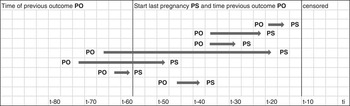
Figure 1 illustrates the definition of the intervals. The start of the last pregnancy is recorded when this occurred 10–59 months before the interview. The month of the previous outcome is registered at any time before the start of the last pregnancy. The arrows depict the length of the interval. Of the selected women, 3496 were pregnant for the first time (primigravida) and are analysed separately as they do not have an IPI. In total, 709 women reported a fetal death as the outcome of their last pregnancy; 20,336 delivered a live birth. Of those mothers, 623 lost their newborns in the first month after birth and infants of 19,713 women survived the neonatal period.
Illustration of the measurement of inter-pregnancy intervals.

Dependent variables
The dependent variables are fetal survival and neonatal mortality. These two events are interrelated and the occurrence of one reduces the risk of occurrence of the other (selectivity). In medical and demographic terminologies, spontaneous and induced miscarriages and stillbirths are classified as fetal deaths. A neonatal death is defined as a death within 28 days of birth of any live-born infant.
Independent variables
The key independent variable IPI is the interval (in months) between the conception of the last pregnancy and the outcome of the previous pregnancy that ended in either a pregnancy disruption or a live birth (see Fig. 1). Intervals between these pregnancies are classified in accordance with the WHO’s recommendation for healthy IPIs. Thus, different IPI categories are used in line with those recommendations for the three outcomes of the previous pregnancy in the construction of interaction variables based on these two most important independent variables in the analysis.
In this study, the environmental and hygienic conditions of the mother are used, rather than the usual wealth index presented in the DHS reports, as overall indicators of living conditions. Characteristics of the mother’s dwelling such as availability of sanitation, access to clean water, piped water in the house, material of the floor (uncovered, tiled, cement, etc.) are used, given their direct relationship with the health (morbidity and mortality risks) of family members and especially that of mothers and neonates. An index was constructed using these indicators of living conditions. The index classifies the respondent’s living and hygienic conditions as extremely poor, poor or non-poor.
Indicators of health-seeking behaviour include the use of antenatal health care and the possession and use of bed-nets for protection against malaria. Answers to the question whether pregnancies were wanted are used to control for pregnancy wantedness. The category of evasive answers, including ‘Don’t know’, is used as a proxy for intended pregnancy loss. The year of interview is included to capture the change in pregnancy losses and neonatal mortality over time. This might reflect the effects of the government health policy and poverty reduction strategies.
Analysis
Most studies on the effect of IPI on infant mortality ignore pregnancies that do not end in a live birth. However, IPI affects both pregnancies and newborns, and the death of an infant is more likely to originate from complications during pregnancy (Den Draak, Reference Den Draak2003). Thus, studies that consider only infant mortality run their analyses on a sub-sample of the population, and therefore selectively reduce the population at risk of neonatal mortality, which in turn leads to biased results. In his seminal article, Heckman (Reference Heckman1979) identified this bias as a result of unobserved characteristics that define both the odds of being included in the population at risk and the outcomes among those who are included. In his example of the analysis of women’s wages, the unobserved characteristic could be a lack of diligence, which would affect both the participation in the workforce and the wages earned. In the present case, the inherent frailty of the fetus/child (or its mother) resulting from genetic or other unknown factors, might go unobserved. It is plausible to assume that the frailest fetuses are unviable and are spontaneously aborted, and thus never appear in the neonatal mortality model. Therefore, unless this is controlled for, neonatal mortality will be estimated using a subset of the less frail individuals. Stated differently, fetuses that survive the pregnancy ‘against the odds’ will have unobserved features that increase the chances of surviving the first month, as some of the causes of both fetal and neonatal death are the same.
Heckman provided a solution to this problem by estimating two models: a selection model that estimates the probability of being at risk, and an outcome model that estimates the outcome for those at risk. In our case, the selection model estimates the probability that a pregnancy will end in a live birth and the outcome model that the newborn will die within a month.
Variables related to both the selection and the outcome variable are included in both models. Age of mother at conception and pregnancy wantedness are included only in the selection equation, given their relationship with fetal survival. Hygienic and living conditions are included only in the outcome equation because these are less related to pregnancy survival but strongly related to neonatal death (WHO, 1997). Antenatal care and the use of a bed-net against malaria as indicators of health-seeking behaviour are included in the outcome model and not in the selection model, because the question concerning antenatal care is asked only in relation to the last live birth and not to the (last) pregnancy that ended in a fetal loss. Malaria prevention through possession of bed-nets is measured at household level and not linked to use by a specific household member. Therefore, this indicator estimates the association with general health-seeking behaviour of the household.
The availability of, and access to, health facilities in Rwanda increased tremendously after 2005 (NISR & ORC Macro, 2006; NISR et al., 2012). To check for this change, the year of the survey is included in both models.
Results
Descriptive statistics
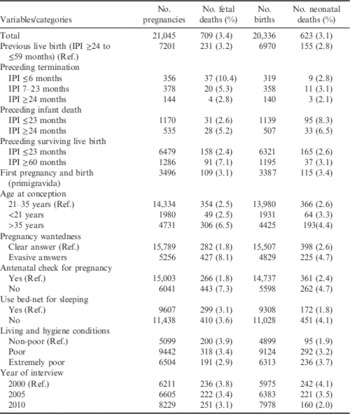
The descriptive frequencies presented in Table 1 show that fetal and neonatal death decreased over time. They also show higher frequencies of fetal and neonatal death after particular IPI lengths. The higher values do not always appear for both types of adverse outcomes in the same variable category. For instance, after the death of the preceding infant an IPI shorter than two years does not show a higher frequency for fetal mortality while it does for neonatal death. The opposite is seen for an IPI of more than 59 months after a surviving infant.
Descriptive frequencies for the sample population, Rwanda (period: 1995–2005)

Source: merged data sets of the 2000, 2005 and 2010 Rwandan DHSs.
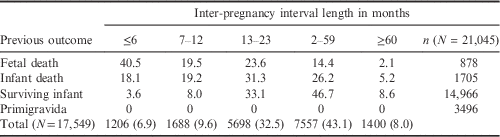
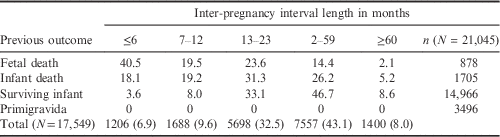
The descriptive statistics in Table 2 give an overview of spacing practices. They show that the proportion of women with IPIs of less than 24 months after a live birth and less than 6 months after a pregnancy loss, is substantial. Of all women in the sample who had at least two pregnancies, 16% conceived again within a year and 7% within 6 months. The results in the table also show that adverse previous pregnancy outcomes (pregnancy loss and infant mortality) are in particular linked with shorter IPIs. After a fetal loss, 60% of the women became pregnant within 12 months, and after losing the preceding infant the percentage is nearly 40%. When the previous newborn survived, this frequency is a bit less than one out of nine women, yet nearly 45% started the next pregnancy before the recommended recovery time of two years, as indicated by WHO, was over.
Inter-pregnancy interval length in months by previous pregnancy outcome (%)
Source: merged data set from 2000, 2005 and 2010 DHSs.
Heckman selection model analysis
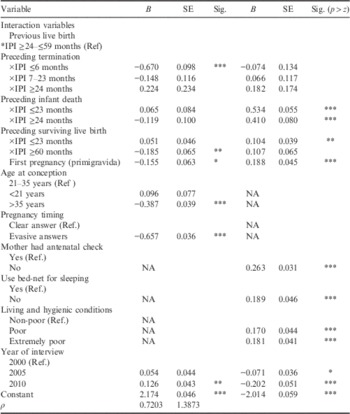
The results of the Heckman model confirm the existence of selection bias (Table 3). The coefficient ρ (0.7203) of the test for independence of both equations is statistically significant. The sign of the coefficient indicates that error terms in the pregnancy survival and neonatal mortality equations are positively correlated. And lastly, the likelihood ratio test of independence between the two equations is less than 5% (0.043), which also indicates the dependence of the equations.
Heckman probit coefficients: effect of inter-pregnancy interval (IPI) on neonatal mortality in Rwanda, 1995–2005

Selection model: fetal survival; outcome model: neonatal mortality.
Total pregnancies: N=21045; total infants at risk: N=20,336.
Fetal survival: N=20,336 (96.70%); dead infants: N=623 (3.24%).
LR test of independence (ρ=0): χ 2(1)=4.09; p=0.043; ρ (rho) is the correlation between the residuals of the outcome model (neonatal mortality) and the residuals of the selection model (fetal survival).
*p<0.05; **p<0.01; ***p<0.001.
Predictors for the probability of fetal survival
The constant in the selection model is 2.174, which indicates that in 2000 the probability of fetal survival was 98% after a previous live birth and a healthy IPI of 24–60 months for a mother aged 21–35 years who had a clear opinion about the wantedness of her last pregnancy. Between 2000 and 2005, the coefficient did not change significantly, but between 2000 and 2010 the probability increased slightly (+2.174+0.126), indicating a minor reduction of pregnancy losses. There are six groups of mothers who had a significant lower probability of delivering a live birth compared with the probability for the reference group. The lowest probability is found for mothers when a previous pregnancy was lost and followed by a short IPI (+2.174−0.67).
The probability for mothers who responded evasively to the question about pregnancy wantedness is of the same magnitude. As expected, the probability of a live birth is also lower if the mother is 35 years or older, and to a lesser extent if it is her first pregnancy and if the mother becomes pregnant again after a long IPI (five years or longer). Remarkably, an unhealthy IPI of less than two years after a previous live birth does not give a significant lower probability of a next live birth.
Predictors for the probability of neonatal mortality
The constant of the outcome model is −2.014. This means that the probability of dying in the first month after birth of a newborn from the reference category was only 2% in 2000. Afterwards, the probability of survival changes significantly and points at a small reduction in neonatal mortality between 2000 and 2005, and a larger one in the period afterwards (−2.014−0.202).
The highest probabilities of neonatal death compared with the one for the reference group of mothers who had a healthy IPI and whose infant survived the first month, are found for mothers whose previous infant died. Remarkably, this higher risk counts for both distinguished IPI durations: the unhealthy one of less than 24 months and the healthy one of 24 months or more. On the other hand, for mothers whose previous infant survived, the IPI duration was of importance for the neonatal survival of the next infant. As expected, the probability of a neonatal death is significantly higher after an unhealthy IPI. A long IPI (≥60 months) does not have a detrimental effect on neonatal survival.
The selection or pregnancy survival model indicates that the probability of a fetal survival was lower for mothers who were pregnant for the first time compared with mothers who went through at least two pregnancies. The outcome model shows that if these new mothers delivered a live birth, this newborn had a higher probability of dying in the first month after the delivery.
Finally, the confounding determinants – health-seeking behaviour and living and hygienic conditions – have the expected sign. The newborns of mothers who did not go for one or more antenatal check-up or did not use a bed-net for malaria prevention had a higher probability of a neonatal death; particularly the lack of check-ups proves to be risky. Infants born in underprivileged households in terms of hygienic living conditions had a higher risk of dying in the first month.
Looking at both models, it is evident that the association between IPI duration and the adverse pregnancy outcomes is significant for both fetal survival and neonatal mortality. Only for women who were pregnant for the first time was a significant negative result found for both outcomes: a lower probability of fetal survival and a higher probability of neonatal mortality.
Discussion
The construction of interaction variables (combining the effect of IPI durations and previous pregnancy outcome) for the analysis of both fetal survival and neonatal mortality, revealed the effect on these subsequent events. The models show that, compared with healthy intervals (24–59 months), short intervals (6 months or less) following a fetal death lead to a higher probability of the death of the next fetus without significantly affecting neonatal survival. After a previous live birth, irrespective of the survival of this child, short intervals (<24 months) are not detrimental to pregnancy survival but do increase neonatal mortality. The fact that women with a previous surviving infant showed an increased risk of neonatal death after an unhealthy interval, and not after a healthy interval, could point at maternal folate depletion, congenital anomalies associated with short IPIs, suboptimal lactation in the first month due to breast-feeding/pregnancy overlap, or a transmitted infection from an older sibling.
The effect of a short interval on adverse pregnancy outcomes is stronger after the death of the preceding infant compared with after a surviving older sibling. This defies the hypothesis of sibling competition and that of horizontal transmission of infectious diseases as causal mechanisms, but supports the hypothesis that unmeasured causes could be responsible for the sequence of the two fatal pregnancy outcomes. By taking into account the type of event that started the interval, there is a death trap after a previous pregnancy loss and after a previous infant death: the risk of a repeated adverse event is higher. However, the relationship with IPI does not fully explain this trap for neonatal survival after a prior infant death, as both women who became pregnant within 24 months and those who did so after 24 months show high coefficients of neonatal mortality.
In the case where the previous sibling dies, the explanation for the increased likelihood of neonatal mortality might include more factors than only replacement mechanism, interval length and maternal folate depletion. Bhalotra and Van Soest (Reference Bhalotra and Van Soest2007, p. 287) stated in their study on neonatal mortality in India that ‘endogenously determined birth spacing is partly responsible for generating state-dependency in neonatal mortality’. They suggested that maternal depression after the death of the previous infant is a possible additional cause for repeated neonatal mortality. Stephansson et al. (Reference Stephansson, Dickman and Cnattingius2003) pointed at other possible maternal characteristics, such as repeated placental complications and chronic maternal diseases. Winkvist et al. (Reference Winkvist, Rasmussen and Habicht1992) suggested inadequate diet related to the lifelong poverty of the mother as a possible cause of maternal depletion. The results of this study also confirm that extremely poor living and hygienic conditions have a detrimental effect on the survival of a newborn.
The possible effect of physiological regression on fetal survival and neonatal mortality was explored by combining the effect of IPI durations, previous pregnancy outcome and age of the mother. The significant effect of very long IPIs (>60 months) and older mothers (>34 years) on the risk of a fetal death confirms that, due to physiological weakness and sub-fecundity, older women have more pregnancy complications and an increased probability of a pregnancy loss. However, no significant effect was found for a higher risk of neonatal mortality. It is also clear that women who are just starting their reproductive careers have an increased risk of both fetal death and neonatal mortality.
The Rwandan DHSs do not distinguish between spontaneous fetal deaths and induced abortions. As the latter are illegal in the country, they are probably under-reported in the DHS. To check for this omission, the answers to pregnancy wantedness were included in the selection model. The group that gave evasive answers probably includes the women who had an induced abortion. This is reflected in the relatively high negative odds in the selection model, indicating a lower likelihood of pregnancy survival.
In order to avoid the risk of repeated pregnancy disruption, Rwandan women should wait at least 6 months after a fetal death before attempting another pregnancy. In the context of poor countries like Rwanda, more effort should be put into pregnancy management, encouraging family planning and the spacing of pregnancies, and promoting health-seeking behaviour in the form antenatal and postnatal care. Community health care providers should pay special attention after a fetal death or the death of an infant in order to prevent a repetition of these adverse pregnancy outcomes.