



%20--%3e%3c!DOCTYPE%20svg%20PUBLIC%20'-//W3C//DTD%20SVG%201.0//EN'%20'http://www.w3.org/TR/2001/REC-SVG-20010904/DTD/svg10.dtd'%3e%3csvg%20version='1.0'%20id='Layer_1'%20xmlns='http://www.w3.org/2000/svg'%20xmlns:xlink='http://www.w3.org/1999/xlink'%20x='0px'%20y='0px'%20width='64px'%20height='64px'%20viewBox='5.5%20-3.5%2064%2064'%20enable-background='new%205.5%20-3.5%2064%2064'%20xml:space='preserve'%3e%3cg%3e%3ccircle%20fill='%23FFFFFF'%20fill-opacity='0'%20cx='37.785'%20cy='28.501'%20r='28.836'/%3e%3cpath%20fill='%23595959'%20d='M37.441-3.5c8.951,0,16.572,3.125,22.857,9.372c3.008,3.009,5.295,6.448,6.857,10.314%20c1.561,3.867,2.344,7.971,2.344,12.314c0,4.381-0.773,8.486-2.314,12.313c-1.543,3.828-3.82,7.21-6.828,10.143%20c-3.123,3.085-6.666,5.448-10.629,7.086c-3.961,1.638-8.057,2.457-12.285,2.457s-8.276-0.808-12.143-2.429%20c-3.866-1.618-7.333-3.961-10.4-7.027c-3.067-3.066-5.4-6.524-7-10.372S5.5,32.767,5.5,28.5c0-4.229,0.809-8.295,2.428-12.2%20c1.619-3.905,3.972-7.4,7.057-10.486C21.08-0.394,28.565-3.5,37.441-3.5z%20M37.557,2.272c-7.314,0-13.467,2.553-18.458,7.657%20c-2.515,2.553-4.448,5.419-5.8,8.6c-1.354,3.181-2.029,6.505-2.029,9.972c0,3.429,0.675,6.734,2.029,9.913%20c1.353,3.183,3.285,6.021,5.8,8.516c2.514,2.496,5.351,4.399,8.515,5.715c3.161,1.314,6.476,1.971,9.943,1.971%20c3.428,0,6.75-0.665,9.973-1.999c3.219-1.335,6.121-3.257,8.713-5.771c4.99-4.876,7.484-10.99,7.484-18.344%20c0-3.543-0.648-6.895-1.943-10.057c-1.293-3.162-3.18-5.98-5.654-8.458C50.984,4.844,44.795,2.272,37.557,2.272z%20M37.156,23.187%20l-4.287,2.229c-0.458-0.951-1.019-1.619-1.685-2c-0.667-0.38-1.286-0.571-1.858-0.571c-2.856,0-4.286,1.885-4.286,5.657%20c0,1.714,0.362,3.084,1.085,4.113c0.724,1.029,1.791,1.544,3.201,1.544c1.867,0,3.181-0.915,3.944-2.743l3.942,2%20c-0.838,1.563-2,2.791-3.486,3.686c-1.484,0.896-3.123,1.343-4.914,1.343c-2.857,0-5.163-0.875-6.915-2.629%20c-1.752-1.752-2.628-4.19-2.628-7.313c0-3.048,0.886-5.466,2.657-7.257c1.771-1.79,4.009-2.686,6.715-2.686%20C32.604,18.558,35.441,20.101,37.156,23.187z%20M55.613,23.187l-4.229,2.229c-0.457-0.951-1.02-1.619-1.686-2%20c-0.668-0.38-1.307-0.571-1.914-0.571c-2.857,0-4.287,1.885-4.287,5.657c0,1.714,0.363,3.084,1.086,4.113%20c0.723,1.029,1.789,1.544,3.201,1.544c1.865,0,3.18-0.915,3.941-2.743l4,2c-0.875,1.563-2.057,2.791-3.541,3.686%20c-1.486,0.896-3.105,1.343-4.857,1.343c-2.896,0-5.209-0.875-6.941-2.629c-1.736-1.752-2.602-4.19-2.602-7.313%20c0-3.048,0.885-5.466,2.658-7.257c1.77-1.79,4.008-2.686,6.713-2.686C51.117,18.558,53.938,20.101,55.613,23.187z'/%3e%3c/g%3e%3c/svg%3e)
%20--%3e%3c!DOCTYPE%20svg%20PUBLIC%20'-//W3C//DTD%20SVG%201.0//EN'%20'http://www.w3.org/TR/2001/REC-SVG-20010904/DTD/svg10.dtd'%3e%3csvg%20version='1.0'%20id='Layer_1'%20xmlns='http://www.w3.org/2000/svg'%20xmlns:xlink='http://www.w3.org/1999/xlink'%20x='0px'%20y='0px'%20width='64px'%20height='64px'%20viewBox='5.5%20-3.5%2064%2064'%20enable-background='new%205.5%20-3.5%2064%2064'%20xml:space='preserve'%3e%3cg%3e%3ccircle%20fill='%23FFFFFF'%20fill-opacity='0'%20cx='37.637'%20cy='28.806'%20r='28.276'/%3e%3cg%3e%3cpath%20fill='%23595959'%20d='M37.443-3.5c8.988,0,16.57,3.085,22.742,9.257C66.393,11.967,69.5,19.548,69.5,28.5c0,8.991-3.049,16.476-9.145,22.456%20C53.879,57.319,46.242,60.5,37.443,60.5c-8.649,0-16.153-3.144-22.514-9.43C8.644,44.784,5.5,37.262,5.5,28.5%20c0-8.761,3.144-16.342,9.429-22.742C21.101-0.415,28.604-3.5,37.443-3.5z%20M37.557,2.272c-7.276,0-13.428,2.553-18.457,7.657%20c-5.22,5.334-7.829,11.525-7.829,18.572c0,7.086,2.59,13.22,7.77,18.398c5.181,5.182,11.352,7.771,18.514,7.771%20c7.123,0,13.334-2.607,18.629-7.828c5.029-4.838,7.543-10.952,7.543-18.343c0-7.276-2.553-13.465-7.656-18.571%20C50.967,4.824,44.795,2.272,37.557,2.272z%20M46.129,20.557v13.085h-3.656v15.542h-9.944V33.643h-3.656V20.557%20c0-0.572,0.2-1.057,0.599-1.457c0.401-0.399,0.887-0.6,1.457-0.6h13.144c0.533,0,1.01,0.2,1.428,0.6%20C45.918,19.5,46.129,19.986,46.129,20.557z%20M33.042,12.329c0-3.008,1.485-4.514,4.458-4.514s4.457,1.504,4.457,4.514%20c0,2.971-1.486,4.457-4.457,4.457S33.042,15.3,33.042,12.329z'/%3e%3c/g%3e%3c/g%3e%3c/svg%3e)
Introduction
Before Christmas 2024, the historical documentary Our Own Metapolitefsi (H δική μας Mεταπολίτευση) by political scientist Stathis Kalyvas and sociologist Panayis Panagiotopoulos was aired by the Hellenic Broadcasting Corporation (Ελληνική Ραδιοφωνία Τηλεόραση; ERT) and on Ertflix, the corporation’s official free streaming platform. Metapolitefsi literally means ‘regime change’ or ‘political transition’ and is an interpretive term referring to the period of transition from dictatorship (1967–74) to parliamentary democracy. In the strict sense, Metapolitefsi started on 24 July 1974 with the collapse of the military regime and the Turkish invasion of Cyprus; this provoked the return of politicians from exile to form a civilian government and triggered multiple cultural reactions.Footnote 1 Metapolitefsi also affected external policy.Footnote 2
The Metapolitefsi restored democratic institutions and constitutional legality; political parties across the political spectrum were legalised, and discrimination against the ‘dangerous citizens’ (those associated with the left, whom the post–civil war state categorised as a threat to the nation) of the first post–civil war decades gradually stopped.Footnote 3 The monarchy was abolished, and civil liberties were expanded. Mass politics gained ground, and memory politics, especially regarding the memory of the Greek civil war, were reconfigured.Footnote 4 Some discrimination continued – for example, against homosexuals, transgender people, sex workers, conscientious objectors, and unmarried mothers and their children – but, still, for the majority, the Metapolitefsi was a psychologically liberating experience.Footnote 5 The military regime had failed to detach the country from global cultural developments, especially after 1970, but, at any rate, the Metapolitefsi expressed a psychological opening compared with the military regime years; people quickly believed that a backlash against authoritarianism was unlikely.Footnote 6 This was evident in celebrations and massive cultural events such as large concerts. Fear, the emotion that structured everyday behaviour under authoritarianism, receded rather quickly.Footnote 7
In its broader use, Metapolitefsi describes the years from 1974 to the crisis of the 2010s, a moment that tested the psychological consensus around the well-being that the previous decades had generated.Footnote 8 In this wider sense, the Metapolitefsi describes a period of party democracy, welfare expansion and European integration. A long process, one that began in the 1950s, culminated in Greece joining the European Economic Community in 1981.Footnote 9 In the 1980s, a strong narrative of anti-authoritarianism prevailed. Some political violence existed, but Greek society experienced unprecedented liberty and potential for self-expression and self-realisation.Footnote 10 Opinions on the chronological limits of the Metapolitefsi vary.Footnote 11 According to political scientist Yiannis Voulgaris, the Metapolitefsi ended with the political crisis of 1989–90, when members of the then Panhellenic Socialist Movement (Πανελλήνιο Σοσιαλιστικό Kίνημα; PASOK) government were found implicated in scandals, and Greece experienced three elections within ten months in a polarised environment. However, this crisis did not pose a significant threat to the stabilised democratic regime, as the major ideological conflicts over the memory of the military regime and the civil war that had shaped the early Metapolitefsi had lost most of their valence.Footnote 12 Other scholars, such as social anthropologist Athena Athanasiou and lawyer, journalist and politician Milena Apostolaki argue that the economic crisis of the 2010s was a shock – even a condition of emergencyFootnote 13 – that ended the Metapolitefsi.Footnote 14 Kalyvas and Panagiotopoulos see this crisis as a late-Metapolitefsi experience. This article follows the latter line because of the psychological identification of the Metapolitefsi with (expectations of) widening prosperity, which did not stop when the crisis started but instead marked the crisis leading – among other factors – to the blossoming of nostalgia.Footnote 15
Nostalgia is a hybrid emotion combining positive with negative valences. Hybridity questions what appears natural and problematises boundaries.Footnote 16 Hybrid emotional states cannot be reduced to a single emotion and involve tensions and layers. These layers include joy, sadness, presence or loss; nostalgia requires reflection and memory and represents a hybrid emotion able to fascinate people. Nostalgia is projected into the public discourse, cultural production, collective memory and politics, shaping how societies perceive their past(s) and imagine themselves and their futures, and is currently highly commodified and glamourised. Factors contributing to retro fascination include diversifying markets for memory; the growth of the cultural industry; the demographic size of the baby boom generation and the commercialisation of the ‘boomer’ past; technologies of time shifting and digital reproduction; the representational economy of recycling and pastiche; and the influence of the political aesthetic of the conservative right.Footnote 17 The past is selectively remembered, erasing complexity, while public culture orients itself towards retro aesthetics, revivalism and heritage modes of expression.
This fascination speaks to two generations of scholars: first, scholars who were children during the Metapolitefsi, such as Kalyvas and Panagiotopoulos, and second, scholars born after 1980 who had no memories from the early Metapolitefsi and experienced the 1990s and 2000s as young people. As historian Efi Avdela argues, these scholars saw the Metapolitefsi as a new historiographical terrain open to oral history, offering possibilities for experimentation and differentiation. Scholars working on the Metapolitefsi systematically put their work in dialogue with global historiography, largely publishing in English.Footnote 18 However, scholars born before the mid-1960s, who experienced the first years of the Metapolitefsi as politically conscious young people, do not engage with this trend. For them, the Metapolitefsi was a lived historical rupture and not an object of memory. In contrast, scholars born after the mid-1960s encountered the Metapolitefsi through family memories and media representations, not through personal participation. The nostalgic turn, which increasingly affected memory studies, media studies, heritage studies and cultural history in the last twenty-five years, unsurprisingly touched more younger scholars trained in the twenty-first century, when history and relevant disciplines such as anthropology increasingly focused on memory, emotions, everyday life, subjectivity and representations; mechanisms of nostalgia started to be approached as interpretative common ground for memory work, and sets of material and emotional discourses were able to show the relationship between experience and place when approached critically.Footnote 19 This environment encouraged younger generations to view the Metapolitefsi as a remembered world, sometimes even in comparative perspective with other societies that experienced transitions in the 1970s, especially Portugal and Spain.Footnote 20 Moreover, younger scholars who came of age intellectually amid austerity and political disillusionment during the 2010s were more likely to be affected by the crisis of the 2010s that transformed public perceptions of the Metapolitefsi. The pre-crisis decades appeared as a period of cultural vitality, optimism and upward social mobility.Footnote 21
Methodologically, this article is largely based on the interpretation of audio-visual evidence (e.g., videos from nostalgic YouTube channels, material from the Archive of ERT) selected from a wide pool of media material. This material is not representative in the strict sense. Representability is often impossible for researchers dealing with large bodies of digital media findings. Representative sampling does not fit all research situations and does not apply to this analysis.Footnote 22 Findings express media trends, and generalisability ensures that they are meaningful beyond examples.Footnote 23 Generalisability in case-study research into emotions is a methodologically sensitive issue, as emotions are context-dependent and situated. Generalisations are risky, though necessary, to discuss media mechanisms that interact with historiographical shifts. To ensure a more productive generalisability, the analysis focuses on phenomena that are widely discussed in the public space. The analysis is largely semiotic; it discusses how meaning is created and communicated through visual, verbal and other signs and comments on how such signs work through images, sounds, gestures, body language and other factors.Footnote 24 Semiotic interpretation depends on the analyst’s cultural knowledge and interpretative choices. Signs have multiple possible meanings depending on context, ideology and other factors, while the interpreter is a co-producer of meaning.Footnote 25
To contextualise semiotic findings and delve into their relationships with nostalgia and historiography, I contacted other scholars who work on the Metapolitefsi, some of whom are doing comparative research with other societies. As this community is small, I know them personally. This facilitated discussion, as knowing someone beforehand makes it easier to speak about emotions. Methodologically, this communication reveals scholars’ self-reflections on their historiographical choices, captures the micropolitics of research and academic identities, decentres objectivity by exposing how historical narratives interact with emotions and reveals behind-the-scenes decision-making processes of research. As with all qualitative methods, these personal communications lack quantitative value due to a lack of statistical representativeness and subjective interpretation.
This spotlight unfolds in three sections. The first section discusses the historiography of post-dictatorship Greece to the early 2010s, when new historical approaches emerged. Here, the term historiography includes analyses by professional historians as well as by other scholars, such as sociologists, public intellectuals and from the media. It presents general trends documenting a transition; hence, the titles discussed are indicative. The second section discusses developments in the historiography of the Metapolitefsi after 2010 in times of growing mediatisation of society. Emphasis is given to the emotionalisation of the public sphere since the beginning of the economic crisis. The emotionalisation of the public sphere, and especially the emergence of nostalgia as a pivotal emotional contender in contemporary digital media economies, has a notable impact on the historiography of the Metapolitefsi. The third section discusses these developments through a more specific focus, placing emphasis on the example of the documentary Our Own Metapolitefsi within a wider media landscape that favours the proliferation of nostalgic storytelling and affects historiography.
The Historiography of Metapolitefsi before the 2010s: A Brief Overview
The first analyses of the post-dictatorship period appeared in the 1980s and 1990s. Most authors were political scientists and economists. Analyses focused on political and economic history and occasionally compared Greece with southern European countries such as Spain and Portugal.Footnote 26 Some studies examined the post-dictatorship society in relation to the rise of PASOK, the party that Andreas Papandreou established in 1974. PASOK’s electoral influence skyrocketed from 13.58 per cent of the general vote in 1974 to 48.07 per cent in 1981, when the party came into power.Footnote 27 Other studies examined the healthcare system, foreign policy, clientelism, Europeanisation and populism.Footnote 28 Several scholars analysed PASOK’s ideology, politics and structure.Footnote 29 The relationship between PASOK and populism intrigued intellectuals, especially on the left.Footnote 30 Overall, before 2010, the historiography of the post-1974 period focused on the state, political parties, the economy, elections or trade unionism.Footnote 31 Political history produced an accessible body of data for analysis, while the analysis of everyday life required new tools such as oral history, which were still relatively new in Greek historiography. Culture-related issues such as lifestyles, media, gender and family relations and identities were suspended.Footnote 32 At that time, universities (especially the most established ones, such as the National and Kapodistrian University of Athens) remained largely untouched by the cultural turn that had rocked historical science since the 1980s and continued to focus on political and diplomatic history.Footnote 33 Simultaneously, communication with other disciplines, such as social anthropology, was limited.Footnote 34 In the late twentieth century, new departments such as the Department of Social History and Anthropology at the University of the Aegean (established as the Department of Social Anthropology in 1984) and the Department of History, Archaeology and Social Anthropology at the University of Thessaly (renamed in 2002; initially established as the Department of History, Anthropology and Folklore in 1993) highlighted the communication between history and social anthropology. Still, communication between history and media and cultural studies is limited, even nowadays.
The climate changed more radically in the late 2000s, when Greece was at the epicentre of an international crisis where consumers cut their consumption and the welfare state was reduced to the bare bones. The eurozone was being shaken by instability, populist movements erupted and defensive individualism fuelled hostility, breaking down the fabric of society and increasing the distance between citizens and governments. Reflection on the recent past skyrocketed.Footnote 35 The change was also related to the transformation of the mediascape – especially the popularisation of social media.
The collective work Greece in the 80s: A Social, Political, and Cultural Dictionary (Η Ελλάδα στη δεκαετία του ‘80: κοινωνικό, πολιτικό και πολιτισμικό λεξικό) was a breakthrough in representations of the recent past and in the use of social media by scholars in the social sciences and humanities in Greece.Footnote 36 The volume was edited by a historical sociologist and a media sociologist. Both were born in the early 1970s and witnessed the 1980s as children and teenagers. It brought together voices from different generations, including academics and intellectuals who experienced the 1980s first-hand, with younger scholars who knew the period through narratives and the media. It included sociologists, political scientists, law scholars, historians, media scholars, media people (e.g., journalists and others. Historians were the minority as the social and cultural history of the Metapolitefsi was still a new area of historical research.
The dictionary was published at the beginning of the crisis, at a moment of change. The crisis and the return of politics signalled a crisis of representation and disenchantment with institutional politics and expressed needs for the reinterpretation of recent history at the micro and macro levels.Footnote 37 For the contributors, the 1980s were characterised by political archaism, social modernisation and cultural pluralism. The last choice dynamically introduced mass culture into the dictionary and the historiographic debate. The dictionary captured many phenomena, placing the cultural agenda alongside politics and the economy, and relativised historiographical hierarchies. It included 264 entries, many of which were focused on mass culture issues, such as Athens as the European capital of culture in 1985, the football championship by the Larissa Athletic Union (Aθλητική Ένωση Λάρισας) in 1988, the videocassette recorder, fast-food restaurants, electronic games, bars and cafés as places of entertainment, the impact of lifestyle magazines and many others. It also put politicians alongside mass culture figures. The project saw the 1980s as a colourful nostalgic field, and the documentation – 770 documents, most of them photos – was impressive.
The dictionary was promoted through alternative media channels that were not often used to promote academic research at that time. The editors established a Facebook community that attracted more than 3,000 followers and has remained active until today. This gave durability to the project: a new edition came out in 2014, while a third edition was offered to the readers of the newspaper Sunday’s Forum (Το Βήμα της Kυριακής) in 2025. This dictionary can be seen as the first scholarly work of the nostalgic turn that began simultaneously with the growth of social media, especially Facebook. The dictionary was the first editorial venture that built a community of followers on Facebook, the rising star in digital media at the time, and the medium that has marked the nostalgic media economy since the 2010s.Footnote 38 Facebook had about 360 million monthly active users worldwide in 2009, 608 million in 2010 and over 1 billion in 2012.Footnote 39 In Greece, there were 410,000 Facebook users in 2008, about 1.5 million in early 2011 and about 3 million in April 2012.Footnote 40 The dictionary anticipated a major shift in the digital media economy: the growing value of nostalgia as a cultural and commercial resource in digital media environments, especially in social media.
On social media, such dimensions are highlighted through visual storytelling or micronarratives into evocative memories. Social media allows researchers to recontextualise academic insights through the idioms of online communities, placing scholarship within wider digital conversations to attract broader audiences. Social media enables researchers to meet people who can contribute to their research with ideas or material from personal collections. Cultural studies scholar Orsalia-Eleni Kassaveti, who has explored topics that preoccupy nostalgic communities on the web (e.g., pop cinema and video cassette culture), manages a Facebook group and an Instagram account devoted to her work (see Figure 1).Footnote 41 Kassaveti has occasionally profited from the ideas and material of her nostalgic followers.Footnote 42 Social media reduces the gap between academic research work and the broader public, mobilising nostalgia as a vector of knowledge. Such initiatives redefine engagement: instead of citation metrics alone, engagement through likes or comments indicates impact.
Kassaveti’s Facebook page and Instagram account (ca 1,500 and 5,408 followers, respectively, March 2026).

The Historiography of Metapolitefsi, Nostalgia and the Media in the 2010s and 2020s
During the 2010s, the emergence of Metapolitefsi as a privileged nostalgic space intensified. The exhibition ‘GR80s: 1980s Greece in Technopolis’ (GR80s: Η Ελλάδα του 1980 στην Τεχνόπολη) was organised in the Technopolis of Athens, a major cultural venue located in the Gazi district inside the old Athens gasworks and one of the city’s most active cultural hubs, and took place between January and March 2017. This event is a paradigmatic example of this intensification. The exhibition drew on the dictionary, attracted about 80,000 visitors, excited the media and triggered debates on politicised uses of nostalgia.Footnote 43 Stands explored politics, housing and public space, mass culture, fashion, disco culture, cinema, audio-visual culture, popular and working culture, youth cultures, artistic activity, technology, mass media and communication, vehicles and mobility and language, and also offered a reading room with books and magazines from the 1980s. Most material originated from the private collections of people who responded to a call for contributions (see Figure 2). Most curators were academics and researchers working in Greek institutions. Still, some of them, such as composer and singer Foivos Delivorias (who co-curated the ‘Mass Culture and Consumption’ stand), radio producer and journalist Leonidas Antonopoulos (who curated the ‘Youth Culture’ stand) and journalist and fashion expert Efi Falida (who co-curated the ‘Fashion and Disco’ stand), came from media and the arts. Considering that academics prioritise interpretation over feelings, the inclusion of people from media and the arts who enter the lives of audiences and are tied to routines and atmospheres through their own work demonstrates that the organisers pursued – or at least were not afraid – of affective and nostalgic approaches.
Material from the exhibition ‘Gr80s: 1980s Greece in Technopolis’.
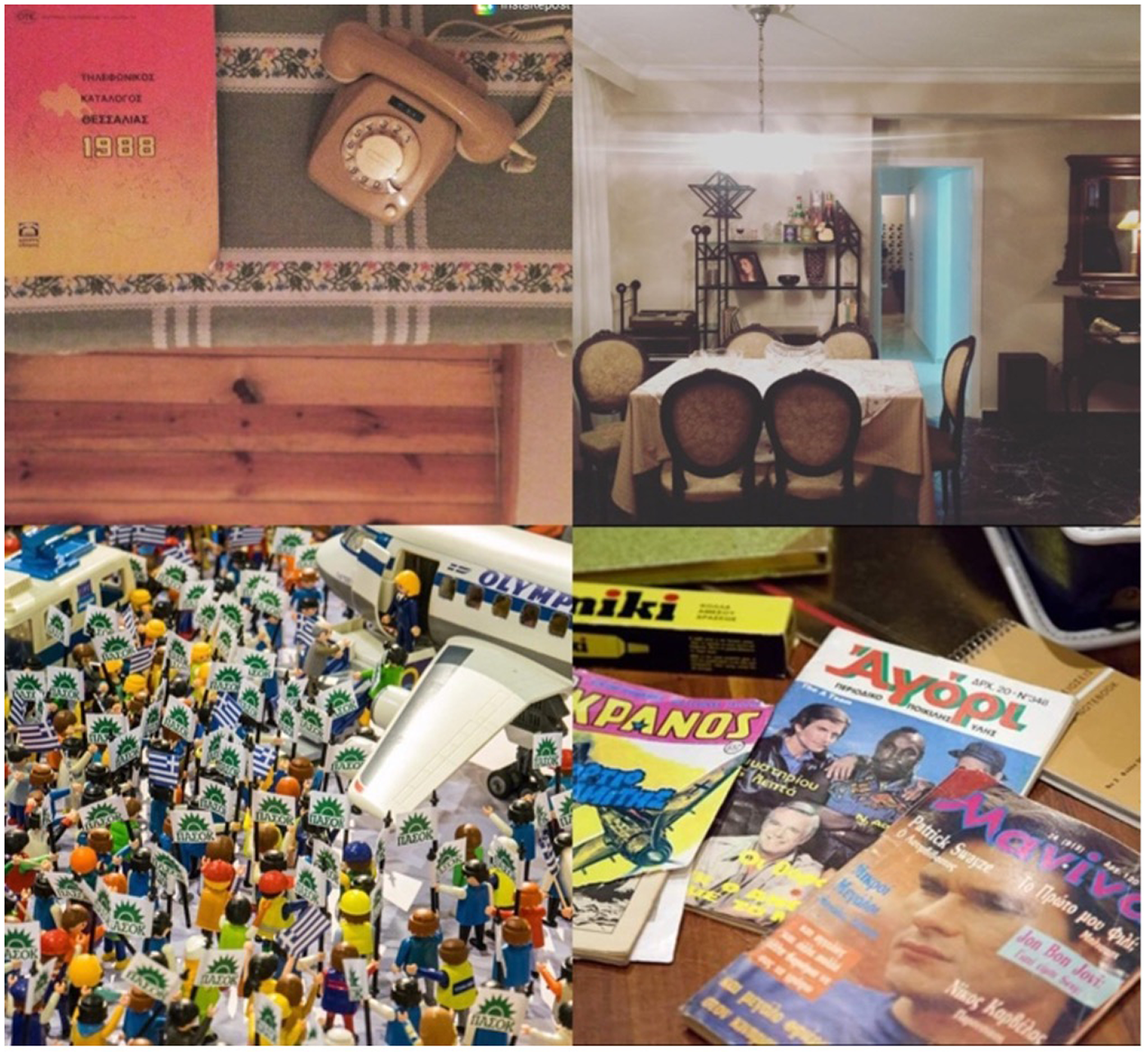
The exhibition also animated nostalgic networks through collaboration with other nostalgic institutions, such as museums like the Greek Museum of Information Technology (Ελληνικό Mουσείο Πληροφορικής).Footnote 44 The municipality of Athens and sponsors financed the project, as this affective approach to contemporary history convinced them of its impact.Footnote 45 The project spoke on topics marginal in Greek historiography (e.g., consumer culture, subcultures) in affective ways and included talks with intellectuals, artists and celebrities as well as parties offering joyful experiences. This was clear in a room where visitors played old arcade games, an activity that activates affective memories of childhood and adolescence. These life stages are full of first-time experiences and are crucial for shaping the self-concepts of subjects. Parties in collaboration with bars and 1980s DJs, such as Petros Bratakos – DJ of Barbarella, likely the most emblematic disco of the Athenian 1980s – showed that nostalgia could sway the city, boosting affective interest in contemporary history by activating memory and emotions, and embodied experiences in ways that formal historical narratives cannot boost.
This initiative resonated with enthusiasm for nostalgia parties in many countries such as Spain, where the initiative ‘Nostalgia Millennial Fest’ has about 85,000 followers on Instagram; Argentina, where nostalgic bars decorated with 1980s and 1990s arcades such as El Destello can organise big events and gather more than 90,000 followers on Instagram, becoming a sort of talk of the city in Buenos Aires; or Cyprus, where since 2014 the group ‘Nostalgia Parties’ has been organising events and theme parties that play classics from the late twentieth century. The years after the success of the ‘GR80s’ witnessed the strengthening of nostalgic groups on social media.Footnote 46
Some scholars criticised the use of nostalgia as an analytic pathway for critically understanding the past. For example, cultural studies scholar Dimitris Papanikolaou argued that GR80s used nostalgia to define the 1980s as responsible for Greece’s hardships during the financial crisis of the 2010s, ridiculing this decade’s collective demands through curatorial choices, for example, by mixing folk culture with labour radicalism or by ignoring activism related to the HIV/AIDS epidemic. Papanikolaou castigated specific stands, such as those on folk culture and labour claims, or gender identities and rights (curated by historians Kostas Katsapis and Kostis Kornetis, respectively), for downgrading or ignoring 1980s radicalism. According to Papanikolaou, nostalgia was instrumentalised to promote historical interpretations aligned with the ideology of the ‘extreme centre’ (ακραίο κέντρο), a term used to describe a coalition of pro–European Union, pro-austerity and pro-neoliberalism forces. This coalition is described as extreme because of its dogmatic adherence to such principles and the exclusion of alternative policies.Footnote 47
This affective dynamic was clear in conferences to mark fifty years of democracy. The conference ‘Half a Century of Democracy: Continuities, Crises, Challenges’ (Mισός αιώνας δημοκρατίας: συνέχειες, κρίσεις, προκλήσεις), held at the Panteion University of Social and Political Sciences in 2024, included papers on everyday culture, identities and representations. The conference ‘The Curve of the Metapolitefsi’ (H καμπύλη της Mεταπολίτευσης) – organised by ‘Circle of Ideas’ (Kύκλος Ιδεών), a think-tank established by Evangelos Venizelos, professor of constitutional law at the Aristotle University of Thessaloniki and former president of PASOK – included panels on art, mass culture and aesthetics highlighting everyday life. The organisers invited non-professional researchers, attempting an opening in terms of public history. Panels on soundscapes or aesthetics expressed a historiographical opening in terms of emotional engagement. Historians aim for reconstruction based on evidence and methods, while artists and journalists may pursue narratives highlighting memory and emotions.Footnote 48 Events that bring together artists, historians and other intellectuals signal interest in affect as the communities intersect around how the past is felt. This development is crucial in the consideration of the Metapolitefsi as a nostalgic idiom of research.
Nostalgia plays a growing role in the production of contemporary history, bridging media initiatives and historiography. Nostalgia creates a fertile environment for history, as it highlights interest in the past, broadens the archive, legitimises new historical enquiries and creates a wider audience eager to consume representations of the past. Nostalgia is a multilayered, self-conscious, fluid and bittersweet emotion that depends on representations of the past in the present.Footnote 49 Since the 1970s, it has accrued a positive psychological status as a provider of life meaning and reinforcement.Footnote 50 It connects temporalities and subjects through the (re-)elaboration of relations between experiences, present perspectives and future expectations; it is employed to explain political or cultural phenomena and interactions among senses and memories and a lucrative concept in marketing and entertainment.Footnote 51 Moreover, nostalgia is a major force in how the past is represented and (re-)felt. History is increasingly produced to fit the nostalgic expectations of audiences. Representations of the past are filtered through emotional appeal, while difficult and contentious histories may be minimised, turning public history into a safe landscape. Politicians and brands often use nostalgia to manipulate public emotions.Footnote 52
Nostalgia on the web influences the themes and aesthetics of history. It nudges historians towards cultural, affective and more memory-centred approaches, produces new questions and modifies how history is auditorily and visually imagined, blurring the borders between academic history and public history. An example of this is a book by historian Anna Maria Droumpouki on cultural change in 1980s United States and its impact abroad, with some emphasis on Greece. Born in 1980, Droumpouki engages with the impact and limits of her nostalgic gaze, especially as a consumer of music. Adopting a narrative that often resembles an autobiography or a nostalgia podcast, the author describes her personal experiences with this cultural change as a child.Footnote 53 For example, Droumpouki describes how her adolescent enthusiasm for US pop culture led to fights with her mother.Footnote 54 Her writing expresses an autobiographical critical nostalgia as she reflects on her past with emotional longing but avoids overly romanticising it, carefully interrelating her personal experiences with cultural change.Footnote 55 Droumpouki describes this decision as ‘organic’: US cultural industry influenced her generation through fashion, music, cinema and intellectual production. Thus, detachment from such an object of study would be unreal. This nostalgia-related vision does not idealise the past but rather adds to a nuanced examination of the memory of the 1980s.Footnote 56
Droumpouki also co-edits – with political scientist Yiannis Balampanidis – the collective project ‘The Memory Chest of Our Generation’ (Το κουτί των αναμνήσεων της γενιάς μας) with about fifty nostalgic, self-referential historical essays on social relations, politics and mass culture in the late twentieth century.Footnote 57 The project is working towards a large collective volume. According to the editors, we are living through a nostalgic turn that expresses the transformation of expectations of those born around 1980. This generation grew up under higher optimism and financial security before crises led to frustration, a condition that affected their positioning towards time and facilitated nostalgic visions.Footnote 58 For the project, Droumpouki and Balampanidis invited approximately fifty peers who roughly belong to the same generation as them – born around 1980, not necessarily academics – to contribute 2,000-word essays to a collective project discussing historical phenomena that shaped their generation. The unified thread for this cohort is the shock and frustration of the 2010s financial crisis, which brought disillusionment to individuals who turned thirty just as the crisis hit after growing up in the optimistic climate of the 1990s and 2000s. The editors requested personal reflections grounded in historical sensitivity while warning against overt nostalgia. Still, this was not always easy. For example, Zinovia Lialiouti specialises in the political history and foreign policy of post-war Greece, including the first decades of Metapolitefsi.Footnote 59 However, she decided to contribute a cultural history essay entitled ‘Growing Up with Mega Channel’ (Mεγαλώνοντας με το Mega Channel) to the project, recounting her experiences as a viewer of the commercial television station Mega Channel in the late 1980s and 1990s – a choice purely motivated by childhood nostalgia. For Lialiouti, this essay was a chance to write in a liberalising and personal way, something that she clearly avoids when writing academically. As she characteristically told me, ‘I understand that writing this way could tarnish a bit my academic reputation’ (‘μπορεί να τσαλακωθείς λίγο έτσι’), but I didn’t mind. I saw it as a chance to express myself [. . .] and to feel directly nostalgic about my inner child.’ A scholar accustomed to writing rigid political history, Lialiouti experiences the opportunity to a nostalgic, cultural history essay as expansive and intellectually freeing. The proposal she submitted to the editors openly indicates her nostalgic approach.
I was eight years old when Greece’s first private television station began broadcasting. It was November 1989, and on that first weekend that Mega Channel was on the air, I watched, spellbound, as this new world of television opened up before me. For a child like me, who spent my days inside the apartment with little contact with peers or the world of outdoor play, television was a daily companion – even during study time. [. . .] With Mega Channel, television became modern, colorful, and exciting for me. In the years that followed, my favorite station was a source of entertainment and news, but above all, a source of role models and identification. When I grew up, I, too, would be like the people I saw on Mega Channel – the journalists, the stars of the soap operas. I would be modern, dynamic, professionally successful, part of a world that wasn’t confined to Greece’s borders.Footnote 60
This prompt proved challenging, leading several initial participants to withdraw due to the difficulty of blending objective historical writing with raw personal emotion.Footnote 61 This hesitation highlights how writing personal history requires balancing subjective memory with analysis. This task is demanding because the human brain naturally softens negative memories, while early recollections are tied to self-identity. The project demonstrates that merging warm personal anecdotes with a critical historical gaze demands significant intellectual discipline, requiring authors to capture the raw perspective of their youth and analyse it through a mature historical consciousness.
Nostalgic topics (e.g., on retro tech and nerd cultures) preoccupy newspapers and nostalgic media (e.g., podcasts) and inspire young researchers. Tasos Fintzos-Vavlis is currently completing a PhD thesis on nerd culture in 1980s and 1990s Greece. Two factors influenced his selection of this topic: first, he felt disappointed because historians of videogaming ignore the lives of gamers.Footnote 62 Personal memories from the life of his (by nine years) elder brother – a then passionate gamer – influenced his selection. In a sense, Fintzos-Vavlis was motivated by the nostalgic desire to investigate the lives of people like his brother. Moreover, nostalgia for the 1980s and 1990s in cultural industry products, such as Stranger Things, a sci-fi horror series by the Duffer brothers that blends 1980s nostalgia with supernatural mystery and teen drama, led him to choose a pop culture and nostalgia-related topic.Footnote 63
Media often recycles cultural forms and perceptions of the past as safe and comforting responses to instability. The successful TV series Our Best Years (Τα καλύτερα μας χρόνια; ERT, 2020–3), directed by Nikos Kritikos, expresses this spirit.Footnote 64 This series drew on the Spanish blockbuster Tell Me How It Happened (Cuéntame Cómo Pasó, 2001–23), which has proved successful since the 2000s and inspired remakes – not all equally close to the original version – in several countries, including Italy (Raccontami), Portugal (Conte-me como foi), Argentina (Cuéntame cómo pasó), the United States (Remember When), Chile (Los 80), Ecuador (Parece que fue ayer), Germany (Weissensee) and Czech Republic (Vyprávej).Footnote 65 Combining micro- and macro-history, the series narrates the experiences of a family that moves to Madrid to achieve middle class status during the last years of Francoism, the transition and the first years of democracy. Following this successful path, the Greek version follows a family that lives in Gkyzi – a lower-middle class district in Athens – from the late 1960s (when Greece was still under the dictatorship) to the 1980s. The series drew on archival research in newspapers and enjoyed artistic and commercial success, often reaching double-digit rating shares, something rare for an ERT series.Footnote 66
Furthermore, vintage shops that hark back to the late twentieth century flourish in Greece, while brands with retro-inspired lines reminiscent of the same period, such as Celestino or Lynne, appear in malls such as The Mall Athens and Smart Park. This nostalgia inspires mainstream politics: in the 2010s, Coalition of the Radical Left (Συνασπισμός Ριζοσπαστικής Aριστεράς; SYRIZA), a party that experienced a meteoric rise at that time, adopted nostalgic symbols that recalled the PASOK governments of the 1980s.Footnote 67 Alexis Tsipras, SYRIZA leader between 2009 and 2022, employed gestures and speech tones that Papandreou had used in the 1980s.Footnote 68 This nostalgia often focuses on the redistributive politics of PASOK but is not strictly limited to the 1980s. At any rate, it challenges the view that the Metapolitefsi was characterised by counter-productivity, economic populism and lack of restraint.Footnote 69 Such rhetoric blossomed in the early 2010s.Footnote 70 However, it failed to survive in the long run: people now see the redistributive politics of the Metapolitefsi positively.Footnote 71
Digital technologies play a key role in nostalgia. These technologies multiply nostalgic voices, increasing the symbolic weight of nostalgia in media economies. These technologies draw on the past as a marketable product: nostalgia becomes a commodity in retro aesthetics, film, streaming playlists or algorithmic memory reminders. Nostalgia offers low-risk media content because it draws on pre-existing audience familiarity. Contemporary nostalgia is also largely manufactured, leveraged and structured through algorithms. The latter mediate how pasts are invoked, curated, animated or revived. Algorithms influence how we remember and what memories are foregrounded.Footnote 72 Nostalgia is shaped, produced and circulated through digital media, as a phenomenon constructed and (re-)interpreted through film, television, social media and other media outlets.Footnote 73 This renders nostalgia a vehicle in the mediatisation of history. History becomes emotional because digital environments are designed to prioritise engagement. Emotional content drives engagement more effectively than neutral narratives. Historical narratives that evoke nostalgia may spread widely. They seem more personalised and participatory as users contribute memories, documents and commentary, transforming history into a collective emotional experience. The digitisation of visual materials in online environments demonstrates a shift from private memory to public record and alters the nature of the material from private to public. The material may lose its original contextual meaning and take on new interpretations.
Since the 2000s, the media has facilitated the consolidation of memory into a hegemonic paradigm. This is likely clearer in crisis-stricken societies where public debate reinforces moral relationships with the past, and historical time is re-structured around loss and guilt.Footnote 74 In Greece, nostalgic culture for the late twentieth century deviates from the mass culture character that ‘80stalgia’ and ‘90stalgia’ advocate globally; it is significantly politicised and often identified with the hegemony of the PASOK.Footnote 75 From a comparative vantage, Greece differs from other post-authoritarian societies such as Spain or Argentina where nostalgia about the late twentieth century is largely organised around enthusiasm for vintage culture, sustainability and desires for slower and less tech-mediated lifestyles.Footnote 76
Nostalgia also relates to how societies re-feel the past in (post-)critical times and how such feelings are mediatised and managed by authority. In Argentina, the current libertarian–populist Javier Milei government promotes a pro-individualism emotional agenda to limit positive visions to previous decades characterised by enthusiasm for collective values.Footnote 77 Working in a more sophisticated way, the centre-right New Democracy (Νέα Δημοκρατία) government in Greece selectively embraces the politicised nostalgia for the late twentieth century, even approaching the then PASOK governments nostalgically. Kyriakos Mitsotakis – prime minister since 2019 – appeared in Flies (Mύγες) – a humorous recurring sketch on the late-night TV show The 2Night Show on the Antenna TV channel – with flags of PASOK before the general elections in 2019 in a nostalgic and humorous setting, framing the PASOK years as part of a shared national cultural memory (see Figure 3).Footnote 78
Kyriakos Mitsotakis in the show Flies (Mύγες), 26 June 2019.

Nostalgia seems organised around sentimental tension between pleasure and mourning. The recent past has become an object of aestheticised ethical recuperation and generated nostalgia as a ‘moral investment’. In digital media, nostalgic loss constructs communal affect and shared recognition, enabling emotional synchronisation and constructing communities around mourning.Footnote 79 Popular entertainment such as the documentary Our Own Metapolitefsi – which we will discuss later in more detail – clearly aims to please audiences. They are not structured around mourning, loss or trauma but undeniably profit from a pop culture of mourning that trains audiences to read the past as irretrievable. Nostalgia emerges as a mood to affect the public.Footnote 80
Currently, memory experiences changes associated with the burgeoning of a commodified mass culture that disseminates narratives and images of the past. The mediatisation of society – the emergence of media as more and more relevant for human activities and social relations for all areas of life at micro, mezzo and macro levels – modifies how we see history.Footnote 81 Newsreel footage, photographs and digital media mark visions of history that often generate tensions.Footnote 82 The technologies of mass culture render it possible for almost anyone to share collective memories, to assimilate as personal experience historical events through which they themselves did not live.Footnote 83 Such ‘prosthetic memories’ are personally felt public memories that result from experiences of mediated representations of the past; to understand engagement for projects of history, we should delve into the relationships between emotions and knowledge production and acquisition. The omnipresence of experiential modes of engagement with the recent past bespeaks popular desires to bring things close and to develop more affective connections with this past.Footnote 84 Since the 1960s, each decade has produced unprecedented amounts of audio-visual documentation, and people increasingly remember these decades through media rather than through personal memory. Each era’s media forms respond to different political and cultural expectations, and questions of mediatisation should be historicised. Mediatisation itself is realised inside the meta-processes of globalisation, individualisation and commercialisation. For example, global media technologies – such as social media platforms offering free translation tools to users – facilitate transnational flows like the popularisation of forms of nostalgia, such as the nostalgia for the 1980s.Footnote 85 The historical actors who influence such processes within international and local frameworks should be considered.Footnote 86 In this media environment, nostalgia increasingly works as historical consciousness and a cultural response to temporal regimes, while sophisticated historiography can reflect on nostalgia itself, examining which pasts are mourned or forgotten or how nostalgia interacts with class, ethnicity and other analytic categories.
The financial crisis that started in the late 2000s ended the psychological consensus around expectations of perpetual prosperity.Footnote 87 It re-politicised life and reinforced anxieties about the nation-state, fantasies of nativism – portraying the original inhabitants as authentic and morally superior, overlooking complexities of history and cultural mixing – resorting to historical figures in classifying the present, internal orientalism or the perception of other countries as threatening.Footnote 88 It signalled a generalised crisis of representation, disenchantment with institutional politics and expressed needs for the reinterpretation of history.Footnote 89 Reflections such as what went wrong and what led to the crisis blossomed, touching on questions such as the country’s failure to modernise. The latter drew on older theories that saw modernisation as a profound transformation of public culture and argued that in Greece, premodern cultural patterns persisted, limiting modernity.Footnote 90 Since the crisis, liberal intellectuals saw underdevelopment as linked to the country’s small-scale economic structure, which hindered contacts with global innovation. Such discourses did not reject the Metapolitefsi overall but certainly approached it through a critical and anti-nostalgic gaze.Footnote 91 These disputes likely became stronger as they coincided with national anniversaries that invigorated historical self-reflection, such as the 200th anniversary of the 1821 revolution or the 50th anniversary of the Metapolitefsi. In this climate, historians are increasingly no longer addressing their peers but rather the public. This change involves not only analysing facts but also taking a position in political and moral terms.Footnote 92
The public space became more emotional in comparison to the 1990s and 2000s.Footnote 93 Participation in elections remained high (e.g., 76.35 per cent of the electorate voted in the 1996 general elections), but since the late 1980s, traditional party-related politics were increasingly seen as boring and old-fashioned; influential media such as lifestyle magazines framed collective values as relics of the past, shifting public focus towards consumption and individualism.Footnote 94 They prioritised pleasure as an emotion that is immediate and self-focused. While collective values require resource sharing and delayed gratification, pleasure drives mentalities towards behaviours that signal personal reward.Footnote 95 However, since the beginning of the economic crisis in the late 2000s, people in Greece have interpreted struggles as recasting memories as emotional touchstones, and nostalgia became a political emotion able to mobilise action in the digital domain and beyond.
Returning to Droumpouki and Balampanidis, nostalgia likely represents a cultural response to frustration.Footnote 96 Narratives about the past were rearranged: for example, the 2008 uprising used a resistance idiom that distinguished itself from earlier anti-establishment glossaries.Footnote 97 Simultaneously, some established perceptions of the past persisted. For example, the 1980s, which before the crisis was seen as a progressive and prosperous period, retains its glamour.Footnote 98 The period remains identified with security, prosperity and optimism, concepts that became the object of nostalgia during the crisis.Footnote 99 Former Prime Minister Andreas Papandreou remains in high esteem, even among young people who know the decade only through narratives. PASOK’s governance evolved into a nostalgic reference that spread on the internet, often through memes – visual material that expresses political ideas through humour and redefines the political.Footnote 100 Nostalgic Facebook pages on PASOK became viral.
As mentioned, the crisis coincided with a social media boom, particularly the popularisation of Facebook. By the early 2010s, most young people participated on the platform.Footnote 101 Users filed information about their lives, uploading material.Footnote 102 Today, many see Facebook as offering poor privacy guarantees, overloaded with material from sponsors and even as a threat to democracy.Footnote 103 The medium also produces a specific politics of forgetting and invisibility, as Facebook seeks to automatically and algorithmically prevent media traces that may evoke difficult memories.Footnote 104 Such practices of sculpting digital voids can be considered algorithmic modes of sorting media objects, depending on the inferred emotional responses these memory traces may elicit. Such practices have an imagined nature and generative force, need to be analysed in relation to power and certainly damage trust in the medium’s credibility.Footnote 105 Nevertheless, Facebook can still create, maintain and rekindle relationships around shared interests, such as nostalgic visions.Footnote 106 The medium has favoured communities around everyday life, especially after 1970, as most users were born after 1960.Footnote 107 People retrieve documents by dusting off personal collections, surfing the web or even visiting archives.Footnote 108 Communities such as the group ‘80s nostalgia’ (80s νοσταλγία), which was created in 2021 and has 429,000 members, and the page ‘Nostalgic people of the 1980s and 1990s’ (Νοσταλγοί ογδόντα ενενήντα), which was created in 2015 and has 441,000 followers (June 2026), are extremely popular, considering the total number of users of the medium in the country (over 7 million accounts, nearly two thirds of the population).Footnote 109 The size of these communities expands a culture of yearning, given that social influence – the prestige and size of a nostalgic brand or community – determines the volume of the nostalgia evoked.Footnote 110 The discussions revolve around ‘restorative nostalgia’, the desire to return to a lost past, and revolve around nostalgia for simplicity, a quality that supposedly characterised social relations in the late twentieth century.Footnote 111 The content focuses on activities that rarely preoccupied historical research before the 2010s, and on topics that inspire a new generation of historians focused on the culture of the Metapolitefsi who started publishing systematically since the late 2000s.
In historiography, the situation is different, as new themes have emerged since the late 2000s and more systematically after 2010.Footnote 112 Some scholars – mostly born in the late 1970s and the 1980s – analyse issues that concern nostalgic communities, such as consumer preferences, daily mobility, entertainment, media idioms, the relationships between technology and gender and others.Footnote 113 The historiography of the Metapolitefsi gradually turns in a cultural history direction, shifting towards meaning-making practices, everyday life and identity formation. New sources include oral histories, visual culture, media, advertising and ethnographic insight.Footnote 114 Nostalgia seems to lead to current discourses that examine such issues and opens new horizons on how the recent past can be discussed.
For scholars born after 1980, engagement with this nostalgic current varies and is challenging. Nikolaos Papadogiannis has worked on the relations between pop culture and politicisation and on the entanglements between sexuality and mobility practices in the Metapolitefsi, often from a transnational perspective.Footnote 115 He is not a big fan of nostalgic digital media and does not choose research topics influenced by this media trend. Still, he does not fully rule out the possibility of being indirectly influenced by such media. People from his environment, especially from the older generations who politically belong to the left and the centre-left, such as his parents, often approach the Metapolitefsi nostalgically. They are frequent Facebook users and may to a degree expose him to the idealisation of the past that blossoms in nostalgic digital media through discussions.Footnote 116 Papadogiannis appears aware that nostalgia may function as a pervasive cultural emotion, bypassing formal academic intentions, and may thus silently influence a scholar’s analytical framework. This illustrates the osmotic nature and power of collective memory and demonstrates that a scholar’s unconscious vision can be infiltrated by the romanticisation of the past. In this case – Papadogiannis lives in the United Kingdom while his parents and many of his friends live in Greece – romanticisation combines the emotional weight of geographic displacement with the role of parents and friends as cultural anchors. When physically distant, a scholar’s immediate lived context of his country of origin is replaced by mediated communication, and parents and other people become a window to the homeland, making their framing of the Metapolitefsi more persuasive.
Kassaveti knows nostalgic social media well. The latter have inspired her work, as through this engagement she has identified phenomena that she wishes to investigate. However, as Kassaveti mentions, communication with nostalgic audiences can stress the researcher, as followers sometimes try to impose their views. Moreover, interest in nostalgia-related topics can come with a price in Greece, as many scholars see these topics as unimportant, and this may impact the career prospects of researchers.Footnote 117 As for myself, I started working on the cultural history of the Metapolitefsi before the nostalgia boom of the 2010s. Since 2013–14, digital media has gradually influenced me. For example, I started working on 1980s social dramas on youth, observing how audiences discussed these films on YouTube.Footnote 118
Media and Historical Interpretation in Documentary Productions: The Case of Our Own Metapolitefsi (2024)
The relation between digital media and historical interpretations of the Metapolitefsi emerges as a pivotal question. Our Own Metapolitefsi is thought-provoking terrain to discuss entanglements between historiography and the media. In five episodes, the documentary commented on events, starting with the political transition in July 1974 and continuing to the present. The first episode, entitled ‘The Years of Innocence’ (Τα χρόνια της αθωότητας; 1974–6), examines transformations following the transition, highlighting its effectiveness. It discusses the first elections, the constitutional referendum in December 1974, the trial of the Junta in the summer of 1975 and cultural developments, such as the politicisation of youth. The second episode focuses on the years 1977–81, when society realised the definitive character of the transition, felt secure about the democratic regime and sought challenges. The creators name this period ‘The Years of Waiting’ (Τα χρόνια της αναμονής). The third episode, ‘The Years of Socialism’ (Τα χρόνια του σοσιαλισμού; 1981–90), focuses on the 1980s, when PASOK came into power, implementing reforms. The fourth episode, ‘The Years of Opulence’ (Τα χρόνια της χλιδής) focuses on the years 1990–2004, a period characterised by rising living standards, new infrastructure such as the Athens Metro and the Rio–Antirrio Bridge (one of the world’s longest multi-span cable-stayed bridges) and ambitious projects such as the 2004 Olympic Games. New media – such as lifestyle magazines and TV programmes – gained ground, forming a new, more consumption- and pleasure-oriented culture.Footnote 119 The fifth episode analyses the period from 2005 to the present, calling it ‘The Years of Crisis’ (Τα χρόνια της κρίσης). The documentary incorporates nostalgia-driven history into analyses that claim credit for scholarly competence. It demonstrates how historiography and public history incorporate narratives designed to produce pleasure and is used as an atypical connective thread among trends. This nostalgic aesthetics resonates with other retro-friendly projects that have intrigued society since the 2010s, such as the exhibition ‘GR80s’ that we discussed before.
In the case of Our Own Metapolitefsi, critics castigated the use of images, claiming that this excludes serious historical analysis.Footnote 120 For them, the documentary overemphasised archival material, which captured the viewers’ interest, without cross-checking information. It produced a pleasing narrative without meticulously explaining the facts. For left-wing critics, the documentary promoted an uncritical right-wing narrative.Footnote 121 This critique probably encapsulated older tensions between Kalyvas and left-wing intellectuals. Some publications by Kalyvas – often co-authored with political scientist Nikos Marantzidis, who has distanced himself from Kalyvas since the mid–late 2010s – on left-wing violence during the 1940s have provoked reactions by left-wing scholars since the 2000s.Footnote 122
The producers created a nostalgic television product using the archives of the ERT. Kalyvas and Panagiotopoulos wrote the script. Neither is a historian. However, large parts of Kalyvas’s work – for example, on the comparative development of Christian Democracy in selected European countries – belong to historical political science.Footnote 123 Panagiotopoulos’s scholarship can be largely described as historical sociology, as it uses historical sources, studies long-term transformations and connects macro-level social structures with historical processes.Footnote 124 The narrative allowed the commentary on past events to entertain viewers through contact with archival material. According to the creators, the aim was not to provide a complete record of post-dictatorship history but rather to comment on what the last five decades had created, and on how society saw them after the crisis of the 2010s. They analysed a society where emotions mattered, seeing them as important to historical interpretation resonating with the ‘emotional turn’.Footnote 125 The documentary aimed to provide a vivid, experiential, compelling and unexpected portrait of post-dictatorship society by triggering the memories of older viewers and the imagination of younger viewers, provoking dialogue among generations. The filmmakers try to motivate viewers to discuss the past, to share memories, to motivate older people to pass on memories to younger people and ultimately to feel emotions. The nostalgia of older people and the imagination of younger people are targeted, placing the documentary within a media landscape that systematically uses nostalgia as a cultural force.Footnote 126
The documentary was an expensive venture. ERT allocated the maximum budget allowed per episode for such productions, and the preparation lasted several months.Footnote 127 The documentary had limited impact in comparison with previous ventures of the creators, such as the documentary Disasters and Triumphs (Kαταστροφές και θρίαμβοι) by Kalyvas (screened by SKAI TV in 2021–2) or ‘GR80’.Footnote 128 Viewership was not impressive. Competing in the Sunday prime zone, the documentary had a tough job: for example, on 23 December 2024, it attracted 1.1 per cent of viewers, less than game shows, reality shows and movies of the golden age of Greek cinema in the 1960s, which attracted between 12.6 per cent and 16.5 per cent of viewers.Footnote 129 The promotional videos on YouTube garnered limited views.Footnote 130 According to Panagiotopoulos, many more viewers watched the documentary on Ertflix than on television. A change in ERT’s management may have sabotaged the documentary. The new managers were not very interested in it and did not even organise a public promotional event for it.Footnote 131
It is productive to approach the documentary as not a commercially successful product itself but rather an example that demonstrates that nostalgic historical narratives can inspire experts, contributing to the emotionalisation of historiography. Panagiotopoulos sees nostalgia as a need and explains that he sought to communicate the history of the Metapolitefsi in ways that could intrigue audiences with no memories from the period. As he characteristically says, disorganised ways of learning history, such as browsing random nostalgic videos on the web, can be more productive than reading books.Footnote 132 The creators ‘allowed themselves to be guided by nostalgia’, embracing this emotion as a captivating method of entry to historical knowledge.Footnote 133 This positioning treats nostalgia as not a subjective or distortive emotion but rather a legitimate pathway to understanding the past. For the creators, nostalgia is not an emotion characterised by romanticism, selectivity and inaccuracy but has a high epistemological value and is a valuable method for producing knowledge and historical analysis. The documentary follows this logic, offering a history focused on a logic of visual highlights; such a historical logic can simplify complexity, as entertaining moments (e.g., a short video with people entertaining) tend to carry a higher emotional charge than narratives analysing relations of causality between events but, on the other hand, resonate with a digital media-friendly format that has higher chances of capturing the attention of younger audiences. This is clear in the repetitive references to singer Anna Vissi, known as ‘the Greek Madonna’.Footnote 134 Born in Pyla, Cyprus, in 1957, Vissi started as a folk singer in the 1970s, has embraced pop aesthetics since the 1980s and reached peak stardom in the 1990s and 2000s, becoming a cultural brand of the period’s prosperity and optimism. She also participated three times in the Eurovision Song Contest, representing Greece in 1980 and 2006 and Cyprus in 1982. References to Vissi can evoke nostalgia in viewers, as her persona is intertwined with media saturation and the collective cultural memory of decades identified with prosperity and security. Vissi’s hits are identified with parties, going out to nightclubs and school dances. Continuous references to Vissi in the documentary aimed at evoking nostalgia in viewers (see Figure 4).Footnote 135
Scene from a pre-electoral gathering of PASOK before the 1981 elections (Andreas Papandreou at the step), accompanied by the song ‘The Man I’m Waiting For’ (Aυτός που περιμένω) from Our Own Metapolitefsi. Written by Dimitris Iatropoulos, the song is included on the LP Yellow Azure (Kίτρινο γαλάζιο) and was circulated by EMI Greece in 1979. Such clips circulated on social media (e.g., TikTok on this occasion) and spread nostalgia through tagging.

In Our Own Metapolitefsi, presenters appear as experts, identifying remarkable historical events and commenting on them through videos from the ERT archive. They give the impression of an informal conversation between friends. Informal discussions – including those on contemporary history – have a high chance of attracting attention. They feel spontaneous and genuine. Pauses, interruptions and humour can make listeners feel engaged. Their speech avoids jargon and complex structures, creates spontaneity and holds attention. They carry elements of surprise, such as unexpected comments. Casual clothing allows physical relaxation, creating an environment that facilitates expressiveness and offers an aura of authenticity. Dress choices such as sneakers and colourful socks carry a cool aura. The studio is reminiscent of a café or bar (see Figure 5). Informality emerges as a noticeable element of nostalgic and affective historiography. Informal modes of speaking try to produce emotional proximity to recent past work through feeling, intimacy and experiential resonance. It is intriguing to think about the setting of this scenery in terms of gender performativity.Footnote 136 According to sports journalist Themis Kessaris, an expert in using nostalgia as a tool in storytelling, men are historically encouraged to build their identity through shared histories and are socially rewarded for talking about old events. Examples include stories about the army, sports, early technology experiences and better times in general. These stories become part of male bonding rituals. Male socialisation is organised around shared activities, teams, hobbies, workplaces and collective memories, while women’s socialisation is more present-focused, although obviously this varies by personality. This culture creates nostalgia narratives centred on status, competition and adventure.Footnote 137 The staging of the documentary permits Kalyvas and Panagiotopoulos to serve as ultimate storytellers expressing this historical tendency to grant men the platform to shape public memory.
Stathis Kalyvas and Panayis Panagiotopoulos, scriptwriters and presenters of the documentary Our Own Metapolitefsi (ERT, 2024).

The laid-back attitude of Kalyvas and Panagiotopoulos resonates with the topics of the videos. The contributors are not indifferent to political or economic developments; the episodes include footage of post-elections, government meetings or the tensioned politics of the 2010s. However, many videos concern cultural priorities and consumption attitudes. For example, the second episode hosts interviews of citizens talking about the dowry system before it was abolished by the Greek Family Law of 1983.Footnote 138 There is also emphasis on entertainment, an under-estimated research field that has been discussed by a limited number of scholars, largely anthropologists.Footnote 139 Since the 2010s, entertainment has inspired discussions, as the crisis signified a turning point between the ‘before’ – when consumers could go out regularly – and the ‘after’, when expensive entertainment became difficult. In the third episode, a video comments on how entertainment options proliferated, the role of contacts with the West in this process and society’s willingness to show off. Similar material appears in the episode ‘The Years of Opulence’, a choice that gives the years around the millennium an aura of affluence – reflected and expressed through lifestyle media – and a spreading ‘culture of frivolity’ where – as Panagiotopoulos comments – irresponsibility did not cost much. The choice echoes wider historical debates on how the ‘fluoridating’ lifestyle destroyed society.Footnote 140 The episode hosts a video with citizens’ responses to the question of how industrious Greeks are. Interviews were held on the street and in cafés. Footage focuses on details that can make viewers smile (e.g., glasses of frappé, a popular type of coffee in the late twentieth century that is now seen as cult; see Figure 6), intensifying the nostalgic rendering of carefree living. For viewers who lived this era – or grew up hearing stories about its easy-going character – such images activate autobiographical memory, an emotional form of memory connected with tastes, sounds or experiences.Footnote 141 Scenes of casual socialising over coffee recall experiences and represent emotions that may trigger a sense of belonging and comfort. Then, films and television used café settings as spaces of friendship and love. Such scenes abounded in 1980s social dramas about youth or school comedies.Footnote 142 Contemporary viewers have absorbed visual tropes that link coffee drinking with warmth, authenticity and optimism. In public memory, frappé culture has been associated with slowness, anti-formality, class neutrality and even anti-elitism, as it could be consumed by people from many socio-cultural backgrounds. These qualities are linked with the supposed easygoingness of the 1980s and 1990s.Footnote 143 The visual style of old places, such as analogue signage and unfiltered lighting, carries a charming retro aesthetic and invites emotional engagement and romanticisation of the past.
Close-up of a café patron’s frappé in the 1990s.

This focus on an iconography of pleasant and carefree living coincides with changes in the historiography of the Metapolitefsi. Liakos presents the years after 1974 as a ‘festival of democracy’ (Πανηγύρι της Δημοκρατίας), where pleasure was central.Footnote 144 This choice differs from earlier attempts to analyse the period mostly from a political and economic perspective. It resonates with shifts in public history. Events like the 1980s and 1990s retro parties in bars, such as ‘Washing machine’ (Πλυντήριο) in Athens, the ‘GR80s’ or nostalgia podcasts demonstrate that these decades intrigue collective memory.Footnote 145 This environment contributes to nostalgia, as discourses that relate to old consumption experiences provoke nostalgic emotions. The latter intensifies when subjects realise that their experiences belong to a distant past that is no longer easily understood by younger people.Footnote 146 In this vein, historiography analyses more and more leisure, for example, how entertainment expresses tensions between capitalism, modernity and tradition.Footnote 147
The documentary by Kalyvas and Panagiotopoulos resonates with wider transformations regarding how audiences enter a dialogue with contemporary history through digital media, the decentralisation of historical authorship and the democratisation of cultural memory. History in digital media can be seen as socially curated and affect-driven narratives of how things happened, produced through memory, audio-visual material and interactions with the present time. Hence, nostalgia is not a backward-looking paralysing pathology – a position that calls us to abandon nostalgia-driven approaches to the past in favour of critical readings – but an emotion that provides insights into identity and historical belongingness and can contribute to historical writing, moving it in more affective and media-sensitive directions.Footnote 148 This history is participatory and largely created through posts, comments and reactions; narratives tend to be affective rather than analytical, while credibility often derives from ‘having been there’. Not all the scholars who work on the Metapolitefsi feel comfortable with the documentary’s emotional style. According to political scientist Dimitris Papanikolopoulos, the nostalgic and vivid material from ERT’s archive was weaponised to produce a selective analysis that, among other problems, ridiculed the socialist politics of the 1980s that society has evaluated positively in the long run. This uneasiness with affective and pleasure-driven selective historical storytelling expresses tensions between rigorous historical analysis and the emotional and subjective nature of nostalgia-driven historical discourses that flourish in the media. There, affect-driven history may allow personal memories and emotional reactions to overshadow meticulous critiques.Footnote 149
This is part of a shift in historical research and writing towards placing lived experience, subjectivity, emotions and everyday perception, which enriches historiography and makes any supposed objectivity more difficult to sustain, as experiences can hardly be independently verified.Footnote 150 However, very few historians openly accept this relation when writing in Greece. This reluctance is likely related to Kassaveti’s remark that identification with nostalgic pop culture can damage the prestige of a researcher.Footnote 151 Droumpouki’s book is a brave exception to the rule, likely facilitated by the fact that her core work focuses on the history and memory of the 1940s, a more established area of scholarship.Footnote 152 We spot a difference regarding how researchers and media content creators see their relations with nostalgia-related narratives. Media people can produce public history and are comfortable with being identified with nostalgia. Themis Kessaris is the host of Zosimar (Zoσιμάρ), the second most popular podcast in Greece today (some episodes exceed 50,000 plays within a few weeks of their launch, while about 90 per cent of listeners are males), and often devotes episodes to the pop culture of the 1980s and 1990s.Footnote 153 Kessaris knows that the podcast produces nostalgic public history that can determine how audiences (especially young males below thirty-five, most of his audience) perceive the past. Still, for Kessaris, it is fine to nostalgically over-emphasise the positivity of this past and to be identified with the production of pleasant history: simplification and embellishment are part of the game.Footnote 154
Returning to Our Own Metapolitefsi, old videos – recordings from private collections or extracts from television programmes – evoke affect, prompt observers to narrate experiences and ultimately function as archives of affective testimony. This performative remembering produces cultural memory from below and runs across the media. The videos of interviews with ‘unruly’ young people in the third episode of the documentary make us think of nostalgic sites where such material abounds, such as the YouTube channel ‘Luben Retroletarios’ (owned by the humoristic site Luben with about 800,000 followers; see Figure 7). When Kalyvas and Panagiotopoulos selected these extracts, they did not realise that they already abounded in digital media. They were mostly touched by their sociological value.Footnote 155 In intercept interviews, people respond without preparation; this offers insight into everyday thinking and emotions. This rawness makes such interviews valuable for examining public sentiment in real time. Moreover, they may access groups that more formal studies miss, such as individuals with low institutional trust. The channel employs nostalgia through old retro pop culture documents and plays off that for humour, mocking the retro tropes, parodying bygone cultural forms and engaging in meta-humour about remembering and collecting relics from the late twentieth century. Videos deal with everyday issues, such as the market around Omonia Square (a bustling central hub in Athens, known for its lively traffic and vibrant urban energy) souvlaki shops, views on homosexuality, entertainment, bathing, habits or protests for demands that now seem cult, such as the removal of sex workers from Athens.
Still image from a video with a young man giving a television interview in the 1980s from the humorous channel Luben Retrolletarios, ‘80s νιουγουιβάδες φιλοσοφούν μελαγχολικώς’ (New Wave Fans of the 1980s Philosophise Wistfully), https://www.youtube.com/watch?v=zKJqnpvcV6s. Videos with such aesthetics abound in Our Own Metapolitefsi.

Humour always influenced communication about history; this dynamic gained ground in the digital age and characterises nostalgic narratives.Footnote 156 In Greece, since the 2010s, polarisation has favoured debates on areas of historical action that were previously marginal, such as consumption.Footnote 157 Consumption is an area of social activity that generates humour: consumption habits expose contradictions and hypocrisies or touch on moral superiority and guilt, using humour to cope with discomfort. The crisis destabilised consumer culture and favoured politicised humour, which often revolved around comparisons between a ‘prosperous past’ and a ‘miserable present’.Footnote 158 The willingness to discuss these areas of historical experience through humour is evident in nostalgic media products. Such videos are reproduced on nostalgic digital media (e.g., Facebook groups) as funny: they bring back to the viewers’ memories of a ‘simpler’ era. Some videos garner millions of views and thousands of comments. The speakers often speak emphatically about today’s measures. This content often relates to the appreciation of PASOK’s politics in the 1980s and 1990s.Footnote 159 This is corroborated by the success of nostalgic projects, such as the Facebook page ‘The Old Orthodox PASOK’ (Παλιό ΠAΣΟK, το ορθόδοξο), which as June 2026 has about 164,000 followers. Kalyvas and Panagiotopoulos seem to know this phenomenon and openly invest in its dynamics.
In an interview, Kalyvas endorsed the idea that the past – and archival material – often evokes laughter.Footnote 160 Panagiotopoulos also appears pleased with the fact that audiences found some of the scenes funny.Footnote 161 The idea that researchers view the past and archives as sources of laughter is crucial as it challenges assumptions regarding what counts as a serious subject and how we understand past experiences. Recognising fun as a source means that scholars can systematically draw on the humorous material that abounds in nostalgic media. This challenges distinctions between elite and pop culture, widening the evidentiary base of history. It also moves historiography towards a media-driven account of human experience and opens paths for communication between nostalgia-driven media initiatives (e.g., nostalgia podcasts) and more established forms of historical storytelling such as documentaries or books.Footnote 162 The videos correspond to the length that viewers are used to seeing in digital environments and are selected to offer amusing historical snapshots. Engagement peaks at the beginning of a video, and short videos exploit this by delivering immediate stimulation and resolution before attention drifts, providing instant emotional pay-offs.Footnote 163 Viewers can watch such videos without the need for planning or focus, and this accessibility suits contemporary attention patterns. Videos such as those with teenagers giving impertinent or naive answers to journalists asking them about entertainment, or with citizens answering whether Greeks are hard-working or not, certainly serve this logic. This demonstrates that researchers are touched by a media logic that prioritises speed and accessibility, and that some of them feel increasingly familiar with elements that the media rewards.
Conclusion
Literature scholars Nadia Atia and Jeremy Davies argue that contemporary people are familiar with nostalgia’s pleasures, but problems identified by nostalgia have significance for everyone interested in memory. This approach is influenced by the idea that ‘nostalgia can be a betrayal of history’ and that nostalgic projects are primarily interested in producing emotions for their audiences and not in trying to approach the past through a scientific lens.Footnote 164 People look sympathetically upon informal or communal projects of remembrance.Footnote 165 As we discussed, in Greece, we observe a shift as historiographical interest moves towards experiences.Footnote 166 If until the late 2000s, historiography focused on institutional aspects of Metapolitefsi, the 2010s witnessed a change in how the period is discussed, in tune with the fact that digital media offered new stimuli and possibilities to people with no connection to professional research to express historical inquiries in the public domain. Media users could discuss experiences that had not previously preoccupied researchers. Since then, thematic interplays between research and digital media – a genre intrigued by nostalgia – have become increasingly visible. These interactions attract audiences, as evidenced on Facebook or by the desire of popular digital media, such as Luben, to join retro culture. Such media draw on shared memory, nostalgia and generational references, such as television. This content activates collective memory, creates micro-communities around shared cultural references, legitimises everyday culture in the past, is worth talking about and stimulates affective engagement. This shift seems also linked to the crisis of the 2010s, which motivated subjects to reconsider the recent past through consumption-driven lenses.Footnote 167 This vernacular memory work can assist history to gain attention as retro-oriented media normalise the idea that everyday cultural artefacts are meaningful objects of analysis, rendering the public more receptive to histories of consumption, pop culture, lifestyle or emotions. More simply, enthusiasm for retro culture increases cultural literacy about the recent past. It does not by itself direct people towards academic historiography. Looking at nostalgic pages, we see that media consumers treat such content as (often humorous) nostalgia and not as an entry point into conscious historical understanding.Footnote 168
Since the 2010s, this environment has provided opportunities for scholars to develop their work, especially in contemporary cultural history addressing wider audiences. Initiatives such as Our Own Metapolitefsi show that this nostalgic wave can interact with more established forms of research in terms of content, organisation and aesthetics. Projects linking the nostalgia-driven historiography of digital media with established forms of research engage with affective dimensions of memory generating pleasure. Nostalgia operates through aesthetic pleasure, privileging atmosphere and sensory detail. The past becomes a scene in which to dwell, producing emotions and affect. Such projects can select appealing fragments, producing a laid-back version of the past. This coupling is done through a focus on audio-visual material that nostalgic audiences love, while scholarly commentary is also adjusted to a logic of nostalgic pleasure. This shift will likely produce more nostalgia-driven research in the future. If we take a pessimistic view, we may see this development as contributing to lighter forms of historical analysis, or a ‘betrayal of history’.Footnote 169 Thinking more positively, these openings increase public interest in contemporary cultural history, encouraging researchers to develop new approaches and use media to attract audiences intrigued by nostalgia.
Acknowledgements
Nikolaos Papadogiannis and Lauren Stokes commented on earlier drafts. Yiannis Balampanidis, Anna Maria Droumpouki, Tasos Fintzos-Vavlis, Orsalia-Eleni Kassaveti, Zinovia Lialiouti, Panayis Panagiotopoulos and Nikolaos Papadogiannis shared their research experiences. Themis Kessaris helped me to understand uses of nostalgic storytelling in the media. Mercedes Sicardi made sure I had a great stay in Buenos Aires, where most of this work was written. I am indebted to all of them. Any shortcomings are my own.

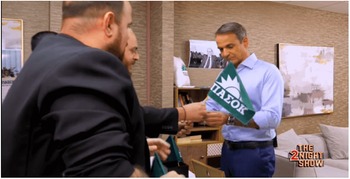


 Open access

