Introduction
The late Holocene in Island Southeast Asia (ISEA) marked a time of unprecedented movement of people, their material culture, resources and, importantly, their ideas (Bellwood Reference Bellwood1997; Bulbeck Reference Bulbeck2008; Spriggs 2011). Over the past two decades, archaeological, palaeoenvironmental and genetic research has provided evidence for a more complex and multifaceted view of human interaction during this period than was initially proposed in the 1990s by Peter Bellwood (Reference Bellwood1997) (see Spriggs 2007, 2012; Dobney et al. Reference Dobney, Cucchi and Larson2008; Donohue & Denham Reference Donohue and Denham2010; Barker & Richards Reference Barker and Richards2013; Denham Reference Denham2013; Ko et al. Reference Ko, Chen, Fu, Delfin, Li, Chiu, Stoneking and Ko2014; Lipson et al. Reference Lipson, Loh, Patterson, Moorjani, Ko, Stoneking, Berger and Reich2014). Bellwood's linguistic-based model proposes that an agriculture-associated migration process began with proto-Austronesian speakers from South China settling in Taiwan between 6000 and 5000 BP. This migration then moved out to ISEA and, ultimately, the Pacific islands between 3500 BP and 800 BP, establishing an Austronesian network that formed the backbone of future cultural developments. This process of population dispersal is argued to be linked to an increase in human population size, the so-called ‘Neolithic Demographic Transition’ (Spriggs 2007; Bellwood 2011; Hung et al. Reference Hung, Carson, Bellwood, Campos, Piper, Dizon, Bolunia, Oxenham and Chi2011).
There is uncertainty, however, about the archaeological characterisation of the Neolithic in ISEA, and when it first appeared, which has been attributed to the scarcity of sites, their generally poor preservation (Spriggs 2003, 2011, 2012) and environmental changes over time such as coastal progradation (Bellwood 2007).
The Neolithic in ISEA ranges from c. 4000–2300/2100 BP (Spriggs 2011). There appears to be substantial regional variation in its duration and in the relative timing of the introduction of metal from Mainland South East Asia (MSEA) (Lloyd-Smith 2013). Metal objects were also being incorporated into existing cultural processes such as burial rituals in a still largely Neolithic context (Szabó et al. Reference Szabó, Piper, Barker, Clark, Leach and O'Connor2008; Lloyd-Smith 2013).
Our aim is to move away from viewing the ‘Neolithic’ only in terms of food, technology or even language, and attempt to introduce the concept of ‘shared beliefs’ as suggested by the introduction of jar-burials and other specific practices (e.g. bone removal) in cemeteries in the region. In ISEA, burial grounds dating from as early as c. 4000 BP have been found from Taiwan to Indonesia. Many of these sites were excavated before modern archaeological techniques were practised, and the preservation of the human skeletal remains was poor (Van Heekeren Reference Van Heekeren1956; Harrisson Reference Harrisson1958, Reference Harrisson1967; Chao Reference Chao2000; Latinis & Stark Reference Latinis and Stark2005; Mahirta Reference Simanjuntak, Pojoh and Hisyam2006; Simanjuntak Reference Simanjuntak, Simanjuntak, Hisyam, Prasetyo and Nastiti2006; Hung et al. Reference Hung, Dung Nguyen, Bellwood and Carson2013; Lloyd-Smith 2013). The appearance of jar-burials within cemeteries from both MSEA and ISEA has been considered by some authors as evidence for profound social changes that swept across the region during the later Holocene (Higham Reference Higham1996; Bellwood 2007; Hung et al. Reference Hung, Carson, Bellwood, Campos, Piper, Dizon, Bolunia, Oxenham and Chi2011).
The discovery of a large Neolithic burial ground with jar-burials at the open-air site of Pain Haka, on north-eastern Flores Island, Indonesia, provides a rare opportunity to investigate certain aspects of later Holocene communities inhabiting the East Nusa Tenggara islands. We present here the mortuary practices and associated material culture within the cemetery, and compare Pain Haka with other contemporaneous cemetery sites, and particularly the Niah West Mouth cemetery in Sarawak (Harrisson 1967; Lloyd-Smith 2013). Finally, we propose that some similarities in mortuary practices between these sites attest to the rapid spread across ISEA of a pan-regional belief system, intrinsically linked with the introduction of pottery as part of the mortuary ritual.
The site of Pain Haka and its burials
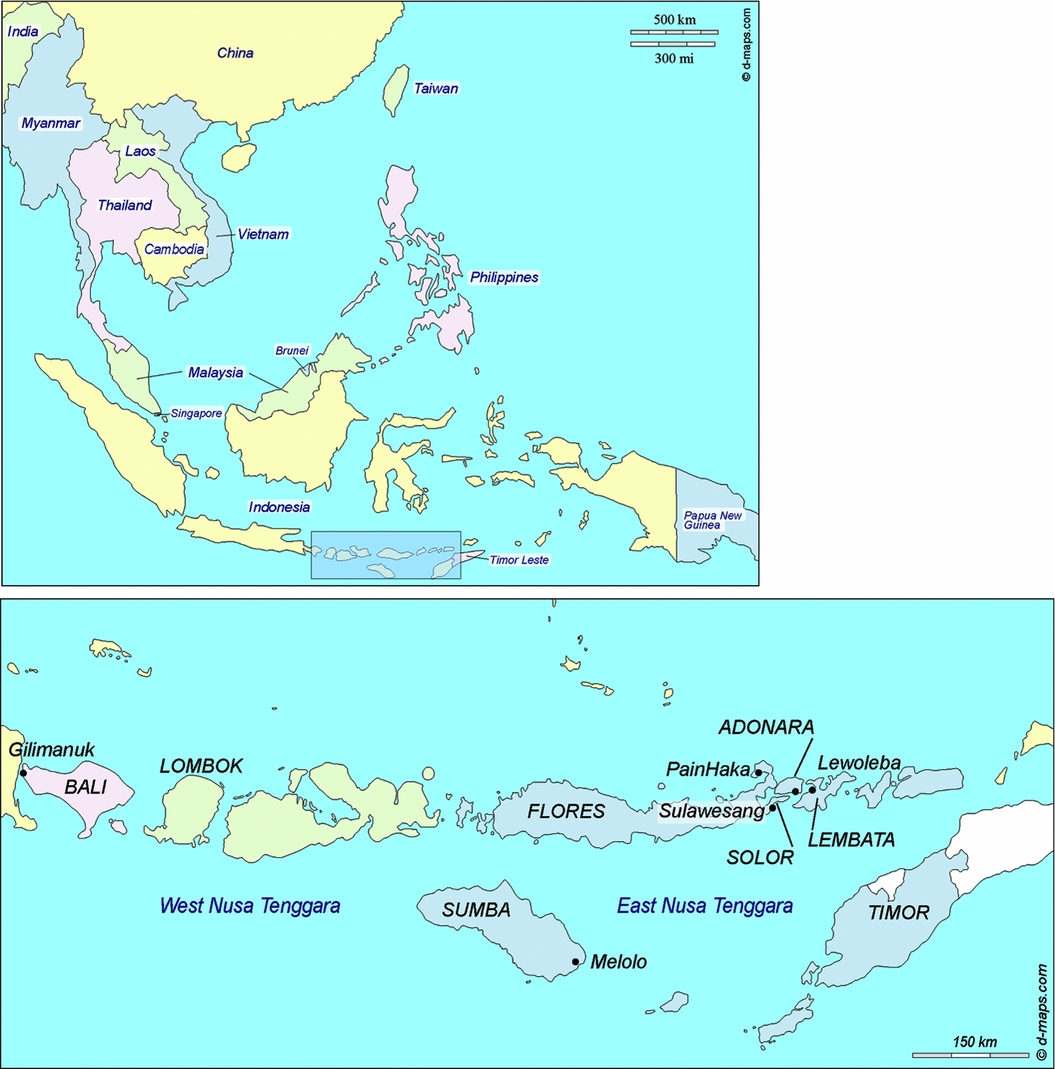
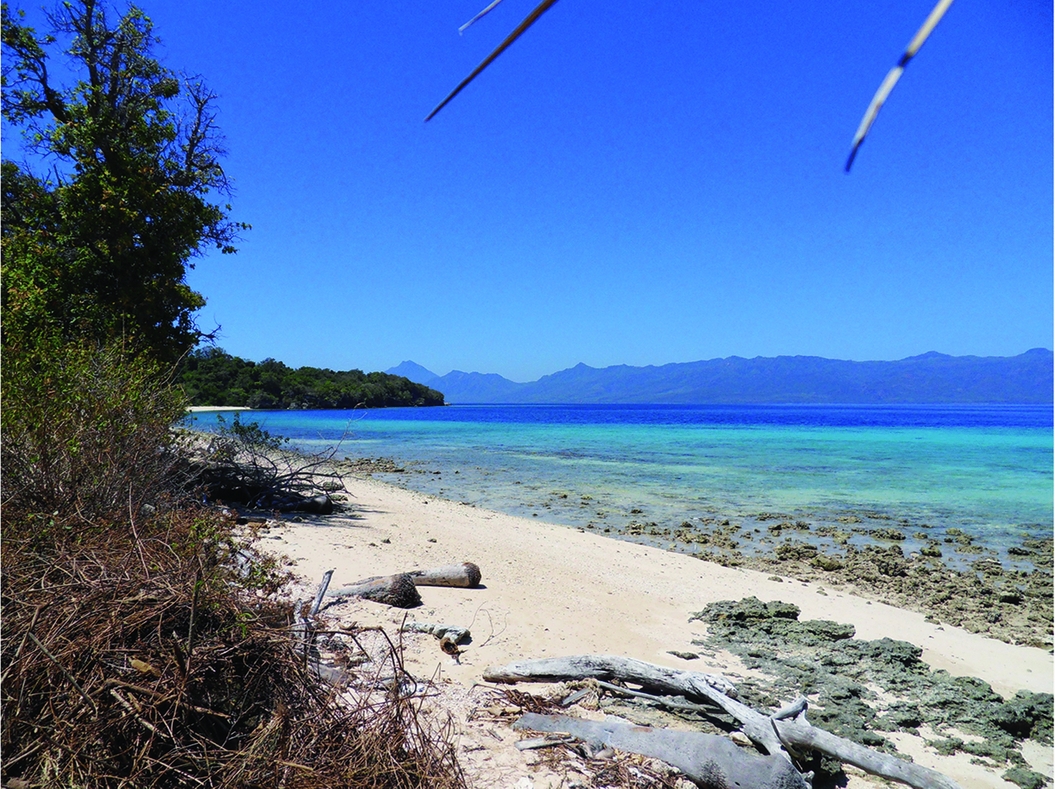
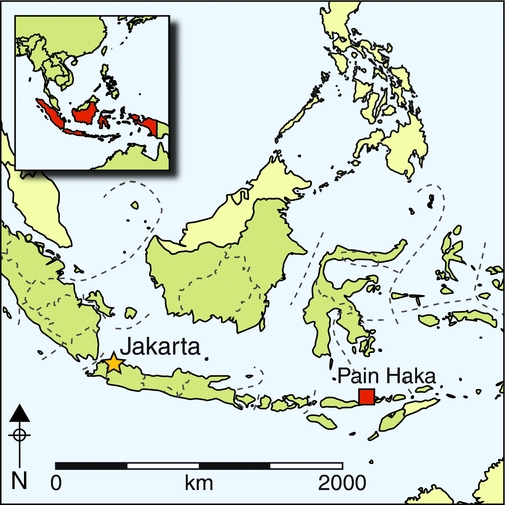
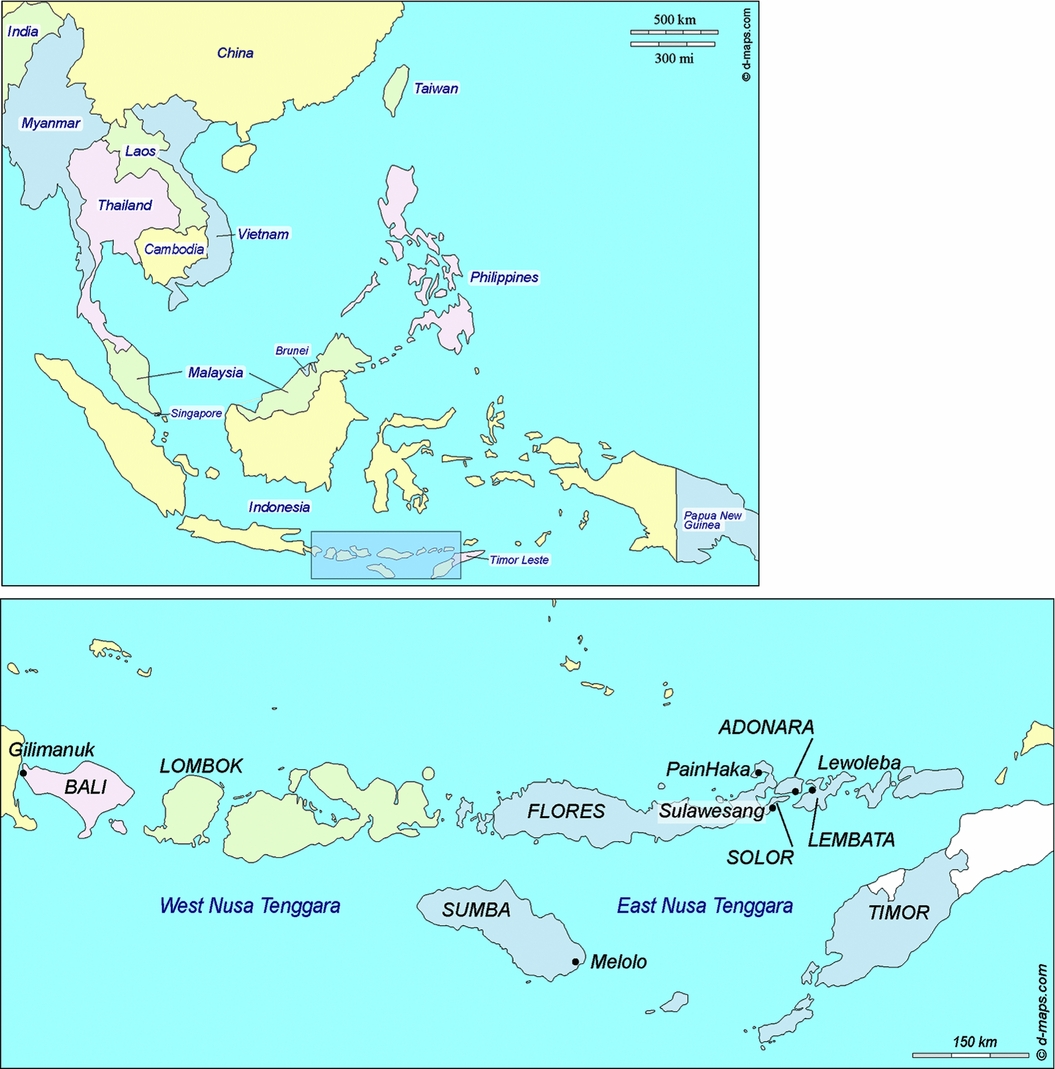
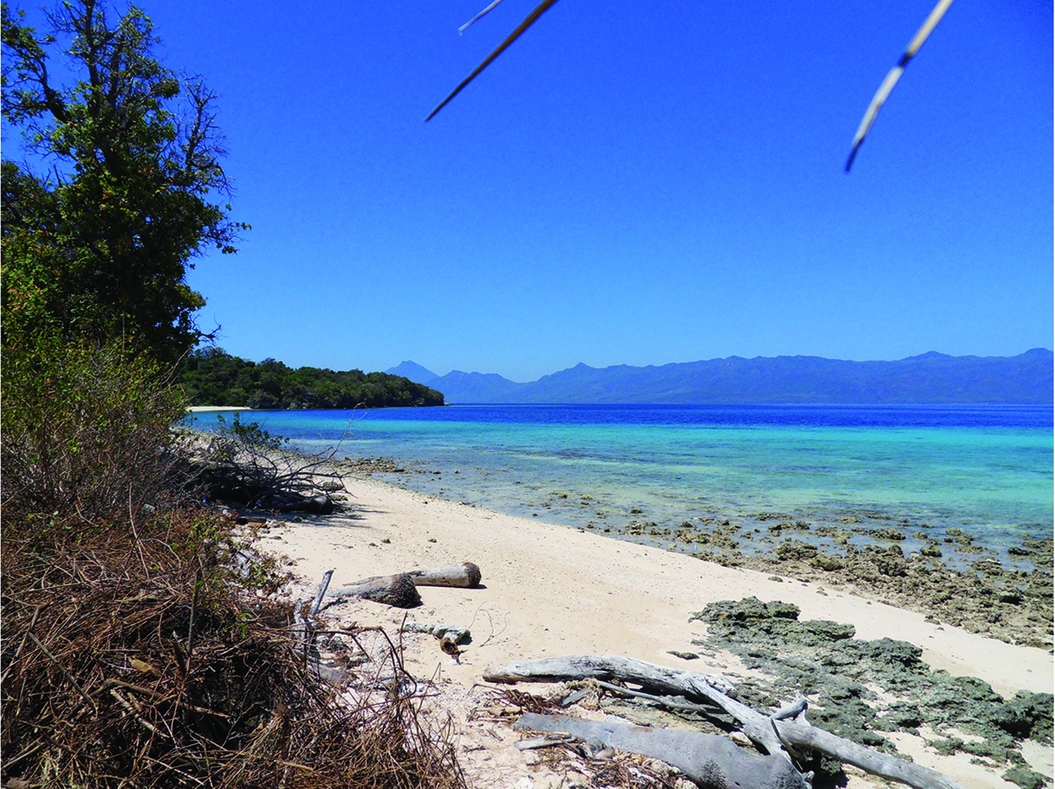
Pain Haka is a large sandy bay at the extreme south-west of a peninsula located at the north-eastern tip of the island of Flores (Figure 1). This part of Flores is an uplifted volcanic area surrounded by raised coral terraces and a series of sandy bays along the coastline. The bay of Pain Haka is about 700m long with only a few hundred metres of level ground extending inland before reaching a naturally uplifted reef wall (Figure 2). A large tsunami in 1992 destroyed the modern village and revealed the site by washing away the top layer of soil. There is evidence of burials along most of the bay, except at the western end where water used to flow. After extensive test pitting across the whole bay, no occupation layer was found at Pain Haka, and it is therefore probable that the area was used exclusively as a cemetery.
Map of the location of Pain Haka on Flores, Indonesia, and other sites in the nearby area mentioned in the text.
View looking west from Pain Haka Bay.
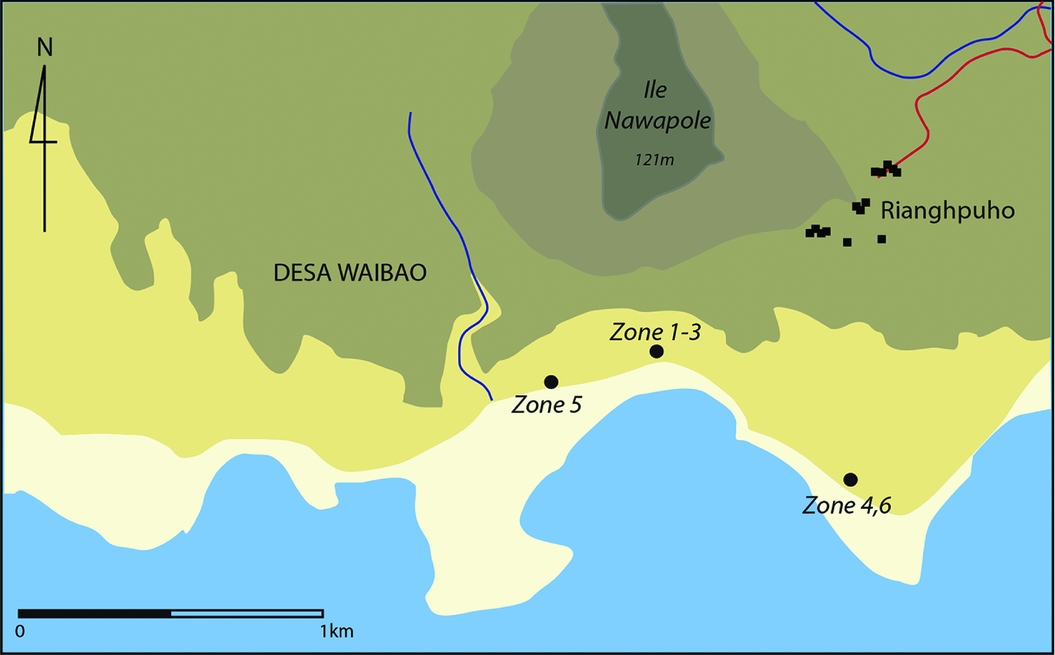
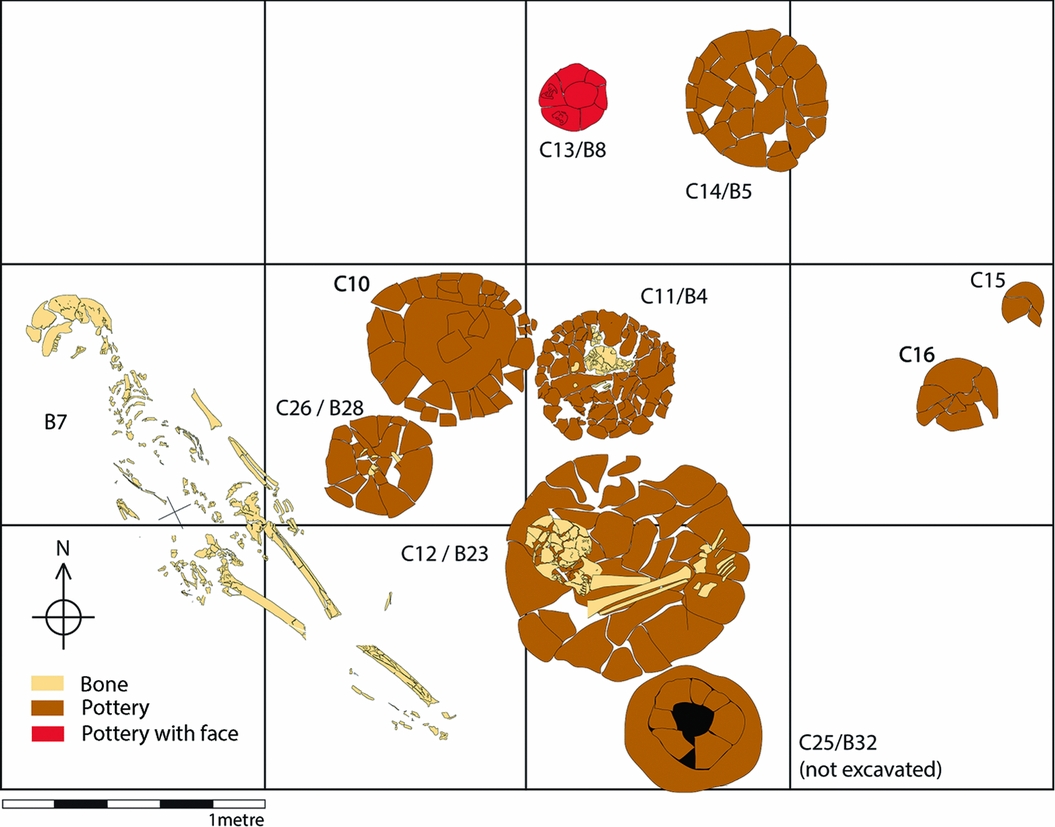
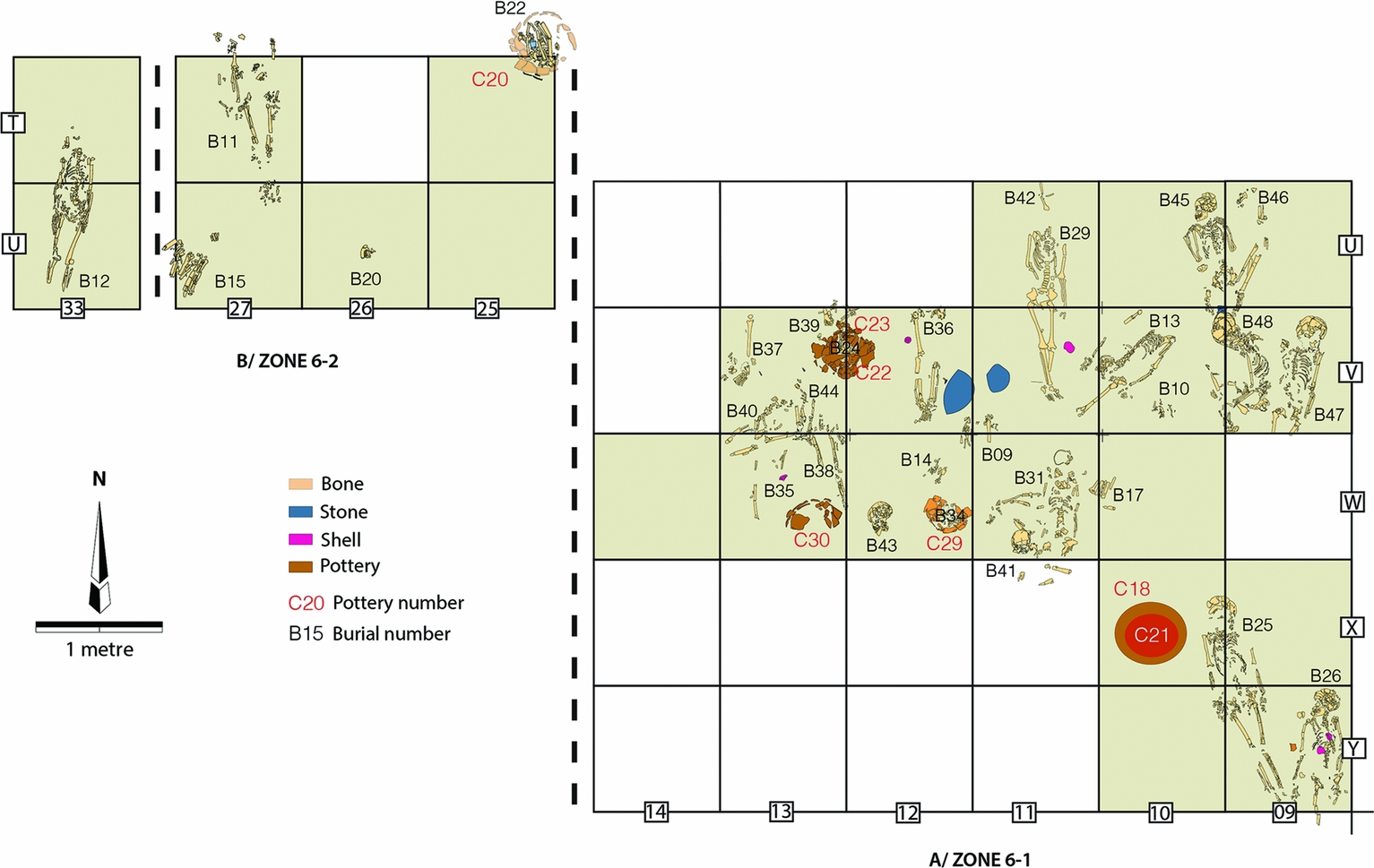
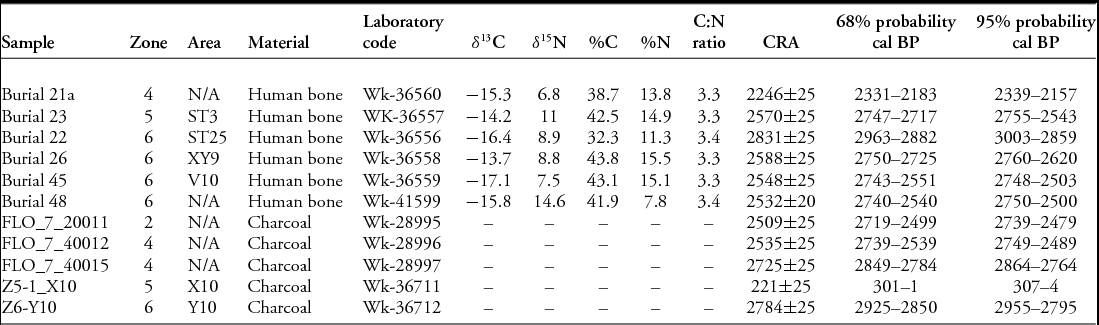
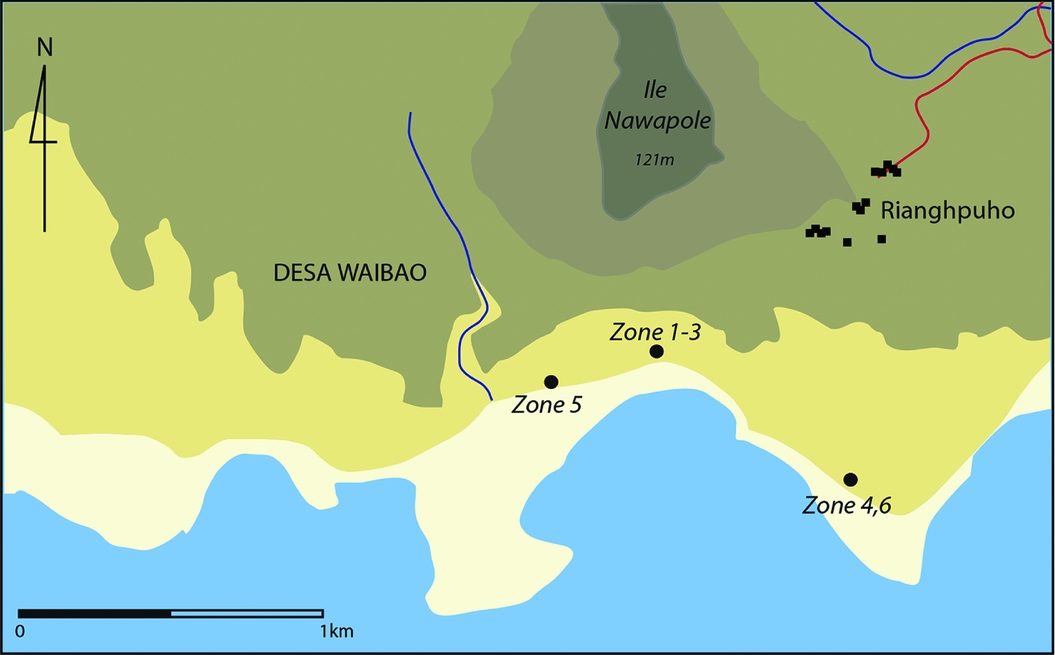
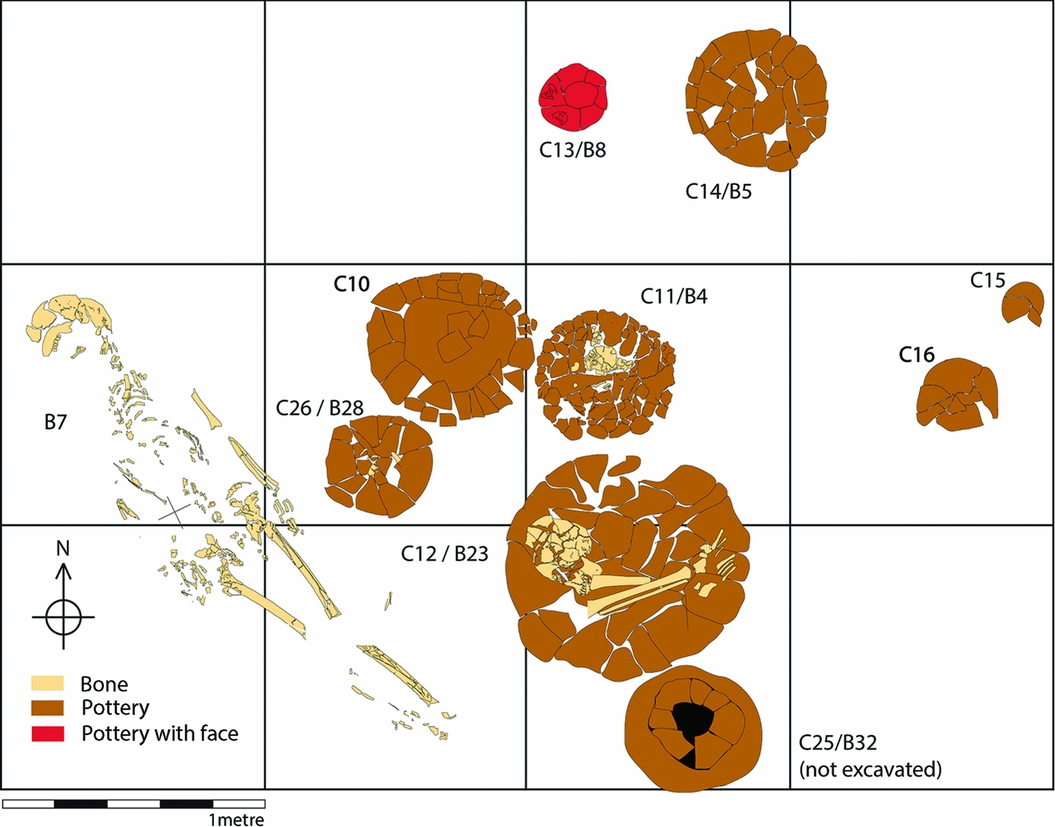
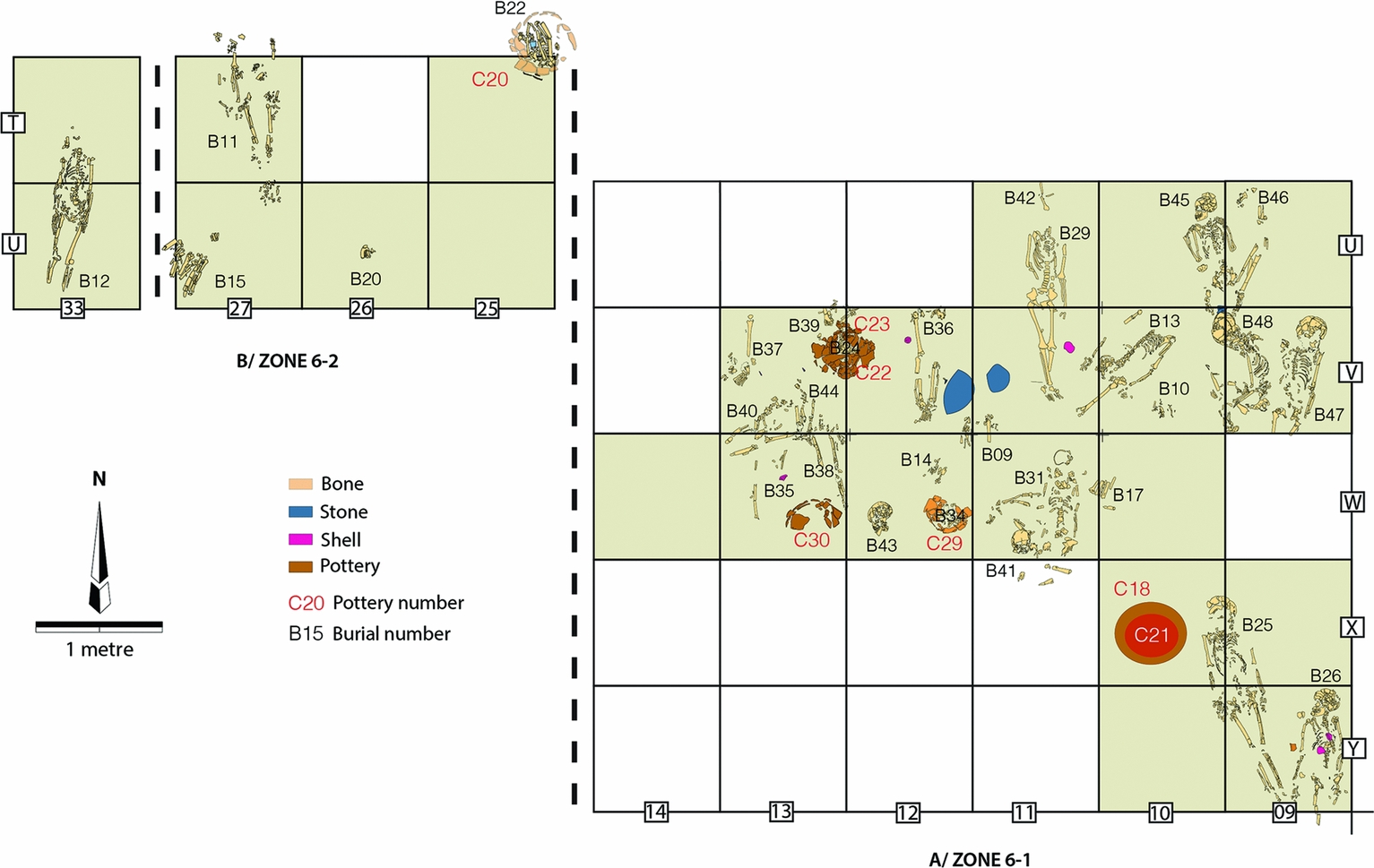
For research purposes, Pain Haka bay was divided into six areas or ‘zones’ from west–east (Figure 3). Zones 1–3 in the western part of the bay are not discussed in detail because only one burial was found in zone 1 (B1: an infant primary jar-burial), and zone 3 was sterile. Zone 4 was a 300m2 area behind the coastline at the eastern end of the bay, where the village destroyed by the tsunami was located. The damaged remains of 3 children and infants (all jar-burials), and 7 adult individuals were excavated from zone 4 (Figure S1 in online supplementary material). Zone 5 revealed a series of closely associated jar-burials (n = 5, containing 6 individuals) with an extended supine adult skeleton (burial 7a) just under the present-day surface (Figure 4). Zone 6, to the north of zone 4 and with a slightly higher elevation, was the principal area of excavation during the course of the 2012 field season (Figure 5). Approximately 60m2 were excavated in zone 6, and 30 burial features were found in this area. AMS radiocarbon dates for the site are presented in Table 1.
Map of Pain Haka bay and the location of the surveyed and excavated areas.
Plan of zone 5 and details of excavated features.
Plan of zone 6 and details of excavated features: a) east excavated area; b) west excavated area.
Results of AMS radiocarbon dating on charcoal and bone (see online supplementary material for details of analysis).

The burials
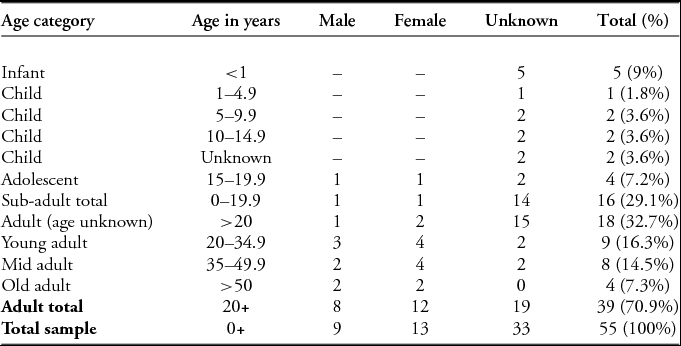
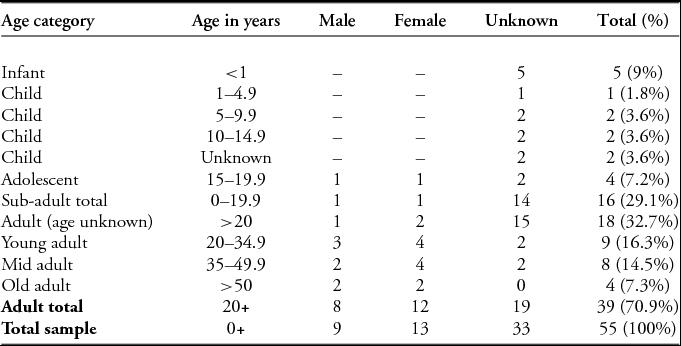
In total, 48 burials were identified from the Pain Haka site, but only 44 were excavated because of time constraints. The unexcavated skeletons only partly extended into the excavation area (Table S1). Nine of the 44 excavated burial features contained more than one individual. As such, the total number of individuals from the Pain Haka cemetery is 55. Age and sex were estimated using the standards of Buikstra and Ubelaker (Reference Buikstra and Ubelaker1994), and those of Scheuer and Black (Reference Scheuer and Black2000). A broad age range was represented in the cemetery, from infancy to late adulthood (Table 2). Of the 39 adults and 4 adolescents in the Pain Haka sample, 13 were estimated to be female, 9 to be male and 21 individuals could not be assigned a sex. An analysis of the palaeodemography of this sample will be reported in a forthcoming publication. As a requirement of the local community in order to gain permission to conduct the fieldwork, all skeletons were reburied after field observations were made. As no crania were complete, they could not be reconstructed in the field in the time available. No craniometric analyses were therefore possible. An aDNA programme for assessing the genetic affinities of these people is, however, underway. The results of this, if successful, will be reported in future publications.
Age and sex composition of the Pain Haka skeletal assemblage.
Mortuary practices
There were a total of 37 primary, 7 secondary and 3 intrusive interments at the site. The type of interment could not be identified for the remaining eight individuals. Secondary burials were classified according to whether decomposition had occurred in more than one location, and where bones were either removed from their primary place of interment and reburied, or a person was dismembered/defleshed before decomposition (Duday et al. Reference Duday, Courtaud, Crubezy, Sellier and Tillier1990; Roksandic Reference Roksandic, Haglund and Sorg2002). Five secondary burials (15a, 15b, 17, 22 and 28) were identified as ‘bundle burials’, where bones were re-interred in bundles after decomposition, and two burials (22 and 28) were probably dismembered before interment. The evidence of dismemberment in burial 22 was clear from the presence of chop marks around the joints of some of the limb bones that occurred around the time of death, and from the retention of some articulation in the small joints of the hands and feet (Figure S2).
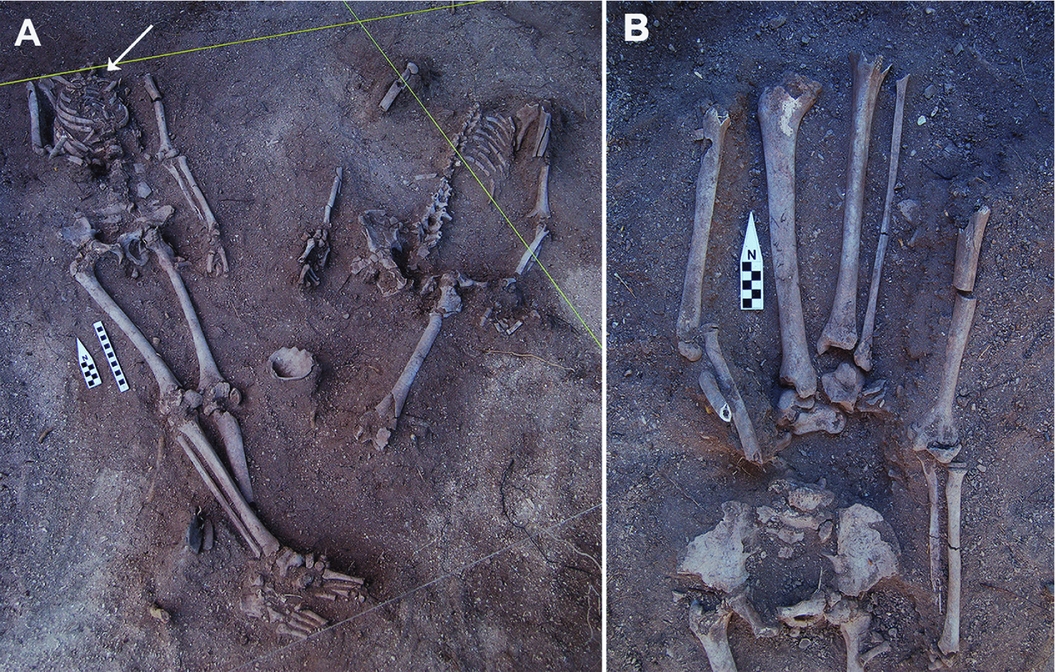
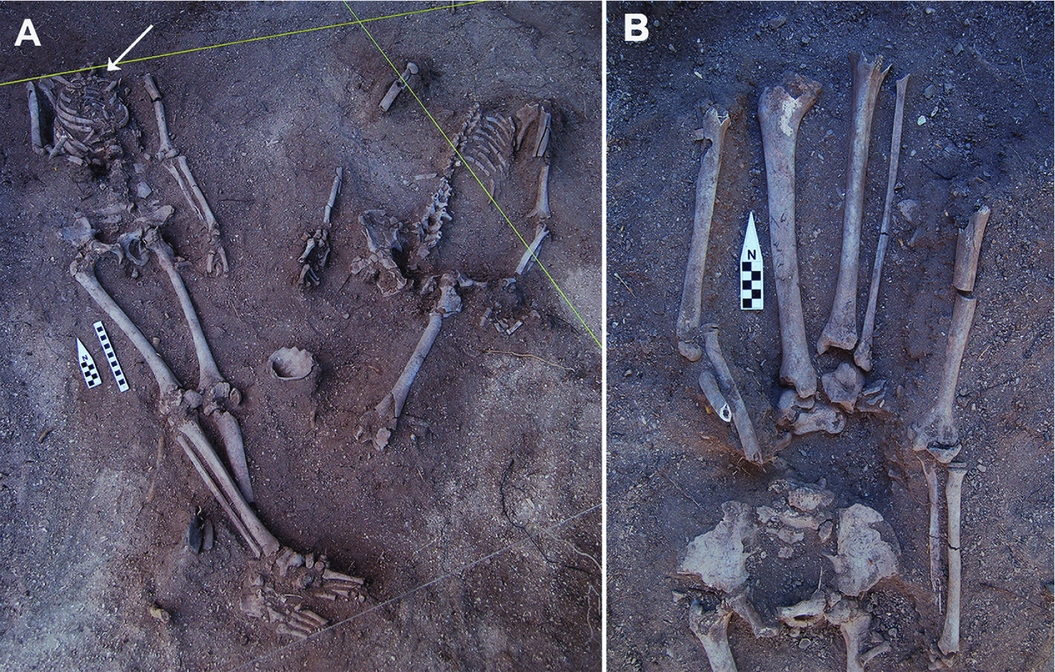
A number of burials had skeletal elements missing (cf. Harris et al. Reference Harris, Buckley, Halcrow, Kinaston, Foster, Simanjuntak, Galipaud, Oxenham and Buckley2016). The purposeful removal of elements from the graves is probable for many of these burials, especially 29a and 13 (Figure 6), which were both missing skulls. Another example of bone removal was identified in the form of articulated lower limbs (burial 29b) found interred beneath the thorax of burial 29a. From the intersecting burial cuts, it appeared that the grave of burial 29a disturbed the lower legs of burial 13; it is probable that these lower limbs were partially decomposed when removed and interred with burial 29a (Figure 6).
Burial 29a, an adolescent of unknown sex, directly overlying the articulated tibiae, fibulae and foot bones of an adult: a) in relation to burial 13 (note both heads are removed), the white solid arrow points to the articulated leg and foot bones of an individual (labelled burial 29b) found under the thorax of burial 29a, which may belong to burial 13; b) a closer image of the leg and foot bones (burial 29b) after the thorax of burial 29a was lifted.
Burial positions and orientation at the site were highly varied throughout all of the zones and are detailed in Table S1. Of the 31 primary burials that could be assessed, the most common position was supine with limbs extended (18/31, 58.1%) and limbs flexed (3/31, 9.7%), but individuals were also interred in extended prone (1/31, 3.2%), flexed (5/31, 16.1%), seated (2/31, 6.5%), and unknown other unidentified with lower limbs flexed (2/31, 6.5%) positions. The majority of the burials where orientation could be identified were perpendicular to the coastline, with their heads to the north (towards a mountain) and feet to the south (21/32, 65.6%), although a wide variety of burial orientations were observed across the site, including south–north (2/32, 6.3%), east–west (4/32, 12.5%), west–east (3/32, 9.4%), north-east to south-west (1/32, 3.1%) and north to north-west (1/32, 3.1%).
The burial containers used to inter the dead included some type of organic material loosely wrapped around the corpse, which was durable enough to last through the period of soft tissue decomposition (Harris et al. Reference Harris, Buckley, Halcrow, Kinaston, Foster, Simanjuntak, Galipaud, Oxenham and Buckley2016), or pottery jars in 13 cases. Individuals wrapped in organic material were located in zones 4 and 6, and most of these were interred in a supine, extended position. One individual was buried with his arms and legs in flexed position (burial 45, zone 6), and another in a flexed position on his right side (burial 48, zone 6). A majority of the 13 individuals interred in jars were discovered in zone 5 (n = 6/13, 46.2%), while zones 4 (3/13, 23.1%), 6 (3/13, 23.1%) and 1 (1/13, 7.7%) contained proportionally fewer jar-burials. Additionally, one burial contained four individuals (21a–d) buried sequentially during multiple burial episodes (Figure S3). A 2m2 area containing ash and charcoal (AMS date Wk-36712) overlying burial 25 in zone 6 east suggests that cremation may have occurred at the site, although the dispersed nature of the burnt items did not allow for a thorough analysis, and none of the associated human bone was burnt.
The burial jars and grave goods
Pottery found at the site was either used as a receptacle for human bodies or bones (jars), or was placed alongside human skeletons as grave goods (pots). With the exception of a large oval-shaped jar (containing burial 1) with a foot ring (150mm diameter) and flat cover (250mm diameter) in zone 1, all of the burial jars and pots in mortuary contexts at the site were globular vessels with an exterior, and sometimes interior, red slip.
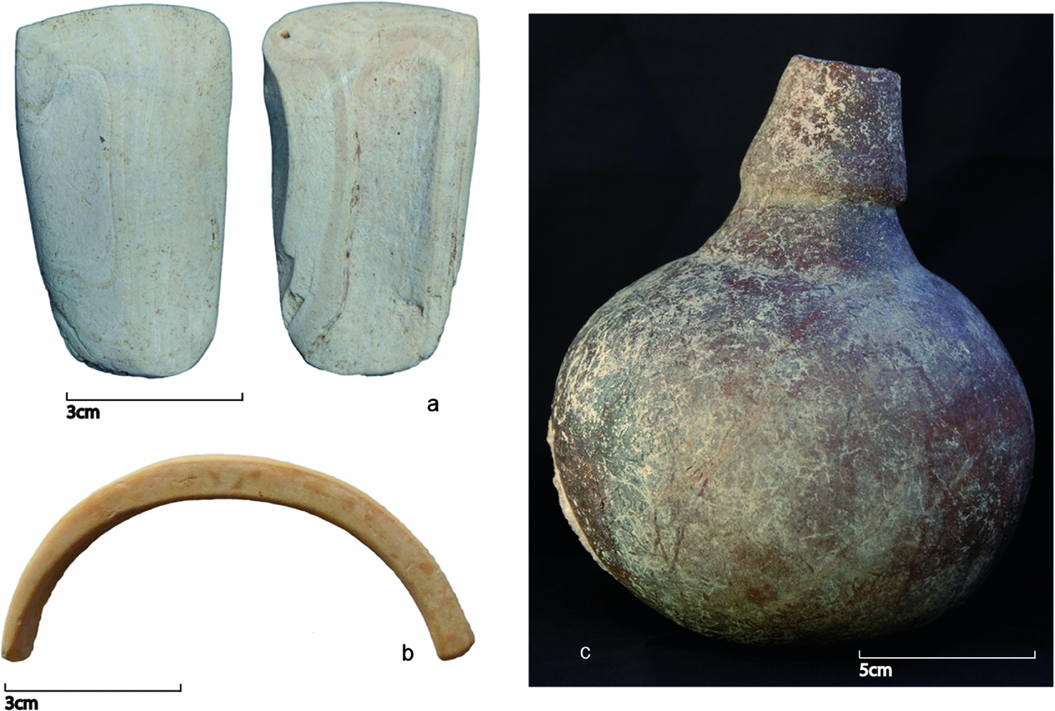
In zone 4, several globular red-slipped undecorated jars, one smaller round bottle (C3) with an elongated neck (placed inside jar C2), two small pots, a carinated pot (covered by a coral block), and the broken foot ring of a pot were found. Most of the jars in zone 4 were very fragmentary and could not be reconstructed or measured.
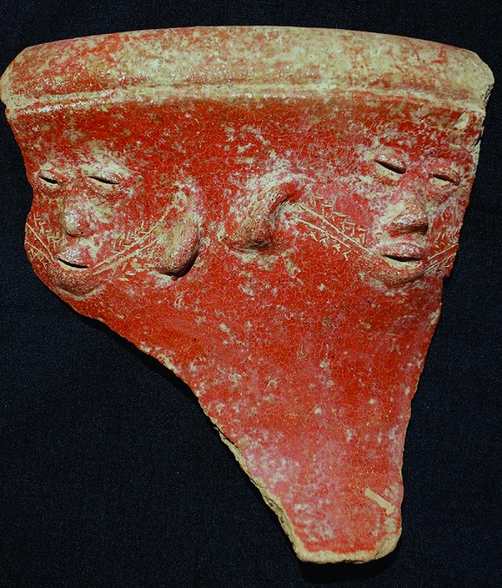
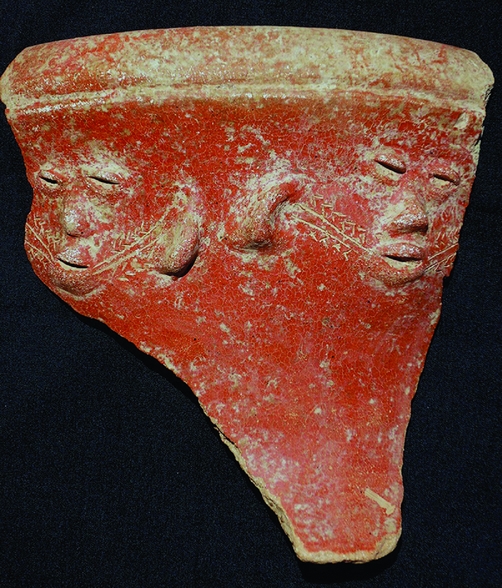
Zone 5 had the only series of large hemispheric jars and pots (n = 9) at the site just below the modern surface, and may represent a family interment. Most ofthese (n = 8) had the rims removed or broken to expand the opening. Two of the five jars containing burials in zone 5 were decorated; the largest one (C12, 0.8m diameter), containing burial 23, an adult male primary burial, with incised, filled triangular patterns under the neck. The other decorated burial jar was a small carinated pot (C13, containing burial 8) with incised and appliqué designs representing human faces (Figure 7). Additionally, approximately 10m to the east, two pots (C24, decorated with fine incised designs; and C27, undecorated) were found in the section eroded by the sea, and a third small pot in the exposed section of a salvage excavation (C28). These pots may represent a distinct internment unit.
The rims of all the burial jars in zone 6 were broken. Two pots in this zone contained smaller pots: one hemispheric undecorated pot with a hole in the bottom (C22),set upside down and covering a larger globular jar (C23, containing burial 24); and one pedestaled bowl with a bright red slip and appliqué decorations of lizards (C19), placed inside C21 and located next to burial 25 (an extended, supine adult female).
Details of ceramic 13 in zone 5, decorated with human face designs.
Other grave goods included quadrangular stone adzes, most of which were basalt (3/44 burials), one Cassis sp. adze found in zone 5 with supine burial B7 (Figure 8), as well as shell ornaments (8/44 burials), including armbands made from both Conus sp. and Trochus sp. (S4), several types of shell bead (species yet unidentified), and a shell pendant. Unmodified Tridacna spp. and Lambis spp. shells (9/44 burials), sherds of pottery (6/44 burials), large coral stones (3/44 burials), a single pig's tooth and a stingray barb complete this inventory. Most of these items were associated with single, rather than multiple, burials.
Grave goods from Pain Haka: a) Cassis sp. shell adze; b) fragment of Trochus sp. armband; c) small flask (ceramic C3 mentioned in the text).

Discussion
Chronology of the Pain Haka cemetery
Direct dates from human bone securely place the use of the Pain Haka cemetery from around 3000 BP to 2100 BP. No metal or glass artefacts were found at the site. All but one of the dates (burial 21a, zone 4) indicate that the burials occurred c. 3000 BP, placing the use of the burial ground firmly within the Neolithic period for ISEA. Pain Haka shares a number of attributes with jar-burials in the Philippines, Taiwan and southern Vietnam noted by Hung et al. (Reference Hung, Dung Nguyen, Bellwood and Carson2013) as characteristic of Neolithic cemeteries. These attributes include the use of coastal sand dunes for interment, and the removal of rims from burial jars. Additionally, the quadrangular stone adzes, Cassis sp. adzes, and Trochus sp., Tridacna sp. and Conus sp. jewellery and shells that were interred within the graves in the Pain Haka cemetery are all artefacts associated with the ‘Neolithic package’ in other parts of ISEA and the Pacific islands (Spriggs 2011). Combined, these factors all attest to a shared maritime cultural identity within the wider region during the Neolithic.
Dating of the human skeletons from Pain Haka allows a broad chronological seriation of the jar-burial containers and associated pots found at the site. The initial phase of cemetery use (around 3000–2800 cal BP) is characterised by undecorated, red-slipped globular jars, generally with broken rims. Incised and appliqué decoration appears during a second phase around 2500 BP, particularly in zone 5, where this is the dominant style, but also in zone 6, where red slip and broken rim vessels are still abundant. The two elaborate pots with complex forms, appliqué decorations and bright red slips were also deposited during this phase. Around 2200 BP, the pottery diversifies with the appearance of small and large vessels of different shapes, sometimes with foot rings and covers, as well as pottery flasks.
Jar-burial tradition in Island Southeast Asia
The jar-burial tradition was firmly established in ISEA, beginning during the Neolithic in Taiwan (Bellwood Reference Bellwood1997; Hung & Ho Reference Hung and Ho2006; Hung et al. Reference Hung, Dung Nguyen, Bellwood and Carson2013), the Philippines (Fox Reference Fox1970; Bellwood & Dizon Reference Bellwood, Dizon, Bellwood and Dizon2013; Hung et al. Reference Hung, Dung Nguyen, Bellwood and Carson2013), Borneo (Chazine Reference Chazine2005; Lloyd-Smith & Cole Reference Lloyd-Smith, Cole, Bellina, Christie, Bacus and Pryce2010) and areas of Indonesia other than in East Kalimantan (Simanjuntak 2008). Bellwood (Reference Bellwood1997: 307) proposed that jar-burials were an indigenous tradition rather than an import from MSEA, and, more recently, suggested that the tradition originated in Taiwan and spread with Austronesian-speaking populations from the Niuchouzi and Fushan sites, possibly dating from as early as 4500 BP (see discussion by Cuevas & de Leon Reference Cuevas and de Leon2008). In Indonesia, jar-burial cemeteries were thought to post-date the Neolithic (Liong Reference Liong1965; Yuliati Reference Yuliati1998; Bintarti Reference Bintarti2000). With the exception of the Melolo site, however, which is located close to Flores in East Sumba (Van Heekeren Reference Van Heekeren1956), these cemeteries do not usually include burials interred in jars. When they do, they include several types of mortuary jars containing primary or secondary deposits, and in some cases such as in Bali, other types of containers such as stone sarcophagi (Bintarti Reference Bintarti2000).
The actual chronology of these cemeteries is still unclear as very few of them have been dated by absolute methods (with the exception of Lua Meko, in Rote, tentatively dated to 4720±100 BP (ANU-109110) (Mahirta Reference Simanjuntak, Pojoh and Hisyam2006: 135)). The presence of metal at many of these sites has led some scholars to suggest that they were in use during the so-called Metallic phase, which began around 2000 BP, rather than during the Neolithic (Santoso Reference Santoso1995, Reference Santoso and Miksic2003; Bintarti Reference Bintarti2000; Bellwood 2007). The presence of jar-burials at Pain Haka, dated to the earliest use of the cemetery (i.e. burial 22, see Table 1), and the absence of metal artefacts at the site indicate that the use of pottery for mortuary containers in eastern Indonesia began in the Neolithic.
The mortuary practices and regional significance of Pain Haka
The Pain Haka cemetery site displays a number of interesting mortuary practices including:
-
1) A wide variety of burial positions.
-
2) Both primary and secondary interments.
-
3) The post-interment removal of elements (including skulls).
-
4) Multiple-episode burials.
-
5) Two types of mortuary containers: loose organic wrapping and pottery jars (Harris et al. Reference Harris, Buckley, Halcrow, Kinaston, Foster, Simanjuntak, Galipaud, Oxenham and Buckley2016).
The mortuary practices at the site share some similarities with the West Mouth cemetery of the Niah cave system in Sarawak. Lloyd-Smith (2013) analysed the mortuary customs of the West Mouth site from photographs and recordings of 170 burials, the majority of which came from the initial excavation. AMS radiocarbon dates of bamboo and wood from the burials and cremated human bone place the Neolithic use of the cemetery from c. 3500–3300 BP to c. 2200 BP, with the majority of burials dating between 3300 and 2500 BP. A number of skeletons (n = 14 burials) near the mouth of the cave were considered different enough to represent a possible post-Neolithic interment (Lloyd-Smith 2013).
At both Niah Caves and Pain Haka, a number of primary and secondary burials were identified, and the primary burials were interred in a variety of positions. These may reflect temporal differences in the cemetery use, especially with regard to the use of jars for burial. Flexed burials at Pain Haka fit into the category of later, ‘loosely flexed’ burials as defined by Lloyd-Smith (Reference Lloyd-Smith2012). The organic wrapping and jars found at Pain Haka were also observed in the West Mouth Neolithic cemetery (Lloyd-Smith & Cole Reference Lloyd-Smith, Cole, Bellina, Christie, Bacus and Pryce2010).
At Pain Haka, skeletal elements including skulls were removed from the graves sometime after interment. Skulls were also removed from Neolithic burials at the West Mouth Neolithic cemetery, but the removal of other elements was not noted. The removal of the head and other elements after burial is not well documented for this time period in ISEA and MSEA. The only well-documented cemetery of a similar period is the Teouma site in Efate, Vanuatu, in Oceania, which has been dated to c. 3000 BP. At Teouma, head removal, body manipulation and at least one secondary jar-burial (containing a skull) are documented (Bedford et al. Reference Bedford, Spriggs, Buckley, Valentin, Regenvanu, Sheppard, Thomas and Summerhayes2009; Valentin et al. Reference Valentin, Bedford, Buckley and Spriggs2010). Head removal was also practised in Iron Age burials at the Nagsabaran site in northern Luzon, the Philippines (Oxenham et al. Reference Oxenham, Willis, Hung, Page, Matsumura, Oxenham and Buckley2016).
Pottery and shared ideologies
Pain Haka provides information about the nature and chronology of Neolithic practices in eastern Indonesia. The antiquity of the site fits with Sprigg's (2007) model of a slow dispersal of Neolithic traits from north–south across ISEA, and indicates that Neolithic practices were firmly established on Flores by 3000 BP.
Pain Haka and other similar sites in the Sunda Islands are interesting examples of a regionally organised landscape where open coastal locations were dedicated to the treatment of the dead. Some of the specifics of these locations may parallel sites that, during the Metal Age, were believed to be entrances to the underworld. This is akin to the ‘deathscapes’ described by Szabó et al. (Reference Szabó, Piper, Barker, Clark, Leach and O'Connor2008) in Borneo with their associated coastal and river mouth features, which acted as spiritual passageways for the recently departed.
Similar types of grave goods, in addition to diversity in burial positions and orientations, have been observed between Pain Haka and cemeteries of the same period in other Southeast Asian islands and Oceania (e.g. Teouma). This suggests that 3000 years ago, ISEA and some Western Pacific cultures probably shared beliefs about the treatment of the dead. Regional variations in cemetery location or burial practices may reflect local cultural adaptations of an overarching system of beliefs, as identified through the use of pottery in mortuary contexts. The use of pottery as a container for primary and secondary burials supports the premise of a shared pan-regional belief system. This follows the view of Lloyd-Smith and Cole (Reference Lloyd-Smith, Cole, Bellina, Christie, Bacus and Pryce2010: 125), that “the broadly contemporaneous emergence and intensification of the practice of jar-burial [. . .] is perhaps evidence of a widespread shift in the symbolic association between pottery and death”. Neolithic jar-burials were obviously not just containers, but were also empowered with specific symbolism. The incorporation of jar-burials into mortuary practices probably represented some sort of “new genre of social action” (Robb Reference Robb, Marrais, Gosden and Renfrew2004: 134); the introduction of a live object (i.e. the jars) would “acquire meaning in the context of social action” (Marshall Reference Marshall2008: 63). Thus, we need to extend our consideration beyond the object itself and discuss its significance in the context of “social time and space” (Robb Reference Robb, Marrais, Gosden and Renfrew2004: 133). It may help us to understand socio-cultural processes locally and, perhaps, on a more global scale.
With the advent of the Neolithic in Southeast Asia and elsewhere in the world, pottery could be understood as the symbolic representation of a new social order and metaphysical perception. A contemporary example of this can be found in the ethnology of a regionally important coastal Austronesian group, the Tetun-Terik of Timor-Leste. In Tetun-Terik culture, special types of clay pots remind the living of their origin in the “womb of the earth” (Hicks Reference Hicks1984: 27). Obtained at birth, the we lolo oan symbolises the body of the owner. This object is kept during all his or her life and is destroyed at death (Hicks Reference Hicks1984: 33).
Jar-burials in Neolithic context may reflect profound ideological changes in perceptions of the world and afterlife. This symbolic function at Pain Haka is further highlighted by a vessel decorated with human faces (interred with burial 8, jar C13). Jar-burials with human face or body representation are known from the Philippines (Dizon Reference Dizon1996) to Oceania (Green Reference Green and Mead1979: 21–23; Spriggs Reference Spriggs and Spriggs1990, Reference Spriggs, Dark and Rose1993; Chiu Reference Chiu, Bedford and Connaughton2007). The symbolic personification of pottery as a primary or secondary mortuary container highlights its importance in relation to the deceased in the afterlife. Primary or secondary deposition in pottery across a wide geographic area, and as far as the Eastern Nusa Tenggara islands in eastern Indonesia is, we believe, a clear indication of the large-scale adoption of new beliefs.
Acknowledgements
The excavation of the Pain Haka site in 2012 was funded by a grant from the Research Institute for Development, UMR Paloc and by additional funding from the French Embassy in Indonesia, as well as a University of Otago Research Grant awarded for the excavation and analysis of the human skeletal remains.
Supplementary material
To view supplementary material for this article, please visit http://dx.doi.org/10.15184/aqy.2016.185