Introduction
As the importance of services in manufacturing has increased, the nonmodern industries have entered into service-oriented manufacturing (Lei, Hui, Xiang, Zelin, Xu-Hui, & Evans, Reference Lei, Hui, Xiang, Zelin, Xu-Hui and Evans2021; Nyknahad, Aslani, Bein, & Gewali, Reference Nyknahad, Aslani, Bein and Gewali2020). The procedure of planning, coordinating, managing, and arranging continuous operations of a corporation to transform input resources into products is known as production management. Using the production management system, users may handle all parts of mass production processes in a decentralized or centralized setting (Lei et al., Reference Lei, Hui, Xiang, Zelin, Xu-Hui and Evans2021). Production management systems are concerned with the complete procedure of product and service production and delivery (Vinogradov, Konkina, Kostin, Kryuchkov, Zakharova, & Ushakov, Reference Vinogradov, Konkina, Kostin, Kryuchkov, Zakharova and Ushakov2018). This system's particular purpose is to continually optimize material flow to enhance the quality of the end product and service while lowering customer expenses (Lv, Guo, & Lv, Reference Lv, Guo and Lv2022). The product design stage, which takes up the majority of the manufacturing time, is one of the most significant processes in the production management process. Hence, constant attempts are undertaken to optimize and shorten product design time. Product creation is also one of the methods that organizations may use to stay competitive in today's world (Zhou, Xu, Yao, Tu, Lev, & Pedrycz, Reference Zhou, Xu, Yao, Tu, Lev and Pedrycz2018). Several factors influence this variable, with new technologies like the Internet of Things (IoT), cloud computing, and innovation developed in its shadow being one of the most crucial.
Recently, the new trends in information technologies have created many new areas (Cao, Zhang, Zhao, Liu, Skonieczny, & Lv, Reference Cao, Zhang, Zhao, Liu, Skonieczny and Lv2021c; He, Guo, & Zou, Reference He, Guo and Zou2020). Improving the quality and security of services has become a hot subject in information systems (Zheng, Xun, Wu, Deng, Chen, & Sui, Reference Zheng, Xun, Wu, Deng, Chen and Sui2021b). The development of the IoT and interconnected physical devices and their virtual display has been a growing trend. IoT is a new concept in the technology and communication world. IoT is an advanced technology in which the ability to send data to any creature (human, animal, or object) is provided through communication networks, the Internet, or the Intranet (Shafique, Khawaja, Sabir, Qazi, & Mustaqim, Reference Shafique, Khawaja, Sabir, Qazi and Mustaqim2020). IoT is a system of physical things that are accessible and interconnected over the Internet (Nižetić, Šolić, González-de, & Patrono, Reference Nižetić, Šolić, González-de and Patrono2020). IoT has the potential to become the world's most important technology, which has revolutionized the field of information and communication technologies (ICT) in recent decades (Cao, Zhao, Lv, & Yang, Reference Cao, Zhao, Lv and Yang2020b). In this regard, attention to new variables such as the IoT has also found a special place in researchers' studies. So, to fill the existing gap, the present study examines the IoT-based product development method to support rapid production using a nature-inspired algorithm. It can help technology companies understand the importance and role of the IoT to make optimal use of technology in product development.
With the advancement of the technology, industries and hardware are becoming increasingly linked and intelligent (Zhong, Fang, Liu, Yuan, Zhang, & Lu, Reference Zhong, Fang, Liu, Yuan, Zhang and Lu2021). Hardware may be digitalized and possibly a smart manufacturing environment generated if it is combined with other promising ICT, like artificial intelligence and deep learning (Zheng, Liu, & Yin, Reference Zheng, Liu and Yin2021c; Zheng, Liu, Ni, Yin, & Yang, Reference Zheng, Liu, Ni, Yin and Yang2021b). The development and design of IoT-enabled products to support rapid production is an non-deterministic polynomial-time hardness (NP hard) problem; recent studies have confirmed the successful performance of evolutionary and heuristic methods to solve such problems. Therefore, a new hybrid heuristic algorithm is presented in this paper. Particle swarm optimization (PSO) solves an issue by generating a population of possible solutions, referred to as particles, and transferring them around in the search space using basic mathematical equations based on their position and velocity (Thomas, lal Rakesh, & Mahapatra, Reference Thomas, lal Rakesh and Mahapatra2019). The shuffled frog leaping algorithm (SFLA) is one of a variety of swarm intelligence-based algorithms inspired by nature. Due to its features, which include (1) a straightforward idea, (2) parameters that have been lowered, (3) a strong and efficient performance, (4) quick computation time, and (5) simple implementation, it has been used in a variety of applications (Hu et al., Reference Hu, Dai, Su, Moore, Zhang, Mao and Xu2016). Combining these two methods results in a hybrid algorithm that has practical usefulness and incorporates the advantages of both PSO and SFLA. This paper's main goal is to highlight an IoT-enabled product development technique that can help with quick production. Decreasing the time it takes to design and create a product would save manufacturing time and cost, giving the company more advantages and a competitive edge.
Generally, the contributions of this research are:
• Developing a new hybrid meta-heuristic algorithm called PSO-SFLA to develop the IoT-enabled product for the first time in this paper;
• Decreasing the Makespan in production management systems employing a hybrid meta-heuristic algorithm;
• Improving the energy consumption in production management systems employing a hybrid meta-heuristic algorithm;
• Decreasing the design time in production management systems employing a hybrid meta-heuristic algorithm;
• Comparison of the proposed method with the other three algorithms.
The remainder of this document is as follows: Related works are discussed in the upcoming section. The suggested hybrid approach is presented in section ‘Proposed method’. The suggested technique's findings are shown in section ‘Experimental results’. Section ‘Conclusion and future works’ contains the conclusion and future work.
Related work
This section presents a systematic review of related studies (Industry 4.0, IoT, and product development).
Industry 4.0
Industry 4.0 is one of the hot topics, and it gradually attracted the attention of academics, experts, and politicians (Tang, Chau, Fatima, & Waqas, Reference Tang, Chau, Fatima and Waqas2022). Industry 4.0 has the potential to weave favorable variations in firms and influence every layer of organizational structures while motivating the collaboration of factories, suppliers, and customers. Therefore, many companies across the world in the method of digital transformation encounter managerial, industrial, and operational challenges and are compelled to cope with a significant deal of confusion (Suleiman, Shaikholla, Dikhanbayeva, Shehab, & Turkyilmaz, Reference Suleiman, Shaikholla, Dikhanbayeva, Shehab and Turkyilmaz2022). Abd Rahman, Mohamad, and Abdul Rahman (Reference Abd Rahman, Mohamad and Abdul Rahman2021) provided an integrated framework for how Industry 4.0 is transformed into industrial production, focusing on connection mechanisms and platforms that use real-world data analysis. The theoretical framework presented in the paper discussed lean manufacturing (LM), data analysis, and IoT to strengthen decision support systems in process improvement. Data analysis was used in IoT simulations to improve bottlenecks while maintaining the LM principle. The results showed that the decision support mechanism had been improved. The proposed framework also showed that the absorbed components could work together to increase output (Abd Rahman, Mohamad, & Abdul Rahman, Reference Abd Rahman, Mohamad and Abdul Rahman2021).
Internet of things
Important growths in cloud and IoT-related technologies such as sensor networks, telecommunications, and informatics have paved the realization of prevalent intelligence (Cao, Li, Liu, Zhao, Cao, & Lv, Reference Cao, Li, Liu, Zhao, Cao and Lv2021b; Wu, Song, Cao, Luo, & Zhang, Reference Wu, Song, Cao, Luo and Zhang2017). The origin of IoT goes back to the 1980s and the objective was to insert technology into everyday life. Currently, it is envisaged at the individual and professional levels (Shafique et al., Reference Shafique, Khawaja, Sabir, Qazi and Mustaqim2020). Today, the IoT is one of the most broadly used technologies designated as a connected network of heterogeneous components enabling intelligent systems and services that detect, capture, distribute, and examine data (Sarker, Khan, Abushark, & Alsolami, Reference Sarker, Khan, Abushark and Alsolami2022). A new technology model is envisioned as a global network of machines and devices capable of interrelating. The IoT is recognized as one of the most critical future technology areas and is gaining massive attention from many kinds of industries (Lee & Lee, Reference Lee and Lee2015). IoT and other new communication technologies have dramatically improved the capability to comprehend the environment. Life quality may be enhanced by using these technologies, which can potentially collect and investigate data about the surrounding environment (Abu Al-Haija, Krichen, & Abu Elhaija, Reference Abu Al-Haija, Krichen and Abu Elhaija2022). Mahiri, Najoua, and Ben Souda (Reference Mahiri, Najoua and Ben Souda2022) proposed a 5G-enabled IIoT framework architecture for a sustainable and intelligent manufacturing environment that will support industrialists and smart factories in the new revolution. The results showed that the 5G-enabled IIoT proposed architecture framework offers a real improvement opportunity to intelligent manufacturing systems regarding technicity, product quality, and sustainability. Lu, Min, Liu, and Wang (Reference Lu, Min, Liu and Wang2019) presented efficiency validate analysis as a quick simulation technique used for procedure design and analysis. The flexible simulation platform and discrete event system specification formalism were used to build this technique. The basis of the simulation was built on IoT data, such as historical recordings of sensors and radio frequency identifications (RFIDs). The findings demonstrated that the new technique successfully assisted process planning activities. Also, Chhetri, Faezi, Canedo, and Faruque (Reference Chhetri, Faezi, Canedo and Faruque2019) offered an IoT-based approach for creating digital twins utilizing an indirect medium like side channels, which might detect anomalous errors and infer the quality of the items being created while remaining up-to-date. They also focused on creating a digital twin model of a Cartesian additive manufacturing machine based on fused-deposition modeling. The suggested technique achieved an accuracy of 83.09% in anomaly localization, according to the findings. Moreover, in the IoT-enabled cloud manufacturing context, Yang, Lan, Shen, Huang, Wang, and Lin (Reference Yang, Lan, Shen, Huang, Wang and Lin2017) developed a full-connection paradigm of product design and manufacture. They also suggested a model-supporting infrastructure based on cutting-edge ICT. Ultimately, they provided a case study of an RFID-enabled manufacturing system for customized and personalized products, demonstrating how it might enable a novel concept of ‘dynamic procedures and tight partnerships among diverse roles’ while still ensuring reliable production.
Product development
The success of the new product development will gain a competitive advantage and increase market contribution for different companies. However, achieving it depends on strong marketing, innovative organizational cultural components, alterations in the technology and economic ecosystem of the market, and promotion of the company's social value by gaining customer and shareholder satisfaction (Mauerhoefer, Strese, & Brettel, Reference Mauerhoefer, Strese and Brettel2017). Customer involvement in product development leads to ideas for potential business opportunities (Wu, Li, Cao, & Ge, Reference Wu, Li, Cao and Ge2020). Customers also play an essential role in increasing the success rate of a new product by providing vital information. Researchers believe that the development of new products has a significant impact on the growth of a country's economy. Unfortunately, the level of importance of product development is not very compatible with the level of success, and the probability of failure in this process is significant (Cheng & Yang, Reference Cheng and Yang2019). In order to align with the underlying factors to increase the likelihood of successful product development, structural requirements such as demarcation, fluidity (development of informal relationships), interaction and training, and flexibility must also be considered. Everyone has to be prepared to be a leader in such an environment. In this regard, concepts such as deep learning, organizational mental abilities, and new technologies like the IoT and cloud computing are considered. Rasouli (Reference Rasouli2020) suggested a design for IoT-connected intelligent process-aware cloud production systems. They also combined data from process-aware systems with developments in service-oriented computing, IoT-enabled intelligence, and networked cloud manufacturing to provide new perspectives. This study connected conceptual advances in service-oriented demand-supply chains to make integrated product-service ecosystems and technological advancements in cloud manufacturing, IoT, and intelligent service composition. The findings revealed that the suggested framework would present a well-established foundation for operationalizing dynamic capabilities inside service-oriented value networks, such as real-time sensing, reacting, and learning. Also, Yao, Alkan, Ahmad, and Harrison (Reference Yao, Alkan, Ahmad and Harrison2020) demonstrated a decision support system able to assist shop-floor decision-making throughout production disruptions by autonomously modifying autonomous guided vehicles and machine schedules in flexible manufacturing systems. The suggested platform's performance was evaluated on the WMG, the University of Warwick's Integrated Manufacturing and Logistics (IML) demonstration. The outcomes revealed that the proposed system could discover near-optimal solutions for production schedules with production anomalies in a short amount of time, efficiently and quickly facilitating shop-floor decision-making processes. In addition, Wang, Lin, Zhong, and Xu (Reference Wang, Lin, Zhong and Xu2019) suggested a cloud platform that would combine physical resources like 3D printers and materials and soft resources like know-how and test data to give design, printing, and process planning assistance. The possibility of artificial neural networks for surface defect identification was also investigated in this article. The findings revealed that the platform might be used in dynamic and iterative product development procedures, reducing development time and costs. Furthermore, the findings revealed that the platform was created to display the functionality.
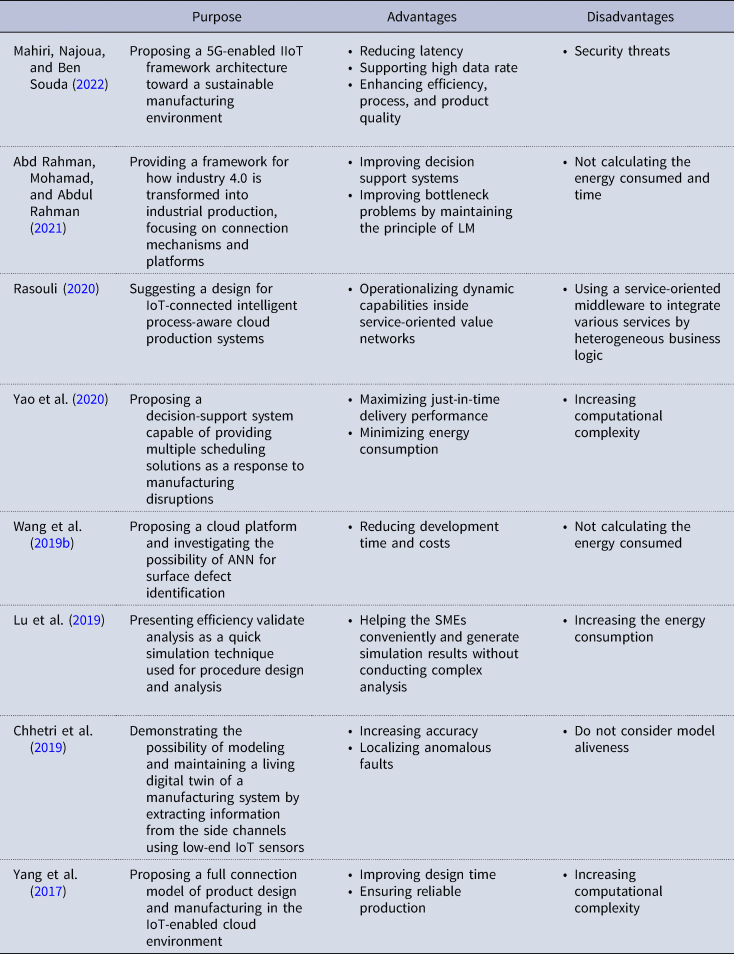
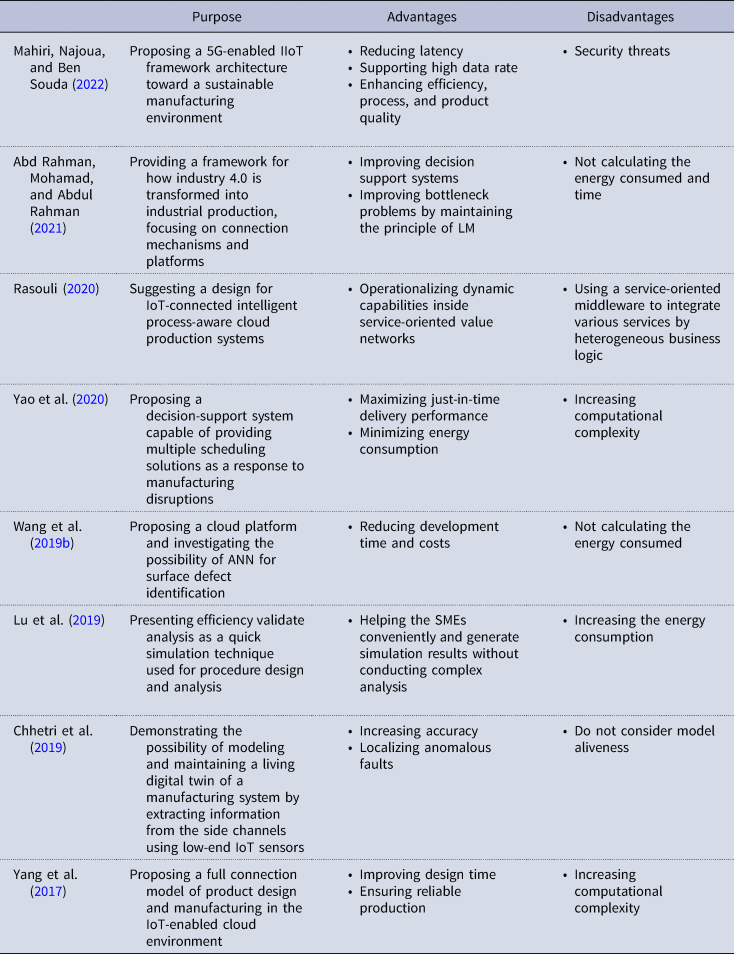
Table 1 compares the existing techniques for rapid support manufacturing and confirms the advantages and disadvantages of each method. Considering these features, we propose a nature-inspired algorithm (PSO-SFLA) to reduce the Makespan, energy consumption, and design time.
Overview of the methods studied
Proposed method
The following sections describe the proposed method in detail.
System model
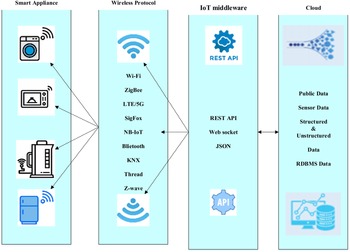
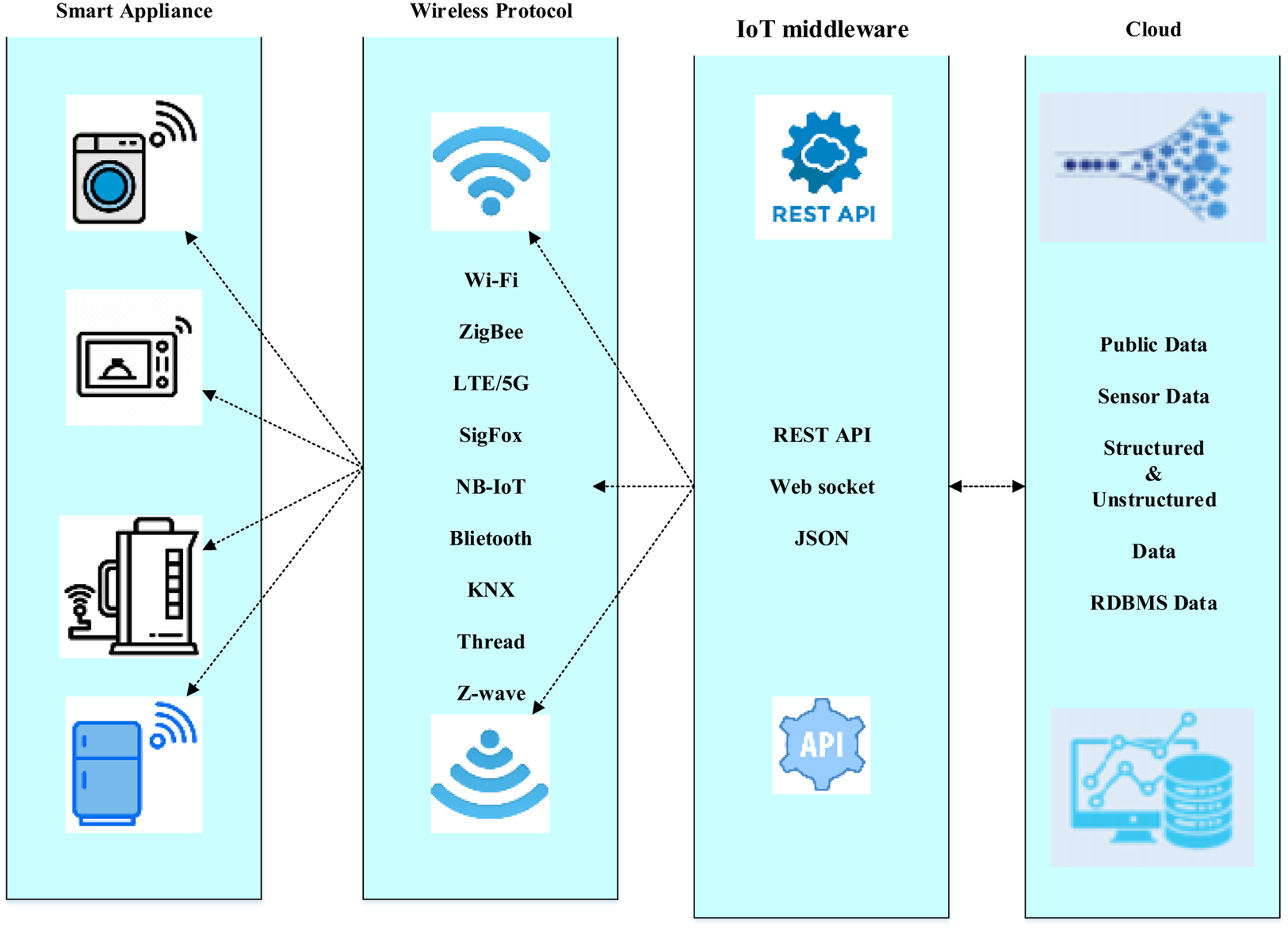
Several service-oriented business models have been suggested, including hybrid cloud manufacturing, cloud-based design, and manufacturing. With the growth of IoT and wireless networks, plenty of intelligent devices is interconnected over wireless technologies such as 5G and Wi-Fi for information exchange (Gardas & Navimipour, Reference Gardas and Navimipour2021; Sun, Lin, Si, Xu, Li, & Gope, Reference Sun, Lin, Si, Xu, Li and Gope2022). Intelligent computing technologies can be used to realize innovative management to solve the most issues such as RFID (Cao, Gu, Lv, Yang, Zhao, & Li, Reference Cao, Gu, Lv, Yang, Zhao and Li2020a), IoT (Kong, Lu, Yu, Chen, & Tang, Reference Kong, Lu, Yu, Chen and Tang2020), and edge computing. Edge computing provides users with computing, storage, and other functions, and edge servers usually exist close to users (Cao et al., Reference Cao, Fan, Zhao, Tian, Zheng, Yan and Yang2021a). Horizontal (like smart refrigerators, microwaves, washing machines, and voice-based intelligent devices) and vertical (like buildings, intelligent appliances, and smart cities) incorporation require proper IoT structure for specific industry applications like an intelligent home system because of abrupt alterations in the Industry 4.0 era. Because of the combination of a variety of communication protocols, cloud services, and edge deployment, an IoT architecture might design smart goods. Since the introduction of Industry 4.0 in 2010, IoT frameworks have continued to evolve in response to novel demands. Regardless of unique smart products and systems (SPS), every sector may require a customized framework. Figure 1 depicts a proposed IoT-enabled smart goods and systems architecture with four components: (1) smart appliance; (2) wireless protocol; (3) IoT middleware; and (4) cloud, in which smart home appliances are connected to the cloud via wireless techniques and an IoT (Aheleroff et al., Reference Aheleroff, Xu, Lu, Aristizabal, Velásquez, Joa and Valencia2020).
A conceptual IoT-enabled SPS framework (Aheleroff et al., Reference Aheleroff, Xu, Lu, Aristizabal, Velásquez, Joa and Valencia2020).
Hybrid approach
The PSO approach was initially developed for functional optimization as an ambiguous search strategy (Aghajani & Ghadimi, Reference Aghajani and Ghadimi2018). The widespread migration of birds in search of food inspired this algorithm. In orbit, a swarm of birds searches for food at random. In the search area, there is just one piece of food. A particle is a term used to describe any type of solution (Ding, Zhang, Yu, & Lu, Reference Ding, Zhang, Yu and Lu2019). In the algorithm, one particle swarm corresponds to one bird in the bird mass movement algorithm (Lu, Abedinia, Bagheri, Ghadimi, Shafie-khah, & Catalão, Reference Lu, Abedinia, Bagheri, Ghadimi, Shafie-khah and Catalão2020). A fitness function calculates a fitness value for each particle. The more fitness a particle has, the closer it is to the objective in the search space (food in the bird movement model). Each particle also has a velocity that determines how it moves. By following the optimum particles, each particle continues to travel in the problem space.
The PSO method is based on the social behavior of birds and is a collaborative search technique (Wang, Gao, Liu, Sangaiah, & Kim, Reference Wang, Gao, Liu, Sangaiah and Kim2019a). Firstly, this technique was employed to find the patterns regulating birds' concurrent flying, abrupt direction changes, and optimum group deformation. Particles travel over the search space in this method. The relocation of particles in the search space is impacted by their own and neighbors' knowledge and experience; hence, the particle mass's other position influences how a particle is sought. The search procedure in which particles prefer to succeed is the outcome of modeling this social behavior. Particles learn from one another and gravitate toward their best neighbors depending on what they have learned. The PSO method is founded on the idea that each particle modifies its position in the search space depending on the best place it has ever been in and the best location in its whole neighborhood at any given time. The PSO technique is a global minimization approach for issues where the solution is a point or surface in n-dimensional space (Sheikh Ahmadi, Karami, Gholami, & Mirzaei, Reference Sheikh Ahmadi, Karami, Gholami and Mirzaei2022). Hypotheses are formed, and a starting velocity is ascribed in this situation. Particle interaction routes are also taken into account. After each time interval, these particles move in the response space, and the outcomes are decided using fitness criteria. Particles with a greater fitness criterion and in the same communication group accelerate with time. Although each strategy is effective in a variety of situations, it has been demonstrated to be particularly effective in handling issues involving persistent optimization.
The PSO algorithm begins by publishing a group of particles in the search space. The position of a particle indicates a solution to the problem, which is cloud computing. The initial position of the particles in the group is determined randomly. The algorithm will then search for the best place with the best fitness amount. The steps to reach the best position, in other words, how the algorithm converges to the near-optimal solution, are presented below.
The position of the i-th particle using the vector position Xi is described as Equation (1) (Parsopoulos & Vrahatis, Reference Parsopoulos and Vrahatis2002).

The vector Vi also defines the velocity vector of the i-th particle in Equation (2) (Demidova & Sokolova, Reference Demidova and Sokolova2015). In the present study, the velocity vector is the change rate of the particle or the mutations performed to reach the best position.

The best position found by the i-th particle is described by P (i.best), which is determined through Equation (3) (Zhang, Reference Zhang2014). In the present study, Pi .best is the best position of that working group on resources to have the shortest execution time.

The best position that the best particle has found among all the particles is shown with P (g.best), determined through Equation (4). Here, it is the best position of the whole work on the resources that have the shortest execution time.

Equations (5) and (6) are employed to update the velocity and position of each particle after the optimum values have been found (Subasi, Reference Subasi2013).


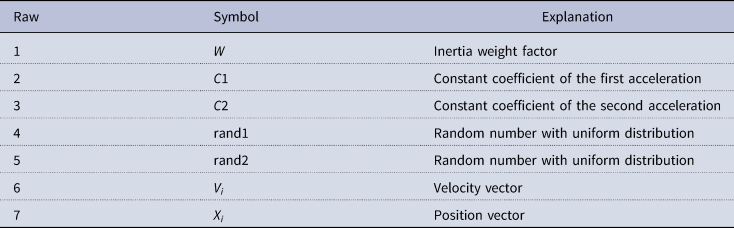
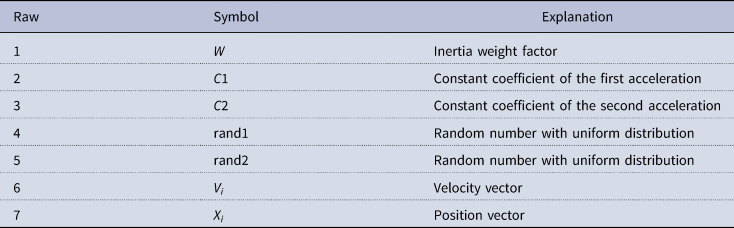
where λ is the constriction factor; c 1 and c 2 are the acceleration constants, and rand() is a random number with uniform distribution in the range [.1].
Table 2 illustrates the important parameters of the PSO algorithm.
Important parameters of PSO algorithm
Steps of implementing PSO algorithm
This section describes the steps of implementing the PSO algorithm. In this case, the structure of each particle consists of an array.
Initialization and random production of the initial particle population
In the initialization step, the initial particle population must be created. In a PSO, each particle indicates a solution to an issue; a solution is a cloud service combination represented by an array of length n (number of tasks in the workflow) (Lin et al., Reference Lin, Song, Ke, Yan, Liu and Cai2022). The number stored in index i of the array indicates the candidate service ID that will execute the Ti task. The random determination of the initial position of particles with a uniform distribution in the solution space is commonly known as the random creation of the initial population (search space). In this procedure, in addition to the particles' initial random position, a value is allocated to their initial velocity, which is determined by Equation (7) and executed using a vector data structure in Java. This structure has all the features of array and queue together and eliminates additional costs.

Selecting the number of initial particles
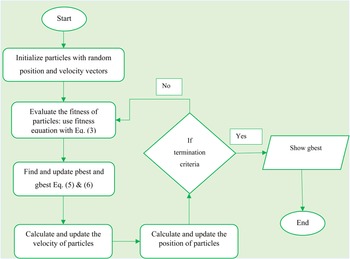
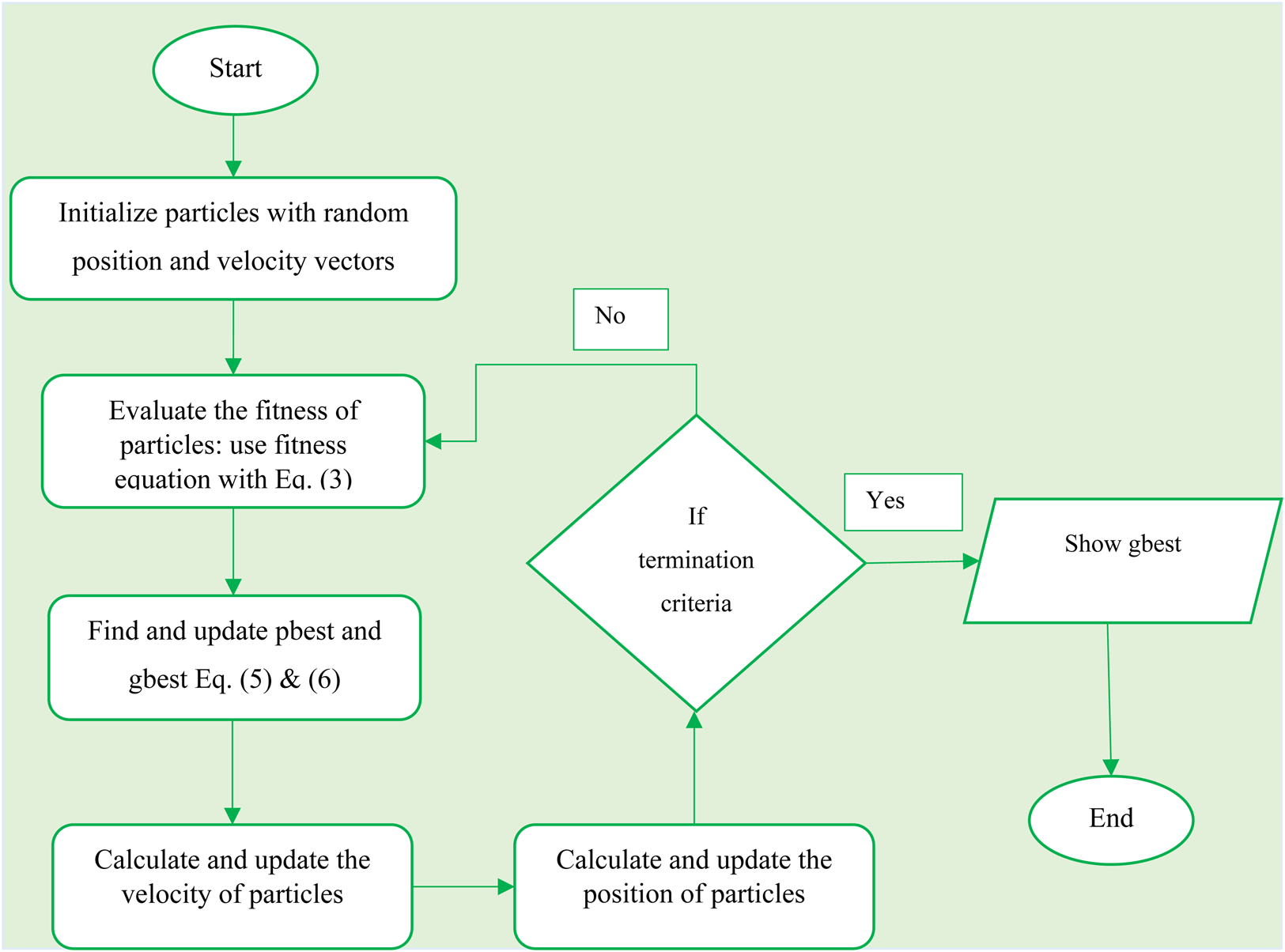
The issue defines the size of the beginning population. The number of starting particles is, in general, a compromise among the issue's parameters. According to experiments, choosing an initial population of 20–30 particles is a smart choice that works well for virtually all test situations. To have a small safety buffer in the case of local minima, the number of particles can be regarded as a little more than essential. The number of particles cannot be increased to minimize the algorithm's completion time. Another myth is that the number of particles may be lowered to lessen the algorithm's implementation time. Figure 2 illustrates a flowchart of the PSO algorithm.
Flowchart of PSO algorithm.
The shuffling frog leaping (SFL) algorithm
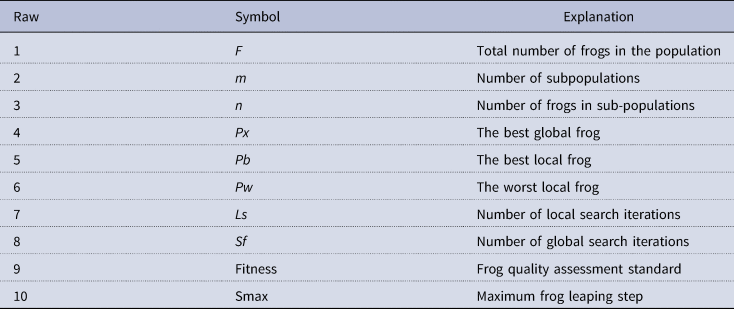
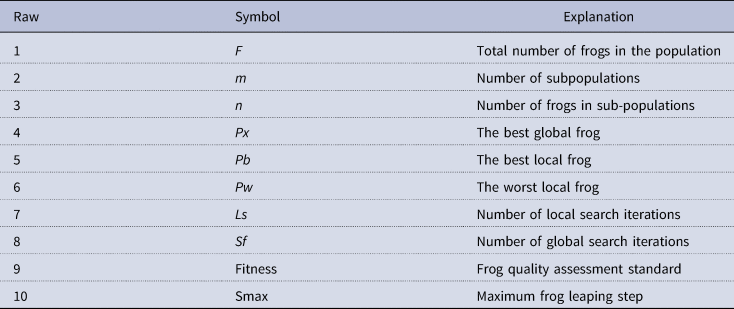
The SFL algorithm is a meta-heuristic algorithm developed by Eusuff, Lansey, and Pasha (Reference Eusuff, Lansey and Pasha2006). It is inspired by how frog groups search for food. Due to the possibility of sending local and global messages, local and global search processes integrate well into this algorithm. This algorithm is highly searchable, easy to implement, and can solve many nonlinear, undetectable, and multi-objective problems. Important parameters in the SFL algorithm are given in Table 3.
Important parameters of the SFL algorithm
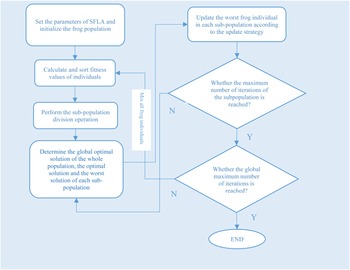
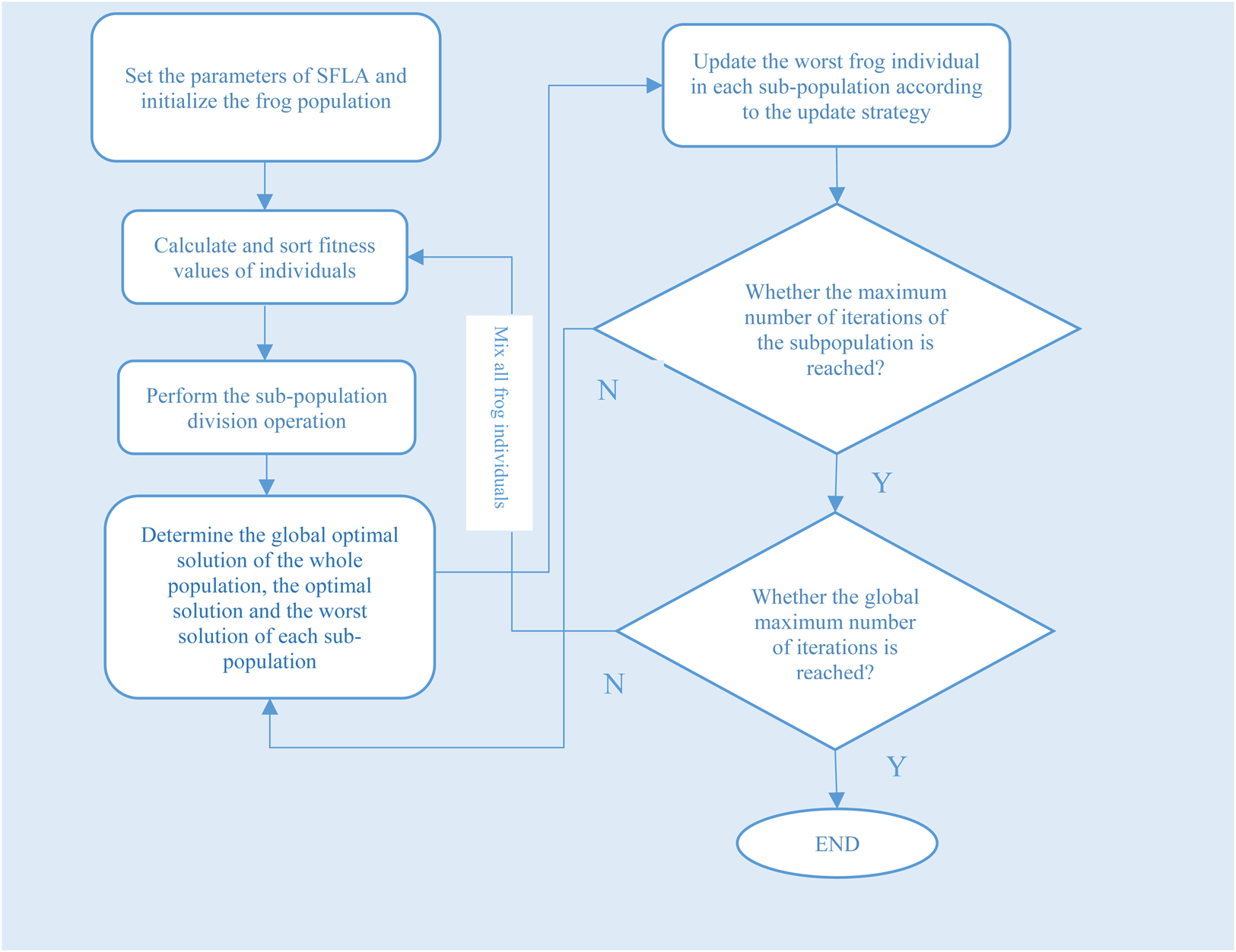
The algorithm for SFL begins with a random selection of frog groups. Frogs are classified into a number of subgroups. Each of these subgroups may do local searches in its own unique way. Frogs in one subgroup can have an impact on frogs in another subgroup. It is how a subgroup of frogs develops. Individual frogs' memetic quality grows as a result of memetic evolution, as does their capacity to attain the objective. The weight of excellent frogs may be elevated, while the weight of poor frogs can be lowered to accomplish a desired aim. The subgroups are incorporated after the development of some memetics. Memetics are optimized in the global realm as a result of the integration, and the integration process creates new frog subgroups. The quality of mimetics impacted by distinct subgroups improves with integration. Until the convergence criterion is fulfilled, global and local searches are combined. Thanks to the balance between global message exchange and local search, the algorithm may quickly transition from the local minimum to optimization.
Equations 8 and 9 are used to calculate the steps of the SFL algorithm (Ebrahimi, Hosseinian, & Gharehpetian, Reference Ebrahimi, Hosseinian and Gharehpetian2010).


The flowchart of the SFL method is shown in Figure 3.
Flowchart of SFL algorithm.
Flowchart of the proposed hybrid algorithm
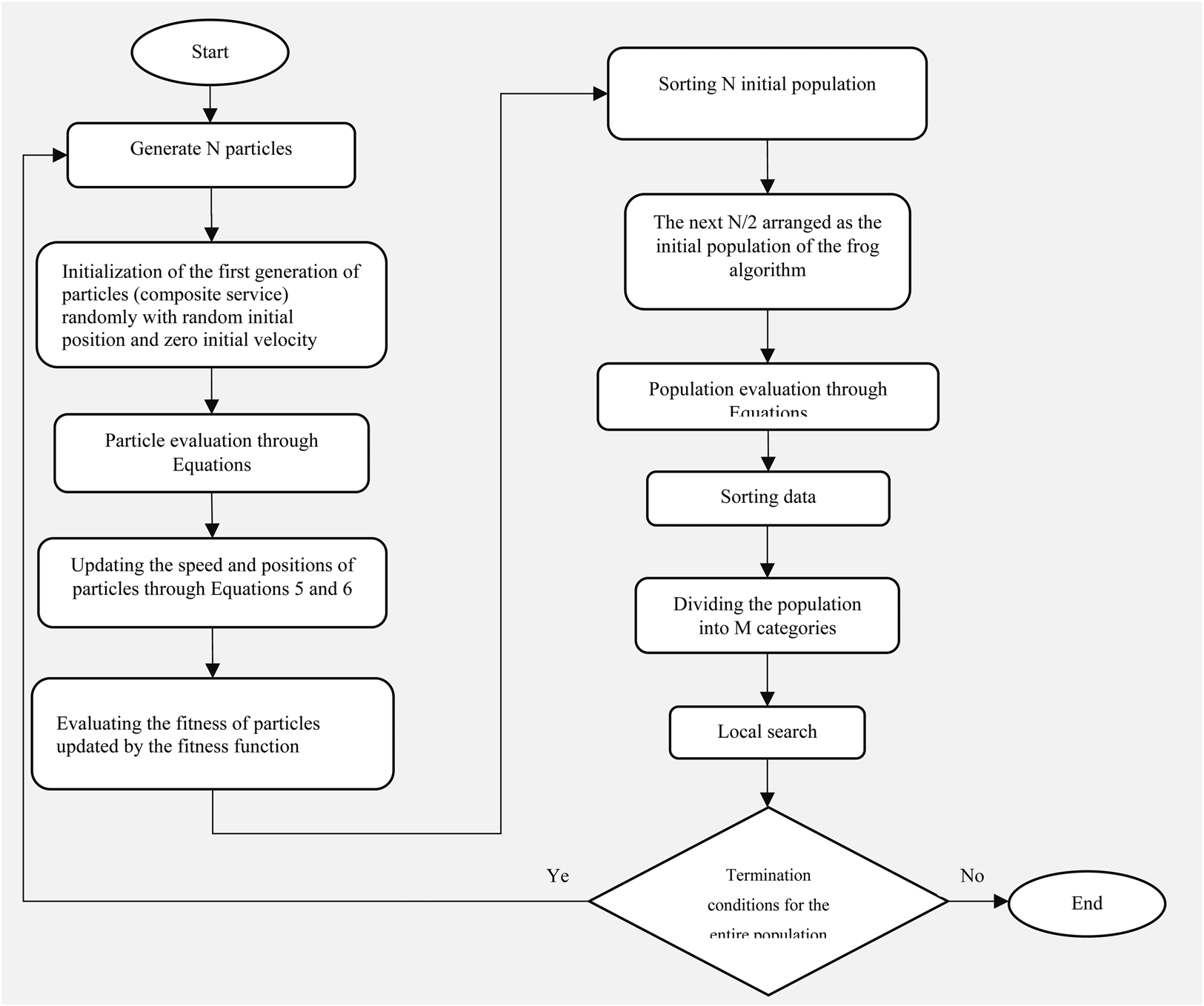
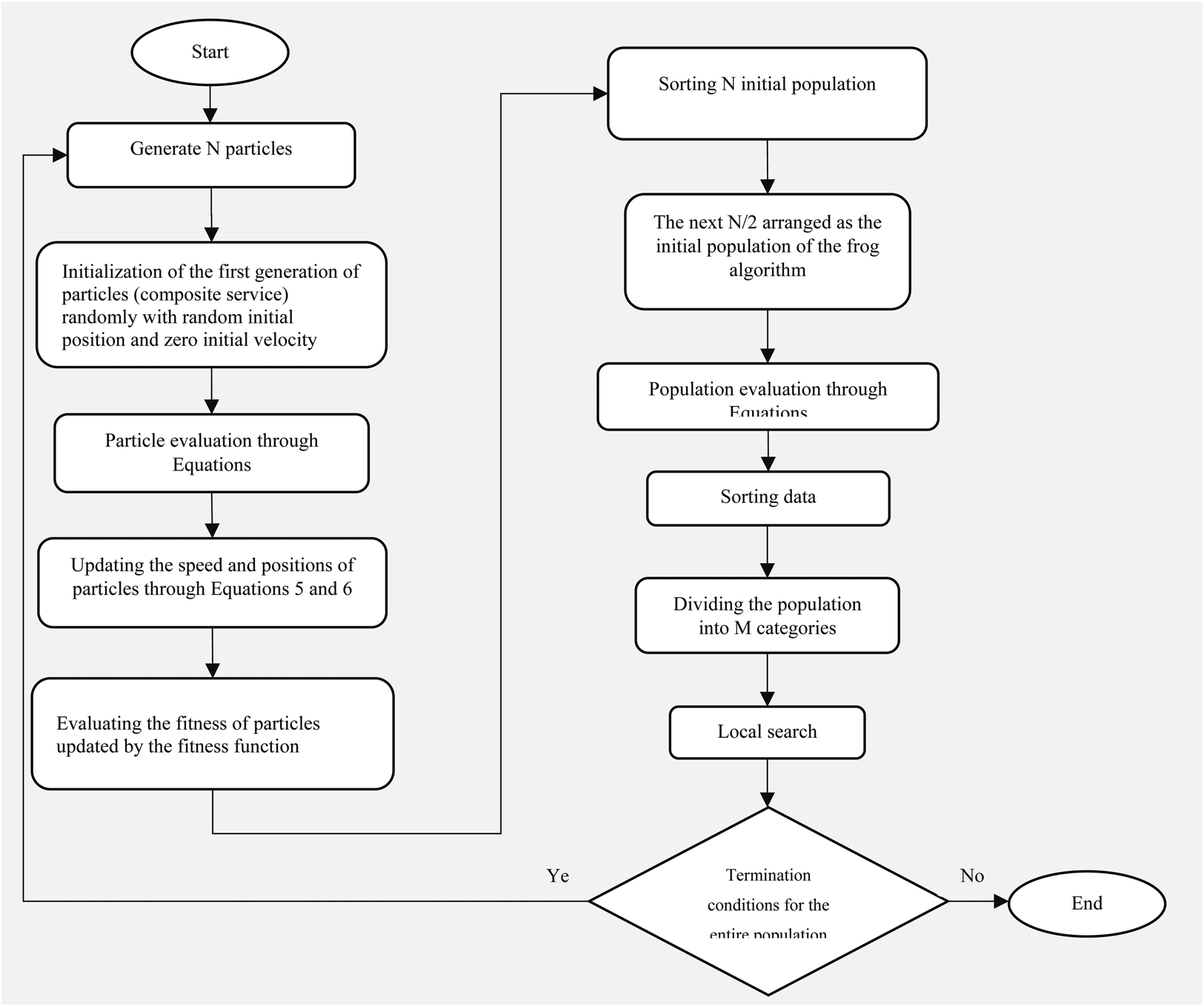
As stated, the current drawback of PSO algorithms is the possibility of being trapped in the local optimization or converging to the global optimization over a long period. To deal with these problems, the local search power of the SFL algorithm is used. For this purpose, first N particles are produced; the particle swarm is then calculated and evaluated using the algorithm. The initial population N is then sorted, and the next second half (N/2) is given to the frog algorithm for subsequent calculations. Eventually, the convergence conditions on the whole population are examined, and if established, it ends.
By merging the two methods, the hybrid PSO-SFLA aims to increase and decrease the benefit and drawbacks of a single approach, respectively. Although the PSO method is successful, it has a poor convergence speed in specific cases. The SFLA, on the other hand, has a faster convergence rate due to its more chaotic framework in the search procedure, which involves generating and categorizing random solutions. It may result in an early convergence to a suboptimal solution. It means that in the searching trend, the particle's PSO will be equivalent to each other, particularly in the final iterations. As a result, the PSO's calculation of an optimal solution is gradual. Besides, the SFLA convergence speed is quite fast. Nevertheless, this speed does not ensure that an optimal or near-optimal solution will be found. To begin, the hybrid PSO-SFLA generates a set of uniform random solutions. Randomly, one SFLA or PSO algorithm is chosen. Utilizing SFLA or PSO relations, the objective function of each solution is determined, and the present locations of solutions are upgraded. This approach is repeated until the objective function value does not increase after a certain number of iterations (Orouji, Haddad, Fallah-Mehdipour, & Mariño, Reference Orouji, Haddad, Fallah-Mehdipour and Mariño2014).
The flowchart of the introduced shuffling method is demonstrated in Figure 4. Since the implementation of two meta-heuristic algorithms in large problems has a high time cost, the implementation of the shuffling process algorithm is considered to reduce these costs by allocating hardware facilities.
Flowchart of hybrid PSO algorithm and SFL algorithm.
Evaluating the objective function (cost or fitness) of the particles
Each particle that illustrates a solution to the issue under consideration must be evaluated at this stage. Since the goal is to minimize energy consumption and product design time and reduce Makespan, a fitness function is defined to minimize these three components using Equation (10):

The larger the number obtained, the greater the fitness of the answer.
Experimental results
In this section, the simulation environment, simulation parameters, data set, and simulation results obtained are expressed in order.
Simulation environment
The simulation was run utilizing Matlab software. Matlab is not just a programming language, but it is also a programming platform. Matlab offers various unique properties that make it the ideal choice for this method's simulation, including (Zhao & Ghasvari, Reference Zhao and Ghasvari2021):
• Numerous specified arithmetic functions, such as determinants, inverse matrices, cross products, and dot products, working on arrays or matrices
• Diversity of utilization domains, including hybrid algorithms
• Appropriate tools like excellent simulation facilities
Simulation parameters
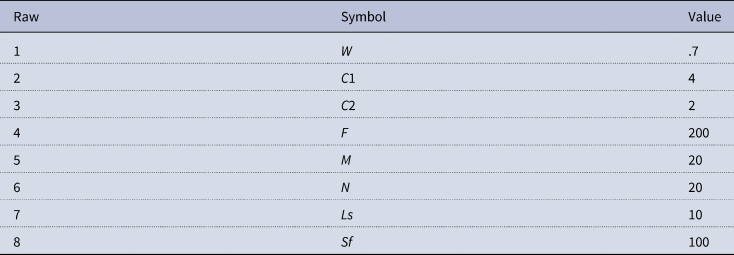
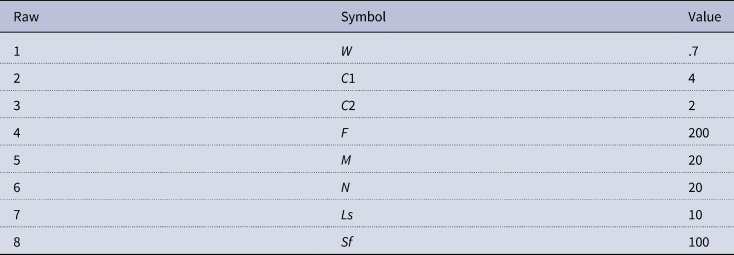
Table 4 indicates the important parameters used in the equations of the third section. These values are derived from reviews of similar articles. These numbers have been selected experimentally using different iterations and comparing the results obtained in each iteration.
Important parameters used
Data set
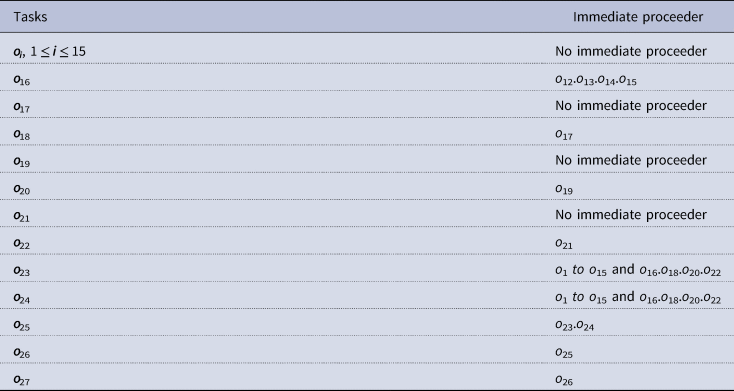
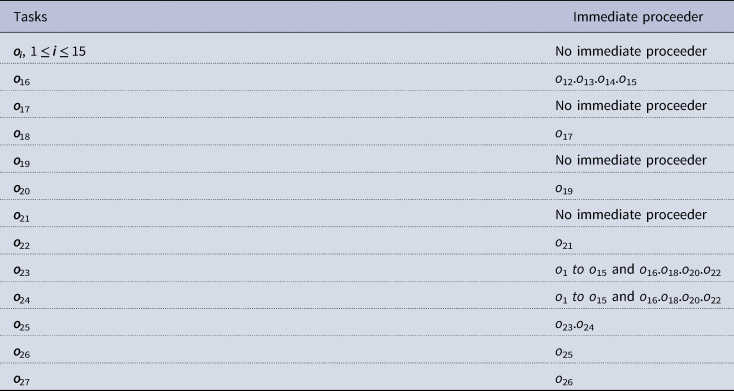
The data set used in this study is taken from the article (Lam, Reference Lam1999; Zhao & Ghasvari, Reference Zhao and Ghasvari2021); the data are from Motorola, the manufacturer of semiconductor circuits. These data include 27 design tasks and their details and four design engineers whose information is given in Tables 5 and 6.
Description of design tasks and their details

Note: o (tasks), r (design engineer).
Task priority and latency relationships
Obtained results
In this subsection, the convergence and stability of the suggested technique are first checked out. Afterward, the suggested technique is reviewed and compared to three algorithms PSO, genetic algorithm (GA), and SFLA, in terms of design time, Makespan, and energy consumption.
Convergence and stability of the proposed method
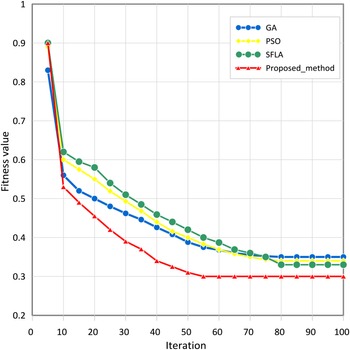
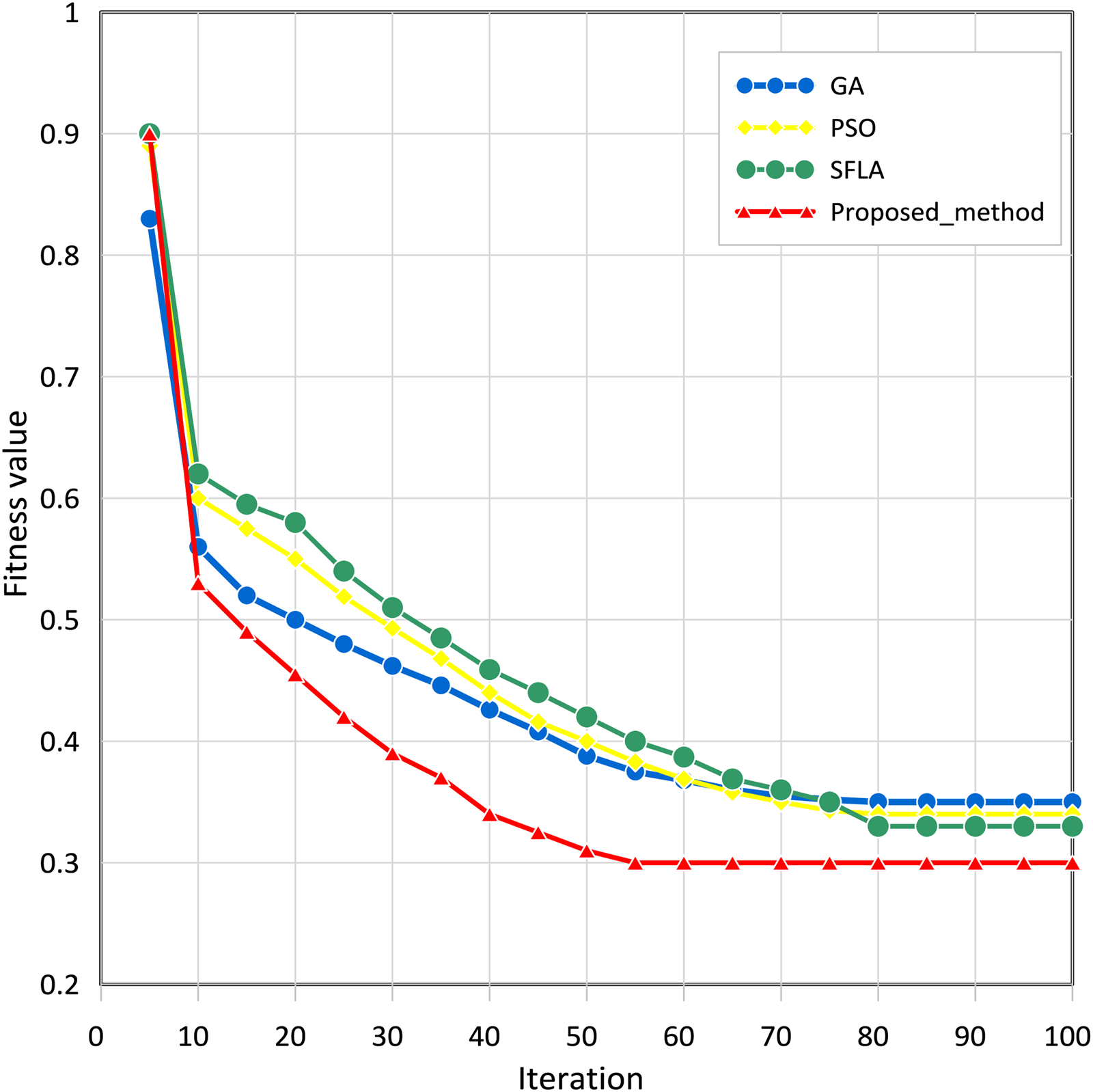
Searching for the optimal state is one of the most fundamental principles. Many real-life problems in science and engineering can be reduced to optimization problems (Sun, Li, & Deng, Reference Sun, Li and Deng2021). Convergence testing is similar to other optimization techniques in the suggested manner. An algorithm can be tested in a variety of methods. For instance, from the start, a fixed number of iterations can be specified and tested at each step to see if the number of iterations has achieved the desired value. It should return to step 2 if the number of iterations is fewer than the original set value; else, the algorithm should stop. Another often utilized way in algorithm convergence testing is that if the cost of the best particle does not change in a few successive iterations, such as 15 or 20, the algorithm terminates; alternatively, it must return to step 2. The convergence diagram of the method is plotted in Figure 5. The proposed method is convergent to the optimal answer, according to the figure.
Convergence diagram for 100 iterations.
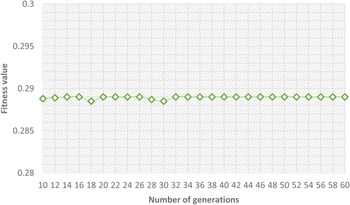
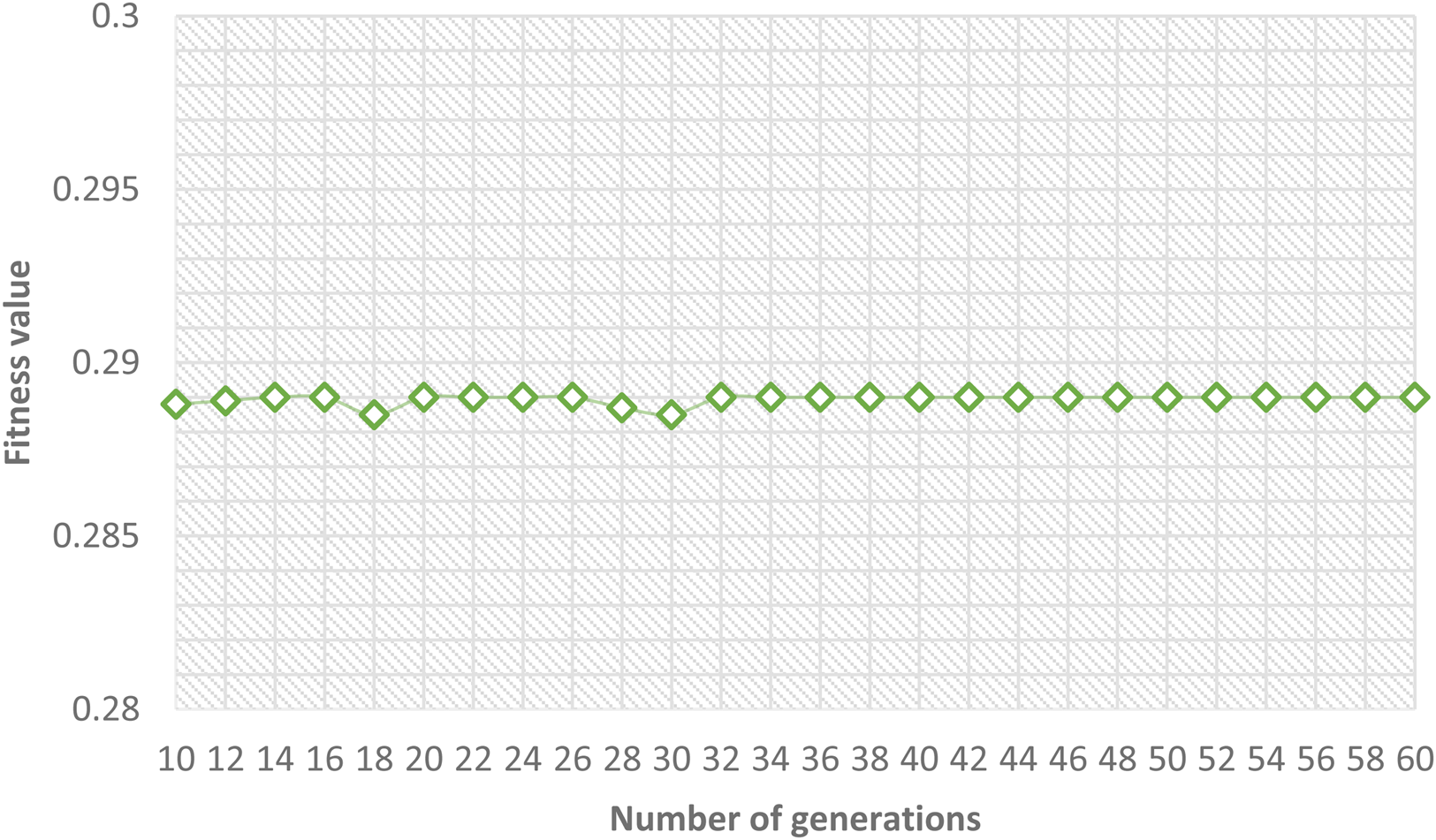
The stability diagram of the suggested method is presented in Figure 6. According to the figure, the proposed method is stable in terms of the volume of input work. By multiplying the number of tasks, the time required to execute does not change significantly and is stable relative to the number of tasks.
Stability diagram for 50–500 tasks.
IoT-enabled sensing at design-time
Design-time sensing in an intelligent production platform must detect the present state of all necessary capabilities, such as virtualization manufacturing and logistics, that may be used to manufacture a requested product or service. Thus, the following prerequisites must be met (Rasouli, Reference Rasouli2020):
• Supporting the semantic perception of the networked capabilities;
• Mapping the misaligned ontologies to integrate data received from heterogeneous IoT devices.
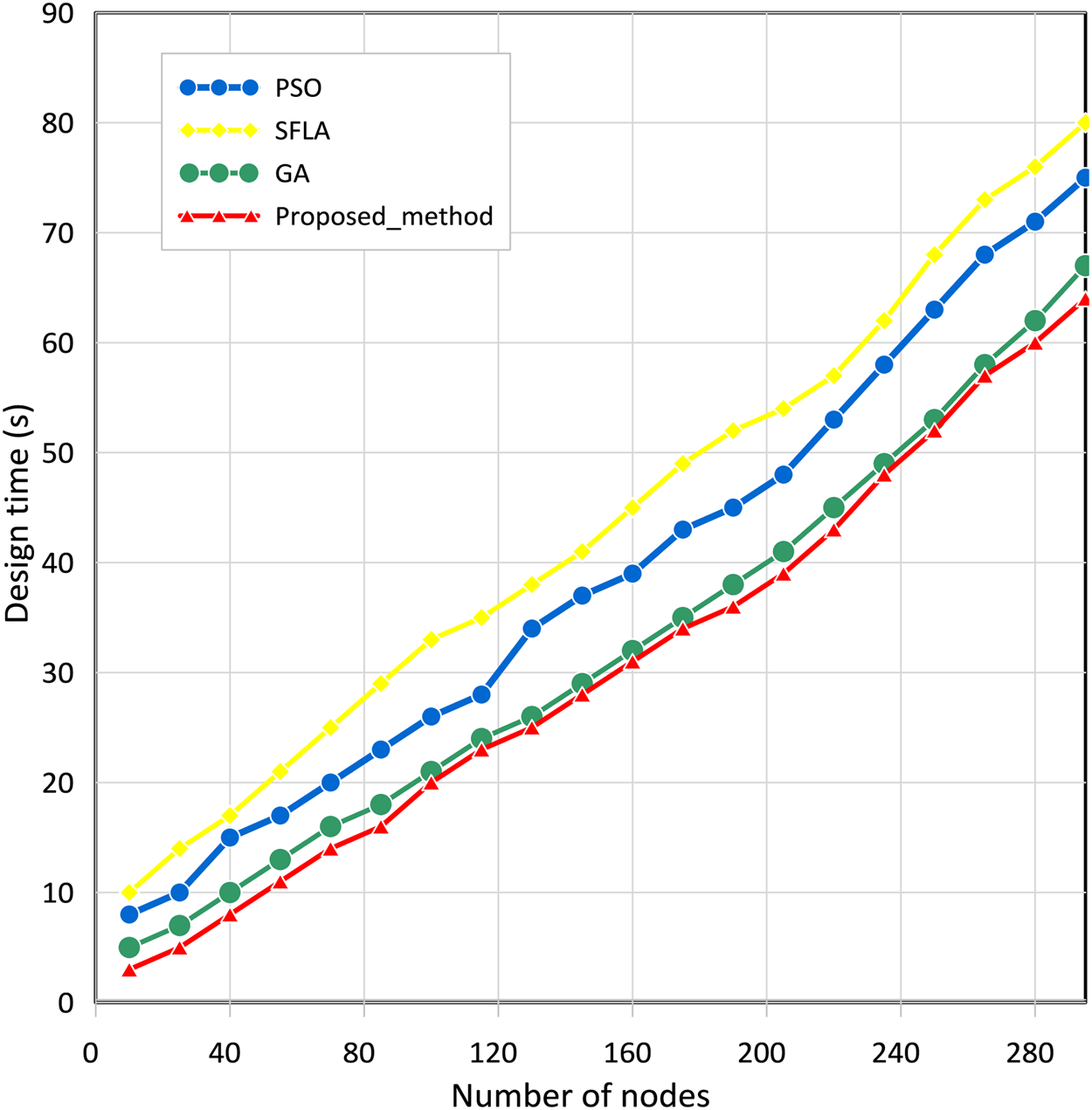
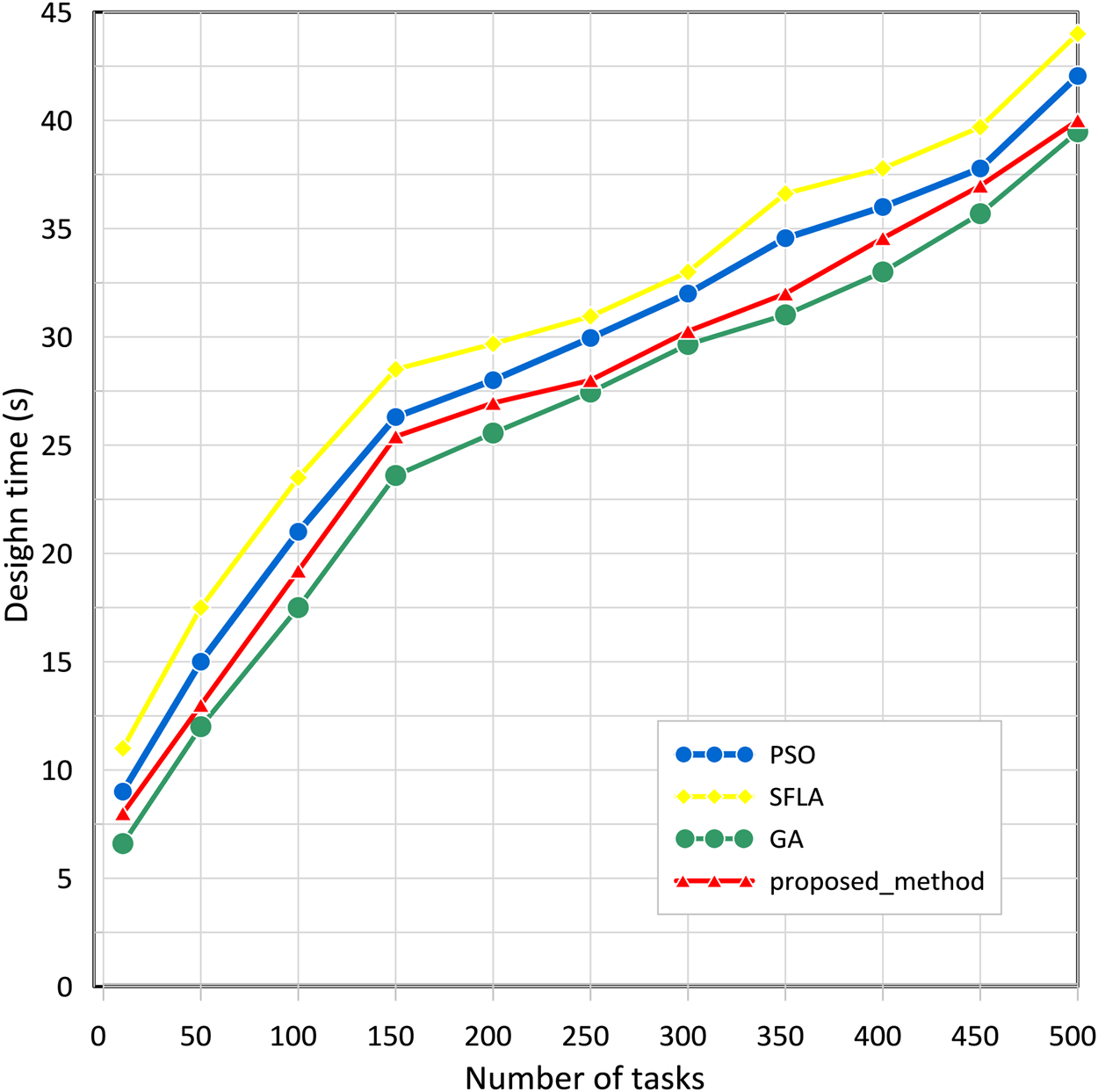
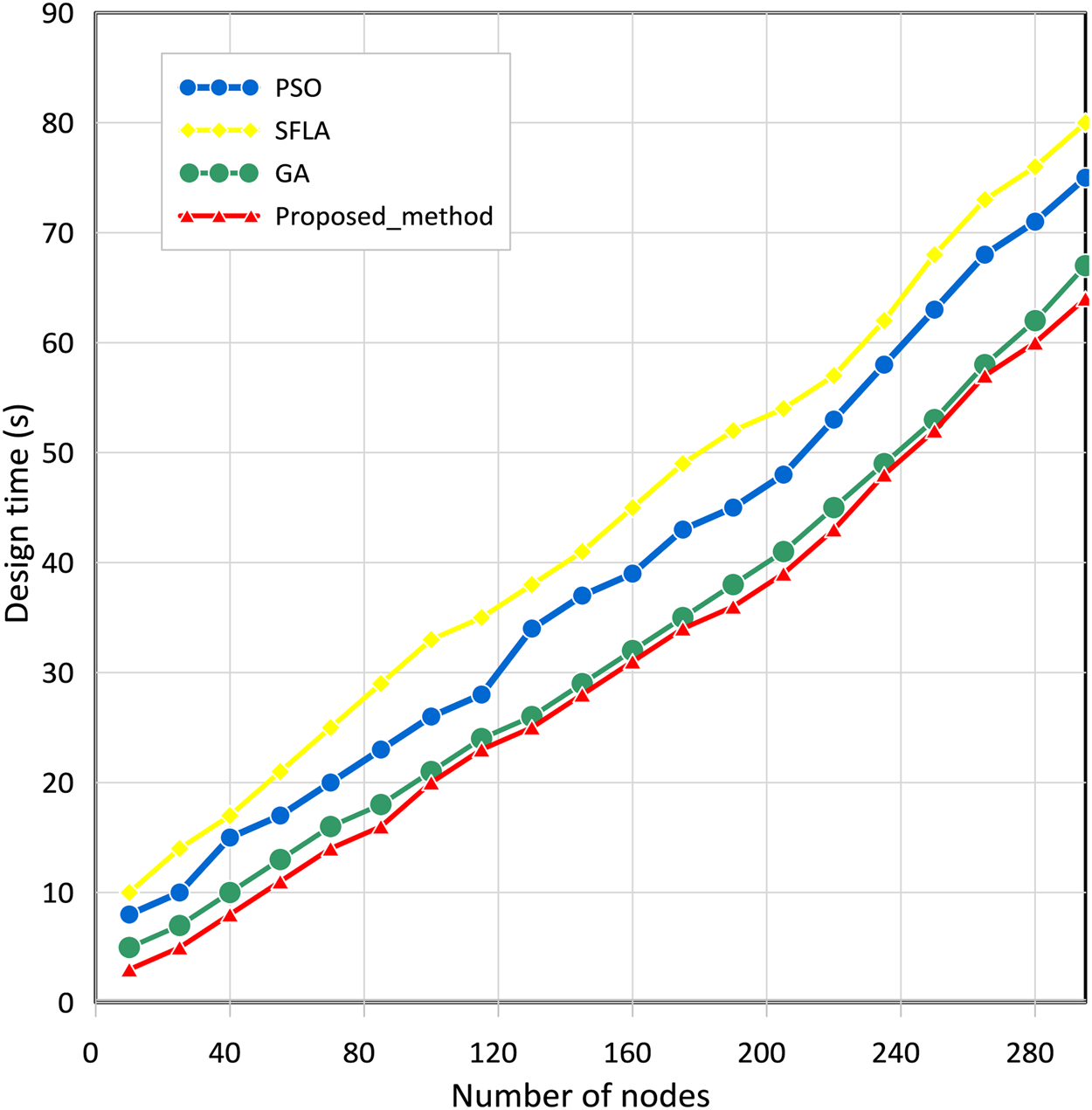
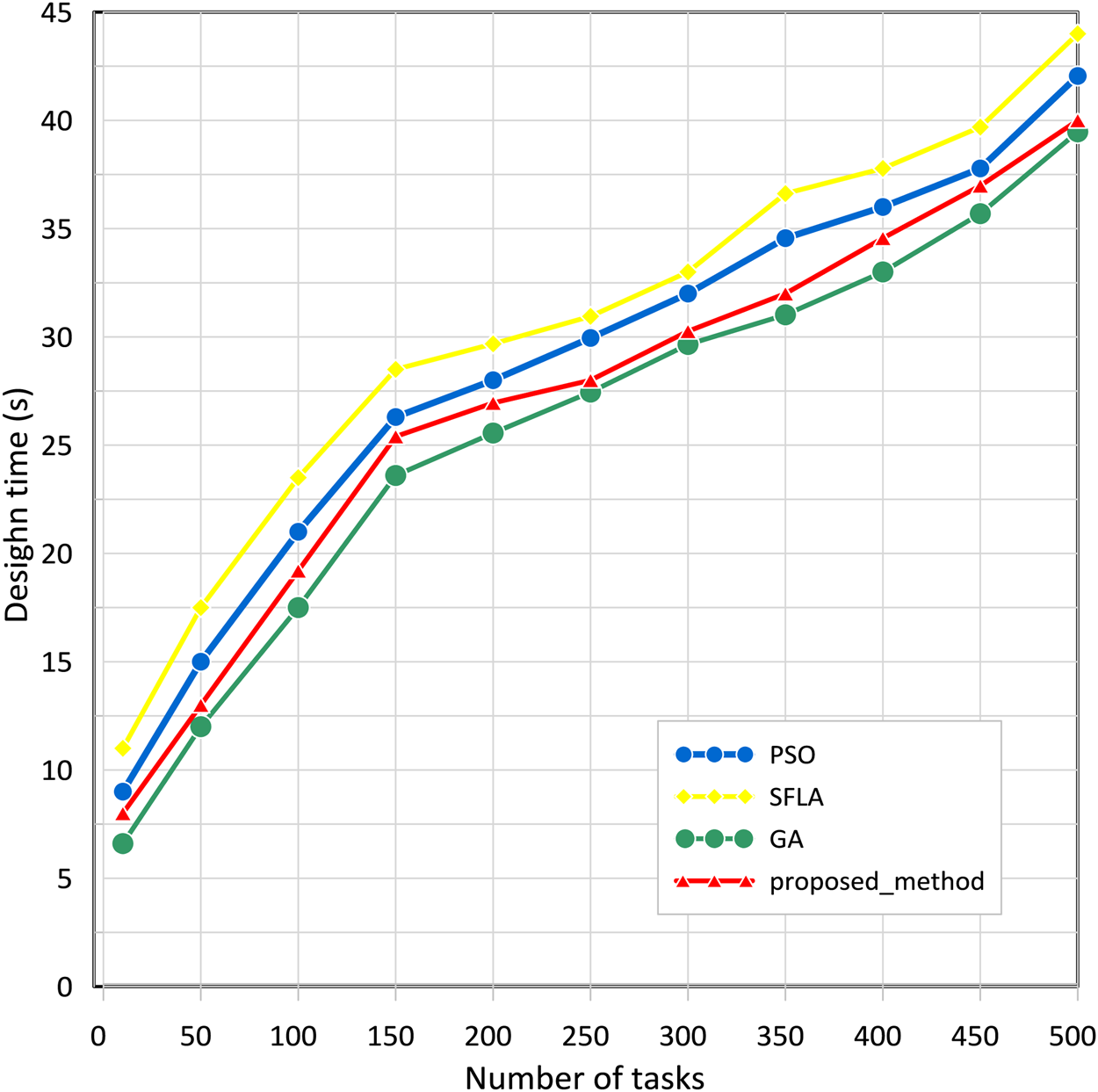
The method is compared to GA, PSO, and SFL algorithms to reduce design time. In Figures 7 and 8, the number of nodes was 295, and the number of tasks was 500. According to the figure, as the number of nodes in Figure 7 and the number of tasks in Figure 8 increase, the design-time grows. However, the rate of increase in the proposed method was less than in other methods. Thus, it can be argued that the suggested strategy performs better. Only in Figure 8, the GA performs slightly better than the proposed method.
Comparing design time of the suggested strategy to other algorithms with different number of nodes.
Comparing the design time of the suggested strategy to other algorithms with different number of tasks.
4.4.3. Makespan
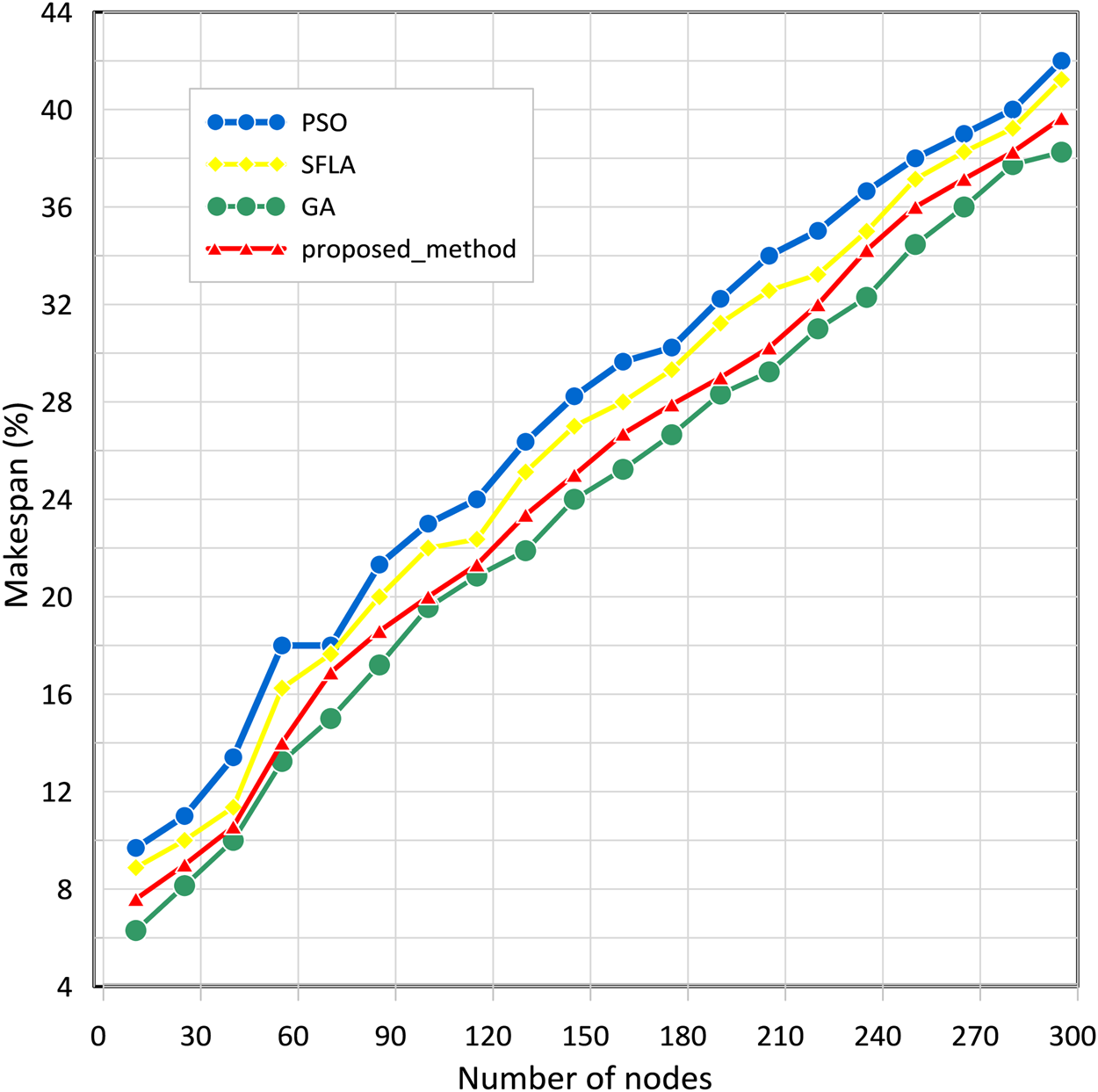
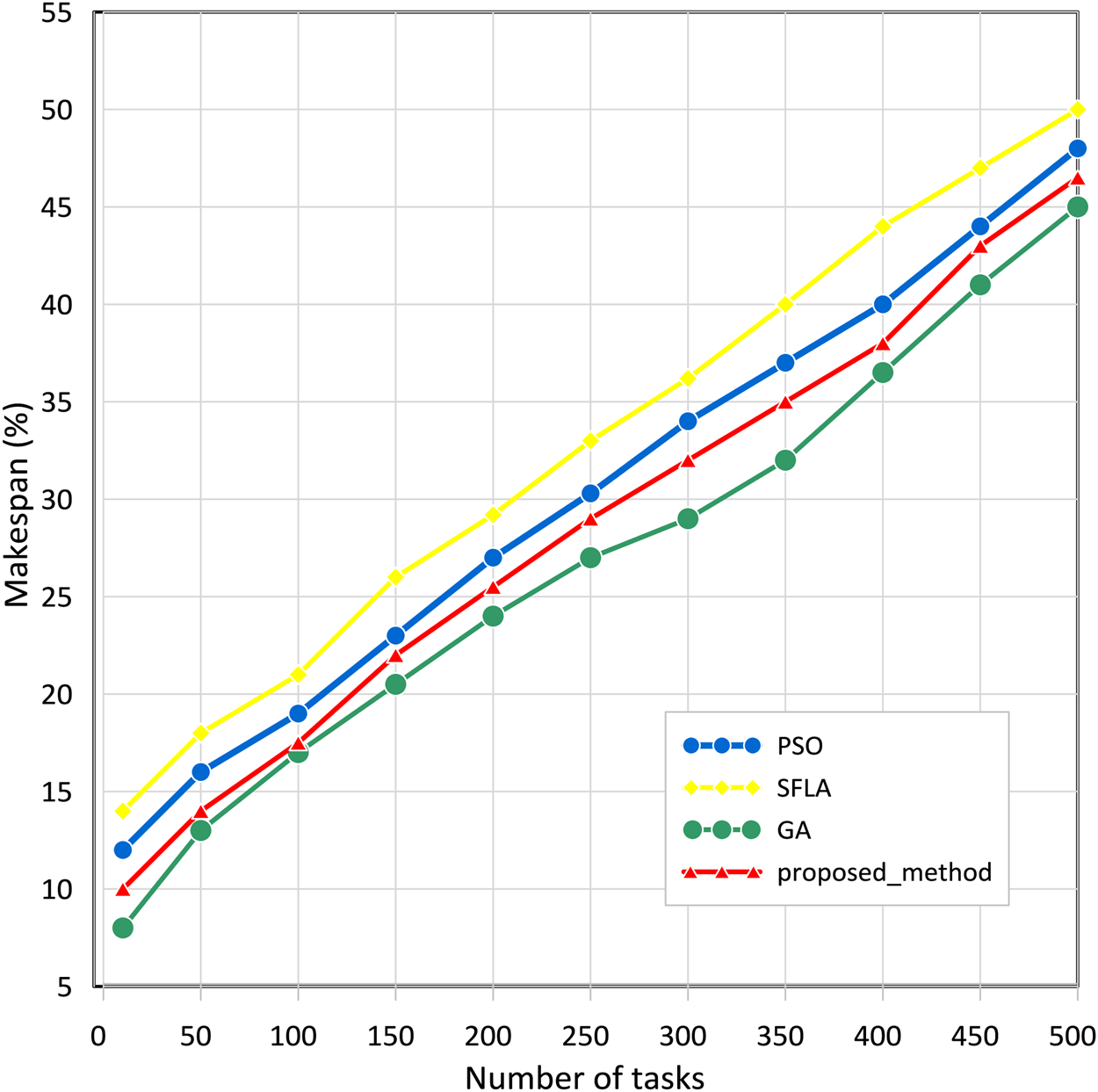
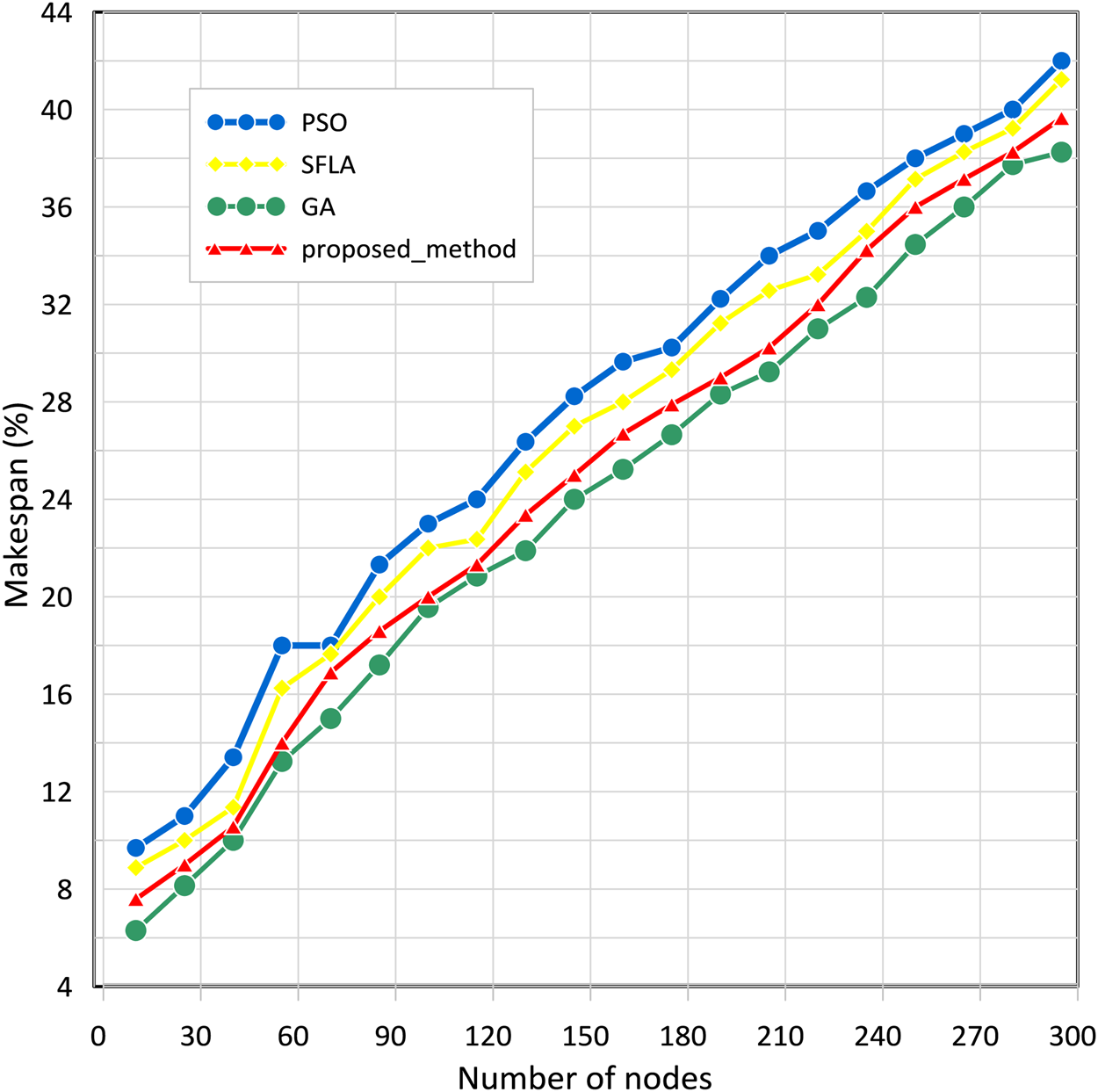
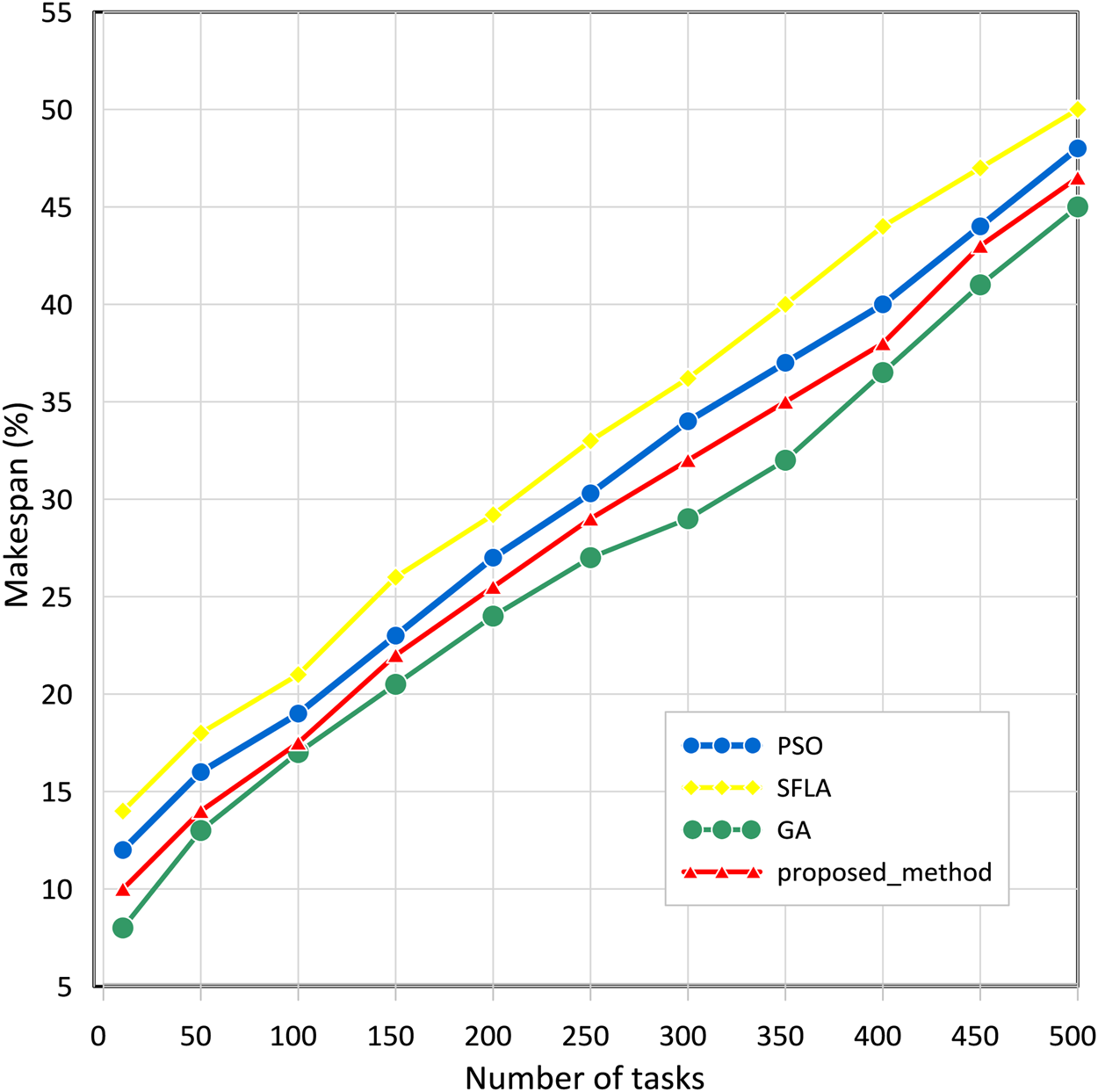
The method is compared to GA, PSO, and SFL algorithms in terms of Makespan. In Figures 9 and 10, the number of nodes was 295, and the number of tasks was 500. According to the figure, as the number of nodes in Figure 9 and the number of tasks in Figure 10 increase, the amount of Makespan grows. However, the rate of increase in the method was less than the other GA. So, it can be derived that the suggested strategy has a better performance. However, the GA performs better than our proposed method, which can also be a research limitation.
Comparing Makespan of the suggested strategy to other algorithms with different number of nodes.
Comparing Makespan of the suggested strategy to other algorithms with different number of tasks.
4.4.4. Energy
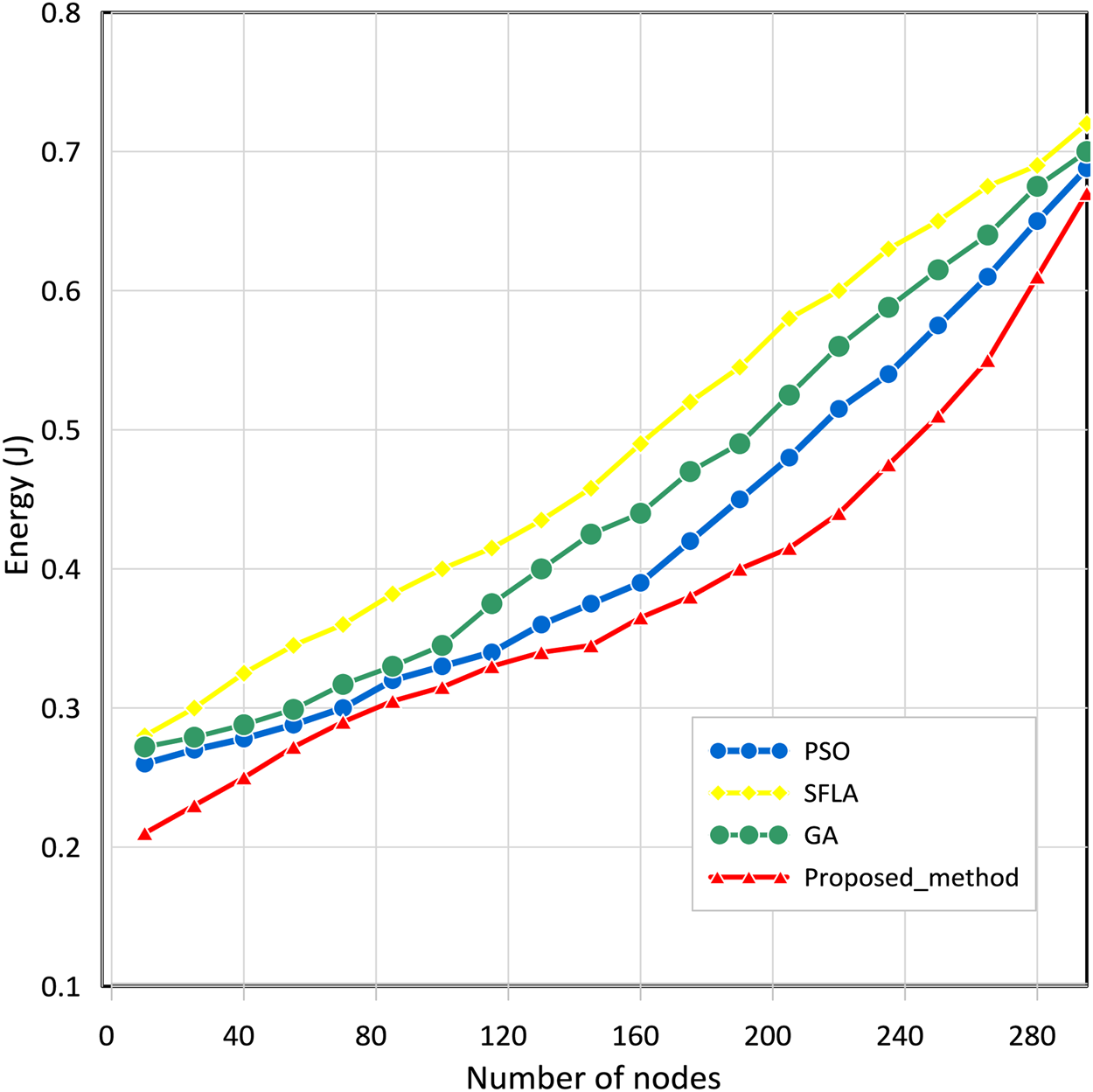
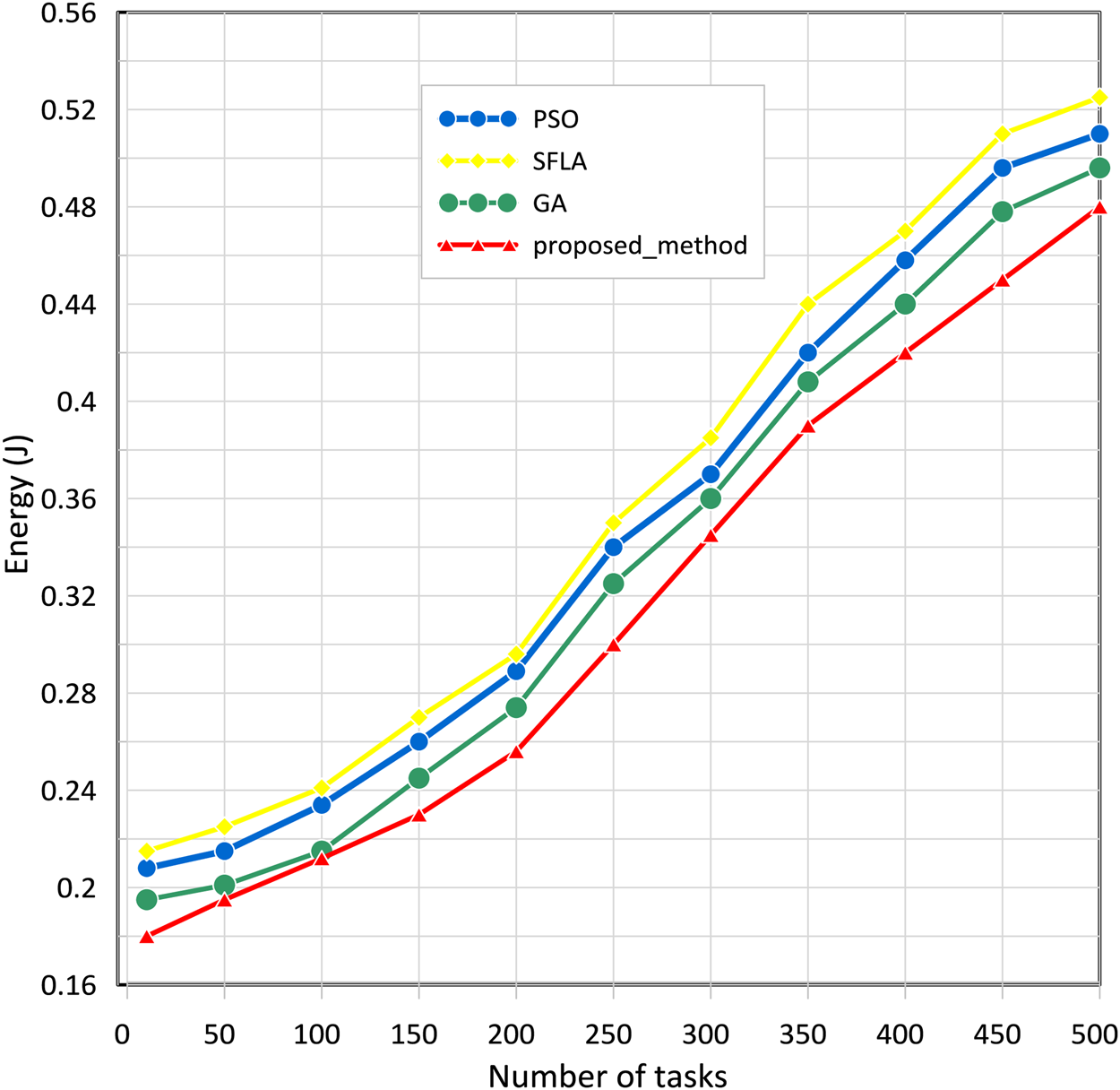
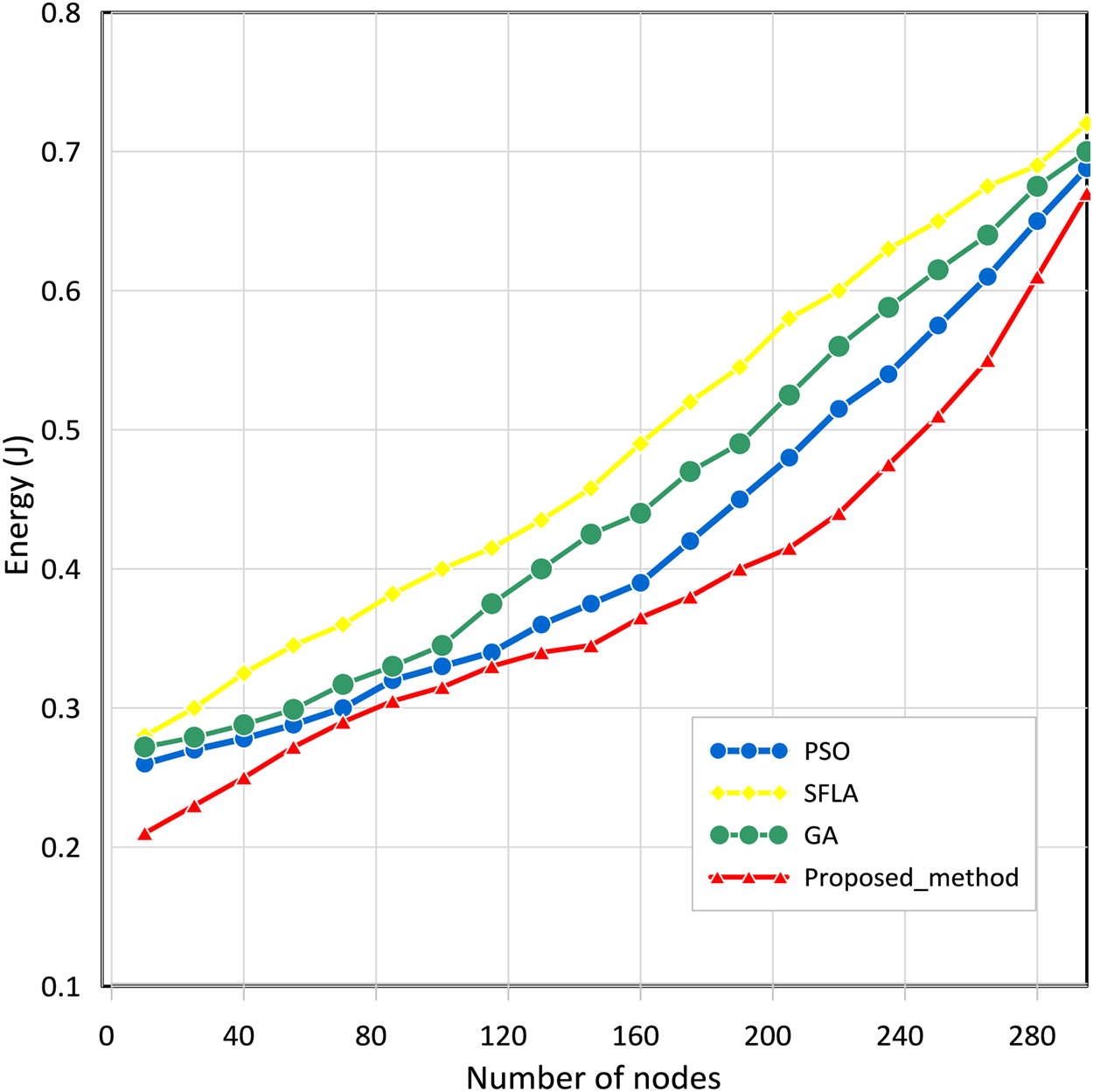
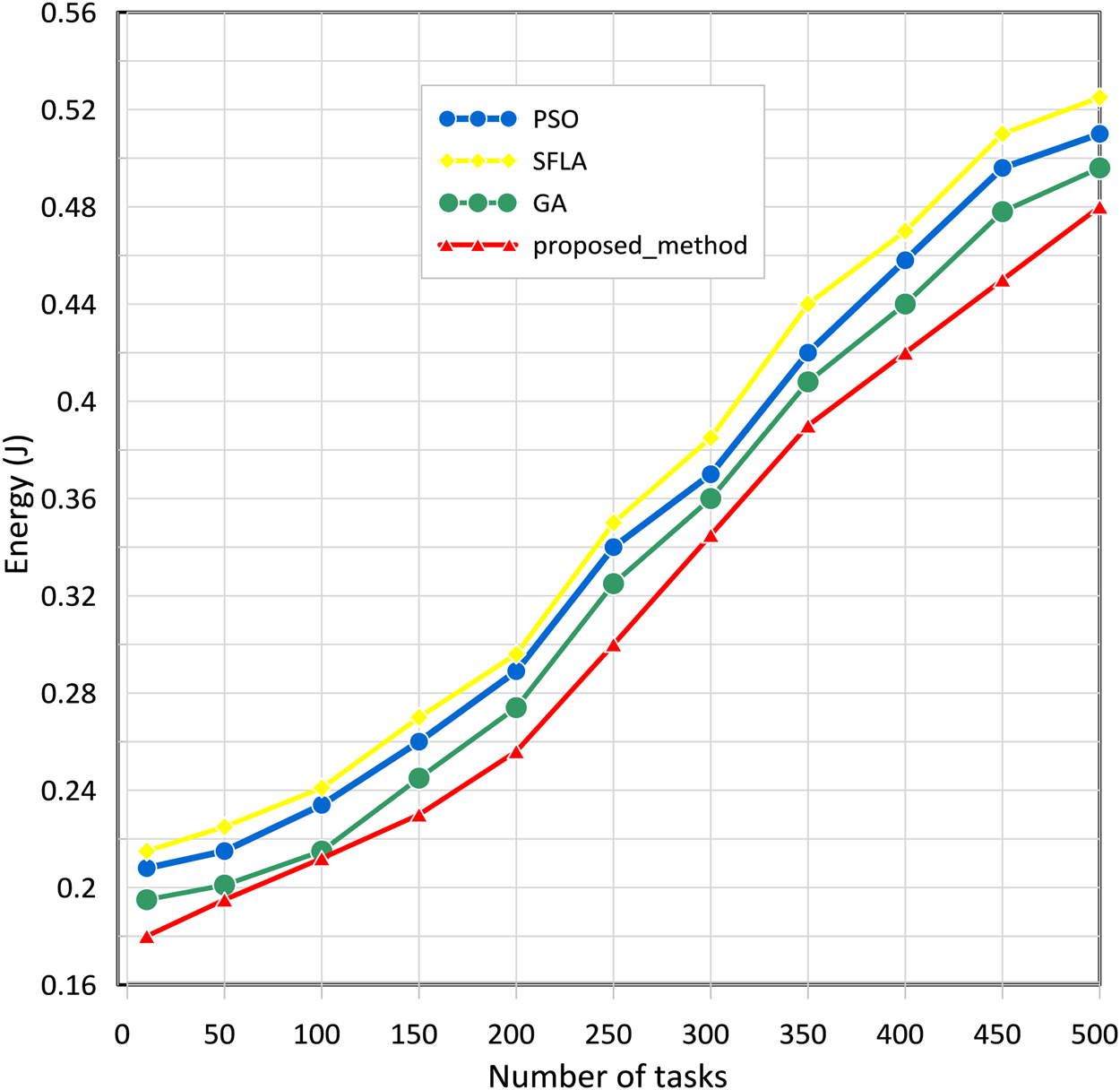
Several industrial businesses in Industry 4.0 manufacturing techniques are concerned about energy-efficient operations (Mou, Duan, Gao, Liu, & Li, Reference Mou, Duan, Gao, Liu and Li2022). Energy costs are presently skyrocketing, and environmental preservation is a big issue for several nations (Xu et al., Reference Xu, Zhang, Yang, Tong, Yan, Yang and Wu2021). Also, the intelligent reflecting surface is a green technique for 6G cellular IoT, and henceforth it has been investigated in diverse wireless communication (Chen, Tang, Zhang, So, Jin, & Wong, Reference Chen, Tang, Zhang, So, Jin and Wong2021). Energy usage data may be obtained in Industry 4.0 thanks to the broad implementation of numerous sensors. To identify the energy usage features, Machine Learning (ML) approaches may be applied to the acquired data (Zheng et al., Reference Zheng, Wang, Sang, Zhong, Liu, Liu and Xu2018). In addition, a deep neural network is an ML approach for analyzing huge data sets. Based on the data collected from energy usage monitoring, it may be used to derive the energy usage features or trends of industrial equipment. The method is compared to GA, PSO, and SFL algorithms in terms of energy consumed. In Figures 11 and 12, the number of nodes was 295, and the number of tasks was 500. According to the figure, as the number of nodes in Figure 11 and the number of tasks in Figure 12 increase, the amount of energy consumed grows. However, the rate of increase in the proposed method was less than in other methods. Thus, it can be argued that the suggested strategy performs better.
Comparing the energy consumption of the suggested strategy to other algorithms with different number of nodes.
Comparing energy consumption of the suggested strategy to other algorithms with different number of tasks.
Conclusion and future works
Manufacturing is defined as the process of converting raw materials into finished/useful commodities. New emergent technologies emerge as technology and science improve, making it more flexible. These developments require manufacturing firms to manufacture higher-quality goods in a shorter amount of time in order to gain a competitive advantage. Thus, all possible design solutions with the lowest production cost and time must be evaluated. Computer-aided design, production tools, and analytical technologies, according to the investigation, give a highly strong resource tool for futuristic innovations. Further recent advancements in technologies like rapid prototyping, reverse engineering, and rapid tooling indicate that these technologies can quickly and cost-effectively build parts directly from computer-aided design models quickly and cost-effectively. Smart home appliances emerge as a crucial Industry 4.0 enabler, allowing enhanced consumer satisfaction, personalization, energy efficiency, and sophisticated big data analytics. This article aims to introduce a novel product development approach with IoT capability to support rapid production using a nature-inspired algorithm. This paper offered a hybrid SFLA and PSO. PSO-SFLA are swarm intelligence-inspired approaches that have shown to be excellent solutions to optimization challenges. The PSO-SFLA are meta-heuristic search techniques. PSO is based on the memetic evolution of a group of frogs hunting for food, whereas SFLA is based on the memetic growth of a group of frogs searching for food. The goal of this work was to minimize the Makespan, design time, and energy consumption in manufacturing systems. MATLAB software was used to simulate the suggested technique. The suggested solution outperformed existing energy savings, development time, and product design approaches according to simulation data. The GA outperforms the suggested technique only in Makespan, whereas the suggested technique outperforms the PSO and SFLA.
Future research might examine the economics of using novel technology in a smart re-manufacturing system to explain its viability and profitability. Integrating the suggested structure with other developing developments for networked information exchanges, such as big data analytic techniques and blockchain technology, might also be a promising area for future study.
Conflict of interest
None.
Data availability statement
All data are reported in the paper.
Yu Chen received master's degree from Harbin Institute of Technology, Heilongjiang, China, in 2020. Currently, he is a PhD student in the School of Management at Harbin Institute of Technology in China. His research interests are focusing on new product development and technology innovation. Email: chenyuhit@hit.edu.cn.
Shengbin Hao received PhD from Harbin Institute of Technology, China. Currently, he is an Associate Professor in the School of Management at Harbin Institute of Technology in China. His research interests include technology innovation and new product development. He has published many papers in some journals such as Journal of Business Research and Asia Pacific Journal of Management. Email: haoshengbin@hit.edu.cn.
Habibeh Nazif received the MSc degree in mathematics from Shahid Bahonar University of Kerman, Kerman, Iran, in 2004, the PhD degree in mathematics (Operations Research) from University Putra Malaysia (UPM), Seri Kembangan, Malaysia, in 2010. She is currently an Associate Professor (Faculty Staff Member) with the Department of Mathematics, Payame Noor University, Tehran, Iran. Her research interests include metaheuristic algorithms, scheduling, transportation, Internet of Things. Email: h_nazif@pnu.ac.ir.