Introduction
Suicide is a leading public health concern in the USA with a 30% increase in the age-adjusted rate of suicide death from 2000 with 10.4 per 100 000 to 2016 with 13.5 per 100 000 (Hedegaard, Curtin, & Warner, Reference Hedegaard, Curtin and Warner2018). Non-fatal suicidal behaviors, including suicidal ideation, plan, and attempt with intent to die (World Health Organization, 2014), are important clinical events and risk factors that are potentially important prevention targets (Hawton et al., Reference Hawton, Bergen, Cooper, Turnbull, Waters, Ness and Kapur2015; Olfson et al., Reference Olfson, Blanco, Wall, Liu, Saha, Pickering and Grant2017). Data from the World Health Organization of 21 countries (n > 100 000) indicate the likelihood of an individual with suicidal ideation making a plan is 33% and attempt is 30% (Borges et al., Reference Borges, Nock, Abad, Hwang, Sampson, Alonso and Bruffaerts2010; Nock et al., Reference Nock, Borges, Bromet, Alonso, Angermeyer, Beautrais and De Graaf2008). Furthermore, approximately 60% of individuals who made a suicide plan and/or attempt after experiencing ideation did so within a year of ideation onset (Nock et al., Reference Nock, Borges, Bromet, Alonso, Angermeyer, Beautrais and De Graaf2008).
Population-based surveillance of non-fatal suicidal behaviors (ideation, plan, and attempt) is important to evaluate suicide prevention and intervention at the national level. Hedegaard et al. (Reference Hedegaard, Curtin and Warner2018) reported a significant increase in US suicide rates from 2000 to 2016 with a focus on sociodemographic characteristics over time. However, non-fatal suicidal behaviors were not reported. A few studies have made efforts to evaluate national trends of non-fatal suicidal behaviors, but most were limited in scope (Han et al., Reference Han, Compton, Blanco, Colpe, Huang and McKeon2018; Haukka, Suominen, Partonen, & Lonnqvist, Reference Haukka, Suominen, Partonen and Lönnqvist2008; Twenge, Cooper, Joiner, Duffy, & Binau, Reference Twenge, Cooper, Joiner, Duffy and Binau2019). Han et al. (Reference Han, Compton, Blanco, Colpe, Huang and McKeon2018) evaluated the national trends for non-fatal suicidal behaviors from 2009 to 2015, yet only reported these trends for young adults between 18 and 25 years of age. Olfson et al. (Reference Olfson, Blanco, Wall, Liu, Saha, Pickering and Grant2017) examined the US suicide attempt rate trend from 2004 to 2005 and 2012 to 2013 among adults yet did not examine suicidal ideation or plans. Twenge et al. (Reference Twenge, Cooper, Joiner, Duffy and Binau2019) provided a comprehensive assessment of US population-based trends in fatal and non-fatal suicidal behaviors among adolescents from 2005 to 2017 and emerging adults (ages 18–25) from 2008 to 2017; however, sociodemographic and clinical subgroup analyses were not provided for national trends. As a result, there is a substantial gap in our understanding of the national trends of non-fatal suicidal behaviors among adults in the USA.
Studies have identified various clinical and sociodemographic characteristics associated with fatal and non-fatal suicidal behavior. The presence of a mental disorder(s) is a salient risk factor for suicide attempt and suicide death (Haukka, et al., Reference Haukka, Suominen, Partonen and Lönnqvist2008; Martínez-Alés & Keyes, Reference Martínez-Alés and Keyes2019; Olfson et al., Reference Olfson, Blanco, Wall, Liu, Saha, Pickering and Grant2017; Tidemalm, Langstrom, Lichtenstein, & Runeson, Reference Tidemalm, Långström, Lichtenstein and Runeson2008), with greater risk among individuals with depression, bipolar disorder, substance use disorders, and schizophrenia (Bachmann, Reference Bachmann2018; Palmer, Pankratz, & Bostwick, Reference Palmer, Pankratz and Bostwick2005). Further, mental health services are associated with reduced suicide ideation, plan, and attempt (Bruce et al., Reference Bruce, Ten Have, Reynolds, Katz, Schulberg, Mulsant and Alexopoulos2004; Han, Compton, Gfroerer, & McKeon, Reference Han, Compton, Gfroerer and McKeon2014; Han et al., Reference Han, Kott, Hughes, McKeon, Blanco and Compton2016; Hoertel et al., Reference Hoertel, Franco, Wall, Oquendo, Kerridge, Limosin and Blanco2015), and national data indicate mental health service utilization rates are increasing among the US adult population (Creedon & Cook, Reference Creedon and Cook2016; Han et al., Reference Han, Compton, Blanco, Colpe, Huang and McKeon2018; Mark et al., Reference Mark, Yee, Levit, Camacho-Cook, Cutler and Carroll2016). While it is well-established that rates of suicide death vary by gender, age, race, and ethnicity (Curtin, Warner, & Hedegaard, Reference Curtin, Warner and Hedegaard2016; Ivey-Stephenson, Crosby, Jack, Haileyesus, & Kresnow-Sedacca, Reference Ivey-Stephenson, Crosby, Jack, Haileyesus and Kresnow-Sedacca2017), findings of sociodemographic differences in non-fatal suicidal behaviors among adults are inconsistent. For example, some data show more ideation is experienced (Crosby, Gfroerer, Han, Ortega, & Parks, Reference Crosby, Gfroerer, Han, Ortega and Parks2011) and attempts are made among females than males (Centers for Disease Control and Prevention, 2018), while others report no significant differences in rates of ideation or attempt between males and females (Piscopo, Lipari, Cooney & Glasheen, Reference Piscopo, Lipari, Cooney and Glasheen2016).
Despite a significant increase in the annual suicide rate in the USA, little is known about national non-fatal suicidal behavior trends among adults and their associated sociodemographic and clinical characteristics. To bridge this gap, the present study examined trends in the rates of non-fatal suicidal behaviors (suicide ideation, plan, and attempt) and whether the trends differ by sociodemographic and clinical characteristics in a nationally representative sample of adults ages 18–65 from 2009 to 2017.
Methods
Data source
Secondary data were obtained from adults 18–65 years of age who participated in the Substance Abuse and Mental Health Services Administration (SAMHSA) National Survey on Drug Use and Health (NSDUH; Substance Abuse and Mental Health Services Administration, 2019), including mental health assessment, from 2009 to 2017 (n = 335 359). The NSDUH publicly available data were collected in quarters using stratified, area probability sampling methods and involved in-person visits to US households by interviewers who gave a computer-assisted self-administered survey to participants 12 years and older. The survey included individuals living in houses or townhouses, apartments, condominiums, and civilians living in housing on military bases. Homeless people who did not use shelters, military personnel on active duty, and residents of institutional group quarters (e.g. jails and hospitals) were excluded. The current study included adult participants (ages 18–65) of the NSDUH surveys from 2009 to 2017.
As recommended by SAMHSA and NSDUH for secondary data projects, all analyses were weighted for the purpose of obtaining a nationally representative US population sample. From 2009 to 2017, the average annual mean-weighted screening response rate was 81.86% and mean-weighted interview response rate was 70.82% (SAMHSA, 2019). For most variables, missing or ambiguous values are imputed in NSDUH using a predictive mean neighborhoods approach (see Center for Behavioral Health Statistics and Quality, 2017a, 2017b for additional information). In the current study, only 0.53% of the data were not imputed; therefore, we used listwise deletion of missing values in all our analytic models. The NSDUH data collection protocol was approved by the Research Triangle Park International review board in North Carolina; greater study details and data collection activities are described elsewhere (Piscopo et al., Reference Piscopo, Lipari, Cooney and Glasheen2016; Substance Abuse and Mental Health Services Administration, 2019).
Measurement
Non-fatal suicidal behaviors
NSDUH questionnaires from 2009 to 2017 asked adult participants (18 years of age or older) about their experiences of suicidal ideation, plan, and attempt within the past 12 months (Substance Abuse and Mental Health Services Administration, 2019). Questions included the following: ‘At any time in the past 12 months, that is, from [the date 12 months prior] up to and including today, did you seriously think about trying to kill yourself?’ (ideation); ‘During the past 12 months, did you make any plans to kill yourself?’ (plan); and ‘During the past 12 months, did you try to kill yourself?’ (attempt). Response categories for all three questions were binary ‘yes’ or ‘no’.
Clinical characteristics
The construct of mental health and treatment status was represented by an indicator of mental illness and treatment, informed by two variables in the NSDUH data: any mental illness and mental health treatment (Substance Abuse and Mental Health Services Administration, 2019). ‘Any mental illness’ is an indicator of having a mental, behavioral, or emotional disorder of any level (serious, moderate, or mild) in past 12 months and is produced by clinical interview and survey data (Han, Compton, Gfoerer, & McKeon, Reference Han, Compton, Gfroerer and McKeon2015). This variable was coded as binary ‘yes’ or ‘no’ for having any mental illness. Mental health treatment was measured by a single question assessing for receipt of any mental health treatment in the past 12 months with binary ‘yes’ or ‘no’ response categories. Both variables were combined to represent mental health and treatment status with three categories: no mental illness in past 12 months, mental illness and no treatment received in past 12 months, and mental illness and treatment received in past 12 months.
Consistent with the prior work of Han et al. (Reference Han, Compton, Blanco, Colpe, Huang and McKeon2018), we included alcohol dependence, drug dependence, alcohol abuse, and cocaine abuse as our substance variables. Drugs included the following substances: marijuana, hallucinogens, inhalants, methamphetamine, cocaine, heroin, prescription pain relievers, prescription sedatives, prescription stimulants, or prescription tranquilizers. All dependence and abuse variables were defined by a participant's positive endorsement of given criteria (see NSDUH in Substance Abuse and Mental Health Services Administration, 2019 for greater detail) and scoring for all were binary ‘yes’ or ‘no’.
Demographic characteristics. The NSDUH assessed for a wide range of sociodemographic characteristics and the following were used in the current study: age, sex, race/ethnicity, and education given established relationships in the literature (Han et al., Reference Han, Compton, Gfroerer and McKeon2014, Reference Han, Compton, Gfroerer and McKeon2015).
Quantitative modeling and analysis
We followed the guidelines for trend analysis from the National Center for Health Statistics (https://www.cdc.gov/nchs/data/series/sr_02/sr02_179.pdf). The time unit was converted from quarters to years (1 quarter = 0.25 year). Mean-centered means of years were used to generate quadratic and cubic terms of year to address potential multicollinearity between the three time-related variables. Next, we used logistic regressions to examine relationships between each of the three time variables (linear, quadratic, and cubic) to obtain the adjusted trends of three non-fatal suicidal behaviors. Lastly, we individually tested the interaction terms between the linear year variable and each covariate for all non-fatal suicidal behaviors to examine whether the linear trends differ by sociodemographic and clinical subgroups. All statistical analyses were conducted using Stata 15 SE.
Results
Descriptive statistics and unadjusted annual trends
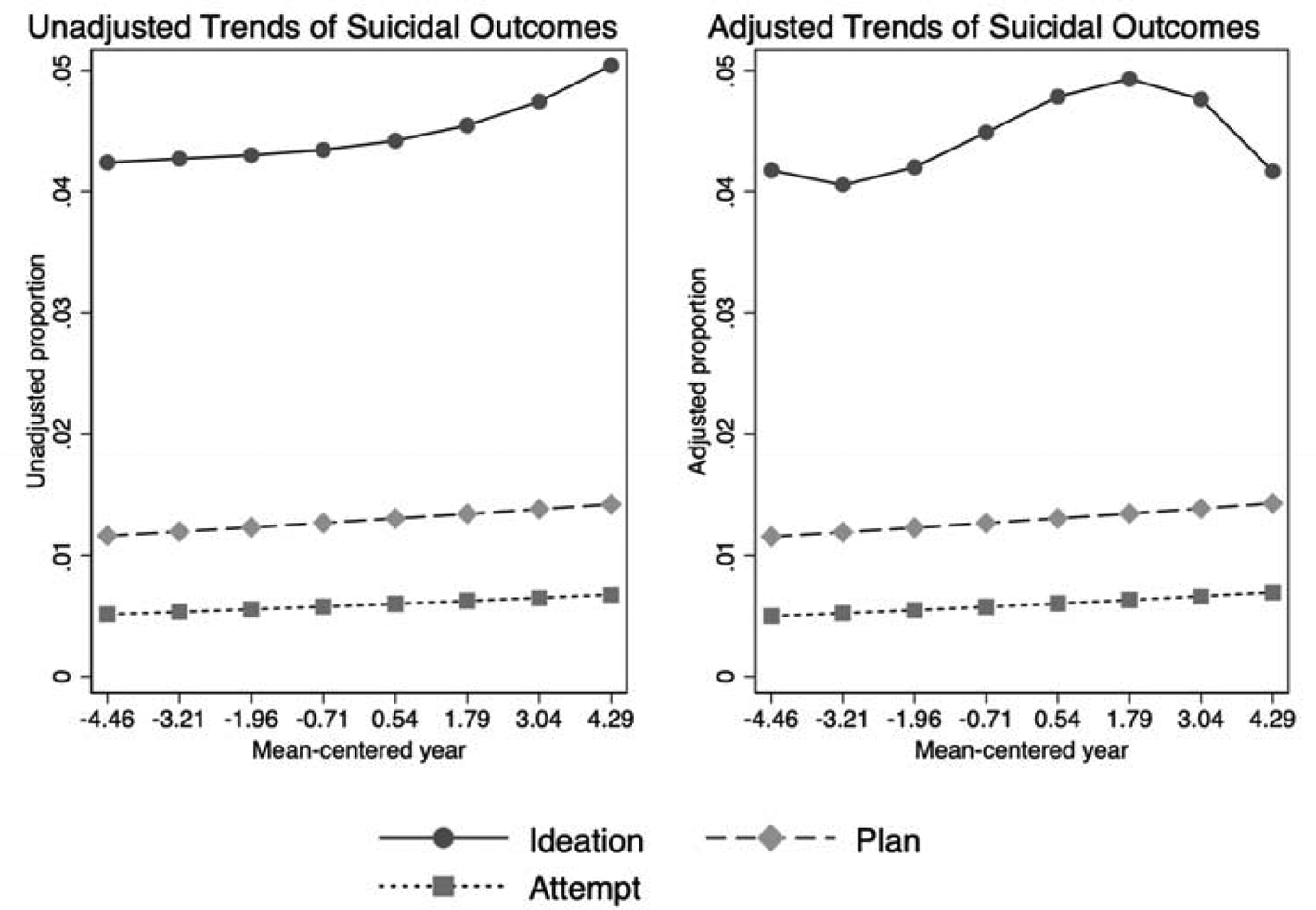
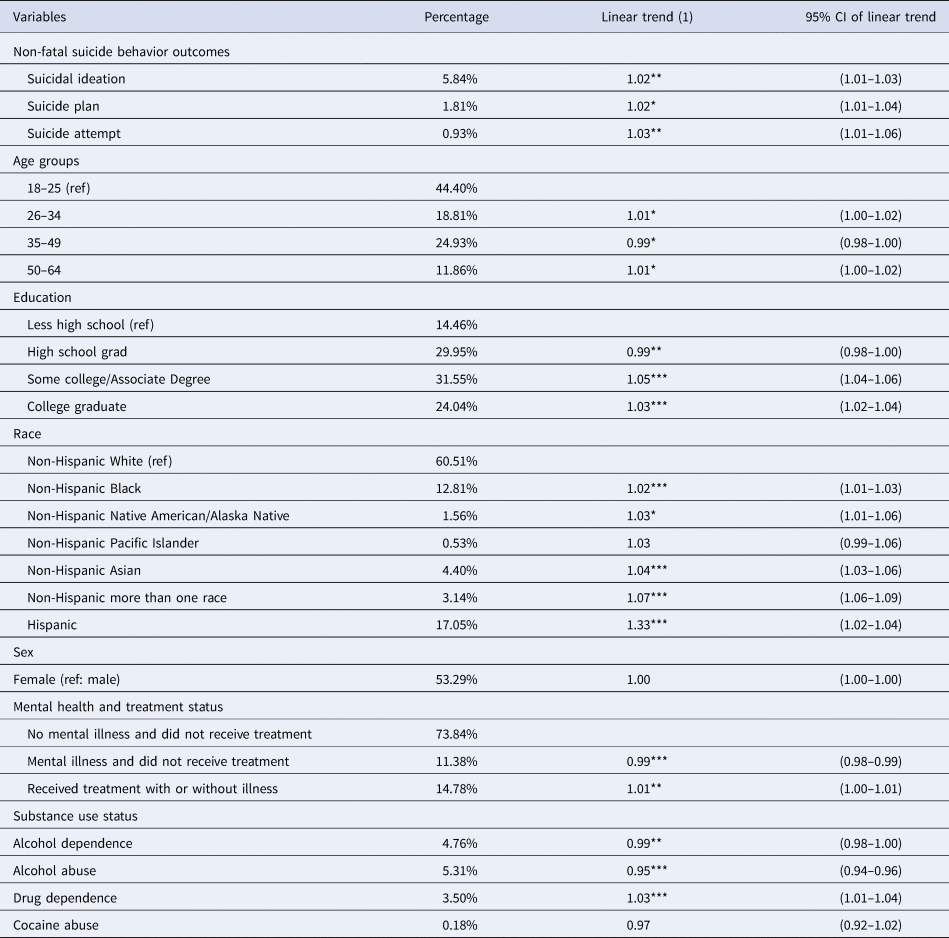
Descriptive statistics of the study sample and unadjusted population linear trends by year for all variables are presented in Table 1. Unadjusted trends of non-fatal suicidal behavior outcomes are presented in Fig. 1, which illustrates the overall rates for suicidal ideation (5.84%, ORlinear = 1.02, 95% CI 1.01–1.03), plan (1.81%, ORlinear = 1.02, 95% CI 1.01–1.04), and attempt (0.93%, ORlinear = 1.03, 95% CI 1.01–1.06) significantly increase over time.
Unadjusted and adjusted trends of non-fatal suicidal behavior outcomes.

Sample characteristics and linear trends by year (N = 335 359)

Note: We used logistic regression to estimate the linear trend for variables with two categories and indicated the linear trends using odds ratios (OR). We used multinomial logistic regression estimate the linear trend for variables with at least three categories and indicated the linear trends with ratios of relative risk (RRR) compared to the base category. *p < 0.05; **p < 0.001; ***p < 0.001.
Compared to individuals who were 18–24 years of age (44.40%), the population of participants ages 26–34 (18.81%, RRRlinear = 1.01, 95% CI 1.01–1.02) and 50–64 (11.86%, RRRlinear = 1.01, 95% CI 1.00–1.02) significantly increased over time, while individuals ages 35–49 (29.95%, RRRlinear = 0.99, 95% CI 0.98–1.00) significantly decreased over time. Compared to those with less than high school education (14.47%), the population of individuals who attended some college or obtained an associate degree (24.04%, RRRlinear = 1.03, 95% CI 1.02–1.04) and graduated from college (31.55%, RRRlinear = 1.05, 95% CI 1.04–1.06) significantly increased, while individuals who graduated from high school (29.95%, RRRlinear = 0.99, 95% CI 0.98–1.00) significantly decreased, indicating increasing population education attainment. Compared to non-Hispanic Whites (60.51%), the population of all other racial groups significantly increased over time except for non-Hispanic Pacific Islanders (0.53%, RRRlinear = 1.03, 95% CI 0.99–1.06). Compared to those without mental illness (73.84%), the rate of individuals with mental illness who did not receive treatment (11.38%, RRRlinear = 0.99, 95% CI 0.98–0.99) decreased over time. In contrast, individuals who did receive treatment increased over time (14.78%, RRRlinear = 1.01, 95% CI 1.00–1.01) in comparison to those without mental illness. For substance-related variables, the population of individuals with alcohol dependence (4.76%, ORlinear = 0.99, 95% CI 0.98–1.00) and abuse (5.31%, ORlinear = 0.95, 95% CI 0.94–0.96) significantly decreased whereas drug dependence (3.50%, ORlinear = 1.03, 95% CI 1.01–1.04) significantly increased over time.
Adjusted annual trends of non-fatal suicidal behaviors
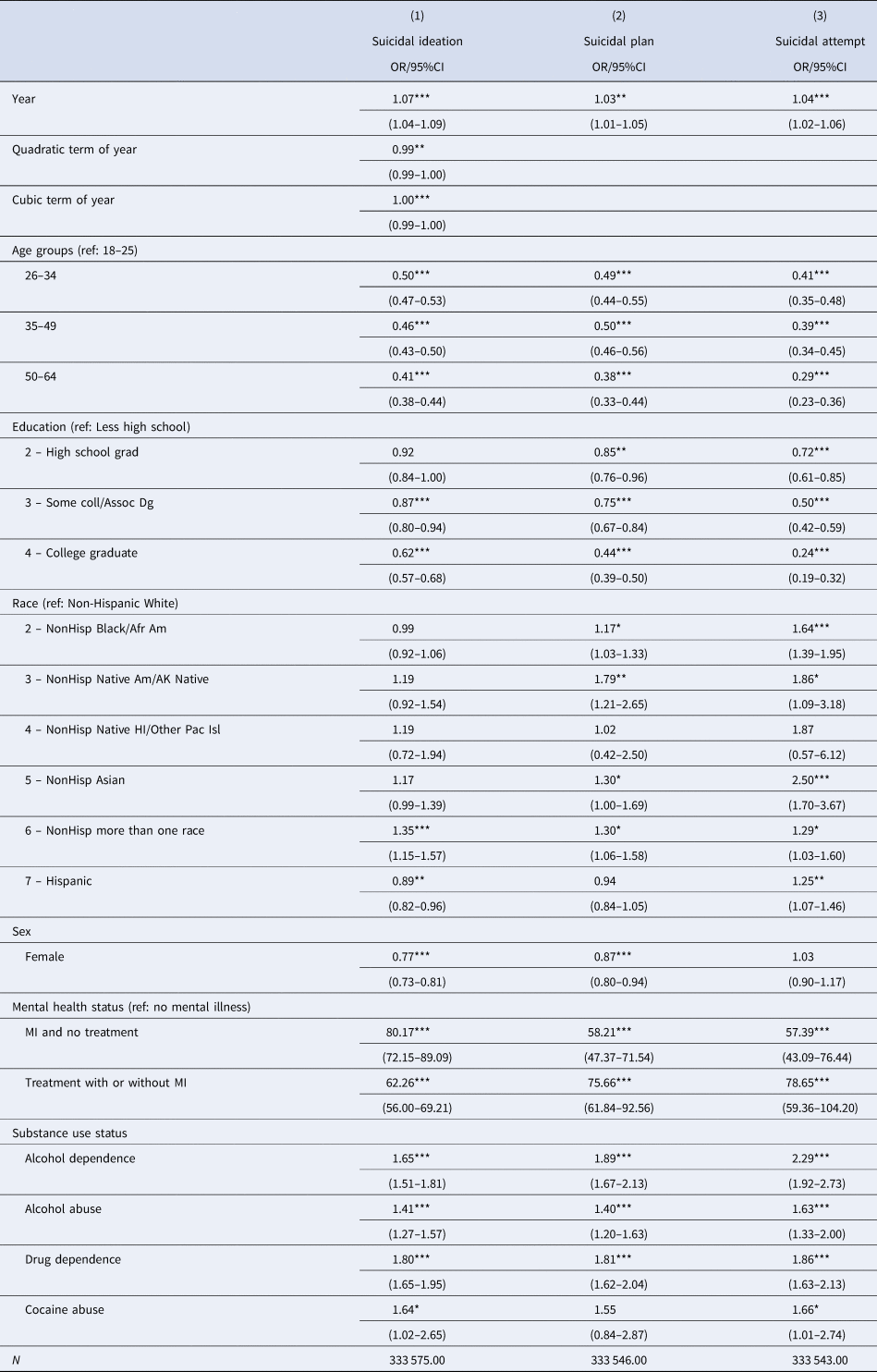
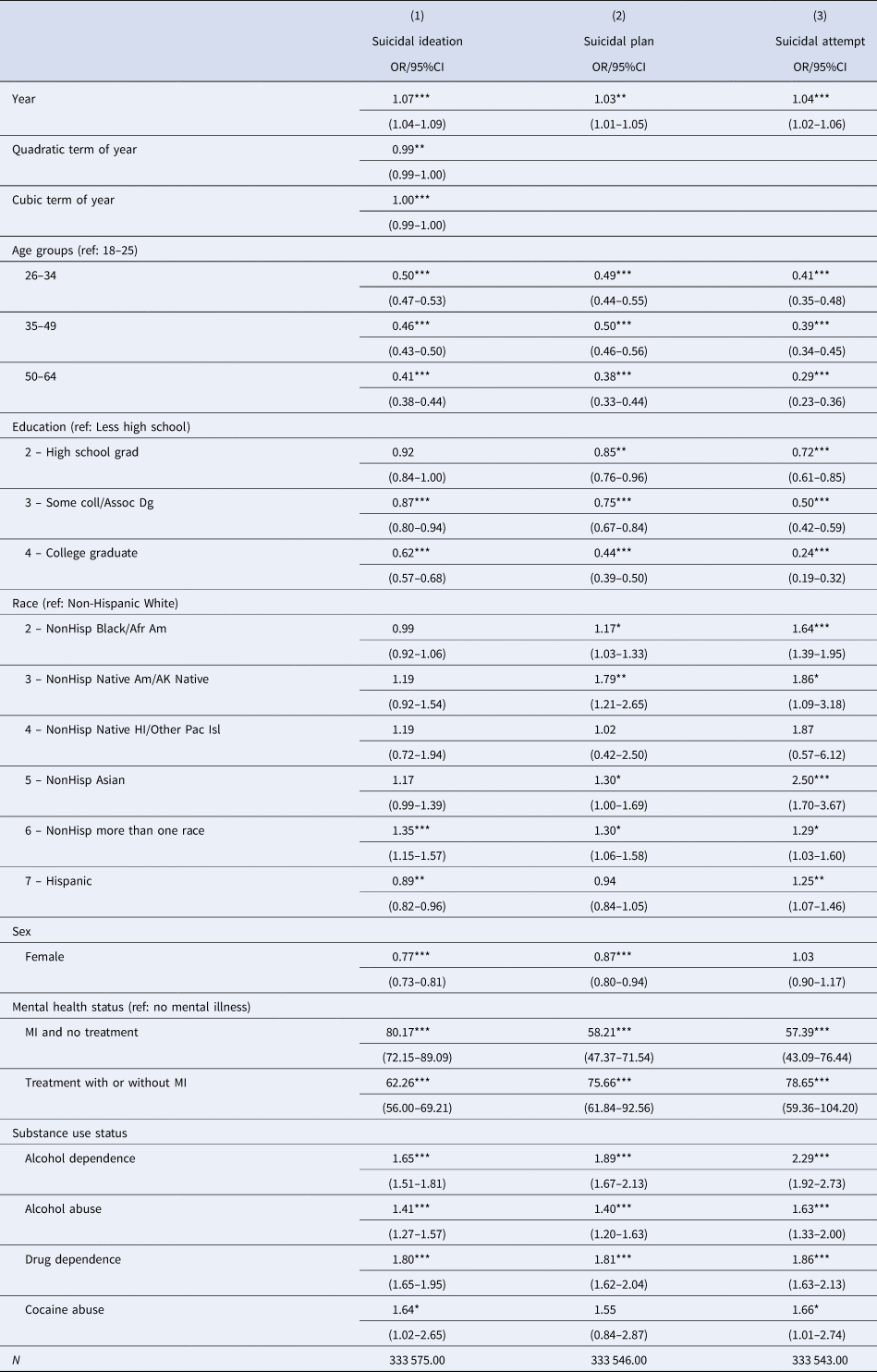
Adjusted trends of non-fatal suicidal behavior outcomes are presented in Fig. 1. The adjusted trends of non-fatal suicidal behaviors and their associations with covariates are presented in Table 2. The logit coefficients of linear (ORlinear = 1.07, 95% CI 1.04–1.09), quadratic (ORquadratic = 0.99, 95% CI 0.99–1.00), and cubic (ORcubic = 1.00, 95% CI 0.99–1.00) terms of year on suicidal ideation were all statistically significant, indicating a fluctuating trend of suicidal ideation over the study time period. Adjusted rates of suicidal plan first decreased from 4.18% in the first quarter of 2009 to 4.06% in the first quarter of 2010, increased to 4.93% in the second quarter of 2015, and decreased to 4.17% in the fourth quarter of 2017.
Adjusted trends and predictors of suicidal outcomes
Note: *p < 0.05; **p < 0.01; ***p < 0.001.
Both suicide plan and suicide attempt demonstrate significantly positive linear trends. Across the study years, adjusted rates of suicidal plan increased from 1.16% in the first quarter of 2009 to 1.42% in the fourth quarter of 2017, with an increase of 2.65% per year in adjusted odds of suicide plan. Across the study years, adjusted rates of suicidal attempt increased from 0.52% in the first quarter of 2009 to 0.68% in the fourth quarter of 2017, with an increase of 3.98% per year in adjusted odds of suicide attempt. The odds of suicide plan increased by an average of 3% per year (ORlinear = 1.03, 95% CI 1.01–1.05), whereas the odds of suicide attempt increased by an average of 4% per year (ORlinear = 1.04, 95% CI 1.02–1.06). The unadjusted and adjusted linear trends for non-fatal suicidal behaviors were similar, indicating the covariates did not confound the trends.
Heterogeneity of annual trends of non-fatal suicidal behaviors by demographic subgroups
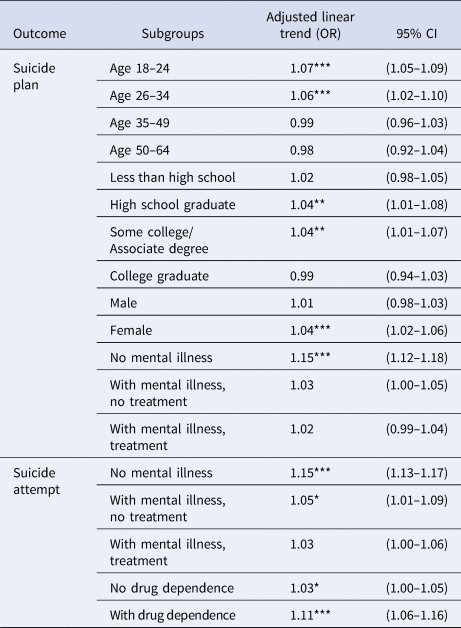
Given the interaction terms between the linear term of year and covariates were not meaningful when the quadratic and cubic terms were statistically significant, we only examined the heterogeneity of annual trends by demographic subgroups only for suicidal plan and attempts in this section. Using adjusted Wald tests on the interaction terms between covariates and linear year, we found that the linear trend of suicide plan differed significantly by age groups [F(3, 108) = 7.88, p < 0.001] and sex [F(1,108) = 5.69, p < 0.05]. The linear trend of suicide attempt did not significantly differ.
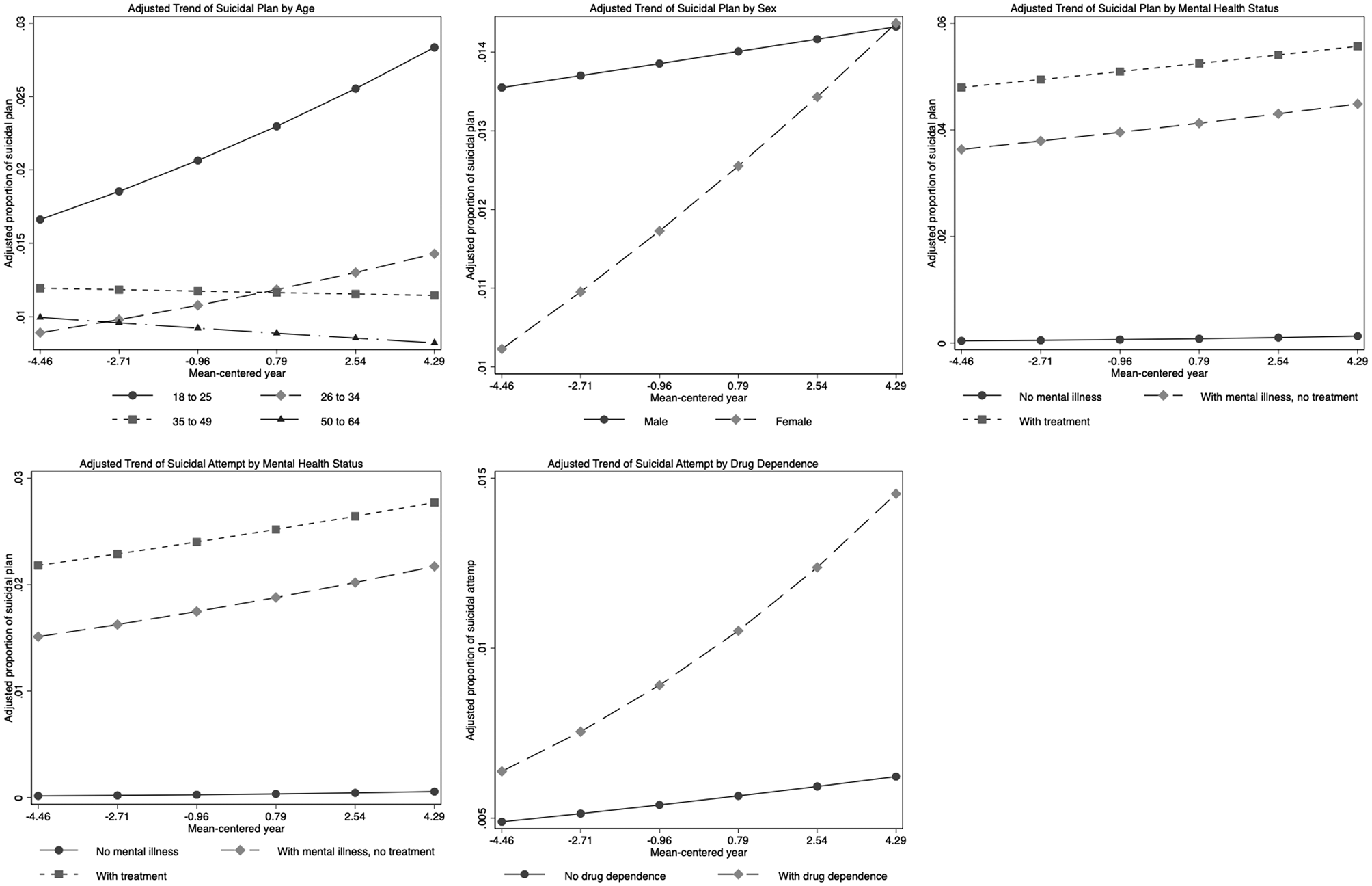
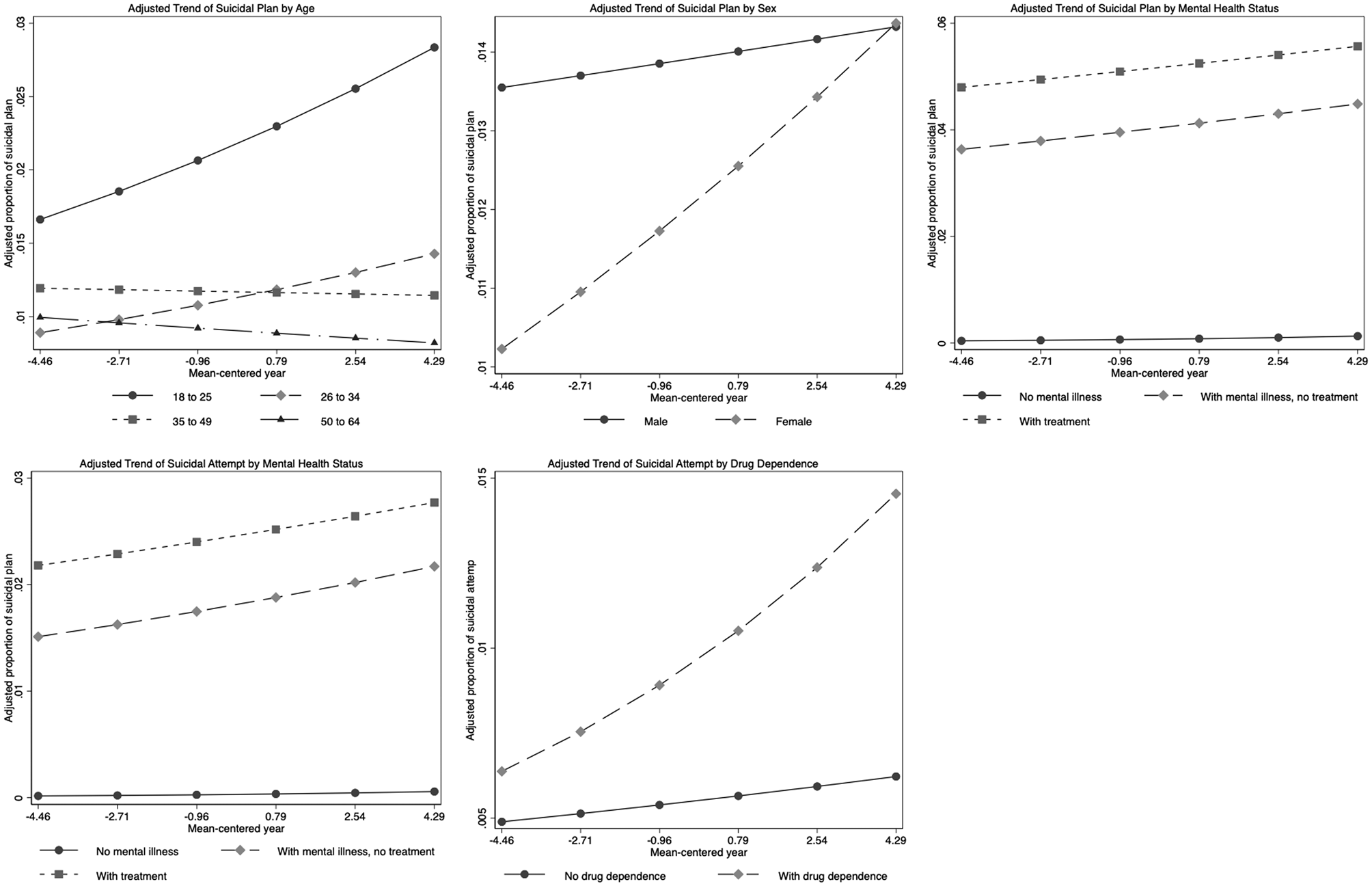
Table 3 shows the adjusted trends of non-fatal suicidal behaviors, including suicide plan and attempt, after controlling for all covariates by subgroups that had significantly different linear trends based on the results of the adjusted Wald tests above. Adjusted trends of non-fatal suicidal behavior outcomes by sociodemographic characteristics are presented in Fig. 2. The trend of suicide plan increased at the fastest rate among adults ages 18–24 (ORlinear = 1.07, 95% CI 1.05–1.09) followed by ages 26–34 (ORlinear = 1.06, 95% CI 1.02–1.10), whereas 35–49 and 50–64 age groups did not show a significant change in suicide plan. The trend of suicide plan significantly increased among females (ORlinear = 1.04, 95% CI 1.02–1.06) but not among males.
Adjusted trends of non-fatal suicidal behavior outcomes by clinical and sociodemographic characteristics.
Adjusted trends of non-fatal suicidal behavior outcomes by subgroups
Note: (1) We initially included the interaction terms between the quadratic trend and each covariate and between cubic trend and each covariate to predict suicidal ideation; however, none of the interaction terms were statistically significant. Thus, the adjusted linear trend controls for the quadratic and cubic trends but not their interactions with covariates. *p < 0.05; **p < 0.01; ***p < 0.001.
Heterogeneity of annual trends of non-fatal suicidal behaviors by clinical subgroups
Adjusted trends of non-fatal suicidal behavior outcomes by clinical characteristics are presented in Fig. 2. The linear trend of suicide plan differed significantly by mental health status [F(2,109) = 24.07, p < 0.001], whereas the linear trend of suicide attempt differed significantly by mental health status [F(2,109) = 26.88, p < 0.001] and drug dependence [F(1,108) = 7.83, p < 0.01]. See Table 3.
The increasing trends of suicidal plan and attempt were all more pronounced among individuals with no mental illness (ORlinear = 1.15, 95% CI 1.12–1.18; ORlinear = 1.15, 95% CI 1.13–1.17), followed by those who had a mental illness but did not receive treatment (ORlinear = 1.03, 95% CI 1.00–1.05; ORlinear = 1.05, 95% CI 1.01–1.09), and was least pronounced among those who had a mental illness and received treatment (ORlinear = 1.02, 95% CI 0.99–1.04; ORlinear = 1.03, 95% CI 1.00–1.05). The increase in the trend of suicide attempt was more pronounced among those with drug dependence (ORlinear = 1.11, 95% CI 1.06–1.16) than those without drug dependence (ORlinear = 1.03, 95% CI 1.00–1.05).
Discussion
Annual rates of fatal suicide in the USA are increasing (Hedegaard et al., Reference Hedegaard, Curtin and Warner2018; Martínez-Alés & Keyes, Reference Martínez-Alés and Keyes2019). This study provides new evidence about national trends for non-fatal suicidal behaviors among adults, including evidence for how these trends differ by sociodemographic and clinical characteristics. Overall, suicide plan and attempt significantly increased from 2009 to 2017 among adults ages 18–65 in the USA, whereas suicidal ideation fluctuated over the study period. More specifically, the adjusted odds of suicidal plan increased by 3% per year and attempt by 4% per year.
Expanding on prior research indicating the self-reported rate of suicide attempt is 3–5 times greater among young adults compared to other adult age groups (Piscopo et al., Reference Piscopo, Lipari, Cooney and Glasheen2016), the trend of suicide plan increased the most among young adults as compared to other adult age groups. While some prior research indicates ideation and attempt among adults are most often experienced by females as compared to males (Crosby et al., Reference Crosby, Gfroerer, Han, Ortega and Parks2011; Centers for Disease Control and Prevention, 2018), we found that there exists no sex difference in trend of suicide attempt. We did, however, find a greater increasing trend in suicide plan among females compared to males. While other studies on these topics are also mixed (Huang, Ribeiro, Musacchio, & Franklin, Reference Huang, Ribeiro, Musacchio and Franklin2017; Olfson et al., Reference Olfson, Blanco, Wall, Liu, Saha, Pickering and Grant2017), definitions of non-fatal suicidal behaviors, data collection methods, and sample populations are potential rationales for inconsistent findings. This is further discussed in the limitations section below.
As for clinical characteristics, suicide attempt increased the most over time for adults with drug dependence, and no additional substance use categories impacted trends over time despite established longitudinal relationships between substance abuse and non-fatal suicidal behaviors in prior research (Darke & Kaye, Reference Darke and Kaye2004; Darvishi, Farhadi, Haghtalab, & Poorolajal, Reference Darvishi, Farhadi, Haghtalab and Poorolajal2015; Pompili et al., Reference Pompili, Serafini, Innamorati, Dominici, Ferracuti, Kotzalidis and Sher2010). While Olfson et al. (Reference Olfson, Blanco, Wall, Liu, Saha, Pickering and Grant2017) found the trend of suicide attempt over time increased the most among adults with mental illness (i.e. depression, anxiety, and antisocial personality disorder), we found the trend of suicide plan and attempt increased the most among adults who either had a mental illness but did not receive treatment, or adults who did not have a mental illness. In contrast to examinations of diagnoses, our investigations involved a categorized indicator of mental illness and treatment based upon clinical interview and survey data (Han et al., Reference Han, Compton, Gfroerer and McKeon2015). Beyond professional care and supports, adults in the mental illness/no treatment and no mental illness groups may experience less professional and familial support surrounding mental health issues over time given a lack of exposure to behavioral health services and/or psychoeducation (Fässberg et al., Reference Fässberg, Orden, Duberstein, Erlangsen, Lapierre, Bodner and Waern2012). In addition, findings of this mental illness and treatment indicator necessitate the importance of perceived mental health in addition to clinical evaluation.
Given attempted suicide is the strongest known risk factor for suicide death (Hawton et al., Reference Hawton, Bergen, Cooper, Turnbull, Waters, Ness and Kapur2015), reducing non-fatal suicidal behaviors including attempt are important public health and clinical goals. Findings of age, gender, substance use, and mental illness in the current study speak toward the importance of incorporating the interactive nature of sociodemographic and clinical factors in relation to non-fatal suicidal behaviors when delivering treatment. Specifically, prevention efforts may highlight different behaviors (ideation, plan, attempt) when working with individuals from differing age groups or who have a mental health or substance diagnosis. In addition, other efforts may consider implementing a protocol to mandate suicide prevention psychoeducation for individuals who have a mental health diagnosis but are not receiving treatment (e.g. in emergency medicine or primary care). Mental health treatment is known to reduce the risk for death by suicide among adults with suicidal ideation and behavior (Han et al., Reference Han, Compton, Blanco, Colpe, Huang and McKeon2018); therefore, the finding of non-fatal suicidal behaviors increased the most among adults without mental illness or who had mental illness but did not receive treatment is not surprising. It is also important to note that while the relationship between suicide death and mental illness is well-established (Brådvik, Reference Brådvik2018; Haukka et al., Reference Haukka, Suominen, Partonen and Lönnqvist2008; Olfson et al., Reference Olfson, Blanco, Wall, Liu, Saha, Pickering and Grant2017; Tidemalm et al., Reference Tidemalm, Långström, Lichtenstein and Runeson2008) with data indicating up to 90% of individuals who die by suicide are estimated to have a psychiatric illness at the time of death, mental illness is not always endorsed and/or known to be present in those who report non-fatal suicidal behaviors or die by suicide (Bertolote & Fleischmann, Reference Bertolote and Fleischmann2002).
Low mental health treatment rates among adults who experienced suicide ideation, plan, and attempt warrant further investigations to inform efforts to facilitate treatment linkage and adherence. Potential reasons likely relate to help-seeking and service use barriers such as stigma, suicide risk and prevention awareness, low perceived need for behavioral health treatment, hopelessness, and logistical barriers (e.g. finances, insurance, transportation, scheduling). Increasing awareness of risk and protective factors for suicidal behaviors and resources to bolster care support are greatly needed, not only in primary and behavioral health settings but also in the general public (e.g. schools, libraries, places of worship, workplace settings, etc.).
Limitations
The current study must be considered in light of several potential limitations. First, non-fatal suicidal behaviors, depression, service use, and substance outcomes were measured by single items. Also, plan and attempt data may be missing as these items were only asked if ideation was endorsed. Second, self-report and social desirability are important to consider along with potential errors in recall of content and timing given retrospective assessments. Third, underestimation of suicide attempt is possible given the surveys naturally did not collect data from adults who died by suicide. Fourth, participants who were homeless and not living in a shelter for the 12-month data collection periods, institution residents, and active duty military personnel were not included in the study (Butler, Young, Kinner & Borschmann, Reference Butler, Young, Kinner and Borschmann2018; Eynan et al., Reference Eynan, Langley, Tolomiczenko, Rhodes, Links, Wasylenki and Goering2002; Nock et al., Reference Nock, Deming, Fullerton, Gilman, Goldenberg, Kessler and Stanley2013). Fifth, while our study focused on non-fatal suicide attempt including at least some intent to kill self, it is likely that there is overlap in the sample with Deliberate Self-Harm without intent to die. Lastly and importantly, diagnostic criteria changed in the DSM from the 4th to 5th edition during the 2009–2017 data collection timeframe. These criteria potentially impact substance use/abuse variables and the ‘any mental illness’ indicator which represents the prevalence of having a mental, behavioral, or emotional disorder of any level (serious, moderate, or mild) in past 12 months, produced by clinical interview and survey data (Han et al., Reference Han, Compton, Gfroerer and McKeon2015).
Although not examined in the current study, firearm-related suicide is a significant public health crisis and must be acknowledged as we examined non-fatal suicidal behavior in the USA. Data show almost 60% of suicide fatalities in the USA are due to firearms (WISQARS, 2020) and access to a firearm triples an individual's risk of death by suicide (Anglemyer, Horvath & Rutherford, Reference Anglemyer, Horvath and Rutherford2014). The potential role of firearm access in US non-fatal suicidal behavior trends must be considered and future research is needed to: (1) investigate the role of firearms in US non-fatal and fatal suicidal behavior trends over time, and (2) inform firearm-related suicide risk assessment and intervention approaches for mental health providers, particularly given the prevalence of firearm suicide deaths in the USA and data showing a lack of mental health provider training for practices in firearm-related suicide risk assessment and intervention (Schmitz et al., Reference Schmitz, Allen and Feldman2012).
Conclusions
Given non-fatal suicidal behaviors are the greatest known risk factors for suicide death (Hawton et al., Reference Hawton, Bergen, Cooper, Turnbull, Waters, Ness and Kapur2015; Olfson et al., Reference Olfson, Blanco, Wall, Liu, Saha, Pickering and Grant2017), reducing ideation, plan, and attempt in the USA are important public health and clinical goals. Study findings indicate that non-fatal suicidal behavior has increased over time in the USA and subgroup findings point towards the importance of increasing awareness of and access to suicide prevention and behavioral health services in conjunction with tailoring prevention efforts to various sociodemographic and clinical factors. Future research investigating sociodemographic contexts, mental health, and service use and engagement is needed to elucidate the mechanisms of risk and protection in non-fatal suicide behaviors.
Acknowledgements
We acknowledge the Substance Abuse and Mental Health Services Administration (SAMHSA) and Research Triangle Institute (RTI) International for allowing the use of data from the National Survey on Drug Use and Health (NSDUH).
Financial support
This research received no specific grant from any funding agency, commercial or not-for-profit sectors.
Conflict of interest
All authors declare no conflicts of interests.