Clostridium difficile infection (CDI) is one of the most common healthcare-associated infections in North America and Europe.Reference Loo, Poirier and Miller 1 In 2011, the estimated incidence of CDI in the United States was approximately 453,000.Reference Lessa, Winston and McDonald 2 The management of CDI remains complicated because of epidemic strains (BI/NAP1/027) introduced in 2005 and because disease severity varies.Reference Cohen, Gerding and Johnson 3 , Reference O’Connor, Johnson and Gerding 4 In addition, patients often have multiple and frequent recurrences,Reference McFarland 5 which exacerbate the disease burden and increase medical costs. The most common risk factors for CDI recurrence include age ≥ 65 years, severe underlying comorbidities, and concomitant use of antibiotics.Reference Eyre, Walker and Wyllie 6 , Reference Kelly 7 Clostridium difficile infection continues to impose a significant economic burden on the US healthcare system, estimated to be more than $5.4 billion (2014 US dollars).Reference Desai, Gupta, Dubberke, Prabhu, Browne and Mast 8
The current guidelines for CDI management recommend either metronidazole, vancomycin, fidaxomicin, or fecal microbiota transplantation (FMT), depending on disease severity and the presence and number of recurrences.Reference Cohen, Gerding and Johnson 3 , Reference Debast, Bauer and Kuijper 9 – Reference Surawicz, Brandt and Binion 11 Current treatment choices and available algorithms make it difficult for physicians to tailor individualized therapies for patients. While newer drugs and therapies may be more effective, they are also more expensive. In the past few years, several cost-effectiveness analyses of different CDI treatment strategies have been conducted to support evidence-based decision making,Reference Bartsch, Umscheid, Fishman and Lee 12 – Reference Watt, McCrea, Johal, Posnett and Nazir 17 but the results were mixed. A previous review summarized the economics of CDI treatments, but it did not include study quality assessments and based recommendations on partial costing or comparative effectiveness studies.Reference Mergenhagen, Wojciechowski and Paladino 18 Therefore, the aim of this systematic review was to critically assess the available literature on economic evaluations of various treatment modalities for initial and recurrent CDI. Based on model comparison, we summarized the findings about treatment modalities and key issues for clinicians to consider when treating patients with CDI, to inform health policy makers, and to identify important areas for future cost-effectiveness research.
METHODS
We conducted a systematic review following the Preferred Reporting Items for Systematic reviews and Meta-Analysis (PRISMA) reporting guidelineReference Moher, Liberati, Tetzlaff and Altman 19 and a measurement tool for the Assessment of Multiple Systematic Reviews (AMSTAR) standard for quality of execution.Reference Shea, Grimshaw and Wells 20
Search Strategy
Studies were included if they (1) were original analyses; (2) were full cost-effectiveness analysis (CEA), cost-utility analysis (CUA), cost-benefit analysis (CBA), or a combination of CEA-CUA or CEA-CBA; and (3) examined treatment modalities that were approved for patient use. Studies were excluded if they (1) did not estimate cost per unit of health outcomes; (2) only addressed CDI diagnostic tests, prevention strategies, and hypothetical or under-investigation treatments; or (3) were an editorial, comment, review, letter to the editor, or conference abstract. In case of multiple publications using the same cost-effectiveness model and data, the more recent and comprehensive study was included. All studies using similar models for different treatments, populations, or types of CDI were included.
Independently, 2 investigators (P.L. and V.T.N.) identified relevant articles by searching PubMed/MEDLINE, Cochrane Library, Web of Science, EMBASE, and Scopus databases from inception through August 2016. We also searched the British National Health Service (NHS) Economic Evaluation database and the reference lists of included studies. The search terms were “Clostridium difficile,” “C. difficile,” “economic,” “economic evaluation,” “cost,” “cost-effectiveness,” “cost-utility,” and “cost-benefit.” The full PubMed search strategy is available as supplementary material. After reviewing the study title and abstract, P.L. and V.T.N. selected articles and independently reviewed the full text to determine inclusion. All disagreements were resolved through discussion with the third investigator (A.D.).
Data Extraction
Independently, 2 investigators (P.L. and V.T.N.) extracted relevant data using a uniform data extraction tool (available as Supplementary Table 1). We extracted information on study characteristics (authors, publication year, country, funding sources), type of CDI (initial, recurrent), treatment characteristics (types, medication dose and administration route, and mode of delivery of FMT), model structure (design, population, perspective, time horizon, discount rate), epidemiological data related to CDI and treatment effectiveness, types of costs and values, cost year and currency, outcome measures, the incremental cost-effectiveness ratio, decision threshold, and sensitivity analyses. We summarized data by type of CDI. Cost-effectiveness findings were additionally stratified by funding source.
Quality Assessment
We assessed study quality using the British Medical Journal’s Drummond and Jefferson checklist.Reference Drummond and Jefferson 21 We adapted the checklist to include 3 additional items: generalizability, source of funding, and conflict of interest based on the Consolidated Health Economic Evaluation Reporting Standards checklist.Reference Husereau, Drummond and Petrou 22 Each item in the checklist has a ‘Yes’, ‘No’ or ‘Not applicable’ (NA) option and was scored 1, 0, or no score, respectively (available as Supplementary Table 2). The overall quality score was then calculated as the percentage of ‘Yes’ responses out of the total criteria applicable to each individual study. For example, if a paper had 27 Yes, 7 No, and 4 NA, the quality score was calculated as 71% (27 of 34). Based on its quality score, each study was ranked as either low quality (<50%), moderate quality (50%–64%), moderate-to-high quality (65%–80%), or high quality (>80%).
Conversion of Outcomes to a Standard Metric
For US-based studies, we converted reported costs and incremental cost-effectiveness ratios into 2016 US dollars, using the medical care component of the Consumer Price Index. For other countries, we inflated data to 2016 using the country-specific Consumer Price Index 23 and converted the result to US dollars using relevant exchange rates.
RESULTS
Search Results
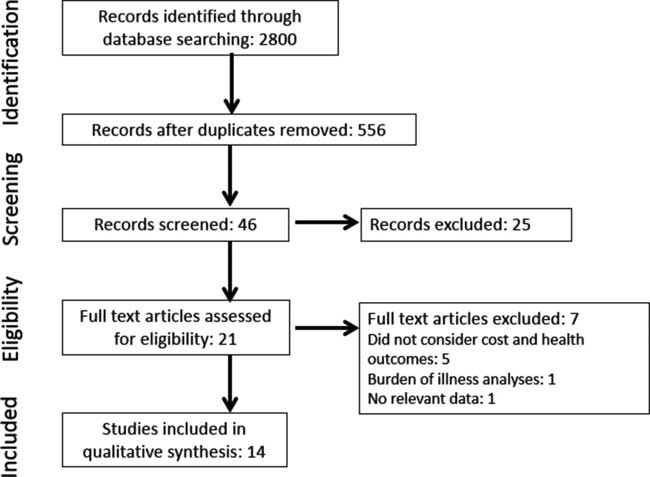
We retrieved 556 unique citations and screened all titles and abstracts, as well as full texts of 21 potentially relevant study reports. We excluded 7 studies after a full text review because they did not consider both cost and health outcomes, conducted burden-of-illness analyses, or did not report data with their analytical frameworks. A total of 14 eligible studies remained (Figure 1). No additional studies were found after we reviewed references of included studies and searched the NHS database.
Flow diagram summarizing evidence search and selection

Study Characteristics
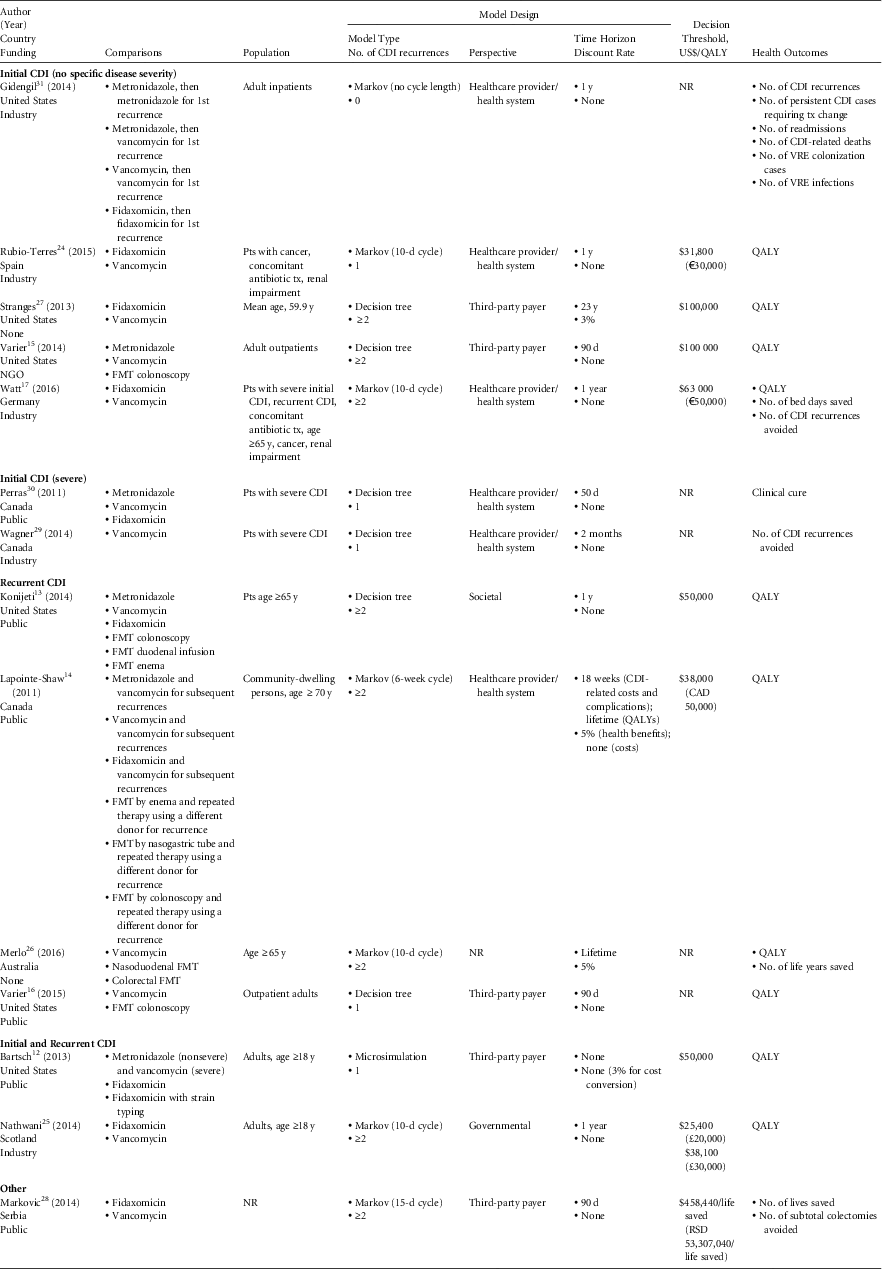
Of the 14 studies reviewed, 13 were conducted in high-income countries within the past 5 years (Table 1). Federal or local governments sponsored 6 studies, and the pharmaceutical industry funded 5 studies. Furthermore, 7 studies evaluated treatments for initial CDI, 2 of which focused solely on severe infection. In addition, 4 studies considered treatments for recurrent CDI, while 2 others investigated both initial and recurrent CDI. The final study evaluated C. difficile–induced colitis unresponsive to metronidazole. All available treatment modalities approved for patient use were evaluated for initial and recurrent CDI, irrespective of guideline recommendation. Notably, 1 study examined FMT use for initial CDI,Reference Varier, Biltaji and Smith 15 and 2 others investigated metronidazole use for recurrent CDI.Reference Konijeti, Sauk, Shrime, Gupta and Ananthakrishnan 13 , Reference Lapointe-Shaw, Tran and Coyte 14 Fidaxomicin was evaluated in 10 studies, while vancomycin was examined in all studies.
Characteristics of Included Economic Evaluations

NOTE. CDI, Clostridium difficile infection; d, day; FMT, fecal microbiota transplantation; NGO, nongovernmental organization; NR, not reported or not available; pt, patients; QALY, quality-adjusted life years; tx, treatment; VRE, vancomycin-resistant enterococci, venous thromboembolism; y, years.
Model Design
Overall, 13 studies employed either a Markov or decision-tree model. The common Markov cycle length was 10 days (Table 1). Also, 2 studies used the same model to evaluate CDI treatments in different patient populations.Reference Rubio-Terres, Cobo Reinoso and Grau Cerrato 24 , Reference Nathwani, Cornely, Van Engen, Odufowora-Sita, Retsa and Odeyemi 25 The analytical perspective was that of the healthcare provider/health system or third-party payer for most studies (k=12). Discounting was not applied for most studies because of the short time horizon. Furthermore, 2 studies that followed patients throughout their lives used appropriate discounting rates,Reference Lapointe-Shaw, Tran and Coyte 14 , Reference Merlo, Graves, Brain and Connelly 26 but 1 of these studies had discordant time frames for cost and quality-adjusted life years (QALY; 18 weeks for costs vs lifetime for QALY).Reference Lapointe-Shaw, Tran and Coyte 14 Comorbidities (eg, cancer, concomitant antibiotics, renal impairment) were accounted for in 3 studies.Reference Watt, McCrea, Johal, Posnett and Nazir 17 , Reference Rubio-Terres, Cobo Reinoso and Grau Cerrato 24 , Reference Stranges, Hutton and Collins 27
Study Quality
Most of the studies were deemed moderate-to-high or high quality (k=13). The mean and median quality scores were ~80% (data not shown but available upon request). Most studies provided detailed information on study design and population. In 1 study, the analytical perspective was societal, but indirect costs were not included.Reference Konijeti, Sauk, Shrime, Gupta and Ananthakrishnan 13 Another study did not specify the perspective,Reference Merlo, Graves, Brain and Connelly 26 and 2 studies lacked information on cost year.Reference Markovic, Kostic, Ilickovic and Jankovic 28 , Reference Wagner, Lavoie and Goetghebeur 29
Health Outcomes
Quality-adjusted life years was the most common health outcome reported (Table 1). Other outcome measures were CDI cases/recurrences avoided, clinical cure, life years, or bed days saved. Of the 10 studies that estimated QALY, 8 specified a cost-effectiveness decision threshold, but none conducted primary data collection for utility measurement. Because of the lack of CDI-specific utility weights,Reference Lapointe-Shaw, Tran and Coyte 14 – Reference Watt, McCrea, Johal, Posnett and Nazir 17 , Reference Stranges, Hutton and Collins 27 alternative weights for noninfectious diarrhea or for grade 3–4 diarrhea associated with chemotherapy were used. Utility weights generally varied substantially across studies; for example, utility for CDI was between 0.319 and 0.880.Reference Lapointe-Shaw, Tran and Coyte 14 , Reference Watt, McCrea, Johal, Posnett and Nazir 17 , Reference Rubio-Terres, Cobo Reinoso and Grau Cerrato 24 – Reference Stranges, Hutton and Collins 27
Treatment Effectiveness
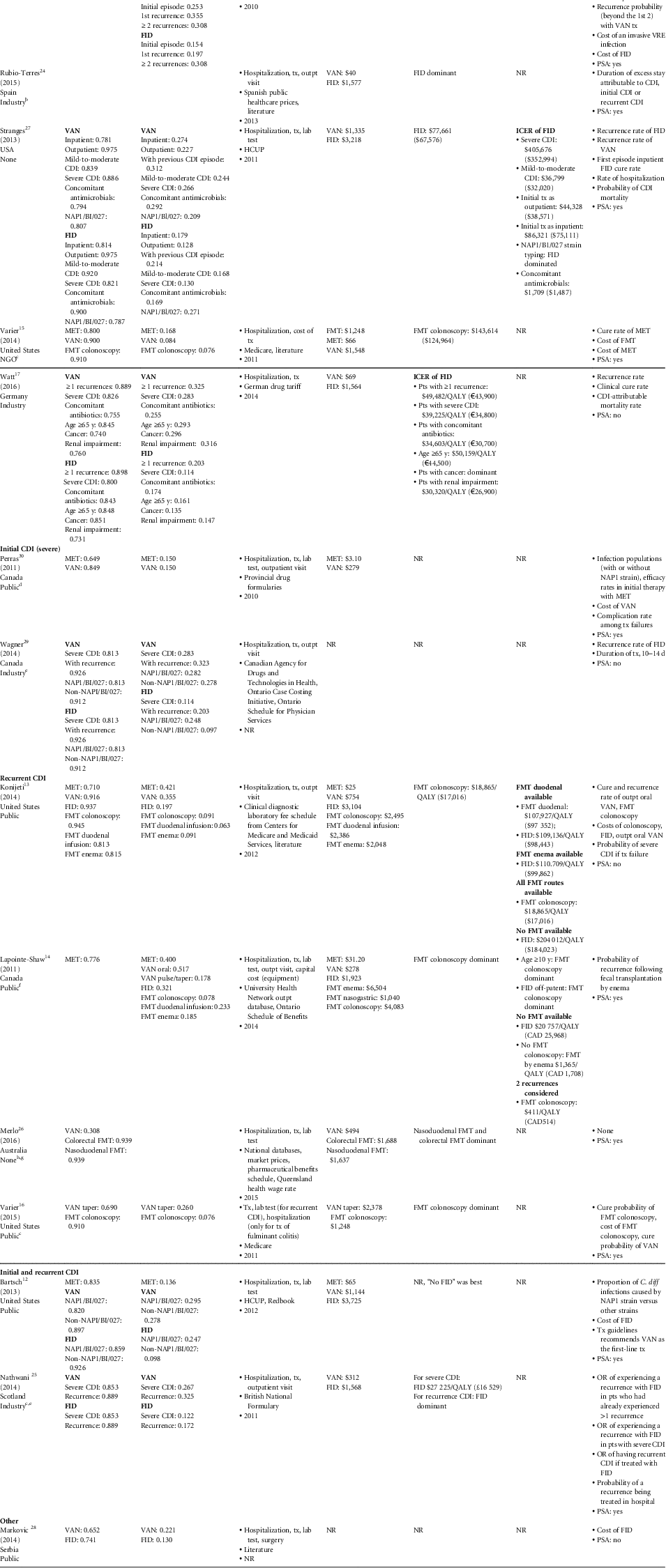
Table 2 shows how reviewed studies differed on treatment effectiveness across CDI episode and severity. Studies used a range of probabilities (0.65–0.84) as the metronidazole cure rate. Perras et alReference Perras, Tsakonas, Ndegwa, Conly, Valiquette and Farrah 30 used the lowest value (0.65) based on the success rate of metronidazole for initial severe CDI reported in a conference proceeding.Reference Perras, Tsakonas, Ndegwa, Conly, Valiquette and Farrah 30 In contrast, Varier et alReference Varier, Biltaji and Smith 15 used a higher cure rate of 0.80 based on 1997 American College of Gastroenterology guidelines. Bartsch et alReference Bartsch, Umscheid, Fishman and Lee 12 derived the highest rate from a randomized clinical trial (RCT) and assumed it to be the same for both initial and recurrent CDI.
Effectiveness, Costs, Incremental Cost-Effectiveness Ratio, and Sensitivity Analyses of Included Economic Evaluations

NOTE. C. diff, Clostridium difficile; CDI, Clostridium difficile infection; d, day; FID, fidaxomicin; FMT, fecal microbiota transplantation; HCUP, Healthcare Cost and Utilization Project; ICER, incremental cost-effectiveness ratio; MET, metronidazole; NGO, nongovernmental organization; NR, not reported or not available; outpt, outpatients; OR, odds ratio; PSA, probabilistic sensitivity analysis; pt, patients; QALY, quality-adjusted life-years; tx, treatment; VAN, vancomycin; VRE, vancomycin-resistant enterococci, venous thromboembolism; y, years.
a Probabilities of cure estimated from published reports.
b Insufficient information to derive the probability of either cure or recurrence from the published report.
c Probabilities of recurrence estimated from published reports.
d Probabilities of recurrence assumed to be similar for both treatments.
e Probabilities of cure assumed to be similar for both treatments.
f Probability of cure not listed for other treatments in the report.
g Probability of recurrence not available from the published report.
h The vancomycin probability of cure for 10-d cycles. The FMT probability of cure assumed to be the same regardless of delivery modes.
The studies that compared vancomycin and metronidazole generally used higher cure rate estimates for vancomycin, from 0.817 to 0.916.Reference Konijeti, Sauk, Shrime, Gupta and Ananthakrishnan 13 , Reference Varier, Biltaji and Smith 15 , Reference Perras, Tsakonas, Ndegwa, Conly, Valiquette and Farrah 30 , Reference Gidengil, Caloyeras, Hanson, Hillestad and Mattke 31 These rates were, however, lower than that of fidaxomicin, except for severe CDI (NAP1/BI/027 strain) or patients with renal impairment.Reference Watt, McCrea, Johal, Posnett and Nazir 17 , Reference Stranges, Hutton and Collins 27 For recurrent CDI, Varier et al used a vancomycin cure rate of 0.69,Reference Varier, Biltaji and Smith 16 which was lower than the 0.889–0.926 range used in other studies.Reference Konijeti, Sauk, Shrime, Gupta and Ananthakrishnan 13 , Reference Watt, McCrea, Johal, Posnett and Nazir 17 , Reference Wagner, Lavoie and Goetghebeur 29 Furthermore, 2 studies assumed that vancomycin and fidaxomicin were similarly effective,Reference Nathwani, Cornely, Van Engen, Odufowora-Sita, Retsa and Odeyemi 25 , Reference Wagner, Lavoie and Goetghebeur 29 and in 1 study, both drugs had much lower cure rates for C. difficile–induced colitis.Reference Markovic, Kostic, Ilickovic and Jankovic 28 The fidaxomicin cure rates for the NAP1/BI/027 strain were considerably different in 2 studies,Reference Bartsch, Umscheid, Fishman and Lee 12 , Reference Stranges, Hutton and Collins 27 whereas the cure rate of FMT was high (0.910–0.945) when delivered via colonoscopy but not other modes.Reference Konijeti, Sauk, Shrime, Gupta and Ananthakrishnan 13
Similarly, the probability of CDI recurrence after treatment varied significantly across studies. Recurrence rates after treatment with metronidazole ranged from 0.150 to 0.421 and were higher for recurrent CDI than for initial CDI. The CDI recurrence rate after vancomycin was lower than after metronidazole but higher than after fidaxomicin. While 2 studies modeled vancomycin with a higher recurrence rate for the NAP1/BI/027 strain than fidaxomicin,Reference Bartsch, Umscheid, Fishman and Lee 12 , Reference Stranges, Hutton and Collins 27 , Reference Wagner, Lavoie and Goetghebeur 29 another study did the opposite.Reference Stranges, Hutton and Collins 27 The probability of recurrence after FMT via colonoscopy was comparable among studies but differed noticeably for other modes of delivery. Specifically, the recurrence rate of FMT by duodenal infusion or enema was 2–4 times higher in a study than in another, although the same reference source was cited in both.Reference Konijeti, Sauk, Shrime, Gupta and Ananthakrishnan 13 , Reference Lapointe-Shaw, Tran and Coyte 14 In some studies, recurrence rates were not stated explicitly.Reference Merlo, Graves, Brain and Connelly 26
Economic Parameters
Costs of CDI therapies and hospitalizations were included in all studies. Costs of laboratory tests were included in most studies, and costs of outpatient visits were included much less often (Table 2). Although excluding costs of treatment-related adverse events would bias results, only 3 studies included such costs.Reference Varier, Biltaji and Smith 15 , Reference Varier, Biltaji and Smith 16 , Reference Gidengil, Caloyeras, Hanson, Hillestad and Mattke 31 Most studies used official sources for cost estimates, and US studies had higher per-unit costs than studies in other countries. The cost of FMT therapy varied depending on the route of administration and often included associated pretreatment cost of oral vancomycin.
Cost-Effectiveness of CDI treatments
Table 2 summarizes the incremental cost-effectiveness ratios in 2016 US dollars per QALY gained stratified by type of CDI, wherever available. For initial CDI with no specific disease severity, fidaxomicin was cost-effective compared to vancomycin in 2 studiesReference Watt, McCrea, Johal, Posnett and Nazir 17 , Reference Stranges, Hutton and Collins 27 but not in the study accounting for severity.Reference Bartsch, Umscheid, Fishman and Lee 12 For initial CDI in patients with concomitant antibiotics use, cancer, or renal impairment, 2 studies found fidaxomicin to be cost-effective.Reference Watt, McCrea, Johal, Posnett and Nazir 17 , Reference Rubio-Terres, Cobo Reinoso and Grau Cerrato 24 Although FMT has not been recommended for initial CDI, the study that examined the use of colonoscopy-delivered FMT found it not cost-effective.Reference Varier, Biltaji and Smith 15 Also, 2 studies found fidaxomicin cost-effective for severe initial CDI,Reference Watt, McCrea, Johal, Posnett and Nazir 17 , Reference Nathwani, Cornely, Van Engen, Odufowora-Sita, Retsa and Odeyemi 25 but another concluded differently.Reference Stranges, Hutton and Collins 27 While many factors might have influenced results, a much higher cure rate of vancomycin (0.886) and the double cost for fidaxomicin,Reference Stranges, Hutton and Collins 27 compared with the other 2 studies, were notable. For recurrent CDI, studies consistently reported that FMT via colonoscopy was a cost-effective treatment, whereas findings on other FMT delivery routes were inconsistent.Reference Konijeti, Sauk, Shrime, Gupta and Ananthakrishnan 13 , Reference Lapointe-Shaw, Tran and Coyte 14 , Reference Varier, Biltaji and Smith 16 , Reference Merlo, Graves, Brain and Connelly 26 When FMT was not available, fidaxomicin was a cost-effective option compared to other drugs in 3 studiesReference Lapointe-Shaw, Tran and Coyte 14 , Reference Watt, McCrea, Johal, Posnett and Nazir 17 , Reference Nathwani, Cornely, Van Engen, Odufowora-Sita, Retsa and Odeyemi 25 but not in 2 other studies.Reference Bartsch, Umscheid, Fishman and Lee 12 , Reference Konijeti, Sauk, Shrime, Gupta and Ananthakrishnan 13
Stratified by funding source, all 5 industry-funded studies examined fidaxomicin, 3 of which concluded that fidaxomicin was either cost-effective or cost saving compared to metronidazole or vancomycin.Reference Watt, McCrea, Johal, Posnett and Nazir 17 , Reference Rubio-Terres, Cobo Reinoso and Grau Cerrato 24 , Reference Nathwani, Cornely, Van Engen, Odufowora-Sita, Retsa and Odeyemi 25 The remaining 2 studies did not measure QALYs and made no conclusion about its cost-effectiveness.Reference Wagner, Lavoie and Goetghebeur 29 , Reference Gidengil, Caloyeras, Hanson, Hillestad and Mattke 31 For studies with other types of or no funding, fidaxomicin was found cost-effective in one studyReference Stranges, Hutton and Collins 27 but not the other,Reference Bartsch, Umscheid, Fishman and Lee 12 whereas FMT was favored in most of them.Reference Konijeti, Sauk, Shrime, Gupta and Ananthakrishnan 13 , Reference Lapointe-Shaw, Tran and Coyte 14 , Reference Varier, Biltaji and Smith 16 , Reference Merlo, Graves, Brain and Connelly 26
Sensitivity Analysis
Most studies reported that treatment effectiveness was an important factor in 1-way sensitivity analysis (Table 2). For example, if the cure rate after vancomycin was >95.5%, it would be the preferred treatment for recurrent CDI.Reference Konijeti, Sauk, Shrime, Gupta and Ananthakrishnan 13 Cost of therapy was another influential parameter; FMT would no longer be dominant if its cost was >$3,205Reference Varier, Biltaji and Smith 16 or if the fidaxomicin cost was <$1,359.Reference Konijeti, Sauk, Shrime, Gupta and Ananthakrishnan 13 Some other important variables were treatment duration, complication rates, and CDI mortality rate.
Probabilistic sensitivity analysis was conducted in 79% of the studies, but final results were not reported in 2 of them.Reference Bartsch, Umscheid, Fishman and Lee 12 , Reference Konijeti, Sauk, Shrime, Gupta and Ananthakrishnan 13 Some studies presented a cost-effectiveness acceptability curve, while others reported 95% CI around the mean cost and effectiveness. The probability of being cost-effective at a prespecified willingness to pay, defined as the maximum amount of dollars spent for an additional QALY gained, was between 60% and 96% for fidaxomicin, depending on CDI severity and population.Reference Rubio-Terres, Cobo Reinoso and Grau Cerrato 24 , Reference Nathwani, Cornely, Van Engen, Odufowora-Sita, Retsa and Odeyemi 25 , Reference Stranges, Hutton and Collins 27 FMT was either dominant or had a probability of cost-effectiveness between 38% and 87%.Reference Lapointe-Shaw, Tran and Coyte 14 , Reference Varier, Biltaji and Smith 15
DISCUSSION
Our study is one of the first systematic reviews to critically assess the quality of studies and cost-effectiveness of CDI treatment modalities, and we found substantial differences among the included studies. Because fidaxomicin is a newer drug, it was examined extensively for use in treating initial CDI. Results for fidaxomicin were inconclusive, however, except being cost-effective in some special and/or selective populations. The 3 studies of fidaxomicin for severe, initial CDI treatment had divergent conclusions, as did the 5 studies of fidaxomicin for recurrent CDI. FMT by colonoscopy was cost-effective for recurrent infection, but not for initial CDI. These cost-effectiveness findings did not hold true when FMT was delivered by other routes.
We identified important differences in study design among the included studies. Although QALY has become the most common outcome measure, one-third of the studies reviewed did not estimate QALY. Furthermore, studies accounted for CDI complications differently, and while some included costs of treating adverse events, none accounted for complications such as renal failure, which might bias the results in either direction. Another source of divergence was differences in healthcare resource utilization and costs among different settings. In particular, assumptions about treatment effectiveness contributed significantly to the diverging results. Two randomized controlled trials examined fidaxomicin.Reference Cornely, Crook and Esposito 32 , Reference Louie, Miller and Mullane 33 Both trials were conducted by OPT-80-003 Clinical Study Group investigators, and although the times and settings differed, they reported comparable cure and recurrence rates. These studies excluded patients with >1 CDI occurrence within 3 months before studies started, and only 16% of enrolled patients had 1 previous CDI. Therefore, it is possible that the results applied to patients with initial CDI and not to those with recurrence. To date, there has been no published RCT on fidaxomicin effectiveness in recurrent CDI. Similarly, 2 other RCTs investigated the efficacy and safety of FMT in patients with recurrent but not initial CDI,Reference Lee, Steiner and Petrof 34 , Reference van Nood, Vrieze and Nieuwdorp 35 and there were no RCTs comparing delivery routes when conducting this systematic review. Therefore, any study that examined fidaxomicin for recurrent CDI or FMT for initial CDI or compared delivery routes for FMT would have assumed their effectiveness or used data sources other than the available RCTs.Reference Li, Cai, Wang, Xu and Fang 36 – Reference Kassam, Lee, Yuan and Hunt 38 Previous studies showed that comorbidities (eg, cancer, inflammatory bowel disease, and surgical burden) were strongly associated with increased risks for development and recurrence of CDI.Reference Hebbard, Slavin and Reed 39 – Reference McDonald, Milligan, Frenette and Lee 43 However, most included studies did not account for such comorbidities in their models, which potentially biased the results. Lastly, studies modeled various numbers of recurrences following the initial episode, which might be another reason the results differed.
Our study has several limitations. Although we searched a wide range of databases, we may have missed some unpublished studies. In addition, because these studies differed in terms of study design, target population, model structure and input, our conclusions on the cost-effectiveness of CDI treatments were speculative. Finally, because we included industry-sponsored studies, which tend to be published only when results are favorable,Reference Bell, Urbach and Ray 44 our synthesis and interpretation of results might be biased toward positive findings.
Our review has highlighted certain areas that could be improved in future CDI cost-effectiveness analyses. While some of the models followed patients in the short term, those examining the long-term impact would present a more comprehensive assessment of interventions. Because there has been no widely accepted decision threshold for cost-effectiveness using effectiveness measures other than QALY, future studies should preferably estimate QALY change to facilitate comparison. The cost-effectiveness of fidaxomicin compared with other pharmacologic therapies was not definitive for either initial or recurrent CDI, and different studies have used different values for its effectiveness. Therefore, future research might include a comprehensive literature review and provide rationale for choosing specific effectiveness values. A wide range for effectiveness and threshold analyses could also help understand the impact of fidaxomicin in various treatment scenarios. More prospective studies are needed to establish the efficacy and safety of fidaxomicin for recurrent CDI. There is also an urgent need for specific CDI utility weights that consider different complications, other comorbidities, or infection/severity stages. Given that a validated instrument for CDI-specific, health-related, quality-of-life assessment is now available,Reference Garey, Aitken and Gschwind 45 future research on utility weights will facilitate a more precise estimate of QALY change across CDI treatments.
In conclusion, CDI is a complex condition with a high recurrence rate, resulting in a significant burden of morbidity and mortality, as well as economic costs. Metronidazole and vancomycin have long been standard CDI treatment, but they are often associated with high rates of recurrence. New medications, such as fidaxomicin, and novel treatment modalities, such as FMT, have opened a new arena in CDI management. Because new treatments often come with a high cost, cost-effectiveness analyses are important to aid clinicians in rational decision making and health policy makers. Our review has identified an important divergence in research findings, especially in cost-effectiveness of fidaxomicin for either initial or recurrent CDI, which arose from discrepancies in model design and methods. Finally, our review informs future research of areas that need improvement and may help policymakers and physicians to critically assess the cost-effectiveness of different CDI treatments.
ACKNOWLEDGMENTS
The content is solely the responsibility of the authors and does not necessarily represent the official views of the National Cancer Institute or the National Institutes of Health.
Financial support: The study received no external funding. Van T. Nghiem was supported by a predoctoral fellowship from the Cancer Education and Career Development Program (NCI/NIH grant no. R25 CA057712) and research funding from the Center for Health Promotion and Prevention Research at the University of Texas School of Public Health. Patricia Dolan Mullen reported research funding from the National Cancer Institute and the Cancer Prevention Research Institute of Texas for research not related to this study. Abhishek Deshpande is supported by a grant from the Agency for Healthcare Research and Quality (AHRQ grant no. K08 HS025026). He has also received research support from 3M, Clorox, Steris for research not related to this study.
SUPPLEMENTARY MATERIAL
To view supplementary material for this article, please visit https://doi.org/10.1017/ice.2017.303.