Introduction
HIV/AIDS is currently one of the major health challenges facing most sub-Saharan African countries. It is estimated that 70% of the 34 million people living with HIV globally in 2011 were living in sub-Saharan Africa (UNAIDS, 2012). Women in sub-Saharan Africa bear a heavy burden of the disease, with an estimated 77% of all global HIV-positive women living in this part of the world (MacLachan et al., Reference MacLachan, Neema, Luyrika, Ssali, Juncker, Rwabukwali, Harvey and Duncan2009). Higher rates of HIV infection among women in developing countries are compounded by the fact that they are often the poorest and most marginalized of all groups in the region (Kathewara-Banda et al., Reference Kathewara-Banda, Gomile-Chiyaonga, Hendriks, Kachika, Mitole and Seodi2005).
The link between low socioeconomic status (SES) and higher risk of illness (the ‘health gradient’) represents one of the most consistent and robust findings in epidemiology (Lynch & Kaplan, Reference Lynch, Kaplan, Berkman and Kawachi2000). In most developed nations, and in some developing nations, specific patterns of HIV transmission, its incidence and prevalence are indeed negatively related to SES (Kathewara-Banda et al., Reference Kathewara-Banda, Gomile-Chiyaonga, Hendriks, Kachika, Mitole and Seodi2005). The health gradient literature suggests that SES is linked to health outcomes through differential access to health care, knowledge of HIV and awareness of HIV prevention methods. Higher SES individuals are more likely to have access to modern health care and have higher knowledge of health risks and protective practices.
In sub-Saharan Africa the link between SES and HIV risk appears to contradict conventional health gradient patterns, particularly among women (Wojcicki, Reference Wojcicki2005; Mishra et al., Reference Mishra, Bignami-Van Assche, Greener, Vaessen, Hong and Ghys2007a; Msisha et al., Reference Msisha, Kapiga, Earls and Subramanian2008; Muthengi, Reference Muthengi2009). Some studies have also documented positive associations between higher education and increased risk of HIV, especially in some countries in eastern and southern Africa (Johnson & Way, Reference Johnson and Way2006; Reither & Mumah, Reference Reither and Mumah2009). Explanations of this pattern also suggest that benefits traditionally associated with improved economic status appear to be mitigated by distinctive socio-cultural norms and patterns of sexual behaviours among high-SES men and women. In particular, high-SES women tend to delay marriage and have more extensive sexual experiences prior to marriage, which can increase their risk of HIV exposure (Hargreaves & Glynn, Reference Hargreaves and Glynn2002; Kongnyuy et al. Reference Kongnyuy, Wiysonge, Mbu, Nana and Kouam2006; Mishra et al., Reference Mishra, Bignami-Van Assche, Greener, Vaessen, Hong and Ghys2007a). Research in sub-Saharan Africa also suggests that her partner's SES and sexual behaviours can be important determinants of a woman's susceptibility to HIV infection (Kongnuy et al., Reference Kongnyuy, Wiysonge, Mbu, Nana and Kouam2006; Mishra et al., Reference Mishra, Bignami-Van Assche, Greener, Vaessen, Hong and Ghys2007b). Higher SES men are known to engage in riskier sexual behaviours (like multiple concurrent partners), so women with better educated partners in higher status occupations may be at greater risk of HIV infection.
A large number of HIV researchers have identified gender power and gender inequality as key variables that contribute to the high transmission rate of HIV and other sexually transmitted diseases among women (Gilbert & Walker, Reference Gilbert and Walker2002; Sa & Larsen, Reference Sa and Larsen2008; Dugassa, Reference Dugassa2009). Because SES has been positively linked to the degree of power women exert in their relationships, the higher a woman's educational and occupational status, the more power she would be expected to command in her relationships, and the less risky her and her partner's behaviours should be (Gupta, 2000). Gender inequality reflects situations where women and men have differential power over economic or sexual decisions. Women whose partners are better educated and in higher status occupations than themselves are expected to have less power over decision-making in the household and less ability to influence the behaviour of their partners, which should increase HIV risk.
Cameroon represents an interesting example of a country where high-SES women have greater odds of testing positive for HIV (Mishra et al., Reference Mishra, Bignami-Van Assche, Greener, Vaessen, Hong and Ghys2007b; Adair, Reference Adair2008; Reither & Mumah, Reference Reither and Mumah2009). About 5.5% of the Cameroon population is estimated to be HIV infected (ORC Macro, 2005; Measure DHS, 2005). Results of the 2004 Cameroon Demographic and Health Survey (CDHS) indicate HIV rates among women are about 60% higher than among men (6.8% vs 4.1%). This paper explores the complex relationships between SES and HIV among Cameroonian women, and identifies the distinctive factors associated with HIV status for women in different SES classes. Specifically, data from the CDHS are used to answer the question ‘Do the factors associated with increased risk of HIV infection among women in Cameroon differ by SES?’ To the extent that associations between gender and HIV risk differ by SES group, different policy interventions targeted at each group may be more effective.
Data and Methods
Data
The study utilized the 2004 Cameroon Demographic and Health Survey (CDHS), which is a nationally representative survey involving residents aged 15 and older. The survey used a multi-stage complex cluster sampling methodology and surveyed more than 10,462 households, with response rates well in excess of 90% (INS & ORC Macro, 2004; ORC Macro, 2005; Mishra et al., Reference Mishra, Vaessen, Boerma, Arnold, Way, Barrere and Cross2006). It provides information on a variety of topics including marital status, education, area of residence and HIV test results. Eligibility for HIV testing was through a systematic random sampling process of selected households. In the case of Cameroon only about 7.9% of the 5703 women eligible for testing did not provide an HIV sample (Mishra et al., Reference Mishra, Vaessen, Boerma, Arnold, Way, Barrere and Cross2006; Adair, 2007). The ability to link HIV status with socio-demographic and behavioural measures allows in-depth analysis of factors associated with HIV infection to be carried out. The CDHS has 5155 female respondents in the sample, with conclusive HIV test results for all but one case. The analyses reported below include 4891 cases because 258 cases were missing at least one of the core variables used in the models.
Measures
This study examined a core dependent variable (HIV status) and six main sets of independent variables: socioeconomic status (SES), partner's characteristics, power in relationships, sexual behaviour of respondent, access to health care and knowledge of HIV and prevention methods. Other variables examined included marital status and control variables for religion, ethnic region and place of residence.
HIV status was determined via voluntary blood samples provided by eligible female respondents during the data collection. Specifically, HIV testing was done using two HIV enzyme immunosorbent assays (EIA), based on different antigens. Specimens with equivocal or discordant test results were resolved by Western Blot testing. For quality control, all HIV-positive specimens and a sample of HIV-negative specimens (usually 5%) were re-tested at a different laboratory using the same testing algorithm (Mishra & Bignami-Van Assche, Reference Mishra and Bignami-Van Assche2009). It was coded as a dichotomous variable reflecting whether an individual's test was HIV positive or negative.
Socioeconomic status was measured using three indicators to capture both household-level wealth (a wealth index in the CDHS was re-coded to a three-point ordinal scale, ranging from low to high) and individual-level SES (levels of educational attainment and occupational status). Household wealth is the most widely used indicator of SES but reflects the income or wealth of a woman's parents, partner or spouse more than her own economic resources, while education and occupation are better indicators of a woman's individual socioeconomic attainment. Since the CDHS does not include direct measures of a woman's partner's sexual behaviours, only indicators of partner education and occupational status were used.
To operationalize the idea of relationship power, two scales were created using CDHS questions: one where higher scores indicated more power for the woman in household decisions, and the other where higher values indicate rejection of the legitimacy of violence within relationships. Since not all women had partners, the impact of partners on HIV risk was expected to be mediated by marital status and history. Marital status was coded using four mutually exclusive dummy variables (never married, currently married, currently cohabitating and formerly married). The last category included women who were widowed, divorced or currently separated and living apart. Two additional dummy variables were used to identify women who had distinctive marital histories that might affect their HIV risk: first marriage aged 16 and under and women in polygamous marriages.
Access to health care was captured using three main items: awareness and use of voluntary HIV counselling and testing centres, visits to a health facility in the last 12 months and perceived barriers to accessing health clinics. Knowledge of HIV infection and prevention was measured by constructing an index scale combining fifteen items related to HIV knowledge.
Ultimately, the risk of HIV is most directly influenced by sexual behaviours that expose (or protect) women from contracting the disease. As a result, the impacts of all other factors are expected to affect HIV through their effects on behaviour. Female behaviours measured in the CDHS include indicators for protective sexual behaviours (used condom the last time had sex and no sexual intercourse the last 12 months) and risky sexual behaviours (duration of premarital sexual experience; whether a woman had sex with a person other than her partner; and an indicator variable for women with more than one sexual partner in the last 12 months).
Because cultural and geographic context can impact sexual mores and exposure to HIV, several variables were used to control for place of residence and cultural region. First, because overall HIV rates are much higher in urban areas within Cameroon, a dummy variable for urban residence was used. Secondly, dummy variables for the major ethnic/cultural regions in Cameroon were also included (Kuate-Defo, Reference Kuate-Defo1997) to capture the impact of cultural beliefs and practices in the respondent's home community. According to Kuate-Defo (Reference Kuate-Defo1997), the ten regions in Cameroon can be subdivided into four major cultural regions: Centre, South and East; Littoral and South-West; West and North-West; and North, Adamaoua and Extreme North. Kuate-Defo (Reference Kuate-Defo1997) further contended that the more than 200 ethnic groups in Cameroon fall into these four major cultural regions of the country and therefore this collapsed version of region was used as a proxy for ethnicity. Because religious affiliations are not perfectly correlated with region, dummy variables for the respondent's personal religious affiliation (Catholic, Protestant, Muslim and Other) were included. Finally, a continuous variable representing the overall HIV rate for each respondent's home region (aggregated from the regional subtotals in the CDHS) was also analysed. Regional HIV rates capture the increased risks associated with similar behaviours for people who live in places with relatively high background HIV rates.
Analyses
The study utilized Stata 12.1 (2012) to manage and analyse the data. First, univariate and bivariate statistical analyses were conducted to explore patterns and associations among the various independent variables and HIV status. Then a series of multivariate binary logistic regression models were estimated to assess the combined influence of different risk factors on the likelihood a positive HIV test. The logistic regression models are expressed formally as:
 $$logit \left [P \left ( Y = {1 \over 1 - Y} \right ) \right ] = \beta_0 \sum ^k _{j=1} \beta_j X_{j'}$$
where  ${logit} \left [P \left ( Y = {1 \over 1 - Y} \right ) \right ]$ indicates the natural logarithm that a respondent in these data will test positive for HIV, divided by the probability that the respondent will test negative for HIV, β0 refers to the intercept of the regression model and βjXj refers to regression estimates for the set of explanatory variables (1 to k) included in each of these models. The overall fit of the models was assessed using the F-statistic, which tests that the null hypotheses are jointly equal to zero. For all statistics, sampling weights were used to account for the degree to which a woman's chances of being selected for the sample depended on household size and other DHS sampling criteria. The stratified multivariate statistics further break the sample of women into six subsets by respondent SES, so logistic regression using sub-population analysis was done to minimize biases that may be introduced in estimates. Sub-population analysis took into account all the cases in the estimation of the standard error, while only the cases in the subpopulation of interest were used in the calculation of parameter estimates (IDRE, 2013).
Initially, the entire sample of Cameroonian women was used to estimate a set of nested models that assess the cumulative effects of SES and other respondent characteristics on the odds of testing positive for HIV. Separate models were then estimated for subsets of women stratified by SES to see if associated factors of HIV risk differ for women in different SES classes. The full model (including all theoretically relevant indicators) from the first analysis was used to specify the stratified models. Stratification for these models was done using the three education categories (no education, primary education, secondary or higher education) and the three wealth categories (low wealth, medium wealth, high wealth).
Results
Descriptive statistics
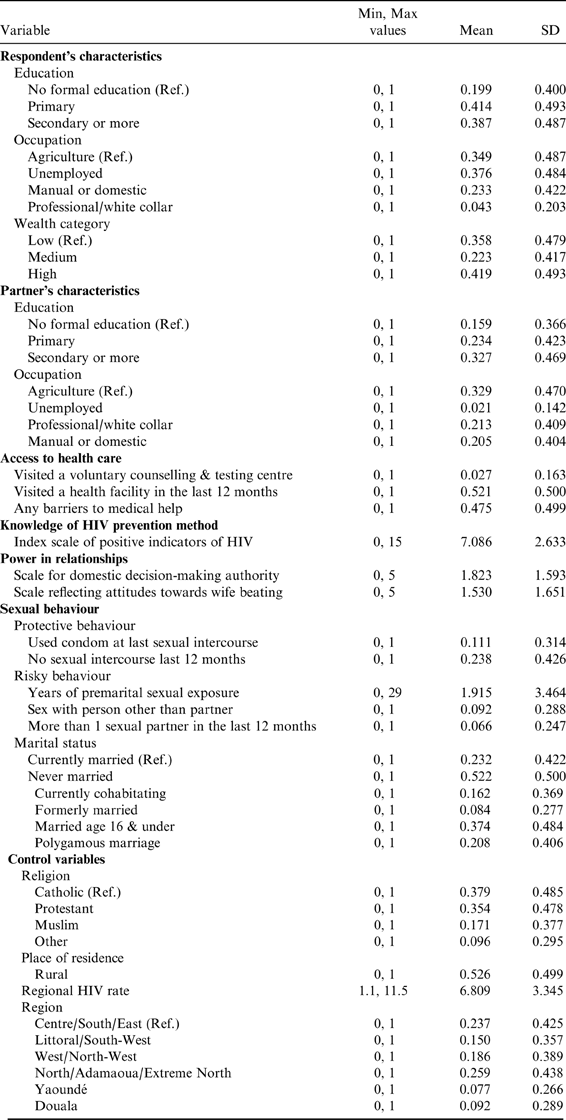
The descriptive characteristics of the CDHS female respondents used in this analysis are shown in Table 1. Regarding indicators of SES, roughly 20% of the women were without formal education, 40% had only primary education and 40% were in the secondary education or higher class. About a third worked in agriculture, a quarter worked as manual or domestic workers and 4% had professional or white collar jobs, leaving 40% who were currently unemployed. Finally, 36% of women came from low-wealth households, 22% from medium-wealth households and 42% lived in relatively high-wealth homes.
Descriptive statistics for variables used in multivariate models, 2004 Cameroon DHS (N=4891)

Bivariate analysis
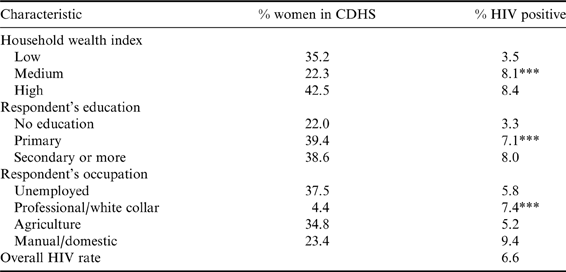
Table 2 shows the percentage of women in the sample with positive HIV tests by SES group. Overall, 6.6% of women in Cameroon tested positive for HIV in 2004. The bivariate analysis confirms that wealth is significantly and positively associated with a woman's HIV status in Cameroon. Specifically, women in the low-wealth quintile had the lowest rates of HIV (3.5%) compared with women in the medium- and high-wealth quintiles (8.1 and 8.4%, respectively). Similarly, a significant positive association between a woman's educational attainment and rates of HIV infection was observed. Women with no education (3.3%) had lower rates of HIV compared with women with primary (7.1%) and secondary or more (8.0%). With regard to occupation, those in the professional/white collar occupations and manual domestic jobs had higher rates of HIV infection compared with women who were unemployed.
HIV status by female respondent's SES, 2004 Cameroon DHS (N=5154)
***p<0.001.
Multivariate results
Nested models
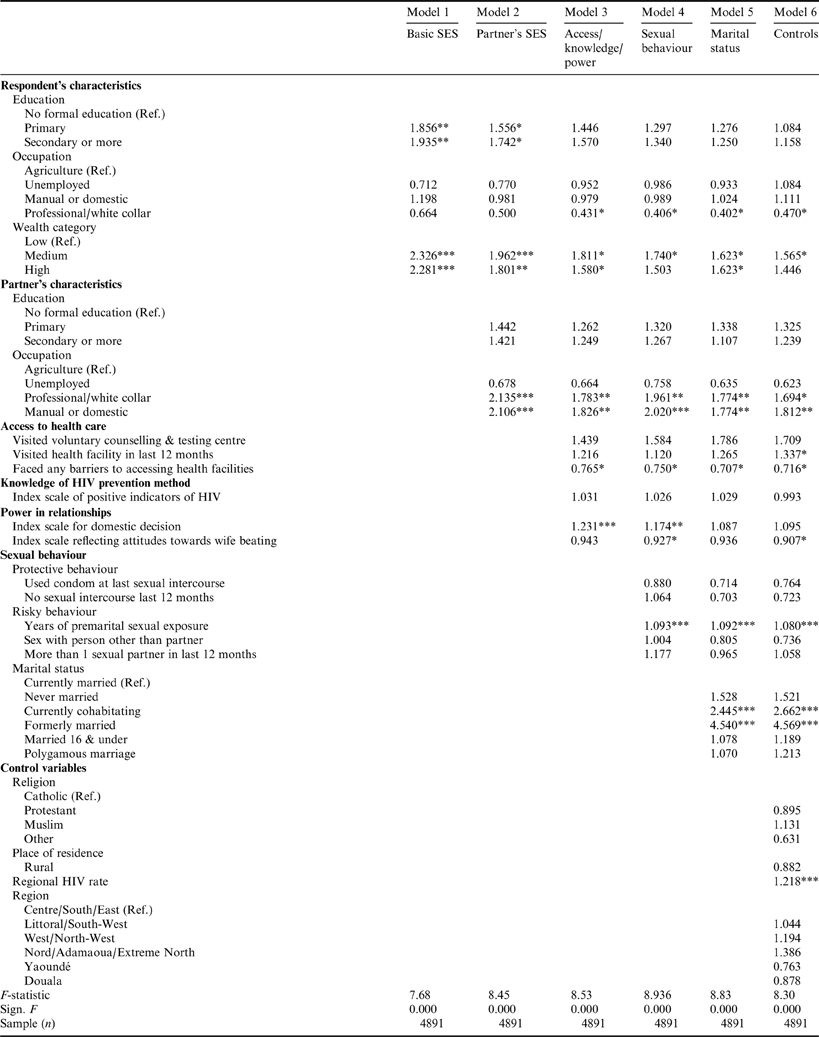
Table 3 presents results of a series of nested binomial logistic regression models for the full CDHS sample of women. The first model (Model 1) examines the effects of the three indicators of respondent SES. The results indicate that increased education and wealth are still positively associated with HIV status, while indicators of occupational status were non-significant once a respondent's education and wealth were accounted for.
Cumulative effects of SES and other respondent characteristics on the odds ratios of testing positive for HIV among women in Cameroon, 2004 DHS
*p>0.05; **p>0.01; ***p>0.001.
Model 2 adds measures for partner's SES to the base model, which attenuates the relationships between a woman's SES and HIV. Specifically, the impact of women's education is reduced (suggesting that some of the impact of higher education on female HIV risk is a reflection of her partner's education and occupation). A weakened association between wealth and HIV is also seen, though women in medium- and high-wealth households were still 80 to 90% more likely than women in the low-wealth groups to test positive for HIV. Partner's occupation is a more important correlate of woman's HIV than partner's education. Women with partners in professional or white collar and manual or domestic jobs were over two times more likely than women with partners in the agricultural sector to test positive for HIV (net of the effects of their own SES).
Model 3 includes new variables to measure access to health care, knowledge of HIV and indicators of a woman's power within their relationships. Although the model is controlling for SES, women who report more barriers to accessing medical help have significantly lower odds of contracting HIV. Moreover, visits to health clinics and greater knowledge of HIV prevention techniques do not appear to systematically affect the odds of acquiring HIV. The findings for measures of relationship power appear contradictory. On the one hand, women with greater domestic decision-making authority reported higher HIV rates. On the other hand, women who had less-tolerant views of wife beating had a reduced HIV risk. The new variables in Model 3 attenuate somewhat the size of the SES variable coefficients, suggesting that some of the apparent SES–HIV link is related to differential health care access, HIV knowledge or power.
Model 4 includes indicators for respondent's protective and risky sexual behaviours. Surprisingly, protective behaviours – condom use and chastity – did not significantly contribute to explaining HIV status. However, measures of risky behaviour generally behaved as expected. Higher numbers of years of premarital sexual exposure were significantly and positively associated with a woman's HIV status. Each additional year of premarital sexual activity increased a woman's risk of testing positive for HIV by about 9%.
Model 5 controls for the respondent's marital status. The variables that are statistically significant are indicators of being formerly married (which combines being divorced, separated or widowed) and cohabiting. Relative to currently married women, formerly married women were over four times more likely to test positive for HIV, while women who were cohabiting with their partners were over two times more likely to test positive for HIV. Accounting for the current marital status of respondents reduces the significance of observed associations between HIV status and most indicators of respondent SES. Specifically, net of the effects of the other variables in the model, women in professional/white collar occupations were much less likely to test positive for HIV. However, partner's occupation remained significantly and positively associated with a woman's HIV status.
In Model 6, variables to control for respondent's religion, regional HIV rate, place of residence and region were added. Only regional HIV rate was significant; the results suggest that each 1% increase in regional HIV rate increased the risk of contracting HIV infection by 22%. Accounting for the controls also made coefficients for indicators for access to health care significant. This suggests that religion and region interact in some way with health care access in shaping the risks of contracting HIV. Overall, the various model-fit measures for each of the nested model were good, indicating that the addition of variables at each step significantly improved the ability to explain a woman's HIV status in Cameroon.
Stratified models
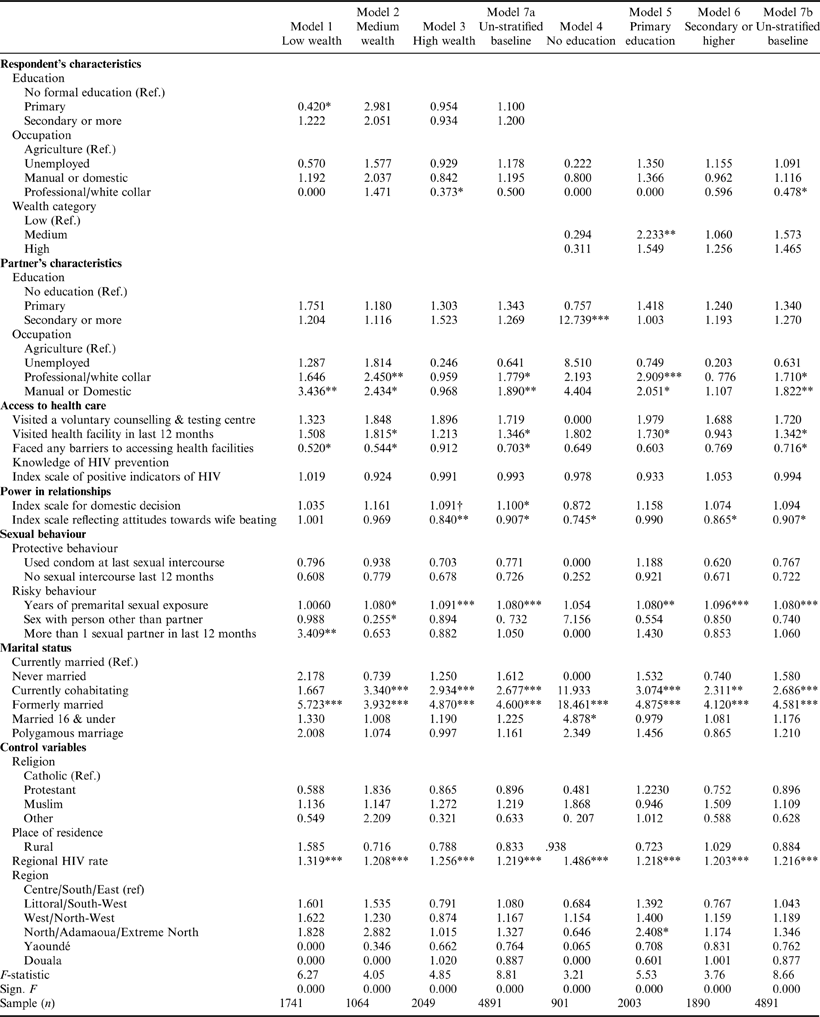
To explore how the factors associated with HIV infection vary by SES group, a set of stratified logistic regression models were estimated. Table 4 presents the odds ratios for models estimated for women in each of six separate SES subgroups (three wealth categories and three education categories). The variables included in these models reflect the full suite of independent variables included in Table 3, with the exception that indicators of SES variables used to create subgroups are dropped. For comparison purposes, the results for the full sample using identical specifications are also presented in Table 4.
Effects of respondent characteristics on the odds ratios of testing positive for HIV among women in Cameroon, stratified by SES, CDHS 2004
*p>0.05; **p>0.01; ***p>0.001; †p<0.10.
In Table 4, Models 1, 2 and 3 present odds ratios for key variables stratified by the respondent's household wealth. For women in the low-wealth subgroup, the variables that most explained positive HIV status were (a) having a primary education (versus no education), (b) having a partner who worked in a manual or domestic occupation, (c) being formerly married, and (d) having multiple sexual partners in the last 12 months. All of these results are consistent with conventional ‘health gradient’ expectations.
For women in the medium-wealth group, variables that were positively related to HIV status included indicators of (a) having a partner with either a manual or professional occupation, (b) having greater access to health care, (c) years of premarital sexual exposure, and (d) marital status – either current cohabitation, or formerly married status.
For women living in high-wealth households, the only SES variable that had a significant association with HIV status suggested that women in professional/white collar occupations had notably lower odds of testing positive for HIV. Interestingly, only among high-wealth women was an indicator for ‘relationship power’ associated with HIV status. Specifically, those who viewed wife beating as wrong had lower HIV risk. It should be noted, however, that the variable for women with higher domestic decision-making power had increased HIV risk that was marginally significant (p=0.06). As with medium-wealth women, high-wealth respondents were more at risk for HIV if they had more premarital sexual exposure, were currently cohabitating or were formerly married.
Taken as a whole, the stratified models uncovered some differences across women of different wealth classes. Low- and medium-wealth women were more influenced by their partner's occupational characteristics, while high-wealth women were more affected by their own occupational type. Women in low-wealth households were the only ones with significant coefficients for education, and the results suggested that the biggest educational ‘risk factor’ for this group was moving from no formal education to simple primary school education. The surprising pattern linking increased barriers to health care with reduced risk of HIV and increased HIV risk among women who frequented health clinics was found primarily among medium-wealth women. Conversely, the only group for which indicators of power in relationships made a difference was the high-wealth women. Years of premarital sexual exposure and current marital status were important correlates of HIV status among medium- and high-wealth women, but not among low-wealth women. Finally, the significant region HIV coefficients for all wealth groups suggest that the ‘regional’ HIV rate effect was important across all wealth groups.
In Table 4, Models 4, 5 and 6 present odds ratios for key variables stratified by the respondent's level of formal education. Among women who reported no formal education, variables associated with increased HIV risk included: (a) having a partner with high levels of education; and (b) marital status – either current cohabitation or formerly married. Among this group, a negative attitude towards wife beating was associated with a reduced HIV risk.
Among women with only primary education, risks of HIV increased among those: (a) living in a medium-wealth household; (b) with a partner with either a manual or professional occupation; (c) who had visited a health care facility in the last 12 months; (d) with more years of premarital sexual exposure; and (e) formerly married or currently cohabitating.
Model 6 shows results for women who had completed secondary or post-secondary education. Among this group of women, there was no significant association between their HIV status and any of the other indicators of respondent's SES or their partner's SES. The only significant coefficients related to attitudes towards wife beating, years of premarital sexual exposure and marital status. Negative attitudes towards wife beating were associated with reduced HIV risk, while years of premarital sexual activity were linked to increased HIV risk. Relative to currently married women, highly educated women who cohabit were almost 2 times more likely, and women who were formerly married were 3.8 times more likely to test positive for HIV.
Overall, the models stratified by different education categories showed how partners' characteristics were most important in explaining variation in HIV among women with less formal education. Meanwhile, those with medium education and living in a medium-wealth household appear to experience heightened chances of acquiring HIV.
Discussion and Conclusions
The central aim of this study was to explore how the factors associated with HIV risk were different for women in different SES classes in the 2004 Cameroon DHS. Based on previous research, it was expected that for women in higher SES strata, norms and behaviours relating to dating, marriage and norms of sexual behaviour would be the most significant correlates of their HIV risk, while benefits of greater wealth and education would be linked to more protective behaviours. The results showed that the factor most associated with risk of HIV infection for high-SES women is their own personal sexual behaviour, especially a longer period of premarital sexual activity. While they do have greater access to medical help, command higher knowledge of HIV and HIV prevention methods and are more likely to use condoms, these benefits of higher SES did not translate into lower HIV risks or overall HIV infection rates. Although it was expected that higher SES women would be put at greater risk by their partners' sexual behaviour, the models did not find this to be a significant correlate of HIV status. One possible explanation is that there is relatively little variability in partner SES among high-SES women.
The findings of this study also fail to support the idea that increased power in relationships (associated with higher SES) allows women to negotiate safer sexually practices, thereby lowering their HIV risk. Instead, among high-SES women in the sample, higher rates of household decision-making authority were actually associated with higher HIV risk (though the associations were only marginally significant). Higher decision-making authority was also found to be positively associated with HIV in the general analyses. Three explanations of this pattern are possible. First, it is possible that the power–HIV relationship in the sample is spurious and merely a reflection of a common association with socioeconomic status (which is known to be positively related to power as well as riskier sexual behaviours and higher HIV rates). Second, the indicators of ‘power’ available in the CDHS may be inadequately capturing the actual degree of power Cameroonian women have to influence the behaviour of their partners. Even if women know more about how to protect themselves, and even if they feel more ability to influence domestic household decisions, they may still lack the ability to challenge their partners to reduce risky behaviours (like infidelity) or to ask their partners to adopt protective behaviours (like using condoms). Third, bivariate analyses (not shown) suggested that women with higher decision-making authority also engaged in riskier personal sexual behaviours (including more infidelity and incidence of multiple sexual partners), which are also associated with increased HIV rates.
Meanwhile, it was expected that low-SES women would be affected more by traditional associated factors of HIV risk, such as limited access to health facilities, lower knowledge of HIV and HIV prevention methods, limited power within relationships and early marriage. The results do not provide strong support for this. Among low-SES women in Cameroon, a significant cause of HIV risk appears not to be poverty, but relative gender inequality. In this analysis, the most important correlate of risk for low-SES Cameroonian women was her partner's SES, specifically his education. While heterosexual marriages typically occur between individuals of the same socioeconomic circumstances, it appears that women who ‘marry up’ have significantly increased risks of contracting HIV.
For women in all three SES groups, the impact of marital status on HIV rates was consistent and strong. The highest rates of HIV in Cameroon were among women who are formerly married (either divorced or widowed) or in cohabiting unions. For formerly married women, there is the possibility that being widowed, divorced or separated is directly linked to previous HIV infection (either for the woman or her partner). It may be that they lost their partners to the disease and were therefore more likely to have been infected by a late spouse (for widowed women), or that they are now divorced and separated because they found out they (and/or their partner) were HIV positive. For women in cohabitating unions, perhaps the lack of legal commitment gave not only their partners but themselves greater opportunity to engage in risky sexual behaviours. Cohabiting women in the sample were more likely than married women to report infidelity and having multiple sexual partners (not shown). Nkuo-Akenji et al. (Reference Nkuo-Akenji, Nkwesheu, Nyasa, Tallah, Ndip and Angwafor2007) also found that Cameroonian women attending university recognized that an important means of preventing HIV and other STDs was limiting the number of sexual partners, yet this same group also believed that having multiple sexual partners was acceptable.
The results of this study suggest that poverty reduction programmes alone may fail to treat the root causes of the HIV problem among women in Cameroon. On the one hand, the reason many women are poor in the first place is highly related to gender inequality. Thus, policies that give low-SES women more access to resources but fail to empower them to change their lives may not have much effect on those women's health risks. It is also clear that efforts to spread information about HIV and to provide better access to testing and treatment for the disease are necessary, but not sufficient to motivate women to engage in more protective behaviours. At least among women in Cameroon in 2004, people with improved access to health care and higher knowledge about HIV do not have reduced chances of contracting HIV.
A dual policy approach targeting wealthy women specifically with programmes to encourage cultural shifts to alter sexual norms and practices among these otherwise relatively well-off women is therefore suggested. With this approach, while poverty reduction efforts need to continue, a campaign targeting individuals in the high-wealth category could then be intensified. Ultimately, the positive association between SES and HIV in Cameroon in 2004 may reflect the relatively early phase of an HIV pandemic that has first affected wealthier and better-educated people because of sexual behaviours and cultural practices that placed them at greater initial risk. As the disease matures and the impacts become clearer, higher SES people may be more likely to adopt protective behaviours that reduce their risk of being HIV positive. The most recent DHS survey in Cameroon (conducted in 2011, but not yet released to scientists) will be an important resource to see whether the dynamics of HIV risk have changed over time.
Acknowledgments
The authors thank Blessing Mberu, Djesikah Amendah and Maurice Mutisya for the thoughtful comments and valuable feedback they provided on drafts of this paper. The authors are also grateful to Measure DHS for providing them with the 2004 Cameroon DHS data. The authors declare that they have no competing interest.