Alzheimer’s disease and related dementias (ADRD) have become a global public health concern (Lynch, Reference Lynch2020; WHO, 2017). Despite medical advancements in diagnosis and treatment, a cure for ADRD is not in sight. Problems related to memory, emotion, and behavior due to ADRD affect ones’ capacity of independent living and may cause distress for family caregivers. Given the formidable course and consequences of ADRD and their association with older age, ADRD is particularly terrifying among middle aged and older adults in the USA and elsewhere (Cutler, Reference Cutler2015; Lynch, Reference Lynch2020; Maust et al., Reference Maust2019).
Raising awareness about lifestyle and environmental risks of ADRD have increasingly become a priority in policy and practice contexts over the last decade. The World Health Organization (WHO, 2017) in its 2017–2025 global action plan toward dementia recommended its member states to consider ADRD as a public health priority and address the misconceptions and stigma around ADRD. About 30 of WHO member states, including the USA, have launched national dementia strategic plans that include goals to promote public dementia awareness and education [Alzheimer’s Disease International (ADI), 2020; Assistant Secretary of Planning and Evaluation (ASPE), 2019; Sun et al., Reference Sun, Chima, Wharton and Iyengar2020]. In the USA, the Center for Disease Control and Administration for Community Living have sponsored community-based educational programs to promote ADRD awareness through local health departments and aging service networks (ASPE, 2019). Increasing dementia knowledge and reducing biased beliefs toward dementia among older residents are the primary goals of these public health campaigns.
Dementia literacy
Dementia knowledge and beliefs are two aspects of dementia literacy. Dementia knowledge refers to a person’s understanding of dementia from the scientific perspective, whereas dementia beliefs are interpretations of dementia drawn from one’s personal and cultural perspectives. Research has found that racial and ethnic minority groups tend to have lower dementia knowledge and hold biased beliefs toward dementia (Cahill et al., Reference Cahill, Pierce, Werner, Darley and Bobersky2015; Connell et al., Reference Connell, Roberts, McLaughlin and Akinleye2009). Low dementia literacy among ethnic minority groups is likely to affect timely diagnosis and treatment of dementia and access to care support and social participation (Sayegh and Knight, Reference Sayegh and Knight2013).
Evidence that has found lower rates of dementia knowledge among ethnic minority groups mainly drew samples from African Americans, Latinos, or general Asian Americans (Ayalon and Areán, Reference Ayalon and Areán2004; Connell et al., Reference Connell, Roberts, McLaughlin and Akinleye2009) and thus the results may not be applicable to older Chinese Americans. For example, Ayalon and Areán (Reference Ayalon and Areán2004) based upon a sample of 30 older Asian Americans and found older Asian Americans had lower knowledge of ADRD than their Caucasian counterparts. However, a study on older Chinese Americans (Sun et al., Reference Sun, Gao, Shen and Burnette2014) found that participants had an average of 73% accuracy rate using the revised Alzheimer’s Disease Knowledge Scale (ADKS; Carpenter et al., Reference Carpenter, Balsis, Otilingam, Hanson and Gatz2009), indicating that they did not fall behind other ethnic groups in their overall ADRD knowledge level, though they be limited in certain area of ADRD knowledge (e.g. risk factors). Factors positively associated with older Chinese Americans’ dementia knowledge included being female and higher education levels (Sun et al., Reference Sun, Gao, Shen and Burnette2014).
The most common misconceptions about dementia among older Chinese, including older Chinese Americans and their counterparts in mainland China, revolve around the beliefs of dementia as a normal part of aging and views of dementia as a stigmatized mental illness (Gray et al., Reference Gray, Jimenez, Cucciare, Tong and Gallagher-Thompson2009; Sun et al., Reference Sun, Gao, Shen and Burnette2014; Wang et al., Reference Wang, Zou, Li and Hu2013; Yang et al., Reference Yang, Yang, Cheng and Cong2013). The views of dementia being a normal part of aging reflect a thought of fatalism embedded in Chinese traditional culture that appears to be a negative coping response to the unavoidable negative life events; such views were found to contribute to dementia worry (Shi et al., Reference Shi, Sun, Liu and Marsiglia2020). The stereotyped images of persons and families affected by dementia often include depictions of people with ADRD as being crazy or ADRD being a disgrace to the whole family. Such beliefs not only reflect the lack of understanding of the neurological cause of psychiatric and behavioral symptoms associated with dementia but also shows society’s negative and discriminative attitude toward individuals and families affected by dementia. Limited research on different older Asian American subgroups (Jang et al., Reference Jang, Kim and Chirigoga2010; Sun et al., Reference Sun, Gao, Shen and Burnette2014; Zheng and Woo, Reference Zheng and Woo2016) suggests that ones’ beliefs toward dementia may be affected by their familiarities with dementia, formal education levels, and acculturation levels.
Dementia worry
Dementia worry, also known as the perceived threat of ADRD (Roberts et al., Reference Roberts, McLaughlin and Connell2014; Sun et al., Reference Sun, Gao and Coon2015), is an emotional response to the possibility of developing dementia, implying anxiety toward aging and health decline (Kessler et al., Reference Kessler, Bowen, Baer, Froelich and Wahl2012). The MetLife Foundation survey (2011) found that Alzheimer’s disease is the second most feared disease right behind cancer among American adults, especially for middle aged and older Americans (Cutler, Reference Cutler2015). Dementia is concerning for older adults because many who experience normal-aging related memory loss may project a high likelihood of developing dementia. The concern regarding the loss of independence and the added physical, emotional, and financial burden to their families are horrifying (Cutler, Reference Cutler2015; Kessler et al., Reference Kessler, Bowen, Baer, Froelich and Wahl2012). For middle aged adults (aged 50 or above), their fear could arise due to their role as family caregiver or being genetically connected with a relative with dementia (Kinzer and Suhr, Reference Kinzer and Suhr2016; Werner et al., Reference Werner, AboJabel and Maxfield2021).
Studies that examine change of dementia worry over time are few. One recent study using an online sample of adults (n = 129) from Europe did not find a significant amount of change in dementia worry within 2 years (Martin et al., Reference Martin, Lang, Rupprecht and Nömer2020). MetLife Foundation (2011) conducted two national surveys that asked over 1,000 American adults to rank Alzheimer’s disease in comparison with other diseases (e.g. cancer, heart diseases) on their fearfulness and found that those who ranked Alzheimer’s disease as the most fearful disease rose from 20% in 2006 to 31% in 2010. Using a representative sample of adults aged between 50 and 64, one nationwide poll in the USA in 2019 found that 44% reported at least somewhat worried about developing dementia (Maust et al., Reference Maust2019). One longitudinal study (Cutler and Brăgaru, Reference Cutler and Brăgaru2015) examined predictors for dementia worry using multiple waves of the Health Retirement Data on American retirees aged 50 or above but failed to identify change in dementia worry because dementia worry was only assessed at the last time point. To conclude, there is little known about the change of dementia worry over time among older adults, yet alone a specific ethnic group.
Dementia worry has been found to be closely related to psychological well-being and the quality of life among middle aged and older adults (Bowen et al., Reference Bowen, Kessler and Segler2019; Cutler and Brăgaru, Reference Cutler and Brăgaru2017). Despite numerous studies on dementia worry (Werner et al., Reference Werner, AboJabel and Maxfield2021), limited research on dementia worry among older Chinese Americans (e.g. Sun et al., Reference Sun, Gao and Coon2015) suggests that cultural beliefs toward dementia, elder physical and mental health, previous exposure to ADRD, and perceived social support are related to dementia worry.
Research questions
Dementia knowledge, dementia beliefs, and dementia worry are distinct yet interrelated concepts that affect ones’ comfort interacting with persons living with dementia (Ebert et al., Reference Ebert, Kulibert and McFadden2019), but more so, their own psychological well-being and capacity to age well in place (Bowen et al., Reference Bowen, Kessler and Segler2019; Riley et al., Reference Riley, Burgener and Buckwalter2014). Like other older Asian American groups (Ayalon and Areán, Reference Ayalon and Areán2004), older Chinese Americans experience cultural-related barriers in dementia diagnosis, treatment, and care support access (Wu et al., Reference Wu, Lombardo and Chang2010), which highlights the importance to examine dementia literacy and dementia worry among older Chinese Americans.
Understanding the change of dementia literacy and dementia worry is critical to inform policy and practice to better promote dementia awareness and support in this population. This study aimed to examine older Chinese Americans’ dementia literacy and worry over time, controlling for covariates including exposure to dementia, health (i.e. physical functioning and depressive symptoms), social relationships (i.e. social support, family conflict), and acculturation (Sun et al., Reference Sun, Gao and Coon2015; Werner et al., Reference Werner, AboJabel and Maxfield2021). Specifically, this study addressed the following three research questions: (1) Whether there is any difference in dementia literacy (i.e. dementia knowledge, dementia beliefs) and dementia worry, respectively, between 2013 and 2017; (2) whether the difference in dementia literacy and dementia worry from 2013 to 2017 differ by any covariate; and (3) what factors are related to dementia literacy and dementia worry.
Methods
This study used survey data collected in a purposive sample of 703 Chinese Americans aged 55 years or older living in the metropolitan areas of Phoenix, Arizona in the USA. Among them, 385 participants were included in 2013 and 318 participants in 2017.
Participants and recruitment
Participant eligibility criteria consisted of self-identification as a Chinese American or an immigrant from Mainland China, Taiwan, Hong Kong, or other Chinese speaking regions, aged 55 or older, and being able to communicate either in English, Chinese Mandarin, or Cantonese. To ensure participants with diverse backgrounds were included, participants were recruited from multiple sources, including Chinese senior centers, subsidized senior housing apartments, religious sites, community events, and senior social clubs. The average age of participants was 73.1 (SD = 8.7), about two-thirds (64.2%) were female, and 8% were born in the USA, and 69% were born in mainland China.
A structured survey via face-to-face interview was conducted using participant preferred languages (i.e. English, Mandarin, or Cantonese). Survey questions were created in English, which were translated into simplified and traditional Chinese characters and back translated into English by two Chinese scholars outside of the research team to ensure accuracy.
Measures
To assess dementia literacy, dementia knowledge and dementia beliefs were measured separately. Dementia knowledge was measured by the sum of 16-item true/false statements that assessed the actual knowledge of ADRD symptoms, impact, risk factors, treatment, and caregiving. The 16 items were drawn from the 30-item ADKS by Carpenter et al., (Reference Carpenter, Balsis, Otilingam, Hanson and Gatz2009) in line with the latest scientific evidence of ADRD.
Dementia beliefs were measured by the 10-item scale assessing prevalent cultural beliefs toward dementia among older Chinese Americans. Beliefs toward dementia in Chinese culture are largely influenced by fatalism and stigmatization of mental illness (Sun et al., Reference Sun, Ong and Burnette2012; Wang et al., Reference Wang, Zou, Li and Hu2013). Two questions assessed beliefs of dementia as “normal aging process” and as “the arrangement of fate,” and the other eight items tapped stigmatized beliefs related to dementia or families affected by dementia such as “ADRD is a mental illness,” and “I would feel shameful to tell others if someone in my family had ADRD” on a five-point Likert scale from “1 = completely disagree” to “5 = completely agree.” The total score ranged from 10 to 50, with higher scores indicating more biased beliefs toward dementia. The Cronbach’s alpha of this scale is 0.68.
Dementia worry contained eight items revolving around (a) ones’ concerns about developing ADRD someday and (b) one’s manifestation of fears toward ADRD (Gray et al., Reference Gray, Jimenez, Cucciare, Tong and Gallagher-Thompson2009; Sun et al., Reference Sun, Gao and Coon2015). Participants responded to these statements on a five-point Likert scale from 1 = strongly disagree to 5 = strongly agree. Higher scores indicated more dementia worry, with a Cronbach’s alpha of 0.73.
Covariates
Demographic characteristics included age, gender (0 = male; 1 = female), living arrangement (1 = “living alone”; 0 = “living with others”), primary language use (English coded as reference group, and Mandarin, Cantonese, Others coded as dummy variables), education (“6th grade or lower” coded as reference group; “7th–9th grade,” “9th–12th,” “vocational or trade school,” “college graduate,” and “Postgraduate or higher” coded as dummy variables), and level of difficulty paying for bills (“1 = no difficulty” to 4 = “extremely difficulty," “1” coded as reference group).
Dementia exposure. Dementia exposure was measured by two questions: (1) whether the person knew someone that had dementia (0 = no, 1 = yes) and (2) whether the person has taken care of someone with dementia (0 = no, 1 = yes).
Health-related variables. Self-rated health was measured by one-item that asked participants to rate their overall health from 1 = very poor to 5 = excellent. Physical function was measured by the number of activities of daily living (ADL) limitations (ranging from 0 to 7) and the number of Instrumental ADL limitations (ranging from 0 to 8; Katz, Reference Katz1983). Depressive symptoms were measured by the 10-item Centre for Epidemiological Studies Depression scale (Andresen et al., Reference Andresen, Malmgren, Carter and Patrick1994; Cronbach’s α = 0.78).
Social relationships included support network and family conflict. Social support network was measured by Lubben Social Network Scale (Lubben et al., Reference Lubben2006). The total score ranged from 0 to 30, with higher scores indicating a larger support network (Cronbach’s α = 0.82). Family conflict was measured using five Likert-scale questions adapted from the Hispanic Stress Inventory (Cervantes et al., Reference Cervantes, Padilla and De Snyder1990). Example of questions included “how often you have felt that being too close to your family interfered your own goals” from “1 = rarely or never,” “2 = sometimes,” “3 = often.” Total score of family conflict was calculated with higher scores indicating higher family conflict (Cronbach’s α = 0.77).
Acculturation. Acculturation was measured the 10-item 5-point Acculturation Scale (Gupta & Yick, Reference Gupta and Yick2001), with higher scores indicated more endorsement of American ways of living (Cronbach’s α = 0.87).
Analytic strategies
We used descriptive statistics to summarize the sample characteristics for 2013 and 2017, respectively. We also used chi-square test and independent sample t-tests to compare the distribution of all variables between the 2 years. To examine the adjusted difference in dementia knowledge, beliefs, and worry between the 2 years, we used ordinary least square (OLS) regression models, regressing each outcome on year and all covariates. In addition, based on the OLS models above, we added the interaction terms between year and each covariate for each outcome, respectively, to examine whether the change of each outcome differs by any covariate. A descriptive figure was depicted to show the domain-specific dementia knowledge change between 2013 and 2017. We noticed that the assumption of homoscedasticity for residuals was violated for dementia worry and belief. Therefore, we applied sandwich estimators for the variance of residuals to predict dementia worry and beliefs. Among all variables, missing values accounted for between 0% and 4.41% of the data. Multiple imputation by chained equations was used to address potential biases caused by missing data (StataCorp, 2017). All parameters in logistic regression were estimated based on pooled results from 20 sets of imputed data using Stata 15 SE (Royston and White, Reference Royston and White2011).
Results
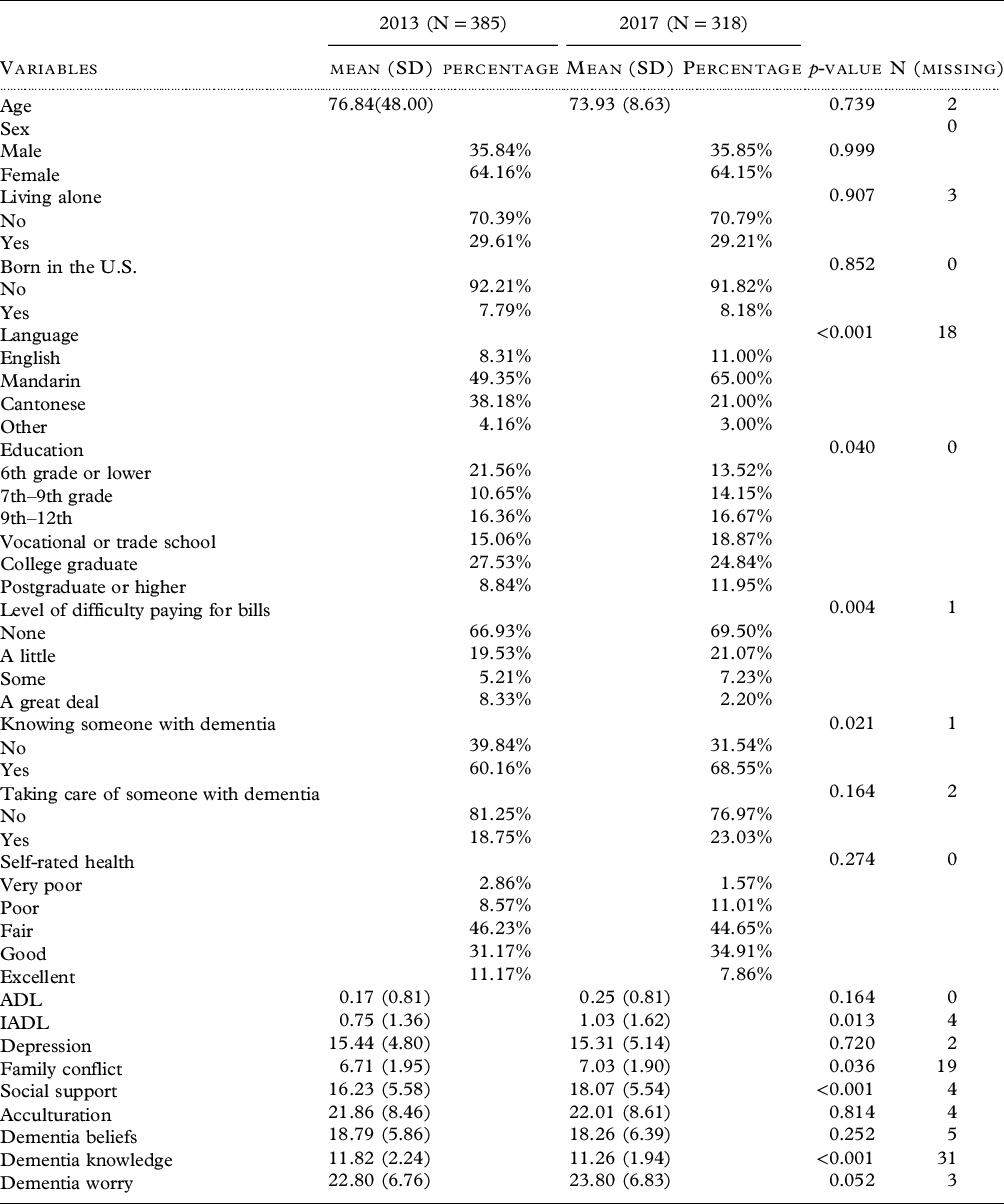
Table 1 displays the sample characteristics for 2013 and 2017, respectively. Among all variables, primary language use, education, level of difficulty paying for bills, knowing someone with dementia, IADL, family conflict, social support, and dementia knowledge significantly differ between the 2 years.
Sample characteristics by year (N = 703)

p-values were based on independent sample t-test for continuous variables and chi-square test for categorical variables.
More specifically, in 2017, more participants reported English and Mandarin as their primary language, and fewer participants used Cantonese than in 2013. More participants in 2017 had an education between seventh grade and vocational or trade school, while fewer had an education of between seventh grade or above vocational or trade school than in 2013 (p < 0.05). Fewer people had a great deal of difficulty paying for bills in 2017 than in 2013 (p < 0.01). More participants knew someone with dementia in 2017 than in 2013 (p < 0.05). Participants in 2017 reported more limitations of IADL (p < 0.05), higher family conflict (p < 0.05), but larger social support (p < 0.001) than in 2013. Regarding dementia knowledge, participants in 2017 reported less knowledge than in 2013 (p < 0.001). No significant difference was found in dementia worry (p = 0.054) between participants in 2013 and 2017.
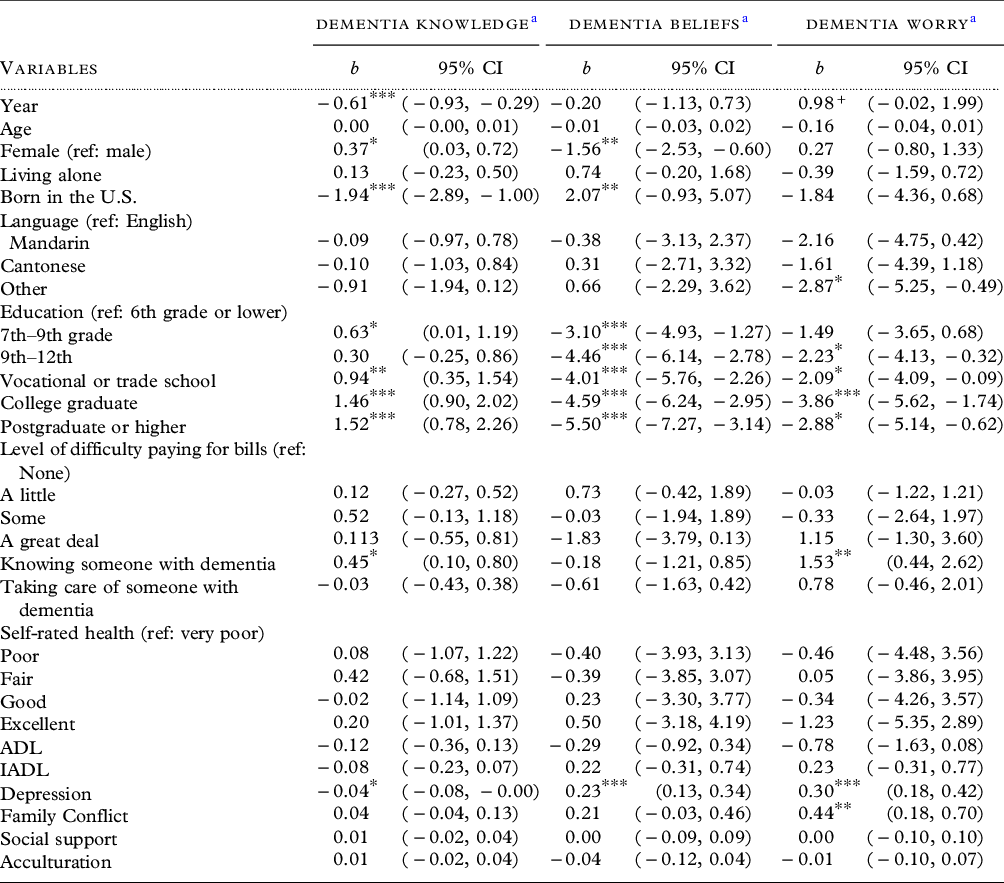
Table 2 displays the results of OLS regression models predicting dementia literacy and dementia worry. Results show that after adjusting for all covariates, dementia knowledge significantly decreased from 2013 to 2017 (b = −0.61, p < 0.001; standardized coefficient β = −0.29). Significant correlates of higher dementia knowledge included being female, born outside USA, higher education, knowing someone with dementia, and lower depressive symptoms. The explained R square was 0.16.
Ordinary least square regression predicting dementia knowledge, beliefs, and worry (N = 703)

a The standardized coefficient of year for dementia knowledge, beliefs, and worry, were respectively −0.29, −0.03, and 0.14.
*p < 0.05; **p < 0.01; ***p < 0.001.
Dementia beliefs did not significantly differ from 2013 to 2017. Significant correlates of lower biased dementia beliefs included being female, born outside USA, higher education, and lower depressive symptoms. The explained R square was 0.20.
Dementia worry did not differ from 2013 to 2017, as the significance level remained at p = 0.054 in the multivariate model. While examining if the change of any outcome differs by any covariate, we found that the interaction term between living alone and year was statistically significant (b = 2.41, p < 0.05; standardized coefficient β = 0.35), indicating that change in dementia worry from 2013 to 2017 significantly differed by whether the participant was living alone. More specifically, the mean of dementia worry did not differ significantly between 2013 and 2017 among those who were not living alone (b = 0.29, p = 0.630; standardized coefficient β = 0.04), but dementia worry significantly increased among those who were living alone (b = 2.69, p < 0.01; standardized coefficient β = 0.40). Significant correlates of higher dementia worry included lower formal education, knowing someone living with dementia, higher levels of depressive symptoms, and higher levels of family conflict. The explained R square was 0.18.
Discussion
This study represents one of the first efforts to explore differences in dementia literacy and worry among an understudied ethnic and cultural group: older Chinese Americans. Our major findings suggest that within the 5 years from 2013 to 2017, older Chinese Americans’ dementia knowledge decreased, dementia beliefs remained the same, and dementia worry increased among those who lived alone.
The finding that dementia knowledge decreased from 2013 to 2017 seems somewhat contradictory to the impression of rapid growing public awareness of ADRD among general Americans. The reports by MetLife Foundation (2011) showed that the proportion of American adults knowing “a lot” about ADRD increased from 26% to 38% over 5 years from 2006 to 2010. The change measured by one-item self-rated ADRD knowledge level in MetLife surveys may reflect increased awareness, but not necessarily the actual knowledge of ADRD as measured in this study. The low representation of older Chinese Americans in these two national surveys may also make the conclusion less applicable to the study population. Another speculation could be that the growing public education efforts to increase dementia knowledge through media or formal service systems may have failed to reach out to the older Chinese Americans, given various barriers to service and information access faced by this population (Wu et al., Reference Wu, Lombardo and Chang2010). Despite a small magnitude of change in dementia knowledge identified (β = −0.29), the finding itself is worth noting for researchers and practitioners. Given the increased attention to public education of dementia in the American society (US Department Health and Human Services, 2012), the dementia knowledge in older Chinese Americans instead decreased 0.29 standard deviation within a not long time period. More research efforts in the future are needed to examine the changes of dementia knowledge in this group and identify the causes of such changes. For practitioners charged to promote public dementia education, strategies need to be in place to reverse this phenomenon.
Dementia beliefs did not significantly differ between 2013 (M = 18.79) and 2017 (M = 18.26). As biased beliefs toward dementia are not only influenced by a person’s education and personal experience, but also subject to the long tradition of a cultural group’s prevalent beliefs toward dementia, its nonsignificant change is expected. It is often believed that older Chinese Americans tend to believe dementia symptoms at the early stages as part of normal aging process and to accept a fully developed dementia as an arrangement of fate. Some hold the stigmatized views of dementia because its association with losing cognition and presentation of behavioral problems. It is worth noting that the average value of 18.55 along a scale with a range from 10 to 50 (higher score indicating more biased beliefs) showed a low level of biased beliefs toward dementia. This finding corresponds to recent findings on middle aged and older adults in economically developed metropolitan areas in mainland China. Only 6.6% of 1,806 elders from Shanghai reported that they would hide from others if they developed dementia (Fang et al., Reference Fang, Zheng, Zhang, Ji and Li2010). Among 600 Chinese aged 45 and over from Tianjin, 89.9% of them disagreed that ADRD is a disgrace (Li et al., Reference Li, Jin, Zhang, Li, Zhang and Fang2019). Though the across-country comparisons are not precise given vast differences in sampling, measures, and time of data collection, it implies that previously assumed high biased beliefs toward dementia might not be as widespread among older Chinese Americans.
Our study found that older Chinese Americans’ dementia worry in 2017 did not significantly differ from those in 2013 (p = 0.054). One explanation could be One recent study (Martin et al., Reference Martin, Lang, Rupprecht and Nömer2020) using a sample of European adults aged 21 or above found that dementia worry did not change significantly from M = 10.5 (SD = 5.0) to M = 10.0 (4.7) within 2 years. Martin et al., Reference Martin, Lang, Rupprecht and Nömer2020) assertation that dementia worry may reflect a stable personality trait, like someone being generally anxious about certain things in life is plausible.
One competing explanation is that individual’s dementia worry can fluctuate due to heightened awareness, age related health changes, declining memory, or diagnosis with dementia of a family member. Some cross-sectional studies at different time points suggested an upward trend for dementia worry among the Americans, particularly among middle aged and older adults. The MetLife Foundation (2011) conducted two surveys with over 1,000 American adults in 2006 and 2010, and found 20% in 2006 reported most feared getting AD but the proportion increased to 31% in 2010. This figure corresponded to a finding (Cutler, Reference Cutler2015) that used Health Retirement Study data collected in 2010, which found that 30.2% of 1,819 participants (about two thirds aged 60 or above) were at least some worried about developing dementia. In 2019, the proportion of dementia worry was found higher in a national poll, as 44% of 1,028 Americans between age 50 to 64 reported somewhat worried or very worried about developing dementia (Maust et al., Reference Maust2019). The U.S. passed the National Alzheimer’s Project Act (NAPA) in 2012, which leveraged Alzheimer’s as a national public health concern and laid out five strategies, one of which was to increase public awareness (US Department Health and Human Services, 2012). As the society’s awareness of dementia increased, their factual knowledge of dementia decreased, it is possible to lead to heightened worry of dementia in older Chinese Americans. Still, more research needs to be done to affirm how dementia worry changes and the reasons behind it.
Rather than nonsignificance identified in the whole group, dementia worry significantly differed between 2013 and 2017 among those living alone, highlighting that living alone status projected a significant increase of dementia worry. The effect size of the change of dementia worry among those who lived alone was moderate (standardized coefficient β = 0.40). The result adds to the literature regarding the negative impact of living alone on physical and mental health outcomes among older adults in the U.S.A. and China (e.g. Chou et al., Reference Chou, Ho and Chi2006; Weissman and Russell, Reference Weissman and Russell2018). It also highlights a vulnerable subgroup within older Chinese Americans, that is, those living alone, as the priority target group for service professionals in areas of dementia education and intervention.
Significant correlates of dementia literacy and dementia worry
Our study affirmed some known factors critical to dementia literacy and dementia worry (Werner et al., Reference Werner, AboJabel and Maxfield2021). Education was correlated with all three dependent variables in expected ways, suggesting higher education level is a protective factor as it leads to higher dementia knowledge, lower biased beliefs, and lower dementia worry. Consistent with existing literature (e.g. Kinzer and Suhr, Reference Kinzer and Suhr2016; Sun et al., Reference Sun, Gao and Coon2015), higher depressive symptoms were related with higher dementia worry and lower dementia knowledge, suggesting great attention needed for those affected by depression. Similarly, family conflict was related to higher dementia worry, implying the source of stress in family context can lead to one’s anxiety about a disease. Given that family harmony is highly cherished in Chinese culture, providing ways or resources to mitigate family conflict should be included in public health programs addressing dementia worry among older Chinese Americans.
Two significant correlated that are quite surprising are that participants who were female and those born outside the U.S.A. had more dementia knowledge and had lower biased beliefs. Compared to men counterparts, older Chinese American women are more willing to seek information about dementia from multiple sources (e.g. media, friends) and to learn about dementia (Sun et al., Reference Sun, Gao, Shen and Burnette2014), therefore their dementia literacy is higher. But this advantage does not necessarily translate into low dementia worry in older women. The finding that being female was related to higher dementia worry, though not statistically significantly (b = 0.27, p > 0.05) in this study, unlike many studies in the scope review of Werner et al., Reference Werner, AboJabel and Maxfield2021) that found higher dementia worry in females, suggests gender specific consideration in dementia education intervention. We also believe those born outside the U.S.A. had multiple information sources including social media from their home country to update their dementia knowledge, which might explain their higher dementia literacy than native born Chinese Americans.
This study has a few limitations. Findings about the change in dementia literacy and worry need to be interpreted with caution as we did not follow-up with the same individuals over the 5 years. Thus, the change discussed in this study did not capture the trajectory of dementia literacy and worry as would in longitudinal studies. Second, we made efforts to recruit participants from diverse sources to increase sample representativeness; however, this sample was not a nationally representative sample. Because we did not include the recruitment site as a variable, we could not preform analyses based upon this variable. Our findings shed some light on the trend on dementia literacy and worry, but future studies using probability sampling methods need to be adopted to depict such trend. As we focused on a relatively healthy senior group, we did not include an assessment of cognition, which needs to be considered in future studies that examine dementia literacy and worry (Kinzer and Suhr, Reference Kinzer and Suhr2016). Finally, one limitation is the conventional p value score of 0.05 used in the multiple analyses as the inclusion of multiple tests may inflate the type I errors.
Implications for practice and policy
Our findings have generated some implications for policy and practice that are aimed to sustain efforts to promote dementia literacy and reduce dementia worry. The essential recommendation is to integrate goals of improving domain-specific dementia knowledge, reduce biased dementia beliefs and dementia worry in public health education programs. In addition to imparting the factual knowledge of ADRD to older adults, it is critical to identify older adults ADRD knowledge gap, help them recognize and address biased beliefs toward dementia, and deal with their emotional responses (e.g. worry, anxiety) due to increased awareness of ADRD. Information needs to be delivered considering language and cultural sensitivity (Anderson et al., Reference Anderson, McCaul and Langley2011) for better effectiveness in older Chinese Americans. Our second suggestion is to strategically prioritize outreach and education efforts to high-risk subgroups within the older Chinese Americans. As indicated in this study, those with depressive symptoms, lower education levels, and family conflict reported higher dementia worry, and living alone predicted an increase in dementia worry. Older men tended to have lower dementia knowledge and more biased beliefs toward dementia. Older Chinese Americans with these characteristics should be given more attention in community practice. Finally, multiple intervention approaches including psychosocial education and counseling should be made available to help address dementia worry. Most dementia awareness programs adopted an educational approach without a coordinated linkage to counseling or psychosocial services that are deemed necessary for dementia worry (An et al., Reference An, Wang, Sun and Zhang2020). One psychosocial intervention study has shown a promising effect in reducing dementia worry among residents living in elder care facilities in Shanghai, China (An et al., Reference An, Wang, Sun and Zhang2020). As family conflict is an associate of dementia worry found in this study, psychosocial interventions to reduce dementia worry can include components to address family conflict for older Chinese Americans.
Conclusion
Research exploring dementia knowledge, dementia beliefs, and dementia worry has been limited among various racial and ethnic older groups. However, this study bridges the literature gap of these relationships among older Chinese Americans. The major findings suggest that a decrease in dementia knowledge, steady dementia beliefs, and a difference in dementia worry among those who lived alone. The findings call for continual practice efforts devoted to developing innovative psychosocial and educational programs to promote dementia literacy and reduce dementia worry in older Chinese Americans. Our findings also advocate for more attention paid to older Chinese Americans living alone, with depressive symptoms, those with lower education levels, and high family conflict, all of which place a higher risk for dementia worry. As ADRD is a global public health concern, future studies need to include older adults from diverse racially and ethnically backgrounds to fully comprehend the progress made in promoting dementia literacy and reducing dementia worry in the older population.
Description of authors’ roles
Dr. Fei Sun designed the research, oversaw the data collection, and drafted research questions and discussion. Dr. Kaipeng Wang conducted analysis and drafted the result section. Dr. Yan Shen conducted and drafted the literature review. Dr. Xiang Gao and Lucas Prieto edited the entire manuscript. All authors proofread the manuscript and contributed to the responses to reviewers’ comments.
Conflicts of interest
The authors have no conflicts of interest to declare.