INTRODUCTION
Interest in skates is increasing because of their prevalence as by-catch in groundfish fisheries throughout the world (Tamini et al., Reference Tamini, Chiaramonte, Perez and Cappozz2006). The family Rajidae is considered to be one of the elasmobranch groups most vulnerable to over-exploitation (Dulvy et al., Reference Dulvy, Pasolini, Notarbartolo, Serena, Tinti, Ungaro, Mancusi and Ellis2006).
The longnose skate (Dipturus oxyrinchus, Linnaeus, 1758) is found in the eastern Atlantic and the Mediterranean. In fact, historically known from central Norway south to Morocco and all through the Mediterranean, its range has reduced, and it may have disappeared from the Irish Sea and the Gulf of Lions in the eastern Mediterranean (Ungaro et al., Reference Ungaro, Serena, Dulvy, Tinti, Bertozzi, Mancusi, Notarbartolo di Sciara and Ellis2007). The IUCN 2007 Red List for chondrichthyans in the Mediterranean Sea assessed the status of D. oxyrinchus as ‘Near threatened’ (Cavanagh & Gibson, Reference Cavanagh and Gibson2007).
Off the Tunisian coasts, Dipturus oxyrinchus is frequently captured as by-catch of demersal trawling throughout the year in shallow coastal waters. In the Mediterranean Sea, no studies on age, growth, longevity or mortality of Dipturus oxyrinchus have been reported, but limited information on its reproductive biology has been collected from some restricted areas (Capapé & Quignard, Reference Capapé and Quignard1974).
Age information is crucial to our understanding of the resilience of species to exploitation, because it forms the foundation for calculations of growth and mortality rates, age at maturity and longevity (Campana, Reference Campana2001).
The purpose of the current study is to: (1) provide biological information on the age growth, longevity and mortality of this species; (2) estimate size and age at sexual maturity for both sexes; and (3) characterize the reproductive cycle based on morphological changes in reproductive organs for both sexes.
MATERIALS AND METHODS
Study area and sample collection
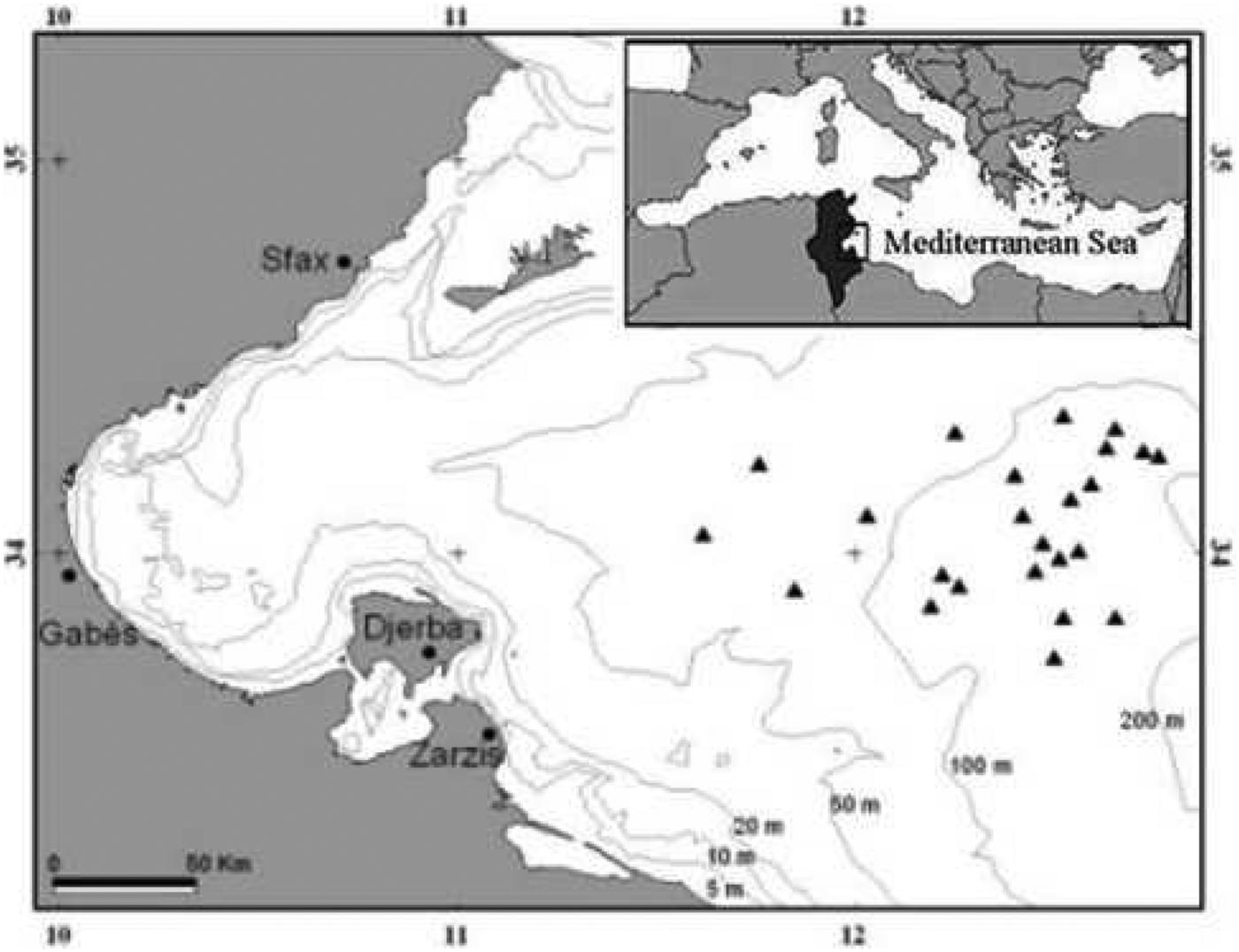
Samples of D. oxyrinchus were obtained from January to December 2007, from commercial bottom trawl landings in the Gulf of Gabès. The commercial trawlers use a 22 mm stretched mesh size cod-end and operate over 85–180 m depth (Figure 1). A total of 520 D. oxyrinchus specimens were sampled in this study. The females (N = 240) ranged from 16.5 to 105 cm total length (T L) and the males (N = 280) ranged from 15.5 to 95 cm T L.
Map of the Gulf of Gabès (Tunisia, central Mediterranean Sea) and fishing points.

Once caught, all specimens were frozen, subsequently thawed and analysed in the laboratory. For each individual, the sex, T L and disc width (D W) to the nearest millimetre were recorded. The total weight (W T) and eviscerated weight (W E) of each specimen were recorded to the nearest 10 g. The slopes of the logarithmic relationships T L–W T and T L–D W between sexes were compared by t-tests (Zar, Reference Zar1999).
Age and growth
Ten vertebrae were removed from each specimen for age determination. Vertebrae were cleaned of excess tissues and soaked in a 5% sodium hypochlorite solution for 3–5 min to remove the remnant tissues. After cleaning, the vertebrae were washed in running water and air-dried. One vertebra from each specimen was cut through the centrum with a double blade low-speed saw to obtain sagittal thin sections of 0.6 mm. Liquid clarifier (EDTA) was applied to the section surfaces to enhance the banding pattern.
Growth bands in the vertebral sections were counted using an Olympus S2X9 stereomicroscope at 20× magnification. The images were digitized using the image analysis software TNPC v.4.1(Noesis, 2002). A growth band was defined as a pair of bands, consisting of one highly calcified (light band) and one less-calcified (dark band) (Wilson et al., Reference Wilson, Brothers, Casselman, Smith, Wild, Prince and Pulos1983). The first band near the focus was defined as hatch mark from age zero (Joung et al., Reference Joung, Lee, Liub and Liao2011). The counting of growth band pairs (comprising translucent and opaque bands, interpreted under conditions of reflected light) for all samples carried out by four independent observers without knowledge about sex or size.
The index of the average percentage error (IAPE) (Beamish & Fournier, Reference Beamish and Fournier1981), the coefficient of variation (CV) (Chang, Reference Chang1982), and the age-bias plot (Campana et al., Reference Campana, Marks and Joyce2005), were then used to compare reproducibility of the age determination between readings, as follows:
 $${\rm IAPE } = {\rm }{\textstyle{{\rm 1} \over {\rm N}}}\sum\limits_{\,j = 1}^N {\Big( {\textstyle{1 \over R}}} \sum\limits_{i + 1}^R {{\textstyle{{\left\vert {Xij - Xj} \right\vert } \over {Xj}}}\Big) \times 100}$$
where N is the number of animals aged, C V is the age precision estimate for the j th fish, R is the number of readings, X ij is the count from the j th animal at the i th reading and X j is the mean age of the j th animal from i readings.
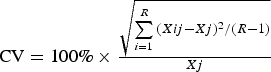 $${\rm CV} = 100\% \times {\textstyle{{\sqrt {{{\sum\limits_{i = 1}^R {\lpar Xij - Xj\rpar ^2} } / {\lpar R - 1\rpar }}} } \over {Xj}}}$$
Vertebral radius (R V) was measured from the focus along the axis of the corpus calcarium to the edge of the vertebra. The relationship between R V and T L was determined. The annual deposition of growth bands was investigated by marginal increment (MIR) (Hayashi, Reference Hayashi1976) and edge analysis (Cailliet & Goldman, Reference Cailliet, Goldman, Carrier, Musick and Heithaus2004).
 $${\rm MIR } = {\rm }\displaystyle{{{\rm R - R}_{\rm n} } \over {{\rm R}_{\rm n} {\rm - R}_{{\rm n - 1}} }}$$
R is the centrum radius, R n and R n–1 are radius of the ultimate and penultimate annuli, respectively. The differences in marginal increment by month (Simpfendorfer et al., Reference Simpfendorfer, Chidlow and Unsworth2000) were tested by the Kruskal–Wallis one-way analysis of variance.
The von Bertalanffy growth equation (VBGE) (von Bertalanffy, Reference Von Bertalanffy1938) was fitted to the data:
 $${\rm TL } = {\rm TL}_\infty {\rm \lpar 1 - e}^{{\rm - K \lpar t - t}_{\rm 0} {\rm \rpar }} \rpar$$
where T L = total length at age t, T L∞ = theoretical asymptotic length, K = growth rate coefficient, and t0 = the theoretical age at zero length.
The VBGE was calculated by using FISHPARM, a computer program for parameter estimation of nonlinear models with Marquardt's (Reference Marquardt1963) algorithm for least-square estimation of nonlinear parameters. The slopes between sexes were compared using an analysis of covariance (ANCOVA).
Longevity and natural mortality
The oldest fish aged from the maximum number of external band counts provides an initial estimate of longevity (Irvine et al., Reference Irvine, Stevens and Laurenson2006) as well as the algorithm A99 = t0 + 4.6/k, where A99 is the time (yr) passed before reaching 99% of L∞, and k is the growth rate coefficient derived from the von Bertalanffy growth equation. The natural mortality rate, M, was estimated using several methods based on maximum age and age at maturity:
 $$\eqalign{\ln \lpar \hbox{M}\rpar & = 1.46 - 1.01 \ln \lpar \hbox{tmax}\rpar\ \lpar \hbox{Hoenig}\comma \; 1983\rpar \cr \hbox{M} & = 1065 / \hbox{tmat}\ \lpar \hbox{Jensen}\comma \; 1996\rpar }$$
where tmax is the maximum age in the population and tmat is the median age at sexual maturity.
Reproductive analyses
The reproductive tract of each specimen was removed and examined. The testes and ovaries (with the epigonal organ) weight (W G) and liver weight (W L) were recorded to the nearest 0.01 g. In males, the rigidity and claspers length (C L)—as the distance from its tip to the pelvic girdle—and the siphon gland length were recorded. For each female, the uterus width (W U), oviducal gland width (W O) and the number, colour and diameter to nearest 0.01 mm of ovarian follicles and the presence of egg capsule in oviducts were recorded. A t-test was used to test the symmetry between right and left reproductive organs in mature individuals.
Males and females were listed into immature, maturing and mature by macroscopic observation of the reproductive organs according to Walmsley-Hart et al., (Reference Walmsley-Hart, Sauer and Buxton1999) and Ebert (Reference Ebert2005). In order to relate body size and sexual development, reproductive variables (C L, W G, W U and W O) were analysed in relation to T L. For both sexes, the proportion of mature individuals was calculated.
Seasonal variability of reproductive status in mature males and females was assigned using the gonadosomatic index (GSI) and the hepatosomatic index (HSI). These indices were calculated as follows: I G = 100 W G/W E and I H = 100 W L/W E. Monthly differences in mean IG and IH were tested using analysis of variance (ANOVA, P < 0.05) followed by a Tukey's post-hoc test (Zar, Reference Zar1999).
Size and age at maturity
Size at maturity was defined as the T L at which 50% of the individuals of each sex were mature (L 50%). The proportion of mature individuals in 5 cm T L intervals was calculated. A logistic function, P = 1/(1 + e−a (L-L50)) was used to plot the relationship between proportion of mature fish at each length. Changes length claspers C L relative to T L were also used as indicator of the maturity onset in males (Kadri et al., Reference Kadri, Marouani, Saïdi, Bradai, Ghorbel, Bouaïn and Eric2012).
Size and age at maturity between sexes were compared by an ANCOVA.
RESULTS
Morphological measurements
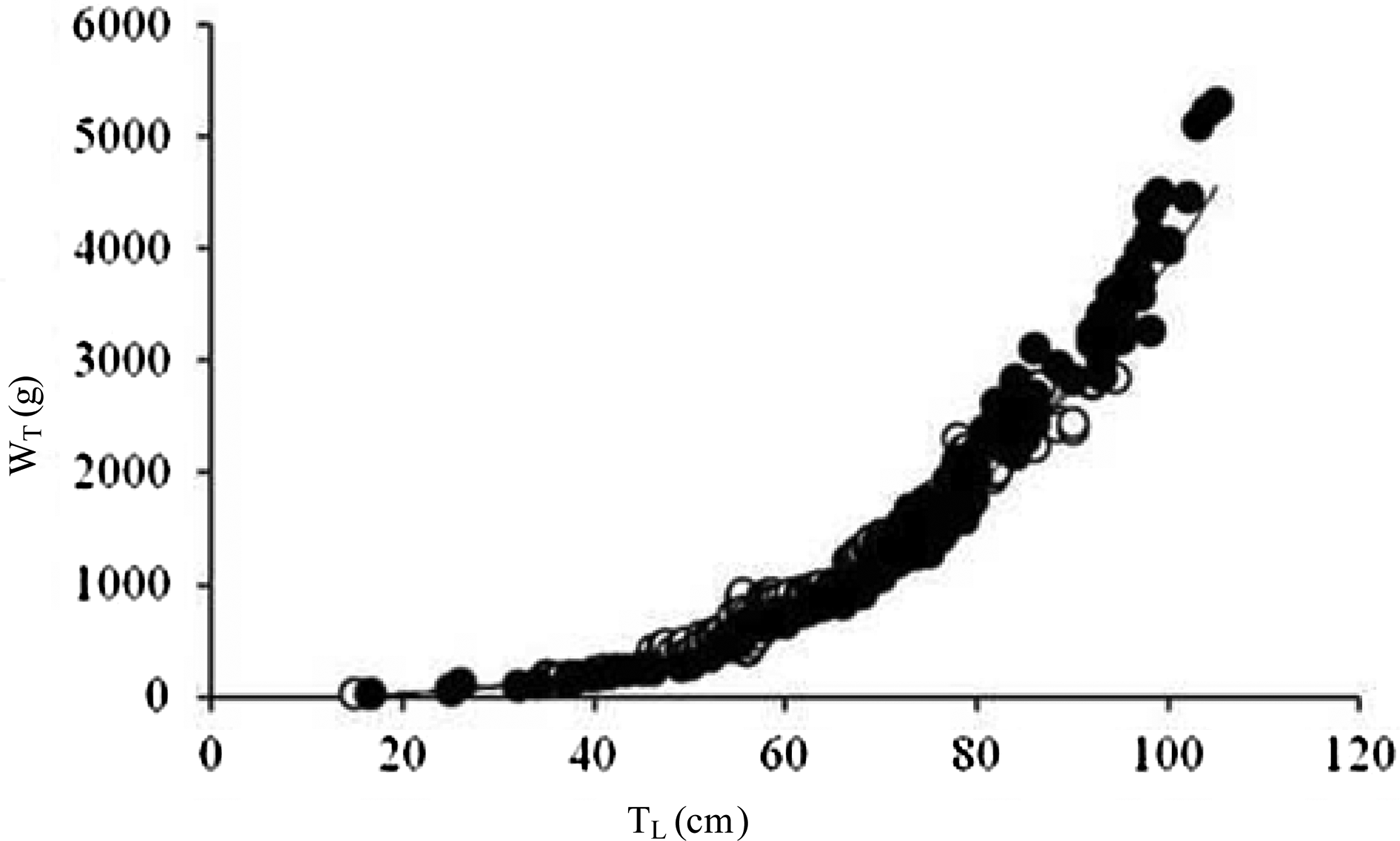
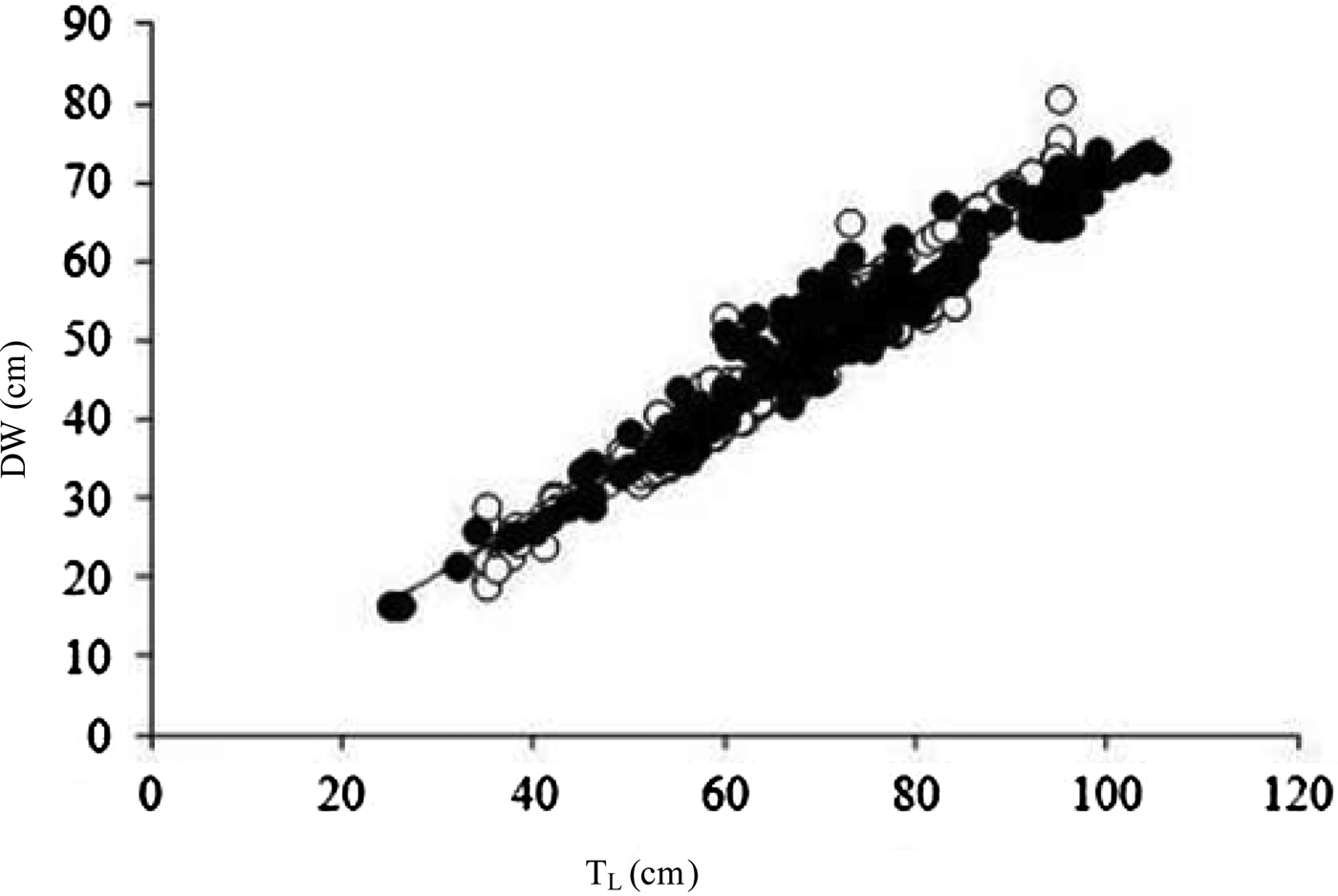
A total of 520 D. oxyrinchus specimens were sampled in this study. The females (N = 240) ranged from 16.5 to 105 cm T L (30–5300 g W T) and the males (N = 280) ranged from 15.5 to 95 cm T L (30–3650 g W T) (Figure 2). Therefore, the relationship of T L–W T is presented separately for each sex: W T = 1310−4T L3.23 (N = 240, r 2 = 0.96) for females and W T = 3510−4T L 3.01 (N = 380, r 2 = 0.97) for males (Figure 2). The linear regression of T L–D W differed significantly between sexes (t-test = 17.53; df = 520; P < 0.05). Therefore, the linear relationship of T L–D W is presented separately for each sex: T L = 1.15 D W + 11.93 (N = 240, r 2 = 0.94) for males and T L = 1.28 D W + 6.20 (N = 280, r 2 = 0.93) for females (Figure 3).
Total length–weight relationships of Dipturus oxyrinchus in the Gulf of Gabès.
Total length–width of disc relationships of Dipturus oxyrinchus in the Gulf of Gabès.
There was significant difference in the regression slopes between sexes for the T L and D W relationship (t-test = 17.53; df = 520; P < 0.05).
Age and growth
A subsample of 285 vertebrae, 175 females (16.5–105 cm T L) and 110 males (15.5–95 cm T L) was used for age estimation. After separate readings, exact agreement of ring counts were reached on 3% differed by one ring, 8% by two rings and 4% by more than three, so these data were used for further analyses.
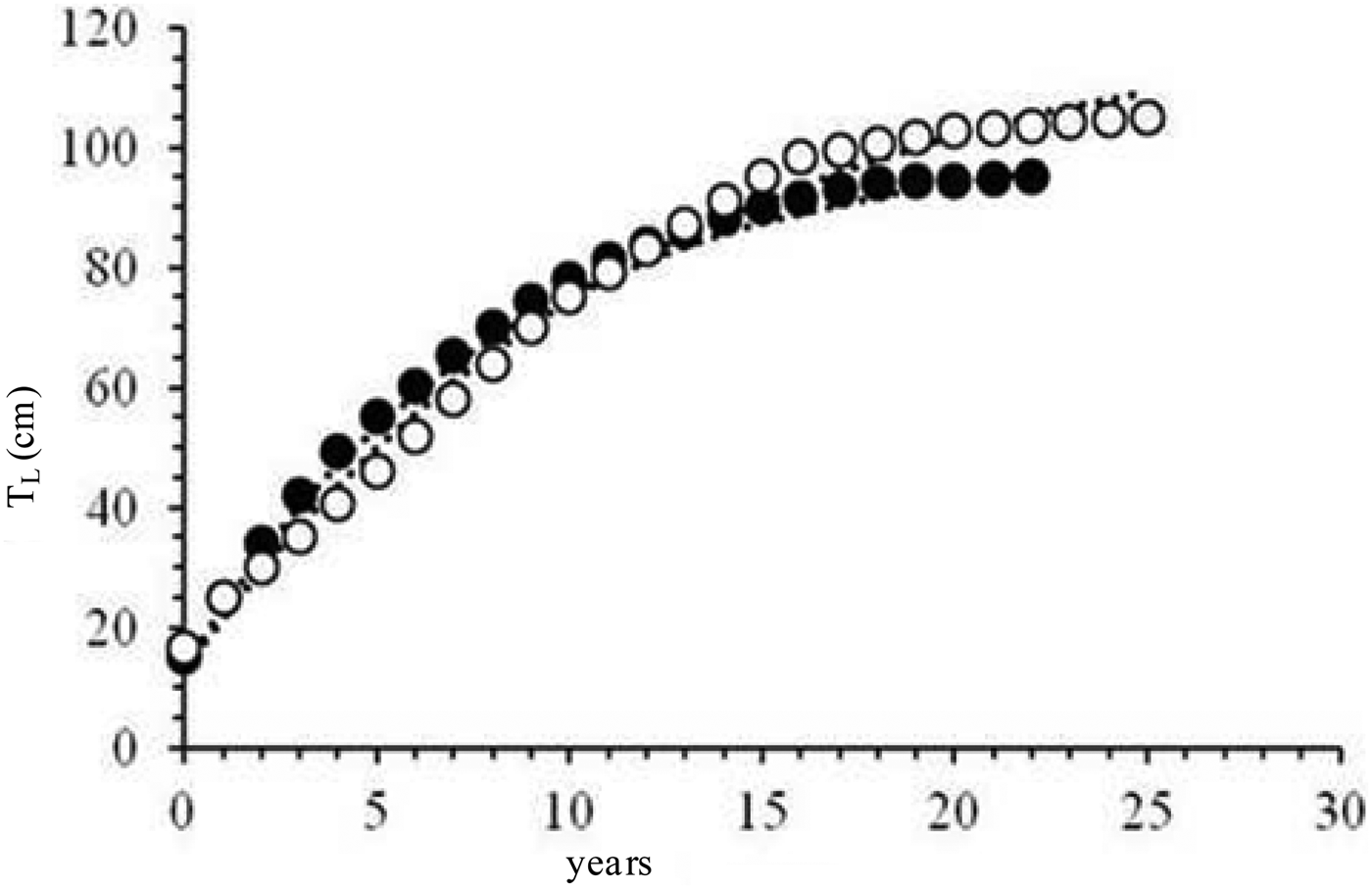
The average IAPE of the overall sample was 3.12% and the CV was 5.05. The levels of precision indicated a high level of reproducibility, so these data were used for further analyses. The oldest male was estimated to be 22 yr, while the oldest female was 25 yr (see Figure 6).
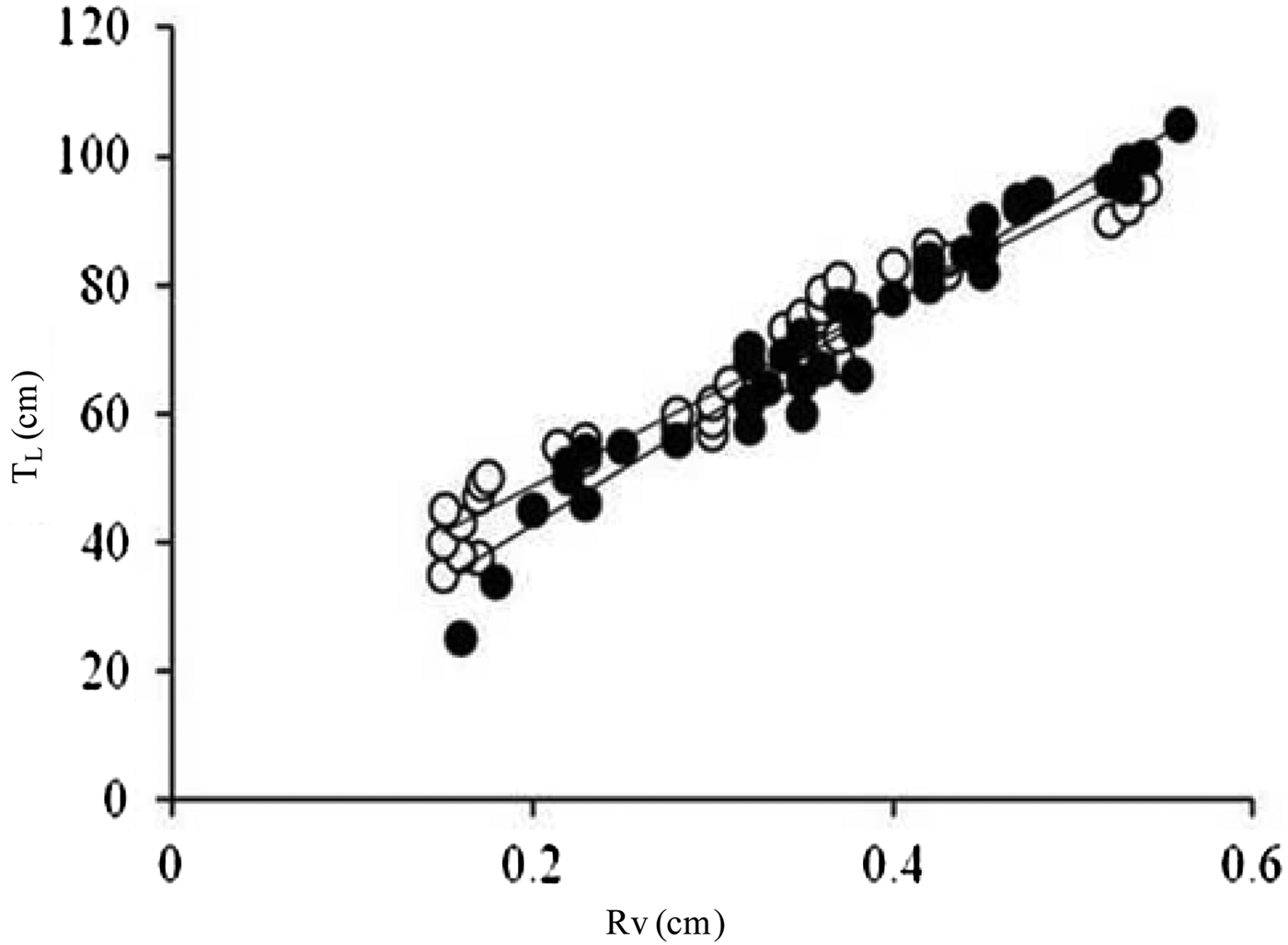
Vertebrae were determined to be a useful ageing structure based on the positive linear relationship between their size and T L (T L = 173.4 R V + 7.99, r 2 = 0.95) and (T L = 144.06 R V + 19.98, r 2 = 0.93) for females and males respectively (Figure 4). An ANCOVA of T L and R V suggested that the relationship between sexes was not significantly different (ANCOVA, P > 0.05).
Relationship between total length and vertebral radius of Dipturus oxyrinchus in the Gulf of Gabès.
The results of edge analysis and MIR of vertebral thin sections bear an annual band pair formation (Figure 5). Centrum edge analysis was performed on 285 D. oxyrinchus. Furthermore, monthly categorization of vertebral edges indicated that the highest frequency of opaque edges appears during March and April, suggesting that a single opaque band may be formed annually on vertebral centra during this period (Figure 5).
Monthly changes in the mean ± standard error marginal increment (MIR) for Dipturus oxyrinchus in the Gulf of Gabès.
Male and females growth rates were not significantly different (ANCOVA, P > 0.05). Females reached a larger maximum size (L ∞ = 123.9 cm) than males (L ∞ = 102.1 cm) with a slightly lower growth coefficient (K = 0.08 yr−1) than males (K = 0.12 yr−1), the t 0 = −1.26 ±0.04 10−1 yr for females and t 0 = −1.18 ±0.03 10−1 yr for males.
Longevity and natural mortality
The age of the oldest male examined was 22 yr, while that of the oldest female was 25 yr. The longevity estimates were 26 yr and 38 yr for males and females, respectively. Estimates of natural mortality were 0.53 yr−1 for females and 0.41 yr−1 for males.
Reproductive parameters
Male D.oxyrinchus had a symmetrical genital tract with two equally developed functional testes and no significant difference was detected between mean weight (paired t-test: t = 1.43; df = 279; P > 0.05).
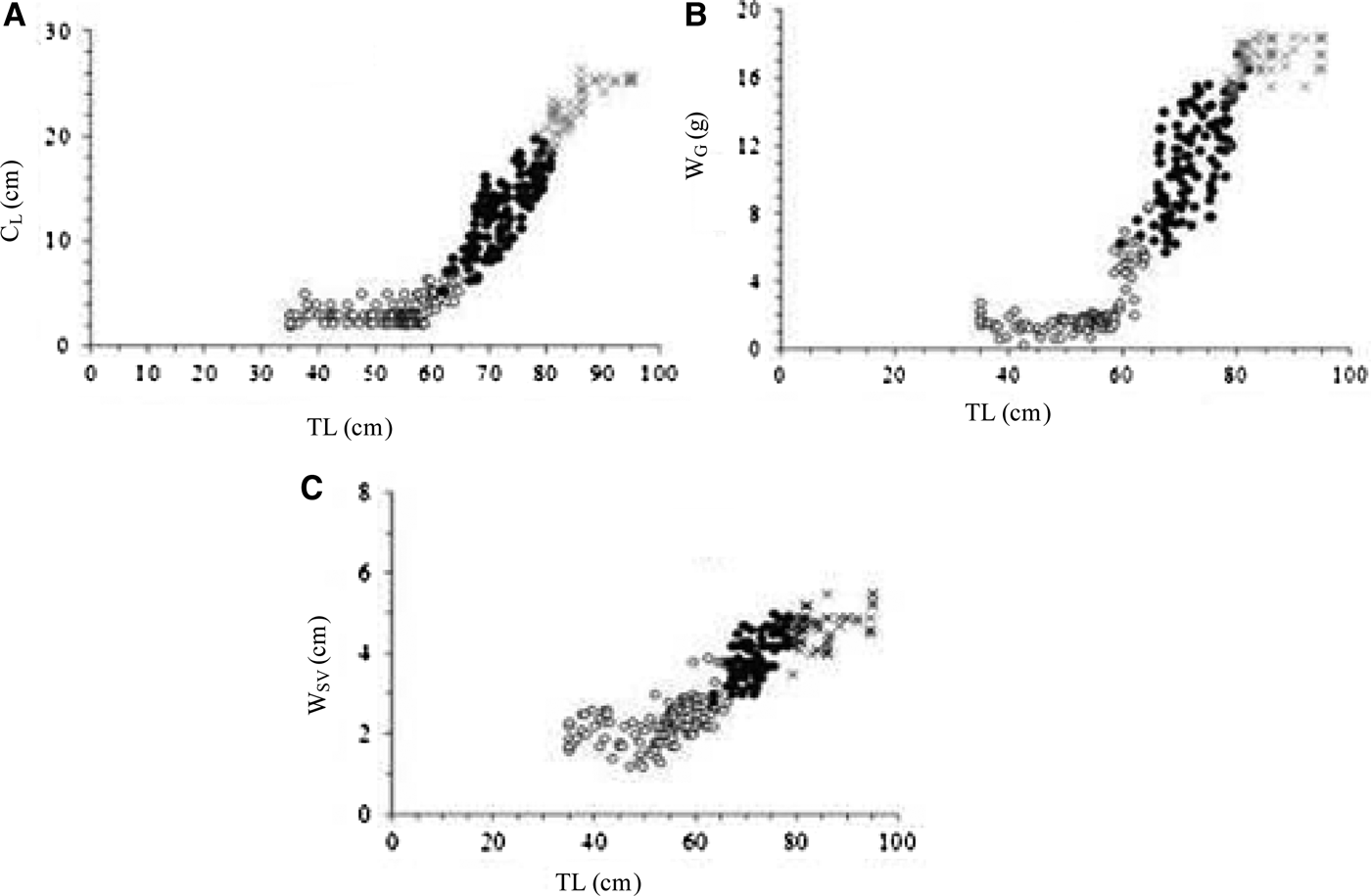
A total of 280 males were captured and analysed. All individuals with T L of up to 65 cm had uncalcified claspers (subadultes) and clasper size varied between 2 and 7.3 cm (mean = 3.46, standard deviation (SD) = 0.63), but for 80 cm T L upward specimens had calcified clasper (mature) and clasper size varied between 18 and 26.4 cm (mean = 22.75 ± 2.13) in mature males.
There were two phases in the relationship between gonad weight and T L. Up to 65 cm T L, testes weight varied between 0.23 and 8.4 g and seminal vesicles width varied from 1.2 to 3.9 cm. In the second phase, the gonad weight varied between 12 and 18.6 g at T L ranging from 77.5–95 cm, and seminal vesicle width varied from 3.5 to 5.5 cm at a T L ranging from 78–85 cm (Figure 7A–C).
Von Bertalanffy growth curve of Dipturus oxyrinchus, from the Gulf of Gabès.
Relationship between total length and: (A) clasper length (CL); (B) total gonad weight (WG) and (C) width of seminal vesicls (Width SV) of Dipturus oxyrinchus in the Gulf of Gabès.
The number of alar thorn rows varied from 0 to 5 on the right of the pelvis (mean = 3.36, SD = 1.2, N = 280) whereas it comprised between 1 and 5 on the left of the pelvis (Figure 7). There was no significant difference between the number of alar thorns on the right and left pectoral (t = 0.15, N = 280, P > 0.05). Alar thorns were not developed (immature specimens) until T L = 65 cm, and only at T L = 78 cm did the thorns begin to appear.
Additional analysis revealed the smallest sexually mature male measured 65 cm T L and the largest juveniles one was 80 cm.
In females both ovaries are functional and do not show any significant difference between their mean weight (t = 0.16, P = 0. 17) as well as in width of oviducal glands (t = 0.28, P = 0.34) and uterus width (t = 0.85, P = 0.42).
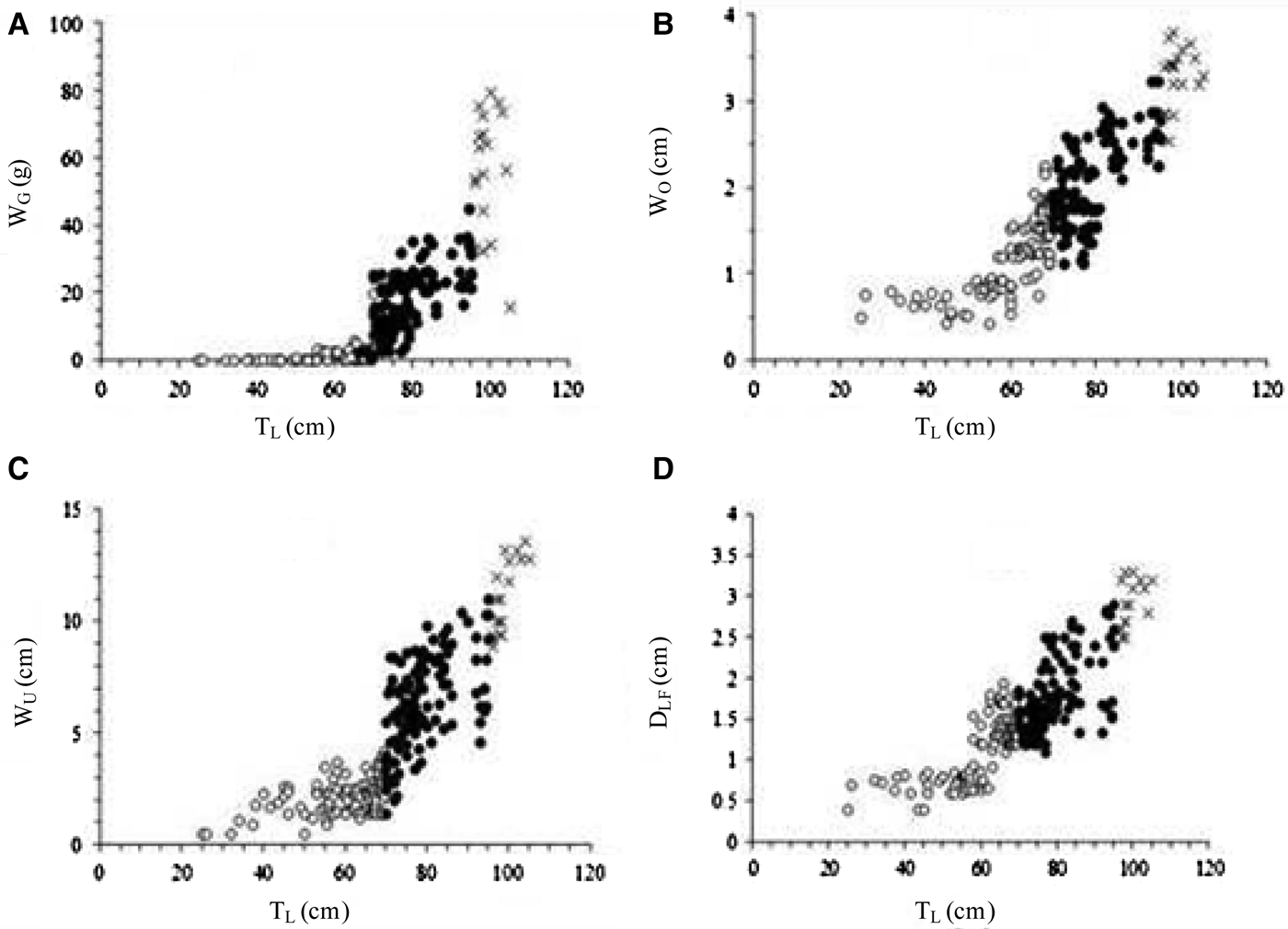
A total of 240 females were analysed. Gonads grew with T L in two phases (Figure 8A). First, gonad weight varied between 0.1 and 4.85 g (mean = 1.53, SD = 0.2, N = 106), increasing slowly with T L, in females with white, non-vitellogenic follicles in the ovaries. At T L = 70 cm an abrupt growth of the gonad weight varied between 15.8 and 79.5 g (mean = 56.52, SD = 3.6, N = 18), which occurred from T L = 92.4 cm began because of the occurrence of the first females with maturing vitellogenic follicles, which represents the onset of vitellogenesis (Figure 8B). White follicles with sizes of 0.4–1.94 mm (mean = 1.10, SD = 0.02, N = 106) occurred in females of up to T L = 72.5 cm. Vitellogenesis began when the follicles reached a diameter of 2 cm, and the smallest female with vitellogenic follicles was 75 cm long. As ovulation in egg-bearing females occurs immediately after egg-laying, it was assumed that follicles with diameters ≥2.0 cm were pre-ovulatory (Figure 8B). Nidamental gland width varied between 0.43 and 2.25 cm in juvenile females (mean = 1.19, SD = 0.26, N = 106), and 2.54 and 3.8 cm in mature females, There was high overlap in the range of nidamental gland width among, juvenile, subadult and adult females in relation to T L (Figure 8C).
Relationship between total length and: (A) total gonad weight (WG); (B) width of oviducal gland (W0); (C) width of uterus (WU) and (D) diameter of largest follicles (DLF) of Dipturus oxyrinchus in the Gulf of Gabès.
The mean total number and corresponding standard deviation of the number of follicles in both ovaries was 3.10 ±1.14 (range 3–9). The right ovary contained an average of 3.6 ±0.4 follicles (range 2–10), while that the left ovary contained 5.27 ±0.8 follicles (range 4–8). However there was no significant difference in the number of follicles between the right and the left ovary (paired t-test, P > 0.05).
There was a relationship between the number of vitellogenic follicles and T L of mature females (ANOVA, F = 105.10, P < 0.001), r 2 = 0.81).
Uterus width varied highly with T L, juveniles females, uterus width varied between 0.5 and 4.2 cm (mean = 2.20, SD = 0.23, N = 106), while in mature females uterus had a width of 8.6–13.9 cm (mean = 11.13, SD = 0.26, N = 18). Uteri of egg-bearing females varied between 11.3 and 13.9 cm wide (mean = 12.32, SD = 0.32, N = 10), the size variation being due to the presence of females with term egg capsules and females starting to secrete capsules (Figure 8D).
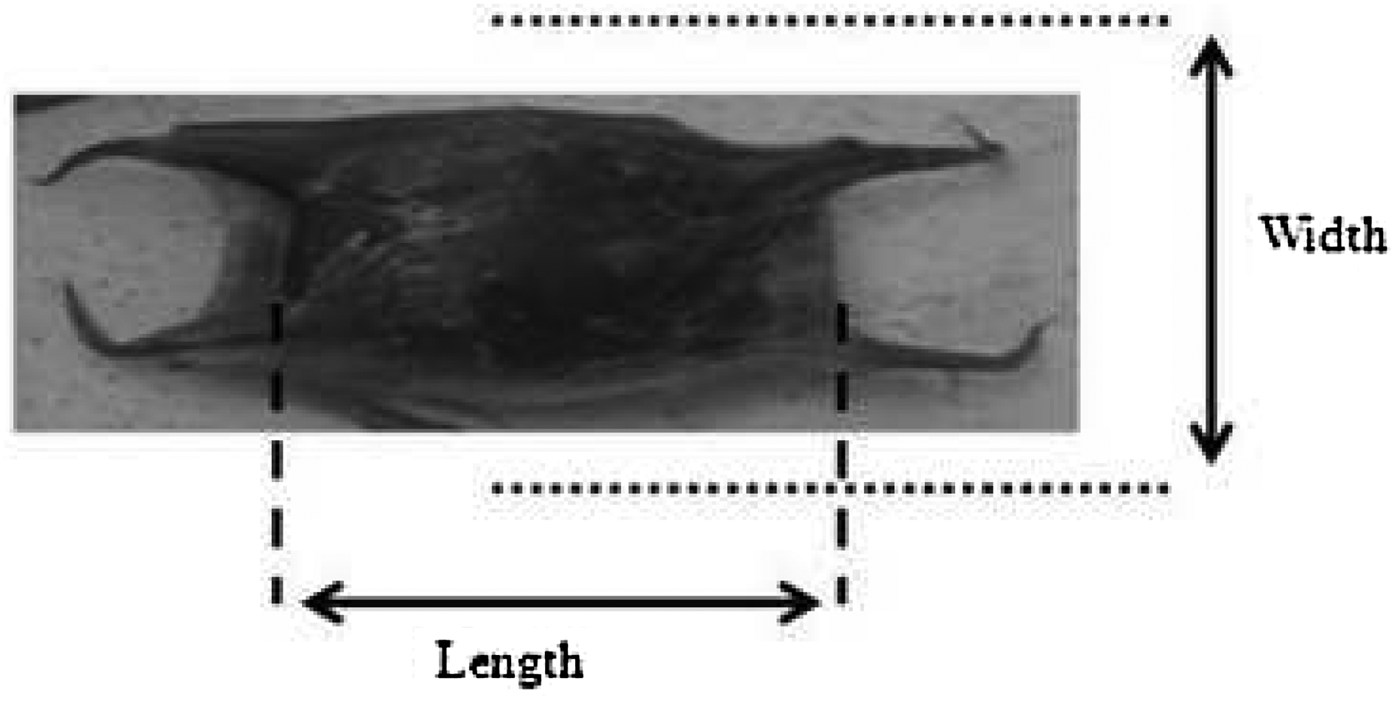
One to two egg capsules were commonly observed inside actively spawning females (one in each oviduct). Among all actively spawning females (N = 14), eight females contained two egg capsules in each oviduct. Egg capsules were rectangular-shaped and had two horns at each end. Egg case length with horns measured between 75 and 92 mm (87.6 mm ±1.2 mm), and between 35 and 46 mm (38.4 mm ±0.7 mm) in length without horns, The width ranged between 17 and 28 mm (24.2 mm ±0.2 mm) and in weight between 5 and 9 g (7.3 g ±0.2 g). Egg cases in utero were observed throughout the year suggesting that D. oxyrinchus reproduce year-round (Figure 9).
Egg capsule measurements from Dipturus oxyrinchus in the Gulf of Gabès.
Reproductive cycle
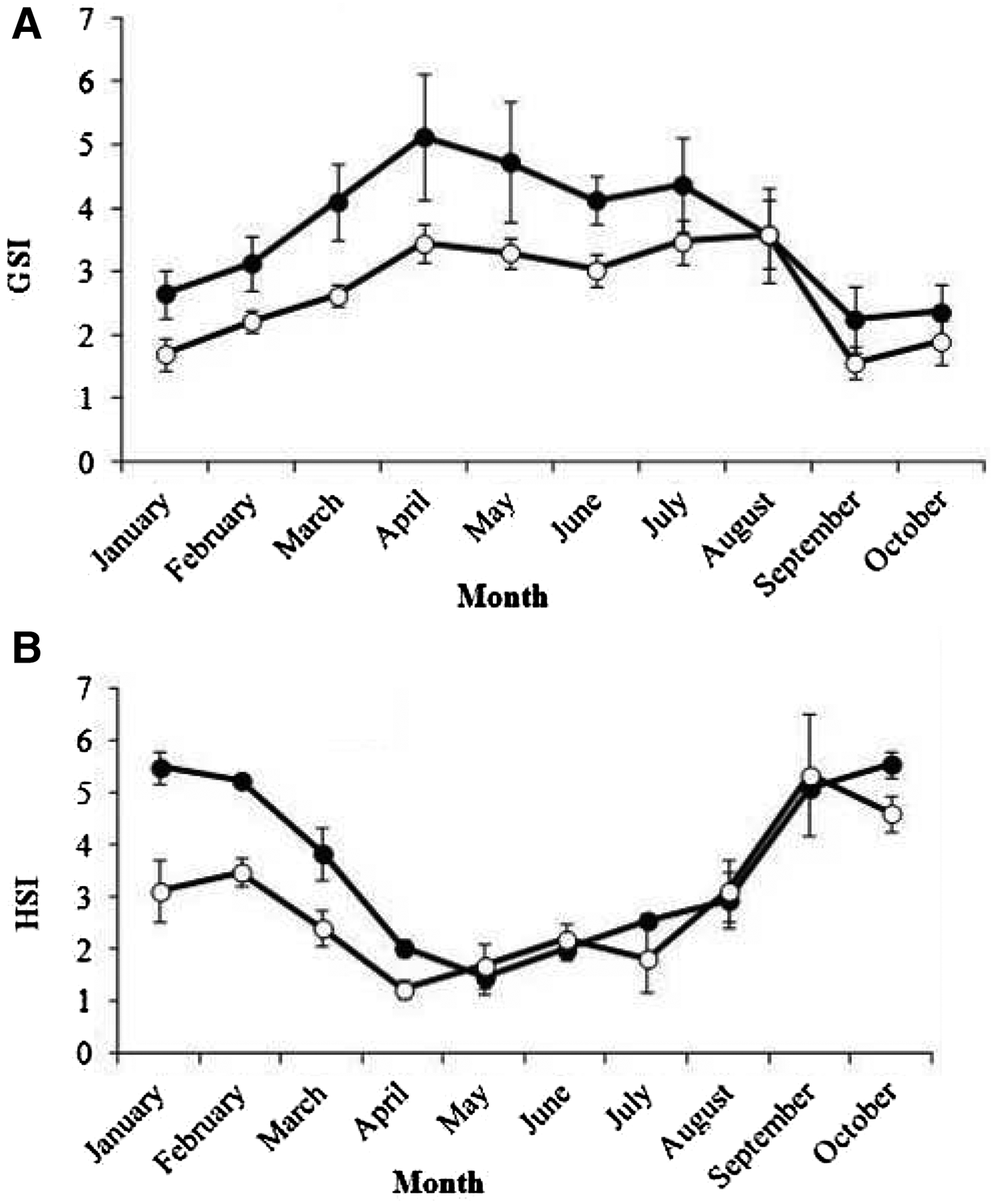
In males, the GSI varied significantly throughout the year (ANOVA, Tukey's post hoc, P < 0.05), but no significant differences in the HSI (ANOVA, Tukey's post hoc, P > 0.05) (Figure 10A, B).
Monthly gonadosomatic index (GSI); monthly hepatosomatic index (HSI) for males (A) and females (B) Dipturus oxyrinchus in the Gulf of Gabès.
In the present study vitellogenically active females and egg capsules were observed throughout the year, with the highest fractions observed in spring and in the summer, and the analysis of both IG and IH showed that the species displayed a continuous reproductive cycle.
Size and age at maturity
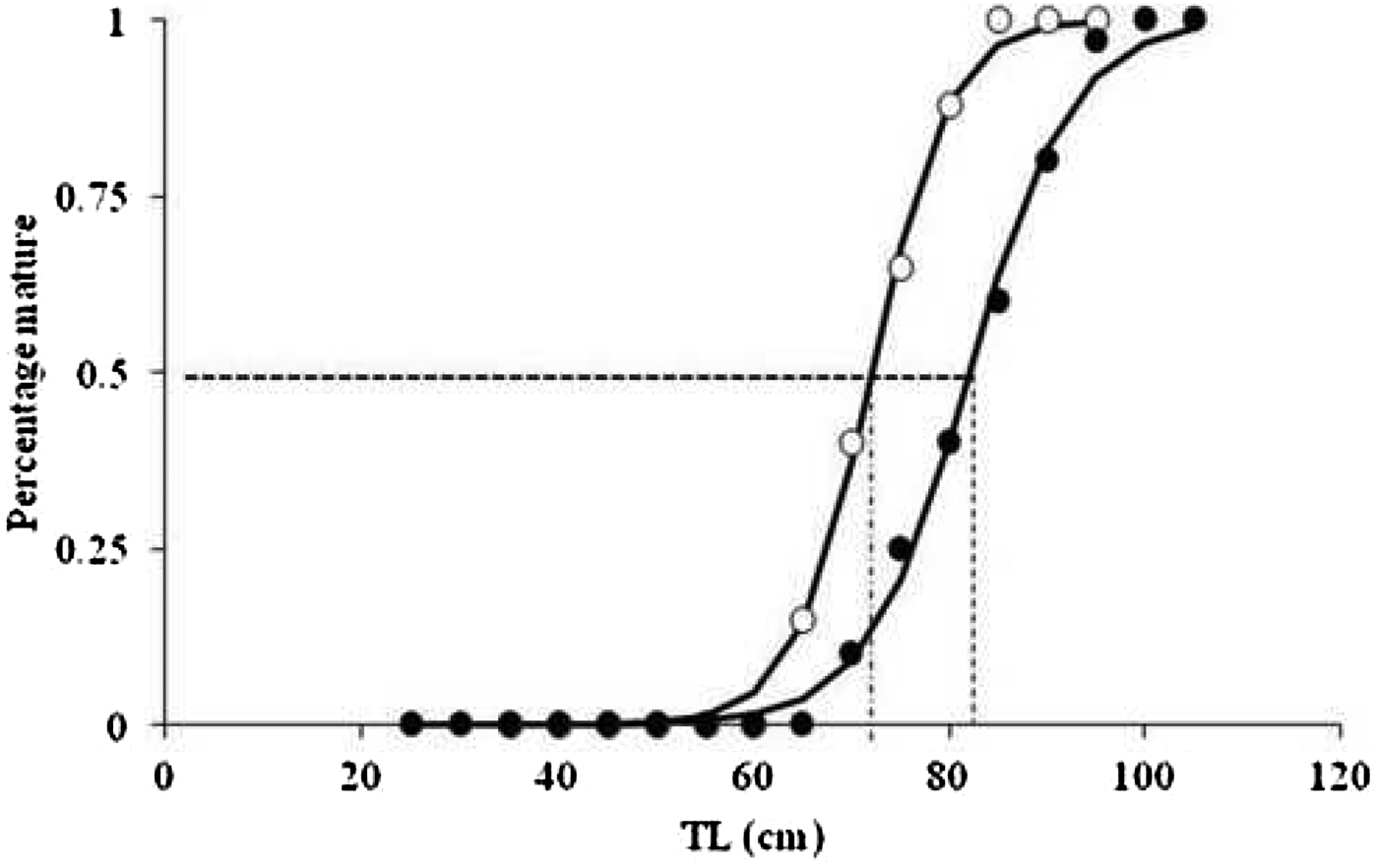
Size at maturity estimates were based on the examination of 240 females and 280 males. The smallest male that was fully mature was 65 cm T L and the largest immature one was 80 cm T L. The L 50% was estimated at 72.05 cm T L. The smallest female that was mature was 70 cm T L and the largest one was 95 cm T L, whereas L 50 was estimated at 82.1 cm (Figure 11).
Relationship between the percentage of mature and total length (TL) for females and males of Dipturus oxyrinchus in the Gulf of Gabès.
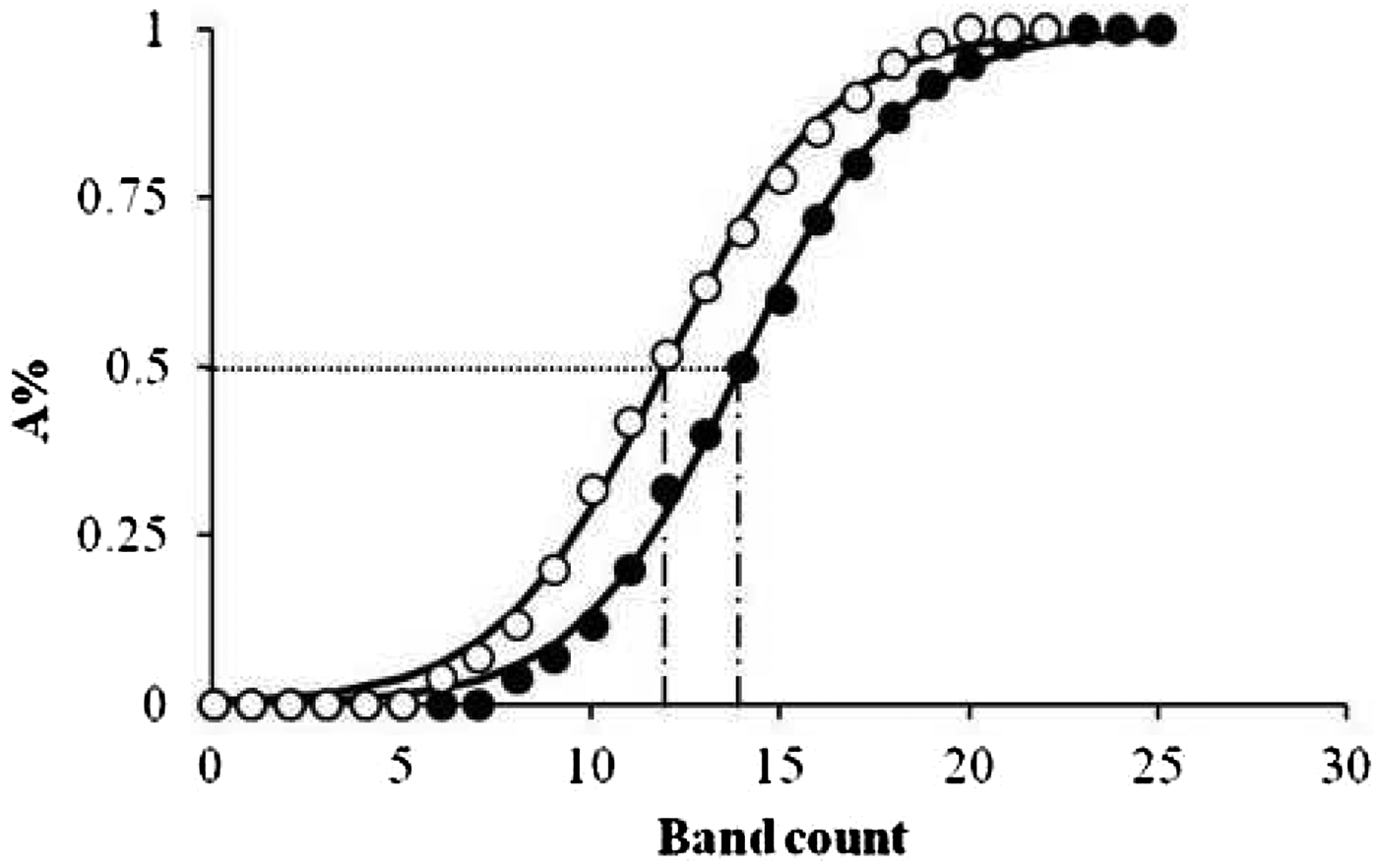
The youngest mature male and female were 6 and 8 yr, respectively, while the oldest immature male and female were 19 and 21 yr, respectively. The A 50% was estimated to be 11.95 yr (standard error (SE) = 3.6 + 0.01) for males and 13.96 (SE = 2.7 + 0.21) for females (Figure 12).
Age at maturity of Dipturus oxyrinchus in the Gulf of Gabès.
DISCUSSION
Marginal increment analysis of Dipturus oxyrinchus indicates that band formation occurs once a year during summer in the Gulf of Gabès. In fact, these results are in accordance with other studies (Holden & Vince, Reference Holden and Vince1973; Waring, Reference Waring1984; Natanson et al., Reference Natanson, Casey and Kohler1993; Zeiner & Wolfe, Reference Zeiner and Wolf1993; Walmsley-Hart et al., Reference Walmsley-Hart, Sauer and Buxton1999; Francis et al., Reference Francis, Maolagain and Stevens2001; Sulikowski et al., Reference Sulikowski, Morin, Suk and Howell2003).
Furthermore, based on previous studies of other elasmobranches, including the longnose skate, we believe that one opaque and translucent band pair is deposited annually. Our previous study we performed that an annual periodicity of band pair formation on Raja miraletus, Raja radula and Raja clavata Kadri et al. (Reference Kadri, Marouani, Saïdi, Bradai, Ghorbel, Bouaïn and Eric2012, Reference Kadri, Marouani, Saïdi, Bradai, Bouaïn and Eric2013, Reference Kadri, Marouani, Saïdi, Bradai, Bouaïn and Eric2014b).
Concerning the relationship between T L and vertebral radius, we have found that vertebral growth significantly increases with somatic growth, which, along with the reliability of the marginal increment analysis, demonstrates that vertebral growth patterns are a reliable indicator of age in the big skate. In this case, vertebral thin sections have been used for ageing more than 67 elasmobranch species (Cailliet & Goldman, Reference Cailliet, Goldman, Carrier, Musick and Heithaus2004; McFarlane & King, Reference McFarlane and King2006).
Moreover, specific L ∞ values showed that adult females grow larger than adult males, while the value of K for males is higher than that for females; these results agree with previous reports for other rajid species (Walmsley-Hart et al., Reference Walmsley-Hart, Sauer and Buxton1999; Licandeo et al., Reference Licandeo, Lamilla, Rubilar and Vega2006; Young et al., 2011). The predicted growth parameters for D. oxyrinchus are consistent with the assumption that larger batoids live longer and grow slower than smaller batoids. It is important to say that this study presents the first estimation of natural mortality based on maximum age from the studied region. We have shown also that the age and growth parameters for this species support the hypothesis that D. oxyrinchus, like other elasmobranchs, require conservative management because of their slow growth rate and susceptibility to over-exploitation (Brander, Reference Brander1981; Sulikowski et al., Reference Sulikowski, Morin, Suk and Howell2003; Reference Sulikowski, Tsang and Howell2005; Shoou et al., Reference Shoou, Pei and Yih2011).
Concerning the reproduction data for our species, we conclude that the symmetry and functional parity of the ovaries are common in skates, in agreement with previous studies (Capapé & Quignard, Reference Capapé and Quignard1974; Walmsley-Hart et al., Reference Walmsley-Hart, Sauer and Buxton1999; Marçal, Reference Marçal2003).
The majority of studies of skates on the timing of sexual maturity have used morphological changes in the female reproductive tracts and structural modifications in male claspers to determine when certain species reach adulthood (Zeiner & Wolf, Reference Zeiner and Wolf1993; Walmsley-Hart et al., Reference Walmsley-Hart, Sauer and Buxton1999; Francis et al., Reference Francis, Maolagain and Stevens2001; Ebert, Reference Ebert2005; Neer & Thompson, Reference Neer and Thompson2005). An abrupt increase in ovary weight, follicle size and shell gland width in females, and clasper length relative to T L, developement and width of seminal vesicles and an increase in testis weight in males, has been shown to be a good indicator to assess maturity in this species (Francis et al., Reference Francis, Maolagain and Stevens2001; Conrath et al., Reference Conrath, Gelsleichter and Musick2002; Ebert, Reference Ebert2005; Sulikowski et al., Reference Sulikowski, Tsang and Howell2005).
Monthly variations found in the gonado and hepato indices of males and females of D. oxyrinchus indicate that they appear to be reproductively active throughout the year. This result has been confirmed by the fact that females are carrying fully developed oocytes and egg cases throughout the year. Besides, our previous study showed that egg capsules were observed throughout the year (Kadri et al., Reference Kadri, Marouani, Saïdi, Bradai, Ghorbel, Bouaïn and Eric2012, Reference Kadri, Marouani, Saïdi, Bradai, Bouaïn and Eric2013, Reference Kadri, Marouani, Saïdi, Bradai, Bouaïn and Eric2014b). While some of the hepatic reserves can be used in producing gametes in female oviparous elasmobranch species, the role of the liver in reproduction in male elasmobranchs is still not completely understood (Craik, Reference Craik1978; Garcia-Garrido et al., Reference Garcia-Garrido, Munoz-Chapuli and Andres1990).
In this area, the T L at which 50% of the population reached maturity was 72.05 cm for males and 82.1 cm for females. Female D. oxyrinchus attained 50% maturity at 90 cm, while males were mature at 70–80 cm T L in the Italian seas (Ungaro et al., Reference Ungaro, Serena, Dulvy, Tinti, Bertozzi, Mancusi, Notarbartolo di Sciara and Ellis2007), similar data on sexual dimorphism in size at maturity have been reported (Ismen et al., Reference Ismen, Yıgın and Ismen2007; Marquez-Farias, Reference Marquez-Farias2007).
In a subsequent work in the Aegean Sea, Yigin & Ismen (Reference Yigin and Ismen2010) found sizes at maturity that ranged from 64 to 65 cm T L for males and from 82 to 83 cm T L for females.
The pattern of difference in T L at maturity between regions might be partly explained by differences in environmental conditions, such as water temperature. Since males reach sexual maturity at a smaller size than females, the impact of fishing on their size of first maturity would be more pronounced than for females, especially if they are more likely to be selected out of the fishing gear (Hazin et al., Reference Hazin, Fischer, Broadhurst, Veras, Oliveira and Burgess2006).
Finally, the proposed methodology could be used to analyse the growth features of other species and for other growth models. Detailed life history information for D. oxyrinchus in the Gulf of Gabès is crucial to the successful management of the skate complex in this region.
This study allows us to conclude that the life history parameters of this population, as with other populations of slow growing, late maturing and low fecundity fish, render it extremely vulnerable to overfishing, even at low levels of fishing effort (Musick, Reference Musick and Musick1999).
ACKNOWLEDGEMENTS
We thank the staff of the Laboratoire Scléchronologie des Animaux Aquatiques (IRD/FREMER, France) for providing technical support. We also wish to extend our thanks to the anonymous referees for comments that greatly improved the submitted manuscript.