


Introduction
Stroke is a sudden and often life-altering condition that presents significant challenges for individuals and their families. In Canada, over 108,000 individuals with stroke present to hospitals annually, Reference Holodinsky, Lindsay, Yu, Ganesh, Joundi and Hill1 and in 2022/23, there were 969,095 people 20 years of age and older estimated to be living with the effects of stroke in Canada. 2 Navigating the healthcare system to optimize recovery and enhance outcomes is a significant challenge in today’s healthcare environment.
Organized stroke systems of care have been found to reduce rates of mortality and disability, reduce costs and lead to an increased availability of resources including stroke units, specialized healthcare professionals (HCP), stroke prevention clinics and virtual stroke care. Reference Ganesh, Lindsay and Fang3 The 7th edition of the Canadian Stroke Best Practice Recommendations (CSBPR) Stroke Systems of Care module synthesizes the current evidence for the development and implementation of integrated and innovative stroke systems of care. They include the application of core elements of a stroke system, general principles for integrated care, transitions of care, virtual stroke care, education and support for the individual experiencing a stroke, their family and caregivers, stroke care in long-term care (LTC) settings, advance care planning (ACP) and palliative and end-of-life care. The recommendations consider multiple stakeholder perspectives including people with lived experience of stroke, the healthcare system planners and administrators, interdisciplinary healthcare providers, community services, vocational and leisure groups, non-government advocacy and service organizations, data management services and technology and innovation experts, all of which are imperative collaborators when designing and implementing truly integrated systems of care. In general, these recommendations are relevant to all stroke types, including ischemic stroke, transient ischemic attack (TIA), hemorrhagic stroke and cerebral venous thrombosis. Some nuances may be required for specific etiologies.
The components addressed in this module serve as the foundation and building blocks for other CSBPR modules by focusing on common, cross-functional and higher-level principles and processes of stroke care planning and delivery across the continuum of care. Other modules apply these elements and further refine and adapt them within the context of specific phases of care, such as acute care, secondary prevention and rehabilitation and recovery. We encourage readers to refer to the other modules of the CSBPR to support implementation within those stages of care. Reference Gladstone, Lindsay and Douketis4–Reference Swartz, Longman and Smith11 These recommendations align with the World Stroke Organization Global Stroke Services Action Plan, Reference Lindsay, Furie, Davis, Donnan and Norrving12 which takes a person-centered approach to creating stroke systems that are sustainable and relevant well beyond the acute phase of care.
As part of this guideline, a stroke systems framework has been developed to drive timely and equitable access to stroke care and services across the continuum of care and facilitate system improvement through the adoption of evidence-based best practices and increased collaboration and integration. The three main sections of the framework include defining the continuum of stroke care, identifying the essential components of a stroke system of care and recognizing the diverse range of settings where stroke care may occur. As well, stroke systems of care are considered wholistically, and the Ecological Model for Health Reference Stokols13 has been adapted and defined for stroke systems of care. Reference Anderson and Whitfield14 Refer to online supplement for additional information on the CSBPR Stroke Systems of Care framework, as well as definitions and descriptions of terms used throughout these guidelines.
Note, primary prevention is acknowledged as an integral part of every health system. However, recommendations addressing primary prevention of stroke in detail are out of scope for this current guideline.
Guideline Development Methodology
The CSBPR development and update process follows a rigorous framework and addresses all criteria defined within the AGREE Trust model. Reference Brouwers, Kho and Browman15 The methodology for development and updates to the CSBPR has previously been published Reference Heran, Lindsay and Gubitz5 and detailed methodology can be found on the Canadian Stroke Best Practices website at www.strokebestpractices.ca. A broad interdisciplinary group of experts was convened and participated in reviewing, drafting, revising and voting on all recommendation statements. A group of individuals having lived experience of stroke also actively participated in the review and update process in a parallel review process through our Community Consultation and Review Panel (CCRP).
Experienced personnel conducted searches to identify peer-reviewed literature that examined each topic area addressed in the current module. Systematic reviews, meta-analyses, randomized controlled trials and observational studies were included, as available. The literature for this module is current to June 2025. Following a standardized abstraction format, evidence tables were constructed including content from selected studies and provided to the writing group for review. The scientific writing group discussed and debated the strength, importance, clinical relevance and applicability of the evidence, and the risks, benefits and harms. The values and preferences of individuals with stroke were explored by the CCRP and shared with the scientific writing group for consideration. Through consensus, the group developed a draft set of proposed recommendations. Throughout the process, additional literature may have been identified and added to the evidence tables if it contributed to the final set of recommendations. Evidence levels were assigned based on the quality of available evidence, using the Grading of Recommendations, Assessment, Development and Evaluations system where appropriate and feasible. Reference Guyatt, Oxman and Vist16–Reference Guyatt, Oxman and Akl18 Expert opinion, presented as clinical considerations, was used to formulate recommendations and guidance in the absence of evidence. These guidelines have undergone extensive internal and external review, and consensus was achieved for all content. Inputs from people with lived experience were incorporated throughout the recommendations and supporting materials. For additional details of the methodology and additional materials to support these recommendations, including rationales, system implications, performance measures, knowledge translation and implementation tools, evidence tables and an extended summary of the evidence, please visit the Canadian Stroke Best Practices website. (https://www.strokebestpractices.ca/)
Stroke Systems of Care Recommendations, 2026
Refer to Online Supplement Appendix One for the CSBPR Stroke Systems of Care Framework, and Appendix Two for terminology, definitions and descriptions used throughout these recommendations.
Section 1: Core Elements of Stroke Systems of Care
An ideal stroke system of care is one that is comprehensive, diverse and longitudinal, and addresses all aspects of stroke care within an integrated, organized and coordinated approach, and spans the continuum of care from primary prevention to end of life. Reference Schwamm, Pancioli and Acker19 Specific key elements of an acute system include the provision of care on a stroke unit, the availability of CT or MRI and carotid Doppler imaging for individual with stroke and access to neurosurgical services, neurointensive care and pediatric stroke services when required. Reference Heran, Lindsay and Gubitz5,Reference Shoamanesh, Lindsay and Castellucci9 The ideal system also incorporates performance monitoring, continuous quality improvement and structured transitions from acute care to rehabilitation and long-term recovery, with a focus on secondary prevention and community reintegration. The benefit of the application of this bundle of acute stroke services was examined in a retrospective study including data from 319,972 individuals hospitalized for stroke/TIA in Canada over a 10-year period (2003/04 to 2013/14). Provinces with integrated stroke care systems were identified using pre-specified criteria. The adjusted incidence rate ratio for 30-day mortality was significantly lower for provinces with integrated systems of stroke care including British Columbia, Alberta, Ontario, Quebec, Nova Scotia and Prince Edward Island compared with those without such systems (0.96, 95% confidence interval [CI] 0.89–1.04). Reference Ganesh, Lindsay and Fang3 In a systematic review including the results from 99 studies, Eustace et al. Reference Eustace, Buckley and Kaya20 reported that integrated stroke care was associated with significantly reduced risk of recurrent stroke (relative risk [RR] = 0.79, 95% CI 0.63–1.00), significant improvements in quality of life (standardized mean difference [SMD] = 0.41, 95% CI 0.26–0.56) and a reduced incidence of depression (RR = 0.95, 95% CI 0.92–0.99), with no significant reductions in mortality (at 90 days, one year or > one year), major bleeding or unplanned readmissions. Interventions assessed within the individual studies were wide-ranging. Examples included screening for complications, quality of life and depression, counseling for lifestyle changes, secondary prevention counseling, medication adherence, interviews and education (web-based training) for caregivers and individual with stroke, standardized care pathway, very early mobilization, early supported discharge, telerehabilitation exercise, individualized transitional care model based at home, patient/family education and a multidisciplinary post-stroke consultation team, among others.
In another systematic review including the results of 19 RCTs, Liu et al. Reference Liu, Cai and Zhou21 examined the effectiveness of stroke-specific integrated care models defined by 10 core principles, in comparison to conventional care. Examples of interventions included very early supported discharge programs, a virtual multidisciplinary stroke care clinic, integrated palliative care, an integrated multidisciplinary geriatric rehabilitation program, stroke secondary prevention, combining hospital and community resources, an integrated primary care management program and a transitional care program for individuals with strokes. Integrated care was associated with significant improvements in health-related quality of life (SMD = 0.69, 95% CI 0.35 to 1.02), activities of daily living (ADL) performance (SMD = 0.95, 95% CI 0.48 to 1.43) and depression (SMD = −1.02, 95% CI −1.77 to −0.26).

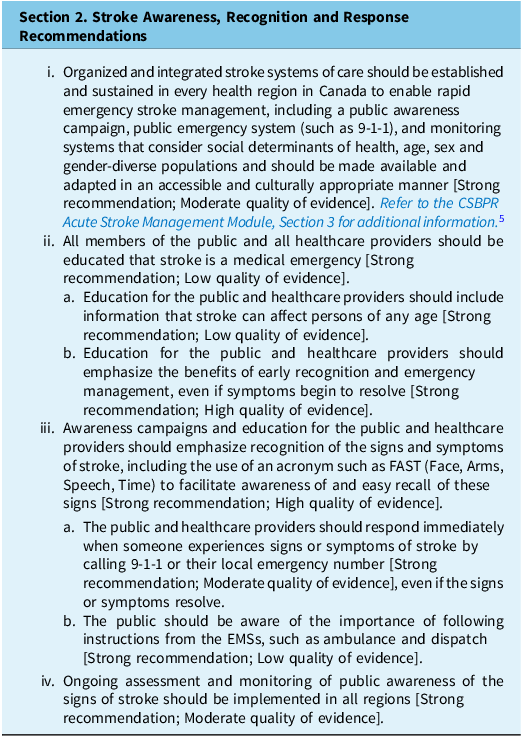
Section 2: Stroke Awareness, Recognition and Response
Public awareness and emergency response are important components of stroke systems, as early recognition of symptoms and timely response can significantly reduce stroke-related disability and death. Since 2014, the Heart & Stroke Foundation of Canada has led a nationwide FAST (Face, Arm, Speech, Time) campaign, one of the most recognized programs, to improve recognition of stroke symptoms and encourage immediate action. Awareness in Canada has roughly doubled over ten years, with nearly 60% of Canadians now able to recall at least two FAST signs, and 80% reporting that they would call 911 if they suspected a stroke. 22
The number of public health campaigns designed to increase the recognition of the signs and symptoms of stroke has increased over the past decade in other countries. Individuals exposed to these campaigns become more aware of the signs and symptoms of stroke. Response to the FAST campaign (television + public transit displays), which ran from 2009 intermittently though 2014 in the UK, Reference Wolters, Li, Gutnikov, Mehta and Rothwell23 was associated with significantly increased use of emergency medical services (EMS) for major stroke (58.8% before April 1, 2009, vs. 78.9% after April 1, 2009), and first medical attention was sought more quickly (within 3 hours) after April 1, 2009 (67.6% vs. 81.3%; OR = 2.08; 95% CI, 1.40–3.11). Trobbiani et al. Reference Trobbiani, Freeman, Arango, Lalor, Jenkinson and Thrift24 compared public stroke awareness campaigns in Australia (FAST), England (Act FAST) and Canada (Heart and Stroke Foundation’s campaign) to evaluate their structure, delivery and messaging. Using a qualitative review of campaign materials and implementation strategies, the study assessed the consistency and emphasis of stroke warning signs and emergency response messages. The authors found that while all three campaigns used similar core messages based on the FAST acronym, their delivery varied in intensity, duration and use of mass media. Sixty-eight per cent of people in Australia and 57% in Canada could name two or more signs of stroke. After the campaign, knowledge of each of the FAST elements was significantly greater in England than in Australia. A high proportion of participants reported that they would call emergency services in the event of a stroke (97% in England, 90% in Australia and 67% in Canada).
A systematic review & meta-analysis including the results from 13 studies including 113,592 adults recruited from the general population. The effects of stroke education using mass media campaigns on stroke symptom recognition and intention to call EMSs were evaluated. Pooling the results from 5 studies, mass media campaigns increased the likelihood of symptom recognition compared with pre-campaign by 20%. Mass media campaigns also increased the likelihood that people would call EMS if they witnessed a potential stroke, by 19%. Reference Tan, Ramazanu, Liaw and Chua25

Section 3: Integrated Stroke Planning, Transitions of Care and Communication
Effective transition planning ensures continuity, safety and coordination of services are optimized as individuals with stroke move within and between care settings – particularly from emergency services to inpatient hospital care, rehabilitation and return to home or community care. Poorly coordinated transitions from hospital to home or other care settings are associated with increased risk of medication errors, preventable readmissions, patient dissatisfaction and adverse events. Individuals with complex health needs, such as patients with more disabling stroke, who require coordinated rehabilitation, follow-up care, community support and education, are particularly vulnerable. Patients with higher adequate transition of care scores (range of scores 0–100%) who transitioned between acute care and inpatient rehabilitation or home had lower risks of 90-day death and readmission, during the first 30 days following discharge, in a study that recruited 1,239 individuals with stroke from 10 comprehensive stroke centers in Florida. Reference Johnson, Gardener and Gutierrez26
Discharge planning should begin as soon as possible during each phase of care and should involve the patient, family/caregivers and all members of the interprofessional team. The goal of discharge planning is to ensure a safe and efficient transition between care settings while maintaining a continuity of care and coordination of services that optimize recovery and secondary prevention, as appropriate. Discharge planning activities should include a pre-discharge needs assessment, home visits, meetings between the care team, patient and family/caregivers, a post-discharge follow-up plan and communication with team members at the next phase of care. In a recent Cochrane review, Gonçalves-Bradley et al. Reference Gonçalves-Bradley, Lannin, Clemson, Cameron and Shepperd27 identified 33 RCTs including patients admitted to any type of hospital (acute, rehabilitation or community) with any medical or surgical condition. Trials evaluated discharge plans from hospital that included assessment, planning, implementation and monitoring components, initiated at some point prior to discharge. Hospital length of stay and unscheduled three-month readmission rates were both significantly reduced for elderly patients with a medical condition who received discharge planning, compared to care as usual. No significant differences were reported in terms of discharge destination or mortality.
Strong interprofessional communication ensures that all team members – physicians, nurses, therapists, social workers and primary care providers – are informed about the individual with stroke’s condition, treatment plan, goals of care and follow-up requirements. Effective communication reduces fragmentation, avoids duplication of services and ensures individuals with stroke, their family and caregivers are prepared and supported during their transition. Strasser et al. Reference Strasser, Falconer and Stevens28 implemented a multiphase, interprofessional collaboration program, delivered over 6 months, that aimed to enhance the effectiveness of interdisciplinary stroke rehabilitation teams. At the end of the intervention, there was a significant difference in improvement in motor FIM score between the intervention groups and control groups (13.6% absolute difference in percentage of patients gaining more than 23 points). There was no significant difference in LOS or rates of community discharge between the groups.

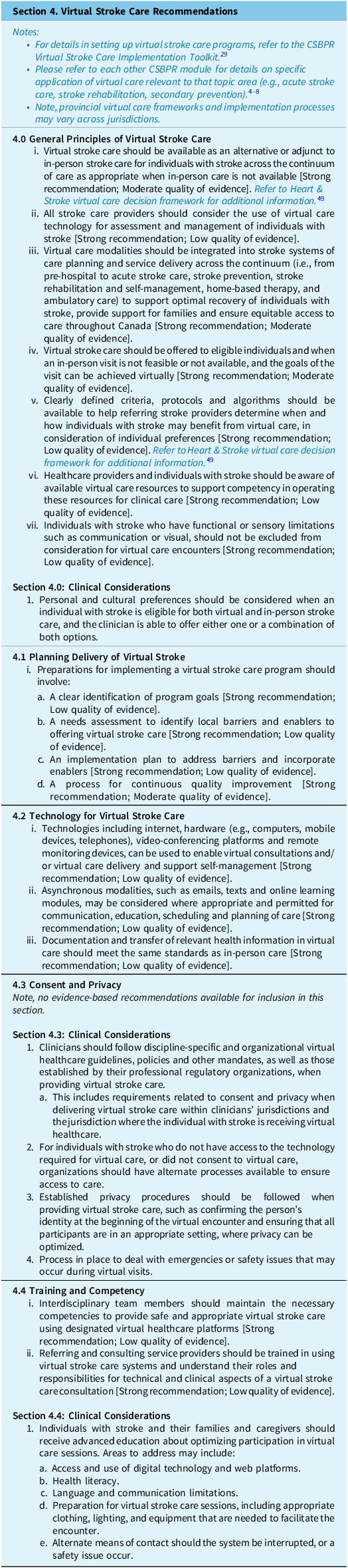
Section 4: Virtual Stroke Care
Telestroke, or virtual interventions, care can be used to enhance stroke care delivery across the entire continuum – from acute diagnosis and triage to rehabilitation and secondary prevention.
Virtual Care for Acute Ischemic Stroke
Acute virtual stroke care – or Telestroke – can be used to increase access to thrombolytic treatment at facilities that lack 24 hour, 7 days a week onsite stroke expertise, using 2-way audiovisual equipment to carry out a detailed stroke examination, combined with a system to reliably transmit CT scan results. The safety, feasibility and efficacy of the “hub & spoke” model, which connects a tertiary stroke center to one or more distant primary care centers, has been established in many studies conducted in Europe and North America. In some of these studies, although minor technical difficulties were reported, the number of patients treated with intravenous thrombolysis increased at the spoke sites where telestroke systems were implemented and the symptom onset-to-treatment time decreased. Reference Wilcock, Schwamm and Zubizarreta30–Reference Porter, Hall, Kapral, Fang, Khan and Silver32
In a systematic review, Mohamed et al. Reference Mohamed, Elsherif, Legere, Fatima, Shuaib and Saqqur33 compared the outcomes of patients who received thrombolysis with alteplase via telemedicine consultation to those who were treated through conventional, in-person care. The results of 33 studies (2 RCTs) representing 12,540 patients were included, of whom 7,936 (63.9%) were thrombolyzed. Mean times from symptom onset to thrombolysis administration and door-to-needles times were similar between the groups. The odds of a good clinical outcome were not significantly higher in patients treated conventionally. The odds of 90-day mortality were not increased significantly in patients treated with telemedicine, nor were the odds of symptomatic intracerebral hemorrhage significantly higher in the telemedicine group. Ho & Fawcett Reference Ho and Fawcett34 compared the outcomes of patients who were treated with either intravenous thrombolysis with alteplase or endovascular thrombectomy (EVT) who were assessed after a telemedicine or an in-person assessment. There were no significant differences between the groups in median door-to-needle times for alteplase administration, door-to-puncture time for EVT or in the percentage of patients with early symptomatic intracranial hemorrhage, or 3-month mortality.
Virtual Stroke Rehabilitation
The results from a rapidly expanding volume of literature suggest that virtual stroke rehabilitation can be both feasible and effective compared with in-person encounters. The authors of recently published systematic reviews examining remotely delivered therapy reported that measures of balance, upper and lower extremity motor function, mobility and performance of ADL were not significantly different compared to those of persons receiving conventional rehabilitation and, in some cases, were superior. Reference Hao, Pu, Chen and Siu35–Reference Chen, Jin, Zhang, Xu, Liu and Ren40 In the Cochrane review authored by Laver et al., Reference Laver, Adey-Wakeling, Crotty, Lannin, George and Sherrington36 virtual care was also used successfully to treat persons with speech and language impairments and low mood post-stroke. Knepley et al. Reference Knepley, Mao, Wieczorek, Okoye, Jain and Harel41 reported that functional outcomes among those that received virtual stroke rehabilitation were equivalent or better compared with those that received in-person therapy, as was patient satisfaction. Additionally, some virtually provided therapies were less costly than in-person therapy.
Adaptation of existing rehabilitation programs may offer alternative solutions to in-person therapy. Yang et al. Reference Yang, Waterson and Eng42 provided a virtual version of the Graded Repetitive Arm Supplementary Program over 10 weeks, to 9 persons with residual difficulty using their affected upper extremity following remote stroke. There were significant improvements over time for all outcome measures, which included the Arm Capacity and Movement test, a new assessment tool developed for online use.
Assessment of performance-based measures in a virtual setting has not been well studied and poses challenges. Some previously validated outcome measures may not be appropriate, feasible or valid for virtual use. It remains to be determined whether new assessment tools will need to be developed and validated for virtual use. In some cases, adaptation of an existing measure may be sufficient. For example, Peters et al. Reference Peters, Botero and Evers43 developed a version of the Fugl-Meyer (FM) assessment, suitable for virtual care use (FM-tele), and demonstrated its feasibility. In addition, although the sample size was small (n = 5), the proportional agreement between the FM-tele conducted in person and conducted remotely by the same assessor, one week apart, was good. Both patients and assessors reported some issues with technical difficulties, a common complaint when using virtual platforms. Inter-rater reliability of the Balance Scale, FM Assessment and the Action Research Arm Test has been shown to be good to excellent when comparing in-person assessments with those conducted virtually through videoconference. Reference Gillespie, MacLellan, Ferguson-Pell, Taeger and Manns44,Reference Amano, Umeji and Uchita45
Stroke Prevention
There are several ways in which virtual care can be used to facilitate secondary prevention interventions. Telehealth consultations with physicians, including neurologists or primary care providers, enable timely medication management, risk factor control (e.g., hypertension, diabetes, atrial fibrillation) and individualized patient counseling without requiring in-person visits. Remote monitoring technologies can track blood pressure, glucose levels and heart rhythms (e.g., for atrial fibrillation detection), allowing for prompt response to abnormal readings. Virtual self-management programs and mobile health apps can also provide reminders for medication adherence, lifestyle modification tools (e.g., smoking cessation, diet, physical activity) and stroke warning sign recognition.
Virtual care interventions (remote monitoring and telephone-based counseling or support, or web-based interventions) were associated with significant reductions in both systolic and diastolic blood pressure (MD = −4.37 mm Hg, 95% CI −5.50 to −3.24 and MD = −1.72 mm Hg, 95% CI −2.45 to −0.98, respectively) in a systematic review of 13 RCTs including 3,803 participants with a history of stroke or TIA +/− hypertension. Reference Liang, Tao, He, Bo, Xu and Zhao46 Telehealth interventions were also associated with better medication adherence (SMD = 0.52, 95% CI 0.03 to 1.00). In the SPRINT INDIA trial, 4,298 patients, recruited from 31 centers, following a first stroke were randomized between 2 days and 3 months after symptom onset to an intervention group that received 68 regular short SMS messages and 6 short videos that promoted risk factor control and medication adherence or to a usual care group. At one year, there was no significant difference between groups in the primary outcome (a composite of recurrent stroke, high-risk TIA, acute coronary syndrome, or death) or any of its components; however, patients in the intervention group were more likely to reduce or quit drinking alcohol, reduce smoking and be more compliant with medications. 47 In a systematic review by Deng et al. Reference Deng, Wu and Ding48 that included 32 randomized controlled trials of patients with established arteriosclerotic cardiovascular disease, outcomes were compared between those randomized to a telemedicine-based secondary prevention (TOSP) group and those receiving usual care. Participants in the TOSP group received remote interventions delivered through telemedicine modalities such as phone calls, text messages, mobile apps, emails and remote monitoring. Phone-based telemedicine interventions significantly improved body mass index, blood pressure and enhanced exercise capacity. The effects on medication adherence, diet, knowledge, self-efficacy, depression, anxiety and safety were inconsistent across studies. Combined remote monitoring and consultation was associated with a significant reduction in the risk of cardiovascular mortality and a reduction in the risk of cardiovascular hospitalization, in patients with heart failure who received telehealth interventions.

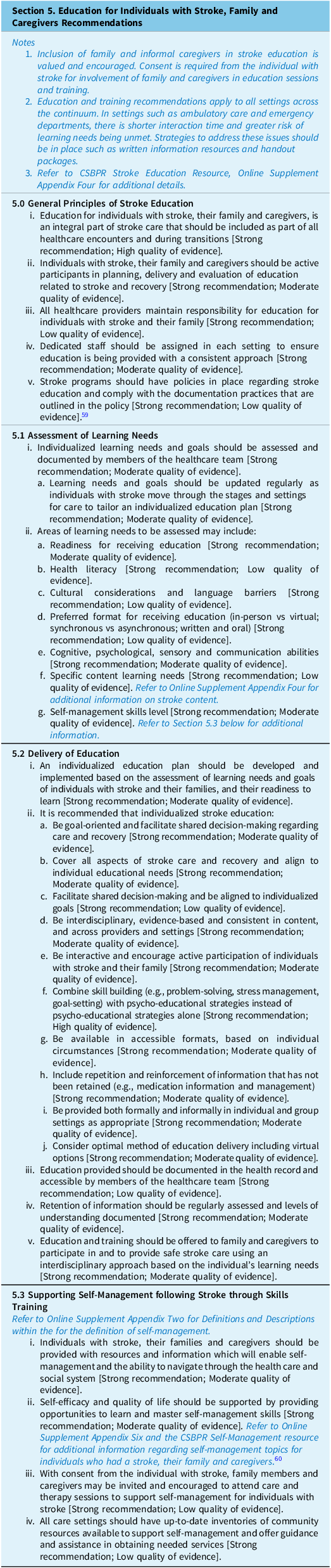
Section 5: Education for Individuals with Stroke, Family and Caregivers
The educational needs of individuals recovering from stroke and their informal caregivers changes across the continuum of care. In preparation for discharge from acute care, education focuses on understanding the stroke event, early warning signs, and vascular and medical risk factors, with an emphasis on promoting adherence to treatments and secondary prevention measures. Secondary prevention will also be the focus of education at visits to TIA or outpatient prevention clinics. During inpatient rehabilitation, the focus shifts to teaching individuals and their families about functional recovery, mobility strategies, use of adaptive equipment and managing common complications such as spasticity or dysphagia. In LTC or community reintegration, educational priorities include stroke self-management, medication adherence, lifestyle modification, emotional adjustment and return to work or social roles. Tailoring education to the individual’s stage of recovery and functional capacity ensures that information is relevant, understandable and actionable.
A scoping review Reference Helbach, Hoffmann and Hecht50 examining the information needs of patients and their informal caregivers across care settings included findings from 36 articles involving individuals who had experienced a stroke or TIA within the preceding five years. Fourteen domains of information needs were identified. Among the most frequently cited were a need for information about treatment, the etiology of stroke, personalized information, community/social support availability, prognosis, the effects of stroke and the care role for patients living at home. The need for information on specific topics changed across the recovery process. The primary information source was HCP, followed by written information, family and friends, and the internet, with information provided directly by HCP being preferred.
Self-Management Programs
Self-management programs empower patients by teaching problem-solving, goal-setting and decision-making skills for active recovery. These programs can also provide education about stroke and its effects. A Cochrane review, authored by Fryer et al., Reference Fryer, Luker, McDonnell and Hillier51 included the results from 14 RCTs of patients recovering from stroke who were living in the community. Trials compared interventions composed of ≥1 component of self-management or targeted more than a single domain of change, or both, with a control intervention (either an inactive control such as waiting list or usual care or an active control such as education only). Interventions were provided by allied health professionals either on a one-to-one basis or as a group, and all were delivered face-to-face except one. Self-management programs were associated with a significant improvement in quality of life (SMD = 0.20, 95% CI 0.00 to 0.41) and self-efficacy (SMD = 0.33, 95% CI 0.04 to 0.61), but were not associated with significant improvements in activity limitations or impairment. Two trials of nurse-led stroke self-management programs were associated with significant improvements in Stroke Self-Efficacy Questionnaire scores. Reference Chen, Chen, Chen, Shen, Wang and Sun52,Reference Lo, Chang and Chau53 Lennon et al. Reference Lennon, McKenna and Jones54 conducted a systematic review of studies (including randomized and non-randomized controlled trials) that assessed “self-management” interventions for patients recovering from stroke. Interventions included in the review were quite variable, ranging from group programs to one-on-one interventions consisting of workbooks, DVDs or exercise sessions. Several interventions were based on the Stanford Chronic Disease Self-Management program, which consisted of workshops, a companion book and a relaxation CD. Although pooling of results was not possible, in some of the largest RCTs included in the review, significant improvement in physical domains, quality of life and dependency were reported in the active intervention groups.
Patient & Caregiver Education
The benefit of family and caregiver involvement was assessed in a Cochrane review Reference Crocker, Brown, Lam, Wray, Knapp and Forster55 which included the results of 33 RCTs. Neither passive (leaflet or pamphlet) nor active (lecture) interventions were associated with significant improvements in caregiver’s knowledge of stroke and stroke services, compared with usual care, although only 3 to 4 trials assessing this outcome were included. Conversely, active interventions were associated with improvement in the patient’s stroke knowledge (SMD = 0.41, 95% CI 0.17–0.65). Several randomized trials have evaluated the effects of information and support packages for patients and their caregivers following stroke. Those trials that simply provided participants with written information as the intervention tended to be less effective compared with programs that included additional components. Individually tailored education and support package with verbal reinforcement for 3 months were associated with significantly greater self-efficacy (access to stroke information domain, p < 0.04), feeling of being informed (p < 0.01), and satisfaction with medical (p < 0.001), practical (p < 0.01), service/benefit (p < 0.05) and secondary prevention (p < 0.001) information received. Reference Eames, Hoffmann, Worrall, Read and Wong56
Patient Education
Education received in the acute stage of stroke can help to enhance understanding of the condition, promote adherence to secondary prevention strategies and reduce the risk of recurrent events. Benoit et al. Reference Benoit, Lopez and Loiseau57 randomized 199 patients with an acute TIA or minor stroke admission to receive a 2-hour interactive group session conducted by a vascular neurologist or a nurse trained in stroke and therapeutic education, focused on stroke education, within the stroke unit before hospital discharge or to usual care. The 3-month improvement in stroke knowledge scores (range of possible scores 0–29) was significantly greater in the intervention group (mean baseline-adjusted between-group difference = 1.6 points, 95% CI 1.4 to 1.9), and the proportion of patients who were unable to name any risk factor was significantly lower after intervention at 3 months (13.2% vs. 3.4%) but not at 12 months (2.4% vs. 3.6%). In a study nested within the STANDFIRM trial (Shared Team Approach between Nurses and Doctors For Improved Risk Factor Management), a cluster-randomized controlled trial designed to evaluate whether an individualized, multidisciplinary secondary prevention program led by nurses, in collaboration with stroke specialists and general practitioners, improved cardiovascular risk factor control), 268 patients with minor stroke or TIA were randomized to an intervention group or usual care group. Reference Olaiya, Cadilhac and Kim58 Overall, 34% of participants were unable to name a single risk factor. However, participants in the intervention group named significantly more risk factors (incidence risk ratio = 1.26, 95% CI 1.00 to 1.58) at 24 months.

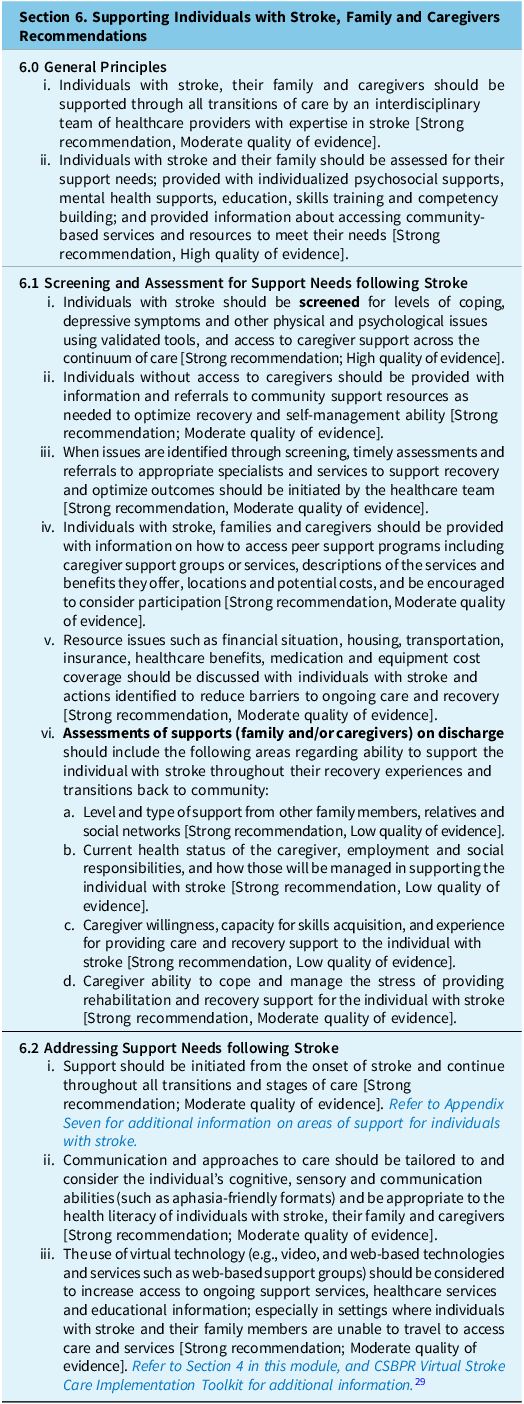
Section 6: Supporting Individuals with Stroke, Family and Caregivers
Following stroke, patients, families and informal caregivers are typically faced with multiple life changes and challenges as the patient transitions between the stages of recovery. Gallacher et al. Reference Gallacher, Morrison and Jani61 reviewed 69 qualitative studies examining the concept of patient burden following stroke, highlighting the impact it may have on the effectiveness of interventions and patient satisfaction with healthcare services. The authors identified the components of stroke recovery that were particularly burdensome to patients, which included receiving information, interacting with others, comparing treatment options, managing in different environments (acute care, inpatient rehabilitation, community, society) and adjusting to daily activities. Caring for a person following a stroke may also have a considerable impact on the health and vocational status of caregivers. Caregivers reported spending significantly longer periods of time providing caring for individuals with strokes, relative to pre-stroke levels. Reference Olai, Borgquist and Svärdsudd62 Depression and anxiety may also be increased. Loh et al. Reference Loh, Tan, Zhang and Ho63 estimated the prevalence of depressive symptoms and anxiety among stroke caregivers to be 40.2% and 21.4%, respectively. Hayes et al. Reference Hayes, Chapman, Young and Rittman64 conducted telephone interviews with 275 veterans who had sustained a first-ever stroke and their informal caregivers to explore the association between caregiver characteristics and the development of injuries. Caregivers who reported a physical injury were more likely to report higher levels of burden, provided more hours of care per week, exhibited more depressive symptoms and fewer healthy days per month compared to carers reporting no injury. Significant predictors of injury were higher caregiver burden (odds ratio [OR] = 1.62, 95% CI 1.14–2.31) and depression (OR = 1.10, 95% CI 1.04–1.17). Ko et al. Reference Ko, Aycock and Clark65 interviewed 132 caregivers and reported that while 52% were working full time or part-time, prior to the stroke, the majority of working caregivers reported reducing their hours of paid work, or missing work, while 9 caregivers retired or resigned. Rochette et al. Reference Rochette, Desrosiers, Bravo, Tribble and Bourget66 reported that 6 months following stroke, 35.2% of spouses (19/54) had a high level of burden (Caregiver Strain Index score ≥ 7) and 17% were identified with possible depression (Beck Depression Inventory BDI score ≥ 10).
The needs of patients and their informal caregivers have been explored in several qualitative studies using in-person or telephone interviews. Similar themes emerged across studies. Cameron et al. Reference Cameron, Bastawrous and Marsella67 included 16 patients recruited from an inpatient rehabilitation stroke facility and 15 informal caregivers, who were interviewed following their first weekend pass from inpatient rehabilitation and again 4 weeks following discharge home. Twenty HCP were also interviewed. Three key themes emerged including issues surrounding preparing patients for safe return home. Patients discussed the need to feel safe in the home environment while caregivers discussed their need to feel supported. Assessing the patient for readiness was a key theme discussed by HCPs. Patients noted gaining insight into what life would be like, and caregiver evaluated their abilities to care for stroke survivor. Patients and caregivers discussed the range of emotions they experienced and how their experienced changes before and after the weekend pass. In a similar study including 24 informal caregivers to individuals with stroke and 14 HCP, Reference Cameron, Naglie, Silver and Gignac68 the themes emerged from both the caregivers and the HCP concerned the type and intensity of support needed, who was to provide support and the method of providing support and the primary focus of care. The caregivers of 90 patients were interviewed one year following stroke. Reference Smith, Lawrence, Kerr, Langhorne and Lees69 Caregivers reported delays and barriers waiting for applications/funding for alterations to make the home more accessible, having to provide care in the immediate post-discharge period with no skills training and lack of follow-up with GPs. They also described difficulties coping with patients’ quick anger and emotional lability and lack of attention to their physical and emotional ability to provide care. Semi-structured interviews (conducted by Zoom) were used to explore the experiences of 19 young individuals with stroke (aged 18 to 55 years) during their recovery. Reference Huang, Marais and Mortenson70 Four themes emerged; (1) the need for longitudinal medical follow-up and information provision; (2) the need for psychological/psychiatric care; (3) the need to adapt community supports and resources to young survivors; and (4) the need to centralize and integrate community stroke services and resources.
Interventions to provide support to patients, family and caregiver were examined in a systematic review, which included the results from 18 studies of caregivers of patients recovering from stroke or patient/caregiver dyads. Reference Bakas, McCarthy and Miller71 Participants were recruited from acute hospitalization and from the community. Most caregivers were spouses. The interventions included elements of skills building, psychoeducation and support and were provided mainly face-to-face (group or individual) with some telephone and web-based elements. In studies that recruited family members, both patients and family members in the intervention group experienced significantly greater improvements in measures of depression, anxiety and quality of life. In studies that included patient/caregiver dyads, there was significantly greater improvement in one or more of the outcomes, including life satisfaction. Anxiety and depression were also decreased significantly in another systematic review Reference Pucciarelli, Lommi and Magwood72 that included 16 trials composed of stroke survivor/caregiver dyads discharged home from rehabilitation hospitals. Intervention in these trials included a written guide for individuals with stroke, and/or video training, group discussions and face-to-face consultations, which were implemented in a hospital setting. Trials also included telephone support after discharge, an educational intervention and support with home visits or telephone support following discharge.

Section 7: Management of Stroke in Long-term Care
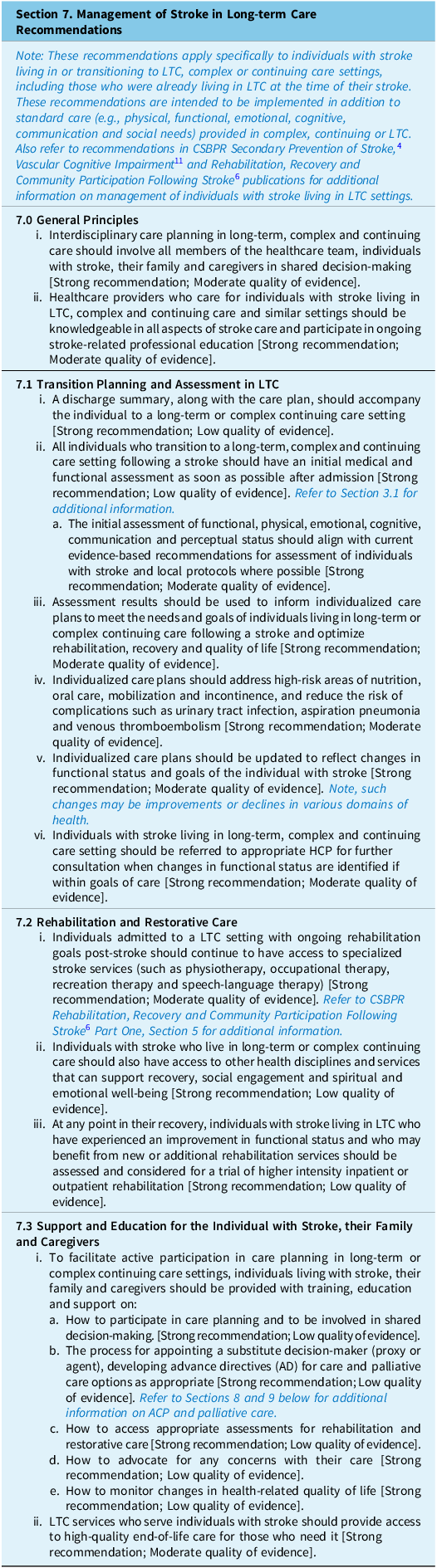
Following a stroke, high levels of disability may warrant admission to a LTC facility. Patients transferred to LTC require comprehensive discharge planning, similar to those returning to their own homes. Effective discharge communication between inpatient hospital care and institutional care facilities requires clear and comprehensive information sharing regarding patients’ nutritional needs, functional status, communication abilities, risk assessments and medical management to support optimal care transitions. Reference Sackley and Pound73,Reference Sackley and Pound74
Individuals residing in skilled nursing facilities with staff trained in stroke management, and who have access to post-stroke therapy resources, may experience better quality of life. In a study examining individuals living in a nursing home who received 24-hour care including access to psychiatric care, physician visits, daily physiotherapy and weekly massage services, nursing home residents experienced greater quality of physical, psychological, social and environmental quality of life scores compared with individuals living in their own homes receiving many of the same services. Reference Brajković, Godan and Godan75 Individuals residing in nursing homes also experienced better perceived quality of life and health status than their residentially residing counterparts. However, the authors of a Cochrane review Reference Fletcher-Smith, Walker, Cobley, Steultjens and Sackley76 concluded there was insufficient evidence to support or refute the efficacy of occupational therapy (OT) interventions for improving, restoring or maintaining independence in ADL for individuals with stroke residing in care homes. Baum et al. Reference Baum, Jarjoura, Polen, Faur and Rutecki77 randomized 20 residents of a LTC facility to an exercise or recreational therapy group and reported significantly greater impact across four measures (Berg Balance Scale, Timed Up-and-Go, Physical Performance Test and Mini-Mental State Exam) in the exercise group after 6 months. In the OCTH trial, Sackley et al. Reference Sackley, Walker and Burton78 also examined the potential benefit of OT provided in LTC homes to residents with a history of stroke. In this trial, 1,042 care home residents from 228 facilities, who were elderly (mean age 83 years) and with a high proportion who were severely disabled, were randomized to an individualized program with a focus on improvement or maintenance of functional capacity, adaptations to the environment and included an education component for the care home staff or to usual care. The median length of stay between care home admission and trial randomization was 2.2 years. The mean number of OT visits was 5.1 per participant. There was no significant difference in mean Barthel Index scores (primary outcome) between groups at 3, 6 or 12 months, or in any of the secondary outcomes. The authors concluded there was no evidence of benefit of the program.

Section 8: Advance Care Planning
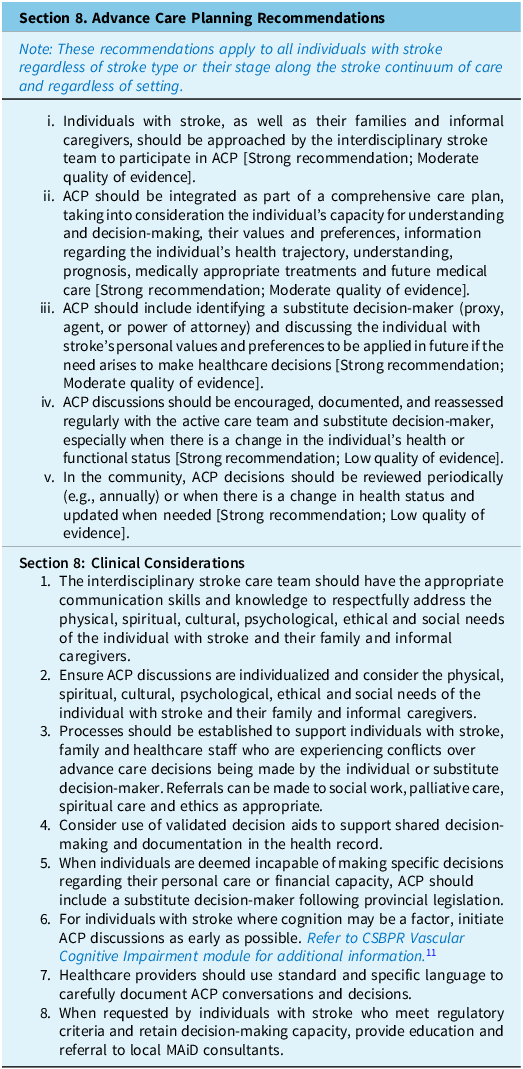
ACP is a vital process that enables individuals to articulate their values, goals and preferences for future medical care, particularly if they are no longer able to communicate or make decisions. Elements to consider in ACP include prognosis of the individual with stroke, treatment options, goals of care and the identification and documentation of end-of-life wishes. In a recent survey, Johnson et al. Reference Johnson, Ulrich, Siv, Taylor, Tirschwell and Creutzfeldt79 surveyed 219 individuals with stroke attending an outpatient stroke clinic, a median of 5 months following a stroke. Patients completed the Planning After Stroke Survival survey, designed to explore the prevalence, experiences and influencing factors around goals of care and ACP conversations. Seventy-three percent of individuals with stroke reported having previously discussed ACP with a physician, while 58% were interested in having additional ACP conversations with their stroke doctor. In a nationally representative study of almost 5,000 community-dwelling older adults, living in the United States, approximately 75% of individuals were reported to have been involved in some form of ACP engagement, defined as having (1) living will or AD; (2) durable power of attorney; or 3) discussion of preferred medical treatment in the event of serious illness. Reference Skolarus, Lin, Springer and Burke80 Green et al. Reference Green, Gandhi, Kleissen, Simon, Raffin-Bouchal and Ryckborst81 used participant observation and semi-structured interviews to gather information from 14 individuals with stroke, recruited from an acute stroke unit and 2 rehabilitation units and 4 HCP, that was related to the communication processes regarding ACP. Four key themes emerged related to why/why not participants engaged in the ACP process: i) lack of perceived urgency by participants, many of whom felt the physician and/or family members would make decisions in accordance with their wishes; ii) a lack of initiation by HCPs to discuss issues around ACP; ii) HCPs expressed hesitation about initiating discussions related to ACP, and uncertainty as the best timing for such discussions. There was also a lack of awareness as to what ACP is and thought it was outside their scope of practice and iv) confusing ACP with ADs, designation of care and living wills.
In the PREPARE For Your Care trial, Reference Sudore, Schillinger and Katen82 986 adults aged ≥ 55 years with ≥2 chronic or serious illnesses were randomized to an online program called PREPARE For Your Care or to read an AD only. The PREPARE intervention included an interactive online values questionnaire that generated a unique action plan and “Summary of My Wishes” document, when all the questions were answered. This summary was printed and given to participants. PREPARE participants were also asked to review the AD, in either English or Spanish for 5 to 15 minutes. Compared with the AD-only group, individuals in the PREPARE arm were more likely to engage in ACP documentation (43.0% vs 32.0%, p<0.001) and self-reported engagement was higher at 15 months (98.1% vs. 89.5%). These improvements were observed consistently across both English- and Spanish-speaking participants. In a subgroup analysis of the PREPARE trial, Reference Skolarus, Brown and Reynolds83 that included 91 participants who had sustained a stroke, those in the PREPARE group had a significantly greater increase in the mean number of completed ACP elements than the AD-only group at 12 months.
Results from a small number of other studies including participants with a mixed medical diagnosis also suggest that interventions aimed at increasing ACP have been successful in significantly increasing the likelihood that end-of-life wishes are known and respected Reference Detering, Hancock, Reade and Silvester84,Reference Kirchhoff, Hammes, Kehl, Briggs and Brown85 Malhotra et al. Reference Malhotra, Shafiq and Batcagan-Abueg86 included the results of 132 RCTs examining the efficacy of ACP and advanced directive interventions, in both healthy adults and those with chronic diseases. Most interventions focused on communication, with approximately one-third incorporating a decision aid. There was equivocal evidence that ACP interventions improved patient outcomes such as end-of-life care consistent with preferences, quality of life, mental health and home deaths, or that it reduced healthcare use/costs. However, ACP interventions improved other outcomes including quality of patient–physician communication and patient/caregiver congruence in preference.

Section 9: Palliative and End-of-Life Care
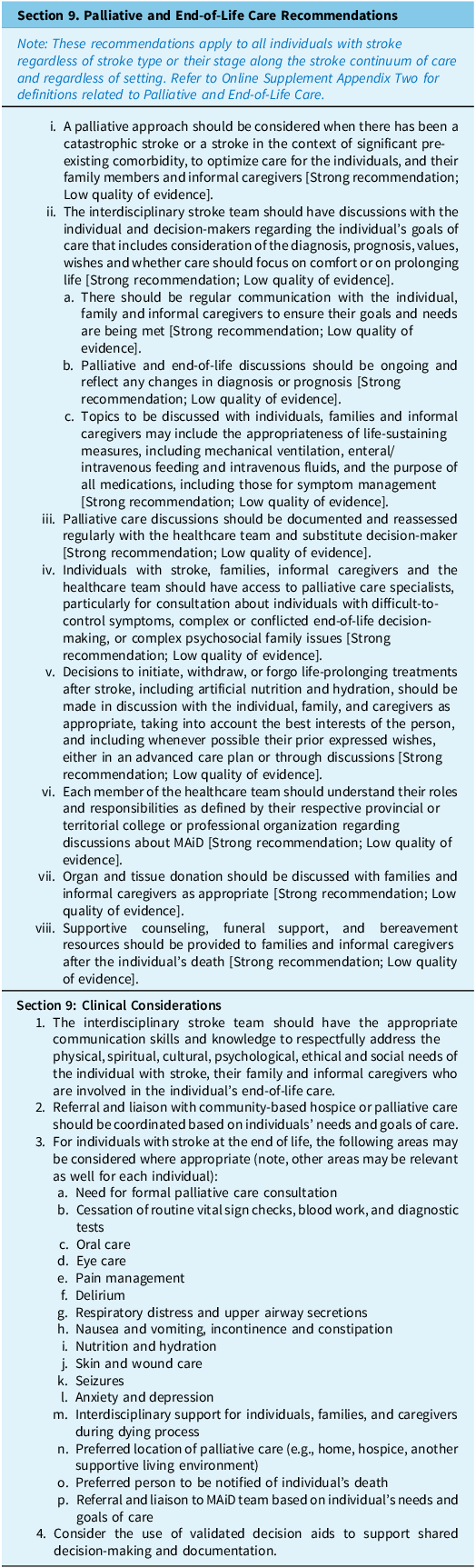
Decisions to withhold or withdraw life-prolonging treatments after stroke affect a substantial proportion of patients who have experienced a severe stroke. It has been estimated that up to 12% of patients will die within 30 days of stroke onset. Reference Wang, Rudd and Wang87 Alonso et al. Reference Alonso, Ebert, Dörr, Buchheidt, Hennerici and Szabo88 reviewed the charts of 117 patients with ischemic or hemorrhagic, who died during hospitalization, in order to identify those with do-not-resuscitate-orders (DNRO), and therapy goal modifications with transition to symptom control. Factors that contributed to the decision to limit life-sustaining therapies were sought. A DNRO was made in 101 (86.3%) patients, usually within 48 hours of admission. Forty patients were transferred to palliative care after a mean of 5 days. Thirty-eight patients were not able to communicate at the time of decision-making. Following transfer, monitoring of vital parameters (95%) and diagnostic procedures (90%) were discontinued. Antibiotic therapy (86%), nutrition (98%) and oral medication (88%) were never ordered or withdrawn. Low-dose heparin was withdrawn in 23% cases. All patients were maintained on intravenous fluids until death. Disturbance of consciousness at presentation, dysphagia on day 1 and large supratentorial strokes were independent predictors of decisions to withdrawing/ withholding further treatment. Patients died an average of 2.6 days following therapy restrictions.
Holloway et al. Reference Holloway, Ladwig, Robb, Kelly, Nielsen and Quill89 compared the reasons for palliative consults for patients following stroke to other conditions including cancer, congestive heart failure, chronic obstructive pulmonary disease, and dementia. Of the total stroke admissions during the 3-year study period, 101 (6.5%) were referred for a palliative care consult. Patients with stroke had the lowest (worst) mean Palliative Performance Scale scores compared with all other conditions. Compared with patients with other conditions, individuals with stroke who received a palliative care consult were more often referred for end-of-life issues and more likely to die in hospital. Patients who had suffered a stroke were more likely to be unconscious during the assessment and more frequently lacked the capacity to make or participate in their own medical care decisions. When compared by stroke subtype, patients who had suffered an ischemic stroke were the least likely to be referred for palliative care (3.2%) while those with a subarachnoid hemorrhage were referred most often (15.0%). The relatives of patients who had died from a stroke were interviewed approximately 6 weeks later and questioned about their perceptions of the quality of dying they received in the hospital. Reference Reinink, Geurts, Melis-Riemens, Hollander, Kappelle and van der Worp90 While the participants were generally satisfied with the quality of care received, there were a few areas of concern that were related to feeding, inability to say goodbye to loved ones, and not retaining a sense of dignity. Eriksson et al. Reference Eriksson, Milberg, Hjelm and Friedrichsen91 used data from 1,626 patients included in a national quality register for end-of-life care who had died of stroke in a hospital or nursing home, and compared care during the last week of life with 1,626 patients in the same register who died of cancer, matched for place of death, age and sex. The odds of experiencing dyspnea, anxiety and severe pain were significantly lower for individual with stroke; however, family members were less likely to be offered bereavement follow-up. Patients were also less likely to be informed about the transition to end-of-life care.

Summary
The 7th edition update of the CSBPR for Stroke Systems of Care module provides evidence-informed recommendations that reflect the growing and changing body of research evidence available focused on planning and advancing stroke systems of care. The goals of aiming for high-functioning and integrated stroke systems of care are to provide timely and individualized care that is responsive to the evolving needs of individuals with stroke, their family and caregivers, to optimize short and long-term outcomes and make effective and efficient use of current health system resources. Given the evolving and dynamic nature of needs among individuals with stroke and their families, stroke systems of care must demonstrate flexibility and responsiveness to effectively support patients and caregivers across the continuum of recovery. Also, it is recognized that the needs of individuals with stroke and their families are dynamic and will change over time. As a consequence, stroke systems need to be flexible and responsive and be able to support individuals with stroke and their families through these shifts.
In Canada, optimizing recovery requires navigating a complex and fragmented healthcare system that encompasses pre-hospital and emergency health systems, acute care, inpatient and community rehabilitation, secondary prevention and community services. Support and management for individuals with stroke extends beyond the traditional healthcare system; it is imperative that strong collaborative relationships be built across sectors, including community services, education, leisure and vocations. This may be accomplished by ensuring effective communication and continuity of care across all specialties and phases of care to provide collaborative integrated care, breaking down siloes, reducing delays and creating systems to address inequities based on geography, sex and gender, ethnicity, language, culture and other social determinants of health.
This module emphasizes the need for coordinated and seamless systems of care for all stroke types that extend beyond the first few months following stroke, building on progress achieved during the initial recovery stages, to support seamless and meaningful resumption of activities and roles. Stroke systems of care are driven by national efforts, and planned and implemented at the provincial, territorial and regional levels. Healthcare providers and system leaders must work collaboratively with effective communication to ensure these integrated systems are functioning at their highest level, with appropriate funding and a purposeful data collection and performance measurement strategy to drive continuous improvement, timely and effective implementation, and inform future planning.
Looking toward the future, several emerging trends are shaping the landscape of stroke systems of care. Technology is emerging at a rapid pace and may play a key role in supporting several components of stroke systems planning and care delivery, including artificial intelligence, virtual care and interventional technology and rehabilitation therapies.
The goal of disseminating these recommendations is to increase the implementation of evidence-based stroke care across Canada, to reduce practice variations in care delivery, and to narrow the gap between current knowledge and clinical practice. These recommendations are reviewed and updated every three to five years, as new evidence emerges that requires changes in practice.
Supplementary material
To view supplementary material for this article, please visit https://doi.org/10.1017/cjn.2026.10580
Acknowledgements
Heart & Stroke gratefully acknowledges the Stroke Systems of Care writing group leaders and members, all of whom have volunteered their time and expertise to develop these new recommendations. We acknowledge Dr. M. Patrice Lindsay for her efforts as Team Lead, Senior Writer, Senior Editor and Senior Author of this module. Members of the Canadian Stroke Consortium, Can Stroke Recovery Trials Platform, Canadian Neurological Sciences Federation and the Evidence-based Review of Stroke Rehabilitation team were involved in the development of these recommendations. These recommendations (in whole or specific parts) underwent external review by Andrew Dawson, Andrea King, Renee D. Cashin, Luciana Catanese, Michael Kelly, Lisa Korec, Anne Martineau, Kelly Sharp, Shelley A Sharp, Sandy Steinwender, Kristel Smith, Donelda Sooley and Mary Trainor. The performance measures were reviewed and updated by M. Patrice Lindsay, Amy Yu, Michael D Hill, Aravind Ganesh, Jessalyn K Holodynsky, Raed Joundi, Noreen Kamal, Shannon MacDonald and Kathryn Yearwood.
We thank the Canadian Stroke Best Practices and Quality Advisory Committee members: Eric E. Smith (Past-Chair), Anita Mountain (Co-Chair), Dylan Blacquiere (Co-Chair), Gord Gubitz, Dar Dowlatshahi, Shannon Bayluk, Janice Daitchman, Margie Burns, Emma Ferguson, Thalia S. Field, Mary Lou Halabi, Manraj Heran, Trish Helm-Neima, Michael D Hill, Adam Kirton, Pascale Lavoie, Farrell Leibovitch, Katie Lin, Erin McHattie, Katharine McKeen, Colleen O’Connell, Christine Papoushek, Kara Patterson, Richard H Swartz, Jennifer Yao and Ruth Whelan.
We acknowledge and thank Norine Foley and the evidence analysis team at workHORSE; Laurie Charest of Heart & Stroke for her coordination of the CSBPR teams and processes; and Francine Forget Marin and the Heart & Stroke internal teams who contributed to the development and publication of these recommendations (Translation, Communications, Knowledge Translation, Lived Experience Engagement Support, Health Policy, and Digital Solutions).
Author contributions
Gary Hunter (Co-First Author) Sacha Arsenault (Co-First Author) are cochairs of the Stroke Systems of Care expert writing group and lead authors contributing to all aspects of the development, data analysis, writing, editing and final approval of this manuscript. M. Patrice Lindsay (Senior Editor, Senior Author) is the lead writer and senior author and editor of this module and manuscript, with significant contributions in all aspects of primary evidence generation, scientific literature review, guideline development, writing group deliberations, internal and external review process, and manuscript, module and supplementary material preparation. Rebecca A. Bowes, Jacqueline Cochrane, Lisa Collins, Nancy Cox, Sherry Xueying Hu, Mahesh Kate, Lisa McQueen, Jason Moller, Tony Nguyen, Stefan Pagliuso, Trudy Robertson, Annette Samson, Ravinder-Jeet Singh, Katie White, Lily Zhou are all members of the Stroke Systems of Care expert writing group and contributed by reviewing, analyzing and discussing the evidence and collectively finalizing the wording of all included recommendations, and contributed to additional supporting content. Gord Gubitz (Senior Advisor) and Trish Helm-Neima (Senior Advisor) are the senior advisors to this writing group and contributed significantly to the methodology and recommendation development and provided review and edits to the overall documents. Anita Mountain (Advisory Co-Chair) and Dylan Blacquiere (Advisory Co-Chair) are cochairs and senior leaders of the stroke best practices advisory committee and oversee all guideline development and participate in ongoing review and feedback of the content. Norine Foley conducted the evidence searches and completed the evidence tables and evidence summaries supporting this guideline update and contributed to the writing of this manuscript. Rebecca Lund supported the overall guideline development process, and is the Corresponding Author on behalf of the Heart and Stroke Foundation of Canada.
Funding Statement
The development of the CSBPR is funded in its entirety by Heart & Stroke. No funds for the development of these guidelines come from commercial interests, including pharmaceutical and device companies. All members of the recommendation writing groups and external reviewers are volunteers and do not receive any remuneration for participation in guideline development, updates and reviews. All participants complete a conflict-of-interest declaration prior to participation.
Competing Interests
Sacha Arsenault (Co-Chair, Co-First Author) receives Consulting fees from Accreditation Canada, payment for accreditation surveys; Support for travel from UNEARTH CVD Heart Brain Connection (University Health Network, Toronto). Jacquie Cochrane holds research grants with Bruyere Health Incentive Grant; receives support for attending meetings and/or travel from Royal College/AMS CanMEDS research development grant; and receipt of drugs from Abbvie, for compassionate use for patients. Sherry Xueying Hu holds research contracts for clinical trials from Bayers, Janssen; Quality Improvement Grant, all paid to institution; Leadership or fiduciary role with Acute and Episodic Network Provincial Stroke Advisory Co-Chair, payments made to self. Mahesh Kate holds grants or contracts with Health Everywhere Hub, payments received to self or institution; Support for attending meetings and/or travel from Alberta Medical Association, payments received to self or institution; Leadership or fiduciary role with Content Creation Committee, Chair, no payments received. Trudy Robertson holds a leadership or fiduciary role with World Federation of Neuroscience Nurses – Exec Board of Directors, no payments received. Ravinder-Jeet Singh holds grants or contracts from CIHR grant co-investigator, no payment to self or institution; Leadership or fiduciary role with Canadian Stroke Consortium, Education Committee Member; CorHealth Ontario, Co-Chair, Stroke Unit Advisory Committee, no payments. Lily Zhou holds grants or contracts from Vancouver Coastal Health Research Institute for salary support; Leadership or fiduciary role with Canadian Stroke Consortium, no payment received. Gord Gubitz (Senior Advisor) is a member of CAMAP Board of Directors, Received/will be receiving a grant or honorarium from CAMAP; Chair of national MAiD educational curriculum; Support for adding meeting and/or travel from CAMAP, national/international educational symposia; Currently participating or have participated within past two years in a clinical trial – ESCAPE-MeVO, OCEANIC, Site sub-investigator. Trish Helm-Neima (Senior Advisor) holds a leadership or fiduciary role with The Joyriders Therapeutic Riding Association – Board. Anita Mountain holds grants or contracts from any entity – Qualified site investigator for research supported by Brain Canada, Heart and Stroke Foundation of Canada, Canadian Partnership for Stroke Recovery/CIHR/Governors of the University of Calgary, No payments to self; Support for research coordinator and research activities related to research grants from primary organization; Leadership or fiduciary role as Rehabilitation co-chair for Canadian Stroke Best Practice Recommendations Advisory Committee, no payments. Dylan Blacquiere receives payment or honoraria for support for travel/presentation from Diabetes Canada; Support for attending meetings and/or travel from Diabetes Canada; Participation on a data safety Advisory board, Roche Canada; Leadership or fiduciary role with Canadian Stroke Consortium, Board Member; co-chair for Canadian Stroke Best Practice Recommendations Advisory Committee, no payments. M. Patrice Lindsay (Senior Editor, Senior Author) receives consulting fees from Canadian Neurological Sciences Federation, payment to Self; Payment of consulting fees for writing the present manuscript, payment to self; Leadership or fiduciary role with Canadian Institutes for Health Research Advisory Board, and the BHI Executive Committee, volunteer no payments received. The following authors have no conflicts of interest to declare: Gary Hunter (Co-Chair, Co-First Author), Norine Foley, Rebecca Bowes, Lisa Collins, Nancy Cox, Lisa McQueen, Jason Moller, Tony Nguyen, Stefan Pagliuso, Annette Samson, Katie White, and Rebecca Lund.
Consent Statement
Consent was not required for this clinical practice guideline.
Community Consultation and Review Panel
Heart & Stroke is especially grateful to the members of the Stroke Systems of Care CCRP who worked in tandem with the scientific writing group for this module and shared their personal experiences and insights on living with stroke and optimizing recovery and health outcomes. CCRP members include Cyndi Barron, Barry Bowser, Patricia Bukowsky, Heather Quale Goranson, Sarah Lansdown, Cheryl Kimberly Ann MacKenzie, Akira Neeson, Matthew Ranta and Sydney Reid Smith.




 Open access

