Introduction
International literature highlights the importance of addressing the needs of family caregivers who provide palliative care, particularly in relation to information and signposting to respite, finance, education, and psychosocial support (Carlander et al., Reference Carlander, Sahlberg-Blom and Hellström2011; Hudson et al., Reference Hudson, Trauer and Kelly2013; Harrop et al., Reference Harrop, Byrne and Nelson2014; Lewis, Reference Lewis2014). Preliminary scoping of the literature reveals no identifiable, published research studies explicit to the informational requirements of family caregivers of people with intellectual disability who require palliative care. It is essential that this gap in the research is addressed as almost one in eight people have a caring role, with many providing care to people with intellectual disabilities (Carers UK, 2019). The 2011 census reflects similar figures of one in eight across the United Kingdom (UK) factoring in the geographical size of England, Scotland, Wales, and Northern Ireland (NI) (Carers UK, 2012). Statistics from “Healthcare for All” (Michael, Reference Michael2008) showed around 60% of carers looked after someone with intellectual disability.
People with intellectual disabilities are living longer, with an increased likelihood of developing an illness requiring palliative care (Michael, Reference Michael2008; Tuffrey-Wijne et al., Reference Tuffrey-Wijne, McLaughlin and Curfs2016). The UK-based learning disabilities mortality review (LeDeR) showed that 62% of people with intellectual disability die in hospital, compared with 46% of the general population. However, there were no statistics on deaths due to life-limiting conditions that required palliative care (LeDer and University of Bristol, 2019).
There is a lack of evidence that palliative care includes appropriate provisions for people with intellectual disabilities, and their caregivers, with minimal referrals to specialist palliative care services (Kirkendall et al., Reference Kirkendall, Waldrop and Moone2012; McLaughlin et al., Reference McLaughlin, Barr and McIlfatrick2014a; Tuffrey-Wijne et al., Reference Tuffrey-Wijne, McLaughlin and Curfs2016). Moreover, certain conditions requiring palliative care are specifically linked to aging in people with intellectual disability, for example, people with Down syndrome developing dementia (Towers and Glover, Reference Towers and Glover2015). The most contemporary recommendations at European level are that palliative care provision must cover the entire intellectual disability spectrum and all palliative care settings and include support for family members (Tuffrey-Wijne et al., Reference Tuffrey-Wijne, McLaughlin and Curfs2016).
Positive examples of intellectual disability and palliative care services working with caregivers include initiatives directly related to managing distress and pain involving advance care planning and resources such as information for family caregivers (Sunderland People First, 2008; St Oswald's Hospice, 2015). Information provides a medium for educating and is an important component of palliative care provision (Grant et al., Reference Grant, Sun and Fujinami2013; Kaltenbaugh et al., Reference Kaltenbaugh, Klem and Hu2015). By determining “information need”, there is recognition of an existing deficit of information (Beaver and Witham, Reference Beaver and Witham2007). Tailored information can aid choice with respect to support and the provision of services (Eysenbach, Reference Eysenbach2000).
The UK Department of Health recognizes that supporting caregivers in recognizing and meeting their needs, whether that be informational or other, promotes quality of life, wellbeing, and contribution to society (Department of Health, 2008).
This study was undertaken as information is a conduit to supporting family caregivers across intellectual disability and specialist palliative care disciplines, and a research gap in this area was identified. This study aimed to determine the informational needs of family caregivers of people with intellectual disabilities who require palliative care.
Methods
Ethical permission was gained from the Office for Research Ethics Committees Northern Ireland (ORECNI) (16/NI/0111). Informed written consent was provided by all participants.
Research design
As this study was exploratory in nature, a qualitative design was implemented, underpinned theoretically by the Transactional Model of Stress and Coping (Lazarus and Folkman, Reference Lazarus and Folkman1984) and the Transformative Paradigm (Mertens, Reference Mertens2005). The Transactional Model considers stress response, coping, and resources that enhance coping and reduce carer burden. In this study, it was important to understand how resources such as information enhanced the ability to deal with stress when navigating both intellectual disability and palliative care services.
The Transformative paradigm has been previously affiliated with intellectual disability research and literature (Mertens, Reference Mertens2005, Reference Mertens2009). The paradigm addresses culturally complex issues with an emphasis on the inclusion of marginalized groups (Mertens, Reference Mertens2005; Mackenzie and Knipe, Reference Mackenzie and Knipe2006).
Two family caregivers with experience of caring for someone with intellectual disability who required palliative care were consulted on the development of participant information leaflets. The interview guide was also piloted with the same family caregivers. The paradigm aligns with the co-design of a logic model, involving an expert reference group comprised of key stakeholders. Further detail is provided later in the paper.
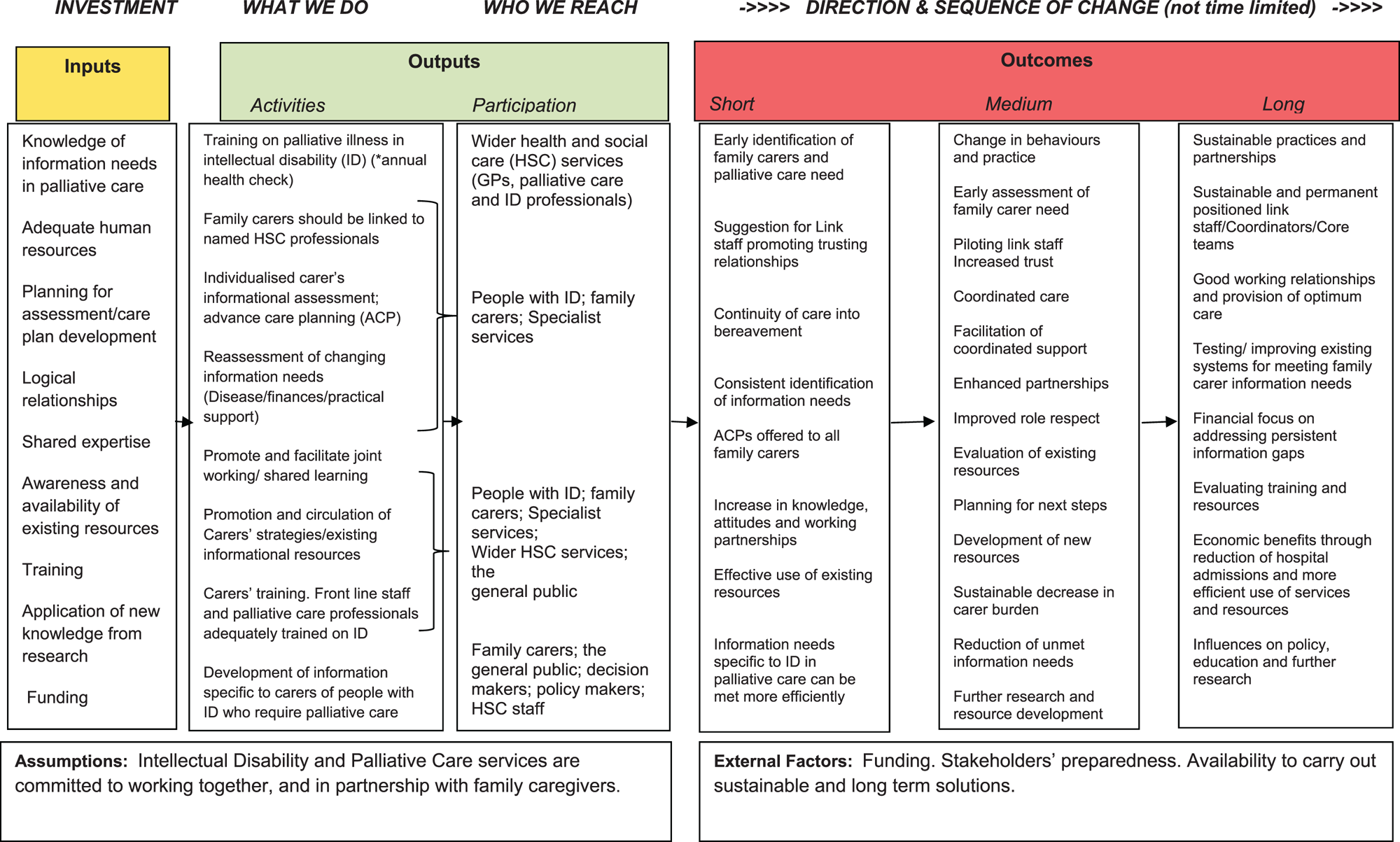
The logic model (Figure 1) is a framework involving conjectures of key stakeholders, based on the Wisconsin model and offering a pictorial representation of processes for an intervention or initiatives (University of Wisconsin-Extension, 2003). The framework articulates the current status of informational need, planned changes, and for whom changes apply (Donetto et al., Reference Donetto, Tsianakas and Robert2014; University of Wisconsin-Extension, 2016). Logical relationships link components and connect information, such as resources and activities or influences on activities, for example, reduced informational provision influencing levels of support. Outcomes promote a transformation process, supported by the transformative lens through which this study was conducted.
Logic model.

Study setting
Participants were recruited across five Health and Social Care (HSC) Trusts and two Hospices within one region of the United Kingdom.
Participants
A purposive sample of 10 family caregivers, who had been, or were involved in the care of an adult with intellectual disability who required palliative care, were recruited to semi-structured interviews. Those who had experienced a recent bereavement (within the past 3 months) were excluded (Beck and Konnert, Reference Beck and Konnert2007; Koffman et al., Reference Koffman, Higginson and Hall2012; Bentley and O'Connor, Reference Bentley and O'Connor2014).
A purposive sample of 28 HSC Professionals were recruited across six focus groups. They currently worked within a specialist intellectual disability or palliative care service and had been involved in the provision of palliative care to adults with intellectual disabilities and their family caregivers. No relationships were established prior to study commencement.
Recruitment and data collection
The primary researcher (L.M.), a PhD student, attended service team meetings to inform HSC professionals about the study verbally and to distribute information packs. Multidisciplinary HSC professionals from community intellectual disability or specialist palliative care teams, who met criteria, were recruited following the return of a written consent form agreeing to participate in a focus group.
Focus groups sought to establish perceptions of professionals in relation to the information needs of family caregivers of people with intellectual disabilities requiring palliative care. A topic guide (Supplementary Appendix S1) was developed, informed by the literature (Carlander et al., Reference Carlander, Sahlberg-Blom and Hellström2011; Hudson et al., Reference Hudson, Trauer and Kelly2013; Harrop et al., Reference Harrop, Byrne and Nelson2014; Lewis, Reference Lewis2014; McKibben et al., Reference McKibben, Brazil and Hudson2019) to guide discussion around holistic realms of information.
Focus groups were held by L.M. within participants’ clinical settings, lasted 55–80 min, and were audiorecorded with participants’ consent. Prior training in conducting focus groups was undertaken.
Family caregivers, known to the service who met the criteria of providing care to someone 18+ who had an intellectual disability and a condition identified as palliative, were contacted through HSC Trust or Hospice staff who provided information on the study. Ten family caregivers were recruited on receipt of their reply slip and written consent form and individual interviews were then arranged. L.M. completed training in creative interviewing and an interview guide (Supplementary Appendix S2), adapted and informed by the literature (McLaughlin et al., Reference McLaughlin, Barr and McIlfatrick2014a) was used for interviews with family caregivers. The guide contained open questions and prompts in relation to the holistic domains of information need.
Semi-structured interviews were prefaced by a brief introduction to L.M. including motivations for conducting the study, which enhanced reflexivity as L.M. acknowledged her own role as a family caregiver of someone with intellectual disability and how this may influence the interpretation of data as a result. This personal experience was a major strength of the study. Reflexivity was a beneficial tool in this research and has been discussed further in a separate account (McKibben, Reference McKibben2019).
Interviews lasted approximately 60–90 min and were conducted by L.M. in family caregivers’ home setting between October 2016 and April 2017 and were recorded with participants’ permission. Field notes were taken. Data from family caregivers and professionals were collected concurrently.
The Consolidated Criteria for Reporting Qualitative Studies (COREQ Checklist) (Tong et al., Reference Tong, Sainsbury and Craig2007) were used as a guide in reporting of this study including the following considerations: all participants remained on the study, only L.M. and the participants were present during data collection, no repeat interviews or focus groups were required, and no transcripts were returned to participants.
Data analysis
Data were recorded and transcribed verbatim. NVIVO was used for data management. Thematic analysis for both focus groups and interviews involved the widely used Braun and Clarke framework (Braun and Clarke, Reference Braun and Clarke2006) comprised of the following six steps: (1) familiarization with data, (2) generating initial codes, (3) searching for themes, (4) reviewing themes, (5) defining/naming themes, and (6) report producing. Thematic analysis occurred concurrently with data collection, which continued until data saturation, when no new concepts were being discussed. Data from each participant group were analyzed separately.
The primary researcher was fully immersed in the data and members of the research team (K.B., D.M., and P.H.) coded transcripts independently to ensure inter-rater reliability. Rigor was ensured via (1) an audit trail of field notes made during and after data collection, (2) researcher reflexivity in completing field notes and discussion with the research supervisory team of any issues, when required, (3) independent analysis of transcripts by the primary researcher and the research supervisory team, to ensure inter-rater reliability.
Interpretation of the data was driven by awareness of the transactional model of stress and coping and how family caregivers identified information needs, and how this addressing information needs may enhance coping and relieve carer burden. The logic model was co-designed following data analysis.
Summary findings were presented to the expert reference group for discussion of how best to feed findings into the logic model. The process involved three consultations with the group (n = 7) representative of service users, advocacy groups, HSC services, and HSC education. The group included an HSC commissioner and two management level professionals. The initial draft was based on how findings could be integrated to reflect the reported needs and how they could be realistically implemented in practice. Stakeholder discussion considered investments, what we could do, who may we reach, as well as proposed short-, medium-, and long-term outcomes. Further drafts were fed back to the group until the finalized version was agreed.
Results
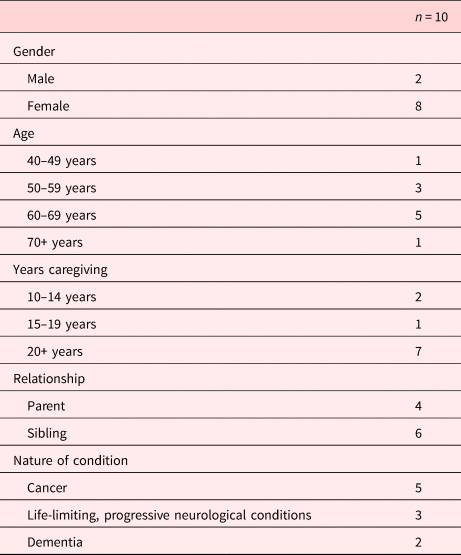
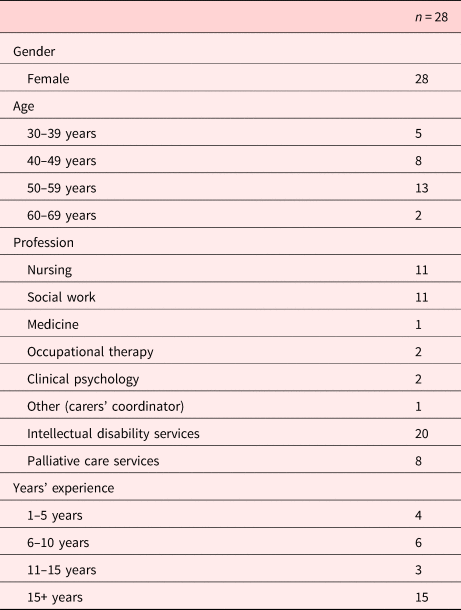
Family caregivers were either a parent (n = 4) or sibling (n = 6) of someone with intellectual disability who had required palliative care. The majority (70%) were bereaved caregivers. Palliative conditions included cancer (50%), life-limiting neurological conditions (30%), and dementia (20%). Most professionals worked in the intellectual disability field (n = 20), the minority worked in palliative care (n = 8). The demographic tables for family caregivers and health care professionals are displayed in Tables 1 and 2, respectively.
Demography of family caregivers

Demography of HSC professionals

Results from interviews with family caregivers (n = 10)
Four themes were identified: “Changing and diverse nature of information need”, “Consistent communication and joint working”, “Navigating care across settings”, and “Evolution and components of the caring role.” Quotations from family caregiver participants (P) represent each interview theme. Figure 2 provides category detail.
Themes and categories from interviews with family caregivers.

Changing and diverse nature of information need
This theme represents the variation of information needs reported in relation to the disease, finances, respite, practical support, or psychosocial support. It also reflects the dynamic nature of information needs changing over time. The most frequently expressed information needs were surrounding education on the disease, palliative care, and the illness trajectory. However, these could also change over the disease trajectory:
… when you're in the middle of somebody who has an illness, and they're going down rapidly, you're dealing with every moment very quickly … so I wasn't thinking up questions at the time. (P1)
Information about financial entitlements such as government benefits or financial aid was an unmet need identified by family caregivers. There was a general lack of awareness from caregivers about what they were entitled to:
People will not come to you with advice … you'll not always know who to ask for… or you know social workers are told, don't tell them they can get this … (P10)
Practical information on the use of equipment or training on how to use was cited, without practical information, some family caregivers were left with nursing care problems:
I was given the suction machine, with no training not showed how to switch it on, not shown how to use it, nothing. I was given an oxygen bottle, no training … I wasn't even given any manual handling training. (P5)
Family caregivers also acknowledged the importance of information about respite and psychosocial support, and how to avail these supports, but these were not cited as frequently as information need surrounding the disease, finances, or practical support. Caregivers perceived that unless they actively asked for information, it often was not offered. Some participants reflected on the most important piece of information they received:
… when he first got the diagnosis and we went to that training course [on Dementia and Learning Disability] … it just prepared us so much and let us understand what he was going through and why. (P7)
Reassessment of need over time was deemed essential to enable adaption to the bereavement phase. Naturally, there was a shift from the need for educational information on the disease and information regarding financial and practical support to the need for information regarding psychological support after death. Recommendations were proposed for a central person that coordinated information provision and subsequent support.
Consistent communication and joint working
This theme considered cross-discipline communication and with family caregivers and how this facilitated the effective provision of information. The term joint working is used in intellectual disability and refers to partnerships with families and with other professionals. Joint working fostered consistent communication which promoted more effective provision of information and support; however, this was often too late:
She was the first nurse, I mean nurse, that I had been in contact with … she had gone up to the social worker and she asked about his learning difficulties … she got in touch with the GP … I couldn't believe the difference, but it was too late by this time. (P4)
Sensitive information about the disease and breaking bad news was often communicated inappropriately:
the Doctor was coming out and said … he's had a bad seizure and if it happens again there will be no intervention, and it was as brutal as that. In fact, it was in a corridor. (P7)
I'll never forget that day … now he never asked us do you want to go into a side room, I've something to tell you. He stood in that corridor … he looked at me and he said your brother has a tumour and I could feel myself falling backwards … (P9)
Family caregivers felt that the person delivering the news should provide adequate information, in private. If family caregivers were adequately informed, there was less delay in referrals and initiation of supports. Optimum communication was seen to promote more appropriate delivery and provision of information.
Navigating care across settings
All family caregivers interviewed had the experience of being in hospital with their family member during their illness. Issues were reported regarding the wider systemic problems of insufficient staffing and the learning needs of general hospital staff in relation to intellectual disability and palliative care.
Barriers to information and support included a lack of awareness of intellectual disability in acute settings when family caregivers presented in crisis situations related to the person's palliative condition:
Any nursing staff I came across during the two weeks of his hospitalization, not one was able for his disability … A&E were not prepared for him … I said my son's dying, what are you going to do? … because nobody could do anything. (P3)
Another issue was with those transitioning from children's to adult services, who found little equivalence in information provision and subsequent support in adult services:
She had respite up until she was 20 and then it all stopped … you get everything when they are children, to me they need more when they are adults, and you get nothing … that's my experience. (P6)
There was an apparent presence of diagnostic overshadowing, when professionals interpreted changes in behavior or symptoms to the person's disability instead of an illness which may require further investigation and treatment (Reiss et al., Reference Reiss, Levitan and Szyszko1982).
Family caregivers also reported a lack of monitoring and support in the community, having to independently access information, and again expressed the need for a central person to support them to navigate the different health care teams and professionals.
Evolution and components of the caring role
This theme reflects how the family caregiver role is often more complex than that of someone caring for a non-disabled person requiring palliative care. The care trajectory is often longer, involving increased health complexities. Family caregivers reported the constant fight for information and support:
I had to say to social services, what about respite? … you know it's a fight all the time … you are doing so much caring, you get too tired to shout. (P5)
At times additional family members had to aid and support for the family caregiver, for example, in the absence of practical information:
… my daughter was wonderful, she set out everything to do with the meds and we had a table on the wall … and tick boxes … it was the learning. (P3)
Instances where the long-term caring expertise of family caregivers was respected by professionals facilitated improved information sharing and shared decision making. Information was viewed to support family caregivers to continue to provide expert care at home.
Results from focus groups with HSC professionals
Three focus group themes evolved from HSC professionals (n = 28): “Interplay of services across settings”, “Information need at the interface of services”, and “Decision-making dilemmas.” Quotations are presented representing themes from focus groups. Figure 3 provides category detail.
Themes and categories from the focus groups with HSC professionals.

Information need at the interface of services
This theme reflects the acknowledgement of the variety of cases that straddle intellectual disability and palliative care services, considering individualized information needs, generation of needs from crisis, and increased psychological components in palliative care. Intellectual disability professionals were not well equipped in palliative care education or available supports and could therefore not provide information around this to family caregivers:
I would lack the knowledge of the resources out there or services out there if somebody did need palliative care … if I had information, then you know, I can offer more support and direct them where they should be going. (Intellectual Disability (ID) Social Worker FG1)
It was felt that family caregivers may not be in receipt of enough information and that it was the collective responsibility of any HSC teams involved to meet these information needs. There was a recognition that professionals may not always be able to meet these information needs, with acknowledgement of gaps in relation to information specific to palliative care for people with intellectual disability:
There's so much we haven't done, we haven't really thought about, you know, getting specific information for carers of someone with a learning disability around that whole palliative issue. (Carers’ Coordinator FG24)
Professionals agreed that information need at the interface of services would benefit from partnership working across settings. Communication and pain were acknowledged caveats of caregiving in intellectual disability and so information on the disease and medications were perceived as important.
Interplay of services across settings
This theme represents the role that intellectual disability and palliative care services have in working together, and with family caregivers to meet their information needs. Intellectual disability professionals had no clear guidance on who to refer to and the remit of different agencies:
I think we don't know when to refer and to who, there's Macmillan … Hospice … district nursing … there's no real guidance on who we should be linking in with, when and where, and why? (ID Health Facilitator FG4)
Cross agency communication and partnerships were identified as ways of addressing information needs:
It's not only the information that we have, but actually access we might have to other individuals who may have further information, which kind of works, but I know that's probably not the model of teams across the region. (ID Social Worker FG14)
Role respect was important, and the need for bridging departments that could promote understanding between professionals:
It came down to relationships … everybody respected everybody's opinion, and I do think there is an important role for psychology in this aswell. (ID Psychologist FG27)
Akin to working in partnership together, professionals recognized that they should take the lead from the “expert” family caregivers, in order to effectively identify and meet their individualized information needs. Professionals agreed with the family caregivers’ suggestion of a central staff member known to the person and family from palliative care services, as well as the usual dedicated intellectual disability key worker, to facilitate information sharing.
Decision-making dilemmas
This theme emerged due to the weight of discussion generated during the focus groups from both fields. Perceptions were that discussion around death was a barrier to information sharing and how this influenced advance care planning, and complications with consent where there were capacity issues. It was felt that issues with decision making were linked with information need.
HSC professionals reported that conversations were not taking place, or inadequate information was being communicated in relation to a palliative prognosis, on the part of professionals in how they approached the subject area:
… the Doctor just turned round and said … well you know he will not be home? …did he mean he was going to die? So, it's other professionals and how they approach people and talk to people. (ID Social Worker FG1)
Providing family caregivers with enough information early on, in order to advance plan for the end of life, was suggested to enhance coping:
Nobody wants to think about those sort of things … at the end of the day you need to make them decisions early on, so people have their choices and wishes known early on. (ID Nurse FG23)
Do not attempt resuscitation (DNAR) orders proved a challenge, with family caregivers not always involved in decision making or inadequate information to educate them on such decisions:
I've had two or three cases … there was a DNAR in place, the hospital told me that this had been well explained to the carers … when I went to the carers, they hadn't a notion … they did not understand the significance of what it meant. (ID Nurse FG2)
Challenges with capacity and consent were raised regarding intervention. The provision of information to the family of exactly what the palliative illness entailed, how it would progress, and treatment options, were important in assisting consent:
I think there is a degree of paternalism in healthcare and in families toward the person with disability … but it can override their rights a little bit. (Palliative Care Consultant FG10)
It was perceived that family caregivers had issues accepting death themselves owing to a lack of educative information, again clouding decision making due to poor acceptance and denial:
… she did have capacity … she wanted to discuss end of life … but her mum didn't want to discuss it with her … this woman needed support as well … . (Palliative Care Social Worker FG20)
Comparative analysis
Data from interviews and focus groups similarly identified or perceived the need for information about the disease. Financial information need was not perceived as strongly from focus group data, as it was reported from the family caregivers; professionals did, however, identify that a palliative diagnosis would entitle family caregivers to more financial benefits such as the DS1500 in the UK and it was important that this information was shared.
There was consensus that family caregivers were not provided enough information in general. Professionals recognized their role in enabling access to the right information at the right time, however, identified barriers such as discussion about death and professional learning needs surrounding palliative care for intellectual disability teams and intellectual disability for palliative care teams.
Participants from both groups agreed that information unique to palliative care for people with intellectual disabilities was warranted and required development. There was consensus from both participant groups that this specific information would be best delivered by a central person and should be one to one. As familiarity is important to people with intellectual disability, it was surmised this could be an intellectual disability professional, with enhanced training on palliative care.
Discussion
Study findings feed into the logic model. The involvement of carers, professionals, and service users through co-design of this model is of utmost importance in linking theory to practice, enabling meaningful provision of support (Donetto et al., Reference Donetto, Tsianakas and Robert2014). This study itself did not seek the views of the person with intellectual disability; however, McLaughlin et al. (Reference McLaughlin, Barr and McIlfatrick2014a) explored the perspectives of service users with intellectual disability in respect to professionals’ education in palliative care, this study was included in the literature review component of this study (McKibben et al., Reference McKibben, Brazil and Hudson2019) and informed the development of the interview guide.
The logic model communicates findings and what needs to be invested from HSC services in relation to funding and resources in order to deliver suggested short-, medium-, and long-term outcomes. The logic model rubrics are integrated through the following discussion.
Current status of information need
The most common information needs identified pertained to information on the disease and financial support, followed by information regarding practical support. Findings confirm those from previous research in the palliative caregiving literature in relation to the general need for informational provision (Rose, Reference Rose1999; Docherty et al., Reference Docherty, Owens and Asadi-Lari2008; Bee et al., Reference Bee, Barnes and Luker2009). The most common are discussed in further detail below, in context to the existing literature.
Identification of information needs
Key findings from this study are new insights obtained regarding the information needs of family caregivers of this population (see below), which can change over the disease trajectory and remain into the bereavement period. The Leadership Alliance for Care of the Dying People's (LACDP) “One chance to get it right.” (2014) outlined within its five priorities that the needs of family caregivers should be identified and explored. In this study, the most common identified needs pertained to information on the disease, regarding financial support, and practical information or pertaining to practical support.
Information on the disease
Supporting research in Sweden and Australia (Parker et al., Reference Parker, Clayton and Hancock2007; Carlander et al., Reference Carlander, Sahlberg-Blom and Hellström2011; Janze and Henriksson, Reference Janze and Henriksson2014) found that various populations of family caregivers reported the need for information to improve their knowledge on the disease and practically assist the role. There is further corroborating evidence from the UK and the Netherlands (Dikkers et al., Reference Dikkers, Dunning and Savage2013; Harrop et al., Reference Harrop, Byrne and Nelson2014), championing information on end of life stages and shared decision making, both of which were issues raised by the family caregivers in this study. Findings from this study also concur with palliative caregiving literature in Japan and Taiwan highlighting information needs regarding the disease (Fukui, Reference Fukui2002; Lin and Tsao, Reference Lin and Tsao2004).
This study reinforces the expertise of long-term family caregivers, which should be recognized by professionals to promote early information sharing. Primary care professionals must earlier recognize the need for palliative care by listening to family caregivers, in order to provide adequate information and support to enable the family caregiver to care for the person with intellectual disability at home at end of life (Vrijmoeth et al., Reference Vrijmoeth, Barten and Assendelft2016).
Financial and practical information
Literature from the United States (Lewis, Reference Lewis2014) corroborates with findings from this study citing the need for financial information. Financial strain appears more pronounced for intellectual disability caregivers in palliative care. Professionals in this study demonstrated some knowledge of financial resources and entitlements; however as with the existing literature, this was not always transparent and caregivers needed to be proactive in seeking it (Docherty et al., Reference Docherty, Owens and Asadi-Lari2008; Bee et al., Reference Bee, Barnes and Luker2009; Philip et al., Reference Philip, Gold and Brand2014).
In relation to information need surrounding practical support, two systematic reviews (Docherty et al., Reference Docherty, Owens and Asadi-Lari2008; Bee et al., Reference Bee, Barnes and Luker2009) within the context of informal caregiving in palliative care agree with this study, citing a poor exchange of information led to a reduction in practical supports.
Logical relationships
Information needs reported in the data were externally influenced by communication and partnerships, as well as awareness of intellectual disability in general. Systemic barriers to information included poor partnership working.
Supporting evidence (Kirkendall et al., Reference Kirkendall, Waldrop and Moone2012; McLaughlin et al., Reference McLaughlin, Barr and McIlfatrick2014a, Reference McLaughlin, Barr and McIlfatrick2014b; Bekkema et al., Reference Bekkema, de Veer and Hertogh2015; Vrijmoeth et al., Reference Vrijmoeth, Barten and Assendelft2016) previously identified that intellectual disability and palliative care services need to work in partnership with each other and with the family caregiver. The results of this study show the value of these partnerships is recognized and promoted but remain an area requiring further development.
HSC professionals from both fields recognized their integral role in enabling access to information in a timely manner. The study reinforces the need for good relationships between professionals and family caregivers, so that they may learn from each other's’ expertise, and for primary care staff to be adequately trained in intellectual disability in the event of a crisis or presentation to A&E.
Planned change
There was an identified need for advance care planning for people with intellectual disabilities and participants promoted the provision of information that was anticipatory of issues that may arise in palliative care. Anticipatory information has been previously endorsed in the literature (Lazarus and Folkman, Reference Lazarus and Folkman1984; McKibben et al., Reference McKibben, Brazil and Hudson2019). Previous research also supports the assertion that knowing what to expect reduced anxiety and distress (Hudson et al., Reference Hudson, Trauer and Kelly2013; Grant et al., Reference Grant, Sun and Fujinami2013).
Applicability to family caregivers
Findings address the gap in the literature specific to the information needs of family caregivers of people with intellectual disability. There may be a distinction between family caregivers in this study and those who are providing care to someone without an intellectual disability who requires palliative care. The burden associated with caregiving and the impact it has upon the individual's information needs may be greater for those caring for someone with intellectual disability requiring palliative care.
Applicability to HSC professionals
Findings provide a practice contribution highlighting the identified information needs which can inform how professionals complete needs assessments and support plans in the future. Partnership working between professionals and with family caregivers, with shared learning and awareness, is championed. There is a need for consistent one to one assessment of information needs and subsequent delivery of information based on this assessment.
Practice implications and logic model adaptation
This study recommends central co-ordinators for people with intellectual disabilities who require palliative care to assist navigating services and the provision of information. This was one of the most mentioned suggestions from family caregivers, it was envisaged by family caregivers and supported by a discussion with the expert reference group that this could be someone known to the person who has had had primary training in intellectual disability, with enhanced palliative care training. This was also a concept discussed and supported by professionals.
The rationale for this was the familiarity of intellectual disability professionals and the pre-existing relationship. It may also serve as a more viable option for integration into existing models given the volume of intellectual disability professionals compared to specialist palliative care professionals.
The logic model suggests other areas of inputs such as interdisciplinary training to inspire joint working, which may go some way in helping to address the information needs of this family caregiving cohort. Kirkendall et al. (Reference Kirkendall, Waldrop and Moone2012) agree that cultivating relationships will enhance shared learning and improve what has been said by the European Association for Palliative Care as a “cross-fertilisation of expertise” (Tuffrey-Wijne and McLaughlin, Reference Tuffrey-Wijne and Mclaughlin2015, p. 76). This study highlights the still outstanding requirement for some palliative services to make reasonable adjustments for people with intellectual disability and their family caregivers, which has been highlighted in UK policy for the last decade (DHSSPS, 2010).
Further research
Further research is suggested to quantify the number of people with intellectual disability who require palliative care, to promote earlier identification of their family caregivers. This research may also be replicated with the same population of family caregivers in other geographical locations, to compare any cultural and economic variables on information needs and increase the generalizability of results.
Findings could provide some transferable knowledge that may be applied to family caregivers of children with intellectual disabilities who require palliative care, or family caregivers of people with other disabilities. Further research to implement elements of the logic model, such as the development of an informational resource pack specific to palliative care for people with intellectual disability or piloting the appointment of central co-ordinators for people with intellectual disability who require palliative care, could be undertaken in the future.
In conclusion, we know from the literature that information needs are often present for family caregivers in palliative care. What we did not know was the specific information needs of family caregivers of people with intellectual disability who require palliative care. This study has provided new insights into the information needs of these family caregivers. A co-designed logic model presents these needs and the processes by which they may be identified, assessed, and addressed. This model could have international applicability for similar family caregiving populations in the end of life care and should be further explored.
Limitations
A qualitative design may be considered a limitation; however, the use of experimental methods would not have answered the exploratory research question. This study aimed to achieve rigor via transparent and systematic methods of data collection and analysis.
There was a small sample of family caregivers (n = 10). Further recruitment was not possible despite exhausting all authorized avenues. This small subgroup of family caregivers is often hidden to services. There were more intellectual disability than palliative care professionals recruited, this was indicative of the smaller teams in specialist palliative care and the research fatigue associated with engaging in many more research studies.
Supplementary material
The supplementary material for this article can be found at https://doi.org/10.1017/S1478951520001157.
Acknowledgments
Acquisition of data was undertaken by L.M. Data were independently analyzed and interpreted by K.B., D.M., and P.H. All authors drafted the article and revised it critically for important intellectual content and all authors made final approval of the version to be published. The authors appreciate greatly the contribution of participants. All authors made a substantial contribution to the study conception, design, and development of data collection tools. L.M. undertook this study as a PhD at Queen's University, Belfast with K.B., D.M., and P.H. as the Research Supervisory Team.
Funding
This work was supported and funded through a special research Ph.D. scholarship awarded by Queen’s University Belfast.
Conflict of interest
The author(s) declare no potential conflicts of interest with respect to the research, authorship and/or publication of this article.