


The rapid rise of the open-access movement and open-access publications during the past two decades has led to drastic transformations in the publishing industry. The traditional pay-to-read model based on subscription fees for journals is being replaced slowly by the pay-to-publish model, in which individual scholars or institutions pay article processing charges (APCs) to get their articles published. These developments have brought the publication world closer to the ideal of establishing a creative common for global knowledge. However, a new type of journal has emerged that was motivated by three interlinked factors: the ever-increasing pressure to publish among academics, growth in direct payments to publishers for each article, and a substantial decrease in the costs of delivering the publishing model. “Predatory journals” became an unintended by-product of open access. Their emergence has disrupted the academic publishing landscape. These journals are presented as legitimate scholarly platforms while they violate the basic standards of peer review, transparency, and ethics (Grudniewicz et al. Reference Grudniewicz, Moher, Cobey, Bryson, Cukier, Allen and Ardern2019). They take advantage of open access and profit from the growing pressure in academia to publish frequently (Patwardhan Reference Patwardhan2019).
Critics of predatory journals call them “a global threat” and “trash science.” According to Scheirer (Reference Scheirer2020), predatory journals provide anyone with the ability to pay the opportunity to publish pseudoscience, which can be amplified by mainstream news sources (Linacre, Rhode, and Berryman Reference Linacre, Rhode and Berryman2024). This article attempts to substantiate these claims by asking the following research question: Do predatory journals accept all types of articles? Focusing on undergraduate-student essays written by the second author of this article, Farah Fakri, and AI-generated papers, we amassed 19 papers (from mainly first- and second-year students) from various political science courses, and ChatGPT-generated engineering papers. We submitted these papers to a selection of 144 predatory journals. We found that most outlets accepted both types of papers within days with no scrutiny. As such, our research supports the notion that low quality, flaws, misrepresentations, and outright fraud make it onto printed pages.
WHAT IS PREDATORY PUBLISHING?
A little more than a decade ago, Beall (Reference Beall2013a, Reference Beall2013b) first introduced the concept of “predatory publishing,” focusing on open-access journals that charge authors fees but provide little or no peer review. A few years later, Beall (Reference Beall2016) identified these journals as “counterfeit scholarly publishers that aim to trick honest researchers into thinking they are legitimate.” More recent definitions describe predatory journals as prioritizing profit over scholarship, misleading authors, disregarding good editorial practices, and aggressively soliciting submissions (Callaghan and Nicholson Reference Callaghan and Nicholson2020). Subsequent studies define more detailed operational criteria: the use of fake editorial boards and the inflation of impact metrics (Gasparyan et al. Reference Gasparyan, Nurmashev, Voronov, Gerasimov, Koroleva and Kitas2016); mimicking the names and appearance of respected journals to confuse readers (Krawczyk and Kulczycki Reference Krawczyk and Kulczycki2021); the promise of swift acceptance rates within days (Elmore and Weston Reference Elmore and Weston2020); and the lack of peer-review (Xia et al. Reference Xia, Harmon, Connolly, Donnelly, Anderson and Howard2015). To detect predatory publishing, Dadkhah and Bianciardi (Reference Dadkhah and Bianciardi2016) proposed a scoring system called the “Predatory Rate,” which flags nonprofessional email addresses, very brief review periods, and false claims of being indexed. In another publication, Hinze, Stockemer, and Reidy (Reference Hinze, Stockemer and Reidy2025) developed what they labeled the “Predatory Index.” It is a self-identifying tool that allows researchers to detect predatory journals based on 10 simple criteria, including the use of boastful language, false claims on these journals’ websites, and the lack of providing DOIs.
WHY IS PREDATORY PUBLISHING PROBLEMATIC?
Predatory journals are more than a minor shortcoming of digital publishing; they also threaten the integrity of academic research. These journals “often fail to follow usual publication best practices, including peer review and editorial oversight” (Cukier et al. Reference Cukier, Lalu, Bryson, Cobey, Grudniewicz and Moher2020). Unreliable and fabricated findings appear online and become indistinguishable from peer-reviewed literature. Fake impact factors, unverifiable editorial boards, and deceptive journal titles mask their true nature, which allows unsuspecting authors to engage with low-quality articles by search engines and to cite them (Elmore and Weston Reference Elmore and Weston2020). Because this flawed content rarely ever disappears, it remains citable and can misdirect future studies, meta-analyses, and policy documents (Beall Reference Beall2017).
From an author’s perspective, predatory journals might seem interesting at first sight. They charge relatively low publication fees (e.g., several hundred US dollars) compared to established journals that often charge USD $3,000 or $4,000. Moreover, they might present the allusion of an open-access publication with all of the benefits, including more citations and downloads (Huang et al. Reference Huang, Neylon, Montgomery, Hosking, Diprose, Handcock and Wilson2024). Yet, their publication process including peer review frequently is fake or nonexistent and it lacks academic rigor. Therefore, side effects of predatory publishing could divert funds from grants, institutions, and authors without subjecting their papers to rigorous peer review (Gasparyan et al. Reference Gasparyan, Nurmashev, Voronov, Gerasimov, Koroleva and Kitas2016). In low- and middle-income countries, opportunity costs might compound the fiscal burden: each budget cycle for “quick and easy publishing” could drain funds that would support laboratory supplies, conferences, and legitimate open-access charges (Xia et al. Reference Xia, Harmon, Connolly, Donnelly, Anderson and Howard2015).
Reputable open-access journals, which charge substantial but transparent APCs averaging approximately USD $3,500, differ significantly from predatory outlets, which frequently charge less than USD $150 (Gasparyan et al. Reference Gasparyan, Nurmashev, Voronov, Gerasimov, Koroleva and Kitas2016). The low cost and inflated claims about readership and citations could lead funding bodies and administrators to misallocate resources based on misleading publication and citation data (Shen and Björk Reference Shen and Björk2015). In particular, predatory journals could exploit and mislead early-career researchers, especially those in developing regions (Xia et al. Reference Xia, Harmon, Connolly, Donnelly, Anderson and Howard2015). These authors might be responding to local “publish or perish” requirements, but they often lack mentorship on journal selection and awareness of the red flags posed by predatory journals (e.g., spam emails, false indexation, and rapid acceptances). The allure of effortless publication can bypass the standard learning process of scientific writing, leaving early-career researchers with publications that hiring committees and funding agencies subsequently may deem to be low quality (Elmore and Weston Reference Elmore and Weston2020).
Beyond individual careers, predatory publishing may damage institutional reputations and evaluation systems (Rich Reference Rich2016). When performance metrics, universities, and grant organizations prioritize publication quantity over quality, researchers may submit to predatory journals to meet the required number of publications (Frandsen Reference Frandsen2022). Because experts have not agreed on a definition and recognition remains difficult for nonexperts, evaluation panels may not detect these predatory outlets, or they must spend additional time examining citation databases, whitelists, and journal websites (Gao et al. Reference Gao, Liu, Huang and Yao2025). When unreviewed papers slip through evaluation panels, an institution’s credibility suffers, especially in clinical disciplines wherein patients and media mistakenly may assume that peer review equates to safety (Cukier et al. Reference Cukier, Lalu, Bryson, Cobey, Grudniewicz and Moher2020).
Predatory publishing undermines trust in open access as a whole. High-profile studies have demonstrated that many predatory journals accept papers with flaws or fabrication (Gasparyan et al. Reference Gasparyan, Nurmashev, Voronov, Gerasimov, Koroleva and Kitas2016). The media have widely reported these cases, often failing to distinguish between predatory and legitimate open-access publishing, which fuels skepticism toward legitimate initiatives and hinders the transition to equitable knowledge sharing (Beall Reference Beall2017).
Through these examples, the risks of predatory publishing are clearly presented. Predatory journals compromise data integrity, deplete research funding, mislead early-career researchers, distort institutional metrics, perpetuate global inequities, endanger public health, and reduce confidence in open-access publishing (Cukier et al. Reference Cukier, Lalu, Bryson, Cobey, Grudniewicz and Moher2020). Yet, in concrete terms, we have few tangible examples that display the “bad” scholarship that predatory journals publish. For example, do they have any quality criteria? Do they have any AI-detection tools? Or do they simply publish anything that lands on their desk? Answering these questions will bolster claims about the dangerous nature of predatory publishing.
PRESENT STUDY
This research investigates the likelihood of predatory journals to publish papers that no serious outlets should publish. The first type of papers is undergraduate essays that are summaries and commentaries of a limited body of literature. There is nothing original or novel in these papers. In fact, similar papers probably are replicated thousands of times worldwide every year. The second type of papers, which should be published even less often, is fully AI-generated papers. In study 1, we submitted political science undergraduate-student essays to a list of predatory journals. In study 2, we submitted short case reports in the field of engineering entirely generated by AI. In both cases, we were interested in the likelihood of these papers being accepted. For each journal, we submitted a paper and documented the responses received, especially pertaining to the handling of the article and the acceptance rate (see online appendix 1).
METHODS
To test the likelihood of predatory journals to publish AI-generated and student texts, we engaged in two related studies: one that focused on AI-generated papers and that focused on undergraduate papers.
Participants
The “participants” or study subjects of our two studies were the predatory journals themselves. We identified journals suspected of engaging in predatory practices through unsolicited spam emails sent to the first author of this article as well as publicly available resources, including Beall’s list and the Predatory Journals website. We contacted 144 journals and received decisions from 101 of them: 51 undergraduate manuscripts and 50 AI-generated manuscripts.
Procedure
We prepared two sets of manuscripts for submission. The first set consisted of 19 undergraduate papers that the second author of this article wrote during her first- through fourth-year undergraduate coursework in political science and human rights/conflict studies. Most of the papers were first- and second-year essays. Their length was between 2,000 and 4,000 words and they typically included fewer than 10 references. We submitted them primarily in their original form, with only minimal formatting adjustments for consistency. We also created title pages for each submission including a title, an abstract, an authorship statement, and a declaration of “no conflicts of interest.” To submit the undergraduate papers, we used our real names and affiliations.
The second set of manuscripts consisted of 10 AI-generated engineering case reports. We identified popular engineering topics through online searches and ensured that the AI-generated papers roughly fit the thematic focus of the journal. For each topic, we prompted ChatGPT to “Write a two-page case report on [topic], formatted like an academic research paper in the engineering field, including in-text citations and a works-cited list.” The length of these papers was approximately 800 words. We created a similar title page, abstract, and declaration for each AI-generated manuscript. Authorship was attributed to the following fake-account pseudonyms:
-
• Cordelia Mayor, Research Assistant, School of Engineering Studies, University of Ottawa, Ottawa, Ontario, Canada.
-
• Matthew Smith, Post-Doctoral Fellowship, School of Engineering Studies, University of Ottawa, Ottawa, Ontario, Canada.
We created two separate email accounts for each study, one for the undergraduate manuscripts and the other for the AI-generated manuscripts. We submitted each manuscript by direct email (when requested in the journal’s instructions) or through the journal’s online submission portal. We typically withdrew the manuscripts after their acceptance and when we were asked to pay an APC, which ranged from less than USD $100 to several thousand dollars.
Measures
For each submission, we collected the name of the publisher/journal, manuscript title, date of submission, date of response, and final decision (i.e., accepted, accepted with revisions, or rejected). In additional fields, we documented any comments and whether the decision included an APC request. This codebook provided a summary of acceptance rates, response times, evidence of review, and any indications of AI detection. Finally, we changed the list of authors. In half of the submissions, we submitted the paper with only the junior author’s name; in the other half, we included the senior author’s name. This tested whether the inclusion of a senior researcher as coauthor influenced acceptance rates compared to submissions without his name. We found that this was not the case.
RESULTS
The results confirmed our darkest suspicions. Predatory journals regularly publish AI-generated papers and undergraduate student essays.
Study 1
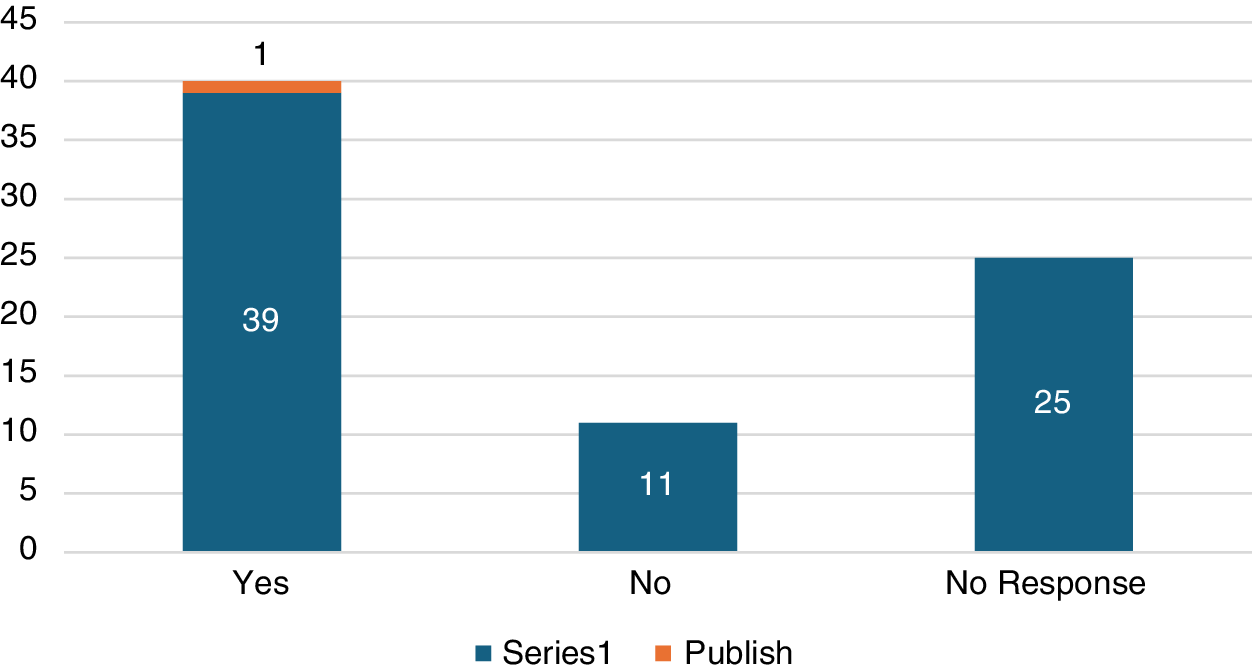
In study 1, we submitted undergraduate political science and human rights essays to 76 predatory journals. Of these, 51 issued a substantive editorial decision and 25 did not respond. Among the journals that provided a decision, 39 issued an acceptance decision, one proceeded directly to publication, and 11 rejected the manuscript. This yielded an acceptance rate of 78.4% conditional on response (figure 1). When it was calculated across all submissions, including nonresponses, the overall acceptance rate was 52.6%.
Undergraduate Paper Acceptances and Rejections
Number of journals that issued acceptance decisions (“Yes”), immediate publication (“Yes/Published”), rejections (“No”), or offered no response (“No Response”) following submission of undergraduate essays to 133 journals identified as predatory.

Acceptance decisions frequently were communicated within days and rarely were accompanied by reviewer comments, revision requests, and evidence of editorial scrutiny. Notably, in one case, the undergraduate essay was published immediately following acceptance, without the provision of proofs, a publishing agreement, or substantive editorial correspondence.
These results indicate that after predatory journals engage with a submission, acceptance—and even publication—of undergraduate-level work that lacks originality or methodological contribution is far more common than rejection.
These results indicate that after predatory journals engage with a submission, acceptance—and even publication—of undergraduate-level work that lacks originality or methodological contribution is far more common than rejection.
Study 2
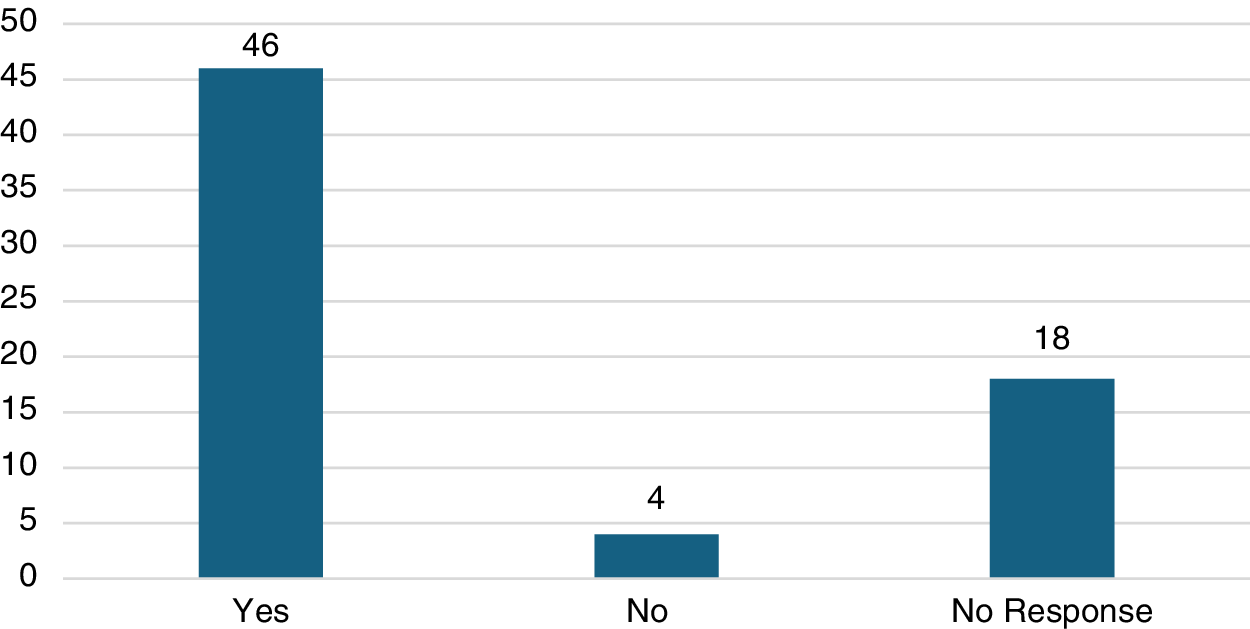
In study 2, we submitted AI-generated engineering case reports to 68 predatory journals. Of these, 46 issued an acceptance decision, four rejected the submission, and 18 did not respond (figure 2). Acceptance decisions again were frequently communicated within a brief timeframe and rarely were accompanied by reviewer comments or requests for revision.
AI-Generated Paper Acceptances and Rejections
Number of journals that were accepted (“Yes”), rejected (“No”), or did not respond (“No Response”) to AI-generated case reports submitted to 133 predatory-listed journals.
Taken together, these results suggest that AI-generated manuscripts—which contain technical inaccuracies, fabricated references, and artificially produced text—are readily accepted by a significant percentage of predatory outlets, thereby reinforcing concerns about the integrity and credibility of these publication venues.
Taken together, these results suggest that AI-generated manuscripts—which contain technical inaccuracies, fabricated references, and artificially produced text—are readily accepted by a significant percentage of predatory outlets, thereby reinforcing concerns about the integrity and credibility of these publication venues.
INTERESTING CASES
One of our undergraduate’s essays entitled, “Systemic Debt Crisis in the Global South: Beyond Dependency and Ineffective Relief,” was published in the Journal of Clinical and Medical Images. The article was accepted on July 7, 2025, and published on July 12, 2025.Footnote 1 We did not receive a publishing contract, article proofs, or any solicitation for an APC. It is interesting that the order of authors we provided was not represented in the citation provided by the journal; the junior author of the essay was eliminated. More thematically—and despite being a political-economy essay unrelated to the journal’s medical scope—the article was accepted and published within days without any evidence of peer review or editorial oversight. The journal, which claims to publish clinical research, listed the paper alongside radiology and case report articles.
Another interesting case concerns the International Journal of Current Science Research (Dr. BGR Publications), which accepted an AI-generated engineering case report titled, “Renewable Energy and Sustainable Engineering: The Masdar City Model.” The submission was submitted on July 17, 2025, and accepted on July 28, 2025—an 11-day turnaround. The manuscript had been generated entirely by ChatGPT and did not contain original data, fieldwork, or data analysis. This journal specifically asked during the submission process whether AI tools were used in generating the content. To test whether the journal checks for AI, we stated explicitly that we did not use any AI. The response was: “Greetings of the day! Your paper passed the plagiarism test. Thank you so much for choosing us.” The content of the reply strongly suggests that despite claiming otherwise, the journal did not test for the use of AI. Other than by the content, the AI usage could easily have been detectable by the false references in the bibliography.
DISCUSSION: PREDATORY JOURNALS AS “GATEWAYS” FOR LOW-QUALITY AND AI-GENERATED CONTENT
Our findings provide empirical evidence that predatory journals are ready to publish undergraduate essays and AI-generated manuscripts. In study 1, undergraduate essays were submitted to 76 predatory journals, of which 51 issued a substantive editorial decision and 25 did not respond. Among responding journals, 39 accepted the submission and one proceeded directly to publication; 11 rejected the manuscript.
The ease with which undergraduate essays were accepted—often without reviewer comments, revisions, or editorial scrutiny—indicates that many predatory journals fail to apply even minimal quality-control standards. Rather than functioning as scholarly gatekeepers, these journals appear to operate as transactional outlets in which publication is largely detached from content quality (Beall Reference Beall2016, Reference Beall2017; Cukier et al. Reference Cukier, Lalu, Bryson, Cobey, Grudniewicz and Moher2020).
The substantial nonresponse rate further underscores the volatility and opacity of predatory publishing operations. This inconsistency in communication, combined with rapid acceptance and minimal feedback, highlights the fundamental differences between predatory journals and legitimate open-access outlets, which emphasize transparency, editorial accountability, and reproducibility (Beall Reference Beall2017; Dadkhah and Bianciardi Reference Dadkhah and Bianciardi2016).
Study 2 demonstrates that predatory journals are similarly unable to identify or reject AI-generated manuscripts. Of the 68 journals contacted, 46 accepted AI-generated submissions, four rejected them, and 18 did not respond. These findings indicate that AI-generated manuscripts that contained fabricated content, technical inconsistencies, and false references are readily accepted by a majority of predatory outlets that engage with submissions. The journals’ inability or unwillingness to detect artificial text production is particularly concerning, especially given that only one journal explicitly indicated potential AI use. This suggests that most predatory journals do not engage in any quality control or use AI-detection mechanisms. As generative AI becomes more accessible and sophisticated, these weaknesses may allow large volumes of synthetic and fabricated research to enter the scholarly record unchecked.
Another interesting result of our study is that the acceptance rate of AI-generated papers was even higher than that for our undergraduate essays. The fact that all of these essays were about the subject matter of the journal might explain this tendency. Nevertheless, it is shocking that essays generated in seconds that contain neither original data nor information result in a publication rate of 90% (when we exclude no responses from journals).
A central implication of our results is that predatory journals serve as porous entry points for low-quality, fabricated, and AI-manufactured research to enter the scholarly record. The inability or unwillingness of the journals to detect artificial text production is particularly notable—even more so considering that we used the most basic version of ChatGPT, which is accessible to everyone without cost. Even when our submissions contained fabricated data, superficial explanations, false references, and discipline-mismatched content, more than 50% of the papers were accepted without revision. These findings align with recent concerns that the combination of generative AI with profit-driven publishing models may amplify misinformation, erode scientific reliability, and distort bibliometric indicators (Bohannon Reference Bohannon2013; Cukier et al. Reference Cukier, Lalu, Bryson, Cobey, Grudniewicz and Moher2020). Whereas reputable journals increasingly employ AI-detection tools and multistage peer-review protocols, predatory outlets appear to lack any quality-control mechanisms—leaving them uniquely vulnerable to synthetic scholarship that imitates stylistic conventions but lacks methodological rigor.
IMPLICATIONS FOR RESEARCH INTEGRITY AND SCHOLARLY ECOSYSTEMS
The acceptance of undergraduate-student and AI-generated manuscripts has broader implications for the integrity of the academic ecosystem. In particular, the risks posed by unchecked AI content in predatory publishing environments concern both the macrosystem of scholarly publishing and individual researchers. For the macrosystem, the uncritical usage of AI systems and their malicious use in research and publications are risky for the credibility of research. It is dangerous because AI-generated articles can generate plausible but false research articles, compound errors, and even fabricate data (Gao et al. Reference Gao, Liu, Huang and Yao2025). If undetected, these practices blur the boundaries between legitimate and fraudulent research. Without editorial checks, false, incorrect, or simply made-up articles can spread widely, undermining academic integrity and potentially disseminating misinformation that impacts clinical, technological, and policy-making spaces (Callaghan and Nicholson Reference Callaghan and Nicholson2020). The unwillingness of these predatory journals to perform the most basic checks for AI-generated content raises concerns about the future scalability of misinformation within digital academic ecosystems.
In addition, these findings highlight the risks for researchers who mistakenly may interpret publication in these outlets as evidence of scholarly achievement. Because some predatory journals inadvertently are indexed in bibliographic databases, fabricated articles may be cited by legitimate researchers, thereby distorting scientific discourse. If such discourse then becomes policy relevant, the academic integrity of entire research fields might suffer. We all know one rotten fruit might be enough to destroy an entire basket of good fruit. Similarly, one “rotten” article might threaten the credibility of the entire academic community. Therefore, the findings of this article are a call for vigilance by research supervisors that graduate students do not publish in predatory journals, funding organizations to not count predatory articles as legitimate research, and individual researchers to not engage with predatory content. After all, serious researchers who are proud of their work and their discoveries do not want their work to be published alongside completely AI-generated articles or those that have the quality of an undergraduate paper. We hope that this will increase the hurdles for researchers—however desperate they may be for publications—to send their honest work to a predatory journal. Scholarly associations such as the American Political Science Association also could widely publish the findings of this and other studies to highlight the risks of publishing in predatory journals.
On the potentially positive side, the current AI revolution prompts scholarly publishers to develop AI policies that document the appropriate and inappropriate use of AI (Chen et al. Reference Chen, Chen, Yang, He, Chi, Zeng and Chen2024; Yoo Reference Yoo2025). In the future, many if not all serious journals likely will have binding AI policies. They will have several tools at their disposal to detect AI-generated content. In addition to expert reviewers, this likely will include automated software to screen articles for textual anomalies and synthetic images. Predatory journals likely will not adopt similar policies. Therefore, in the future, the existence and implementation of an AI policy will be an additional feature for distinguishing between predatory and non-predatory journals.
LIMITATIONS AND FUTURE RESEARCH
Our study has several limitations. First, we focus exclusively on journals flagged as predatory by widely used lists, unsolicited emails, and established databases. Some legitimate but poorly resourced journals may share features with predatory outlets, and our design does not capture the full spectrum of gray-area publishing practices. Second, although our undergraduate submissions varied by year and discipline, they all originated from political science and human rights courses, which may limit generalizability across fields. Third, AI systems are rapidly evolving; manuscripts generated by future models may be more sophisticated than those used in this study thereby further increasing the potential for AI-generated content to be published beyond predatory journals.
CONCLUSION
It is astonishing that an article written by AI in a matter of seconds is accepted and eventually published in a so-called scholarly journal. In our case, we do not have expertise in engineering. Therefore, we could not verify whether the content of the text produced by the basic version of ChatGPT made sense. Our AI-generated essays lacked the basis of any scholarly inquiry such as transparency in the research process and replicability. The publishing and distribution of these articles is simply dangerous for the integrity of research. The publication of undergraduate essays is less ethically questionable but it nevertheless seriously undermines the credibility of any journal. Such papers, which typically include a discussion of a few scholarly works, do not contribute anything to the literature. In fact, such papers are reproduced thousands of times every semester worldwide. They may be a good pedagogical exercise for students in the social sciences to enhance their critical thinking, but they are neither original research nor do they advance our understanding of how the world works.
The “only” conclusion that our study allows for is that predatory journals endanger the credibility of academic research. At the very least, these journals exhibit profound and systemic weaknesses in editorial oversight. Their willingness to accept undergraduate essays and AI-generated manuscripts with no review, inconsistent communication, and no verification of authorship claims illustrates that they function more as a transactional service than as a scholarly enterprise. They fail to uphold even the lowest standards of academic integrity. Serious researchers should avoid these journals at any cost, and any papers published in them should be viewed with suspicion. However, our article not only exposes predatory journals as dangerous; it also alludes to the challenges of generative AI. It displays the “cheapest” use of AI by asking the free version of ChatGPT to write a short case study. Yet, there are more sophisticated ways to fraudulently use AI. For example, AI technology could be used to generate pseudo-scientific original research papers, to help researchers modify experimental data, and to engage in content plagiarism (Chen et al. Reference Chen, Chen, Yang, He, Chi, Zeng and Chen2024). Therefore, the vulnerabilities identified in this study may become increasingly consequential not only for predatory journals but also for serious journals. Addressing these weaknesses through institutional training, bibliometric reform, and clearer global standards is essential for safeguarding research integrity in the digital era.
The “only” conclusion that our study allows for is that predatory journals endanger the credibility of academic research. At the very least, these journals exhibit profound and systemic weaknesses in editorial oversight. Their willingness to accept undergraduate essays and AI-generated manuscripts with no review, inconsistent communication, and no verification of authorship claims illustrates that they function more as a transactional service than as a scholarly enterprise.
SUPPLEMENTARY MATERIAL
To view supplementary material for this article, please visit http://doi.org/10.1017/S1049096526102418.
FUNDING STATEMENT
This research was funded by the Konrad Adenauer Foundation, Canada Office.
CONFLICTS OF INTEREST
The authors declare that there are no ethical issues or conflicts of interest in this research.


 Open access

