Introduction
Avian influenza, also known as bird flu or fowl plague, is an enveloped and pleiomorphic virus. It belongs to family orthomyxoviridae, the influenza virus family. The family orthomyxoviridae is classified into three types of viruses; Type A, Type B and Type C. Avian species are the hosts for Type A influenza virus (Mehrabanpour et al., Reference MEHRABANPOUR, DADRAS, KHODAKARAM-TAFTI, RAHIMIAN and TOFFAN2007; Spackman, 2008) and avian influenza virus is the type A virus (Subbarao et al., Reference SUBBARAO, MURPHY and ANTHONY2006). It is a negative sense RNA virus (Haghighat-Jahromi et al., Reference HAGHIGHAT-JAHROMI, ASASI, NILI and DADRAS2007) and its size range is 80-120 nm (Kang et al., Reference KANG, PANG, HAO and ZHAO2006). There are two major categories of avian influenza virus; highly pathogenic avian influenza (HPAI) virus and low pathogenic avian influenza (LPAI) virus (Mohammad and Mahmoud, Reference MOHAMMAD and MAHMOUD2005; Lee et al., Reference LEE, LEE, SWAYNE, SENNE, LINARES and SUAREZ2007).
Type A virus is further classified into subtypes depending upon the two surface glycoproteins, haemagglutinin (HA) and neuraminidase (NA), that are responsible for the protective immune response (Subbarao et al., Reference SUBBARAO, MURPHY and ANTHONY2006). Until now, 16 types of HA and nine types of NA surface glycoproteins have been isolated, and their different combinations give rise to a vast variety of viral strains, such as H1N1, H5N1 etc. (Osterhaus et al., 2011).
Avian Influenza (AI) is a highly pathogenic disease of poultry throughout the world. An influenza epidemic emerges during each winter's flu season (Andrew and Glass, Reference ANDREW and GLASS2007). Although the H5N1 infections in humans are not spread worldwide, sporadic contaminations do occur in different parts of the world, particularly in central and southern Asia. The primary concern regarding the virus is that animal to human transfer occurs, but evolution of the virus is also a threat for human to human transmission (Epstein et al., Reference EPSTEIN, KONG, MISPLON, LO, TUMPEY, XU and NABLE2005). Subsequently, there is a crucial need for the development of a potent strategy for the prevention of the transmission and the infection due to H5N1.
Vaccination is the common approach towards the solution to this problem. Many types of vaccination strategies have been devised and many vaccines have been developed for the prevention of infection from this strain. In particular, the split and subunit vaccines have reached pre-clinical trial stage (Subbarao and Joseph, Reference SUBBARAO and JOSEPH2007). The evidence suggesting that previous encounters with one type of influenza strain gives immunity against different strains of influenza shows that subunit vaccines give some hope of success. This subtype specific immunity can give protection against the different variants of the same subtype (Liew et al., Reference LIEW, RUSSELL, APPLEYARD, BRAND and BEALE1984). Recently heterosubtypic immunity against the H5N1 strain has been reported in different cases of infection and vaccine studies (Kreijtz et al., Reference KREIJTZ, BODEWES, VAN AMERONGEN, KUIKEN, FOUCHIER, OSTERHAUS and RIMMELZWAAN2007; Takahashi, Reference TAKAHASHI2007).
The virus has a high mutation rate, and hence novel strains appear each year which are more and more pathogenic. Conventional vaccines are not very successful and have proven to be time consuming and laborious. Therefore there is a need to develop a vaccine which is less time consuming, more potent, and less laborious. Additionally it should be cross reactive against different strains of the influenza virus.
DNA vaccines
DNA vaccines are considered the best approach to cope with this highly pathogenic virus because they can induce both humoral and cellular responses and can have the ability to provoke immune responses against a wider range of strains (Rao et al., Reference RAO, STYLES, KONG, ANDREWS and GORRES J.P.2009).
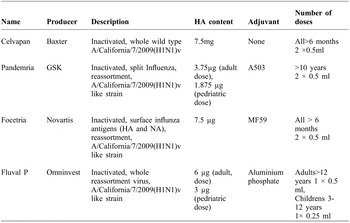
DNA vaccines have proven their efficiency against a number of pathogenic targets including influenza, Chikungunya (CHIKV) disease and infectious bursal disease (IBD). DNA vaccines provide a promising platform for the immunisation against many viral diseases, including Severe Acute Respiratory Syndrome (SARS), influenza and Simian immunodeficiency virus (SIV) (Yang et al., Reference YANG, KONG, HUANG, ROBERTS, MURPHY, SUBBARAO and NABEL2004). The immune responses generated by DNA vaccines are highly specific and sustained (Shah et al., Reference SHAH, YAN, XU, SONG and LI2010). DNA vaccines have been successfully used against various infectious agents in a range of species including cattle (bovine rhinotracheitis/bovine diarrhea virus), pigs (classical swine fever virus), and horses (West Nile virus and rabies). DNA vaccines for the influenza virus have been developed against the low pathogenic strain H5N2 in chickens, and there is one report of a monovalent DNA vaccine against the highly pathogenic strain H5N1, but the vaccine is unable to generate immune responses against other strains of the virus (Gares et al., Reference GARES, FISCHER, CONGLY, LACOSTE, ADDISON, TYRRELL and GUTFREUND2006). Research has shown the high potential of DNA vaccines to induce protective immunity against H5N1, particularly when combined with an appropriate adjuvant (Luckay et al., Reference LUCKAY, SIDHU, KJEKEN, MEGATI, CHONG, ROOPCHAND, GARCIA-HAND, ABDULLAH, BRAUN, MONTEFIORI, ROSATI, FELBER, PAVLAKIS, MATHIESEN, ISRAEL, ELDRIDGE and EGAN2007). Comprehensive review articles are available on the potential of DNA vaccines against avian influenza and the obstacles in developing a vaccine which is effective against multiple strains of influenza (Gregory, Reference GREGORY2006; Subbarao and Joseph, Reference SUBBARAO and JOSEPH2007). A list of vaccines currently available in European Union against avian influenza type A is given in Table 1.
This review will focus on the various approaches being used for the development of DNA vaccines against the highly pathogenic H5N1 strain and some of its future prospects.
DNA vaccines available in the European Union against Avian Influenza type A.

The ‘prime boost’ strategy
Prime boost vaccination strategies, in which the DNA vaccine is primed with a viral vector, has been shown to highly augment the immunogenicity of the vaccine (Hsieh et al., Reference HSIEH, WU and LIN2007). DNA primed/viral vector boost vaccination is a more potent strategy than using either of them alone because naïve B cells and memory T Cells are generated. This is especially true in the case of the influenza virus (Belz et al., Reference BELZ, BEDOUI, KUPRESANIN, CARBONE and HEATH2007).
Combined immunisation of chickens with haemaglutinin DNA vaccine followed by conventional attenuated vaccine (weakened strain of salmonella enteric serovar S. typhimurium) results in stimulation of cellular, humoral, mucosal and complete immune responses. The chickens were protected against H5N1 and no symptoms or virus shedding was observed (Tang et al., Reference TANG, PAN, CHENG, JIAO and ZHANG2007).
DNA vaccination by oral route enhances the titre of mucosal IgA which is responsible for innate immunity. Attenuated vaccines help to provide full protection in addition to IgA antibodies that are not fully defensive alone (Ullah et al., Reference ULLAH, RIAZ and SHAH2012). It has been demonstrated that the prime boost vaccination strategy is responsible for providing effective protection against HPA1, H5N1 (Pan et al., Reference PAN, ZHANG, GENG, FANG, YOU, ZHANG, JIAO and LIU2010).
A virulent disease outbreak caused by H5N1 viral strain may spread easily due to the lack of immunity against avian influenza viruses in humans (WHO, Reference WHO2009). In 1968, during the influenza pandemic in Hong Kong, it was observed that the virus responsible for the pandemic H3N2 was novel in terms of HA but was similar with respect to NA to the H2N2 strain responsible for the 1957 pandemic of Asian influenza (Charlotte et al., Reference CHARLOTTE, EMILIA and PUNAM2010). This evidence supported the possibility of having common NA subtypes for H1N1 and H5N1 strains. It is possible that immunity for NA of H2N2 was liable for moderating the pathogenicity of H3N2 in humans. For humans it was argued that immunity developed by human huN1 is inappropriately defensive for the H5N1 strain (Gioia et al., Reference GIOIA, CASTILLETTI, TEMPESTILLI, PIACENTINI, BORDI, CHIAPPINI, AGRATI, SQUARCIONE, IPPOLITO, PURO, CAPOBIANCHI and POCCIA2008). In a mouse model, it was reported that the immunity induced by NA of the H1N1 human influenza virus provided a mild protection against lethal doses of the H5N1 viral strain. It was suggested that the immunity developed by the H1N1 infection of NA protein containing trivalent vaccines can protect humans against H5N1 viruses to some extent. Most of the inactivated human influenza vaccines stimulate humoral responses and this response for huN1 has proven to be partially defensive against H5N1 influenza. Subsequently the useful benefit of the cross protective ability of NA may require that the antigenic content of both surface glycoproteins, HA and NA, be consistent in certified vaccines (Sandbulte et al., Reference SANDBULTE, JIMENEZ, BOON, SMITH, TREANOR and WEBBY2007).
The most important component in a prophylactic strategy is a cross protective vaccine for antigenic variants of the H5N1 virus. So far domestic and wild birds have been identified as the carriers of the H5N1 virus, which is different from human influenza viruses H1, H2 or H3 (Chris and Maï, Reference CHRIS and MAÏ2006). According to the multiple antigen peptide (MAP) system, M2e can provide protection against influenza viruses, but its effectiveness in providing protection against the H5N1 virus is unclear (Chen et al., Reference CHEN, SMITH, LI, WANG, FAN, RAYNER, VIJAYKRISHNA, ZHANG, ZHANG, GUO, CHEUNG, XU, DUAN, HUANG, QIN, LEUNG, WU, LU, CHEN, XIA, NAIPOSPOS, YUEN, HASSAN, BAHRI, NGUYEN, WEBSTER, PEIRIS and GUAN2006). It must be remembered that M2e-MAP in a tetra branched form was designed comprising of four copies of sequence overlapping M2e of VN/119 and a HPAI H5N1 strain. Although the neutralisation of the virus in vitro cannot be done by M2e specific IgG antibodies, the antibodies mediated the antiviral effect of M2e based vaccines to M2e antigen. Therefore M2e specific antibody responses are helpful in preventing H5N1 viral infection (Wang et al., Reference WANG, SONG, LEVIN, DENNIS, ZHANG, YOSHIDA, KORIAZOVA, MADURA, SHAPIRO, MATSUMOTO, YOSHIDA, MIKAYAMA, KUBO, SARAWAR, CHEROUTRE and KATO2008).
In contrast to M2e-peptide based vaccines, M2e-MAP is more effective in producing stronger immunity because of its T-helper epitope (Tam, 1988). M2e-MAP vaccine with Freund's and Alum adjuvant is cross protective for not only the homologous strain VN/1194 in clad 1, but also for a divergent strain SZ/406H in clad 2.3.4 (Chutinimitkul et al., Reference CHUTINIMITKUL, SONGSERM, AMONSIN, PAYUNGPORN, SUWANNAKARN, DAMRONGWATANAPOKIN, CHAISINGH, NUANSRICHAY, CHIEOCHANSIN, THEAMBOONLERS and POOVORAWAN2007). The effects of M2e-MAP vaccination in mice include the delay in the onset of illness and prolonged survival. If we talk about safety then the synthetic peptide-based M2e-MAP vaccine is more effective than DNA adenoviral vector and recombinant protein-based M2 vaccines. Despite its high price, M2e-MAP vaccines are better because they can be quickly designed, synthesised and are convenient for storage and transportation.
In the final analysis it can be said that if the MAP system is modified by incorporating suitable adjuvant, it can be made fully cross-protective against the lethal H5N1 virus. In light of the above mentioned facts, an M2e-based vaccine can be developed for providing cross-protection against divergent HPA1 H5N1 viruses. Such a vaccine, having a conserved target antigen of H5N1 viruses along with current H5N1 influenza vaccines, may enhance protection and the future human pandemic of H5N1 influenza may be prevented through their use (Zhao et al., Reference ZHAO, LIN, DU, GUAN, SUN, SUI, KOU, CHAN, GUO, JIANG, ZHENG and ZHOU2010).
Development of multivalent DNA vaccine against H5N1
A more simplified and relatively effective approach towards designing a DNA vaccine against the avian influenza virus was used by Rao et al. (Reference RAO, KONG, WEI, VAN HOEVEN, GORRES, NASON, ANDERSEN, TERRENCE and NABEL2010). Several vaccines were constructed based on cross neutralisation studies and phylogenetic analysis of diverse strains of H5N1 avian influenza. The vaccine consisted of DNA for different HA proteins from different HPA1 and H5N1 strains. Originally two sets of vaccines were designed and the different HA proteins were organised into ten different combinations. The vaccines were against homologous and heterologous HPA1 H5N1. The different strains used for the formulation of the vaccine were A/Thailand/1, A/Vietnam/1203/2004, A/HongKong/156/1997, A/Hong Kong/483/1997, A/chicken/Korea/ES/2003, A/Indonesia/05/2005, A/turkey/Turkey/1/2005, A/Egypt/2782-NAMRU3/2006, A/chicken/Nigeria/641/2006, A/Iraq/207-NAMRU3/2006 and A/Anhui/1/2005. The vaccines were encoded into different plasmids, pCMV/R and pCMV/r кβ, and were injected intramuscularly to mice. The mice showed a strong humoral immune response to the vaccine and conferred >80% neutralisation against six out of twelve H5 HA pseudo viruses. But the cross reactivity to the standard isolate (A/Vietnam/1203/2004) was very variable when the results of both sets were compared. However, the mice cleared this highly pathogenic strain after 68 weeks of immunisation with both sets of vaccines. The potency of the vaccine in different administration strategies was compared. A special needle-free ‘Agro Jet’ device was used for the delivery of the vaccine to mice intramuscularly. The mice showed strong T and B cell responses when such a delivery system was used. In contrast, when needles were used for the delivery, the mice showed responses which were low compared to the Agro Jet mediated delivery. The results almost equalled those from chickens immunised with the same vaccines (Nayak et al., Reference NAYAK, ROUT, KUMAR, KHALIL, FOUDA, AHMED, EARHART, PEREZ, COLLINS and SAMAL2009). These experiments proved that a DNA vaccine of this type, which is based on phylogenetic analysis and cross neutralisation studies, will be helpful in designing a potent DNA vaccine against influenza. As antigenic drift and shift frequently occurs in the influenza genome, such a strategy will be more fruitful in the development of a potent vaccine.
Chimeric viruses are another option for the production of DNA vaccines against influenza. In one study, a novel system for the vaccination against Newcastle disease virus (NDV) was established, which is called LaSota. This LaSota system was exploited for the generation of a bivalent DNA vaccine i.e. active against both Newcastle disease and influenza viruses (Nakaya et al., Reference NAKAYA, CROS, PARK, NAKAYA, ZHENG, SAGRERA, VILLAR, GARCÍA-SASTRE and PALESE2001). In other experiments, two NDV systems were developed, both of which contained the HA gene from the HPAI. The rNDV-HA contained the ORF of HA gene which was expressed without any modification. The other, rNDV-HAF contained the ORF of HA gene which was modified by the addition of the ectodomain of HA, in which the transmembrane and cytoplasmic domain of the HA gene was replaced with NDV-F. Both the preparations were designed in such a way that the virulence of the rNDV was not affected. The HA gene was actually the envelope of HA and HAF. When these modified viruses were introduced into chickens, a strong humoral response was generated, and the incorporation of the HA into HAF was much enhanced. The antibody titre was increased and the chickens were totally protected from the infection (Srinivas et al., Reference SRINIVAS, KONG, WEI, HOEVEN, GORRES, NASON, ANDERSEN, TUMPEY and NABEL2010). Such a bivalent system seems to be very interesting and may provide a beneficial way for the immunisation against two different viruses. Such chimereic systems are very safe and efficient but their efficacy in a larger group is still a concern.
Mutation based vaccines
As previously described, the continuous evolution of the influenza virus through the mechanisms of antigenic drift and antigenic shifts, makes the virus tolerant to immune response. So the vaccine for influenza virus needs to be updated every year depending upon the type of strain in the pandemic (Nicholson et al., Reference NICHOLSON, WOOD and ZAMBON2003). The globular region of HA is responsible for the antigenicity of the virus and any point mutation in this region makes the virus escape from the immunity induced by vaccine (Skehel and Wiley, Reference SKEHEL and WILEY2000). It has been shown that consensus DNA vaccine (pCHA5) against influenza clade 2.1 and clade 2.3 can elicit moderate immune responses (Chen, 2008). However, when the vaccine was mutated by incorporation of specific surface amino acid residues, which are characteristic of clade 2.3, the immunogenic potential of the vaccine was increased. When the vaccine was modified by incorporating P157S, neutralising activity against clade 2.3 was increased. Likewise, the 157S mutated viruses were more easily targeted by neutralising antibodies. In the same manner when the pCHA5 consensus DNA developed by Chen (Reference CHEN2008) was modified with the recent H5N1 strain, the second generation vaccine elicited a more rapid immune response against all the strains of H5N1 (Chen et al., Reference CHEN, LIAOA, HUANG, JAN, HUANG, REN, WU, CHENG, DAVID and WONG2011). Thus, this second generation vaccine has the potential to produce cross protection against more divergent H5N1 strains of the influenza virus. If a proper delivery method for the vaccine delivery is optimized, such a vaccine can be used for cross protection against multiple strains of the H5N1 influenza virus.
Novel targets for vaccine development
The conserved regions of the influenza A virus have been reported to be immunogenic. These regions in combination with the HA gene can be used for the preparation of DNA vaccines (Steel et al., Reference STEEL, ANICE, LOWEN, TAIA, WANG., YONDOLA, GAO, HAYE, GARCÍA-SASTRE and PALESE2010). In such an attempt, the nucleoprotein gene (NP) and the matrix proteins (MP) were used both individually as well as in combination with the HA genes for inducing immune responses in ferrets. The plasmids were made using human preferred codons in CMV/R by geneArt and for expression analysis 293T transfected cells were used. The plasmids encoded HA, NP and M2 from A/Thailand/1(KAN-1)/2004 strain (Kong et al., Reference KONG, HOOD, YANG, WEI, XU, GARCÍA-SASTRE, TERRENCE and GARY2006). The different combinations of the genes to be trialled were NP, M2, HA alone, and in combination M2+NP and M2+NP+HA. The cloning vector used for the experiment was the GV11 adenoviral vector system. The adenovirus vector used were replication defective (Catanzaro et al., Reference CATANZARO, ROEDERER, KOUP, BAILER, ENAMA, NASON, MARTIN, RUCKER, ANDREWS, GOMEZ, MASCOLA, NABEL and GRAHAM2007). The plasmids were first expressed in the expression vector 293T and A549 cells for testing their immunogenicity. BALB/c mice were immunised with the vaccine preparation and then subjected to high doses of highly pathogenic strains of type A influenza (HPA1, H5N1), intranasally. Micronutralisation assay studies showed that the HA group had high activities compared to NP alone and NP+H+M2. Booster doses of the vaccines and challenging the mice with robust HPA1 strains revealed that high antibody titre was produced in the HA group. However the other groups also showed neutralisation activity, but the efficacy of those vaccines was weak as compared to the HA group (Rao et al., Reference RAO, KONG, WEI, VAN HOEVEN, GORRES, NASON, ANDERSEN, TERRENCE and NABEL2010). Such a study has revealed that the conserved regions of the H5N1 can be a strong candidate for DNA vaccine development and it can also give cross protection against different strains of H5N1 as well as against the subtypes of the H5N1.
Discussion
DNA vaccines offer a generic approach to influenza virus immunisation applicable to multiple animal species. In addition, the ability to substitute plasmids encoding for different strains enables rapid adaptation of the vaccine to newly evolving field isolates.
Major outbreaks of highly pathogenic avian influenza and the imminent threat of a pandemic highlight the need for effective vaccines as a means for control and prevention. The vast majority of current vaccines are inactivated whole-virus types produced in eggs. This production method is limited by the availability of embryonated eggs and by its lack of versatility in quickly altering antigenic composition to respond effectively to a rapidly changing field virus. Thus, newer vaccines with more efficient production technologies are needed for a more timely response to severe outbreaks. Gene-based vaccines have emerged as viable candidates to meet these challenges. Not only can they be produced at a much faster rate and on a larger scale by using safe cell-based production methods, but they can also exhibit the potential for enhanced efficacy against a broader range of influenza strains by stimulating both cellular and humoral responses. New gene-based technologies include replication defective viral and bacterial vectors and DNA vaccines. Each demonstrates advantages over conventional vaccines, but they continue to face specific challenges, such as variable immunogenicity and the cost of production, which may limit their widespread use.
As avian influenza is one of the major causes of morbidity and mortality in humans, it is important to understand the pathology, transmission routes and causes, clinical features and pharmacologic treatments for this lethal disease, so that its consequences can be avoided. A multivalent DNA vaccine that elicits protection in both mice and chickens at low doses now shows promise, and it represents an attractive candidate for licensing and use in poultry. Gene-based vaccine technologies represent an advance in animal influenza vaccine development that provides a viable alternative to existing egg-based and inactivated viral vaccines.
Future aspects
For further benefits from DNA vaccines, immunomodulators such as cytokines and other co-stimulatory molecules can be utilised for the development of much safer, effective and low cost DNA Vaccines. Other factors such as plasmid degradation in vivo, and inefficient ways of tranfection in host cells are note worthy and need serious attention. Research needs to be accelerated towards the improvement of these aspects in future.
Acknowledgement
We acknowledge the support of Shifa Tahir National Centre for Bioinformatics, Faculty of Biological Sciences, Quaid-i-Azam University, Islamabad, Pakistan and Sobia Rauf Bioinformatics and Biotechnology, DES, International Islamic University, Islamabad, Pakistan for their help in collecting the information used in this article.