INTRODUCTION
According to numerous studies conducted worldwide, the use of Plant Protection Products (PPPs) is often associated with water pollution (Griffini et al. Reference Griffini, Bao, Barbieri, Burrini and Pantani1997; Ueji & Inao Reference Ueji and Inao2001; Comoretto et al. Reference Comoretto, Arfib, Talva, Chauvelon, Pichaud, Chiron and Höhener2008; Hildebrandt et al. Reference Hildebrandt, Guillamón, Lacorte, Tauler and Barceló2008; Paris et al. Reference Paris, Bisceglie, Maschio, Pace, Parisi Presicce and Ursino2014). Paddy fields and other specific agricultural settings are potentially more vulnerable to water pollution (Bouman et al. Reference Bouman, Humphreys, Tuong and Barker2007) because PPPs are often applied directly on the water used to flood rice paddies. The risk of water contamination by PPPs is generally higher for surface water than for groundwater due to the interconnections between flooding waters and the network of ditches, channels, and rivers that serve rice areas (Capri Reference Capri, Capri and Karzoupas2008; Ferrero & Tinarelli Reference Ferrero, Tinarelli, Capri and Karzoupas2008). In European rice ecosystems, the primary PPPs are herbicides, as weeds are the most troublesome pests. Without weed control, estimates of potential worldwide yield losses are as high as 35% (Oerke & Dehne Reference Oerke and Dehne2004).
In addition, the common practice of alternating periods of flooding and drying in rice paddies may affect herbicide dissipation. According to Roger (Reference Roger1990), pesticides generally persist less in flooded soils than in dry soils, while others have reported no differences in degradation dynamics and increased persistence in flooded conditions (Castro & Yoshida Reference Castro and Yoshida1971; Accinelli et al. Reference Accinelli, Screpanti and Vicari2005). During submersion, soil pores become fully saturated, which causes chemical, biological and physical changes. The change in soil redox potential (Eh) during flooding is correlated with a decrease in aggregate stability and can interfere with chemical substance solubility (De Campos et al. Reference De Campos, Mamedov and Huang2009). Soil structure is broken gradually, and gas exchange between soil and atmosphere is reduced (Ponnamperuma Reference Ponnamperuma and Kozlowsky1984; Le Mer & Roger Reference Le Mer and Roger2001; Ferrero & Tinarelli Reference Ferrero, Tinarelli, Capri and Karzoupas2008). The presence of water during nearly the entire rice-growing season makes PPPs, in particular herbicides, an important water contamination risk.
Italy is the top European rice producer, and the Po Valley rice district accounts for more than 219 000 ha distributed throughout the northwest of the country, mostly between the Piemonte and Lombardia regions (ENR 2014). Recent monitoring campaigns by national environmental agencies reported diffuse pesticide pollution in surface and ground waters, of which herbicides and their metabolites were the most detected substances (Sesia Reference Sesia2013). Moreover, among the areas contaminated by these substances was the rice district.
In recent years, new herbicides characterized by reduced application rates and smaller environmental impacts have been brought to the market. Imidazolinones are one such example. These herbicides control weeds by inhibiting the enzyme acetolactate synthase, which is critical to the biosynthesis of branched-chain amino acids in plants. Imidazolinones are applied at low rates, have favourable environmental profiles and carry low mammalian toxicity (Tan et al. Reference Tan, Evans, Dahmer, Singh and Shaner2005), and over the past few years, imidazolinone-tolerant cultivars have been developed for many crops. From its first introduction in maize in 1992 to the present, imidazolinone-tolerant varieties have been introduced in various crops such as sunflower, wheat, oilseed rape and rice. All these varieties have been developed by using conventional breeding techniques and commercialized as Clearfield® (often abbreviated as ‘CL’) varieties (Tan et al. Reference Tan, Evans, Dahmer, Singh and Shaner2005).
Major imidazolinone herbicides applied with CL-varieties worldwide are imazethapyr, imazapic, imazaquin and imazamox (2-[(RS)-4-isopropyl-4-methyl-5-oxo-2-imidazolin-2-yl]-5-methoxymethylnicotinic acid). In Italy, as in many other countries, imazamox is the imidazolinone herbicide applied in combination with CL-varieties. These varieties are applied to control weedy rice (also known as red rice) in particular, which is the most problematic weed in rice cultivation worldwide (Diarra et al. Reference Diarra, Smith and Talbert1985; Ferrero Reference Ferrero and Labrada2003). Label directions indicate that to ensure good herbicide efficacy, imazamox must be applied in two treatments. In addition, to avoid the development of resistant weedy rice populations, stewardship guidelines developed in Italy and Brazil allow CL variety cultivation for no more than one or two consecutive seasons. Thereafter, a rotation with a non-CL variety is mandatory. Control of weedy rice with conventional methods is often unsuccessful due to its genetic similarity to cultivated rice. To control weedy rice, many rice growers have adopted CL varieties. In fact in 2014, just 8 years after its first introduction, about 0·35 of the total Italian rice area (about 76 000 ha) was cultivated with CL varieties (ENR 2014). For these reasons the environmental fate of imazamox deserves investigation, especially given that its use is likely to keep growing into the future.
The majority of imidazolinone dissipation studies have been conducted in non-flooded conditions; little is known of their fate under flooded conditions. Imazamox degrades aerobically in soil to a non-herbicidal metabolite; it also degrades by aqueous photolysis, while photodegradation is generally slow on soil (EPA 1997; BCPC 2012). As for other imidazolinone herbicides (Basham et al. Reference Basham, Lavy, Oliver and Scott1987; Cantwell et al. Reference Cantwell, Liebl and Slife1989), the primary degradation pathway of imazamox in soil is microbial (ENVIRON 2012). Soil microorganism activity is largely affected by soil pH, which slows as soil pH values decrease (Halcomb & Fare Reference Halcomb and Fare2012). The increased persistence of imidazolinone in more acidic soils has been attributed to increased adsorption and decreased availability for microbial degradation (Loux & Reese Reference Loux and Reese1992).
Another important factor is soil moisture level. Aichele & Penner (Reference Aichele and Penner2005) found no significant adsorption/desorption differences in imidazolinone herbicides at differing soil moisture levels, even though the effect of soil moisture level on pesticide dissipation was considered well established (Baer & Calvet Reference Baer and Calvet1999). Dry conditions after pesticide treatment or low soil moisture content are generally associated with slower dissipation, and consequently increased pesticide persistence due mainly to reduced transformation of the compound and to limited carryover. Specifically, imazaquin has been shown to dissipate more slowly in dry (Loux & Reese Reference Loux and Reese1992) than in wet conditions (Basham et al. Reference Basham, Lavy, Oliver and Scott1987).
Either effect can occur from pH. Like other members of its family, imazamox is a weak acid (logarithmic acid dissociation constant (pKa) = 3·3), so at soil pH > 6 this herbicide presents as a negative ion and is only weakly sorbed. Bresnahan et al. (Reference Bresnahan, Dexter, Koskinen and Lueschen2002) found that soil pH did not affect imazamox soil persistence, but did influence its bioavailability. At lower pH values, imazamox is more adsorbed to the soil matrix, thus less available in the soil solution where photolysis may occur. Imazamox dissipation seemed faster at pH 7 than at pH 5, probably resulting from this set of circumstances at the lower pH (Aichele & Penner Reference Aichele and Penner2005).
Imidazolinone soil persistence depends not only on soil characteristics that affect bioavailability, but also on environmental conditions (Cantwell et al. Reference Cantwell, Liebl and Slife1989). Adsorption also affects the soil persistence of imidazolinone. Herbicide adsorption is generally slower in wet soils, so those herbicides that persist for longer periods in the soil solution dissipate differently, such as by microbial degradation, photolysis and leaching (Cobucci et al. Reference Cobucci, Prates, Falcão and Rezende1998).
The current study examined the dissipation pattern of imazamox in the soil–water environments of the two most common rice management systems adopted in Europe: conventional water seeding and dry-seeding. Changes in imazamox concentrations were studied over time in topsoil, field water, irrigation water, outlet and ground waters. The results of the current study could point out differences in the fate of this extensively used herbicide in paddy environments under the two most widely adopted rice management systems in Europe.
MATERIALS AND METHODS
Experimental site
The study was performed over 2 years (2010 and 2011) at Vercelli (45°18′N, 8°26′E, 130 m a.s.l.), in the Piemonte region, Northwest Italy, which is the most important rice growing area of Europe. The trial was conducted on two paddy fields of 1850 m2 each, managed since 2002 under the two most commonly used cultivation systems in Italy. The first is the conventional system (CON) that is ploughed in autumn to incorporate rice residues and broadcast seeded in spring on flooded fields. Field flooding is extended from seeding to about 30 days before harvest, with one or two interruptions lasting several days each for top-dressing of fertilizers and herbicide application. This system can be regarded as the reference system in most of the European rice areas. The second system (DRY), used in about 0·30 of the total Italian rice area, is characterized by spring ploughing for straw incorporation and drill seeding on a dry field. In this system, fields are generally flooded starting from the 2–3 leaf stage of rice (growth stage (GS)12–13 on the BBCH scale, Lancashire et al. Reference Lancashire, Bleiholder, Van Den Boom, Langelüddecke, Stauss, Weber and Witzenberger1991). This cultivation method directly affects weed management and may influence the dissipation pattern of the chemicals that persist in the soil.
The soil of the paddies is silty-loam, sub-acidic (pH 6·5) with low organic matter (OM) content (11 g OM/kg). On the soil regional map, the geographical area of the experimental site is characterized by short-evolved, typically hydromorphic, and poorly drained soils. Each field was watered independently throughout the growing season from a common water ditch running along the upper part of the fields. The inlet and outlet floodgates for each field were set opposite one another and built of prefabricated, reinforced concrete housings.
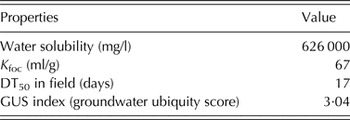
The CL-rice variety (Sirio from SA.PI.SE Seed Company, Vercelli, Italy) was seeded in both fields at the same seed rate (150 kg/ha). In the DRY system, rice was drill-seeded during the first week of May, while in CON the broadcast seeding was performed 1 week later on a flooded field. Crop emergence was uniform in both fields. Some cultural operations – fertilizer applications in particular – differed somewhat between the fields; these variations related mainly to expected nutrient availability differences during the growing season. Identical weed control was performed during pre-seeding by applying oxadiazon (342 g active ingredient (a.i.)/ha) against Heteranthera spp. and imazamox to control weedy rice and other weeds. In treatment DRY, pendimethalin [1137·5 g a.i./ha] was also applied pre-emergence to better control weeds during the early non-flooded period. Imazamox, in the form of formulated product Beyond® (BASF Italia s.r.l.), was applied twice at a rate of 35 g a.i./ha on 24 June and 13 July in 2010 and on 20 June and 14 July in 2011 to DRY and CON, respectively. The first treatment was carried out with crops at the 3–4 leaf stage (BBCH GS13–14), while at the second treatment the crop was at the tillering stage (BBCH GS 23–24). Imazamox needs to be applied when there is no flooding water on the paddy field. The first treatment was carried out on fields that were not yet flooded (DRY) or just drained (CON). The second treatment was carried out, in both systems, on just drained fields. After each imazamox application, the fields were flooded within few days. The treatment was performed with a conventional tractor rear-mounted boom sprayer adjusted to deliver 300 l/ha of the herbicide mixture. The physical and chemical properties of imazamox are presented in Table 1. The water level was maintained at 5–7 cm until panicle initiation and then increased to 10–12 cm until the beginning of rice ripening. Water temperature ranged from 12 to 15 °C in May–June and from 15 to 21 °C in July–August. The paddy field water pH was measured at the time of water sampling and remained stable during the season (8·1 ± 0·21).
Physico-chemical properties of imazamox

K foc, organic-carbon sorption constant (which measures the affinity for pesticides to sorb to organic carbon); DT50, time required for the pesticide concentration under defined conditions to decline to 50% of the amount at application.
From the Pesticide Properties Database, AERU, University of Hertfordshire, UK (Lewis et al. Reference Lewis, Tzilivakis, Warner and Green2016)
Ground cover and weed density were assessed at the time of both treatments (first and second) by means of metal frames (50 × 50 cm) applied at random within the plots and counting the number of individuals of weed species observed. In 2010, at the first treatment weed density was 18·7 plant/m2 in the CON treatment (ground cover: 1%) and 10·4 plants/m2 in the DRY treatment (ground cover: 8%), while at the second treatment weed density ranged between 12·5 and 4·2 plant/m2 in CON and DRY treatments, respectively (in both system ground cover <1%). In 2011, at the first treatment weed density ranged from 20·6 plants/m2 in the CON treatment (cover 1.2%) and 21·3 plants/m2 in the DRY treatment (cover <1%), while at the time of the second application weed density was 4·5 plants m2 in the CON treatment (ground cover: 1·5%) and 6·1 plants/m2 in the DRY treatment (ground cover: 1%). Weed infestation was mostly represented by Echinochloa crus-galli Beauvois, Cyperus difformis L., Heteranthera reniformis Ruiz & Pavon, Rotala ramosior L. and Lindernia dubia L.
Imazamox dissipation in paddy fields
Soil sampling
Soil samples were collected randomly from different positions in each field using a stainless steel shovel before the treatment and at 0 (t 0), 2, 4, 6, 8, 11 and 18 days after the first treatment, then at 0 (t 0), 2, 4, 6, 15 and 50 days after the second treatment (corresponding to 19, 21, 23, 25, 34, 49 and 69 days after the first treatment) in 2010. In 2011, samples were collected before the treatment and at 0 (t 0), 2, 4, 10, 15 and 23 days after the first treatment, then at 0 (t 0), 2, 4, 6, 11, 30 and 50 days after the second treatment (or 24, 26, 28, 30, 35, 54 and 74 days after the first treatment). For each sampling date, three samples were collected (each derived from five sub-samples pooled together) of 0·5 kg each taken from the top 2 cm of soil. Soil samples were put into polyethylene terephthalate (PTE) flasks (Kartell, Noviglio, Italia) and stored at −25 °C until extraction and analysis.
Extraction from soil samples
Blotting paper was used to draw excess water away from the saturated samples during the extraction. A small amount of the original sample (about 25 g) was taken to determine the moisture level of the soil at each sampling date; samples were weighed, then placed into a stove at 105° C for 24 h.
Extraction was performed on 50 g of sediment placed in 250-ml screw-top PTE bottles with 100 ml of a solution of calcium chloride (CaCl2) 0·02 M. The suspension was shaken for 30 min at room temperature with a reciprocating mechanical shaker (IKA, Labortechnik HS 501 D, Janke and Kunkel, Staufen, Germany). The liquid phase was separated by centrifugation at 3000 rpm for 10 min (ALC 4226 A Centrifuge, ALC International S.R.L., Milan, Italy). Thereafter, extraction was performed twice, first with 75 ml and second with 50 ml of extraction solution, each shaken for 15 min. The reunited supernatants (225 ml) were filtered on paper (Perfecte 2, Cartiera di Cordenons, Italy) in a 1-litre vacuum flask and then combined with 2 ml of phosphoric acid (H3PO4) (85%). The combined solution was then passed through single disposable cartridges (SDB-1) according to the same procedure used with the water samples. The adsorbed herbicide was then eluted with 6 ml of methanol in round-bottomed flasks with 20 ml volume. The residue was taken up with 5 ml of methanol, concentrated and dried in a rotary evaporator (Heidolph WB 2000, Heidolph Instruments GmbH & Co., Schwabach, Germany), then re-dissolved in 5 ml of mobile phase (water at pH = 2/acetonitrile (CH3CN) (50/50 v/v)).
Water sampling
Paddy water
Paddy waters were sampled during 2010 at 2, 4, 6, 8 and 11 days after the first treatment, and then at 4, 6, 10, 15 and 31 days after the second treatment (corresponding to 23, 25, 29, 34 and 50 days after first treatment). In 2011, samples were collected at 4, 8, 10 and 15 days after the first treatment, then at 4, 6, 8, 11, 18 and 29 days after the second treatment (28, 30, 32, 35, 42 and 53 days after the first treatment). Three 0·5-litre paddy water samples were gathered into PTE bottles from three random positions in each field (lower end, middle and upper field). The samples were kept separate and stored immediately at −25 °C until extraction and analysis.
Inlet and outlet water
To assess the within-field transport of imazamox by irrigation waters, a single sample of inlet water (0·5 litres) was collected at 2, 4, 6, 8, 11, 14, 16, 23, 25 and 30, and at 1, 2, 4, 6, 8, 10, 15, 18, 29 and 41 days after the first treatment in 2010 and 2011, respectively. Similarly, one sample of outlet water (0·5 litres) was collected at 2, 4, 6, 8, 11, 30, 35, 37 and 50 days after the first treatment in 2010, and at 4, 8, 10, 15, 28, 30, 32, 35, 42 and 53 days after the first treatment in 2011. Samples were stored in the same way as above.
Ground water
In-field ground water samples were collected using three stainless steel piezometers driven 1·5 m deep at three different field positions. Each piezometer was 2 m long with an internal diameter of 0·051 m and a thickness of 1·5 mm. The deepest 0·5 m of the piezometer was slotted to allow water entrance. Samples of water were taken by means of a hand-operated vacuum pump. One 0·25-litre sample was taken from each phreatimeter at 0, 11, 23, 28, 44 and 54 days after first treatment in 2010 and at 0, 10, 25, 32, 42 and 53 days after first treatment in 2011. Samples were stored in the same way as above.
Extraction from water samples
Imazamox was removed from the water by solid phase extraction. Each water sample was entirely aspirated through a single disposable cartridge (BakerBond SDB-1, 6 ml, 0·2 g sorbent material) that had been preconditioned with 6 ml of methanol (J. T. Baker, The Netherlands) followed with a 5 ml wash of distilled water. The adsorbed herbicide was eluted with 6 ml of methanol until a final volume of 20 ml was reached. The solution was then concentrated and dried in a rotary evaporator. The residue was taken up with 1 ml of mobile phase (water at pH = 2/CH3CN (67/33 v/v)).
Analysis
The water or sediment extracts were analysed by high-performance liquid chromatography (HPLC) using an Agilent 1200 Series with diode detector (DAD) G1315D (Agilent Technologies, Santa Clara, CA, USA) equipped with a C18 column Gemini-NX® (Phenomenex, Torrance, USA) ultra-violet detector set at 300 nm with a 20-litres loop. The mobile phase was constituted by water at pH = 2 and /CH3CN at a ratio of 67/33 (v/v) and a flow rate of 1 ml/min. Analytical-grade imazamox, supplied by Sigma Aldrich of Germany, served as the analytical standard. The resulting retention time for imazamox was 7·4 min. All positive samples were confirmed by liquid chromatography/mass spectrometry (LC-MS/MS) using a Varian 310-MS TQ Mass Spectrometer [Agilent Technologies Italia, Cernusco sul Naviglio (MI), Italy)] with electrospray ionization (ESI) source, Phenomenex Luna® C18 (Phenomenex, Macclesfield, UK), R100, 5 µm, 50 × 2 mm2.
Recovery and quantification limits
Imazamox concentrations were determined after comparison to area under the peaks of standard solutions. Imazamox recovery from water and sediment was 100 and 98%, respectively. The limit of quantification (LOQ) for imazamox in water was 0·1 µg/l, while that in soil was 5·7 µg/kg.
Statistical analysis
The t test (to P ⩽ 0·05) was employed to determine the statistical significance of concentration differences observed in the two management systems (CON and DRY) within each individual sampling time. The values presented are the means of three data. Statistical analyses were performed using SPSS version 21.00, (SPSS, IBM Corporation, Armonk, NY, USA). Imazamox dissipation was fitted to Eqn (1) (Sigmaplot 10, Systat Software Inc., San Jose, CA. USA):
 $$C_t = C_0e^{( - kt)}$$
where C t is the concentration at time t, C 0 is the initial concentration, t is the time, and k is the rate constant. Half-lives (T ½) for imazamox were calculated from Eqn (2):
 $$T_{1/2} = {\rm ln}2/k$$
where k is the rate constant.
RESULTS
Imazamox dissipation in soil
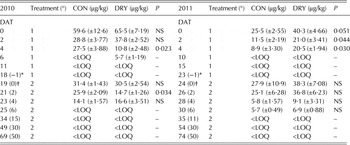
Table 2 reports the imazamox concentrations found in 2010 and 2011 in the CON and DRY soil samples. All data collected over the 2-year experimental period underwent statistical analysis. The t test (P ⩽ 0·05) was used to determine the statistical significance of soil concentration changes found over time for imazamox in the two management systems (CON and DRY).
Concentration of imazamox detected in soil in 2010 and 2011 growing seasons

CON, conventional system; DRY, dry system; DAT, days after herbicide treatment; LOQ, limit of quantification = 5·7 µg/kg; NS, not significant.
Values are expressed in μg/kg. Arithmetic mean of three replications ± s.e.
* Days before treatment.
† Days after the 2° treatment.
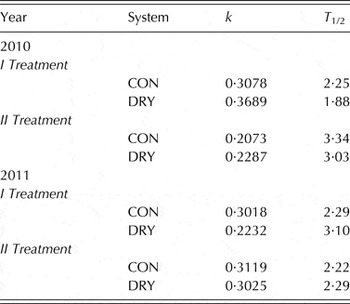
As indicated in the Material and Methods section, other commonly used rice herbicides are applied once during the season, while imazamox is applied twice. The 2010 imazamox concentrations detected in the topsoil at the first treatment event (t 0, 0 days after first treatment) were 59·6 µg/kg (CON) and 65·5 µg/kg (DRY). Imazamox dissipation into the upper soil layers in both systems was rapid, average <4 days (Table 3). The calculated soil half-life was 2·2 days in CON and 1·9 days in DRY. In 2010, imazamox residues fell below the LOQ within 10 days after the first treatment, and more slowly after the second treatment; soil half-life results were 3·4 days in CON and 3·0 days in DRY. The prolonged half-life observed in the second treatment may be due to slower field flooding, which was not completed until 4 days after first treatment.
Imazamox soil dissipation rate constant (k) and half-life (T1/2 ) values in the two systems

CON, conventional system; DRY, dry system.
Soil samples collected in 2011 in both systems before the first treatment (T −1) showed that residues of imazamox were below the LOQ. In 2011, the first treatment (0 days after first treatment) measurements of imazamox concentrations were lower than those of the previous year. The highest concentration (40·3 µg/kg) was measured in DRY as opposed to significantly lower concentrations in CON (Table 2). The calculated time required for the pesticide concentration under defined conditions to decline to 50% of the amount at application (DT50) for imazamox in the soil was 2·3 days in CON and 3·1 days in DRY. In the period between the first (June 20) and second treatments (July 14), soil concentration of imazamox decreased rapidly. In fact, at 10 days after the first treatment it was already below the LOQ, and no imazamox residues were found in the soil samples taken before the second treatment (T −1). The second 2011 imazamox application was performed on July 14 (24 days after treatment one). The initial concentrations observed ranged from 27·9 µg/kg (CON) to 38·3 µg/kg (DRY), which were similar to those values found in 2010 at the same sampling time. However, the resulting DT50 values (2·2 days in CON and 2·3 days in DRY) were lower compared with those observed in 2010 after the second treatment (Table 3). About 1 week after the second treatment, imazamox residues measured were below the LOQ.
Imazamox dissipation in paddy water
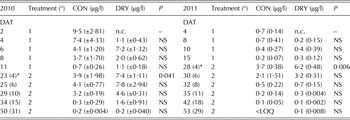
Table 4 shows the amount of imazamox found in water samples collected at different herbicide application times in the two examined systems. The t test (P ⩽ 0·05) was used to determine statistical significance of the concentration differences between the systems over time.
Paddy water imazamox concentrations (μg/l) in 2010 and 2011 growing seasons

CON, conventional system; DRY, dry system; n.c., not collected; NS, not significant.
Values represent three-sample-based means ± s.e.
* Days after the 2° treatment.
In 2010, fields were completely re-flooded (CON) or flooded for the first time (DRY) a few days after the first imazamox application. Water samples were collected at 2 days after the first treatment in CON only, and the imazamox concentration was 9·5 µg/l. No water samples were collected in DRY, since water was added for the first time only after the first imazamox application; collection would only have been possible once the field was flooded. At successive sampling dates, imazamox concentrations observed in CON decreased gradually, such that they were 3·7 µg/l at 8 days after the first treatment. On the other hand, DRY demonstrated a different trend in imazamox concentrations, and its maximum value (7·2 µg/l) was observed at 6 days after the first treatment. At 11 days after the first treatment, paddy water imazamox residues ranged between 0·7 µg/l in CON and 1·1 µg/l in DRY. The first sampling after the second treatment in DRY (3·9 µg/l) resulted in a significantly (P < 0·05) higher concentration as compared to that observed in CON (7·4 µg/l). In the samplings conducted at 2 and 4 days after the second treatment (25 and 29 days after first treatment, respectively), imazamox concentration decreased slowly in both systems with no significant difference between them. Fifty days after the first treatment, imazamox residues in paddy water did not exceed 0·2 µg/l.
In 2011, the first samples of paddy water were collected 4 days after the first treatment. The concentration of imazamox was 0·7 µg/l in CON, and it was not possible to collect a water sample in DRY for the same reason described above for 2010. A week after the first treatment, imazamox was found in water samples taken both from DRY (0·3 µg/l) and CON (0·2 µg/l). In the case of the first sampling carried out after the second application of imazamox, residues of the herbicides found in paddy waters showed significant (P < 0·05) differences between the two systems with variation from 6·2 µg/l (DRY) to 3·2 µg/l (CON). After 2 weeks, imazamox residues had dropped below the LOQ. In general, despite the fact that sampling calendars of the 2 years could not be perfectly super-imposed, concentrations observed were lower in 2011 season compared with 2010.
Imazamox concentrations in inlet, outlet and ground water
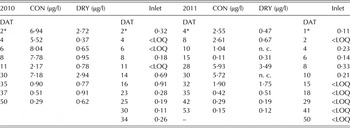
The concentrations of imazamox detected in inlet and outlet waters sampled over the 2 years are displayed in Table 5. Imazamox concentrations in outlet waters were related to the time of herbicide application. Outlet floodgate water samples showed that time elapsed post-application affected the concentrations of both chemicals. As expected, the sooner samples were collected after distribution, the higher were their concentration levels. The highest concentrations were observed in water samples collected from CON floodgates after the first treatment. Imazamox residues in outlet water remained high until 30 days after the first treatment, particularly in CON. On the contrary, the presence of imazamox in the outlet water of DRY was never >3·0 µg/l. In both systems throughout the season, imazamox concentration was always detected >0·1 µg/l.
Imazamox concentrations in the inlet and outlet floodgates water (μg/l) in 2010 and 2011 growing seasons

CON, conventional system; DRY, dry system; DAT, days after herbicide treatment; LOQ, limit of quantification = 5·7 µg/kg; n.c., not collected.
* Days after the first treatment.
In 2011, the first water samples were collected at 4 days after the first treatment. Overall, observed concentrations were lower compared to the previous season; this was particularly true in samples taken after the first treatment. At 4 days after the first treatment, imazamox residues in CON were 2·5 µg/l. The maximum concentration (5·9 µg/l) was registered in CON at 28 days after the first treatment (4 days after the second treatment); however, lower imazamox residues were generally found in DRY.
Imazamox was routinely detected in inlet water, and very often at concentrations >0·1 µg/l. The maximum concentration in inlet water (0·9 µg/l) was recorded in 2010 at 16 days after the first treatment. The presence of imazamox in the ditch channel is presumed to be related to management practices adopted in fields upstream to the current experimental station. Imazamox was not found in groundwater samples in either year, i.e. concentration values were always below the LOQ.
DISCUSSION
The introduction of imidazolinone-tolerant rice varieties has increased imazamox use in weed control strategies. Despite the fact that the fate of imazamox and other imidazolinone herbicides has been studied worldwide, few trials have focused on their behaviour in rice paddies. Presently, imazamox is applied on about one fifth of all Italian rice cultivation areas. To this end, the current study evaluated the behaviour of imazamox in water and soil environments under field conditions. The dissipation of imazamox was studied in both water-seeded rice and drill-seeded rice management, which are the major systems adopted in the Italian rice area.
The study soil was sampled from the upper few centimetres of topsoil, thus the data presented fails to describe the dissipation of imazamox along the full soil profile. Nevertheless, the results are valuable because the upper soil layers in rice paddies interact more strongly with the flood water. The fate of other imidazolinone herbicides for other crops, such as imazethapyr, imazapic and imazaquin is widely understood; these herbicides are generally very persistent and their soil residues may cause injury to crops grown later (Loux et al. Reference Loux, Liebl and Slife1989; Ball et al. Reference Ball, Yenish and Alby2003). Most imidazolinone herbicides have long restrictions for use in rotational crops, as opposed to the most recently registered imazamox, which has the shortest.
Also worthy of consideration is that paddy field soils were flooded for almost the entire growing season, and that the chemical characteristics of imazamox (such as water solubility and pH dependence) raise its availability in the water phase more than when it is soil-adsorbed.
The present study showed that imazamox dissipation in paddy fields under natural conditions is rapid, and the dissipation pattern of this herbicide was not strongly influenced by the rice management system adopted. Under the two management systems studied, imazamox soil half-life was generally <4 days, and a week after application, herbicide residues fell below the LOQ. The reduced persistence of imazamox observed under the study conditions was probably related to the specific chemical and physical features of the product and in particular to the specific agricultural practices adopted. It should also be considered that imazamox was not incorporated into the soil after application and remained on the soil surface where, before re-flooding, interaction with the air is strong (oxidizing interface); after flooding, a fraction of imazamox adsorbed by the soil was released into the water. A similar consideration has been postulated by Heiser (personal communication, 2007).
In the literature, the soil half-life of imazamox in field conditions varied between 4·5 and 41·0 days (European Commission 2002; BCPC 2012). The EPA (1997) report on imazamox indicated that its average persistence was between 30 and 50 days. Heiser (personal communication, 2007) studied imidazolinone dissipation in two different soils under both flooded and non-flooded conditions: he found that imazamox persisted for a shorter time when applied to silty-loam soil maintained under flooded conditions (half-life of 16 ± 9 days), while an even briefer half-life was observed in clay soil (8 ± 3 days). In a study conducted by Vischetti et al. (Reference Vischetti, Casucci and Perucci2002), imazamox half-life in non-flooded conditions varied from 17·1 to 92·4 days. According to Cobucci et al. (Reference Cobucci, Prates, Falcão and Rezende1998), when imazamox is applied to rice, an interval of between 25 and 75 days is required to avoid injury to following crops not resistant to imidazolinones. Cobucci et al. (Reference Cobucci, Prates, Falcão and Rezende1998) also found that injury risk may occur over a longer period under particular conditions (such as low soil moisture content, high clay and high soil OM content). In areas of high rainfall, faster herbicide dissipation is expected, and less potential for crop injury is anticipated. A study conducted in Central Italy on four different soils indicated a safe cropping interval for imazamox is 1–3 months, and that there is a higher availability of imazamox on sandy soils compared with soils with high clay and OM content (Pannacci et al. Reference Pannacci, Onofri and Covarelli2006).
Another aspect to be considered is the adsorption of imazamox by the soil matrix. This phenomenon is influenced by soil pH and given the weakly acidic nature of imazamox, this parameter is of great importance. According to Bresnahan et al. (Reference Bresnahan, Dexter, Koskinen and Lueschen2002) at low pH values imazamox is more sorbed by soil, but also more easily desorbed and as a result the imazamox not adsorbed or desorbed is more available to be taken up by plants or degraded. Bresnahan et al. (Reference Bresnahan, Dexter, Koskinen and Lueschen2002) also found that the bioavailability of imazamox was higher at low pH (<6) than at high pH (>6). Similar findings were indicated by Loux & Reese (Reference Loux and Reese1992), who reported that the increased absorption observed at low pH values affected the availability of imazamox to be degraded by microorganisms. Furthermore, Ball et al. (Reference Ball, Yenish and Alby2003) found that low soil moisture levels may limit imazamox degradation, and the reduced sorption of imazamox at low pH increases the bioavailability of the herbicide in the soil. Aichele & Penner (Reference Aichele and Penner2005) found higher percentages of imazamox in soil solution at pH 7 than at pH 5 and attributed the faster dissipation at pH 7 mainly to reduced adsorption. Heiser (personal communication, 2007) postulated that microbial degradation may occur rapidly in flooded fields in summer periods when temperatures are high. The OM content may also affect dissipation. In the current case study, different factors may have played a significant role in the rapid imazamox dissipation. The sub-acidic nature of the soil and the low soil OM content are factors that probably influenced the adsorption of imazamox to the soil, making it more available for degradation by microorganisms and uptake by plants. An additional explanation useful to justify the reduced soil persistence of imazamox observed in the current study may derive from the agronomic practice adopted in both fields after herbicide application. As indicated in the previous sections, fields were re-flooded a few days after spraying. Starting from the re-flooding it may be assumed that an important amount of imazamox gradually passed into the water solution. This is confirmed by the concentration of imazamox found in paddy waters. Once it is in solution in water, imazamox could also be subjected to photochemical degradation (Quivet et al. Reference Quivet, Faure, Georges, Païssé, Herbreteau and Lanteri2006). Other phenomena such as leaching are probably less important: although the chemical characteristics of imazamox could make it vulnerable to leaching, the current findings did not show this phenomenon. Johnson et al. (Reference Johnson, Shaner, Deane, MacKersie and Tuxhorn2000) indicated a similar behaviour for imazethapyr.
Over the 2 years of the current work, differences were observed in imazamox concentrations found at the sampling collected immediately after the first and second applications. In general, concentrations detected at the second treatment were lower compared with those observed at the first one. A possible explanation for this behaviour may be higher rice foliage interception pattern, as indicated by Ball et al. (Reference Ball, Yenish and Alby2003). The second treatment, conducted >2 weeks after the first imazamox application, occurred as the crop continued to grow its canopy, which increased the surface available to intercept the herbicide. A high correlation between crop foliage (expressed as Leaf Area Index) and soil deposition of pesticides during application was clearly established by Gyldenkærne et al. (Reference Gyldenkærne, Secher and Nordbo1999) on a field study conducted on cereals. The decrease in the amount of pesticide/nutrients that reach the soil during spraying is directly linked to the rise in crop canopy density. Wauchope & Streeth (Reference Wauchope and Streeth1987) reported similar findings: in their study they pointed out that the increase in foliage interception (by rice plants) is independent of ground cover. Furthermore, in the current work the weed canopy was unlikely to have a major role in intercepting imazamox during spraying: the assessments carried out at the time of spraying on both fields highlighted a reduced weed density and, in particular, negligible weed ground cover.
Identification of a clear effect of the two rice management systems on imazamox dissipation in paddy soil was not possible to do within the confines of the current study. Observed variations in field half-life were generally related to delays in field submersion post-treatments rather than to the management system. Imazamox soil dissipation was too rapid to discern the impact of agronomic practice on herbicide persistence. The two systems differed primarily in water management, even though at the time of imazamox application (first and second treatments), fields were already been submerged or flooded just after spraying (as in system DRY at the time of first treatment). Moreover, dissipation may also be facilitated due to the reduced application rates associated with this herbicide.
Since in rice fields imazamox is applied with the absence of water, its presence in paddy water appears only after fields were re-submerged. According to the literature, imazamox is very soluble and quickly degraded in water (BCPC 2012), and a report edited by the EPA reported that imazamox photodegradation is rapid in water with a half-life below 7 h (EPA 1997). Recent studies show that photolysis is an important pathway of imazamox water dissipation (Quivet et al. Reference Quivet, Faure, Georges, Païssé, Herbreteau and Lanteri2006; Harir et al. Reference Harir, Frommberger, Gaspar, Martens, Kettrup, Azzouzi and Schmitt-Kopplin2007). However, under the natural field conditions of the current study, imazamox dissipated more slowly and persisted longer in water, which may relate to interactions between paddy water and upper soil layers where imazamox can be retained and then desorbed. As indicated above, Bresnahan et al. (Reference Bresnahan, Dexter, Koskinen and Lueschen2002) postulated that at low pH values, imazamox was found to desorb more easily than at high pH values. Hence, the longer presence of imazamox in the water phase during the growing season could be in part related to the sub-acidic nature (pH 6·5) of the paddy soil. Furthermore, the presence of the crop, which intercepts most of the solar radiation, would decrease photochemical dissipation.
The current results indicated that imazamox persists in paddy water longer than in soil. This behaviour was expected, especially after treatment two because imazamox has high water solubility and the paddy fields were drained just prior to its application. Post-drainage, the soil was fully saturated, which meant some of the applied herbicide did not reach the rice plants, nor was it adsorbed by the soil. Hence, some herbicide may have been re-diluted when water re-entered the fields. The concentration differences observed between the first and second treatments over the 2 years were probably due to the higher crop canopy present at treatment two; consequently, the imazamox intercepted by the vegetation was probably higher.
The outlet water sampling demonstrated that imazamox is easily transported by paddy field outlet waters. Herbicide concentration may have greater ecological implications just after treatment, when it is highest. The concentrations found in outlet waters were generally above the LOQ (0·1 µg/l), particularly during the first days after treatment. These concentrations may represent a threat to the ecological community living in the discharge channels. However, the concentrations found in the current study were much lower than those reported as causing acute toxicity in fish and aquatic invertebrates (EPA 1997; European Commission 2002). Moreover, imazamox may undergo a significant reduction in concentration before entering the main channels from dissipation phenomena, and also from dilution after entering them.
Over the season, imazamox was often found in inlet waters at concentrations >0·1 µg/l; however, the maximum concentration was never >1·1 µg/l. The presence of imazamox in the ditch water is probably related to treatments performed in paddies located upstream from the experimental fields, as herbicides applied to rice fields supplied by diffuse water networks can be lost via drifting and runoff during and after spraying, reaching the channels. A similar behaviour was observed in previous studies conducted on other pesticides (Milan et al. Reference Milan, Vidotto, Piano, Negre and Ferrero2012). Moreover, the current results indicated that outlet waters reaching the end of the main channels might transport sizeable amounts of imazamox.
The study also found that the risk of imazamox transfer to groundwater is negligible, confirming what was previously reported by different technical reports (EPA 1997; European Commission 2002). Even though the groundwater ubiquity score (GUS) index for imazamox suggests it poses a leaching risk, the literature has indicated that leaching is not a dissipation pathway for imidazolinones (EPA 1997; BCPC 2012; Cessna et al. Reference Cessna, Elliott and Bailey2012).
One possible way to reduce the transfer of imazamox or other herbicides to surface water could be by limiting the release of water from paddies in the days following herbicide application, even though Marchesan et al. (Reference Marchesan, Zanella, De Avila, Camargo, Machado and Macedo2007) suggest a period of at least the length of herbicide persistence. On the basis of several studies conducted in the last 20 years on the environmental behaviour of different rice herbicides (and metabolites) in the main rice growing area of Europe (Piemonte, northwest of Italy), Ferrero et al. (Reference Ferrero, Milan, Fogliatto, De Palo and Vidotto2016) have recently suggested applying a water-holding period of 7–10 days after herbicide spraying, slow restoration of field submersion after the treatment and good levelling of the field in order to avoid the accumulation of pesticides residues in some parts of it. Overall, the analysis of field data showed that for most of the studied herbicides and metabolites, a water-holding period of 7–10 days after treatment is sufficient to reduce their presence by 50–90% over their initial concentration observed in paddy water. Improper levelling of the paddies together with rapid restoration of flooding after the treatment may indeed greatly increase the transfer of pesticides to surface waters. This set of measures has been welcomed by the Italian Ministry of Health and by some regional administrations (e.g. Regione Piemonte). For this reason, in order to allow water-friendly usage of rice herbicides, specific prescriptions for use are currently reported on the product label of some important rice herbicides (e.g. quinclorac). In other countries, such as Japan and the USA (California), a water-holding period is already recommended for rice crop pesticides classified as toxic to aquatic organisms (Newhart Reference Newhart2002; Watanabe et al. Reference Watanabe, Nguyen, Souphasay, Vu, Phong, Tournebize and Ishihara2007). During water holding, dissipation phenomena may greatly reduce the amount of pesticides present in the water. To limit the risk of transfer of imazamox to surface waters, the practices mentioned above would be advisable.
CONCLUSIONS
In the conditions studied, imazamox dissipated rapidly in topsoil and persisted longer in the water environment. The herbicide can exit fields with outlet waters, particularly in the days immediately after herbicide spraying. Avoiding release of paddy water in the days immediately following treatment may reduce the risk of water contamination by imazamox. The rapid soil dissipation of imazamox observed during the 2-year study did not allow identification of a clear effect between the two rice management systems compared.
The authors thank the technicians who made valuable contributions to laboratory analyses. Appreciation is also extended to group members of Sustainable Weed Management of the Dipartimento di Scienze Agrarie, Forestali e Alimentari of the University of Torino, who helped during the study.