1. Introduction and literature review
Given the convergence of ubiquitous apps and mobile devices, we must become digitally literate if we are to function adequately in today’s society. Sutherland-Smith (Reference Sutherland-Smith2002: 663) wrote of the need for digital literacy: “Literacy is not a static concept”. Leu (Reference Leu1997: 62) saw it as a “deictic” term, because “its meaning is continually changing, dependent upon the technological context in which it occurs”. These prescient remarks remain important today. Within computer-assisted language learning (CALL), Dudeney, Hockly and Pegrum (Reference Dudeney, Hockly and Pegrum2013: 2) offered their own helpful definition of digital literacies: “the individual and social skills needed to effectively interpret, manage, share and create meaning in the growing range of digital communication channels”. They list examples dealing with language (texting, hypertext, gaming, mobile and coding literacies); information (search and filtering literacies); connections (personal, network, participatory and intercultural literacies); and finally a remix literacy (p. 6). They acknowledge that “literacy is a plural concept” (p. 3) and this concept, if we are also to follow Leu (Reference Leu1997), is a fluid one, requiring further refinement and precision. The aim of this article is to refine further these notions of digital literacies and to apply them to dealing with a growing problem that we have observed and recorded among our language learners: that their use of technology is time-consuming and distracting them from their academic studies. We will argue here that students must become mindfully aware of the distractive nature of technology and acquire a deictic and agentive (digital) literacy in order to deal with such distractions.
Our main objective then is to explore the continually distracting challenges (especially with social media) caused to language study practices, as they are reportedly perceived to be experienced daily by our students in this Age of Distraction (Crawford, Reference Crawford2015). From a terminology point of view, it is important to note that we are referring to the repercussions of distractive technologies and not with the ironically named disruptive technologies, which are very different. The latter refers to business policies and practices that seek greater profits through rapid innovative changes (Armstrong, Reference Armstrong2017). Returning to our aim, we need to define, extend and apply the concept of an agentive literacy for our students to tackle these perceived digital distractions.
Unless properly addressed, emerging technologies may be heavily distractive and may also impact negatively upon the learning tools used by students in a converged learning space, densely populated by apps of every genre. As CALL researchers, we do acknowledge, of course, the many long-established benefits and gains associated with technology and language learning (see, e.g., Lamy & Zourou, Reference Lamy and Zourou2013; Murray & Barnes, Reference Murray and Barnes1998; Peeters, Reference Peeters2018). However, with these successes there must be caveats, and within the area of study practices, it is worth noting that “The Net is, by design, an interruption system, a machine geared for dividing attention. Psychological research long ago proved: frequent interruptions scatter our thoughts, weaken our memory, and make us tense and anxious. The more complex the train of thought we’re involved in, the greater the impairment the distractions cause” (Carr, Reference Carr2011: 131–132; see also Stone, Reference Stone2006). Parkin (Reference Parkin2018) also illustrates this point when reporting on the comments of Parker, founding president of Facebook: “The social network was founded not to unite us, but to distract us”. This bread and circuses attitude within social media has not gone unnoticed by online users, many of whom expressed the belief that “studying the same thing is much easier on paper than on the computer” (NathanielZhu, 2011). Wang (Reference Wang2015: iv) has examined a number of studies that reported students spending “much of their time in class or studying distracted by irrelevant media activities” (see also Judd, Reference Judd2013). Or the study situation may be worse at home, as Rosen, Carrier and Cheever (Reference Rosen, Carrier and Cheever2013: 948) have found that students “averaged less than six minutes on task prior to switching most often due to technological distractions including social media, texting and preference for task-switching”. If attention to study is then lost by our students, how long does it take to refocus? As will be seen later in our study, that depends on the type of distraction. The serendipitous nature of the distraction may be short-lived, yet the interruptive effect may last much longer. But can our students study effectively while accessing their apps and mobiles at the same time? Gazzaley and Rosen (Reference Gazzaley and Rosen2016: 125) explain why our brains are not wired for multitasking, and in one study show that it could take multitaskers “up to 30 minutes to refocus and fully engage with the original task”. In what may appear to be somewhat more extreme reactions, Yildirim and Correia (Reference Yildirim and Correia2015: 130) discuss the effects of nomophobia: “four dimensions of nomophobia were identified: not being able to communicate, losing connectedness, not being able to access information and giving up convenience”.
Selwyn (Reference Selwyn2016) bemoans the lack of serious research on the subject of digital technology and the student experience. Drawing on a large survey of undergraduate students, he flags four distinct types of digital “downside”: distraction, disruption, difficulty and detriment. He shows the important issue of procrastination where students recognised the huge propensity of the internet as “perfect procrastination tools” (p. 1011). Our topic seeks to explore further the area of “distraction”, as we have identified from our data a severe need for metacognitive and self-regulation skills (Hannafin & Hannafin, Reference Hannafin, Hannafin, Spector, Ifenthaler, Isaías, Kinshuk and Sampson2010) among our learners. Distractive triggers such as phone notifications or becoming “lost in hyperspace” also feature here and will be later discussed. To combat distraction, we argue that learners should acquire and practise critical digital skills with an agentive literacy. In the next section, we will describe and define these terms and concepts and offer some examples. We will extend Dudeney and Hockly’s (Reference Dudeney, Hockly, Farr and Murray2016) notions of digital literacies showing our students’ realisations of digital distraction problems being “a shock to the system” and “shame/ful”. We will report on the frequency and total duration of social media usage with some links to addiction and compulsive behaviour and how issues are highly related to successful time management skills. Finally, our proposed solutions are related to self-monitoring, digital awareness and developing/building new types of learning strategies.
“Digital literacies”, “digital skills or competencies” and “multiliteracies” are used interchangeably in the research literature (Brown, Reference Brown2017). Yet digital literacy remains “a nebulous area that requires greater clarification and consensus” (Alexander, Adams Becker & Cummins, Reference Alexander, Adams Becker and Cummins2016: 1). Sheppard (Reference Sheppard2014) at JISC attempted a comprehensive definition of digital literacies:
We mean those capabilities which fit an individual for living, learning and working in a digital society. For example, the use of digital tools to undertake academic research, writing and critical thinking; digital professionalism; the use of specialist digital tools and data sets; communicating ideas effectively in a range of media; producing, sharing and critically evaluating information; collaborating in virtual networks; using digital technologies to support reflection and PDP [personal development plan]; managing digital reputation and showcasing achievements.
Meanwhile, Hauck (Reference Hauck2018) neatly defines it as “knowledge application” and extends the definition further to a socio-political context with telecollaboration as the vehicle for creating a critical digital pedagogy that would produce “The agency to know, understand, and therefore the ability to act upon, create, or resist one’s reality”. The reality in our own context would be to help students to resist these reported distractive elements inherent in apps and social media when they impinge upon their learning and learning environments. Amidon (Reference Amidon2016) also clarifies such an agency: “realizing this agency is complex work because ‘participat[ing] fully and meaningfully in [the] technological activities that comprise so many aspects of our social, civic, and professional lives requires an increasingly sophisticated array of multiliteracies”. If we highlight our language learners within these broader concepts, we would propose to use these agentive critical digital literacies to combat the perceived distractive elements of online media in order to help our students study more effectively with technology and with a greater attention focus. This may well constitute acquiring new learning strategies for some students. It will be detailed later that our students reported to us these distractions during our shared teaching module. As technology is protean (Biocca & Levy, Reference Biocca and Levy2013) and ever-changing, as literacy (digital or otherwise) is deictic, it is our hypothesis that our learners will need to acquire and update these agentive critical literacies. Footnote 1
2. Methodology
As mentioned earlier, the method employed to conduct this research is a mixed-methods one, where qualitative and quantitative data were solicited respectively from students’ individual academic blogs, the reflective reports of their blogging experiences, group interviews and questionnaires. These allowed the further exploration of student perceptions, experiences and awareness within the distractive technology theme. Researchers such as Cohen, Manion and Morrison (Reference Cohen, Manion and Morrison2011) argue that mixed-methods research should be the norm in education as it offers several perspectives for analysing and explaining the same educational phenomena, which in our case is based on the multiple student perceptions and experiences with distraction.
This study is based on the collection of data gathered throughout a 12-week language and technology core module for second year students. In brief, the main objective of this module is to introduce students to the major pedagogical, professional and research applications of technology in modern languages and to enable students to integrate these into their studies. Examples of CALLware evaluated by the students over the course of this programme include generic and dedicated language learning websites and apps, automated summarising software, and corpora and concordancing software and blogs. Those who register in this module are typically novice CALL users and have limited experience with the integration of either generic or dedicated software into their language studies. The students (total n = 215) attend the University of Limerick in the west of Ireland and come from the Bachelor of Arts in Applied Languages degree and also include Erasmus students. Furthermore, the class consists of students who are at different stages in their learning, with levels ranging from lower-intermediate to advanced stages. The main languages studied are English (TESOL), Irish, French, Spanish, German and Japanese. As such, the course provides these students with a valuable opportunity to adapt and personalise numerous types of CALLware to their individual needs as learners, allowing them to become more independent and autonomous. Together with theoretical essays, another form of assessment within this module is blog writing, where students present their personal reflections on the use of various technological tools for language learning and a final report on their blog writing experiences. One specific blog task that was implemented during the semesters when the research took place was aimed at developing awareness of the time spent online by participants using resources from the DigiLanguages website portal (https://www.digilanguages.ie) and the QualityTime (and/or RescueTime) phone-based mobile usage apps. Coincidentally, since the beginning of the study, Apple (iOS) has introduced a standard built-in feature about weekly and daily time usage.
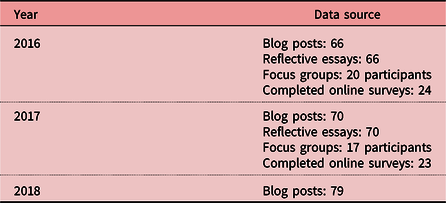
All data were gathered over a three-year period (see Table 1 for details) from September 2016 to December 2018 and appropriate institutional ethics approval was sought and granted for this data elicitation.
Data sources of the study and year of collection

2.1 Context of study: Focus groups and blogs
For the qualitative data two different sources were used. For one source, several focus groups were conducted during the final lecture of the semester. In 2016, students (n = 20) who attended the last class were distributed into two groups of seven and one group of six; in 2017, students (n = 17) were divided into one group of 10 and one of seven participants. On both occasions, the researchers carried out a semi-structured interview where the participants could contribute openly. Interviewers had several keywords/questions that they used to prompt the student interventions (e.g. feedback on the module and the topics covered, assessment mechanisms implemented in the course, use of the QualityTime app, use of technology when studying, social media). The objective of the semi-structured interviews was to gather student opinions on distractive technologies, and also to share their perceptions and experiences regarding time spent using technology while studying, and possible issues of time management. The interviews were recorded and transcribed for the analysis. The other qualitative data sources derive from the student blogs (total n = 215) and a final reflective essay based on the blog writing experience (n = 136) that the students submitted at the end of the semester as part of their module evaluation.
Throughout the semester, each student had to write a weekly reflective blog post about the topics explored during the lectures and activities carried out in the PC labs. For one of the blog posts dealing with the digital literacies topic, the students were asked to download the QualityTime phone-based app. After using it for one week, each student had to reflect and write about the results provided by the QualityTime report. This report mainly related to issues like frequency of access, amount of time spent online, and the most visited sites and apps used.
The analytical methods used to examine the transcribed interviews, the open questions in the survey, the blogs and the reflective essays were based on a critical discourse analysis framework (Gee, Reference Gee and Rogers2004). This data analysis technique was employed because it enabled the classification of the data content into different categories through the process of constant comparison. Initially, all the data are gathered and an inductive approach is used to generate substantive codes (e.g. anxiety, addiction, time pressure). These are then used and refined into distinct categories (e.g. time management, social media as a reward). After reading the interview transcriptions, the blog posts and the reflective essays and coding the categories, common topics and recurrent ideas were identified, leading the researchers to connect them with the primary domains established for this study: student perceptions of their own study time, distraction and performance. It should be noted that the term performance in this study is used to refer to the student learning process and study engagement. The term performance does not refer to the student final grades or assessed output.
To overcome any potential issues relating to the reliability of data coding carried out by the different researchers during the data analysis, the researchers in this study agreed on the coding conventions and established the relevant themes after several individual readings of the available data. The most salient themes were then identified by the group. In addition, Sketch Engine, the corpus manager and text analysis software, was used to produce concordances dealing with key words in context (KWIC) to confirm our results. Examples are provided in the analysis section to illustrate and evidence our identified themes.
2.2 SurveyMonkey
The quantitative data were gathered using a questionnaire delivered via SurveyMonkey (see supplementary materials, part 1). This survey included a total of 10 questions, two of which were rating questions based on a 5-point Likert scale. The remaining questions were multiple choice or yes/no questions. For each of the questions, students were invited to elaborate on their answers by leaving an additional comment. This allowed the researchers to explore different viewpoints. The 10 questions were mainly focusing on two important points: the time the students spend online with their mobiles and consequently the perceived impact that such action has on them. The students were asked to answer the questionnaire during the last week of the semester, and from a total of 136 students (the first two cohorts of the study), 47 questionnaires were completed. This gave us a response rate of 34.5%, which has been deemed to be sufficient when originating from homogeneous groupings (Leslie, Reference Leslie1972). While sufficient, the final figure remains below 50%, and the reasons to explain this may be that it was offered on a voluntary basis, it happened near the end of the semester and a reported general questionnaire fatigue among students, as they have multiple questionnaires to complete each semester.
2.3 Sketch Engine
With our data gathered from the student blogs, interviews and the survey open questions, we built a small specialised corpus of nearly 7,000 words using the Sketch Engine concordancer in order to provide additional information and evidence of our preliminary findings. It was compiled in accordance with Flowerdew’s (Reference Flowerdew, Connor and Upton2004: 21) fifth categorisation of specialised corpora, as our corpus deals with a particular subject matter, is highly contextualised and is thus acceptable for analysis (Vaughan & Clancy, Reference Vaughan, Clancy and Romero-Trillo2013).
2.4 Validity and reliability
The principles of validity and reliability are essential in any qualitative and quantitative research paradigm. Validity and reliability have been at the core of this study’s questionnaires and interviews. During the first lecture with the students, the researchers presented a questionnaire using a game-based platform (Kahoot!), which was used to pilot some of the questions that were later included in the SurveyMonkey questionnaire. For the piloting, the students used their mobile phones to answer the questions included in Kahoot!, which were stored in a spreadsheet automatically. Validity and reliability were achieved by first piloting the questions in order to refine their content and structure and eliminate any ambiguities (number and type of options provided in the questions, repeated ideas, open questions versus multiple-choice questions). Afterwards, the data gathered through the piloted questions were analysed by looking at the internal consistency of the questions and at correlations between variables (Gray, Reference Gray2013) (e.g. time spent online and apps used; time spent online and number of phone logs; time spent online and social media platforms used). These helped in formulating the questions for the final survey and the focus groups. Follow-up strategies, such as reminders to the students through the institutional virtual learning environment to complete the survey or time allocated in the PC lab classes for the students to fill them in, were in place in order to ensure the completion and return of questionnaires, allowing an increase of reliability (Cohen et al., Reference Cohen, Manion and Morrison2011). Similarly, the interviews were first piloted using a semi-structured approach where the researchers were following a set of core, mostly open-ended, questions. This formed an interview guide, which was applied flexibly and left room for the interviewees’ perspectives to be addressed (Flick, Reference Flick2018). The ensuing systematic interviewing process together with a rigorous analysis of the interview material allowed us to reduce bias and consequently increase validity (Flick, Reference Flick2018). Generalisation of the results, described as the ability of the researcher to make a justified extension of their conclusions (Hammersley & Atkinson Reference Hammersley and Atkinson2007), is presented later in this article.
3. Data analysis
In this section, the results of the data analysis will be presented following the different main topics that arose from the various data sources.
3.1 Mobile usage and online interaction
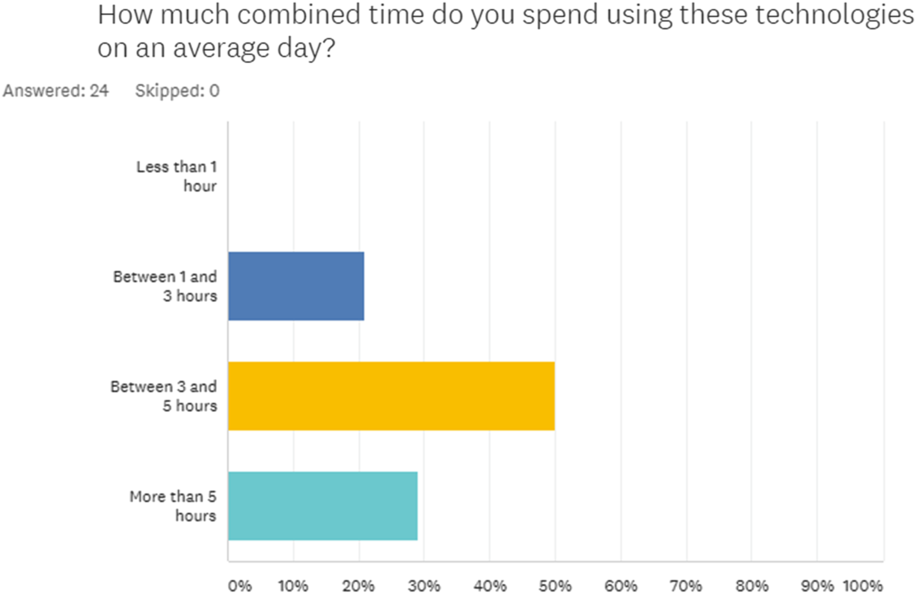
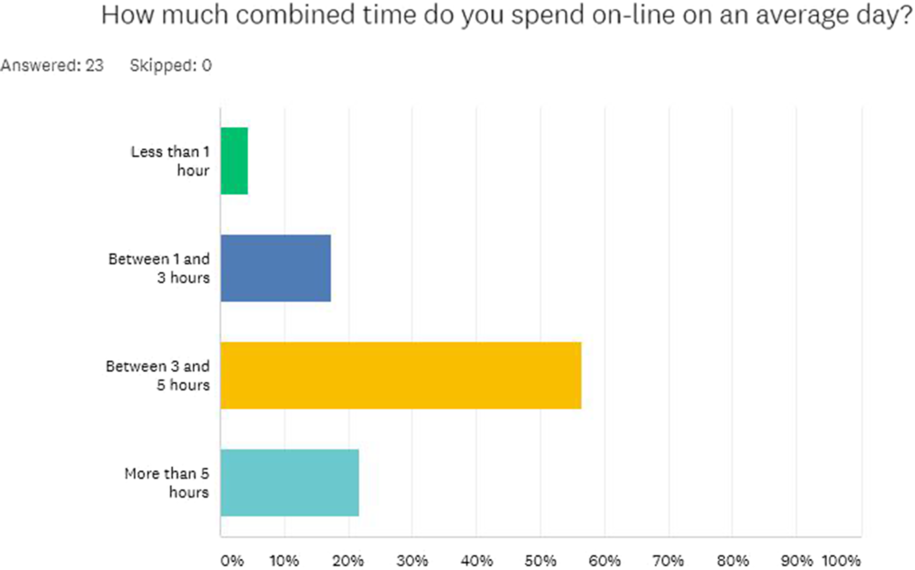
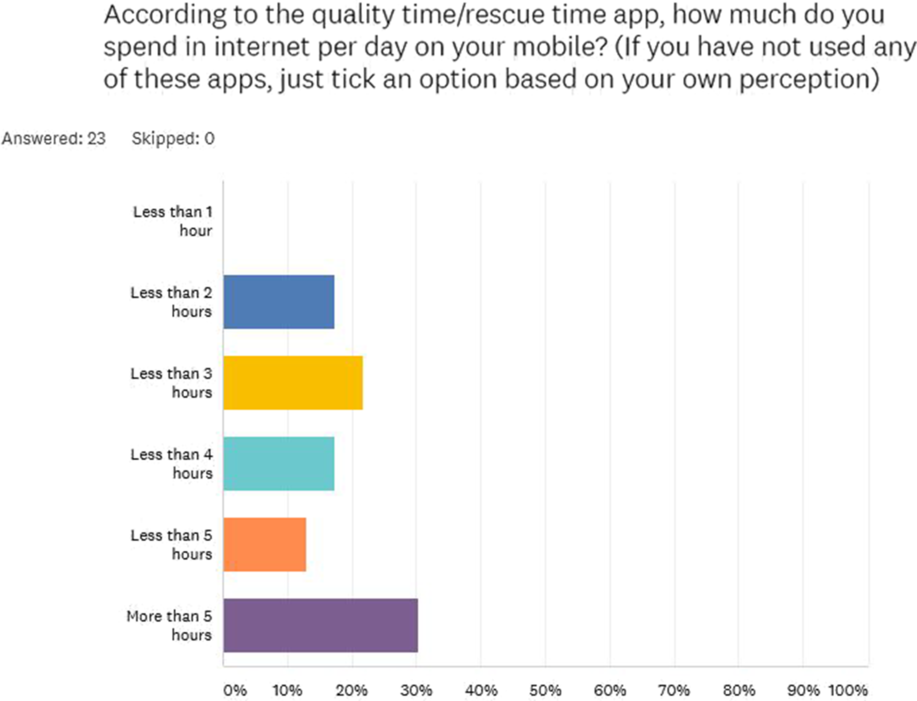
The first results of the data analysis emerged from the online survey cloud-based software SurveyMonkey, which was answered by 47 participants. The data analysis of these results followed a quantitative approach and revealed that more than 70% of the students use their mobile phones as the first tool to interact online and at least 50% of them spent a daily average of five hours online (see Figures 1 and 2 for 2016 and 2017 results), according to their own perceptions and declarations. In addition to this, and after using the QualityTime app, the students had real evidence of how much time they spent daily online with their mobile phones.
Time spent online according to student perceptions 2016

Time spent online according to student perceptions 2017

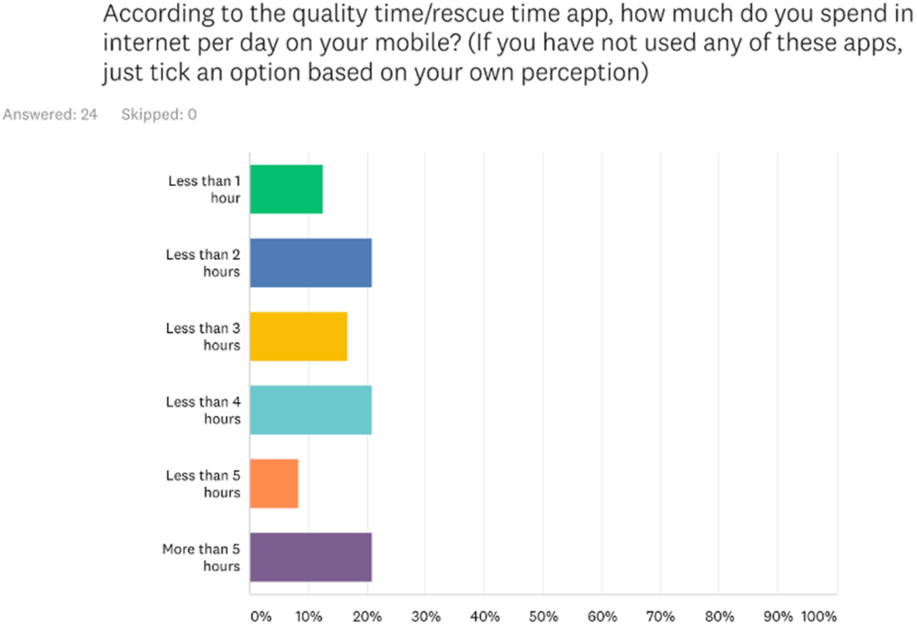
Around 50% of respondents stated that they use their mobiles on average up to five hours per day (see Figures 3 and 4 for 2016 and 2017 results). Figures 3 and 4 reveal the results from a particular survey question that sought to gather evidence of the mobile usage of the respondents. The usage data came from two possible sources, one subjective and one objective. The subjective responses may have arisen from their perceptions (as stated in the question) and the objective responses may have arisen from the usage recorded on the QualityTime app. It was later confirmed from evidence in the student blog posts that all respondents had used the QualityTime app and/or RescueTime app. At the time of composing the questionnaire, we simply wanted to find out from all students about their mobile usage, be it recorded or perceived. Again, at the end of the data analysis, we were able to confirm that all students had indeed used the recording apps.
Time spent online according to QualityTime app results 2016

Time spent online according to QualityTime app results 2017

Most of the reported interaction is with social media (90%), although there is some specific mention of Google, Spotify, YouTube and sports news. From this high percentage, 75% state that they use social media for language learning purposes.
The time spent online is directly linked with issues regarding time management. The analysed data show how the majority of the participants in the study perceive the negative effects that technology has on their time management. Lack of concentration, distraction, and the perception of wasting time are the most relevant mentions. On a scale of 1 to 5 (with 1 being the lowest), 40% of the participants chose number 4 when referring to the distracting effect that technology has on them.
At the same time, the positive effects that many participants mentioned are the use of technology for time management and for fostering their concentration. We identify here a small number of contradictions in the student responses, and it is how the students actually manage their use of technology that evokes a perceived negative or positive outcome. It may be stated that the use of technology, when there is a purpose, does not have a significant negative impact on time management, according to some of the students who participated in this research. Equally, when there is no perceived purpose there is a high reporting of time mismanagement. This echoes the classic findings of being “lost in hyperspace” (Theng & Thimbleby, Reference Theng and Thimbleby1998). Another identified catalyst for distraction leading to time issues was the serendipitous and random choice of hyperlink to follow, as one student declared, “Something I am doing often triggers a random question, then I feel compelled to look up the answer, which leads me to look up something else, and so on”. Additional research on this particular point will be required to explore these apparent contradictions, even though they represent a minority view.
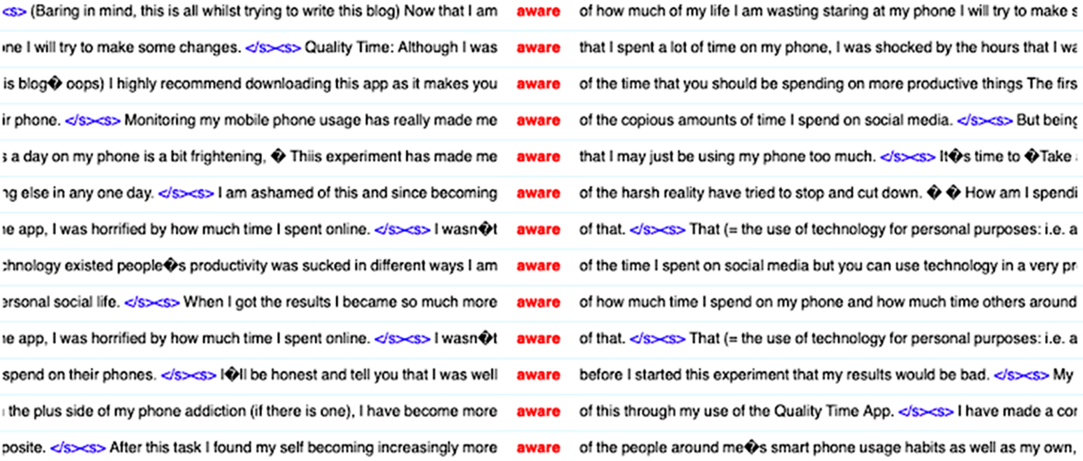
Results also show several references that participants may be becoming aware of the time they spend online in their everyday usage (see Figure 5). The awareness emerges after being presented with evidence of the number of hours they typically spend online on their mobile phones. The student reactions were revealing: scary, shock to the system, shameful, frightening, ashamed, addiction, wake-up call, eye opener. Such lexical elements emerging from the discourse analysis of the qualitative data feature a highly adverse reaction against the misuse of technology. The recognition that the use of the QualityTime app brought to the participants led to the realisation that academic performance could be seriously affected when there is no awareness of the time spent on the mobile every day. Students show their intentions to start taking control of their time and their use of technology, as these quotations demonstrate:
Now that I am aware of how much of my life I am wasting staring at my phone I will try to make some changes.
This experiment has made me aware that I may just be using my phone too much. It’s time to “Take a Break”.
Growing student awareness of the time they spend online in their daily usage

3.2 Multitasking
Some of the data extracted from the interviews offer evidence of the active multitasking activities that the participants perform when using the mobile phones. Several quotations regarding multitasking were identified using Sketch Engine on our corpus (see Figure 6). Drawing from this evidence shows how some learners seem to be multitasking with the phone while performing other activities. Posner and Petersen (Reference Posner and Petersen1990) show the existence of two attentional tasks that can help to interpret multitasking. The first kind of task is divided attention, which means that individuals process more than one stimulus at the same time, resulting in incomplete selections of information. The second kind of task is rapid attention switching in which individuals only process one stimulus at a time but rapidly shift back and forth between the stimuli. These can be recognised as two different types of multitasking and in both it takes more time to process the information (Wood et al., Reference Wood, Zivcakova, Gentile, Archer, De Pasquale and Nosko2012), resulting in some information being missed during the process of switching between the stimuli.
Occurrences with the word “multitasking”

This would be similar to mobile phone multitasking while learning or performing another activity simultaneously. As Chen and Yan (Reference Chen and Yan2016: 41) point out, “According to the cognitive theory of multimedia learning approach …, mobile phone multitasking may impair learning because mobile phone use takes up the limited capacity of learners’ information processing channels and leaves insufficient space for meaningful learning”. Given the heavy usage of mobile phones reported in our student data, this should give us all some cause for concern, and indeed, as mobile phone use causes an interruption in the learning process, this requires the learner to refocus again. In addition, some of the data we gathered from the interviews and the blogs (see Figure 7) reveal that students may go beyond multitasking and keep a continuous partial attention in all the tasks they perform. Rose (Reference Rose2010: 41) has defined continuous partial attention as “a term that was coined in the late 1990s, to describe the increasingly dispersed nature of attention in online environments”. Multitasking is driven by a desire of being more productive whereas continuous partial attention is driven by FOMO (fear of missing out), by the desire to be connected, to be recognised. As Stone (Reference Stone2006) has argued, “We pay continuous partial attention in an effort NOT TO MISS ANYTHING. It is an always-on, anywhere, anytime, any place behavior that involves an artificial sense of constant crisis”.
Examples of continuous partial attention and FOMO

Later, we will recommend that further research is needed in this important area exploring the question of multitasking, task-shifting, nomophobia and continuous partial attention.
3.3 Social media
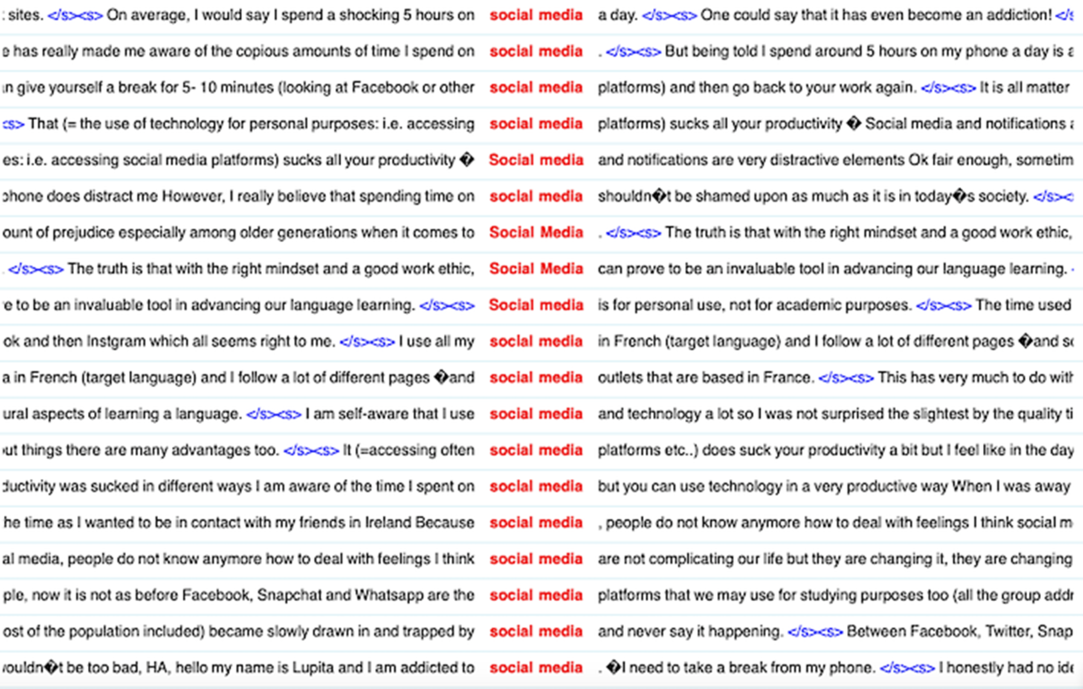
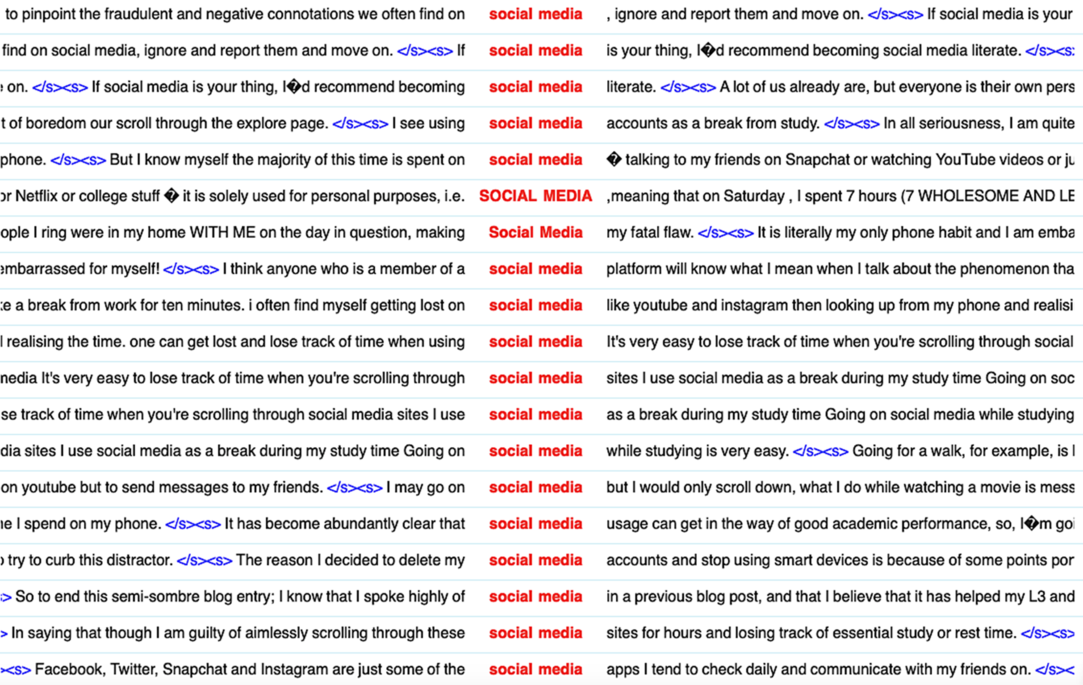
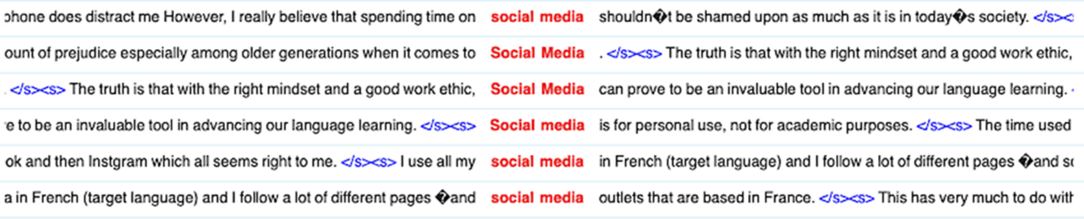
Figures 8 and 9 show examples of social media themes discussed by the participants during the interviews and the blog posts/essay writing. As indicated by these figures, social media are heavily used by the student respondents. Here we highlight some of the more significant and revealing comments, which were not atypical: “I am addicted to social media”, “I often find myself getting lost on social media”, and “It’s very easy to lose track of time when you’re scrolling through social media sites”. They also have some awareness of the time spent on these platforms as well as some concerns: “I am self-aware that I use social media and technology a lot”. Social media can also be addictive; according to the participants, they can not only lead to wasting a lot of valuable study time but also have an impact on their academic performance: “Accessing social media sucks all your productivity”. Earlier we discussed the issues surrounding time management, academic performance and student attention when analysing the data from the survey. However, from our other data sources, some students do not explicitly associate their use of social media as being a distraction or affecting their focus and attention. They see their lack of productivity due to time mismanagement and not their (mis-)use of social media. This is confirmed by one participant who suggested the need to develop a literacy that would help to deal with these platforms: “If social media is your thing, I’d recommend becoming social media literate”.
Reported heavy use of social media

General student awareness of social media usage

Using a corpus search, the time management issue in relation to technology will be next discussed, approaching both the negative and positive sides of it according to our participants’ experiences.
3.4 Time management
Figure 10 shows the positive effects technology has in relation to time management. The KWIC search reveals some student perceptions of how technology in general and social media in particular prove to be a very useful learning tool; however, it is necessary to have “the right mindset and a good work ethic”. Time spent on social media platforms is often perceived as a reward after having worked on different academic assignments. Taking a pause from academic work by checking the phone or spending a few minutes on Facebook is considered a “deserved” reward: “If I have assignments to finish I say to myself ‘Let’s write maybe 1500 words and then I can go on Facebook for a while’”. In addition, another strategy mentioned by some participants consists of limiting the use of technology in general and social media in particular, especially while studying. There is an awareness that technology is about “self-control” and in order to foster this ability, various strategies have to be put in place: “I think technology is about self-control”. Finally, the use of technology for recreational purposes needs to have an allocated time. This has been heavily confirmed by the results gathered in both the interviews and surveys.
Time management: Positive effects theme

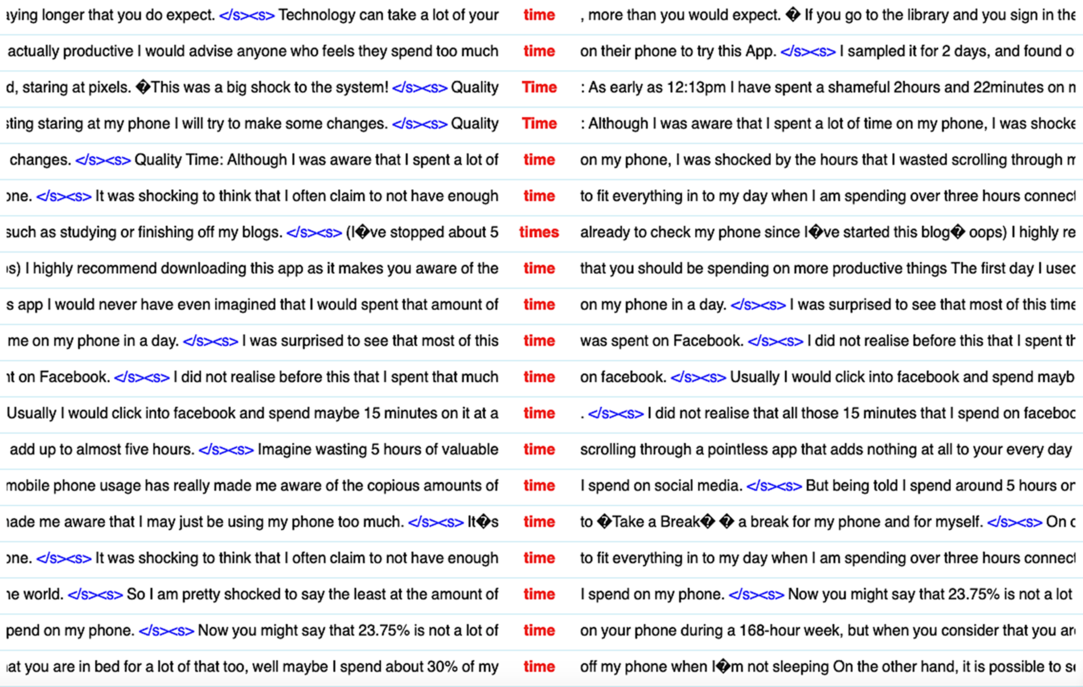
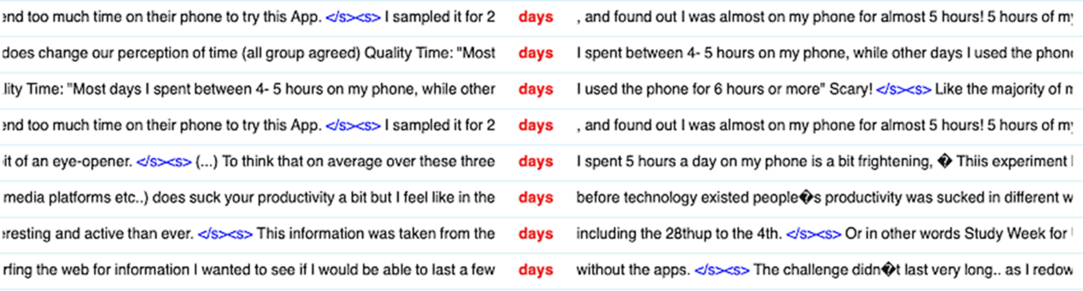
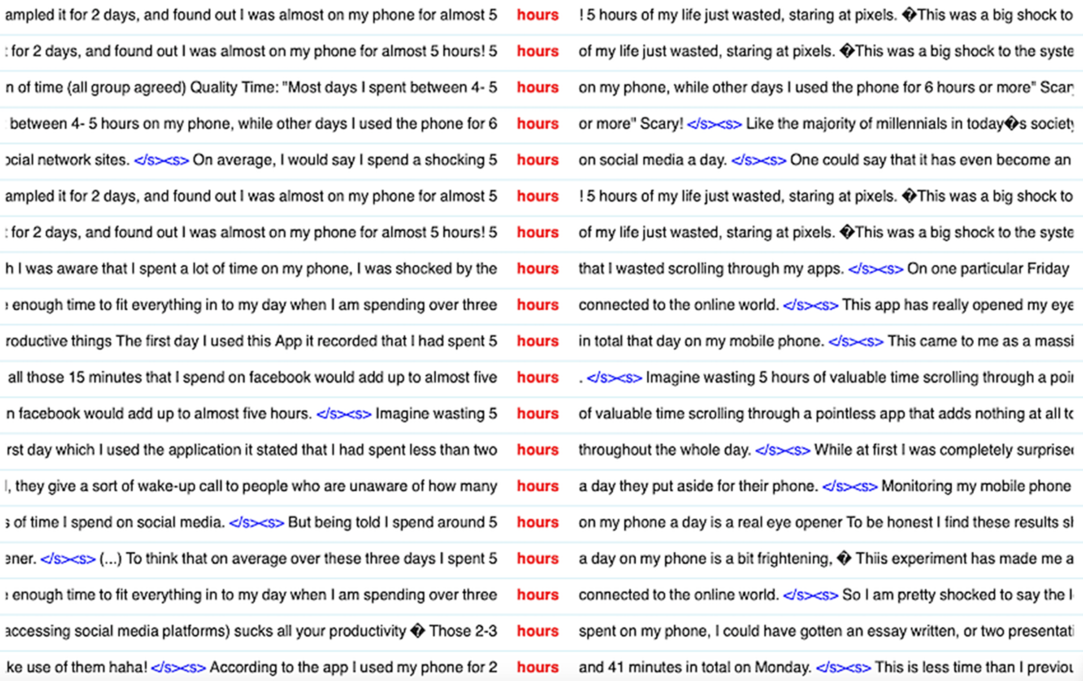
Together with the positive effects of using technology to enhance time management literacy, our study also reveals some negative effects. Figures 11, 12 and 13 present the results from the concordancer for words in the semantic field of “time”, providing specific references to how time seems to go faster when online and/or while scrolling through social media. This may mean that our participants are aware of the risk of wasting a lot of valuable study time surfing the net or when engaging in social media activities. According to their responses, getting lost online as well as being distracted by technology when studying is a real concern: “I think it’s very difficult to write a proper essay if you have your phone running all the time”. In relation to this, one student also refers to the QualityTime app they were testing as empirical evidence of this concern: “I would advise anyone who feels they spend too much time on their phone to try this App. I sampled it for 2 days, and found out I was on my phone for almost 5 hours! This was a big shock to the system!”.
Time management: Negative effects

References about time spent from the word “day”

Occurrences of the word “hour” evidencing students wasting a lot of time and getting distracted with their phones

It is clear from our data that some participants expressed a sense of discomfort when realising the amount of time spent online. As a consequence, they felt the urge to react, stating that an intervention was needed and strategies should be put in place to overcome this issue: “I appreciate technology and what it does for my language learning but in this instance I feel an intervention is needed”. And also: “Now that I am aware of how much of my life I am wasting staring at my phone I will try to make some changes”.
3.5 Distractive technology
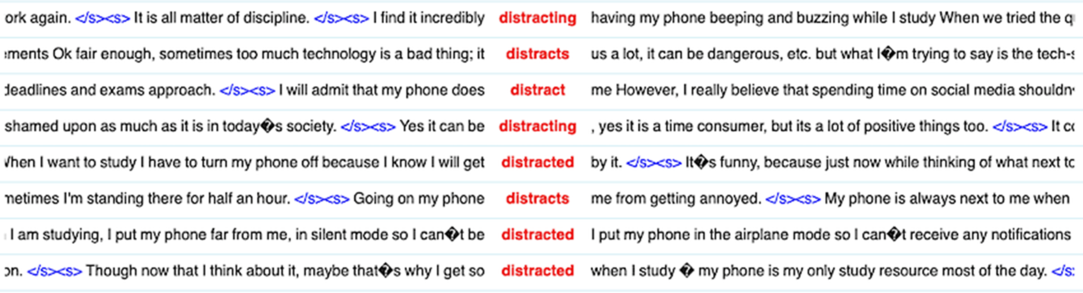
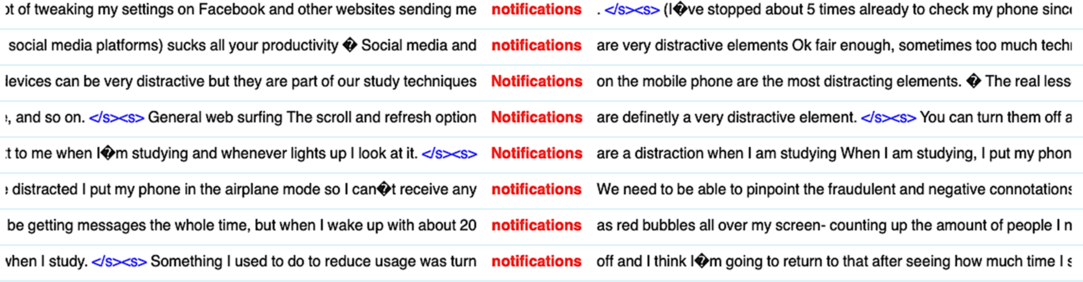
References to the distractive nature of technology appear consistently in the analysed data. There is a high presence of the words distraction, distracting, to distract, distractive. The direct lexical reference to distraction occurs a lot of times, with references to concentration, discipline, productivity, time or focus (see Figure 14). One element that recurred often in the student discourse is “notifications” (see Figure 15). Notifications coming from different applications such as social media platforms or email accounts are considered a huge element of distraction for many of our participants.
Examples of how students talk about distraction

Notifications prompt distraction

4. Discussion
4.1 Time management and the contradictions of technology: A double-edged sword
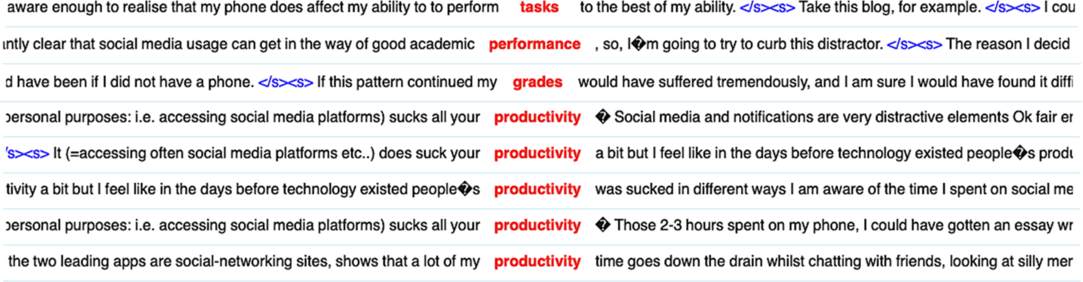
Our data show that the use of technology may have very positive effects on the learning process. As stated by some of the participants, it promotes effective time management and concentration and overall fosters a more efficient learning process that leads to effective second language acquisition (SLA), as was often proven in the past (Chapelle, Reference Chapelle1998). Equally, the data show how the use of technology can become a distraction that results in some lack of concentration by the learner. Many of the respondents in our study came to the realisation that they wasted an excessive amount of time online. This difficulty with time management issues that undergraduates are confronting impacts directly on their performance (similar findings are given by Selwyn, Reference Selwyn2016), as they are reportedly taking longer to complete module tasks and assignments, resulting sometimes in a perception of loss of control that consequently generates anxiety for them. Some occurrences related to this idea of student performance as task engagement directly related to the learning process are shown in Figure 16 with words such as tasks, performance and productivity, although we found also a mention of grades.
References to student performance

From this double perspective it seems quite clear that the use of technology continues to have positive influences on learner performance, but at the same time it can impact very negatively on it, especially when there is excessive and unmonitored time spent online, as Ndaku (Reference Ndaku2013) also found in his research.
The perception among our respondents of the existing distractive nature of technology has been strongly evidenced in this study. Distraction appears to be associated with several key triggering factors. The lack of purpose when surfing the web and being “lost in hyperspace” can be identified as some of the triggers during study time. Becoming lost in hyperspace is closely associated with the serendipitous nature of browsing where certain hyperlinks may distract students more than others; a five-minute distraction may easily become a 30-minute one. Notifications, however, are also another trigger for distraction, but in this case students may decide to disable the notifications function when they do not want to be disturbed and lose their concentration. Having this double perspective, it is up to the learner to be aware of the impact that technology can have on their study engagement and performance and decide what action can be taken. Gaining this awareness as part of an agentive literacy is a crucial issue that emerges from being continually connected, and, as mentioned earlier, this may well mean certain students will need to acquire a new type of learning strategy.
4.2 Redefining social media as a reward
Badri, Al Nuaimi, Guang and Al Rashedi (Reference Badri, Al Nuaimi, Guang and Al Rashedi2017) noted that the use of social media networks and the Internet is one of the most important factors that can influence the educational performance of students positively or adversely. Our study data present very interesting perspectives and trends in relation to this theme. Participants very frequently mentioned social media platforms such as Facebook, Instagram, Snapchat and WhatsApp throughout the data elicitation phase. Social media have, according to them, an important role to play in relation to key elements such as exposure to technology, distraction, performance, loss of valuable studying time but also, more positively, collaboration, improvement of language skills and intercultural competence. Often social media are deemed by students, parents and educators alike as responsible for worsening exam results, as it takes time away from studying. This has been extensively confirmed by various empirical investigations that have found a negative impact that social network participation has on student academic grades and performance (Banquil et al., Reference Banquil, Chua, Leano, Rivero, Burce, Dianalan and Timog2009; Ndaku, Reference Ndaku2013; Rouis, Limayem & Salehi-Sangari, Reference Rouis, Limayem and Salehi-Sangari2011). The majority of our participants have shown some awareness of this issue, reinforced then by the evidence provided by the QualityTime app: “I am self-aware that I use social media and technology a lot so I was not surprised in the slightest by the quality time app results”.
In order to overcome the negative impacts social media may have on academic experience and performance, many students reportedly put a limit on their use of Facebook, Snapchat and Twitter accounts for “a time” when academic deadlines are approaching. This is the first strategy they come up with: recognising the risks and potential negative impacts, then taking control of their use of technology and exposure to social media platforms by allocating particular times to them. This initial strategy then moved a step forward redefining the role that these platforms can assume during study time. Many participants stated that they allowed themselves to spend a specific amount of time on social media once they had completed an academic task. This means, for example, focusing on study for one hour and then spending five minutes on Snapchat or Facebook, as one participant explained: “In order to avoid distraction, I turn my phone off and leave open on my computer just the tabs that I need. You need to tell yourself to stay focused; the more you turn off around you the more focused you can get. It is all matter of discipline”.
This shows how in some cases learners, being aware of the negative impacts social media may have on their academic performance and how much valuable time it can take, felt the urge to develop a personal plan and specific strategies to overcome this issue. Social media is perceived as a tool that can and needs to be controlled by many of our respondents while becoming, in this way, a moment of welcome interruption from academic work, hence a well-deserved “reward” both during and after the completion of specific academic activities.
Although social media may have negative impacts as explained above, in other situations it emerged to be a useful tool to facilitate collaboration, reinforce language skills and enhance intercultural competence, as one participant explained: “I use all my social media in French. This has very much to do with the intercultural aspects of learning a language”. These positive aspects addressed by the participants found strong links with the literature where several studies confirmed that social media allow students to reinforce their language skills and creativity while allowing them to get together outside the classroom to collaborate and exchange ideas about projects and assignments (Boyd, Reference Boyd2008; O’Keeffe, Clarke-Pearson & Council on Communications and Media, Reference O’Keeffe and Clarke-Pearson2011; Tuân & Tu, Reference Tuân and Tu2013).
4.3 Awareness and student intervention
Our evidence suggests that distraction is now an integral part of technology usage, especially when our students use the mobile phone during their college and study time. Nonetheless, once the distraction becomes overwhelming and affects student performance, some form of intervention needs to happen. The first step for the student must be to become aware, to be conscious of the amount of time they spend online and how distractive this activity could be. At the same time, this distraction has an impact on their time management, which exacerbates the student’s performance. Once the students become aware of the amount of time spent on their mobile phones and what effect that has on them, they seem to show a willingness for change. This study presents some evidence of how students feel and how awareness impacts upon their agency. Awareness leads students to act. This intervention may result in habit-breaking enforcements regarding phone usage:
I am most definitely spending more time on my phone than doing anything else in any one day. I am ashamed of this and since becoming aware of the harsh reality have tried to stop and cut down.
How am I spending a third of my day scrolling? I feel I need to change and actually will go a day without my phone and see how it goes. And most importantly, how will I google translate words in my languages that I don’t understand? I might suffer withdrawal symptoms.
4.4 A critical digital literacy: Agentive literacy
We have defined the concept of a critical digital literacy. After conducting our study, we identified a severe metacognitive need for learners to acquire and practise critical digital skills, such as self-regulation. Dudeney and Hockly (Reference Dudeney, Hockly, Farr and Murray2016) have shown how a wide range of digital literacies are crucial for learners today. However, now the challenge is greater as it is necessary to encourage a critical deictic literacy that tackles the distraction that technology causes for many learners (Benini, Giralt & Murray, Reference Benini, Giralt and Murray2017). We have identified a number of perceived student practices that suffer from distractive sources, resulting in poor time management and prolonged completion of study tasks and an anxiety-filled academic experience. In some cases, intervention may be recommended as we have a certain responsibility as educators to make students aware of the harmful influence that technology may have on their performance when it is not used consciously and mindfully. Emerging technologies require emerging pedagogies (see Hauck, Reference Hauck2018) that take into account these new realities and learning contexts. The high frequency and total duration of social media usage by our students are issues that need to be addressed, especially when it may have strong links with addiction and compulsive behaviour. However, as we discussed in the previous section, social media also function as a reward. We would not wish to deny such rewards that may act as a welcome fillip of motivation and encouragement when studying. We would wish for learners to develop new types of learning strategies that will bring about self-awareness and self-regulation when experiencing social networking. This proposed strategic deictic agentive literacy would give students the capacity to manage effectively their own learning experience in this Age of Distraction.
5. Limitations
Every study has its own limitations. Our study was conducted at one university and in one particular discipline. It remains evident that other universities in other locations may produce different results. This study drew data from three semesters over a three-year period, thus a greater longitudinal study is needed to test our data results. As the study was localised to foreign language students, more data would be welcome from students in other disciplines and in other years of study in order to test and generalise the results further. Additional demographic data could reveal differences between student cohorts in terms of digital distractions. Finally, other types of mobile recording apps could have been employed.
6. Conclusions and future research opportunities
This research study sought to explore the challenges and difficulties experienced by students living and performing in this Age of Distraction. Our findings indicate that technology and, in particular, social media play an essential role in exacerbating distraction in the academic experience. The convergence of digital apps and devices has normalised the use of mobile phones in learning, working or teaching contexts. Our main conclusion is that it is essential for learners to develop a critical agentive literacy, a literacy that recognises its own inherent deictic nature in needing to be continually revised and refined. Our pedagogical intervention with university students, based on the use of a mobile app to gather data related to their mobile phone usage and habits, fed two different purposes. The students became aware of time management, distraction and personal intervention issues. At the same time, they provided solid evidence for the need for a new critical digital literacy. We conclude that such a literacy should now be integrated into current educational settings and be reflected in educational practices by engaging in similar activities as described in this study: use of apps to monitor phone usage, reflective activities about time spent online to raise awareness, time management and self-control strategies, among others.
Based on this study and in order to support future developments in educational contexts, several recommendations with a view to future research opportunities are outlined here:
-
1. More research on developing effective strategies for overcoming digital distractions should be carried out at both an institutional and tutor level.
-
2. Institutional research should investigate the possible use of blocking apps for their students as our data present evidence of how some students are in favour of this type of strategy (see supplementary materials, part 2).
-
3. Additional research and teaching on “the right to disconnect” (Enjalbert, Reference Enjalbert2017) should be considered.
-
4. Further research is required in other disciplines to confirm or deny how digital awareness may encompass a critical and deictic competence.
-
5. More research studies are required on the importance of raising awareness around the potential dangers of convergence with the mixing of the academic with the personal sphere.
-
6. Further research is needed on task-shifting, nomophobia and continuous partial attention in achieving effective student learning in the context of digital distractions.
As educators, we cannot continue to ignore the digital elephant in the room. It is equally distractive and immersive. As CALL educational researchers since the early 1990s, we have witnessed and instigated many effective changes to our own pedagogies and practices due to the impact of diverse technologies. From this experience we have learned that we should continue to investigate how the use of ubiquitous technology is changing the nature of our teaching and our learners if we are to achieve and maintain effective knowledge acquisition techniques and habits. To paraphrase Rheingold (Reference Rheingold2012: 1) as he teaches us, “The future of [language learning] digital culture[s]—yours, mine, and ours—depends on how well we learn to use the media that have infiltrated, amplified, distracted, enriched, and complicated our lives”.
Supplementary materials
To view supplementary material for this article, please visit https://doi.org/10.1017/S0958344020000130
Ethical statement
All of the instruments and processes used in collecting, analysing and reporting the findings in this study were covered by ethical approval gained from the ethics committee of the Faculty of AHSS, University of Limerick (application reference: 2018-06-17-AHSS). There are no conflicts of interest to report.
Appendix
A summative snapshot of many current digital skills can be found at https://www.allaboardhe.ie/map/, with a more localised version for language learning here: https://www.digilanguages.ie
All Aboard

DigiLanguages

About the authors
Liam Murray is a senior lecturer in French and language technologies in the School of Modern Languages and Applied Linguistics, University of Limerick, Ireland. His research interests range from the exploitation of social media and blog writing for SLA to digital games-based language learning. Recent publications list: https://ulsites.ul.ie/mlal/node/8101
Marta Giralt is a lecturer in applied linguistics and Spanish in the School of Modern Languages and Applied Linguistics, University of Limerick, Ireland. Her research interests are in SLA, computer-mediated communication and language learning and intercultural communication. Recent publications list: https://ulsites.ul.ie/mlal/dr-marta-giralt-0
Silvia Benini received her PhD from the University of Limerick, Ireland. She is presently a research assistant in the School of Languages, Literatures & Cultures at University College Cork, Ireland. Areas of research interest include CALL, games-based learning and intercultural communication. Her work has been published in CALICO and ReCALL, among others.
Author ORCIDs
Liam Murray, https://orcid.org/0000-0001-8277-6205
Marta Giralt, https://orcid.org/0000-0002-1629-7641
Silvia Benini, https://orcid.org/0000-0001-7384-6988