On 24 July 1660, a great conflagration broke out in Istanbul. An Ottoman writer conveys the horror of the event: “[t]housands of homes and households burned with fire. And in accordance with God's eternal will, God changed the distinguishing marks of night and day by making the very dark night luminous with flames bearing sparks, and darkening the light-filled day with black smoke and soot.”
1 Nasuh Paşazade Ömer Bey, Turhan Vâlide Sultan Vakıfnamesi, Süleymaniye Library, Istanbul, ms. Turhan Vâlide Sultan 150, February 1663, fol. 17b.
The fire began in a store that sold straw products outside the appropriately named Firewood Gate (
Odun kapısı) west of Eminönü, and it devastated densely crowded neighborhoods consisting of wooden homes. The strong winds of Istanbul caused the fire to spread violently in all directions, despite the efforts of the deputy grand vizier (
kaimmakam) and others who attempted the impossible task of holding it back with hooks, axes, and water carriers. Sultan Mehmed IV's boon companion and chronicler,
Abdi Paşa, notes that the fire marched across the city like an invading army: the flames “split into divisions, and every single division, by the decree of God, spread to a different district.”
2 Abdurrahman
Abdi Paşa, Vekayiname, Köprülü Library, Istanbul, ms. 216, fols. 128b–29b.
The fire spread north, west, and to Unkapanı. According to Mehmed Halife, in Süleymaniye the spires of the four minarets of the great mosque burned like candles.
3 Mehmed Halife, Tarih-i Gilmani (Istanbul: Türk Tarihi Encümeni Mecmuası, 1924), 67.
The blaze reached Bayezid and then moved south and west to Davud Paşa, Kumkapı, and even as far west as Samatya. The flames did not spare the Hippodrome (
At Meydanı) in the east or Mahmud Paşa and the markets at the center of the peninsula, either.
Abdi Paşa estimated that the fire reduced 280,000 households to ashes as the city burned for exactly forty-nine hours.
4 These figures may be exaggerated. According to Ottoman poll-tax (cizye) records, there were 62,000 Christian and Jewish households in Istanbul in 1690–91, of which 80 percent were Christian. If non-Muslims made up 42 percent of the city's population, as they had in the previous century, then one can estimate that there were 86,000 Muslim households in the city. One can then approximate a population of between 600,000 and 750,000, including 200,000 to 250,000 Christians and 50,000 to 60,000 Jews. See Robert Mantran, Istanbul dans la seconde moitié du XVIIe siècle: Essai d'histoire institutionnelle, économique, et sociale (Paris: Librairie Adrien Maisonneuve, 1962), 44–47.
Two-thirds of Istanbul was destroyed in the conflagration, and as many as 40,000 people lost their lives. Although fire was a frequent occurrence in 17th-century Istanbul, this was the worst the city had ever experienced.
5 Mustafa Cezar, “Osmanlı Devrinde İstanbul Yapılarında Tahribat Yapan Yangınlar ve Tabii Afetler,” Türk Sanat Tarihi Araştırma ve İncelemeleri (Istanbul, 1963), 1:327–414; Mantran, Istanbul, 36; and Halil İnalcık, s.v. “Istanbul,” Encyclopaedia of Islam, 2nd ed. (EI2).
Thousands died in the plague that followed the fire as rats feasted on unburied corpses and spread disease. Because three months prior to this fire a conflagration had broken out in the heart of the district of Galata, across the Golden Horn from Eminönü, much of the city lay in ruins in the summer of 1660.
This article analyzes Ottoman reconstruction policies following the fire. While rebuilding the city, the Ottomans enacted unprecedented policies concerning Christian and Jewish houses of worship. First, contrary to previous periods in which Ottoman rulers generally allowed churches and synagogues to be built or rebuilt, in this period they strictly applied Islamic laws prohibiting reconstruction. Second, when they did permit the building of non-Muslim prayer houses, Ottoman authorities did not treat all religious communities equally. Surprisingly, Christians were initially allowed to purchase the properties on which churches had stood and were even permitted to rebuild the structures, ostensibly as homes. Jews, however, had to abandon properties, could not restore their homes or synagogues, and were even expelled from the district where most had resided prior to the fire. In the end, the visual presence of prominent mosques in Eminönü and Galata symbolized the Islamization of the two districts.
Scholars have discussed some of the effects of the fire. Louis Mitler, relying mainly on European sources, notes the difficulties Christians faced in attempting to rebuild ruined Catholic churches in Galata. Uriel Heyd analyzes the dislocation of Jews after the fire, finding that the devastation of the neighborhoods of Karaite and Romaniot Jews resulted in their being absorbed by surviving Iberian congregations. Interested in the relationship between dynastic politics and the endowment of public buildings by Ottoman women, Leslie Peirce and Lucienne Thys-Şenocak explain how Valide Sultan (mother of the reigning sultan) Hatice Turhan ordered the construction of the Valide Sultan Mosque in Eminönü to Islamize the commercial district, consolidate her own political power, and promote the dynasty's legitimacy and piety.6
On rebuilding Catholic churches in Galata, see Louis Mitler, “The Genoese in Galata: 1453–1682,” International Journal of Middle East Studies 10 (1979): 86–91. But see also Halil İnalcık, “Ottoman Galata, 1453–1553,” in idem, Essays in Ottoman History (Istanbul: Eren, 1998), 275–376. On the dislocation of Jews, see Uriel Heyd, “The Jewish Community of Istanbul in the Seventeenth Century,” Oriens 6 (1953): 311–13. See also Avram Galanté, Histoire des juifs d'Istanbul (Istanbul: Imprimerie Hüsnutabat, 1941), 15, 53; and Stéphane Yerasimos, “La Communauté juive d'Istanbul a la fin du XVIe siècle,” Turcica 27 (1995): 108. The Romaniots were Greek-speaking Jews present in the Byzantine Empire. The Karaites were a sect of Jews who accept only the Torah (written law) and not the Talmud (oral law) of Rabbanite Jews. On Valide Sultan Hatice Turhan, see Leslie Peirce, The Imperial Harem: Women and Sovereignty in the Ottoman Empire (New York: Oxford University Press, 1993), 206–209; and Lucienne Thys-Şenocak, “The Yeni Valide Mosque Complex at Eminönü,” Muqarnas 15 (1998): 58–70. See also Ali Saim Ülgen, “Yenicami,” Vakıflar Dergisi 2 (1942): 387–97; and Oktay Aslanapa, Osmanlı Devri Mimarîsi (Istanbul: İnkılâp Kitabevi, 1986), 347–55.
No study thus far, however, has compared the different Ottoman policies vis-à-vis Christians and their properties in Istanbul, particularly Catholics in Galata and Jews and their properties in Eminönü. Research until now has provided only part of the story, because historians have neglected citywide Ottoman plans for reconstruction and the motivations for those plans.
Based on Ottoman archival and narrative sources, this article will explain how, following a period of acute political and economic crisis and religious upheaval, the fire served as an opportunity for Valide Sultan Hatice Turhan, Sadrazam (Grand Vizier) Fazıl Ahmed Paşa, and Preacher to the Sultan (hünkâr şeyhi) Vani Mehmed Efendi to promote Islamization to satisfy their different political and religious interests. Islamization offered a visible sign of the successes of the dynasty, state, and religion. For the valide sultan, not only did constructing her own imperial mosque complex in Eminönü demonstrate the piety and legitimacy of the dynasty she represented, but linking the fire to the Jews further legitimized the mosque's construction and underscored the community's decline. The mosque construction also set in motion a larger process of Islamization in the city as the sadrazam aimed to assert the state's authority at home and abroad. At the time, Ottoman military policy, especially regarding the siege of Crete, showed little sign of success, and the Ottomans, who considered themselves to be the protectors of Islam, were demoralized. The fire in the Christian neighborhood provided an opportunity to subordinate non-Muslims through the built environment of the imperial capital. Policies of Islamization demonstrated that all Ottoman subjects—including Christians in Galata who had broken pledges not to rebuild churches—adhered to the law. The sadrazam also sought to assist Muslim endowment (sing., vakıf; pl., evkaf) owners who desired compensation for the loss of their properties in Eminönü that would allow them to acquire former church properties in Galata. The preacher's aim of commanding right and forbidding wrong necessitated reforming Muslim behavior and decreasing the visibility of non-Muslims in Istanbul. He advised the valide sultan and the sadrazam to defeat the foreign infidel in the Mediterranean, to promote what he envisioned as the true path of Islam in the empire, and to call for the submission of non-Muslims, particularly Christians, in the imperial capital. While economic, commercial, and urban imperatives influenced their decisions, and matters of opportunism and expediency cannot be doubted, Hatice Turhan, Fazıl Ahmed Paşa, and Vani Mehmed Efendi had varying political and religious aims that were manifested in the different ways they approached the Islamization of Christian and Jewish space in Eminönü and Galata.
In addition to using a historical example to analyze the normative and actual status of churches and synagogues in pre-modern Islamic societies, this article addresses a theoretical need by exploring the understudied topic of the Islamization of space. The history of Istanbul's reconstruction following the fire of 1660 sheds light on a less-well-known stage in the process through which the Ottoman capital was Islamized in the pre-modern era.
THE HISTORICAL CONTEXT: A PERIOD OF CRISIS
Events from 1648 to 1661 define the historical context in which Islamization in Istanbul took place. Severe political and economic obstacles confronted the Ottoman Empire in the mid- to late 17th century. Among Muslims, the period witnessed a struggle over acceptable religious practices. For non-Muslims, Orthodox Christians replaced Jews serving in key palace functions. Hatice Turhan, Fazıl Ahmed Paşa, and Vani Mehmed Efendi responded to these problems in different ways.
Political and financial problems beset the empire at mid-century. After the dethronement and execution of Sultan Deli (Mad) İbrahim, Sultan Mehmed IV ascended the throne at age seven in 1648. His mother, Hatice Turhan Sultan (d. 1683), a Russian taken captive as a girl by the Crimean Han and presented to the Ottoman palace, competed with her mother-in-law, Kösem Sultan, to be recognized as Mehmed's regent. After three years of fierce palace struggle, Hatice Turhan managed to have Kösem Sultan murdered, but the valide sultan soon found that these were difficult years to rule the empire. Between 1648 and 1656, a string of twelve incapable and feeble sadrazams served terms of one to twelve months in office. Five sadrazams served in 1656 alone. The Ottoman provinces faced an upheaval caused by peasant mercenaries (sekbans) who had been armed by the government, as well as rebellions of rogue military men and administrators such as Abaza Mehmed Paşa. The sadrazams tried to assert order while “Muslim servants of the sultan rebelled as Satan whispered in their ears.”7
İsmail Hakkı Uzunçarşılı, Osmanlı Tarihi, 3rd ed., vol. 3, pt. 1 (Ankara: Türk Tarihi Kurumu Basımevi, 1983), 388.
In addition, Ottoman authorities did not have the financial wherewithal to handle the situation since they had lost control of their own currency and thus were unable to regulate their own economy.
8 Şevket Pamuk, “In the Absence of Domestic Currency: Debased European Coinage in the Seventeenth-Century Ottoman Empire,” Journal of Economic History 57 (1997): 345–66. Ottoman silver coins (akçe) became merely units of account because Dutch thaler (esed-î guruş) and Spanish reales de la ocho (pieces of eight, riyal guruş) were used for actual payments.
The ability to mint coins was a primary concern of states and empires; giving up this right meant forfeiting an opportunity to instill public confidence in the dynasty. Merchants and janissaries clashed in Istanbul over the value of debased coinage in 1650 and 1656.
9 For the events of 1650, see
Abdi Paşa, Vekayiname, fols. 27a–28a; for the events of 1656, see Hrand d. Andreasyan, “Çınar Vak
ası,” İstanbul Enstitüsü Dergisi 3 (1957): 57–83.
The empire's financial and political problems were related to military failure in the Mediterranean. Expenditures for the war with Venice, which included a drawn-out, costly, and apparently futile attempt to conquer the entire island of Crete, contributed to the economic crisis.10
M. Cavid Baysun, s.v. “Mehmed IV,” İslam Ansiklopedisi (Istanbul, 1960). M. Tayyib Gökbilgin and R. C. Repp s.v. “Köprülü,” EI2; Halil İnalcık, “Military and Fiscal Transformation in the Ottoman Empire, 1600–1700,” Archivum Ottomanicum 6 (1980): 283–337; Suraiya Faroqhi, “Crisis and Change, 1590–1699,” in An Economic and Social History of the Ottoman Empire, Vol. 2: 1600–1914, ed. Suraiya Faroqhi et al. (Cambridge: Cambridge University Press, 1994), 423–24; and Kenneth M. Setton, Venice, Austria, and the Turks in the Seventeenth Century (Philadelphia: American Philosophical Society, 1991), 137–205.
The siege of Crete in fact drained the Ottoman treasury for a quarter-century. Venetian warships defeated the Ottoman navy in twelve of thirteen battles between 1646 and 1656, and this failure in the Mediterranean affected the populace of Istanbul economically. In 1656, Venetians occupied the crucial islands of Bozcaada (Tenedos), Limni (Limnos), and Semadirek (Samothraki), which form an arc around the mouth of the Dardanelles. Able to cut Istanbul's sea link to the Mediterranean, Venice blockaded the imperial capital.
11 Uzunçarşılı, Osmanlı Tarihi, 328.
The loss of the islands led to severe hardship as goods and provisions became scarce and prices skyrocketed. Thousands of Istanbul residents, including the royal family, fled to the Anatolian side of the city.
12 Kürd Hatib Mustafa, Risale-i Kürd Hatib, Topkapı Sarayı Müzesi, Istanbul, ms. Eski Hazine 1400, fols. 7b–8a, describes the despair in the city.
The Ottomans received some respite from these troubles after Köprülü Mehmed Paşa (d. 1661) was appointed sadrazam in 1656, but Hatice Turhan lacked the powerful symbols that would signify the renewed strength of the dynasty and empire.
13 The Ottoman defeat of the Venetian navy and conquest of the islands of Bozcaada and Limni in 1657 opened the straits and Istanbul to Ottoman ships. Rebellious sipahis were executed; the uprising of Abaza Hasan Paşa, the ringleader of revolt in Anatolia, was crushed; and state finances were stabilized so that by 1660–61 the state budget was practically balanced. See Mantran, Istanbul, 254.
In the midst of political and economic disorder, Hatice Turhan and her supporters in the palace turned to the Kadızadeli Islamic reform movement, which had first emerged in the early 17th century during the reign of Sultan Murad IV (1623–40). The movement re-emerged at mid-century and became most influential after 1661. The leaders of this movement sought to replace the Islam practiced in Istanbul with a religion purified of innovations (bid'at) that had not been sanctioned by Muhammad.14
Ahmet Yaşar Ocak, “XVII Yüzyılda Osmanlı İmparatorluǧunda Dinde Tasfiye (Püritanizm) Teşebbüslerine Bir Bakış: Kadızâdeliler Hareketi,” Türk Kültürü Araştırmaları 17–21, nos. 1–2 (1979–83): 208–25; Lewis V. Thomas, A Study of Naima, ed. Norman Itzkowitz (New York: New York University Press, 1972), 106–10; Madeline Zilfi, “The Kadızadelis: Discordant Revivalism in Seventeenth-Century Istanbul,” Journal of Near Eastern Studies 45 (1986): 251–69; and idem, The Politics of Piety: The Ottoman Ulema in the Post-Classical Age (1600–1800) (Minneapolis: Bibliotheca Islamica, 1988), 146–59. See also Semiramis Çavuşoǧlu, “The Kadızadeli Movement: An Attempt of Şer
iat-Minded Reform in the Ottoman Empire” (Ph.D. diss., Princeton University, Princeton, N.J., 1990).
These included many of the popular Sufi practices, such as playing music and dancing (
sema) and repeatedly reciting God's names and attributes (
zikir) as a form of prayer. The Kadızadelis blamed the empire's military defeat abroad and economic difficulties at home on the Ottoman religious and administrative establishments' affiliation with and patronage of some Sufi orders. Rising in influence in part because of a reaction to failures of the Ottoman polity, the Kadızadelis offered steps to restore the Ottomans to greatness.
15 On the link between Halvetis and sultans, see F. de Jong, s.v. “Khalwatiyya,” EI2. On the Kadızadelis' rise in influence, see Mustafa Naima, Tarih-i Naima, vols. 5–6 (Istanbul: Matbaa-i Amire, n.d), 5:54–59, 6:227–41; and Thomas, Naima, 106–10.
Not all Muslims were pleased with their approach to Islam, however, and violent clashes resulted.
As Muslims were struggling in the capital over the correct interpretation of Islam, Jews and Orthodox Christians were jockeying for coveted positions in the palace. Kadızadelis and Orthodox Christians gained the upper hand in the period because of palace support. Elite Jews had formerly held important positions ranging from head of the private physicians of the sultan to chief translators and representatives of the Ottoman Empire in diplomatic missions abroad. But at the beginning of the 1660s, Ottoman authorities began to prefer Orthodox Christians—the largest non-Muslim group in the city, with a patriarch and increasing financial strength—to serve in these positions.16
The position of chief rabbi (hahambaşı) was not instituted until 1835.
Scholars have discussed the rise and decline of the Jewish elite in the Ottoman Empire and their subsequent displacement by Orthodox Christians in the 17th century.
17 Benjamin Arbel, Trading Nations: Jews and Venetians in the Early Modern Eastern Mediterranean (Leiden: E. J. Brill, 1995), 17, 193–94; Faroqhi, “Crisis and Change,” 452–60; William McNeill, “Hypotheses concerning Possible Ethnic Role Changes in the Ottoman Empire in the Seventeenth Century,” in Social and Economic History of Turkey (1071–1920), papers presented to the First International Congress on the Social and Economic History of Turkey, ed. Osman Okyar and Halil İnalcık (Ankara: Meteksan Limited Şirketi, 1980), 127–29; Traian Stoianovich, “The Conquering Balkan Orthodox Merchant,” Journal of Economic History 20 (1960): 234–313; Benjamin Braude and Bernard Lewis, “Introduction,” in Christians and Jews in the Ottoman Empire: The Functioning of a Plural Society, ed. Benjamin Braude and Bernard Lewis, 2 vols. (New York: Holmes and Meier, 1982), 1:1–34; and Esther Benbassa and Aron Rodrigue, Sephardi Jewry: A History of the Judeo-Spanish Community, Fourteenth to Twentieth Centuries (Berkeley: University of California Press, 2000), 36–49.
Yet they have not emphasized the importance of Ottoman attitudes toward Jews or why the 1660s was such a crucial decade. Granted, few Jews during this time were wealthy, were educated in Europe, or had favorable international connections. Even if there had been more elite Jews, they may not have been selected for important duties because of antipathy toward them. After 1665, Jews were denied key palace positions because they were considered to be a volatile and untrustworthy group because of a widespread belief that they endorsed the messianic movement of Shabbatai Tzevi, a movement that threatened to undermine the social order. The movement directly challenged the dynasty's uncontested rule when it was facing serious military and financial problems, including the empire's costly attempt to conquer Crete. Catholics in Istanbul had the political, military, and economic weight of France, an Ottoman ally, and its ambassador at Istanbul behind them. Even if France's influence at court in the 1660s was lessened by French support for Venetian forces defending Crete and personal differences between the ambassador and sadrazam, the French remained an important defender of Ottoman Catholic interests.
18 Charles A. Frazee, Catholics and Sultans: The Church and the Ottoman Empire, 1453–1923 (London: Cambridge University Press, 1983), 100–102.
In light of these factors and attitudes, therefore, Jews could have been considered less valuable and more vulnerable than either Orthodox Christians or Catholics, and they had fewer people in high places able to resist the Islamization of Jewish-inhabited areas.
ISLAMIZATION: SYMBOL OF AUTHORITY
Political symbolism acquired greater significance during the chaotic period from 1648 to 1661. The valide sultan, sadrazam, and preacher to the sultan supported Islamization as a common standard of authority that supported their different yet intersecting interests. Within the dynasty, the valide sultan was most qualified to engage symbolically potent acts. As Rifa
at
Ali Abou-El-Haj notes, Ottoman writers recognized that sultans “acted mainly as symbolic leaders, providing a façade for continuity for the old practices as they helped to legitimate new ones.”
19 Rifa
at
Ali Abou-El-Haj, Formation of the Modern State: The Ottoman Empire, Sixteenth to Eighteenth Centuries (Albany: State University of New York Press, 1991), 38, 44.
According to Leslie Peirce, “[W]ith political power and military leadership delegated to the grand vizier, the most useful function that the sovereign might perform was to furnish visible symbols of majesty and piety to maintain the subjects' loyalty and sense of community.”
20 Peirce, Imperial Harem, 257.
Sultan Mehmed IV could not play this role because he first ruled while a minor, and when he matured he had little interest in affairs of state and thus had minimal impact on events in Istanbul.
21 Mehmed IV did have an impact on non-Muslims in Edirne and Rumelia, where hundreds of Christians and Jews converted to Islam before him at his court in the last part of his reign (1661–87).
As the historian Mehmed Halife notes, “[O]ur fortunate sovereign was so pleased by the hunt in Edirne that people in Istanbul gave up hope that he would come again to the city.”
22 Mehmed Halife, Tarih-i Gilmani, 96.
Because of the sultan's absence, the valide sultan was obliged to promote “symbols of power and legitimation” in the imperial capital.
23 Faroqhi, “Crisis and Change,” 609–22.
Since there was concern that the sultan was excessively devoted to the pursuit of pleasure, and therefore did not act for the good of the empire, the valide sultan filled in with frequent royal trips from Istanbul, where she resided, to Edirne, where her son spent most of his reign. The valide sultan traveled in lavish and lengthy processions that displayed Ottoman magnificence, munificence, justice, and piety. She also ordered the construction and repair of public buildings in and near the imperial capital, including fortresses guarding the Bosphorus (Rumeli Hisarı and Anadolu Hisarı), the Black Sea, and especially the Dardanelles (Kilidbahir/Seddülbahir and Kale-i Sultaniye). She was praised for this effort since “infidel captains did not even think about entering the channel” as Muslim vessels “flowed again like water down the straits.”
24 Peirce, Imperial Harem, 194–96, 211; Kürd Hatib, Risale-i Kürd Hatib, fols. 17a–b.
The most meaningful of her monumental public works was the construction of an imperial mosque in Eminönü. The location of the Valide Sultan Mosque illustrates the aims and interests of its builder. Mosques and their inscriptions conveyed great meaning in pre-modern Islamic societies. Irene Bierman argues that imperial mosques marked spaces and delimited boundaries, expressed power, supported political and hegemonic interests, and conveyed meaning both to those who entered them and those who passed by outside.
25 Irene Bierman, “Preliminary Considerations,” in Writing Signs: The Fatimid Public Text (Berkeley: University of California Press, 1998), chap. 1.
The Valide Sultan Mosque was highly visible on the seafront in the main harbor of Istanbul and could be seen by a maximum number of Christian, Jewish, and Muslim passers-by. The Mosque of Süleyman towered over the city because of its hilltop location, but the Valide Sultan Mosque held an even more commanding position, for it served as the imperial edifice that greeted one upon arrival at the main port. The building itself and its inscriptions conveyed several meanings to the intended audience of Muslims and non-Muslims. Only some Muslims knew the meaning of the inscriptions, but Christians, Jews, and Muslims all recognized that they were Qur
anic texts written in Arabic. They did not need to understand Arabic to realize the radical transformation of the neighborhood.
Fazıl Ahmed Paşa (d. 1676), a former medrese professor (müderris) who succeeded his father, Köprülü Mehmed Paşa, in office in October 1661, also had an interest in Islamization. His fifteen-year period in office was one of the longest terms held by a sadrazam in Ottoman history and was marked by a concern for improving the political, economic, and military strength of the empire.26
Gökbilgin and Repp, “Köprülü.”
As administrator of the affairs of a troubled state, Fazıl Ahmed Paşa understood the importance of symbolic successes and grasped the significance of internal Islamization when actual military conquest of infidel land was out of reach. Unlike his father, who did not support the Kadızadeli movement, Fazıl Ahmed Paşa further increased the Islamic character of the palace by bringing a reformist religious preacher, Vani Mehmed Efendi (d. 1685), to Istanbul and to the attention of the sultan and valide sultan.
27 Kürd Hatib, Risale-i Kürd Hatib, fols. 14a–b.
He had befriended the religious scholar while governor in Erzurum where Vani Mehmed Efendi preached.
28Abdi Paşa, Vekayiname, fols. 108b–109b; Râşid Mehmed Efendi, Tarih-i Râşid, vols. 1–2 (Istanbul: n.p., 1866–67), 1:483; and Defterdar Sarı Mehmed, Zübde-i Vekayiât, (Ankara: Türk Tarih Kurumu Basımevi, 1995), 210. Vani Mehmed Efendi spoke Kurdish and was referred to as being “among the ulema of the land of the Kurds.”
Vani Mehmed Efendi took up the post of spiritual guide and preacher of Sultan Mehmed IV and in 1665 became the first to preach in the showcase mosque in Eminönü.
29 Râşid, Tarih-i Râşid, 1:106–107.
Vani Mehmed Efendi wished to demonstrate the supremacy of his version of Islam. He quickly became the confidant of the sultan, valide sultan, and sadrazam, and because of his stirring preaching and as leader of the Kadızadeli movement, he became an extremely influential figure. Archival and narrative sources record his close relations with key figures of the dynasty and administration.30
In 1666, Sultan Mehmed IV honored the preacher with a visit to his household; see
Abdi Paşa, Vekayiname, fols. 228a–b, and Râşid, Tarih-i Râşid, 1:134–35. The preacher stayed by the sultan's side during military campaigns, as well—for example, the commissary-general was ordered to provide Vani Mehmed Efendi with foodstuffs during the Ottoman campaign to Poland in 1673–74. See Başbakanlık Osmanlı Arşivi (BBA), Istanbul, Ali Emiri Tasnifi, Mehmed IV: 1169–72, 1986. The preacher also accompanied the valide sultan in 1672 when she journeyed from Istanbul to Edirne. See Peirce, Imperial Harem, 194.
He cheered his audience with glad tidings, frightenened them with warnings, and enlightened listeners through his sermons.
31Abdi Paşa, Vekayiname, fols. 197a–b, 29 January 1666. Invited to pray at Dimetoka for the Ottoman army besieging Candia, the preacher ascended the pulpit at the imperial tent and “scattered such precious jewels from the treasure of Qur
anic truth that tearful eyes and hearts filled with amazement.” See ibid., fols. 234a–b, 13 June 1667.
Vani Mehmed Efendi owed much of his prestige to his Kadızadeli credentials; as other Kadızadeli leaders had before him, so, too, did he aim to eradicate what he considered illicit Muslim behavior and to strengthen the rule of Islamic law (
şeriat) and the way of Muhammad (
sünnet) against innovation. His wrath primarily targeted “innovating” Sufis. In alliance with the sultan and sadrazam, whom the religious leader viewed as the defenders, protectors, and guardians of the Muslims against the threat of heresies, Vani Mehmed Efendi aimed to suppress the political power and religious influence of Bektaşis and Halvetis.
32 F. W. Hasluck, Christianity and Islam under the Sultans, ed. Margaret Hasluck, 2 vols. (Oxford, 1929; repr. New York: Octagon Books, 1973), 1:419–23.
In prayers that the preacher composed for the sultan between 1664 and 1667 and in the letters he exchanged with the sadrazam, Vani Mehmed Efendi emphasized the threat of innovators, depicted the sultan and the sadrazam as saving the domains of Islam by repelling threats to the state, and called for reinvigorating Sunni Islam within the empire.
33 Vani Mehmed Efendi, Münşeat Vani Efendi, Süleymaniye Library, ms. Aya Sofya 4308, fols. 1b–15a. Vani Mehmed Efendi composed a prayer in 1665 in which he praises the sultan for being “always victorious and guided to success over the enemies of religion and state, infidels and innovators.” A prayer from 1666 praises the sultan for being “the one who proclaims the true religion to unbelievers and humbles and humiliates the word of the infidels and sinners.”
Whereas earlier leaders of the Kadızadelis movement had intended to reform only Muslim behavior, Vani Mehmed Efendi sought to change the beliefs and practices of Muslims and the public position of Christians and Jews, as well. Thus, beginning in 1661, Vani Mehmed Efendi began to emphasize the sumptuary distinctions marking non-Muslims from Muslims. Social disorder and lack of social distinctions appeared to him to be the result of laxity and error in Muslims' religious beliefs and practices, and he believed that the high status of non-Muslims symbolized the corrupted nature of the body politic. Worse, non-Muslim taverns and the sale of alcohol caused moral corruption, especially in Muslim neighborhoods. Accordingly, Vani Mehmed Efendi convinced Fazıl Ahmed Paşa to issue orders to destroy taverns in the city and end the legal trade in alcohol, affecting the economic position of many Christians and Jews.34
Abdi Paşa, Vekayiname, fol. 302a, 1 August 1670. See also Râşid, Tarih-i Râşid, 1:250; and Silâhdar Fındıklılı Mehmed Aǧa, Silâhdar Tarihi, vols. 1–2 (Istanbul: Devlet Matbaası, 1928), 1:559.
OTTOMAN INNOVATION AND THE STATUS OF CHURCHES AND SYNAGOGUES
Ottoman authorities had a rich tradition of Islamic and Ottoman law and custom to draw on when they decided whether to allow Christians and Jews to rebuild their houses of worship following the fire. Since the beginning of Muslim sovereignty in the Middle East, the status of churches and synagogues had been called into question as Muslim rulers conquered regions inhabited by non-Muslims. In the earliest era of Islamic history, the key point was the restriction on building “new” churches.35
According to the Pact of
Umar, the model agreement that was meant to guide relations between Muslims and non-Muslims in lands under Muslim sovereignty, Christians in the earliest era of Islamic history pledged not to build “new monasteries, churches, convents, or monks' cells, nor shall we repair, by day or by night, such of them as fall in ruins or are situated in the quarters of the Muslims.” The historicity of this agreement may be debatable, but its tenets formed the basis for determining the status of churches and synagogues. See Bernard Lewis, ed., Islam from the Prophet Muhammad to the Capture of Constantinople, 2 vols. (New York: Oxford University Press, 1987), 2:118; and Mark R. Cohen, Under Crescent and Cross: The Jews in the Middle Ages (Princeton, N.J.: Princeton University Press, 1994), 58–60.
In theory, only those buildings in existence when Islamic rule began in a region were permitted to continue to stand. Early and medieval Islamic history is filled with examples of the use of this standard to determine the status of churches and synagogues. Islamic legal scholars prohibited construction of new churches and synagogues but differed on whether to rebuild burned or ruined ones. Most agreed there was a difference between damage and total destruction. If nothing of a house of worship remained, it could not be rebuilt.
36 Claude Cahen, s.v. “Dhimma,” EI2. For examples from Abbasid Baghdad and Fatimid and Mamluk Cairo, see Lewis, Islam, 2:224, 231, 234; and Norman Stillman, The Jews of Arab Lands (Philadelphia: Jewish Publication Society of America, 1979), 189–91. For additional examples, see Antoine Fattal, Le statut légal des non-musulmans en pays d'Islam (Beirut: Imprimerie Catholique, 1958), 174–78, 180–203.
After the Ottomans captured Constantinople in 1453, they had to decide whether to allow churches and synagogues to remain. Since Constantinople was taken by force, not willingly surrendered, its non-Muslim religious buildings could be destroyed, according to standing policy.
37 Halil İnalcık, “The Policy of Mehmed II toward the Greek Population of Istanbul and the Byzantine Buildings of the City,” Dumbarton Oaks Papers 23–24 (1969–70): 248–49; and idem, “Istanbul.”
Yet Ottoman legal authorities claimed that Christians and Jews assisted the Ottomans in conquering the city, thus allowing them to continue to pray in their already existing, or “old” (
kadim), houses of worship.
38 M. Ertuǧrul Düzdaǧ, Şeyhülislâm Ebussu'ûd Efendi'nin Fetvalarına Göre Kanunî Devrinde Osmanlı Hayatı: Fetâvâ-yı Ebussu
ûd Efendi (Istanbul: Şûle Yayınları, 1998), 165, n. 456.
Sometimes, however, churches and synagogues were torn down because they were either close to mosques or originally had been homes or other non-church buildings and so were considered “new.” In 1564–65, for example, churches were demolished in Balat and elsewhere in Istanbul for these reasons.
39 Ahmed Refik, Onuncu Asr-ı Hicrî'de İstanbul Hayatı (1495–1591) (Istanbul, 1917; repr. Istanbul: Enderun Kitabevi, 1988), 44–45.
The razings were in accord with the legal opinions (sing.,
fetva; pl.,
fetava) of Sultan Süleyman I's famous mufti Şeyhülislâm Ebussu
ud Efendi (Şeyhülislâm 1545–74; d. 1574). According to a series of his opinions, new churches were to be razed, but old churches could be rebuilt after fire so long as the building had not been destroyed completely and the original church had not been expanded.
40 Düzdaǧ, Şeyhülislâm Ebussu
ûd Efendi, 166–68. Concerning the razing of new churches, see nn. 460, 461, 463; on the subject of the rebuilding of old churches, see n. 465; on the issue of the illegality of expansion, see nn. 466 and 467.
Although new churches and synagogues were sometimes razed, the number of non-Muslim houses of worship in the city increased at least tenfold over two centuries. As many as forty Orthodox churches stood in Istanbul by the end of the 18th century although only three had existed at the time of the conquest. Similarly, there were only three synagogues in the city in 1453 yet more than ten times that number two centuries later.41
İnalcık, “Istanbul”; Galanté, Histoire, 162.
Most of these churches and synagogues would have been considered “new” and should have been slated for destruction according to Islamic law and custom, yet they were not destroyed.
What, then, justified appropriating the property of churches and synagogues after the fire of 1660? The fetava of Şeyhülislâm Yahya Efendi Minkarizade (Şeyhülislâm 1662–73; d. 1677) are very similar to those of Ebussu
ud Efendi. Minkarizade wrote that a new church or synagogue should be demolished if it had been built within a municipality whose inhabitants included Muslims who possessed a mosque. If a church already existed, it could be repaired so long as it was not enlarged, and new buildings or structures were not to be added to pre-existing church buildings. Also according to Minkarizade, if an old church, monastery, or religious school fell into disrepair or even a state of near-ruin, its owners could still repair and rebuild it as long as they added nothing to it and built on its original foundation.
42 Several fetava make this point. Minkarizade Yahya ibn Ömer, Fetava-i Minkarizade Efendi, Süleymaniye Library, Istanbul, ms. Hamidiye 610, fols. 37a–b.
According to these opinions, not only would Christians and Jews be allowed to rebuild their churches and synagogues if they adhered to these conditions, there would also be no reason to grant permission to one group to build new structures and not to another. An imperial decree claimed that, according to canonical law, burned churches were not to be restored. One would infer that, since in 1660 nothing at all remained of the burned churches and synagogues, for this reason the state treasury was able to appropriate the property.
Another legal opinion, a copy of which appears in the Istanbul Islamic law court records, reveals why synagogues were not rebuilt. In the extraordinary period following the great fire, a fetva was issued stating that the lands of old synagogues that had burned in the conflagration were to be taken over by the state treasury. Another court record refers to a fetva that justifies the actions of the state treasury in appropriating the lands of burned churches in Galata.43
Istanbul Müftülüǧü, Şer'iye Sicilleri Arşivi, Istanbul Şer'iye Sicilleri (hereafter IŞS) 9, 52a, 8 July 1661; 86a, 13 August 1661.
In both cases, the state treasury was able to acquire the land because, according to canonical law, “there is no owner of the land of the burned old church (or synagogue)” or the “builder of the old church (or synagogue) is not known.”
44 Despite the distinction in Arabic between synagogue (kanis) and church (kanisa), the single term kanisa (kenise in Turkish) is used in the Islamic law court records to refer to both church and synagogue.
In addition, Ottoman authorities justified razing the buildings because they had decided that Christians had broken their pledge not to rebuild churches but only homes and, by extension, not to use those homes as churches. One is left wondering, however, whether the Ottoman authorities actually believed the Catholics of Galata would not rebuild their churches. The fetva and pledge echo both the first pledges of Christians at the dawn of the Islamic era not to build new churches and the latest Ottoman response to the problem. The Ottomans were one of the most innovative of Islamic dynasties, having instituted such practices as the devşirme child levy and cash vakıf, both of which seemed to have little justification in Islamic law. As they had demonstrated following the conquest of the city, the Ottomans in the late 17th century were not constrained by precedent but were flexible and acted according to their contemporary political and religious interests.
ISLAMIZATION OF JEWISH NEIGHBORHOODS
For centuries, Eminönü had been Istanbul's main Jewish neighborhood, and in Byzantine times it was marked by the Jews' Gate (Porta Hebraica).45
This Jewish presence continued into the Ottoman era. Sultan Mehmed II's endowment registry, written soon after the Ottoman conquest, notes that the Eminönü region was made up almost entirely of Jewish residents.
46 Yerasimos, “La Communauté juive,” 119–20, 124.
An Ottoman writer offers another etymology of the gate's name. Evliya Çelebi claims that because so many Jews from Salonica who had been deported to Istanbul after the conquest of the city were settled at Martyrs' Gate (
Şuhûd kapısı) that they had to change its name to Jews' Gate (
Çufûd kapısı).
47 The Seyahatname of Evliya Çelebi, Book One: Istanbul (hereafter, Evliya), facsimile of Topkapı Sarayı Baǧdat, 304, pt. 1, fols. 1a–106a, Sources of Oriental Languages and Literatures 11, ed. Şinasi Tekin, Turkish Sources 9 (Cambridge, Mass.: Harvard University Press, 1989), fol. 31b, 13–14.
Another register recorded for the endowment of Sultan Mehmed II in 1595–97 demonstrates that 60 percent of the Jews of Istanbul resided in Eminönü, Sirkeci, and Tahtakale.
48 Yerasimos, “La Communauté juive,” 101–102.
By the end of the 16th century, Istanbul Jews lived and worked primarily in the economic center of the city on the Golden Horn. Yet that was also the area where the valide sultan decided to build an imperial mosque. When Safiye Sultan commanded the head of the imperial architects, Davud Aǧa, to begin the foundation for a mosque in late summer 1597, she took advantage of the anger voiced by both Muslim and Venetian traders against Jewish merchants and tax farmers.49
Thys-Şenocak, “Yeni Valide Mosque Complex,” 62–63.
They claimed that Jews monopolized the textile and other trades and set untenable conditions on Europeans and Muslims who wished to enter the market. Muslims petitioned the sultan, claiming that Jewish collectors of customs taxes behaved in an unbecoming manner toward Muslims. They requested that Jews be prohibited from collecting the tax, and their wish was granted. Safiye Sultan then expropriated property from Jewish merchants and residents and began to construct the mosque. Following the loss of their property, the Jews of Eminönü began migrating to other parts of the city.
This proposed mosque soon faced many problems. Although the architects had completed its foundation and had even constructed the building as high as the arches above the first windows, a number of factors stood in the way of the structure's completion. These included criticism of the project in some palace circles; the death of Davud Aǧa in 1598; the difficulty of placing a large building at that location; and the death in 1603 of both Sultan Mehmed III and his mother, Safiye Sultan.50
Ibid. See also Ülgen, “Yenicami,” 389.
A late-17th-century palace preacher, Kurd Mustafa, claimed that:
Its immense foundations and bases were laid to the extent that even some arches became partly raised. But because fortune is not everlasting, the abovementioned valide sultan quaffed the cup of doom, and went to God's mercy. The aforementioned mosque, therefore, was left incomplete. Like an orphan son its arches did not reach the prime of manhood, instead remaining deficient and incomplete. According to its foregoing condition it became abandoned.51
Kürd Hatib, Risale-i Kürd Hatib, fols. 18a–b.
The unfinished mosque was nicknamed “Oppression” (
Zulmiyye), since many complained about the great expense of an imperial building which the Ottomans were unable to complete.
52 Shortly thereafter, Jews began to resettle in Eminönü. The mosque, however, remained in a ruined state until the massive fire of 1660. The fire excavated the foundations of the mosque by clearing all the surrounding buildings that had obscured them.
Valide Sultan Hatice Turhan took the opportunity afforded by the fire to clear the neighborhood of Jews and complete the mosque—the second time a valide sultan had expelled the Jews of Eminönü.53
Safiye Sultan and Hatice Turhan were both Christian converts to Islam raised in the palace. Perhaps their education contributed to their attitudes toward Jews.
Although Jews offered a bribe to nullify the decision of the valide sultan, an offer that may have been as great as one-third the total cost of construction of the entire mosque complex, it was refused; in addition, according to the historian Silâhdar, Jews were threatened with death if they did not sell their property.
54 Silâhdar, Silâhdar Tarihi, 1:218; and Kürd Hatib, Risale-i Kurd Hatib, fols. 22a–b. The latter claims the total cost of the mosque complex was 3,080 purses of gold (kese). Evliya Çelebi wrote that the cost was 5,000 kese: Evliya, 1:87b.
Although the Jews probably attempted to have the order rescinded in other ways, whether by influencing a key figure at court to intervene on their behalf or by petitioning the imperial council, no other evidence of Jewish attempts to hinder the imperial order has been uncovered. Jews complied with the order, and just under one year after the fire was extinguished, Hatice Turhan, using a portion of her own wealth, began construction of the mosque and complex, which had not been a royal concern for more than half a century.
55 The fire began on the afternoon of 24 July and lasted until the afternoon of 26 July; construction began on 22 July of the following year. See
Abdi Paşa, Vekayiname, fol. 128b, and Silâhdar, Silâhdar Tarihi, 1:218. On Hatice Turhan's use of her own funds, see Evliya, 1:87b, 10–15.
As the preacher Kurd Mustafa relates panegyrically in his treatise dedicated to Hatice Turhan:
There is no end to the pious works of her excellency, the valide sultan. Just as her laudable moral qualities are many, so, too, are her works. Among them is the noble mosque whose match has not been seen and whose peer has not been heard, which she constructed in the place known as Eminönü in the well-protected city of Istanbul.56
Kürd Hatib, Risale-i Kürd Hatib, fol. 18a. According to Silâhdar, Silâhdar Tarihi, 1:218, after the fire Sadrazam Köprülü Mehmed Paşa first urged the valide sultan to repair the Cerrah Mehmed Paşa Mosque in Avret Pazarı. Then, based on the advice of the head architect, Mustafa Efendi, the sadrazam appealed to her religious sense and advised her to exert herself in completing the Valide Sultan Mosque instead so that God would pardon her sins. She agreed and decided to rebuild the mosque in Eminönü. Kürd Hatib makes no mention of the advice of the sadrazam.
Jews residing in a major section of the city lost their homes, property, and synagogues to the fire and, through subsequent appropriation by the valide sultan, to the mosque complex. Of an estimated forty synagogues in the city, at least seven burned in the great fire, representing diverse groups of Jews who had originated in central and southeastern Europe, the Crimea, Anatolia, and Iberia.57
The estimate of forty is found in Heyd, “Jewish Communities,” 303. See Galanté, Histoire, 162–73.
These synagogues included that of the German (
Alman) congregation of Ashkenazi Jews who had voluntarily migrated to the city in the 15th century; the synagogues of the Antalya and Borlu, Dimetoka, Borlu, and Zeitouni/İzdin congregations of Anatolian and Rumelian Romaniot Jews deported to the city by Sultan Mehmed II; the synagogue of the Little Istanbul congregation of Karaites deported from Kaffa in the Crimea; and the synagogue of the Aragon congregation of Jews who voluntarily migrated to the city following their expulsion from Iberia.
58 On Zeitouni/İzdin, see IŞS 9, fol. 52a, 8 July 1661, and ibid. 10, fol. 82a, 5 June 1662; on Alman/German, see ibid. 9, fol. 85a, 31 July 1661, and ibid. 9, 216a, 18 December 1661; on Little Istanbul, see ibid. 9, fol. 86a, 13 August 1661; on Dimetoka, see ibid. 9, fol. 177b, 27 October 1661; on Aragon, see ibid. 9, fol. 216a, 18 December 1661; on Antalya and Borlu, see ibid. 10, fols. 113b–14a, 16 September 1661; and on Borlu, see ibid. 9, fol. 143b, 29 September 1661.
The plots of land on which the synagogues were located and the properties the congregations possessed accrued to the state treasury and became state-owned land, and Muslim
evkaf purchased them at auction.
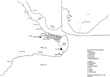
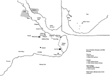
The Jews not only had lost their synagogues; they also had to leave the area. Uriel Heyd notes that the Jewish communities of ten neighborhoods in Istanbul, including Zeyrek, Balkapanı, and Hoca Paşa, which had appeared in a population register in the early 17th century (Figure 1), were not recorded in a register from 1691–92 (Figure 2). He concludes that the Jews must have abandoned these areas since fires had destroyed their neighborhoods.59
Heyd, “Jewish Communities,” 300–305.
Fire alone, however, did not chase them away. Soon after the blaze, an imperial decree was issued “that after the fire Jews not reside in Istanbul from Hoca Paşa (bordering the walls of Topkapı Palace in the east) to Zeyrek (or Saraçhane in the west).” Another commanded that “the households in which Jews resided located in Istanbul in the neighborhoods of Hoca Paşa and its vicinity that burned in the great fire of the sixteenth of Zilkade 1070 [24 July 1660] that are private property are to be sold to Muslims, and those that are owned by endowments are to be entrusted to Muslims.”
60 IŞS 9, fol. 143b, 29 September 1661; ibid. 10, fol. 82a, 5 June 1662.
The historian Silâhdar confirms that the area from Tahtakale (near the Rüstem Paşa Mosque) to Hoca Paşa was filled with apartment buildings rented out to Jews (
yahudhâne), which, after burning in the fire, were prohibited by imperial decree from being rebuilt.
61 Silâhdar, Silâhdar Tarihi, 1:218–19.
Nearly two-thirds of the Jews in Istanbul had resided in the district centered at Eminönü. The imperial complex, which included a mosque, tomb, fountain, school, and Egyptian or spice market, was built at the center of the neighborhood. The beginning of this massive public-works project radically affected the Jewish population by redistributing them throughout the city.
62 Yerasimos, “La Communauté juive,” 119–20, 124, 130.
Istanbul and Galata in 1640
Istanbul and Galata in 1700
Authorities also expelled Jews from rented rooms in these districts. For example, the members of a Spanish congregation—Gedalya, son of Menahem; Musa, son of Avraham; and Menahem, son of Avraham—who rented out rooms near Balkapanı had to turn over the property to a Muslim trustee. Likewise, the Portuguese Jew Yasef, son of Yako, had to relinquish the rented land on which stood a yahudhâne, and another Portuguese Jew, Ishak, son of Avraham, who also resided in a yahudhâne, had to abandon any claim to the rooms in which he lived.63
On Spanish congregation members, see IŞS 9, fol. 110a, 31 August 1661; on Yasef, son of Yako, see ibid. 9, fol. 174a, 30 October 1661; on Ishak, son of Avraham, see ibid. 9, fol. 194b, 26 October 1661.
Since Jewish apartments were often owned by Muslims, the government would later, in exchange, offer owners of the properties lost in Eminönü other formerly non-Muslim properties in Galata and elsewhere in Istanbul.
Most Jews found themselves across the Golden Horn in Hasköy after they first lost their homes and synagogues to fire and then had to evacuate their property so the valide sultan's mosque could be built. Hasköy's Jewish population nearly doubled, from eleven to more than twenty neighborhoods. There were so many Jews in Hasköy—an estimated 11,000 following the banishment of the Jews of Eminönü—that it was described as follows: “Hasköy is as brimful (malâmal) of Jews as are the cities of Salonica and Safed.”64
According to Heyd, these displacements completely transformed Istanbul Jewry. Romaniot and Karaite Jews from displaced independent Anatolian and Rumelian congregations settled along the Golden Horn and Bosphorus and were absorbed by congregations of Jews who had migrated from Iberia.
65 Heyd, “Jewish Communities,” 310–14. Another outcome of the fire, plague, and expulsion was that many Istanbul Jews joined the messianic movement of Izmir Rabbi Shabbatai Tzevi when he arrived in the city in winter 1666.
There is no evidence that there was popular support for the decision to relocate the Jews of Eminönü to Hasköy; however, considering the inter-religious tension after the fire, it was logical to send them to a predominantly Jewish village. Because some Christians and Muslims resisted Jews' settling in neighborhoods in which they had not previously resided, Ottoman authorities issued legal opinions and imperial decrees to banish Jews from their new homes in Fener and Galata.
66 IŞS, 9, fol. 244a, 13 January 1662, and BBA, Şikâyet Defteri (complaint register), 6, 105, no. 456, December–January 1668. Christians also attempted to settle in neighborhoods where they previously had not resided, but Muslims resisted their encroachment and secured their expulsion. See IŞS 10, fol. 110b, 7 July 1662. About 100 Jewish households eventually resettled in Eminönü. But since Jews were accused of engaging in many “abominable acts,” they were expelled in 1727 so that only Muslims could reside near the mosque. See Ahmed Refik, Onikinci Asr-ı Hicrî
de İstanbul Hayatı (1689–1785) (Istanbul, 1930; repr. Istanbul: Enderun Kitabevi, 1988), 88–89.
Muslims held their first Friday prayers in the Valide Sultan Mosque following an elaborate ceremony on 30 October 1665.67
Abdi Paşa, Vekayiname, fol. 193a; and Râşid, Tarihi-i Râşid, 1:106–107.
The valide sultan presented to her son a stunning jewel-covered dagger with a solid emerald handle. She also gave him a diamond-studded sash and aigrette. The mosque that had once been nicknamed “Oppression” became known as “Justice” (
Adliye), because when she decided to build the mosque, the valide sultan had said, “[L]et the task be undertaken with justice.”
68 Evliya, 1:87b, 10–15. “Justice” refers to the just expenditure of the dynasty's wealth. In the 16th century, Mustafa
Ali explained that charitable establishments such as imperial complexes were to be financed by the spoils of war because using funds from the public treasury squandered wealth. See Gülru Necipoǧlu-Kafadar, “The Süleymaniye Complex in Istanbul: An Interpretation,” Muqarnas 3 (1985): 113.
A royal pavilion was built adjoining the mosque to serve as an occasional residence for the valide sultan and other members of the dynasty.
69 Lucienne Thys-Şenocak, “The Yeni Valide Mosque Complex of Eminönü, Istanbul (1597–1665): Gender and Vision in Ottoman Architecture,” in Women, Patronage, and Self-Representation in Islamic Societies, ed. D. Fairchild Ruggles (Albany: State University of New York Press, 2000), 74–75.
ISLAMIZATION OF CHRISTIAN NEIGHBORHOODS
Fire also greatly affected the Christians of the city. Of an estimated fifty to sixty churches in Galata and Istanbul that existed before the fire in 1660 (thirty to forty Orthodox, ten Armenian, and ten Catholic), at least twenty-five had burned to the ground.70
IŞS 9, fols. 83b–96b, 142a–57a, 247a–253a; ibid. 10, fols. 82a–95a, 156b. For estimating the number of churches, see İnalcık, “Istanbul”; Eremya Çelebi Kömürciyan, İstanbul Tarihi: XVII Asırda İstanbul, trans. Hrand D. Andreasyan, 2nd ed. (Istanbul: Eren, 1988); and Mantran, Istanbul, 51, 54–55.
The property containing Christian houses of worship that had burned accrued to the state treasury in accordance with the decree of 1662: “[a]fter some churches of the infidels, polytheists, and those who go astray burned in the abode of the exalted caliph, the protected city of Constantinople, during the great conflagration of Saturday, 16 Zilkade 1070 [24 July 1660] the state treasury seized them since according to canonical law they were not to be restored [to their prior condition].”
71 IŞS 10, fol. 106b, 9 May 1662.
An imperial decree supported by a
fetva ordered the state treasury to acquire the property of Orthodox Christian churches that had burned in the fire of 1633 and were located near the Fener and Balat Gates.
72 Ibid. 9, fol. 83b, 11 August 1661; ibid., fol. 86a, 3 August 1662; and ibid., fol. 177b, 27 October 1661.
Ottoman policy toward Christians was at first markedly different from that concerning Jews. Beginning a year after the fire, while Hatice Turhan was the most important person at court, Armenian, Catholic, and Orthodox Christians in Galata and Istanbul, and French and Italian foreign residents in Galata, purchased the land where their burned churches stood. They constructed homes there, since the authorities insisted that if they built churches they would lose their property. The state also warned them not to use their new homes as houses of prayer. In late summer and fall of 1661 and winter of 1662, Christians reclaimed eighteen church properties in this manner.
The Catholics' situation was urgent because they were allowed to maintain churches only in Galata, and six of seven churches in use in Galata had burned in 1660. Galata had been a Genoese commercial colony in Byzantine Constantinople.
73 İnalcık, “Ottoman Galata,” 275–99, 349–50.
Following surrender to Ottoman forces in 1453, most Galata Catholics became poll-tax–paying non-Muslim subjects of the sultan (
zimmi), while some merchants became non-Muslim resident foreigners (
müstemin). Some of their churches were converted to mosques immediately following the district's surrender to Sultan Mehmed II, including Saints Paul and Dominic, which became the Mosque of the Arabs (Arap Cami); the bell tower became a minaret. Other churches, such as San Michele, were converted during the following century.
The properties of five ruined Catholic churches were initially purchased at auction.
74 See also Mantran, Istanbul, 561–62; Eremya, İstanbul Tarihi, 223–26. The five churches are French Capuchin Saint George, which had formerly been Byzantine and then Genoese (IŞS 9, fol. 96b, 17 August 1661); Italian Saint Francis (San Francesco), Saint Anne (Santa Anna), and a bell tower (ibid., fol. 247a, 3 January 1662); San Sebastian (ibid., fol. 96b, 17 August 1661); and originally Genoese Dominican Saints Peter and Paul (Santi Apostoli Pietro e Paolo) (ibid., fol. 96a, 17 August 1661), which became a French church at the beginning of the 18th century.
A year after the fire, the Orthodox Christian dragoman Georgi, son of Lazari, purchased the land of Saints Peter and Paul, located in the Bereketzade quarter. Georgi, who owned a garden bordering the church property, proclaimed his intent to build a home in which to reside. He promised that “if by some means I build a church, let the state treasury again seize the property and take it out of my possession.”
75 IŞS 9, fol. 96a, 17 August 1661.
On that day, Constantine, son of Andrea, also purchased church properties in the same quarter while making an identical pledge. The
müstemin Riboni, son of Martin, followed suit and at the same auction purchased the property of the burned Saint George church, located in the same quarter.
76 Ibid. 9, fols. 96a–b, 17 August 1661.
Giving the same promise as the others, a group of seven men with Italian names purchased the land of the 13th-century Italian Franciscan church of Saint Francis—called the “ornamented church” by Muslims—and the main church of the Catholics of Galata, along with the property of neighboring Saint Anne Church and a bell tower.
77 Ibid. 10, fol. 247a, 3 January 1662. Among the men are Giovanni, son of Carlo; Nicola, son of Franco; Francesco, son of Giovanni; and Domenico, son of Giovanni.
In May and June 1662, however, authorities seized twelve of these eighteen properties. Sadrazam Fazıl Ahmed Paşa decided that Christians had rebuilt their churches in the guise of residences and practiced Christian rites within them, engaging in “infidelity, polytheism, and error,” according to an imperial decree.78
Ibid., fol. 156b, 9 May 1662.
New buildings were razed, and the property was turned over to Muslim endowments as compensation for losses incurred when the valide sultan seized the property (such as stores and
yahudhâne) that they had owned in Eminönü.
79 Ibid., fol. 156b. For the purchase of the land, see ibid. 9, fol. 96b, 17 August 1661. For the loss of the lands, see ibid., 10, fol. 86a, 3 June 1662; ibid. 10, fols. 82b, 84b–85a, 2 June 1662. For examples of property being awarded in lieu of seized property, see the entries for the week of 2–9 June 1662, in ibid. 10, fols. 82a–86b, 88a–89b.
Ali Çelebi had possessed a
yahudhâne in Eminönü that burned in the fire, but because the land was located near the site of the valide sultan's proposed Mosque of Justice (
Adliye Cami), he lost possession of it. In exchange for that property, he became the owner of property that had formerly been connected to a church and a
yahudhâne in Galata.
80 Ibid. 9, 95a, 22 June 1662.
Mehmed Cemal Efendi, who was the trustee of a
vakıf in Istanbul and who had owned stores near the new mosque, relinquished those properties and instead took over properties formerly belonging to Saint Mary (Santa Maria Draperis) in Galata, a Franciscan Catholic church located near Saint Francis church. The parish relocated to Pera.
81 Ibid. 82b, 2 June 1662. The parish church is today located on İstiklâl Caddesi between the Dutch and Russian consulates. Inside one can view a 500-year-old icon of the Virgin Mary that survived the fire of 1660.
Two years after the fire, Christians held on to six properties on which had stood churches that had been destroyed in the conflagration. Two Catholic churches, Saints Peter and Paul and Saint George, are used today.82
Saint George has been affiliated with many different Catholic orders. Today it is Austrian Lazarist and located within the complex of the Austrian High School.
While managing to hold on to approximately one-fifth of their properties containing burned churches, Christians still lost nineteen.
83 The Armenian churches Surp (Saint) Sarkis and Surp Nigoǧos in Kumkapı burned in the fire and were subsequently repaired. On orders of the sadrazam, the latter was razed in 1661 and the former in 1674. See Eremya, İstanbul Tarihi, 3, nn. 84–85.
Saint Francis was among the razed churches; it was transformed into the Valide Sultan Mosque by Gülnûş Emetullah Sultan, favorite concubine of Sultan Mehmed IV and mother of Sultan Mustafa II and Sultan Ahmed III, in 1696–97. An Ottoman historian gave credit to Gülnûş Emetullah Sultan for her pious deed of being “firmly resolved” to turn a burned church into a mosque and permitting only Muslims to reside in the formerly Christian neighborhood.
84 Defterdar, Zübde-i Vekayiât, 606–607. See also The Garden of the Mosques: Hafız Hüseyin Al-Ayvansarayî's Guide to the Muslim Monuments of Ottoman Istanbul, trans. Howard Crane (Leiden: E. J. Brill, 2000), 357–58: “[o]riginally, there was a church on the site of this mosque. Later, when it burned, legal permission for its reconstruction was not given and a vacant plot of land remained. Subsequently, this mosque was built. [This is] a chronogram for its completion: ‘May the place of worship of the valide sultan be an abode of pious acts!’ 1109 [1697–98].”
From the mosque in Galata one could see its namesake in Eminönü.
85 The Valide Sultan Mosque in Galata was demolished in 1936 to make room for the Galata Hardware Market. See Semavi Eyice, Galata ve Kulesi (Galata and Its Tower) (Istanbul: Türkiye Turing ve Otomobil Kurumu, 1969), 16.
DISTINGUISHING BETWEEN CHRISTIANS AND JEWS
Islamization in Istanbul may have been a common symbol of authority for the leaders of the state and dynasty, but it was not uniformly applied. The valide sultan manipulated the process of Islamization to target Jewish space while Fazıl Ahmed Paşa Islamized Christian space. Both actions further illustrate the decline of Jews and rise of Orthodox Christians.
Ottoman narratives concerning the construction of the valide sultan's imperial mosque complex illustrate her concern with Jews. Ottoman historians, writers, and palace preachers cursed Jews for residing around the foundations of the mosque and viewed the destruction of Jewish homes as divine punishment. Referring to the foundations of the original, though incomplete, Valide Sultan Mosque, a contemporary Ottoman historian explained: “it was not appropriate for the religion and kingdom of the emperor for the mosque to lie destroyed in the rubbish in the midst of numerous Jewish neighborhoods.”86
Silâhdar, Silâhdar Tarihi, 1:218.
The palace preacher Kurd Mustafa explains how:
That abandoned and ruined mosque remained amidst the Jews. Just as the darkness of infidelity cloaks their religion, so, too, did they hide the aforementioned mosque's base and foundations with sticks and straws to such a degree that no one knew that it was a foundation of a mosque. By chance one day in the year seventy-one [1071 A.H.], by divine wisdom an immense fire and burning flame appeared around the aforementioned mosque's foundations and burned most places in the well-protected city of Istanbul. Some Friday mosques and small mosques also became burned and demolished.87
Kürd Hatib, Risale-i Kürd Hatib, fols. 19b–20a. The fire actually occurred in 1660 C.E. (1070 A.H.).
Some writers perceived the fire as divine punishment of Jews: “by the command of God, all Jewish homes were incinerated and all Jews were banished from that area,” and “when there was a great incineration in Islambol the filthy homes of Jews residing within Jews' Gate were destroyed and burned in the flames.”
88 Evliya, 1:87b, 13–14; ibid., 124a, 20–22.
The endowment deed for the mosque, signed by Sadrazam Fazıl Ahmed Paşa and the two leading military magistrates (kadıasker) of the empire, Abdülkadir Efendi and Abdurrahman Efendi, uses surprisingly harsh language to narrate events. More significant is the appearance of the document itself: Sultan Mehmed IV's gilded imperial monogram (tuǧra) adorns the first page. The history of the mosque, written for the approval of the sultan and valide sultan, describes the fire in the following fashion:
By the decree of God the exalted, the fire of divine wrath turned all the neighborhoods of the Jews upside down. The effect of the flames of the wrath of God made the homes and abodes belonging to that straying community resemble ashes. Every one of the Jewish households was turned into a fire temple full of sparks. Since the residences and dwellings of Jews, who are the enemy of Islam, resembled the deepest part of Hell, the secret of the verse which is incontrovertible, “those that do evil shall be cast into the fire” (Q 32:20), became clear, and in order to promise and threaten those who deny Islam with frightening things, the verse, “woe to the unbelievers because of a violent punishment” (Q 14:2), also became manifest.89
Nasuh Paşazade Ömer Bey, Turhan Vâlide Sultan Vakıfnamesi, fols. 17b–18a. Qur
an 32:20 states, “Those that have faith and do good works shall be received in the gardens of Paradise, as a reward for that which they have done. But those that do evil shall be cast into the Fire. Whenever they try to get out of Hell they shall be driven back, and a voice will say to them: ‘Taste the torment of Hell-fire, which you have persistently denied.’”
The narrative of the Islamization of Eminönü sought to explain the unprecedented policies toward Jews by linking them to fire and utilizing current notions of the conquest of infidel space, perhaps compensating for a lack of success elsewhere. The palace preacher Kurd Mustafa declared, “[T]he aforementioned mosque showed itself and became manifest just as the Muhammadan religion appeared out of the darkness of infidelity.”
90 Kürd Hatib, Risale-i Kürd Hatib, fol. 20a.
It is striking that the leading men and women of the empire viewed the banishment of the Jews and construction of the Valide Sultan Mosque as a conquest of formerly infidel-occupied land. Those who constructed the mosque displayed considerable historical consciousness; they compared the transfer of Jews from Eminönü to Hasköy to Muhammad's exile of the Jewish tribe of Banu Nadir from Medina since they chose the Qur
anic chapter “Exile” (al-Hashr, 59) to adorn the gallery level near the royal lodge.
91 Thys-Şenocak, “Yeni Valide Mosque Complex at Emınönü,” 67.
The chapter narrates how God drove unbelieving Jews into exile and admonishes them to heed their example. In what could be understood in late-17th-century Istanbul as a reference to recent events, the chapter warns that in the world to come Jews will also be punished in hellfire.
92 Qur
an 59:3. Muslims chopped down some of the Banu Nadir's date palms and burned others to their roots. This is another reference to fire and a potential reason for selecting the verse. Scribes in the Islamic law courts of the city also gave meaning to the Islamization of Christian and Jewish neighborhoods. Some sprinkled gold dust on the phrase “the appropriation of the land of churches (or synagogues)” in the law court records. One scribe wrote a saying attributed to Muhammad (hadîs) in Arabic: “God will build a home in paradise for the one who builds a mosque for God.”
It is difficult to determine the source of Hatice Turhan's concern with Jews in Istanbul and the sultan's inner circle, but its effects are clear. She decided to convince the most important Jewish physician serving the sultan to become Muslim or lose his position.93
Kürd Hatib, Risale-i Kürd Hatib, 18b–19b. The Spanish Jewish physician Moses, son of Raphael Abravanel, became Hayatizade Mustafa Fevzi Efendi.
Hatice Turhan's unprecedented policies toward Jews reflect a change in the formerly favorable Ottoman attitude that had allowed Jews to hold prominent positions for more than two centuries. Whereas at the beginning of the 1660s Jews had a privileged position with the royal family and resided mainly in the heart of the city, by the end of the decade the geographic position of the Jews reflected their fall from importance. Most Jews in Istanbul resided on the Golden Horn and Bosphorus, and those who remained in the most important palace positions converted to Islam. The political position of Jews had become so weak that no one could intervene to change the decision to banish them from Eminönü following the fire. Those who remained in the palace were involved in their own struggle to retain their posts.
Hatice Turhan did not view Christians and Jews in the same manner. If that had been the case, she would have supported the same policies toward both groups. Vani Mehmed Efendi and Fazıl Ahmed Paşa, however, were more concerned with Christians than Jews in Istanbul. According to the Englishman Sir Paul Rycaut, Vani Mehmed Efendi convinced Fazıl Ahmed Paşa that the fires in Istanbul and Galata and the empire's lack of military success were “Divine Judgements thrown on the Musselman … in vengeance of their too much License given to the Christian Religion.”94
As quoted in Zilfi, Politics of Piety, 151.
Thus, when they rose to power in 1661, they changed the policy that allowed Christians to rebuild their churches in the guise of homes. The part of Galata facing Eminönü was Islamized because Fazıl Ahmed Paşa and Vani Mehmed Efendi were alarmed by Christians flouting law and custom in the capital city and because they supported the interests of Muslim
vakıf owners who had lost property in Eminönü. Their political concerns were reflected in the decision in 1662 to raze a number of these buildings and turn them over to Muslim endowments, just as Jewish properties had been treated immediately after the fire.
95 Contemporary Europeans such as Paul Rycaut and Antoine Galland contended that Fazıl Ahmed Paşa and Vani Mehmed Efendi aimed to make all of Istanbul free of non-Muslims. See ibid., 149–53. Their fears reflect a misunderstanding of Ottoman society and an exaggeration of the extent and nature of the devşirme. Christians and Jews had an organic place within plural Ottoman society; the pre-modern state did not compel the conversion of most non-Muslims.
The Ottomans faced similar questions of urban renewal in Crete, to which they turned after opening the Valide Sultan Mosque in 1665. Once Candia was conquered four years later, the status of churches in the city was not difficult to determine. Fourteen churches within the citadel were converted into mosques for Sultan Mehmed IV, Hatice Turhan, Fazıl Ahmed Paşa, and other officials.96
Silâhdar, Silâhdar Tarihi, 1:525–26; for fetava concerning the same topic, see Minkarizade Elendi, Fetava-i 32a–33a.
Seventy-four other churches were converted into mosques, as well. What is striking is how echoes of the different approaches to Jews and Christians taken by the valide sultan and sadrazam in Istanbul were also reflected on the newly captured island. The entire former Jewish neighborhood in Candia and its expanded sections, similar to Eminönü in Istanbul, were “declared a revenue-bearing
Vakıf endowment, with the Valide Sultan Mosque [in Candia] acting as its principal beneficiary.”
97 Zvi Ankori, “From Zudecha to Yahudi Mahallesi: The Jewish Quarter of Candia in the Seventeenth Century (A Chapter in the History of Cretan Jewry under Muslim Rule),” in Salo Wittmayer Baron Jubilee Volume, 2 vols., ed. Saul Lieberman (Jerusalem: American Academy for Jewish Research, 1974), 1:96.
Synagogues paid daily rent to the
vakıf; nevertheless, Fazıl Ahmed Paşa encouraged Jews to settle in the city and purchase property.
98 Molly Greene, A Shared World: Christians and Muslims in the Early Modern Mediterranean (Princeton, N.J.: Princeton University Press, 2000), 78–87.
Jews were allowed to buy homes abandoned by Christians at auction, move outside their former ghetto, and repair “old” synagogues damaged during the siege.
99 Ankori, “Zudecha to Yahudi Mahallesi,” 1:89–91, 93, 96, 127. The Valide Sultan Mosque and the Jewish quarter in Candia were razed in the 20th century.
And, fitting for a decade in which Orthodox Christians replaced Jews in important palace positions, Fazıl Ahmed Paşa had good relations with Orthodox Christians in Crete and worked to re-establish their church at the expense of Catholics.
CONCLUSION
Approximately a year after the 1660 great fire in Istanbul, Hatice Turhan began construction of the Valide Sultan Mosque in Eminönü. Jews were ordered to leave a wide area stretching from the walls of Topkapı Palace in the east to Zeyrek in the west. They were expelled from rented rooms, made to sell their property, and compelled to turn over endowments to Muslims. In accordance with a fetva issued for the unusual situation, “old” churches and synagogues and their properties that had been destroyed in the fire were appropriated by the state treasury and put up for auction. This policy contradicted earlier Islamic and Ottoman practice, because before this time only “new” non-Muslim houses of worship had been razed or appropriated. In some circumstances Jews had been given preferential treatment regarding the construction of new houses of worship in Istanbul.100
Mark Epstein, The Ottoman Jewish Communities and Their Role in the Fifteenth and Sixteenth Centuries, Islamkundliche Untersuchungen vol. 56 (Freiburg: K. Schwarz, 1980), 28–30.
Yet in this era, the opposite was true. Louis Mitler has argued that after the fire authorities “repeatedly denied” permission for Christians to rebuild burned churches and razed churches that had been reconstructed.
101 Mitler, “The Genoese in Galata,” 91.
In fact, unlike Jews, Christians were allowed to purchase properties in Galata and Istanbul. All of these events occurred within fourteen months of the Istanbul fire, a period when the valide sultan was the most influential person in the palace. The situation for Christians began to change in the fall of 1661, when Fazıl Ahmed Paşa became sadrazam and Vani Mehmed Efendi became preacher to the sultan, valide sultan, and sadrazam. In the spring and summer of 1662, properties purchased by Christians at auction were seized by the government and awarded to Muslim foundations; the basis was thus laid for the construction of an imperial mosque in Galata on the ruins of an important Catholic church.
Prohibitions on the construction of new churches and synagogues date to the beginning of Islamic history. However, despite being “on the books,” these regulations were often ignored. New non-Muslim houses of worship were built and old ones restored and expanded in every region of the Islamic world. Pre-modern Islamic rulers made decisions that suited their politics, even if they were contrary to previous practice. Restrictions were applied, or not, according to contemporary interests. Rulers could carry out these restrictions when they desired to be viewed as pious, to gain political strength, or to distract the population from internal social pressures or foreign invaders.102
Examples include the Almohad (1130–1269) dynasty in North Africa and Spain, the Crusader and Mongol invasions, and 13th- and 14th-century Cairo.
At the same time, there could be tension between the interests and policies of the ruler to protect churches and synagogues and the occasional desire of a part of the populace to knock them down.
103 The situation was sometimes reversed. Fatimid Caliph Al-Hākim (r. 996–1021) ordered the razing of churches, including the Church of the Holy Sepulcher, which may have stimulated the First Crusade. Yet he was an exception. His successors allowed churches to be rebuilt, and other Fatimid rulers funded their construction, even attending groundbreaking ceremonies. See Marius Canard, s.v. “al-Hākim,” EI2.
Islamization policies reflected the intersection of religion and politics. When understood within its historic context, Islamization appears less the outcome of religious piety than the result of the personal interests and decision-making of key political actors. The difference in application of Islamization policies in late-17th-century Istanbul reflects the fragmentation of Ottoman decision-making in that era. Islamization was a common symbol used for different reasons and thus was not applied evenly. Varying attitudes held by the chief policymakers concerning Christians and Jews played a more important role in planning the reconstruction of Istanbul following the cataclysmic 1660 fire than Islamic law and religious opinion, which made no distinction among different groups of non-Muslims. There was no legal precedent for allowing Christians to claim properties while denying Jews the same option.
Eminönü, the first area to be Islamized, contained the foundations of an abandoned imperial mosque. Jews who lived there were not able to offer resistance because their economic and political clout was waning, and the valide sultan did not want Jews residing in proximity to her and other members of the dynasty or serving it in an intimate capacity. With Hatice Turhan making or influencing decisions at court in 1660, attitudes toward Jews contributed to a major geographic and cultural transformation of Istanbul Jewry. Galata was not initially Islamized since the valide sultan was not as concerned with Christians as she was with Jews. Armenian, Catholic, and Orthodox Christians had local and international supporters, and Christians—particularly Orthodox, who were able to re-purchase Christian properties in Galata—were gaining stature in the opinion of key members of the Ottoman dynasty and administration. Despite that status, which placed them in a better position relative to Jews, they were unable to resist the appropriation of all reclaimed properties. The rise of the sadrazam and preacher at court led to a change in policy concerning churches a year after Christians had purchased properties because the sadrazam and preacher supported the interests of Muslims who had lost property in the valide sultan's rebuilding efforts.
Without considering the intentions of the leading political actors and the historical circumstances in which they found themselves, one could not predict the behavior of Ottoman authorities or the outcome of reconstruction plans following the 1660 fire. Islamization in Eminönü and Galata was neither preordained nor based on interpretations of Islam alone. There were other alternatives. The valide sultan could have built or repaired a mosque elsewhere, as Fazıl Ahmed Paşa's predecessor suggested, and Jews could have again thrived in Eminönü and Catholics in the heart of Galata. Important people in the administration, including Şeyhülislâm Minkarizade, did not support the Kadızadeli movement and had a different attitude toward non-Muslims—for example, Minkarizade upheld the practice of communal prayers for the success of military campaigns, which Vani Mehmed Efendi opposed.104
Zilfi, “The Kadızadelis,” 264–65.
Other intellectual currents were popular among learned Muslims.
105 In accordance with a fetva, the respected imam Lari Mehmed Efendi was executed in 1665 for denying the raising of the dead for the Last Judgment and the religious obligations of prayer and fasting and deeming the consumption of wine lawful. See
Abdi Paşa, Vekayiname, fols. 158a–b; Silâhdar, Silâhdar Tarihi, 1:378; Râşid, Tarih-i Râşid, 1:94; and Ahmet Yaşar Ocak, Osmanlı Toplumunda Zındıklar ve Mülhidler (15.–17. Yüzyıllar) (Istanbul: Tarih Vakfı, 1998), 245–47.
Yet in a period of acute anxiety caused by political instability, economic crisis, the worsening fortunes of the military, and religious redefinition, Islamization of areas inhabited by non-Muslims in Istanbul served as a visible sign of the authority of Hatice Turhan, Fazıl Ahmed Paşa, and Vani Mehmed Efendi and of the dynasty, state, and religion they represented.
Author's note: Earlier versions of this article were presented to audiences at the Department of Near and Middle East Civilizations at the University of Toronto and the Turkish Studies Colloquium at the University of Michigan. I am grateful for the helpful comments received on those occasions. I also thank Cornell Fleischer, Robert Dankoff, Joel Kraemer, Ron Suny, Jane Hathaway, Victor Ostapchuk, Gottfried Hagen, Kevin Reinhart, Esra Özyürek, Juan Cole, and the three anonymous reviewers of IJMES for their comments on earlier drafts. A Fulbright-Hays Dissertation Research Abroad Fellowship and a Social Sciences Research Council Dissertation Fellowship supported the research. A visa granted by the Turkish government allowed me to work in Istanbul. I thank the directors and staffs of the Bafşbakanlık Osmanlı Arşivi (BBA, Ottoman Archive of the Prime Ministry), the Istanbul Müftülüǧü Şer'iye Sicilleri Arşivi (Sharia Court Record Archive at the Office of the Istanbul Mufti), the Süleymaniye Library, the Topkapı Palace Museum Library, and the Köprülü Library for their assistance.