Body dissatisfaction and depressive symptoms both typically develop during adolescence and are notably overrepresented in girls compared with boys (Cyranowski, Frank, Young, & Shear, Reference Cyranowski, Frank, Young and Shear2000; Neumark-Sztainer, Croll, et al., Reference Neumark-Sztainer, Story, Hannan and Croll2002). Although relatively common (Fergusson, Horwood, Ridder, & Beautrais, Reference Fergusson, Horwood, Ridder and Beautrais2005; Patalay, Sharpe, & Wolpert, Reference Patalay, Sharpe and Wolpert2015), both body dissatisfaction and depressive symptoms are associated with a general increased risk for lifetime mental health problems, including eating disorders (Jacobi, Hayward, de Zwaan, Kraemer, & Agras, Reference Jacobi, Hayward, de Zwaan, Kraemer and Agras2004), and for broader health-related outcomes, such as risky sexual behaviors and the development of overweight/obesity (Lehrer, Shrier, Gortmaker, & Buka, Reference Lehrer, Shrier, Gortmaker and Buka2006; Luppino et al., Reference Luppino, de Wit, Bouvy, Stijnen, Cuilpers, Penninx and Zitmn2010; Schooler, Reference Schooler2013; van den Berg & Neumark-Sztainer, Reference van den Berg and Neumark-Sztainer2007). As such, body dissatisfaction and depressive symptoms may represent ideal targets for intervention during adolescence, with the potential to prevent a cascade of physical and mental health problems into adulthood.
Greater depressive symptoms are typically associated with greater body dissatisfaction (Bearman & Stice, Reference Bearman and Stice2008; Chen, Guo, Gong, & Xiao, Reference Chen, Guo, Gong and Xiao2015; Neumark-Sztainer, Paxton, Hannan, Haines, & Story, Reference Neumark-Sztainer, Paxton, Hannan, Haines and Story2006). However, as discussed further below, the temporal (and causal) association between these two experiences (whether one typically leads to the other or vice versa) remains poorly understood. Examining the nature of this association is important because it can inform which symptoms to target during each developmental time frame in order to exert the strongest preventative effects on later health outcomes.
Several models have been proposed to explain the interrelationship between body dissatisfaction and depressive symptoms. These have been referred to in earlier work as the body dissatisfaction-driven hypothesis and the internalizing-driven hypothesis (Patalay et al., Reference Patalay, Sharpe and Wolpert2015). In the body dissatisfaction-driven hypothesis, body dissatisfaction is hypothesized to be a risk factor for later depressive symptoms, both directly, given that appearance is one facet of broader self-concept, and indirectly, when attempts to manipulate one's appearance through self-control (e.g., dieting behaviors) fails to bring the body in line with unattainable appearance ideas (Stice & Bearman, Reference Stice and Bearman2001). This theory is rooted within sociocultural models of body image and disordered eating (van den Berg, Thompson, Obremski-Brandon, & Coovert, Reference van den Berg, Thompson, Obremski-Brandon and Coovert2002), in which ideals of thinness are communicated by peers, family, and the media, and in self-discrepancy theory, in which the disparity between these ideals and the individual's actual body gives rise to body dissatisfaction (e.g., Strauman, Vookles, Berenstein, Chaiken, & Higgins, Reference Strauman, Vookles, Berenstein, Chaiken and Higgins1991). In contrast, the internalizing-driven hypothesis suggests that depressive symptoms and other internalizing symptoms (e.g., anxiety and somatic symptoms) are risk factors for later body dissatisfaction. According to this model, a tendency toward negative self-evaluation comes to be applied to the realm of the body over time (Presnell, Bearman, & Stice, Reference Presnell, Bearman and Stice2004). Of course, the two hypotheses are not mutually exclusive: a third, bidirectional model predicts that body dissatisfaction and depressive symptoms are mutually reinforcing over time, and it may be that the salience of each directionality varies over development and between subgroups (e.g., genders and ethnicities).
Studies examining the association between body dissatisfaction and depressive symptoms have typically been conducted within the context of investigating either risk factors for body dissatisfaction or risk factors for depressive symptoms. As such, this research has largely focused on analyzing these unidirectional models in isolation. There is largely consistent evidence from longitudinal studies that in adolescence, body dissatisfaction tends to precede depressive symptoms in girls (Bearman & Stice, Reference Bearman and Stice2008; Paxton, Neumark-Sztainer, Hannan, & Eisenberg, Reference Paxton, Neumark-Sztainer, Hannan and Eisenberg2006), whereas the reverse is true in boys (Presnell et al., Reference Presnell, Bearman and Stice2004; Quick, Eisenberg, Bucchianeri, & Neumark-Sztainer, Reference Quick, Eisenberg, Bucchianeri and Neumark-Sztainer2013). One explanation for this gender disparity is that the appearance pressures on young women may be more pervasive and unattainable (Knauss, Paxton, & Alsaker, Reference Knauss, Paxton and Alsaker2007). As such, the cycle of body dissatisfaction, striving for an unachievable ideal, and resulting depression may be more pertinent for young women compared with young men. However, many standardly used measures of body dissatisfaction are known to be more accurate for women than for men (McCabe & Ricciardelli, Reference McCabe and Ricciardelli2004), and so reliance on these measures may have reduced our capacity to accurately assess the association between body dissatisfaction and depressive symptoms in young men.
One question these unidirectional analyses have not answered is whether there is a consistently more dominant direction of this association, or whether a bidirectional, mutually reinforcing relationship exists. To date, to the best of our knowledge, only one study has simultaneously tested the competing pathways between body dissatisfaction and depressive symptoms in a single model. Patalay et al. (Reference Patalay, Sharpe and Wolpert2015) used cross-lagged models in a sample of 5,495 younger children (aged 8–9 years at baseline) and 5,981 older children (aged 11–12 years at baseline) assessed over 3 consecutive years. The study showed that internalizing symptoms predicted later body dissatisfaction for younger girls, younger boys, and older boys; however, for older girls, the reverse relationship (body dissatisfaction to internalizing symptoms) was dominant. These findings suggest that as girls move from childhood to adolescence, their risk profiles shift with body dissatisfaction emerging as a risk factor at this point. This pattern could reflect a number of broader changes during this period, including physical developments during puberty and the increasing role of peer groups and associated “peer appearance cultures” that promote unachievable appearance ideals (Jones, Vigfusdottir, & Lee, Reference Jones, Vigfusdottir and Lee2004).
Patalay et al. (Reference Patalay, Sharpe and Wolpert2015) provide preliminary evidence for the potentially developmentally sensitive nature of the association between body dissatisfaction and depressive symptoms. In this study, the oldest participants were 14 years at follow-up, which meant that potential shifts in the relationship between these phenomena through late adolescence/early adulthood could not be explored. It is possible that the developmental shift observed in girls in early adolescence may emerge for boys later in adolescence, potentially because of a typically later onset of puberty in boys (Marceau, Ram, Houts, Grimm, & Susman, Reference Marceau, Ram, Houts, Grimm and Susman2011). Similarly, the transition into early adulthood, often accompanied by substantial changes in life circumstances (moving away from home, increasing financial independence, and longer term romantic relationships; Arnett, Reference Arnett2000) may bring about new or altered risk processes from those present during adolescence. Further work examining these temporal associations across development is therefore warranted.
Moreover, this existing study could not control for potential confounding factors, particularly body mass index (BMI). An increasing trajectory of BMI throughout childhood is predictive of both body dissatisfaction and emotional problems in early adolescence (Kelly, Patalay, Montgomery, & Sacker, Reference Kelly, Patalay, Montgomery and Sacker2016). Depressive symptoms may be both an antecedent and a consequence of elevated BMI, and body dissatisfaction has a positive linear relationship with BMI in girls and a U-shaped relationship with BMI in boys (i.e., both high and low BMI are associated with increased body dissatisfaction in boys; Russell-Mayhew, McVey, Bardick, & Ireland, Reference Russell-Mayhew, McVey, Bardick and Ireland2012). As such, it is possible that the observed relationship between depressive symptoms and body dissatisfaction is explained by their shared association with BMI.
In light of gaps in this existing work, the current study aims to investigate the relationships between depressive symptoms and body dissatisfaction in two cohorts spanning early adolescence into early adulthood. The research questions are the following:
1. What is the dominant temporal association between body dissatisfaction and depressive symptoms in adolescents and young adults?
2. What role does BMI play in these associations?
Given the previous work suggesting that these associations vary both across development and between genders (Patalay et al., Reference Patalay, Sharpe and Wolpert2015), we examine these questions separately by age (comparing a younger and older cohort), as well as by gender. Based on existing literature, we anticipate that body dissatisfaction during early adolescence will predict later depressive symptoms in girls, and that this relationship will also be present for boys, but that its emergence will be later in adolescence. The lack of existing research in early adulthood precludes specific predictions in the older ages for the current study. We aim to discuss the findings in light of the existing work with younger samples (Patalay et al., Reference Patalay, Sharpe and Wolpert2015), and in doing so, we begin to map developmental pathways between depressive symptoms and body dissatisfaction from childhood through to early adulthood. This collective work should help us to appropriately target preventative interventions to developmental stages where intervening in one risk factor may have the greatest downstream impacts on other health difficulties.
Method
Study design and population
Data were drawn from the three waves of Project Eating Among Teens and Young Adults (EAT), a large epidemiological study of socioenvironmental, personal, and behavioral determinants of dietary intake and weight status among adolescents and young adults based in the Minneapolis/St. Paul area of Minnesota (Neumark-Sztainer, Story, Hannan, & Croll, Reference Neumark-Sztainer, Croll, Story, Hannan, French and Perry2002). The project includes two independent cohorts that were first assessed in early/middle adolescence (Time 1), and were reassessed at 5- (Time 2) and 10-year follow-up (Time 3), thus capturing critical time points of physical and psychosocial development: early adolescence, middle adolescence, and young adulthood.
At Time 1, 4,746 middle school and high school students from 31 public schools completed surveys and anthropometric measures in classrooms during the 1998–1999 academic year. Five years later, at Time 2, these participants were sent paper surveys by mail. Of the original 4,746 participants, 1,304 (27.5%) were lost to follow-up for various reasons, primarily missing contact information at Time 1 (n = 411) and no address found at follow-up (n = 712). Finally, at Time 3, participants were sent survey invitations by mail containing a weblink to complete the survey online and also a means to complete the survey on paper if preferred. A total of 2,287 participants completed Time 3 surveys, representing 66.4% of participants who could be contacted (48.2% of the original school-based sample). The majority of participants (86.9%) at Time 3 opted to complete the survey online rather than on paper. Questions on the survey were presented in the same order for all participants. The analytic sample for the current study consisted of the 1,902 participants who provided data at all three time points (see Analysis section for discussion of managing missing data). The University of Minnesota's Institutional Review Board Human Subjects Committee approved all protocols used in Project EAT.
Younger cohort
The younger cohort was recruited from middle schools and consisted of 577 participants (251 males, 326 females) with an average age of 12.8 (SD = 0.7 years), 17.2 (SD = 0.6 years), and 23.1 years (SD = 0.7 years) at the three time points, respectively. In this study, we refer to the younger cohort at each time point as being early teens, late teens, and middle 20s, respectively. The sample consisted of 32.1% White, 24.3% Asian, 24.2% Black, 5.5% Hispanic, and 14.0% other ethnic groups (Native American/mixed/other). Regarding socioeconomic status (SES), 38.1% were of low SES, 27.9% middle SES, and 34.0% high SES (details on the definition of SES used in this study are described below).
Older cohort
The older cohort was recruited from high schools and consisted of 1,325 participants (568 males, 757 females) with an average age of 15.9 (SD = 0.8 years), 20.5 (SD = 0.8 years), and 26.2 years (SD = 0.8 years) at the three time points, respectively. In this study we refer to the older cohort at each time point as being middle teens, early 20s, and late 20s, respectively. In terms of ethnicity, the sample consisted of 54.6% White, 17.4% Asian, 15.8% Black, 5.4% Hispanic, and 6.7% other ethnic groups (Native American/mixed/other). Regarding SES, 36.1% were of low SES, 25.7% of middle SES, and 38.1% of high SES.
Measures
Depressive symptoms
Depressive mood was assessed with the six-item Depressive Mood Scale (Kandel & Davies, Reference Kandel and Davies1982). The measure includes items about the following symptoms: feeling too tired to do things; having trouble going to or staying asleep; feeling unhappy, sad, or depressed; feeling hopeless about the future; feeling nervous or tense; and worrying too much about things. Respondents indicate how much they have been troubled by these symptoms in the last 12 months on a 3-point scale from not at all to very much, and item responses were summed resulting in higher scores indicating greater depressive symptoms. The 2-week test–retest reliability of this measure is r = .73 (Larson, Neumark-Sztainer, Story, van den Berg, & Hannan, Reference Larson, Neumark-Sztainer, Story, van den Berg and Hannan2011). This scale has also been shown to have good concurrent validity, correlating with the depressive mood subscale of the Symptom Checklist–90 and also distinguishing between adolescents referred to a psychiatric clinic who did or did not receive a diagnosis of a major depressive illness (Kandel & Davies, Reference Kandel and Davies1982). The internal consistency of this measure ranged from α = 0.79 to 0.80 for girls and α = 0.77 to 0.83 for boys.
Body dissatisfaction
Body dissatisfaction was assessed with a modified version of the Body Shape Satisfaction Scale (Pingitore, Spring, & Garfieldt, Reference Pingitore, Spring and Garfieldt1997). Each respondent assessed his or her satisfaction with 10 different aspects of his or her body (height, weight, body shape, waist, hips, thighs, stomach, face, body build, and shoulders) by responding on a 5-point Likert response scale ranging from very dissatisfied to very satisfied. This variable was recoded such that higher scores reflected greater body dissatisfaction, with scores ranging from 10 to 50. Principal components analysis conducted at Time 1 and Time 3 revealed a single factor for both male and female participants (variance explained: 59% to 62%). The internal consistency of this measure was α = 0.92 at Time 1, α = .0.91 at Time 2, and α = 0.90 at Time 3 for girls and α = 0.92 at Time 1, α = 0.93 at Time 2, and α = 0.90 at Time 3 for boys. The 2-week test–retest reliability at Time 3 was excellent (r = .90; Larson et al., Reference Larson, Neumark-Sztainer, Story, van den Berg and Hannan2011). The measure has also demonstrated discriminant, convergent, and predictive validity in both girls and boys in previous work conducted by this group (e.g., Neumark-Sztainer, Wall, et al., Reference Neumark-Sztainer, Wall, Guo, Story, Haines and Eisenberg2006; Paxton et al., Reference Paxton, Neumark-Sztainer, Hannan and Eisenberg2006).
BMI
Participants provided self-reported weight and height, from which BMI was calculated using the standard method (weight/ height in kg/m2). Self-reported weight and height were compared to objective weight and height measured by research staff for all participants at Time 1 and for a subsample of participants at Time 3 (n = 125). In both instances, the correlation between self-report and objective measures was very good (Time 1, r = .80–.96; Time 3, r = .95–.98; Himes, Hannan, Wall, & Neumark-Sztainer, Reference Himes, Hannan, Wall and Neumark-Sztainer2005).
Demographic control variables
Gender, ethnicity/race, and SES were based on Time 1 youth self-report. Ethnicity/race was categorized as White, African American, Asian American, Hispanic, Native American, or mixed/other. Three levels of SES were based on highest educational attainment by either parent. Data on eligibility of public assistance, free/reduced cost school meals, and parental employment status were used to infer SES if parental education was not available (Neumark-Sztainer, Story, et al., Reference Neumark-Sztainer, Paxton, Hannan, Haines and Story2002).
Analysis
Cross-lagged path models were estimated in Mplus 7 (Muthén & Muthén, Reference Muthén and Muthén2012) using multigroup approaches to assess differences between males and females and between the younger and older cohorts. Given the presence of significantly different pathways by gender and age, we present results in each of these four analytic groups: younger girls, younger boys, older girls, and older boys. The models accounted for temporal stability within each construct over time and concurrent (i.e., within time) correlations between body dissatisfaction and depressive symptoms at each time point. Most importantly, the models included cross-lagged paths between constructs (i.e., depressive symptoms predicting body dissatisfaction and body dissatisfaction predicting depressive symptoms). The models included both short (i.e., 5 year) and long (i.e., 10 year) cross-lags. These cross-lags allow simultaneous examination of the competing hypotheses, to estimate both amount and direction of effects while controlling for effects in the opposite direction. Hence, the models focus on investigating changes in these constructs over time, rather than absolute levels of depressive symptoms or body dissatisfaction at any age.
To examine the first research question (the dominant temporal association between body dissatisfaction and depressive symptoms), we estimated cross-lagged models with depressive symptoms and body dissatisfaction included in the models and controlling for sociodemographic characteristics (referred to as “simple cross-lagged models”). Subsequently, to examine the second research question (what role BMI plays in these associations), we ran the same models with the inclusion of time-varying BMI, to examine whether the pathways observed were accounted for by BMI. Unadjusted models (i.e., not controlling for sociodemographic characteristics) are included as online-only supplementary materials for reference (Figure S.1).
Attrition and missing data
Of the original 4,746 Project EAT participants, 1,902 (40.1%) had data available at all three time points. Participants with complete follow-up data were more likely to be female, Caucasian, and from a higher socioeconomic category (ps < .05). Because attrition from the Time 1 sample did not occur at random, the data were weighted in all analyses using the response propensity method (Little, Reference Little1986). Weights were based on the inverse of an individual's response propensity (i.e., the probability of responding to the Time 3 survey) given a large number of predictor variables from the Time 1 survey, estimated using logistic regression. Weights were calibrated so that the weighted total sample sizes used in analyses for each gender cohort accurately reflect the actual observed sample sizes in those groups. The weighting method resulted in estimates representative of the demographic makeup of the original school-based sample, thereby allowing results to be more fully generalizable to the population of young people in the Minneapolis/St. Paul metropolitan area. Specifically, the weighted sample was 48.3% White, 18.5% African American, 19.7% Asian, 5.5% Hispanic, 3.5% Native American, and 4.5% mixed or other race/ethnicity. The sample was well distributed across the five categories of SES: 17.5% low, 19.2% low middle, 26.3% middle, 23.4% upper middle, and 13.6% high.
Results
Descriptive statistics
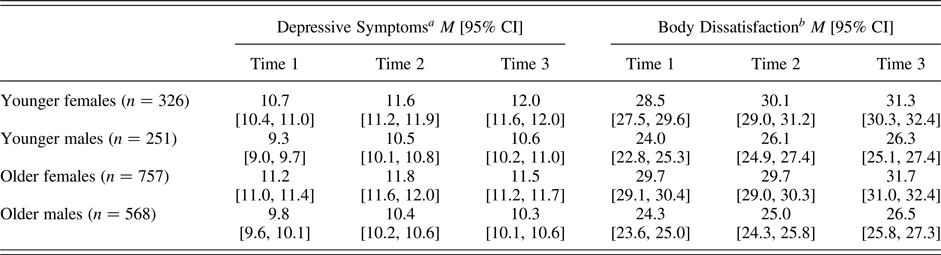
Descriptive statistics for depressive symptoms and body dissatisfaction in the four analytic groups (younger and older, males and females) are shown in Table 1. Females reported both greater body dissatisfaction and greater depressive symptoms than males across all time points. There were small to moderate positive correlations for both females and males between depressive symptoms and body dissatisfaction at each of the time points. For more information, see online-only supplementary Table S.1. These within-time correlations are accounted for in the models described below.
Research question 1: What is the dominant temporal association between body dissatisfaction and depressive symptoms in adolescents and young adults?
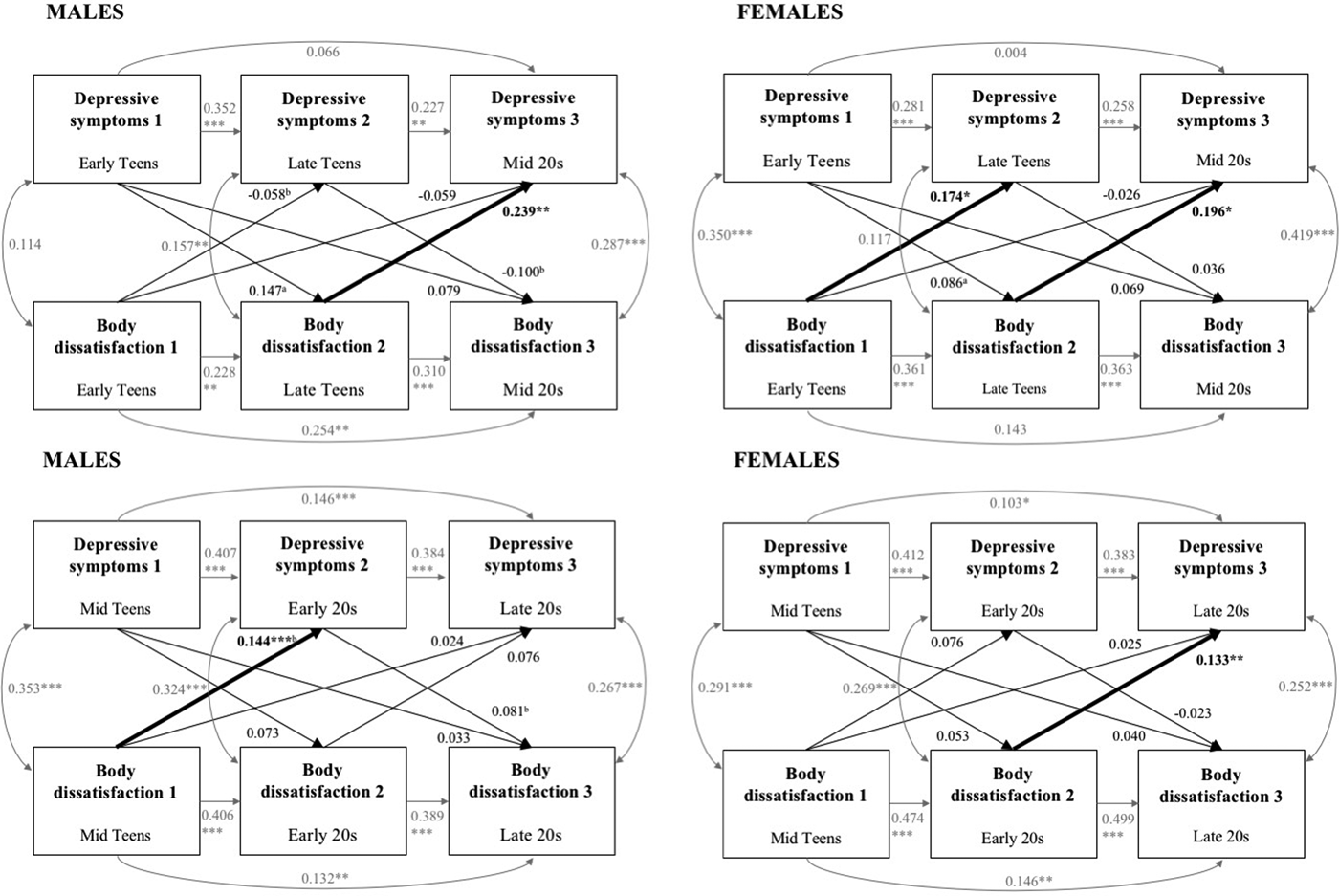
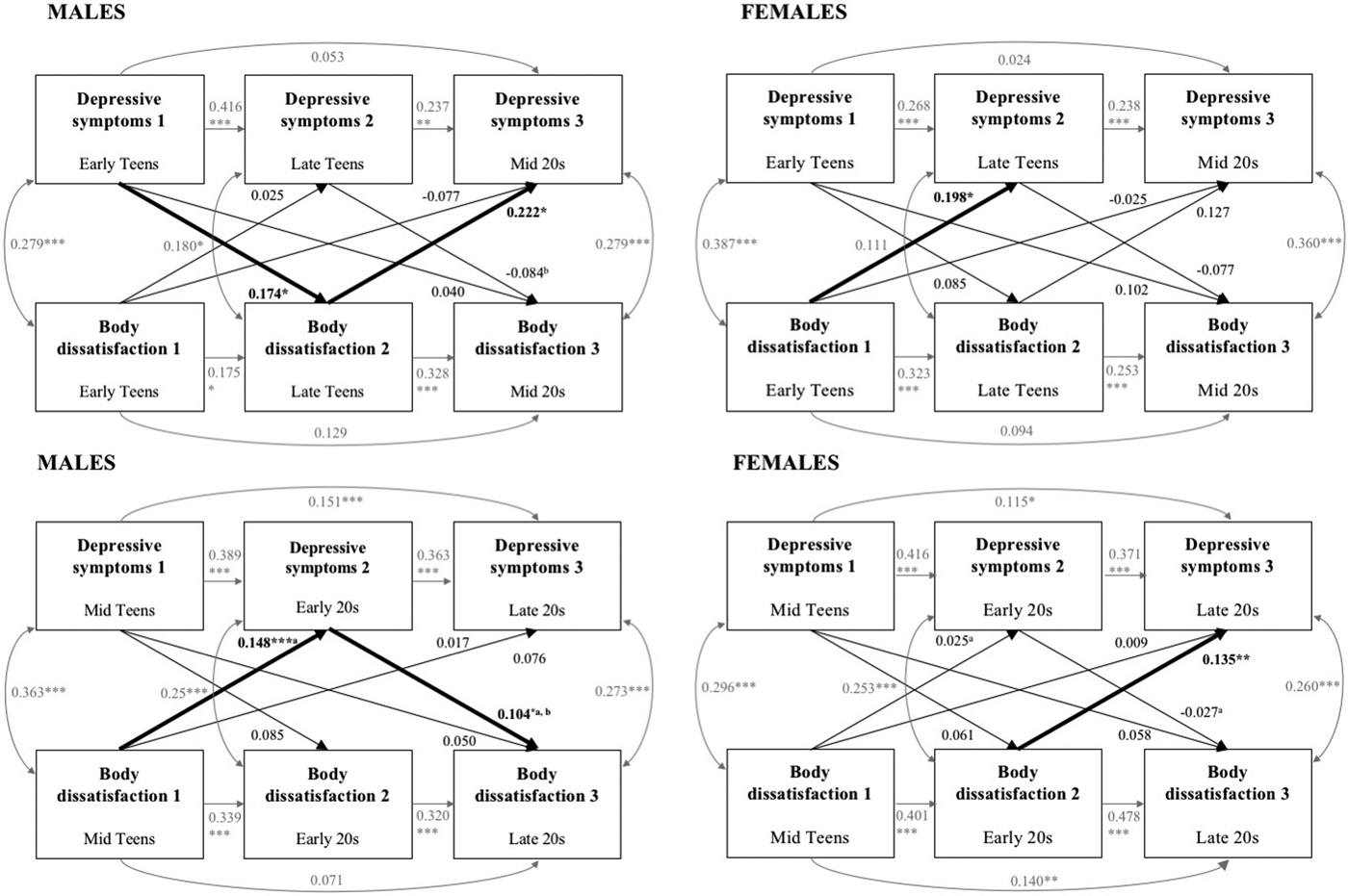
Figure 1 shows the results of the simple cross-lagged models, which control for SES and ethnicity, but not BMI. Online-only supplementary Table S.2 provides details of the 95% confidence intervals around these estimates. As can be seen in Figure 1, distinct patterns were observed for females and males.
Simple cross-lagged models showing the relationship between depressive symptoms and body dissatisfaction in males and females (controlling for socioeconomic status and ethnicity, but not body mass index). aPaths differ significantly between genders. bPaths differ significantly between older and young cohorts. *p < .05, **p < .01, ***p < .001.
Descriptive statistics for depressive symptoms and body dissatisfaction at Time 1 (baseline), Time 2 (5-year follow-up), and Time 3 (10-year follow-up) for the younger cohort and older cohort
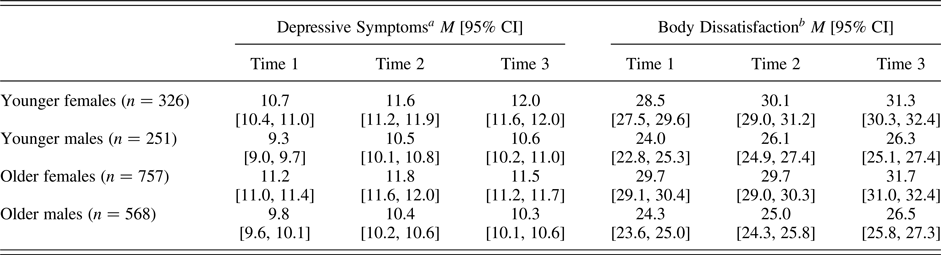
aHigher scores indicate greater depressive symptoms; possible scale range = 6–18.
bHigher scores indicate greater body dissatisfaction; possible scale range = 10–50.
Females
In line with our hypothesis, a consistent pattern was seen for females in which greater body dissatisfaction predicted greater depressive symptoms 5 years later. The standardized coefficients (see Figure 1) show that the sizes of these effects were all small. In the younger cohort, both 5-year cross-lagged pathways (from early teens to late teens, and from late teens to middle 20s) showed body dissatisfaction predicting later depressive symptoms. A similar pattern was seen in the older cohort, with the pathway from early 20s to late 20s being significant and that from middle teens to early 20s being in the same direction although not significant (p < .09). There were no significant pathways in the opposite direction (depressive symptoms predicting later body dissatisfaction) at any development stage in either cohort. There were also no significant 10-year cross-lagged pathways in either direction (i.e., there were no distal pathways [T1 to T3] once the more proximal pathways [T1 to T2, T2 to T3] had been taken into account).
Males
The models for males gave more complex results (see Figure 1). Here, the body dissatisfaction-driven hypothesis was supported, but not consistently across development. In the younger cohort, there was no significant association between body dissatisfaction and later depressive symptoms between early teens and late teens. However, from late teens to middle 20s, body dissatisfaction emerged as a predictor of later depressive symptoms. This finding was in line with our prediction that associations between body dissatisfaction and later depressive symptoms would emerge later in adolescence in males compared with females. In the older cohort, body dissatisfaction predicted later depressive symptoms from middle teens to early 20s, but there was no significant association between body dissatisfaction and depressive symptoms from early 20s to late 20s. Similarly to the female sample, there were no significant pathways in the opposite direction (depressive symptoms predicting later body dissatisfaction) at any development stage in either cohort, and no significant 10-year cross-lagged pathways. The standardized coefficients (see Figure 1) also show that all significant associations were of a small effect size.
Research question 2: What role does BMI play in these associations?
Figure 2 presents the results of the cross-lagged models when they were adjusted for changes in BMI (in addition to SES and ethnicity). Online-only supplementary Table S.3 provides details of the 95% confidence intervals around these estimates. Given the similarity in results between these and the simple cross-lagged models, we focus here on key differences from the simple cross-lagged models.
Cross-lagged models showing the relationship between depressive symptoms and body dissatisfaction in males and females (controlling for socioeconomic status, ethnicity, and time-varying body mass index). aPaths differ significantly between genders. bPaths differ significantly between older and young cohorts. *p < .05, **p < .01, ***p < .001.
Females
For females, the same overall picture emerged as when BMI was not included in the model, with body dissatisfaction predicting later depressive symptoms, and none of the cross-lagged pathways in the reverse direction being significant. However, one path did attenuate with BMI adjustment to the point of nonsignificance: in the younger cohort, body dissatisfaction no longer predicted later depressive symptoms from late teens to middle 20s.
Males
For males, the inclusion of BMI in the model did not change the pathways observed in the simple models, but new pathways also emerged. Specifically, two pathways in the reverse direction (in which depressive symptoms predicted later body dissatisfaction) became significant. These pathways were at different periods of development: in the younger cohort, from early teens to late teens, and in the older cohort, from early 20s to late 20s.
Discussion
This study aimed to explore the dynamic interplay between body dissatisfaction and depressive symptoms across adolescence and early adulthood. Three potential models have been proposed to explain this relationship (Patalay et al., Reference Patalay, Sharpe and Wolpert2015): an internalizing-driven model, in which depressive symptoms predict later body dissatisfaction; a body dissatisfaction-driven model, in which body dissatisfaction predicts later depressive symptoms; and a mutually reinforcing model, in which each predicts the other. The results of the current study revealed distinct patterns in the relationship between body dissatisfaction and depressive symptoms, which were gender specific and developmentally dynamic, shifting in strength and direction through adolescence and early adulthood.
In females, the body dissatisfaction-driven pathway was consistently supported, with small associations observed between body dissatisfaction and later depressive symptoms. None of the reverse pathways (depressive symptoms predicting later body dissatisfaction) were significant across any of the time points. The inclusion of BMI in the models in the female sample attenuated the observed relationship between body dissatisfaction in late adolescence and depressive symptoms in early adulthood. This suggests that late adolescence/early adulthood may be a period where changes in BMI play a more important role in changes in both body dissatisfaction and depressive symptoms. Outside of this late adolescent period, the body dissatisfaction-driven model was shown to be independent of changes in BMI.
The dominance of the body dissatisfaction-driven model in young women found here replicates and extends our previous findings (Patalay et al., Reference Patalay, Sharpe and Wolpert2015), in which body dissatisfaction in girls during early adolescence predicted later depressive symptoms. The current findings suggest that this prospective association continues on throughout late adolescence and into early adulthood. This is well aligned with the large body of unidirectional work that has shown body dissatisfaction to be a risk factor for later depressive symptoms for girls in the adolescent period (e.g., Bearman & Stice, Reference Bearman and Stice2008; Ferreiro, Seoane, & Senra, Reference Ferreiro, Seoane and Senra2011). Collectively, therefore, these studies suggest that after an emergence of body dissatisfaction as a risk factor for depressive symptoms in girls around the age of 11 years, there is then continuity in these risk processes into early adulthood. This timing is perhaps not surprising given that girls in early adolescence are typically experiencing a host of developmental challenges, including pubertal changes and a growing dominance of peers (Bradford Brown, Reference Bradford Brown, Lerner and Steinberg2004; Marceau et al., Reference Marceau, Ram, Houts, Grimm and Susman2011). It also suggests that targeting body dissatisfaction from early adolescence onward may have a downstream impact on broader depressive psychopathology in young women.
For young men, the relationship between body dissatisfaction and depressive symptoms was somewhat different, appearing to be mutually reinforcing and developmentally dynamic. During the period spanning late adolescence to early adulthood, body dissatisfaction predicted later depressive symptoms. In contrast, the reverse relationship was dominant outside of this period, with depressive symptoms predicting later body dissatisfaction both in early adolescence and again later in early adulthood. We should highlight, however, that this was only the case when controlling for BMI. In addition, all of the effect sizes were small. In the male model, the inclusion of BMI did not attenuate any of the body dissatisfaction-driven pathways. This suggests that relationships between body dissatisfaction and depressive symptoms are not a response to changes in BMI over this period. However, it should be noted that the U-shaped relationship between BMI and body dissatisfaction in males (McCabe & Ricciardelli, Reference McCabe and Ricciardelli2004) may mean that these models do not fully capture the potential impact of BMI in this population.
In our previous work (Patalay et al., Reference Patalay, Sharpe and Wolpert2015), the internalizing-driven hypothesis was consistently dominant for boys, right from late childhood (ages 8–11 years) through to early adolescence (ages 11–14 years). The presence of the depressive symptoms predicting later body dissatisfaction (at least in the model controlling for BMI) in early adolescence aligns with these original findings, but the rest of the model suggests that the body dissatisfaction-driven model is not exclusive to young women. During late adolescence, body dissatisfaction predicts later depressive symptoms in boys, suggesting a similar picture to girls although at a slightly delayed onset (i.e., onset by middle teens rather than early teens). This aspect of the findings supported our hypothesis. This may reflect a tendency in boys to transition through puberty relatively later, with approximately 85% of girls compared with 66% of boys completing puberty by aged 15.5 years (based on pubic hair Tanner stage 5; Marceau et al., Reference Marceau, Ram, Houts, Grimm and Susman2011). There is some evidence that body dissatisfaction in boys during adolescence is associated with the same type of socioculture pressures driving body dissatisfaction in girls (e.g., perceived pressure from the media, family, and peers), although the strength of these associations tends to be smaller for boys compared with girls (McCabe & Ricciardelli, Reference McCabe and Ricciardelli2004). There is a relative dearth of work on the development of body dissatisfaction in males, and so future research could help to clarify the potentially gender-specific mechanisms that underpin the current findings.
Strengths and limitations
Notable strengths of this study include the large sample size (particularly in the older cohort) and the long-term follow-up, which allowed for exploration across cohorts spanning adolescence into early adulthood. The size of this study did preclude the use of gold standard assessments, such as the use of a clinical interview to assess depressive symptoms and body dissatisfaction, and objective assessments of BMI for all participants. Future work including these gold standard measures could examine whether the current findings are replicated, although the assessment burden associated with this approach would likely be reflected in smaller sample sizes. Similarly, studies with shorter term follow-up but more frequent assessment points could complement this work by providing a more fine-grained exploration of how these relationships may vary over adolescent development. Limited sample sizes in individual subgroups prevented us from investigating whether these pathways manifest differently in subgroups of interest, including those who were overweight/obese or from different ethnic/racial backgrounds. Future research, where data permit, would benefit from exploring these relationships in specific subgroups by weight and ethnicity to examine whether this developmental pattern varies by these characteristics. The longitudinal examination of the relationship between depressive symptoms and other aspects of body image, such as muscularity concerns, would also be of interest.
Conclusions
This study suggests that body dissatisfaction and depressive symptoms do not simply tend to co-occur but rather that there are directional associations between the two that vary by gender and over development. With the onset of adolescence, body dissatisfaction in girls tends to be associated with increased depressive symptoms over time. This relationship may partly be explained by changes in BMI. For boys, the picture is more complex, with evidence for both directions of association with differing prominence over development. These findings suggest that interventions need to be tailored to dynamic risk profiles that shift over adolescence and early adulthood. Targeting body dissatisfaction at key points during development (e.g., early teens and early 20s in females, and middle teens and late teens in boys) may also have broader preventative implications, with the potential to have a downstream impact on depressive symptoms and consequently overall improved health and well-being.
Supplementary Material
To view the supplementary material for this article, please visit https://doi.org/10.1017/S0954579417001663.