Introduction
Despite several programmatic initiatives, India contributes 20% of all maternal deaths globally, estimated at 56,000 in 2010 (WHO, 2012), suggesting insufficient coverage of maternal health care services at national and sub-national levels (Rai et al., Reference Rai, Kumar and Singh2012; Kumar et al., Reference Kumar, Singh and Rai2013). It is imperative to assess the possible factors influencing utilization of maternal health care services, since current progress towards reaching the fifth Millennium Development Goal target by 2015 (WHO, 2012) is insufficient. Previous studies in the Indian context have documented socioeconomic gradients and other contextual factors, including mother's age at childbirth, birth order, education, awareness of health services, social group (caste), religion, occupation, economic status, distance to health facility, that significantly determine maternal health care services utilization (Navaneetham & Dharmalingam, Reference Navaneetham and Dharmalingam2002; Ghosh, Reference Ghosh2006; Sunil et al., Reference Sunil, Rajaram and Zottarelli2006; Santhya et al., Reference Santhya, Jejeebhoy and Ghosh2008; Kesterton et al., Reference Kesterton, Cleland, Slogett and Ronsmans2010; Jat et al., Reference Jat, Ng and San2011; Hazarika, Reference Hazarika2011; Viegas Andrade et al., Reference Viegas Andrade, Noronha, Singh, Rodrigues and Padmadas2012; Singh et al., Reference Singh, Kumar, Rai and Singh2013). Although past studies have considered women's age and the utilization of maternity health care services, little attention has been paid to the ‘age dynamics’ in an inclusive way. For instance, the majority of previous studies in India have highlighted the importance of women's education, household wealth, urban–rural differences and autonomy after adjusting for other potential factors, including age of the women. However, a casual approach towards the age effect when examining utilization of health care services has persisted in the majority of studies. None has made a serious attempt to understand the age difference in the use of health care services using the women's age cohort approach.
The distribution of resources by age has been of central important throughout human history. The significance of cohort experiences in determining socioeconomic and demographic behaviour has been documented in the literature in both developed and developing countries (Thornton et al., Reference Thornton, Chang and Sun1984; Lee et al., Reference Lee, Netzer and Raymond1995; Mare, Reference Mare1997; Bender & McCann, Reference Bender and McCann2000; Stockard & O'Brien, Reference Stockard and O'Brien2002; Maria de Souza, Reference Maria de Souza2003; Lynch, Reference Lynch2003; Marshall et al., Reference Marshall, Jones, Ramchandani, Stein and Bass2007; Pavalko et al., Reference Pavalko, Gong and Long2007; Smith et al., Reference Smith, Kelly and Nazroo2009). The potential age difference in health and utilization of health care services, sometimes also referred in the literature as ‘inter-generational difference’, argues that a group of people who share or experience the same phenomena over their lifetime, represents a summative experience of exposure to different environments that may shape socioeconomic and health behaviour (Ciabattari, Reference Ciabattari2001; Maria de Souza, Reference Maria de Souza2003; Marshall et al., Reference Marshall, Jones, Ramchandani, Stein and Bass2007; Doctor, Reference Doctor2011). In the WHO report on Social Determinants of Health, the cumulative effects of present, and in many cases lifetime exposure to the conditions/environment of living coalesce to determine the health status of an individual or population (Marmot, Reference Marmot2007). According to the Precede–Proceed Model (Green & Kreuter, Reference Green and Kreuter2005), ‘people influence their social and physical environments through their attitudes and behaviour, and they are influenced by their environments and their behaviour’.
Although the health and utilization of health care services refer to the current period, the differences in the utilization of health care are expected to be influenced by the age of the beneficiaries. It is important to note that women's age provides key information about the pattern and trends in health care utilization, since women in different age cohorts are exposed to different time periods, and endure various shifts in life at individual, household and contextual levels, including changes in policies and programmes. For example, it is expected that women from the younger age cohort are more likely to use health care services than those from the other age cohorts, because of exposure to changes in educational and health policies that have taken place during the last couple of years. It is not expected that these programmes are likely to increase awareness of reproductive health issues in general, and maternal and child health behaviour in particular, among women from the younger age cohort.
A few attempts have been made to understand inter-generational difference in order to explain variations in maternal or reproductive health outcomes. In many cases, previous studies have tended to ignore the link between age and health behaviour. Most have focused on institutional or macro-challenges and overlooked the fact that there are age variations that matter in health behaviour. Specific age variations may call for specialized policy interventions. Therefore, not only does this study use nationally representative survey data from India that contains sufficient information on antenatal care (ANC) and delivery care to analyse the effect, but it also uses an analytical approach to examine the age effects involved in assessing progress made at the national level in influencing women's health behaviour. Against this background, the study assesses whether age of the mother at the time of childbirth influences the likelihood of receiving full ANC and skilled birth attendance (SBA), before and after adjusting for selected individual, household and contextual variables. This approach is essential since it will yield an opportunity to identify potential areas for targeting interventions to improve the utilization of maternal health care services among women of different age groups in a country where regional and religious norms, values and socio-cultural practices have an impact on the lives of women at different ages of their reproductive lifespan.
Methods
Data
The study used data from the third wave of the Indian Demographic and Health Survey (DHS), known as the National Family Health Survey (NFHS), carried out in India during 2005–06 (IIPS and Macro International, 2007). Since this study was based on data available in the public domain ethical approval was not required for this work. The NFHS is a large-scale, multi-round survey conducted in a representative sample of households covering more than 99% of the population throughout India. The third wave of the NFHS (NFHS-3) was the outcome of the collaborative efforts of many organizations such as the International Institute for Population Sciences (IIPS), United States Agency for International Development (USAID), Department for International Development (DFID), United Nations Children's Fund (UNICEF) and United Nations Population Fund (UNFPA). The principal objective of NFHS-3 was to provide state and national estimates on fertility, family planning practices, infant and child mortality, maternal and child health and utilization of health care services by mothers and children. The survey also includes information on the quality of health and family welfare services and provides indicators of the status of women, women's reproductive health and domestic violence. The survey provides state-level estimates of demographic and health parameters as well as data on various socioeconomic and programme dimensions, which are critical for bringing about the desired change in demographic and health parameters.
The survey covers a representative sample of about 124,385 ever-married women in the age group 15–49, who were canvassed in two phases across 29 states of India. The data recorded 56,438 births that occurred in the 5 years preceding the survey. Among the women interviewed, 36,850 were found to have at least one live birth during the 5 years preceding the date of survey, and these women were selected as the analytical sample for this study. Only the most recent births were considered, and multiple births were excluded. The period of 5 years was considered the reference period for most of the reproductive information shared by women, and used in the analysis.
Dependent variables
Two outcome variables were measured, namely full antenatal care (ANC) and skilled birth attendance (SBA). Full ANC includes those mothers who had a minimum of three antenatal visits, at least two tetanus toxoid injections during pregnancy or one tetanus toxoid injection during the pregnancy and at least one in the 3 years prior to the pregnancy, and received iron and folic acid tablets for 90 days or more (WHO, 2006). The provision of all components of antenatal care to the pregnant women is an integral part of the Reproductive and Child Health Program in India (Ministry of Health and Family Welfare, 2012). A delivery occurring either in a medical institution or at home assisted by a doctor/nurse/lady health visitor (LHV)/auxiliary nurse midwife (ANM)/other health professional is termed as ‘safe delivery’ (WHO, 2006) or ‘skilled birth attendance’. It is worth mentioning here that this study uses ‘skilled birth attendance’ (SBA) and ‘supervised delivery’ interchangeably throughout the paper.
Selection of independent variables
Important socioeconomic and demographic predictors included in the analysis are based on their theoretical and observed importance applied in the literature. The study considered a number of potential individual factors, including mother's age at the time of child's birth (15–24, 25–34 and 35–49 years), which has been taken as a surrogate variable for the age cohort of women representing different generations in a short span of policy or programme regime. Other predictors include education (no education, primary but below secondary, and secondary & above), parity (1, 2–3 and 4+), mass media exposure (no exposure and any exposure) and women's autonomy (low and high). It is well recognized in public health literature that women's age and parity play an influential role in determining the utilization of maternity health care (Santhya et al., Reference Santhya, Jejeebhoy and Ghosh2008). A recent study from India demonstrated that adolescent women and their children have lower utilization of maternal health care services and child immunization services, respectively (Singh et al., Reference Singh, Rai and Singh2012a). Studies from developing countries have consistently documented mother's education as one of the most prominent factors affecting maternal health care utilization, after adjusting for household and other contextual level factors (Ahmed et al., Reference Ahmed, Creanga, Gillespie and Tsui2010; Amin et al., Reference Amin, Shah and Becker2010). It has been said that education serves as a proxy for information, cognitive skills and values, which uneducated women often lack (Raj et al., Reference Raj, Saggurti, Balaiah and Silverman2009).
Exposure to mass media has been assessed by considering how often the respondents read the newspaper, listen to the radio and watch television or cinema. Women's autonomy has been computed by taking three dimensions into account, namely women's mobility (freedom to visit places unescorted), access to economic resources and decision-making authority (Jejeebhoy, Reference Jejeebhoy2002). Previous studies have concluded that women's decision-making autonomy is one of the most important determinants of receiving pregnancy care (Singh et al., Reference Singh, Rai and Singh2012a). A set of variables has been taken into account while constructing the autonomy index, such as decision to go to a health facility, involvement in major and daily household purchases, decision to visit family or relatives and decision to spend husband's money (women's decision-making); allowed to go to market, health facilities and outside the home/village/community (freedom of mobility); and economic security assessed by two indicators, i.e. money for own use and own bank account. A higher weight was allocated if the women were involved in decision-making or did not require permission to go out. The women's autonomy index was categorized into low and high autonomy. The NFHS-3 data provides information about the three different dimensions giving scope to construct an index to assess women's autonomy. Similarly, mass media exposure promotes health-related behaviour including contraceptive use and reproductive preferences (Ghosh, Reference Ghosh2006).
As far as household-level factors are concerned, the study includes family structure (nuclear and joint), caste (Scheduled Caste (SC), Scheduled Tribe (ST), Other Backward Class (OBC) and Others), religion (Hindu, Muslim and Others) and wealth quintile (poorest, poorer, middle, richer and richest) as potential variables. Household wealth was calculated from a standard set of assets owned by the household, including ownership of consumer items and dwelling characteristics. Individuals were ranked based on their household score and divided into quintiles, each representing 20% of the score, between 1 (poorest) and 5 (wealthiest). A detailed description of the household assets and related wealth is provided in the NFHS report (IIPS and Macro International, 2007). In Indian culture, or indeed in all South Asian countries, family plays a central role in determining marriage, childbirth and health care behaviour and practices for women (Avan & Saima, Reference Avan and Saima2006; Saikia & Singh, Reference Saikia and Singh2009). Saikia & Singh (Reference Saikia and Singh2009) concluded that women belonging to non-nuclear households might be less involved in decisions related to the utilization of maternal health care services. In India, caste and religious affiliations play a significant role in determining access to health care and its utilization, the omission of which could lead to biased estimates (Navaneetham & Dharmalingam, Reference Navaneetham and Dharmalingam2002; Nayar, Reference Nayar2007). The growing rich–poor gap in the utilization of maternal health care services has been the focus of public health literature, irrespective of world regions (Barros et al., Reference Barros, Ronsmans, Axelson, Loaiza, Bertoldi and França2012).
One of the most common findings in developing countries regarding the utilization of health care services has been the advantage of residing in urban areas over rural areas (Say & Raine, Reference Say and Raine2007; Desai et al., Reference Desai, Sinha and Mahal2011). The differences in maternal mortality between urban and rural areas within poor countries are substantial (Ronsmans et al., Reference Ronsmans and Graham2006). This is primarily attributed to the lack of health infrastructure and poor accessibility, coupled with lower socioeconomic status (Singh et al., Reference Singh, Rai, Alagarajan and Singh2012b). Since a strong state-level difference in the coverage of maternal and child health services, along with variations in health infrastructure and socioeconomic status across states, have been documented in previous studies (Kumar et al., Reference Kumar, Singh and Rai2012, Reference Kumar, Singh and Rai2013), region of residence was adjusted in the multivariate analysis. For this purpose, India was divided into six regions based on geographical locations and cultural settings: North (Jammu and Kashmir, Himachal Pradesh, Punjab, Haryana, Rajasthan, Delhi and Uttarakhand), Central (Uttar Pradesh, Madhya Pradesh and Chhattisgarh), East (Bihar, Jharkhand, West Bengal and Orissa), North-East (Arunachal Pradesh, Assam, Manipur, Meghalaya, Mizoram, Nagaland, Sikkim and Tripura), West (Gujarat, Maharashtra and Goa) and South (Andhra Pradesh, Karnataka, Kerala and Tamil Nadu).
Analytical approach
Two approaches were used in the analysis. First, bivariate analyses were used to examine the link between independent variables and age cohorts. Chi-squared tests were used to determine associations between categorical variables. Second, multivariate analyses used logistic regression models to examine the impact of age cohort on the likelihood of receiving full ANC and SBA, before and after adjusting for other factors. Instead of the linear probability model, the logistic regression function is preferable to fit some kind of sigmoid curve when the response variable is dichotomous (binary or 0–1) and that reasonably portrays the reality about outcome events. The binary response (whether received full ANC or not; whether received SBA or not) for each individual was related to a set of categorical predictors, X, and a fixed effect by a logit link function as follows:
 $$Logit(\pi_i) = {\rm log} [\pi_i/1-\pi_i] = \beta_0 + \beta (X) + \epsilon$$
The probability of an individual receiving full ANC or SBA is πi. The parameter β 0 estimates the log odds of full ANC or SBA for the reference group, and the parameter β estimates with maximum likelihood, the differential log odds of full ANC or SBA associated with the predictor X, as compared with the reference group. The symbol ε represents the error term in the model. The results are presented by estimated odds ratios with 95% confidence intervals (CIs). All analyses were conducted using Stata version 10.0 (Statacorp, 2007).
Results
Sample characteristics
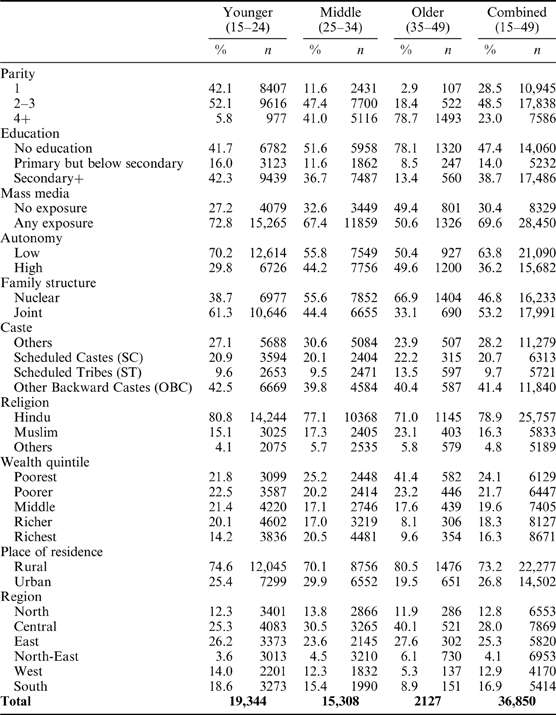
Table 1 presents the distribution of women who had at least one live birth during the 5 years preceding the survey by background characteristics across the three age cohorts. Level of education, which is expected to be one of the most influential characteristics, tends to increase with the younger generation. In contrast to the older (13%) and middle (37%) age cohort, a higher proportion of women in the younger (42%) age cohort reported that they were educated up to secondary level or above. Almost four-fifths of the women from the older age cohort and more than half of the women from the middle age cohort had never been to school or had not undergone any formal education. A similar pattern is exhibited in their level of exposure to mass media, as about 73% of women from the younger age cohort reported having been exposed to any mass media compared with 67% and 51% from the middle and the older age cohorts, respectively. However, even with higher levels of education and mass media exposure, women in the younger age (30%) were far less autonomous in a range of family decisions compared with middle (44%) and older (50%) age cohorts. This seems more probable in traditional societies like India, as more than 61% of the women in the younger age cohort were part of a joint family in contrast to 44% and 33% of women from middle and older age cohorts, respectively.
Percentage distribution of women who had at least one live birth during the 5 years preceding the survey by age cohort and background characteristics, NFHS-3 (2005–06), India

Differences between each background characteristic and age cohort were significant at p<0.01. Some percentages may not add up to 100 due to rounding.
All n values are unweighted.
Almost two-fifths of the women of all age cohorts belonged to Other Backward Class (OBCs). A relatively higher proportion of women belonging to Scheduled Caste (22%) and Scheduled Tribe (14%) households were in the older age cohort compared with the middle and younger age cohorts. As far as religious affiliation is concerned, a distinct pattern emerges between Hindu and Muslim women. Muslim women constituted a relatively higher proportion among older (23%) and middle (17%) age cohorts compared with the younger (15%) age cohort, while Hindu women were higher in proportion in the younger age (81%) cohort compared with middle (77%) and older (71%) age cohorts. In economic terms, women in the older age cohorts were found to be disadvantaged in comparison with those in the younger and middle age cohorts. Around two-thirds of the women in the older (65%) age cohort belonged to the poorer or the poorest wealth quintile, compared with nearly 45% women in the middle and younger age cohorts. Similarly, the proportion of women from the middle and younger age cohorts belonging to the richer and richest wealth quintile was double that of women from the older age cohorts. The parity of women increased with older age cohort. The proportion of women in the middle age cohort living in urban areas was almost 30%, compared with 25% in younger and about 20% in older age cohorts. As for the distribution observed across geographical regions, the majority of women from all age cohorts lived in the Central and East regions. In the West and South regions, the proportion of older women was considerably lower in comparison to women from younger and middle age cohorts.
Bivariate association
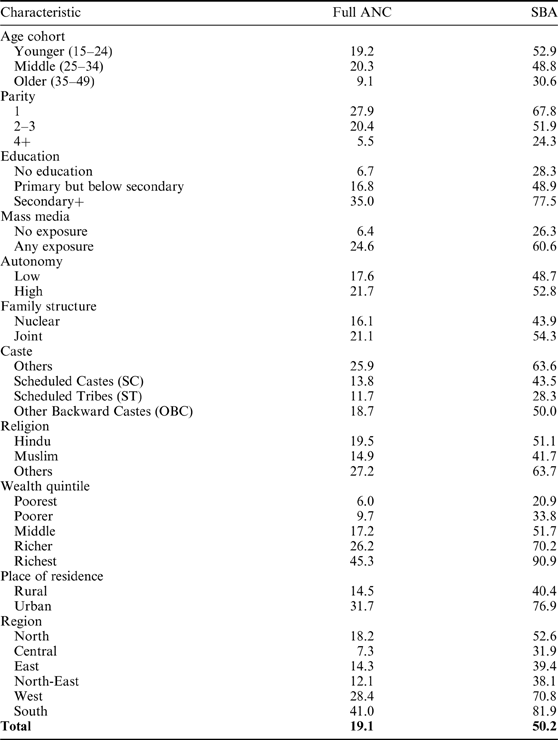
One of the key objectives of this study was to assess the extent and pattern of women receiving full ANC and SBA across different age cohorts and other selected characteristics (Table 2). At the national level about two in five women and half of the eligible women utilized full ANC and SBA for their last birth. It is worth mentioning that the overall SBA (50.2%) includes 41.7% institutional and 8.5% delivery at home by skilled or professional health personnel. With respect to receiving full ANC, women in the middle (20%) age cohort reported a higher proportion than those in the younger (19%) and older (9%) age cohorts. However, the proportion of women having SBA was higher among women in the younger (53%) age cohort, compared to the middle (49%) and older (31%) age cohorts. The distribution of both maternity care services according to socio-demographic and economic characteristics of women was almost identical at varied levels, where a higher proportion of women reported having SBA than receiving full ANC. The proportions of women receiving full ANC and having SBA were found to increase with increase in level of education and economic status (wealth quintile), and decrease with increasing parity. A higher proportion of women with mass media exposure, high autonomy and living in urban areas in a joint family availed themselves of both maternity care services, compared with women from rural areas and nuclear families, respectively.
Percentage of women who had at least one live birth during the 5 years preceding the survey by usage pattern of maternity care services and by background characteristics, NFHS-3 (2005–06), India
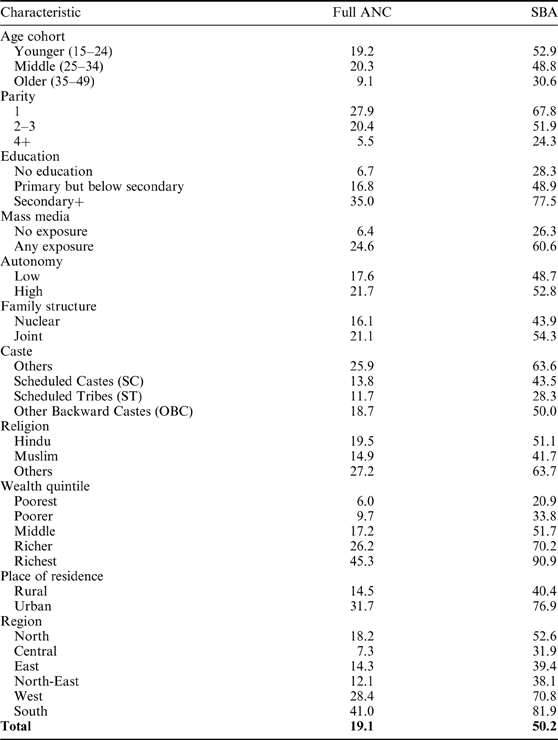
Chi-squared test applied for each variable. Each variable is significant at p<0.01.
Multivariate results for receiving full ANC and having SBA
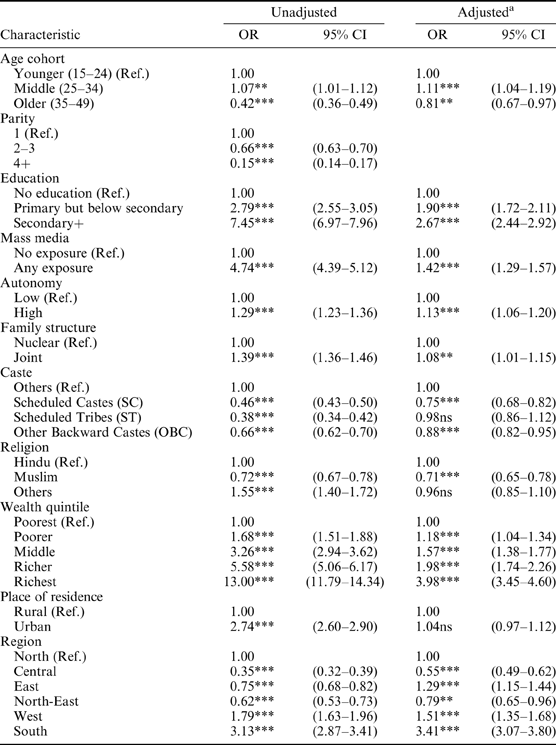
Table 3 presents the results of the logistic regression models assessing the effect of mother's age cohort on receiving full ANC among women whose most recent pregnancy occurred within 5 years of the survey. Along with the adjusted odds ratios, the table provides observed (or unadjusted) odds ratios for each correlate, which permit direct comparison of observed and adjusted effects. The study estimated the baseline effect of each variable on receiving full ANC in the unadjusted model, and then controlled for other variables in the adjusted one. The result from the unadjusted model shows that women from the middle age cohort were 1.07 times (95% CI=1.01–1.12) more likely, and those from the older age cohort less likely (OR=0.42; 95% CI=0.36–0.49) to receive full ANC compared with women from the younger age cohort. When all other potential individual, household and contextual variables were controlled in the adjusted model, the direction remained the same. The likelihood of full ANC was 11% more among women in the middle age cohort compared with those in the younger age cohort. However, the odds of full ANC were lower among women of the older age cohort compared with the younger age cohort (OR=0.81; 95% CI=0.67–0.93).
Binary logistic regression model showing odds ratio (OR) and confidence intervals (95% CI) for receiving full antenatal care among women who had at least one live birth during the 5 years preceding the survey, NFHS-3 (2005–06), India
a Mother's parity was excluded from the multivariate analysis after examining high collinearity between women's age cohort and women's parity.
**p<0.05; ***p<0.01; ns, not significant; Ref.: reference category.
Factors such as women's schooling, mass media exposure, family structure, caste, household wealth, place of residence and region of residence significantly determine the utilization of full ANC. Women with primary but below secondary (AOR=1.90, 95% CI=1.71–2.11) and with secondary education or above (AOR=2.67; 95% CI=2.43–2.92) were more likely to receive full ANC than those with no education. The likelihood of full ANC was higher among those women who had any exposure to mass media (AOR=1.42; 95% CI=1.28–1.56) and those who reported higher autonomy (AOR=1.13; 95% CI=1.05–1.20), compared with women who had no mass media exposure and reported low autonomy, respectively. Women residing in a joint family utilized more full ANC than women from nuclear families. The likelihood of full ANC was lower among women belonging to the SCs (AOR=0.75; 95% CI=0.68–0.82) and the OBCs (AOR=0.88; 95% CI=0.82–0.95). Similarly, women belonging to the Muslim religion were less likely to receive full ANC (AOR=0.71; 95% CI=0.64–0.78) than Hindu women. The odds of receiving full ANC increased significantly with increasing household economic status. Women from the richest wealth quintile were 3.98 times (95% CI=3.45–4.60) more likely to receive full ANC compared with women from the poorest wealth quintile. Inclusion of region of residence in the full model shows that, compared with women in the North region, women in the South region were 3.41 times (95% CI=3.06–3.80) more likely to receive full ANC, whereas the lowest utilization of full ANC was evident among women in the Central region (AOR=0.55; 95% CI=0.49–0.62).
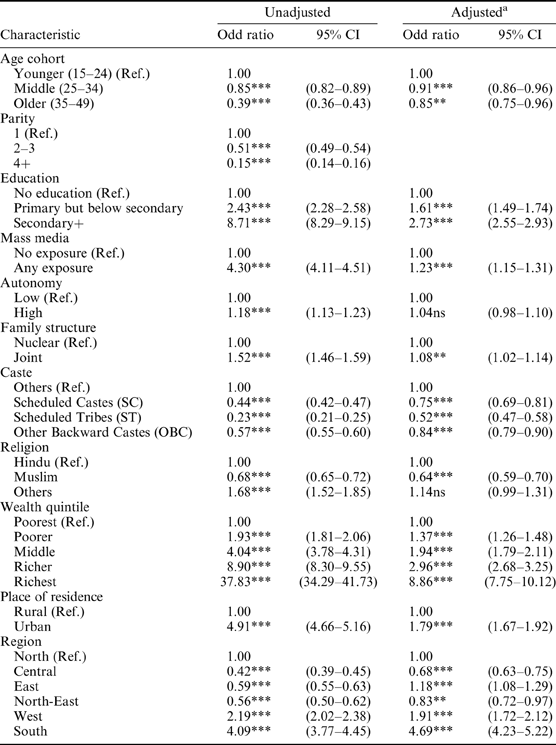
The regression results for SBA, which took a similar approach to those for receiving full ANC, are presented in Table 4. The baseline effect of age on having a supervised delivery was significant and shows that women in the middle age cohort were 15% less probable (OR=0.85; 95% CI=0.81–0.88) to have SBA compared with those in the younger age cohort. The corresponding odds for women of older age cohort were 0.39 (95% CI=0.35–0.43) compared with the younger age cohort. Even after adjusting for the potential covariates, the pattern of association remained the same.
Binary logistic regression model showing odds ratio (OR) and confidence intervals (95% CI) for receiving skilled birth attendance (SBA) among women who had at least one live birth during the 5 years preceding the survey, NFHS-3 (2005–06), India
a Mother's parity was excluded from the multivariate analysis after examining high collinearity between women's age cohort and women's parity.
**p<0.05; ***p<0.01; ns, not significant; Ref.: reference category.
The adjusted odds ratio for the middle age cohort was 0.91 (95% CI=0.86–0.96), whereas for women of the older age cohort it was 0.85 (95% CI=0.75–0.96). Women with primary but below secondary education were 61% (AOR=1.61; 95% CI=1.49–1.74) more likely to have SBA than those with no education. Having secondary or higher education was associated with odds of having SBA 2.73 times (95% CI=2.55–2.93) higher than those for uneducated women. The odds of having SBA were higher (AOR=1.23; 95% CI=1.15–1.31) among women who reported any exposure to mass media compared with women with no exposure. Women belonging to SC, ST and OBC were less likely to have SBA compared with women belonging to other castes. The likelihood of SBA was 8.86 times (95% CI=7.75–10.12) higher among women belonging to the richest wealth quintile compared with those belonging to the poorest wealth quintile. As expected, women living in urban areas were 79% more likely (95% CI=1.67–1.92) to have SBA than those in the rural areas. Compared with women from the North region, the odds of having SBA were highest in the South region (AOR=4.69; 95% CI=4.23–5.22) and lowest in the Central region (AOR=0.68; 95% CI=0.63–0.75).
Discussion and Conclusion
The results of this study suggest that women, in general, reported low rates of receiving full ANC and SBA for their last pregnancy. Just one in five pregnant women received full ANC, while nearly half the eligible women did not deliver their last birth in safe conditions. Further, patterns of receiving full ANC and having supervised deliveries were significantly associated with socioeconomic and geographical differentials. The findings suggest that receiving full ANC and having a supervised delivery were more likely among women with a certain level of education, those who had any mass media exposure and autonomy, those belonging to non-SC/ST/OBC social groups and wealthier households, and living in urban areas and the southern region of India.
The present study further documents that age cohort exerts a significant influence on the utilization of maternal health care services after adjusting for other potential covariates in the model. However, this influence was not constant across the three selected age cohorts, nor was it the same for the two different types of maternal health care services. The adjusted estimates confirm a curvilinear pattern for full ANC, as utilization was higher among women of the middle age cohort compared with the other two age cohorts. Previous studies from India (Singh et al., Reference Singh, Rai and Singh2012a) and elsewhere (Obermeyer & Potter, Reference Obermeyer and Potter1991) have also suggested a non-linear, and indeed a curvilinear pattern in the utilization of maternal health care services. However, in the case of SBA, the utilization was lower among women of the middle and older age cohorts compared with those of the younger age cohort. Such age variations in maternal health care use could be linked with the lifecourse perspective, where an individual's health decisions depend on an individual's life stage, which is significantly shaped by exposure to physical, social, environmental and historical factors from birth to old age (Ryder, Reference Ryder1965; Riley, Reference Riley1987; Ben-Shlomo & Kuh, Reference Ben-Shlomo and Kuh2002; Halfon & Hochstein, Reference Halfon and Hochstein2002). Further, change in maternal health care utilization by mother's age cohort might be attributed to the availability and significance of health care resources, which vary across a woman's reproductive career (Gabrysch & Campbell, Reference Gabrysch and Campbell2009). For instance, in developing countries like India, while education can positively affect supervised delivery for first-time mothers, it is less likely to matter for women who have already had children (Navaneetham & Dharmalingam, Reference Navaneetham and Dharmalingam2002). Older women may tend to believe that modern health care is not necessary and tend to rely more on their experiences (Mekonnen & Mekonnen, Reference Mekonnen and Mekonnen2002). However, first-time mothers may rely heavily on external resources (financial and knowledge) to access and utilize health care services, given the value placed on the first-born child. In India, or indeed the majority of South Asian countries, women's natal families may get involved to improve access to health care for their daughter's first-born child (Navaneetham & Dharmalingam, Reference Navaneetham and Dharmalingam2002; Singh et al., Reference Singh, Rai and Singh2012a). Additionally, evidence suggests that a substantial proportion of young women experience at least one pregnancy-related complication during pregnancy for their first birth, which could lead to higher utilization of SBA by women of younger age cohort (Santhya et al., Reference Santhya, Jejeebhoy and Ghosh2008).
The lower utilization of full ANC among women in the younger age cohort calls for urgent policy attention. Antenatal care is the first interaction point between first-time-pregnant women and the health system (Bhutta et al., Reference Bhutta, Cabral, Chan and Keenan2012). Antenatal care visits provide key information to women and other household members that produces a safe and healthy maternal and child health outcome. In a recent global policy shift promoting integration of Reproductive, Maternal and Child Health (RMCH), i.e. ‘continuum of care’ (Kerber et al., Reference Kerber, de Graft-Johnson, Bhutta, Okong, Starrs and Lawn2007; Rai et al., Reference Rai, Kumar and Singh2012), antenatal care was recognized as a key stage serving as a gateway to promoting integrated services to eligible women and children. However, young women, who are generally more educated and who reported higher mass media exposure compared with those of the older age cohorts, are more likely to receive full ANC than their older counterparts. This could be linked to the influence of other family members who determine younger women's decision about health care utilization. The sample distribution also indicates that a higher proportion of younger age cohort women belonged to a joint family (61%) as compared with older age cohort women (33%). It has been shown that women continue to rely on older women in the household for advice on important decisions, including health care (Bender & McCann, Reference Bender and McCann2000). Further, studies from developing countries suggest that mothers-in-law and other older women in the household play a dominant role in determining the reproductive behaviour of young couples (Santow, Reference Santow1995). In general, in joint families maternal health care services are usually controlled by older women, who have a culturally ordained responsibility to look after the younger women's reproductive and maternal health needs (Mumtaz & Salway, Reference Mumtaz and Salway2005). Additionally, Doctor (Reference Doctor2011) argued that young women will still face challenges in accessing reproductive health services as long as the level of stigma remains high in society.
In keeping with the findings of previous studies in India and elsewhere, women's education, mass media exposure, autonomy, caste, religion and region of residence significantly determine the utilization of maternal health care services. In the global public health literature, women's education and economic status of the household have been the most cited factors that significantly determine the utilization of health care facilities. Many studies have highlighted how women's schooling affects the utilization of maternal health care through greater knowledge, better awareness of health services and increased ability to select the most appropriate service (Titaley et al., Reference Titaley, Dibley and Roberts2010). Economic status restricts their use greatly because of the problems of addressing basic daily living needs (Kesterton et al., Reference Kesterton, Cleland, Slogett and Ronsmans2010). In many cases, women from poor households engage in economic activity (mainly in the informal sector/daily wages) to generate additional income, and are thus not able to find time for adequate and timely health care utilization. The Government of India launched a conditional cash transfer (CCT) scheme in 2005, namely the Janani Suraksha Yojana (JSY), under the broad umbrella of the National Rural Health Mission (NRHM) to overcome the economic barriers to the provision of maternal health care services utilization. According to the scheme, eligible women could receive INR (Indian National Rupees) 1000 in urban and INR 1400 in rural areas after delivering in a government or accredited private health facilities. However, recent evaluation studies show that the poorest and illiterate women have not always benefited from the JSY scheme (Lim et al., Reference Lim, Dandona, Hoisington, James, Hogan and Gakidou2010). For instance, a study in Rajasthan documented that more than 50% of eligible women did not benefit from the JSY, and that the reach of JSY remained inequitable for women living in rural areas, and those who were poor and illiterate (Santhya et al., Reference Santhya, Jejeebhoy and Zavier2011). In addition it has been argued that the JSY scheme is not well enough designed to be considered an effective pathway to reduce maternal mortality, since it does not effectively influence prenatal and postnatal care utilization (Rai & Singh, Reference Rai and Singh2012). Thus, the policy alone cannot improve the utilization of maternal health care services without addressing the social determinants of health to achieve the desired objective.
There is evidence that mass media is an important source of information on the availability and importance of health care services (Navaneetham & Dharmalingam, Reference Navaneetham and Dharmalingam2002). Previous studies have concluded that women's decision-making autonomy is a strong determinant of receiving pregnancy care (Bloom et al., Reference Bloom, Wypij and Dasgupta2001; Das et al., Reference Das, Gandotra, Pandey and Shah2002). Contrary to the findings of a previous study (Saikia & Singh, Reference Saikia and Singh2009), this study found higher utilization of maternal health care services among women with a joint family structure. The finding from Nepal, however, supports the pattern observed in the present study and found the same association between family type and utilization of maternal health care services (Matsumara & Gubhaju, Reference Matsumara and Gubhaju2001). The higher use of maternity care services by women from joint families could be linked to the benefits of residing with other family members in the same household in terms of more contacts, information flow and encouragement to seek care (Conrad et al., Reference Conrad, Hollenbach, Fullerton and Feigelson1998). On the other hand, women belonging to nuclear families have to take time out from performing household chores in order to seek maternal health care.
The caste-wise difference in the utilization of maternal health care services is least examined in Indian public health literature. A few earlier studies have also linked lower utilization, particularly among Scheduled Castes (SC) and Scheduled Tribes (ST), as the outcome of long-term discrimination and residential segregation (Deshpande, Reference Deshpande2000; Nayar, Reference Nayar2007). The utilization of select maternity care services was found to be lower among Muslim women compared with their Hindu counterparts. Although the importance of religious composition in Indian demography has been growing, not much research has been conducted to explore religious differences in health outcome in general, and maternal and child health in particular. A few studies have highlighted poor socioeconomic status, and lower financial and mobility restrictions, as potential reasons for lower utilization of maternal health care services among Muslim women (Hazarika, Reference Hazarika2011; Singh et al., Reference Singh, Rai, Alagarajan and Singh2012b). The findings illustrate the importance of region of residence in determining utilization of maternal health care services. States belonging to the central and eastern regions of India together account for 55% of the total population living below the poverty line (Planning Commission, 2007). Importantly, half of the maternal deaths during 2007–09 were contributed by these states (Office of the Registrar General, 2011). Moreover, states in the North, Central and East regions include eight Empowered Action Group (EAG) states characterized by low women's education, poor exposure to mass media and low mean age at marriage (Griffiths et al., Reference Griffiths, Matthews and Hinde2002; Kumar et al., Reference Kumar, Singh and Rai2012; Singh et al., Reference Singh, Kumar, Rai and Singh2013).
From the policy point of view, the findings of this study suggest that previous and current maternal health care programmatic efforts have not succeeded in reaching younger women, serving their specific needs or addressing the socioeconomic obstacles that lie in the way of their utilizing existing maternity care services. Maternity programmes should be designed keeping in mind the socioeconomic context of younger women in order to reach the most underserved young women. This study confirms that there is an inter-generational difference (age cohort effect) in utilization of maternal health care services that plays a pivotal role in maternal health care services utilization in India. The findings support the need for ‘age-sensitive’ interventions, whereby programmes and incentives are tailored to women's health care needs throughout the reproductive life-stage. For younger mothers, policies aimed at increasing full ANC should focus on their individual characteristics as well. Considering nearly two in five younger age cohort women had no education, and over 70% reported lower autonomy, an integrated approach is needed at policy level to improve the education of young women, and reach eligible younger women's households by community health workers to ensure the receive optimal antenatal care. Programmes aimed at older age women could encourage better communication during antenatal care about the unpredictability of birth complications in particular, and the importance of supervised delivery in the community in general, as key ways of countering the ‘inoculating’ effect of uneventful deliveries. The findings reported here are commonly encountered in many parts of Asian countries and in other contexts with comparable socio-cultural characteristics, and therefore have a broad relevance. They could therefore contribute to the development of a reference framework for selection of appropriate strategies in similar contexts.
This study has some potential limitations. The most important is the retrospective nature of the survey, which may be associated with recall bias, more pronounced for events that took place 5 years before the survey. Not all predictors of maternal health care services use were included in the study due to limitations of the data and scope of the study. For instance, health care use could be determined by certain community norms, including cultural practices related to pregnancy care, that were difficult to measure in the available dataset. The study also acknowledges the limitation in considering measures of quality of health care services such as waiting time, staff attitudes and behaviour, that may influence women's decisions on whether or not to make use of given facilities.
The results suggest that future research should continue to employ a life course framework to understanding maternal health. Additionally, future studies could explore some more dynamics of age variations in maternal health care services utilization taking contextual and community-level effects into consideration.
Acknowledgments
The authors are indebted to the editor and anonymous reviewers for their valuable comments and feedback on an earlier draft of this paper.