1. Introduction
Ultrahigh-pressure metamorphism (UHPM) refers to mineralogical modifications of continental and oceanic crustal protoliths initially formed in shallow levels of the lithosphere, but which subsequently have experienced P–T conditions within or above the coesite stability field (e.g. Liou et al. Reference Liou, Ernst, Zhang, Tsujimori and Jahn2009). Discovery of coesite (Chopin, Reference Chopin1984) and microdiamond (Sobolev & Shatsky, Reference Sobolev and Shatsky1990) in metamorphosed supracrustal rocks indicates that some continental rocks have been subducted to mantle depths exceeding 100 km and were subsequently exhumed to crustal depths. Coesite, a high-pressure polymorph of SiO2 stable at P > 27 kbar, is one of the index minerals for UHPM. It can be preserved as rare inclusions within rigid, refractory minerals in ultrahigh-pressure (UHP) eclogites and associated lithologies, even where these rocks have been subjected to extensive retrogression, recrystallization and hydration during exhumation (Hacker & Peacock, Reference Hacker, Peacock, Coleman and Wang1995). UHPM has fascinated geologists for more than three decades since the first discovery of coesite and microdiamond in crustal rocks, and so far more than 20 UHP metamorphic belts have been reported around the world (e.g. Carswell & Compagnoni, Reference Carswell, Compagnoni, Carswell and Compagnoni2003; Liou et al. Reference Liou, Tsujimori, Zhang, Katayama and Maruyama2004).
Zircon, because of its resistance to physical and chemical alteration, is considered to be the best host for UHP inclusions (Song et al. Reference Song, Yang, Xu, Liou and Shi2003; Rubatto & Hermann, Reference Rubatto and Hermann2007). Zircon can protect mineral inclusions formed in UHP conditions from subsequent retrogression, whereas other mineralogical and geochemical tracers of UHPM may easily be overprinted (Katayama et al. Reference Katayama, Maruyama, Parkinson, Terada and Sano2001; Liu & Liou, Reference Liu and Liou2011). Moreover, zircon is the most powerful mineral for dating the different stages of subduction metamorphism through the U–Pb dating technique (Mattinson et al. Reference Mattinson, Wooden, Liou, Bird and Wu2006; Song et al. Reference Song, Zhang, Niu, Su, Song and Liu2006; Rubatto & Hermann Reference Rubatto and Hermann2007; Liu & Liou, Reference Liu and Liou2011), as zircons can be formed in different metamorphic conditions and have a very low rate of Pb diffusion (Cherniak & Watson Reference Cherniak, Watson, Hanchar and Hoskin2003). Hence, recognition of the coesite inclusions in zircon is crucial, not only for the diagnosis of UHPM but also for correlation with relevant U–Pb ages to assess the P–T conditions of the zircon’s host rock (Rubatto & Hermann Reference Rubatto and Hermann2007).
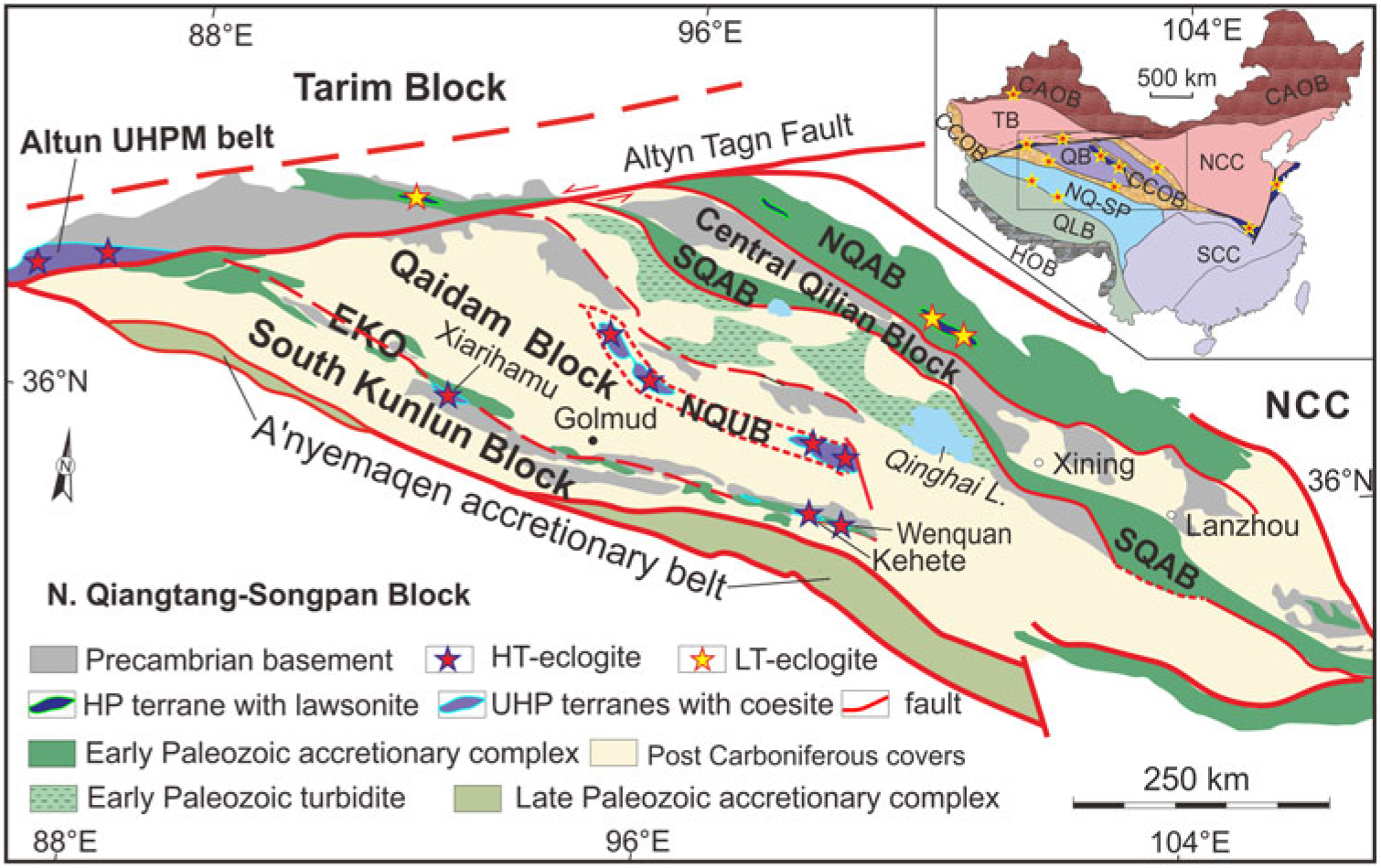
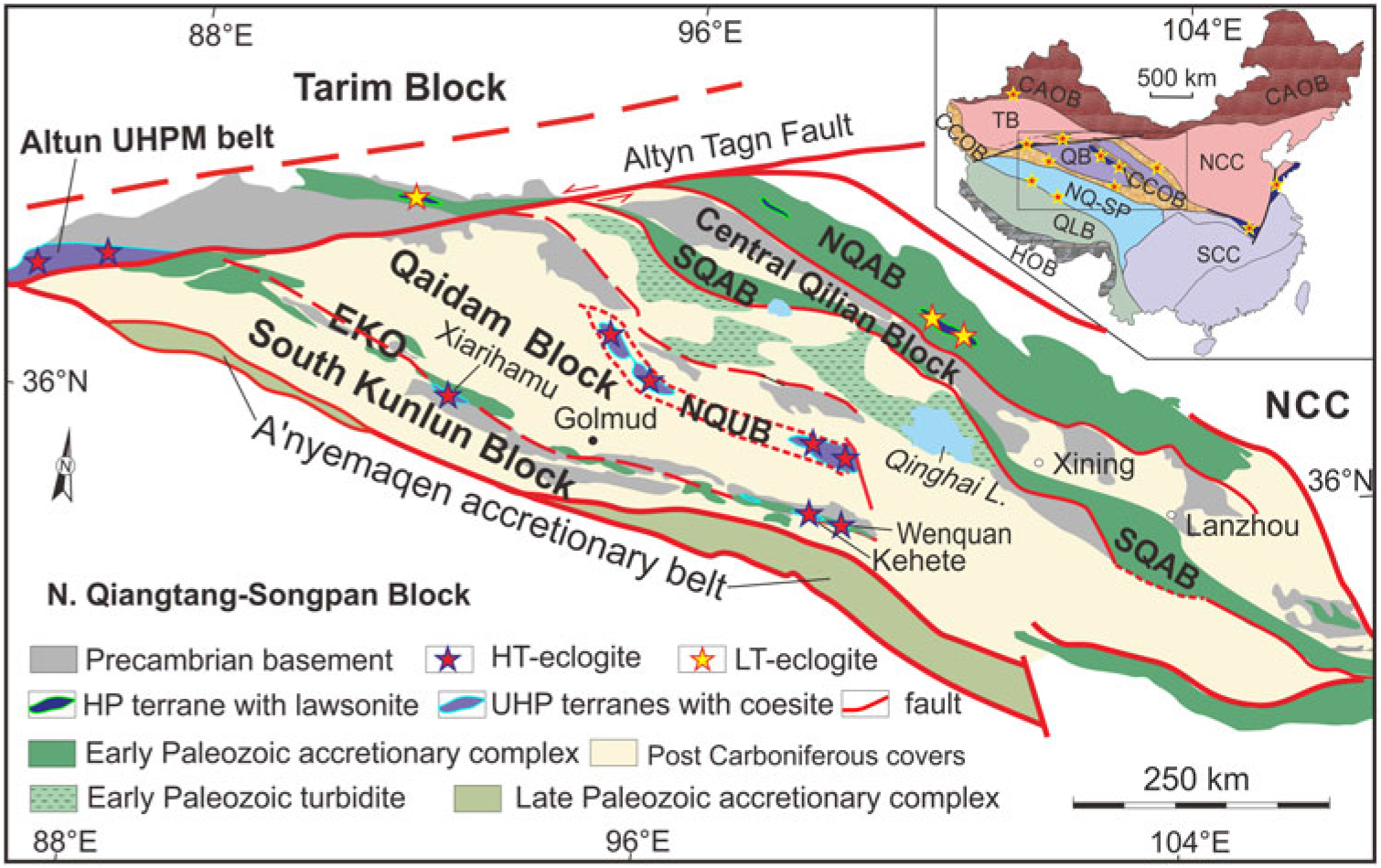
The East Kunlun Origen (EKO) is the west segment of the giant Central Orogenic Belt, China (Fig. 1). It extends nearly E–W for more than 1200 km along the northern margin of Tibetan Plateau and has a long and complex tectonic history from the Precambrian to the Cenozoic (e.g. Jiang, Reference Jiang1992; Yang et al. Reference Yang, Robinson, Jiang and Xu1996; Liu et al. Reference Liu, Pei and Li2011). Not only has it witnessed the Cenozoic uplift of the Tibetan Plateau (Yin & Harrison, Reference Yin and Harrison2000), but it has preserved geological records of subduction and collision among the Tarim, Qaidam and Qiangtang Blocks, as well as the transformation from the Proto-Tethys to the Palaeo-Tethys Ocean (Roger et al. Reference Roger, Arnaud, Gilder, Tapponnier, Jolivet, Brunel, Malavieille, Xu and Yang2003). The EKO, with occurrences of ophiolites, arc-volcanic complex and eclogite terranes, was thought to be a suture zone as a consequence of final closure of the Proto-Tethys Ocean (Meng et al. Reference Meng, Zhang and Cui2013, Reference Meng, Cui, Wu and Ren2015; Dong & Santosh, Reference Dong and Santosh2016; Song et al. Reference Song, Yang, Zhang, Niu, Wang, Su and Gao2017). The recent discovery of coesite pseudomorphs in garnet and quartz exsolution rods in omphacite (Song et al. Reference Song, Bi, Qi, Yang, Allen, Niu, Su and Li2018), as well as coesite inclusions in eclogitic zircons (Bi et al. Reference Bi, Song, Dong, Yang, Qi and Allen2018), has shown that UHP conditions were achieved in eclogite rocks with protoliths from either oceanic crust or continental flood basalts. In this study, we first report coesite inclusions, U–Pb dating and P–T estimates for metapelite in the eclogite-bearing terrane. The results give robust constraints on the UHPM and formation age of the eclogite belt in the EKO, and specific P–T–t path for subduction and exhumation, which could mark an orogenic event associated with Proto-Tethys subduction and the final continental collision process.
Simplified geological map of the northern Tibetan Plateau showing HP-UHP metamorphic terranes in three orogenic belts (after Song et al. Reference Song, Bi, Qi, Yang, Allen, Niu, Su and Li2018). Abbreviations: CAOB = Central Asian Orogenic Belt, CCOB = Central China Orogenic Belt, HOB = Himalayan Orogenic Belt, NCC = North China Craton, NQ-SP = North Qiangtang – Songpan Block, SCC = South China Craton, QLB = Qiangtang–Lhasa Block, TB = Tarim Block, NQAB = North Qilian Accretionary Belt, SQAB = South Qilian Accretionary Belt, NQUB = North Qaidam UHPM Belt, EKO = East Kunlun Orogen, CQB = Central Qilian Block.
2. Geological setting and petrography
The EKO is located between the Qaidam Block in the north and the South Kunlun Block in the south (Fig. 1). To the north of the Qaidam Block is the North Qaidam UHPM belt, which records continental subduction to a depth of ∼120–200 km at ∼440–420 Ma (Song et al. Reference Song, Niu, Su, Zhang and Zhang2014). To the north of the Qaidam Block is the South Qilian Accretionary Belt, which consists of ophiolites, arc-magmatic belts, carpholite-bearing and lawsonite-bearing eclogite, with an age range of ∼550–440 Ma (Song et al. Reference Song, Niu, Zhang, Wei, Liou and Su2009, Reference Tung, Yang, Liu, Zhang, Yang, Shau and Tseng2013, Reference Song, Yang, Zhang, Niu, Wang, Su and Gao2017). Therefore, the three Qilian–Qaidam–Kunlun high-pressure – ultrahigh-pressure (HP–UHP) metamorphic belts in the north of the Tibetan Plateau extend for c. 400 km across strike, and, together with ophiolites and arc-volcanic rocks, all record the evolutionary history of the Proto-Tethys Ocean.
The EKO is a long-lived, compound orogenic belt that records a complex history from Cambrian to Triassic times, including (1) an Early Palaeozoic accretionary complex at the SW margin of the Qaidam Block, (2) the Late Palaeozoic A’nyemaqen accretionary complex in the south, (3) Precambrian basement (the South Kunlun Block) and (4) Triassic volcanic and plutonic rocks distributed all over the East Kunlun Orogen (Dong et al. Reference Dong, He, Sun, Liu, Zhou, Zhang, Yang, Cheng, Zhao and Li2018; Song et al. Reference Song, Bi, Qi, Yang, Allen, Niu, Su and Li2018). The Early Palaeozoic accretionary complex in the northern part is represented by ophiolites within the Early Palaeozoic accretionary complex. These rocks formed over a long period from 537 Ma to 460 Ma (Yang et al. Reference Yang, Robinson, Jiang and Xu1996; Meng et al. Reference Meng, Cui, Wu and Ren2015), the same as the ophiolites in the Qilian–Qaidam regions in the northern part (Song et al. Reference Song, Niu, Su and Xia2013). The arc-volcanic rocks, including Palaeozoic dioritic and granitic intrusions, are mainly distributed here, yielding magmatic zircon ages of c. 466–390 Ma (e.g. Dong et al. Reference Dong, He, Sun, Liu, Zhou, Zhang, Yang, Cheng, Zhao and Li2018). The Early Palaeozoic eclogites reported by Meng et al. (Reference Meng, Zhang and Cui2013), Qi et al. (Reference Qi, Song, Shi, Cai and Hu2014) and Song et al. (Reference Song, Bi, Qi, Yang, Allen, Niu, Su and Li2018) are distributed discontinuously along the Early Palaeozoic accretionary belt for c. 500 km (Fig. 1), marking an Early Palaeozoic suture zone. The Late Palaeozoic A’nyemaqen accretionary complex in the south is a mélange belt with ophiolitic fragments of 460–308 Ma (Bian et al. Reference Bian, Li, Pospelov, Yin, Li, Zhao, Chang, Luo, Gao and Astrakhantsev2004; Yang et al. Reference Yang, Wang, Shi, Xu and Wu2009; Liu et al. Reference Liu, Pei and Li2011).
Three eclogite-bearing terranes have been recognized along the NW-trending EKO: (1) the Wenquan terrane in the eastern part (Meng et al. Reference Meng, Zhang and Cui2013), (2) the Kehete terrane in the middle (Qi et al. Reference Qi, Fan, Yang, Cui, Wang, Fan, Yang, Li and Chao2016; Song et al. Reference Song, Bi, Qi, Yang, Allen, Niu, Su and Li2018) and (3) the Xiarihamu terrane in the west (Qi et al. Reference Qi, Song, Shi, Cai and Hu2014). All eclogites in the terranes occur as lens-shaped blocks with varying size within the meta-sedimentary hosts including metapelite and marble.
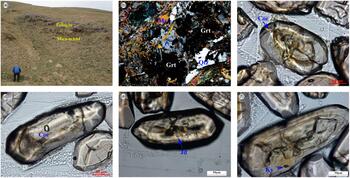
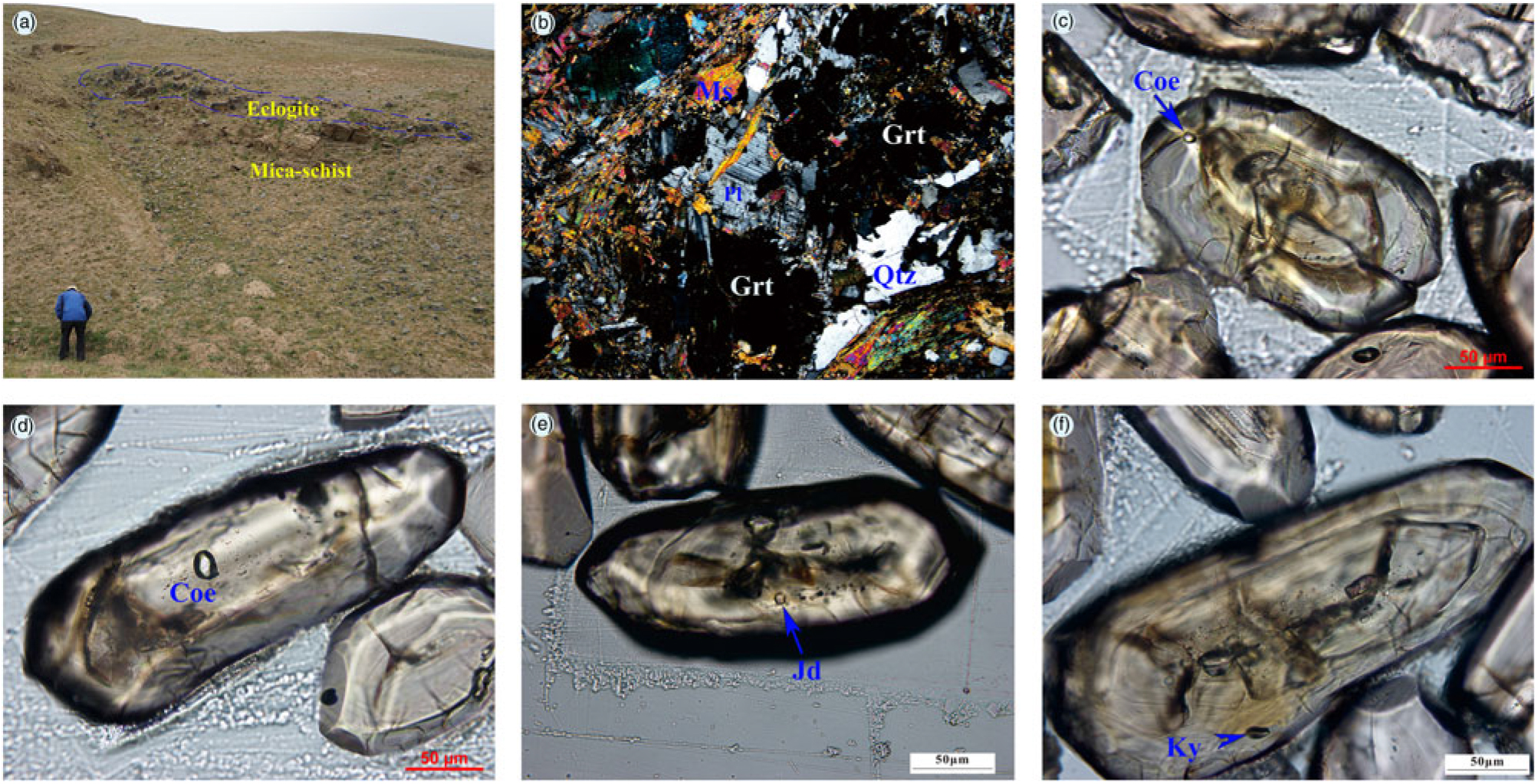
The studied mica-schist samples from the Kehete terrane occur as country rock intercalated with eclogite (Fig. 2a). They are mainly composed of garnet (10 %), muscovite (30 %), quartz (40 %), plagioclase (10 %) and biotite (10 %) (Fig. 2b) with minor tourmaline, zircon, rutile. Muscovite is the major matrix constituent and concentrated in the aggregates; the preferred orientation of individual flakes reflects the foliation of the schist. Retrograde chlorite commonly grew at the rim of garnets. Rutile was partly replaced by sphene at the rim.
Field and photomicrographs of the mica-schist (metapelite) with eclogite blocks in the EKO. (a) Field photograph of mica-schist accompanying eclogite. (b) Cross-polarized photo shows mineral assemblages of the coesite-bearing mica-schist (mineral abbreviations are after Whitney & Evans, Reference Whitney and Evans2010). (c, d) Monomineralic coesite inclusions within zircons. (e) Jadeite inclusion within zircon. (f) Kyanite inclusion within zircon. Photos c–f are under plane-polarized light.
3. Analytical methods
3.a. In situ zircon U–Pb dating
Zircon grains were extracted from the crushed sample by standard heavy-liquid and magnetic techniques and subsequently purified by hand-picking under a binocular microscope. The selected grains were embedded in epoxy resin discs and polished down to about half-sections to expose the grain interiors. Cathodoluminescence (CL) images were acquired using a Garton Mono CL3+ spectrometer installed on a Quanta 200F ESEM at Peking University; scanning conditions were 15 kV and 120 nA.
Measurements of U, Th and Pb in zircons were carried out by laser ablation inductively coupled plasma mass spectrometry (LA-ICP-MS) on an Agilent-7500a quadrupole ICP-MS system coupled with a New Wave UP-193 solid-state LA system in the Geological Lab Center, China University of Geosciences, Beijing (CUGB) following the analytical procedures of Song et al. (Reference Song, Niu, Wei, Ji and Su2010). A laser spot size of 36 μm, laser energy density of 8.5 J cm–2 and a repetition rate of 10 Hz were used for analysis. The ablated sample material was carried into the ICP-MS system by high-purity helium gas. Harvard standard zircon 91500 (Wiedenbeck et al. Reference Wiedenbeck, Allé, Corfu, Griffin, Meier, Oberli, Quadt, Roddick and Spiegel1995) was used as the external standard, and the standard Qinghu zircon (160.6 ± 0.6 Ma, n = 8) (Li et al. Reference Li, Tang, Bing, Yang, Hou, Hu, Li, Liu and Li2013) as a secondary standard. The software GLITTER (version 4.4, Macquarie University) was used for data reduction. The common lead correction was made following Andersen (Reference Andersen2002). Age calculations and concordia diagrams were made using Isoplot (version 3.0) (Ludwig, Reference Ludwig2003). Calibrations for elemental concentration were carried out using NIST 610 glass as an external standard, with recommended values taken from Pearce et al. (Reference Pearce, Perkins, Westgate, Gorton, Jackson, Neal and Chenery1997) and using 29Si as an internal standard. NIST 612 and 614 served as monitoring standards at the same time. The analytical accuracy for titanium in zircon is better than ±5 % with abundances >10 ppm, and ±10 % with abundances <10 ppm.
3.b. Electron-microprobe analyses
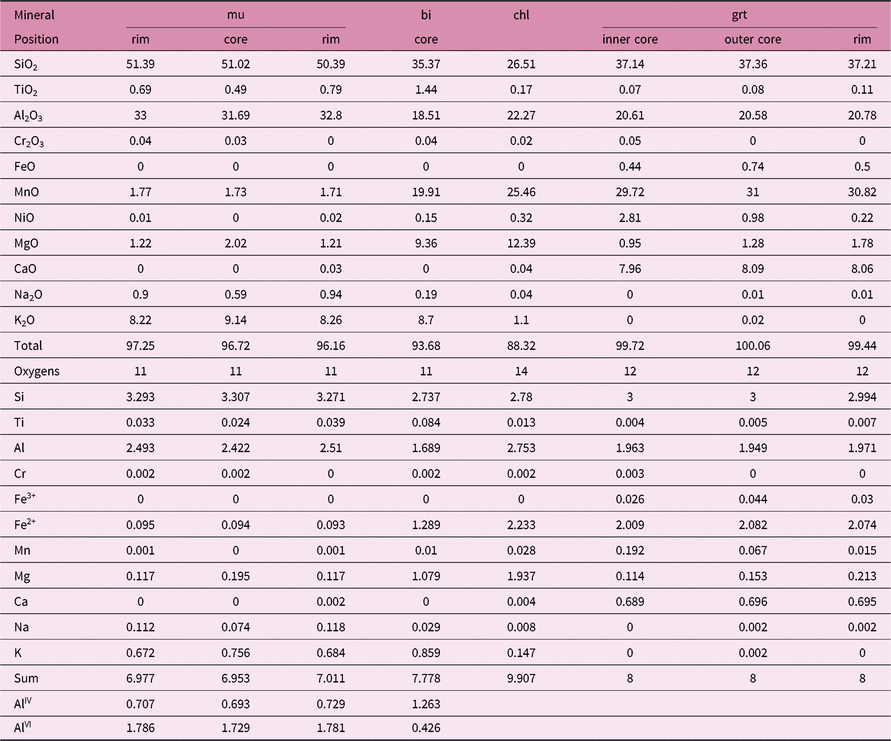
Electron-microprobe analyses of minerals were performed with a Jeol 8100 super-probe at Peking University. It was operated at 15 kV acceleration voltage and 10 nA beam current. Counting times were 30 s at the peak and 10 s on the background. For calibration, well-characterized natural and synthetic mineral standards were used. Final results were reduced by the PRZ correction program supplied by the manufacturer. For most elements, the precision is better than ±2 %. Mineral compositions are presented in Table 1. Cations and ferric iron contents were calculated with the AX program by Tim Holland (www.esc.cam.ac.uk/astaff/holland/ax.html).
Representative compositions of matrix minerals in metapelite (16Kl-39)

3.c. Micro-Raman analysis
Raman analyses were conducted at the School of Earth and Space Science, Peking University. Raman spectroscopy was performed on a model of ‘Renishaw-inVia Reflex’, the laser Raman microprobe using the 514.5 nm line of an Ar-ion laser. The laser spot size was focused to 2 μm. Accumulation times varied between 5 and 10 s; the estimated spectral resolution is better than 1.0 cm−1, and the spectrum repeatability is better than 0.05 cm−1. Calibration was performed using the 521 cm−1 band of synthetic coesite.
4. Results
4.a. Mineral chemistry
Garnet occurs as subhedral to anhedral porphyroblasts of 0.5–2.3 mm in diameter. The porphyroblastic garnet exhibits weak chemical zonation, showing increasing X prp [= Mg/(Fe+Mg+Ca+Mn)] from core (0.03) to rim (0.07), decreasing X grs [= Ca/(Fe+Mg+Ca+Mn)] from core (0.24) to rim (0.22), X sps [= Mn/(Fe+Mg+Ca+Mn)] slightly decreases from 0.06 to 0.01, and X alm [= Fe/(Fe+Mg+Ca+Mn)] from 0.70 to 0.67. The chemical zonation reflects that the garnet grew during prograde metamorphism.
The Si content of muscovite ranges from 3.15 to 3.31 per formula unit (Table 1). Biotite is commonly 0.5–1.5 mm long and mostly coexists with muscovite at the retrograded rim; it shows Fe/(Fe+Mg) = 0.53–0.54, AlVI = 0.41–0.42 and Ti = 0.07–0.08 (Table 1).
4.b. Zircon morphology and mineral inclusions
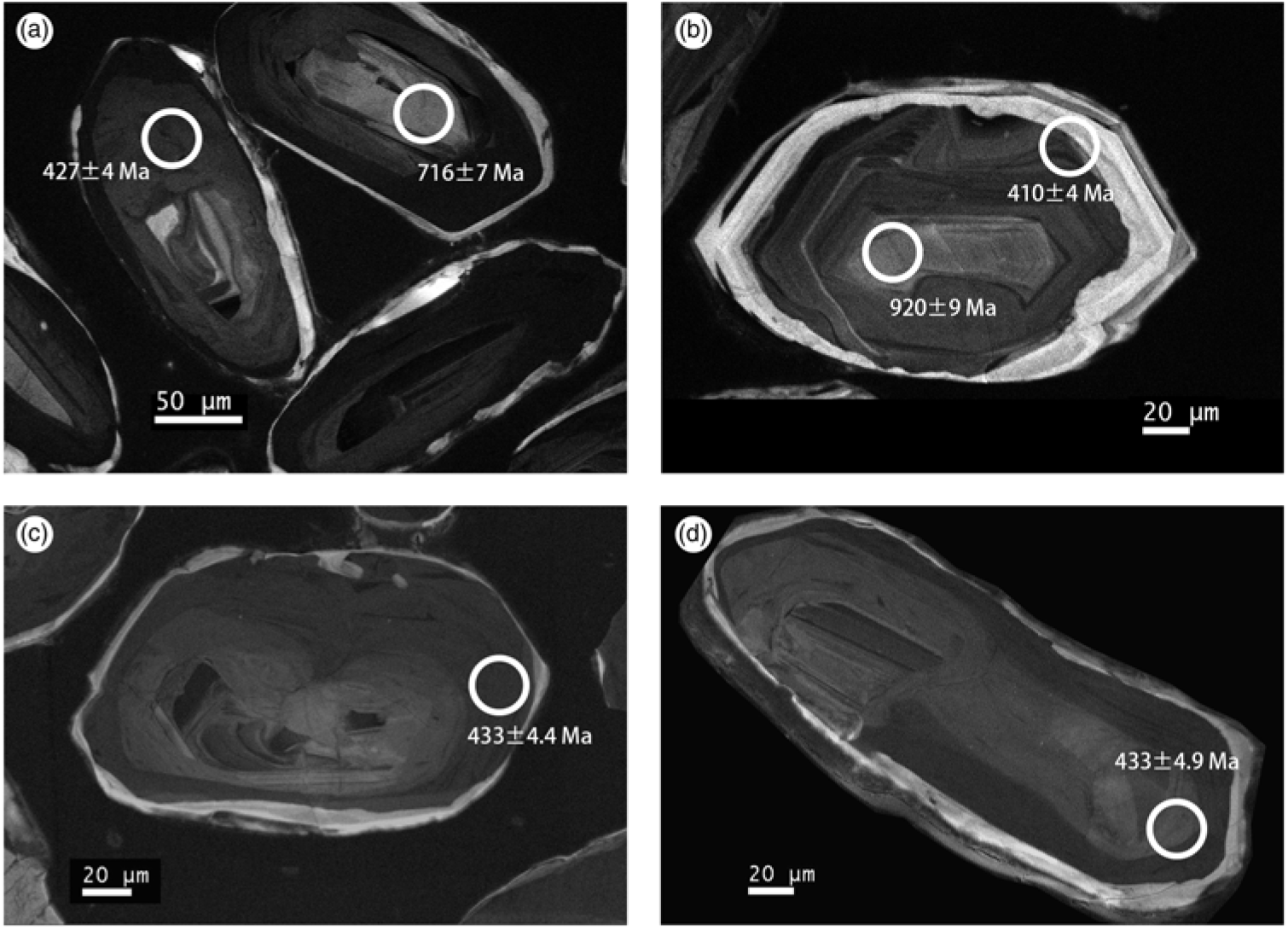
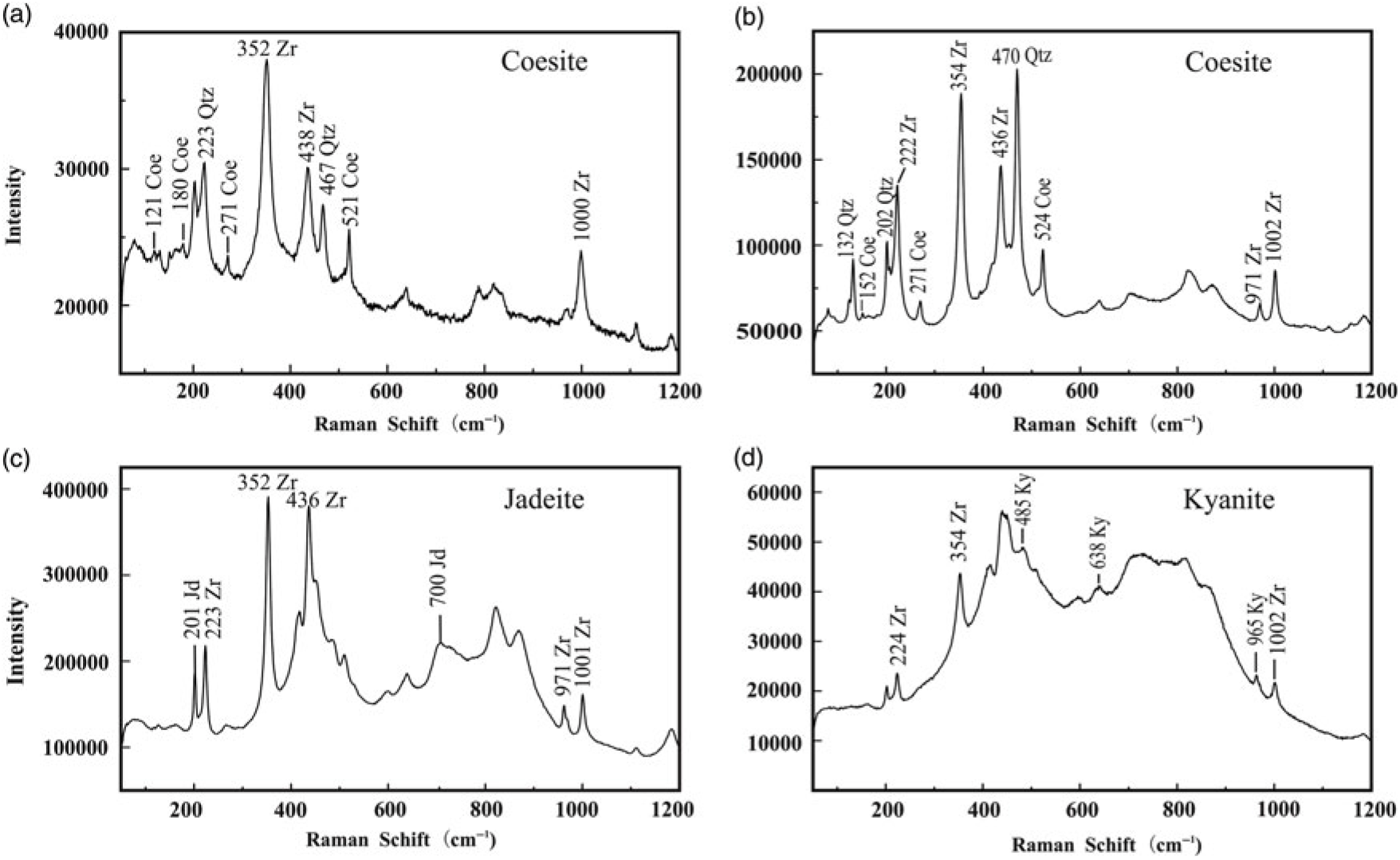
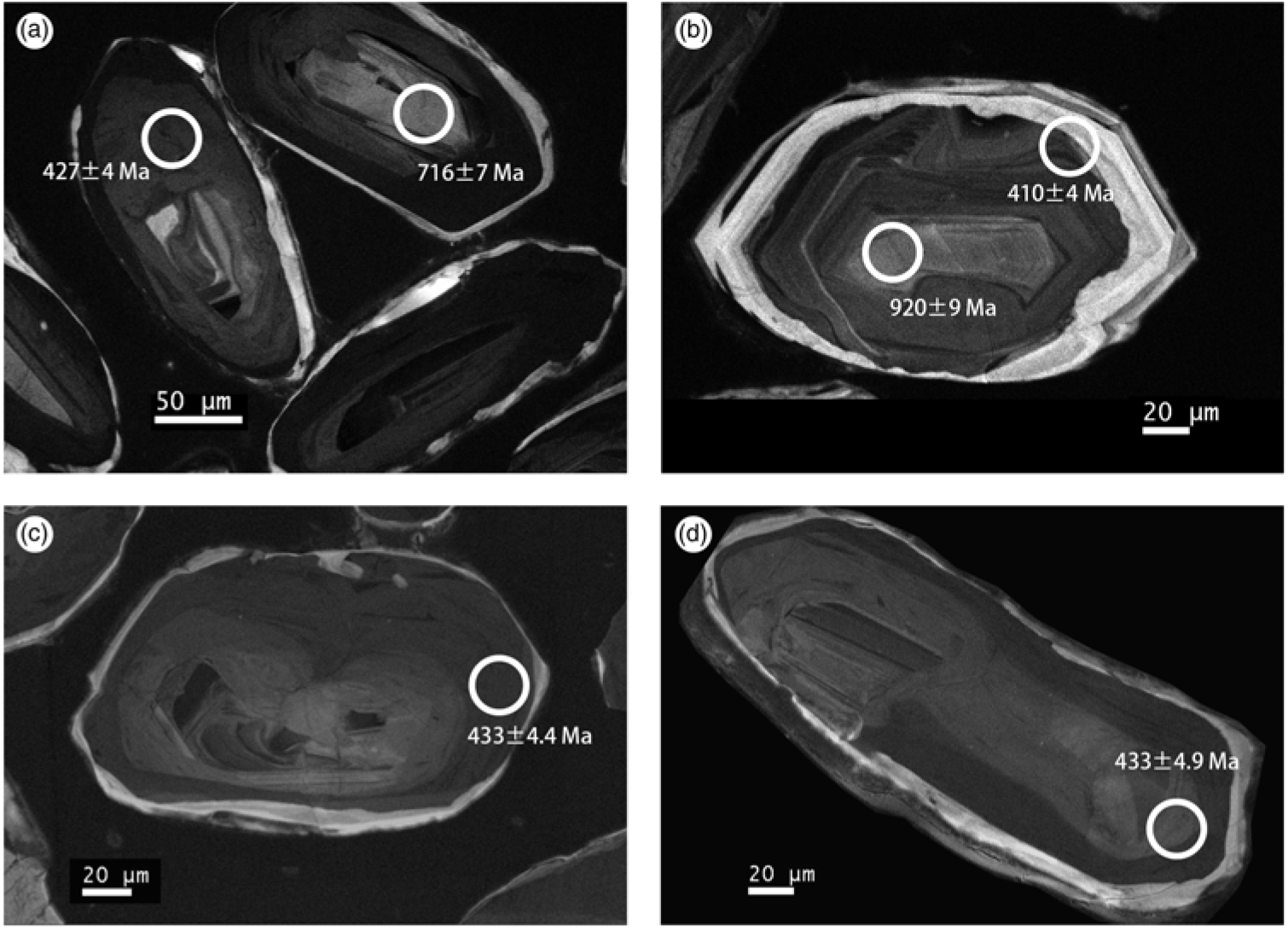
Zircon grains recovered from metapelite sample 16KL-39 show that most grains have brown or yellow cores (50–80 μm) and colourless rims (up to 50 μm) (Fig. 2c, d, e, f). In the CL images, most zircons show core–mantle–rim structure with an inherited core of oscillatory zones, a weak CL luminescence mantle of metamorphic origin and thin, bright rims (Fig. 3). Most metamorphic domains contain a characteristic suite of micrometre-sized inclusions including coesite, jadeite, kyanite and rutile that are identified by in situ laser micro-Raman spectroscopy (e.g. Frezzotti et al. Reference Frezzotti, Tecce and Casagli2012). Coesite inclusions show three strong bands at 521–524 cm−, 271 cm−1 and 180 cm−1 distinct from the characteristic bands of zircon and quartz (Fig. 4a, b). Jadeite inclusions are characterized by Raman spectra at 201 cm−1 and 700 cm−1 (Fig. 4c), and kyanite inclusions at 485 cm−1, 623 cm−1 and 965 cm−1 (Fig. 4d).
CL images of zircons with age data. Note that (c) and (d) are zircons with coesite inclusions in Figure 2c and d, respectively.

4.c. U–Pb zircon dating
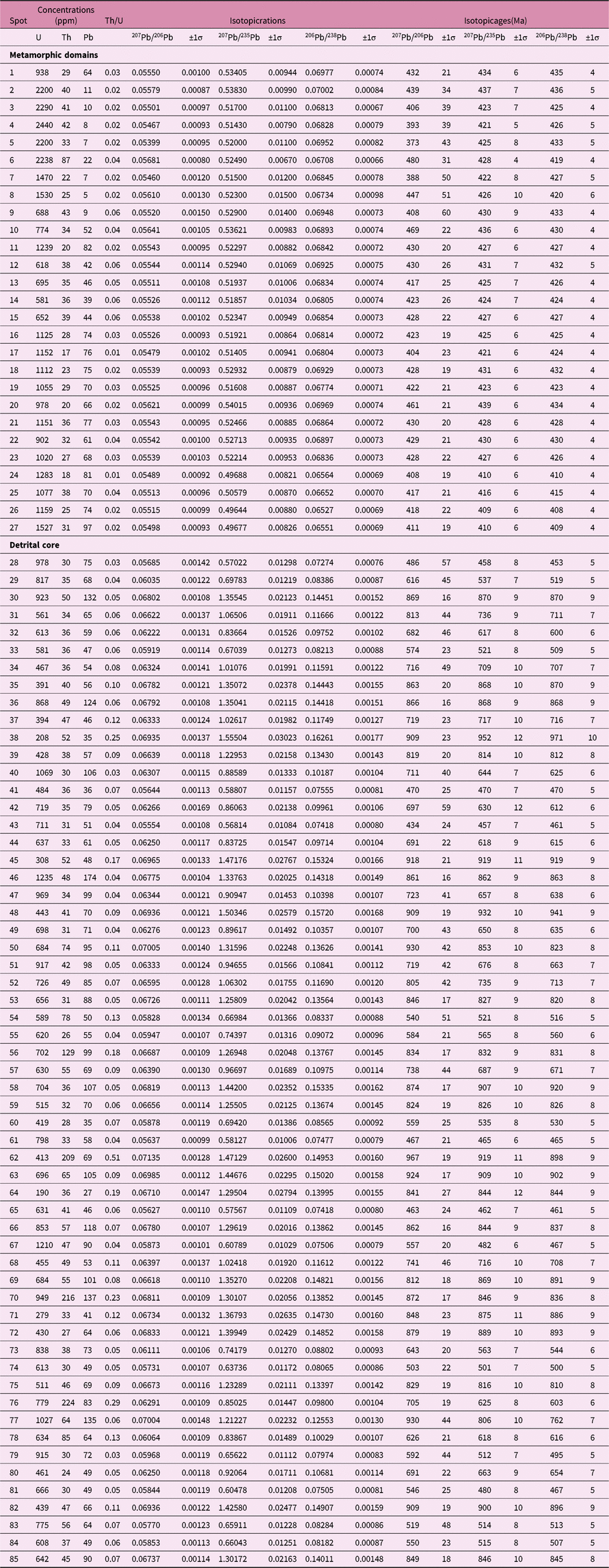
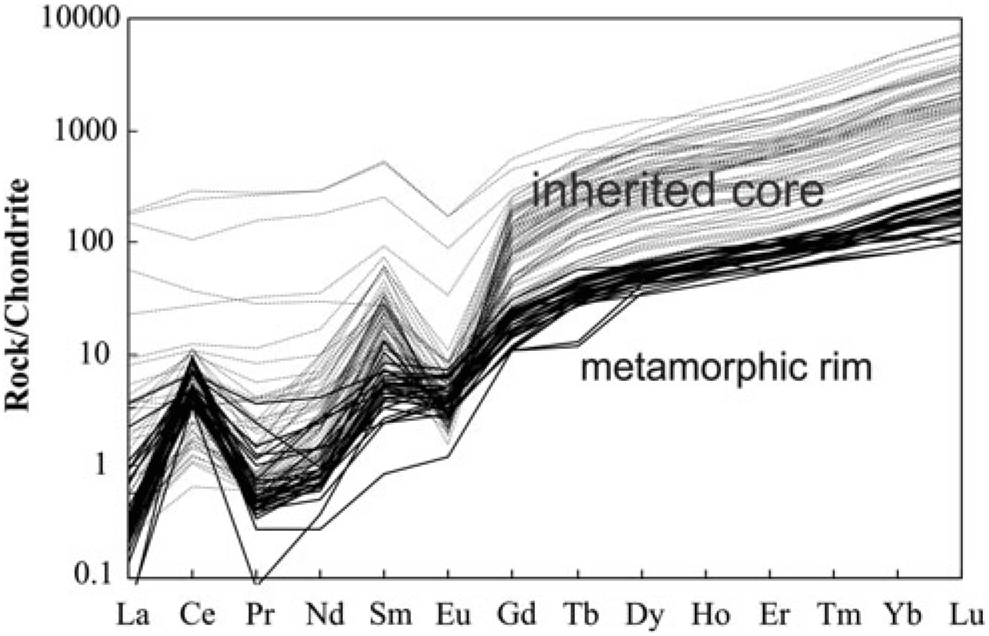
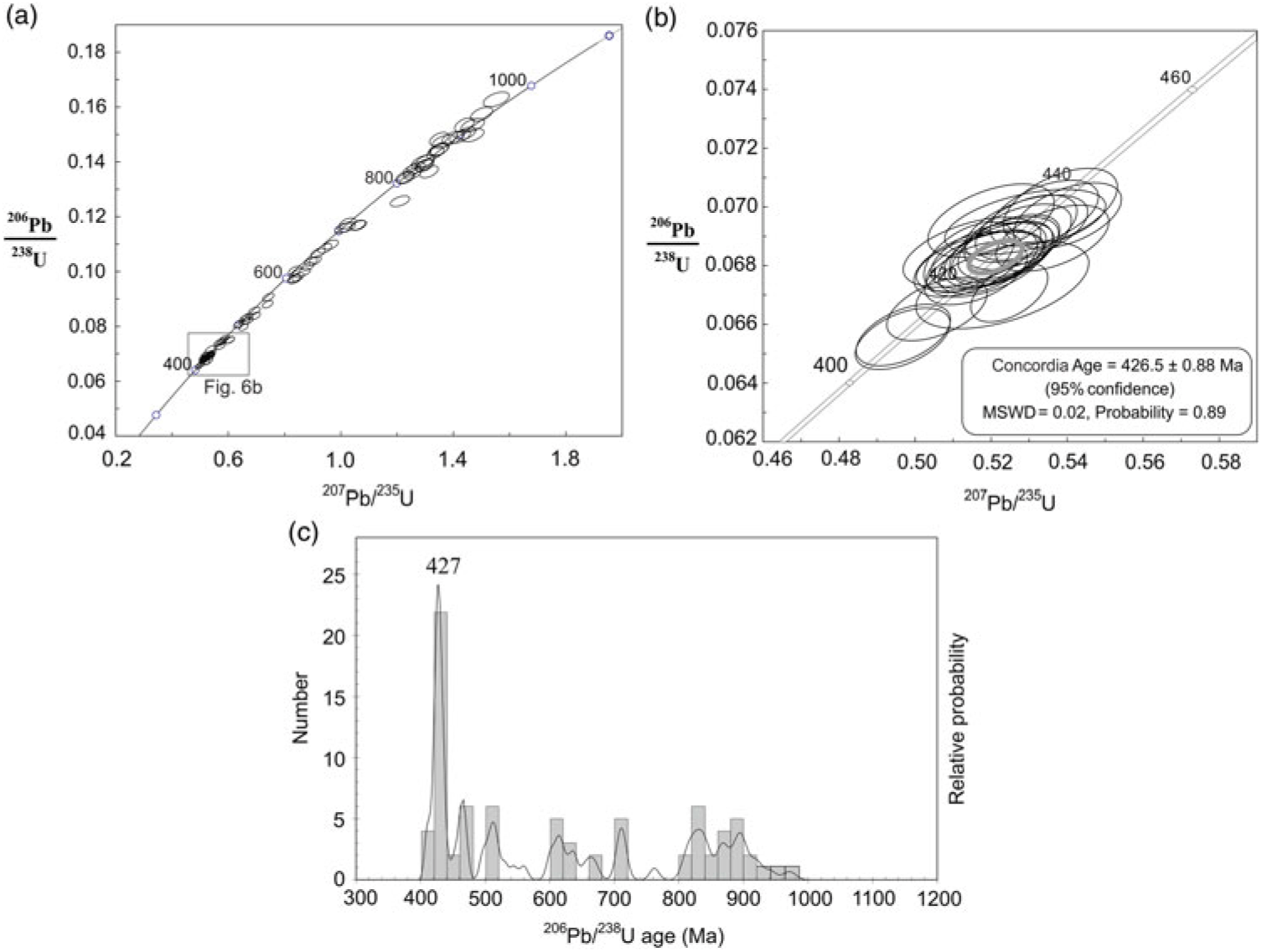
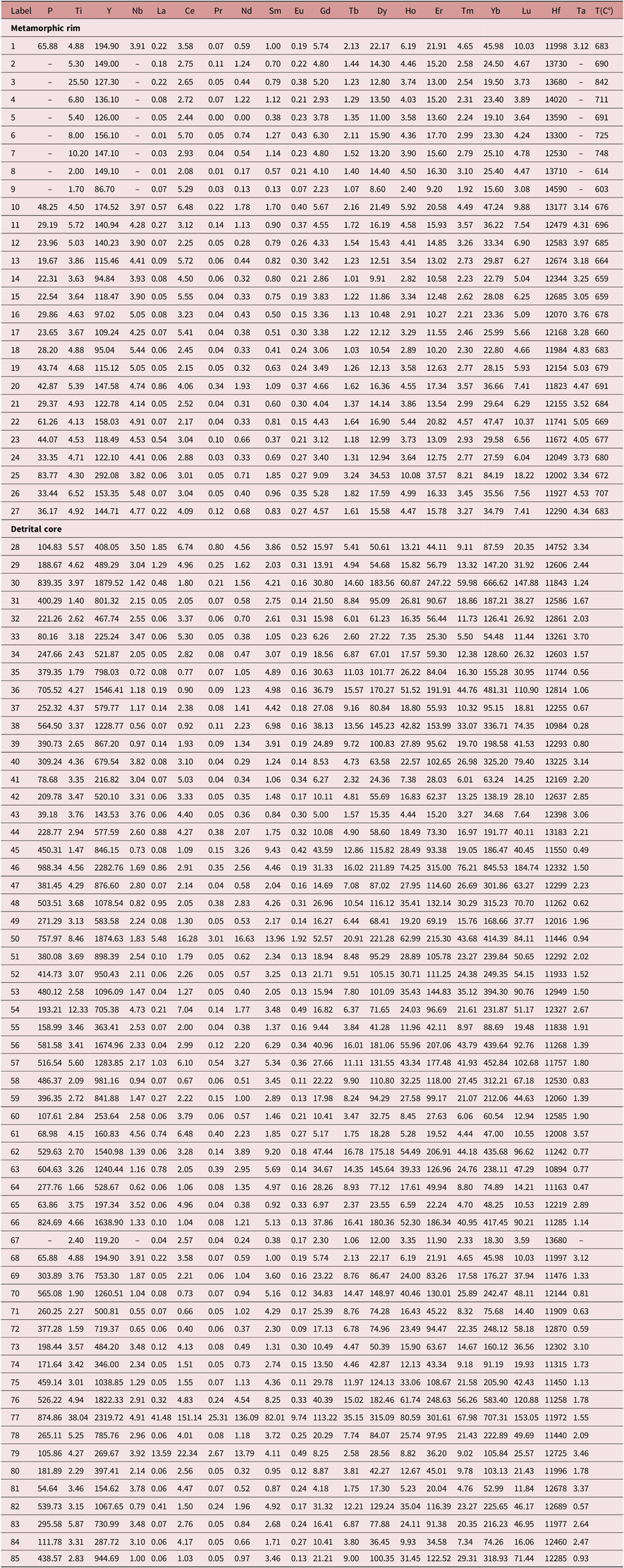
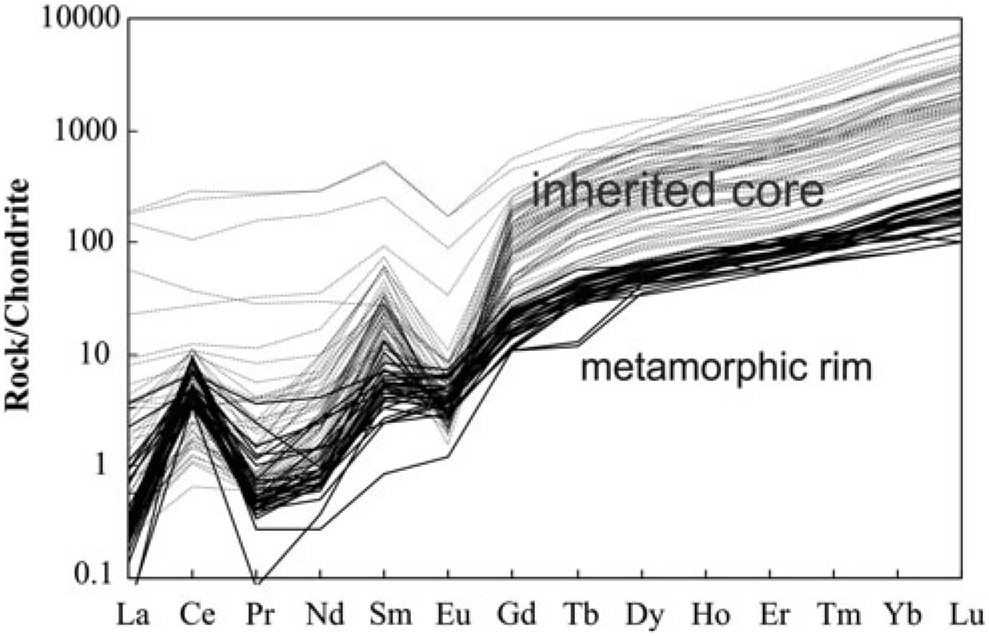
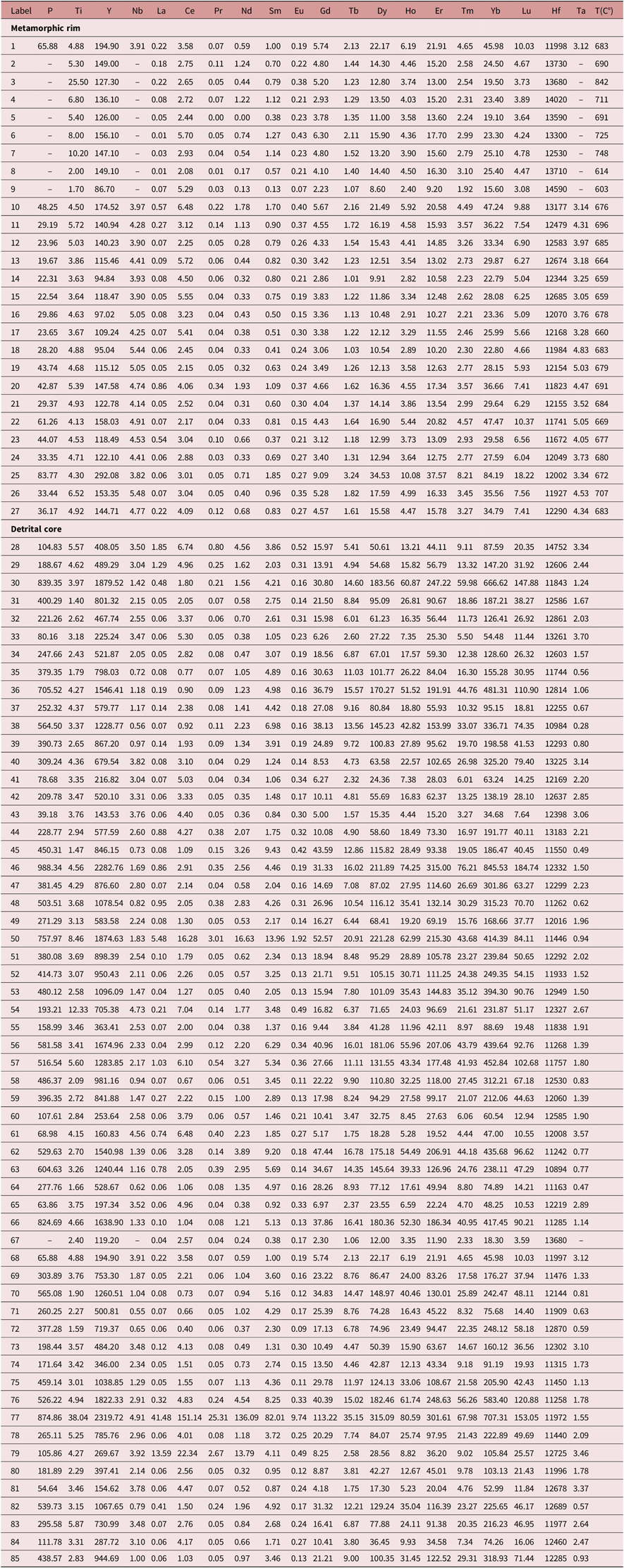
Eighty-five spots of zircon U–Pb analyses were obtained by the LA-ICP-MS method, including 59 on magmatic cores and the other 26 on metamorphic rim domains (Table 2). Most inherited cores are of magmatic origin with oscillatory bands in CL images (Fig. 3); they have high concentrations of heavy rare earth elements (HREE) and show steep HREE patterns (Fig. 5). The strong negative Eu anomaly (most Eu* < 0.1) suggests the presence of plagioclase during zircon growth. The 59 analyses on inherited cores have medium Th (24–224 ppm) and high U (190–1235 ppm) contents, and variable Th/U ratios of 0.03–0.51. The core ages are concordant in the concordia diagram (Fig. 6a). In the histogram diagram, they yield age ranges of 971–810 Ma with peaks at 895.4 Ma and 834.4 Ma, 716–707 Ma (peak at 712 Ma), 671–600 Ma (peak at 617 Ma) and 587–453 Ma (peak at 513 Ma, and 465 Ma) (Fig. 6b).
U–Pb analyses of zircons by LA-ICP-MS for the mica-schist in the Kehete eclogite terrane, EKO

Chondrite-normalized REE patterns for zircons from mica-schist (16KL39).
U–Pb age diagrams of zircons of mica-schist 16KL39 from Kehete terrane. (a) Concordia diagram for all analyses. (b) U–Pb concordia diagrams for UHPM age. (c) Histograms of zircon apparent 206Pb/238U ages.
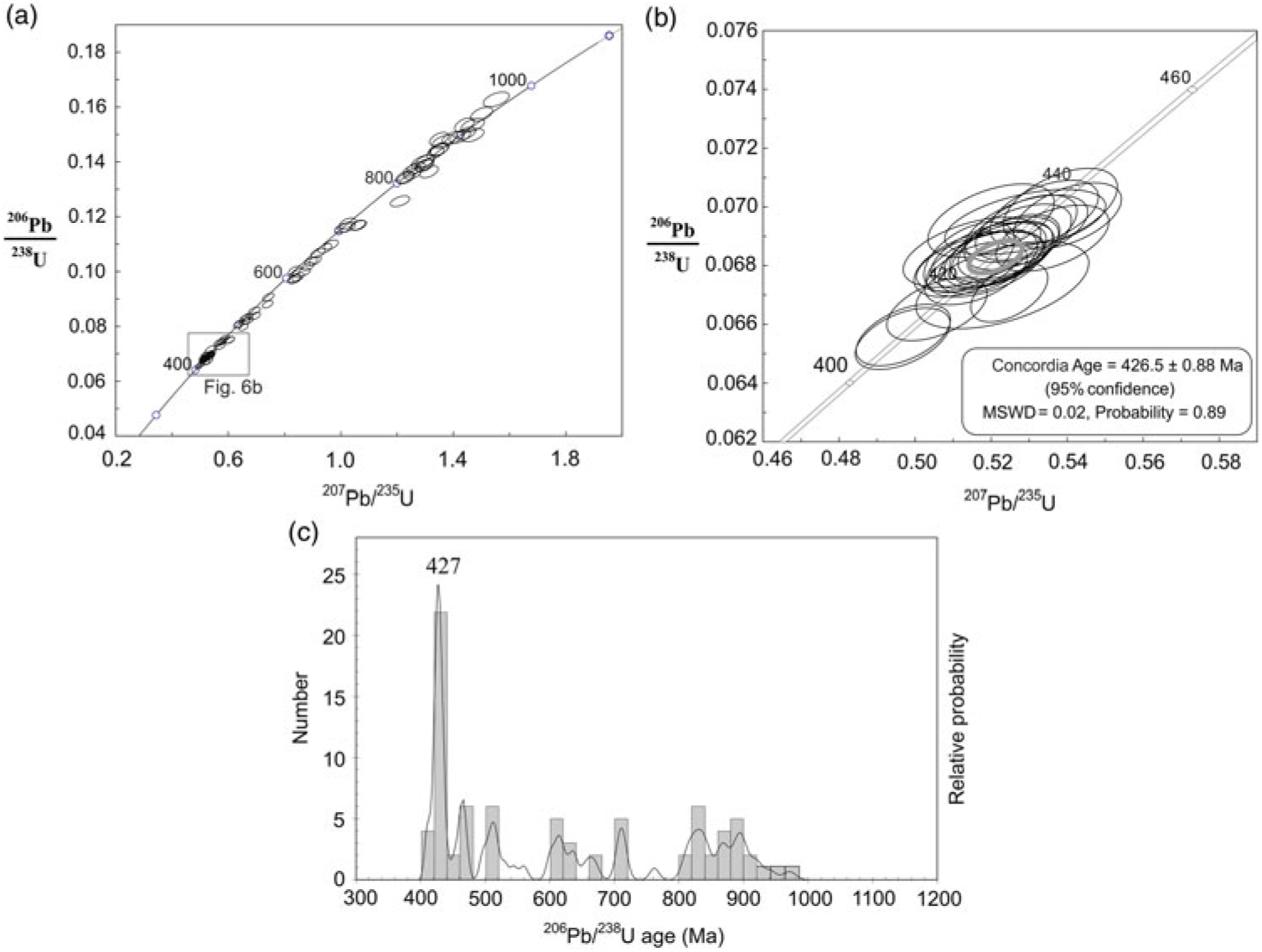
The metamorphic mantle domains show dark luminescence and weak zoning (Fig. 3). All zircons have a thin and relatively bright luminescent outer rim, suggesting a later metamorphic overprinting. Most metamorphic mantle domains show chemical characteristics of relatively uniform concentrations of Ti (1.7–10.2 ppm; Table 3), weaker negative Eu anomaly (Eu* = 0.34–0.6) and lower contents of HREE than inherited magmatic cores (Fig. 5). One spot has a high Ti content of 25.5 ppm, which may be influenced by the tiny inclusion of Ti-rich mineral. The 27 analyses on metamorphic domains have low Th (17–87 ppm) but high U (580–2440 ppm) contents with significantly low Th/U ratios of 0.01–0.06. Twenty-seven analyses of the zircon mantle domains (coesite-bearing) give 206Pb/238U age ranges of 408–443 Ma and yield a concordia age of 426.5 ± 0.9 Ma (2σ; mean square weighted deviation (MSWD) = 0.02) (Fig. 6c), which is interpreted to represent the formation age of the UHP metamorphic event. The three younger ages of 408–410 Ma may represent later amphibolite-facies retrogression during exhumation.
LA-ICP-MS analyses for trace elements of zircons from mica-schist 16KL-39
4.d. Metamorphic P–T–t paths
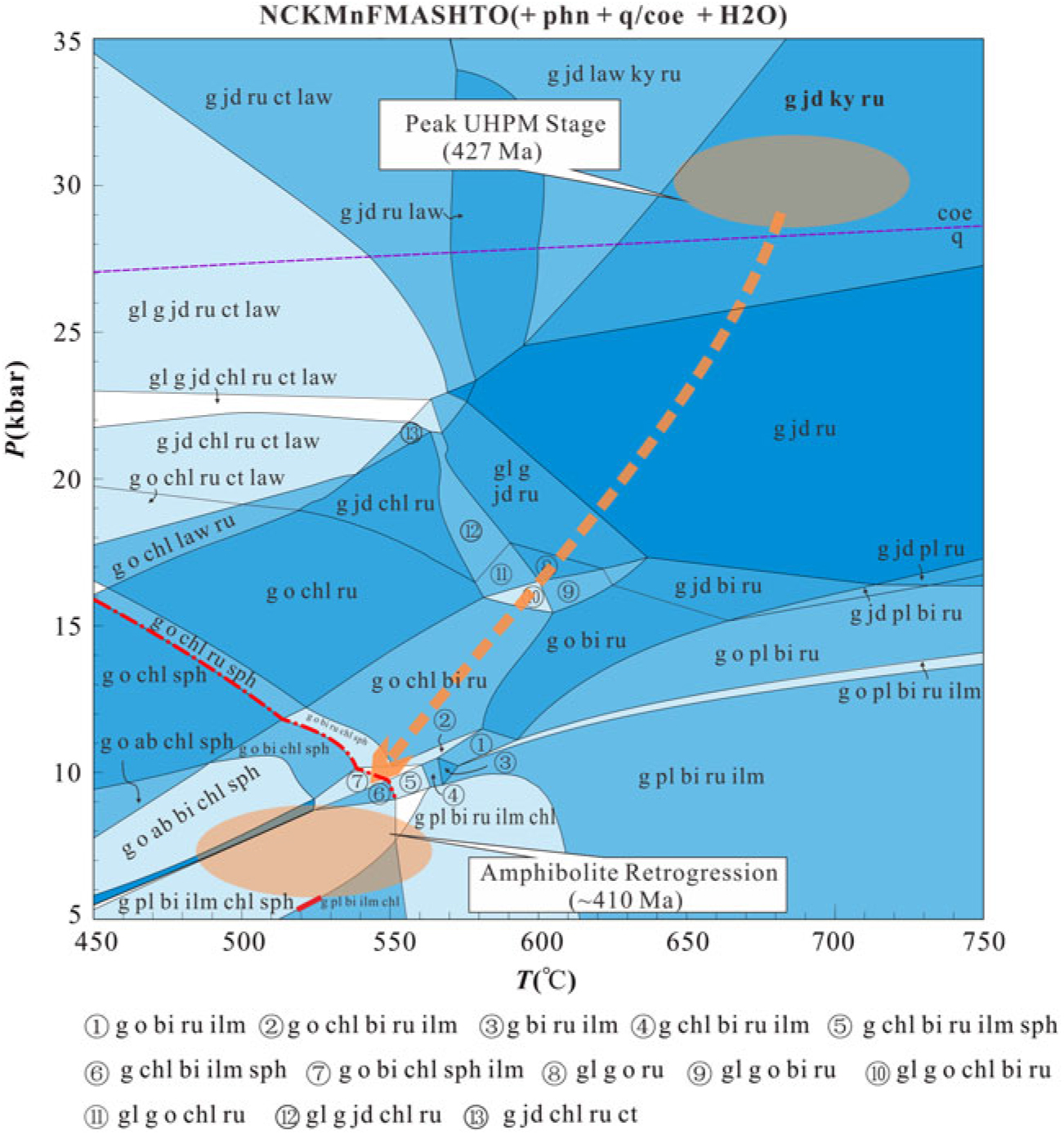
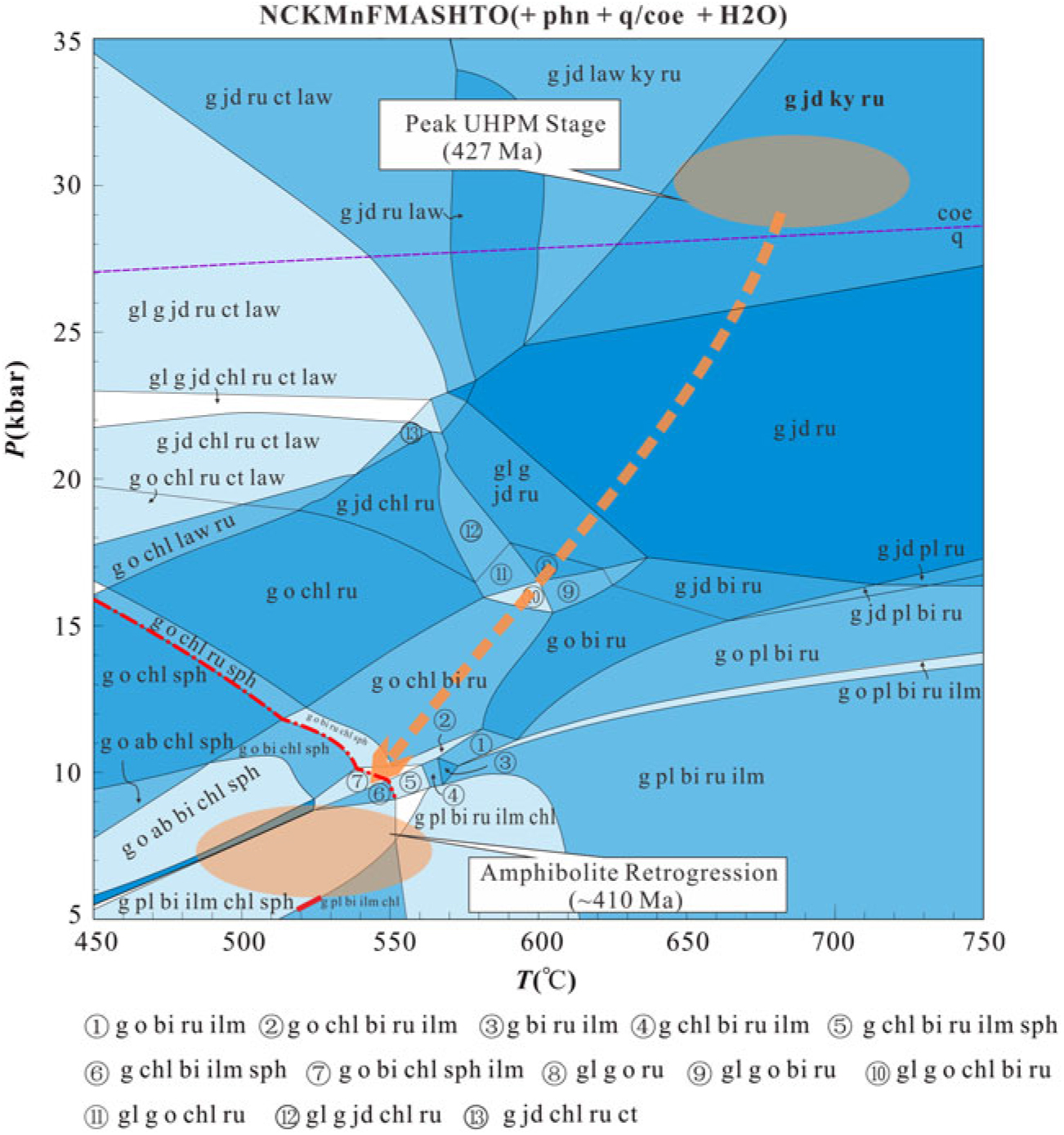
Coesite inclusions in zircon of sample 16KL39 provide robust evidence that the metapelite underwent UHPM. In order to quantify P–T conditions, a P–T pseudosection was calculated in the model system NCKMnFMASHTO (Na2O–CaO–K2O–FeO–MgO–Al2O3–SiO2–H2O–TiO2–O (Fe2O3)). Quartz, phengitic muscovite and a fluid phase, which was assumed to be pure H2O, were considered to be in excess in the subsolidus conditions. Phase equilibrium modelling was performed using THERMOCALC 3.40. Detailed activity–composition relationships are noted at www.metamorph.geo.uni-mainz.de/thermocalc/.
An XRF analysis of sample 16KL39 obtained at CUGB was used for pseudosection calculation. The analysis shows SiO2 = 55.2 (wt %), TiO2 = 0.87, Al2O3 = 19.73, total Fe2O3 = 10.24, MnO = 0.20, MgO = 3.12, CaO = 2.69, Na2O = 1.24, K2O = 4.08, P2O5 = 0.18 and LOI = 2.30. These oxides were normalized in the NCKMnFMASHTO system by assuming that all the P2O5 is in apatite and the O (Fe2O3) value equals the summation of Fe3+ contents in each constituent mineral calculated by charge balance constraints. The results in mole per cent are: SiO2 = 63.79, Al2O3 = 13.44, CaO = 3.02, MgO = 5.38, FeO = 8.00, K2O = 3.01, Na2O = 1.39, TiO2 = 0.76, MnO = 0.20 and O = 0.10.
We use Ti-in-zircon thermometry and the calibration of Ferry & Watson (Reference Ferry and Watson2007) to determine the peak metamorphic temperature (Fig. 7). The titanium concentrations of metamorphic domains range from 1.7 to 10.2 ppm, corresponding to Ti-in-zircon temperatures of 603 °C to 748 °C (avg. 685 ± 41 °C, 2σ). One exception is 842 °C (Ti = 25.5 ppm), which may be influenced by the Ti-rich inclusion. The presence of coesite, kyanite and jadeite inclusions suggests a peak metamorphic pressure of >28 kbar. Assuming the observed minerals involving garnet, plagioclase, chlorite, muscovite, biotite, rutile and sphene constitute an equilibrium assemblage of retrogression, the quadrivariant field (g–pl–bi–ilm–chl–sph) in the model system is consistent with P–T estimates by the garnet–muscovite–plagioclase–quartz (GMPQ) geobarometer of Wu & Zhao (Reference Wu and Zhao2006), in a range of T = 482–566 °C and P = 5.6–8.9 kbar. Therefore, the mica-schists from the EKO record a clockwise P–T–t path from subduction to exhumation (Fig. 7).
P–T pseudosection for sample 16KL39 from the East Kunlun HP-UHP belt calculated in NCKMnFMASHTO model system (+ quartz + phengitic muscovite + H2O) with a bulk composition of SiO2 = 63.79, Al2O3 = 13.44, CaO = 3.02, MgO = 5.38, FeO = 8.00, K2O = 3.01, Na2O = 1.39, MnO = 0.20, TiO2 = 0.76 and O = 0.10 calculated on the basis of normalized mole proportions. The tri-, quadri- and quinivariant fields are shaded with increasing blackness. Through the Ti-in-zircon geothermometer and the mineral assemblage (g + jd + ky), the peak temperature is 628–669 °C, and the peak pressure was >28 kbar. Mineral abbreviations: ab – albite; bi – biotite; chl – chlorite; coe – coesite; ct – chloritoid; g – garnet; gl – glaucophane; ilm – ilmenite jd – jadeite; ky – kyanite; law – lawsonite; pl – plagioclase; ru – rutile; sph – sphene. P–T conditions for the retrogression are calculated by the garnet–muscovite–plagioclase–quartz (GMPQ) geobarometer of Wu & Zhao (Reference Wu and Zhao2006).
5. Discussion
5.a. Determination of UHPM in the East Kunlun Orogen
The 500 km long eclogite belt indicates the existence of HP-UHP metamorphism in a subduction zone in the East Kunlun Orogen (Song et al. Reference Song, Bi, Qi, Yang, Allen, Niu, Su and Li2018). Its rock assemblages, accompanied by ophiolites and arc-volcanic rocks along this belt, suggest a tectonic mélange and accretionary complex that combine oceanic subduction and continental collision process. The protoliths of the mica-schist were most likely sediments deposited on the continental margin with Precambrian zircon input. Discovery of coesite inclusions in zircons in mica-schists provides robust evidence that this eclogite belt has experienced UHPM within the coesite stability field, suggesting that continental materials were subducted to depths of 100–120 km, with eclogite blocks, during continental collision.
5.b. Provenance of the South Kunlun Block
The inherited zircon cores give three age groups: 971–810 Ma, 760–600 Ma and 560–453 Ma (Fig. 6). The 560–453 Ma ages may represent magmatism during the Early Palaeozoic accretionary complex, including ophiolites and arc magmas (Yang et al. Reference Yang, Robinson, Jiang and Xu1996; Bian et al. Reference Bian, Li, Pospelov, Yin, Li, Zhao, Chang, Luo, Gao and Astrakhantsev2004; Meng et al. Reference Meng, Cui, Wu and Ren2015). The ages of 971–810 Ma are widespread on several continental blocks including the South China and the Qilian–Qaidam area (Li et al. Reference Li, Li, Ge, Zhou, Li, Liu and Wingate2003; Song et al. Reference Song, Niu, Wei, Ji and Su2010, Reference Song, Su, Li, Niu and Zhang2012; Tung et al. Reference Tung, Yang, Liu, Zhang, Yang, Shau and Tseng2013; Yu et al. Reference Yu, Zhang, Li, Hou, Mattinson and Gong2013; Xu et al. Reference Xu, Song, Allen, Ernst, Niu and Su2016). These ages may correspond to assembly and break-up of the supercontinent Rodinia (e.g. Li et al. Reference Li, Li, Li and Liu2008). The 760–600 Ma inherited cores may record intraplate magmas related to the formation of the Proto-Tethys Ocean (Xu et al. Reference Xu, Song, Su, Li, Niu and Allen2015). The South Kunlun Block has a similar basement to adjacent continental blocks and may be a fragment dismembered from Rodinia.
5.c. Closure of the Proto-Tethys Ocean
The EKO plays an important role in understanding tectonic evolution of the Central China Orogenic System among the three major blocks of Tarim, North China Craton (NCC) and South China Craton (SCC) (Fig. 1). The general consensus is that the Central China Orogenic Belt was formed by amalgamation of several small continental blocks (e.g. Song et al. Reference Song, Su, Li, Niu and Zhang2012; Dong et al. Reference Dong, He, Sun, Liu, Zhou, Zhang, Yang, Cheng, Zhao and Li2018; Song et al. Reference Song, Yang, Zhang, Niu, Wang, Su and Gao2017, Reference Song, Bi, Qi, Yang, Allen, Niu, Su and Li2018; Li et al. 2018). The blocks in S-SW China, including the South China Block, Qiangtang Block and Qilian–Qaidam–Kunlun blocks, were thought to be separated from Gondwana during the break-up of the Rodinia supercontinent (von Raumer & Stampfli, Reference von Raumer and Stampfli2008; Song et al. Reference Song, Su, Li, Niu and Zhang2012; Li et al. Reference Li, Zhao, Liu, Cao, Yu, Li, Somerville, Yu and Suo2018). These blocks were scattered within the Proto-Tethys Ocean between the main Gondwana and Laurasia continents during the Palaeozoic time (Roger et al. Reference Roger, Arnaud, Gilder, Tapponnier, Jolivet, Brunel, Malavieille, Xu and Yang2003), forming an archipelago of continental blocks in the oceanic environment. Zircon U–Pb dating of the UHP metamorphism in the East Kunlun eclogite belt suggests that the Proto-Tethys Ocean finally closed at c. 428–425 Ma.
Relicts of the Proto-Tethys Ocean exposed in the present northern Tibetan Plateau can be divided into those that belonged to the Qilian Ocean in the north, and to the East Kunlun Ocean in the south, separated by the Qaidam Block. The Qilian Ocean between the North China Craton – Tarim and Qaidam blocks started the process of subduction at ∼520 Ma and closed at ∼440 Ma (e.g. Song et al. Reference Song, Niu, Su and Xia2013), followed by the northward continental subduction/collision of the Qaidam Block at ∼440–420 Ma (Song et al. Reference Song, Niu, Su, Zhang and Zhang2014 and references therein). Meanwhile the ophiolites in the EKO record almost the same formation ages as the Qilian Ocean rocks, and similar final-closure / UHP metamorphism ages at 430–410 Ma. The exact significance of this match of formation and UHP ages is unclear, but it seems unlikely to be a complete coincidence. Including the North Qilian Accretionary Belt, there are three near-parallel HP and UHP metamorphic belts in the north of the present Tibetan Plateau, including oceanic-type accretionary belts and continental-type collisional zones. The Proto-Tethys Ocean may have experienced a long-lived consumption process from initial subduction to final collision.
Author ORCIDs
Shuguang Song, 0000-0002-0595-7691
Acknowledgements
We thank Xiaoli Li for help with the electronic microbe analyses. We also thank the editor and two anonymous reviewers for their constructive comments. This research was financially supported by the National Natural Science Foundation of China (grant 41572040) and the Major State Basin Research Development Program (2015CB856105).