Introduction
Although most individuals experiencing a trauma do not develop adverse post-traumatic neuropsychiatric sequelae (APNS), a substantial number do (Koenen et al., Reference Koenen, Ratanatharathorn, Ng, McLaughlin, Bromet, Stein and Atwoli2017; Santiago et al., Reference Santiago, Ursano, Gray, Pynoos, Spiegel, Lewis-Fernandez and Fullerton2013). The four most notable APNS are post-traumatic stress disorder (PTSD), post-concussion syndrome, major depression, and regional or widespread pain syndrome (Boscarino, Reference Boscarino2006; Kessler, Reference Kessler2000; Kessler, Sonnega, Bromet, Hughes, & Nelson, Reference Kessler, Sonnega, Bromet, Hughes and Nelson1995; Roberts, Gilman, Breslau, Breslau, & Koenen, Reference Roberts, Gilman, Breslau, Breslau and Koenen2011). These are a source of enormous morbidity and mortality (Atwoli, Stein, Koenen, & McLaughlin, Reference Atwoli, Stein, Koenen and McLaughlin2015) but their effects may be preventable because opportunities exist to screen and initiate preventive interventions among the 40 million Americans who present at an emergency department (ED) each year in the immediate aftermath of trauma (Roberts et al., Reference Roberts, Gilman, Breslau, Breslau and Koenen2011). However, efforts to develop such interventions are hampered by APNS not being characterized adequately across molecular, neural, physiological, cognitive, behavioral, or symptom levels, leading to little information existing about the pathogenesis of discrete APNS or how to identify-intervene with people at high APNS risk after trauma exposure.
Progress will require programmatic research. The National Institute of Mental Health recently initiated a collaborative study to do this known as Advancing Understanding of RecOvery afteR traumA (AURORA). AURORA is designed to collect prospective genomic, neuroimaging, psychophysical, physiological, neurocognitive, digital phenotype, and self-reported data from an enriched sample of approximately 5000 trauma survivors from EDs in the early aftermath of trauma and follow them for one year. As described in more detail elsewhere (McLean et al., Reference McLean, Ressler, Koenen, Neylan, Germine, Jovanovic and Kesslerin press), traditional APNS and their intermediate phenotypes are characterized in AURORA with both self-report scales and biomarkers from different research domain criteria (RDoC) ‘units of analysis’ (National Institute of Mental Health, n.d.) to facilitate hypothesis testing about influences of specific pre-trauma, trauma-related, and recovery-related factors on onset, course, and severity of these outcomes.
Initial AURORA analyses are focusing on the separate traditional APNS in the first 8 weeks after trauma exposure in preparation for subsequently integrating information across multivariate symptom profiles. Our first report focused on PTSD (Kessler et al., Reference Kessler, Ressler, House, Beaudoin, An, Stevens and McLeanin press). The current report focuses on depression. We consider only the AURORA respondents who were involved in a motor vehicle collision (MVC), as this makes up the vast majority of initial AURORA participants. We consider associations of socio-demographic and MVC characteristics with depression as of our 8-week assessment as mediated through peritraumatic distress and dissociation and depression as of a 2-week assessment.
This focus on depression is important because even though depression is significantly elevated post-trauma (Breslau, Davis, Peterson, & Schultz, Reference Breslau, Davis, Peterson and Schultz2000; Fergusson, Horwood, Boden, & Mulder, Reference Fergusson, Horwood, Boden and Mulder2014; Pozzato et al., Reference Pozzato, Craig, Gopinath, Kifley, Tran, Jagnoor and Cameron2020a), the emphasis of most post-trauma studies is on PTSD. Importantly, there are ongoing debates whether post-traumatic predictors of depression and PTSD are the same or different (Breslau et al., Reference Breslau, Davis, Peterson and Schultz2000; McFarlane & Papay, Reference McFarlane and Papay1992; Tracy, Norris, & Galea, Reference Tracy, Norris and Galea2011), an issue we will address in future AURORA analyses and that was examined recently by Pozzato et al. (Reference Pozzato, Craig, Gopinath, Kifley, Tran, Jagnoor and Cameron2020a), who found high rates of co-occurrence and evidence for shared vulnerability factors in participants recruited within 28 days after an MVC and followed for one year (see also Pozzato et al., Reference Pozzato, Kifley, Craig, Gopinath, Tran, Jagnoor and Cameron2020b).
Previous research suggests that a number of socio-demographic variables (most notably, sex, race–ethnicity, and socioeconomic status) and diverse indicators of trauma severity predict anxiety and depression in the aftermath of trauma exposure (Hruska, Irish, Pacella, Sledjeski, & Delahanty, Reference Hruska, Irish, Pacella, Sledjeski and Delahanty2014; Kazantzis et al., Reference Kazantzis, Kennedy-Moffat, Flett, Petrik, Long and Castell2012; Lowe, Sampson, Gruebner, & Galea, Reference Lowe, Sampson, Gruebner and Galea2015; Pozzato et al., Reference Pozzato, Craig, Gopinath, Kifley, Tran, Jagnoor and Cameron2020a; Tang, Liu, Liu, Xue, & Zhang, Reference Tang, Liu, Liu, Xue and Zhang2014). An important aim of the current study is to examine whether these variables predict depression 8 weeks after an MVC. Existing studies suggest that peritraumatic distress predicts depression 30 days post-injury (Bunnell, Davidson, Anton, Crookes, & Ruggiero, Reference Bunnell, Davidson, Anton, Crookes and Ruggiero2018) and that peritraumatic dissociation has a strong cross-sectional association with depression (Bronner et al., Reference Bronner, Kayser, Knoester, Bos, Last and Grootenhuis2009; Duncan, Dorahy, Hanna, Bagshaw, & Blampied, Reference Duncan, Dorahy, Hanna, Bagshaw and Blampied2013). Given these findings, another important aim of the current study is to see how much the associations between socio-demographic predictors and MVC characteristics are mediated by peritraumatic symptoms. Finally, we do not know how much the associations of socio-demographics, MVC characteristics, or peritraumatic symptoms with 8-week depression are due to more proximal associations with early depression rather than the persistence of these early symptoms. A final important aim of this study is to investigate these important questions of APNS dynamics in our 2-week and 8-week surveys. Subsequent reports will investigate predictors of comorbid PTSD depression, pure PTSD, and pure depression.
Participants and methods
Participants
AURORA enrollment began in September 2017 after approval by the Biomedical IRB at UNC Chapel Hill and subsequently by all participating institutions. The authors assert that all procedures contributing to this work comply with the ethical standards of the relevant national and institutional committees on human experimentation and with the Helsinki Declaration of 1975, as revised in 2008.
The cases considered here are from the first data freeze of respondents who completed the 8-week assessment (described below) as of late March 2019. Enrollment occurred at 23 urban EDs across the US. Eligibility required presentation at the ED within 72 h of exposure to a qualifying trauma (physical or sexual assault, MVC, other life-threatening traumatic events). Respondents had to be ages 18–75, able to speak–read English, oriented and able to follow protocol and to have had a smartphone for >1 year (online Supplementary Fig. S1). We excluded patients with solid organ injuries (AAST Grade >1), significant hemorrhage, requiring a chest tube or operation with anesthesia, or likely to be admitted for >72 h. However, patients admitted to the hospital from the ED not anticipated to require hospitalization >72 h were eligible to enroll during hospitalization. And patients discharged from the ED were eligible to return for enrollment within 72 h of discharge if missed when they were in the ED.
Research assistants (RAs) employed at the participating EDs screened ED records of all patients immediately after intake and approached all potentially eligible patients in the ED (or by phone if already discharged). RAs informed patients about general study aims, expectations for participation, and the voluntary nature of participation, and then discussed risks and benefits before seeking written informed consent. RAs also contacted eligible hospitalized patients for recruitment. A total of 666 patients met the above criteria, provided informed consent, and completed our baseline assessment while in the ED or when hospitalized and the 2-week and 8-week assessments. More detailed information on inclusion criteria is presented elsewhere (McLean et al., Reference McLean, Ressler, Koenen, Neylan, Germine, Jovanovic and Kesslerin press).
Measures
Each consented participant received an interviewer-administered assessment with both self-report questions and biological sample collections described elsewhere (McLean et al., Reference McLean, Ressler, Koenen, Neylan, Germine, Jovanovic and Kesslerin press). Subsequent 2-week and 8-week web surveys were sent by text or e-mail for self-completion or with the help of telephone interviewers. Each participant was reimbursed $60 for the ED assessment and $40 each for the 2-week and 8-week surveys.
Socio-demographics and MVC characteristics
Information was recorded on basic socio-demographics (age, sex, race–ethnicity, marital status, education, income, employment status). MVC characteristics were then abstracted from chart reviews and assessed in interviews and a self-report questionnaire. Characteristics considered here include such things as if the participant was the driver or passenger, the nature of the collision (i.e. with a moving or stationary object), amount of vehicle damage, and severity of injuries sustained by the participant and others (McLean et al., Reference McLean, Kirsch, Tan-Schriner, Sen, Frederiksen, Harris and Maio2009). The severity of the injury was recorded in the abbreviated injury scale (AIS; Loftis, Price, and Gillich, Reference Loftis, Price and Gillich2018). Overall pain severity was assessed in the ED with a single question using a 0–10 response scale where 0 means ‘no pain or tenderness’ and 10 means ‘severe pain or tenderness’ (Farrar, Young, LaMoreaux, Werth, & Poole, Reference Farrar, Young, LaMoreaux, Werth and Poole2001). Comparable questions were asked about the severity of 20 other symptoms, including 12 from the Pennebaker Inventory of Limbic Languidness scale (Pennebaker and Watson, Reference Pennebaker, Watson, Kirmayer and Robins1991) and eight from the Rivermead Post-Concussion Symptoms Questionnaire (King, Crawford, Wenden, Moss, and Wade, Reference King, Crawford, Wenden, Moss and Wade1995). Each individual-level score was standardized to a mean of 0 and a variance of 1. These 20 standardized scores were then summed into an overall scale (Cronbach's α = 0.85).
Peritraumatic distress and dissociation
Peritraumatic distress and dissociation were assessed in the ED with eight items from the Peritraumatic Distress Inventory (PDI; Brunet et al., Reference Brunet, Weiss, Metzler, Best, Neylan, Rogers and Marmar2001) and the five-item revised Michigan Critical Events Perception Scale (MCEPS; Michaels et al., Reference Michaels, Michaels, Moon, Smith, Zimmerman, Taheri and Peterson1999). Cronbach's α was 0.80 for the PDI and 0.77 for the MCEPS. Each score was standardized to a mean of 0 and a variance of 1 to facilitate interpretation.
Depression
Depression was assessed in the 2-week and 8-week surveys with the Patient-Reported Outcomes Measurement Information System (PROMIS) Depression Short-Form 8b (Cella et al., Reference Cella, Riley, Stone, Rothrock, Reeve, Yount and Cook2010), an eight-item scale used to measure symptoms of depression in the recent past. We asked participants to indicate how often they experienced each symptom in the past 2 weeks (2-week survey) or past 30 days (8-week survey) using a 0–4 response scale (‘none of the time,’ ‘a little,’ ‘some,’ ‘most,’ and ‘all or almost all the time’). Raw scores were summed (0–32 scale) and converted to a T-score (continuous scale) with a mean of 50 and a s.d. of 10 relative to the general United States population. Cronbach's α was 0.95 (2-week survey) and 0.97 (8-week survey). Consistent with PROMIS guidelines, a score of 60+ (i.e. 1 s.d. above the mean in the general US population) was used as the threshold for defining moderate to severe depression (PROMIS, 2015).
Pre-trauma depression
We also asked participants to self-report depression in the 30 days prior to the accident using the same PROMIS depression scale. Continuous PROMIS scores 30 days prior to the MVC were included in all analyses to control for pre-trauma functioning.
Analysis methods
We began by examining bivariate associations of pre-trauma depression and peritraumatic symptoms with 2-week and 8-week depression. We then estimated logistic regression equations for the separate, joint, and interactive associations of the two peritraumatic symptom scales with 8-week depression decomposed through 2-week depression and the transition between 2-week and 8-week depression (i.e. the regression of 8-week depression on the peritraumatic symptoms scales controlling for 2-week depression) controlling for pre-trauma depression. Linear regression models were estimated for the associations of participant socio-demographic and MVC characteristics with peritraumatic distress and dissociation, followed by expanded logistic models for the associations of these predictors with 8-week depression with and without controls for peritraumatic symptoms, 2-week depression, and pre-trauma depression. These decompositions allowed us to examine gross associations of predictors with 8-week depression and mediation through peritraumatic symptoms and 2-week depression. Item missing values were imputed using simple mean imputations given the small amount of item-level missing data (see below). Logits and logits ±2 s.e. were exponentiated and are reported as odds ratios (ORs) with 95% confidence intervals (CIs). Statistical significance was consistently evaluated using 0.05-level two-sided tests.
Results
Imputation of item missing values
Information was collected on participant's age, sex, MVC characteristics, and most participant injury characteristics. The exception was that confirmation of whether the participant experienced a head injury was missing for 8.6% of participants and small numbers of participants were missing ED information on pain severity (two participants) and severity of other somatic symptoms (1–2 items for 34 participants, all 20 items for two participants). Median imputation was used for missing values of race/ethnicity, marital status, education, income, and employment status, each of which was missing for only 1–5 participants. We took the fact that none of the participants with missing head injury data were evaluated for post-concussion syndrome as presumptive evidence of no head injury. Mean item-level imputation was used for the missing peritraumatic symptom severity items. Scoring algorithms for the PROMIS Depression Short-Form (8b) require only four or more non-missing items (out of eight) to produce a valid T-score, resulting in a small number of respondents missing threshold depression (2-week: n = 2; 8-week: n = 3). For those few participants, the mode was used to impute item-level missing data.
Loss to follow-up
Online Supplementary Figure 1 shows that a substantial number of ED patients either refused to participate in AURORA before eligibility was determined (n = 2277) or after they were determined to be eligible (n = 169). No additional information was obtained about these patients. However, an additional n = 362 patients participated in the baseline ED assessment and then failed to complete either the 2-week (n = 120), 8-week (n = 42), or both (n = 200) subsequent assessments. We were able to compare baseline and in some cases 2-week and 8-week responses of these partial respondents to those of the respondents who completed all three assessments. Full respondents were somewhat older, more likely to be female, never or previously married, and to have higher education than partial respondents (online Supplementary Table S1). All of these socio-demographic variables were controlled in the analyses reported below. Full and partial respondents did not differ, though, in MVC characteristics (online Supplementary Table S2). Nor did full respondents differ from the complete baseline sample either on pre-MVC depression or peritraumatic symptoms (online Supplementary Table S3). Finally, full respondents did not differ from the subset of respondents who completed the 2-week but not the 8-week assessment on 2-week depression.
Prevalence of 2-week and 8-week depression in the aftermath of MVC
Depression was fairly stable between the 2-week and 8-week assessments (ϕ = 0.43), with prevalence (s.e.) of 30.5% (1.8) and 27.2% (1.7), respectively. Conditional 8-week prevalence rates among participants above and below the 2-week threshold were 62.6% (3.4) and 11.7% (1.5), respectively.
Associations of peritraumatic symptoms with 2-week and 8-week depression
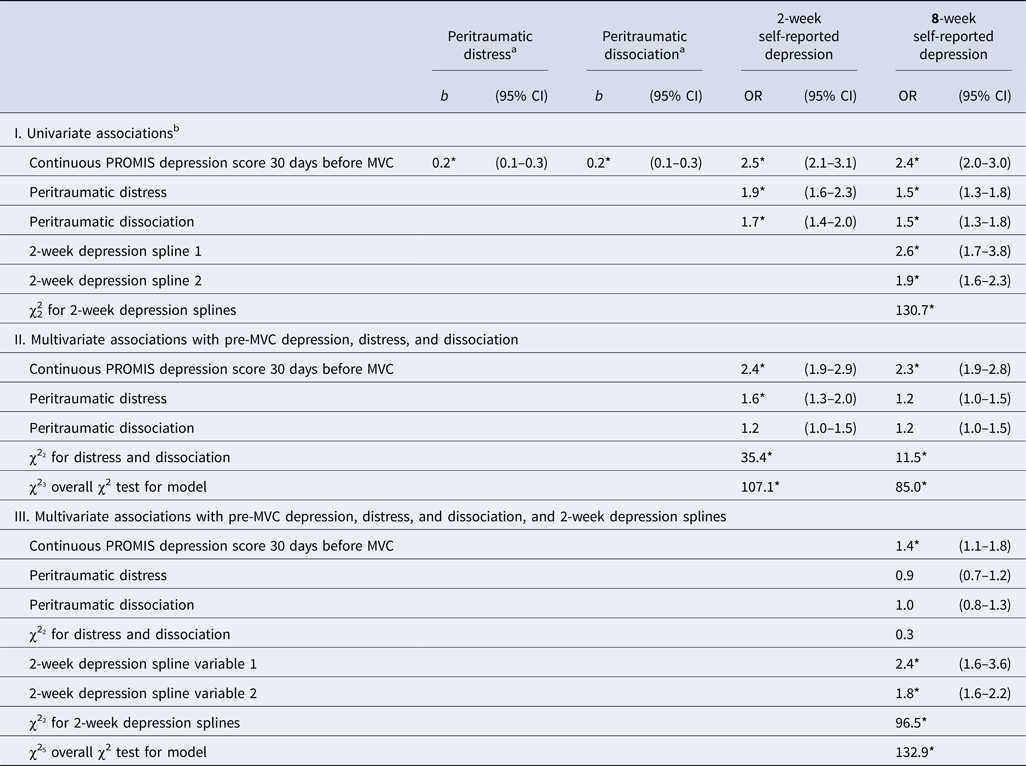
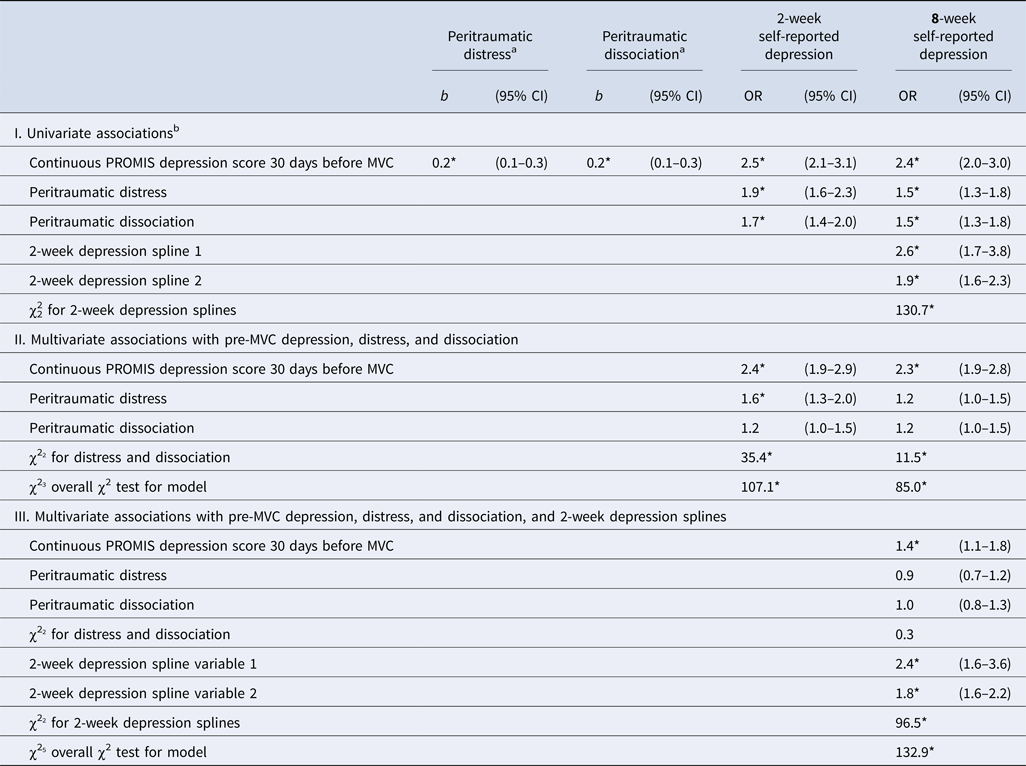
The peritraumatic distress and dissociation scales correlated 0.57 with each other (r; Pearson correlation). Both scales predicted 2-week and 8-week depression (see Table 1, MI). Pre-trauma depression was significantly associated with both distress and dissociation as well as with 2-week and 8-week depression (see Table 1). The best-fitting multivariate model for the joint associations of these peritraumatic symptoms with 8-week depression was an additive model with linear effects of both predictors. Quadratic terms were non-significant when added to the additive model (χ21 = 0.0–1.1, p = 0.89–0.30). The interaction term between peritraumatic distress and dissociation, which was estimated in a model that controlled for both quadratics in order to distinguish non-linearities from interactions, given the high correlation between the two scales, was also non-significant (χ21 = 1.1, p = 0.29). The ORs in the additive model predicting 2-week depression were positive and significant for pre-trauma depression (OR 2.4) and peritraumatic distress (OR 1.6) but not for peritraumatic dissociation (OR 1.2, Table 1, MII). The ORs in the additive model predicting 8-week depression were not significant for both peritraumatic distress (OR 1.2) or peritraumatic dissociation (OR 1.2, Table 1, MII) but were significant for pre-trauma depression (OR 2.3). Decomposition showed that while pre-trauma depression and 2-week depression significantly predicted 8-week depression, neither peritraumatic distress nor peritraumatic dissociation predicted 8-week depression controlling 2-week depression (Table 1, MIII).
Associations of peritraumatic distress and dissociation with week 8 self-reported depression in the Freeze 1 AURORA MVC sample (n = 666)
MVC, motor vehicle collision; b, unstandardized linear regression coefficient; CI, confidence interval; OR, odds ratio.
a Continuous PROMIS depression score 30 days before MVC, peritraumatic distress, and dissociation scales were all standardized to mean 0 and variance 1, allowing the ORs to be interpreted as the relative odds of MDE associated with a 1 s.d. difference in peritraumatic symptom scores.
b Continuous PROMIS depression score 30 days before MVC, peritraumatic distress, peritraumatic dissociation are independent variables in three separate univariate models. Two-week depression spline variables 1 and 2 are included in the same univariate model.
*Significant at the 0.05 level, two-sided test.
Associations of socio-demographics with peritraumatic symptoms
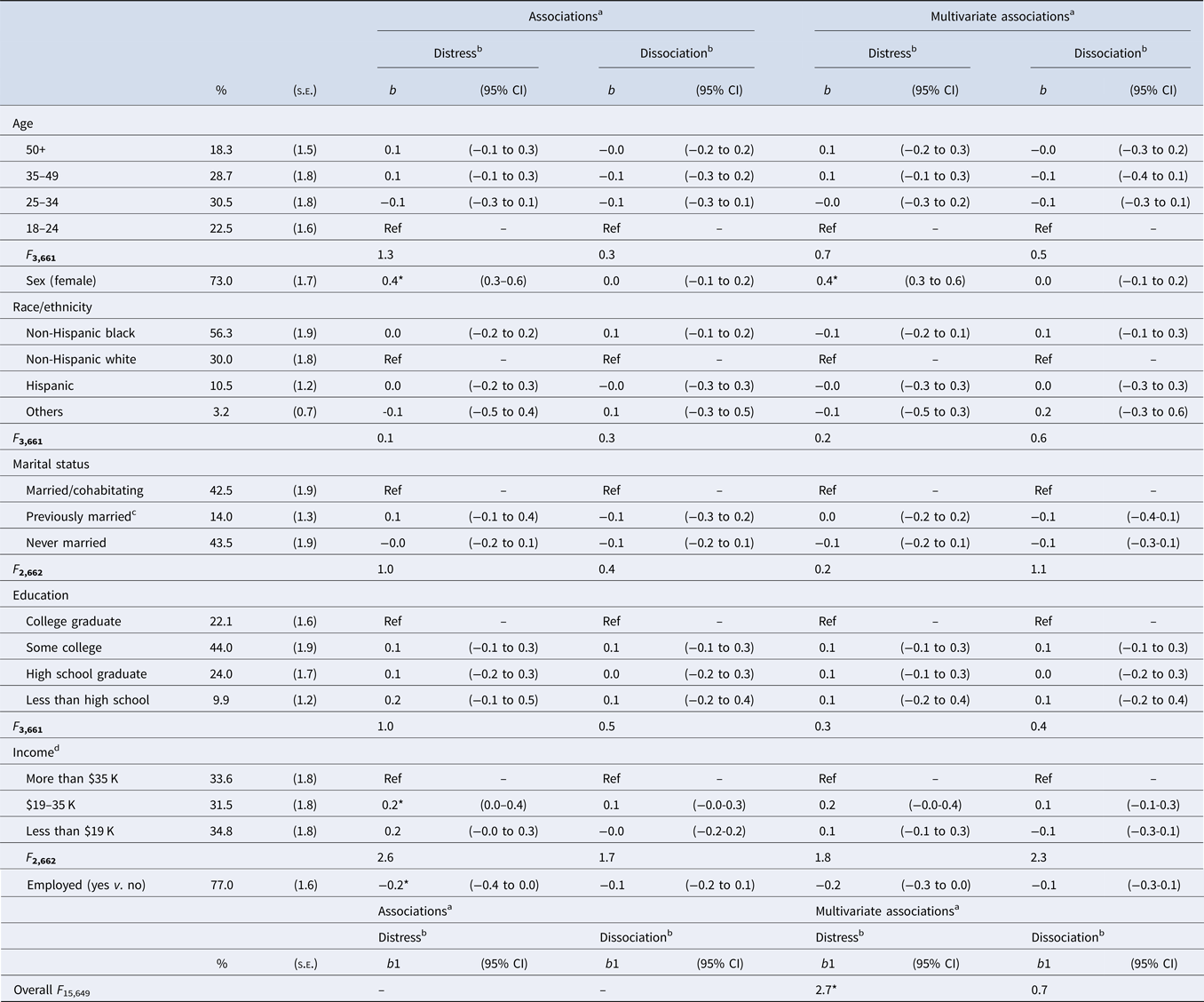
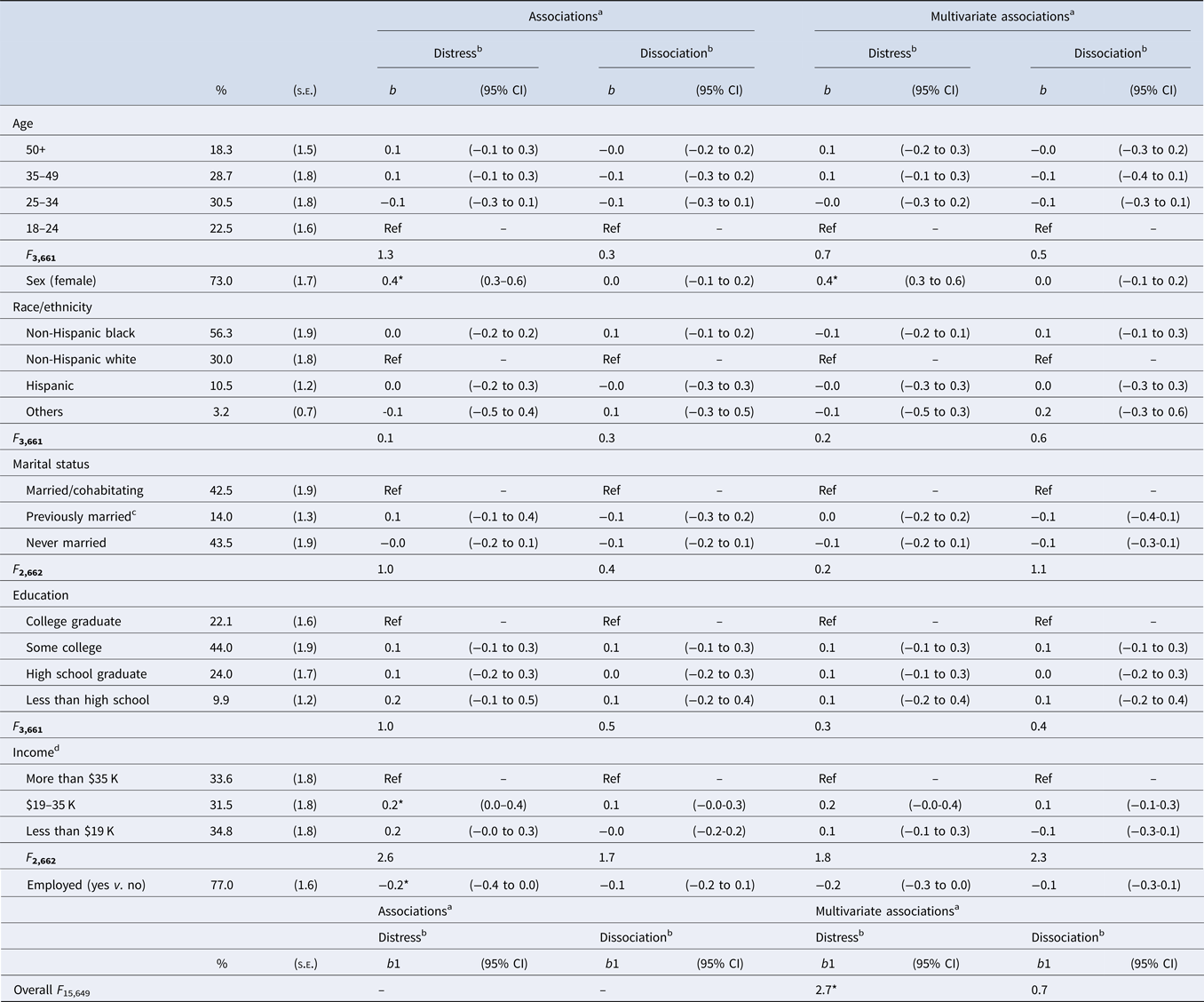
None of the socio-demographic characteristics predicted peritraumatic dissociation in univariate analyses (Table 2). Peritraumatic distress was significantly elevated among females (b = 0.4; metric regression coefficient predicting scores on a standardized outcome scale), participants with the lowest family incomes (b = 0.2), and those not employed (b = 0.2). The multivariate model including all socio-demographics predicted distress significantly (R 2 = 0.094; F 15 649 = 2.7, p < 0.001), suggesting that the individually significant univariate predictors can be interpreted. The multivariate model did not predict dissociation significantly (R 2 = 0.054; F 15 649 = 0.7, p = 0.83).
Distributions and associations of socio-demographic characteristics with self-reported peritraumatic distress and dissociation in the Freeze 1 AURORA MVC sample (n = 666)
MVC, motor vehicle collision; s.e., standard error; b, unstandardized linear regression coefficient; CI, confidence interval.
a All univariate and multivariate models control for continuous PROMIS depression score 30 days before MVC.
b Standardized to mean = 0 and s.d. = 1.
c Separated, divorced, or widowed.
d Family income before taxes.
*Significant at the 0.05 level, two-sided test.
Associations of MVC characteristics with peritraumatic symptoms
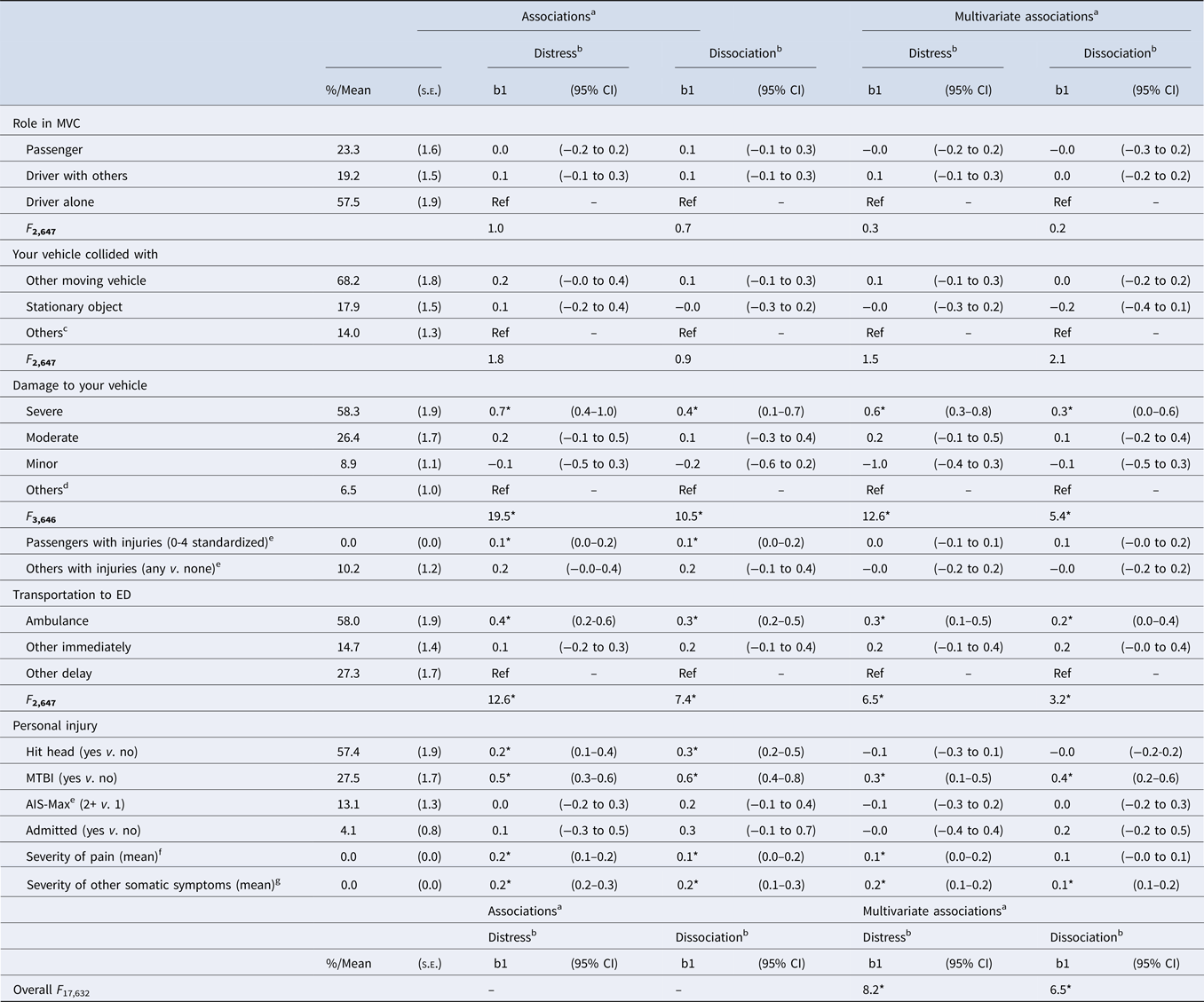
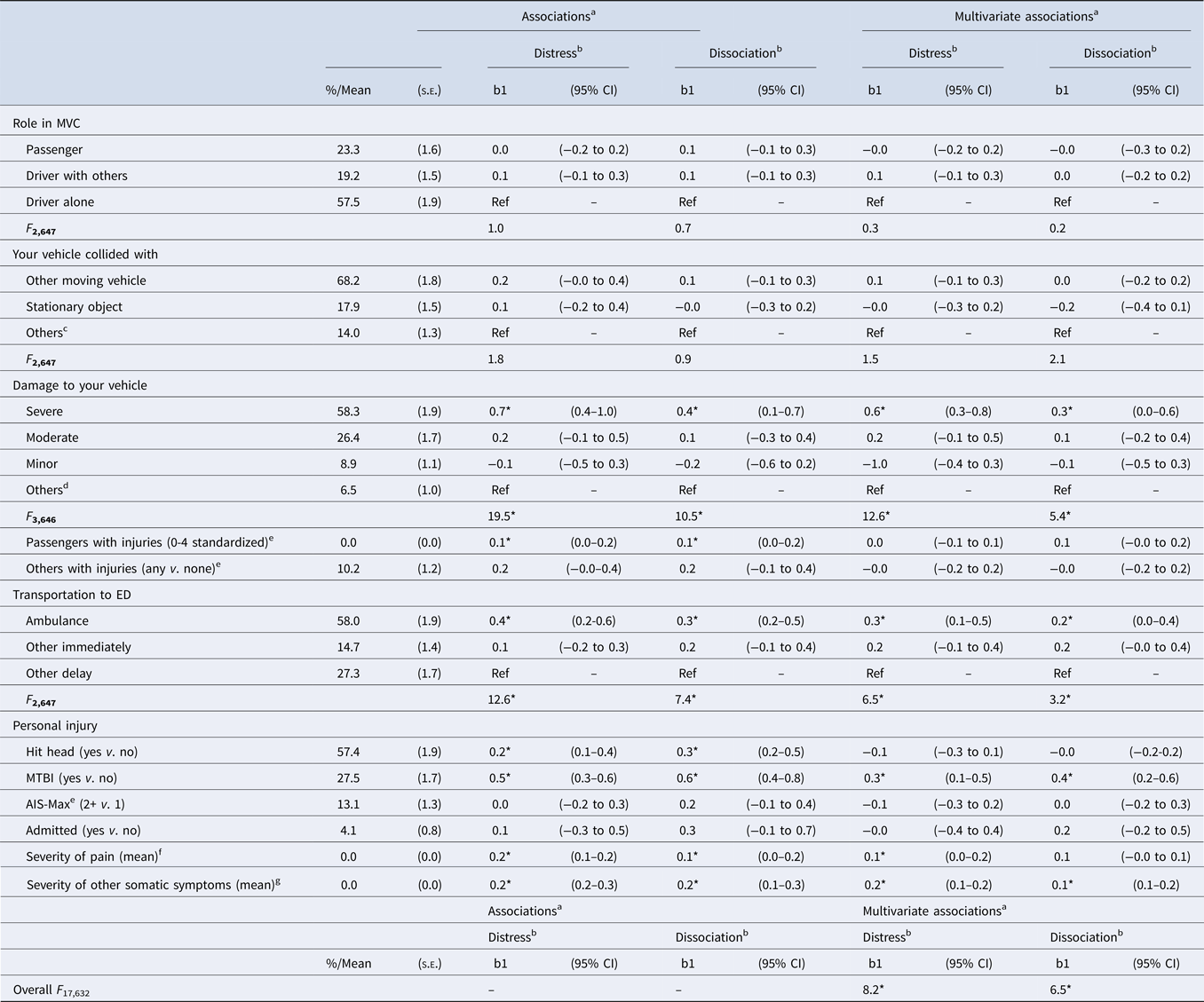
Peritraumatic distress and dissociation were not related to the participant's role in the MVC (i.e. passenger v. driver), whether the vehicle collided with another vehicle, or whether others in the participant's vehicle were injured, and two indicators of participant injury (AIS-Max score, admitted v. discharged) (Table 3). Peritraumatic distress and dissociation were both significantly elevated among participants whose vehicle sustained severe damage (b = 0.7–0.4), who were in vehicles in which others sustained injuries (b = 0.1), who were transported to the ED by ambulance (b = 0.4–0.3), who hit their head (b = 0.2–0.3), and who met the study definition of minor traumatic brain injury (MTBI; b = 0.5–0.6). In addition, peritraumatic distress and dissociation were both positively associated with self-reported severity of pain (b = 0.2–0.1) and other somatic symptoms (b = 0.2) in the ED compared to the prior 30 days. Multivariate models including all MVC characteristics significantly predicted both distress (R 2 = 0.260; F 17 632 = 8.2, p < 0.001) and dissociation (R 2 = 0.195; F 17 632 = 6.5, p < 0.001).
Distributions and associations of MVC characteristics with self-reported peritraumatic distress and dissociation in the Freeze 1 AURORA MVC sample (n = 666)
MVC, motor vehicle collision; s.e., standard error; b, unstandardized linear regression coefficient; CI, confidence interval; ED, emergency department; MTBI, minor traumatic brain injury; AIS, abbreviated injury scale.
*Significant at the 0.05 level, two-sided test.
a All univariate and multivariate models control for continuous PROMIS depression score 30 days before MVC.
b Standardized to mean = 0 and s.d. = 1.
c No collision (n = 81), ‘other’ (n = 8), and ‘do not know’ (n = 8).
d None (n = 12) and ‘do not know’ (n = 31).
e Moderate or severe injuries.
f Max score of the nine AIS regions.
g Self-reported 0–10 scale on pain intensity right now, standardized to mean = 0 and s.d. = 1.
h Sum of all differences in each somatic symptom between 30 days (self-reported 0–10 scale) and right now (self-reported 0–10 scale), standardized to mean = 0 and s.d. = 1.
Associations of socio-demographic characteristics with depression
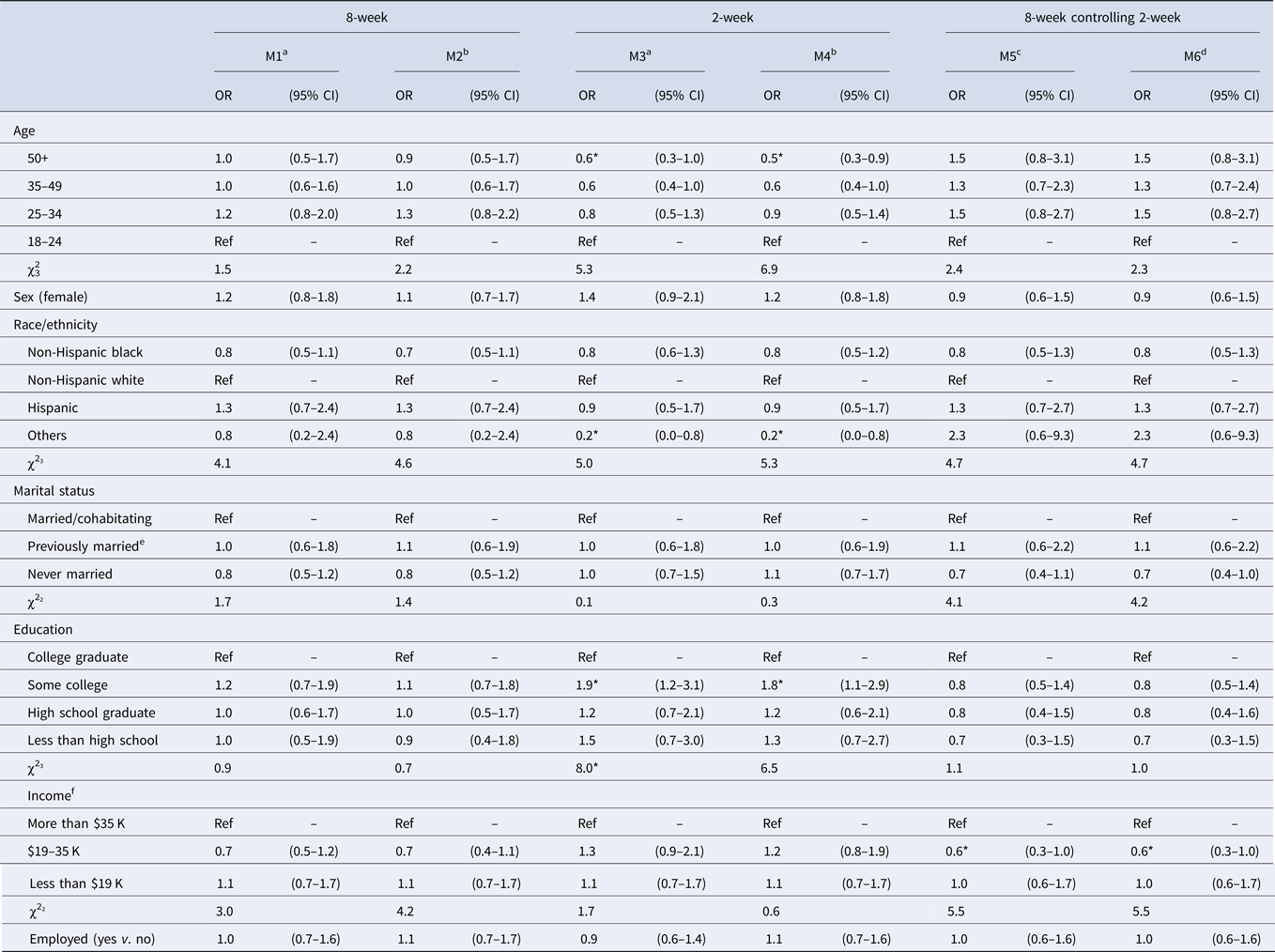
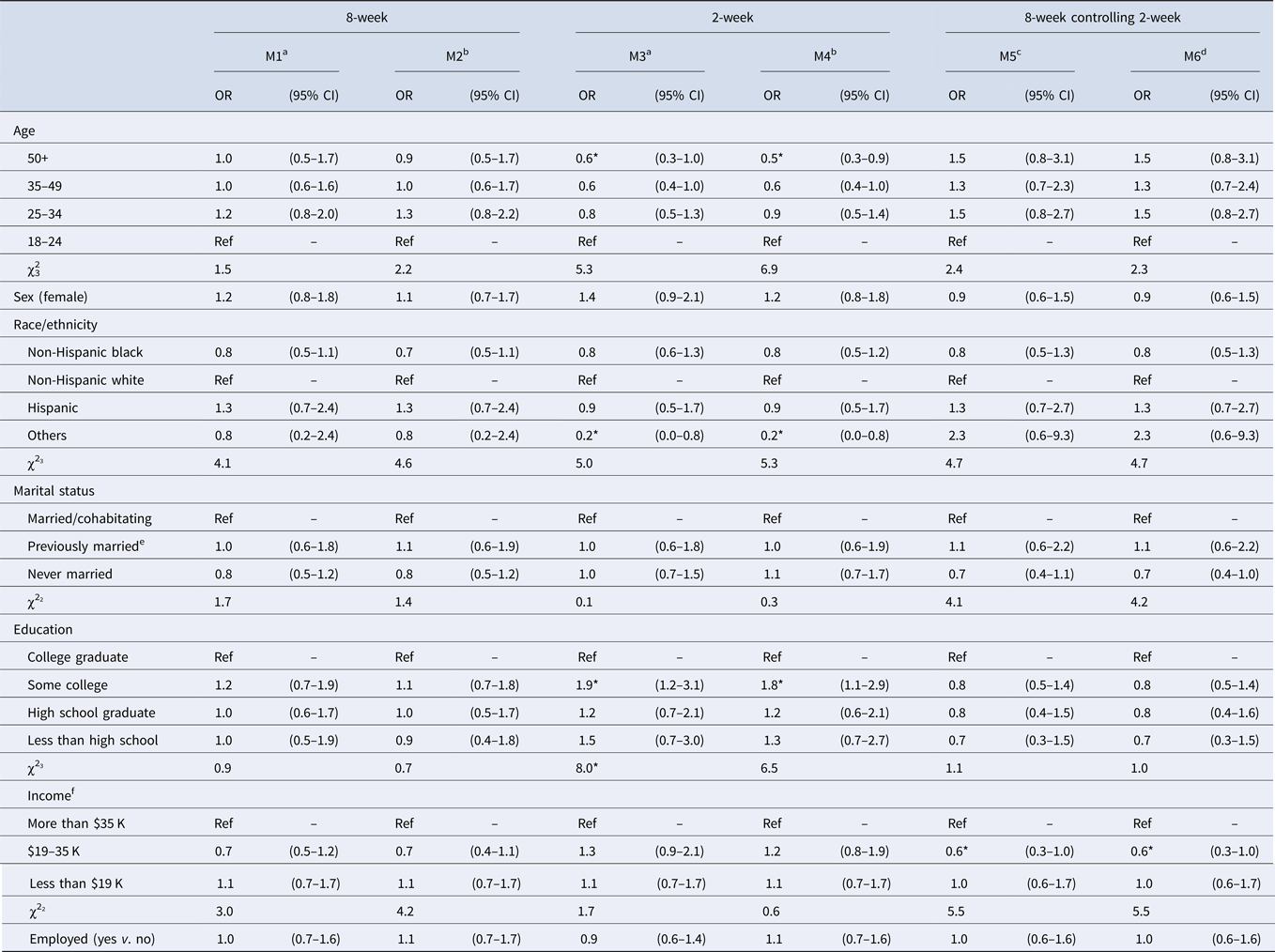
None of the socio-demographic variables was associated significantly with 8-week depression controlling for pre-trauma depression scores (Table 4).
Univariate associations between socio-demographic characteristics and self-reported depression with and without controls for peritraumatic distress and dissociation in the Freeze 1 AURORA MVC sample (n = 666)
MVC, motor vehicle collision; OR, odds ratio; CI, confidence interval.
a Without controls for peritraumatic distress/dissociation and controls for continuous PROMIS depression score 30 days before MVC.
b With controls for peritraumatic distress/dissociation and continuous PROMIS depression score 30 days before MVC.
c With controls for 2-week depression (spline variables) and continuous PROMIS depression score 30 days before MVC, but not peritraumatic distress/dissociation.
d With controls for 2-week depression (spline variables), continuous PROMIS depression score 30 days before MVC, and peritraumatic distress/dissociation.
e Separated, widowed, or divorced.
f Family income before taxes.
*Significant at the 0.05 level, two-sided test.
Despite the absence of gross associations with 8-week depression, several other socio-demographics were associated significantly with 2-week depression controlling for pre-trauma depression (Table 4, M3 and M4). These included elevated odds of 2-week depression among participants with some college education and significantly reduced odds among participants ages 50+ and characterized as ‘other’ race/ethnicity. No significant predictors of 8-week depression were found when controlling for 2-week depression.
Associations of MVC characteristics with depression
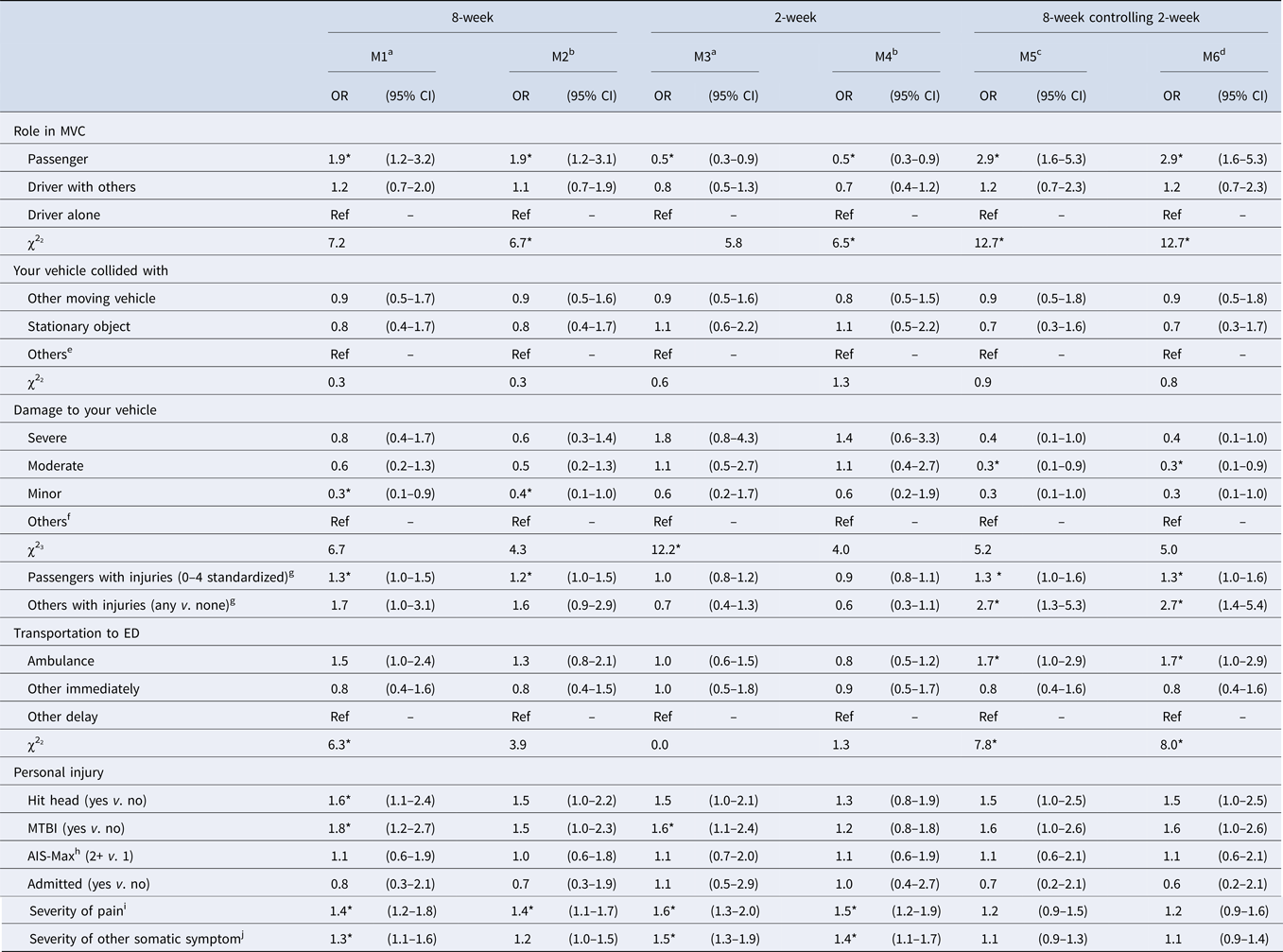
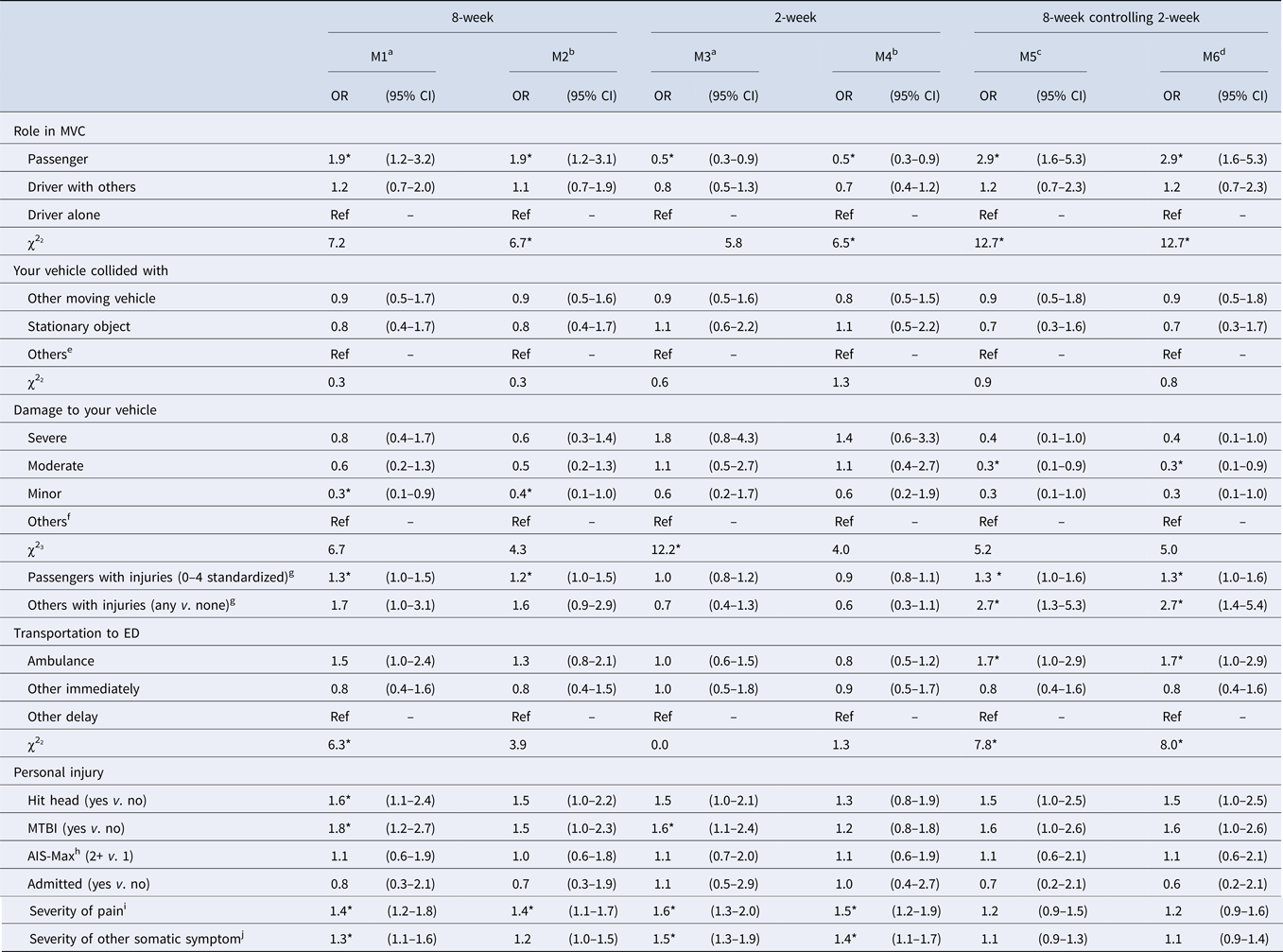
Univariate analyses found that the majority of MVC characteristics, including the nature of the collision (with a moving vehicle, a stationary object, or other), the extent of vehicle damage and a number of participant injury characteristics (AIS-Max, admitted) were unrelated to 8-week depression after controlling for pre-trauma depression and adjusting for socio-demographics (Table 5, M1 and M2). However, six MVC characteristics were significant and positive predictors of 8-week depression after socio-demographic and pre-trauma depression controls: role in MVC (being passenger: OR 1.9), number of passengers who sustained moderate–severe injuries in the participant's vehicle (OR 1.3); whether the participant sustained a head injury (OR 1.6); whether the participant was diagnosed with traumatic brain injury (OR 1.8); self-reported severity of pain in the ED (OR 1.4) and self-reported severity of other somatic symptoms (OR 1.3).
Net univariate associations of MVC characteristics after controlling socio-demographics with self-reported depression with and without controls for peritraumatic distress and dissociation in the Freeze 1 AURORA MVC sample (n = 666)
MVC, motor vehicle collision; OR, odds ratio; CI, confidence interval; ED, emergency department; MTBI, minor traumatic brain injury; AIS, abbreviated injury scale.
*Significant at the 0.05 level, two-sided test.
a Without controls for peritraumatic distress/dissociation and controls for continuous PROMIS depression score 30 days before MVC.
b With controls for peritraumatic distress/dissociation and continuous PROMIS depression score 30 days before MVC.
c With controls for 2-week depression (spline variables) and continuous PROMIS depression score 30 days before MVC, but not peritraumatic distress/dissociation.
d With controls for 2-week depression (spline variables), continuous PROMIS depression score 30 days before MVC, and peritraumatic distress/dissociation.
e No collision (n = 81), ‘other’ (n = 8), and ‘do not know’ (n = 8).
f None (n = 12) and ‘do not know’ (n = 31).
g Moderate or severe injuries.
h Max score of the nine AIS regions.
i Self-reported 0–10 scale on pain intensity right now, standardized to mean = 0 and s.d. = 1.
j Sum of all differences in each somatic symptom between 30 days (self-reported 0–10 scale) and right now (self-reported 0–10 scale), standardized to mean = 0 and s.d. = 1.
The decomposition of these associations found that diverse pathways were involved. Passengers were significantly less likely than drivers to have 2-week depression but significantly more likely than drivers to have 8-week depression after controlling 2-week depression (OR 2.9; M5 and M6). Participants who were in vehicles where other passengers sustained injuries were no more likely than others to develop 2-week depression but were significantly more likely than others to have 8-week depression controlling for 2-week depression (OR 2.7). The number of passengers who sustained moderate–severe injuries was not related to 2-week depression but predicted depression at 8 weeks controlling for a 2-week depression. Transportation to the ED by ambulance predicted higher levels of 8-week depression controlling for 2-week depression. The associations of personal injury characteristics with 8-week depression, in comparison, were all due to more proximal association with elevated odds of 2-week depression; none of them predicted 8-week depression after controlling 2-week depression.
Discussion
It is interesting to contrast the results of the current report with those of an earlier report on the associations of the same predictors with PTSD (Kessler et al., Reference Kessler, Ressler, House, Beaudoin, An, Stevens and McLeanin press). The earlier report found that, in line with prior epidemiological studies, PTSD prevalence in AURORA at 8 weeks is about 50%. We found in the current report, in comparison, that depression prevalence at 8 weeks is 27.2% of the sample. This depression prevalence is considerably higher than estimates in previous studies examining post-MVC psychopathology (Ehring, Ehlers, & Glucksman, Reference Ehring, Ehlers and Glucksman2008; Smith, Mackenzie-Ross, & Scragg, Reference Smith, Mackenzie-Ross and Scragg2007), but comparable to a recent Australian report that recruited respondents using insurance information (Kenardy et al., Reference Kenardy, Edmed, Shourie, Warren, Crothers, Brown and Heron-Delaney2018). It is noteworthy in this regard that the threshold used to define depression in the PROMIS screening scale might not be consistent with the thresholds used in previous studies. Given prior evidence that peritraumatic symptoms predict depression (Bronner et al., Reference Bronner, Kayser, Knoester, Bos, Last and Grootenhuis2009; see Vance, Kovachy, Dong, & Bui, Reference Vance, Kovachy, Dong and Bui2018 for a recent review), we were somewhat surprised that the associations of peritraumatic symptoms with 8-week depression in our sample were weak. This may be the consequence of the truncation of the peritraumatic symptom scales due to selection into treatment based on these scores. We are currently developing a plan to contact a sample of people who chose not to come to the ED in the immediate aftermath of an MVC to investigate both the distribution of peritraumatic symptoms and the associations of these symptoms with subsequent depression compared to the associations found here in order to evaluate that selection hypothesis.
The prospective AURORA design allowed us to disaggregate the gross associations of peritraumatic symptoms with 8-week depression. When controlling for pre-trauma depression, only peritraumatic distress but not dissociation was a significant predictor of 2-week depression. Importantly, these peritraumatic symptoms did not predict the transition between 2-week depression and 8-week depression. This suggests that peritraumatic symptoms predict short-term (i.e. 2-week) post-traumatic emotional responses but do not predict an increase in depression at 8 weeks when controlling for 2-week depression (Roberts et al., Reference Roberts, Gilman, Breslau, Breslau and Koenen2011). Thus, peritraumatic distress predicts 8-week depression through its association with 2-week depression but is not a specific predictor of depression at 8 weeks. We are unaware of previous research that attempted to carry out this kind of disaggregation.
We next examined associations of socio-demographics and MVC characteristics with 8-week depression mediated by both peritraumatic symptoms and 2-week depression, controlling for pre-trauma depression. None of the socio-demographic variables predicted 8-week depression. Some variables predicted 2-week depression but only education was significant with some college education predicting higher levels of 2-week depression. These generally non-significant associations with 8-week depression, and especially the failure to find a significant sex difference, are surprising given previous work and research documenting sex differences in post-traumatic responses of women compared to men (Galea et al., Reference Galea, Ahern, Resnick, Kilpatrick, Bucuvalas, Gold and Vlahov2002; Miguel-Tobal et al., Reference Miguel-Tobal, Cano-Vindel, Gonzalez-Ordi, Iruarrizaga, Rudenstine, Vlahov and Galea2006).
The strongest predictors of 8-week depression (controlling for pre-trauma depression) were several indicators of MVC severity, including the participant's role in the MVC, injuries among others, transportation to the ED, and severity of the participant's personal injuries. As with the earlier decompositions, though, we found substantial variation in pathways across these predictors. The associations of participant injury characteristics with 8-week depression were not significant when controlling for 2-week depression, which suggests that personal injuries are related to short-term but not longer-term adjustment to MVCs other than through 2-week depression. Having been a passenger rather than the driver emerged as the strongest predictor of threshold 8-week depression controlling for 2-week depression. Injuries sustained by others in the vehicle and the number of passengers with injuries also predicted 8-week depression controlling for 2-week depression. Finally, transportation to the ED by ambulance predicted 8-week depression controlling for 2-week depression. Importantly, these associations held when controlling for peritraumatic symptoms, socio-demographics as well as pre-trauma depression.
Although it is difficult to know how to interpret this apparent variation in pathways between predictors and 8-week depression, the strong association of having been a passenger and not the driver with 8-week threshold depression controlling for 2-week depression (OR 2.9) was especially striking. This might be associated with increased feelings of helplessness and lack of control among passengers compared to drivers, which would be in line with previous research emphasizing the importance of perceived control and the negative effect of perceived helplessness on the relationship between stress and depression (Culpin, Stapinski, Miles, Araya, & Joinson, Reference Culpin, Stapinski, Miles, Araya and Joinson2015; Kazantzis et al., Reference Kazantzis, Kennedy-Moffat, Flett, Petrik, Long and Castell2012; Leotti, Iyengar, & Ochsner, Reference Leotti, Iyengar and Ochsner2010). The presence of others with injuries, the number of passengers with injuries, and transportation to the ED by ambulance could reflect that severity of the accident is an important factor in long-term adjustment to the traumatic event. It is interesting though that personal injury characteristics only predicted 2-week but not 8-week depression.
It is also interesting to compare these predictors with the predictors of PTSD outcome (Kessler et al., Reference Kessler, Ressler, House, Beaudoin, An, Stevens and McLeanin press). Whereas various demographic variables such as gender and education, for example, predicted PTSD, none of these variables were significant predictors of depression in the current analyses. The severity of pain in the ED was the main predictor of PTSD but was not significant as a predictor of depression in the current study. The main variables that were found to impact depression risk at 8 weeks in the current study (being a passenger and not the driver, injuries to other people) were not significant predictors of PTSD. As expected, PTSD and depression were highly comorbid but even in participants that show both outcomes, predictors of PTSD and depression differed. We plan to follow up on these interesting findings to further examine the differential prediction of PTSD and depression in response to trauma once recruitment is completed and more follow-up data is available. In a very interesting recent report with a similar focus to our study, Pozzato et al. (Reference Pozzato, Craig, Gopinath, Kifley, Tran, Jagnoor and Cameron2020a) examined trajectories of depression, PTSD, and their comorbidity after MVC and found not only high rates of (asymmetrical) comorbidity but also evidence for common vulnerability factors.
The study has several limitations. Many statistical tests were conducted, increasing the risk of type I errors. In addition, given that this is an early report on a subsample, the study is underpowered to estimate complex statistical models. We will carry out more complex analyses when the full sample is collected and 3-month follow-up data are available. Because data collection started in the ED, participants who were not oriented or who had solid organ injuries were excluded (see McLean et al., Reference McLean, Ressler, Koenen, Neylan, Germine, Jovanovic and Kesslerin press, for more information about inclusion criteria). This decision may have introduced a bias, excluding participants with high MVC severity. In addition, the majority of the participants approached in the ED declined enrollment in the study. No additional information on these participants was collected. We therefore cannot rule out the possibility of a selection bias that may have affected our results. We are in the process of carrying out a methodological sub-study to investigate the extent to which this kind of selection bias influenced our results. Missing information about baseline functioning is another limitation. We did include a measure of peritraumatic distress that was administered in the ED as well as information on pre-trauma depression (8 weeks before the accident) and controlled for scores on these measures in all analyses. In this paper, we did not examine the role of pre-injury mental and physical health factors, but this will be an important goal in our future work. We also did not collect information about intervening traumatic events, which may have affected our findings. Finally, these analyses did not include assessments of blame or fault or important individual difference variables such as self-efficacy or helplessness but considering individual difference variables will be an important aim for our future work.
Within the context of these limitations, 8-week depression prevalence was relatively high (27.8%) and associated with pre-MVC depression and several MVC characteristics that remained significant after controlling for peritraumatic symptoms and, to a lesser degree, depressive symptoms at 2-weeks post-trauma. These observations, coupled with substantial variation in the relative strength of the mediating pathways across predictors, raises the possibility of diverse and potentially complex underlying biological and psychological processes that remain to be elucidated in more in-depth analyses of the rich and evolving AURORA database to find new targets for intervention and new tools for risk-based stratification following trauma exposure.
Supplementary material
The supplementary material for this article can be found at https://doi.org/10.1017/S0033291720003773.
Acknowledgments
The data that support the findings of this study will eventually be openly available at the NIMH National Data Archive at https://nda.nih.gov/edit_collection.html?id=2526, reference number 2526.
Financial support
AURORA is supported by NIMH U01MH110925, the US Army Medical Research and Material Command, The One Mind Foundation, and The Mayday Fund. Verily Life Sciences and Mindstrong Health provide some of the hardware and software used to perform study assessments.
Conflict of interest
Dr Peacock is supported by research grants from Abbott, Boehringer Ingelheim, Braincheck, CSL Behring, Daiichi-Sankyo, Immunarray, Janssen, Ortho Clinical Diagnostics, Portola, Relypsa, and Roche. He has served as a consultant for Abbott, Astra-Zeneca, Bayer, Beckman, Boehrhinger-Ingelheim, Ischemia Care, Dx, Immunarray, Instrument Labs, Janssen, Nabriva, Ortho Clinical Diagnostics, Relypsa, Roche, Quidel, Salix, and Siemens. He has also provided expert testimony for Johnson and Johnson. He owns stock or has ownership interest in AseptiScope Inc., Brainbox Inc., Comprehensive Research Associates LLC, Emergencies in Medicine LLC, and Ischemia DX LLC. Over the past three years, Dr Pizzagalli has received consulting fees from Akili Interactive Labs, BlackThorn Therapeutics, Boehringer Ingelheim, Posit Science, and Takeda Pharmaceuticals, as well as an honorarium from Alkermes for activities unrelated to the current project. Dr Germine is on the scientific advisory board of the non-profit Sage Bionetworks, for which she receives a small honorarium. She is also a consultant with 23andme, Inc. Dr Jones reports no direct conflicts related to this paper and no ongoing conflicts. He has been an investigator on studies funded by Hologic Inc., Janssen, and AstraZeneca, for which his department has received research funding. Dr Ressler has served on advisory boards for Takeda, Resilience Therapeutics, Janssen, and Verily/Google. His research has been sponsored by Alkermes and Brainsway and he has worked as a consultant for Alkermes. In the past 3 years, Dr Kessler was a consultant for Datastat, Inc., Sage Pharmaceuticals, and Takeda. The remaining authors declare no conflicts of interest.