At some point in the spring of 1206, but possibly as late as 1213, Robert of Clari, a poor knight, returned from Greece to northern France, to his native Picardy not far from the Flemish border. He had travelled to the east with his lord, Peter of Amiens, in 1202, fought alongside the contingents of French, Flemish and Venetian crusaders, and in April 1204 he was among the knights, foot soldiers and ‘pilgrims’ who breached the walls of Constantinople and took possession of the Byzantine capital: a Latin triumph that marked the end of the Fourth Crusade.Footnote 1 Returning to the west, Robert carried with him stories, or in his words ‘truths’ about what had happened in the east. He also carried things: a great trove – a theka, or box – of relics from the treasuries of Constantinople.Footnote 2 Both – the knowledge, experience and, dare we say, traumas of an ill-fated crusade, and the holy materials he carried from the East – were burdens that needed to be preserved, explained and accounted for. As I hope to show, close attention to the translations of objects can offer a different understanding of the role of relics in the aftermath of the Fourth Crusade where once the umbrella category of crusader ‘loot’ or ‘booty’ sufficed. When given space to present their own narratives, the relics translated after 1204 served to communicate multiple ideas, including an affirmation of Latin legitimacy in the Byzantine East and the Levant, divine assent for the crusade movement and the crusaders’ victory in 1204, and the complexity of Christian conceptions of holy matter.
In the years after his return Robert dictated two texts. The first is well known to most students of medieval history as it is one of the earliest French vernacular accounts attributed to a layman – that is, not a cleric – of a crusade expedition. This text has come to be known as The Conquest of Constantinople, echoing its opening lines: ‘Here begins the history of those who conquered Constantinople (Chi commenche li estoires de chiaus qui conquisent Coustantinople).’Footnote 3 Therein Robert related the call to crusade in 1199, the mustering of troops from northern France and Flanders, the journey across the Mediterranean, the conquest of the city and the splendour of its palaces and chapels. In the conclusion, Robert implores his reader/listener to take his story as truth: ‘now you have heard the truth how Constantinople was conquered . . . as he bears witness, who was there and saw it and heard it, Robert of Clari, knight. And he made the truth to be put in writing, how it was conquered.’Footnote 4
Truth and its spoken and written form were palpably important to Robert as to many who took part on the Fourth Crusade.Footnote 5 Robert's pursuit of a historical truth and a translated narrative of the events he witnessed was shored up by the other text he dictated: an impressive list of the relics he carried from Constantinople. Robert's list was copied neatly, some time between 1281 and 1283, at the end of a Rotulus recording the inventory of the relics of the abbey of Corbie and rubricated as ‘The shrine that Robert, knight of Clari, brought from Constantinople (Sanctuarium quod Robertus miles de Clari attulit Constantinopoli)’.Footnote 6 The text enumerated the fifty-four relics Robert translated, in some cases describing the containers and their materials and in one instance noting the presence of a Greek inscription.Footnote 7 It is a familiar list of holy fragments and included several large crosses made from wood of the Lord, that is, fragments of the true cross; cloth and other garments associated with Christ and Mary; thorns from the crown of thorns; stones from the Holy Sepulchre; and many relics of the apostles, martyrs and virgin saints. In its fullness (see the Appendix at the end of this article), Robert's list of relics demonstrates the varieties of objects translated from Byzantium to Latin Christendom in the period following the Fourth Crusade, between c.1204 and c.1240.Footnote 8 His list also emphasizes the material quality of objects venerated as relics, both in the Greek East and Latin West.
The translation of these relics and the attendant strategies of appropriation that followed were part of and informed the broader processes of ‘translating Christianity’ that occupied Christians during the High Middle Ages and beyond. In using the term ‘translation’, I am deliberately indulging its double meaning: first, in the literal sense of translatio, from the Latin verb transfero, meaning to bear across, carry over, transport, transfer, copy, and even display in procession; and in this case to do with a sacred thing or sets of things.Footnote 9 This is the meaning at the root of concepts like translatio imperii et studii, the translation or transfer of imperial authority and learning in the sense of the Roman inheritance of the Carolingian period and early medieval concepts of the antiquity of imperial rule.Footnote 10 From the early Middle Ages translatio came to refer specifically to the movement of relics from one location to another, often during times of war when such translations were necessary. But it also described liturgical ceremonies, specifically when relics were moved from one church or city to another. The accompanying stories of their movement came to be known as narratives of translation.Footnote 11
The second and now more common meaning of translation bears on Robert's activities as well, that is, in the context of a linguistic relationship: the transfer of meaning from one language to another or from one sense to another. This is an endeavour that often has at its core the relation of the essence of meaning, the trace of a perceivable truth or true form; an essential ontology.Footnote 12 Both senses of translation involve a taking up, and even taking in or over, that is, an appropriation of things and ideas, things and their meaning.Footnote 13 I will return to this sense of translation at the close of this article. Moving objects and ideas, specifically relics and their rituals, from the Byzantine context into the Latin West depended on both senses of translatio and involved a physical transfer as well as a linguistic and intellectual relationship and refined perception.Footnote 14 In the second sense of translation, however, meanings are not fixed and often need assurances for belief to adhere. The armature of accompanying texts, histories, rituals and witnesses helped assure and affirm the material truths the relics professed.
* * *
As scholars from many different fields have begun to acknowledge, attending to objects and things as they were used and moved among and between people, especially in moments of contestation and colonization, can yield different perspectives on the past. Historians such as Michael McCormick, Robin Fleming and Julia Smith have shown persuasively how an analysis of material relationships can clarify interactions and ‘communications’ in instances when textual sources are either silent or do not describe and detail such encounters.Footnote 15 Indeed, a reliance on texts as our main sources, and in the context of crusading history very specific types of texts, often generated solely by monastic or clerical authors, many of whom were not present in the East or on the campaigns they report, often offers an incomplete view of relations among groups, especially concerning the meaning of religious actions.Footnote 16 With increased attention to materiality and its methods, it is clear that people as subjects – both in the present and in the past – inhabit a world in which objects mediate and participate in the process of identity formation implicit in the creation of differences, boundaries, narratives and meanings.Footnote 17 As Glenn Peers has observed, ‘because things can tell a different story than texts, . . . they can reveal a world informed and forming identities [and ideas] not expressible through words, but only through experience, action, contact’.Footnote 18 Consequently, objects and things need to be attended to in much greater detail than has hitherto been the case.
What follows addresses the translation and appropriation of relics from Byzantium to the Latin West, moving both chronologically and conceptually. I offer first an overview of the Fourth Crusade and its historiography with respect to the role of relics. I then turn to the acts of translation and those individuals – like Robert of Clari – who functioned as translators, that is, who carried sacred matter – bones, stones, wood, oil and the like in boxes, bourses and other containers – from Constantinople across the Mediterranean, up the Rhône or through central France to be deposited into the treasuries and chapels of northern France, Flanders and Germany. Christianity very often required trained translators: technicians of the holy who were trusted to authenticate, arbitrate, control and deploy sacred matter. Their role in this process, although often overlooked in crusade scholarship, was a crucial one.Footnote 19 I then consider several of the ways in which relics were appropriated into their new contexts. Many strategies were employed for making sense of Byzantine relics, which drew upon older traditions regarding the portability of Christian sacred matter. But these objects also offered new potential for nuancing historical conceptions of Christian time as expressed in the liturgical texts written in their honour and used to illustrate their meaning in the West. Finally, I address the specific material nature and meaning of the relics that moved westwards after 1204. For their material quality – their materiality – was part of their translatability: as fragments of cloth, stone, thorn, bone and wood – objects that were familiar, yet exotic, mundane yet sacred – their materiality was part of what gave them resonance and allowed them to be translated. Relics of this type offered an opportunity for thirteenth-century clerics, as well as the laypeople who visited new chapels and shrines, listened to sermons and liturgies, and viewed the objects through new or renewed containers and reliquaries, to consider the meaning of material charged by its relation to Christ. The notion that Christ's presence and the sacred qualities of Jerusalem were not specific to place, but rather could be translated – both moved and reinterpreted – into another physical context without diminution would be fundamental for future claims about the translation of Christianity beyond the bounds of charted Christendom.Footnote 20
Framing the Fourth Crusade: History and Historiography
By almost any measure the Fourth Crusade was a decidedly unusual event. In 1198, as one of the first initiatives of his papacy, Innocent III renewed the call to crusade. By 1199 he had commissioned preachers – principally Cistercian abbots and charismatic priests such as Fulk of Neuilly – to recruit nobles and knights for the expedition.Footnote 21 The intention was to succeed where the previous campaign, the Third Crusade, had failed: to reclaim Jerusalem after its fall to the Muslims under Saladin in October 1187 and to recover one of the major relics of the true cross which had been captured in the battle of Hattin in July of that year. Indeed, almost all historiae as well as memoirs of the Fourth Crusade begin with the events of 1187. But, as many crusade historians have elaborated at great length, the expedition became sidetracked.Footnote 22 The French contingents, who had anticipated recruiting a great force, failed to gather the numbers of men and the amount of matériel originally planned. In 1201 they contracted with the Venetian doge, who had built a new fleet to transport them to the East, but falling short of men and supplies, the northerners found themselves greatly in debt to the Venetians. To make up for this disparity, a contingent of the French and Flemish crusaders agreed to aid the Venetians against their rival city of Zara. Following that victory and after a series of unsuccessful negotiations with the Byzantine rulers, still in debt and in desperate need of food and supplies, the crusaders and pilgrims agreed to attack Constantinople.Footnote 23 Their victory on 12 April 1204 was unprecedented and unplanned. It took some time to negotiate a settlement for the division and governance of the city, and to elect Count Baldwin IX of Flanders as the first Latin emperor of Constantinople.Footnote 24
Historians have been divided in their interpretations of these events. Because the expedition ‘deviated’ to Constantinople, scholars have alternately characterized the crusade – much as some contemporaries did – as either a perversion of the original crusade ideals, or as a misunderstood manifestation of the changing nature of crusading by the turn of the thirteenth century.Footnote 25 Much of what has been written about the crusade largely concerns a detailed, even day-by-day, narrative of the military expedition followed by a general description of the sack of Constantinople.Footnote 26 Although this is beginning to change, most modern narratives stop at this point: the crusaders are condemned for their atrocities, principally for the fires that raged through the city and the looting of churches, chapels and monastic houses; they are mocked for their deviation to Greece; and derided for their failure to reach Jerusalem and thus fulfil their crusade vows. What happened thereafter, which pertains more to cultural and religious history than to military history, has largely been ignored.Footnote 27
What is more, for modern scholars, understanding the crusade in religious terms has been complicated by its decidedly material and, as some have noted, ‘colonial’ outcome: the creation of a new crusade principality known as the Latin Empire in Constantinople along with further crusader principalities in the Morea (now southern Greece), and the outpouring of objects to the West after the capture of the city.Footnote 28 Moreover, the conception of the looting of Constantinople has for the most part been informed by those objects displayed in Venice. However, after the city's capture, the Latin forces divided Constantinople among themselves. The Venetians took spoils from Hagia Sophia, many of which the doge placed in his chapel at San Marco, where they are still (at times in replica) visible today: one thinks of the bronze horses that crown the façade, and the porphyry emperors along the passage connecting the palace to its chapel, or the many opulent treasures within.Footnote 29 This is not, however, how most relics passed into the West.
Finally, the Fourth Crusade also came at a fulcrum point in the longer history of the crusade movement, which destabilized Latin Christendom's confidence in crusading's goals and execution.Footnote 30 As Shirin Khanmohamadi has recently summarized:
. . . excepting the First Crusade victory in 1099, . . . [w]ith successive crusades, ending in military losses or the inability to secure Jerusalem, we also see a coming apart of the grand, epic narrative that justified itself by God's will. Lack of success was, of course, already a sign of divine disfavor, but events such as those of the chaotic Fourth Crusade, in which Christians sacked Constantinople, an Eastern Christian capital, muddied the clarity of the crusading mission still further.Footnote 31
And yet we must not lose sight of how medieval Christians understood these events, or of their interpretations of the diversion to Constantinople and its role in the longer unfolding of Christian history. For them, the confusion and the attendant anxieties about the legitimacy of the conquest and the meaning of the new Latin Empire made the material effects – and principally the movement of relics as Latin imperial gifts – all the more important. The relics’ translations, their ‘agreement’ to move and be moved, connoted divine assent for the crusade's outcome.Footnote 32
The Translations: Scope and Practice
From the surviving documentation, principally charters, letters patent, inventories and relic lists, it is clear that two waves of translation occurred.Footnote 33 The first began shortly after the fall of Constantinople, in late 1204 and early 1205. These were personal and diplomatic gifts that served initially to announce the success of the city's capture. They emanated from the new emperor as well as from the leading prelates on the expedition, who sent relics to their dioceses in the West. The second wave of relics came following Emperor Baldwin's death in 1205, during the reign of his brother, Henry, count of Hainaut (r.1205–16). Emperor Henry I and Peter Capuano, the newly appointed papal legate, monitored these gifts closely, personally assenting to many of the charters that accompanied and authenticated the objects.Footnote 34 These gifts were not spirited away in pockets or the folds of garments, but travelled in the open, often in Byzantine reliquaries, or in bourses or cloth bags sewn for this purpose and bearing inscriptions or relic tags written in Greek.Footnote 35
Moreover, they moved in overwhelming numbers. Scholars have estimated that following the Fourth Crusade hundreds of relic fragments and holy objects pertaining to Eastern saints and the objects associated with Christ's passion migrated into the West.Footnote 36 To be sure, many objects and relics had been translated during the earlier crusade period, some deposited in churches and monastic houses, others kept in personal chapels as souvenirs or mementos of a noble family's crusading past.Footnote 37 But after 1204 the scale of relic translations from the crusader East was far greater than ever before, so large as to be transformative. What is more, from the sources we have, both textual and material, little else appears to have been sent back to northern Europe, whether coin, credit, vestments (with rare exceptions), cloth or quantities of moveable wealth. What coinage the French crusaders were able to amass was owed to the Venetians, and the northern French and Flemish contingents did not benefit financially from this expedition.Footnote 38
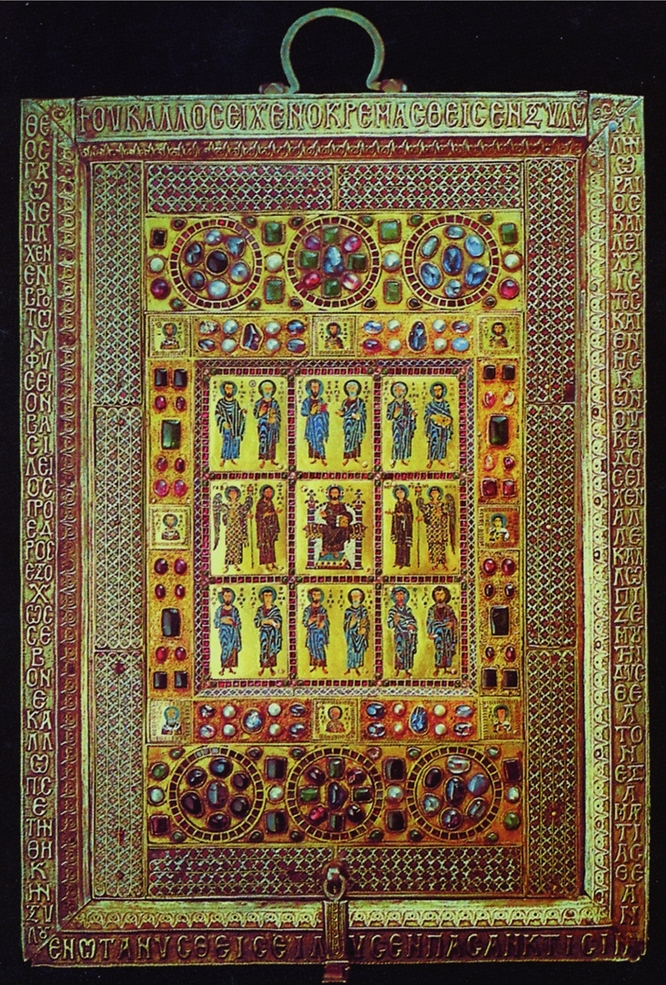
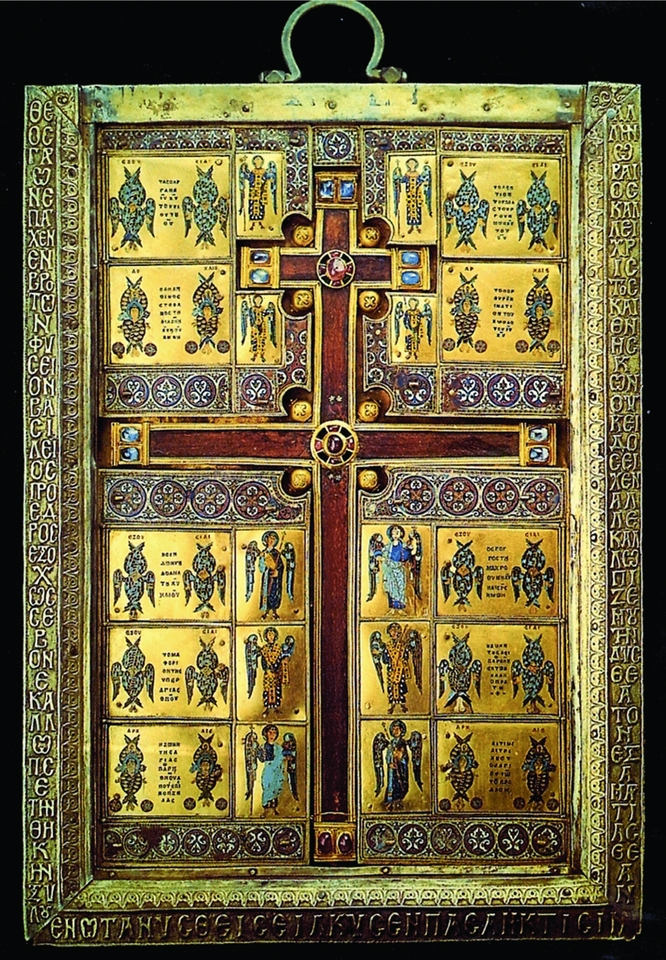
The first relics sent from Constantinople travelled as imperial gifts. In the weeks following his election and coronation as emperor, Baldwin I dispatched relics from the imperial collection of the Boukoleon palace to Innocent III, the king of France, Philip Augustus, and his brother Philip, count of Namur.Footnote 39 Not surprisingly, many of these early gifts correlate to relics sent from the Pharos Chapel of the Boukeleon Palace.Footnote 40 In 1205, gifts followed from several men of the upper aristocracy who sent relics to their spouses and kin, which were in turn donated to French cathedrals, monastic houses and local chapels.Footnote 41 Louis, count of Blois and one of the leaders of the crusade, probably employed one of his three chaplains to carry the relics of Sts Anne, Peter and Andrew to his wife Catherine, who then bestowed them on Chartres and Beauvais cathedrals in return for the communities’ commemorations.Footnote 42 Louis also sent a tablet reliquary to the monks of Clairvaux, the great Cistercian abbey from which many crusaders had departed. This object, the monks noted, was made in the ‘Greek style’ with Greek inscriptions and may have resembled the true cross reliquary or staurotheke in the cathedral treasury of Limburg an der Lahn (Figs 1–2). Louis's gift was ferried with a larger cache of relics intended for Clairvaux and carried there by the Templar Artaud before he became a monk at the abbey.Footnote 43
Limburg staurotheke, Byzantine true cross reliquary, c.968–85 (top cover closed). Donated by Henry of Ulmen c.1208 to the convent of Stuben, where his sister, Irmgard, was the prioress. Dom und Diözesanmuseum, Limburg an der Lahn, Germany. Illustration: Wikimedia Commons, online at: <https://commons.wikimedia.org/wiki/Category:Limburger_Staurothek#/media/File:Couvercle_de_Limbourg.jpg>, last accessed 5 December 2016.

Limburg staurotheke (top cover removed, small doors visible). Illustration: Wikimedia Commons, online at: <https://commons.wikimedia.org/wiki/Category:Limburger_Staurothek#/media/File:Intérieur_de_Limbourg.jpg>, last accessed 5 December 2016.
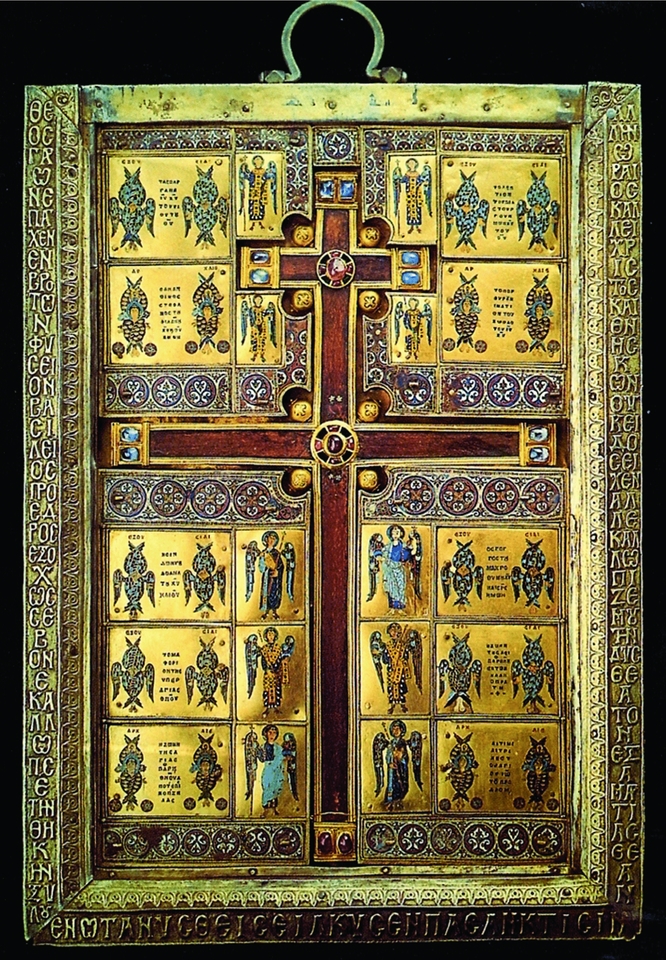
The arrival of Louis's relics in the West coincided with the reception of relics at the collegial foundation of Longpré-les-Corps-Saints, not far from Abbeville, in the Beauvaisie. Shortly before he died in 1205, Aléaume de Fontaine, like Louis of Blois, sent a collection of relics to his wife, Laurette of Saint-Valéry, which she gave to Longpré.Footnote 44 It was Aléaume's chaplain, Wilbert, who carried the relics that became the focus of devotion at Longpré.Footnote 45 Two charters attest to this story, but most of what we know of Wilbert and this translation comes from the lections written for the community to be read on the feast of the reception of the relics.Footnote 46 When Wilbert arrived at Longpré he offered up the precious relics as well as Aléaume's armour and the letters patent that Aléaume had written to his wife and his son Hugh.Footnote 47 Here we catch a glimpse of the traffic between Constantinople and northern Europe during the first years of the thirteenth century.
Such patterns of translation became more frequent and carefully defined in the years immediately following the disaster of the battle of Adrianople in 1205, during which campaign many of the leading nobles and knights from northern France, and especially the region of the Chartrain, were killed. Baldwin I was taken prisoner and died in captivity, his body never recovered.Footnote 48 His brother, Henry of Hainaut, initially ruled as regent during his absence and then, from 1206 to 1216, as emperor. Henry initiated a more deliberate policy of sending relics to the West in the hopes of inspiring a military response to the pressing needs of the Latin Empire.Footnote 49 Thus when Wallon of Dampierre sought to return to his native Langres with the head relics of St Mammas, believed to be the third-century bishop of Caesarea venerated in the city, he had to wait for the approval of both the papal legate and the emperor before proceeding.Footnote 50 The emperor also appears to have partially sponsored the dissemination of relics by Garnier of Trainel, bishop of Troyes (r.1193–1205) and by Nivelon de Chérisy, bishop of Soissons (r.1176–1207), both of whom gave numerous relics to the religious communities within their dioceses.Footnote 51
It is principally from lectionary evidence – a source type to which I will return shortly – that the translation work of Wallon de Sarton, a cleric in the diocese of Amiens and a canon of Picquigny, can be reconstructed. Wallon travelled East with Hugh, count of St-Pol and other nobles and knights from the region of Amiens.Footnote 52 After the Latin victory of 1204 he became a canon attached to the community of St George of Mangana in Constantinople.Footnote 53 By 1206, he sought to return home. Before his departure, however, he had occasion to be alone in the church of St George, where behind the altar he found several relics, including two silver discs with inscriptions: one bore the relic of the head of St George and the other the face relic of John the Baptist. Taking both, he departed for the West at the end of September in 1206. According to the relevant historia, Wallon joined Wilbert, Aléaume de Fontaine's chaplain, and both reached northern France in December 1206, having shared the same travails as they passed through Venice and across the Alps.Footnote 54 Wallon then bestowed his relics liberally, giving the head of St George to the abbey of Maresmontier near Mondidier; the arm of the same saint to the church of Picquigny; and a finger relic to Sarton, where he was born.Footnote 55 The face relic of the Baptist he gave to the cathedral of Amiens, where its reception was celebrated on 17 December 1206. He then became a canon of the cathedral community, where he founded a chapel in honour of the two saints whose relics he had translated.Footnote 56
Two other translators come to view as part of this second wave of relic translations: Hugh, former abbot of St-Ghislain in Hainaut, and the Templar Artaud, mentioned above. Both travelled at Emperor Henry's behest, translating relics along with the knowledge to explain and authenticate them. Hugh had accompanied Baldwin of Flanders when he departed on crusade in 1202, serving as one of his chaplains.Footnote 57 After Baldwin's death in 1205, Henry elevated Hugh first to the position of clavicularius (guardian of the relics) in the imperial treasury, and then to that of chancellor of the Latin Empire.Footnote 58 In 1207, Hugh authored a short charter confirming the authenticity of the relics sent from the imperial palace to Simon of Beaumont.Footnote 59 Not long after, probably around 1216, he ‘retired’ to France and took the habit as a monk of Clairvaux. At that point Henry sent a number of relics with Hugh as gifts for the abbey, including a significant fragment of the true cross.Footnote 60 Hugh's name appears throughout the Clairvaux treasury inventories, from which it is clear that he was responsible for ferrying hundreds of relic fragments. The Templar Artaud is harder to trace, except that like Hugh he is referenced throughout the Clairvaux inventories, credited with translating hundreds of relics to the abbey as well as several complete Byzantine staurotheke reliquaries.Footnote 61
One could multiply such examples, assembled from the charters and letters accompanying objects or from the historiae composed for the relics once they arrived in the West.Footnote 62 There are two points, however, to be emphasized. First, as is clear from the texts, the great majority of relics moved out of Constantinople as gifts, and not as plunder, as has commonly been believed. They moved publicly, ceremoniously and between persons. Gifts are very different from looted wealth. Gifts mediate, confer, speak and need to be translated: to be offered up and carried forth. Gifts contain within them the trace of their donors and their provenance and there was a part of these translations that retained their Byzantine associations, which in turn gave them a different spiritual force that rendered them moveable if never completely culturally assimilated. Second, the vast majority of relics were borne by a cadre of translators, individuals who in the Christian tradition were adept at moving between cultures and peoples: the little known and scarcely studied clerics and chaplains highlighted here. The work of explaining, historicizing and appropriating fell to them and their texts, which provided the basis for a second level of translation.
Appropriations: Things in Place and Time
Relics were demanding objects. Once present in the Latin West they needed to be dealt with. The mechanisms of appropriation unfold in the ways that relics were adopted into the rhythms of sacred time in the liturgical calendar; into sacred history, which was in turn integrated into new liturgical offices; into ritual use and display; and within ways of seeing the holy. Appropriation conceived in this way also demonstrates how these objects were taken up and reused for specific sacred, historical and eschatological ends in the West. In this sense too, the use and reuse of relics offered a safe means of indulging in a process of ‘replication’ that was itself part of the dynamics of translation from one context into another. As with translation, appropriation contains a host of interlocking meanings that we should engage when thinking about these practices.
The appropriation of relics from Byzantium drew upon the specific knowledge and witness of the men I have labelled ‘translators’, who were called upon to work with bishops and abbots in the West to respond to the demands relics made. Fragments of Christ's presence on earth, the wood of the cross, vials of Christ's blood, fragments of cloth, his crib, the nails, thorns, all required proper treatment and veneration. Churchmen and donors, no doubt working in cooperation with communities, thought carefully about which relics to send to which location. Typically, the connections were associative and we can see an attempt at reassembling or gathering like to like.Footnote 63 The correspondence of Nivelon de Chérisy, bishop of Soissons, for example, demonstrates that he had a programmatic view of how to distribute and venerate the relics he acquired in Greece. He offered to his own cathedral church of Sts Gervais and Protais relics of the proto-martyr St Stephen, the apostle Thomas and the evangelist Mark, as well as many relics associated with Mary and Christ. To the nuns of Notre-Dame-de-Soissons he gave a relic of the Virgin's belt to complement the relic of her slipper that they already possessed, and to the canons of St-Jean-des-Vignes he offered relics of the arm of John the Baptist, ‘the same John’ as he put it, thus matching saints to their consecrated churches.Footnote 64 The same coordination was at work elsewhere: relics of St Mammas's arm and head were sent to Langres where the bishop had long been venerated; Louis of Blois sent a relic of St Anne's head to Chartres to join the relics of her daughter, the Virgin Mary, whose holy chemise had protected the diocese for nearly three centuries;Footnote 65 and relics of the Baptist's face came to Amiens, whose cathedral abutted the hospital dedicated to Christ's Precursor, a building that was torn down to make room for the expanded gothic structure begun in 1218.Footnote 66 In some cases surviving evidence suggests that formal adventus ceremonies were planned to welcome the new relics and to process them with great ceremony into the receiving church or cathedral. Such moments, often restaged and repeated within the annual cycle of the liturgy, announced, as the Soissons sequence made clear, that the cities of the West were understood as the new Rome, the new Greece, the new Holy Land.Footnote 67
The integration of the new relics into local liturgical calendars worked as a means of appropriation. Within the first decade of the thirteenth century new liturgies had been composed to honour the relics on the date of their reception, as well as amplifying the celebration of feast days already in place, thus further elaborating, for example, the liturgies for Mary, Thomas or the Exaltation and Invention of the Cross. The most detailed and immediate example of this kind of liturgical insertion is associated with Nivelon de Chérisy. Shortly before his departure for the East in 1202, the bishop had a new liturgical manual created as part of a general reform and rebuilding campaign. Part ordinal, part processional, part breviary, the text, known as a Rituale, detailed the rituals of the liturgical year.Footnote 68 After 1205 the text was augmented in remarkably explicit ways to reflect the accommodations made for the new relics Nivelon carried back from Constantinople. The revised manuscript contains a short history of the events of the crusade and a list of the relics Nivelon bestowed across his diocese. It also elaborates a new feast in celebration of the reception of the relics from Constantinople, which drew on extant offices for several different saints, reflecting the variety of relics the bishops gave to the cathedral.Footnote 69 Nivelon's text also incorporated a newly composed sequence extolling the joy of the city of Soissons and the delight of its people at the reception of such holy objects.Footnote 70 In addition, the feasts celebrating St Stephen, the apostle Thomas, John the Baptist and the Exaltation of the Cross were expanded, incorporating the prayers sung in the reception feast. As Cecilia Gaposchkin has noted, the entire cycle of the annual liturgy was amplified as a consequence of Nivelon's donations.Footnote 71 Moreover, Nivelon instructed other churches in his diocese to sing the same sequence when celebrating ‘those blessed martyrs whose relics we carried from Constantinople’.Footnote 72 Thus he used the acquisition of new relics as a means of liturgical renewal and reform.
The kinds of programmatic liturgical rewriting that occurred in Soissons found parallels in the other major episcopal centres of France that received relics. Although the evidence is not as elaborate or eloquent, it is clear that the clergy of Amiens, Beauvais, Chartres, Langres, Troyes, and Paris all amplified their liturgies to account for the advent of new Greek relics in the decades after 1204.Footnote 73 Moreover, all these new offices lay stress on the role of the people (that is, the community) in receiving and venerating the new relics.Footnote 74 They also stress the transformation of the place of reception: by means of these sacred fragments, the cities of the West were renewed as another Constantinople, a new Jerusalem.
The explanation of this transfer was elaborated in the liturgical historiae, the historical narratives that would be broken into nine or twelve units depending on the nature of the office and read aloud as part of the liturgy throughout the night preceding, and during the day of, the relic's celebration. Strikingly, among the relics translated after 1204, the historiae often focused on the relic as an object in its own right, narrating ‘object biographies’, which described the finding of the relic in the East and its donation and translation to the West, often highlighting the role of the clerics who served as translators, thus writing them into the sacred narrative.Footnote 75
In the historiae, but also in other texts of commemoration, the translators – clerics, chaplains, Templars – played a critical role, for they stood as the witnesses to the authentic movement of relics from Constantinople. Their stories – the more detailed the better – worked to authenticate the relics they had translated.Footnote 76 Their memories became part of the readings made sacred by their incorporation in the liturgy and used for the celebration of the expanded liturgical offices. Sometimes these texts were appended to the reliquaries themselves, suggesting an interplay of text and object within the liturgy or on procession.Footnote 77 When personal knowledge of a particular saint or relic was lacking, as in the case of St Helen of Athyra, whose bones were among the relics Garnier of Traînel had sent in a large châsse to the cathedral of Troyes, clerics were dispatched to Constantinople to ‘research’ the details of their new Greek saint and to translate her vita (in the linguistic sense of the term) from Greek into Latin.Footnote 78 The creation of such new historical narratives also served to knit a history of the Byzantine East into that of the West.
Bishops and the clergy tasked with composing new offices also thought explicitly about how and when to integrate the relics into the rituals of devotion – the venerations and processions – they scripted. Nivelon's text, for example, instructed that at vespers on the evening before each new or modified feast the canons should move the relics from the sacristy to the high altar or to the relics’ own altar, where they would remain for veneration and in public view for the remainder of the office, that is, over the course of the following day.Footnote 79 Thus for the feast of the apostle Thomas, for example, his relics alone were moved and displayed, whereas for the feast of the reception of the relics, all of the relics Nivelon carried from Greece were first set on the high altar and then, during the day of the feast, publicly processed throughout the city.Footnote 80 They were displayed and venerated as a collection of appropriated objects, displaced but integrated, and thus made Soissons's own saints.
Engaging the sense of vision, that is, seeing the material objects on display, was another means of appropriation. Not only was it important to display the relics on their altars on feast days and in processions, but after 1215 the canons of the Fourth Lateran Council also addressed the proper veneration of relics. Canon 62 instructed ‘that henceforth ancient relics shall not be displayed outside of a reliquary or be put up for sale. As for newly discovered relics, let no one presume to venerate them publically unless they have been approved by the authority of the Roman pontiff.’Footnote 81 According to ecclesiastical authorities, proper veneration was to be mediated by papal authority. Moreover, seeing what one venerated was part of this renewed practice of devotion. As many of the inventories make clear, the reliquaries that contained the new relics were often made of crystal that rendered the substance of the relic visible. When Nivelon gave a relic of St Stephen's elbow to the church of Châlons, he sent it in a crystal container that was to be set upon the altar and remain there for the veneration of clerics and the people.Footnote 82 Although the use of crystal in reliquaries was not new, greater emphasis was accorded to visual access which concentrated the gaze on each holy fragment. Some reliquaries were made to display relics – especially of Christ and the Passion – behind small crystal doors.Footnote 83 By the 1260s in some cases the metal and enamel armature of the traditional reliquary had given way almost completely to the total display of a single fragment or piece of cloth or bone.Footnote 84 Such strategies of appropriation were in part about the truth-claims of the relics: their material nature was visible, made clear and transparent. At its root such visual access also made an argument for the shared substance of Christian devotion across East and West.
Translated Matter: The Portability of Christianity
What made the acts of translation and appropriation that I have described here possible? To answer this, I return to Robert of Clari's list. His relics, like so many others from this time, were decidedly Passion-focused and resonated with ideas about the life of Christ and the experience of Jerusalem in the first century. The qualities of these objects, the wood, bread, cloth, crystal – things of foreign, strange and yet mundane materials – made the apostolic context palpably, physically present for believers. Only in Constantinople could one find such curated collections of objects, and up to this point only in the Byzantine context had small fragments from such a variety of materials associated with Christ, Mary and the apostles been collected and ‘boxed’ together.Footnote 85
As Julia Smith has begun to show, such collections of relics began during late antiquity. As collections of material fragments that retained the holy charge of the individuals associated with them, pieces of wood, shards of stones, vials of water were all indicative of an acceptance of ‘holy stuff which was far more heterogeneous – far fuzzier – than the formulations of theologians, canonists, or liturgists would recognize’.Footnote 86 It was also all ‘stuff’ that emphasized Christianity's portability.Footnote 87 The very notion that pieces of places and people were portable made Christianity an expandable, translatable religion. The same divine charge or holy essence could appear in many objects and often in materials found in the natural world. Unlike language, which could be misused and misunderstood, objects and materials could communicate something of the ontological properties of their origin. The language of things had the potential to convey the essence if not the meaning of holy words and sacred concepts; words made flesh, flesh that touched bone, wood and water in which the divine was still present.
When relics from the treasuries of Constantinople began to appear in the West after 1204, Latin Christians encountered late antique collections and ways of thinking about holy matter that had not been in circulation in the West for centuries. This contact carried with it a renewed introduction to the vibrancy of things. In this case the translations were possible because they resonated with ideas and texts that spanned Byzantium and the Latin West. These objects were the very things referenced in the Gospels, the Acts of the Apostles, and even the Old Testament, particularly those texts that prefigured Christ's immanence. They spoke the common language of things rooted in the commonality of the apostolic past. In this sense these objects had the effect of collapsing time, bringing Christ's birth, passion and resurrection into the tangible, visible thirteenth-century present, adding to and deepening trends toward the vita Apostolica and the imitatio Christi. The presence of these objects in the West also meant that even if the terrestrial Jerusalem was no longer in Latin hands, its material remains offered an opportunity to the devout to live and experience a heavenly Jerusalem of the spirit. This was also part of a longer process of coming to terms with the realities of thirteenth-century crusading and its practical failures. As Aden Kumler notes, the ‘translation of religious truth . . . was a process, one that began in the making [we might say, taking up] of visible forms and continued in the perceptual and hermeneutical space between the visible object and its beholder.’Footnote 88 This perceptual and intellectual process was the intended effect of a translation.
Coda: Mary's Wampum in the Latin West
There is a coda to this history. In the archives – that meeting place and middle ground of so much historical work and so many encounters – in Chartres, among the records that tell of the relic translations from Nova Francia, as the Latin rulers of Constantinople called their domains in the East, there are records of another object sent from another New France. Supplementing relics of Mary's chemise, her milk and her mother St Anne, was the gift of a belt, or colier as the French named it, donated to the Virgin, made of what are described as small purple and white ‘porcelain beads’. Running across its length is an inscription: VIRGINI PARITURAE + VOTUM HURONUM (‘vow of the Hurons to the virgin who will bear a son’).Footnote 89 This wampum belt (Fig. 3), one of two given to the Virgin of Chartres and the cathedral canons in the late seventeenth century, joined its medieval precursors in the cathedral's treasury collection. It was translated to Chartres as an offering of thanks and recognition for the Virgin's special role as the progenitor of Christ – the first material embodiment of the divine made flesh. The wampum belt travelled with one of those true masters of translation work, a Jesuit, Martin Bouvart, who sent it to his native Chartres along with a record that he set down in French and in Iroquois of the vow the Hurons had made to bind themselves to the Virgin of Chartres in thanks for her favour.Footnote 90 In return, several years later, the canons answered in the language of objects. They sent to New France a small slim silver reliquary depicting the Virgin of Chartres's chemise and containing several small relics. Where the wampum belt spoke the Huron diplomatic language of peace and commemoration, translated into Latin on the object itself, the gift of fragments of the Virgin's relics answered in the European Christian language of salvation. It spoke into a hermeneutical space that we continue to explore as we work to frame the long history of translating Christianity, listening as the wood, cloth, dust, bones and shell-beads speak a shared language of things.
Wampum belt (6.5–7 x 143 cm), made of 3,546 wampum or shell beads, in the Mission of Lorette, near Québec, c.1678. Sent to Chartres and relics sent in return, c.1680. Trésor de la cathédrale de Chartres, Ministère de la Culture, France. Illustration copyright MBA Chartres, France.

Appendix:
Sanctuarium quod Robertus miles de Clari attulit ConstantinopoliFootnote 91
The shrine that Robert, knight of Clari, brought from Constantinople
In majori texto crux integra de ligno d[omi]ni – In texto cristallino crux magna de ligno d[omi]ni – In cruce magna de ligno d[omi]ni – Aurea crux per se dupplex plena de ligno d[omi]ni – Imago beate Marie virginis facta de ligno d[omi]ni in capsula per se. – In vase cristallino pannus lineus tinctus sanguine d[omi]ni – De . . . – De panno quem d[omin]us habuit circa renes – Vas cristalli per se habens de spinis corone domini – De corona d[omi]ni in duobus locis – De spongia d[omi]ni in tribus locis – De pallio et de vestimentis d[omi]ni – De soleis calciamentorum d[omi]ni – De calamo d[omi]ni – De sudario d[omi]ni in duobus locis – De sepulchro d[omi]ni – Dimidium zone beate Marie matris d[omi]ni – De panno quo beata virgo habuit caput involutum – In ampulla magna cristalli de camisia beate Marie v[irginis] – Item in alio loco de camisia beate Marie – De sudario beate Marie. – De guinpla capitis beate Marie. Brachium s[anct]i Marci evangeliste – De capite s[ancti]. Johannis Baptiste et de digito eius – De veste s[ancti] Johannis evangeliste – De s[anct]o Andrea ap[osto]lo – De s[anct]o Thoma apost[olo] – De s[anc]to. . . . – De s[anc]to Jacobo ap[osto]lo – De s[anc]to Barnaba ap[osto]lo – De s[anc]to Bartholomeo ap[osto]lo – De Innocentibus – De s[anc]to Stephano martyre – De s[anc]to Georgio m[arty]re – Dens s[an]cti [Christ]ofori m[arty]ris – De s[anc]to Blasio martyre – De s[anc]to Marcello m[arty]re – De s[anc]to Grisogono m[arty]re – De s[anc]to Legerio m[arty]re – D s[anc]to Silvestro – De s[anc]to Virgilio m[arty]re – In vase cristalli dens s[anc]ti Nicholai et de capillis eius – Item de s[anc]to Nicholao – De s[anc]to Honesto – De veste s[anc]te Marie Magdalene – De cilicio beate Marthe – Digitus s[anc]te Helene – De s[anc]ta Katerina – De sancta Anastasia – In texto quodam lapis jaspis celatus et litteris grecis notatus – Item de ossibus s[anc]ti Philippi apostoli – De s[anc]to Lito m[arty]re – De ossibus s[anc]ti Mauricii sociorumque eius m[arty]rum – De ossibus s[anc]ti Juliani m[arty]re – De columpna ubi d[omin]us ligat[us] fuit – De petra sup[er] quem fuit corp[us] d[omi]ni depositum de cruce.
In a great box, a complete cross [made] from the wood of the Lord. – In a box of crystal, a large cross [made] from the wood of the Lord. – In a great cross [made] of wood of the Lord. – A gold duplex cross containing some wood of the Lord. – An image of the Blessed Virgin Mary with wood of the Lord in a capsule within it. – In a container of crystal [some] linen cloth dipped in blood of the Lord. – Some cloth which the Lord had around his loins. – A container of crystal which has some of the thorns of the Lord's crown. – Some of the crown of the Lord in two places. – Some of the sponge of the Lord in three places. – Some of the mantle and vestments of the Lord. – Some of the sole of the Lord's shoes. – Some of the reed (sceptre) of the Lord. – Some of the handkerchief of the Lord in two places. – Some of the sepulchre of the Lord. – Half of the belt of the Blessed Mary, mother of the Lord. – Some cloth which the Blessed Virgin had covering her head.Footnote 92 – In a great container of crystal some of the chemise of the Blessed Virgin Mary. – Likewise, in another place, some of the chemise of the Blessed Mary. – Some of the handkerchief of the Blessed Mary. – Some of the wimple head-covering of the Blessed Mary. – The arm of St Mark the Evangelist. – Part of the head of St John the Baptist and some of his finger. – Some of the clothes of St John the Evangelist. – Some of the apostle St Andrew. – Some of the apostle St Thomas. – Some . . . – Some of the apostle St James. – Some of the apostle St Barnabas. – Some of the apostle St Bartholomew. – Some of the Innocents. – Some of the martyr St Stephen. – Some of the martyr St George. – A tooth from the martyr St Christopher. – Some of the martyr St Blaise. – Some of the martyr St Marcellus. – Some of the martyr St Grisogono. – Some of the martyr St Leger. – Some of St Sylvester. – Some of the martyr St Vigilius. – In a crystal container, a tooth from St Nicholas and some of his hair, likewise [other] relics of St Nicholas. – From St Honestus. – Some from the clothes of Mary Magdalene. – Some from the cloak of blessed Martha. – A finger from St Helen. – Some of St Katherine and St Anastasia. – In a box is concealed certain [stones of] lapis lazuli [and] jasper and inscribed with Greek letters. – Likewise bones from the apostle St Philip – from the martyr St Litus – Some bones of St Maurice and his companion martyrs – Some bones from the martyr St Julian. – [And fragments] from the column where the Lord was flagellated. – from the stone on which the body of the Lord was laid [after he was taken down] from the cross.