INTRODUCTION
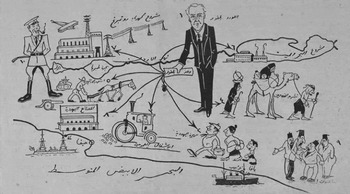
On the fifteenth anniversary of the Balfour Declaration, 2 November 1932, the front page of the Palestinian Arab newspaper Filastin featured a rather unconventional map of the homeland. At the center stood Lord Balfour holding Britain's declaration of support for the establishment of a Jewish national home in Palestine. The caption read: “Balfour and the woes inflicted on Palestine by his fateful declaration.”Footnote 1 From the rolled-up document in Balfour's hand ran seven arrows, each pointing to an aspect of Zionist encroachment. In part, the cartoon depicted themes that by then had become familiar in the Arab press—of Jewish immigrants arriving at Jaffa port, and dispossessed Arabs migrating out across the deserts to the east. But more surprisingly from the perspective of contemporary scholarship, most of the map was taken up by mechanized technologies: the Dead Sea potash works, the hydroelectrical powerhouse by the Sea of Galilee, factories on Haifa bay, and tractors tilling the coastal plan below. In this way, the cartoon puts the finger on a neglected fact of Palestine's history: that the production of a Jewish national economy, guided and supported by an Anglo-Zionist vision of technocapitalist development, was essential to making modern Palestine and marking it out as a Jewish national space.
The considerable scholarly and political attention and contention that surrounds the topic has resulted in a vast and diverse literature on Palestine under British rule (1917–1948). For all the diversity, however, most of the literature is structured around a set of shared assumptions, the most important of which is the stress on the creeping legal dis/possession that gradually gave over control of the area to the Zionists. This story begins with the Balfour Declaration, which according to Anita Shapira, for instance, “belongs to an era in which a handful of statesmen in smoke-filled rooms decided on the fates of peoples and states and how to divide up declining empires, with no participation by the media or the masses.”Footnote 2 Indeed, the famous “iron cage” in which the Palestinians came to find themselves, according to Rashid Khalidi, was made from precisely such a political-legal mesh. The 1917 Balfour Declaration is central to this narrative, as the document that chartered Palestine's course. Virtually all histories produced since the 1990s highlight the declaration's fateful distinction between Jews, to whom it granted national rights, and “non-Jewish inhabitants,” who were accorded only “civil and religious rights.” This despite the fact that Jews at the time made up only 10 percent of the population and the overwhelming majority of the remainder consisted of Palestinian Arabs.Footnote 3 For example, James Renton writes that the Balfour Declaration “became the basis for the British Mandate for Palestine, which, in turn, enabled the birth of the Jewish state almost thirty years later,” and “led Palestine into one of the most bitter conflicts in modern history.”Footnote 4 The story's subsequent coordinates are made up of the White Papers of 1922, 1930, and 1939, and the emergence of the idea of partition, born of the 1937 Peel Commission and given international legal sanction with the UN partition resolution of 1947.Footnote 5 Three decades on, the account continues, the political course charted by the Balfour Declaration culminated in the Palestinians’ near-total political and physical dispossession in the 1948 War and the creation of the State of Israel. Explanations for the apparent pro-Zionist bias of British policy have cited attachment to the Bible and messianic Christianity,Footnote 6 imperial realpolitik,Footnote 7 and/or racialized notions of Jews and Arabs.Footnote 8 Whatever the motive, most scholars see British policy primarily as a function of incompetence and prejudice. Tom Segev, for instance, writes, “No real national interest dictated support for Zionism.” Instead, “the mystical power of ‘the Jews’ overrode reality.”Footnote 9
This article does not dispute that the history of the Palestine Mandate is to a large degree a history of Palestinian dispossession, or that it manifested juridically and was motivated in part by the kind of considerations and biases just mentioned. It does, however, challenge the standard account's assumption that the Balfour Declaration overdetermined the history of mandate Palestine, such that the relations of power flowed directly from the writ of that document, or any unworldly dogma, prejudice, or ideology that may have been attached to it. The following tells a familiar story of evolving power relations, but does not regard it primarily as the function of chance, prejudice, or written proclamations, but rather of the crystallization, over the course of the 1920s and early 1930s, of a Zionist-dominated political-economic order centered on a bounded Palestinian territory and economy. My central argument is that the ideas contained in the Balfour Declaration did not transform Palestine directly; they depended on material and discursive vehicles for their implementation. And those vehicles, as I will explain, ended up influencing the end result as much as, if not more than, the ideas as they were originally expressed using only paper and ink. In other words, the focus here is on the process of mediation that translated and transformed the declaration's ideas into reality. This mediation involved the dispersal of agency, beyond a text and its authors, over a range of human and nonhuman actors.Footnote 10
In order to understand that process, and make its structural logic visible, we must attend to the ways knowledge and power, as part of being constituted, take material forms.Footnote 11 Specifically, I will focus on the hydroelectrical megaproject (depicted at the top left of the cartoon below) that was conceived and built in Palestine in the course of the 1920s, and show that this project was one of the most important mediating vehicles between text and reality. The power station was the centerpiece of a countrywide electrification concession that the British granted to the Russian Zionist engineer Pinhas Rutenberg in 1921. This large-scale technological system was central to the making of modern Palestine as a precisely defined geographical-political entity, because, first of all, the station's technical blueprint played a significant role in determining Palestine's borders: the requirements for electricity generation determined the northern and northeastern borders, and the high-tension distribution mains traced out much of the rest. The technical scheme was instrumental in making it possible to imagine a precisely defined Palestine, while the electricity system, upon completion in 1932, constituted the first material correlative of that imaginary. Moreover, conceiving of and building a national grid created not just borders, but also “Palestine” as a precisely bounded political and economic entity, that is to say, a legible, nationally scaled territory with a population, topography, natural resources, and various other quantifiable and calculable properties. In short, the power system was essential in shaping out Palestine within the larger agendas of technocapitalist colonial development and Jewish national politics. The system, for its part, was possible only because of its central role in the Zionist gambit to organize a viable political and economic national entity within that technocapitalist framework. Thus, Zionism and the power station enabled and produced each other, as well as modern Palestine.
Finally, in order to make sense of the powerful influence of the power station, Palestine is reintroduced to the history of late British colonialism, and the imperial scale-making project that saw the creation of colonial state spaces all over the non-West.Footnote 12 As we will see, the spatialization and scaling of Palestine was guided by an Anglo-Zionist vision for the territory as a staging post for intercontinental trade between Asia, Africa, the Middle East, and Europe; a captive market for British goods; and as a productive center in its own right, exporting minerals and agricultural produce. The vision and attendant practices that guided the making of modern Palestine were found all over Britain's non-Western sphere of influence.
Front-page cartoon, Filastin, 2 Nov. 1932.

The term technocapitalism is central to the process that this article describes. It is used to get at the importance of scale-making as an active political process that continuously shapes and is shaped by capitalism's socio-technical networks, which themselves operate on a variety of interconnected scales ranging from the global to the local. As we will see, this process was capitalist, because the Zionist claim on Palestine was grounded in a mission to organize the area as an economically viable territory—that is, as an area of production and consumption, and crucially also as an entity locatable in the global circulation of capital and commodities.Footnote 13 The prefix “techno-,” meanwhile, serves to highlight that this capitalist proposition was underpinned by a pervasive belief in the limitless ability of science and technology to make all lands productive.Footnote 14 The concept of technocapitalism builds on two conversations that so far have gone on largely in isolation from each other. The first is mainly among geographers about the production, representation, and performance of space and scale, especially in the context of capital accumulation and circulation.Footnote 15 The second conversation that I draw on is dominated by sociologists and concerns the making of scientific authority, knowledge, and practice.Footnote 16
More concretely, I extend Khalidi's concept of an “iron cage” trapping the Palestinian Arabs beyond its metaphoric sense. Although most Palestinians were not literally incarcerated, they all came to operate on a playing field whose increasingly Zionist-made confines were made largely out of iron and copper alloys. While the electrical works, like Zionism in general, were justified in a language of egalitarian universalism, the system and the “free-market” capitalist system it created in Palestine generated familiar kinds of political and economic unevenness, mainly through the production of a scalar order and particular social and geographical division of labor. Concretely, it conjured a political-economic order based on a Jewish national scale in which the Arabs were expected to supply the menial labor power in return for the economic development that was to lift all boats.Footnote 17
THE TWOFOLD DUTY OF THE PALESTINE MANDATE
In April 1920, at the San Remo Conference, Palestine was conferred on Britain as a League of Nations mandate, along with the obligation, as stated in the League Charter, to “provide for the progressive development” of the area until it was able to “stand alone.”Footnote 18 France assumed the same tutelary role in the areas north of Palestine, today's Lebanon and Syria. The San Remo Agreement, however, did not define the borders between the British and French areas, but left it to the mandatories to settle the matter through bilateral negotiations.Footnote 19 The significance of this will become apparent.
The Palestine Mandate, as we saw, was set apart from the others by virtue of the Balfour Declaration, in which Britain expressed its support for “the establishment in Palestine of a national home for the Jewish people.” In a since much-debated qualification, the Balfour Declaration, which would later be incorporated into the Palestine mandate charter, also guaranteed the “civil and religious rights” of Palestine's “non-Jewish communities.”Footnote 20 To most later observers it has seemed obvious that this split responsibility—often referred to as a “twofold duty” or “the dual mandate”—of ensuring the wellbeing of the population as a whole, while also promoting the establishment of a national home for the small Jewish minority, contained a fundamental contradiction. But neither the British nor the League of Nations saw it that way initially. “The practical consequence of the decision at San Remo,” reported the Times, capturing the zeitgeist, “will be that Jewish energy and capital will begin to flow towards Palestine to be devoted to the development of the country and to the benefit of all its inhabitants.”Footnote 21 Along similar lines, Colonial Secretary Winston Churchill stated in a parliamentary debate in 1922, “By their industry, their brains, their science, their money [the Jews in Palestine] must create new sources of wealth … [to] benefit and enrich the entire country.”Footnote 22
Most later scholars have dismissed such sentiment as a mere pro-Zionist fig leaf. Yet there is good reason to take Churchill's statement, consistent with innumerable others spoken by British politicians, officials, military men, technical consultants, and journalists, seriously: support for Jewish immigration was understood as a developmental policy, not contradictory to general Palestinian wellbeing, but complementary to it. Moreover, the duality at work in Palestine—between support for Zionism and the obligation to ensure the wellbeing of the Palestinians—was a local manifestation of an empire-wide tension between the widely felt obligation to both bring progress and civilization to the non-Western world and safeguard indigenous groups from the social ills that development, if gone unchecked, would bring.Footnote 23 This tension was the subject of numerous conversations among the “new imperialists” of the early twentieth century, such as Joseph Chamberlain, Alfred Milner, and Leo Amery, and was perhaps most famously treated in Frederick Lugard's 1922 essay, The Dual Mandate in British Tropical Africa.Footnote 24 It is a curious fact of the two bodies of literature—the one on late colonialism and the emergence of the new world order; the other on the Palestine mandate—that the term “dual obligation” evokes such instant recognition among scholars in both fields, yet are never linked. After all, as Arthur Balfour once observed regarding his declaration on Palestine, the idea of “planting a minority of outsiders upon a majority population, without consulting it, was not calculated to horrify men who worked with Cecil Rhodes or promoted European settlement in Kenya.”Footnote 25
Parallel with the emergence of this “new” imperialism, the notion of development also underwent a significant transformation, whose central characteristics, according to Joseph Hodge, consisted of “the rising agency of scientific knowledge, technical expertise, and state planning.”Footnote 26 In practice, this manifested in efforts of unprecedented scope to lay the material foundations of modern economies. More precisely, the promotion of infrastructural technologies—waterways, roads, bridges, ports and airports, railway lines, and electric grids—emerged at the heart of the British Empire's development mission.Footnote 27 India saw the first application of this new development doctrine, starting in the 1830s and with greater intensity after the 1857–1858 Mutiny.Footnote 28 With the Scramble for Africa, beginning in the mid-1870s, the same approach was applied there. The British and the other European governments designed wildly optimistic schemes in the interest of promoting economic growth: a railway in the British Lagos Colony would be a boon to the entire Niger region; the Aswan dam would turn the desert of Upper and Middle Egypt into the largest cotton field in the world; and the Uganda Railway would open up the entire eastern part of Africa to the civilizing influences of technology and commerce. Like in India in the latter half of the nineteenth century, railway construction was intense; by 1907, the length of the British-built railway lines in Africa exceeded 10,000 miles.Footnote 29
The emphasis on facilitating movement should come as no surprise, since this vision was built on an ideal—if never a reality—of the unrestricted flow of goods on the global market.Footnote 30 E. A. Brett writes that the British were “obsessed with the need to create an export economy which would draw [their colonies] directly and profitably into the British system of international trade.”Footnote 31 The British were not alone in embarking on a civilizing mission, based on the belief that scientifically guided development work would serve civilization and the global economy. By the end of the nineteenth century, French, German, and Dutch imperialists had begun scavenging the earth for untapped economic potential, and found it all over Indochina, Africa, the Caribbean, and the Middle East. Common to all these efforts was the belief that centralized, large-scale engineering projects would constitute the motor of economic development, which in turn would bring about social and moral development.Footnote 32 Centralized, large-scale technological systems had come to dominate technological thinking in the metropole too, not least in the area of electrification. In 1926, the British Parliament adopted the Act to create a Central Electricity Board for the purposes of creating and running a National Grid. Previously a uniquely decentralized market designed to protect local autonomy, Britain's electricity system was consolidated in the CEB to enable a small number of large and efficient power stations to supply the bulk of the electricity.Footnote 33
While some scholars of Palestine have mentioned these ideas in passing, very few have reckoned with their full significance. The most notable exception is Jacob Norris, whose recent work pays close attention to British developmentalism in Palestine, which he places in the context of an “ideology of colonial development” that guided British conduct throughout its global sphere of influence. Norris writes, “A pragmatic and self-interested view of Jews as agents of development did far more to shape British support for Zionism than any lofty notions of humanitarianism.”Footnote 34 Consequently, British Palestine policy should not be understood as blind support for Zionism. Rather, the goal of economic development by means of centralized, large-scale infrastructural projects was of a piece with Britain's overall imperial strategy at the time. Here I build on Norris’ work on Palestine, mainly by moving the inquiry beyond a political and intellectual history of British colonial policy to focus on the character and scope of the actual technical projects that were undertaken. Adding perspectives from Science and Technology Studies and Critical Geography makes legible the practical implementation of this ideology on the ground. This also allows for a greater sensitivity than a conventional political history to the powerful dynamic of coproduction of policy and practice, and the relations of power that were shaped in the back-and-forth.
TRIUMPH OF THE ENGINEER
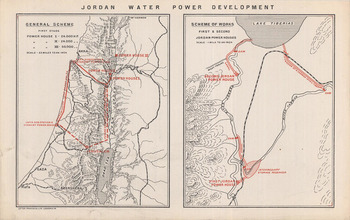
In December 1920, eight months after San Remo, the Russian-born Jewish engineer Pinhas Rutenberg applied to the British mandatory government in Palestine for an exclusive concession to electrify the country. He enclosed a carefully prepared sixty-page proposal that envisaged lining the banks of the Jordan River with fourteen hydroelectrical power stations that would draw on the motive force of the entire riparian system centered on the Jordan River, from its northern tributaries to its efflux into the Dead Sea.Footnote 35 The first stage of Rutenberg's scheme called for the construction of a power station at the confluence of the Jordan and Yarmuk rivers, a few miles south of the Sea of Galilee. By harnessing the motive force of the 50-meter level drop between the lake and the confluence, Rutenberg estimated that the station could generate 100,000 horsepower, which was fully ten times the estimated present demand, according to his own figures. The current would then be distributed throughout the country by a large high-tension circuit. It would run due west from the power station to Haifa and then fall off south along the coast to Tel Aviv, from there it would make a right angle inland and travel across to Jerusalem before returning north along the Jordan Valley, coming full circle. On the way, it would pass by most of the major population centers. Beisan, Haifa, Jaffa, Jerusalem, and Jericho were slotted to receive electricity at the first stage, and lines would later extend from Jerusalem to Beer Sheva and from Jaffa to Gaza.
The plan also involved large-scale irrigation. The availability of large amounts of cheap electricity would enable more farmers to install electric pumps, besides which at least 19,000 hectares of land adjoining the first powerhouse would be irrigated directly from the works.Footnote 36 It was a multi-purpose scheme of heroic proportions, conceived and subsequently built according to a capitalist development model whose origins David Ekbladh has located in the United States and the Tennessee Valley Authority.Footnote 37 Rutenberg's scheme, however, predated the TVA by about a decade and differed only in that, by any reasonable estimate, it stood to generate and distribute electricity wildly in excess of demand for the foreseeable future.
Rutenberg's proposal elicited considerable excitement among British officials. In his dispatches, Palestine's newly appointed high commissioner, Sir Herbert Samuel, stressed the benefits that he expected the project to bring to agricultural and industrial development and the need to “render every assistance to Mr. Rutenberg.”Footnote 38 London echoed the excitement. The head of the Middle East Department of the Colonial Office, Sir John Shuckburgh, wrote to Colonial Secretary Churchill, “The Department regard the early initiation of the Rutenberg scheme as a potent factor, if not the most potent factor toward the successful development of Palestine.”Footnote 39
The British excitement was not for a lack of alternatives. By the end of World War I, there were several contenders for Palestinian electrification contracts. In 1914, the Ottomans had granted a concession for electrification and irrigation to an Ottoman national of Greek aspect, Euripides Mavrommatis, who wrote to the British after the war claiming his rights under the prewar agreement. At the same time, the British received applications for various local electrification projects from Syrian and Palestinian Arab businessmen and municipalities, including those in Jaffa, Haifa, Ramallah, and Nablus.Footnote 40
There are several reasons why the British preferred Rutenberg's proposal. First, there was the man himself. Rutenberg was born in 1879 in present-day Ukraine and received his training at the prestigious Polytechnic Institute in St. Petersburg. During his student days he joined the Socialist-Revolutionary Party, and after the abortive Russian Revolution of 1905 he was forced into exile. He settled in Italy, where he devoted himself to large irrigation projects. Rutenberg returned to Russia after the revolution in early 1917 and served as deputy governor of St. Petersburg (then Petrograd) under the short-lived Kerensky government. He was a vocal proponent of taking aggressive action against the Bolsheviks and when they took power in October he was forced into exile once again. His career as a socialist revolutionary over, Rutenberg turned his productive energies to Palestine and Zionism.Footnote 41 Both his experience in Italy—a country known at the time for its advanced irrigation techniques—and his anti-Bolshevism enhanced his standing with the British.Footnote 42
Maps of the hydroelectrical scheme at the confluence of the Jordan and Yarmuk rivers, south of the Sea of Galilee (left), and of the high-tension electric distribution mains (right). Courtesy of the Israel Electric Corporation Archives, IECA 0359–238.

But the most important reason why Rutenberg's scheme so excited the British, compelling them to grant him an exclusive countrywide scheme over all the others, was British technological fashions, most especially the preference for what Daniel Headrick has called “projects of gargantuan dimensions.”Footnote 43 The great faith placed in the “civilizing potential of technology,”Footnote 44 and the strong preference for centralized, large-scale projects had a decisive influence on the reception of Rutenberg's project. The schemes tendered by Mavrommatis and the local Palestinian business interests, by contrast, were modest in scope, involving limited street lighting schemes by means of fuel-powered generators and localized grids. Rutenberg's proposal, on the other hand, exhibited all the characteristics that were liable to make it attractive in light of British technological fashions: it relied on waterpower, was technologically centralized, and boasted a monumental scale. As a result, virtually all British officials were content, if not positively excited, to back the scheme.
Some officials went so far as to assert that Rutenberg's system had the ability single-handedly to ensure that the dual obligations of the mandate would be compatible: “The successful inauguration of Mr. Rutenberg's schemes,” Major Hubert Young at the Middle East Department minuted in August 1921, “will do more than anything else to pacify Palestine, facilitate immigration, and develop the country.”Footnote 45 When the British first submitted the scheme for review in February 1921, the consulting engineer John Snell reported back, “The conception is one which tends to arouse one's enthusiasm from an Engineering point of view.”Footnote 46 What better way was there to satisfy both Arab and Jew, asked Colonial Secretary Churchill rhetorically in Parliament in 1922, than “to entrust to the Zionists the system of irrigation which would fertilize new lands, new territories, and [the generation and distribution of] electrical power, which would supply the means of employing the Arab population.” By doing so, he argued, the Zionists would bring “a higher economic and social life” to Palestine. As for the Palestinian Arabs: “Not in a thousand years would they have taken effective steps for the irrigation and electrification of Palestine.”Footnote 47
A PALESTINE FOR THE FUTURE
Churchill's words followed from the new approach to the non-Western world, including Palestine, outlined above, the primary concern of which was the making of viable economic units. To stress the importance of this colonial vision runs counter to the bulk of scholarly and popular accounts, which have tended to locate the emergence of modern Palestine in the agreements and arrangements concerning the area after World War I and the fall of the Ottoman Empire. It is true that as a territorial designation “Palestine” is ancient. It dates back at least to Roman times and has been used on and off since then to designate various portions of the eastern Mediterranean coastal plain between Sidon and the Sinai and its hinterland. Haim Gerber has shown that elements of a local Palestinian identity were in evidence among Arabs as early as during the Mamluk era.Footnote 48 Yet, for all that, by the time of British mandatory rule, Palestine had never been precisely defined, much less administratively unified. During the late Ottoman Empire the term was commonplace but vague, and the area was governed under a fluctuating set of administrative districts.Footnote 49 The European powers too, including the British, had only a vague sense of Palestine, even after interest in the Holy Land increased in the latter half of the nineteenth century. Encyclopedia Britannica from 1911 states that Palestine is “a geographical name of rather loose application.”Footnote 50 The entry does go on to attempt a definition, but as Bernard Lewis has noted, it “differs in several important respects from that laid down for the British mandate only a few years later.”Footnote 51 Nor did the Jews have a better sense of Palestine's exact boundaries, even long after the emergence of Zionism.Footnote 52 Through the end of World War I, the most common geographical reference in Europe and among Jews was the Biblical designation “from Dan to Beersheba.” This was vague indeed: besides only giving a northern and southern point, there was no consensus at the time regarding the true location of Dan.Footnote 53
Historians of Palestine have read the territory back into the many agreements made during World War I. But in fact none of those agreements, including the Husayn-McMahon Correspondence and Sykes-Picot, contains the name “Palestine,” much less identified it as a desirable geographical concept around which to create a political entity. And arguably the borders proposed in these and other wartime agreements and arrangements are recognizable as Palestine only from the perspective of a future in which Palestine does indeed exist. The only one among the wartime declarations and agreements that explicitly mentioned Palestine was the Balfour Declaration of 1917, as we saw earlier. But it should also be noted that the British wartime pledge of support for “the establishment in Palestine of a national home for the Jewish people” did not assume that Palestine itself (whose borders were again not specified) would be constituted as a political unit, though that is invariably how it has been read by later observers.Footnote 54 Finally, many of the postwar proposals concerning the Middle East, including those of the 1919 King-Crane Commission and Amir Faysal of the Syrian Arab Government, rejected outright the idea of a separately administrated Palestine.Footnote 55 Neither can it be said that Palestine was created in an effort by the British to safeguard the Suez Canal. To be sure, the need to protect the Canal was a vital consideration, but this imperial rationale did not provide a sufficient motive for the establishment of a British-ruled Palestinian territory, as the British themselves acknowledged at the time.Footnote 56 Imperial rationale is even less helpful as an explanation for the creation of the precise boundaries of that territory.
In other words, the existing explanations for the making of modern Palestine provide important and surely necessary factors, but neither on their own nor together do they constitute a sufficient explanation. The salient presence of “historic” Palestine in the historical consciousness of our own time has arguably prevented us from seeing that a more precise guiding logic is needed to explain its coming into being. That logic was technocapitalism, and within it Pinhas Rutenberg's hydroelectrical megaproject.
The earliest applications of this technocapitalist logic appeared toward the end of World War I. In 1918, David Ben-Gurion and Yitzhak Ben-Zvi, later the first prime minister and second president of Israel, respectively, co-authored the book Eretz Israel. Written in Yiddish and published in New York, it provided a meticulous historical account of “the Land of Israel” from ancient times. Yet, they argued: “If we want to determine the borders of Eretz Israel today, especially if we see it not only as the past domain of the Jews but as the future Jewish homeland, we cannot consider the ideal boundaries that are promised to us according to the tradition, and we cannot be fixed to historic borders that have changed many times and that have evolved by chance….”
Instead, they proposed that Palestine's borders be drawn according to “all of the Land of Israel's natural-physical signals” of the present, and its ”cultural, economic and ethnographic conditions.”Footnote 57 The same shift was also manifest in the pages of Palestine, the British Palestine Committee's newspaper, and The Round Table: A Quarterly Review of the Politics of the British Empire, a journal under the sway of the new imperialist statesman Alfred Milner and described by Jacob Norris as “the official mouthpiece of the new imperialist movement.”Footnote 58 During the war, Milner was a key member of Prime Minister Lloyd George's War Cabinet, and in 1919 he was appointed colonial secretary. This “apostle of empire” was also one of the central forces behind the Balfour Declaration.Footnote 59 In 1918, an article in The Round Table argued, “Palestine has … an economic future; and in making the most of its economic possibilities the Jews will not merely lay a secure foundation for their own national life, but will enrich the world by the addition of one more to the number of productive territories.”Footnote 60 Such notions were ubiquitous among government and colonial officials at the time. In his autobiography, the prominent journalist and politician Leopold Amery wrote that his interest in Zionism “was at first largely strategical,” but that “it was not long before I realised what Jewish energy in every field of thought and action might mean for the regeneration of the whole of that Middle Eastern region….”Footnote 61 Both quotes are also indicative of the close interlinking of commerce and civilization that was integral to “new” imperialism and that operated simultaneously on multiple scales: productivized by the Zionists, Palestine would civilize its natives, spur regional development, and boost the global economy.Footnote 62
In the fall of 1918, in preparation for the Paris Peace Conference, the Zionist Organization began studying the question of Palestine's borders more closely. Tellingly, they did not turn to Bible scholars or prominent Jewish historians for expert consultations, but rather to the agricultural engineer and citriculturalist Shmuel Tolkowky and the famous Palestinian agronomist Aaron Aronsohn, discoverer of wild emmer. Aronsohn's advice in particular had a dominant influence on the proposal that the Zionists finally presented at Paris in February 1919. It was based exclusively on economic considerations that, in the words of the Zionist proposal, would ensure Palestine's ability to “sustain a large and bustling community, that can better carry the burden of a modern government.” The proposal, which was the most detailed and carefully prepared vision for the area by far, emphasized certain “methods of economic development,” such as “drainage, irrigation, roads, railways, harbours and public works of all kinds,” requiring “modern scientific methods,” and a population that was “energetic, intelligent, devoted to the country, and backed by large financial resources that are indispensable for development.” In fact, every section of the border was justified in terms of technocapitalist development. The northern border was drawn to include sufficient sources of water for electrification and irrigation; the eastern plains of the Jordan River should bound Palestine to the east, the proposal asserted, since with the right technological tools and knowhow they could be cultivated. Although not strictly relevant to the border issue, the proposal also mentioned the planned deep-sea free trade port in Haifa.Footnote 63 In effect, then, the Zionist border proposal promised a complete technocapitalist package: natural resources, the technological tools and knowhow to exploit them, and the means to deliver them to the global market.
In this way, the Zionist vision for modern Palestine was based on a spatial reconfiguration that refashioned the area according to a capitalist scalar logic. The agglomeration of a number of local markets into a national economy would feed into a global market of production, circulation, and consumption of capital and commodities.Footnote 64 In 1929, Sir Hugo Hirst, the founder and chairman of the General Electric Company in Britain, was interviewed regarding Rutenberg's work in Palestine, in which the GEC had recently become a substantial investor. Hirst stated that the electrification work had made possible “a bright economic future for Palestine, with the newly-started Haifa Harbour as centre, with the oil pipes from Mosul, and with roads as well as other means of communication connecting Palestine to all the centres of the East.”Footnote 65
For the same reasons that the Balfour Declaration lacked the capacity to overdetermine material realities, however, the Zionist proposal at Paris did not have the power to dictate the borders of modern Palestine. But it played an important part in shifting the conversation away from a vision centered on the past to embrace a technocapitalist rationale. This, in turn, paved the way for Rutenberg's project. Although not explicitly mentioned in the proposal, electrification was the topic of many conversations in early 1919. Rutenberg, who happened to be in America during World War I and would sometimes join Ben-Zvi and Ben-Gurion in the New York Public Library during their work on Eretz Israel, was engaged as an expert at Paris and gave testimony that the “development of electricity and an irrigation network in Palestine was a precondition for every plan for industrial and agricultural development.”Footnote 66 As we will see, once the shift to technocapitalism had taken place, his proposals became critical to the precise border delimitations and the overall reconfiguration of Palestine as a capitalist and Jewish national space. This is not at all to say that the past ceased to matter. It remained the most important overall justification for the Zionist project. Rather, the shift occurred on the level of designing the material reality of the Jewish national home. It was the vision for its future, not its past, which gave Palestine its precise shape and character. In this, Zionism was of a piece with myriad nationalist movements, positing both an unbreakable continuity and a radical break at the core of the movement.
HYBRID CAUSATION IN THE DESIGN OF THE ELECTRICAL SYSTEM
When Rutenberg first presented his hydro-project to British officials in the summer of 1920, the borders of Palestine were only roughly conceived, much as they had been throughout its history. Before exploring how hydroelectrification became an essential vehicle for giving Palestine a precise geographical definition, we must know something about the logic that governed the technical scheme onto which the borders were mapped. The choice of the power source (water), the location for the power plant (at the Jordan-Yarmuk confluence), and the design of the electric grid were all products of what Brett Walker has referred to as “hybrid causation,” bringing together factors from realms normally treated as separate, such as topography, economy, hydraulics, meteorology, Bedouin tribal relations, epidemiology, and the availability of survey data.Footnote 67 In fact, these factors were so closely intertwined that no obvious entry point presents itself.
For the Bedouin tribes of Beisan and the Hawran regions, south and northeast of the Sea of Galilee, these were tense times, since they were simultaneously at war with the French mandatory government in Syria and each other.Footnote 68 Rutenberg, who had begun to survey the land in the Jordan basin in late 1919, had had to depend on a British military escort to carry out his work. In early 1920, his work was interrupted by what he referred to as “the present state of war in the region of Beisan.”Footnote 69 In the short time before he was forced to abort the mission, Rutenberg managed to survey, incompletely, a small area around the southern shore of the Sea of Galilee, only a fraction of the area for which his scheme required extensive topographical and other data.
As a result of the unsafe conditions, the spotty survey data, and the water economy of northern Palestine, only one location appeared suitable for immediate construction. That was the confluence of the Jordan and Yarmuk rivers a few miles south of the Sea of Galilee, which had a number of advantages. It was part of the area that Rutenberg had first-hand experience with, and the Sea of Galilee constituted a significant natural asset as a natural water storage reservoir. Due to a number of meteorological, hydraulic, and hydrological factors (including the annual dispersion of rainfall), the ability to store large quantities of water was a prerequisite for any scheme based on waterpower. The Sea of Galilee thus served as a natural “regulating effect” for the “unregulated” flows of the surrounding rivers and presented an “exceptional economic advantage.” Among other things, the ability to regulate the flows of the rivers by means of the lake's waters made up for the incomplete survey data. Moreover, the land surrounding the confluence happened to be the spot in the area most densely settled by Jews. In addition to making land acquisitions easier, the presence of Jewish settlers would afford a certain level of physical protection to the workers and the works. For all these reasons, according to Rutenberg, the Jordan-Yarmuk confluence was the only site on which it was “possible to begin construction of a powerhouse immediately.”Footnote 70
The design of the grid, meanwhile, was complicated by the fact that present demand was far below the amount of energy that the powerhouse stood to generate. This created the challenge of deciding where the power should go in anticipation of demand instead of in response to it. In part, Rutenberg designed the grid on the basis of an assessment of future growth. It seemed safe to assume, for instance, that consumption in Jaffa and Tel Aviv would grow rapidly. But far more important in an area of negligible electricity consumption, Rutenberg's predictions ended up creating demand through supply. Together with his associates he designated certain areas as “points of intense immigration and colonization”; supplying electricity to those places was not based simply on an estimate of future demand, but on a desire for the construction of energy-consuming activities, such as industry, at those locations. The foremost example in this regard was Haifa, a town that at the beginning of the mandate had little by way of industry. With the vision in mind of making Haifa into a major industrial and international trading hub, Rutenberg's plan called for sending 1.6 million kilowatt hours there for industrial purposes. Indeed, largely as a result of this commitment, Haifa's industry was able to grow rapidly, and so was its population: from just over twenty thousand in the early 1920s to 145,430 in 1946; the proportion of Jews in the town rose significantly, to about half.Footnote 71
Moreover, by creating the distribution system as a countrywide “loop” it would be possible to create additional powerhouses throughout the country that would “later permit the transmission of [their] power to the great circuit.” Most immediately, Rutenberg foresaw the construction of several more powerhouses along the Jordan River, which justified the high-tension line running through the Jordan Valley from Jerusalem to the Sea of Galilee. He also mentioned plans to build an installation in Beer Sheba, another point he envisioned as a future center of Jewish immigration, justifying the inclusion of the town in the “great circuit.”Footnote 72 Rutenberg was explicit about the implications of his proposal: “The foregoing scheme is defining the boundaries of Palestine,” he wrote. He went on to describe the need to regulate the Jordan's flow by, among other things, building reservoirs along the length of it, and concluded: “This work cannot be accomplished on a territory that is not under Palestinian control.”Footnote 73
THE BORDERS AND THE POWER SYSTEM
Indeed, Rutenberg's proposal did have a significant influence on the definition of the borders. The northern border was provisionally set in an Anglo-French Agreement in December 1920. The final demarcation process was not completed until March 1923, at which point, as Gideon Biger observes, “The geographic principle ‘water for Palestine, access roads to Syria’ had replaced the historic biblical formula ‘from Dan to Beersheba.’”Footnote 74 Rutenberg was a constant presence during the Anglo-French negotiations; for instance, he served as an expert on the Anglo-French Water Commission, and the record makes clear that his opinion weighed heavily throughout the proceedings.Footnote 75 In 1937, in the context of another boundary discussion, Rutenberg stated to the British authorities that, in his capacity as water expert, he had “succeeded in convincing the French Authorities of the necessity to modify the Northern boundaries so as to conform with the economic and topographic requirements of Palestine.”Footnote 76 Meanwhile, all other experts, according to instructions from Colonial Secretary Winston Churchill, “should of course be conversant with the Rutenberg scheme.”Footnote 77 The British constantly and explicitly weighed their own political and military interests against that scheme, often finding, as in one example from Churchill, that advantages “from an imperial point of view” were “more than counterbalanced by the disadvantages from the Zionist [i.e., Rutenberg's] point of view.”Footnote 78
This is not to say that Rutenberg was able to dictate the border definition or even single-handedly shape the British negotiating position vis-à-vis the French. In a personal note to his superiors at a moment of frustration, the British representative on the boundary commission wrote, “I find that each individual has his own interests.”Footnote 79 Rutenberg was ultimately forced to abandon all but three of the fourteen powerhouses of his grand original vision that were supposed to run from the Litani River, in present-day Lebanon, southward through the entire Jordan Valley. Yet his scheme was no doubt a powerful influence on the deliberations. For instance, in 1923 the British succeeded in getting the French to agree to move Palestine's northeastern border to include Metulla, “because of the foothills of the Litani River,” as the Jewish Telgraphic Agency reported, “are claimed by Pinhas Rutenberg as essential to his Hydraulic project.”Footnote 80 Some of the more significant modifications made on Rutenberg's behalf included the inclusion of the entire Lake Huleh and Sea of Galilee in Palestine, as well as all of the Yarmuk Valley up to al-Hamma, in exchange for giving Syria more land in Palestine's northeast.Footnote 81 It is no coincidence, furthermore, that the three power stations that remained, and to which these and other boundary concessions were made, were ones for which Rutenberg could supply detailed technical plans, backed up by topographical, hydrological, and meteorological data. This further underscores the importance of expertise and data in settling issues of geopolitics.
Rutenberg's influence on Palestine's eastern border was no less significant. At the Cairo Conference in spring 1921, it was decided that the Palestine mandate would be split in two, designating the western territory as the fulfillment of Britain's pledge to the Jews in the Balfour Declaration and the eastern territory as the fulfillment of Britain's pledge to the Arabs in the Husayn-McMahon Correspondence. The border between the territories was roughly imagined to run along the Jordan River but was not defined until the following summer, shortly before being submitted to the League of Nations for approval in September 1922.Footnote 82 As in the case of the northern border, Rutenberg was actively involved in the process of delineation.Footnote 83 As Major Young of the Colonial Office explained, when the border was defined in the summer of 1922, it contained one major irregularity in that “the triangle of land between the Yarmuk and the Jordan (which is, of course, really across the Jordan and should therefore, by any ordinary acceptance of the term, lie within Transjordan) was retained for Palestine,” because “it was necessary for the purposes of the Rutenberg Concession.”Footnote 84
PALESTINE AND THE SYSTEM: THE COPRODUCTION OF SOCIAL SPACE
As we have already seen, the forward-looking vision for Palestine that Rutenberg's project embodied had a receptive audience in Britain. This was true not least of the popular science publications. For example, a lengthy article on Rutenberg's scheme in the Engineering News-Record from 1922 stated: “The enterprise is of vast extent, covering practically the whole length of Palestine from north to south and the major portion of its width, from the Mediterranean to the eastern border of the Jordan valley.”Footnote 85 These are interesting words, given that they assume a precise length and width at a time, we recall, when Palestine did not in fact have precisely defined boundaries. The demarcation of the Palestinian-Transjordanian border was still a couple of months away, and the Anglo-French border demarcation would not be completed for another eight months. In fact, it is in connection with Rutenberg's scheme that references to a precisely defined Palestine first started to emerge. Thus we see how the power station and grid shaped out the contours of something that had in fact not existed before: a clearly defined Palestinian territory. Furthermore, the projected grid did not simply coextend with the pattern of Jewish settlement at the time, the famous N-shape.Footnote 86 The works delineated something more than that: not an ethno-national community, but a country, a state, and an economy. In part, this was because Rutenberg was a systems man; like Thomas Edison in New York, Samuel Insull in Chicago, and Charlez Merz in London, he built big.Footnote 87
The electrical system's role in creating Palestine was not simply or most importantly a matter of borders. It also contained within it a vision for the character of the territory, whose most telling expression was found in its projected scale. The first power station—the only one that was ever built—was expected to generate fully ten times the demand for electricity at the time. “The fundamental principle underlying the plans of the electric part of the work,” Rutenberg had explained in his initial proposal from December 1920, “has been, that … a relatively considerable quantity of energy should be supplied to centres chosen as points of intense immigration and colonisation, even before there is a demand for such energy. […] Owing to this consideration, the distribution has been calculated on a large scale—even at the risk of increasing the expense of the first establishment—in order to make possible, in the future, a development worthy of the enterprise in question.”Footnote 88
The article in the Engineering News-Record went on to discuss the grand scale in relation to Palestine's present and future: “The conditions in the country at present make it impracticable to execute the whole project at once, but it will have to be constructed in successive stages, in a measure keeping pace with the upbuilding of the country.”Footnote 89 Consequently, the power system conjured a unified territorial scale where one had not existed before. It also provided it with a social and economic character that bore little relation to the situation in Palestine at that time. In other words, the system was not a scheme for the present, but for a particular future: it was a countrywide, not to say national, technological system, whose ultimate realization depended on the ultimate realization of an industrialized Palestine, capable of mounting energy demand at civilized levels for the economy and the home. Its technical blueprint staked out an end goal that was essential to calling modern Palestine into being, both as imaginary and material reality.
The power system's function in this process was twofold. On one hand, its output was effectively constituted as a scientific metric that indexed Palestine's degree of civilization.Footnote 90 As Philip Dawson, the Conservative MP and leading expert on electrical engineering, claimed at an address to the Anglo-Palestine Club in London, the “small field for the use of electricity” was directly related to “primitive methods of agriculture” and “inefficient labour.”Footnote 91 On the other hand, the power system was also seen as the motor of Palestine's development. It would provide an impetus for extensive construction and the mobilization of labor on an unprecedented scale. The popular press echoed the sentiment that we have already seen examples of in government circles, that British support of the scheme, in the words of the Engineering News-Record, was motivated by the conviction that “its successful execution will increase the general prosperity of the country.”Footnote 92 According to Rutenberg himself, exploiting the motive power of Palestine's rivers was “the best and the only true stimulant for the development of agriculture and industry.…”Footnote 93
In 1930, a writer for the Straits Times noted that there was still reason to doubt whether Rutenberg's megaproject was appropriately scaled for the as yet underdeveloped Palestine, but immediately went on to list what the author called Palestine's “potential possibilities.” Exploitation of the Dead Sea minerals was imminent, there were calls for a Jordan Valley railway link to Haifa, and there were plans to divert the oil from Mesopotamia to that city from the Persian Gulf. The development of a deep-water port in Haifa would itself be a significant consumer of electricity. “Nature has contrived this steep fall of the waters of the Jordan and the Yarmuk, on a site which would be remarkably convenient as a distributing centre of electric supply for all the developments which I have mentioned,” the writer concluded, underscoring the centrality of the powerhouse to the developmental vision for Palestine, but also for the wider Middle East and the British Empire.Footnote 94 Rutenberg himself often referred to his powerhouse on the Jordan as “the nerve centre of the economic life of Palestine.”Footnote 95
THE PRODUCTION OF JEWISH NATIONAL SPACE
As we have seen, the power system embodied assumptions about science, technology, and economic development that it passed on to the territorial entity it participated in producing. Hydropower was at the center of the process that made Palestine legible and thus accessible to British colonial state making, capitalist world trade, and Jewish settler-colonialism.Footnote 96 In this way, the power system created a means of grasping Palestine as a national whole, and it was thus intimately bound up with the production of not only a national market, but also Jewish national space. This process was closely linked to the developmentalism I outlined earlier, but was not reducible to it. The area around the projected site of the powerhouse was renamed Tel Or (“Hill of Light,” in Hebrew), and Rutenberg's works there were the subject of some interest in both the Hebrew and British press at the time. The latter saw in them the embodiment of Zionism's promise, as when the Daily Chronicle stated in 1921: “Work of the sort that is to be carried out in the Jordan valley are good examples of the great benefits that the Zionists can bring to the entire country, including the Arabs.”Footnote 97
As construction at Tel Or got underway in 1927, several articles appeared reporting on the abilities of Jewish workers to handle the technical tools and carry out their tasks in spite of the inhospitable climate. An essential component of evaluating the hydroelectric works was the kind of (productive) changes it brought about in the land. In 1929, the Times reported that while as many as 90 percent of the Arab inhabitants of the area suffered from malaria, the Tel Or workers’ camp had recently reduced its proportion of afflicted from 17 to 1.4 percent. “What has always been a plague spot is now a place where men enjoy real health and happiness; science and sensible feeding has done this.…”Footnote 98
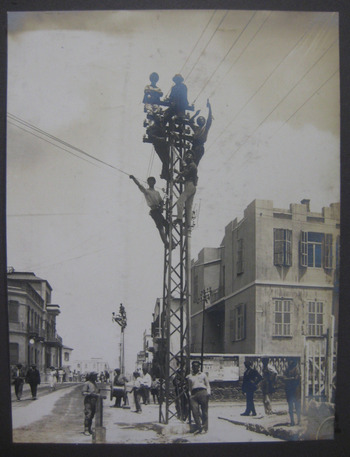
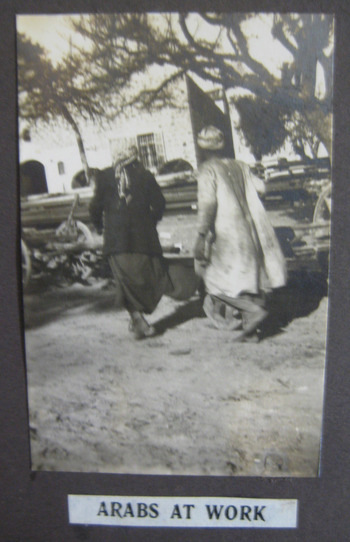
With respect to Palestine's Arabs, an article in Popular Mechanics from 1930 suggested, “The benefits to be derived from the introduction of machinery should also reach the Arabs, who are expected to develop into good laborers.”Footnote 99 Through such articles, the power system came to play an important role in equating Zionism with economic development and civilizational progress. Again, this was an image that Rutenberg himself was actively promoting, such as in his description of the powerhouse in his much-publicized inaugural speech in 1932, as a “permanent source of light and power, of culture and civilization.”Footnote 100 By the same token, the division of labor that this implied relegated the Arabs to an afterthought, the mostly reluctant beneficiaries of Zionist productivity. They were represented at nearly all electrical worksites in Palestine, a fact that was carefully documented and publicized by the electricity company itself as proof of the productive and pacifying effects of the work. Yet no Arabs held skilled positions, and the depictions of Jewish and Arab workers respectively perfectly captures the tension between the universal and egalitarian principles in which this and other capitalist ventures were couched and the division of labor that it engendered, which in turn produced socioeconomic and ethnic differentiation. For example, the 1932 Blue Book for Palestine divides labor into two categories, “European,” and “Asiatic,” meaning Jewish and Arab. According to its figures, there were no “Asiatic” electricians of either the first or second class, which also happened to be one of the highest paid occupations on the list.Footnote 101 This represented another manifestation of the empire-wide relationship between white settler communities and indigenous peoples, where the former were meant to serve as motors of development and models for imitation for the latter's benefit. “Electricity has two names in the Holy Land,” Popular Mechanics informed its readers. “One is ‘hashmal,’ mentioned in Ezekiel … and the second name is ‘rutenberg.’”Footnote 102 Clearly, kahraba, the Arabic word for electricity, was not part of the popular science vocabulary.
THE POWER SYSTEM AS ZIONISM'S MATERIAL CORRELATIVE
It was not only in the European imagination that the work of building the powerhouse on the Jordan took on a metonymic function, symbolizing Zionism's building of a modern Palestine, and where the particular Palestine that was created was bound up with the production of Jewish national space.Footnote 103 In the Zionist imagination, too, the powerhouse had tremendous significance for constituting the heart of the technological system that gave the Jewish national imaginary a material anchor. The name of the worksite itself, Tel Or, suggests as much. As with the more famous Tel Aviv, the name contained a reference to the ancient past through “Tel,” meaning archeological mound. “Or” (light), like “aviv” (spring), signaled regeneration, a new dawn. Thus, Tel Or, like Tel Aviv, was a reference to Herzl's novelistic representation of his Zionist vision in Altneuland, a work that stands out in the Zionist canon for its unmitigated technological optimism.Footnote 104
To Zionism, the chief symbolic significance of the powerhouse stemmed from its being the first of its kind, a material structure encompassing the entire territory. That is, it was Zionism's and Palestine's first national system. The first powerhouse in Palestine had been built by Rutenberg in 1923 on the border between Jaffa and Tel Aviv, supplying both towns with power and light. By the late 1920s, the Palestine Electric Company had built two more, in Haifa and Tiberias. Initially, each station transmitted electricity by means of a local low-tension electric grid that largely hewed to the municipal boundaries of each town. When the Jordan powerhouse came online in the spring of 1932, it connected to Haifa and from there to Jaffa and Tel Aviv through newly built 66,000-volt high-tension mains. A smaller branch-line made its way northward to Tiberias, and southward connecting the agricultural settlements in the Jordan Valley.Footnote 105 Rutenberg's original proposal, now twelve years old, had been realized, and for the first time in its history Palestine had a precise national scale, corroborated by a material reality.
Zionist leaders keenly emphasized the novelty of the project's spatial dimensions. In June 1932, when the powerhouse came online, the labor Zionist newspaper Davar reported that from the central control room, “power is sent out to the entire country.”Footnote 106 In a speech a few months later, David Ben-Gurion, as secretary of the Zionist labor union, celebrated the accomplishments at Tel Or, “the first of its kind in Palestine,” which he deemed to be of “financial and national value of the highest level.…”Footnote 107 As a material reality, the “radiance from Naharayim”Footnote 108 projected out to all the large Jewish towns, including Tel Aviv and Haifa, the Jewish settlements along the coast, the Galilee, and the Jordan Valley. The powerhouse Naharayim lighted and powered the burgeoning Zionist industrial complex centered on Haifa, and the mineral extraction works at the Dead Sea, run by another Zionist concessionaire, Moshe Novomeysky.Footnote 109
Depiction of Jewish electricity workers in Jaffa, ca. 1922. Courtesy of the British National Archives, BNA CO 1069/731.

Depiction of Arab electricity workers in Jaffa, ca. 1922. Courtesy of the British National Archives, BNA CO 1069/731.

CONCLUSION
Earlier generations of scholars of the nation-state have focused on the emergence of discursive and institutional structures making it possible to imagine the nation. But as Brett Walker has shown, material structures also provide prospective citizens with a means of knowing the state, as it literally creates national ecosystems.Footnote 110 The grid, then, had an effect similar to things more traditionally associated with the emergence of modern nation-states in colonial settings such as Benedict Anderson's well-known trinity of the census, map, and museum. Like Rashid Khalidi's notion of the “iron cage,” Anderson's description of the emergence of a “totalizing classificatory grid,” on the basis of which “tightly bounded territorial units” could be established, is not true merely as metaphor.Footnote 111 Both symbolically and materially, the electric grid bounded and structured the modern “national political field” in Palestine.Footnote 112
The guiding notion of this article has been that ideas and matter are not separate things. They reflect each other because they are mutually constituted and sustained. Consequently, intimately human concerns, such as knowledge, power, and inequality, are not exclusively manmade. Material artifacts, in Langdon Winner's phrase, “have politics,” and also make and shape them.Footnote 113 The argument I have put forward here is that modern Palestine was the product of a forward-looking technocapitalist vision. It was produced and scaled so as to make the area into a productive and consuming cog in worldwide capitalist trade, and those considerations dominated the process of making Palestine's borders and character. Zionism's privileged position flowed from its ability to propose a vision for the area as a unified political and economic territory that was viable within that technocapitalist framing. The power system was central to this project. Borrowing a phrase from Stuart Elden on the closely related subject of territory, the system was “shaped and shaping, active and reactive” to the social, economic, and political world that was being constructed around it.Footnote 114 The British approved Rutenberg's scheme, despite some obvious reasons to doubt its soundness and the risk of angering the Palestinian Arab population, because of how well it matched the essential components of their vision of colonial development: the “free-market landscape” it presupposed, the legibility it imposed, and the productivization it promised on account of its technological style and national scale. And once the plans were approved and construction began, the power system returned the favor by providing a material structure that stabilized the vision to which it owed its existence.
In so doing, it also stabilized a particular set of power relations. The power system was planned and built by people possessing specialized knowledge, notably the engineer but also the land surveyor and the public health expert. As we may expect, while conjured by technocrats and presented as apolitical, it was crucially bound up with ideology and power. It was, in Henri Lefevbre's words, “intimately tied to relations of production and to the ‘order’ those relations impose.” The powerhouse was both a producer and an “objective expression” of those relations.Footnote 115
Rutenberg's plant did not single-handedly construct Palestine. But it is a crucial part of the reason why this Palestine was the one that ultimately emerged from competition with alternative visions, some centered on Palestine and others rejecting the entity altogether. My intention has not been to feed a politicized interpretation of history, according to which Palestinian nationalism came about exclusively in opposition to Zionism, that it was, in Haim Gerber's critical discussion of this view, “parasitic on Zionist identity and an imitation of it.” As Gerber has recently shown, Palestinian nationalism has roots that reach into a past that considerably predates Zionism.Footnote 116 Nevertheless, it can hardly be denied that modern Palestine came to embody Zionism to a far greater degree than it did Palestinian nationalism. The point is that modern Palestine—a precisely defined area nowadays often referred to as “historic” Palestine—was constructed on top of other possible Palestines, whose pasts it erased and futures it obviated, including an Arab Palestine. And by the same move as the power system marked Palestine out as a Jewish national space, it located “the Arabs” in the category of second-order beneficiaries of Zionist development. Through the particular division of labor that the power system generated, the Palestinians appeared to lack entrepreneurial zest and technical skill. Hence, to many at the time, the optimistic version of the Palestinians’ future, as the Engineering News-Record put it, would see them “develop into good laborers,” within a Jewish national frame.Footnote 117
This was the process by which the Balfour Declaration's granting of national rights to Jews and only “civil and religious rights” to the Palestinians went from being words on paper to becoming lived reality in mandate Palestine.