Maternal and child morbidity and mortality have been a serious public health problem worldwide since ancient times. In the case of Mexico, although mortality was reduced from 4,898 women in 1922 to 1,702 deaths in 1985, there are reports showing there was a stagnation of this reduction in mortality after 1990 (Aguirre, Reference Aguirre2009). These rates are not only serious because of the number of deaths, but also because 75% of these deaths are caused by preventable complications, such as severe hemorrhages, infections, gestational hypertension, complications in childbirth and dangerous abortions (World Health Organization (WHO), 2018). In 2000, the WHO raised the Millennium Development Goals (MDGs), where one of the goals was the reduction of one-quarter of maternal morbidity and mortality for 2015, this goal remains in force with the Sustainable Development Goals (World Health Organization (WHO), 2018), because most countries of the world were unable to achieve this decrease in 2015. In fact, in 2018 the WHO reported that 830 women die every day from causes related to pregnancy and childbirth; Mexico ranks 105 out of 181 countries with maternal death problems (CIA World Factbook, 2018).
In the case of Mexico, the measures taken by the Secretaria de Salud to prevent maternal mortality have been mainly the detection and control of obstetric risk factors within the prenatal consultations, during which it seeks to attend and monitor the health of the woman during pregnancy, childbirth and puerperium, as well as giving attention to the newborn (Diario Oficial de la Federación de la Secretaría de Gobernación, 2016; Norm: NOM–007–SSA2–2016). Although prenatal care attempts to provide integral care to pregnant women, the aspects that rule pregnancy care are limited to clinical and medical control, leaving aside psycho-social factors, such as the stress experienced by pregnant women.
Scientific research has shown that gestational stress is associated with many maternal and child complications (Diego et al., Reference Diego, Field, Hernandez-Reif, Schanberg, Kuhn and Gonzalez-Quintero2009; Hompes et al., Reference Hompes, Vrieze, Fieuws, Simons, Jaspers, Van Bussel, Schops, Gellens, Van Bree, Verhaeghe, Spitz, Demyttenaere, Allegaert, Van den Bergh and Claes2012; Kramer et al., Reference Kramer, Lydon, Se´guin, Goulet, Kahn, McNamara, Genest, Dassa, Chen, Sharma, Meaney, Thomson, Van Uum, Koren, Dahhou, Lamoureux and Platt2009; Nepomnaschy et al., Reference Nepomnaschy, Welch, McConnell, Low, Strassmann and England2006). However, this association must be taken with caution, since there are studies that find a correlation between stress measures and maternal complications (Nepomnaschy et al., Reference Nepomnaschy, Welch, McConnell, Low, Strassmann and England2006), whereas others do not (Ruiz et al., Reference Ruiz, Fullerton and Dudley2003).
These discrepancies could be in part due to:
1. Stress is sometimes confused with emotional states such as depression and anxiety, which are also related to such complications (Diego et al., Reference Diego, Field, Hernandez-Reif, Schanberg, Kuhn and Gonzalez-Quintero2009).
2. Although there are instruments designed to assess the specific stress of pregnancy, the majority of studies use psychometric instruments that were not designed to estimate stress in this stage of a woman’s life (Frazier et al., Reference Frazier, Hogue and Yount2018) and therefore, they do not take into consideration that pregnancy is a bio-psycho-social process that involves numerous allostatic changes.
Regarding the instruments designed to measure gestational stress, Nast (Reference Nast, Bolten, Meinlschmidt and Hellhammer2013) refers only to six: Prenatal Distress Questionnaire (Alderdice & Lynn, Reference Alderdice and Lynn2011), this questionnaire consists of 12 elements that assess specific concerns and concerns related to pregnancy such as medical concerns, physical symptoms, parenting, relationships, physical changes, labor and delivery, and baby’s health. It has a reliability of .81 and has been used in the Caucasian population. The Difficult Life Circumstances Scale (Barnard, Reference Barnard1989) consists of 28 binary items that represent chronic and current stressors that a person can experience. Family Assessment Device (Barroilhet et al., Reference Barroilhet, Cano-Prous, Cervera-Enguix, Forjaz and Guillén-Grima2009), this instrument is structured into seven subscales, in which six dimensions of family functioning are measured (problem solving: α = .74; communication: α = .75; roles: α =. 71; affective responsiveness: α = .83; affective involvement: α =. 78; behavior control: α = .72; and general functioning: α= .92) and a seventh scale that measures general functioning (α = .86). The Prenatal Psychosocial Profile (Curry et al., Reference Curry, Burton and Fields1998) was designed to measure women’s perceptions of stress (support from partner, support from others and self-esteem during pregnancy), internal consistency reliabilities of .70. The Hassles Scale, Pregnancy Experience Scale (DiPietro et al., Reference DiPietro, Christensen and Costigan2008) consists of a list of 41 items that rates the maternal assessment of positive and negative stressors during pregnancy, internal reliability values are high: α = .95 for hassles and α = .91 for uplifts. The Prenatal Social Environment Inventory (Chen et al., Reference Chen, Grobman, Gollan and Borders2011) includes 41 items related to chronic life stressors and major stressful events that pregnant women have experienced in the last 12 months, with an internal consistency of .80. At this time Frazier et al. (Reference Frazier, Hogue and Yount2018) developed a stress scale for healthy pregnancy (HPSS), which is composed of two factors: General stressors of pregnancy and stress associated with the dynamics of the couple.
It is important to emphasize that these instruments do not consider the bio-psycho-social perspective of gestational stress which is essential to understand and to address this problem. That is, they only take into account, separately, the psychological or social aspect of gestational stress, such as the presence of stressors, the perception of social support and self-esteem, the assessment of concerns and concerns related to pregnancy, emotional and behavioral responses to pregnancy stressors, and the family dynamics of pregnant women. Additionally, although these instruments have been validated for European, Caucasian, African-American and Hispanic-American women, adapting them to the Mexican population did not solve the problem, since these instruments have the limitation that they do not evaluate the gestational stress in a bio-psycho-social way.
Regarding this, our research group recently proposed an integrated model, which proposes that the stress response in pregnancy could be different than the stress experienced in non-pregnant women (González-Ochoa et al., Reference González-Ochoa, Sánchez-Rodríguez, Chavarría, Gutiérrez-Ospina and Romo-González2018). This gestational stress model shows how pregnancy per se is an allostatic state, due to the bio-psycho-social changes that pregnancy entails, because of the neuroimmunendocrine modification that favors fetal programming, fetal maturation and the embryo/fetal immunotolerance. That is, in a healthy pregnancy the secretion by the fetus and higher concentrations of cortisol (which in a non-pregnant woman is a symptom of physiological stress) is normal. Furthermore, the Hypothalamic-Pituitary-Adrenal (HPA) axis of the pregnant woman is responsible for regulating cortisol released by the fetus in the woman’s blood. This physiological fact is favored when the coping mechanisms of the pregnant women are good enough to generate healthy behaviors and contain negative emotions; reverberating in the sympathetic system, keeping the pregnant woman calm. On the other hand, an unhealthy pregnancy occurs in the presence of pantostatic stress. Here not only fetal cortisol is secreted but also the HPA axis of the pregnant woman drives the release of cortisol to the blood, due to the lack of coping mechanisms, unhealthy behaviors and the constant presence of negative emotions; favoring a greater activation of the sympathetic system and release of adrenaline (hormone associated with the appearance of mother-child complications) (González-Ochoa et al., Reference González-Ochoa, Sánchez-Rodríguez, Chavarría, Gutiérrez-Ospina and Romo-González2018).
Additionally, in order to assess the model, we conducted a qualitative study in which 30 pregnant Mexican women were interviewed in order to understand the stressors that are presented in pregnancy and which variables help in their modulation, so pantostatic stress can be avoided (González-Ochoa et al., Reference González-Ochoa, Córdova-Plaza, Hernández-Pozo, Sánchez-Silva and Romo-González2020). The results showed that the main stressors in pregnancy are physical, emotional, social, related to health, related to the baby and to childbirth. In regard to the stress modulation, the presence of the five psychological factors proposed by Sapolsky were found (2004):
1. Predictability, this consists of having precise information about the stressor and taking into account a certain period of time to generate containment strategies with the stressor.
2. Control, this refers to the degree of dominance that a person feels about the stressor.
3. Outlets for frustration, it is the ability to be distracted from the stressor, since stress prepares the body for a sudden consumption of energy, it needs the distractor to output the generated energy; the distractor can be a positive activity or an aggression displacement
4. Social support, this refers to the support network in which the person feels heard and receives feedback when they find themselves in a stressful situation.
5. Empowerment, it is the ability to perceive that things are getting better, although the stressor persists. Likewise, it was observed that when these modulators are present, the pregnant woman can cope with the gestational stress, and she does not perceive the stressors as harmful, in contrast, she has the resources to cope with them (González-Ochoa et al., Reference González-Ochoa, Córdova-Plaza, Hernández-Pozo, Sánchez-Silva and Romo-González2020).
We chose Sapolsky’s psychological factors because, although in the field of psychology there are several stress models, such as Selye’s (physiological stress response), Holmes’ (vital events), Lazarus and Folkman’s (transactional) and Leventhal’s (self-regulation/common sense model) among others, the Sapolsky proposal allows these models to converge (González-Ochoa, et al., Reference González-Ochoa, Sánchez-Rodríguez, Chavarría, Gutiérrez-Ospina and Romo-González2018). In terms of gestational stress, the psychological factors proposed by Sapolsky enrich our work since these parameters are known to have an impact on the physiological stress response (Sapolsky, Reference Sapolsky2004), which would give us the guidelines to classify stress into allostatic or pantostatic categories. This is important since it could help us understand the relationship between the stress experienced during pregnancy and its influence on mother-child complications. Although it is known the stress experienced generates physiological responses that may or may not favor the development of pregnancy, there are still no psychometric instruments with the sensitivity to know what is the maximum level of stress during pregnancy (allostatic stress) in which the gestation and delivery still occurs in good terms, (González-Ochoa et al., Reference González-Ochoa, Sánchez-Rodríguez, Chavarría, Gutiérrez-Ospina and Romo-González2018). Thus, having an instrument with this sensibility reinforces the need of the bio-psycho-social perspective of gestational stress.
Given the probable association between gestational stress and maternal-infant complications, and the fact that there are no psychometric instruments which take into account the bio-psycho-social view of pregnancy, the aim of this study was to design and evaluate the psychometric properties and the factorial structure of stressors (biopsychosocial changes) and the modulators of gestational stress inventory (psychological factors of Sapolsky, Reference Sapolsky2004).
Method
Design
The design of the study was instrumental which, according to Ato et al. (Reference Ato, López-García and Benavente2013), corresponds to those studies that analyze the psychometric properties of psychological measurement instruments.
Participants
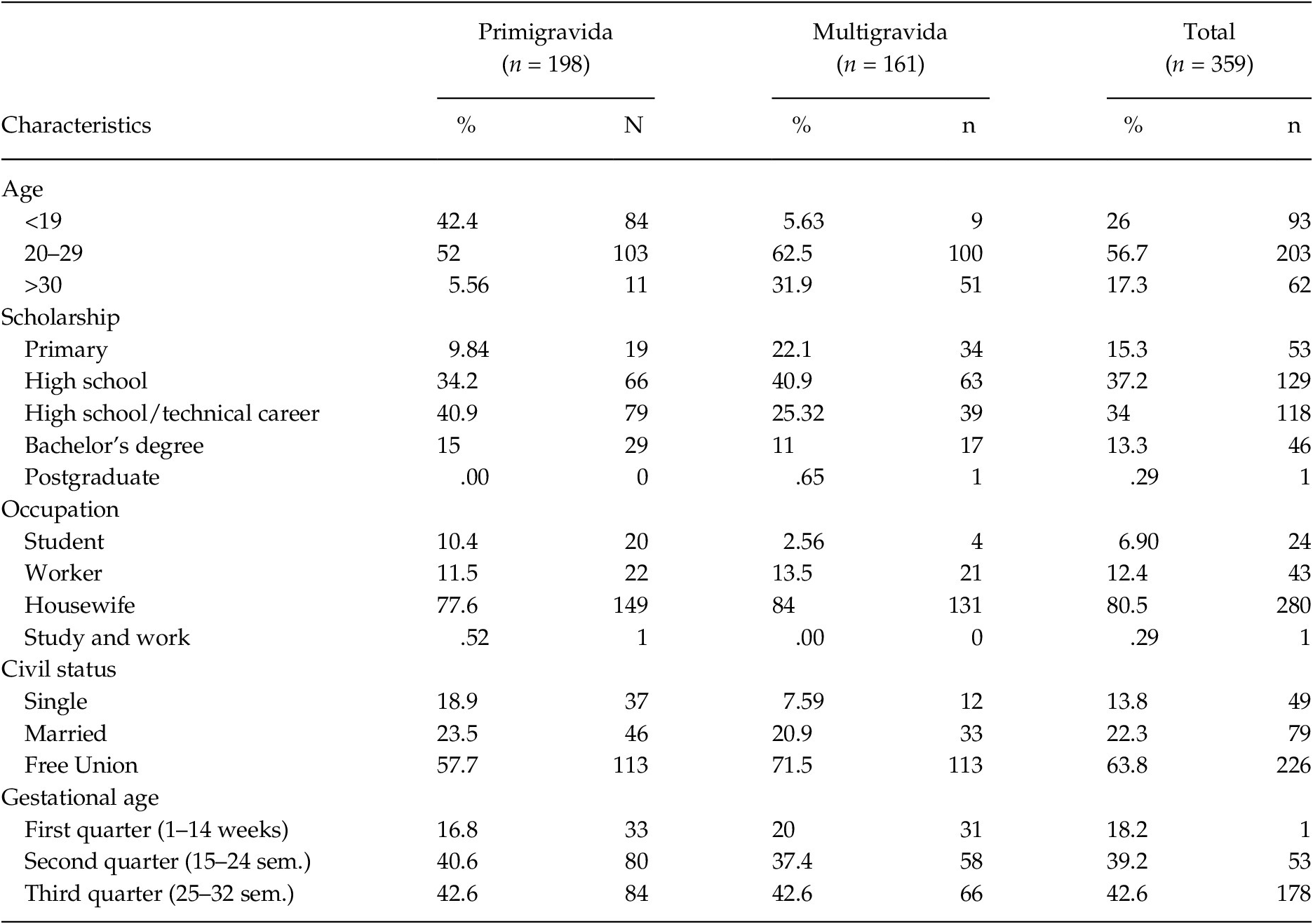
Through a non-probabilistic sampling, 406 pregnant women participated in the study from different health centers. Women who had a chronic illness were excluded and 46 cases were eliminated because the instrument was not completed. Therefore, the study was made up of 359 pregnant women. From the total of participants 55% were primigravida and 45% were multigravida women, with an age range from 14 to 41 years (M = 21.1, SD = 4.43) and 17 to 40 years (M = 27, SD = 5.52), respectively. In regard to the trimester of pregnancy, 18.2% (n = 66) were in the first trimester, 39.2% (n = 140) in the second trimester and 42.6% (n = 153) were in the last trimester. The sociodemographic characteristics of the participants are shown in Table 1. The sample was randomly split into two parts. One part was analyzed by EFA (n = 179) and the other by CFA (n = 180). This procedure has been repeatedly suggested (v. gr., Knekta et al., Reference Knekta, Runyon and Eddy2019), since a CFA should not be conducted on the same sample, as the initial EFA, due to the fact that it capitalizes on sampling error and, consequently, does not provide replicable results, as the sample could respond to items in a specific way that might not be found in other samples (Bandalos & Finney, Reference Bandalos, Finney, Hancock and Mueller2010). The subsamples did not differ significantly in any of the sociodemographic variables: Age, t(356) = 1,783, p = .0750; schooling, χ2(3) = 3,750, p = .29; occupation, χ2(2) = 0.22, p = .896; Marital status χ2(2) = 0.56, p = .80, gestational age, χ2(2) = 2.02, p = .36, primi/multigravity, χ2(2) = 0.74, p = .69.
Sociodemographic Characteristics of the Pregnant Women that Integrated the Validation Sample of the SMGSI (Percentages)

Instruments
A battery composed of the Stressors and Gestational Stress Modulators Inventory (SMGSI); a sociodemographic-gestational questionnaire which recorded age, schooling, occupation, marital status, gestational age and number of pregnancies; and five more instruments, whose purpose was to obtain evidence of external validity for the SMGSI, was integrated. These scales measure the constructs associated with gestational stress: Anxiety, depression, prenatal coping, stress and emotional balance.
Stressors and Modulators of Gestational Stress Inventory (SMGSI). This instrument is designed to estimate gestational stress through the identification of stressors and the degree of modulation on the stress response generated by stressors. This inventory was composed of 17 items grouped into 2 scales: Gestational stressors (consisting of two factors: Psychological stressors and social stressors) and modulators of gestational stress, both with five Likert-type response options, ranging from Never (0) to Always (4). The procedure for preparing the reagents and estimating validity and reliability is described below.
State-Trait Anxiety Inventory (STAI; Spielberg et al., 1968, adapted to the Mexican population by Díaz-Guerrero & Spielberger, 1975, and standardized for the Mexican obstetric population by Morales-Carmona & González-Campillo, Reference Morales Carmona and González Campillo1990). This instrument is designed to quantify anxiety phenomena. It consists of 40 separate items on two self-assessment scales to measure anxiety-state and anxiety-trait. The A-State Scale (A-State) consists of 20-items inventory in the form of affirmations that measure how anxious one feels at the moment. The A-Trait Scale (A-Trait) consists of 20-items in the form of affirmations that assess frequency of feelings in general. In the Mexican validation, acceptable reliability values for the A-State scale (α = .54) and for the A-Trait (α= .86) are reported (Morales-Carmona & González-Campillo, Reference Morales Carmona and González Campillo1990).
Center for Epidemiological Studies–depression Scale (CES-D; Radloff, 1977, adapted to Mexican women by Salgado-De Snyder & Maldonado, 1994, and validated in postpartum Mexicans by Torres-Lagunas et al., Reference Torres-Lagunas, Vega-Morales, Vinalay-Carrillo, Arenas-Montaño and Rodríguez-Alonzo2015). It is a screening instrument for the detection of cases of depression based on their symptoms during one week. It consists of 20-items that describe how they felt during the previous week. The response categories are: 0 = No days, or less than a day; 1 = One to two days; 2 = Three to four days; and 3 = Five to seven days. The scale consists of four factors: (a) Negative affect, (b) positive affect, (c) interpersonal relationships and (d) delayed activity. The cut-off point that indicates that a person has a symptomatology of depression is 35. The scale showed a total high reliability (α= .92), while for each of the factors it was: Factor 1 Cronbach’s alpha = .91; Factor 2 Cronbach’s alpha = .66, Factor 3 Cronbach’s alpha = .63, Factor 4 Cronbach’s alpha = .51 (Torres-Lagunas et al., Reference Torres-Lagunas, Vega-Morales, Vinalay-Carrillo, Arenas-Montaño and Rodríguez-Alonzo2015).
Prenatal Coping Inventory (PCI; Lobel et al., 2002, translated into Spanish by Guarino, Reference Guarino2005): Consists of 22 items that explore the context and experience of pregnancy. Measures four ways of coping with stress during pregnancy: Avoidance (α = .76), preparation (α = .83), positive interpretation (α = .80) and prayer (α = .85); the reliability of the inventory in general was high (α = .80) (Guarino, Reference Guarino2005).
Perceived Stress Scale (PSS–14; Cohen et al., 1983, adapted to the Mexican population by González & Landero, 2007, and validated in Mexican postpartum women by Torres-Lagunas et al., Reference Torres-Lagunas, Vega-Morales, Vinalay-Carrillo, Arenas-Montaño and Rodríguez-Alonzo2015). It is one of the most widely used scales to assess stress. Measures the degree to which life situations are perceived as stressful. It consists of 14 items in the form of direct questions about the levels of stress experienced in the last month. It uses a Likert type response format of five alternatives, ranging from 0 (Never) to 4 (Very often). The PSS–14 scale has been shown to be reliable and valid for assessing stress in diverse populations, showing an acceptable internal consistency (α = .83); in Mexican postpartum women the reliability was lower (α = .72) (Torres-Lagunas et al., Reference Torres-Lagunas, Vega-Morales, Vinalay-Carrillo, Arenas-Montaño and Rodríguez-Alonzo2015).
Positive and Negative Affect Scale (PANAS–18, Watson et al., 1988, adapted to the Mexican population by Hernández-Pozo et al., Reference Hernández-Pozo, Álvarez-Gasca, Meza-Peña, Romo-González, Barahona-Torres, López-Walle, Gallegos-Guajardo, Monterrubio-García, Sánchez-Ortiz, Ojeda-Valencia, Román-Muñoz, Sánchez-Rosas, González-Beltrán, Galán-Cuevas, Góngora-Coronado, González-Pérez and Gutiérrez-García2020). Measures the emotional balance through the identification of positive and negative affect. It consists of 18 words that allude to feelings or emotions that have been experienced in the last week (8 of positive affect and 10 of negative affect). It uses a Likert type response format of five alternatives, ranging from 1 = Very slightly to 5 = Extremely. In the version by Hernández-Pozo et al. (Reference Hernández-Pozo, Álvarez-Gasca, Meza-Peña, Romo-González, Barahona-Torres, López-Walle, Gallegos-Guajardo, Monterrubio-García, Sánchez-Ortiz, Ojeda-Valencia, Román-Muñoz, Sánchez-Rosas, González-Beltrán, Galán-Cuevas, Góngora-Coronado, González-Pérez and Gutiérrez-García2020) three factors were found: Positive affect, negative affect fear-embarrassment and negative affect anger-disgust. The reliability was high (α = .80) and the percentage of the variance explained was 50%. The emotional balance is obtained from the division between the mean of the positive and negative affect (fear-embarrassment and anger-disgust).
With the exception of PANAS–18, all other instruments have been used in studies on stress and pregnancy. We chose this instrument since the negative affect scale represents a general dimension of distress according to Robles and Paéz (Reference Robles and Paéz2003).
Procedure
Construction of the Item Bank and Content Validation
The items were designed using the information obtained in interviews, which were carried out at with a sample of 30 women who were enrolled in any of the three pregnancy trimesters. An inventory was structured with two scales (gestational stressors and gestational stress modulators) of 22 items; the type response is based on a Likert scale (from Never to Always). The items were evaluated by expert judges in the subject of stress, pregnancy and construction of psychometric instruments. It is worth mentioning that the women interviewed only participated in this first phase of the study, that is, they did not answer any questionnaires during the validation.
Piloting
The pilot application of the SMGSI was carried out in order to detect possible errors in the reagents and in the clarity of the content and structure of the instrument. In this phase, 30 pregnant women from different trimesters of gestation and they agreed to answer the inventory voluntarily, signing an informed consent explaining the objective of the study, the way in which they were participating and the researcher’s commitment to use the data provided for the purposes of the study.
Application for Construct and Convergent and Discriminant Validation of the SMGSI
Once the study was authorized by the Veracruz Health Service ethics committee (SESVER, 21 11 2014 UV-SESVER-IVEFIS) the inventory was applied to a sample of pregnant women who belonged to the pregnant women’s support groups of different Health Centers. They voluntarily agreed to participate in the study by signing an informed consent which explained what their participation consisted of and the researcher’s commitment to use the information provided for research purposes only. The inventory was applied by a group of students belonging to the research group who were trained for its application. The volunteers were from the pregnant women’s club of different Health Centers. It should be mentioned that the authorities corresponding to the health centers were asked to give written authorization to apply the instrument in their institutions. The application of the instrument was made during the information session of the pregnant women’s club after explaining the content of the informed consent they signed it and answered the questionnaire.
Data Analyses
The descriptive analysis of the items was based on the calculation of mean, standard deviation, asymmetry and kurtosis, including the distribution of the variables and the existence of extreme cases. Exploratory Factor Analysis (EFA) was performed in order to identify the underlying factors that could explain the interrelation among the variables of each one of the two scales (gestational stressors and modulators of gestational stress). The principal component factorization method with Promax rotation and Kaiser normalization (Matsunaga, Reference Matsunaga2010) to allow for realistic occurrence of some correlation in factors, was used. The Kaiser-Meyer-Olkin measure of sampling adequacy and Bartlett’s test of sphericity were applied to verify whether the data was suitable for factor analysis (Thompson, Reference Thompson2008). Values of KMO greater than .70 have been characterized as appropriate; Bartlett’s test of sphericity evaluates the null hypothesis that the correlation matrix is an identity matrix (i.e., that there is no relationship between the items). Considering the criteria proposed by Hair et al. (Reference Hair, Black, Babin and Anderson2014), the items that showed a factorial loading lesser than .50 and high factor loads in more than one factor were eliminated. Since the data did not meet normality criteria, the correlation between the scales was estimated using the Spearman correlation coefficient.
The confirmatory factor analysis was carried out through Structural Equation Modeling (SEM). The estimation method was the maximum likelihood, since according to Schermelleh-Engel et al. (Reference Schermelleh-Engel, Moosbrugger and Müller2003), it provides consistent and efficient estimates of the evaluated parameters and the standard errors, when the model is specified correctly and the sample size is adequate; in addition, it has proven to be sufficiently robust against the violation of the normality assumption. To evaluate the model fit, the following statistics were used (Hu & Bentler, Reference Hu and Bentler1999): Chi-square, the goodness of fit index (GFI) with acceptance value higher than .95, the comparative fit index (CFI) with acceptance value higher than .95 and the root mean square error of approximation (RMSEA) with acceptance value lesser than .080; the items whose error correlated with items of the other factor, and items that showed residual values higher than .15 were eliminated. The average extracted variance (AVE) was obtained for each factor, which indicates the proportion of the variance in the items explained by the latent factors, and whose value -recommended by Fornell & Larcker (Reference Fornell and Larcker1981)- must be above .50. The reliability was estimated through the Cronbach alpha coefficient. The composite reliability (CR) of the factors was also calculated, for which Raykov and Shrout (Reference Raykov and Shrout2002) suggest a minimum index of .70.
Spearman correlation analyzes was carried out to perform a convergent validity with other instruments used to evaluate gestational stress previously (STAI, CES-D, PCI –Avoidance and Prayer subscales–, PSS–14 and PANAS–18), expecting to have significant correlations from low-moderate (< .60), and a discriminant validity with close to zero correlations with Preparation and Positive interpretation subscales of PCI, in this way showing that the SMGSI measures different aspects from those measured by STAI, CES-D, PCI, PSS–14 and PANAS–18 (Borges et al., Reference Borges, Ruiz-Barquín and De la Vega Marcos2017).
Finally, differences in SMGSI by number of pregnancies and sociodemographic variables were examined with t-test and one way Anova test; probability values p < .05 were considered statistically significant. The program IBM © SPSS © Statistics 19 and AMOS 20 were used for all the analyses.
Results
Phase 1. Construction of the Items Bank and Content Validity
Based on the information obtained from the interviews with pregnant women, 58 items related to stressors of pregnancy and the five factors proposed by Sapolsky (Reference Sapolsky2004) were written: Control, predictability, social support, outlets for frustration and empowerment. An inventory was designed with two Likert scales. The items of both scales were written in the form of affirmations with five response options: Never (0), Almost never (1), Regularly (2), Almost always (3) and Always (4).
Four expert judges in the fields of stress, pregnancy and instruments construction reviewed the items. They assessed the congruence of the item with the theory, whether the formulation of the item suggested a response (tendentiousness) and clarity in the redaction. Were considerate the items that were qualified as congruent by 100% of the judges and as non-tendentious and clear at least 75% of them. Leaving a total of 44 items, of which 20 items were modified because were evaluated by one of the judges as tendentious and/or unclear in their redaction, the others remained as they had been written initially.
Once the inventory was completed, a pilot application was made with 30 pregnant women after examining if the participants had doubts on any items; it was observed that all the items were clear and so the inventory kept the 44 items (22-items for the stressors scale and 22-items for the modulators scale).
Phase 2. Descriptive Analysis
Stressors and Gestational Stress Modulators Inventory
Descriptive statistics (means and standard deviations, bias and kurtosis), and the average variance extracted are presented in Table 4. The means of the stressors were lower than the mean of the modulators; the bias and kurtosis coefficients showed that, particularly in the Modulator Scale, there is no normal distribution. The indexes obtained for the average variance extracted exceeded the minimum proposed criteria of .50 in the case of social stressors and modulators, but in psychological stressors this index was slightly below the criterion.
Spearman correlation analysis was performed to identify the association between the two factors of the gestational stressors (psychological and social stressors) and the gestational stress modulators. The results obtained showed a moderate positive correlation between the gestational stress factors (rho = .45, p < .001), and a low negative correlation between psychological and social stressors and modulators (rho = –.17, p = .001, and rho = –14, p = .011, respectively).
Exploratory Factor Analysis
The exploratory factor analysis is made independently for each of the two scales (gestational stressors and modulators of gestational stress) that integrate the inventory, because they measure two different aspects of gestational stress. These analyzes were performed with one of the two subsamples (n = 179) that were randomly extracted from the total sample. Below, the results of the exploratory factor analysis of each of the scales are described.
Gestational Stressors
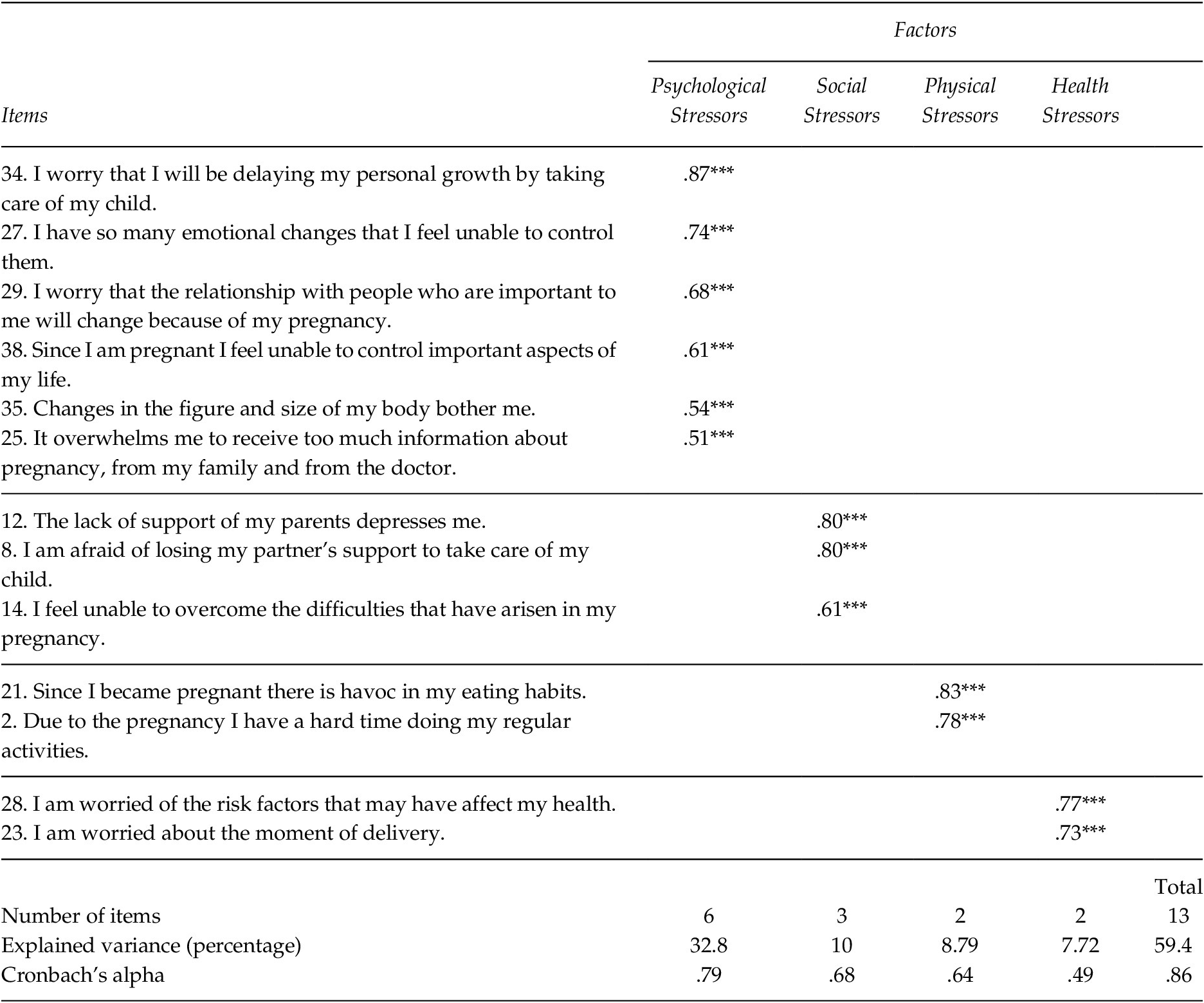
The Kaiser-Meyer-Olkin (KMO = .82) and the Bartlett’s test of sphericity (p < .001) were significant, indicating that the sample was adequate to perform the factorial analysis. With this analysis a scale of 13 items that were distributed in two factors (psychological stressors and social stressors) and two indicators (physical stressors and stressors related to health) was obtained. These explained 59.4% of the variance (Table 2). With respect to the internal consistency of the total scale, acceptable reliability was found (α = .83). Thus, with this this subscale, the frequency in which the pregnant women perceive stressors can be measured.
Exploratory Factor Analysis of the Gestational Stressors Scale: Factorial Loads, Explained Variance and Reliability

Note. ***p < .001.
Gestational Stress Modulators
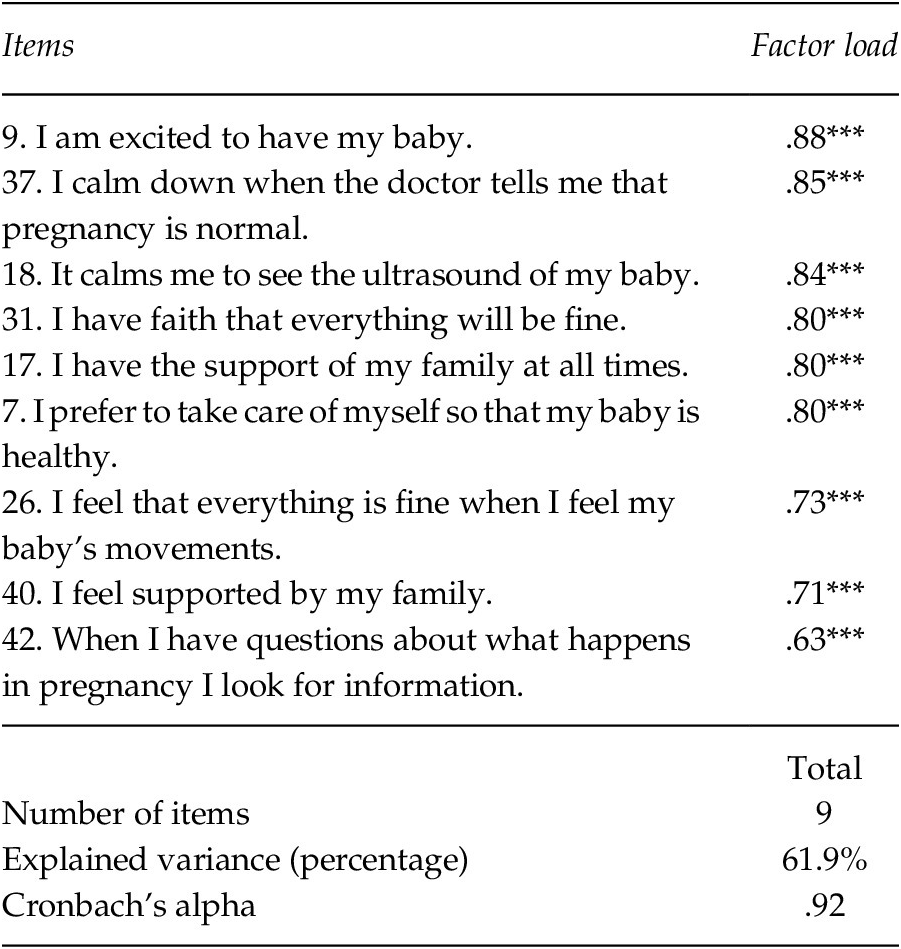
The Kaiser-Meyer-Olkin (KMO = .92) and Bartlett’s test of sphericity (p < .001) were also found to be adequate to perform the exploratory factor analysis. The result of the analysis was a scale consisting of 9 items that were grouped in a single factor (Table 3). The explained variance of this scale was 61.9% and showed a high reliability (α = .92). Thus, with this subscale, the frequency in which the pregnant woman makes use of the psychological factors can be measured.
Exploratory Factor Analysis of the Modulators Scale of Gestational Stress: Factorial Loads, Explained Variance and Reliability

Note. ***p < .001.
Confirmatory Factor Analysis
A confirmatory factor analysis was performed with the second subsample (n = 180) for each of the scales. The results are described below.
Gestational Stressors Scale
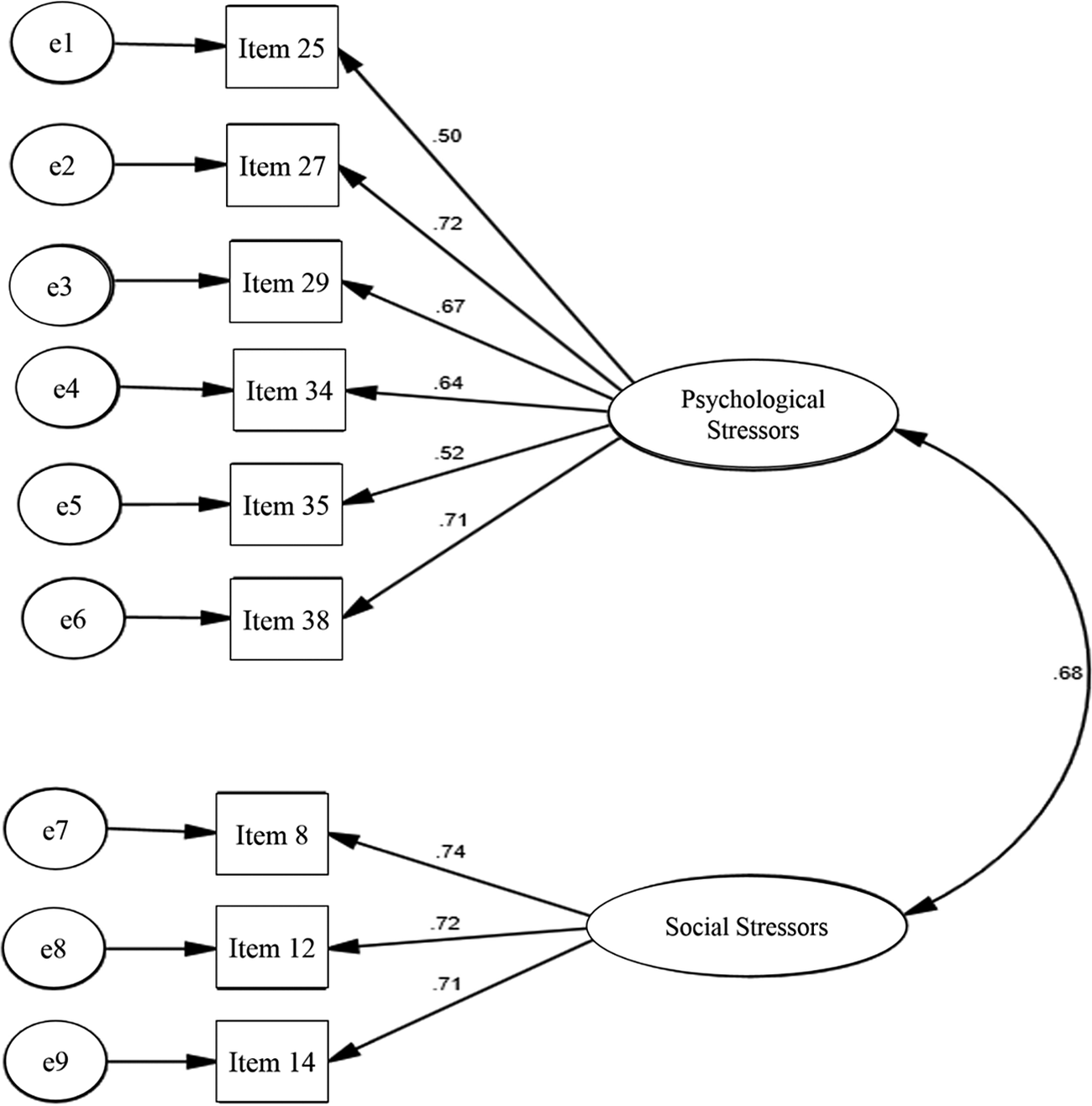
The structure of two factors and two indicators obtained in the AFE was tested with AFC. The adjustment rates of this model were not satisfactory: χ2(76)= 168,386, p < .001, GFI = .88, CFI = .82, RMSEA = .082, CI 90% [.001, .099]. The elimination of the indicators was then considered, although both the factor loads of their items were adequate (physical stressors: Item 2, λ = .71, p < .001, and Item 21, λ = .73, p < .001; health-related stressors: Item 28, λ = .58, p < .001, and Item 33, λ = .71, p < .001), as the correlations between these indicators and the factors (physical stressors with psychological: r = .75, p < .001, and with social stressors: r = .71, p < .001; health related stressors with psychological: r = .81, p < .001, and with social: r = .72, p < .001). Finally, the model formed by the two remaining factors (psychological and social stressors) adjusted satisfactorily: χ2(37) = 66,479, p = .002, GFI = .95, CFI = .96, RMSEA = .065, CI 90% [.037, .090] (Figure 1).
Confirmatory Factor Analysis of Gestational Stressors Scale

Gestational Stress Modulators Scale
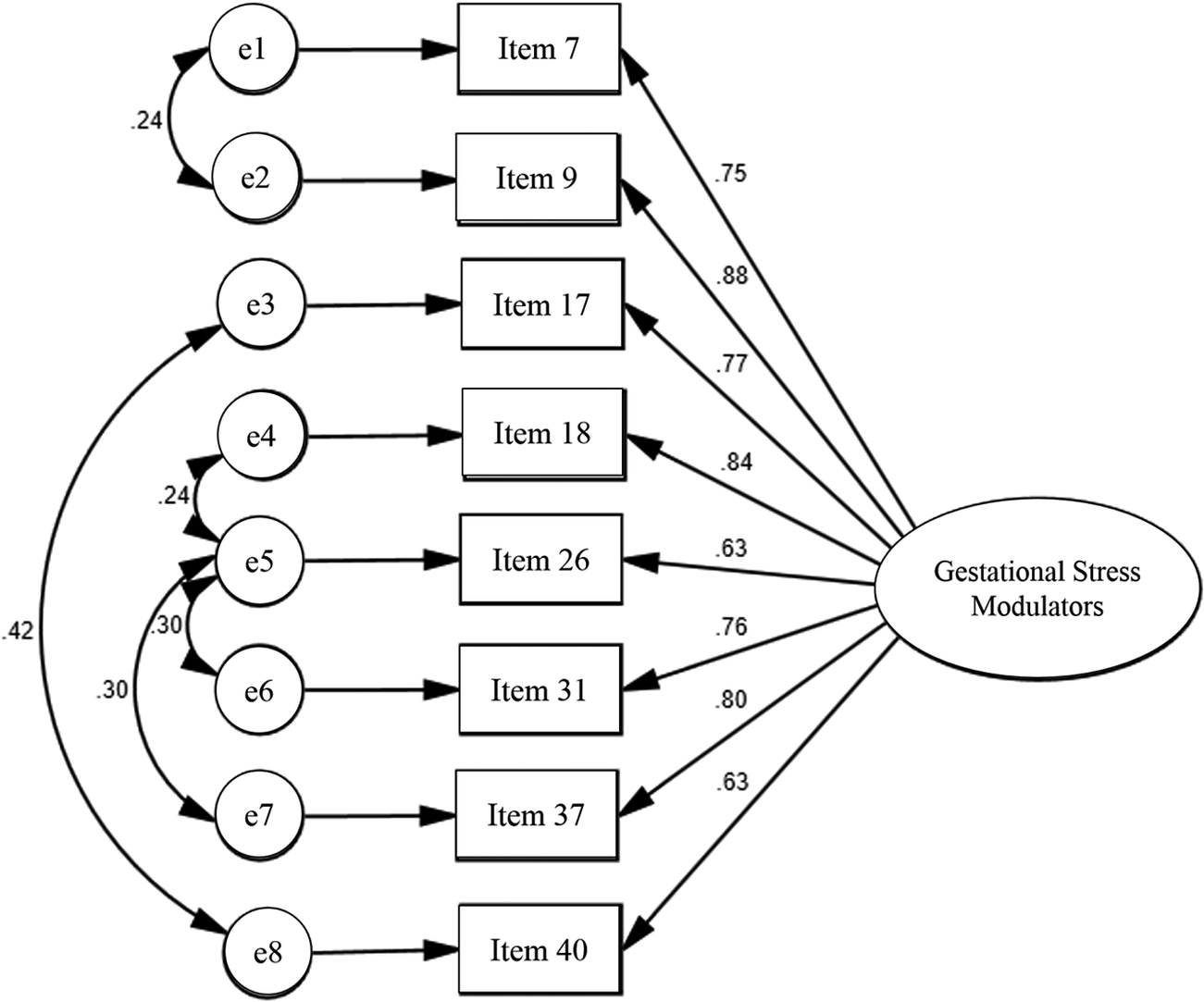
Item 42 was eliminated in the confirmatory factory analyses because it had a low factorial weight (λ = .53) compared to the rest of the items (λ = .63, .88), so this scale was integrated of 8 items where the fit indices obtained were satisfactory for this model: χ2(15) = 20.607, p = .15, GFI = .97, CFI = .99, RMSEA = .046, CI 90% [.000, .090] (Figure 2).
Confirmatory Factor Analysis of Modulators Scale of Gestational Stress

Phase 3. Reliability
The alpha indices for both gestational stressors were relatively low (α = .79 and α = .67), but the composite reliability (CR = .85 and CR = .86) was above the established criteria of .70. For the Modulator Scale, alpha (α = .92) and composite reliability (CR = .93) were satisfactory (Table 4).
Means (M), Standard Deviations (SD), Skewness and Kurtosis Indices, Average Variance Extracted (AVE), Cronbach´s alpha (α) and Composite Reliability (CR)

Phase 4. Convergent and Discriminant Validity
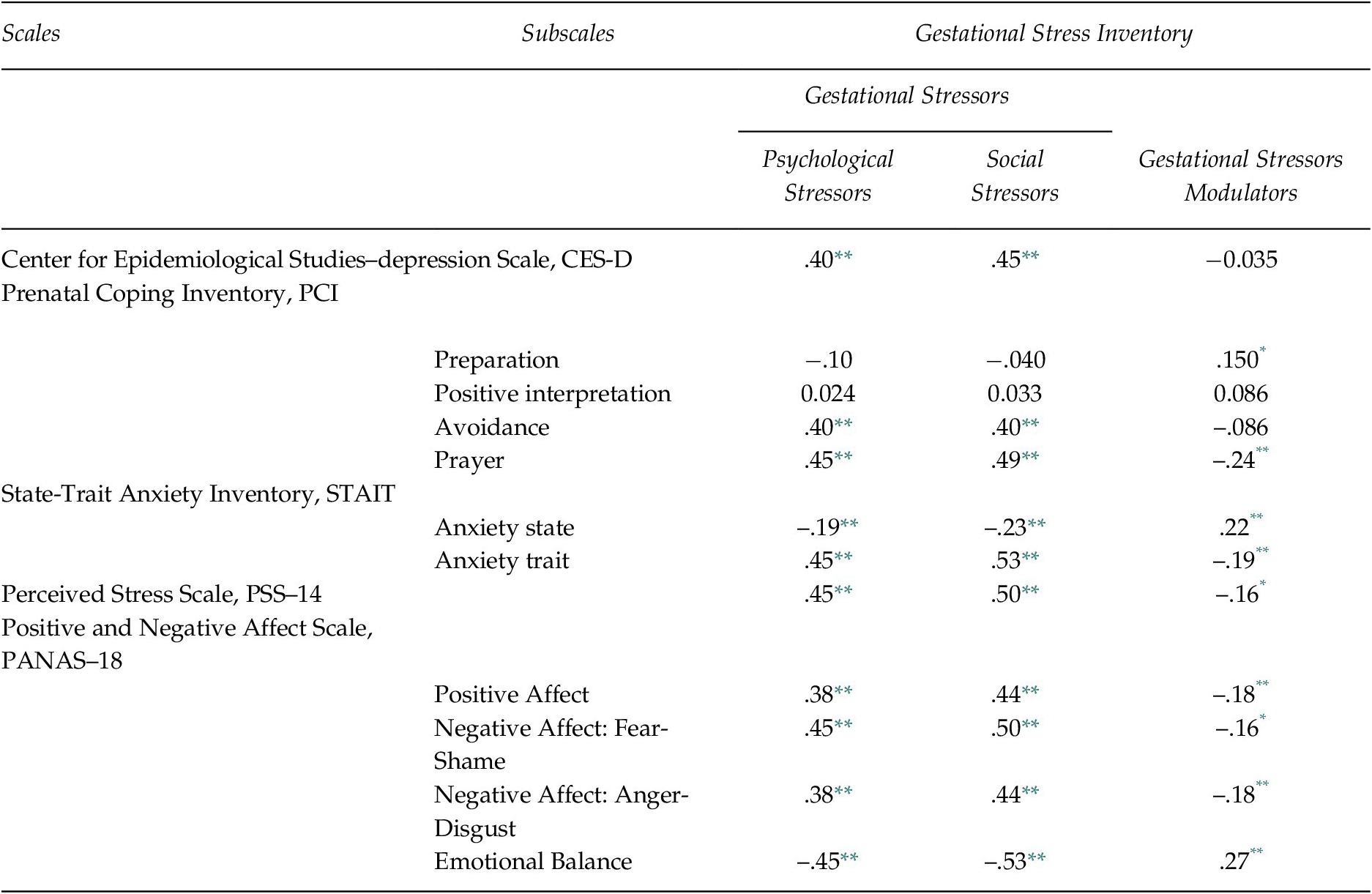
Correlation analysis of the SMGSI subscales was performed with the psychometric instruments of attributes theoretically associated with gestational stress, according to their nomological network: Depression, anxiety, stress, coping and emotional balance. In this part of the study, only 263 pregnant women out of the 359 participated in the study, since they answered all the instruments. It was found that the SMGSI had moderate-low correlations (r ≤ .60, p < .001) with the variables anxiety, depression, coping, perception of stress and emotional balance, and correlations close to zero with Preparation and Positive interpretation PCI subscales. This seems to indicate that the SMGSI evaluates related but different aspects of the pregnancy process that are not evaluated in the other scales (Table 5).
Correlation between the Scales of the Gestational Stress Inventory and the Variables of the Nomological Network

* p < .05
** p < .001
Differences in SMGSI by Number of Pregnancies and Sociodemographic Variables
Differences in the scores of the Gestational Stress Inventory scales were tested among primigravida and multigravity women. The former obtained significantly higher scores (M = .97, SD = .83) than the latter (M = .78, SD = .76) in psychological stressors, t(357) = 2,121, p = .35, d = .23, and in social stressors (M = 1.080, SD = .98, and M = .86, SD = .96, respectively, t(357) = 2,070, p = .039, although the effect size was small in both factors, d = .23 and .22). There were no differences due to the number of pregnancies in the gestational stress modulators. When analyzing differences by sociodemographic variables, it was found that only years of educational levels had significant effects on modulators F(3, 342) = 4, 384, p = .005, being women with junior high school (M = 3.57, SD = .77) and high school levels (M = 3.60, SD = .78) those who showed higher scores than those with elementary (M = 3.27, SD = .98) or university studies (M = 3.12, SD = 1.38).
Discussion
The Stressors and Modulators of Gestational Stress Inventory (SMGSI) is a self-applicable instrument, in which the pregnant women indicate the frequency in which they have experienced sensations, thoughts and reactions in the last month. The inventory is composed of three parts: psychological stressors, social stressors and gestational stress modulators scales. The qualification is obtained from the average of the scale of stressors (psychological and social stressors) and the average of the modulators scale. The final self-applicable instrument can be seen in the Appendix.
Gestational stress has been associated with many of the maternal and child complications that lead to high morbidity and mortality rates (Kramer et al., Reference Kramer, Lydon, Se´guin, Goulet, Kahn, McNamara, Genest, Dassa, Chen, Sharma, Meaney, Thomson, Van Uum, Koren, Dahhou, Lamoureux and Platt2009; Lobel et al., Reference Lobel, Cannella, Graham, DeVincent, Schneider and Meyer2008, WHO, 2018). However, this association is unclear because there are inconsistencies between psychometric measures and physiological markers of stress during this stage of life (Ruiz, Reference Ruiz, Fullerton and Dudley2003). It is possible that these inconsistencies are due to the fact that the psychometric instruments used to measure gestational stress are not the correct ones to measure this variable, either because they measure different constructs or because they do not contemplate the unique conditions of pregnancy.
The purpose of this study was to design and validate a gestational stress instrument to fully estimate (bio-psycho-social): Stressful situations of pregnancy and psychological factors (social support, predictability, control, empowerment and outlets for frustration) proposed by Sapolsky (Reference Sapolsky2004), which also influence the physiological stress response (Sapolsky, Reference Sapolsky2004).
Two valid and reliable scales integrated the final inventory: gestational stressors (situations that have to do with the social support network, and cognitive-emotional aspects related to pregnancy that trigger a stress response) and gestational stress modulators (evaluation at the level of predictability, control, social support and empowerment that have repercussions on the stress response). The explained variance and the reliability of the gestational stressors scale showed acceptable parameters, although their validation and reliability can be improved, for which it is necessary to design new items to reinforce the two indicators (physical stressors and stressors related to health) that were eliminated in the confirmatory analysis.
A negative correlation was observed between the inventory scales (gestational stressors and modulators of gestational stress) suggesting that the modulators regulate the stress response triggered by the stressors, as long as the score of the modulator scale is greater than the stressors. The articulation of these two aspects allows us to identify what our group defined as allostatic and pantostatic stress (González-Ochoa et al., Reference González-Ochoa, Sánchez-Rodríguez, Chavarría, Gutiérrez-Ospina and Romo-González2018). Therefore, it can be assumed that low scores of gestational stressors and high levels of modulators would lead to allostatic stress, that is, stress that benefits the development of pregnancy; on the other hand, when the scores of the stressor scale are high and the scores of the modulators scale are low, it would be triggering a pantostatic stress, which tends to generate complications in pregnancy. However, it is necessary to test this hypothesis longitudinally by applying the instrument to pregnant women and following the course of their pregnancy.
The modulators scale of gestational stress showed correlations with two of the variables of the inventory of prenatal coping (preparation and prayer). However, these correlations were low indicating that there is a difference between modulating the stress response and coping with stress. According to the definitions of coping, it is known that this refers to the fact of facing an agent or stressful event, it is also defined as a set of responses generated in a stressful situation to reduce the aversive characteristics of the stressor (Rodríguez, Reference Rodríguez1995). As can be seen, coping is aimed at eliminating stressors or emotional discomforts that do not necessarily guarantee an impact on the regulation of the stress response. Modulation, however, seeks to make adjustments on the physiological activation of stress (inhibiting the activation of the sympathetic system, decreasing the segregation of epinephrine, norepinephrine and cortisol levels, improving intestinal activity, bronchial dilatation and muscular vasodilation), with the objective of cushioning the adverse effects of the stressful situation. Porges (Reference Porges1995) mentions that there are specific behavioral and psychological facts that change the neuronal regulation of the autonomic nervous system, such as perceiving a situation as safe, that is, the pregnant woman has a feeling of empowerment (things will be fine, even though there are several stressors). When the person performs this evaluation, the structure of the parasympathetic system is stimulated, the myelinated branch of the vagus nerve that interacts with the hypothalamic-pituitary-adrenal axis favoring emotional expression and the quality of communication, this allows the person to have the ability of regulating bodily and behavioral states allowing a recovery of stress-related responses. On the other hand, when the modulation is low, that is, the pregnant woman values the pregnancy as a dangerous or threatening event, the sympathetic system is activated by increasing the blood pressure, the cardiac rate, the pulse, the conductivity of the skin, the breathing rate and the levels of cortisol.
The correlations observed between the gestational stressors scale, with the trait-state anxiety, depression and perceived stress variables could be explained because these emotional states activate or re-stimulate the stress response through the HPA axis that releases cortisol and the sympathetic nervous system which releases adrenaline and noradrenaline; likewise, the presence of chronic or pantostatic stress and its high levels of cortisol in the blood inhibit the release of dopamine, noradrenaline and serotonin, generating emotional states of anxiety and depression (Chrousos, Reference Chrousos2009, González-Ochoa et al., Reference González-Ochoa, Sánchez-Rodríguez, Chavarría, Gutiérrez-Ospina and Romo-González2018; Sapolsky, Reference Sapolsky2004).
Regarding the moderate correlation of the stress perception with the scale of psychological stressors and scale of ssocial stressors, it is clear that even when both instruments seek to identify the degree to which situations are valued as stressors, the scale of gestational stress considers the stressors that have to do with the management and importance of the physical symptoms of pregnancy, changes in appearance and in personal relationships, preoccupation with childbirth, upbringing, health of the fetus and fear of complications (Alderdice et al., Reference Alderdice, Lynn and Lobel2012; González-Ochoa et al., Reference González-Ochoa, Córdova-Plaza, Hernández-Pozo, Sánchez-Silva and Romo-González2020) makes the assessment of gestational stress more accurate. This difference was previously reported by Torres-Lagunas et al. (Reference Torres-Lagunas, Vega-Morales, Vinalay-Carrillo, Arenas-Montaño and Rodríguez-Alonzo2015), who found that by validating the perception of stress (Scale of Stress Perceived–14) in a similar population (in postpartum and non-puerperal women) its reliability is decreased.
With regard to the negative correlation of state-anxiety and stressors and the positive correlation of state-anxiety and modulators, it can be inferred that state anxiety may be acting as a signal for the woman to use all her resources to modulate the stress response and therefore the stressors are attenuated, however, we also believe that it is a result that needs to be explored more deeply in a larger population.
Finally, emotional balance seems to have a beneficial influence on gestational stress, because it correlates negatively with stressors and positively with modulators. It is striking that these correlations are higher with the scale of stressors than with modulators, which seems to indicate that emotions tend to trigger stress, rather than to modulate it. In this regard, Lazarus (Reference Lazarus2000) mentions that there must be emotion in order to have stress; otherwise physiological responses of stress are not triggered. Likewise, the beneficial effect of emotional balance on gestational stress does not occur with the correlations obtained between the scales of the SMGSI (stressors and modulators) and the scales positive and negative affect of the PANAS. In this regard, it has been observed that during pregnancy women are in constant ambivalence between positive and negative states, for example, motherhood is perceived as something very beautiful, but involves risk and responsibility; they go from pleasant emotional states such as happiness, desire and joy to unpleasant ones such as anger, fear and anguish (Farkas & Santelices, Reference Farkas, Fillol, Santelices, Calcagni and Rivera2006). It can thus be inferred that high positive affect is a way of evading what the woman really feels about her pregnancy, and the negative affect would indicate that the woman is only focused on the negative aspects. Similarly, in a previous study we observed that when the woman is inclined towards one of the poles (positive or negative) she tends to be more stressed than those women who are aware of these two polarities (González-Ochoa et al., Reference González-Ochoa, Córdova-Plaza, Hernández-Pozo, Sánchez-Silva and Romo-González2020). In this regard Fredrickson and Losada (Reference Fredrickson and Losada2005) found that the flourishing of people depends on the appropriate relationship of positive and negative affect. Adequate positivity is that which is genuine and based on the reality of the circumstances. Adequate negativity refers to the soluble and time-limited feedback connected to specific circumstances. With this they come to the conclusion that a problem can occur when there is too much positivity (even though positivity favors people to be more resilient), but when there is no adequate negativity the behavioral patterns become calcified, in other words, the behavior flexibility that they could have becomes insufficient in coping with the situation.
One of the limitations observed in this work is that the instrument showed low validity and reliability, which could drive a low sensitivity to identify the allostatic and pantostatic stress. However, this could be improved by increasing the number of items. Another limitation is the loss of the two indicators obtained in the exploratory factor analysis. We believe the loss of these stressors could be affecting the percentage of variance explained, since in theory, these stressors are known to also be relevant to the stress response experienced by pregnant women.
Nonetheless, we obtained a valid and reliable tool to estimate the gestational stress that is based on a theoretical model that integrates the bio-psycho-social aspects of gestational stress. That is, the inventory seeks to identify two types of stress: Allostatic stress (baseline stress in pregnancy) and pantostatic stress (stress response harmful to the pregnancy process). This conception is different to the other instruments, since they do not measure this variable, mostly are constructed to measure stress perception and do not contemplate the bio-psycho-social aspects of gestational stress or the unique conditions of pregnancy. In this way, the inventory of stressors and modulators of gestational stress can be used as a diagnostic tool to prevent maternal complications that may be associated with gestational stress. Although we believe that it is necessary to apply the instrument through a longitudinal study in each of the trimesters of pregnancy in order to corroborate the hypothesis that the presence of pantostatic stress throughout pregnancy could lead to maternal and child complications.
Appendix
Design and Psychometric Analysis of the Stressors and Modulators of Gestational Stress Inventory (SMGSI)
Nombre: _____________________________________________________ Edad: ___________
Edad gestacional: _________ No. de embarazo: ______________ Teléfono: _________________
Instrucciones: Las preguntas en esta escala hacen referencia a tus sentimientos, pensamientos y tu manera de actuar durante tu embarazo. Para cada pregunta señala con una X con qué frecuencia te has sentido, has pensado o has actuado de cierta manera en el último mes.