INTRODUCTION
There is no skill more fundamental to the human experience than language (Levelt, Roelofs, & Meyer, Reference Levelt, Roelofs and Meyer1999). Communication in the form of spoken language is unique to humans, and the language of our environment is acquired early in life. Adults are skilled at fast and clear communication, generating between two and four words per second and erring less than twice per 1000 words on average (Levelt, Reference Levelt2001).
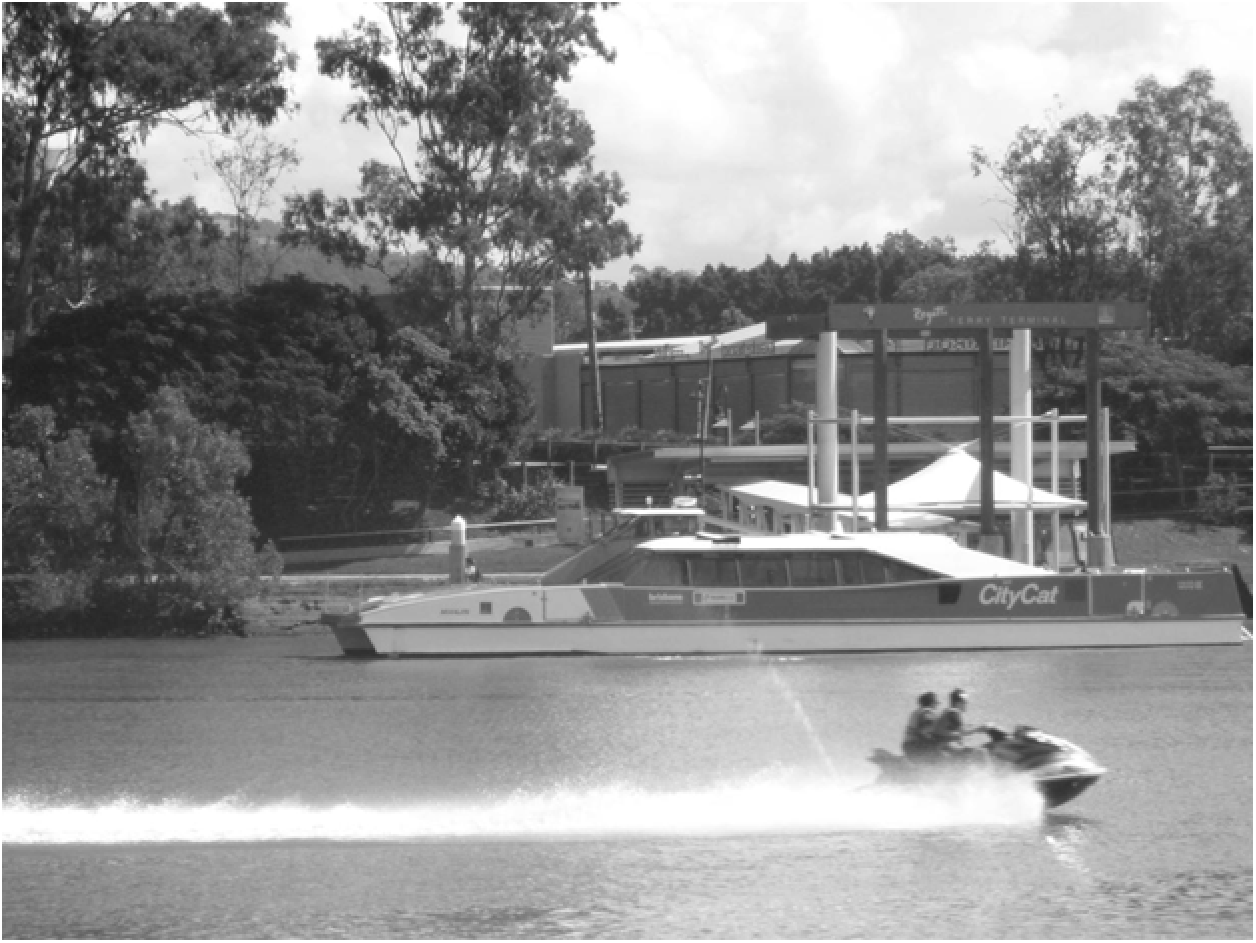
The study of language has traditionally focused on core language skills (e.g., phonology, semantics, naming, reading, grammar, repeating, comprehension), which map onto different forms of aphasia (i.e., impairment of verbal language). However, language production as a gestalt is more complex than the sum of these core skills. When spoken language is spontaneous, voluntary and includes the generation of novel ideas, it is known as propositional language or spontaneous speech. A proposition is an idea unit, and ultimately propositional language is how ideas are communicated. Propositional language is used to relay information, direct action, convey emotions, tell stories (i.e., narrative speech) and entertain others, and is a crucial agent for teaching and learning. It is the essence of everyday communication.Footnote 1 In clinical settings, propositional language can be elicited via pictorial scene description (Brady, Armstrong, & Mackenzie, Reference Brady, Armstrong and Mackenzie2005; see Figure 1 for an example), by asking open-ended questions (e.g., about past experience: Blank, Scott, Murphy, Warburton, & Wise, Reference Blank, Scott, Murphy, Warburton and Wise2002; Ulatowska, North, & Macaluso-Haynes, Reference Ulatowska, North and Macalusco-Haynes1981) or by providing a topic or story cue (e.g., ‘favourite film’: Robinson, Shallice, & Cipolotti, Reference Robinson, Shallice and Cipolotti2006; ‘Cinderella’: Saffran, Berndt, & Schwartz, Reference Saffran, Berndt and Schwartz1989).
Example of a naturalistic complex pictorial scene.

It is assumed that non-language cognitive processes are involved in formulating ideas for propositional language. To illustrate, Figure 1 depicts a scene of a jet-ski on a river. Focus is initially drawn to the jet-skiing activity, and semantic (i.e., conceptual) information is immediately inserted; prior knowledge of jet-skiing suggests that this is a jet-propelled water vehicle, and is likely a leisure activity. Emotional information may be simultaneously inserted: this may be considered fun or frightening based on personal memories. Attention is then shifted to other aspects of the scene and semantic information inserted accordingly; for example, the presence of a ‘CityCat’ ferry suggests that this is a scene in Brisbane, Australia, and the trees in full bloom indicate that it is summer. Any of these aspects may inform the propositional content of a verbal description of the scene. These processes, which are not part of ‘language’ per se, are clearly critical in the formulation of ideas for the production of propositional language.
While the role of non-language cognitive processes in formulating content for expression is intuitive, the precise cognitive mechanisms involved have not been the subject of many experimental investigations. This stands in contrast to language research at the single word level (e.g., naming); a number of studies have employed experimental paradigms to investigate specific cognitive mechanisms underpinning lexical retrieval in healthy adults (e.g., Jefferies & Lambon Ralph, Reference Jefferies and Lambon Ralph2006; Jefferies, Baker, Doran, & Lambon Ralph, Reference Jefferies, Baker, Doran and Lambon Ralph2007; Jefferies, Patterson, & Lambon Ralph, Reference Jefferies, Patterson and Lambon Ralph2008; Schnur, Lee, Coslett, Schwartz, & Thompson-Schill, Reference Schnur, Lee, Coslett, Schwartz and Thompson-Schill2005; Schnur, Schwartz, Brecher, & Hodgson, Reference Schnur, Schwartz, Brecher and Hodgson2006; Schnur et al. Reference Schnur, Schwartz, Kimberg, Hirshorn, Coslett and Thompson-Schill2009; Thompson-Schill et al., Reference Thompson-Schill, Swick, Farah, D’Esposito, Kan and Knight1998). However, the investigation of idea formulation for spoken language at the sentence level (i.e., propositional language) is broader than the stimulus–response mapping required for core language skills (e.g., naming, reading), and therefore inherently more complex and ‘messy’, attracting fewer experimental studies. The current review focuses on one aspect of the propositional language–cognition interface: the role of executive attentional processes in the formulation of content (‘ideas’) for expression. We propose that there is a need for theoretically motivated experimental research addressing specific non-language mechanisms involved in the formulation of ideas, and we call for the development of models of spoken language production that define the mechanisms/processes of idea formulation. Finally, we provide specific recommendations for future research.
A HISTORICAL CONTEXT
The notion of a close relationship between cognition and language has a rich history. In 1781, the philosopher Kant defined thinking as ‘talking with oneself’. A century later, this idea was mirrored by the English neurologist Hughlings Jackson, who wrote ‘to utter words is not necessarily to speak. To speak is to propositionise’ (Jackson, Reference Jackson1879, p. 205). However, at this time the field was dominated by the notion of a ‘language centre’ hosted in the frontal lobes. Famously, the left inferior frontal gyrus (LIFG) became implicated in spoken language production when Broca (Reference Broca1861a, Reference Broca1861b) reported the seminal case of a patient with generally intact comprehension and intellectual skills but with speech output so impaired that he was nicknamed after his only spontaneous utterance ‘tan’. This patient had a lesion to the lateral surface of the left inferior frontal cortex, and thus, Broca’s namesake brain region became viewed as the key region responsible for speech.
At the time, Hughlings Jackson rejected the ‘simplistic’ notion of the neuroanatomical localisation of complex processes such as language, and by the early 20th century, his ideas regarding the broader ‘executive’ or ‘thought’ component of language were re-emerging (Luria, Reference Luria1970). For example, Marie (Reference Marie1906) viewed aphasia as a disturbance of intelligence. Head (Reference Head1926) argued that an independent non-language component (thought ‘formulation’) was coupled with skilful ‘expression’ to produce language. Goldstein (Reference Goldstein1948) posed that conceptual (i.e., idea) and linguistic (i.e., language-based) processes represent different levels that interact during spoken language production. Despite the fundamental link between language and thought appearing in the literature repeatedly, theories often lacked specificity regarding the cognitive processes involved. Comprehensive models of spoken language production began to emerge from the 1970s onwards, and while many implicated broader cognition, the cognitive mechanisms and processes involved were, and remain to this day, imprecise (see below; e.g., Dell, Reference Dell1986; Frederiksen, Bracewell, Breuleux, & Renaud, Reference Frederiksen, Bracewell, Breuleux, Renaud, Joanette and Brownell1990; Levelt, Reference Levelt1989, Reference Levelt, Brown and Hagoort1999; Sherratt, Reference Sherratt2007). Despite this, existing models can be drawn upon as a starting point to consider the mechanisms involved in idea formulation for propositional language.
MODELS OF SPOKEN LANGUAGE PRODUCTION
Models of spoken language production provide theoretical frameworks to understand the processes that transform a conceptual idea into overt speech, and most generally acknowledge that ‘executive’ cognition is involved in some capacity (e.g., Glosser & Deser, Reference Glosser and Deser1991; Kintsch, Reference Kintsch1994; Levelt, Reference Levelt, Brown and Hagoort1999; Sohlberg & Mateer, Reference Sohlberg and Mateer1989). The transformation of an idea into articulated speech encompasses a ‘complex dynamic cognitive system’ (Marini, Andreetta, Del Tin, & Carlomagno, Reference Marini, Andreetta, Del Tin and Carlomagno2011), which requires multiple, closely related and interactive levels of processing to be integrated (Levelt, Reference Levelt1989). Such accounts are known as dynamic models. Dynamic accounts of spoken language production tend to emphasise a minimum of three stages, but differ in their descriptions of the interactions between the stages (e.g., Dell, Reference Dell1986; Dell, Chang, & Griffin, Reference Dell, Chang and Griffin1999; Frederiksen et al., Reference Frederiksen, Bracewell, Breuleux, Renaud, Joanette and Brownell1990; Garrett, 1980, Reference Garrett, Grodzinsky, Shapiro and Swinney2000; Jakobson, Reference Jakobson1980). These stages generally include: (1) preverbal conceptualisation, (2) linguistic formulation and (3) overt articulation.
Conceptualisation
Levelt’s (Reference Levelt1989, Reference Levelt1993, Reference Levelt, Brown and Hagoort1999) dynamic blueprint of the speaker model gives particular regard to this preverbal stage, which he termed the ‘conceptualiser’ (see Figure 2). This stage involves the generation of a communicative intention and conceptual plan, and the outcome is a conceptual structure (see also Sherratt, Reference Sherratt2007 for a similar model). Critically, this conceptualisation stage is the point at which ideas are formulated for expression, and represents the interface of broader cognition and language. We note idea formulation is one aspect of conceptualisation, and that many other aspects of propositional language, such as cohesion, coherence, grammaticality, fluency and syntactic complexity, are also critically dependent on intact conceptualisation and draw on broader cognitive processes (e.g., Barker, Young, & Robinson, Reference Barker, Young and Robinson2017; Kemper et al., Reference Kemper, Kynette, Rash, O’Brien and Sprott1989; Kemper, Thompson, & Marquis, Reference Kemper, Thompson and Marquis2001, Kemper, Herman, & Lian, Reference Kemper, Herman and Lian2003; Kemper, Schmalzried, Herman, Leedahl, & Mohankumar, Reference Kemper, Schmalzried, Herman, Leedahl and Mohankumar2009; Marini, Carlomagno, Caltagirone, & Nocentini, Reference Marini, Carlomagno, Caltagirone and Nocentini2005; Rogalski, Altmann, Plummer-D’Amato, Behrman, & Marsiske, Reference Rogalski, Altmann, Plummer-D’Amato, Behrman and Marsiske2010; Troche & Altmann, Reference Troche and Altmann2012; Wright, Koutsoftas, Capilouto, & Fergadiotis, Reference Wright, Koutsoftas, Capilouto and Fergadiotis2014). However, for the purpose of this review we concentrate only on the cognitive processes associated with the formulation of content or ‘ideas’ for spoken language production. No model to date provides an explicit or mechanistic account of the cognitive mechanisms involved in idea formulation and how they relate to spoken language production.
Symbolic illustration of the stages of spoken language production, including the role of broader cognitive functions. The broader cognitive functions included are illustrative only and not intended to be exhaustive. For details, see Levelt (Reference Levelt, Brown and Hagoort1999) and Sherratt (Reference Sherratt2007).

Linguistic Formulation
The term ‘linguistic’ relates specifically to language-based processes. Following conceptualisation, the preverbal plan is transformed into a linguistic structure (Levelt, Reference Levelt, Brown and Hagoort1999). This involves matching items from the mental lexicon (i.e., vocabulary) to the concepts activated during message formulation (e.g., Dell, Reference Dell1986; Frederiksen et al., Reference Frederiksen, Bracewell, Breuleux, Renaud, Joanette and Brownell1990; Levelt et al., Reference Levelt, Roelofs and Meyer1999). With reference to Figure 1, the lexical items ‘jet-ski’, ‘river’, ‘exciting’, and so on, would be retrieved to match the speaker’s conceptualisation of the picture. The outcome is ‘internal speech’ (termed ‘phonological score’; Levelt, Reference Levelt, Brown and Hagoort1999).
Articulation and Monitoring
Finally, the phonological score must be phonetically encoded and articulated. Phonetic encoding involves the construction of a sequence of articulatory gestures to produce an ‘articulatory score’ (Levelt, Reference Levelt, Brown and Hagoort1999). Motor execution of the articulatory score results in overt speech output.
Static Models of Language Production
In contrast to dynamic models, static frameworks propose that the production of spoken language is based on the integration of microlinguistic and macrolinguistic dimensions (e.g., Kintsch, Reference Kintsch1994; Kintsch & van Dijk, Reference Kintsch and Van Dijk1978). Broadly defined, macrolinguistic processes relate to the between-sentence functions, or the higher-order organisational qualities of spoken language (e.g., relating utterances to each other [cohesion] or the overall theme/topic [coherence]), while microlinguistic processes relate more to within-sentence functions, at the lexical or syntactic level (Marini, Andreetta et al., Reference Marini, Andreetta, Del Tin and Carlomagno2011). Therefore, static models provide theoretical explanations of how between-sentence functions (e.g., conceptual, organisational, ‘idea’ level) integrate with within-sentence functions (e.g., lexical, word level) to produce spoken language. With regard to dynamic models, macrolinguistic processes occur during the stage of conceptualisation (Glosser & Deser, Reference Glosser and Deser1991), and microlinguistic functions reflect the stage of linguistic formulation (Marini, Andreetta et al., Reference Marini, Andreetta, Del Tin and Carlomagno2011). Macrolinguistic functions are non-linguistic and thought to interact with domain-general, higher-order cognitive processes (e.g., attention), as they are responsible for coordinating and integrating conceptual information (Glosser & Deser, Reference Glosser and Deser1991). Mechanisms of idea formulation, which play a role during the conceptualisation stage, can be considered macrolinguistic functions.
EXECUTIVE COGNITION
Attention is arguably the most fundamental aspect of cognition, necessary for all complex behaviours, including language (Villard & Kiran, Reference Villard and Kiran2017). Although a multitude of attention models exist (e.g., Broadbent, Reference Broadbent1957; Corbetta & Shulman, Reference Corbetta and Shulman2002; Duncan, Reference Duncan2006; Kane & Engle, Reference Kane and Engle2002; Pashler, Reference Pashler1984; Posner & Petersen, Reference Posner and Petersen1990; Sohlberg & Mateer, Reference Sohlberg and Mateer2001; Stuss et al., Reference Stuss, Alexander, Shallice, Picton, Binns, Macdonald, Borowiec and Katz2005), common to all is the notion of attention as a domain-general resource, of finite capacity, that is flexibly allocated to tasks as required.
Many classic models of attention include an ‘executive’ component, originally thought to be associated with the frontal lobes (Mesulam, Reference Mesulam and Mesulam1985; Posner, Reference Posner, Boll and Bryant1988; Posner & Petersen, Reference Posner and Petersen1990; see also ‘controlled attention’: e.g., Kane & Engle, Reference Kane and Engle2003). ‘Executive attention’ is a top–down process that is under voluntary control, and is responsible for ensuring that behaviour remains in line with task goals. In this way, ‘executive attention’ is closely related to the construct of ‘executive function’, which is a widely used term generally preferred by clinicians, and refers to complex, higher-order behaviour. While many frameworks of executive function exist, Miyake et al. (Reference Miyake, Friedman, Emerson, Witzki, Howerter and Wager2000) posited one of the more influential. Miyake et al. (Reference Miyake, Friedman, Emerson, Witzki, Howerter and Wager2000) and Miyake and Friedman (Reference Miyake and Friedman2012) provided evidence for the unity and diversity of complex or ‘executive’ skills such as inhibition, interference control and set-shifting, and suggested that these abilities are distinct but share a common underlying factor. Significant bodies of research support both the unity (e.g., Braver, Reference Braver2012; Duncan, Reference Duncan2010; Duncan, Johnson, Swales, & Freer, Reference Duncan, Johnson, Swales and Freer1997) and diversity (e.g., Stuss & Alexander, Reference Stuss and Alexander2007) components of Miyake et al.’s (Reference Miyake, Friedman, Emerson, Witzki, Howerter and Wager2000) model, and ‘executive attention’ is key to both albeit in different ways (Friedman & Miyake, Reference Friedman and Miyake2017). For example, there is evidence that controlled or ‘executive’ attention is a general capacity that underlies the ‘executive functions’ of inhibition/interference resolution and goal maintenance, consistent with the unity view (Kane, Bleckley, Conway & Engle, Reference Kane, Bleckley, Conway and Engle2001; Kane & Engle, Reference Kane and Engle2003), but neuropsychological lesion studies suggest ‘executive attention’ comprises many different processes (Shallice & Burgess, Reference Shallice and Burgess1996; Stuss & Alexander, Reference Stuss and Alexander2007). For the purpose of this review, we conceptualise ‘executive attention’ as a set of component processes that subserve goal-directed behaviour – more compatible with the diversity view as opposed to a general underlying factor – because it lends itself to testable hypotheses regarding separable cognitive mechanisms. The term ‘executive functions’ (or ‘executive dysfunction’) will be used to refer to specific behaviours observed clinically (e.g., performance on neuropsychological tests designed to tap complex ‘higher-order’ functions), while ‘executive attention’ will refer to cognitive processes per se, which are a prerequisite for more complex operations. In this review, ‘executive function’ refers to the task or behavioural level, while ‘executive attention’ refers to the cognitive process level.Footnote 2
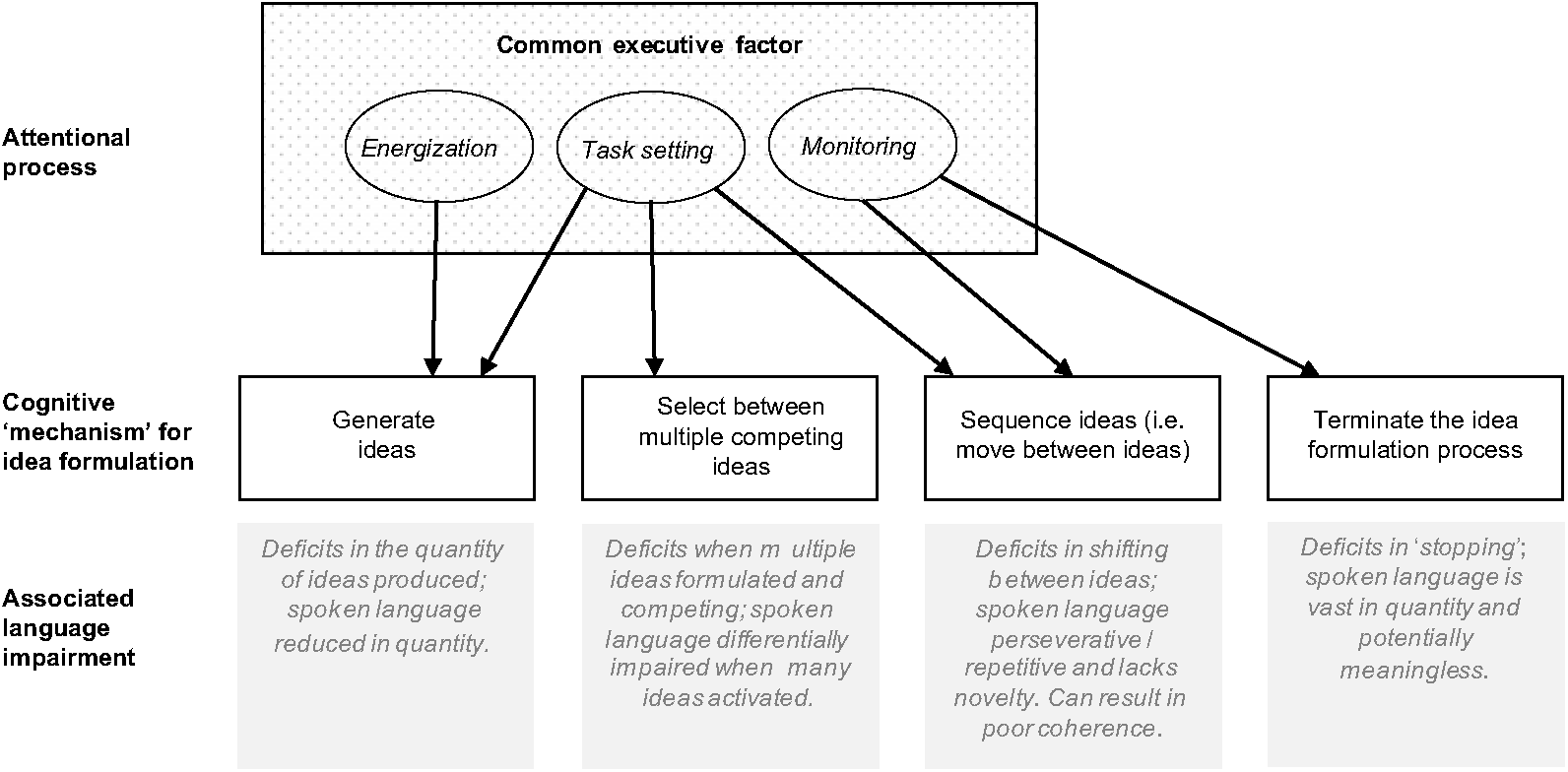
One framework that adopts the diversity view and provides an account of how complex, higher-order cognition is underpinned by separable and functionally distinct frontal supervisory (‘executive’) attentional processes was proposed by Stuss et al. (Reference Stuss, Alexander, Shallice, Picton, Binns, Macdonald, Borowiec and Katz2005), Stuss and Alexander (Reference Stuss and Alexander2007), and Stuss, Shallice, Alexander, and Picton (Reference Stuss, Shallice, Alexander and Picton1995). A series of lesion studies resulted in the localisation and definition of a triad of frontal attentional processes: energization, task setting and monitoring (Stuss & Alexander, Reference Stuss and Alexander2007; see below for examples of how each process relates to the formulation of content for propositional language production). Energization is the process of initiating and sustaining a response; task setting is establishing a stimulus–response relationship; and monitoring requires checking the task over time and adjusting behaviour accordingly (Stuss & Alexander, Reference Stuss and Alexander2007; Stuss, Reference Stuss2011). Friedman and Miyake (Reference Friedman and Miyake2017) suggested that the frontal executive attentional processes of Stuss et al. (Reference Stuss, Alexander, Shallice, Picton, Binns, Macdonald, Borowiec and Katz2005) and Stuss and Alexander (Reference Stuss and Alexander2007) may represent a fractionation of the common underlying executive factor proposed by Miyake et al. (Reference Miyake, Friedman, Emerson, Witzki, Howerter and Wager2000) and Miyake and Friedman (Reference Miyake and Friedman2012) (see Figure 3).
Schematic representation of the idea formulation process, indicating how the executive attentional processes of Stuss and Alexander (Reference Stuss and Alexander2007) may underpin different mechanisms of idea formulation and the propositional language impairments associated with disruptions to each mechanism. Idea formulation is one aspect of conceptualisation, and this schematic is not intended to be a comprehensive explanation of idea formulation. Note that this is based on small clinical samples and these hypotheses await confirmation.

Executive Attention and Propositional Language Production
In a narrative review, Alexander (Reference Alexander2006) discussed the production of propositional language as a complex, goal-directed behaviour, subserved by the executive attentional processes proposed by Stuss et al. (Reference Stuss, Alexander, Shallice, Picton, Binns, Macdonald, Borowiec and Katz2005) and Stuss and Alexander (Reference Stuss and Alexander2007). Alexander (Reference Alexander2006) suggested that impairments in discourse production more closely resemble disorders of action planning than they do any typical form of aphasia, although it is important to note that this paper was largely descriptive and his argument arose from small clinical samples. This idea has been echoed more recently by Cannizzaro and Coelho (Reference Cannizzaro and Coelho2013), who suggested that propositional language ‘lies at the intersection of cognition and language as goal-directed behaviour guides language’ (p. 541).
Based on Alexander (Reference Alexander2006), the distinct roles of the three frontal executive attentional processes in the formulation of ideas for propositional language production are illustrated with Figure 1 as an example. Energization allows the speaker to initiate and sustain their attention to the communicative intention, for example, the jet-ski, and then supports the continued scanning of the picture for additional aspects or ‘ideas’ to be inserted. Task setting allows the speaker to decide what information is relevant and appropriate with regard to the goal, the listener’s needs and the context: is this a picture from a personal holiday, or a newspaper article about a jet-skiing accident? Who is the communicative partner? Finally, monitoring allows the speaker to check whether the content of their language output is consistent with their established intention and remains appropriate as the context changes: has the narrative become tangential to the goal? Has an additional member been added to the conversation? The same core ideas are reflected in the idea formulation stage of Sherratt’s (Reference Sherratt2007) model of discourse generation, in the ‘selection and topicalisation of information’ (task setting), the ‘generation, selection and chunking of propositions’ (energization), and the ‘top–down and bottom–up processing’ that occurs throughout the discourse process (monitoring). Although Alexander (Reference Alexander2006) and Sherratt (Reference Sherratt2007) provided a theoretical basis upon which to consider how executive attentional processes and spoken language intersect, experimental evidence is still required to clarify how specific aspects of idea formulation rely on specific executive attentional processes. The following sections present some of the existing evidence from ageing, clinical and neuroimaging studies.
EVIDENCE FROM AGEING AND CLINICAL INVESTIGATIONS
One method of gaining insight into the relationship between executive attention and idea formulation is to investigate populations in which propositional language is disrupted. The content of propositional language shows age-related changes (e.g., Kemper et al., Reference Kemper, Thompson and Marquis2001), and may become impaired in neurodegenerative disease (e.g., Alzheimer’s disease [AD] – Engelman, Agree, Meoni, & Klag, Reference Engelman, Agree, Meoni and Klag2010; progressive supranuclear palsy [PSP] – Robinson et al., Reference Robinson, Shallice and Cipolotti2006; Robinson, Spooner & Harrison, Reference Robinson, Spooner and Harrison2015; frontotemporal dementia – Snowden, Griffiths, & Neary, Reference Snowden, Griffiths and Neary1996) or following acquired brain injury (e.g., Robinson, Blair, & Cipolotti, Reference Robinson, Blair and Cipolotti1998; Sherratt & Bryan, Reference Sherratt and Bryan2012; Robinson, Butterworth et al., Reference Robinson, Butterworth and Cipolotti2015; Villard & Kiran, Reference Villard and Kiran2017).
Healthy and Pathological Ageing
With regard to healthy ageing, there is evidence that the spontaneous speech of older adults has reduced positional density (i.e., idea density) compared to younger adults (e.g., Kemper et al., Reference Kemper, Thompson and Marquis2001). Propositional density is a measure of the number of ideas relative to the number of words produced (Kintsch & Keenan, Reference Kintsch and Keenan1973), and represents the efficiency of idea communication, or ‘how efficiently information can be concatenated into a single sentence’ (Kemper & Sumner, Reference Kemper and Sumner2001, p. 319). This ‘processing efficiency’ essentially imposes a limit on how many ideas can be processed at one time (Kemper & Sumner, Reference Kemper and Sumner2001). Therefore, it is unsurprising that low propositional density has been linked to executive dysfunction, evidenced by poor performance on inhibition and word fluency tasks, in older adults (see ‘off-target verbosity’ studies: e.g., Arbuckle, Nohara-LeClair, & Pushkar, Reference Arbuckle, Nohara-LeClair and Pushkar2000). It has been argued that underlying executive function deficit (specifically ‘inhibition’) allows irrelevant thoughts and associations to intrude, rendering the propositional language ‘meandering’ and off-topic: many words but few ideas are produced (Gold, Andres, Arbuckle, & Schwartzman, Reference Gold, Andres, Arbuckle and Schwartzman1988; Hasher & Zacks, Reference Hasher, Zacks and Bower1988; Pushkar et al., Reference Pushkar, Basevitz, Arbuckle, Nohara-LeClair, Lapidus and Peled2000). Similarly, Soares et al. (Reference Soares, de Oliveira, de Macedo, Tomás, Picanço-Diniz, Bento-Torres, Bento-Torres and Picanço-Diniz2015) reported that older adults’ picture descriptions included fewer ideas than those of younger adults. Models of cognitive ageing generally acknowledge that executive attention, executive functions and processing speed decline with age (e.g., Andres & Van der Linden, Reference Andres and Van der Linden2000), which may contribute to difficulties in efficiently formulating propositional content for expression in older adults.
In an extensive body of work, Kemper et al. (Reference Kemper, Herman and Lian2003); Kemper, Herman, and Nartowicz (Reference Kemper, Herman and Nartowicz2005); Kemper et al. (Reference Kemper, Schmalzried, Herman, Leedahl and Mohankumar2009); and Kemper, Hoffman, Schmalzried, Herman, and Kieweg (Reference Kemper, Hoffman, Schmalzried, Herman and Kieweg2011) employed dual-task paradigms to investigate how propositional language output is affected by divided attentional demands in younger and older adults. For example, Kemper et al. (Reference Kemper, Hoffman, Schmalzried, Herman and Kieweg2011) demonstrated that planning and producing propositionally dense language is associated with a ‘dual-task cost’ (i.e., reduced performance on the concurrent task), and that, on the whole, the costs are greater for those with poorer working memory and/or processing speed. Dual-tasking (also ‘divided attention’) as a behaviour draws heavily on executive attentional processes (Logie, Reference Logie2016); however, it is unclear whether a mechanism of idea formulation relating directly to the efficiency of idea expression, potentially underpinned by ‘dual-attention’ processes, exists. Similarly, Wright, Capilouto, Srinivasan, and Fergadiotis (Reference Wright, Capilouto, Srinivasan and Fergadiotis2011) reported that attention, defined as performance on the Comprehensive Trail Making Test Trail 5 (Reynolds, Reference Reynolds2002) and the Stroop task (Golden, Reference Golden2002), correlated with the number of propositions generated by older adults on a story-telling task. Although the work by Kemper et al. (Reference Kemper, Herman and Nartowicz2005, Reference Kemper, Schmalzried, Herman, Leedahl and Mohankumar2009, Reference Kemper, Hoffman, Schmalzried, Herman and Kieweg2011) and Wright et al. (Reference Wright, Capilouto, Srinivasan and Fergadiotis2011) provides important evidence for the role of attention in the generation of propositions, future studies should consider how different aspects of attention task performance, which relate to slightly different attentional processes, may be associated with certain aspects of idea formulation. For example, on the Trail Making task used by Wright et al. (Reference Wright, Capilouto, Srinivasan and Fergadiotis2011), loss-of-set errors could be linked to monitoring, and relate to the number of tangential or ‘off-topic’ ideas formulated, while slow but accurate performance could correspond to energization, and relate to the total number of ideas formulated. This finer grained analysis would help define the differential contributions of executive attentional processes to idea formulation, from which newer and more comprehensive models of spoken language production can be developed.
Propositional density has also been the subject of research in AD. Lower propositional density in written prose from early adulthood is associated with AD in later life (neuropathologically confirmed AD – Snowdon et al., Reference Snowdon, Kemper, Mortimer, Greiner, Wekstein and Markesbery1996; clinical AD diagnosis – Engelman et al., Reference Engelman, Agree, Meoni and Klag2010), and propositional density, alongside executive functions, is known to decline rapidly with the progression of AD (Kemper et al., Reference Kemper, Thompson and Marquis2001). Furthermore, lower propositional density in older age is associated with increased subsequent cognitive decline (Farias et al., Reference Farias, Chand, Bonnici, Baynes, Harvey, Mungas, Simon and Reed2012). This suggests that the ability to efficiently generate and communicate ideas early in life may be predictive of cognitive impairment later in life, and it may be that propositional density represents a proxy for ‘cognitive reserve’ (Engelman et al., Reference Engelman, Agree, Meoni and Klag2010).
Right Hemisphere and/or Diffuse Damage
While left-hemisphere damage is generally associated with typical forms of aphasia (e.g., Wernicke’s aphasia, Broca’s aphasia, anomic aphasia, conduction aphasia), higher-level language difficulties have been documented in patients with right-hemisphere brain damage (e.g., Bloom, Borod, Obler, & Gerstman, Reference Bloom, Borod, Obler and Gerstman1993; Marini, Reference Marini2012; Sherratt & Bryan, Reference Sherratt and Bryan2012). For example, the content of the spontaneous speech of patients with right-hemisphere damage has been described as tangential and rambling (e.g., Alexander, Benson & Stuss, Reference Alexander, Benson and Stuss1989), characterised by the increased use of clarity disruptors (e.g., indefinite terms, filler sentences, empty phrases, task-related comments) and a paucity of informative content (e.g., Bartels-Tobin & Hinckley, Reference Bartels-Tobin and Hinckley2005; Sherratt & Bryan, Reference Sherratt and Bryan2012). This stands in contrast to relatively preserved microlinguistic abilities (Marini, Reference Marini2012). The insufficient propositional content in the narratives of patients with right-hemisphere damage has been attributed to deficits in executive function (e.g., Bartels-Tobin & Hinckley, Reference Bartels-Tobin and Hinckley2005).
Furthermore, traumatic brain injury (TBI) commonly results in diffuse brain damage. Patients with TBI have been found to produce language reduced in propositional density (Coelho, Grela, Corso, Gamble, & Feinn, Reference Coelho, Grela, Corso, Gamble and Feinn2005), and their narratives include more irrelevant or topic-incongruent information (Coelho, Reference Coelho2002; Marini, Galetto et al., Reference Marini, Galetto, Zampieri, Vorano, Zettin and Carlomagno2011). Qualitatively, the spontaneous speech of TBI patients is confused, confabulatory and tangential (Davis & Coelho, Reference Davis and Coelho2004; Marini, Galetto et al., Reference Marini, Galetto, Zampieri, Vorano, Zettin and Carlomagno2011). Again, executive dysfunction has been reported to explain poor propositional language abilities in TBI patients (Bosco, Parola, Sacco, Zettin, & Angeleri, Reference Bosco, Parola, Sacco, Zettin and Angeleri2017).
Aphasia
Several studies have linked the impairment of spoken language, or aphasia, to executive dysfunction and/or attentional deficits (see Villard & Kiran, Reference Villard and Kiran2017 for a review). It has been demonstrated that individuals with aphasia show impaired performance compared to controls on tasks measuring visual, auditory and cross-modal-orienting attention (Robin & Rizzo, Reference Robin and Rizzo1989), divided attention (Erickson, Goldinger, & LaPointe, Reference Erickson, Goldinger and LaPointe1996), sustained attention (‘vigilance’: Laures, Reference Laures2005) and selective attention (Peach, Newhoff, & Rubin, Reference Peach, Newhoff and Rubin1993), and although these studies conceptualise attention as a neuropsychological construct (i.e., observable behaviour on neuropsychological tasks), when considered at the process level they all include executive attentional components. Moreover, language deficits tend to become more pronounced as attentional demands increase (Murray, Holland, & Beeson, Reference Murray, Holland and Beeson1997). Indeed, Hula and McNeil (Reference Hula and McNeil2008) proposed that aphasia occurs due to the impairment of attentional processes that support language. However, this view has not gone uncontested, and the degree to which executive aspects of attention and language impairments are associated in aphasia remains the subject of debate (Murray, Reference Murray2012; Villard & Kiran, Reference Villard and Kiran2017).
Regardless of whether language deficits are primary, as in aphasia, or observed in terms of propositional content as in healthy ageing, right-hemisphere damage or TBI, the role of executive cognition is a common theme. However, no mechanistic account has emerged from this research, possibly because deficits tend to be broad. Instead, careful and detailed case studies of patients with a rare language disorder, frontal dynamic aphasia, have allowed for the generation of hypotheses regarding specific mechanisms for idea formulation.
Frontal dynamic aphasia
The term ‘frontal dynamic aphasia’ was coined by Luria, but was previously described by Goldstein (Reference Goldstein1948) as ‘central motor aphasia’. Frontal dynamic aphasia is characterised by severely reduced propositional language output in the context of intact articulation and core language functions (e.g., naming, reading, repetition, comprehension). These patients have the requisite core language skills but do not use them to communicate ideas (i.e., generate propositional language), and therefore the hallmark is a severe and disproportionate reduction in propositional language output (Robinson, Shallice, & Cipolotti, Reference Robinson, Shallice and Cipolotti2005). Luria described patients with frontal dynamic aphasia as being ‘completely deprived of spontaneous speech and seldom using it for the purposes of communication’ (Luria, Reference Luria1970, p. 199). Also discussed as ‘aphasia without aphasia’, or an ‘aspontaneity of thought’, dynamic aphasia is pertinent because it sits at the language–cognition border, and therefore affords a unique opportunity to investigate the mechanisms involved in formulating propositional content for expression.
Current evidence points to two distinct forms of dynamic aphasia. The first form is associated with a specific idea selection deficit, which occurs when multiple ideas are simultaneously activated and the speaker is required to select from among competitors. This most often occurs following lesions to the LIFG (Costello & Warrington, Reference Costello and Warrington1989; Robinson et al., Reference Robinson, Blair and Cipolotti1998; Robinson et al., Reference Robinson, Shallice and Cipolotti2005; for a similar pattern from a left basal ganglia lesion, see Crescentini, Lunardelli, Mussoni, Zanini, & Shallice, Reference Crescentini, Lunardelli, Mussoni, Zanini and Shallice2008; for a group study of focal LIFG lesions, see Robinson, Shallice, Bozzali, & Cipolotti, Reference Robinson, Shallice, Bozzali and Cipolotti2010). This selection deficit is observed on sentence-level generation tasks where the oral generation of a word, phrase or sentence is required in response to a sentence (e.g., When you go to bed, turn off the: ‘light’), phrase (e.g., The man sat in the dentist chair: ‘and had a tooth removed’) or single-word stimulus (e.g., Spain: ‘Spain is a country in Europe’). A characteristic pattern is observed such that performance is impaired when a stimulus elicits multiple competing propositions (e.g., There was nothing wrong with the: ‘car’, ‘person’, ‘computer’, etc.) as compared to when a dominant proposition is elicited (as per examples above). This selection deficit has been isolated to the conceptual or ‘idea’ level, as opposed to the lexical level, because naming (i.e., lexical selection) remains intact in these patients (Robinson et al., Reference Robinson, Blair and Cipolotti1998, Reference Robinson, Shallice and Cipolotti2005; see also Barker & Robinson, Reference Barker and Robinson2019 for a case series of left temporal patients in whom lexical selection was impaired but ‘idea selection’ was intact). ‘Idea selection’ is a mechanism of message formulation that awaits future research in larger-scale studies and non-neurological populations. Future studies should administer tasks tapping idea selection in healthy adults, including but not limited to the tasks described above, in order to investigate whether increased competition between ideas for expression affects the generation of propositional language. One would hypothesise that greater selection demands would be associated with language that is slower or reduced in quantity in healthy adults. A recent study found that older adults were slower than younger adults on an experimental task tapping idea selection; the authors argued that this may partially explain propositional language declines in older adults (Madden, Sale, & Robinson, Reference Madden, Sale and Robinson2018), but this remains to be tested. Furthermore, it is unclear which executive attentional processes underpin this selection mechanism. Correlating performance on executive attentional tasks with selection performance might provide insight.
There is a second, rarer, form of dynamic aphasia: patients who present with markedly reduced propositional language output but intact performance on idea selection tasks. Instead, these patients fail tasks that require the spontaneous generation of multiple connected sentences, such as picture description or topic discussion. This form is domain-general, encompassing both verbal and non-verbal functions. It is generally observed in patients with diffuse bilateral frontal and subcortical damage, and may be linked to disrupted frontostriatal circuits or superior medial frontal damage (Barker, Nelson, O’Sullivan, Adam, & Robinson, Reference Barker, Nelson, O’Sullivan, Adam and Robinson2018). Several case studies have documented this form of dynamic aphasia, and, although single cases have limited generalisability, they comprise detailed behavioural experiments that spark hypotheses to be tested in larger-scale research. In cases of dynamic aphasia, a common thread emerges in interpretation: the role of attention and executive cognition.
Seminally, Esmonde, Giles, Xuereb, and Hodges (Reference Esmonde, Giles, Xuereb and Hodges1996) documented three patients with PSP and dynamic aphasia, and suggested that there was a breakdown of the higher-level language processes such as planning and initiation. In the same year, Snowden et al. (Reference Snowden, Griffiths and Neary1996) reported the case of one K.C., whose dynamic aphasia presented in the context of frontal lobe degeneration and was impaired on verbal fluency and sequencing tasks. The authors concluded that her impairment was in the temporal integration of language and noted the possible influence of attention, self-monitoring and checking. Similarly, Gold et al. (Reference Gold, Nadeau, Jacobs, Adair, Rothi and Heilman1997) reported on patient C.O. whose dynamic aphasia followed bilateral striatocapsular infarctions and a secondary right hemisphere infarct. C.O. showed impairments on task tapping executive functions (i.e., Wisconsin Card Sort Task, Trail Making B Task), and had reduced verbal and non-verbal fluency, leading the authors to suggest that executive dysfunction and problems formulating concepts for expression might best explain his dynamic aphasia.
Building on this, Robinson et al. (Reference Robinson, Shallice and Cipolotti2006) documented the case of K.A.S., who failed tasks requiring the generation of multiple connected sentences and had reduced and perseverative performance on verbal and non-verbal fluency tasks. The authors termed the underlying faulty mechanism the ‘generation of a fluent sequence of novel thought’, driven by a domain-general deficit in generating potential ideas or messages (‘generation’), and in recruiting executive attentional processes to shift between ideas (‘fluent sequencing’). Similarly, Bormann, Wallesch, and Blanken (Reference Bormann, Wallesch and Blanken2008) presented the case of H.K., who was impaired on verbal fluency, attention and working memory tasks. Bormann et al. (Reference Bormann, Wallesch and Blanken2008) concluded that, like K.A.S., H.K. was impaired in generating a ‘fluent sequence of novel thought’, and that executive dysfunction or executive attentional deficits might be involved. Recently, the case of W.A.L. demonstrated a pure idea generation deficit without a concurrent sequencing impairment, which was discussed in terms of an impairment in the executive attentional process of energization (Robinson, Spooner & Harrison, Reference Robinson, Spooner and Harrison2015). Energization has since been linked to idea generation for propositional language in a case series of PSP patients (Barker et al., Reference Barker, Nelson, O’Sullivan, Adam and Robinson2018).
The recurrent mention of attention and executive functions as relating to the paucity of spontaneous speech in the second form of dynamic aphasia suggests that executive attentional processes may be involved in idea formulation, and there is preliminary evidence that energization may play a role. However, these processes need to be isolated and linked to specific aspects of propositional language in healthy adults and/or other neurological populations. For example, energization can be measured via fluency tasks and other experimental tests (see Stuss & Alexander, Reference Stuss and Alexander2007); an analysis of spontaneous speech (e.g., number of ideas generated), as it relates to performance on energization tasks, would address the degree to which this process is involved in normal propositional language production.
Jargon aphasia
Although deficits in formulating content for propositional language may result in a lack of propositional language output, as per dynamic aphasia, there exist cases in which large amounts of language are produced but the output is devoid of propositional content. One such example is that of jargon aphasia: an acquired language disorder in which a vast quantity of meaningless spontaneous speech is produced. Patients with jargon aphasia produce well-articulated and fluent, but ‘uncontrolled’, unintelligible, spoken language (Alajouanine, Sabouraud, & de Ribaucourt, Reference Alajouanine, Sabouraud and de Ribaucourt1952). In this way, jargon aphasia may represent somewhat of a ‘mirror contrast’ to dynamic aphasia. Some have suggested that jargon aphasia may be underpinned by a deficit in the executive attentional process of ‘monitoring’, rendering the individual unaware that their language output is meaningless (e.g., Marshall, Reference Marshall2006; Moses, Nickels, & Sheard, Reference Moses, Nickels and Sheard2004). However, accounts of the specific cognitive mechanisms involved are largely non-existent. In a single case report of jargon aphasia, Robinson, Butterworth, and Cipolotti (Reference Robinson, Butterworth and Cipolotti2015) proposed the existence of an additional mechanism of message formulation, related to the ‘termination processes’ that stops the generation of new messages (Robinson, Butterworth et al., Reference Robinson, Butterworth and Cipolotti2015). The authors speculated that this mechanism draws on the executive function of inhibition and the executive attentional process of monitoring.
Taken together, the cases of dynamic aphasia and jargon aphasia provide preliminary evidence for four mechanisms of idea formulation: (1) idea selection, which is associated with lesions to the LIFG, (2) the generation of novel ideas and (3) their sequencing, which implicates bilateral frontal and frontostriatal areas, and (4) the termination process, likely also supported by frontal regions. Robinson (Reference Robinson2013) suggested these mechanisms of idea formulation map onto Butterworth’s (Reference Butterworth and Butterworth1980) four ‘control module’ functions – initiate, operate, check and terminate – which can be coarsely linked to the frontal executive attentional processes of Stuss and Alexander (Reference Stuss and Alexander2007). Figure 3 provides a schematic overview of potential interactions between these mechanisms and executive attentional processes, and the associated propositional language impairments. However, this is currently speculative and these hypotheses require future research in larger samples.
Overall, research with clinical populations and single case studies represents an important advance in clarifying the specific cognitive mechanisms involved in propositional language production. However, research with clinical populations, particularly single cases, is fundamentally limited in that patients often present with multiple deficits, and it remains unclear whether the relationship between executive attention and spoken language simply reflects co-existing difficulties.
NEURAL CORRELATES OF PROPOSITIONAL LANGUAGE: EVIDENCE FROM NEUROIMAGING
Functional Imaging in Healthy Adults
To understand the neuroanatomical regions involved in propositional language production, functional brain imaging (e.g., functional magnetic resonance imaging [fMRI] or positron emission tomography [PET]) constitutes a powerful mode of investigation. By observing the brain ‘at work’, the localised brain activity that underpins specific cognitive processes can be better understood. However, studying propositional language using brain imaging presents a unique set of challenges beyond those already associated with imaging techniques (for discussions of these methodological issues, see Gracco, Tremblay, & Pike, Reference Gracco, Tremblay and Pike2005; Price, Reference Price2012; Wise & Geranmayeh, Reference Wise, Geranmayeh, Hickok and Small2016). Nonetheless, imaging studies have identified multiple brain regions implicated in spoken language, which is unsurprising considering the multiple levels of processing involved and the integration of linguistic and non-linguistic components (Blank et al., Reference Blank, Scott, Murphy, Warburton and Wise2002; Troiani et al., Reference Troiani, Fernandez-Seara, Wang, Detre, Ash and Grossmann2008).
In an influential PET study, Braun, Guillemin, Hosey and Varga (Reference Braun, Guillemin, Hosey and Varga2001) identified a widespread network of brain regions active during propositional language production regardless of production modality (i.e., spoken English vs. American Sign Language). Regions included the frontal operculum, anterior insula, supplementary motor areas, lateral premotor areas, medial prefrontal cortices, superior and middle temporal areas, inferior angular gyri, lateral occipital regions, precuneus, posterior cingulate and parahippocampal gyri. The authors argued that the conceptual/‘idea’ and lexico-semantic stages of spoken language are supported by more posterior bilateral regions and the anterior left-lateralised anterior regions are associated with phonology and articulationFootnote 3 (Braun et al., Reference Braun, Guillemin, Hosey and Varga2001). Similarly, Blank et al. (Reference Blank, Scott, Murphy, Warburton and Wise2002) contrasted propositional language (e.g., describing personal experiences) and non-propositional language (‘automatic’: e.g., counting, reciting nursery rhymes) using PET. Largely reproducing the results of Braun et al. (Reference Braun, Guillemin, Hosey and Varga2001), the authors identified that the superior and middle frontal gyri, supplementary motor area, posterior cingulate, angular gyri and left middle temporal gyrus were activated to a greater degree during propositional language production. The authors speculated that interactions between temporal and frontal regions are necessary for the formulation of propositional language (Blank et al., Reference Blank, Scott, Murphy, Warburton and Wise2002). Interestingly, several regions reported by Braun et al. (Reference Braun, Guillemin, Hosey and Varga2001) and Blank et al. (Reference Blank, Scott, Murphy, Warburton and Wise2002) (bilateral angular gyri, posterior cingulate, medial prefrontal cortex, precuneus) were later identified as key nodes of the default-mode network (DMN). The DMN is generally considered to be active during ‘passive’ thought, such as reminiscing, thinking about future events or thinking about oneself (Buckner, Andrews-Hanna, & Schacter, Reference Buckner, Andrews-Hanna and Schacter2008), and therefore it is logical that generating personal narratives activates these brain regions.
Using fMRI, Troiani et al. (Reference Troiani, Fernandez-Seara, Wang, Detre, Ash and Grossmann2008) reported somewhat similar results: during picture description, bilateral inferior frontal cortices, and left dorsal frontal, temporal–parietal and temporal–occipital regions, were activated. The authors speculated that inferior frontal regions support the high-level organisational component of narrative production; dorsal frontal areas may be associated with working memory; and temporal–parietal–occipital regions are involved with the integration of semantic information and inferring meaning (Troiani et al., Reference Troiani, Fernandez-Seara, Wang, Detre, Ash and Grossmann2008). Another fMRI study demonstrated involvement of the precuneus during high-level conceptualisation of an idea or ‘message’ (Grande et al., Reference Grande, Meffert, Schoenberger, Jung, Frauenrath, Huber, Hussmann, Moormann and Heim2012).
Taken together, these studies, alongside those of others (e.g., Awad, Warren, Scott, Turkheimer, & Wise, Reference Awad, Warren, Scott, Turkheimer and Wise2007; Brownsett & Wise, Reference Brownsett and Wise2010; Tremblay & Small, Reference Tremblay and Small2011), suggest that propositional language production is supported by a widely distributed network of brain regions. These neuroanatomical correlates are corroborated by studies in clinical populations (e.g., Borovsky, Saygin, Bates, & Dronkers, Reference Borovsky, Saygin, Bates and Dronkers2007; Gorno-Tempini et al., Reference Gorno-Tempini, Ogar, Brambati, Wang, Jeong, Rankin, Dronkers and Miller2006; Naeser et al., Reference Naeser, Martin, Baker, Hodge, Sczerzenie, Nicholas, Palumbo, Goodglass, Wingfield, Samaraweera, Harris, Baird, Renshaw and Yurgelun-Todd2004). There is some evidence that initiation processes and conceptual (idea formulation) aspects of language are supported by frontal–parietal brain regions (Blank et al., Reference Blank, Scott, Murphy, Warburton and Wise2002; Braun et al., Reference Braun, Guillemin, Hosey and Varga2001; Brownsett & Wise, Reference Brownsett and Wise2010; Grande et al., Reference Grande, Meffert, Schoenberger, Jung, Frauenrath, Huber, Hussmann, Moormann and Heim2012; Troiani et al., Reference Troiani, Fernandez-Seara, Wang, Detre, Ash and Grossmann2008), suggesting similar neuroanatomical underpinnings to executive attention (Stuss & Alexander, Reference Stuss and Alexander2007). By contrast, temporoparietal activation seemingly reflects engagement of a semantic support system (Braun et al., Reference Braun, Guillemin, Hosey and Varga2001; Troiani et al., Reference Troiani, Fernandez-Seara, Wang, Detre, Ash and Grossmann2008) and lexical processes (Braun et al., Reference Braun, Guillemin, Hosey and Varga2001).
FUTURE DIRECTIONS AND CONCLUSION
Future studies should be designed to isolate and specify mechanisms involved in idea formulation, in order to inform the development of more comprehensive models of spoken language production. However, given the complexity of propositional language and executive attentional processes, fine-grained and theoretically driven analyses are critical. For example, we have presented some evidence that the Stuss and Alexander (Reference Stuss and Alexander2007) model of frontal executive attention provides a framework for identifying, defining and testing potential mechanisms of idea formulation (e.g., energization and idea generation; Barker et al., Reference Barker, Nelson, O’Sullivan, Adam and Robinson2018; Robinson et al., Reference Robinson, Butterworth and Cipolotti2015). Many neuropsychological tests thought to tap attention are influenced by multiple cognitive processes (e.g., Trail Making, Stroop; see Aron, Robbins, & Poldrack, Reference Aron, Robbins and Poldrack2014), so future work should focus on isolating specific processes based on theoretical models. Again, using the Stuss and Alexander (Reference Stuss and Alexander2007) framework as an example, an extensive literature has established the executive attentional processes that underlie performance on particular tasks from the Rotman-Baycrest Battery to Investigate Attention (RoBBIA; Stuss et al., Reference Stuss, Alexander, Shallice, Picton, Binns, Macdonald, Borowiec and Katz2005). Analysing performance on the RoBBIA tasks alongside specific aspects of propositional language production would provide a starting point for this investigation. However, the Stuss and Alexander (Reference Stuss and Alexander2007) model defines only three frontal attentional processes and was not intended to present an entirely comprehensive account (Stuss, Reference Stuss2011), and therefore other theoretical frameworks should be considered in future work. Furthermore, many models of attention postulate a parallel stream of ‘bottom–up’ attention, which is automatic and stimulus-driven, in contrast to ‘executive’ attention (e.g., Corbetta & Shulman, Reference Corbetta and Shulman2002; Posner, Reference Posner1980). Future studies investigating mechanisms of idea formulation consider bottom–up attentional processes, as well as attention-modulating factors such as emotion.
Brain stimulation techniques, such as transcranial magnetic stimulation (TMS) and transcranial direct current stimulation (tDCS), are potentially exciting tools for the investigation of propositional language. The advantage is that neural activity can be reversibly altered, which allows causality to be inferred. This movement has begun in the literature: Nozari, Arnold, and Thompson-Schill (Reference Nozari, Arnold and Thompson-Schill2014) demonstrated that anodal tDCS to the left prefrontal cortex was associated with fewer idea repetitions and ‘premature commitment’ errors on a propositional language task. The authors suggested that this is due to failures of attentional monitoring; these results should be replicated and this hypothesis tested by explicitly measuring monitoring as an attentional process and correlating performance with propositional language errors. Brain stimulation may be useful in testing the mechanism of idea selection, particularly since existing clinical evidence suggests that it is supported by the LIFG. Indeed, preliminary results suggest that tDCS over the LIFG facilitates idea selection and generation in older adults (Madden, Sale, & Robinson, Reference Madden, Sale and Robinson2019).
Finally, future studies could consider developing experimental propositional language tasks that place differential demands on idea formulation mechanisms. For example, Nozari et al. (Reference Nozari, Arnold and Thompson-Schill2014) employed a novel propositional language task that required the description of geometric shape movement to increase inter-individual consistency in sentence content. This is one instance of a novel experimental language task being developed to isolate specific aspects of conceptualisation, in this case ‘perseveration’ and ‘planning’ of content. Similarly, Madden et al. (Reference Madden, Sale and Robinson2018) designed two paradigms that experimentally varied the demands placed on idea selection and generation mechanisms, and found that older adults performed poorly relative to younger adults. Future paradigms could consider designing tasks that interrupt sequencing or termination, perhaps by placing demands on monitoring.
This work has important theoretical implications: while the linguistic and articulatory stages are generally well defined in models of spoken language production, there is minimal elaboration on the cognitive processes required for successful pre-verbal conceptualisation. Idea formulation is one aspect that should be defined in terms of the mechanisms and cognitive processes involved in future models of spoken language production. This will allow frameworks to be more comprehensive and precise in their predictions. For example, preliminary results from Barker et al. (Reference Barker, Nelson, O’Sullivan, Adam and Robinson2018) suggest that in Sherratt’s (Reference Sherratt2007) model of discourse production, the ‘input trigger’ does not necessarily take the form of an external stimulus (as Sherratt posits); rather, it may be internally generated via the process of energization.
Overall, the ability to communicate ideas is central to the human experience, yet the cognitive mechanisms involved remain poorly understood. The formulation of content for propositional language draws critically on broader cognition, and it is likely that many additional, as yet undiscovered, mechanisms of idea formulation exist. Research in healthy adults has demonstrated that attention (e.g., divided attention; Kemper et al., Reference Kemper, Herman and Nartowicz2005, Reference Kemper, Schmalzried, Herman, Leedahl and Mohankumar2009, Reference Kemper, Hoffman, Schmalzried, Herman and Kieweg2011) is related to the density of ideas in propositional language, but as yet no pre-verbal mechanism of ‘efficiency’ has been defined. Clinical investigations have demonstrated the importance of attentional process and executive functions in propositional language production, which converges with neuroimaging evidence showing that prefrontal and frontoparietal areas are strongly associated with the top–down organisational aspects of language. From a practical or therapy perspective, it is critical to consider spoken language impairments beyond naming, comprehension, reading and repetition skills. Future research in this area can aid the development of strategies for patients in whom propositional language is impaired. Although the relationship between language and broader cognition is natural and intuitive, it is highly complex and additional studies investigating the mechanisms involved in formulating propositional content are needed. It is vital, both theoretically and practically, to consider disorders of language production in the context of broader cognition, and work investigating the nature of the language–cognition interface is in its infancy.
ACKNOWLEDGEMENTS
At the time of writing, MB was supported by an Australian Government Research Training Program Scholarship. GR is currently supported by the Australian NHMRC Boosting Dementia Research Leadership Fellowship Scheme. The authors declare no conflicts of interest.
CONFLICTS OF INTEREST
The authors have nothing to disclose.