Introduction
As one of the most devastating illnesses, schizophrenia entails serious social and health implications, and presents demographic and geographic differences. Recent systematic reviews found that incidence rates of schizophrenia vary widely from 7.7 to 43.0 per 100 000 persons (McGrath et al. Reference McGrath, Saha, Welham, El Saadi, McCauly and Chant2004; Saha et al. Reference Saha, Chant and McGrath2008). Moreover, this incidence was significantly higher in men than in women (Aleman et al. Reference Aleman, Kahn and Selten2003) with a male/female incidence rate ratio (95% C.I.) of 1.4 (0.9–2.4) (McGrath, Reference McGrath2006).
Several studies argue that people who live in cities had approximately double the risk of developing schizophrenia compared with those who live in rural areas (Pedersen & Mortensen, Reference Pedersen and Mortensen2001; Harrison et al. Reference Harrison, Fouskakis, Rasmussen, Tynelius, Sipos and Gunnell2003; Moreno-Küstner et al. Reference Moreno-Küstner, Mayoral, Navas-Campaña, García-Herrera, Angona and Martín2014; Vassos et al. Reference Vassos, Agerbo, Mors and Pedersen2016). Recently, a meta-analysis also reported that people living in urban areas had significantly higher rates of incidence of schizophrenia compared with those living rural-mixed places (Vassos et al. Reference Vassos, Pedersen, Murray, Collier and Lewis2012).
Cantor-Graae & Selten (Reference Cantor-Graae and Selten2005) in a systematic review and meta-analysis showed that immigration is a risk factor for schizophrenia. Two subsequent studies showed that this risk continued in the second generation of immigrants (Cantor-Graae & Pedersen, Reference Cantor-Graae and Pedersen2007; Cantor-Graae & Pedersen, Reference Cantor-Graae and Pedersen2013). Studies with African-Caribbean immigrants in the UK, people from Surinam and Moroccans in the Netherlands, plus several groups of immigrants in Denmark have presented higher incidence rates compared with the native population (McGrath et al. Reference McGrath, Saha, Welham, El Saadi, McCauly and Chant2004; Bourque et al. Reference Bourque, van der Ven and Malla2011; Tortelli et al. Reference Tortelli, Errazuriz, Croudace, Morgan, Murray and Jones2015).
Burns et al. (Reference Burns, Tomita and Kapadia2014) found a significant association between increased income inequality in the country and increased incidence rates of schizophrenia. However, Saha et al. (Reference Saha, Welham, Chant and McGrath2006) did not find these results, arguing that there is no evidence to suggest that the incidence of schizophrenia differs between nations when we adjust rates according to the economic situation.
As we are interested in the epidemiological aspects of the incidence of psychotic disorders, we have included in our study the same variables that McGrath et al. (Reference McGrath, Saha, Welham, El Saadi, McCauly and Chant2004) and Kirkbride et al. (Reference Kishida, Yang, Quartz, Quartz and Montague2012) included in their systematic review, in order to update their studies. Therefore, we have considered it appropriate to conduct a systematic review to encompass the variability of all psychotic disorders worldwide and to be able to give an up-to-date assessment of recent trends in this area.
We think that systematising this information is very important in order to advance our understanding of the above-mentioned issues and to provide valuable clues as to the aetiology of this disorder.
Taking into account the previous scientific literature, our hypotheses about the epidemiology of psychotic disorders are as follows: (1) incidence rates of non-affective psychoses will be higher than the affective ones; (2) incidence rates of psychosis will be higher in men than in women; (3) incidence rates of psychosis will be higher in the population living in urban settings compared with those living in rural ones; (4) incidence rates of psychosis will be higher in the immigrant population than in the native population; (5) incidence rates of psychosis will be higher in the population living in environments with a lower socio-economic level.
Therefore, our principle objective was to give a broad and updated picture of the incidences among different psychotic disorder subgroups worldwide from 2000 to 2015. Specifically, we report the variation of these incidence rates depending on:
1. Gender
2. Urbanicity
3. Immigration
4. Socio-economic level
Methodology
Identification of the studies
We conducted a systematic search of electronic bibliographic indexes of published research. The broad search string ‘schizophreni* OR psychosis’ AND ‘incidence OR epidemiolog*’ was used to search within the abstract section of articles found in CINAHL, MEDLINE, PSYCINFO, PUBMED, and SCOPUS, during the period 2000–2015.
Studies had to meet the following inclusion criteria to be included in the review: (a) population-based incidence studies of any psychotic disorder. We refer to population-based studies as any study carried out on the general population residing within a defined catchment area and include people who made first contact or first admission with health or social services, thus excluding people living in institutions or prisons; (b) age range: there must be at least a 30-year difference between the lower and upper age included in each study, in order to obtain a wide age range; (c) with original data; (d) published during the period from 2000 to 2015. We chose this range because we found a systematic review with similar characteristics as ours carried out with studies prior to 2001 (McGrath et al. Reference McGrath, Saha, Welham, El Saadi, McCauly and Chant2004); (e) setting: all over the world; (f) any language included.
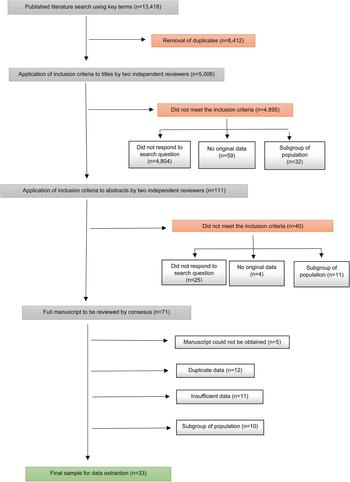
With the electronic search in the five databases, we found a total of 13 418 articles. After removing 8412 duplicate reports, we obtained 5006 articles to review. Two independent reviewers (BM, MC) applied inclusion criteria to the titles and abstract, resulting in 71 articles for full-text review. We were not able to locate five articles (Hickling et al. Reference Hickling, McCallum, Nooks and Rodgers-Johnson2001; Rivera Martinez & Galáz González, Reference Rivera Martinez and Galáz González2002; Hamada et al. Reference Hamada, Ohta and Nakane2006; Toshitani et al. Reference Toshitani, Kobayashi, Osawa, Kato, Eto and Ojima2006; Hart et al. Reference Hart, Doherty and Walsh2007). Finally, we read the full text of 66 papers.
We excluded articles: (a) which included duplicated data (N = 12). When several publications presented overlapping data in time frame and setting, the most informative version (which contains the most extended information) of the study was included and the others were discarded; (b) with insufficient data to analyse incidence rates (N = 11). The papers did not show incidence rates data and they did not present sufficient data to calculate it; (c) which were carried out with a subgroup of the population (N = 10) (children, adolescents, soldiers, persons in prisons or institutions).
We identified a final sample of 33 reports for data extraction (Fig. 1).
Flow diagram (selection strategy) of included studies.

In this review, we refer to a ‘citation’ as any unique article from the published literature included in our analyses. We distinguish this from a ‘study’, which refers to any of the studies described in an article. Thus, it is important to highlight that one citation may generate many items of information on the incidence of psychosis.
Data extraction
Detailed data were independently abstracted by two reviewers using a data collection sheet.
After consensus, the information extracted was stored and managed with Microsoft Excel.
Studies with original data collected from the population living within a certain area of influence were divided into four categories: (1) core studies: studies which provided an overall incidence rate and different rates for men and for women (Man/Woman); (2) urbanicity studies: studies which provided incidence rates in urban and in rural settings, depending on population density (Urban/Rural); (3) immigration studies: studies which provided incidence rates for immigrants and natives (Immigrant/Native). Studies classified immigrant/native according to their place of birth and parental place of birth; (4) socio-economic level studies: studies which provided incidence rates for different socio-economic levels (Deprivation/Non Deprivation area).
Three different types of variables were gathered: (a) citation-level variables: author, published year, title, country, setting, age range, last year of case ascertainment period and duration in years, study type, case ascertainment, diagnostic instrument, classification system, diagnosis, and quality ranking of the study; (b) rate-level variables: number of cases, population at risk, IR per 100 000 persons and IRR for different risk factors (gender, urbanicity, immigration and socio-economic level). (c) Meta-variables: variation of rates depending on gender, urbanicity, immigration and socio-economic level.
Given the limited space, presenting all details of these studies in tabulated form is not possible. All variables drawn from each study are available in the dataset of the incidence studies (Supplementary Dataset S1). Variables used to characterise incidence studies are presented in Supplementary Table S1.
The quality of the studies was assessed using the quality criteria scale proposed by Saha et al. for epidemiological studies (Reference Saha, Chant, Welham and McGrath2005). Each study was allocated a quality score depending on the following indicators: rate type, case ascertainment, diagnostic system, method of diagnostic assignment, information on rates (raw data, age and/or sex standardised (If age/sex standardised, method provided), confidence intervals, numerator/denominator match in time and numerator/denominator match in space) and additional ‘merits’ (text on inter-rater reliability and leakage study). This quality index can range from 1 to 16 points. Details about this information are provided in Supplementary Table S2.
Diagnostic outcomes
A variety of diagnostic classification systems was used to estimate incidence rates of psychotic disorders (RDC (Research Diagnostic Criteria); DSM-III-R (Diagnostic and Statistical Manual of Mental Disorders-III-R), DSM-IV (Diagnostic and Statistical Manual of Mental Disorders-IV); ICD-9 (International Classification of Diseases-9), ICD-10 (International Classification of Diseases-10)).
Original studies presented their diagnostic outcome as follows: (a) affective and non-affective psychoses (which can also include substance-induced and/or organic psychosis); (b) non-affective psychoses; (c) non-affective psychosis, substance-induced psychosis, organic psychosis, psychotic disorder in childhood; (d) schizophrenia, schizophreniform disorder and schizoaffective disorder; (e) schizophrenia, schizophreniform disorder, schizoaffective disorder and delusion disorder; (f) schizophrenia and schizophreniform disorder; (g) schizophrenia; (h) affective psychoses; (i) bipolar disorder with psychotic features; (j) depressive disorder with psychotic features; (k) substance-induced and organic psychosis; (l) substance-induced psychosis.
To facilitate the subsequent analysis, we grouped the diagnoses into the following categories: NAP, AP – non-affective and affective psychoses (a); NAP – non-affective psychoses (b,c,d,e,f,g); S – schizophrenia (f); AP – affective psychoses (h,i,j); SIP – substance-induced psychosis (k,l).
Data analysis
We created a dataset with the Microsoft Excel programme to classify the studies into core studies, urbanicity studies, immigration studies and socio-economic level studies. In this chart, we added data on the number of total cases found in the studies, the total population at risk, raw or standardised IR (for persons, male and female according to diagnoses, and for urban and rural population if applicable) and the IRR for different risk factors (male/female, urban/rural area, immigrant v. native and deprivation/non-deprivation area). If the studies did not provide them, such data were calculated from the data shown. These data were presented with confidence intervals of 95%. If they were not offered, they were calculated (Supplementary Table S3). Most of the studies did not provide standardised rates, therefore, in studies where both rates were presented, we chose raw rates. In studies only providing the standardised rate (indicated in the chart), it was treated as a raw rate, assuming minimal distortion for results (Kirkbride et al. Reference Kirkbride, Errazuriz, Croudace, Morgan, Jackson and Boydell2012).
In addition, a meta-analysis was performed in R with the package metaphor open-source software environment R 2.12.0 (Rothman et al. Reference Rothman, Greenland and Lash2008; Stijnen et al. Reference Stijnen, Hamza and Ozdemir2010; Viechtbauer, Reference Viechtbauer2010). To calculate mean effect (mean incidence) by a group of diagnosis, a random effects model was used and the results were weighted by the size of each study. To calculate the mean effect (mean incidence) by diagnosis and gender, urbanity, immigration and socio-economic level, a random effects model was used and the results were weighted according to the size of the study. In order to estimate if the differences between the IR by gender, urbanicity, immigration and socio-economic level were statistically significant, the Mantel–Haenszel method for statistical incidence was used for the incidence rate ratio. We used I2 statistics to estimate variation in rates between citations.
This systematic review was based on the criteria guideline of the PRISMA statement (Annex 1). This review has been entered in PROSPERO, with registration number CRD42016050902.
Results
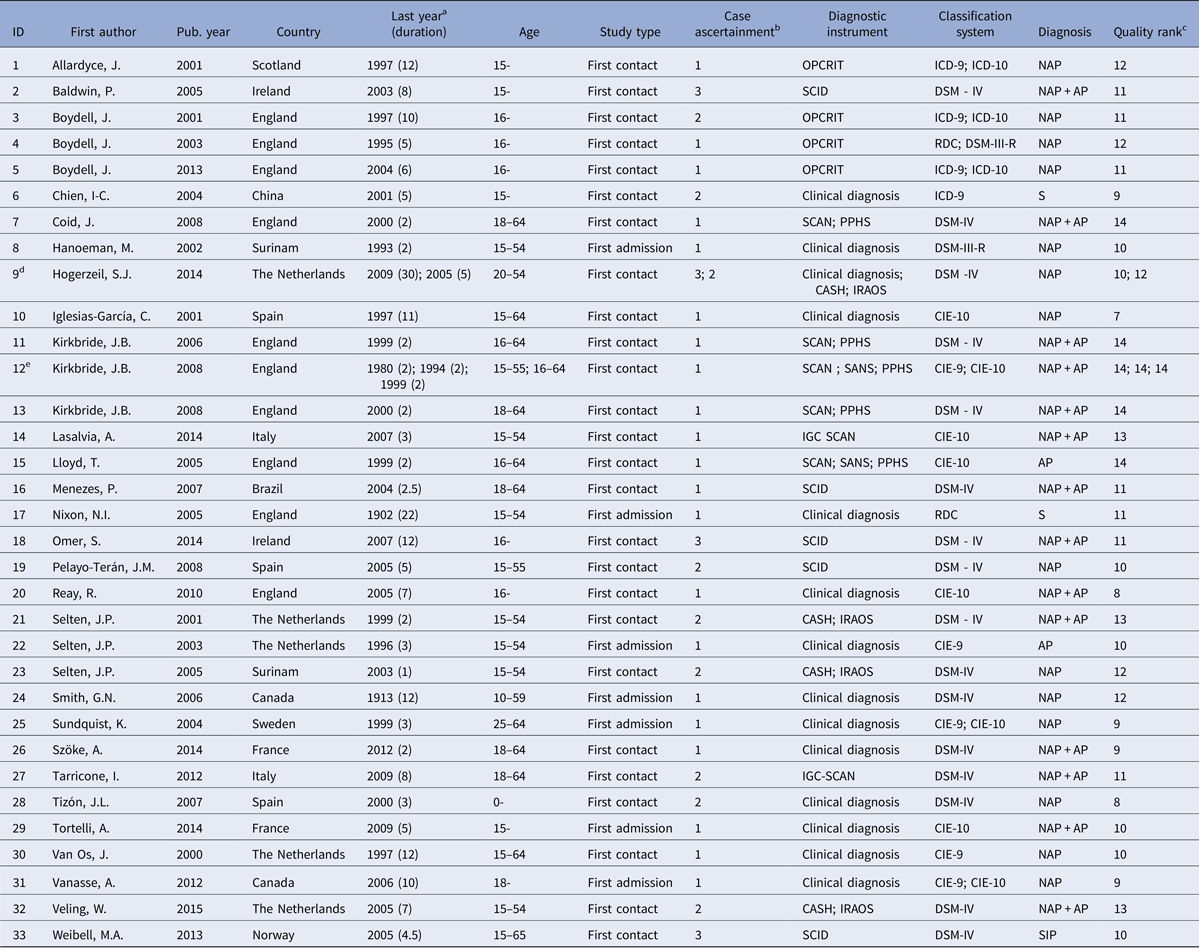
We identified 33 articles which provided original data on the incidence of psychotic disorders worldwide during the period 2000–2015 [1–33]. All of the studies were conducted in 13 different countries (Brazil, Canada, China, England, Ireland, France, Italy, Norway, Scotland, Spain, Sweden, The Netherlands and Surinam).
This systematic review identified 30 citations that provided overall incidence rates of psychotic disorders (core studies) [1,2,3,4,6–23,25,27–33], eight compared incidence rates between urban and rural populations [1,6,11,14,18,19,25,26], 14 did so between incidence rates in immigrants and in natives or whites, mainly [3,5,6,7,11,13,14,15,21,22,23,24,27,29], and four between incidence rates in socio-economic-depressed areas and rates in higher status areas [3,14,18,32].
The majority of the studies were first contact type [1–7,9–16,18–21,23,26–28,30,32,33], while only seven were first admission type [8,17,22,24,25,29,31]. In 23 studies, case ascertainment was carried out in Mental Health Services [1,4,5,7,8,10–17,20,22,24–26,29–31], nine in Mental Health Services and in Primary Care [3,9,19,21,23,27,28,32] and four in Mental Health Services, Primary Care and in Social Services [2,9,18,33]. Sixteen studies used face-to-face diagnostic interviews such as a diagnostic tool [2,7,9,11–13,15,16,18,19,21,23,32,33], six studies used standardised case note review [1,3–5,14,27] and, finally, 14 used clinical diagnosis (recorded in hospital notes or registries) [6,8–10,17,20,22,24–26,28–31]. The quality indexes of the 36 studies ranged from 7 [10] to 14 [7,11–13,15]; the mean was 11.19. Estimated variation in rates between citations was very high, I 2 = 1 in all cases, showing great variability between studies.
The main characteristics of the citations are shown in Table 1.
Characteristics of all articles analysed in this review. 2000–2015

OPCRIT, Operational Criteria Checklist for Psychotic Illness and Affective Illness; SCID, Structured Clinical Interview for DSM Disorders; SCAN, Schedules for Clinical Assessment in Neuropsychiatry; IGC SCAN, Item Group Checklist of the Schedule for Clinical Assessment in Neuropsychiatry; SANS, Schedule for the Assessment of Negative Symptoms; PPHS, Personal and Psychiatric History Schedule; CASH, Comprehensive Assessment of Symptoms and History; IRAOS, Retrospective Assessment of the Onset of Schizophrenia. DSM-III-R, Diagnostic and Statistical Manual of Mental Disorders-III-R; DSM-IV, Diagnostic and Statistical Manual of Mental Disorders-IV; ICD-9- International Classification of Diseases-9; ICD-10, International Classification of Diseases-10; RDC, Research Diagnostic Criteria. AP, Affective Psychosis; NAP, Non-Affective Psychosis; S, Schizophrenia; SIP, Substance-Induced Psychosis.
a Last year of case ascertainment period (duration in years).
b Case ascertainment: 1-Treated in Psychiatric Health Services; 2-Treated in Psychiatric Health Services and Primary Care; 3-Treated in Psychiatric Health Services, Primary Care and Social Services.
c Study quality according to criteria outlined in methodology. Min = 0, Max = 16.
d Two different studies were carried out in this citation.
e Three different studies were carried out in this citation.
Incidence rates of psychotic disorders
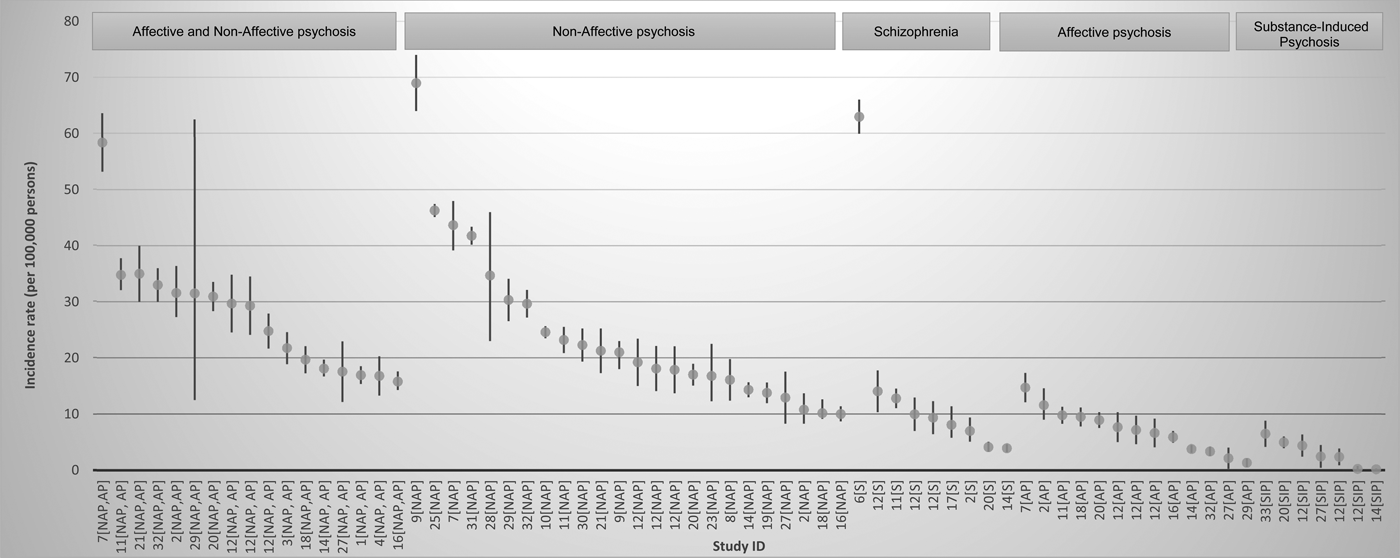
The incidence rates of different psychotic disorders are plotted in Fig. 2. We can observe how the incidence rates were higher in non-affective psychoses than in affective ones. We also show forest plots for incidence rates for non-affective psychosis and affective (Supplementary Fig. S1), for non-affective psychosis (Supplementary Fig. S2), for affective psychosis (Supplementary Fig. S3), for schizophrenia (Supplementary Fig. S4) and for substance-induced psychosis (Supplementary Fig. S5). We next detail the incidence rates by diagnostic groups:
Reported overall incidence rate of various psychotic disorders. AP, affective psychosis; NAP, nonaffective psychosis; S, schizophrenia; SIP, substance-induced psychosis.

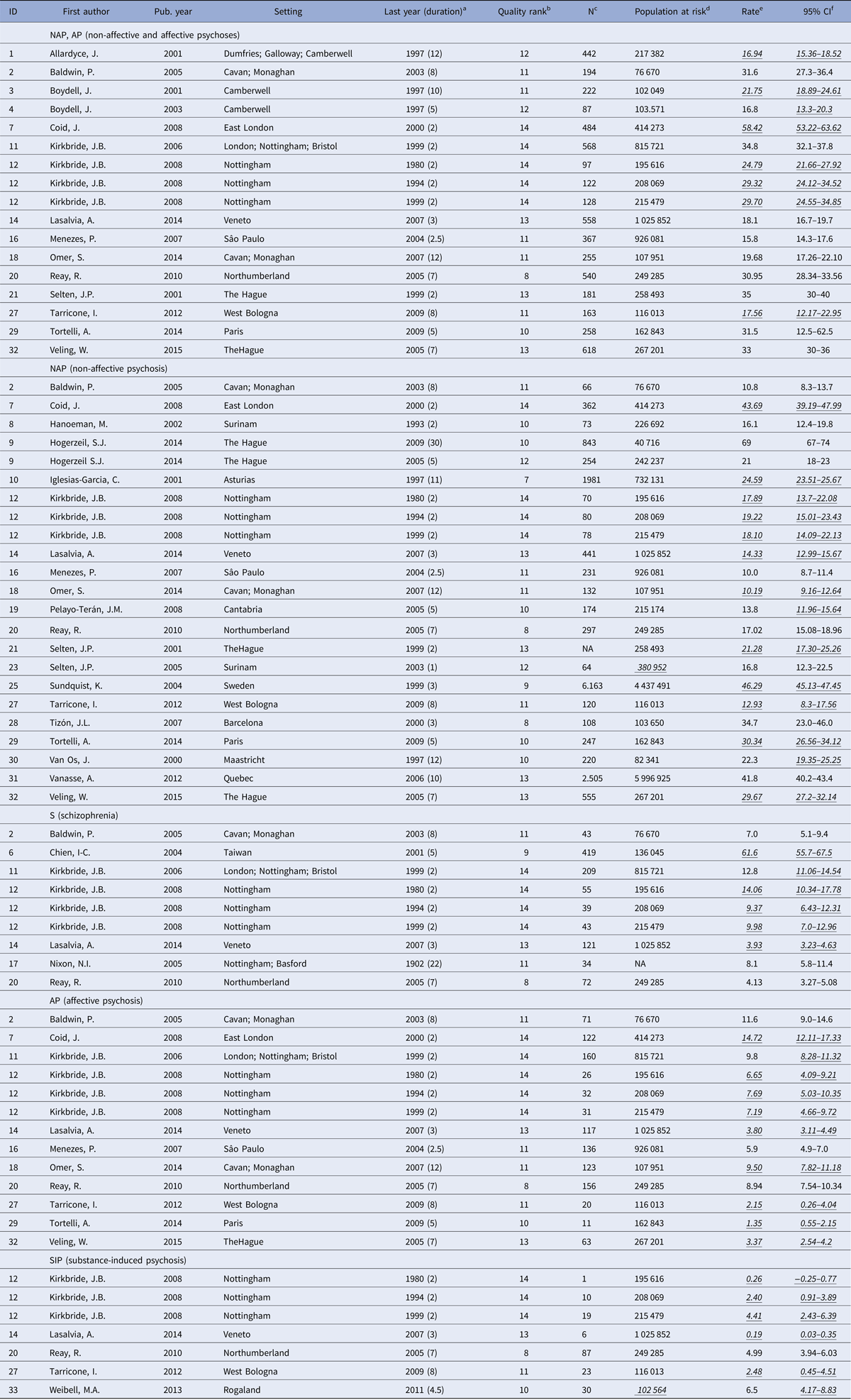
There were 16 citations that showed incidence rates for non-affective and affective psychoses [1,2,3,4,7,11,12,14,16,18,20,21,25,27,29,32] (Table 2). We are referring to any rate that considered affective and non-affective psychoses, although some also included substance-induced and/or organic psychosis. Incidence rates ranged from 15.8 [16] to 58.42 [7] per 100 000 persons; the latter rate was found in a study carried out in East London. The mean effect was 27.42 (22.37–32.46) per 100 000 (Supplementary Table S7).
Overall Incidence rate of psychosis by diagnosis: core studies

a Last year of case ascertainment period (duration in years).
b Study quality according to criteria outlined in methodology. Min = 0, Max = 16.
c Numbers underlined in italics denote a derived N – not reported in the original citation but possible to derive from other provided data.
d Underlined in italics denotes derived population at risk.
e Crude incidence per 100 000 unless specified. Underlined in italics denotes derived rate.
f CI: Confidence interval. Underlined in italics denotes derived CI.
NA, no further information provided or derivable.
We found 20 citations which reported incidence rates for only non-affective psychosis (Table 2) [2,7,8,9,10,12,14,16,18,19,20,21,23,25,27,28,29,30,31,32], which varied from 10.0 [16] to 69.0 [9] per 100 000 persons. The latter was identified in a study conducted in The Hague. The mean effect was 22.53 (16.51–28.54) per 100 000 (Supplementary Table S7).
Regarding incidence rates for only schizophrenia, seven citations were found [2,6,11,12,14,17,20]. Incidence rates varied from 3.93 [14] to 61.6 [6] per 100 000 persons, which was found in a study in China. The mean effect was 14.55 (2.81–26.3) per 100 000 (Supplementary Table S7).
Incidence rates for affective psychoses were usually lower than for non-affective ones (Table 2). The former were obtained from 12 citations [2,7,11,12,14,16,18,20,25,27,29,32]. Rates ranged from 1.35 [29] to 14.72 [7] per 100 000 persons. This last rate was found in the aforementioned study carried out in East London. The mean effect was 7.12 (5.03–9.22) per 100 000 (Supplementary Table S7). (For calculations we have discarded rates that include only bipolar disorder or only depressive disorder with psychotic features).
Finally, five citations [12,14,20,27,33] (Table 2) reported incidence for substance-induced psychosis separately, which ranged from 0.19 [14] to 6.5 [33] per 100 000 persons. The mean effect was 3.03 (1.26–4.8) per 100 000 (Supplementary Table S7).
Gender
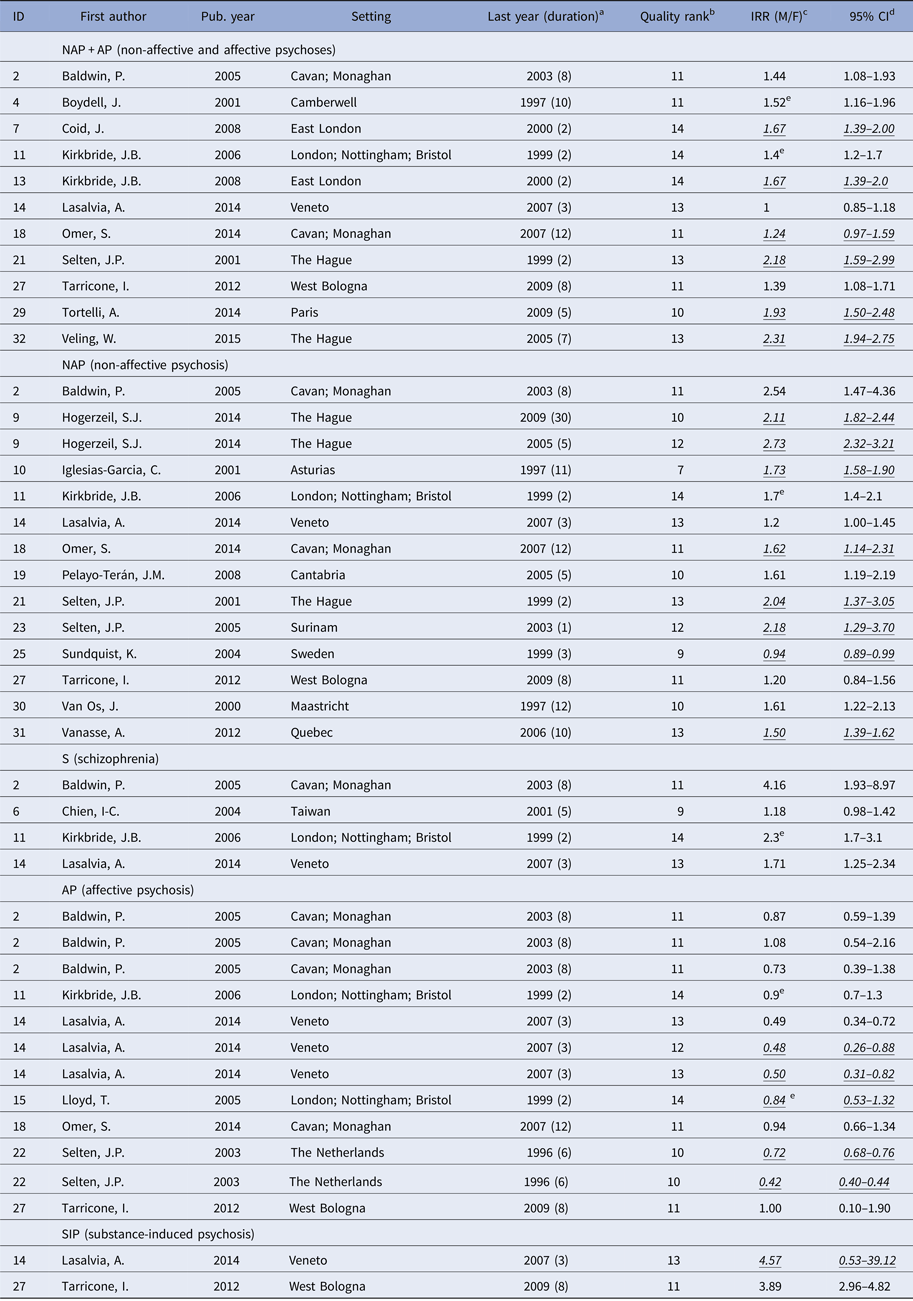
IRR by gender were found in 20 citations (when not provided, we calculated it) [1,4,6,7,9,10,11,13,14,15,18,19,21,23,25,27,29,30,31,32] (Table 3).
Incidence rate ratio of psychosis by gender and diagnosis: Core studies

a Last year of case ascertainment period (duration in years).
b Study quality according to criteria outlined in methodology. Min = 0, Max = 16.
c Incidence rate ratio male v. female. Underlined in italics denotes a derived IRR– not reported in original citation but possible to derive from other provided data.
d CI: Confidence interval. Underlined in italics denotes derived CI.
e Adjusted rate.
Examining IRR by diagnoses, firstly, we identified 11 citation that reported IRR for affective and non-affective psychoses [2,4,7,11,13,14,18,21,27,29,32]. The mean effect for men and for women was 41.99 (29.69–54.30) and 25.83 (19.40–32.26) per 100 000, respectively (Supplementary Table S8). IRR mean men/women was 1.54 (1.37–1.72) (Supplementary Table S8).
Secondly, we found 13 citations that showed IRR for non-affective psychosis [2,9,10,11,14,18,19,21,23,25,27,30,31]. The mean effect for men and for women was 32.86 (18.06–47.67) and 20.01 (10.7–29.31) per 100 000, respectively (Supplementary Table S8). IRR mean men/women were 1.08 (1.01–1.16) (Supplementary Table S8).
Thirdly, we identified four citations that reported IRR for schizophrenia [2,6,11,14]. The mean effect for men and for women was 9.05 (5.03–13.07) and 1.69 (−0.21 to3.59) per 100 000, respectively (Supplementary Table S8). IRR mean men/women were 8.52 (3.25–22.32) (Supplementary Table S8). Fourthly, IRR for affective psychosis were obtained from seven citations [2,11,14,15,18,22,27]. Contrary to non-affective psychosis, incidence for men was lower than for women in virtually all cases. The mean effect for men and for women was 5.28 (3.22–7.34) and 7.71 (4.46–10.96) per 100 000, respectively (Supplementary Table S8). IRR mean men/women were 0.53 (0.49–0.57) (Supplementary Table S8).Finally, two citations conducted gender incidence studies on substance-induced psychosis [14,27]. The mean effect for men and for women was 1.91 (−1.21 to 5.03) and 0.48 (−0.34 to 1.3) per 100 000, respectively (Supplementary Table S8). IRR mean men/women were 4.33 (0.36–51.76) (Supplementary Table S8).
Urbanicity
We identified eight citations which provided IRR by urbanicity level (when not provided, we calculated it) [1,6,11,14,18,19,25,26] (Supplementary Table S4). In the studies which provided several incidence rates according to urbanicity level, we included the lowest and the highest urbanicity level.
Examining IRR by diagnoses, firstly, we identified five citations that reported IRR for affective and non-affective psychoses [1,11,14,18,26]. The mean effect for urban and for the rural setting was 30.46 (17.20–43.72) and 17.80 (14.95–20.65) per 100 000, respectively (Supplementary Table S9). IRR mean urban/rural setting was 1.64 (1.38–1.95) (Supplementary Table S9).
Secondly, we found five citations that reported IRR for non-affective psychoses [11,14,19,25,26]. The mean effect for urban and for the rural setting was 34.57 (10.77–58.36) and 16.46 (9.15–23.78) per 100 000, respectively (Supplementary Table S9). IRR mean urban/rural setting was 2.25 (2.00–2.52) (Supplementary Table S9).
Thirdly, we identified three citations that reported IRR for schizophrenia [6,11,14]. The mean effect for urban and for the rural setting was 13.8 (−1.49 to 29.09) and 6.65 (3.61–9.69) per 100 000, respectively (Supplementary Table S9). IRR mean urban/rural setting was 1.64 (1.38–1.95) (Supplementary Table S9).
Finally, we found three citations that reported IRR for affective psychosis [11,14,26]. The mean effect for urban and for the rural setting was 7.33 (1.84–12.82) and 3.79 (2.04–5.54) per 100 000, respectively (Supplementary Table S9). IRR mean urban/rural setting was 1.64 (1.21–2.25) (Supplementary Table S9).
Immigration
In our review, due to the great variability of immigrant groups included when analysing the incidence studies carried out on immigrants, we collected the most homogeneous estimates of IRR according to place of birth (or parental place of birth) in terms of the immigrant groups analysed from 14 citations (when not provided, we calculated it) [3,5,6,7,11,13,14,15,21,22,23,24,27,29] (Supplementary Table S5).
Most migrant group rates were compared with rates in the native population. When comparing different categories of immigrants (black immigrants, Moroccans, Surinamese, non-white immigrants or all immigrants treated as a block) with the native population, incidence rates were higher for the former regardless of the disorder studied. There were two studies that considered other comparisons. In a study conducted in the Netherlands and Surinam [23], they investigated incidence for non-affective psychotic disorders in the Surinamese population residing in the Netherlands with the Surinamese population living in Surinam, finding a higher incidence rate for the former with a statistically significant difference. In the second study [6] in Taiwan, the incidence of schizophrenia was compared between aboriginal and non-aboriginal populations, with a higher incidence for schizophrenia in the former, although the difference in this case, was not statistically significant.
Examining IRR by diagnoses, we found nine citations that reported IRR for affective and non-affective psychoses [3,5,7,11,13,14,21,27,29]. The mean effect for migrant and for native was 52.60 (35.47–69.73) and 16.58 (12.04–21.11) per 100 000, respectively (Supplementary Table S10). IRR mean migrant/native was 3.09 (2.74–3.49) (Supplementary Table S10).
Secondly, we identified six citations that reported IRR for non-affective psychoses [7,11,14,23,24,27]. The mean effect for migrant and for native was 39.41 (20.52–58.30) and 12.13 (7.93–16.32) per 100 000, respectively (Supplementary Table S10). IRR mean migrant/native was 3.08 (2.62–3.63) (Supplementary Table S10).
Thirdly, we found four citations that reported IRR for schizophrenia [6,11,13,14]. The mean effect for migrant and for native was 36.91 (−11.22 to 85.04) and 15.32 (−6.89 to 37.52) per 100 000, respectively (Supplementary Table S10). IRR mean migrant/native was 2.74 (2.04–3.67) (Supplementary Table S10).
Finally, we identified six citations that reported IRR for affective psychoses [7,11,13,14,15,22]. The mean effect for migrant and for native was 20.20 (10.34–30.07) and 11.03 (1.26–20.80) per 100 000, respectively (Supplementary Table S10). IRR mean migrant/native was 1.28 (1.23–1.34) (Supplementary Table S10).
Socio-economic level
We identified four citations which reported IRR of psychosis depending on socio-economic status (when not provided, we calculated it) [3,14,18,32] (Supplementary Table S6). As in the case of urbanicity, when a study provided several incidence rates according to socio-economic level of the area, we included the lowest and the highest socio-economic level.
Examining IRR by diagnoses, we found four citations that reported IRR for affective and non-affective psychoses [3,14,18,32]. The mean effect for deprivation and for non-deprivation areas was 34.40 (20.89–47.90) and 24.74 (10.03–39.46) per 100 000, respectively (Supplementary Table S11). IRR mean migrant/native was 1.78 (1.43–2.22) (Supplementary Table S11).
For the remaining diagnoses, we only found one study [14]. In this study, carried out by Lasalvia et al. in Italy, differences were statistically significant only when they considered affective and non-affective psychosis as a whole and non-affective psychosis separately, while the opposite occurred for schizophrenia separately and affective psychoses (both separately and as a whole).
Discussion
This systematic review updates existing knowledge regarding the incidence of psychotic disorders worldwide. To best of our knowledge, it is the only one that does so by analysing the different diagnostic groups separately. We also provide valuable data on how these incidence rates are influenced by certain factors, such as gender, urbanicity, immigration, and socio-economic level.
Overall incidence rates of psychosis
As in the recent systematic review carried out by Kirkbride et al. (Reference Kirkbride, Errazuriz, Croudace, Morgan, Jackson and Boydell2012), we found that incidence rates were higher for all psychoses as a whole, followed by incidence rates for non-affective psychoses and schizophrenia. Regarding affective psychoses, incidence rates were lower than for non-affective ones. When incidence rates were analysed for substance-induced psychosis, it was found that these psychoses were generally rare.
Gender
In our review, we found similar results to previous systematic reviews (Aleman et al. Reference Aleman, Kahn and Selten2003; McGrath et al. Reference McGrath, Saha, Welham, El Saadi, McCauly and Chant2004). Analysing the incidence of psychosis for all disorders, we found that the incidence was higher for men than for women (IRR = 1.54 [1.37–1.72])
Overall, a higher risk for psychosis in males than in females was found in most studies included in this review. However, an important fact found is that incidence rates may vary if we study each type of psychosis separately. For example, rates were higher for men than for women in case of non-affective psychoses, whereas for affective psychoses, rates were higher for women than for men. This result agrees with those found in the meta-analysis of Jääskeläinen et al. (Reference Jääskeläinen, Juola, Korpela, Lehtiniemi, Nietola and Korkeila2017), finding a higher proportion of women who presented psychotic depression v. schizophrenia.
These differences could be explained given the gender difference in age at onset in schizophrenia and related disorders, with an earlier age at onset in males (Bogren et al. Reference Bogren, Mattisson, Isberg, Munk-Jørgensen and Nettelbladt2010; Eranti et al. Reference Eranti, MacCabe, Bundy and Murray2013). A previous systematic review found strong evidence in favour of men and women having different susceptibility to schizophrenia in different stages of life, being higher in men than in women in all cases, and finding that this difference was higher at the age of 20–29 than at the age of 30–39 (van der Werf et al. Reference van der Werf, Hanssen, Köhler, Verkaaik, Verhey and van Winkel2014). However, in the studies included in this review, the lowest upper cut age was 54 years old. In addition, this effect of later onset in women than in men continues to occur for affective psychoses and yet in our review we found a higher incidence of affective psychosis in women (Bogren et al. Reference Bogren, Mattisson, Isberg, Munk-Jørgensen and Nettelbladt2010).
Finally, Petkary et al. (Reference Petkary, Mayoral and Moreno-Küstner2016) showed that the role of gender in schizophrenia has become a very important matter for designing effective psychosocial services to focus on patient needs.
Urbanicity
In our review, evidence indicates that there was an association between psychotic disorders and urbanicity, with increased rates in urban areas. We found only three studies which did not show statistically significant differences between urban and rural environments. In two of them (Lasalvia et al. Reference Lasalvia, Bonetto, Tosato, Zanatta, Cristofalo and Salazzari2014; Omer et al. Reference Omer, Kirkbride, Pringle, Russell, O'Callaghan and Waddington2014), the differences in the degree of urbanity of the locations studied were very small; thus explaining the results found. In the first study (Lasalvia et al. Reference Lasalvia, Bonetto, Tosato, Zanatta, Cristofalo and Salazzari2014), recruitment was carried out in Italy's Veneto region, which presented few urban–rural differences in key social variables, such as social disintegration, emigration, and level of the social network. The second study was conducted in Cavan and Monaghan (Ireland), a predominantly rural region, consisting of widely dispersed farms with a scattering of villages and small towns, in the absence of any major urban areas (Omer et al. Reference Omer, Kirkbride, Pringle, Russell, O'Callaghan and Waddington2014).
In line with other systematic reviews carried out on this subject (McGrath et al. Reference McGrath, Saha, Welham, El Saadi, McCauly and Chant2004; Kirkbride et al. Reference Kirkbride, Errazuriz, Croudace, Morgan, Jackson and Boydell2012; Vassos et al. Reference Vassos, Pedersen, Murray, Collier and Lewis2012), we found that incidence of schizophrenia and other psychotic disorders increased with the level of urbanicity. Although the literature shows that the association between affective psychoses and urbanicity are both contradictory and limited (Kelly et al. Reference Kelly, O'Callaghan, Waddington, Feeney, Browne and Scully2010), our results were stable regardless of the disorder studied.
These results are only applicable to developed countries. The few studies found in the literature on urbanicity and schizophrenia from the developing world reported no excess of cases of schizophrenia in urban compared with rural India or in semi-urban compared with rural Kenya (Kelly et al. Reference Kelly, O'Callaghan, Waddington, Feeney, Browne and Scully2010). Further information is needed to confirm this.
Despite the initial debates about whether living in large cities constituted a risk factor for developing the disorder or it was the disorder that led one to live in dense population settings, the recent literature supports the former position. There is considerable evidence showing an increase in the risk for schizophrenia and other non-affective psychoses as the level of urbanisation in the moment of birth increases (March et al. Reference March, Hatch, Morgan, Kirkbride, Bresnahan and Fearon2008; Heinz et al. Reference Heinz, Deserno and Reininghaus2013).
Van Os (Reference van Os2004) reviewed possible causes of this association, concluding that individuals with a genetic liability to schizophrenia are more vulnerable to the negative effects of urban areas, such as social fragmentation, poor cohesion, isolation, lack of perceived safety or social stress.
Finally, we consider that our results could be very useful in order to ensure early prevention and improve mental health services planning.
Immigration
According to previous reviews (McGrath et al. Reference McGrath, Saha, Welham, El Saadi, McCauly and Chant2004; Cantor-Graae & Selten, Reference Cantor-Graae and Selten2005; Kirkbride et al. Reference Kirkbride, Errazuriz, Croudace, Morgan, Jackson and Boydell2012), in our study we also found increased incidence rates of psychosis for immigrants compared with natives.
Due to the wide variability found in the groups of immigrants analysed, an analysis of the studies as a whole became difficult, so we tried to homogenise the data by extracting the most commonly studied groups, in this case, black immigrants. In other cases, the incidence rate took into account all races of local immigrants. Incidence rates were especially high among black immigrants compared with Asian or other immigrants from Eastern countries (Coid et al. Reference Coid, Kirkbride, Barker, Cowden, Stamps and Yang2008; Kirkbride et al. Reference Kirkbride, Barker, Cowden, Stamps, Yang and Jones2008a, Reference Kirkbride, Croudace, Brewin, Donoghue, Mason and Glazebrookb). In some studies, incidence rates among black immigrants are up to 8-fold higher than in white natives (Boydell et al. Reference Boydell, van Os, McKenzie, Allardyce, Goel and McCreadie2001).
Previous studies have shown that the increased risk of psychosis among immigrants clearly persists in the second generation (Cantor-Graae& Pedersen, Reference Cantor-Graae and Pedersen2007, Reference Cantor-Graae and Pedersen2013), suggesting that post-migration factors play a more important role than pre-migration factors or migration itself. The observed ethnic variability suggests that the risk could be mediated by the social context rather than a biological basis (Bourque et al. Reference Bourque, van der Ven and Malla2011). Recent studies have shown that in healthy people, factors such as lower education level and belonging to minority groups are associated with increased activity in the brain circuits involved in the regulation of emotions during the process of social interaction (Zink et al. Reference Zink, Tong, Chen, Bassett, Stein and Meyer-Lindenberg2008; Hooker et al. Reference Hooker, Gyurak, Verosky, Miyakawa and Ayduk2010; van Harmelen et al. Reference van Harmelen, van Tol, van der Wee, Veltman, Aleman and Spinhoven2010; Kishida et al. Reference Kishida, Yang, Quartz, Quartz and Montague2012; Servaas et al. Reference Servaas, Riese, Renken, Marsman, Lambregs and Ormel2013). These findings support the hypothesis that changes in the ability to regulate social stress contribute to the risk mechanism (Krabbendam et al. Reference Krabbendam, Hooker and Aleman2014). This evidence supports the rates in the black race being higher than the other races due to the high levels of social exclusion and racist discrimination to which they are potentially exposed (Lanier et al. Reference Lanier, Sommers, Fletcher, Sutton and Roberts2016; Taylor et al. Reference Taylor, Forsythe-Brown, Mouzon, Keith, Chae and Chatters2017). Moreover, high incidence found in immigrants could be influenced by the fact that they tend to settle in inner cities, where they are often exposed to social exclusion and discrimination (Heinz et al. Reference Heinz, Deserno and Reininghaus2013).
It was also demonstrated that the association between schizophrenia and migrant status in London varies according to the level of the size of the migrant group (Kelly et al. Reference Kelly, O'Callaghan, Waddington, Feeney, Browne and Scully2010). Minority ethnic groups are at an increased risk of psychosis in areas with low ethnic density (Heinz et al. Reference Heinz, Deserno and Reininghaus2013).
The high rates in these groups could be related to urbanicity. Allardyce et al. suggested that non-white individuals living in an urban area of London account for a large proportion of the increased urban incidence that they found (Allardyce et al. Reference Allardyce, Boydell, Van Os, Morrison, Castle and Murray2001).
Socio-economic level
Living in a lower socio-economic level environment has been consistently associated with an increased risk of developing schizophrenia for decades (Dean & Murray, Reference Dean and Murray2005; Ahmed El-Missiry et al. Reference Ahmed El-Missiry, Aboraya, Manseur, Manchester, France and Border2011; O'Donoghue et al. Reference O'Donoghue, Lyne, Renwick, Lane, Madigan and Staines2016).
The main obstacle that we found when analysing the relationship between the socio-economic level and the incidence of psychotic disorders is the different indexes used in each of the studies included in the review for the analysis of this risk factor. In each of the indexes, different variables have been included, such as unemployment, overcrowding, child poverty, lack of amenities, low earnings, no car and low level of education (Boydel et al. Reference Boydell, van Os, McKenzie, Allardyce, Goel and McCreadie2001); married individuals, separated or divorced or widowed, single-parent families, elementary school-level education, university qualification, living in rented accommodation, employment in the industrial sector, civil servants or people employed in the tertiary sector, and unemployed (Lasalvia et al. Reference Lasalvia, Bonetto, Tosato, Zanatta, Cristofalo and Salazzari2014); material deprivation (unemployment, social class, type of house tenure and car ownership) and social fragmentation (non-married adults, single person households, population turnover and private renting) (Omer et al. Reference Omer, Kirkbride, Pringle, Russell, O'Callaghan and Waddington2014); and mean income, housing quality, proportion of residents who are long-term unemployed, and mean educational level (Veling et al. Reference Veling, Susser, Selten and Hoek2015).
Due to this variability and the small sample analysed (only four studies), we cannot conclude that there was a clear increase of psychosis in lower socio-economic environments.
Limitations
It should be borne in mind that the incidence rates found reflect attended incidence, that is, incidence rates were based on the population which was attending any of the services mentioned above and not based on a community survey, thus the actual incidence may be underestimated.
Grey literature was not included and, despite a wide-ranging search carried out in the electronic databases, we are aware that we have not been able to assess all the published articles.
The major limitation of our study is the great methodological variability found in the original studies. This entailed some difficulties for later analysis, but we believe that the approach we have used to homogenise them, considering the variables that they had in common, helped ameliorate these problems. In any case, it would be necessary to analyse how such variability influences the results obtained.
Another related question is the significant variety of immigrant groups studied, as they were, in themselves, very heterogeneous. In this case, we selected for our analysis those immigrant groups most commonly studied among our citations. In addition to this, we have detected differences in the definition of immigrant throughout the included studies. Some speak of ethnicity, while others speak of migrant status. Most of them define immigrants according to their country of birth or that of their parents, and therefore, this is the definition we have adopted in our review. However, we are aware that in the studies analysed it is not clear that the assignment of black or white to individuals is at the individual level or at the ecological level (i.e., based on the majority race of their country of birth).
Given the marked difference between the age-specific incidence of most mental disorders for the two sexes, one limitation of our review is that by not taking into account age we inherently assumed a fixed sex-effect independent of age.
We have also analysed the studies taking into account only gender, urbanity, immigration and socio-economic level, and may have included other factors such as the country where each study was carried out, the differences in incidence rates over time, etc.
In addition, we are aware that our review contains a relatively small sample size, due to the comparatively short period of time we have restricted the search to. We consider that this sample is sufficient to show an updated view of the subject.
Finally, most of the incidence studies were carried out in Western Europe. We found few studies conducted in developing countries because, unlike prevalence studies, they are expensive and time-consuming, and sometimes complicated by the loss of cases. This would be a goal for the future, to get to know these incidence rates better and compare them with those of developed countries.
Conclusion
In this review, we have demonstrated the significant variability presented in the incidence rates of psychotic disorders during the last 15 years worldwide. Part of this apparent heterogeneity could be explained by the different diagnoses analysed in each study. Generally, incidence rates were higher for non-affective v. affective psychosis. In addition, we have presented data on how some risk factors intervene in this variability. Incidence rates were higher for men than for women in non-affective psychoses and lower than women in affective psychoses. They were also higher in urban v. rural areas and higher in immigrants (especially among black immigrant communities) compared with native populations.
We believe that this data can be potentially useful for generating new hypotheses on the aetiology of these disorders. A recent systematic review like this could also have important implications when it comes to health planning. We recommend that all these findings be taken into account for the planning of health services, in order to ensure that they are more effective (and efficient) when caring for such patients.
Funding
None.
Supplementary material
The supplementary material for this article can be found at https://doi.org/10.1017/S0033291718000235