Implications
Improved utilisation of fibrous plant biomass by herbivores can help off-set an increased demand for animal protein without direct competition with humans for plant biomass. Potential, scientific solutions exist or can be developed enabling a sustainable production method. Implementation of these solutions will also depend on macro-economic conditions and awareness of regional and global environmental concerns.
Introduction
With 26% of our planet surface covered by grasslands, a large quantity of solar energy is sequestered on planet Earth in the form of fibrous plants. Converting the solar energy captured within these fibrous plants into animal products in an efficient way may contribute to the increasing global demand for animal protein within the next decades. Herbivores are adapted to eat plants and to convert the energy and nutrients captured within fibrous biomass into products that can be utilised by other organisms within the food web (Strong and Frank, Reference Strong and Frank2010). This study focuses on food-producing, plant-eating animals that are of economic relevance in the temperate zone: cattle (Bos primigenus), sheep (Ovis aries) and goats (Capra aegagrus).
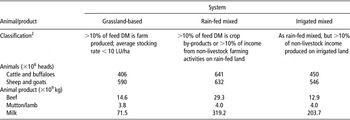
The temperate zone is defined as the climate zone between the polar and the tropical zone. Within the temperate zone, three main herbivore production systems can be defined (Table 1; Sere and Steinfeld, Reference Sere and Steinfeld1996; Steinfeld, et al., Reference Steinfeld, Wassenaar and Jutzi2006): grassland-based systems (e.g. New Zealand, Mongolia and South America), mixed rain-fed systems (e.g. North America, Europe, north-eastern Asia and South-American highlands) and mixed irrigated systems (e.g. Mediterranean, Korea, Japan).
Global livestock population and production in various production systemsFootnote 1

DM = dry matter.
1 Based on Food and Agriculture Organization statistical data and calculations by J. Groenewold (‘Classification and characterization of world livestock production systems’; unpublished report for the Food and Agriculture Organization, 2005).
2 Sere and Steinfeld (1996).
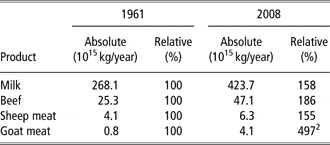
Despite the ability of herbivores to convert human-inedible fibrous biomass into human-edible food, the sustainability of this food production has been discussed extensively during the last decade (Gerber et al., Reference Gerber, Vellinga, Opio, Henderson and Steinfeld2010; Gill et al., Reference Gill, Smith and Wilkinson2010; Scollan et al., Reference Scollan, Greenwood, Newbold, Yáñes Ruiz, Shingfield, Wallace and Hocquette2011). Environmental sustainability can be defined as social and environmental practices that protect and enhance the human and natural resources needed by future generations to maintain a quality of life equal to or greater than our own (United States Environmental Protection Agency). Although the discussion on environmental sustainability considers the role of animals in the human food chain in relation to its effect on land use, mineral utilisation and animal welfare, discussions are mainly focused on the effects on climate change (Gill et al., Reference Gill, Smith and Wilkinson2010). The innovations in livestock practices in the last decades resulted in an increase in animal production (Table 2), thereby ensuring food supply in developed countries, but the increase in the concentration of greenhouse gases in our atmosphere and of minerals (N, P) in surface and ground water in regions with a high density in livestock operations also indicates that current livestock practices do not fully meet the definitions of environmental sustainability. While a growing number of people in the developing world are moving up the food chain, enjoying a richer and more diverse diet, so too are livestock. Traditional fibrous and energy-rich feedstuffs are in relative decline, and protein-rich feeds together with sophisticated additives that enhance feed conversion are on the rise. In 2004, a total of 690 million tonnes of cereals were fed to livestock (34% of the global cereal harvest) and another 18 million tonnes of oilseeds, mainly soya (Glycine max). In addition, 295 million tonnes of protein-rich processed by-products were used as feed (Steinfeld et al., Reference Steinfeld, Wassenaar and Jutzi2006).
Increase in livestock production by 20 most-producing countries between 1961 and 2008Footnote 1

1 From Food and Agriculture Organization statistical databases.
2 Mainly attributable to a 4000% increase in reported goat production in China.
The increase in the numbers and wealth of the global population not only increases the demand for animal protein but also the demand for fuel and for urban and recreational areas (Fresco et al., Reference Fresco, Dijk and de Ridder2007). The utilisation of fibrous biomass for second-generation ethanol production, the transformation of crop land into urban areas and the demand of citizens for attractive landscape may be conflicting with the required increase of biomass production to feed food-producing herbivores.
We divided the challenges for herbivore nutrition in the temperate zone into (1) challenges for the primary production of biomass to supply energy and nutrients for herbivores in a sustainable way and in competition with biomass production for food and fuel and (2) challenges for the secondary production of animal products from available biomass. Challenges will be different for different production systems and constraints and opportunities were analysed in the three different livestock production systems as classified by Sere and Steinfeld (Reference Sere and Steinfeld1996; Table 1).
Grassland-based systems
Description of grassland-based systems
Grasslands cover the largest area of land-based systems and are currently estimated to occupy some 26% of the earth's ice-free land surface (Steinfeld et al., Reference Steinfeld, Wassenaar and Jutzi2006). Grasslands include a large variety of agro-ecological contexts with different levels of biomass productivity, stocking rate, farm type, social development and agricultural context. Within grassland-based systems, Central and South America and the developed countries account for more than 75% of the world's meat production (Sere and Steinfeld, Reference Sere and Steinfeld1996). Although many of the better-watered parts of the world's grassland zones have been developed for arable farming, vast grazing lands still exist. Among the most important are the steppes that stretch from Mongolia and northern China to Europe, the Tibet–Qinghai Plateau and the adjacent mountain grazing of the Himalaya–Hindu Kush, the North-American prairies, the Australian grasslands; the Pampas, Chaco, Campos, Llanos and Cerrados pastures and the cold lands of Patagonia and the Altiplanos in South America, and the semi-arid grazed land in the Mediterranean Region, western Asia, Sahelian and the Sudano–Sahelian zone and in the eastern part of South Africa (Suttie et al., Reference Suttie, Reynolds and Batello2005).
Grazing systems are primarily found in more marginal areas that are unfit for cropping because of topography, low temperature or low rainfall. Range (native pasture) is the dominant feed for herbivores in those systems that are exposed to high variability in biomass production throughout the year due to normal seasonal variation and increasingly abnormal, extreme climate events. In these extensive systems, seasonal variation is normally absorbed by BW gain during the summer or raining periods and losses during the winter or dry periods, resulting in poor nutrient utilisation. Significant changes in resource endowment have brought about changes in the nature and extent of certain production systems. The increasing demand for arable land for crop production and the fact that there is basically no additional available land that can readily and sustainably be converted into pastures, except in parts of tropical Latin America, have important implications for the livestock sector. The lack of available new land prohibits a ‘horizontal’ expansion of existing modes of production, and forces the sector into rapid technological changes and search for alternative resources (Steinfeld et al., Reference Steinfeld, Wassenaar and Jutzi2006). Although in Latin America, expansion of the area dedicated to cereal production has been slow (3.9%), there was a 97% increase in the area under oil crops. Some countries have seen a particularly strong expansion of cropped area (Steinfeld et al., Reference Steinfeld, Wassenaar and Jutzi2006), most of it at the expense of forests (Brazil), but also at the expense of range areas like in the South-American Campos and Pampas zone (Pallarés et al., Reference Pallarés, Berretta and Maraschin2005). Most of this expansion is being driven by feed demand from developed countries and China. Concurrently, medium-term changes in New Zealand (Hodgson et al., Reference Hodgson, Cameron, Clark, Condron, Fraser, Hedley, Holmes, Kemp, Lucas, Moot, Morris, Nicholas, Shadbolt, Sheath, Valentine, Waghorn and Woodfield2005) involved the intensive use of irrigation by dairy farmers and a rapid increase in the area devoted to dairying, with expansion from traditional areas in North Island into new areas in South Island, and the removal of marginal land from sheep production for reforestation.
Challenges for plant biomass production in grassland-based systems
Plant biomass production in grassland-based systems can be improved both by increasing grassland mass production per se and by replacing low-productive grassland by crop fields.
For improving grassland mass production, water is a major factor in stock management and grass production in most extensive grazing lands. Access to water has been mentioned as the most limiting factor using grazing areas in South Africa. In South America, establishing water supplies has made stock rearing possible in large areas of Patagonia and the Gran Chaco (Pallarés et al., Reference Pallarés, Berretta and Maraschin2005). Suttie et al. (Reference Suttie, Reynolds and Batello2005) highlighted the importance of water for grassland development in Australia.
Another opportunity to improve grassland productivity of extensive natural grassland is by introducing grasses and legumes. The choice of species and cultivars to suit climate, soil and ultimate use is very important (Suttie et al., Reference Suttie, Reynolds and Batello2005). Upgrading of extensive natural grassland by introduction of grasses and legumes has been carried out experimentally in most of the better-watered zones, and is used by some commercial systems in South America (Pallarés et al., Reference Pallarés, Berretta and Maraschin2005).
Trees and shrubs are also important features of many types of grassland. Trees might provide valuable shade in hot climates and seasons and shelter in winter (Suttie et al., Reference Suttie, Reynolds and Batello2005). Some trees are browsed and may be lopped for fodder – their fruits can also provide valuable feed. However, others are invasive weeds, with low nutritive value or low palatability, thereby reducing animal performance (Suttie et al., Reference Suttie, Reynolds and Batello2005).
Grassland rehabilitation is another option to challenge biomass production. It implies strict management methods, focusing on the recovery of natural vegetation. Control of stocking rate and a balanced use of the available land are critical factors (Nabinger and Carvalho, Reference Nabinger and Carvalho2009).
Sown pastures (replacing the existing grassland) are often used to increase productivity in commercial systems. In many places, under favourable conditions of soil and climate, pastures are in rotation with crops, replacing the natural grassland (Suttie et al., Reference Suttie, Reynolds and Batello2005), thus becoming a mix system.
Other strategies to increase farms’ productivity may have a negative impact on grassland production per se. In this approach, extensive low-productivity grassland areas are considered as a physical support for cattle that will be supplemented with imported cereal grains. Cereal grains are either grown on-farm in areas that, although marginal, are still suitable for cropping or are imported from cropping areas from other regions of the country or from other countries that export their surplus grains, similar to more-intensive grassland systems. This approach is being followed in certain areas of the Campos region and it is based on low-cost housing infrastructure as well as good accessibility (price and distance) to the grain market. The sustainability of this approach is doubtful in several aspects: (1) high concentration of animals without infrastructure to develop a rational manure management; (2) fragile soils highly exposed to erosion, C and organic matter losses; and (3) exposure of the ecosystem to extreme nutrient unbalances. Besides, cropping activities are located in the lower parts of the landscape, where the best soils and more productive native pasture are present. Thus, areas with high production potential will either be overgrazed or substituted by crops. Without doubt, this option also uses relatively high quantities of fossil fuel energy. Although the use of cereals is meant to increase the carrying capacity of these extensive areas, such an approach will reduce grassland area and consequently grassland mass production; hence, the sustainability of this approach is doubtful.
A complementary view is provided by Steinfeld et al. (Reference Steinfeld, Wassenaar and Jutzi2006) for the less productive grassland systems. They state that in developing countries, grassland-based systems tend to form a subsistence basis for certain groups of the population. Here, its future role is seen more in providing employment for these groups than in making a major contribution to output and economic development.
Challenges for plant biomass utilisation in grassland-based systems
From the Challenges for plant biomass production, it can be concluded that increasing herbivore production by increasing plant biomass production does not seem to be a sustainable strategy for grassland-based systems.
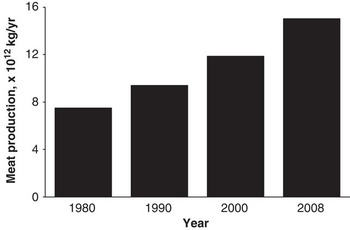
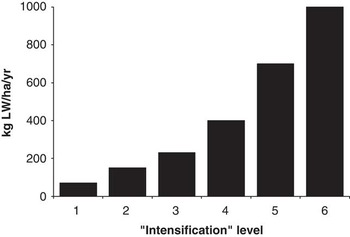
Strategies to increase animal production have been suggested by Nabinger et al. (Reference Nabinger, Maraschin and de Moraes1999) and Nabinger and Carvalho (Reference Nabinger and Carvalho2009), showing the potential productivity of these ecosystems once certain management strategies are consistently followed. In South America Campos, the annual meat production per hectare averages 60 to 70 kg/year, with an annual extraction rate between 18% and 20% (Pallarés et al., Reference Pallarés, Berretta and Maraschin2005). Although meat production in this region has increased during the last decades (Figure 1), and the average meat production per hectare is now higher than the average worldwide meat production per head, being 40 kg/year, reproductive efficiency remains low, with calving rates approximately 60% to 65% (Soca et al., Reference Soca, Claramunt and Do Carmo2007), which are close to the lambing rates reported by Pallarés et al. (Reference Pallarés, Berretta and Maraschin2005). Nabinger and Carvalho (Reference Nabinger and Carvalho2009) have described various intensification levels for South Brazilian grassland-based systems. Intensification level 1 represents the basal state of the system; level 2 is a result of better stocking rate management at a fixed mean allowance of 12 kg forage dry matter (DM)/100 kg live weight (LW); level 3 is a result of a more refined stocking rate management at a variable allowance throughout the year 12 kg forage DM/100 kg LW between January and September and 8 kg between October and December; level 4 is a result of addition of fertiliser mainly P (the most limiting nutrient in these types of soil); and level 5 is a result of addition of fertiliser as a combination of N and P and S. In level 5, part of the N input can be achieved by the addition of legumes to the grass-dominated pasture. Compared with the basal situation (level 1), strategies at levels 2 and 3 result in a 100% and 200% increase of meat production, respectively (Figure 2). These strategies are based on an adequate regulation of stocking rate throughout the year, without the import of biomass or minerals from other regions. Implementation of these strategies in practice is not easy due to the high variability in space and time. However, the use of new technologies like the so-called Precision Livestock Production (Laca, Reference Laca2009) provides new opportunities for grazing management. Precision Livestock Production focuses on the animal component and exploits heterogeneity in space and among individual animals towards more efficient and environment-friendly production. Within Precision Livestock Production, precision grazing consists of the integration of information and communication technologies with knowledge about animal behaviour and physiology to improve the production of meat, milk and wool in grazing conditions. Two main goals are to minimise overgrazing of sensitive areas and to maximise the quality of the product through enhanced traceability (Laca, Reference Laca2009). Precision Livestock Production and the integration of information in a heuristic approach (Provenza, Reference Provenza2009) will increase productivity on grassland-based systems without losing the benefits of the system, such as carbon sequestration potential, biodiversity and recreational landscapes and with higher efficiencies of light interception and of utilisation of nutrients and water based on higher root development of native pasture managed according to intensification levels 2 and 3 (Nabinger et al., Reference Nabinger, Maraschin and de Moraes1999).
Evolution of indigenous cattle meat production in South America. Values based on FAOSTAT (2011).

Live weight (LW) meat production per hectare per year in cow, calve and finishing beef production systems at five levels of intensification (see Challenges for plant biomass utilisation). Adapted from Nabinger and Carvalho (Reference Nabinger and Carvalho2009).

Interestingly, the same debate has been raised in the other extreme of the chain: the intensively managed pasture-based dairy systems of New Zealand. Production efficiency in the New Zealand systems is based on smaller cross-bred cows with a seasonal calving system that fits the seasonal variation in crop production. These systems allow minimal investment in machinery, facilities and cropping. Despite cows producing less than half their potential achievable on a total-mixed ration, a profitable system has been developed that has allowed the New Zealand industry to increase milk production from 7.6 to 15.1 billion litres from 1994 to 2007 (DairyNZ, 2008). This growth has been achieved by a combination of increased cow numbers and land area, formerly occupied by sheep farming, increased pasture yield from N fertiliser and a more intensive use of supplements. However, these increased inputs have led to increased waste products, with issues specifically related to grazing such as N leaching and nitrous oxide (N2O) emissions from urine patches on grazed pastures, pathogens in waterways and eutrophication of inland and estuarine waters (Basset-Mens et al., Reference Basset-Mens, Ledgard and Boyes2009). Eco-efficiency of intensive grazing systems could be improved by a 30% to 40% reduction in the stocking rate and raising young stock for replacement on the home farm together with using white clover to fix all nitrogen requirements for pasture, thereby reducing nitrate and ammonia emissions by 50% (Basset-Mens et al., Reference Basset-Mens, Ledgard and Boyes2009).
Mixed rain-fed systems
Description of mixed rain-fed systems
Meat- and milk-producing family farms in Europe, North America and on the highlands in South America are typical for livestock operations in mixed rain-fed systems. These systems have evolved significantly during the last century because of the introduction of techniques and technologies in all aspects of production. Developments in crop management and harvesting and storage technology have improved the nutritive quality of home-grown feeds. Knowledge of heritability of production traits and the introduction of artificial insemination accelerated the increase in the production potential of livestock animals, while knowledge of energy and nutrient metabolism concomitant with the development of complex feed evaluation systems enabled feeding livestock animals at high production levels and in relation to physiological stage.
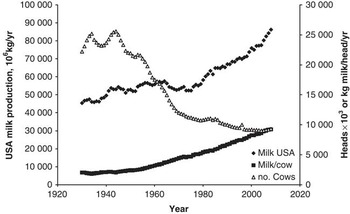
The scientific development and practical application of new techniques and technologies immediately after World War II were accelerated by the guaranteed financial support of research institutions and of farming activities by national or international administrations to ensure food production within their markets. The introduction of machines for milking, crop harvesting and feeding reduced labour costs per unit of production or product. Consequently, per labourer, more animals could be managed and livestock operations in these parts of the world were characterised by an enormous increase in production levels with a reduction in total production units either as farms or animals (Figure 3), concomitant with an increase in the number of animals per farm. Due to the reduction in national trade barriers for agricultural products (World Trade Organisation, 1995), the trend for less and larger farms increased in order to reduce the production cost and to compete with world market prices for food. The increased production per animal and per farm has increased the requirement for feed. International trading enabled the import of feeds grown outside the own farm or region (Hendy et al., Reference Hendy, Kleih, Crawshaw and Phillips1995) and thus animal production became less dependent on home-grown feeds. As a consequence, farmers of large operations moved away from feed production and became increasingly more dependent on the advice of extension services initiated by governmental or private institutions, for instance feed manufacturers with a commercial interest to promote supplemental feed imports.
Development of the US dairy production sector (USDA, Long-term projections).

The increase in production has led to a level of production of animal protein and fat that has exceeded the regional demand for these products, and dairy products produced in surplus have been exported to other markets in the form of cheese, butter or dried milk powder. This increase in transport lines and the indirect contact between the primary producer and the final consumer have reduced the transparency of animal production for consumers and this has led to increased legislation and more severe quality standards to ensure the safety of imported feeds. Concern for consumer health has reduced the direct demand for milk fat, setting the demands for higher protein and lower milk fat yields.
The use of fertiliser to increase the production of home-grown crops and the import of feeds from other regions have led to an excessive output of nitrogen and minerals (phosphorus, potassium; Bouwman et al., Reference Bouwman, Klein Goldewijk, van der Hoek, Beusen, van Vuuren, Willems, Rufino and Stehfest2011). In regions with a high concentration of livestock operations, regulations to reduce the environment input of livestock operations have increased the proportion of farms with animals in confinement and replaced grazing by indoor feeding of harvested, conserved forages and imported feedstuff mixtures.
Challenges for plant biomass production in mixed rain-fed systems
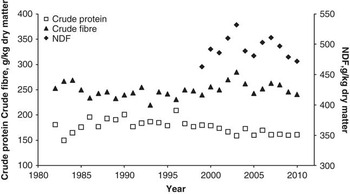
Because of high levels of fertiliser use and technology already in place, a further major increase in plant biomass production in mixed rain-fed systems may not be possible. In contrast, it is more likely that plant biomass production will be reduced due to restrictions in N and P fertiliser use as a consequence of environmental concerns. Although improved techniques for manure storage and handling have enhanced the mineral content of manure, the composition of minerals and their availability in soil will be more variable and less predictable than mineral fertiliser. Appropriate grassland management, with grazing or harvesting at an earlier stage of maturity, and grass breeding strategies may overcome the potential reduction in the quality of home-grown forages. For example, despite a reduction in N fertiliser in the Netherlands during the last 20 years from 501 kg of N/ha of arable land in 1990 to 341 kg of N/ha of arable land in 2009, energy and protein levels of ensiled grass in the Netherlands have not been reduced (Figure 4). However, the reduction in N fertiliser use will reduce biomass production per area. It is predicted that a reduction in nitrogen fertiliser by 100 kg/ha per year will reduce grassland production by 600 (sandy soil) to 1100 kg of DM per year (peat soil; Wageningen UR Livestock Research, 2010).
Development in the average chemical composition of grass silages in the Netherlands since 1982. Data provided by BLGG AgroXpertus, Wageningen.

Plant breeding programmes have improved forage quality in terms of increasing protein concentrations at low levels of N fertiliser use, optimising the ruminal degradation rates of plant proteins, for example, by optimising condensed tannin concentrations and optimising the availability of fermentable carbohydrates (Kingston-Smith and Thomas, Reference Kingston-Smith and Thomas2003). Breeding programmes have focused on grasses with increased levels of water-soluble carbohydrates (WSC), which would increase feed intake, productivity and nutrient utilisation. However, the results were variable with respect to the actual increase in WSC and consequently increased DM intake and milk production for high WSC grasses (Miller et al., Reference Miller, Moorby, Davies, Humphreys, Scollan, MacRae and Theodorou2001; Moorby et al., Reference Moorby, Evans, Scollan, MacRae and Theodorou2006) and no effect on intake and milk production (Taweel et al., Reference Taweel, Tas, Smit, Elgersma, Dijkstra and Tamminga2005). The nutritive value of maize (Zea mays) for herbivores is mainly based on its starch content, whereas the cell wall fraction in maize has a relatively low digestibility. Inhibiting lignification of plant fibre during maturation may improve the ruminal degradation of plant cell walls, but this is challenged by a concomitant decrease in the resistance of the plant against mechanical and microbial impacts. Another indicative trend is that today's plant breeding programmes are focused not only on improving the nutritional value for herbivores but also on the nutrients available for biogas and ethanol production (Lorenz and Coors, Reference Lorenz and Coors2008). Herbivore production may also possibly benefit from this renewed interest in carbohydrate availability for microbial degradation.
In mixed rain-fed systems, a substantial part of the biomass is being preserved before feeding. Preservation of biomass as hay or silage may result in loss or deterioration of valuable nutrients during drying or wilting at the field and during storage (McGechan, Reference McGechan1990). Field loss can occur as particle loss and as respiration losses. Field loss can be reduced by reducing the field period. Storage losses can be caused by extended fermentation and effluent leakage during ensiling or by aerobic deterioration during storage or feed-out. Thus, improving preservation techniques is an important approach towards higher biomass availability. The use of microbial inoculants to support fermentation processes in silages may improve protein quality, DM recovery (both by improved preservation and by aerobic stability at feed-out) and organic matter digestibility, resulting in increased animal performance (van Vuuren et al., Reference van Vuuren, Huhtanen and Dulphy1995). Adding enzymes, especially fibrolytic enzymes, either at ensiling or directly before feeding, may also improve nutrient availability in the rumen, both, directly by improved fibre digestibility, and indirectly, by stimulated ruminal microbial activity (Beauchemin et al., Reference Beauchemin, Colombatto and Morgavi2004). Although various enzymes are now commercially available either to increase glucose availability for lactic acid bacteria at ensiling or to improve ruminal fibre degradation, a substantial breakthrough has not yet been achieved, illustrating the complexity of plant fibre degradability and the variable results obtained so far (e.g. Holtshausen et al., Reference Holtshausen, Chung, Gerardo-Cuervo, Oba and Beauchemin2011).
The unique ability of herbivores to digest hemicellulose and cellulose makes cell wall fibre the most applicable energy source for these animals. However, in ruminants, the ruminal turnover capacity and consequently intake of cell wall fibre are limited. Ruminal turnover capacity for fibre can be increased by reducing the particle size, enhancing both the rate of digestion and the rate of passage, or by enzymatic pre-treatment. These strategies can be used only marginally because ruminants also require fibre in a long form to stimulate rumination and salivation and to maintain a proper healthy ruminal condition for mixing feed particles with ruminal micro-organisms and to maintain the absorption rate of volatile fatty acids.
Starches are also consumed by humans and the use of these carbohydrates as animal feed is being debated in terms of the global efficiency of food resources. Another development within the last decade is that an increasing proportion of starch has been used for the production of ethanol, stimulated by financial support of governments. The increased demand for starch both as a human food source and as a substrate for ethanol production has reduced its availability on the global market and for animal feed. Alternative energy sources are co-products from food industry and ethanol producers, which may contain high levels of fibre and protein. However, second-generation ethanol production will also utilise fibre as a substrate and, in future, biofuel production may also compete with animal feed for these fibrous co-products. This reduction in the availability of fibrous feeds will be one of the challenges for mixed rain-fed systems in the next decades and the concomitant increase in feeding costs could hamper a further increase in animal protein production also in these systems.
Co-products of ethanol production from starch and cell walls are usually high in protein, which could be a relevant alternative for more expensive protein sources, such as soyabean meal. Until now, utilisation of co-products of ethanol production has been slowed down due to unpredictable variations in the composition and nutritive value of these products. Recognition of the economic value of these co-products by the biofuel industry and the availability of quick scanning techniques to estimate the nutritive value of these potential feed ingredients may improve customer adaptation of these products not only as a protein source but also as an energy source. Glycerol, a co-product of fuel processing from plant oils, has been tested as an effective energy source in cattle diets (Wang et al., Reference Wang, Liua, Yanga, Huo, Donga, Huanga, Yang and Hec2009; Echeverria et al., Reference Echeverria, Mackinnon, Rotulo and Chilibroste2010).
Challenges for plant biomass utilisation in mixed rain-fed systems
The high level of technology used in most of the mixed rain-fed systems suggests a high efficiency in biomass utilisation and little further progress to be achieved. However, various aspects can be considered for improvements that would contribute to an improved utilisation of resources and a reduced ecological footprint. Increased longevity and reproduction rates, lower input of valuable proteins, closed nutrient cycles at a regional scale and reducing losses during biomass feeding can contribute to these improvements.
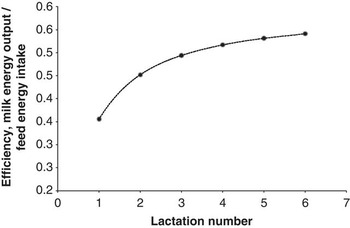
The overall nutrient efficiency in dairy cattle calculated as milk produced per unit of nutrient intake is relatively low if the rearing costs are taken into account. Increasing longevity, that is, the productive period per animal, will improve nutrient efficiency due to a dilution of rearing costs (Figure 5). Completing three to four lactations has a high impact on nutrient utilisation. Compared with four completed lactations, only a small improvement occurs when milking cows for five or six lactations. Involuntary culling is an important reason for the relatively short longevity in high-yielding cattle herds, the average being less than three. In high-yielding cattle herds, estimated annual culling rates were between 23% for the total Irish dairy cattle population (Maher et al., Reference Maher, Good and More2008) and on average 32% in 2054 ‘Dairy Herd Improvement’ herds (Pinedo et al., Reference Pinedo, De Vries and Webb2010). In an experimental herd, culling rates were 25% (Bell et al., Reference Bell, Wall, Russell, Roberts and Simm2010). In the survey of Maher et al. (Reference Maher, Good and More2008), 35% of cows were culled before their fourth lactation. In the experimental herd (Bell et al., Reference Bell, Wall, Russell, Roberts and Simm2010), 58% of cows were culled before their fourth lactation and in this study 68% of culling occurred involuntarily. Conception failure was the main reason for live culling in the studies by Pinedo et al. (Reference Pinedo, De Vries and Webb2010) and Bell et al. (Reference Bell, Wall, Russell, Roberts and Simm2010). Other main reasons were injuries, leg problems, mastitis and low productivity, but with different ranking between both studies.
Estimated effect of longevity on the cumulative efficiency of milk production using the DairyWise model (Schils et al., Reference Schils, de Haan, Hemmer, van den Pol-van Dasselaar, de Boer, Evers, Holshof, van Middelkoop and Zom2007).

A reduction in the culling rate leaves more young stock being no longer required for substitution. Young stock will then probably be directed to beef production. If this production is also taken into account in calculating the overall efficiency of the system, a higher production level per dairy cow has to coincide with a high nutrient efficiency for that young stock. Growth rate is an important factor for the efficiency of meat production. The efficiency of protein utilisation declines rapidly with the age of the animal. On the basis of recommended protein requirements for growing beef cattle (Centraal Veevoederbureau, CVB, 2010), the efficiency in the utilisation of digestible intestinal protein declines from 0.45 at 100 kg LW to <0.20 at 600 kg LW. This would favour slaughtering beef animals at a relatively young age. The shift in young stock from dairy to meat production will also affect greenhouse gas emissions. A recent Food and Agriculture Organization study calculated that greenhouse gas emission for meat production per kg of LW is 8 times higher in beef herds than in dairy herds (Th. Vellinga, personal communication). This conclusion results from the method of allocation of emissions to the different products generated within a system. Because for dairy herds a large proportion of the emissions is allocated to milk, meat from culled dairy cattle has a lower ecological footprint than meat from finishing cattle.
It is believed that health problems in dairy cows mainly originate from metabolic stress during the transition period (Drackley et al., Reference Drackley, Dann, Douglas, Janovick Guretzky, Litherland, Underwood and Loor2005). The relative abrupt change from lipid anabolism before calving towards lipid catabolism after calving in adipose tissues results in the release of non-esterified fatty acids (NEFA) into the bloodstream, which requires a rapid adaptation of the liver, where a large proportion of the NEFA is metabolised. Incomplete oxidation of fatty acids in the liver will result in the release of ketone bodies, whereas esterification of fatty acids often exceeds the capacity of the liver to release triacylglycerols as very low-density lipoproteins into the bloodstream. Metabolic disorders, such as ketosis and fatty liver, not only reduce DM intake but are also related to a reduced function of the immune system. Metabolic disorders around parturition are therefore predisposing factors for infectious diseases such as mastitis and metritis at a later stage of lactation (Drackley et al., Reference Drackley, Dann, Douglas, Janovick Guretzky, Litherland, Underwood and Loor2005). Metabolic disorders and subsequent infectious diseases will have a negative effect on the productivity and reproduction performance of dairy cattle. Studies indicate that pro-inflammatory cytokines produced during immune activation and tissue injury may influence nutrient homeostasis by the hypothalamic–somatotropic axis, resulting in reduced nutrient use efficiency for growth (Colditz, Reference Colditz2004). Although metabolic disorders may not immediately result in the removal of the animal, the indirect lower productivity and reproduction performance may contribute to the decision to slaughter the animals at a young age.
Feeding strategies to reduce metabolic disorders, including moderate energy intake in the dry period to prevent fattening, minimising other stress factors such as heat, overcrowding and infection pressure (Drackley et al., Reference Drackley, Dann, Douglas, Janovick Guretzky, Litherland, Underwood and Loor2005) or specific supplements to support the liver function, for example, choline (Zom et al., Reference Zom, van Baal, Goselink, Bakker, de Veth and van Vuuren2011), will reduce the risk of metabolic disorders around calving. New potential strategies are to reduce metabolic stress by diminishing or eliminating the dry period (Andersen et al., Reference Andersen, Madsen, Larsen, Ingvartsen and Nielsen2005; Stockdale, Reference Stockdale2006) and to reduce milk fat secretion by specific feed additives, for example, trans fatty acids (Castañeda-Gutiérrez et al., Reference Castañeda-Gutiérrez, Overton, Butler and Bauman2005).
Improving nitrogen utilisation is another challenge in the production of food protein by herbivores. Strategies to improve nitrogen utilisation by ruminating herbivores have been discussed intensively by various authors. Calsamiglia et al. (Reference Calsamiglia, Ferret, Reynolds, Kristensen and van Vuuren2010) observed a more efficient nitrogen utilisation for diets relatively low in CP and high in carbohydrates, either fibre or starch. It should be realised that ruminants can live on non-protein nitrogen sources due to microbial protein synthesised in the rumen. Although this is an important source of metabolisable protein in ruminants, its contribution is limited by the capacity of the rumen to degrade carbohydrates and protein to provide the energy required for microbial growth, that is, protein synthesis. At a daily intake of 25 to 30 kg of DM, ruminal microbial protein may supply metabolisable protein to meet a production of approximately 0.60 to 0.95 kg of milk protein. Because high-yielding dairy cows can produce more than 1.5 kg of milk protein per day, a variable part of the ingested CP should be in the form of rumen-undegraded protein. Animal protein and plant proteins treated by heat or chemicals have a relatively high proportion of rumen-undegraded protein. However, the ban on animal protein in ruminant diets in some regions and the relatively large contribution of soyabean production to the ecological footprint of producing animal protein has initiated research for alternative protein sources. As discussed above, co-products from ethanol production and from the industrial production of proteins (e.g. enzymes) by microbial fermentation are potential new sources for rumen-undegradable protein and their supply is likely to increase in future with the intensified production of biofuel. However, to improve production efficiency, these micro-organisms are often genetically modified, which causes dispute of the use of these protein sources within the human food chain.
Another aspect of nitrogen utilisation on a farm scale is the large distance that often exists between the production site of feed protein and the site of feeding. Although transport costs may add to the ecological footprint of animal feed, the main environmental dilemma is that the distance between sites also prevents the return of unused nutrients (manure) to the site of production. Integration between crop farmers and livestock farmers will support more closed nutrient cycles on a regional scale. For many temperate regions, this requires new varieties of protein-rich crops to provide a satisfactory protein yield per land area. Such crops should utilise nutrients that are being returned to the systems, and nutrient supplementation to crops or animals may not exceed the amount of nutrients that has been exported from the system as milk and animals. Besides better techniques to utilise nutrient surpluses, this approach would also require another outlook and organisation of livestock and crop famers at a regional scale, which should not be limited by national barriers in legislation.
The utilisation of grass is not only influenced by biomass composition and animal production level but also by grassland and pasturing management. The inter-relationship between pasture and the grazing ruminant is a dynamic, two-way process. As quantitative, qualitative and morphological aspects of the different plant species present in pastures influence the plant material ingested by the grazing animal, that process in turn modifies the plants remaining and their subsequent production and fate. Although differences between forage species, various organs within the plant and changes over the day and throughout their lifespan affect the dynamics of their digestion, mainly physical presentation within the sward determines the quantity, quality and temporal pattern of ingested material. Significant progress has been made during the last decade in the understanding and quantification of these complex processes (e.g. Chilibroste et al., Reference Chilibroste, Gibb and Tamminga2005; Baudracco et al., Reference Baudracco, Lopez-Villalobos, Holmes and Macdonald2010) and the potential use of this knowledge on feeding strategies under grazing assessed (e.g. Chilibroste et al., Reference Chilibroste, Soca, Mattiauda, Bentancur and Robinson2007). Progress is made in understanding the main effects of, and the interactions between, stocking rate, supplementation and genotype on selectivity, DM intake, herbage utilisation, milk production and composition and eventually profitability of grazing dairy systems have been highlighted. Second, the diurnal pattern of DM intake for lactating dairy cows supplemented or not (with concentrates and/or roughage) has been well established (e.g. Chilibroste et al., Reference Chilibroste, Gibb and Tamminga2005 and Reference Chilibroste, Soca, Mattiauda, Bentancur and Robinson2007). Based on this knowledge, feeding strategies have been developed to realise the high nutrient requirements of lactating dairy cows while minimising the side effect of grazing on pasture condition and consequently on grassland productivity and longevity. Such feeding strategies are especially required with limited grass availability and wet weather conditions.
Mixed irrigated systems
This system is found in the Mediterranean Region in Europe, and in Japan and Korea. Meat, milk and wool are the main products from these systems in temperate regions. About 10% of the global population lives in regions where this system is dominant. A large share belongs to developed countries with relatively high population densities and high-income levels. In those regions, the demand for animal protein is high and import of water and feed supplements is relatively high. The associated high costs require a high added value and unless this added value can be commercialised, it is expected that these systems will be increasingly less viable, having to compete with more efficient rain-fed systems producing the same products (Steinfeld and Mäki-Hokkonen, Reference Steinfeld and Mäki-Hokkonen1995).
These intensive production systems face similar challenges as in mixed rain-fed systems. In some regions, the necessity for changes may be high. For instance, in the Hokkaido area in Japan, concentrate supply to high-producing dairy cows is more than 3100 kg per lactation (Nakutsuji, Reference Nakutsuji2009), resulting in an excessive environmental burden due to the high surpluses in nutrient balances. Producing more home-grown crops would require more water for irrigation, which could be another problem to increase biomass production within this system. Breeding for drought-tolerant plants and utilising fibrous co-products produced within the region are techniques that would increase the supply of biomass for feeding herbivores in mixed irrigated systems.
Conclusion
Increasing plant biomass to feed increasing numbers of herbivores seems limited, without increasing water requirements, level of fertiliser or changing valuable grasslands into crop production, both reducing the sustainability of production systems. A potential challenge is to develop management that improves the efficiency of converting fibrous plant biomass into animal protein. Mild grassland fertilisation, adequate stocking rate and a high health status of animals are crucial elements for sustainable production systems. Whether these sustainable production methods will be implemented also depends on macro-economic conditions and awareness of regional and global environmental concerns. Perhaps the biggest challenge will be in convincing politicians and consumers that sustainable herbivore production requires a multi-factorial approach.
Acknowledgements
The authors thank Piet Linders (BLGG AgroXpertus), Giovanni Savoini (University of Milan) and Ronald Zom (Wageningen UR Livestock research) for their contribution to this study.