Cancer is one of the most challenging diseases, with a high number of diagnoses occurring every year (Bray et al., Reference Bray, Ferlay and Soerjomataram2018). For many patients, the illness becomes chronic, requiring both immediate and long-term care (Holzner et al., Reference Holzner, Kemmler and Kopp2001). This care involves multiple specialists, as cancer can cause emotional distress among patients and their families, which could be exacerbated by social issues such as low income, the inability to work, or the absence of or weak social support (Grassi et al., Reference Grassi, Spiegel and Riba2017). In addition, the life-threatening nature of cancer affects spiritual well-being (Maté et al., Reference Maté, Bayés and González-Barboteo2008; Maté-Méndez et al., Reference Maté-Méndez, González-Barboteo and Calsina-Berna2013). Globally, spiritual, social, psychological, and physical stressors tend to influence one another, increasing the psychosocial and medical complexity of cancer patients. Given the specificity of each patient's needs, the care provided should be tailored to meet the patient's requirements and improve their psychosocial well-being. The literature highlights the importance of integrated cancer care (e.g., Huyse, Reference Huyse1997; Sepúlveda et al., Reference Sepúlveda, Marlin and Yoshida2002), which aims to address physical, psychological, spiritual, and social challenges in cancer patients (Mayou and Hawton, Reference Mayou and Hawton1986). Failure to address these issues could lead to worse somatic symptoms, psychological disorders, greater psychosocial complexity, and higher medical costs (Huyse, Reference Huyse1997; Kathol et al., Reference Kathol, Saravay and Lobo2006). The first step in providing appropriate care is to find a consensus definition of psychosocial complexity in cancer patients. In fact, recent studies have requested unanimous definitions of psychosocial complexity to increase the efficacy of care and establish proper practices in hospitals (e.g., Salvador et al., Reference Salvador, Garrido and Perea2017). Tuca et al. (Reference Tuca, Gómez-Martínez and Prat2018), using a predictive model of complexity in advanced palliative care and focusing on patients with advanced cancer, found significant between-group differences when comparing high-medium-low complexity for sociodemographic and medical variables. Patients showing high complexity were younger, had higher symptom burdens and more intense symptoms, presented more social/family risk factors and existential/ethical problems, and had greater performance and functional difficulties. Thus, the findings of that study as well as of others indicate that it is worth exploring the factors of psychosocial complexity.
The proper definition of psychosocial complexity in cancer patients can produce more sources of evaluation. This has already been observed in other fields. For example, Martin-Rosello (Reference Martin-Rosello2017) developed the IDC-PAL, which assesses psychosocial complexity in palliative care patients, while Lobo et al. (Reference Lobo, Bellido and Campos2003) developed INTERMED, which provides an early assessment of psychosocial complexity in internal medicine patients. As these studies suggest, evaluating a patient's level of complexity results in better care of the patient's psychosocial needs, as well as an optimal use of resources.
Thus, the aims of the present study were to: (1) reach a consensus on the general definition of psychosocial complexity in cancer patients, (2) explore and define the items composing this construct, and (3) propose a list for health professionals to identify the level of psychosocial complexity in their patients.
Methods
The Delphi method is a widely accepted process for obtaining consensus expert opinion, and it was mainly developed by Dalkey and Helmer (Reference Dalkey and Helmer1963). All the rounds of the Delphi method in this study are described below.
Review of the literature
According to Hsu and Sandford (Reference Hsu and Sandford2005), the first round of the Delphi process can be based either on an open-ended questionnaire to be answered by experts in the field or on a literature review. In this study, the second option was taken. An exhaustive review of the literature was performed to draw up a preliminary set of key concepts to be included in the questionnaire for the experts. The PsycINFO, PubMed, and Web of Science databases were searched using the keywords “cancer,” “complexity,” “psychosocial,” “spiritual*,” “psycho-oncology.” Hospital guidelines were also consulted to include current practices in cancer care in the review. The literature consistently indicated the importance of obtaining a consensus definition of psychosocial complexity in cancer patients and on its multifactorial nature (medical–physical, social/family, psychological, and spiritual factors). At this point, we found that it was not only important to reach consensus on the general definition of psychosocial complexity in cancer but also on the definition of each of its four factors.
The Delphi process
Based on the information found in the literature review, a questionnaire was developed that elicited opinions about each concept forming the definition of (a) psychosocial complexity and (b) the psychosocial complexity factors (medical–physical, social/family, psychological, and spiritual). Responders were asked to select from the list provided under the general definition heading or under the heading of each of the four factors of psychosocial complexity (medical–physical, social/family, psychological, and spiritual) the elements that should be included according to their own criteria. They were also asked to rate the relevance of each element to the general definition or in the specific area. Scores were given on a 5-point Likert scale, with 1 indicating very low relevance, 2 denoting low relevance, 3 indicating medium relevance, 4 corresponding to high relevance, and 5 denoting very high relevance.
The questionnaire was first sent to an expert panel composed of members from our institution. Full consensus on each item was defined as a minimum median rate of inclusion of 4 or 5, representing a minimum agreement of 80%. The results from this round were collected and analyzed by the coordinators of the study. Based on the experts’ responses, a revised version of the questionnaire was created and sent again to the same panel for further discussion and scoring, including the items that had no consensus. The results were analyzed again, and a third version of the questionnaire was created with the consensus of the expert panel. This version was then sent to an external international expert panel for further scoring and validation. After collecting their responses, a final consensus between the internal and external expert panels was obtained.
Statistical analysis
Data were analyzed by two members of the research team (ACG and CJdL). Responses to the questionnaire were entered into an IBM SPSS 21.0 database, and the weighted targeted agreement for each part of the questionnaire was calculated using indices of central tendency.
Results
Round 1: extensive review of the literature and development of the questionnaire
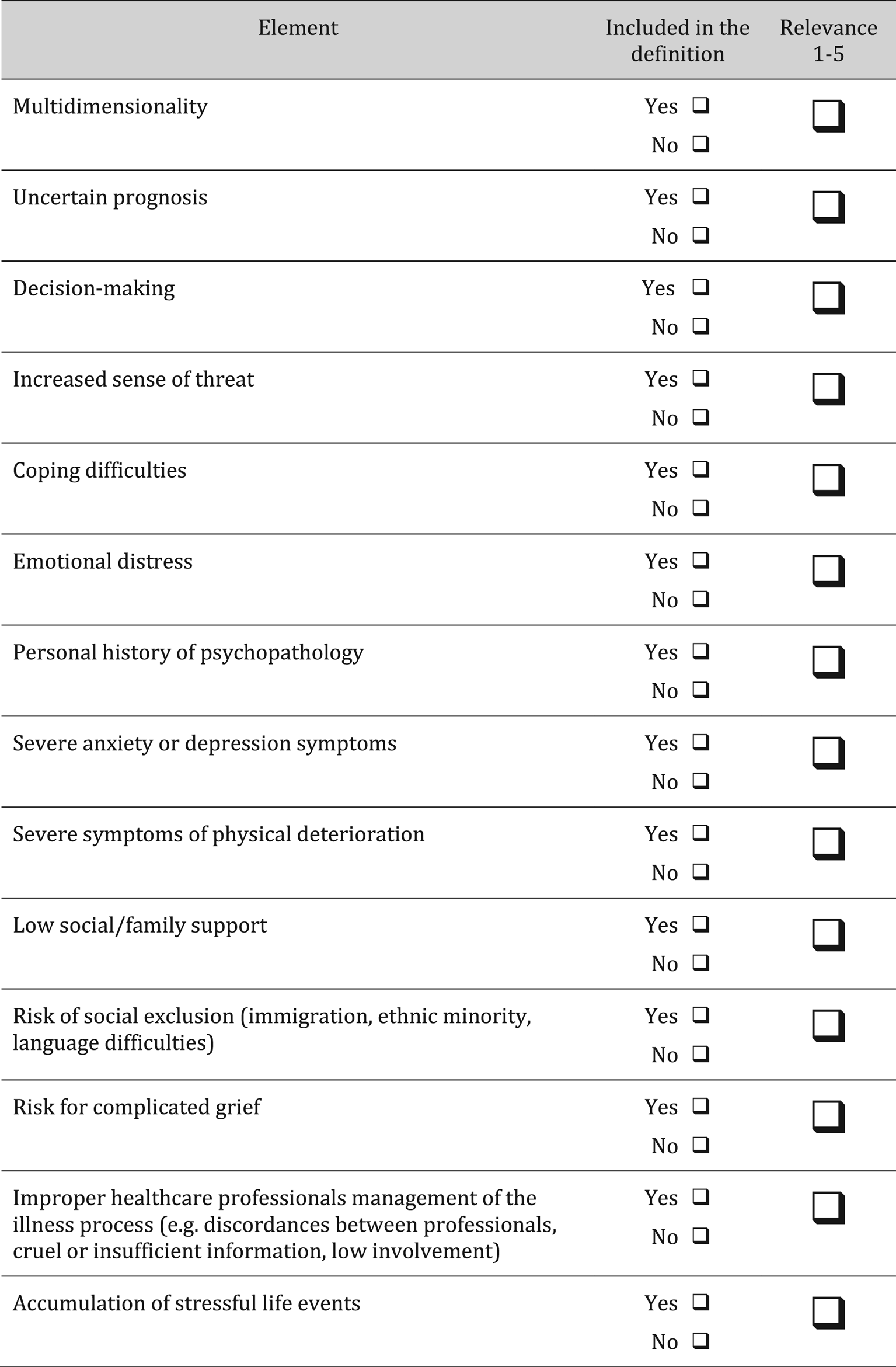
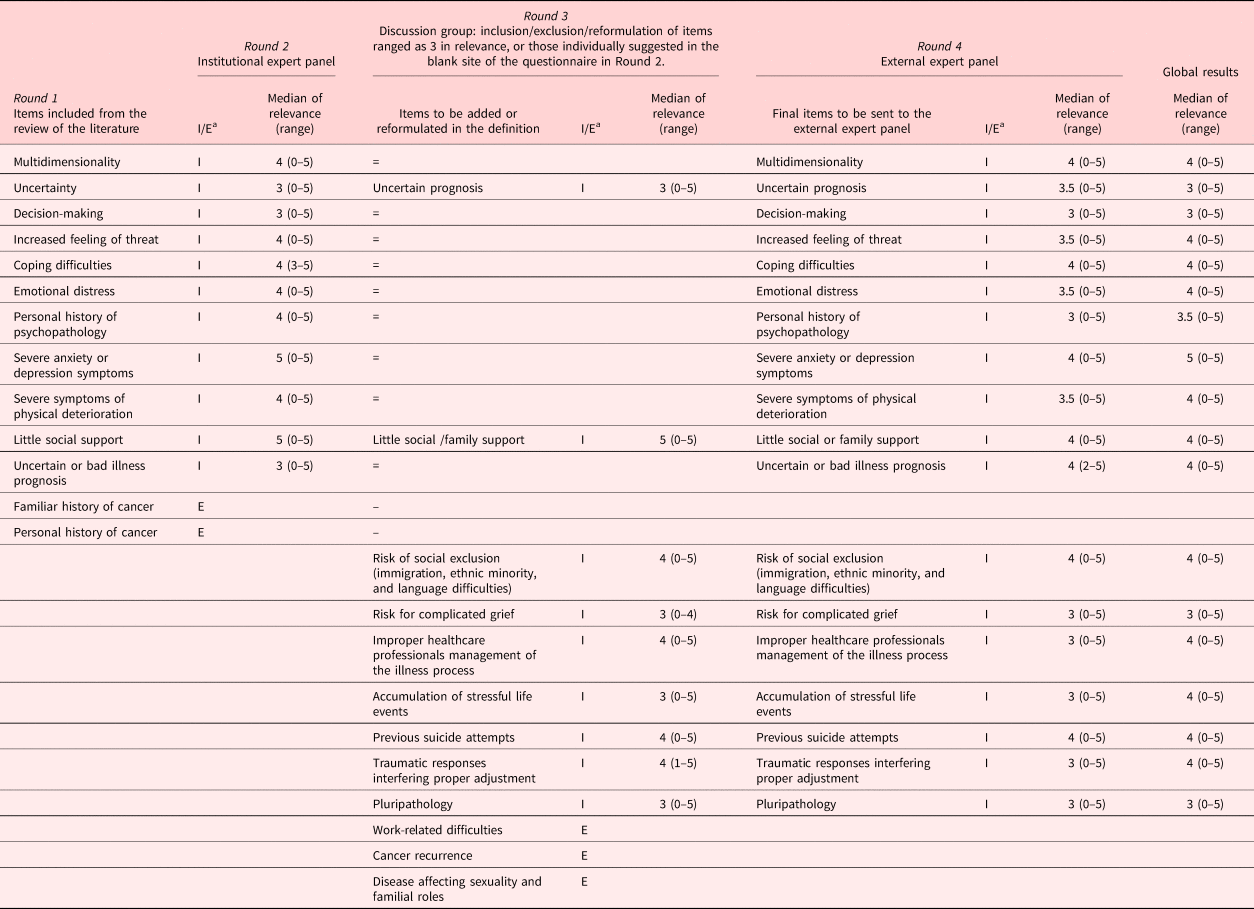
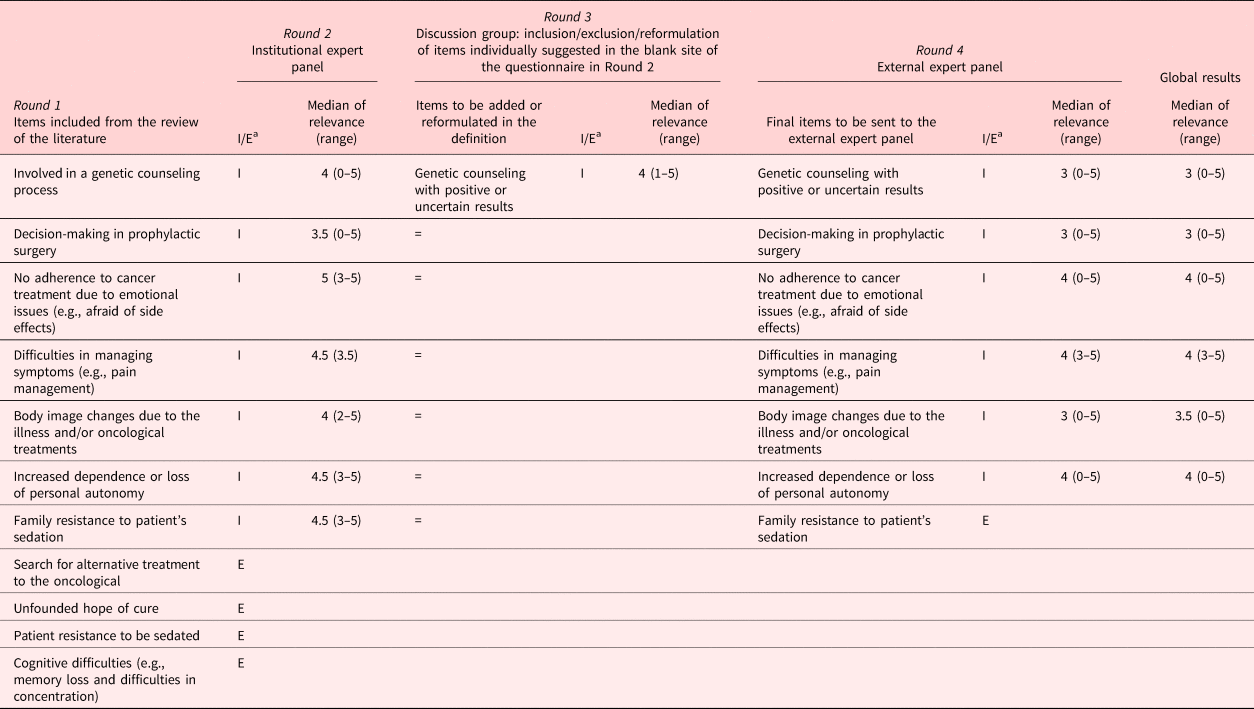
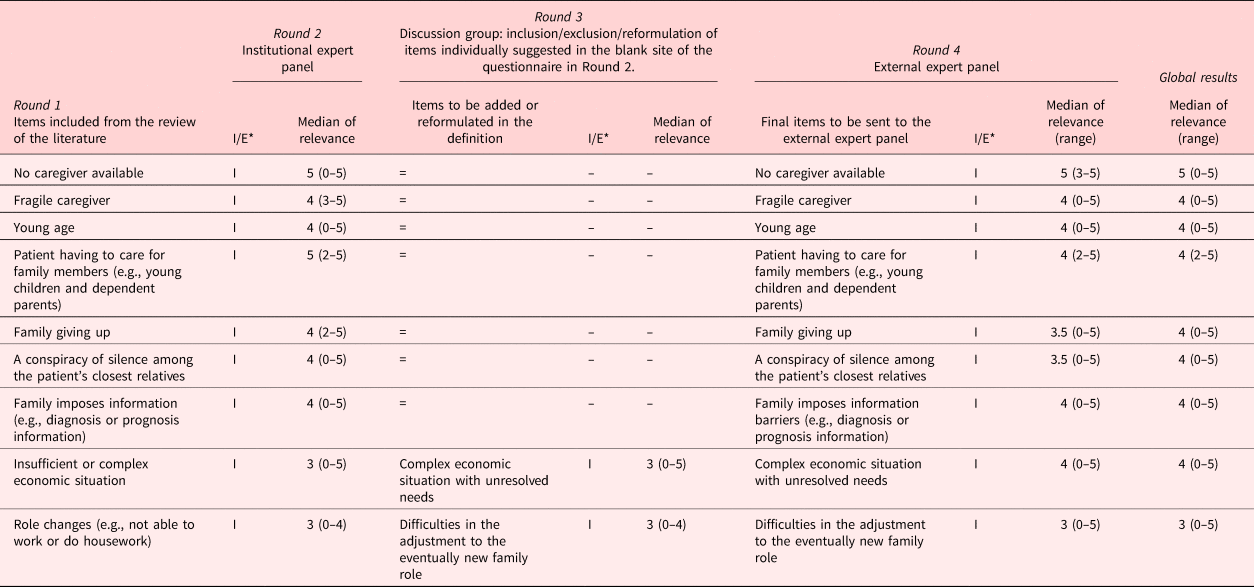
The literature review identified the relevant elements forming the general definition of psychosocial complexity in cancer (e.g., multidimensionality, uncertainty, decision-making, increased sense of threat, or coping difficulties). Moreover, most studies distinguished the following four factors of psychosocial complexity: medical–physical, social/family, psychological, and spiritual. Figure 1 shows the questionnaire that resulted from the extensive review of the literature. This questionnaire consisted of two parts. The first part (a), focusing on the general definition of psychosocial complexity, asked responders to select from the 13-item list all the elements that they considered to contribute to the definition of psychosocial complexity in cancer patients, as well as to rate the relevance of each element to the definition. The questionnaire also provided a free text box to add comments. The second part (b), focusing on the elements comprising each of the four factors of psychosocial complexity, asked responders to select from the list for each of the four factors (medical–physical, social-family, psychological, and spiritual) the elements that they thought contributed to each specific area. The medical–physical factor comprised 11 items, the social-family factor also included 11 items, the psychological factor had 21 items, and the spiritual factor comprised 7 items. As in the general definition part of the questionnaire, responders had to include/exclude the items and rate their relevance. The first column of Table 1 indicates the items proposed by the research group for defining psychosocial complexity. Tables 2–5 list the items proposed for each of the four factors.
Example of the questionnaire structure.

Results of each round of the Delphi process to find a consensus for the elements conforming a general definition of psychosocial complexity

a I/E = item included/item excluded, (>80% agreement).
Results from the Delphi process in the medical–physical area of psychosocial complexity

a >80% agreement.
Results of the Delphi process on the social/family area of psychosocial complexity

* Included/Excluded.
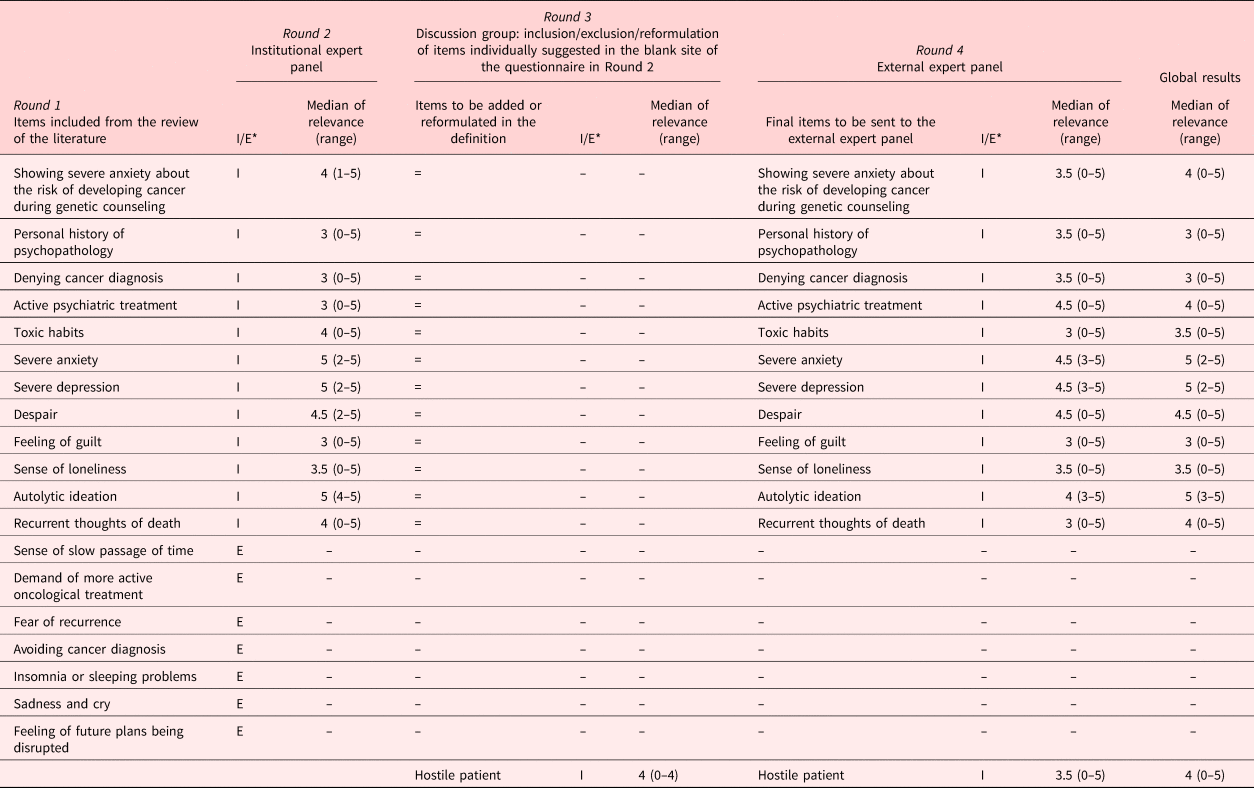
Results of the Delphi process on the psychological area of psychosocial complexity

* Included/Excluded.
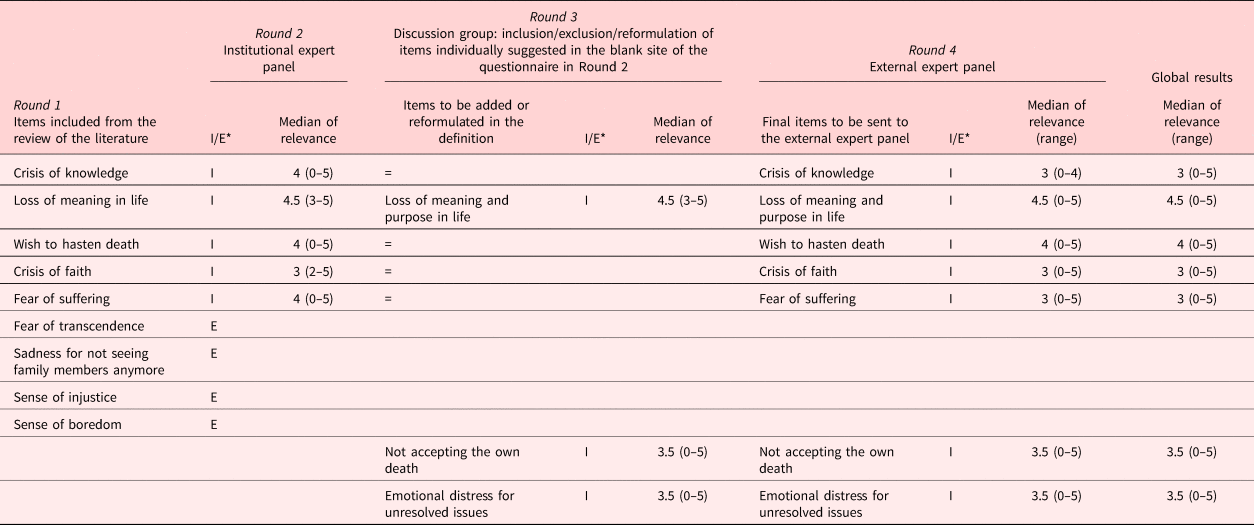
Results of the Delphi process on the spirituality area of psychosocial complexity

* Included/Excluded.
Round 2: evaluation of the questionnaire by the institutional expert panel
When selecting the members of the institutional expert panel, professionals with a reputable experience in the field of psychosocial care for cancer patients or researchers with proven knowledge in the area were considered. From the 18 potential participants, 14 participated in the study. The survey was sent either by e-mail or in person. The experts were asked not to share their responses with the other participants. As mentioned above, the instructions were given as follows. For the first part of the questionnaire (a), experts were asked to specify the items that they thought contributed to the definition of psychosocial complexity in cancer and to rate their agreement of inclusion on the 5-point Likert scale. For part (b), the participants were asked to perform the same tasks, this time for each of the four factors of psychosocial complexity in cancer. In both parts of the survey, they were also invited to provide additional feedback on each item in a free text box. The experts were asked to return the completed survey themselves either by e-mail or handing it in to the researchers conducting the study.
Full consensus on each item was defined as follows: (1) 80% of the expert panel agreeing to include or exclude the element from the definition of psychosocial complexity or its factor and (2) a median rate of inclusion of 4 or 5. The items included in the definition/factor, but with a median score of 3 were automatically selected to be discussed further in the following round (round 3). Moreover, the items that had been specifically proposed for reformulation by the experts were discussed further in round 3. Finally, the items that were not selected by 80% of the responders or had a median score of 1 or 2 points were eliminated from the questionnaire.
The second column of Table 1 presents the scores of each item, as well as the items that were individually proposed by the experts to be added to the definition of psychosocial complexity. Tables 2–5 present the scores of the items included in each of the four factors of psychosocial complexity.
Round 3: discussion and evaluation of the items with no consensus
In the third round of the Delphi process, the aim was to obtain consensus on the items (definitions and each of the four factors of psychosocial complexity) that had not reached consensus in round 2. The expert panel was invited to a group discussion to consider only the items that had not reached sufficient consensus for exclusion (obtaining a median score of 1 or 2 points) or inclusion (median score of 4 or 5 points). Furthermore, as the questionnaire had a free text box for suggestions, the items that had been individually proposed to be added or reformulated were also discussed in round 3. The same scoring system was used in rounds 2 and 3 for both parts of the survey (complexity definition and complexity factors), also asking for summarized comments as well as overall and individual scores. Revisions were discussed within the core group, and another version of the questionnaire was created to be sent to the external expert panel.
The third column of Table 1 presents the results of the group discussion about the items to be included in the definition of psychosocial complexity. Tables 2–5 present the results of the group discussion about the items to be included in each of the four factors of psychosocial complexity.
Round 4: evaluation of the questionnaire by an external expert panel
Potential members of the external expert panel were selected from an international group of experts from different geographical regions and professional fields. Participants were contacted by e-mail and informed about the study objectives, the tasks required to be performed, and the estimated time commitment to complete the tasks. Of the 24 professionals we contacted, 12 participated in the study. The questionnaire was sent to the external experts by e-mail. They were explicitly asked not to share their responses with the other panel members. As in round 3, part (a) of the survey asked the experts to select the items that they considered to constitute the definition of psychosocial complexity, as well as to rate their relevance on a 5-point Likert scale. For part (b), the participants were asked to perform the same tasks, this time for each of the four factors of psychosocial complexity. The experts were asked to return the completed survey themselves by e-mail. The answers from this survey were then analyzed together with the ones from the institutional expert panel.
The fourth column of Table 1 lists the scores of the external expert panel for the items to be included in the definition of psychosocial complexity. Tables 2–5 list the ratings of the external expert panel for the items to be included in each of the four factors of psychosocial complexity.
Final results
After completing the Delphi process, we analyzed the final results to obtain a consensus definition of psychosocial complexity, taking into account the items that had been selected by both the institutional and external expert panels. Thus, the items with a median score range of 4–5 points were considered for inclusion in the final definition of psychosocial complexity and for the four factors that form the construct.
Definition of psychosocial complexity in cancer
Considering the items selected by the expert panels, we propose the following definition of psychosocial complexity in cancer patients:
“Psychosocial complexity in cancer patients is a multidimensional construct in which a patient experiences an increased feeling of threat, resulting in difficulties in coping with the illness, especially when it has a poor or uncertain prognosis. The emotional distress (severe symptoms of anxiety and depression) caused by this situation can produce poorly adjusted traumatic reactions, especially in those with a history of suicide attempts. These reactions may worsen if there are social issues, such as little social or family support or social exclusion, which increase psychosocial complexity. Furthermore, healthcare professionals have a relevant role in treating this psychosocial complexity and, therefore, should properly follow these complex cases.”
Screening for psychosocial complexity in cancer
The items forming the four factors of psychosocial complexity were used to create a list of indicators for each factor: (a) medical–physical factor: no adherence to cancer treatment due to emotional issues, difficulties in managing symptoms, increased dependence, or loss of personal autonomy; (b) social-family factor: no caregiver available, fragile caregiver, young age, patient having to care for family members, family giving up, a conspiracy of silence among the patient's closest relatives, family imposes information barriers, and complex economic situation with unresolved needs; (c) psychological factor: showing severe anxiety about the risk of developing cancer during genetic counseling, active psychiatric treatment, severe anxiety, severe depression, despair, autolytic ideation, recurrent thoughts of death, and hostile patient; and (d) spiritual factor: loss of meaning and purpose in life and wish to hasten death.
Screening for psychosocial complexity in cancer — brief version
Restricting to those items showing the highest scores, a brief version of the list could also be created. The selected items, scoring 4 (but with a short and high range of scores), 4.5, or 5 points for relevance, were the ones forming this shortened list: (a) medical–physical factor: difficulties in managing symptoms; (b) social-family factor: no caregiver available, patient having to care for family members (e.g., young children or dependent parents); (c) psychological factor: severe anxiety, severe depression, despair, and autolytic ideation; and (d) spiritual factor: loss of meaning and purpose in life.
Discussion
The aim of this Delphi study was to obtain a consensus definition of psychosocial complexity in cancer patients. The involvement of two expert panels helped us to develop a 21-item list (and an 8-item brief version) that, after its proper validation, could help health professionals to identify levels of psychosocial complexity in cancer patients. Thus, it may represent a simple, but effective way that can be used by nurses, physicians, psychologists, or social workers to rapidly identify patients with potentially high psychosocial complexity. To our knowledge, this is the first proposal of a list of items that could be validated and be used to assess psychosocial complexity in cancer patients. Other studies have proposed assessment tools to assess psychosocial complexity in other areas. For example, Martin-Rosello (Reference Martin-Rosello2017) developed and validated the IDC-PAL, which focuses on psychosocial complexity in palliative patients. This tool assesses the variables related to the patient, their families, and healthcare professionals. Given that a proportion of cancer patients are also in palliative care, some of the dimensions of IDC-PAL overlap with the ones in our list. Thus, both focus on clinical, social, and psychological issues; however, our list includes the spiritual dimension independently, while IDC-PAL includes the assessment of spirituality in the psycho-emotional dimension. Moreover, IDC-PAL classifies patients into three categories of complexity (low-medium-high), while our list distinguishes between high and low complexity, as it is shorter than IDC-PAL (21 items — or 8 items in its brief version — in our list compared with the 36 items in IDC-PAL). Similar differences and coincidences were found when comparing our list with the INTERMED tool (Huyse et al., Reference Huyse, Lyons and Stiefel1999). This tool has been used in diverse care settings, such as in elderly patients in palliative care or patients with neurological disease. It also comprises four factors for psychosocial complexity, similar to the ones for IDC-PAL and the list proposed in the present study: biological, psychological, social, and healthcare factors. The tool has 20 time-related items classified into three subcategories: history, current state, and prognoses. Our 21-item list also comprises items referring to the past, present, and future of the illness state. Therefore, it seems that our list has a similar basis to that of the other validated tools, with additional elements. Finally, other research groups have gone further and developed instruments to assess the needs of patients with high psychosocial complexity. For example, NECPAL (Gómez-Batiste et al., Reference Gómez-Batiste, Martínez-Muñoz and Blay2013) identifies the medical and psychosocial needs of patients with time-limited diseases, including cancer. The emergence of these instruments further supports the need to assess psychosocial complexity in each patient and, thus, the need to have the consensus definition obtained in this study.
All these tools can contribute to the better multidisciplinary care of cancer patients, ensuring effective coordination among the professionals involved. This care is especially relevant in cancer, given that it requires specific approaches during its course. As indicated by Borràs and Prades (Reference Borràs and Prades2017), the good or bad management of cancer cases can have considerable repercussions, given the clinical and care complexities of this disease. Thus, they recommended the increasingly important distribution of responsibilities among multiple disciplines when caring for cancer patients, due to the high incidence of cancer and the constant distribution of competences among the professionals.
Within this multidisciplinary care, addressing psychosocial aspects not only helps to improve a patient's quality of life but also to make appropriate decisions regarding the care of each patient. In the Catalan Institute of Oncology, multidisciplinary care is organized in Functional Cancer Units, each specializing in the type of primary cancer. Health professionals forming a Psychosocial Committee meet weekly to make decisions about the needs and care of the most complex cancer cases. This model is a pioneering way of providing comprehensive care to patients and their families, and has shown promising results in efficacy and effectiveness, as prioritizing the most complex cases could help optimize the use of health resources (Gil et al., Reference Gil, Maté and Ochoa2019).
In conclusion, according to the expert panel, psychosocial complexity in cancer is a multidimensional issue that needs to be addressed by physicians, psychooncologists, nurses, and social workers. In that sense, the four areas of this construct can be properly covered, resulting in an optimal attention for patient.
Limitations
The present study had some limitations. Having more members in the internal and external expert panels would have provided us more reliable data. Moreover, all the members were from Western countries, making it necessary to adjust the implementation of our results according to local cultures and practices. Although there are no specific rules regarding consensus levels for Delphi studies, our cutoff for full consensus (80% agreement, a median of 4–5 points) was conservative compared with the cutoffs of between 51% and 100% used in other studies (Hasson et al., Reference Hasson, Keeney and McKenna2000; Powell, Reference Powell2003; Steele et al., Reference Steele, Bosma and Johnston2008).
Clinical implications
Results from this Delphi lead to better psychosocial attention in cancer patients, as it provides health professionals of an accurate definition of this concept, as well as a list of indicators which could be validated and used as a tool to screen those high-complex patients from those who are not. In this sense, health professionals could prioritize those patients who need a high and urgent psychosocial attention. This would end up with resources optimization and better patient care.
Acknowledgments
The authors thank all the members of the expert panels for their valuable input and comments: Bierge, C., Lleras, M., Rodríguez, A., Moral, A.M., Fuentes, S., Barez, M., Caba, L., García, O., Limonero, J.T., Sirgo, A., Die-Trill, M., Breitbart, W., Mateo, D., Segalàs, J., Cañete, J., Blasco, T., Font, A., Martín, M., and Fernández-Castro, J.
Funding
The authors thank CERCA Programme Generalitat de Catalunya for institutional support. This study has been funded by Instituto de Salud Carlos III through the project (FIS PI15/01278) co funded by European Regional Development Fund. ERDF, “a way to build Europe” //FONDOS FEDER “una manera de hacer Europa.” Grup de recerca consolidat: Recerca en serveis sanitaris en càncer. 2017SGR00735.
Conflict of interest
The authors declare no potential conflicts of interests. They also declare no financial relationship with the organization that sponsored the research. The authors have full control of all primary data and agree to allow the journal to review their data if requested.