The world was changed with the exciting aspirations of the New Archaeology in the 1960s
Colin RenfrewExperiencing personal histories
Personal history Sitting in the audience to the 2006 Personal Histories event in Cambridge on ‘Processualism and the New Archaeology in the 1960s’ (cf. Smith Reference Smith2006), I became keenly aware that I was witnessing the creation of history. Here we were constructing the tale of processual archaeology, told by those who had made it happen. With eight men sitting before me in a row, most in suits, one a lord, I also became very aware of the Cambridge setting. Sitting in that audience, we were witnessing the formation of British archaeology's history, the tale of our shared post-war past. I was surprised that both the story and its telling were so strikingly male.
By 2006 I had already taken my seat in many academic audiences. I remember my first, at the age of 16, very well. I was struck then by how few women joined me. I remember an ageing, military man standing up from that audience, demanding our attention and boring us for slightly too long on what he knew about Roman milecastles. I remember being at once appalled by his manner and intimidated by his presence. Several years later, in the late 1990s, I watched one of my lecturers being viciously deconstructed, quite unnecessarily, it seemed to us, by her older male colleagues at a conference she had organized. I was shocked, unable to understand a very tangible aggression. At TAG 2000, I watched one of our male professors humiliate a first-year Ph.D. student, at the very start of her studies. I haven't seen her since. The following year, I remember my male contemporary being literally patted on the back by his elders, welcomed, whilst his female peers remained unapproached. Experiences like these lead me to ask why the four women that I studied with as postgraduates have left academia.
As I grow older I see more women in academic audiences but am disturbed by how few of them speak. At the Roman Archaeology Conference in Cambridge (2006) I saw the process in action. The room was packed; I sat on a windowsill towards the front, allowing me to watch both audience and speaker. The chair, a middle-aged man, a man that I respect, invited the older men in the audience to speak. Gradually, young men followed their lead; even their naive comments were received. Towards the end of the discussion the first woman, middle-aged, offered her opinion. She was laughed down; blushing, she retracted. So it was that the younger women in the room remained silent; I felt we had been gagged. I have now worked at four institutions and at three have watched the subtle play that can keep academic women silent. Often only the boldest of the women speaks. She is often not British; if British, usually upper class. When speaking she is often (subconsciously) mocked, by those who allow lesser male peers to talk at length. Those who raise their eyebrows at this ‘difficult’ woman are, it seems, unaware of the gender politics of the situation. They do not see the gags on those who stay silent, fail to understand the lifetime of frustration that gradually turns to apathy or anger. The British woman brave enough to speak in this climate is often battle-weary; her strength labelled aggression, she may yet learn to stop trying.
Yet undergraduates can be dismissive of the feminist message. At age 20, I took part in a walk-out from a lecture on gender because, along with my male and female peers, I genuinely did not believe that the message was relevant to my generation. We saw our male friends as victimized and were sure that these lessons belonged in the 1970s.Footnote 1 This phenomenon has been recognized in feminist writing since the 1980s: that in our 20s we believe the battle has already been fought and won (cf. Roberts Reference Roberts and Adam2000, 325). In our 20s, sexism is still a joke; I certainly believed that the stream of uninvited gropes and sexist comments was temporary, confined to a minority of individuals, the old or ill-educated. I certainly did not imagine that my sex would impact upon my career. Until my late 20s, I truly believed that I had equal opportunities. I now recognize this as the cocoon of higher education. I did not understand then that, without intervention, society is too well practised at reproducing sexist values. Only now, as I sit quietly at dinner parties listening to friends repeat the tired rhetoric of what it is to be female, do I understand the painfully slow pace of structural change. It is also increasingly apparent that much discrimination now is not conscious; very many of our male friends – who lack the lived experience of being female – genuinely struggle to comprehend the scale of the problem, yet also remain reluctant to accept our testimonies. Somehow for them the debate always becomes personal rather than analytical and the reality of the female experience goes unrecognized.
A generation has passed since the feminist rebellion of 1974. What is difficult to understand is why my generation of young female archaeologists, who grew up believing in equal opportunities, find themselves in a world that seems to us unchanged; or is changing, but at a snail's pace (EHRC 2008). We find ourselves in a world where many of our older male colleagues do not seek to analyse why their female peers fell away, as they blithely progressed up the career ladder. In 2008, I was sitting in the audience of the plenary session at the Theoretical Archaeology Group in Southampton, where the topic under debate was politics in archaeology. Despite the fact that still only 9 per cent of archaeology's professors were female, the topic of gender politics was not on the agenda; no woman sat on that all-male panel either. Instead, it was suggested that the current generation were not interested in politics, something immediately quashed by a male undergraduate shouting, ‘Where are the women?’ and receiving instant, rapturous applause. For all these reasons I find myself writing this response to the Personal Histories event at Cambridge, in the hope that the current generation of undergraduates can discover something of the history of female experience in later 20th-century British archaeology. If we are to make sense of our present and help to improve things for the future, then it is vitally important that we first understand something of our past.
History in the making So it was, with this personal history of my own, that I sat down to hear the all-male panel speak. The audience was heavily female: a good number of undergraduates had come along to hear about the history of their discipline. The older women around me – each with their own personal histories – spoke to each other in hushed voices. The audience was alive. The scene before us, the hierarchy that these men represented, created a palpable sense of unease. Pamela Smith, the woman who had organized the event, was trying to remain out of sight.
The proceedings began with the comments of Lord Renfrew. For him the annus mirabilis of the New Archaeology was 1968, which heralded the North American publication of (Sally and) Lew Binford's New perspectives in archaeology and David Clarke's Analytical archaeology in Britain. Renfrew made reference to a Cambridge of the 1950s, a place of scientific endeavour; what he considered a new British archaeology came out of an increasingly scientific post-war era. We learned that the late 1960s witnessed a transformation of the discipline to one of science, of objective study, and a new understanding of culture as system. Even during Renfrew's annus mirabilis, however, Jacquetta Hawkes described what she saw as a ‘false scientific showiness’ in this ‘new’ archaeology. For her, science was a technique, not a methodology, and in prioritizing scientism over humanism archaeology risked losing its ability to write history (Hawkes Reference Hawkes1968, 258). At the event, Matthew Spriggs brought into question the existence of a coherent New Archaeology in Britain and Marek Zvelebil suggested that by as early as 1971 there was already a growing disappointment with Clarke's ideas.
The existence of an entirely new archaeology across the Atlantic, however, was not in doubt. Ezra Zubrow argued that the New Archaeology in North America was part of much wider social changes in the late 1960s: in the summer of 1968 protests raged across Europe and North America. The late 1960s was a time of social revolution and of railing against the Establishment. The late 1960s was a time of change, and of progress. For Zubrow, the protagonists of the New Archaeology might be seen as revolutionaries, forcing a break with tradition, forging a new discipline, removing the issue of class from our classrooms. Zubrow spoke of the ‘democratisation of the field’ in North America:
We realised that there was a kind of archaeology that went with class . . . We said, wait a second, we think that archaeology can be done by anybody . . . What we were doing was trying to empower a group of people to become archaeologists (Ezra Zubrow).
Robin Dennell was happy to see processual archaeology in Britain as a democratizing movement. Graeme Barker, however, was keen to demonstrate the difference of Cambridge. Whilst a growing number of working-class students were being admitted, they were nevertheless catapulted into centuries’ worth of privileged tradition. For those at Cambridge, the late 1960s provided a very different experience: at least two undergraduates at this time were princes (R. Harrison, personal communication). Barker recalled that, in the summer of 1968, as others took to the streets in Paris and London marching against the old order, he was digging for Lord Renfrew.Footnote 2 As students across Europe and the US marched against the Vietnam War, Glyn Daniel granted Cambridge archaeology students their ‘demands’ regarding use of the staff coffee room. This was a very different politics. Back in North America, Zubrow illustrated the democratization of the field with photographs of archaeological summer schools in the late 1960s. It was during this process that it occurred to me that the names, the people Zubrow was recalling, were all male. There were certainly some women in the photographs, but the people that ultimately benefited from this ‘democratization’, it seems, were predominantly men. I was not alone in this observation: a key audience concern was the all-male history coming from this all-male panel, which Marie-Louise Sørensen thought was very apt given the period under discussion.
Where were the women? What was difficult for me to understand was why – given all this talk of democratization – a privileging of men was so apparent in 1960s archaeology, a continued privileging of men, despite a popular feminist politics (cf. Friedan Reference Friedan1963; Millett Reference Millett1969), despite the talk of revolution, despite the concern with objectivity. How could processual archaeology, if concerned with class-based politics, fail to recognize so entirely the issue of sex-based discrimination? For Engels, at least, these were two sides of the same coin. If 1960s archaeology was truly dedicated to democratization, why was the inclusion of women not on the agenda? In fact, historians of archaeology are discovering that during the early 20th century the female involvement in archaeology was actually very significant, particularly in the 1920s and 1930s (cf. Roberts Reference Roberts1995; Smith Reference Smith2009). Cambridge archaeology had even provided Oxbridge with its first female professor as the Disney Chair went to Dorothy Garrod in 1939. Yet by the late 1960s and early 1970s, as we heard from the Personal Histories panel, women were no longer influential in Cambridge archaeology, a loss they were unable to account for. The panel could not tell us how ‘the world was changed’ for women.
When questioned on the lack of women in the New Archaeology, the panel responded at first by mentioning Sally Binford. Mike Schiffer stated that Sally Binford had been the senior editor on New perspectives and that it was her editing skills that made the work so influential. Paul Mellars pointed out that she had been working on the Mousterian and, more importantly, on functional interpretations before Lew Binford. Recent publication of an interview with Sally Binford reveals something of her critical role in forming the New Archaeology, in partnership with Lew Binford (cf. Clinger Reference Clinger2005; Bright Reference Bright2008). When the panel were asked more about the missing women they seemed genuinely perplexed, concluding that, in Cambridge at least, it was because women were simply not there. Annie Grant stated that men outnumbered women 10 to 1 in mid-1960s Cambridge. In fact, until as late as 1972, only 12 per cent of Cambridge undergraduates were female, rising to 17 per cent by 1975 – despite an equality having been reached in girls’ and boys’ educational achievements by 1974 (EOC 2006).
Subsequent conversations held by the author and Pamela Jane Smith with Annie Grant and Mary Hill Harris respectively – both archaeology students in mid-1960s Cambridge – suggest that there may well have been something approaching equal numbers of men and women taking Part I of the Tripos (Year 1 of the degree) at this time, but that their numbers were perhaps one in three or four by Part II (Years 2 and 3) – a large proportion of the young women that archaeology attracted were not being retained. By the mid-1970s, the general figure of 17 per cent women at Cambridge was very much lower than the national average of 36 per cent women in higher education at this time (McWilliams-Tullberg Reference McWilliams-Tullberg1975, 215–16), although archaeology at Cambridge may have been closer to the national situation by that point. So where, then, were the women of processual archaeology? Graeme Barker wondered if the absence of women in the discipline reflected the problems women faced once married – when post-war convention expected them to leave the workplace. Yet the proportion of married women in the workforce was at 50 per cent in the 1970s (Summerfield Reference Summerfield, Duchen and Bandhauer-Schoffman2000, 14; EOC 2006); so the marriage problem, although certainly still current, was arguably more relevant for the 1950s.
Was the lack of women in the British discipline anything to do with New Archaeology's Cambridge setting and its push for archaeology as science? In our society, there is certainly a fairly stubborn understanding that science is ‘naturally’ more male, with discussion at the meeting suggesting postprocessualism as more female. Others now challenge the idea of science as ‘male’, however, and even critique early feminist approaches for accepting this biological determinism, understanding instead that science has been actively gendered male (Harraway Reference Harraway1991; Wylie Reference Wylie2002). With a 12 per cent inclusion rate until 1972, it is becoming clear that few young women had the opportunity to explore their scientific nature at post-war Cambridge. So does a belief in analytical archaeology as non-female struggle with a slightly circular argument? The origins of ‘science as male’ stretch back, it seems, to the Enlightenment, when Western scientific thought sought to classify First World women and Third World men as other and as opposed to culture, as a way of justifying their continued political oppression (Bloch and Bloch Reference Bloch, Bloch, MacCormack and Strathern1980; Strathern Reference Strathern, MacCormack and Strathern1980). In these social conditions, in this long history of man's privileged access to knowledge, how many women have yet really had the opportunity to be scientific?
Women, education and science
Background: the 19th century In the early 19th century, girls were excluded from a middle-class ‘boys’ education’; its emphasis on the classics, maths and the sciences was considered unsuitable for girls. Middle-class girls were instead taught at home by governesses, learning ‘the accomplishments’, a more savoury suite of activities including embroidery, deportment, dancing and piano (Musgrave Reference Musgrave1968, 12) – this concept of an ‘appropriate’ female education surviving in many families well into the early 20th century.Footnote 3 At the first girls’ schools of the 1840s, the standards of teaching were similarly poor (ibid., 16). A move for the higher education of women began in 1862 as Emily Davies lobbied London University to admit women to degrees (cf. Davies Reference Davies1866). Three years later, young women were admitted to the Cambridge Local Examinations and in 1869 Girton College was established in a house in Hitchin, Hertfordshire.
As London, Cambridge and Oxford went on to establish special ‘female’ university examinations, Davies continued to fight for equality in education and in 1878 London degrees were opened to women. In 1881 Cambridge women were allowed to sit the Tripos examinations, but without membership of the university – the women would gain only a college certificate rather than a degree (McWilliams-Tullberg Reference McWilliams-Tullberg1975, 76). At this time Girton and Newnham were operating as independent colleges. Despite some friendly associations inside the university, the institution would not recognize the women's colleges for some 80 years. So, whilst before 1948 women were educated in Cambridge, they were by no means educated at Cambridge – making the appointment of Dorothy Garrod to the Disney Chair in 1939 all the more remarkable. In the late 19th century, a popular backlash was forming with concerns being raised by the medical profession and in the press that a ‘boy's education’ might damage a woman's reproductive organs and make her unfeminine (cf. Marks Reference Marks, Mitchell and Oakley1976, 189; Fowler Reference Fowler, Shils and Blacker1996, 19). With Davies's continued lobbying, a Cambridge vote was arranged in 1897 on women gaining the ‘title’ of their degrees (Sutherland Reference Sutherland2001). This so-called ‘titular’ degree – wittily abbreviated to BA Tit. – was a degree in name only: a full degree required membership of the university (Blacker Reference Blacker, Shils and Blacker1996, p. xii; Sutherland Reference Sutherland2001). There was a strong ‘no’ campaign with undergraduates threatening to leave for Oxford, and the vote went against (cf. Blacker Reference Blacker, Shils and Blacker1996, p. xii). The women's movement turned instead to gaining the vote.
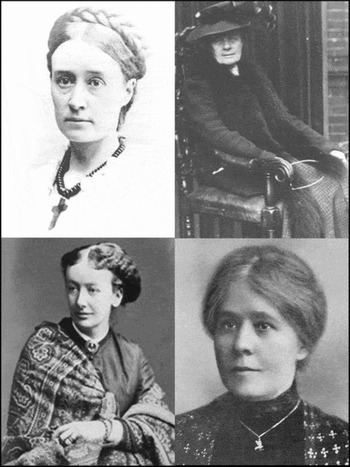
Nevertheless, a small number of women did, from the 1870s, have access to higher education in Britain. At Cambridge, a strong emphasis was placed on these early women gaining access to the Classics, a traditionally male subject. One of Newnham College's first five scholars was archaeologist Ella Bulley Armitage (figure 1), who went on to pioneer medieval archaeology and wrote some of our earliest academic books on British archaeology (cf. Armitage Reference Armitage1877; Hamlin Reference Hamlin2001). In 1874, she and Mary Paley sat the Moral Sciences Tripos and were the first women to sit a university exam (Maynard Keynes Reference Maynard Keynes, Shils and Blacker1996, 77–78).Footnote 4 In that same year Jane Harrison (figure 1) came up to Newnham and went on to be one of our most accomplished classical archaeologists, writing five academic books between 1882 and 1894 (cf. Hamlin Reference Hamlin2001, 5). In both 1888 and 1898 she was runner-up for London University's chair in classical archaeology. Beyond classical archaeology at Cambridge, in 1873, journalist Amelia Edwards (figure 1) turned her attentions to the archaeology of Egypt (cf. Champion Reference Champion, Andreu and Sørensen1998). Edwards endowed the first English chair in Egyptian archaeology at London University, which she ensured went to her protégé Flinders Petrie on her death in 1892 (Champion Reference Champion, Andreu and Sørensen1998; Clark Reference Clark1989, 13; Lesko Reference Lesko, Joukowsky and Lesko2003a).Footnote 5 One of Petrie's first students was a young woman called Margaret Murray (figure 1), who by 1899 had become junior lecturer at London, lecturing also at Oxford (Champion Reference Champion, Andreu and Sørensen1998; Murray Reference Murray1963).
Selection of British female pioneers in archaeology: medieval archaeologist Ella Armitage, classical archaeologist Jane Harrison (© The Principal and Fellows, Newnham College, Cambridge), and Egyptian archaeologists Amelia Edwards (© Trotamundas Press) and Margaret Murray (source: Murray Reference Murray1963).

Back in Cambridge, less focus was placed on the sciences, however, with female attendance at university lectures only ever at the say-so of the male lecturer. A vicious circle had ensued whereby a lack of qualified science teachers at girls’ schools saw few young women drawn to science subjects. In late 19th-century Cambridge, the only lab space available to women scientists – as non-members of the university and thus without access to its resources – was the Sidgwicks’ bathroom, and after this an out-building in the Newnham College garden (Sutherland Reference Sutherland2001). Even as late as the 1930s, it was accepted that men, as members of the university, had a greater right to the limited laboratory space, a factor involved in keeping the number of female science students low (Fowler Reference Fowler, Shils and Blacker1996, 14; McWilliams-Tullberg Reference McWilliams-Tullberg1975, 214).
Nevertheless, some British women did achieve in the sciences, even despite obstacles like these. Beyond Cambridge, Marie Stopes gained her B.Sc. from Birkbeck College in 1902; in 1904, with her Ph.D. from Munich, she became the first female science lecturer at Owen's College, Manchester (Rose Reference Rose1993). At this time too, Polish woman Marie Curie was awarded the Nobel Prize for Physics in 1903 and for Chemistry in 1911 (TNF 2008). Nevertheless, regarding the education of girls, by 1916 it was suggested that physics, chemistry and mathematics be eliminated from the curriculum of girls’ secondary schools, to prevent ‘overstrain’ (Marks Reference Marks, Mitchell and Oakley1976, 192) – this despite the 1902 Education Act having seen secondary education as fit for all children, regardless of sex. It is hard not to see this as a political response to the women's movement, which was by this time just two years from securing the vote, albeit with caveats. However, as the women's vote was secured in 1918 (for married women, those aged over 30, and property owners), the public mood became increasingly liberal on the issue of women in society.
Interwar liberalism Oxford finally agreed to degrees for women in 1920. In the same year, however, Cambridge again voted against. Nevertheless, the following year – with the death of Emily Davies – Cambridge relented and granted women the title of their degrees (Howarth Reference Howarth and Davies1988, p. xliv). Despite this, Cambridge remained an all-male institution, one allowing female access from the independent female colleges (UoC 2007). Still in 1923, the Hadow Report – whilst generally progressive – accepted that boys and girls should be educated differently due largely to girls’ additional ‘special’ responsibilities as homemakers (Hadow Reference Hadow1923, 126). Nevertheless, women saw a good amount of progress at the universities during the 1920s, in line with an increasingly liberal British society which allowed women the vote under the same conditions as men in 1928 and which had recognized women as ‘persons’ in law by 1929 (cf. Adam Reference Adam2000).Footnote 6 Whilst Cambridge might not have been pro-women in the early 20th century, its archaeology department certainly was, as a result of men like A.C. Haddon and Miles Burkitt, who, like the Abbé Breuil, actively encouraged young women archaeologists in 1920s Cambridge (Smith Reference Smith2009, 28–29). As a result, it seems that archaeology was considered a ‘soft’ subject by the university, one in which young female applicants might be thought to excel (ibid., 8).
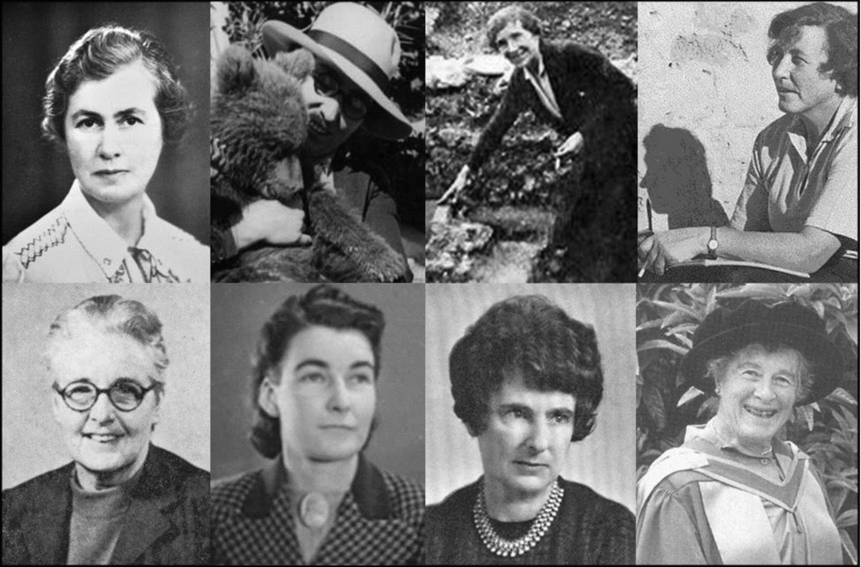
Women and the early profession Considering this background, it becomes very important for us to recognize the scientific approaches employed by our women archaeologists of the interwar period (Sørensen Reference Sørensen, Andreu and Sørensen1998). Gertrude Caton Thompson (figure 2) – a student of Murray, Dorothea Bate and the Petries – moved to Newnham and between 1924 and 1928 collaborated with geologist Elinor Gardner in a consideration of the ‘prehistoric geography’ of the Egyptian Kharga Basin (Champion Reference Champion, Andreu and Sørensen1998). Her sense of interdisiplinary method, inherited from Murray, brought a new approach to Cambridge archaeology. Similarly important was the work of another Newnham fellow, Dorothy Garrod (figure 2). Garrod had worked on the Palaeolithic in Gibraltar (1925–26) and in 1926 wrote The Upper Palaeolithic Age in Britain. An expert in the Glozel affair (1927), she embarked on important Palaeolithic and Mesolithic excavations in Palestine and Iraq (1928) before her major work at Mount Carmel (1929–34). In 1928, Garrod became president of the Prehistoric Society of East Anglia. Her 1929–39 collaboration with British Museum zoologist Dorothea Bate on the faunal assemblages from Mount Carmel again reveals an early Cambridge interdisciplinarity focused on scientific approaches to past environments (Clark Reference Clark1989, 43; Diaz Andreu and Sørensen Reference Diaz Andreu, Sørensen, Andreu and Sørensen1998, 16).
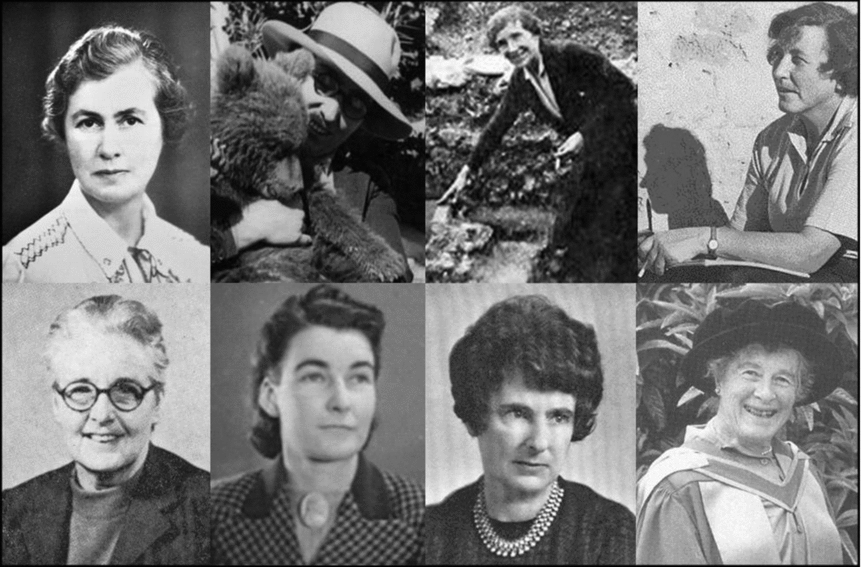
Selection of British women archaeologists active during the interwar period: Gertrude Caton Thompson (Source: Caton Thompson Reference Caton Thompson1983), Dorothy Garrod (© the Pitt Rivers Museum, University of Oxford), Tessa Verney Wheeler (© St Albans Museums), Kathleen Kenyon (© University College London), Joan du Plat Taylor (© Department of Antiquities, Cyprus), Jacquetta Hawkes (© Special Collections, J.B. Priestley Library, University of Bradford), Margaret Piggott (Source: Guido Reference Guido1963, courtesy of Thames and Hudson), and Aileen Fox (courtesy of Gracewing Publishing).
This early Cambridge interdisciplinarity recognized the importance, too, of Harry and Margaret Godwin's early 1930s work on palynology and led to the setting up of the Fenland Research Committee in 1932, bringing together experts in palaeobotany, geography, geology and archaeology (cf. Clark Reference Clark1989, 54–55; Phillips Reference Phillips1987, 49; Smith Reference Smith2009, 49–53). Interesting too is that in 1931 and 1932 respectively there had been a heavy female presence at the British Association for the Advancement of Science meeting and the International Congress of Prehistoric Science (cf. Diaz Andreu and Sørensen Reference Diaz Andreu, Sørensen, Andreu and Sørensen1998, 16). What is clear is that the origins of science in archaeology might be seen to date to the interwar period and, early on, were as female as they were male, with their Cambridge roots in the 1920s interdisciplinarity of Caton Thompson and Garrod. However, the sciences at Cambridge were more generally gendered male, as the membership of the Fenland Research Committee confirms (cf. Smith Reference Smith2009, figure 1).
Across the 1930s, however, women archaeologists did begin to secure professional recognition. In 1931, classicist Jocelyn Toynbee began lecturing at Cambridge (Hamlin Reference Hamlin2001). In the early 1930s, Tessa Verney Wheeler (figure 2) played her part in establishing the London Institute of Archaeology, whilst Caton Thompson received awards and council membership from the Royal Anthropological Institute and the Royal Geographical Society (Champion Reference Champion, Andreu and Sørensen1998). In 1933, Dorothy Garrod became director of studies for archaeology and anthropology at Cambridge. In 1935, Joan du Plat Taylor (figure 2) succeeded Margaret Murray at London. In 1937, one of Verney Wheeler's trainees, Kathleen Kenyon (figure 2) – already managing secretary for the London Institute, later its director – gained a London lectureship in British archaeology (Hawkes Reference Hawkes1982, 132).Footnote 7 In 1936 and 1937 the first Cambridge women were allowed to advance to doctoral level, in title at least (Sondheimer Reference Sondheimer, Shils and Blacker1996, 103). In 1938 Garrod was awarded a D.Sc. by Oxford. In 1939, with the number of Section A graduates having increased sixfold, Garrod was made Disney Professor (Daniel Reference Daniel1975, 331; Champion Reference Champion, Andreu and Sørensen1998; Clark Reference Clark1989, 46, 52; Hamlin Reference Hamlin2001; Smith Reference Smith2009). In the 1930s women had played a key role in the early professionalization of the discipline.Footnote 8
The result of all this activity was that, as in so many areas, there were a number of opportunities for women archaeologists during the Second World War. Caton Thompson became the longest-serving president of the Prehistoric Society (1939–46), during which time both Jacquetta Hawkes and Peggy Piggott became members (figure 2). Piggott directed numerous rescue excavations for the Ministry of Works, on sites commandeered for defence purposes. Aileen Fox (figure 2), who had been excavating throughout the late 1930s, gained a wartime lectureship at Cardiff in 1940 (Fox Reference Fox2000, 95–96).Footnote 9 Hawkes was excavating until 1941, when she began work for the War Cabinet and subsequently the Ministry of Education (Hamlin Reference Hamlin2001). Kathleen Kenyon became the first secretary of the CBA as Caton Thompson, at age 56, became only the second woman to be appointed fellow of the British Academy (Fox Reference Fox2000, 101; Hamlin Reference Hamlin2001, 27). This degree of opportunity, however, was to change.
Post-war Britain: the redomestication of women
Post-war conservatism Despite the social advances of the interwar period, conservatism had again begun to creep into British society during the Second World War. In 1943, the Norwood Report found that boys and girls had different ‘natural’ interests: careers for boys, marriage and motherhood for girls (Marks Reference Marks, Mitchell and Oakley1976, 194–95). That children were self-defining according to learned cultural mores with a long history was not considered. The conservative nature of this wartime report, written at a point when women were actively demonstrating equal ability, must be questioned. The war saw many women in the workplace and almost a quarter of a million entered the auxiliary forces (Summerfield Reference Summerfield, Duchen and Bandhauer-Schoffman2000). The result was that the 1944 Education Act – which saw secondary education for all up until the age of 15 – despite heralding division according to ability rather than class, still allowed binary notions of sex-based ability to remain (Marks Reference Marks, Mitchell and Oakley1976, 195).
In popular culture, the emphasis was very much on the importance of women being good housewives, wives and mothers. By 1948, educationalist John Newsom was suggesting that education for girls should be about teaching them to become women: namely housewives and mothers (Newsom Reference Newsom1948). There ensued a popular ‘back-to-the-kitchen’ movement; the indelible image of the 1950s housewife loomed large as the Bowlby Report was used to suggest that responsible mothers should remain at home with their children (Adam Reference Adam2000, 235). In 1954 it was recognized that intelligent girls were leaving school before reaching their potential (CAC 1954). By 1959, the Crowther Report – which saw the school-leaving age raised to sixteen – was drawing attention to the increasingly early marriage of women, with nine times as many girls as boys marrying before the age of nineteen. Whilst between 1936 and 1940 11 per cent of women had married under 20, by 1960 an astonishing one young woman in every four was married in her teens (WGPW 1962, 97).
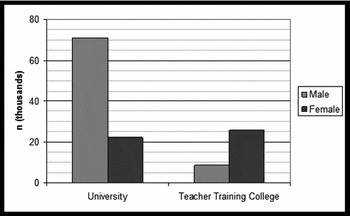
The post-war domestication drive had worked. Outside the home, the 1950s employment experience was very heavily gendered, with appropriate careers for women centred on teaching children, nursing and clerical work. More than half of all women in higher education attended teacher-training college rather than university (figure 3). What opportunities there were inside the professions were subject to marriage bars, and upon marriage a dowry payment worked as a form of redundancy (Tinkler Reference Tinkler, Duchen and Bandhauer-Schoffman2000, 63; Witz Reference Witz1992, 34). The expectation in British society was that a woman would give up her vocation on marriage. With the dramatic shift towards early marriage, the 1950s domestication drive meant that many women simply could not enter the professions.
The gendering of higher education in Britain (1959–60). Source: WGPW (1962).

1950s Cambridge At Cambridge, full degrees were eventually awarded to women from 1948, almost 80 years after women had first begun to attend lectures, although the number of undergraduate places available to women remained severely restricted. Cambridge was the last to award degrees to women, 28 years after Oxford, and 70 years after London. Even in 1948, Cambridge degrees were not granted in the spirit of equality. Although Girton and Newnham were finally allowed to become members of the university, there was no university money to increase female numbers through expansion of the women's colleges; and as the other university colleges stayed resolutely all-male, the number of female graduates remained strictly limited. Women might have joined the university, but the institution was still proud of its traditional all-male heritage. In the same year that women were finally able to have their degrees recognized, the 1948 Newsom Report suggested again that education for girls should be about teaching them to become housewives and mothers. The 1950s were born and with them the expectation that mothers should stay at home (Adam Reference Adam2000, 235).
Cambridge's rumbling misogyny, or respect for traditional values, meant that by the 1950s women still found themselves barred from all-male college common rooms, leaving them excluded from informal work-based discussions (Glynn Reference Glynn, Shils and Blacker1996, 278).Footnote 10 Not until 1956 was segregation of the sexes in university examinations lifted (UoC 2007). However, with female numbers still restricted to Girton and Newnham, and with only small numbers at New Hall from 1954, Cambridge women were still very much in the minority and continued to be at a real disadvantage compared to their male peers. Honor Fell – who did so much for Cambridge biochemistry without a university post – apparently relished the independence of her Strangeways laboratory at this time. In the 1950s, women had to leave their vocation on marriage and were unable to return even following the first years of parenting. The result was that many good scientists were lost to conservative social values. Honor Fell advised her female staff against marriage if they wanted a career (Mason Reference Mason, Shils and Blacker1996, 260–61). In 1952, Fell became only the ninth female fellow of the Royal Society; at 52 she was older than some of her male colleagues who had already been honoured, a number of whom she had actually trained (Mason Reference Mason, Shils and Blacker1996, 245–47, 258–59).
Perhaps better known to us is the sorry tale of Rosalind Franklin, who spent three unhappy years in 1950s Cambridge. Her data utilized by colleagues without her permission, in 1953 she left for Birkbeck but within three years had died of cancer, at the age of just 37. Her vital contribution to unravelling the structure of DNA was only acknowledged by Cambridge in 1993 (Glynn Reference Glynn, Shils and Blacker1996). At the Personal Histories event, Colin Renfrew mentioned the Nobel Prize being awarded to Francis Crick and James Watson. In questions, Tony Legge reminded him of the role of Maurice Wilkins. It was only low female voices in the audience that remembered to recognize Franklin's contribution.
Misogynistic displays are a rich part of undergraduate history at Cambridge, with their roots in the vicious scenes surrounding the vote on women's degrees in 1897. At the time of the vote a mob of undergraduates gathered in the marketplace where an effigy of a young woman was hung from an upstairs shop window, voting masters students were pelted with rotten eggs and fireworks, and later, having failed to rush Newnham College, shops were stripped of their fittings to fuel a victory bonfire in the marketplace (cf. McWilliams-Tullberg Reference McWilliams-Tullberg1975, 134–40; Blacker Reference Blacker, Shils and Blacker1996, p. xii; Sutherland Reference Sutherland2001). Similar scenes surrounded the vote of 1920, but this time undergraduates managed to smash through the Newnham gates – a memorial to their first principal, Jemima Clough (cf. McWilliams-Tullberg Reference McWilliams-Tullberg1975, 193–95; Blacker Reference Blacker, Shils and Blacker1996, p. xiii; Sutherland Reference Sutherland2001). At this time, too, female science students entered lectures to foot-stamping by their male peers (McWilliams-Tullberg Reference McWilliams-Tullberg1975, 195).
As old boys are keen to recount, the spirit of these anti-women demonstrations returned in 1988 as the last all-male college, Magdalene, went mixed. A number of the college's undergraduates performed a funeral march, complete with coffins and black armbands, through the streets of Cambridge, and hung a banner from the college bar proclaiming, ‘No Gash’. Although always presented to myself and friends as a humorous anecdote, this last event highlights the continuation of some of Cambridge's more disturbing attitudes towards women and its traditional ideas surrounding access to education.
Women and post-war archaeology Women continued to have some role in British archaeology during the immediate post-war period. Piggott – whilst supporting her husband's part-time post as Edinburgh's Abercromby Chair – continued her own research; funded by the Society of Antiquaries of Scotland, she set about testing the Council for British Archaeology's model of Iron Age settlement development through a programme of excavation. In the years before C14 dating, she provided a relative chronological framework for later prehistoric settlement, one that survives relatively well even today. In 1947, Aileen Fox gained a lectureship at Exeter and the following year Kathleen Kenyon became lecturer in Palestinian archaeology at London (Champion Reference Champion, Andreu and Sørensen1998; Fox Reference Fox2000; Hawkes Reference Hawkes1982, 263). In Cambridge – as the university finally allowed female membership – Professor Garrod established the archaeology degree, the two-part Tripos. Forward-thinking and a break with old Cambridge, this introduced the World Archaeology approach which continues today (Daniel Reference Daniel1975, 311; Clark Reference Clark1989, 59–60, 91; Hamlin Reference Hamlin2001; Smith Reference Smith2009).
In 1949, Molly Cotton and Kitty Richardson ran a London training excavation at Verulamium with Rik Wheeler; at Cambridge, Margaret Munn-Rankin became lecturer in Egyptian and Near Eastern archaeology (Hawkes Reference Hawkes1982, 267; Lesko Reference Lesko, Joukowsky and Lesko2003b). In 1951, Jocelyn Toynbee became the third female Cambridge professor, having been appointed to the Laurence Chair of Classical Archaeology (Clark Reference Clark1989, 158). At Cambridge, archaeology was still showing itself to be different: in just twelve years it had appointed no fewer than two women professors. The immediate post-war period was also a time of growth. In 1932 there had been less than ten posts at British universities (Daniel Reference Daniel1975, 328). By 1950, archaeology was becoming an established discipline, with chairs at Oxford, Cambridge, London, Edinburgh and Dublin, and non-professorial departments at Liverpool, Birmingham, and the University Colleges of South-West and South Wales (ibid., 311). Academic archaeology was expanding and, whilst largely male, it had a sound female presence in these early post-war years – albeit one of class – one that had grown out of a relatively heavy female involvement in the 1920s and 1930s.
However, the resurgence of traditional ideas regarding the social role of women began to have an effect on 1950s archaeology. Perhaps most interesting at this time is the Society of Antiquaries of London's infamous ‘blackballing committee’, whose men cast votes against any nominated woman (J. Reynolds, personal communication).Footnote 11 Established women archaeologists began to leave the country. Despite having written three books and an educational film for British archaeology during the war, Jacquetta Hawkes found no post in the field, turning instead to freelance writing in 1949 (Finn Reference Finn2000; Reference Finn2006). In 1952, Garrod took early retirement and moved to France, where she continued to work on the Palaeolithic with colleagues Germaine Henri-Martin and Suzanne de St Mathurin, before excavating in Lebanon until the age of 71 (Clark Reference Clark1989, 135; Hamlin Reference Hamlin2001, 38; Smith Reference Smith2009). Despite her patent strengths, it is now clear that Garrod had not been comfortable in the wider university community, ‘withdrawn’ even in what was still an aggressively masculinist environment (Hamlin Reference Hamlin2001, 37–38; Smith Reference Smith2005).
Within the university as a whole, archaeology, a ‘soft’ subject – whose early men had encouraged female scholars, which had strong links with Newnham College, which had had the first women professors and good numbers of female undergraduates – was not taken seriously and even subjected to questionable behaviour on the part of the General Board (Smith Reference Smith2009, 8, 94). Even as professor, Garrod was not accepted as a member of the university, on the basis of her sex, until 1948; prior to this, in order that she could take part in university events, such as graduation ceremonies, she had effectively to be reclassified as a ‘university man’ (Smith Reference Smith2009). Garrod was not the only woman to leave British archaeology at this time.
In 1954, Rik Wheeler was voted BBC TV personality of the year. In the same year Peggy Piggott produced her final report for British prehistory, her marriage to Stuart Piggott annulled two years later. Despite being one of Britain's best excavators and rolling out an average of two publications per year during the 1940s – having established a settlement chronology for the first millennium B.C. prior to radiocarbon – she had no post. Piggott left Britain for Sicily, not returning until the 1970s. In 1959, Johanna van Lohuizen, who taught South East Asian archaeology, left Cambridge for a chair in the Netherlands (Clark Reference Clark1989, 62). Throughout the 1950s, one by one, our experienced women archaeologists left British archaeology. Of those trained by Verney Wheeler, only Kitty Richardson remained active in 1950s Britain, and this in Wheeler's shadow. Despite codirecting the Stanwick excavations and providing full collaboration on the finds, she was not credited with joint authorship of the final report (Hawkes Reference Hawkes1982, 277). Others trained by Verney Wheeler, namely Kenyon and Brogan, made strong careers abroad, in Libya and the Middle East respectively (Mattingley Reference Mattingley, Joukowsky and Lesko2003; Champion Reference Champion, Andreu and Sørensen1998; Daniel Reference Daniel1975, 332; Prag Reference Prag2008).
Certainly the breakdown of Hawkes's and Piggott's marriages must have played an important role in their decisions to leave. Without posts of their own these women had been to some extent reliant upon their marital relationships for their continued access to archaeology. On the breakdown of these marriages they may have had little choice but to leave the British archaeological community, which seems to have rallied firmly around its men. Aileen Fox, however, remained married to her archaeologist husband; she was a mother, and was lecturing – although Fox was also titled and class was certainly still influential in 1950s Britain (cf. Fox Reference Fox2000, 129). We know that Garrod, Franklin and Fell were each unhappy in the caddish, anti-woman environment of 1950s Cambridge. Fox talks of the real lack of female academics in the 1950s and 1960s, coupled with a perplexing opposition from senior men. For her this resulted in an uphill struggle to have archaeology recognized at Exeter (Fox Reference Fox2000, 108, 112, 130–34).Footnote 12 To leave the country and one's vocation was perhaps the only option available to many women who found themselves unable to play the role of archaeological wife.
As the 1950s progressed, something else began to change in British archaeology. With Christopher Hawkes, Grahame Clark and Stuart Piggott in the chairs at Oxford, Cambridge and Edinburgh, young men began to see rapid promotion. Wider social changes – increasingly early marriage coupled with marriage bars – presumably led to a social environment in which female scholars were no longer encouraged by their male mentors. The extent to which each of these men's sexuality might also have played a role in this remains purely anecdotal.Footnote 13 Relevant here is Clark's commentary on his excavations of Star Carr (1949–51) and Downton (1957) and the long list of male undergraduates who went on to have archaeological careers (Clark Reference Clark1989, 68–69, 71). There are, of course, exceptions to this more general rule, such as Dorothy Whitelock of Newnham College, who became Cambridge's fourth female professor in 1957 as Elrington and Bosworth Chair of Anglo-Saxon (Hamlin Reference Hamlin2001).
In general, however, Cambridge archaeology's bright young things in the post-war period all seemed to be male. After the war, Stephen Glanville joined Cambridge from London, after being appointed the Sir Herbert Thompson Professor of Egyptology. In 1957 he was succeeded by Jack Plumley. In 1952, Grahame Clark replaced Garrod as Disney Professor and appointed Charles McBurney – whom he and Glyn Daniel had met during the war. In 1956, Eric Higgs joined the department as assistant in research; in 1959, Raymond Allchin replaced Johanna van Lohuizen in the field of South East Asian archaeology; in 1960, John Coles replaced Toty de Navarro and Ian Longworth joined in 1961. Jocelyn Toynbee retired in 1962, leaving only Dorothy Whitelock – within ten years, she had realigned Anglo-Saxon studies back to English (Clark Reference Clark1989, 60–62, 92, 141; Hamlin Reference Hamlin2001).
With the older women leaving and the younger women as wives, the ensuing intellectual vacuum was filled by simply fast-tracking young men for rapid promotion. Gale Sieveking became curator of museums in Malaya in 1954, within five years of the Tripos. In 1958, David Trump was appointed curator of the Royal Museum in Malta, within four years (Clark Reference Clark1989, 133, 140). In 1956, John Evans became chair of prehistoric archaeology at the London Institute within seven years of the Tripos (ibid., 131). Alongside the loss of women, this fast promotion of young Cambridge men happened at another period of rapid growth in the discipline. With archaeology departments already established at Cambridge, Edinburgh and Liverpool, another was founded at Cardiff in 1958 with Richard Atkinson joining Leslie Alcock as professor (Fox Reference Fox2000, 99).
The continued gendering of education and science
1960s–1970s Britain Meanwhile, the movement against equality in education continued. As women were shepherded into teacher-training colleges, the 1959 Crowther Report again sought to divide girls’ education on the basis of class – despite a general move against class-based division in education 15 years earlier – with ‘less-able’ girls having an education tailored to their ‘special needs’: marriage and motherhood (Marks Reference Marks, Mitchell and Oakley1976, 196). In 1960, the Albemarle Report again suggested that girls’ education might be tailored to their ‘specific needs’: a girl should acquire technical competence in her job as homemaker (WGPW 1962, 7–8).Footnote 14 A fierce debate ensued in the letters pages of The Times and The Guardian, with an attack on Albemarle's special needs of girls by, amongst others, Iris Murdoch. By the early 1960s, a century after Emily Davies's struggle to see equal education for young women, battles were still being fought regarding girls’ rights to an education equal to that of boys. The all-woman Curwen Report of 1962 highlighted that, particularly in working-class families, the education of girls was again considered a waste of time (WGPW 1962, 26, 38), alongside a peculiarly British notion that certain careers were ‘unsuitable’ for girls, resulting in an education deficient in the sciences – largely due, still, to a lack of suitable staff in girls’ schools (ibid., 39–41, 90). In 1964, the inimitable John Newsom recommended again that a girl's education should give more attention to preparing her for her future roles as wife and mother (Blackstone Reference Blackstone, Mitchell and Oakley1976, 201).
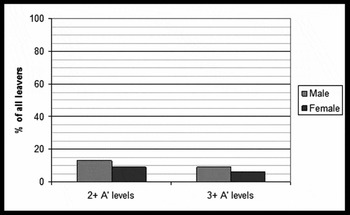
These, by then again dominant, social attitudes regarding the traditional ‘role’ of women were – often unconsciously – played out in the actions of teachers, the majority of whom were still male in secondary schools at that time (ibid., 201–2, 212). Similarly, traditional values saw the affirmation of male-positive attributes in boys (confidence, competitiveness, ambitiousness) at the same time often discouraged in girls as ‘unladylike’ (ibid., 216). Such institutionalized gender stereotyping resulted in low expectations regarding girls’ education, a crucial factor in lowering the aspirations (and self-esteem) of the girls themselves. In the mid-1960s this was clearly linked to a gendered educational experience, as boys were entered for a greater number of O (ordinary) and A (advanced) level subjects, even despite the fact that by this time girls were outperforming them (Blackstone Reference Blackstone, Mitchell and Oakley1976, 203–4). Although equal numbers were taking O levels by 1970, the smaller numbers of girls entered for two or more A levels meant that more university places were still going to boys (figure 4).
The gendering of further education in Britain (1969–70). Source: Blackstone (Reference Blackstone, Mitchell and Oakley1976, table 2).

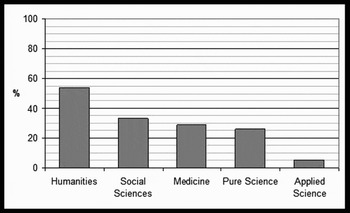
In the early 1970s, there was even some call for all-girls’ schools to be abolished due to their substandard levels of teaching in maths and the sciences. The traditional male gendering of the sciences meant that still in 1970, more than four times as many boys as girls sat O level physics, three times as many boys sat chemistry and 60 per cent of boys sat maths as opposed to 40 per cent of girls (Blackstone Reference Blackstone, Mitchell and Oakley1976, 205). In 1971, one in four girls with two or more A level passes held them in science subjects alone, as opposed to 57 per cent of boys (ibid., 205, 212) (figure 5). This gendering of science in schools naturally filtered through into higher education. In 1970, whilst women made up 54 per cent of undergraduates in the humanities, they were at just 5 per cent in applied science – although they were already beginning to catch up in the social sciences, medicine, and pure science (ibid., 208). It is important to remember that in 1972, still only 12 per cent of Cambridge undergraduates were female.
Proportion of female undergraduates by subject (1970–71). Source: Blackstone (Reference Blackstone, Mitchell and Oakley1976, table 3).

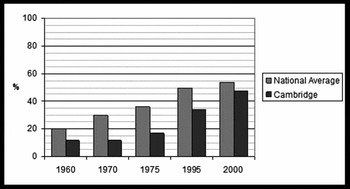
In the 1970s, British higher education as a whole – beyond teacher training – and the sciences in particular were still very heavily gendered male. At Cambridge, the preferential treatment of men, as seen in the new scientific age of the 1950s and 1960s, continued well into the early 1970s (cf. Clark Reference Clark1989; and figure 6). Of all Cambridge appointments in 1974, only 7 per cent were to women (McWilliams-Tullberg Reference McWilliams-Tullberg1975). By 1970 almost one-third of all undergraduate students in Britain were female (Blackstone Reference Blackstone, Mitchell and Oakley1976, 207). However, things at Cambridge were again slightly different: with only three out of the twenty-three Cambridge colleges accepting women, 88 per cent of university places were still male (McWilliams-Tullberg Reference McWilliams-Tullberg1975, 215). Cambridge had repealed the statute banning mixed colleges in 1965; however, not until 1972 did the first undergraduate colleges allow women members and by the mid-1970s young men still took 83 per cent of places (McWilliams-Tullberg Reference McWilliams-Tullberg1975, 216; UoC 2007). The number of women at Cambridge was by then roughly half the national average, which was still only 36 per cent (figure 6). Regarding female rights of access to higher education, Cambridge remained a deeply reactionary force. In fact – as recounted by Henrietta Moore – research by the Cambridge University Women's Action Group found that the university employed fewer women full-time in 1980 than it had done in 1935 (cf. Smith Reference Smith2007).
Proportion of female undergraduates in Britain compared to those in Cambridge (1960–2000). Sources: Blackstone (Reference Blackstone, Mitchell and Oakley1976, 207); McWilliams-Tullberg (Reference McWilliams-Tullberg1975, 215–16); HESA (2008a); UoC (2007); UoC (2008).

Women and 1960s–1970s archaeology The post-war baby boom saw a great expansion of the universities in the 1960s. The post-war Cambridge tradition of positive discrimination in favour of young men continued and many went straight into lectureships by their mid-20s. Sheffield began teaching prehistoric archaeology in 1965 with jobs to Paul Mellars and Colin Renfrew – each had taken the Tripos in 1962 and both saw rapid promotion to senior lecturer. Jobs then went to Andrew Fleming, John Collis, Robin Dennell and Graeme Barker, each of whom had taken the Tripos in the later 1960s (Clark Reference Clark1989, 145). At this time, Clark (ibid., 131) noted that a feature of Renfrew and Evans's excavations at Saliagos (1964–65) was that ‘they followed the usual Cambridge practice of including [male] undergraduates who later made careers in prehistoric archaeology’. In 1966, Southampton established its chair in archaeology which went to Barry Cunliffe, just four years after his Tripos (ibid., 146). In 1972 the new Durham chair went to Anthony Harding, three years after his Tripos (ibid., 148). The 1960s was a period of rapid growth for British archaeology: it was rather young, very male, and – at least according to Clark – fairly Cambridge-led.
With the advent once more of an increasingly liberal society in the later 1960s, married women were again allowed to have a career. In reality, however, few could sustain a full-time job alongside unchanged social attitudes which still expected them to take sole responsibility for any parenting and domestic work (Diaz Andreu and Sørensen Reference Diaz Andreu, Sørensen, Andreu and Sørensen1998, 22; Kenyon Reference Kenyon1970, 115–16). As a result, the few women who made a career in archaeology at this time – such as Rosemary Cramp and Jenny Price at Durham, Joan Taylor and Liz Slater at Liverpool, Ruth Whitehouse at London and Francis Lynch at Bangor – were almost exclusively childless and as such were able to progress by effectively ‘passing’ as men. Cambridge women who stayed in the field were those compliant in the traditional practice of supporting their husband's career by assuming the role of archaeological wife. Ann Sieveking, who had worked at Star Carr, subsequently worked on her husband's excavations; Helen Wace worked with her husband at Mycenae; Bridget Allchin worked with her husband on South Asian prehistory. It was the husbands, however, who got the posts (cf. Clark Reference Clark1989, 62, 124–25, 128–29).
In 1966, Joan Oates followed her husband – director of the British School in Iraq – to Mesopotamia, where she at least was able to excavate her own sites (ibid.). Sue Sherratt followed her husband to Sheffield, where she remains a ‘research fellow’ despite a string of leading publications. Jane Renfrew took the Tripos in 1964 and gained a lectureship in Sheffield for five years, before a series of ‘visiting’ or ‘affiliate’ posts as determined by her husband's career – including that of ‘master's wife’ at Jesus College, Cambridge. Although research on this topic is new, at present it seems that few women entered the profession of archaeology in their own right again in Britain until the 1970s. Even then, some British women archaeologists, such as Ruth Tringham, went on to find work beyond Britain alongside a greater number of contemporary female practitioners in the US, such as Meg Conkey and Alison Wylie (cf. Smith Reference Smith2007).
With the decline of women's access to British archaeology in the 1950s, 1960s archaeology too was very much a case of ‘jobs for the boys’. By then an established tradition, this practice continued seemingly into the 1970s. There had been ten archaeological posts in British universities in 1932, a figure that had swollen to 200 by 1970 (Daniel Reference Daniel1975, 328). In 1989, Clark commented that, of the 20 institutions teaching archaeology in Britain at that time, the principal centres had largely been staffed from Cambridge (Clark Reference Clark1989, 1). What seems increasingly clear is that – beyond undergraduate study – the discipline of archaeology in Britain, with its heavy Cambridge connections, became a privileged male endeavour. This was the background to processual archaeology at Cambridge.
Post-war ‘professionalism’ and gender politics Women had played a relatively significant role in the growth of the discipline in the interwar period. However, with the post-war growth of archaeology we actually saw the decline of female involvement in the discipline. Until 1945, for example, egyptology at University College London had seen equal proportions of men and women staff, but since the Second World War no woman was appointed (Champion Reference Champion, Andreu and Sørensen1998, 195; Janssen Reference Janssen1992). Between 1921 and 1946 the Prehistoric Society had three female presidents; it did not have another until 2005. The joke today is that whilst Cambridge archaeology had three of the university's first four female professors, they were also the last. This interwar versus post-war divide regarding female employment in the discipline was first commented on by Kathleen Kenyon (Reference Kenyon1970); however, it was not mentioned by contemporary disciplinary histories (Sørensen Reference Sørensen, Andreu and Sørensen1998, 46).
It has since been argued that women's early contribution was systematically written out of later 20th-century histories, such as those of Glyn Daniel and Bruce Trigger (cf. Champion Reference Champion, Andreu and Sørensen1998, 190–94). Disciplinary histories have instead been made, constructed, to emphasize male endeavour (ibid.). So not only were women kept away from practice in 1950s and 1960s archaeology, but our earlier women were similarly written out of history. As we become more self-aware, with increasingly critical methodologies, we are discovering that there have been peculiar sociohistorical contexts to both the inclusion and exclusion of women from archaeology. Fundamental factors have been female access to higher education, the gendering of secondary education, and access to the sciences. What we are now discovering, however, is that women archaeologists have always been there. In some decades they were more successful at gaining access to archaeology – in Champion's words, they became more visible – but they were always there, whether as professor or as wife. Even those women who left the discipline in Britain did not leave archaeology, with Garrod practising instead in France, Piggott in Italy.
In the interwar period, the exclusion of women was a tide against which Cambridge archaeology proudly swam, but which – following Garrod's retirement in 1952 – it seemed content to move along with. This is revealed most clearly in Clark's strikingly male history of post-war Cambridge archaeology (Clark Reference Clark1989). An interesting question is to what extent the ‘maleness’ of post-Garrod Cambridge had been a response to the university's old view of archaeology as a ‘soft’ subject (Smith Reference Smith2009, 8). Is this also why archaeology was so keen to adopt science, itself traditionally gendered male? Might this also be why our later 20th-century colleagues were so ready to write out the female contribution to the history of our discipline? These are the questions to be found in the background to processual archaeology, and surrounding archaeology as science.
These events were to some extent linked to a post-war conservatism and an exclusion of women from public life in general. Britain's weak post-war economy and ensuing conservatism dealt women archaeologists a heavy blow; whilst they might be able to study archaeology, they were not so able to practise it. A relentless domestication drive saw most women again excluded from public life as marriage became a bar to a career. The result was that our women archaeologists left and our younger male archaeologists got the jobs. The few women who came up during this time were, it seems, often relegated to the role of archaeological wife, or were forced to sacrifice a family life. Other factors were clearly involved: the ‘traditional values’ which remained in our educational establishments and influenced girls’ views of their own abilities; the slow increase in the numbers of female undergraduates despite a century-long debate; the continued gendering of science education in Britain and the expansion of the discipline during a scientific age; and a positive discrimination in favour of young male archaeologists, an activity that continued throughout the 1960s during a period of real expansion.
To some extent this reflects a more general British phenomenon identified by agrarian historian Joan Thirsk, who established that women generally work alongside men in the early days of a discipline, sometimes even outnumbering them, until it is established as a profession and access becomes increasingly controlled (Tiller Reference Tiller2008). That many disciplines saw expansion during the 1950s and 1960s, as women were in the home, is clearly a major factor here. With the post-war move away from class-based privilege in favour of ‘professionalism’, we lost the input of middle-class women. In the post-war period we may have begun to choose ability over means, but we only did this for our men. The result was that wealthy women, who had previously discovered a route to accessing the past, subsequently found this road closed. Women, it seems, were not professionals. The survival of this post-war truism – the characterization of the interwar period as amateur compared to a post-war professionalism – is, at best, misguided. Instead, the roots of professionalism can be found in 1920s and 1930s practice, when women too held full-time posts.
In addition to this, processual archaeology was Cambridge-led. Cambridge continued to be a powerful force against equal opportunities in a 20th-century Britain which, routinely, demonstrated an anti-woman stance. Degrees for women were granted a remarkable 86 years after Davies's first petition in 1862, women's entry was restricted until 1972, and by the mid-1990s women still made up less than 10 per cent of fellows at the former men's colleges (Mason Reference Mason, Shils and Blacker1996, 260). The university did not achieve equality in undergraduate admissions until 2005, several years after the rest of Britain (UoC 2008; HESA 2008a). The professionalization of the discipline, too, was Cambridge-led and as a result it was the young men who were fast-tracked into jobs (cf. Clark Reference Clark1989). Cambridge archaeology had fought off its ‘soft’ reputation inherited from the interwar period and with the advent of processualism – amidst an apparent post-war call for opportunity according to ability – desperately few women were indeed able to take part. That the home of processualism was Cambridge has had a profound effect on its nature.
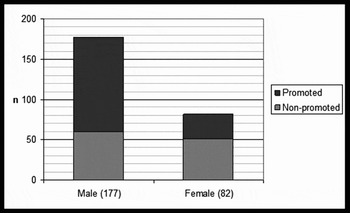
The repercussions of this are still keenly felt today, as women continue to endure the effects of sluggish change. In 1998, British archaeology had only two female professors (Champion Reference Champion, Andreu and Sørensen1998). In 2007, the national average of female professors was still at just 18 per cent (HESA 2008b); archaeology, however, was half this, at 9 per cent. Beyond equal access to higher education – something still not achieved in the sciences – women in British archaeology continue to suffer the frustratingly slow budge of the glass ceiling amidst the shift from overt sexism to institutionalized discrimination (figure 7). A disproportionate number of women have now been found to leave the profession in their 30s (Aitcheson and Edwards Reference Aitcheson and Edwards2008; figure 5). To some extent this is linked to the exclusion of men from parenting in British employment legislation, laws which continue to prescribe female domesticity; this despite the non-gendering of parenting roles in France, Germany, Norway and Sweden. Britain is still a long way from achieving equal opportunities, following a deep history of female domestication, coupled with their exclusion from public life (cf. Fawcett 2008).
Gendered promotion in British academic archaeology (2007).

As archaeology grew as a ‘professional’ discipline, then, in post-war Britain, a variety of social mechanisms resulted in there being limited opportunities for women. This is the background to the lack of women in 1960s archaeology. With a better understanding now of the extent to which access to higher education in Britain continued to be restricted for women into the 1970s and 1980s, alongside the history of the relationship between women's access to science – as we continue with our loss of innocence surrounding gender politics – we discover that much of what we believe to be naturally female or male is in fact long-term and cultural, including the gender of science. The question must now be how we are to speed up the pace of change, as we realize that our personal histories are experiences shared by women across the discipline. When 50 per cent of our undergraduates yet still only 9 per cent of our professors are female then something is clearly not working. The implementation of strategies such as flexible working, equal pay auditing, transparency in promotion and competitive maternity arrangements not only makes strong economic sense, but will also enable a decreasingly androcentric – ironically, an increasingly objective – version of the past. The move, again in all irony, will be towards better science. It is time that we moved towards a new archaeology.
A changed world? So, how was the world changed for women with the advent of processual archaeology? Unfortunately, the change was quite clearly for the worse. Neither a democratization of the discipline nor an objectivity of study was achieved by British archaeology in the 1960s and early 1970s. The social conditions of the 1950s and 1960s produced a male-dominated discipline which tragically set about producing an androcentric version of the past (e.g. Clarke Reference Clarke and Clarke1972). In this, processual archaeology demonstrated its very lack of objectivity and its inability to adopt scientific method in its thinking. In the 1950s and 1960s, the fast-tracking of young men over experienced women depleted our skills base – built up, for example, in the training of Verney Wheeler – as our top women archaeologists felt compelled to leave the discipline. As we excluded on the basis of sex, we marginalized or lost some of our best archaeologists and promoted others in their place, leading to the evolution of a subject which came under heavy philosophical attack in the 1980s.
Whilst we may be able to uphold the notion of a revolutionary and increasingly democratic era for a New Archaeology in late 1960s North America, we find that this characterization is not relevant for 1960s Britain. Instead, our retention of traditional societal values – perhaps nowhere more so than at Cambridge – means that the pace of democratic change here has been slow. In British archaeology since the 1950s, we have rejected class-based privilege, embraced method, then embraced theory, and finally we begin to reject sex-based privilege. Only with these four key stages might we really be thought to have matured as a discipline, to have become professional. Always slow to catch up with anthropology, only now do we grasp the difficulties in producing an androcentric version of the past as if male experience were central to humanity. Gradually we begin to understand the gender politics inherent in our discipline, its impact on our personal histories, and the histories we create. It is only with this recognition that the loss of innocence is complete.
Acknowledgements
The author would like to acknowledge long-term discussions, central to the formation of this piece, with Mairi Davies, Ben Edwards, Susanne Hakenbeck, Lesley McFadyen, Anne Teather and Elaine Pope. Thanks also to Pamela Smith for patient encouragement and advice, to the referees for their helpful comments, and to those who granted copyright permission. The piece is dedicated to Sara Champion.