Introduction
As most cancer treatments are delivered to outpatients, their family caregivers (FCs) are considered essential supports for their relative (Grant et al., Reference Grant, Sun and Fujinami2013). However, they frequently put their own life aside, focusing more on their loved one (Stenberg et al., Reference Stenberg, Ruland and Miaskowski2010; Van Ryn et al., Reference Van Ryn, Sanders and Kahn2011). FCs feel unprepared and unsupported to play their role (Bee et al., Reference Bee, Barnes and Luker2009; Plant et al., Reference Plant, Moore and Richardson2011), and need more information to fulfill it (Girgis et al., Reference Girgis, Lambert and McElduff2013; Merckaert et al., Reference Merckaert I, Libert and Lieutenant2013; Sklenarova et al., Reference Sklenarova, Krümpelmann and Haun2015). Studies report that 10–50% of FCs experience high distress, often more severely than patients (Girgis et al., Reference Girgis, Lambert and McElduff2013; Lambert et al., Reference Lambert, Harrison and Smith2012; Gropper et al., Reference Gropper, van der Meer and Landes2016). It may persist over time and impact on their health (Girgis et al., Reference Girgis, Lambert and McElduff2013; Grant et al., Reference Grant, Sun and Fujinami2013; Lambert et al., Reference Lambert, Girgis and Lecathelinais2013; Merckaert et al., Reference Merckaert I, Libert and Lieutenant2013). FCs of lung cancer patients are particularly vulnerable (Wadhwa et al., Reference Wadhwa, Burman and Swami2013) and likely to be distressed (Persson et al., Reference Persson, Wennman-Larsen and Wengström2008; Plant et al., Reference Plant, Moore and Richardson2011; Vrettos et al., Reference Vrettos, Kamposioras and Kontodimopoulos2012) because of the rapid evolution of this cancer (Lambert et al., Reference Lambert, Harrison and Smith2012) and the associated decline in their relative's functional status (Ellis, Reference Ellis2012; Fujinami et al., Reference Fujinami, Otis-Green and Klein2012).
Different interventions have been developed to support FCs (Northouse et al., Reference Northouse, Katapodi and Song2010; Ferrell and Wittenberg, Reference Ferrell and Wittenberg2017). A majority of them consisted in psychoeducational strategies and skills training to improve FC competencies in patient care. Few focused primarily on FC needs (Northouse et al., Reference Northouse, Katapodi and Song2010; Ferrell and Wittenberg, Reference Ferrell and Wittenberg2017). Although several interventions showed favorable effects on psychological outcomes, more research is needed to identify which ones are the most effective and how to implement them into routine practice (Northouse et al., Reference Northouse, Williams and Given2012; Vrettos et al., Reference Vrettos, Kamposioras and Kontodimopoulos2012).
As recommended by experts (Pirl et al., Reference Pirl, Fann and Greer2014), many cancer centers have implemented routine distress screening programs for patients, but FCs are not integrated in them. Since many FCs experience high distress (Lambert et al., Reference Lambert, Harrison and Smith2012; Girgis et al., Reference Girgis, Lambert and McElduff2013; Merckaert et al., Reference Merckaert I, Libert and Lieutenant2013; Wadhwa et al., Reference Wadhwa, Burman and Swami2013; Gropper et al., Reference Gropper, van der Meer and Landes2016), they should be included. With the interrelation of the patient–FC dyad experience (Jacobs et al., Reference Jacobs, Shaffer and Nipp2017), high-quality cancer care should include the satisfaction of FC needs and not only those of patients (Kent et al., Reference Kent, Rowland and Northouse2016; Ferrell and Wittenberg, Reference Ferrell and Wittenberg2017).
An intervention was designed to achieve this goal while sharing the responsibility of FC supportive care between the different health professionals in contact with them [the oncology team treating their relative and their family physician (FP)]. This strategy took advantage of professionals already in place in order to keep the intervention realistically durable after the end of the study.
The intervention was the result of several preliminary steps taken to ensure the relevance and acceptability of its three components. First, a literature review was performed, showing FC distress screening as an important need, considering their exclusion from current distress screening programs in oncology clinics. The second component of the intervention consisted in offering to FCs the opportunity to discuss alone with a member of the oncology team, to get information on what to expect in the future regarding their relative. Such encounter was also a privileged moment to provide support and skills to FCs to help them in their caregiving role. Finally, the third component of the intervention was a deliberate attempt to bring closer oncology care and primary care, to improve collaboration between these stakeholders. It also provided an opportunity to share between them the responsibility of FC supportive care. As FCs often put aside their own emotions (Plant et al., Reference Plant, Moore and Richardson2011; Williams and Bakitas, Reference Williams and Bakitas2012), it was assumed that they would be reluctant to directly consult psychosocial professionals, but that they would accept more easily to see their FP.
Before implementing this intervention in an evaluative trial, its perceived relevance and acceptability were assessed by consulting FCs of lung cancer patients, decision makers and clinicians from an oncology team, and FPs working in varied community-based settings. This article reports findings from a randomized clinical trial conducted to assess the feasibility and preliminary effects of this intervention.
Methods
Study design and participant selection
This study used a mixed-method approach. The development of the intervention and the trial design have been described elsewhere (Aubin et al., Reference Aubin, Vézina and Verreault2017). Briefly, a two-arm randomized trial was conducted between August 2015 and December 2017 at the Institut universitaire de cardiologie et de pneumologie de Québec (IUCPQ), a tertiary pulmonary care hospital in Quebec City, Canada. Nurse navigators working in that institution invited FCs of patients newly diagnosed with nonsurgical lung cancer (85% of all cases), with an estimated life expectancy of at least 4 months (to minimally ensure two data collections in the trial). All participants signed an informed consent form. Using a computer-generated randomization list, FCs were randomly assigned to the experimental group (exposed to the intervention — EG) or to the control group (unexposed to the intervention — CG). Then, a purposive sample of FC from the EG was individually interviewed to assess the intervention usefulness. This study was approved by the IUCPQ Research Ethics Committee (Approval # 2016-2523, 21206). It was registered at ClinicalTrials.gov, on July 15, 2015 (reference # NTC01389739).
Intervention
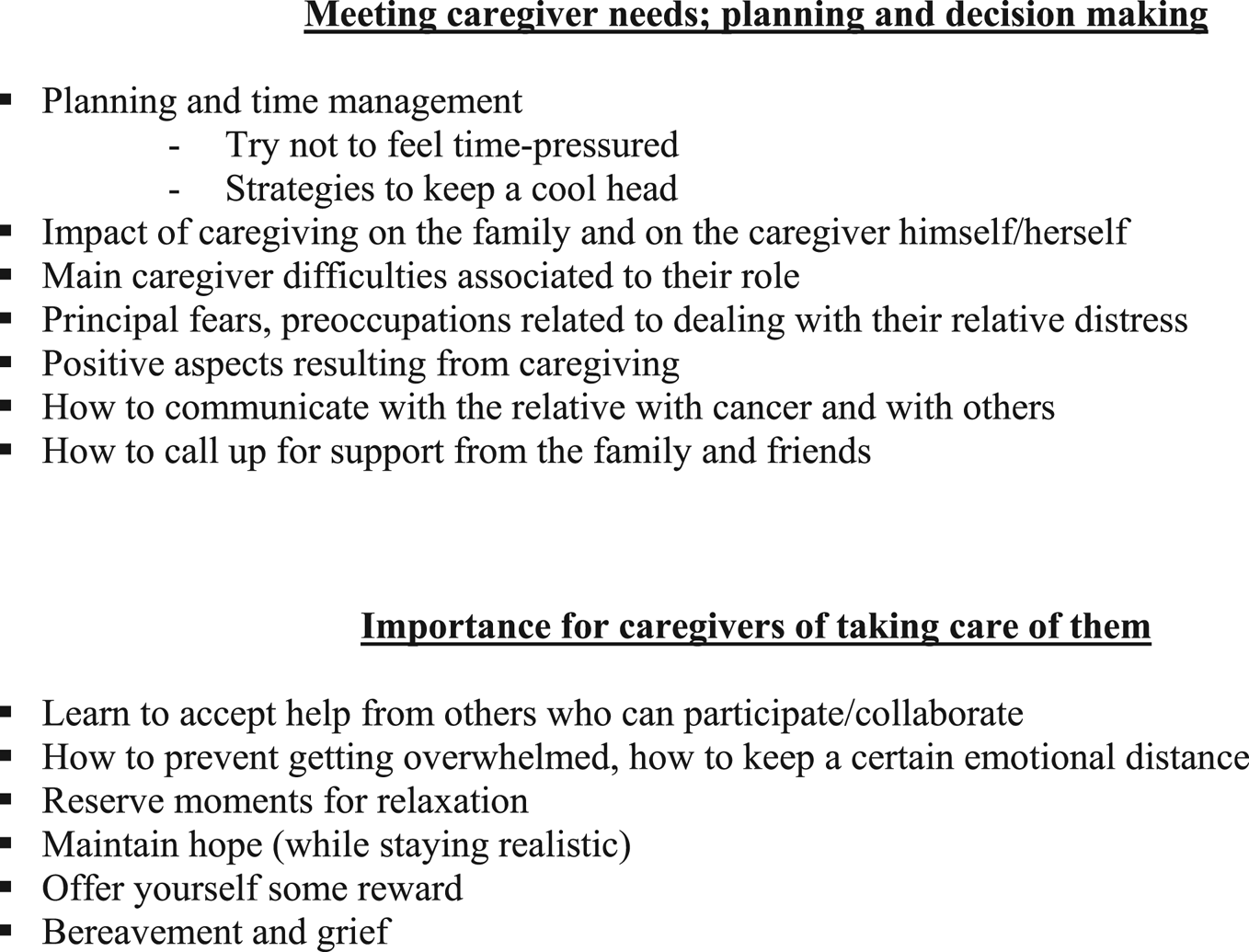
The intervention included (1) systematic FC distress screening and problem assessment near their relative cancer diagnosis, and every 2 months, using a distress screening tool (DST) composed of the Distress Thermometer (DT) (Roth et al., Reference Roth, Kornblith and Batel-Copel1998; Jacobsen et al., Reference Jacobsen, Donovan and Trask2005), a problem checklist in different domains (practical, social/family, emotional, spiritual, informational, and physical), and the Edmonton Symptom Assessment Scale (Chang et al., Reference Chang, Hwang and Feuerman2000). The DST used for patients at the IUCPQ oncology clinic was adapted to the FC context. Its convergent validity was assessed by having 29 FCs of lung cancer patients complete the adapted version of the DST and the Hospital Anxiety and Distress Scale (HADS) (Zigmond and Snaith, Reference Zigmond and Snaith1983; Savard et al., Reference Savard, Laberge and Gauthier1998). Analyses showed a correlation of 0.64 (p = 0.0002) between the DT score and the HADS global score, and a correlation of 0.65 (p = 0.0001) between the DT score and the number of problems identified by FCs; (2) privileged contact for FC with an oncology nurse (ON) to review with them results of the DST, and plan tailored problem-solving strategies. To standardize the ON conversations with FCs, she received a training on the main topics to address with FC (Figure 1). More specifically, she acknowledged that it is normal for FCs to go through various emotions (anxiety, fear, sadness, and helplessness) and invited them to verbalize and share their experience. The ON counseled them on the importance of taking care of them, shattering their interior solitude, and preserving time for them, while accompanying their relative. The ON also provided community resources and educational material related to the caregiving role, and helped them become more proactive in their role and improve their empowerment. Throughout the study, the ON served as a resource person for FCs and stayed available if they needed help. The ON intervened in addition to the usual care provided to patients and their family. She was recruited specifically to administer the intervention to FCs from the EG, in order to prevent contamination of the CG; (3) liaison by the ON with the FP of FCs reporting high distress (thermometer score ≥4/10). FPs were invited to contribute to FC supportive care because emotional support is recognized as an important part of their role in cancer care (Adams et al., Reference Adams, Boulton and Rose2011; Aubin et al., Reference Aubin, Vézina and Verreault2012a, Reference Aubin, Vézina and Verreault2012b). The long-standing nature of their relationship with patients and their usual familiarity with their patient social context put them in a strategic position to provide emotional support. It was assumed that FP could favorably influence FC emotional distress associated with their caregiving role.
Main topics discussed by the ON with FCs.

Usual care was provided to patients and their family in both groups. In the current practice, a nurse navigator initially met all patients, most often in the presence of their FC, and she stayed available to support them throughout the care trajectory. However, her interventions targeted mainly on patients’ needs. She could intervene on FCs if they clearly expressed distress or special needs. But, in usual practice, only few FCs received support services.
Study instruments and data collection
The primary outcome was FC distress, assessed with the Hospital Anxiety and Depression Scale (HADS) (Zigmond and Snaith, Reference Zigmond and Snaith1983; Savard et al., Reference Savard, Laberge and Gauthier1998). This 14-item questionnaire contains two 7-item subscales assessing anxiety and depression during the past week. Score on each subscale ranges from 0 to 21, with scores higher than 7 denoting probable depression or anxiety. A global score of the 14-item scale (range from 0 to 42) over 15 identifies clinically significant distress (Roberge et al., Reference Roberge, Doré and Menear2013). This instrument has been extensively used in research to assess anxiety, depression, and distress in different populations with varied health problems (Bjelland et al., Reference Bjelland, Dahl and Haug2002; Olsson et al., Reference Olsson, Mykletun and Dahl2005; Poole and Morgan, Reference Poole and Morgan2005) and in general populations without any specific medical condition (Bocerean and Dupret, Reference Bocerean and Dupret2014), including FC accompanying cancer patients (Beaudry et al., Reference Beaudry, Vanlemmens and Anota2019). In addition, a version of the HADS has been validated with French Canadians in Quebec (Savard et al., Reference Savard, Laberge and Gauthier1998).
Secondary outcomes included quality of life (QoL), psychological burden, and caregiving preparedness. FC QoL was assessed using the City of Hope QoL Scale-Family Caregiver Version (COH-QoL-FCG) (Ferrell, Reference Ferrell1995), a 37-item instrument measuring physical, psychological, social, and spiritual QoL items, which are rated on a 1–10 scale, with higher scores representing worse QOL. The FC psychological burden was assessed by the French version of the Caregiver Burden Scale in End of Life Care (CBS-EOLC) (Dumont et al., Reference Dumont, Fillion and Gagnon2008), a 16-item instrument validated among FCs who assist cancer patients in palliative phase. Each item varies from “1” (never) to “4” (very often), and a global score is calculated. Caregiving preparedness was measured using Archbold's Caregiving Preparedness Scale (Archbold et al., Reference Archbold, Stewart and Greenlick1990). This 8-item scale with a score of “0” (not at all prepared) to “4” (very well prepared) evaluates FC comfort in multiple domains of the caregiving role such as providing physical care, emotional support, setting up in-home support services, and dealing with the stress of caregiving.
All FCs completed these validated questionnaires at baseline and every 3 months, up to 9 months or until their relative's death. A research professional administered the questionnaires, while FCs were accompanying their relative to a regular appointment at the oncology clinic, or at their home depending on their preference. FCs from the EG provided the name of their FP who was informed of their participation. All data were coded and computed with a double entry on Excel files.
In the last year of the study, a purposive sample of FC from the EG was interviewed to assess the intervention usefulness. Ten to twelve interviews were estimated sufficient to reach saturation. The non-probabilistic selection of FCs aimed to identify informants with different experiences in order to generate maximal information (Mucchielli, Reference Mucchielli1996). Interviews were recorded with the permission of participants.
Analysis
As distress was the primary outcome, the HADS global score served to calculate the sample size. Considering a baseline score of 13.7 ± 7 (range 0–42) found in the same population (Aubin et al., Reference Aubin, Vézina and Verreault2012a, Reference Aubin, Vézina and Verreault2012b), a level of significance of α = 0.05, and a power of 80%, a sample of 110 (55/group) allowed the detection of a 3.8-point difference in the HADS score between the groups. Considering an attrition rate of 40%, a sample size of 68 (34/group) at the end of the study still allowed a 4.8-point difference in the HADS score between the groups.
The evaluation of the adherence to the intervention was assessed by verifying in the EG, the number of DST actually completed, the number of liaisons realized with the FP of the FC when the DT score ≥4/10, and a descriptive analysis of interventions performed by the ON.
Statistical tests on means and proportions (t-test, χ2, F) served to compare participant characteristics and baseline outcome measures between groups. Mixed models for repeated measures were used to assess the intervention effectiveness on primary and secondary outcomes. Missing data for FCs whose relative had died during the study (N = 35) were not imputed, as their participation stopped at that point. For FCs who withdrew (n = 7), their last data collected were carried over to conduct intention to treat analyses. Since results were equivalent whether these missing data were imputed or not, it was arbitrarily decided to present results without imputed data. All statistical analyses were performed using the SAS software version 9.4 (SAS institute Inc., Cary, NC).
A content analysis of the FC recorded interviews was performed based on Miles and Huberman methodology (Miles and Huberman, Reference Miles and Huberman2003). Each interview was independently analyzed by the research professional and one researcher of the team to ensure inter-observer reliability. Disagreements were reviewed until a consensus was reached.
Results
Participants
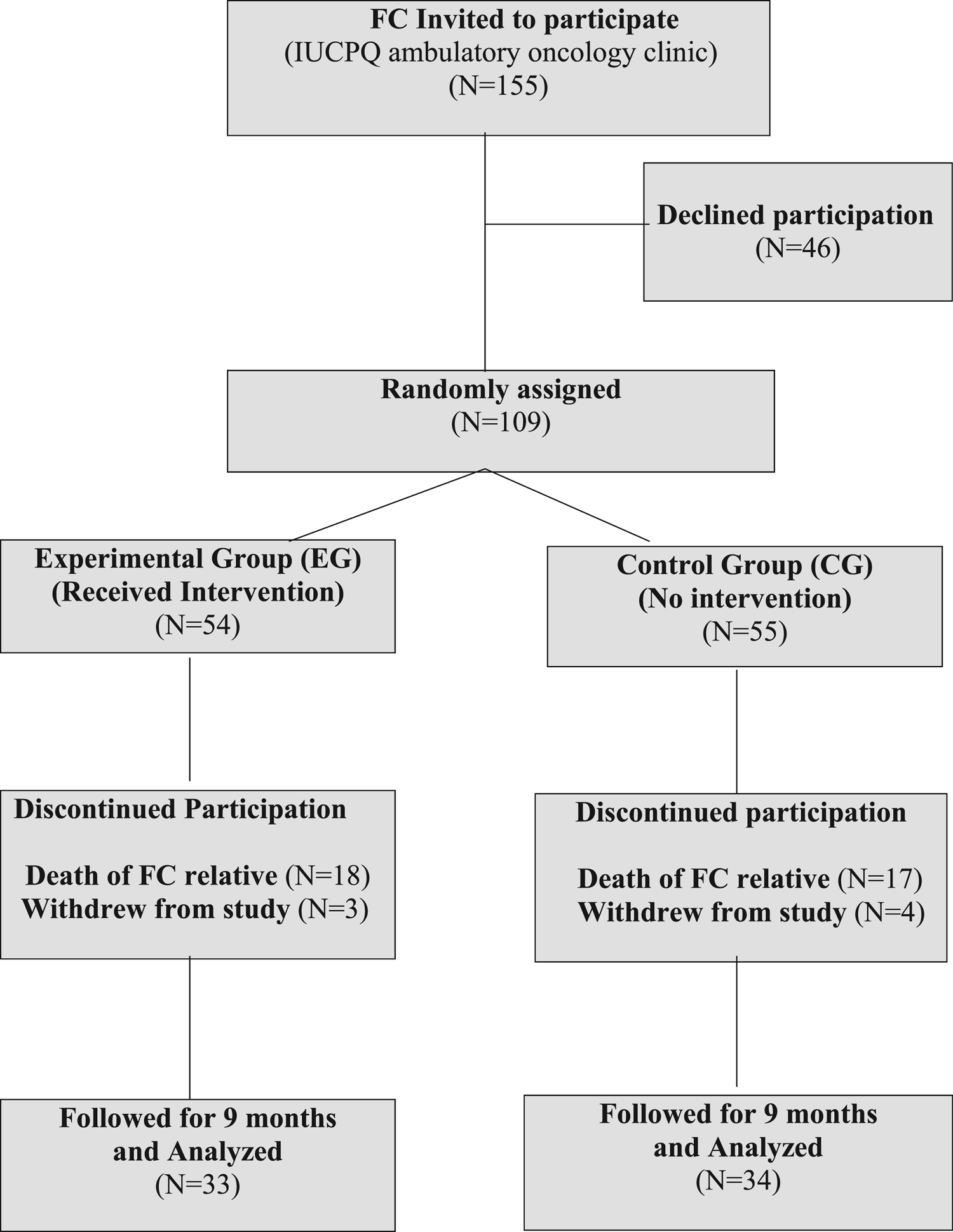
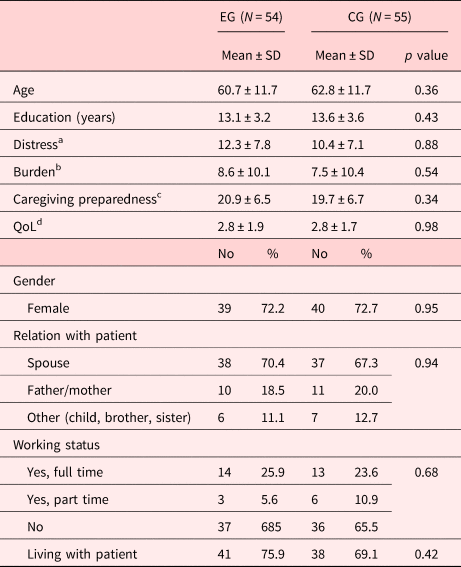
From the 155 FCs solicited, 109 were recruited (participation rate: 70.3%) and randomly allocated to the EG (n = 54) or the CG (n = 55) (Figure 2). Participants were mainly women (72.5%), with a mean age of 61.8 years, and most of them were taking care of their spouse (78.8%). A majority were living with the patient (72.5%), and those not cohabiting spent 18.8 h/week on average with their relative. Most FCs had a regular FP (92.7%), and 86.1% of them had consulted him/her in the last year, mainly for conditions unrelated to their caregiving situation. A quarter of FCs were followed by their FP for mood disorders, and 66.7% of them were taking a medication related to that problem. All FCs reported accompanying their relative to their oncology appointments. Baseline characteristics were well balanced between the two groups (Table 1). Younger FCs (<65) perceived a higher burden (p = 0.008), reported lower global QoL (p = 0.0009) and tended to experience higher distress (p = 0.06), than their older counterparts.
Flow diagram.

FC baseline characteristics

a Global score of the Hospital Anxiety and Depression Scale (HADS); score range 0–42.
b Caregiver Burden Scale in End of Life Care; score range 0–48.
c Caregiving Preparedness Scale; score range 0–32.
d Global score of the City of Hope QoL Scale-Family Caregiver; (score range 1–10; higher scores represent worse QoL).
Adherence to the intervention
All FCs from the EG completed the DST at baseline and met the ON for a mean duration of 20 min. The ON checked their DST results, assessed their needs, provided information and emotional support, and responded to their questions. According to their DST results, almost half of FCs (48.1%) reported high distress (thermometer score ≥4) at baseline. They mentioned 7.3 problems on average, mainly emotional (fears and worries, sadness, and difficulty to adjust to their relative disease) and physical (fatigue and insomnia). At baseline, the transfer of the DST results to the FC FP was achieved less frequently than planned (65% of cases) because of a misunderstanding of the systematic application of this component of the intervention by the ON. However, at other screening points, the ON transferred to them the DST results of FCs with high distress if they were consenting. For the rest of the study, the transfer rate ranged from 80% to 91%. Most FCs did not see their FP more than once during the study. For most of them, the ON intervention was sufficiently helpful and they did not request additional support or referral to other resources, except for six FCs with higher distress who accepted to be referred to the psycho-oncologist of the clinic.
Throughout the study, FC compliance to complete the DST remained above 83%. However, only two FCs directly requested appointments or called the ON. Nevertheless, the ON was proactive and systematically initiated discussions with FC from the EG when she saw them accompanying their relative to the oncology clinic.
Based on the DST results, the proportion of FCs in the EG with high distress significantly decreased during the study (from 48.1% to 28%, p = 0.0003), as well as the number of problems they reported (from 7.3 to 4.2, p = 0.01).
FC primary and secondary outcomes
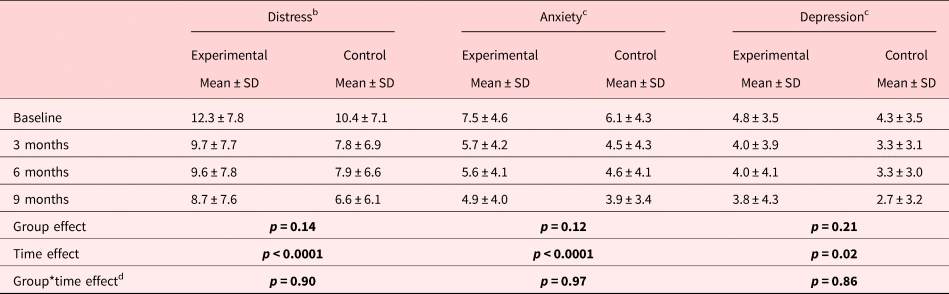
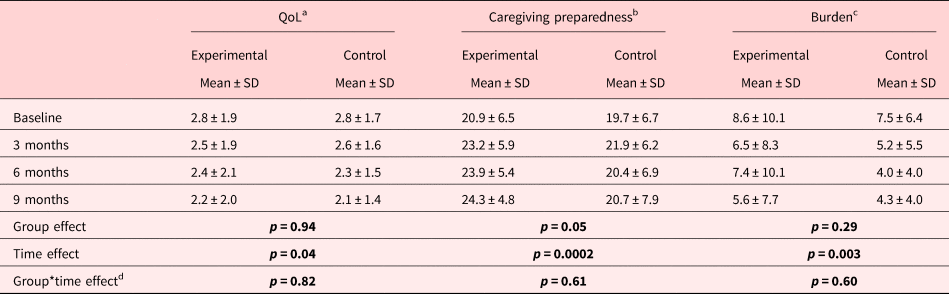
FC distress measured by the HADS significantly decreased in both groups over time. Similar reductions were found for anxiety and depression (Table 2). FC QoL significantly improved with time (p = 0.04), their perceived burden decreased (p = 0.003), but no difference was found between the groups (Table 3). Throughout the study, FC caregiving preparedness improved (p = 0.0002) and FCs from the EG tended to feel slightly better prepared (p = 0.05). However, as for the other outcomes, the effect of the intervention was not found statistically significant (p = 0.61).
Effect of the intervention on distress, anxiety, and depression (HADSa)

a HADS = Hospital Anxiety and Depression Scale.
b Distress = HADS global score; range 0–42.
c Anxiety and Depression = HADS specific subscale scores; range 0–21.
d Group*time effect = the effect of the intervention from mixed models for repeated measures.
Effect of the intervention on secondary outcomes

a Global score of the City of Hope QoL Scale-Family Caregiver; score range 1–10; higher scores represent worse QoL.
b Caregiving Preparedness Scale; score range 0–32.
c Caregiver Burden Scale in End of Life Care; score range 0–48.
d Group*time effect = the effect of the intervention from mixed models for repeated measures.
Qualitative assessment of the intervention
Saturation was reached after 10 interviews of 30–45-min duration conducted with FCs. This subsample included seven women and three men, corresponding to the initial distribution of participating FCs. Their mean age was 51 years. Six were accompanying their spouse, and four were taking care of a parent. Unanimously, FCs found the intervention reassuring, like a security net to keep in mind if they needed it. They valued the opportunity to have privileged contact with an ON, to talk freely to someone not emotionally involved. However, they recognized not having consulted her frequently, indicating that they prioritized their relative well-being. Regarding the DST, they appreciated expressing in writing emotions they often did not verbalize. However, the systematic 2-month period between each DST did not necessarily correspond to transition periods in their relative cancer progression, so its results may have been less useful. They suggested using the DST at transition points (i.e., diagnosis, cancer progression, and new symptom outbreak). FCs were less unanimous to recommend the transfer of DST results to their FP. Some were in favor of it, as it may help their FP to understand how their caregiving situation impacts on their health. Others considered their FP not necessarily well positioned to support them, with their busy practice, lack of time, and restricted accessibility. Some FCs with a limited relationship with their FP doubted they could provide supportive care.
Discussion
These trial results do not support the effectiveness of the intervention to reduce FC distress along their relative cancer care trajectory, neither its influence on secondary outcomes. However, the qualitative assessment of the intervention by FCs was very positive, as they unanimously appreciated it, even though they clearly underused it. Very few FCs from the EG voluntarily requested an appointment with the ON during the study, after their first encounter with her, even though they considered this aspect of the intervention relevant. As shown in other studies (Stenberg et al., Reference Stenberg, Ruland and Miaskowski2010; Plant et al., Reference Plant, Moore and Richardson2011; Van Ryn et al., Reference Van Ryn, Sanders and Kahn2011; Williams and Bakitas, Reference Williams and Bakitas2012), this illustrates how FCs put aside their own problems and emotions to concentrate on their relative. For many FCs, just knowing that this resource was available was sufficient to reassure them, so they did not feel the need to use it. When the ON initiated herself a contact with FCs, this unplanned encounter was satisfactory for the majority and they rarely required supplemental professional services.
Besides the underuse of the intervention, alternative explanations for these results need further consideration. Certain methodological choices may have been contributory. The decision to systematically screen FC distress every 2 months instead of using the DST at transition periods may have yielded to an underestimation of the proportion of FCs with high distress and consequently, a lower use of the intervention among them. Similarly, the fixed 3-month interval between data collections may have introduced a non-differential information bias, which is known to potentially reduce the ability to detect a difference between groups. However, such decisions were necessary to standardize study procedures between groups and to respect the study time frame.
Other factors than caregiving may have affected FC distress (Van Ryn et al., Reference Van Ryn, Sanders and Kahn2011). This intervention mainly provided them with supportive care to help them play their role and did not focus on preexisting personal situations susceptible to affect them psychologically. Since distress was the main outcome, this may have contributed to these negative results. However, the hypothesis of a confounding bias related to other stressors experienced by FCs is unlikely, considering the adequate randomization in the production of well-balanced groups at baseline.
Caregiving preparedness tended to improve in the EG, suggesting some effect of the intervention in that area. If the intervention was successful to improve FC caregiving preparedness, it may further explain why they did not feel the need to contact the ON. Caregiving preparedness is strongly associated with FC distress (Schumacher et al., Reference Schumacher, Stewart and Archbold2007; Mosher et al., Reference Mosher, Jaynes and Hanna2013), and some authors consider it as a crucial area of assessment to better understand problems experienced by FC (Fujinami et al., Reference Fujinami, Sun and Zacharia2015).
FC distress decreased over time in both groups, which could represent an adjustment to their relative's cancer and to their caregiving role. It may also represent a Hawthorne effect related to FC participation in the trial.
Nevertheless, as shown by other authors (Lambert et al., Reference Lambert, Harrison and Smith2012; Girgis et al., Reference Girgis, Lambert and McElduff2013; Wadhwa et al., Reference Wadhwa, Burman and Swami2013), this study found a large proportion of FCs with high distress throughout their relative's cancer journey. It reinforces the importance of implementing distress screening for FCs to better support them. Since FCs tend to prioritize their relative's needs over their own, it is important for oncology teams to be proactive and take advantage of all occasions to assess FC psychosocial or informational needs, without waiting for them to request help. However, with the work-overload of most healthcare professionals, adding initiatives to improve FC supportive care to their current tasks may be challenging.
Considering the liaison with the FC FP, this strategy was not effective, as very few FCs needed additional support from their FP. The usefulness of this strategy presumably varied in accordance with the quality of the relationship between FCs and their FP. Nevertheless, to improve the effectiveness of this component of the intervention, the actual problems of communication and collaboration between primary care and oncology care (Lawrence et al., Reference Lawrence, McLoon and Wakefield2016; Tomasone et al., Reference Tomasone, Brouwers and Vukmirovic2016; Dossett et al., Reference Dossett, Hudson and Morris2017) should be overcome, and the role of each sector should be better defined.
Other interventions to improve cancer supportive care have been tested. Most of them used individual or group sessions and either aimed to empower FCs in their abilities to manage symptoms of their relative or to improve their QoL by integrating exercise in their routine (Sun et al., Reference Sun, Grant and Koczywas2015; Lambert et al., Reference Lambert, Duncan and Kapellas2016; Tomasone et al., Reference Tomasone, Brouwers and Vukmirovic2016). However, as FCs often prioritize their relative's needs over their own, they would not necessarily take the additional time needed to attend such activities. Few interventions were designed especially for FCs. This intervention took advantage of the fact that FCs usually accompany their relative to their appointments in oncology, so it could be administered during that time.
Study limitations
The 40% attrition rate found in this trial, due mainly to the death of FC relatives, may have reduced the statistical power of the study. Although inevitable, such high attrition rate is well recognized in palliative care studies (Higginson et al., Reference Higginson, Evans and Grande2013; Dussel et al., Reference Dussel, Orellana and Soto2015). This study was conducted in a single center which may reduce its external validity. The IUCPQ was already well aware of the importance of supportive care for cancer patients and their family at the time of the study. In their current practice, a nurse navigator met at least once all cancer patients and their FCs. Several FCs may have received some supportive care from her if they requested it. However, as the randomization produced well-balanced groups, the number of FCs having needed supportive care from the nurse navigator should have been equivalent in both groups, thus producing a non-differential information bias (known to reduce the difference between the groups) and potentially underestimating the real effect of the intervention.
Clinical implications
This trial results do not support a large-scale implementation of the intervention, at least not under its present form. However, as distress experienced by FCs of cancer patients remains problematic and should be addressed, this study provides valuable information from which a refined intervention could be developed. As FCs often put aside their emotions and needs, a distress screening program including FCs would help to early detect those with high distress. Ideally, FC distress screening should be repeated at transition periods of their relative's cancer journey. Giving the opportunity to FCs to discuss alone with someone from the oncology team to respond to their questions and concerns would help them become more proactive and increase their self-efficacy in caregiving. More research is needed to find the best ways to improve FC cancer supportive care.
Supplementary material
The supplementary material for this article can be found at https://doi.org/10.1017/S1478951520000711.
Acknowledgments
The authors thank the members of the IUCPQ ambulatory pulmonary oncology team, and the family caregivers of patients with lung cancer who participated in the study.
Funding
This study was funded by the Quebec Health Research Fund (Award # 30740).
Conflict of interest
All authors confirm that they have no conflict of interest to disclose.
Prior publication of an abstract
These trial results have been presented to the 22nd International Congress of Palliative care in October 2018, and the abstract of the presentation has been published in Aubin et al. (Reference Aubin, Vézina and Verreault2018). .