Soils provide the foundation of human existence, with most of contemporary food, fuel, and fibre production being soil based, and the delivery of these goods is critical to human prosperity. The realisation that the future of the human population depends on healthy soils is by no means recent, dating back as far as work by Aristotle and later Charles Darwin. Wallwork (Reference Wallwork1976) formalised it when he wrote that ‘[i]t is now recognized that an ecological approach, through conservation, is the only way Man can exploit his natural resources without endangering their potential for future generations.’ While this critical role of soils to human populations has long been recognised, our understanding of what makes soil function is still developing. Briefly described, it is now widely recognised that soil formation is a time-consuming process that depends on parent material, climate, topography, time, and the biota including soil fauna (Jenny Reference Jenny1941), and that a range of factors, both abiotic and biotic, governs ecosystem functioning (Bardgett Reference Bardgett2005). In essence, the plants aboveground capture carbon (C) from the air through photosynthesis, which fuels the ecosystem, using nutrients and water retrieved from the soil to produce organic matter. A large part of the organic matter produced by plants ends up in the soil through plant root production, the release of root exudates or through allocation of C to microbial symbionts, or via deposits of leaf and woody material or animal faecal matter following herbivory. The microorganisms and fauna inhabiting the soil then recycle the plant-derived organic matter. The soil microbes can be considered the true ‘engine’ of the soils, governing most soil processes and accounting for some 80%–95% of all heterotrophic soil respiration, but direct and indirect interactions with the soil fauna have large implications for soil functioning. Indeed, the presence of certain species of soil fauna can fundamentally modify ecosystem structure and functioning.
The soil fauna, the lead character of this book, thus forms an essential component of the soil food web that is intimately linked to ecosystem functioning through both direct and indirect effects, ultimately influencing humans through the delivery of ecosystem services. A robust understanding of the current distribution of soil fauna, its contributions to ecosystem functioning, and responses to global changes is therefore critical to make informed predictions about the future state of our ecosystems and improved land use management. The soil fauna is also interesting to study in and of itself because of the astonishing diversity and abundance found belowground. Indeed, the recognition of this diversity of life found in soils prompted the popular phrase ‘the poor man's rainforest’ coined by Usher et al. (Reference Usher, Davis, Harris, Longstaff, Anderson, Turner and Taylor1979). It is now well established that our soils are teeming with life, representing a broad array of morphologies and life history strategies (Giller Reference Giller1996; Figure 1.1), and that this biota is itself a critical component of what we term ‘soil’ (Jenny Reference Jenny1941). Indeed, a conservative estimate is that more than 360,000 species, approximately a quarter of all hitherto described living species, are soil or litter dwellers (Decaëns et al. Reference Decaëns, Jiménez, Gioia, Measey and Lavelle2006). This fauna can be broadly divided into ‘full-time’ and ‘part-time’ soil inhabitants, with the latter including many soil-dwelling insect larvae, mound-building insects, and vertebrates (Wolters Reference Wolters2001). However, strictly speaking we can define ‘true’ soil fauna as that which occupies and forages in soils or in the litter layer at least during part of its life cycle. This definition excludes many larger vertebrates that construct tunnels or colonies in soil but forage on vegetation or animals aboveground. This book will focus on the fauna that spends most, if not all, of its life in close association with soils, but the interactions with and impacts of other soil occupants will be discussed where pertinent to the understanding of soil fauna contributions to ecosystem functioning, distribution, or assemblage composition.
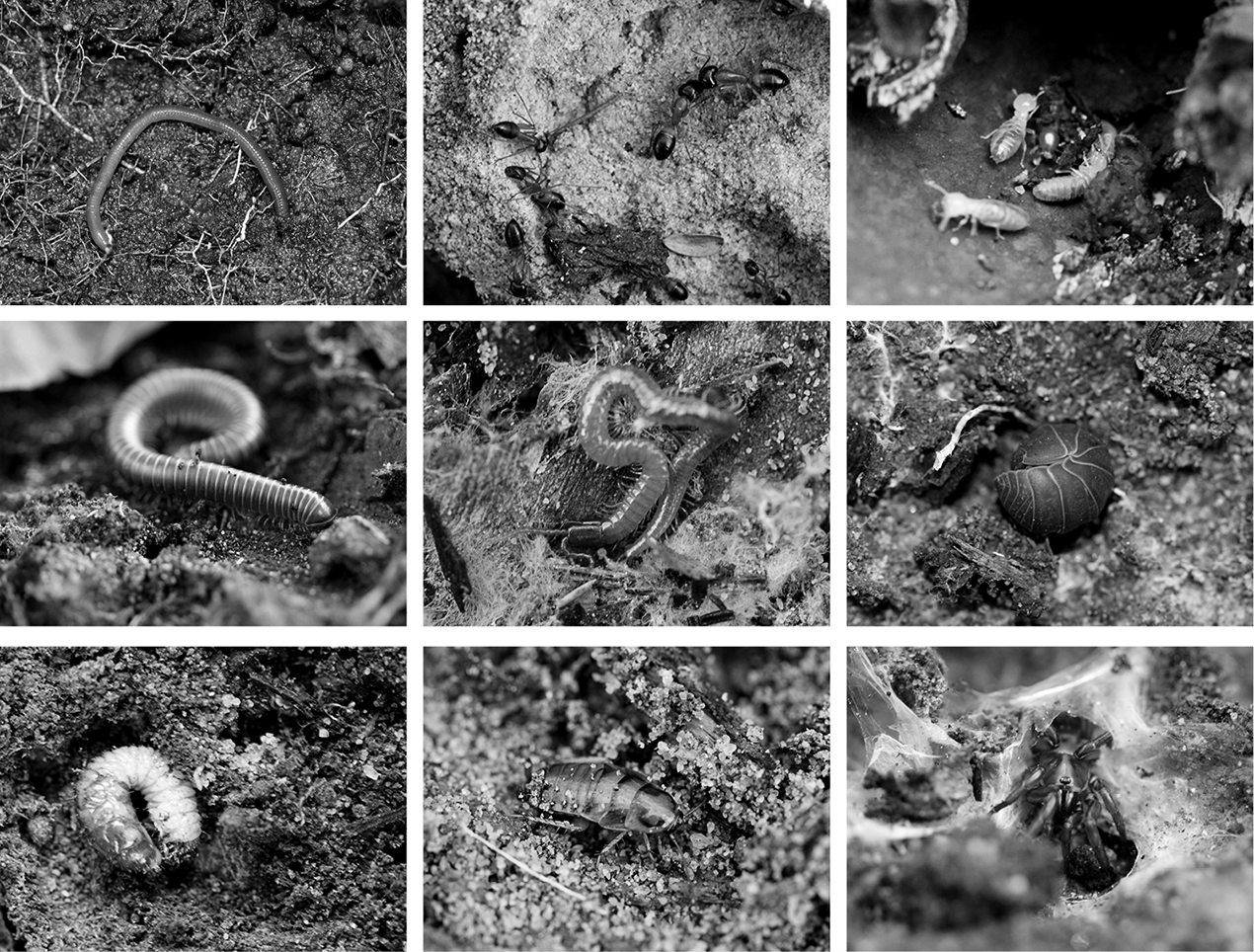
Examples of some common soil-associated fauna. Top panel (from left): Protozoa (Acanthamoeba sp.; courtesy of Stefan Geisen); the rotifer Mniobia magna (Rotifera; courtesy of Michael Plewka, Hattingen, Germany); the Antarctic tardigrade Mesobiotus polaris (Tardigrada). Second panel from top (from left): the nematode Caenorhabditis elegans (Nematoda; courtesy of Michael Plewka, Hattingen, Germany); oribatid mite (Acari: Oribatida); ant (Hymenoptera: Formicidae). Second panel from bottom (from left): termite (Isoptera); earthworm (Annelida: Megadrilacea); millipede (Myriapoda: Diplopoda). Bottom panel (from left): centipede (Myriapoda: Chilopoda); woodlouse (Isopoda); the spider Eresus sandaliatus commonly known as ladybird spider (Aranae; courtesy of Kenneth Tinnesen).

The diversity of soil fauna has long captured the attention of soil ecologists (Anderson Reference Anderson and Vanek1975, Macfadyen Reference Macfadyen1962), particularly the question of what mechanisms allow so many species to co-exist within the soil matrix and how their activities influence our ecosystems. There are, however, still many unanswered questions relating to the biology, ecology, and biochemistry of soils prompting several prominent researchers to label soils as ‘a biotic frontier’ (André et al. Reference André, Noti and Lebrun1994, Hågvar Reference Hågvar1998). Our understanding of soil ecology is increasing at a rapid rate, but there is still a great need for new investigators in the field, and there are likely many significant novel insights yet to come. Indeed, the development of novel techniques, more sensitive equipment, and new analytical approaches hold great promise for substantial developments in the field of soil ecology, including a stronger characterisation of soil fauna assemblages and their contributions to ecosystem function. Despite the acknowledgement of the astonishing diversity found belowground and its contribution to ecosystem services, there has to date been limited concern about the possible loss of soil biodiversity and the consequences for the future of soils (Veresoglou et al. Reference Veresoglou, Halley and Rillig2015, Wolters Reference Wolters2001). Soil fauna has also been of more direct value to humans by providing a significant source of protein throughout history, and many indigenous peoples still consume a broad variety of soil-dwelling animals including earthworms, insect larvae, and termites (Decaëns et al. Reference Decaëns, Jiménez, Gioia, Measey and Lavelle2006). Indeed, Alfred R. Wallace described this phenomenon more than 150 years ago (Wallace Reference Wallace1853). Still, this is rarely taken into account when the value of soil fauna is considered today. I hope this book will pique interest in soil fauna assemblages and their role in ecosystems and encourage the development of stronger frameworks to promote the explicit consideration of soil fauna in conservation and land management more broadly.
With this in mind, the aim of this chapter is to provide an overview of the development of soil fauna ecology as a field of research, describe soils as a habitat for soil fauna, and introduce the main groups of soil fauna. Chapter 2 covers the contributions of this fauna to ecosystem processes. I define soil fauna broadly to include the heterotrophic, unicellular, eukaryotic Protozoa as part of the soil microfauna. The Protozoa are ubiquitous in soils and play a key role in carbon (C) and nutrient cycling but are rarely discussed in conjunction with bacterial, fungal, or Archaeal assemblages. I also include examples of ‘part-time’ soil fauna, i.e. fauna that spends only part of its life cycle in soil, where it is deemed to be particularly relevant to the functioning of the soil and plant communities, or when it influences the distribution of other soil fauna.
1.1 A Brief History of Soil Fauna Ecology As a Field of Research
Naturalists have long had a keen interest in the organisms that inhabit soils, both because of the interesting nature of the organisms found in soils and because it has been known for centuries that the functioning of soils itself is underlain by the intricate interactions between the myriad of organisms that live within. For example, although the ability of the earthworm Lumbricus terrestris to modify its environment was described in detail by Darwin (Reference Darwin1881), even Aristotle understood the contributions of earthworms to organic matter decomposition (Edwards and Lofty Reference Edwards and Lofty1977). Understandably, the investigations of soil fauna and its role in ecosystems were initially focused on the larger soil fauna because of the difficulties of observing the smaller soil fauna. Indeed, the vast majority of the soil fauna diversity was recognised only after the Dutch businessman and scientist Antoni van Leeuwenhoek modified the microscope to view biological samples in the late 1600s. He went on to describe a range of ‘animalcules’ using this design, including several types of soil microfauna that we now know are common in soil, such as protists, rotifers, and tardigrades. Soil fauna ecology as a field of research has progressed rapidly since then, particularly since the beginning of the twentieth century.
Early work by the Danish biologist C. F. Bornebusch on the fauna of forest soil, particularly oak and beech, outlining the differences in relative abundance of key soil fauna groups (Bornebusch Reference Bornebusch1930) has since been validated by more recent work (Wallwork Reference Wallwork1976). Similarly, feeding activity of collembolans was explored in the early twentieth century by Macnamara (Reference Macnamara1924), providing the first insights into soil food web interactions. While Protozoa were discovered by the users of the early microscopes, the field of soil ‘protistology’ did not begin in earnest until the early twentieth century when a few seminal studies began to unravel the importance of protozoans in soils through work undertaken in Rothamsted, England (Wilkinson et al. Reference Wilkinson, Creevy and Valentine2012). Later work by Weis-Fogh (Reference Weis-Fogh1948) and Petersen and Luxton (Reference Petersen and Luxton1982) in consolidating contemporary knowledge of soil biota across biomes was hugely important to our understanding of belowground assemblages. The diversity and distribution of soil fauna, and its contributions to ecosystem functioning, have since these publications been the topic of several books, including The Diversity and Distribution of Soil Fauna by Wallwork (Reference Wallwork1976), The Biology of Soils: A Community and Ecosystem Approach by Bardgett (Reference Bardgett2005), and the third edition of Fundamental of Soil Ecology by Coleman et al. (Reference Coleman, Callaham and Crossley2018). These books and others synthesise the literature and have provided great insight into the world belowground and the role of soil fauna in our ecosystems. They therefore helped to frame soil fauna ecology as a field of research and have substantially shaped the approaches we use today. While this book will cover some of the topics presented in these works where they intersect with soil fauna assemblages, I would implore anyone interested in soil ecology to revisit these books for a broader perspective. They also provide an interesting perspective into how our understanding of soil ecology has changed over time beyond the following overview.
This brings us to the conundrum of distribution patterns of soil fauna. As our knowledge of the diversity belowground increases, so does our understanding of the possible ‘true’ distribution of these organisms. At a global scale we recognise and describe broad patterns of species distributions in the field of biogeography, which originated as a field of research in the mid-eighteenth century, building on the early discovery by the French naturalist Georges-Louis Leclerc, Comte de Buffon (1707–88), that groups of organisms differ between geographical regions. Earthworms were similarly noted very early on to have achieved greater distribution than what was expected (Beddard Reference Beddard1912, Eisen Reference Eisen1900), indicating that human activities have long been modifying soil fauna assemblages. The origin of the biogeography of microfauna as a field dates back to the mid-nineteenth-century work by Christian Gottfried Ehrenberg, who noted that the ciliate fauna differed between mountain ranges (described in Heger et al. Reference Heger, Lara, Mitchell and Fontaneto2011). Biogeography has had a significant impact on ecology through the study of similarities, and dissimilarities, of fauna and flora of different patterns of the Earth. Early on it was recognised that the contemporary distribution of organisms did not reflect the current position of Earth's landmasses, giving rise to the hypothesis that these must have been placed differently in the past. However, this was against the paradigm that Earth's landmasses were fixed in position. A German meteorologist, Alfred Wegener, who recognised the discrepancies between the distribution of flora and fauna and global geography, challenged this idea in 1912. He posed that continents changed position over time through the process of ‘continental drift’ (see Chapter 4). Hence, biological evidence provided early indications of a heretofore unrecognised process. The acceptance of continental drift as a phenomenon was, however, not fully accepted until much later in the 1960s after geological data provided further supporting evidence given the initial reluctance to consider the idea more carefully. In terms of contemporary distribution patterns of flora and fauna the focus is generally on ‘ecological biogeography’. That is, in very broad terms, why are species where they are, what restricts them from colonising other areas, why are there more species in some areas than others, what are the relationship with climate, topography, soil, latitude, etc.? By contrast, ‘historical geography’ addresses questions related to constraints on species ranges at geological timescales touching on evolutionary and phylogenetic relationships, influence of past geography and climate, and dispersal. For a more in-depth description of the evolution of biogeography as a field I encourage the reader to consult Cox et al. (Reference 304Cox, Moore and Ladle2016). However, it is essential to recognise ecological and historical biogeography as important drivers of the patterns we observed today.
It is now evident that soil fauna assemblages are highly variable through both time and space. The next logical question is then, how does belowground variability in assemblage structure and composition influence ecosystem functioning? The progress in understanding the contribution of soil fauna to ecosystem functioning has largely been spurred by critical developments in the field, causing leaps in knowledge at particular times. As described in Huhta (Reference Huhta2007) limited effort was made to quantify the role of soil fauna to ecosystem functioning until the era of litter bag studies began in the late 1950s. The litter bags were used to manipulate the soil fauna assemblages by limiting the access of organisms above certain sizes, for example, excluding macrofauna using mesh sizes of 2 mm diameter, or macrofauna and mesofauna by using smaller mesh sizes sometimes in combination with various biocides to exclude specific taxa, or conversely by containing soil fauna within the bags themselves (e.g. enchytraeids, Standen Reference Standen1978). The contribution of the excluded (or contained) fauna particularly to litter decomposition could then be quantified by comparing the treatments with and without the fauna. The method has been criticised due to certain shortcomings, such as not accounting for litter mass loss due to fragmentation, changes in the microclimate, and unrealistic removal of soil fauna (see the discussion in Kampichler and Bruckner Reference Kampichler and Bruckner2009; Chapter 2), but has provided significant insights into the contribution of soil fauna to ecosystem processes particularly in the early applications and is still a popular and useful approach to address certain questions. Early reviews of the method thus concluded that soil meso- and macrofauna contribute significantly to litter decomposition processes but had mixed effects on mineralisation processes (Edwards et al. Reference Edwards, Reichle and Crossley1970, Seastedt Reference Seastedt1984).
Another period of significant progress in soil fauna ecology occurred during the International Biological Program from the late 1960s to the mid-1970s that had the main aim of quantifying patterns of metabolism, energy flow, and productivity among biomes (Huhta Reference Huhta2007). It provided new insight into soil food webs, with one of the main findings that the soil fauna decomposer assemblages generally had somewhat lower than expected impacts, usually less than 10% of all material assimilated (Petersen and Luxton Reference Petersen and Luxton1982), on energy flows. However, these estimates largely exclude the contribution of protozoans due to technical constraints, and several studies provided evidence that the contribution of this group could be substantial, possibly exceeding that of all other soil fauna combined (Macfadyen Reference Macfadyen, Doeksen and Van Der Drift1963, Persson et al. Reference Persson, Bååth and Clarholm1980). Soil microcosm approaches have similarly provided substantial insights into ecosystem functioning but were not adopted to address questions related to soil fauna contributions until the early 1960s (Patten and Witkamp Reference 330Patten and Witkamp1967). Since then, however, many key findings have been based on micro- or mesocosm approaches, with a particularly large interest in such studies in the 1980s and 1990s (Huhta Reference Huhta2007). These systems have allowed researchers to manipulate the soil food web to investigate effects on C and nutrient cycling, plant growth, and ecosystem function more broadly, and have provided substantial insight into the diversity–functioning relationship belowground. Most of the early studies found limited effects of species richness per se, with the main effects being driven by functional traits or by keystone species (Filser Reference Filser2003, Huhta et al. Reference Huhta, Persson and Setälä1998, Laakso and Setälä Reference Laakso and Setälä1999b). Later reviews have supported these initial findings but suggest that there is a bit more to it and that the loss of soil biodiversity including fauna can substantially impact ecosystem functioning, particularly when the impacts on multiple functions are considered over temporal and spatial scales (de Graaff et al. Reference de Graaff, Adkins, Kardon and Throop2015, Nielsen et al. Reference Nielsen, Ayres, Wall and Bardgett2011a).
Similarly, in the 1960s soil sterilisation using γ-irradiation was applied as a novel tool to address soil ecological questions, both in the field and in the laboratory, with David C. Coleman and colleagues largely pioneering this work. For example, they sterilised soil cores collected in the field, subsequently inoculating these with individual fungal strains, and then placed them at field sites and followed the colonisation of soil fauna, rationalising that mite and springtail species that colonised soil cores with individual fungi showed a preference for these (Coleman and Macfadyen Reference Coleman and Macfadyen1966). They also used γ-emitting 65Zinc radioisotopes to label soil fungi in the field and subsequently tracked the radioactive compounds as they moved through the soil food web to delineate soil fungal food webs (Coleman and McGinnis Reference Coleman and McGinnis1970). Since these early experiments, the use of stable isotope approaches, including stable isotope labelling, particularly using 13C, 15N, and, more recently, 18O, have become more common and have provided substantial insight into the structure of soil food webs and potential food sources of soil fauna (see Chapters 2 and 3).
The latest substantial leap forward relating to the ecology and biogeography of soil fauna relied on the development of molecular sequencing approaches. These approaches were initially used in soils to investigate microbial assemblage composition but were soon adapted to the larger eukaryotic soil fauna as well (see Chapter 3 for a broader discussion of the application of molecular approaches to investigate soil fauna assemblages). The main advantages of sequencing approaches lie in their ability to provide higher resolution than morphological characteristics, thus allowing us to gain further insight into phylogenetic relationships, better distinguish closely related taxa, or provide insight into cryptic species complexes; with some limitations more recent high-throughput sequencing approaches can even provide whole assemblage fingerprints. However, getting relative abundance data from sequencing approaches remains a significant obstacle for multicellular taxa, which generally restricts us to using presence/absence data only or matching more focused sequencing approaches with abundance data gathered through quantitative polymerase chain reaction (PCR) assays, or by more ‘old school’ morphological counting. Moreover, we are yet to define robust species delineation protocols for soil fauna based on molecular tools. This is not a problem where reference sequences are known, but the existing databases are far behind.
1.2 Soil As a Habitat
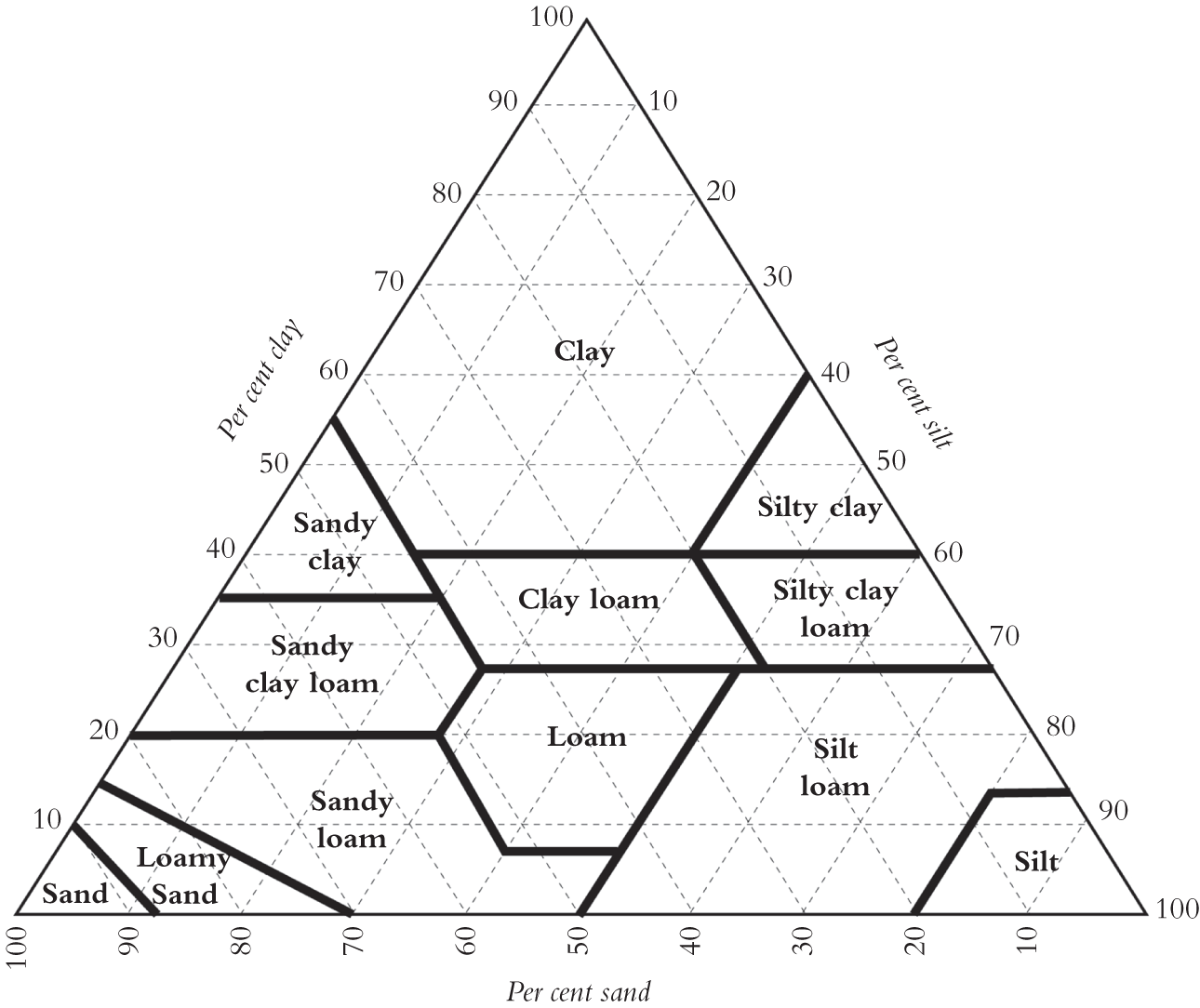
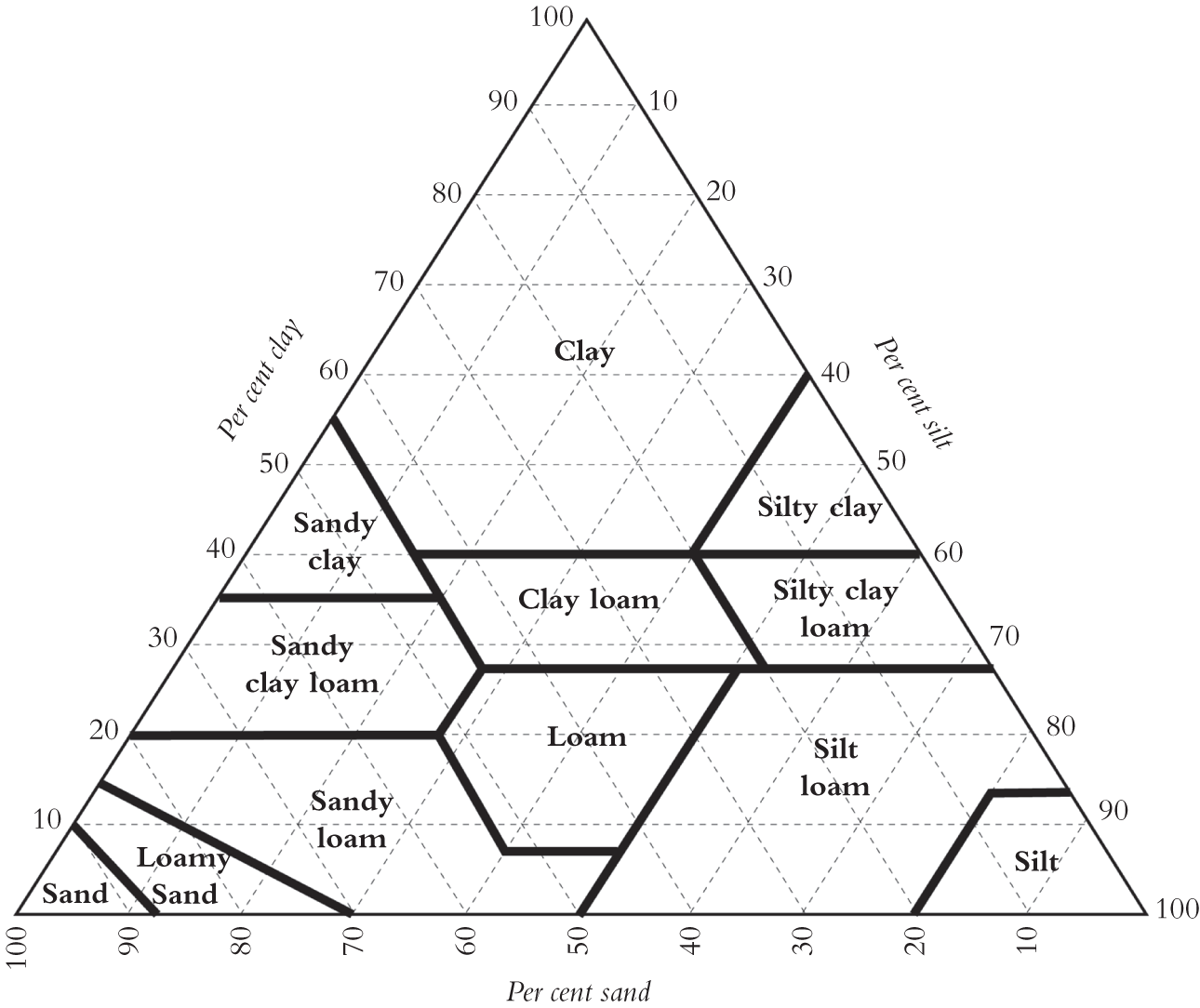
To understand the complexity and diversity of soil fauna assemblages and how they are distributed through space and time it is necessary to consider the constraints imposed on soil fauna by soil as a habitat. Soil is a highly complex, three-dimensionally heterogeneous habitat consisting of mineral particles, air- and water-filled pores, as well as decomposing and living organic matter, including the soil biota itself. The mineral component can be characterised based on the relative size distribution of particles (Figure 1.2), with the particle size increasing from clay (0.000–0.002 mm) to silt (0.002–0.02 mm) to fine sand (0.02–0.2 mm) and coarse sand (0.2–2 mm), and the chemical characteristics of the mineral components. Soil texture exerts a significant control on soil structure and associated traits, such as water infiltration and water holding capacity. The chemical characteristics of the mineral component depend strongly on parent material, but also on geophysical and biological processes, and soil type and origin therefore moderate the availability of nutrients essential to plants and soil organisms. Soil structure is also greatly influenced by organic input of plant and animal origin. Indeed, the distribution of decomposing organic material and plant roots strongly influences the distribution and activity of soil biota, including the fauna, within the soil horizon but also contributes to distribution of soil fauna at larger scales (Beare et al. Reference Beare, Coleman, Crossley, Hendrix and Odum1995). The authors recognised five ‘arenas’ of particular high biological activity in soils: the porosphere, the drilosphere, the rhizosphere, the detritusphere, and the aggregatusphere, while Lavelle and Spain (Reference Lavelle and Spain2001) identify another area of activity – the termitosphere.
Soil texture is classified based on particle size distribution, specifically clay (0.000–0.002 mm), silt (0.002–0.02 mm) and fine sand (0.02–0.2 mm), and coarse sand (0.2–2 mm).
The porosphere (sensu Vannier Reference Vannier1987) represents the system of pores of varying sizes, constructed through both physical and biological activity that is occupied by the soil biota. Larger types of soil fauna such as earthworms and some species of enchytraeids (Didden Reference 307Didden1993, Hamilton and Dindal Reference Hamilton and Dindal1983) can physically engineer the soil structure, but most soil biota are dependent on pre-existing pores as their habitat. The drilosphere (sensu Hamilton and Dindal Reference Hamilton and Dindal1983) refers to the activity of earthworms, both the formation of mounds and vertical distribution of fragmented litter, which leads to the formation of hotspots of organic materials (Maraun et al. Reference Maraun, Alphei and Bonkowski1999). During growth, several forms of organic compounds, such as sugars and amino acids, are ‘leaked’ from plant roots, which stimulate microbial activity (Feldman Reference 310Feldman1988). The rhizosphere, a term coined by Hiltner (Reference Hiltner1904), refers to the zone around the root where microbial and faunal activity is stimulated by plant influences, including exudates that comprise a significant proportion of plant photosynthetically derived C (Lavelle and Spain Reference Lavelle and Spain2001). The zone of recognisable litter from plants composes the detritusphere, which is also sometimes referred to as the litter system. Both the quantity and quality of the litter can influence the biological assemblages that occur in the litter layer (Beare et al. Reference Beare, Coleman, Crossley, Hendrix and Odum1995). Finally, the term aggregatusphere refers to the aggregations of particles in soils formed through physical, chemical, and biological processes (Lee and Foster Reference Lee and Foster1991). Lavelle and Spain (Reference Lavelle and Spain2001) further identify the termitosphere as the area impacted by termite nests and browsing activities given the substantial impact of termites on landscape topography, distribution of organic material, and decomposition processes. Because the processes occurring within, and the structural differences between, these biological hotspots differ, the organisms found in these hotspots also differ predictably. Hence, the distribution of these hotspots has a profound influence on species distribution and assemblage composition of soil biota.
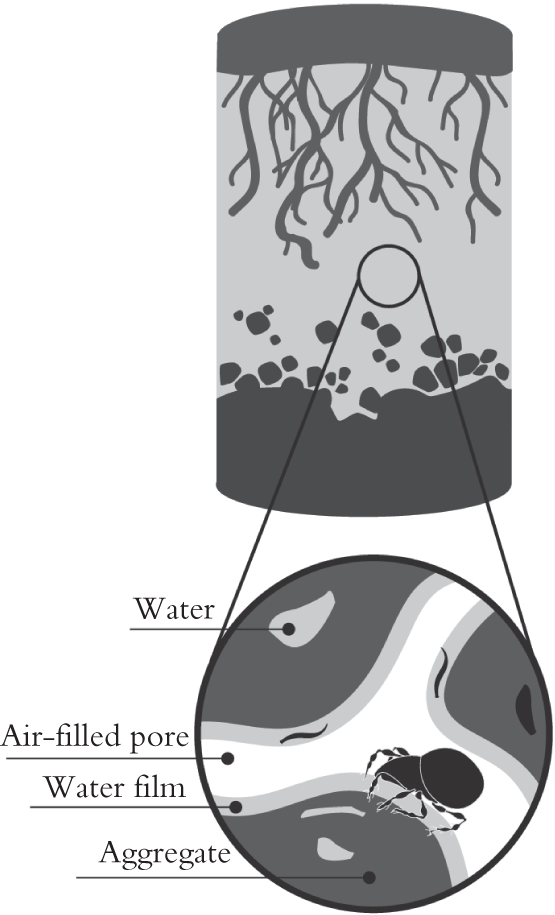
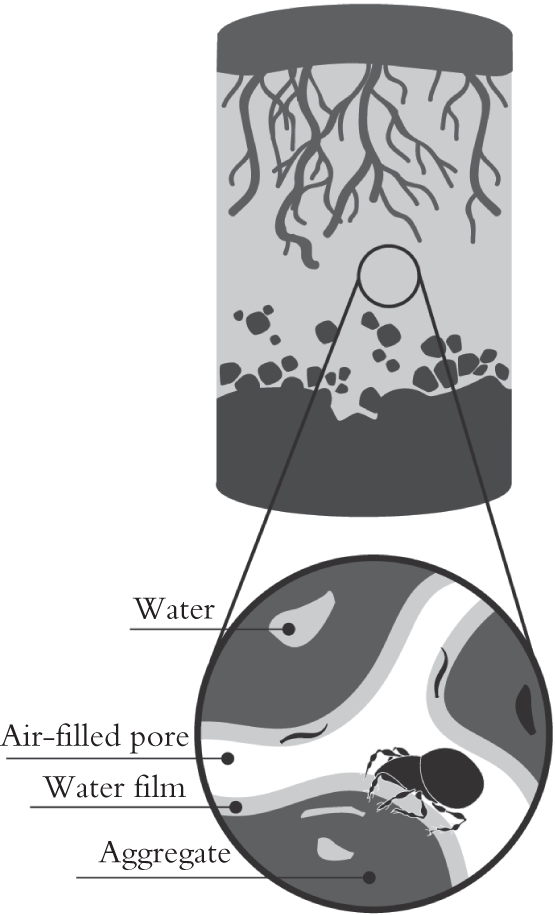
As mentioned earlier, many smaller types of soil fauna and the microbes are dependent on existing soil pores as a habitat. The ‘aquatic’ organisms, specifically protists, nematodes, rotifers, and tardigrades, are restricted to water-filled pores and water films around plant roots and soil particles or aggregates, while other taxa such as mites and springtails rely on air-filled soil pores (Figure 1.3). Hence, the pore size distribution of a given soil and its availability influence the abundance and distribution of individual soil fauna taxa (Ducarme et al. Reference Ducarme, André, Wauthy and Lebrun2004, Nielsen et al. Reference Nielsen, Osler, van der Wal, Campbell and Burslem2008). The distribution of soil pores is in turn influenced by larger soil fauna, such as earthworms, that can act as ecosystem engineers (sensu Jones et al. Reference Jones, Lawton and Shachak1997; Chapter 2). Soil pores can be roughly divided into micro-, meso-, and macropores. Micropores are less than 0.15 μm wide and their volume/distribution depends on soil texture. The water in these pores is held tightly with water potentials exceeding –1.5 MPa, making it unavailable for plants. Mesopores are those between 0.15 and 30 μm in which the water potential is –1.5 to –0.05 MPa, with the water available to plants. These pores can be of biological origin or formed by physical processes. The macropores are those >30 μm from which water drains freely. These pores can be of various origins but are mostly due to soil bioturbation. The soil pore volume distribution thus interacts with soil water content to control soil fauna distribution and activity, at least those that cannot easily relocate to more favourable conditions. A good example is presented by the differences between the two dominant groups of soil microarthropods, the springtails and the mites. Isotomid springtails are sensitive to water potentials below –1.5 MPa, whereas most oribatid mites are not affected until water potentials approach –9.8 MPa (Vannier Reference Vannier1987). This difference in water affinity subsequently influences the distribution of mites and springtails, both within and among ecosystems. Furthermore, divergent physiological sensitivity to soil water availability is likely to contribute to taxa-specific responses to climate change, in this case specifically changes in soil water content driven by altered rainfall regime and/or increased temperatures (see Chapter 6 for discussion).
Most soil micro- and mesofauna are restricted to existing pores within the soil matrix. The microfauna, such as protists, nematodes, rotifers, and tardigrades, are essentially (semi-) aquatic organisms and require a water-filled pore or a water film on soil aggregates for feeding and movement. The soil mesofauna, such as mites and springtails, are generally confined to air-filled soil pores.
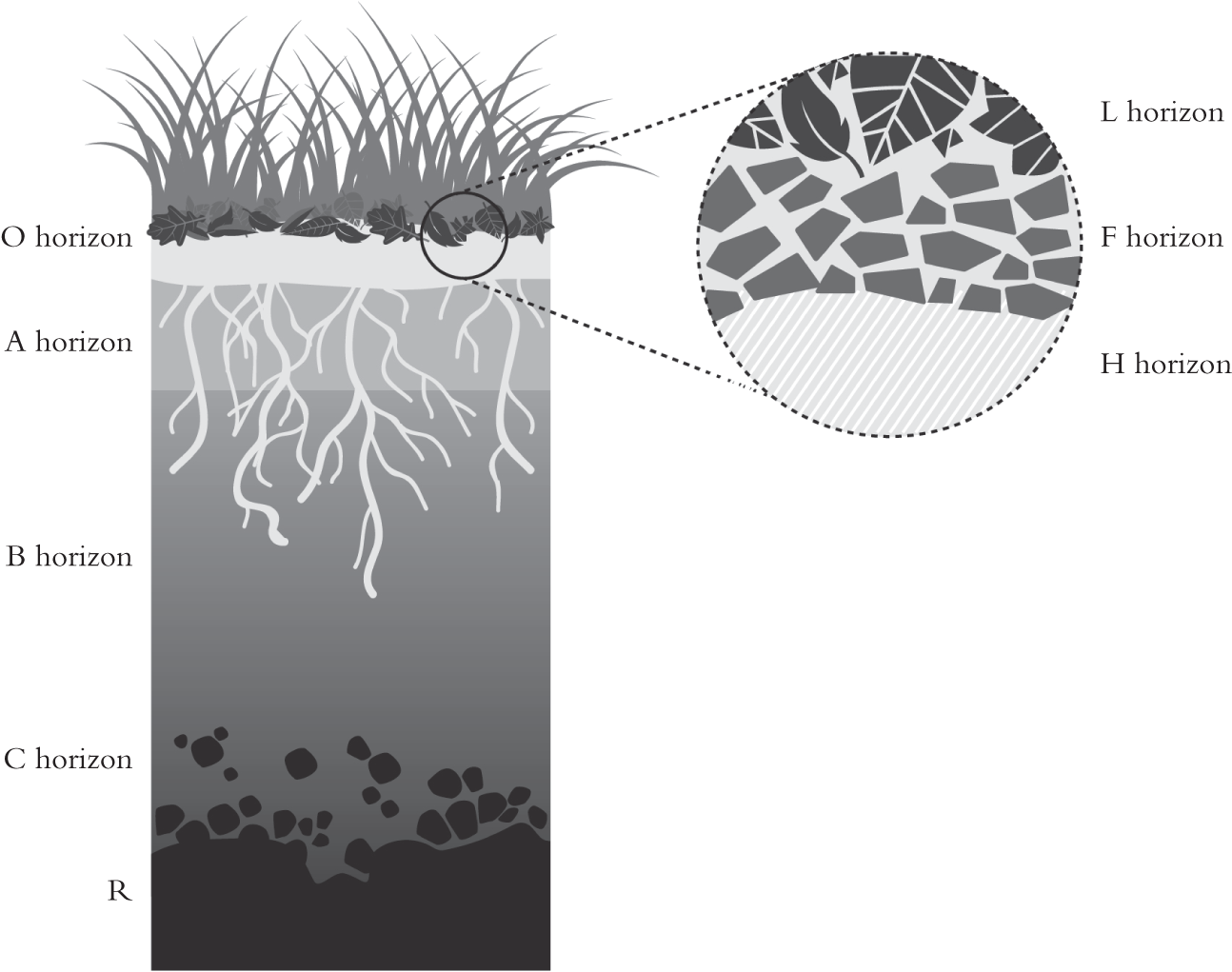
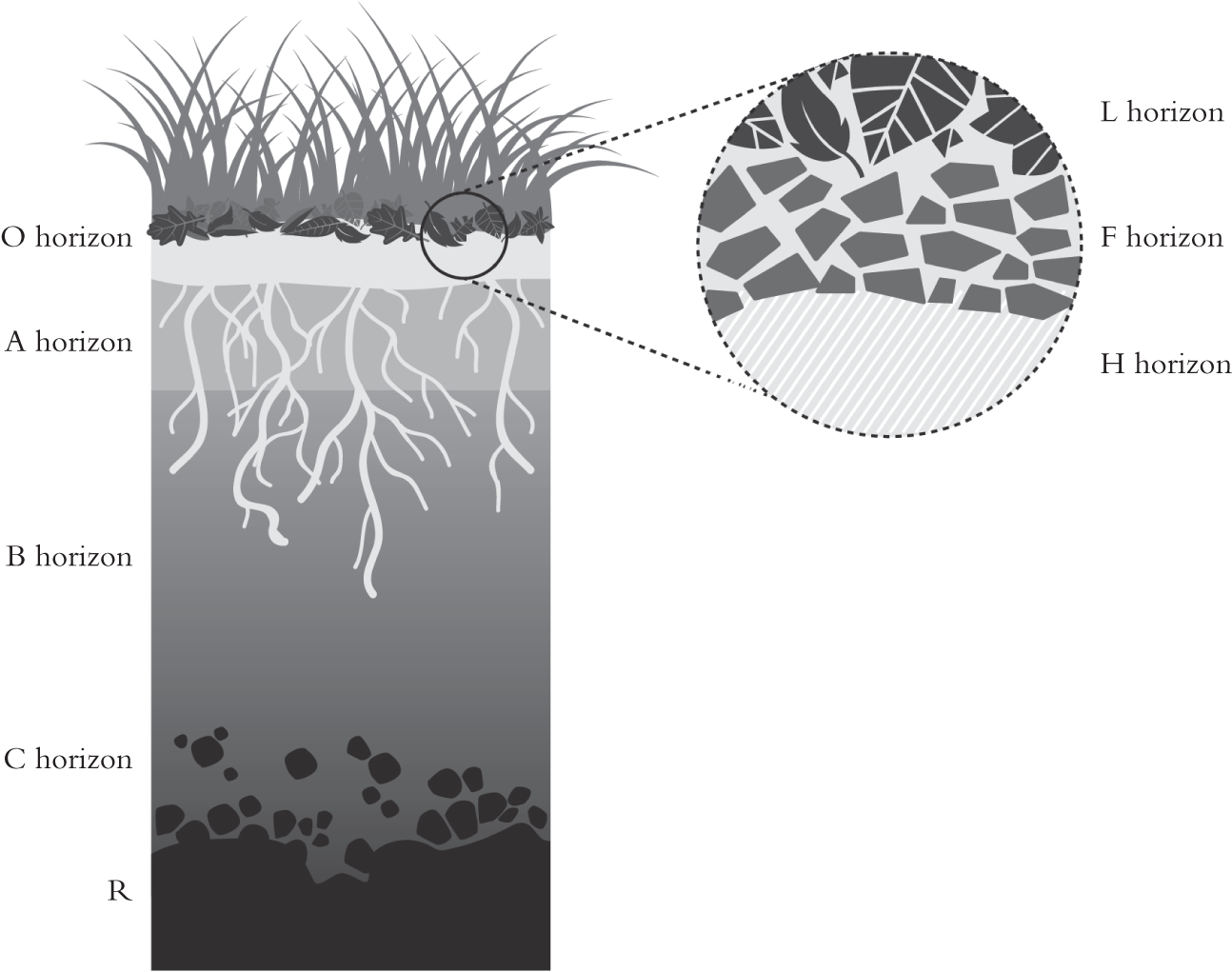
The majority of the soil biota is found in the organic (O) horizon. Accordingly, a substantial proportion of biological activities takes place in this horizon (Bardgett et al. Reference Bardgett, Yeates, Anderson, Bardgett, Usher and Hopkins2005b). The O horizon is often subdivided into a litter layer (L), which consists mainly of fresh litter, a fermentation layer (F) comprised primarily of fragmented litter, and a humus layer (H) characterised by humified organic matter (Figure 1.4). The distribution and depth of these layers depend largely on biological activities, which have led to the classification of three main types of organic horizons with specific characteristics: mull, moder, and mor (Ponge Reference Ponge2003). Mull is generally characterised by rapid decomposition of litter and homogenisation of the layers by burrowing animals, such as earthworms (see Chapter 2). This also leads to an inconspicuous transition between the O horizon and the mineral horizon beneath (Ponge Reference Ponge2003). The biomass of soil fauna is often very high in this type of humus (Petersen and Luxton Reference Petersen and Luxton1982, Schaefer and Schauermann Reference Schaefer and Schauermann1990). In contrast, the lower biological activity associated with moder allows the development of distinct L, F, and H horizons (Schaefer and Schauermann Reference Schaefer and Schauermann1990). Some groups of soil fauna, such as the enchytraeids, are particularly abundant in this humus form (Didden Reference 307Didden1993), but the biomass of soil fauna is generally small compared to that found in the mull-type humus. Moreover, due to low biological activity, decomposition and nutrient turnover rates are much slower, allowing humified litter and faecal pellets to accumulate (Ponge Reference Ponge2003). Also, the moder-type humus form is often more acidic than the mull-type humus form, and the microbial community is dominated by fungi. Finally, the mor humus form is characterised by an accumulation of undecomposed plant material due to very low animal and microbial activity (Ponge Reference Ponge2003). Most of the habitable pore space and resources are found in the upper parts of the soil horizon so most soil organisms are found in this space. The exception to this is the larger soil fauna including the earthworms that can construct their own living space and redistribute organic material at their will. For a more complete picture of soil development, with its chemical and physical properties, I refer the interested reader to consult the work by Coleman et al. (Reference Coleman, Crossley and Hendrix2004) and other books, e.g. Dindal (Reference Dindal1980), Wallwork (Reference Wallwork1970), Lavelle and Spain (Reference Lavelle and Spain2001).
The soil profile can be described as a series of more or less distinct ‘layers’. These layers commonly include the organic (O) horizon, which can be further divided into layers composed of fresh litter (L), fragmented litter (F), and decomposing organic material (H); a mineral (A) horizon incorporating degraded organic material; a mineral subsurface (B) horizon with limited rock structure or organic matter; and a mineral horizon (C) with unconsolidated rock structure overlaying bedrock.
1.3 The Major Players
As highlighted earlier, soils are home to a myriad of fauna, ranging from the minute single-celled Protozoa to the small multicellular nematodes to the large earthworms, insects, and even vertebrates. In this section, I will provide a brief overview of the main groups of soil fauna that we are likely to encounter in most ecosystems. While the focus will be on the fauna that spends the entirety of its life cycle within or associated with the soil (i.e. the litter layer), I will also provide some information on fauna that is found in soils during specific life-cycle stages when it is pertinent to the topic at hand. It will quickly become evident that the diversity of soil fauna is significant, but it is worth highlighting early on that a large proportion of the small-sized soil fauna is yet to be described. The ‘identification gap’, i.e. the proportion of species yet to be described, is inversely related to body size so that we generally know less about the smaller species (Table 1.1). However, there is still substantial uncertainty about the true number of species that is found in soil.
| Taxa | Local richness (per unit) | Approximate maximal abundance (per unit) | Described species (in soil) | Estimated species (in soil) | Per cent described (of global richness) |
|---|---|---|---|---|---|
| Protozoa | 150–1,200 (0.25 g)−1 | 10 × 106 g−1 | 40,000 | 200,000 | 0.7% |
| Nematoda | 10–100 m−2 | 20 × 106 m−2 | 5,000 | 20,000 | 0.5% |
| Acari | 100–150 m−2 | 400,000 m−2 | 30,000 | 80,000 | 2.8% |
| Collembola | 20 m−2 | 200,000 m−2 | 8,000 | 24,000 | 27.1% |
| Enchytraeidae | 1–25 m−2 | 300,000 m−2 | 600 | 1,200 | 50% |
| Annelida | 10–15 m−2 | 500 m−2 | 3,600 | 7,000 | 47.6% |
| Formicoidea | – | – | 8,800 | 15,000 | 58.7% |
| Isoptera | – | – | 2,600 | 10,000 | 53.3% |
| Isopoda | 10–100 m−2 | 110 m−2 | 3,600 | No estimate | No estimate |
| Diplopoda | 10–15 m−2 | 300 m−2 | 12,000 | 15,000 | 16.7% |
| Chilopoda | 5–10 m−2 | 600 m−2 | 3,000 | 8,000 | No estimate |
Note: The richness and abundance of ants and termites are highly variable and therefore difficult to estimate.
The diversity of soil fauna and high proportion of species that have not been described present us with some difficulties when we try to describe or quantify soil fauna assemblages and soil food web structure. There are many ways that we might try to classify soil fauna to make this diversity more manageable. An early attempt at classifying soil fauna was made by Wallwork (Reference Wallwork1970), who used body length to categorise soil fauna. While this approach had some advantages, particularly that length is generally correlated with body mass, soil fauna is instead traditionally broadly categorised based on body width as microfauna, mesofauna, and macrofauna following Swift et al. (Reference Swift, Heal and Anderson1979; Figure 1.5). I will follow this denomination because it fits broadly with differences in important life history and functional traits of the soil fauna. For example, most microfauna (i.e. <0.1 mm body width) are essentially aquatic, whereas the mesofauna (i.e. body width of 0.1–2 mm) generally lives in existing air-filled soil pores. As more species are described and information about their feeding habits is acquired, there is, however, great potential to further distinguish between organisms at different trophic levels or even functional guilds.
A schematic classification of soil biota based on body width. The grouping by body width fits reasonably well with key changes in life strategies, with microfauna being (semi-) aquatic organism that lives in water-filled pores or water films, whereas mesofauna is generally confined to air-filled pores or to the litter layer. The macrofauna, by contrast, can often modify the environment to create its own living space.

Soil fauna in some taxa can also be characterised based on its occupancy of specific soil horizons. However, the terms differ somewhat between taxa. For example, epigeic soil fauna is mostly found on the surface or in the upper soil horizons, being particularly prominent in the litter layer and organic horizon. The endogeic fauna is for the most part found in the deeper soil horizons, while anecic species are commonly found throughout the soil. Many endogeic and anecic species, such as certain earthworms and ants, are ecosystem engineers that modify the soil structure and through this the belowground communities and ecosystem functioning more broadly. In comparison, when referring to microarthropods, the definitions used are generally epigeic, hemi-, and euedaphic for surface or litter dwellers, those that are found at the surface and in the soil matrix, and the true soil dwellers, respectively. Accordingly, there is generally vertical stratification of soil fauna assemblages that might moderate their contribution to ecosystem functioning (Chapter 6). In the following sections, I will provide examples of the role of specific taxa in the soil food web.
1.3.1 Microfauna
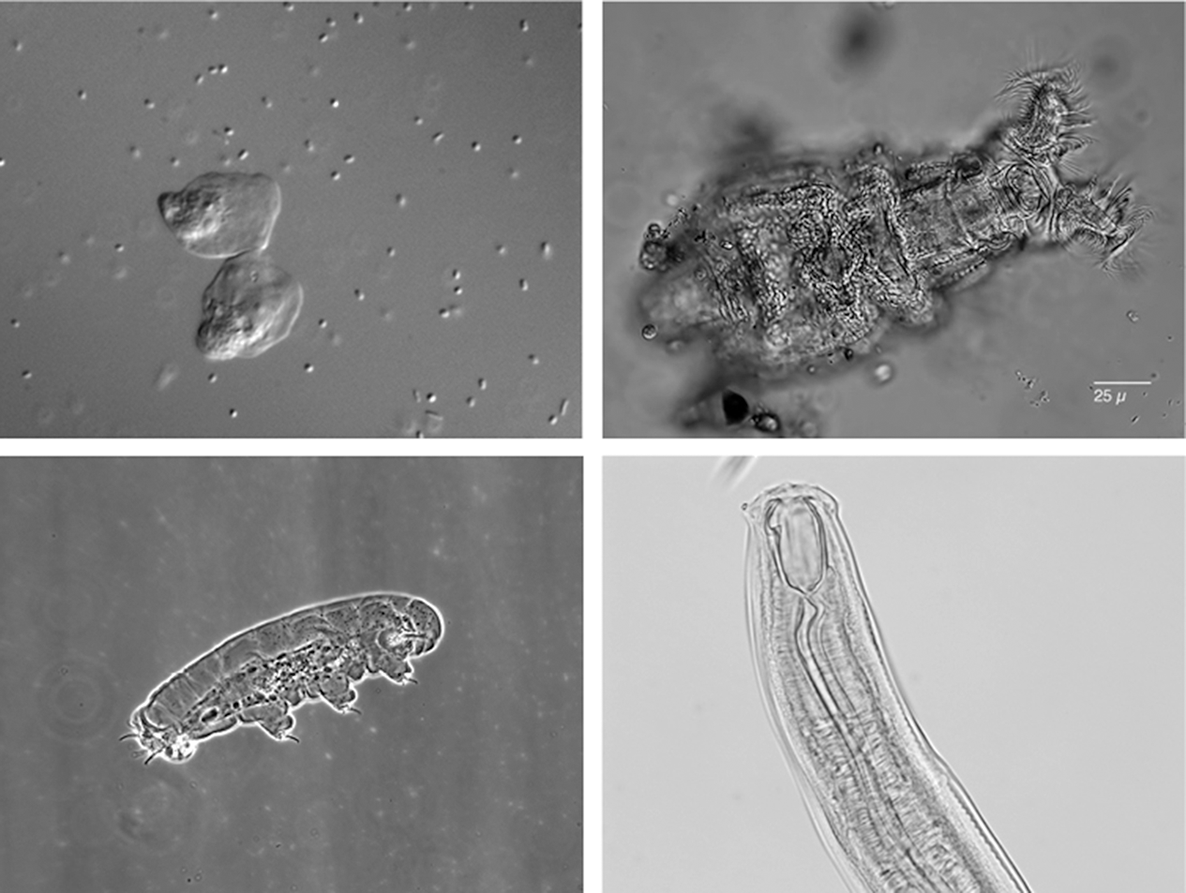
Soil microfauna is loosely defined as soil fauna with a body width of less than 0.1 mm (Swift et al. Reference Swift, Heal and Anderson1979). The dominant groups of soil microfauna are the Protozoa and nematodes (Nematoda), but rotifers (Rotifera) and tardigrades (Tardigrada) are also common in some ecosystem types (Figure 1.6). Protozoa are often considered with the microorganisms more broadly (e.g. bacteria, fungi, Archaea) given their unicellular nature, but they are rarely given much attention. Our knowledge of the protozoans is therefore less than that of the ‘true’ microbes and the larger, multicellular soil fauna. This is problematic as they are recognised as essential components of the soil food web that contribute substantially to soil functioning. Fortunately, as we shall see later, the increasing use of molecular tools is helping us to fill that gap. Soil microfauna are essentially an aquatic organism, sometimes referred to as hydrobionts, that requires a water-filled soil pore or water film on soil particles or aggregates for movement and feeding. Because of their minute size and being limited to existing water-filled soil pores and water films, they have limited direct impact on the soil structure. Still, they can influence the soil structure indirectly through their interactions with other soil biota, particularly the soil microbes. Moreover, many microfauna are microbial grazers that have a substantial impact on ecosystem processes, particularly carbon (C) and nutrient cycling through turnover of microbial biomass and selective feeding (see Chapter 2).
Examples of the main groups of microfauna. Top left: an amoeba from the genus Stenamoeba (courtesy of Stefan Geisen). Top right: the rotifer Philodina rugosa (courtesy of Michael Plewka, Hattingen, Germany). Bottom left: the Antarctic tardigrade, Hypsibius antarcticus.

The soil Protozoa are mostly small, heterotrophic, unicellular, eukaryotic organisms that represent various lineages of the tree of life essentially grouped together by not being animals, green plants, or true fungi. The group is thus paraphyletic, with critical discrepancies in taxonomic grouping, and the phylogeny of Protozoa is still being resolved. The soil Protozoa usually ranges in length from 10–50 μm, but larger specimens can be up to 1 mm (Geisen et al. Reference Geisen, Mitchell and Wilkinson2017). The free-living soil Protozoa mostly belongs to Amoebozoa, Ciliophora, and Cercozoa, but there is increasing evidence that Apicomplexa can also be abundant in some ecosystems. Across these taxonomic units there is substantial variation in morphology, with four main types being recognised: ciliates, flagellates, naked, and testate amoeba (Bonkowski Reference Bonkowski2004). While the ciliates are monophyletic, the flagellate and naked and testate amoeba forms have evolved independently in several different lineages of Protozoa (Adl et al. Reference Adl, Simpson and Farmer2005). The testate amoeba is enclosed within a shell more formally known as a ‘test’ that ranges in size from 5–300 μm. These tests can be made solely of secreted material (proteinaceous, calcite, or siliceous), or they can be agglutinated by incorporating material from the surrounding environment, including mineral particles (Wilkinson and Mitchell Reference Wilkinson and Mitchell2010). Most Protozoa predominantly feed on bacteria (Foissner Reference Foissner1999b) and are considered to be the main grazers of bacteria in soils thus forming the base of the bacterial food web channel. However, they represent a much broader range of feeding guilds than this, including both fungi, cyanobacteria, algae, organic matter, other Protozoa, and even multicellular soil fauna (Wilkinson and Mitchell Reference Wilkinson and Mitchell2010). There is recent evidence that mycophagous Protozoa are much more common in soils than previously assumed (Geisen et al. Reference Geisen2016).
The Protozoa are highly abundant in soils with numbers generally ranging from 104 to 105 per g dry soil (Clarholm Reference Clarholm1981) or the equivalent of roughly 50 to 3,000 mg fresh weight biomass per m2 (Petersen and Luxton Reference Petersen and Luxton1982). They are particularly abundant in soils with greater organic matter content and are concentrated in the upper soil horizons where their prey or resources are found, but their abundances vary significantly (Stout Reference Stout1963, Reference Stout1968). Almost all soil-borne Protozoa can survive adverse environmental conditions as cysts. Despite their small size, soil protozoans make up a substantial component of the belowground invertebrate biomass. It has been estimated that in most soils the biomass of protozoans is equal to, or even exceeds, that of other invertebrate groups, except that of earthworms (Foissner Reference Foissner1987, Schaefer and Schauermann Reference Schaefer and Schauermann1990, Sohlenius Reference Sohlenius1980). They occur in soil pore space, and it is thought that the pore-size distribution is a key factor in controlling their abundances (Stout and Heal Reference Stout, Heal, Burges and Raw1967). Because they are aquatic, soil water content is another important variable that can limit the activity of protists. For example, it has been estimated that the theoretical limit for protist activity is −0.15 MPa, the water matric potential coinciding with all pores <2 μm being filled (Lavelle and Spain Reference Lavelle and Spain2001).
Protozoa are often overlooked in soil ecological studies because they are difficult to quantify numerically, and consequently their role in soil processes is not well known. Although not much is known about protist life cycles it is very evident that population sizes fluctuate substantially both spatially and temporally (Bonkowski and Scheu Reference Bonkowski2004, Christensen et al. Reference Christensen, Griffiths, Ekelund and Rønn1992, Clarholm Reference Clarholm1989, Janssen and Heijmans Reference Janssen and Heijmans1998, Mulder et al. Reference Mulder, Boit and Bonkowski2011). It has been estimated that some species have a minimum generation time along the order of two to four hours, and that their production rates can be in the order of 10 to 12 times their standing crop per year (Coleman Reference Coleman1994). Flagellates, ciliates, and naked amoeba have generation times measured in hours, and accordingly they exert a substantial grazing pressure on microbial biomass and through this C and nutrient cycling. Indeed, it has been estimated that 70% of the total respiration of soil fauna is accounted for by Protozoa (Foissner Reference Foissner1987, Sohlenius Reference Sohlenius1980). Testate amoebae are particularly abundant in organic-rich soils with low pH, where they can be the dominant type of microfauna. Because the tests in many cases are made of siliceous material it has been suggested that testate amoebae and also diatoms may be important in silicon (Si) cycling and creating soil biogenic Si pools (Creevy et al. Reference Creevy, Fisher, Puppe and Wilkinson2016). Indeed, the pools of biogenic Si incorporated in Protozoa can be substantial, reaching up to 5 kg Si ha−1 in some forest ecosystems (Puppe et al. Reference Puppe, Ehrmann, Kaczorek, Wanner and Sommer2015). This pool of biogenic Si is made available when the Protozoa decompose. Given the fast life cycle and turnover of the protozoan biomass, the annual biosilicification rates can be substantial with that of testate amoeba alone being in the range of 17–277 kg Si ha−1 (Aoki et al. Reference Aoki, Hoshino and Matsubara2007, Puppe et al. Reference Puppe, Ehrmann, Kaczorek, Wanner and Sommer2015, Sommer et al. Reference Sommer, Jochheim and Höhn2013).
The ‘free-living’ soil nematodes (Nematoda), also known as roundworms, are relatively small organisms, generally <1 mm long but with some species up to around 5 mm long. It is a highly diverse group and the most abundant multicellular animal on Earth, with an estimated possible one million species globally and numbers measured in millions of individuals per m2 (Bongers Reference Bongers1999, Lambshead Reference Lambshead1993). Nematodes are ubiquitous in practically all terrestrial soil ecosystems and can occupy functional roles at all trophic levels of the soil food web (Yeates et al. Reference Yeates, Bongers, De Goede, Freckman and Georgieva1993). It is famously described that if all other matter were removed except nematodes, it would still be possible to make out the outline of Earth including the river valleys, deep seas, and mountain ranges (Cobb Reference Cobb1915). However, soil nematodes are particularly abundant in temperate ecosystems, with lower abundances in tropical regions and at high latitudes (Procter Reference Procter1984, Reference Procter1990, Sohlenius Reference Sohlenius1980). Interestingly, the biomass and density of nematodes can be significant in high-altitude ecosystems, and there is a tendency for larger body sizes at high elevation. Nematodes, namely Caenorhabditis elegans, have played a significant role in experimental biology as model organisms, due to their ease of culturing, fast life cycle, and tendency for eutely (cell constancy) of certain body parts (Cunha et al. Reference Cunha, Azevedo, Emmons and Leroi1999). For example, in 1998 C. elegans became the first organism to have its complete 97-megabase genome sequenced revealing over 19,000 genes (The C. elegans Sequencing Consortium 1998), which helped pave the way for the human genome project and the subsequent mapping of many other species’ genomes. Nematodes have chemoreceptors, including specialised structures known as phasmids and amphids, and a variety of papillae, that likely aid in localisation of resources (Prot Reference Prot1980). Nematodes have long been considered to be useful bioindicators because of their ubiquity in soils, a broad range of life history, and functional traits, high species diversity, and being numerically abundant. Their use for this purpose will be discussed in Chapter 3.
Nematodes show a great variability in life history traits. Some nematodes are free-living for their entire life cycle, while others are free-living during only some life stages and are functional parasites of plants or animals at other stages. Some of these can be of particular pestilence to animals and humans (parasites, pests of crops), while others can be utilised for biocontrol (i.e. entomopathogenic nematodes). Most nematodes have separate sexes and reproduce sexually. However, some species can reproduce by parthenogenesis, and others are hermaphroditic. Most nematode life cycles include an egg, four juvenile stages, and an adult stage. The juvenile stages look morphologically alike but differ in size. In some cases, the adult morphology is modified, such as in the case of the saccate females of the plant parasitic genus Meloidogyne. The life span of a nematode ranges from a few days to weeks to over a year. Plant parasites usually survive for about three to six weeks whereas common free-living species tend to have faster life cycles of one to two weeks (Norton Reference Norton1978). However, it is worth mentioning that many nematodes have the ability to survive unfavourable environmental conditions for extended periods, which can substantially extend their potential life span. Some species of nematodes in the family Rhabditidae form dauer larvae, a resistant stage, in response to adverse environmental conditions. Other species, particularly those in hot and cold deserts, have the ability to survive desiccation, entering a state known as anhydrobiosis, where their metabolic activity is below our detection limits if any activity is present at all, and in this state they can survive for extended periods (Wharton Reference Wharton1986). In this state Antarctic nematodes are likely to stretch their life spans to many years and likely decades. Moreover, the first animal known to survive intracellular freezing (i.e. the formation of ice crystals inside the cells) was the Antarctic endemic nematode Panagrolaimus davidi (Wharton and Fern Reference Wharton and Fern1995). It is expected that other species found in similar environments might also have that ability. Recent evidence shows that infective juveniles of the entomopathogenic nematode Steinernema feltiae can similarly survive intracellular freezing down to a temperature of −3°C, but the ability is yet to be confirmed in other nematode species and soil fauna more broadly (Ali and Wharton Reference Ali and Wharton2014).
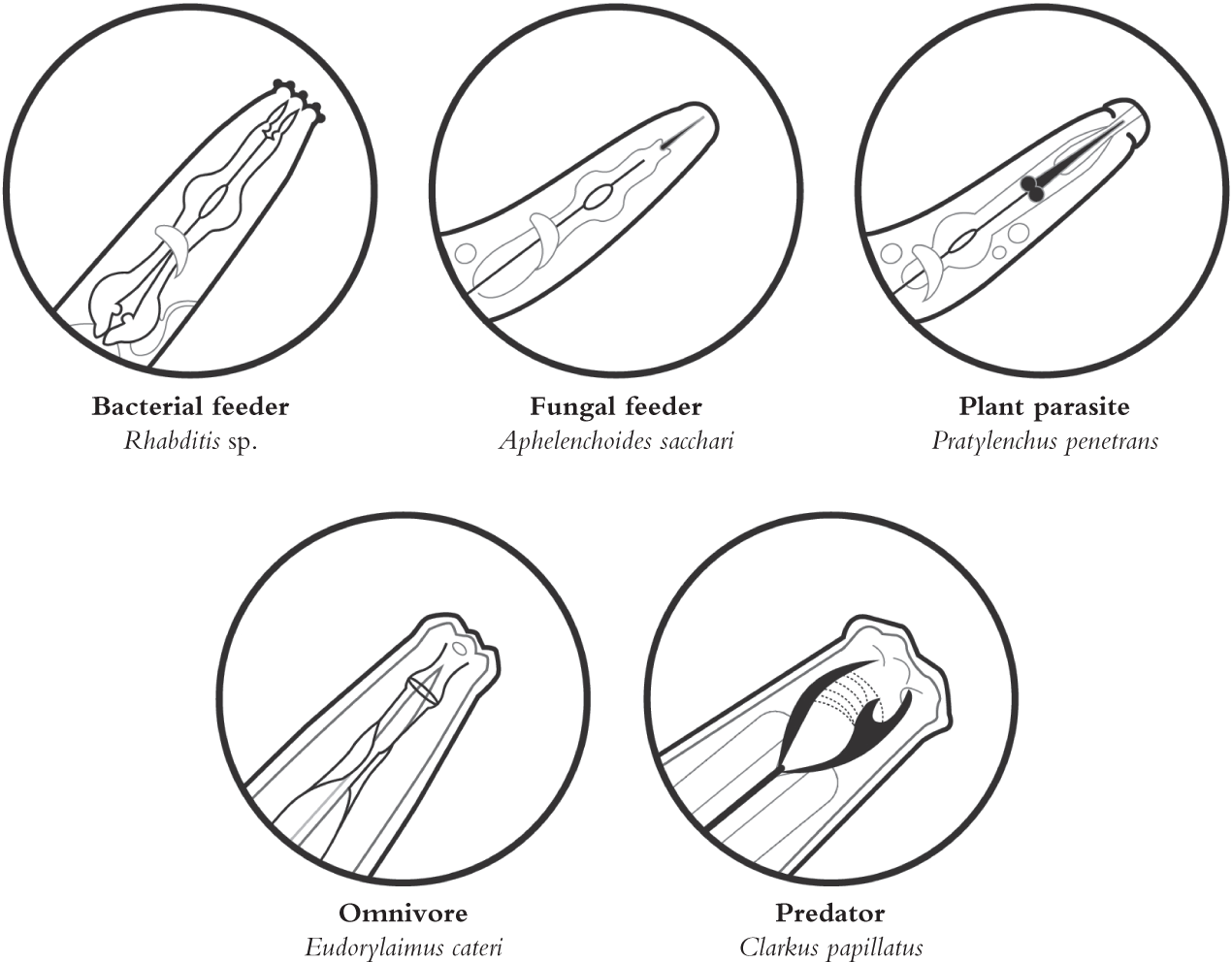
Nematodes occupy all trophic levels in the soil food web and have significant impacts on soil processes (see Chapter 2). Nematode-feeding types can be broadly categorised as plant parasitic, bacterial feeders, fungal feeders, predators, omnivores, and entomopathogenic (Figure 1.7), but various researchers have proposed more specific feeding guilds (e.g. Yeates et al. Reference Yeates, Bongers, De Goede, Freckman and Georgieva1993). However, they all fundamentally feed on living protoplasm. These feeding types are briefly described here to provide context to their contribution to ecosystem functioning and their interactions with the environment including possible constraints on their diversity and distribution.
Schematic diagram of the main nematode-feeding types based on common nematode species.

Plant parasitic nematodes feed on various plant parts throughout most of their life cycle. They can be classified broadly as sedentary parasites, migratory endoparasites, semi-endoparasites, and ectoparasites while others feed on epidermal tissue and root hairs or algae, lichen, or moss. They use hollow needle-like structures known as stylets to pierce plant cells and suck out the intracellular fluids. In some cases, feeding activities include the injection of enzymes such as chitinase and cellulase that can help break down the plant cell walls. They also possess a range of ‘parasite genes’ associated with adaptation to a parasitic lifestyle (Quist et al. Reference Quist, Smant and Helder2015). These genes are, for example, involved with secretions that aid in penetration of the plant host cell wall and migration, formation of a feeding cell, production of peptides used for signalling, modification of the plant cell metabolism processes, and other functions (Davis et al. Reference Davis, Hussey and Baum2004). As such, plant parasitic nematodes are highly adapted to their lifestyle. Feeding by parasitic nematodes can have substantial impacts on plants directly and occasionally indirectly through the transfer of viruses. The migratory plant parasites can be ectoparasitic (e.g. Longidorus, Xiphinema, Tylenchorhynchus) where feeding occurs from outside the plant root or endoparasitic (e.g. Pratylenchus) where the nematode feeds inside roots. However, both types are free-living throughout their life cycle, and both sexes of migratory parasites are vermiform to aid in migration between roots. By contrast, sedentary plant parasites are more specialised with some females forming cysts (e.g. Heterodera) and others galls (e.g. Meloidogyne, Ditylenchus) on plant roots and only migrate as juveniles. The males are, in comparison, free-living and migrate between hosts even as adults. Some plant parasitic nematodes, including species of Meloidogyne and Pratylenchus, have a broad range of potential plant host species, while other species such as some Heterodera and Globodera have more limited host ranges. The ecology of some plant parasites is particularly well described given their detrimental impacts on agricultural and horticultural crops. They can be very abundant and substantially reduce the productivity and crop yield directly through feeding and, as mentioned earlier, through the transfer of important agricultural viruses (Holterman et al. Reference 317Holterman, Karegar and Mooijman2017). By contrast, we know less about plant parasites in natural ecosystems, including their impacts on plant productivity, plant–plant interactions, and biochemical cycles.
Bacterial-feeding nematodes are, together with the plant parasites, the most abundant nematode feeding group in most soils (Boag and Yeates Reference Boag and Yeates1998, Nielsen et al. Reference 328Nielsen, Ayres and Wall2014). They are free-living and feed on bacteria by filtrating soil water or scraping bacteria off substrate surfaces. The bacterial-feeding nematodes generally have tubular mouths and, in some cases, elaborate external structures they use in feeding. Bacterial-feeding nematodes often have fast life cycles, ranging from days to weeks, and high rates of reproduction. Accordingly, their consumption rates can be very high. For example, it has been estimated that bacterial-feeding nematodes ingest up to six-and-a-half times their biomass daily, assimilating 40%–60% of the bacterial cells, resulting in a 4%–13% growth efficiency (Lavelle and Spain Reference Lavelle and Spain2001). On a yearly basis, this can amount to the consumption of up to 800 kg bacteria per hectare, contributing to the turnover of some 20–130 kg N (Coleman et al. Reference Coleman, Ingham, Mcclellan, Trofymow, Anderson, Rayner and Walton1984).
Fungal-feeding nematodes can be abundant in some ecosystems and feed primarily on fungal hyphae using hollow stylets that are smaller and finer than those found in primarily plant-feeding nematodes. However, there is significant overlap between the plant parasite and fungal-feeding groups, with some species being able to utilise both resources at all life stages while other species switch feeding preference with life stage. Through their interaction with fungal hyphae, fungal-feeding nematodes can modify fungal assemblages and impact plant communities. The ratio of bacterial- to fungal-feeding nematodes provides insight into the dominant food web channels, with fungal-feeding nematodes more dominant in relatively stable environments with slower, fungal-based decomposition pathways whereas bacterial feeders are more dominant in disturbed or nutrient-rich environments (see the discussion of nematodes as bioindicators in Chapter 3).
Predatory nematodes are generally larger and less abundant than the other feeding types in most ecosystems. They can feed on a broad range of soil fauna types, including other nematodes. Predatory nematodes generally have one or more large teeth or a pointed spear that they use for feeding. Some species such as Mononchoides spp. also feed on bacteria during certain life stages or when other prey is not available, and can be cultured under laboratory conditions on bacterial cells. Similarly, Pristionchus spp. can be cultured on bacteria but switches to a predatory lifestyle during overcrowding (Susoy and Sommer Reference Susoy and Sommer2016). Whether predatory nematodes have a significant impact on controlling the abundance of pest species including plant parasitic nematodes is yet to be determined, but it is well established that they can consume a very large number of nematodes in controlled settings.
A few groups of nematodes are omnivores that feed on a variety of resources ranging from plant roots to other soil fauna. Like the plant parasites and fungal-feeding nematodes, they have a hollow spear-like structure they use to penetrate animal or plant cells to access resources. Omnivorous nematodes are generally large, up to 5 mm, with slow life cycles and low rates of reproduction. They are therefore most commonly encountered in relatively stable environments. Most predatory and omnivorous nematodes are considered as K-strategists and hence used as indicators of soil food web structure and ecosystem maturity (Ferris et al. Reference Ferris, Bongers and De Goede2001).
The entomopathogenic nematodes (EPNs) represent a unique feeding type within the nematodes that is already used for biocontrol of important crop pests and have great potential for broader use in integrated pest management practices in the future (Chapter 9). There are currently some 60 described species of EPNs belonging to two families (Heterorhabditidae; Steinernematidae), each with one genus (Heterorhabditis and Steinernema, respectively) (San-Blas Reference San-Blas2013). They are widely distributed throughout a broad range of ecosystems and are found on all continents except Antarctica. All species of EPNs are obligate parasites of arthropods, infecting their hosts during the infective third instar juvenile stage, through penetration of the host via natural openings such as the anus, mouth, or spiracles. Once inside a host organism they release an endosymbiotic bacterium (Enterobacteriaceae) that multiplies rapidly and kills the infected animal through septicemia (Stuart et al. Reference Stuart, Barbercheck, Grewal, Taylor and Hoy2006). The EPNs then feed on these bacteria and reproduce within the host. Eventually the animal bursts, thus releasing a new crop of infective juveniles. The infective juveniles employ different strategies to find new hosts to infect. Specifically, some species are predominantly ambushers that wait for a suitable host to come by while other species are predominantly stalkers that will actively seek out suitable hosts. However, it is clear that host recognition includes constitutive chemical clues as well as induced plant volatiles signalling root damage by herbivores (Ali et al. Reference 292Ali, Alborn and Stelinski2011). Host organisms are rarely infected by more than one species at a time, and there is evidence that Heterorhabditis and Steinernema cannot multiply on the bacteria from the other genus (Stuart et al. Reference Stuart, Barbercheck, Grewal, Taylor and Hoy2006). Still, co-infection does occur, and species of the same genus can co-exist and multiply within the same host. The horticultural and agricultural industry has been very interested in deploying EPNs for pest control and has had some success with this strategy. The use of EPNs as biocontrol agents relies on one of two approaches: (1) optimising soil conditions to maintain or improve naturally occurring populations of EPNs, or (2) applying EPN strains known to target specific pest species. There is a great need for improved knowledge of indigenous EPN species and their environmental requirements to facilitate greater pest suppression by naturally occurring EPNs. The main constraint with the latter approach is that it can be difficult to deliver the EPNs to a production system effectively and maintain effective populations in the field (Langford et al. Reference Langford, Nielsen, Johnson and Riegler2014). The potential role of EPNs in agroecosystems is discussed in more detail in Chapter 9.
Two other microfauna taxa deserve a brief introduction, namely the rotifers (also called ‘wheel bearers’; Rotifera) and tardigrades (also called ‘water bears’; Tardigrada). Both of these groups can be abundant in some ecosystem types, but their phylogenies and ecologies are not well described. The rotifers are worm-like filterfeeders, whereas tardigrades are eight-legged semi-aquatic organisms that pierce plant, animal, or fungal cells for feeding. Both rotifers and tardigrades are important components of some soil communities. For example, tardigrades and rotifers are the only multicellular animals found in the simple soil food webs of particular interior Antarctic ecosystems found on nunataks in Ellsworth Land at ∼75°–77°S and ∼70°–73°W (Convey and McInnis Reference Convey and McInnis2005). A similar tardigrade- and rotifer-dominated ecosystem has been described from other continental Antarctic nunataks at 73°–75°S and 11°–14°W (Sohlenius and Boström Reference Sohlenius and Boström2005). In such ecosystems they are therefore likely to contribute greatly to soil processes, particularly biogeochemical cycling, as primary consumers.
Rotifers are minute organisms that generally vary in size from approximately 50–800 μm; however, the largest species can grow up to around 2 mm. Soil-dwelling rotifers belong to two orders, Bdelloidea and Monogononta, with the majority of species found in soil representing the former order. Rotifers can be observed in large numbers, particularly in mesic, organic-rich soils where they can reach abundances of 105 per m2 (Wallwork Reference Wallwork1970). They show significant, but weak, habitat specialisation and wide ecological niche breadths (Fontaneto et al. Reference Fontaneto, Westberg and Hortal2011). All rotifers have an anterior corona of cilia used for feeding and unique hard jaws (trophi). The bdelloid rotifers are vortex feeders that create water currents to filter food particles out of the water column. They use their sectorial rostral cilia and adhesive disk for locomotion. The reproductive life cycle of rotifers generally alternates between parthenogenetic and sexual reproduction in which a dormant embryo is formed. This embryo is also known as a ‘resting egg’ and is thought to function as a dispersal propagule. However, the bdelloid rotifers, and therefore most soil-dwelling species, are obligately parthenogenetic with no known males. Because rotifers are capable of reproduction through parthenogenesis, only a single female is required to establish a new population. All rotifers also produce certain resting stages that are tolerant to desiccation, high and low temperatures, including frost, that likely also facilitate dispersal (Wallace et al. Reference Wallace, Snell, Ricci and Nogrady2006). These cysts allow them to survive during harsh environmental conditions or when resources are limited (Donner Reference Donner1966).
The tardigrades are similarly small invertebrates, usually 100–500 μm long, but the largest species grow up to around 1.7 mm and are found in similar environments as the rotifers. They are more commonly known as water bears because of their bear-like appearance. Like the nematodes they belong to the monophyletic group Ecdysozoa that molts. There are two sub-phyla, Heterotardigrada and Eutardigrada, the latter of which is mostly terrestrial. Tardigrades have a long fossil record with a pre-Pangaean distribution pattern (Chapter 4). They have four pairs of legs, each with claws, and an eversible buccal tube with two stylets used to penetrate plant and animal cells during feeding. The cells’ inner fluids are then sucked up using the pharynx. The shapes of the claws, buccal apparatus, and cuticle are all traits that are used for identification purposes. Many tardigrades reproduce both sexually and through parthenogenesis, which might promote successful dispersal. The eggs are 40–60 μm in size and are laid either singly or in multiples inside exuvia after molting and are smooth, or they are ornate and laid freely. In both cases they appear to be relatively resistant and may allow long-range dispersal. Tardigrades are among the better-known soil microfauna, largely because of their appealing appearance and amazing ability to survive extreme conditions. Tardigrades have, for example, been shown to survive being dipped into liquid nitrogen, high and low temperatures (up to 149°C, down to −272°C), high levels of radiation (5,000 rays of gamma radiation), and even exposure to the vacuum of space (see Weronika and Łukasz Reference Weronika and Łukasz2017 for references). The tardigrades’ capacity to survive extended harsh to extreme environmental conditions is largely based on their ability to enter a state of reduced to completely halted metabolism, collectively referred to as ‘cryptobiosis’ (Keilin Reference Keilin1959). However, while the tardigrades’ ability to survive such extreme conditions is truly impressive, it serves a much more fundamental survival strategy allowing them to exist in ephemeral environments (including moss on Antonie van Leeuwenhoek's roof) or prolonged periods with unfavourable environmental conditions only to resume biological activity when the conditions improve years or even decades later.
1.3.2 Mesofauna
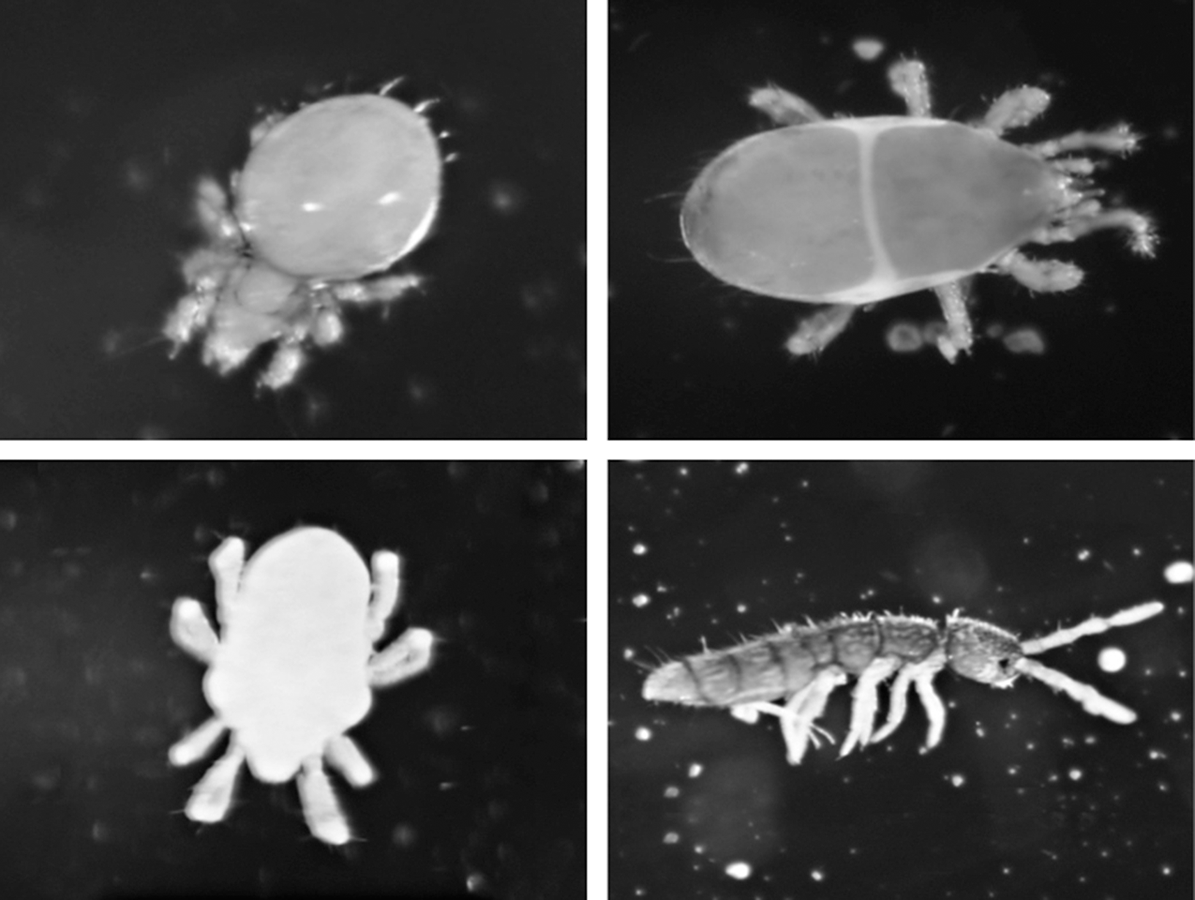
The mesofauna is broadly defined as the soil fauna with body widths between 0.1 and 2.0 mm (Figure 1.8). In contrast to the microfauna, the mesofauna occupies air-filled soil pores; however, like the microfauna the soil mesofauna has limited direct impact on soil structure, i.e. most of the taxa do not alter soil pore structure. The most numerically abundant and diverse types of soil mesofauna are the mites (Acari) and springtails (Collembola), but several other groups including the proturans (Protura), Diplura, Symphyla, potworms (Enchytraeidae), and pseudoscorpions (Chelonethi) are important members of the mesofauna. The mesofauna represents a very broad range of life history strategies and functional traits, and as a group contributes significantly to C and nutrient cycling, pest and disease suppression through selective feeding, dispersal of microbes, and in some cases ecosystem engineering (discussed in detail in Chapter 2). Only the most abundant or influential groups will be discussed in detail here.
The most abundant type of mesofauna is the microarthropod, comprising mites and springtails. The oribatid mites (top left) are predominantly microbial grazers and decomposers. The mesostigmatid mites (top right) are mostly active predators, while the prostigmatid mites (bottom left) feed on more varied resources. The springtails (bottom right) are predominantly fungal grazers.

The free-living soil mites (Acari) are highly diverse in soil systems, with roughly 40,000 species described across all taxa, and together with the springtails they are among the most abundant arthropods in most soils. The phylum is composed of the superorders Parasitiformes and Acariformes. The most ecologically important orders of Parasitiformes are the Ixodida (ticks) and the Mesostigmata, but only the latter are common types of soil fauna. Two orders make up the Acariformes, Trombidiformes, and Sarcoptiformes, with the suborders Prostigmata and Oribatida being the most species-rich and abundant representatives, respectively. The total abundance of mites varies among biomes from around 20,000 to 200,000 individuals per m2, but abundances are often very low in cold and hot desert soils while a maximum of 1,783,000 individuals per m2 were recorded in a beech forest in Germany (Petersen and Luxton Reference Petersen and Luxton1982). Their abundances are positively related to mean annual temperature, and the biomass is in the 100 to 1,000 mg dry weight per m2 but can reach 1,500 mg (Lavelle and Spain Reference Lavelle and Spain2001). Mites are generally found in higher numbers in soils with considerable amounts of organic matter and prefer soils with higher soil moisture content and lower pH than the springtails (Wallwork Reference Wallwork1976).
The mites are like other arthropods covered in a rigid exoskeleton that in many species is heavily sclerotized for protection. This is, however, not always the case, and juveniles are generally less well protected than adults, making them important prey for other soil fauna. Like their close relatives, the spiders, adult mites and nymphs have four pairs of legs, while the larval stage only have three pairs. Most Acari have six developmental stages, except the parasitic Ixodida (i.e. the ticks), which will not be discussed in detail here. It is worth noting that Ixodidae can be present in large numbers in soil and litter and may become prey of other soil fauna; however, they do not contribute directly to soil processes given their dependence on vertebrate hosts for resources. Mites have chelicerae that are used in feeding, and the shape of the chelicerae reflects feeding preferences. However, given that many species have not been described, there is uncertainty about general feeding preferences. The mites show substantial variation in life history traits and reproductive cycles. Most species have one generation per year, but some species of prostigmatid mites can complete their life cycles in less than three months whereas some species of oribatid mites can take up to five years (Krantz and Walter Reference Krantz and Walter2009). Morphological identification of mites is complicated by the fact that many mite species are polymorphic, and the juvenile stages do not closely resemble the adults. Many species of mites are heavily armoured and relatively insensitive to desiccation compared with the springtails discussed next. For example, it has been estimated that some oribatid mites can tolerate water potentials of −6.0 MPa. In comparison, most plants wilt at soil water potentials of −1.5 MPa (Lavelle and Spain Reference Lavelle and Spain2001).
The mites can be broadly divided into three ecologically important groups that share some general morphological and functional traits. However, the phylogenetic relationship between groups is still not well resolved and many species of mites are yet to be described. The most diverse and abundant group in most ecosystems is Oribatida. The oribatid mites are generally more heavily sclerotized than other members of Acari with often-calcareous exoskeletons. They are highly abundant with up to several hundred of thousand individuals per m2 in some ecosystems, with particularly high abundances in coniferous forests. Similarly, the diversity can be very high with more than 100 species not being unusual at a given site. The oribatid mites are broadly classified as saprophages, but some feed on decaying organic matter while others target microbes more specifically. However, more specific oribatid mite feeding guilds have been proposed, including fragment feeders (finely fragmented plant and fungal matter), panphytophage (plant and fungal matter), and micro- and macrophytophages (fungal hyphae and spores, and plant matter, respectively) that can be partly distinguished based on the size of the chelicerae (Kaneko Reference Kaneko1988). The free-living soil mesostigmatid mites (Mesostigmata) are mostly predatory, while many non-soil species are animal parasites. They feed on a broad range of other soil fauna, but springtails and nematodes are common prey within the soil food web. The prostigmatid mites (Prostigmata) can be diverse and dominate the mite communities in some ecosystems. They present a broad array of feeding types ranging from herbivores to microbial grazers or decomposers to predators. Soil mites are therefore important to ecosystem functioning through several nodes of the soil food web.
The springtails (Collembola) are abundant hexapods closely related to the proturans, diplurans, and insects, with highest abundances observed in temperate mull-type soils. Most springtails are relatively small, usually less than 2 mm, but the largest species grow up to 17 mm long. The scientific name refers to the presence of ventral tube, the ‘collophore’ or alternatively ‘glue piston’ (Greek: kola = glue; embolon = piston), which is important in fluid and electrolyte control and has been proposed to also function as a way for the organism to adhere to the surface. They have three body regions like the insects but lack compound eyes and wings, and the abdomen has only six segments. They are known as springtails because of the ability of some species to jump significant distances (it is a common note that if springtails were the size of humans they would be able to jump over the Eiffel Tower). This ability comes from the furcula, which is found ventrally on the abdomen. The furcula is usually tucked away under the abdomen, held in place by a special catch mechanism that is released if the springtail is disturbed, thus making the animal jump. However, the furcula is absent in several groups. The springtails rival the mites in abundances, at least in some ecosystems, such as temperate grasslands and forest and even maritime Antarctic terrestrial ecosystems. Indeed, there appears to be a thermo-latitudinal relationship whereby particularly high abundances are observed in some cold environments. The highest mean abundances in a survey of 200 sites was thus reported from ornithogenic soils on Signy Island, Antarctica – a staggering 670,000 individual per m2 – while lower abundances were observed in tropical savannas in Africa and the lowest in desert soils in California (Petersen and Luxton Reference Petersen and Luxton1982). While abundant, the biomass of springtails is usually in the range of 80–200 mg m−2 (Lavelle and Spain Reference Lavelle and Spain2001). It is a less diverse group than the Acari with approximately 8,500 species described to date, but there are still many undescribed species. They reproduce through parthogenesis or sexually whereby males deposit spermatophores that the females rub against for fertilisation. The juveniles develop through a series of 4–50 stadia, with development to reproductive instars taking 40–400 days (Lavelle and Spain Reference Lavelle and Spain2001). The springtails are generally divided into three main groups based on morphological and phylogenetical similarities: Poduromorpha and Entomobryomorpha (both in the suborder Arthropleona) representing the ‘linear’ springtails to which most springtails belong and the spherical to globular Symphypleona. Springtails generally have life cycles that range from a few weeks to months, but can be up to several years, for example, in tundra (Addison Reference Addison and Bliss1977). Most species rely on existing soil pores for movement within the soil matrix, but a few species from the family Onychiuridae create microtunnels (Rusek Reference 334Rusek1985). They can also contribute to soil formation, particularly in weakly developed soils and early successional stages, where the soil profile can be made up almost entirely of springtail faecal pellets (Rusek et al. Reference Rusek, Úlehlová, Unar and Vanek1975).
Feeding activities of springtails have been explored by many scientists, beginning with the pioneering work of Macnamara (Reference Macnamara1924). Springtails feed on a very broad range of resources, but most species are saprophages or microbial grazers, particularly of fungi and algae (Petersen and Luxton Reference Petersen and Luxton1982). A few species, such as some Friesea and Isotoma, are predators that feed on rotifers, tardigrades, and nematode eggs. Our understanding of springtail feeding preferences is largely based on direct observation, mouth-part specialisation and gut content analysis (Rusek Reference Rusek1998). Berg et al. (Reference Berg, Stoffer and van den Heuvel2004), for example, investigated enzyme activity of springtail gut contents in 20 different species from nutrient-poor peat meadows and defined four broad feeding guilds: fungivorous grazers, opportunistic herbofungivores, herbo-fungivorous grazers, and omnivores. Moreover, there is evidence that feeding preferences change among life stages (Jensen et al. Reference Jensen, Leinaas and Hessen2006), contributing to difficulties attributing individual species to specific feeding guilds. While springtails are often considered generalist fungal grazers, there is some evidence that they show preferential feeding. For example, a study that compared fungal diversity of springtail gut contents with the surrounding soil using a sequencing approach found only one of 33 unique 18S ribosomal DNA operational taxonomic units (OTUs) in the soil in the springtail gut (Jørgensen et al. Reference Jørgensen, Canbäck, Hedlund and Tunlid2005). This strongly suggests that the springtail Protaphorura armata can be highly selective in its preference of fungi. The main constraints for gut content analyses using molecular approaches are the potential contamination by non-prey DNA and false negatives whereby prey DNA is not robustly amplified. DNA contamination is most problematic where whole individuals are isolated for DNA extraction because they are likely to be surface contaminated. This can in part be circumvented using prey-specific primer combinations, which at least avoids picking up other types of DNA. A better solution appears to be surface decontamination using bleach although the method is not perfect and may work only with certain types of fauna (Greenstone et al. Reference Greenstone, Weber, Coudron, Payton and Hu2012). The problem with prey DNA not being amplified should be resolved as analytical protocols are fine-tuned.
Springtails are broadly classified based on their habitat preference as epigeic, hemiedaphic, or euedaphic, with clear differences between the types in terms of morphology, ecophysiology, and population biology (see Verhoef and Brussaard Reference Verhoef and Brussaard1990; Chapter 3). Their habitat preferences are also likely to influence how they contribute to ecosystem functioning, with surface-dwelling species (epigeic) more likely to be involved in the early stages of decomposition while the soil-dwelling species are more likely to contribute to the later stages of decomposition and mineralisation processes. Species found in the litter layer or upper soil horizons are generally larger, have a well-developed furcula, and are more colourful than springtails adapted to live within the soil horizon itself that also typically lack eyes. The family Sminthuridae has achieved much greater independence from soils than other springtail groups. They have trachea and do not need to breathe across the body surface so they can conserve water. This allows them to exist in microhabitats where other springtails are not generally present, and they are therefore more prominent on plants and tree trunks. Some Sminthuridae are phytophagous and can be significant pests of agricultural and horticultural crops. However, morphological adaptation is not always a proxy for microhabitat preferences displayed by springtails.
Finally, some springtails have adapted live in extreme environments, with some species being very cold tolerant. Many Arctic and Antarctic species produce antifreeze proteins that allows them to continue locomotion well below freezing, and they can survive much colder conditions; there is evidence that the Antarctic springtail Anurophorus subpolaris can survive temperatures down to −50°C (Block Reference Block, Lebrun, André, De Medts and Wauthy1983). There is some evidence of anhydrobiosis in springtails, but most species are limited in their desiccation tolerance, usually experiencing impacts below −5.0 MPa. One study showed that the activity of six Dutch springtails was generally affected once species have lost 16%–34% of the body water content (Vegter and Huyer-Brugman Reference Vegter, Huyer-Brugman, Lebrun, André, De Medts and Wauthy1983). However, desiccation tolerance is generally lower for juveniles than for adults.
The potworms (Enchytraeidae; Annelida) are the smaller and lesser-known relatives of earthworms. Enchytraeids are relatively small (roughly 5–50 mm length) and are found in most ecosystems (Christensen and Glenner Reference Christensen and Glenner2010). In acidic, organic-rich soils they can be found in very high numbers (hundreds of thousands per m2). Most enchytraeids are found in the upper soil layers where most of the organic material occurs. Around 650 species are currently recognised (Erséus Reference Erséus2005), most of which are microbivore or saprotrophs (Briones and Ineson Reference Briones and Ineson2002, Didden Reference Didden1990). Enchytraeids generally feed by ingesting plant fragments and mineral soil, but some species feed preferentially on fungi. It appears that most species rely on existing soil pores for movement although some can create their own microtunnels, and in this case they can act as ecosystem engineers. Like the earthworms, enchytraeids are hermaphroditic. Sexual reproduction usually includes the creation of a cocoon secreted by the clitellum containing one or more eggs, with some species covering the cocoon with a layer of organic and mineral debris (Christensen Reference Christensen1956). The time from cocoon formation to maturity is in the order of 65–120 days, with a maximal life span thought to be about one year (Dash Reference Dash and Dindal1990, Dósza-Farkas Reference Delaville, Rossi and Quénéhervé1996). However, asexual reproduction through parthenogenesis, self-fertilisation, and even fragmentation is common in many species. Respiration in enchytraeids is cutaneous, and they require a wet integument for efficient gas exchange making them highly sensitive to drought. The threshold water potentials for survival has been estimated at −1.0 MPa (Lavelle and Spain Reference Lavelle and Spain2001).
The pseudoscorpions (Chelonethi) are small charismatic arthropods (up to ∼5 mm) closely related to other chelicerates including mites, spiders, and scorpions. They are often referred to as ‘false scorpions’ because they are nearly identical to their larger counterparts, except that they lack the extended post-abdomen and stinger characteristic of true scorpions. Pseudoscorpions do have pincer-like pedipalps that they use for catching prey and their two-segmented chelicerae are used for feeding. They have separate sexes, with the male producing spermatophores that are deposited and collected by the female when the male positions her over them. Interestingly, the female produces a silken brood sac in which she deposits 10–40 eggs and then carries it to the ventral surface of the opisthosoma. The pseudoscorpions have long life cycles, with adults living for up to three to four years. It is a diverse group with some 3,400 known species, but they are rarely abundant, with a maximal abundance of a couple of hundred individuals per m2. They mostly occur in leaf litter, under bark, stones, and rocks, but also in the soil itself. They are sometimes considered beneficial to humans as predators of pests. They are widely distributed but tend to be of limited diversity at any given site. In temperate forests they can be found in excess of 500 per m2 (Gabbutt Reference Gabbutt1967). Although they are likely important predators in some cases, it appears unlikely that they contribute substantially to suppress prey abundances in most soils.
The Protura and Diplura are commonly encountered in soils, but in lower numbers than most of the other mesofauna. Proturans are wingless, primitive hexapods, closely related to the springtails and insects, with some 700 known species. They are generally small, 0.5–2.5 mm long, and lack antennae and eyes. They favour organic-rich habitats, with abundances up to 85,000 individuals per m2 observed, where they feed mostly on fungal hyphae and in turn are important prey of larger soil fauna. However, the biomass rarely exceeds a few mg per m2. The Diplura are also wingless hexapods, ranging in size from around 0.3–1 cm, although some species can grow larger, with an elongated, often white or colourless, body. There are around 1,000 known species, but they generally occur in very low abundances (<50 individuals per m2). Some Diplura superficially resemble earwigs (Dermaptera: Insecta) due to pincer-shaped abdominal appendages known as cerci, whereas in other species the appendages are filamentous. Most species are herbivores or detritivores, but some have well-developed mandibles and are predatory of other soil fauna.
Several other soil mesofauna, including Pauropoda and Symphyla (Myriapoda), are found in soils in lower abundances and are encountered less frequently. Pauropoda are small (generally less than 1 mm long), eyeless, panphytophagous invertebrates mostly found in organic-rich environments in abundances up to a few thousand per m2. Symphyla are similarly small, elongated invertebrates found to greater depth in the soil horizon. They are generally found in limited numbers, rarely more than a few hundred per m2, but they can reach up to a few thousand in temperate and tropical soils (Lavelle and Spain Reference Lavelle and Spain2001). The biomass of both groups can be up to a few g per m2 but rarely amount to much more (Petersen and Luxton Reference Petersen and Luxton1982). It remains unknown how much they contribute to ecosystem processes.
1.3.3 Macro- and Megafauna
The macro- and megafauna are defined as soil fauna with body widths above 2.0 and 20 mm, respectively. The macrofauna includes several well-known animals such as the earthworms (Annelida), termites (Isoptera), ants (Formicidae), beetles (Coleoptera), millipedes (Diplopoda), and centipedes (Chilopoda), as well as many lesser-known characters (Figure 1.9). Many macro- and megafauna, but in particular the ants, termites, and earthworms, are known as ecosystem engineers that modify their environment and contribute substantially to decomposition processes and nutrient cycling, water infiltration, pest and disease suppression, and community dynamics of other biota, which in turn can effect productivity, both positively and negatively (see Chapter 2). The focus here will be on the dominant and ecologically important groups.
Examples of common macrofauna. Top (left to right): earthworms (Megadrilacea), ants (Formicidae), and termites (Isoptera) are important ecosystem engineers that contribute significantly to ecosystem functioning and have substantial impacts on the structure of their environment. Middle (left to right): millipedes (Diplopoda) are decomposers, while their close relatives centipedes (Chilopoda) are predators. Isopods – the most successful terrestrial crustaceans, more commonly known as woodlice – are litter fragmenters. Bottom (left to right): white grubs, the larvae of scarab beetles (Scarabaeidae), feed on roots belowground before emerging to complete its life cycle aboveground. Cockroaches (Blattodea) are commonly found in the litter layer and decomposing organic matter. Many spiders build borrows and hunt actively or act as ambushers in the soil–litter interface. They are important predators of soil fauna.

The ants (Formicidae: Hymenoptera) are eusocial insects that live in complex colonies of varying sizes with a clear division of roles (i.e. castes: groups of individuals with similar roles). In most cases the location of the colony is fixed, but some ants, including certain species of fire ants, do not form fixed colonies. The colonies can be of substantial size and modify ecosystem topography. Ants have broad geographical distributions but are particularly common in tropical forests and arid grasslands, and are entirely lacking from cold environments such as the polar regions and alpine ecosystems. They likely evolved from a common ancestor living in the early Cretaceous period, although there is some discussion on the likely time this occurred (115–169 mya) (Brady et al. Reference 299Brady, Schultz, Fisher and Ward2006, Moreau et al. Reference 327Moreau, Bell, Vila, Archibald and Pierce2006). It has been estimated that there are >20,000 ant species globally with some 12,600 described (Agosti and Johnson Reference Agosti and Johnson2010). They represent a very broad range of feeding types though most are predatory or herbivores. Other ants feed on honeydew and some even cultivate fungi on harvested leaves. Ants are abundant in many ecosystems, and their biomass can exceed that of the vertebrates found aboveground in tropical forests. Because of their great abundance and affinity to modify the surrounding landscape, they can substantially impact soil fauna assemblages and ecosystem functioning.
The termites (Isoptera) are also eusocial insects with individuals representing castes that have different functional roles. However, termites are not closely related to the ants, instead being phylogenetically related to cockroaches. There are more than 2,700 recognised species of termites, most of which are associated with soils. Termites have a more restricted geographical distribution than ants. They are particularly abundant and diverse in the subtropical and tropical biomes and often dominate the soil arthropod assemblages of dry ecosystems (Kambhampati and Eggleton Reference Kambhampati, Eggleton, Abe, Bignell and Higashi2000, Thorne et al. Reference Thorne, Grimaldi, Krishna, Abe, Bignell and Higashi2000). However, they are virtually absent from temperate and colder regions. The highest termite diversities are found in lowland tropical forests where the species richness generally is in the range of 50–80 per hectare (Eggleton Reference 308Eggleton, Abe, Bignell and Higashi2000). The termites owe their success to their social lifestyle and efficient digestive symbioses with a multitude of organisms including Protozoa, methanogenic Archaea, bacteria, and fungi that allow them to use a broad range of resources, including wood, that is not available to many other soil fauna (Bignell Reference Bignell, Abe, Bignell and Higashi2000). Because most of their food is high in C content, termites furthermore benefit from symbiotic N-fixing gut microbes to aid in N acquisition. Moreover, the association with gut microbes and protozoans contributes to the very high assimilation rates (54%–93%) of otherwise highly recalcitrant food sources, such as lignin, cellulose, and hemicellulose (Wood Reference Wood and Brian1978). Termite-feeding types can be broadly defined as soil-feeders, soil-wood interface-feeders, wood-feeders, litter-foragers, and grass-feeders with other species feeding on algae, fungi, and lichens (Bignell and Eggleton Reference Bignell, Abe, Bignell and Higashi2000). Moreover, some species in the subfamily Macrotermitinae cultivate fungi. The approximately 330 species in the subfamily of fungus-growing termites (Macrotermitinae) culture fungi (Termitomyces spp.) in subterranean chambers on masticated plant detritus. But establishing new colonies is difficult because the fungi generally have to disperse independently of the termites. However, there is substantial overlap between these groups, with some species feeding on multiple substrates under unfavourable conditions, and resource switches often occur between life stages. Their nests are constructed in a wide variety of microhabitats, ranging from subterranean, epigeal, intermediate on lower portions of trunks and in touch with the soil surface, arboreal, or within nests of other species (Lavelle and Spain Reference Lavelle and Spain2001). Colonies vary in size from a few thousand individuals in ‘dry wood’ termites to hundreds of thousands in grass- and litter-feeding species. It is very difficult to estimate termite abundances reliably given the patchy distribution and complex nests, but maximal abundances approach 105 individuals per m2 equal to more than 100 g fresh weight biomass (Eggleton et al. Reference Eggleton, Bignell and Sands1996). Given the size of the colonies it is not surprising that the territory of individual colonies can be large. Individual colonies can thus ‘occupy’ hundreds to thousands of m2, sometimes leading to aggressive behaviour between colonies of the same species or with other species although this is not always the case. Termites are key prey to many more or less specialised vertebrate and invertebrate predators, including ants. Termites are ecosystem engineers that substantially impact their habitat and modify important ecosystem processes, particularly wood decomposition.
Earthworms (Annelida: Lumbricidae) are common in most ecosystems except hot deserts and the polar regions, and indeed dominate the soil animal biomass in most soils. There are approximately 7,000 known species, with an estimated global diversity of 30,000 species. Earthworms range in size from a few mm to around 2–3 m for Amynthas mekongianus and the ‘Giant Gippsland Earthworm’ Megascolides australis. However, most species are around 5–15 cm long. Earthworms are particularly common in grasslands and forests of temperate regions and because of their relatively large size can contribute substantially to the biomass of soil fauna in basic soils. Earthworm biomass is normally in the range from 30–100 g m−2, but can be up to 400 g m−2. By contrast, they are much less abundant in acidic soils and are generally absent from hot and cold deserts (Wallwork Reference Wallwork1976). Ecologically, Lumbricidae and Megascolecidae are most important in Asia, Australia, Europe, and North America, whereas Eudrilidae and Glossoscolecidae are most important in sub-Saharan Africa and South America, respectively. They are semi-aquatic organisms that require enough soil water to maintain cuticular moisture to allow gas exchange. This poses some constraints on where earthworms flourish and they appear unable to survive extended periods with soil water potentials below −0.1 MPa (Lavelle and Spain Reference Lavelle and Spain2001). However, some species have adaptive life history traits, such as quiescence or diapause, or constructs chambers where they might survive during stressful conditions. Other species actively avoid harsh conditions through migration to deeper soil horizons. Earthworms are hermaphroditic and generally reproduce sexually, although some species can reproduce through parthenogenesis.
Earthworms have contrasting life history strategies associated with their occupancy of the soil matrix. Epigeic earthworms predominantly inhabit the very shallow organic soil and litter horizon where they feed predominantly on organic material. Anecic earthworms gather leaf litter from the surface and pull it into their burrows, thereby mixing organic and mineral soil horizons. The action of both epigeic and anecic earthworms contributes to the formation of the characteristic mull-type soils, where the organic matter is well mixed within the upper mineral soil, through fragmentation and redistribution of organic matter. The anecic earthworms have substantial impacts on the soil structure through their burrowing, influencing water-holding capacity and infiltration rates, etc. (Chapter 2). By contrast, the endogeic earthworms feed on organic matter found within the soil matrix, with more limited impacts on the distribution of organic matter. Earthworms are efficient bioturbators of soils, ingesting and egesting up to 1,200 metric ton solid aggregates per ha per year while creating up to 900 m of galleries per m2 (Lavelle and Spain Reference Lavelle and Spain2001). However, a very small proportion of the ingested material is assimilated. For example, it has been estimated that the tropical earthworm Reginaldia omodeoi ingests up to 30 times its body weight every day, but only roughly 8% of this is assimilated, and even then over 90% of the C assimilated is respired through activities such as modification of the soil structure (Blouin et al. Reference Blouin, Hodson and Delgado2013). Similarly, earthworms in temperate ecosystems respire a very large proportion, up to ∼90%, of the C assimilated during feeding and burrowing activities (Petersen and Luxton Reference Petersen and Luxton1982). As such they are one of the key groups of soil ecosystem engineers, although not all types contribute equally to soil structure modification. The functional groups also differ in life span with epigeic earthworms usually living for about a year while endogeic and anecic earthworms can live up to 10 years (Sherlock Reference Sherlock2012). However, there is substantial variation within the functional groups, with the epigeic earthworm Eisenia andrei known to live for more than eight years (Mulder et al. Reference Mulder, Baerselman and Posthuma2007).
Certain insects (Insecta) are commonly found in soils, particularly larval stages, and can reach significant densities. For example, many larval stages of Diptera are important root feeders, dung, or litter decomposers. Several members of Coleoptera (beetles) are important grazers of plant roots (i.e. scarab beetle larvae) (Frew et al. Reference Frew, Barnett, Riegler, Nielsen and Johnson2016), while many ground beetles (Carabidae) and rove beetles (Staphylinidae) are important predators in the litter layer and on the soil surface. Similarly, the larvae of Neuroptera are predatory soil dwellers bearing elongated mandibles. More broadly, saprophagous insect larvae include Tipulidae, Chironomidae, Lepidoptera, Muscidae, Mycetophilidae, and Dolichopodidae, while predatory insect larvae include dipteran Tabanidae. Of course, there are also the charismatic dung beetles that feed on the dung deposited on the soil surface and can play a key role in the decomposition process of dung in some ecosystems. It is noteworthy that insect root herbivores can reach astounding numbers and biomass. A classic example that illustrates the potential size of belowground herbivore populations is the case of cicada nymphs of the genus Magicicada. The nymphs spend most of their lives deep in the soil feeding on xylem fluid from the roots and rootlets only to emerge in 17-year cycles in northeast America (Karban Reference Karban1980). They reach densities of more than 300 emerging cicadas per m2 equalling the largest recorded biomass of any naturally occurring terrestrial animal. However, it appears that the higher temperatures in their southern ranges allow them to complete their life cycle faster, emerging every 13 years. Even some bees and wasps dig tunnels in the soil where they construct hives, store food, or hide, both solitary and colony forming. Other notable soil-associated insects include wasps that dig holes where they deposit paralysed prey inoculated with eggs to secure the future of their young and bees that nest in the soil.
The terrestrial crustaceans (Isopoda) known as wood lice or pill bugs and their relatives are probably best known because of the ability of some species to roll up into a tight ball when disturbed as a defence against predators. They are small arthropods, ranging from around 5–15 mm with a few smaller species. There are some 3,600 known species that are commonly found in, or at least associated with, moist organic deposits because of their incomplete waterproofed body surface. Isopods have three distinct body parts: cephalon (head), pereion (thorax), and pleon (abdomen). The head have eyes, two pairs of antennae although one pair is vestigial, and four pairs of appendages that are used in feeding. The thorax has seven pairs of walking legs, while the abdomen has five pairs of modified appendages used for respiration. The isopods have a well-developed olfactory sense, which might be related to their tendency for ‘clumping’. The terrestrial isopods are important saprophages where they occur in larger numbers feeding on decaying organic material of plant or animal origin.
There are four classes of Myriapoda in soils. The millipedes (Diplopoda) and the centipedes (Chilopoda) are by far the most abundant and diverse Myriapoda, whereas the two lesser-known classes, Symphyla and Pauropoda, are less common and represent roughly 200 and 800 species, respectively. All myriapods have elongated bodies with many pairs of legs, a distinct head region, and a relatively uniformly segmented trunk. Symphyla can be distinguished from other myriapods by the presence of conical cerci on the posterior part of the body, while Pauropoda have small, branched antennae. Some species of Pauropoda and Symphyla can be significant pests of horticultural or agricultural crops. The 12,000 species of millipedes (Diplopoda) feed predominantly on decaying organic matter, but some can feed on living plant tissue. The millipedes’ trunk is composed of fused segments (diplosegments) that make it appear like they have two pair of walking legs per segment. Contrary to popular belief and the suggestive common name, millipedes do not have a thousand legs, the record being 375 pairs in Illacme plenipes. Some of the larger millipedes, such as the African species Archispirostreptus gigas, can reach lengths of up to 30 cm. Most millipedes produce poisonous secretions or prussic acid (hydrogen cyanide) gas for defence. There are approximately 3,000 species of centipedes (Chilopoda). The first pair of walking legs are modified appendages, forcipules, that function as poison claws and contain venom used to catch and immobilise their prey. Hence, centipedes are thus predominantly predatory, although some species are able to live on, for example, leaf litter and decomposing organic matter for parts of the year.
Several other groups of fauna are commonly found in the soil or litter layer, where they forage. For example, while most spiders are not generally considered true soil fauna, many species including the wolf spiders (Lycosidae) hunt in the litter layer and could have a significant impact on soil fauna assemblages. Other spiders dig tunnels or other structures and through this modify soil conditions, including the ambush trapdoor spiders (Ctenizidae). Similarly, scorpions hunt in the soil litter interface and several species build tunnels that can contribute to alter the soil structure. Slugs and snails, the two primary terrestrial gastropods, are common pests in gardens. Most snails are herbivores while slugs feed on a broader range of organic matter including a few species that are predatory. Generally, only species that use soil as a habitat and for foraging are included in the soil megafauna. By this definition, soil megafauna includes a few vertebrates such as the worm-like amphibians, Caecilians, with reduced eyes and limbs that feed on insects and worms, and moles that dig tunnels and feed on lumbricid earthworms and other soil fauna. Other part-time soil fauna includes vertebrates such as voles, shrews (Soricidae), the naked mole rat, blind snakes, and legless lizards. Other large animals, including some reptiles, rabbits, hedgehogs, foxes, gophers, squirrels, tortoises, etc. may dig burrows but do not use the soil as a place for foraging. While these cannot be considered soil fauna in strict terms, their activities do influence soil fauna assemblages and ecosystem functioning.
1.4 Summary
The diversity of life in soil is astounding, and the organisms within display great variation in body size, life history strategies, and functional traits. We presently have a solid understanding of the types of fauna that call soil their home; however, there are still many species that remain to be described, particularly in the taxa dominated by smaller body sizes. Moreover, our knowledge of the soil fauna is biased towards countries with a historical interest in soil fauna; for example, it is unlikely that there are many more species of springtails to be discovered in the United Kingdom given the strong emphasis on this group over the past decades (Hopkin Reference Hopkin2007). By contrast, there is a dearth of knowledge of the local soil fauna in countries with less historical interest, less densely populated areas, and more remote locations. There is a great need for more taxonomic expertise to resolve this knowledge gap. The rapid development of molecular techniques and their application to soil fauna assemblages (see Chapter 3 for further discussion on this topic) hold great promise to further our understanding of soil fauna species diversity and distribution. They may also provide more rapid approaches to quantify soil fauna assemblage responses to global change or experimental approaches. A discussion of the contribution of soil fauna to soil processes is in Chapter 2, and the methods available to assess this in more detail are discussed in Chapter 3.