INTRODUCTION
Healthcare professionals are often exposed to the dying process as part of their training and work. Occupational exposure to patient death has been reported to be associated with an increased fear of death and death avoidance (Linley & Joseph, Reference Linley and Joseph2005); a decline in empathy (McFarland et al., Reference McFarland, Malone and Roth2016), secondary traumatic stress (STS), and burnout (BU) (Sanso et al., Reference Sanso, Galiana and Oliver2015); an acceptance attitude toward death (Linley & Joseph, Reference Linley and Joseph2005); a decreased level of death anxiety (DA) (Quinn-Lee et al., Reference Quinn-Lee, Olson-McBride and Unterberger2014); and diminished compassion satisfaction (CS) (Sanso et al., Reference Sanso, Galiana and Oliver2015).
CS, STS, and BU have been identified as separate elements of professional quality of life (ProQoL), the comprehensive quality that one feels in relation to work as a helper (Stamm, Reference Stamm2010). Such outcomes as exhaustion, frustration, and anger are typical of BU. STS refers to the fear-driven negative feeling that can result from exposure to patients' traumatic experiences (Figley, Reference Figley1995). CS refers to the positive aspects of caregiving, the “reward” that helps sustain caregivers' positive resources (Stamm, Reference Stamm and Figley2002). Palliative care teams are repeatedly exposed to death and dying as part of their work routine. Dealing with the physical, psychological, existential, and emotional symptoms that characterize terminal patients may have ramifications for a palliative team's ProQoL. Despite repeated exposure to imminently dying patients, human suffering, and significant symptom burden, research findings among palliative care workers indicate high levels of CS (Slocum-Gori et al., Reference Slocum-Gori, Hemsworth and Chan2013; Sanso et al., Reference Sanso, Galiana and Oliver2015; Koo et al., Reference Koo, Zeng and Zhang2013) and low to moderate levels of STS (Slocum-Gori et al., Reference Slocum-Gori, Hemsworth and Chan2013; Whitebird et al., Reference Whitebird, Asche and Thompson2013; Sanso et al., Reference Sanso, Galiana and Oliver2015; Koo et al., Reference Koo, Zeng and Zhang2013) and BU (Pereira et al., Reference Pereira, Fonseca and Carvalho2011; Ramirez et al., Reference Ramirez, Graham and Richards1996; Whitebird et al., Reference Whitebird, Asche and Thompson2013; Sanso et al., Reference Sanso, Galiana and Oliver2015; Koo et al., Reference Koo, Zeng and Zhang2013). Furthermore, with regard to LED, ongoing contact with dying patients and their families has been reported to be a source of meaning, job satisfaction (Ablett & Jones, Reference Ablett and Jones2007), and a decreased level of DA (Quinn-Lee et al., Reference Quinn-Lee, Olson-McBride and Unterberger2014). Those findings may suggest that our understanding of the role of exposure to death and that of the level of exposure to death (LED) as a predictor of work-related outcomes is limited.
Death Anxiety and Level of Exposure to Death and Dying
Personal exposure to these processes is believed to raise awareness of personal death and increase anxiety and discomfort (Depaola et al., Reference Depaola, Griffin and Young2003). In contrast to the common tendency of most people to avoid talking and thinking about the dying process, palliative care staff are exposed repeatedly to the dying process. DA is one of the most frequently used terms to describe personal orientations toward death. Based on a longitudinal study among terminally ill patients, researchers concluded that it is a stable psychological characteristic (Cohen & Carmel, Reference Cohen and Carmel2004). It is characterized by such negative emotional reactions as fear, threat, unease, and discomfort along with anxiety that can occur even without an external cause (Neimeyer, Reference Neimeyer1998). While psychological stress can be evoked by an awareness of death, the latter can alternatively motivate individuals to pursue positive life changes (Tedeschi & Calhoun, Reference Tedeschi and Calhoun2004).
The findings to date on possible associations between an increased LED and DA are controversial. While a positive correlation was found between DA and LED in the general population (Hoelter & Hoelter, Reference Hoelter and Hoelter1981) and among nurses (Kaur & Dutta, Reference Kaur and Dutta2014; Braun et al., Reference Braun, Gordon and Uziely2010), palliative care staff, whose work is characterized by daily exposure to imminently dying patients, had low to moderate levels of DA (Robinson & Wood, Reference Robinson and Wood1984; Braun et al., Reference Braun, Gordon and Uziely2010; Peters et al., Reference Peters, Cant and Payne2013b; Mallett et al., Reference Mallett, Price and Jurs1991). Residents reported taking care of 4.28 dying patients on average over the course of their rotation, and 62% said that caring for dying patients was the most stressful part of their rotation. Some 73% reported that the cause of distress (on the Impact of Events [IES–R] scale) at the end of the rotation was related to the death of a patient. However, 68% reported that they derived a sense of meaning from working with dying patients at the end of the rotation (McFarland et al., Reference McFarland, Malone and Roth2016).
Although the positive association of LED with increased DA may be explained by increased awareness of personal death (Hoelter & Hoelter, Reference Hoelter and Hoelter1981), the reduced association among palliative care workers may stem from the realization of the importance of their medical intervention in the relief of suffering.
Engagement and Level of Exposure to Death and Dying
Work engagement has been recognized as a positive and fulfilling psychological state. In contrast to BU and STS, engagement is positive in nature (Schaufeli & Salanova, Reference Schaufeli and Salanova2014) and indicates a high level of job satisfaction. It is characterized by vigor, dedication, and absorption (Schaufeli et al., Reference Schaufeli, Salanova and González-Romá2002). Vigor is characterized by high levels of energy, resilience, and a willingness to invest effort and persistence, even in the face of difficulty. Dedication refers to increased involvement accompanied by a sense of significance, enthusiasm, inspiration, pride, and challenge. Absorption is characterized by focused attention, total concentration, and difficulty in disengaging from work (Schaufeli & Bakker, Reference Schaufeli and Bakker2003).
Among palliative care workers, the number of empirical studies evaluating levels of engagement is limited. As expected, the existing data indicate that, as work engagement increases, CS levels increase significantly (Mason et al., Reference Mason, Leslie and Clark2014; Chan et al., Reference Chan, Chan and Chuang2015) and BU levels decrease significantly (Mason et al., Reference Mason, Leslie and Clark2014; Chan et al., Reference Chan, Chan and Chuang2015). Findings related to STS are not consistent, and no significant correlations have been seen (Mason et al., Reference Mason, Leslie and Clark2014), in contrast to a significant correlation (Chan et al., Reference Chan, Chan and Chuang2015) between work engagement and STS.
There is no current comprehensive theoretical framework with which to understand the dynamic relationships among CS, STS, and BU. CS was identified as a possible counterbalance for the risks of STS (Stamm, Reference Stamm and Figley2002), and engagement was identified as a positive alternative to burnout (Schaufeli & Salanova, Reference Schaufeli and Salanova2014). These findings may indicate that, although negative and positive outcomes are distinguishable elements, both are required for a comprehensive characterization of occupational psychological well-being.
The present study utilized a cross-sectional survey design to achieve a better understanding of the role of LED as a predictor of ProQoL, first by comparing healthcare workers with high LED (palliative care workers) to healthcare workers with low LED (primary care workers) and second by evaluating possible interaction effects among LED, DA, and engagement as predictors of ProQoL.
METHODS
Sample
Healthcare in Israel is provided under the national healthcare insurance law by four health-maintenance organizations (HMOs). Clalit Health Services, the largest, covers 53% of the population. End-of-life palliative care is provided by inpatient and community palliative care units in a variety of settings, while primary care is provided through primary care clinics by the HMOs.
Questionnaires were distributed to all professional workers in end-of-life community- and hospital-based palliative care units, who were asked to participate voluntarily in the study. In all, these included 11 healthcare organizations that provide community- or hospital-based palliative care services at the end of life. We included only units that provide 24-hour service, because the results of previous studies have indicated that a vague boundary line between work and private life is one cause of poor ProQoL (Abendroth & Flannery, Reference Abendroth and Flannery2006).
To decrease bias, the two groups were matched by sector (physicians and nurses) and region (northern, central, and southern Israel). In order to attain matched groups that differed primarily by LED, the questionnaires were distributed in two phases. At first, the questionnaires were sent to all palliative end-of-life care units between June and December of 2013. After a preliminary analysis of region and occupation distributions, the second phase was carried out in which questionnaires were sent to a matched group of primary care workers between January and June of 2014. Primary care workers were selected at random from lists provided by Clalit Health Services.
The inclusion criteria were: (1) physicians or nurses; (2) at least two years of seniority in their current position; and (3) working at least 10 hours a week in direct care (25% full-time equivalent).
The exclusion criteria were: (1) other professions; (2) a position that did not involve provision of direct care (management or administration); and (3) not capable of answering a questionnaire in Hebrew.
A power analysis was conducted to determine the appropriate number of participants needed for the current study. With an Cronbach's alpha level of 0.05 and a power of 80%, a sample size of 100 per group was calculated to be sufficient to test the hypothesis of significant differences between groups.
The study was approved by the institutional review boards of the HMOs in which it was conducted. The lists of employees, research questionnaires, and data files are stored at the Siaal Research Center at Ben-Gurion University.
Data Collection
Each participant received the research questionnaire with a return-mail envelope and a personal letter explaining the importance of the study. Participants were notified that returning the questionnaire implied informed consent. Two reminders were sent at monthly intervals.
Measures
Dependent Variables
1. The ProQoL V (Stamm, Reference Stamm2010): The ProQoL Scale is a self-report measure with a 5-point Likert-type scale ranging from 1 (never) to 5 (very often). It is composed of three distinct subscales (CS, STS, and BU) without a composite score (Stamm, Reference Stamm2010). For each subscale, a higher score represents a higher rate. The BU subscale was not included in the current study because a validation study of the Hebrew version of the scale indicated that only the SC and STS scales had satisfactory psychometric characteristics (Samson et al., Reference Samson, Iecovich and Shvartzman2016). The internal consistency reliability (Cronbach's α) estimates for the subscales were 0.87 for the CS scale and 0.80 for the STS scale (Stamm, Reference Stamm2010). In the current sample, the corresponding values were 0.87 and 0.82, respectively.
2. Burnout: The Shirom–Melamed Burnout Measurement (SMBM) (Shirom & Melamed, Reference Shirom and Melamed2006) is a 14-item self-report scale with scores ranging from 1 (almost never) to 7 (almost always) on a Likert-type scale. The scale was originally developed in Hebrew. The reliability coefficient (Cronbach's α) for the Hebrew version was 0.91, and for the present study α = 0.93.
Independent Variables
1. Level of exposure to death and dying: The present study used two occupation-related variables to estimate LED. Both are accepted measures that have been used in previous research:
a. The number of actively dying patients that the participant was exposed to or cared for is an accepted measure that has been utilized in previous studies (Anderson et al., Reference Anderson, Williams and Bost2008; McFarland et al., Reference McFarland, Malone and Roth2016; Peters et al., Reference Peters, Cant and Payne2013a; Braun et al., Reference Braun, Gordon and Uziely2010). In the present study, a high LED was defined as caring for more than 10 patients per week.
b. The number of hours of direct care for terminally ill patients has also been used in previous studies that assessed ProQoL (Hooper et al., Reference Hooper, Craig and Janvrin2010; Peters et al., Reference Peters, Cant and Sellick2012). In the present study, a high LED was defined as more than 10 hours of direct care per week. This classification system enabled us to identify workers who held administrative positions with a low level of exposure to dying and distinguish them from workers involved in direct care.
2. The Death Anxiety Scale (Carmel & Mutran, Reference Carmel and Mutran1997): This is a 12-item 5-point Likert-type scale ranging from 1 (totally disagree) to 5 (totally agree). A high score reflects a strong fear of death and dying. This scale was originally developed in Hebrew. The reliability coefficient (Cronbach's α) was reported as 0.80 (Carmel, Reference Carmel2001) and was 0.87 in the present study.
3. The Utrecht Work Engagement Scale (UWES) (Schaufeli & Bakker, Reference Schaufeli and Bakker2003): This is a 9-item self-report scale. Responses to items are on a 7-point Likert-type scale ranging from 0 (never) to 6 (always). The scale was translated into Hebrew (Littman-Ovadia, Reference Littman-Ovadia2013). The reliability coefficient (Cronbach's α) for the Hebrew version of the UWES was 0.93, while for the present study α = 0.904.
4. Sociodemographic and Occupation-Related Characteristics: These included age, gender, marital status, country of birth, religion, income, engagement in leisure activities, profession, seniority, participation in palliative care education programs, and number of on-call shifts per month.
The sociodemographic and occupation-related characteristics included characteristics that were found in previous studies to affect ProQoL (Musa & Hamid, 2008; Pietrantoni & Prati, Reference Pietrantoni and Prati2008; Zeidner et al. Reference Zeidner, Hadar and Matthews2013). In the subsequent analyses, all the sociodemographic and occupation-related characteristics were included in the multivariate analysis of covariance (MANCOVA). However, variables that were nonsignificant in the first step of this analysis were omitted during the stepwise analysis. Thus, only variables that had a significant association with the three dependent variables were included in the final prediction model and presented in the results.
Design
Our study used a between-subject comparative research design, where professionals with high LED (>10 hours of direct care and >10 terminal patients per week) were compared with a matched group of professionals with low LED.
CS, STS, and BU were scored using the theoretical score cutoffs set by the scale developer (Stamm, Reference Stamm2010; Shirom, Reference Shirom, Quick and Tetrick2003; Deihl, Reference Deihl2009). Group differences in sociodemographic characteristics, occupational characteristics, and LED were compared using chi-square tests for categorical variables and t tests for continuous variables. Stepwise MANCOVA was performed, using CS, STS, and BU as dependent variables and LED as a fixed factor. Before the MANCOVA was run, an analysis of gender and occupational differences did not show any main effects for these variables on the three dependent variables. As a result, gender and occupation were excluded from the MANCOVA analysis. After omitting variables that did not make a significant contribution to the prediction model, differences between the two groups were assessed by identifying variables that had an interactional effect with LED (e.g., increased LED has an impact beyond the main effect of the variables on the dependent variables, with DA, engagement, and seniority serving as covariates). For all analyses, the minimum level of significance considered was p = 0.05.
RESULTS
Response Rate and Preliminary Analyses
A total of 830 questionnaires were sent to 280 palliative care workers and 550 primary care workers. Some 250 questionnaires were returned. Before the statistical analysis, five respondents were excluded from the final sample because the profession was not relevant to the study. Following the preliminary analysis, we removed six questionnaires from the high-LED group because they represented a low LED level. Missing data were handled according to the ProQoL manual (Stamm, Reference Stamm2005), and cases with more than three missing datapoints (10%) were considered incomplete and excluded (n = 3 in the palliative care group and n = 1 in the comparison group). The final study sample included 241 questionnaires: 110 in the high-LED group (response rate = 39%) and 131 in the low-LED group (response rate = 24%).
Sociodemographic and Occupational Characteristics of Palliative Care and Primary Care Workers in Relation to LED
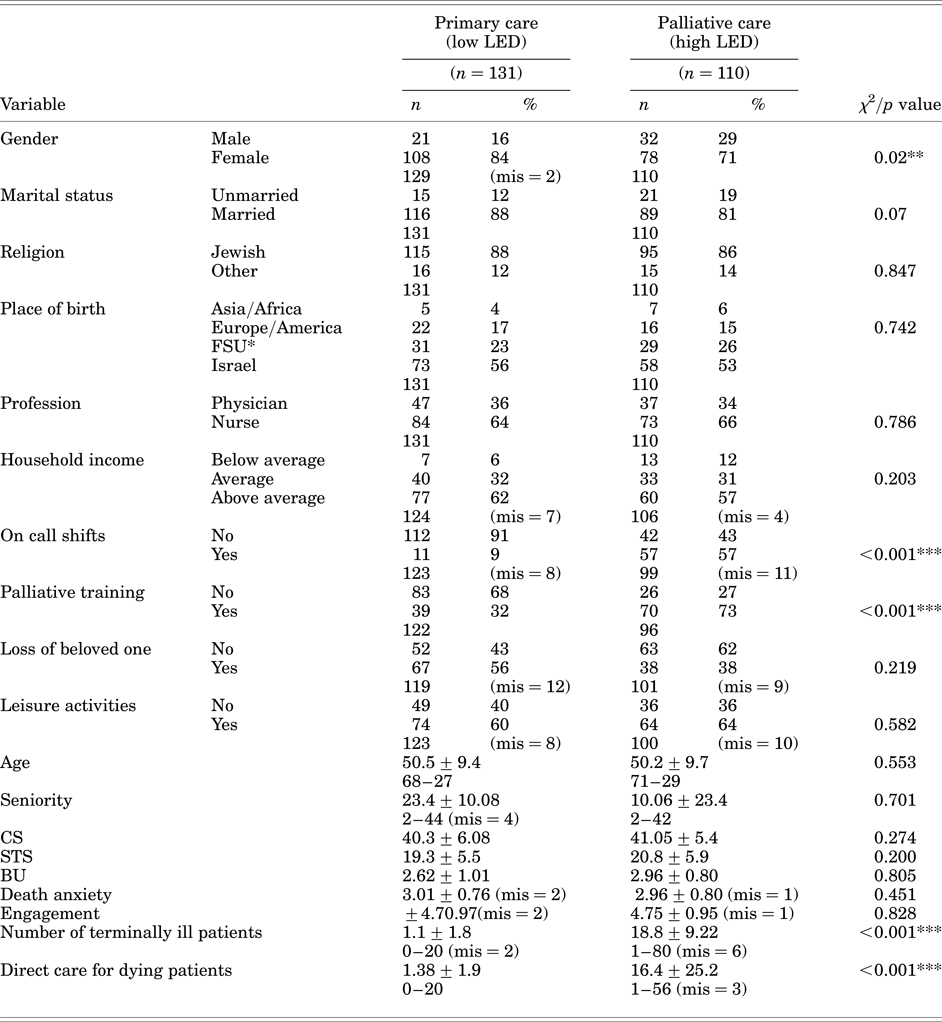
Table 1 presents the comparison of sociodemographic, occupation-related, and LED characteristics among subjects with high and low LED. As expected, palliative care workers reported a more intense LED than primary care workers, manifested by a higher number of hours of direct care for terminally ill patients (16.4 vs. 1.38, respectively) and by the number of terminally ill patients under their direct care (18.8 vs. 1.1, respectively). In addition, the palliative group differed from the primary care group mainly in variables related to such palliative care characteristics as palliative training (73 vs. 32%, respectively) and on-call shifts (57 vs. 9%, respectively). No statistically significant differences were found for CS, STS, and BU.
Characteristics of subjects with low and high levels of exposure in relation to sociodemographic and occupational variables and level of exposure to death and dying

BU = burnout; CS = compassion satisfaction; FSU = former Soviet Union; STS = secondary traumatic stress.
** Correlation is significant at the 0.05 level (2-tailed).
*** Correlation is significant at the 0.01 level (2-tailed).
ProQoL Differences Between Palliative and Primary Care Groups
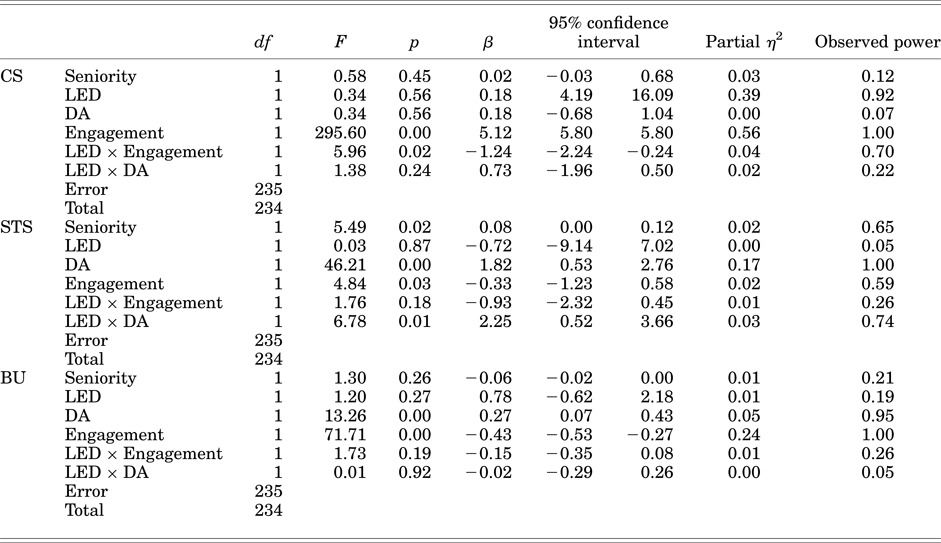
Tests of the homogeneity of the covariance matrices resulted in no significant differences (p = 0.338). This finding suggests that the basic assumptions, using the MANCOVA analysis, were not violated. Using Pillai's trace, MANCOVA revealed significant differences on the three dependent variables by seniority (Pillai's V = 0.045, F(3,226) = 3.57, p = 0.015); LED (V = 0.043, F(3,226) = 3.35, p = 0.023); engagement (V = 0.59, F(3,226) = 110.44, p < 0.001); and DA (V = 0.173, F(3,226) = 15.74, p < 0.001). However, as shown in Table 2, univariate tests revealed a significant main effect of seniority on STS (β = 0.089, F(1,226) = 5.49, p = 0.020); a significant main effect of LED on CS (β = 8.63, F(1,226) = 7.59, p = 0.006); a significant main effect of engagement on CS (β = 5.12, F(1,226) = 295.6, p < 0.001); and the SMBM (β = 0.43, F(1,226) = 71.7, p < 0.001). As for DA, a significant main effect was found on STS (β = 1.81, F(1,226) = 46.20, p < 0.001) and on BU (β = 0.266, F(1,226) = 13.26, p < 0.001).
A univariate MANOVA model for the prediction of compassion satisfaction (CS), secondary traumatic stress (STS), and burnout (BU)

BU = burnout; CS = compassion satisfaction; DA = death anxiety; LED = level of exposure to death; MANOVA = multivariate analysis of variance; STS = secondary traumatic stress.
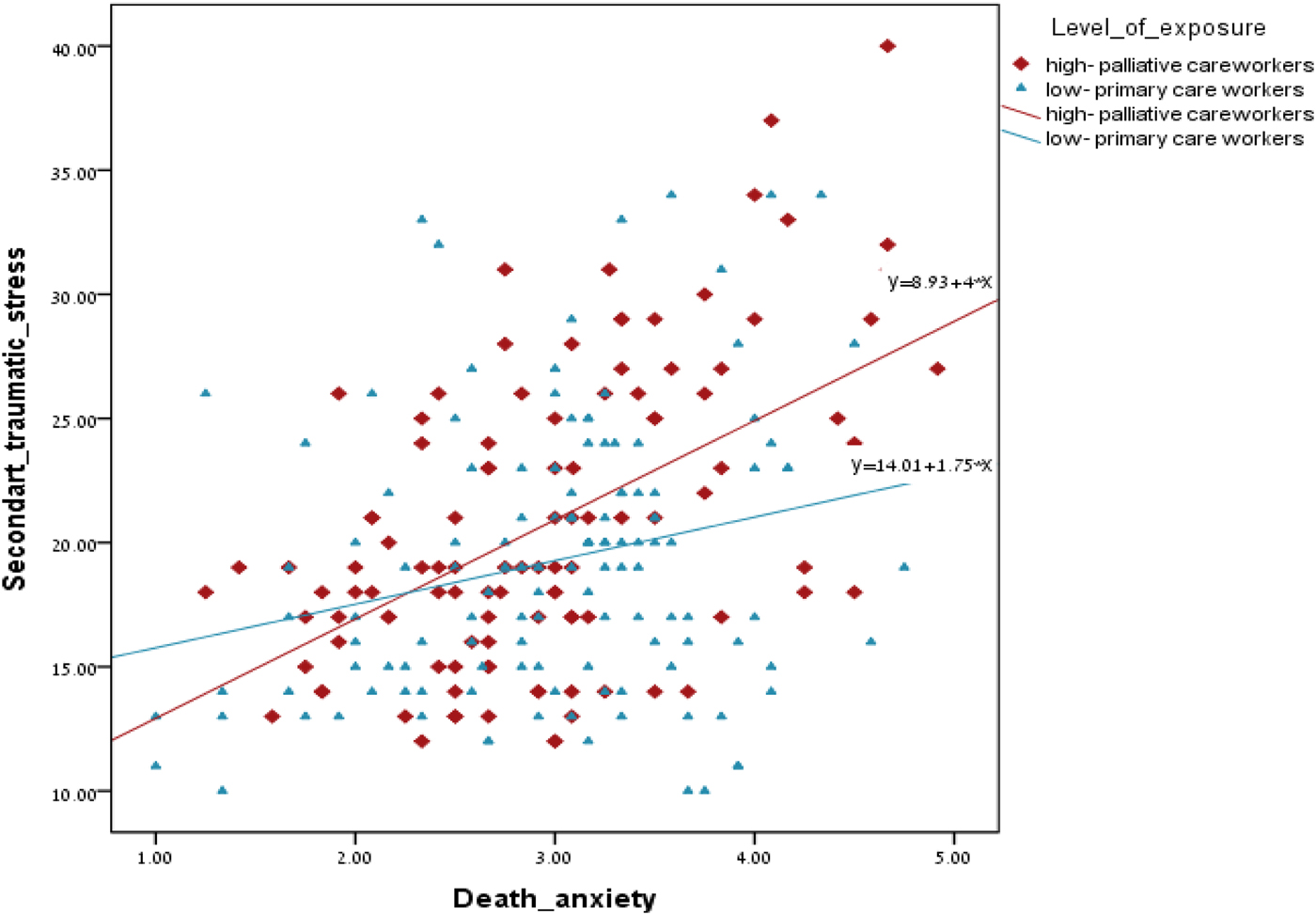
Two significant interaction effects were found between LED × DA (V = 0.039, F(3,226) = 3.04, p = 0.03) and between LED × UWES (V = 0.042, F(3,226) = 3.31, p = 0.021). As shown in Table 2, univariate MANOVA revealed a significant interaction effect of LED × UWES on CS only (β = –1.24, F(1,226) = 5.96, p = 0.015) and of LED × DA on STS only (β = 2.24, F(1,226) = 6.77, p = 0.010).
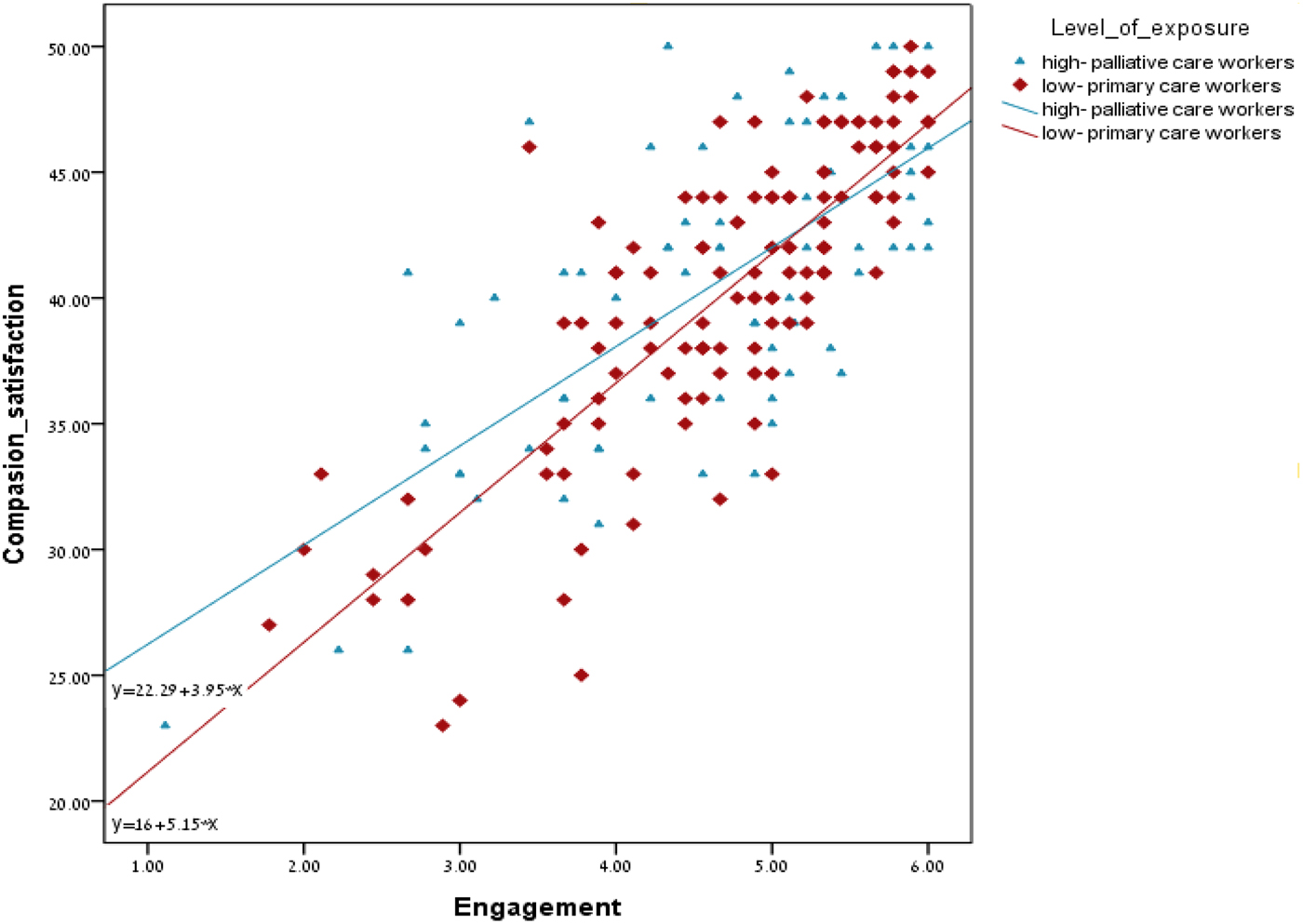
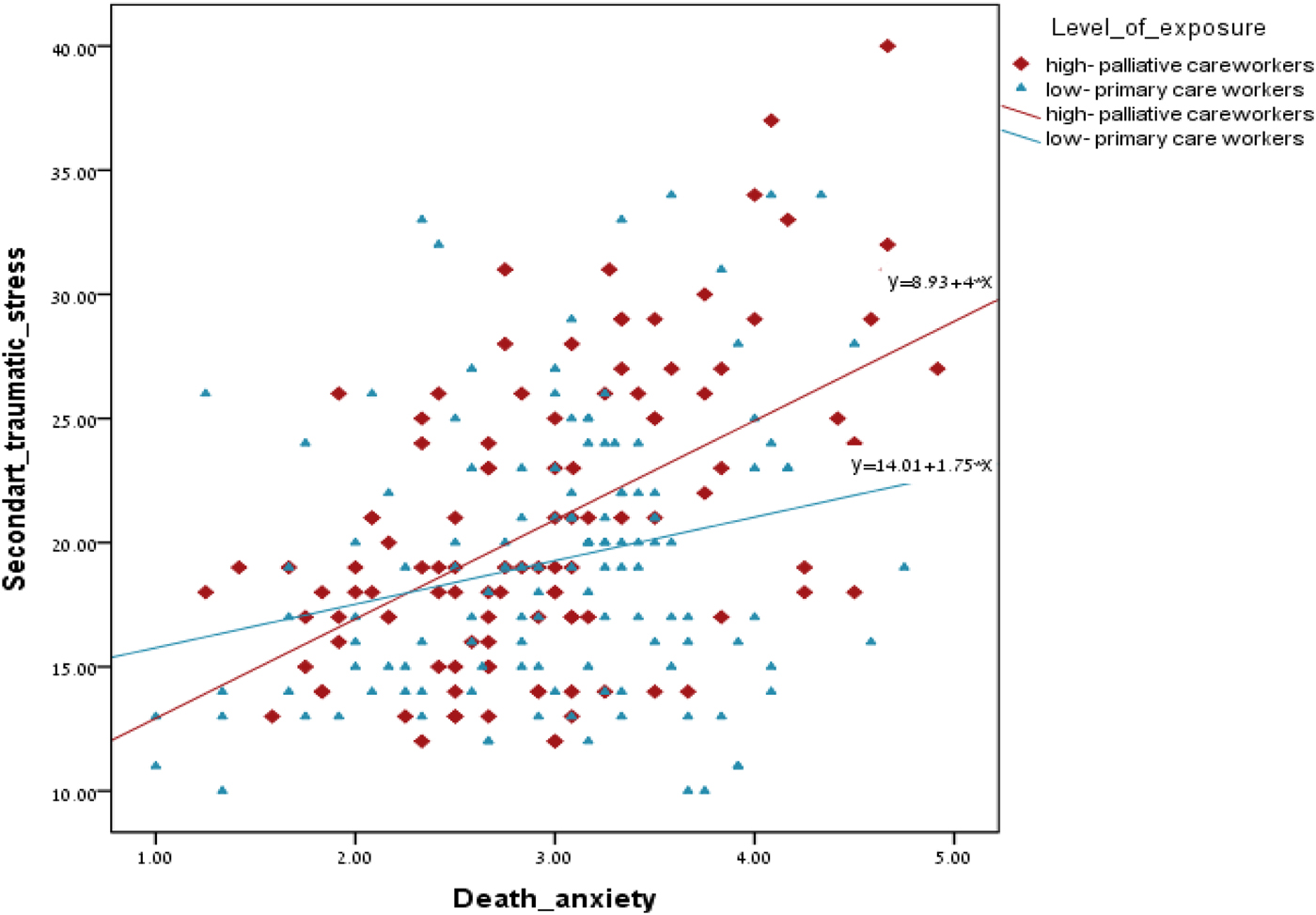
An interaction effect with LED means that the level of exposure to death has an impact, beyond the main effect of the variables, on work-related outcomes. Figures 1 and 2 show variations in the level of CS and STS, respectively, relative to the interaction effect with LED × DA and LED × UWES.
Interaction effect between LED × Engagement as a predictor of CS among palliative care (high LED) compared to primary care (low LED).

Interaction effect between LED × DA as a predictor of STS among palliative care (high LED) compared to primary care (low LED).
DISCUSSION
Although exposure to the death and dying of others is an anxiety-provoking condition that can contribute to psychological stress, the results of empirical studies among healthcare providers are not consistent. In light of these inconsistent findings in the past, the current study was designed to expand our understanding of the role of LED as a predictor of ProQoL in physicians and nurses by evaluating whether repeated exposure to death and dying among workers in an end-of-life palliative care setting increases the risk of poor ProQoL in most workers, but it also has the potential to increase ProQoL in a subset of high-LED workers compared to primary care workers who have low LED.
The results of the present study indicate that workers in a working environment characterized by increased LED reported high levels of CS and low to moderate levels of BU and STS, which were not significantly different from other healthcare providers. Senior workers in both groups were more likely to report increased levels of STS, while workers who reported increased levels of engagement were more likely to report increased CS and reduced STS and BU. Workers who reported increased levels of DA were more likely to report increased levels of both STS and BU. The interaction effect LED × Engagement was associated with reduced CS, and LED × DA was associated with increased STS among palliative end-of-life workers compared to primary care workers.
As presented in the introduction, these findings support the results of quantitative surveys conducted with valid instruments among palliative care professionals, which found high levels of CS, low to moderate levels of BU and STS, and low to moderate levels of death anxiety despite increased LED (Robinson & Wood, Reference Robinson and Wood1984; Braun, et al,. Reference Braun, Gordon and Uziely2010; Peters et al., Reference Peters, Cant and Payne2013a; Mallett, et al., Reference Mallett, Price and Jurs1991; Quinn-Lee et al., Reference Quinn-Lee, Olson-McBride and Unterberger2014). As in the current study, the results of previous empirical studies that investigated the unique contribution of engagement to work-related outcomes among healthcare providers showed that CS increased significantly as work engagement increased while burnout decreased (Mason et al., Reference Mason, Leslie and Clark2014; Chan et al., Reference Chan, Chan and Chuang2015).
Analyses of the main effect of LED indicated that CS, STS, and BU do not differ by LED. However, the analysis of interaction effects between LED × DA and LED × Engagement shed a different light on this issue. Professionals with increased LED and medium to low levels of engagement reported higher levels of CS compared to professionals with reduced levels of LED who reported reduced levels of CS. This trend reversed as levels of engagement increased. Among workers with high LED, the level of CS diminished as the level of engagement increased. Similarly, the effect of DA levels on STS varied with degree of LED. Professionals with increased LED and medium or low levels of DA reported low levels of STS compared to workers with low LED. This trend reversed as levels of DA increased. Among workers with high LED, the level of STS increased with level of DA, while STS remained at a moderate level among workers with low levels of LED. The overall meaning of these findings is that, within a working environment with high LED, higher levels of engagement might become aversive and impede CS. Absorption is an engagement component characterized by difficulty detaching oneself from work (Schaufeli & Bakker, Reference Schaufeli and Bakker2003). A possible explanation might be that, as engagement increases, the ability to detach oneself from patient suffering decreases and, as a result, CS is reduced.
In the light of these findings, further research is needed to enhance our understanding of ProQoL among palliative care workers, especially how the ability to reduce suffering in the face of the dying process mitigates BU and STS and increases CS, rather than psychological stress. In addition, STS theory may be driven by the Diagnostic and Statistical Manual of Mental Disorders (DSM–V), which includes indirect exposure to human suffering and dying as a potential source of PTSD (Horesh, Reference Horesh2016; Figley, Reference Figley1995). Criterion A3 refers to secondary traumatic exposure as “indirect” (e.g., learning that a close relative or close friend was exposed to trauma), while criterion A4 refers to “repeated or extreme indirect exposure to aversive details of a traumatic event(s), usually as part of professional duties” (Horesh, Reference Horesh2016). Given these criteria, more research is needed to reach a clearer understanding as to whether work in end-of-life palliative care settings meets the criteria for secondary traumatization.
Although the use of self-reported measures increases the risk of reporting bias and social desirability, its use among healthcare professionals has been shown to produce higher response rates (Cho et al., Reference Cho, Johnson and Vangeest2013). The use of this methodology in the present study enabled us to attain a much more precise selection of healthcare professionals, ensuring that the levels of reported LED by participants were consistent with our study objectives. The difference between response rates may indicate, as expected, that palliative care workers tend to have a greater interest in the study's assumptions and were therefore more likely to return the questionnaires (Edwards et al., Reference Edwards, Roberts and Clarke2002).
In the present study, we employed the following to increase the response rate and reduce the number of nonrespondents: (1) short questionnaires, (2) return-mail envelopes, (3) a personal letter explaining the importance of the study, (4) use of a university mail address, and (5) sending a second copy of the questionnaire to nonrespondents. These are all well-known methods for increasing the response rate for mailed questionnaires (Edwards et al., Reference Edwards, Roberts and Clarke2002). Despite this, a systematic bias may still exist due to potential differences between individuals who did and did not participate in the study. Previous studies that compared the characteristics of responders and nonresponders found significant differences that were related to the study hypothesis (Hill et al., Reference Hill, Roberts and Ewings1997). A previous systematic review of response rates to postal questionnaires reported that questionnaires containing sensitive questions may yield a lower response rate (Edwards et al., Reference Edwards, Roberts and Clarke2002). It is possible that workers with high engagement and CS tend to participate in studies, while workers with high BU and STS, due to high exposure, may avoid participation. If this is the case, our estimate of interactional effects may be low. However, the total response rate of 30% is similar to that of other studies that investigated work-related outcomes using electronic survey methods among palliative care workers (Edwards et al., Reference Edwards, Roberts and Clarke2002). Although the exact definition of palliative and hospice care may differ around the world, the generalizability of the present research findings is similar to that of other studies in the palliative care field (Currow et al., Reference Currow, Wheeler and Glare2009).
Despite these limitations, the current study makes some innovative contributions to our understanding of the role of LED as a predictor of such work-related outcomes as CS and STS. Among palliative care workers, the findings of the present study indicate that LED correlates significantly with work-related outcomes due to an interactional effect between LED and engagement and LED and DA. These findings may facilitate the development of new prevention programs that focus on increasing awareness in high-LED workers of their personal level of engagement and provide them with detachment skills to better cope with patient suffering.
CONFLICTS OF INTEREST
The authors hereby declare that they have no conflicts of interest to disclose.