Introduction
In November 2013, the paramount chief of Nandom, Nandom Naa Dr Puoure Puobe Imoro Chiir VII, and his traditional council celebrated the silver jubilee of the Kakube Festival, a two-day cultural festival. Since its creation in 1989 (see Figure 1), the Kakube Festival has waxed and waned in terms of the numbers and rank of politicians honouring the durbar, the number of groups participating in the dance competition, and the size of the local crowds attending the event, but it has been celebrated every year. Steering through conflict-ridden moments of party-political campaigning and changing governments, it has survived, and has been partly instrumentalized in periods of intense contestation of the paramount chief's legitimacy as the rightful Nandom paramount chief (see Figure 2). It has negotiated conflicting claims to authority over, and ‘ownership’ of, local culture. Within an unchanged basic format of a Durbar of Chiefs and a music/dance competition on successive days, it has showcased changes in the range and aesthetics of the dances and songs that are presented as ‘our own culture’. Particularly in the past ten or so years, as Kakube's public face has become ever more polished, the festival has attracted even more official visitors, and has gained increasing visibility on the national scene, now being perhaps one of the best known Northern Ghanaian festivals. If there was one message that the Nandom Naa and the organizing committee wanted to convey to local and national publics during the silver jubilee, then it was that Kakube not only has ‘come to stay’, as the recently elected Nandom District Chief Executive put it,Footnote 1 but that it has been developed into a highly successful cultural event which ‘make[s] people know that we also have our own culture’, as the Nandom Naa explained.Footnote 2 It has put Nandom on a par with communities in Southern Ghana that often look down on the ‘uncivilized’ north.
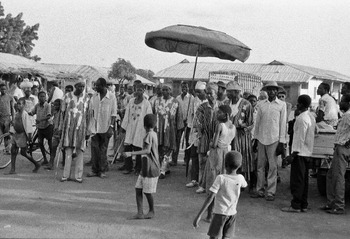
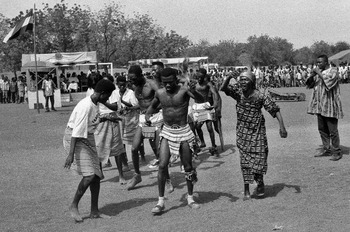
The first celebration of Kakube Festival in 1989. The photo shows the Nandom Naa (in the embroidered striped smock just to the left of the umbrella) and his followers on their way to the festival ground. A level of informalism is evident. Photo: Carola Lentz.

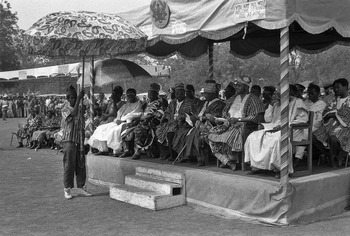
The fifth anniversary of Kakube in 1994. Regional and national politicians attend, supporting the Nandom Naa's claim to legitimacy. A good number of political attendees are now seated on a raised, shaded platform on the opposite side of the durbar ground from the chiefs. Photo: Carola Lentz.

Of course, some observers, and even some participants, would challenge the festival makers’ notion of success. There is disapproval of the commercialization of the festival by corporate sponsorship and the thriving market activities surrounding the event that tend to attract as much popular attention as – if not more than – the cultural celebrations. There are complaints about lack of transparency in the handling of festival accounts. There is criticism of incumbent or budding politicians’ use of the durbar as a political platform. There is also nostalgia for the broader range of artistic genres and greater musical variety that were performed during the early days of the festival and that seem to diminish as presentation standards become ever more sophisticated. However, even the critics would admit that Kakube draws an impressive range of visitors from neighbouring chiefdoms and from the regional and national capital, and it has now achieved iconic status as an important home-coming event that attracts a wide range of local publics, from villagers, chiefs, teachers, administrators and businesspeople to the numerous labour migrants from Nandom working in Southern Ghana and the many educated Nandome employed in Ghana's capital or abroad.Footnote 3 While offering ample opportunities for enjoyment and sociability, Kakube has become, in the eyes of many, an indicator of prestige; it is certainly Nandom's most important forum to showcase its ‘own culture’ for a local as well as a national public. Furthermore, many believe that Kakube supported Nandom's quest to have its own administrative district finally awarded in 2012 (see Figure 3).
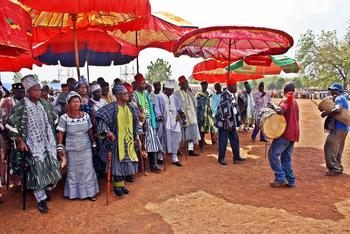
The procession of chiefs at the durbar on their way to greet political attendees in 2013, following the recognition of Nandom as an administrative district. The wider recognition of the festival can be seen in the presence of the Dagomba praise drummers. Photo: Trevor Wiggins.

The Kakube ‘success story’, however, is by no means self-evident. Other attempts in Ghana's Upper West Region, or in Northern Ghana in general, to set up new cultural festivals seem to have been much less effective. The Bong-no Festival in Jirapa or the Mifelle Festival in Lambussie, for instance, flourished during a few years, but soon lapsed or remained local celebrations with little attraction for outside visitors. Lawra's Kobine, one of the region's oldest festivals, established in the early 1970s, still draws considerable crowds but has witnessed extended periods of decline.Footnote 4 All these festivals faced similar challenges. They were created from scratch and could not build on any long-standing tradition of large annual public ceremonies such as the festivals in Southern Ghanaian chiefdoms with precolonial origins, like the Odwira, Homowo or Kundum festivals that contain elaborate rituals of thanksgiving and renewal of loyalty towards the chief.Footnote 5 In the Nandom area, as in many other parts of the Upper West and Upper East Regions, the institution of chieftaincy was introduced by the colonial authorities, and claims of chiefs to assert themselves as custodians of ‘traditional culture’ and curators of cultural festivals appear to be more openly contested than in chiefdoms with precolonial roots. Some challenges are common to all Ghanaian cultural festivals, including those in the south, ranging from funding and steering festival durbars through muddy waters of national politics to developing music and dance that can be claimed as ‘traditional’ while being sufficiently ‘modern’ to attract young people who are otherwise fond of hiplife and other more cosmopolitan styles.
This article explores how the makers of the Nandom Kakube Festival have dealt with these challenges, responding to changing contexts of national cultural politics in which the Kakube Festival is located, and how the festival makers summoned and remade local cultural forms for an event that could appeal to different audiences. In an article that was published on the basis of research on the Kakube and the Kobine festivals during the late 1980s and the 1990s (Lentz Reference Lentz2001), the argument was made that the festival became popular because it served as an important interface between local publics, chiefs and politicians, and was also a device to create and perform local ‘ethnic’ identities. This multi-dimensionality and multi-functionality of the Kakube Festival has continued to be a major factor that accounts for the festival's resilience up until today. In the past fifteen years, competition for national attention with neighbouring festivals has increased further, and, significantly, party politics have become increasingly divisive, constituting a formidable challenge as electoral campaign managers demand to use the festival durbar openly – or at least indirectly – for their electoral campaigns. Not all chiefs and festival organizers have managed to steer through these shifting sands as skilfully as the Nandom Naa. Furthermore, the festival's development in the 2000s has exacerbated a particular tension that marked the politics and aesthetics of the festival from the start – although not prominent in the earlier analysis – between the festival as a modern, bureaucratically managed and democratically legitimized event of cultural display, and as a more traditional ‘royalist’ ceremony with all its trimmings of tribute to and redistribution by the paramount chief: a ceremonial representation of chiefly authority. Navigating this basic tension, and co-opting rather than defeating the critics, has been an important ingredient of the management of the Kakube Festival. A second aspect that has evolved in the past fifteen years is the refined and polished aesthetic performance of the groups participating in the dance competition, mostly with regard to costume and choreography. This development may have been related in part to the increasing importance of corporate financial sponsorship of some of the festival's trimmings, including dress – a Ghana-wide development that Lauren Adrover (Reference Adrover2015) has explored with regard to cultural events organized by the chiefs in Cape Coast. However, we have also observed that, as the festival has become more established, its influence on local ideals of a good performance has increased, particularly in relation to traditional dance performances in the villages. Local cultural entrepreneurs such as chiefs, teachers and the festival organizing committee, as well as group leaders and dancers, have started to discuss their aesthetic choices more explicitly and sometimes controversially. Thus, in this article we pay much more attention to the various dimensions and dynamics of the festival's aesthetic programme.
The scholarship on cultural festivals is extensive – albeit not yet with regard to Ghana – and we can mention only a few lines of inquiry that are relevant to our endeavour. A number of authors have investigated, in a neo-Durkheimian perspective, the role that celebrations and festivals play in the integration and solidification of local and national communities (see, for example, Etzioni Reference Etzioni, Etzioni and Bloom2004). As Don Handelman (Reference Handelman1990) has proposed, public events such as festivals can be understood as both ‘mirrors and models’, reflecting as well as producing social order. Particularly in the 1990s, studies on African festivals explored how these events contributed to (re)creating ethnic identities (see, for instance, Binsbergen Reference Binsbergen1994; Lambek and Walsh Reference Lambek and Walsh1997) – a scholarly discussion that strongly influenced the views on the Kakube Festival in the earlier article (Lentz Reference Lentz2001) and continues to be relevant. More recently, scholars have turned their attention from the local creation of ethnicity to the festivals’ contribution to the construction of a national culture, and have examined the sanitization and folklorization of local cultural forms and their transformation by bureaucratic logics in state-organized displays of cultural diversity (Andrieu Reference Andrieu2007; Apter Reference Apter2005; De Maaker Reference De Maaker2013; N'Guessan Reference N'Guessan2014; Schramm Reference Schramm2000). Furthermore, our current analysis has benefited from the increasingly refined scholarship on festivals as cultural performances that has drawn attention to the contingency, polyphony, conflict, negotiation and poesis that characterize the making of cultural displays. The fact that festivals usually address various publics – local, national and sometimes also transnational – has important consequences for the aesthetic strategies with which older local cultural forms are reworked (Guss Reference Guss2000). Festivals become arenas of debate among participants, organizers, state administrators and a range of cultural brokers and entrepreneurs on how to define (and remake) cultural heritage, tradition and authenticity (Peterson Reference Peterson, Peterson, Gavua and Rassool2015).
Our article builds on this literature, and extends it in two ways. Our long-term perspective (attending more than half the celebrations since the festival's inception in 1989) allows us to explore the complex conditions of Kakube's effectiveness as a cultural festival in a more profound way than festival studies that often rely on observations of one single event or a few performances only. In particular, our fieldwork during the past seventeen years has enabled us to compare the ongoing reconfigurations of music and dance forms, and assess the impact of their ‘festivalization’ – a development that was incipient during the 1990s but has become increasingly prominent. Furthermore, this long-term perspective allows us to discuss the changing political ramifications of the festival. Second, we benefit from an interdisciplinary perspective. Initially, with one author being an anthropologist and the other a musicologist, our fieldwork was carried out individually, focusing on different aspects of the festival. In recent years, we have been in the field simultaneously, and combining and mutually interrogating our respective observations has allowed us to better understand the complex layering of political and cultural dynamics that have shaped the festival without reducing one to the other.
The national context: the politics of cultural heritage in Ghana
In relating the history of Kakube, the Nandom Naa described how he developed the idea of organizing the festival after he became the paramount chief of Nandom in the mid-1980s. Returning to his home town after twenty years of study and work in Italy, when visiting the villages and schools in his chiefdom he was surprised by the dearth of xylophones, the traditional musical instrument of the Dagara of Nandom that had been a household item in many families and widely used in schools during his youth. He observed ‘that many of our people were beginning to lose touch with our culture’, and felt ‘that we should go back to our roots and discover, rediscover the culture of our ancestors’.Footnote 6 As paramount chief, the Nandom Naa could not visit the cultural festival of a neighbouring chiefdom and perform any ‘dance which belongs to another tribe’. One of the biggest achievements of Kakube, in his opinion, was to let both the Nandome themselves and a broader regional and national audience know that ‘we also have our own identity, our own culture’.
The Kakube Festival was created by the paramount chief and his supporters, not through any state initiative. Clearly, however, such public performances of local cultural ‘heritage’ – a term that has recently gained currency in official discourses on culture, in Ghana as well as worldwide (Peterson Reference Peterson, Peterson, Gavua and Rassool2015: 1–2) – have developed within the larger context of cultural politics, first of the colonial state and later of independent Ghana. Most of Kakube's building blocks, such as the ceremonial durbar of chiefs and politicians interspersed with dance/music performances, and the more extended music/dance presentations on the second day, are translocal formats created during the colonial era and appropriated and redefined by the new nation state since the late 1950s. What, then, were these formats and models on which the creators of Kakube drew, and how have they been shaped by national cultural policies?
The ‘durbar of chiefs’ is modelled on a public ceremony established in the colonial era. In Ghana and other British West African colonies, the colonial durbar generally mixed elements from traditional local festivals centred around a seasonal farming ritual and the symbolic renewal of allegiance to the chief with the pattern for a ‘durbar’ imported from India as a display of colonial power over assembled chiefs. In north-western Ghana, where no such precolonial roots of pan-village meetings of the ‘chiefs and people’ existed, the colonial durbar served not least to make the newly created chiefdoms a tangible reality. In these new festive gatherings for visits of important colonial administrators or other guests, and for occasions such as Empire Day, cultural performances organized by the chiefs played an important role, offering a break from the ceremonial exchange of greetings, speeches and gifts. Chiefs encouraged the formation of dance groups to offer such performances as well as to accompany them on official tours as both an entourage and ambassadors of local culture.Footnote 7
Much of this continued after independence, but the use of such formats was no longer restricted to chiefs. Ghana's first prime minister and president, Kwame Nkrumah, was highly critical of chieftaincy (Rathbone Reference Rathbone2000) and wanted a unifying national culture rather than divisive ethnic identifications. In order to make manifest his own authority as head of state, he appropriated royal symbols and rituals from chiefly protocol and continued to shape many public events according to the durbar format (Fuller Reference Fuller2014; Schauert Reference Schauert2015: 162–8). Similarly, ‘cultural pageants’ for entertainment and drumming and praise poems to invite the president to deliver his address have become a standard ingredient of all Independence Day celebrations and important state ceremonies. While colonial spectacles of indigenous music and dance forms were mainly intended to boost local chiefdoms and ethnic identities, Nkrumah's cultural politics aimed at using displays of local traditions to build a national culture. The performance of local dances/music and other cultural genres was meant to strengthen national unity and be representative of the country's cultural wealth without fostering the ‘tribalism’ that Nkrumah condemned.Footnote 8
In colonial times, as well as after independence, such official occasions often featured schoolchildren. Traditional Ghanaian culture in schools had a highly varied relationship with the Anglophile curriculum and the generally Christian ethic. Some schools adopted local music for functions in the school day, such as using the xylophone or atumpan drums for signalling the change of lessons or for marching to the classroom. In other places, schools set out to exclude any aspects of Ghanaian culture that referenced non-Christian beliefs. In short, the picture was, and continues to be, mixed across the country (Coe Reference Coe2005: 109–34). If a school had a significant mix of Ghanaian cultural traditions among its student population, this could support the performance of a broad variety of dances to be shared and understood by all students, often organized as a cultural competition (Coe Reference Coe2005: 1–3, 79–82).Footnote 9 As with the folkloristic pageants during durbars, the aims of such cultural competitions shifted, from strengthening tribal solidarity and identification with the students’ home chiefdom during colonial times to instilling in the children a nationalist notion of ‘unity in diversity’ after independence. The Kakube Festival draws on all these formats – the durbar of chiefs and cultural pageants during state ceremonies, the school cultural competitions, traditional chiefly festivals from Southern Ghana, and state-initiated festivals such as the National Festival of Arts and Culture that rotates between Ghana's ten regions, aiming to promote national unity by showcasing the country's cultural diversity.
Kakube was created in 1989, a time that some scholars regard as a turning point in Ghanaian cultural politics, particularly with regard to the respective roles of traditional authorities and state agencies in the cultural domain (Donkor Reference Donkor2009–10; Peterson Reference Peterson, Peterson, Gavua and Rassool2015: 27–8; Shipley Reference Shipley2015: 89–92, 226–7). After Nkrumah's overthrow in 1966, Ghana witnessed a series of coups d’états, interrupted by brief spells of democratic regimes, and state agencies gave less attention and financial support to cultural projects than the Nkrumah government had done. An official policy document from the mid-1970s, Cultural Policy in Ghana, suggested preserving the existing ‘traditional festivals’ organized by chiefs, but also recommended creating a new state-sponsored arts festival that would transcend ‘the narrow political frame of reference’ of chiefly celebrations, rotate between regions, and emphasize ‘the underlying unity of the nation’ (Cultural Division of the Ministry of Education and Culture 1975: 22–3). However, further political upheavals prevented the realization of any such project. It was not until the military regime of Jerry Rawlings in the 1980s, with socialist overtones that were reminiscent of Nkrumah's discourse on culture, that members of government called for a state-led ‘cultural revolution’ (quoted in Shipley Reference Shipley2015: 89–90). They regarded cultural performances as vehicles for nation building, development and popular education. The Cultural Policy of 1975 had proposed that traditional festivals organized by the chiefs and state-sponsored national arts festivals should coexist. In contrast, the cultural policy of the Rawlings regime proposed a state-supervised ‘modernization’ of traditional festivals (while also establishing the national arts festivals envisaged earlier). As the first chairman of the National Commission on Culture, Mohammed Ben Abdallah, explained, the government wanted to use existing celebrations and promote the creation of additional local festivals ‘as an instrument for bringing together the various ethnic groups and forging a new sense of togetherness, and as a forum for explaining government policies’. Instead of continuing as ‘purely religious ceremonies’ under the auspices of the chiefs, festivals should be transformed into focal points of ‘development’.Footnote 10
The Commission on Culture established a formal procedure (still current) for official recognition of local festivals. The organizers had to submit a document setting out the objectives, planning procedures and expected benefits of the festival. Once the festival was successfully registered with the state authorities, it became easier to access financial support, and migrants could, and still can, claim a holiday to attend the festival in their home town. Significantly, for Abdallah and his colleagues, official recognition was not premised on any proof of deep historical roots or long-standing traditions; as long as the festivals ‘strengthened unity’, they could be built on entirely ‘invented traditions’, as Abdallah, drawing on Ranger's (Reference Ranger, Hobsbawm and Ranger1983) term, put it. It was chiefs rather than government, Abdallah explained, who would insist on anchoring the festivals in traditional culture.Footnote 11 Significantly, the official culture policy document of 1989 mentions chieftaincy only briefly, as one among a number of equally important institutions that serve as ‘agents for cultural preservation, presentation, promotion and development’.Footnote 12 In order not to rely on chiefs alone, the Commission set up and staffed regional and district commissions for national culture throughout Ghana, with the aim of creating a ‘true and democratic working programme for the development of arts and culture’.Footnote 13
The 1990s, marked by the return to multiparty democracy and a shift towards neoliberal economic policies, saw a considerable re-evaluation of the role of chiefs in heritage work and cultural performances – a development that became much more visible in retrospect. Disillusioned with Ghana's government giving up ‘the dream of a cultural nationalist state that forged anti-imperial, Pan-African solidarity’, Abdallah left the Commission on Culture (Shipley Reference Shipley2015: 109). His successors were much more inclined to cooperate with, and bow to, the traditional authorities. The Commission on Culture became part of the Ministry of Culture and Chieftaincy, later renamed as the Ministry of Chieftaincy and Culture, and now titled the Ministry of Chieftaincy and Traditional Affairs. The revised cultural policy document published in 2004 devoted an entire chapter to the role of chiefs, declaring the institution of chieftaincy as ‘the kingpin of Ghanaian traditional culture’ and defining festivals as important occasions at which chiefs manifest themselves as ‘patrons of our traditional arts and crafts, language and literature’ (NCC 2004: 9). Chiefs are posited as autochthonous cultural agents who incarnate authentic local cultural traditions. The modern state, in turn, is to supply an institutional framework in which this ancestral heritage can be preserved. Ghanaian culture, in this vision, is imagined as a mosaic of distinct ‘cultures’ owned by different ethnic groups, epitomized by their chiefs, each with its ‘unique cultural features and traditions that give identity, self-respect and pride to the people’ (NCC 2004: 1). Much emphasis is therefore given to ‘the partnership of chiefs in the prosecution of Ghana's Cultural Policy’ (NCC 2004: 9), a formulation that resonates with the discourse on private–public partnerships typical of neoliberal programmes.
Until today, state policies conferring a vital role on chiefs in the domain of culture have not been reversed, and there are continuities with older ideas of the role of cultural festivals in nation building. For instance, the expectation that festivals ‘may continue to be factors of public education and information, communal interaction and cohesion in their localities’ (NCC 2004: 36) was carried over from earlier documents. Similarly, the idea that culture in general and cultural festivals in particular should ‘promote unity within … cultural diversity’ remains central, as does the conviction that cultural heritage needs to be dynamically developed in order to meet the ‘demands of modern technology within the contemporary international cultural milieu’ (NCC 2004: 1, 3). Our long-term research confirms David Donkor's (Reference Donkor2009–10) observation that all these concepts of heritage, chiefly authority and cultural authenticity are sufficiently malleable to go together with both state-centred cultural policies and policies that celebrate civil society and private initiative. On the ground, however, there has been a shift towards an increasing ‘capitalisation of the heritage industry’ that delegates ‘authority to kings and other cultural entrepreneurs’ and makes ‘culture into the property of a particular people’ (Peterson Reference Peterson, Peterson, Gavua and Rassool2015: 27). In what follows, we will discuss how this has played out in the history of the Kakube Festival.
A chiefly festival and a state event: the multifaceted Kakube Festival
The Kakube Festival was established at the height of the National Commission on Culture's policy of supporting the creation of local cultural festivals. From the very beginning the Nandom Naa presented the festival as a local tradition and did not avail himself of the possibility provided by the 1989 cultural policy document to create an arts festival without reference to customary practices. However, there was a revealing discussion on how to name the festival. When discussing his plans with three local teachers and ‘experts in languages’, as the Nandom Naa put it, this initial planning committee proposed to call it the ‘Bewaa Festival’, using the name of a local recreational dance that was ‘imported’ into the Nandom area in the 1950s and quickly became very popular. Subsequently, the committee feared that this name could lead to problems with the neighbouring paramount chiefdom of Jirapa, which regards itself as the original cradle of the Bewaa dance.Footnote 14 So the festival was called ‘Kakube’, a name usually translated as ‘gleanings’, referring to leftovers of grain and small stones (kube) that remain on the rooftop after storing the harvest in the granary. There was, and in many places continues to be, a tradition for each family in the Nandom area to thank the ancestors for a good harvest by brewing pito (sorghum beer) from the last of the harvested grain and sharing it with friends and neighbours. Explaining the meaning of Kakube as a traditional post-harvest ritual has become a staple element of all Kakube speeches and media reports on the festival.Footnote 15 At the same time, pressure from unsuccessful chiefly contestants and competing cultural entrepreneurs have required the Nandom Naa to be much more self-confident in his claim to authorship of the festival and explicit about the festival fusing traditional and modernized elements.
Indeed, the new festival creatively transformed the customary thanksgiving celebration. The original ritual, called kapala daa or bangma daa, took place in each large family compound at a time fixed by the elders of the house; the celebrations were usually staggered in the village so that people could enjoy drinking pito with their neighbours over a longer period. The new festival, by contrast, developed this into a collective affair, beyond the family level, with all chiefs subject to the Nandom Naa donating grain for brewing beer communally and staging a public Kakube celebration with dance groups.Footnote 16 The family thanksgiving rituals continue to take place, at least in non-Christian households, and follow their own rhythm. Although the traditional ceremony and the new public event were only loosely coupled, this established the Nandom Naa as the legitimate authority to organize the festival, drawing on the general Ghanaian conception that the chiefs are rightful custodians of ‘traditional culture’. The linking of a family tradition with an innovative public spectacle that had the developmental potential envisaged by Mohammed Ben Abdallah marked Kakube as multifaceted from the start.
Tradition notwithstanding, the timing of the festival immediately adapted to administrative convenience, as Kakube was celebrated on a fixed date, independent of agrarian cycles and family rituals. In this it differs from, for example, the Kobine Festival in Lawra, whose date shifts every year with the moon periods and the six-day market cycle. The then regional minister of the Upper West Region, the Nandom Naa explained, had stated ‘that he would like that we should have a fixed date so that they [the politicians and administrators] can always plan’.Footnote 17 Officially, Kakube is a four-day festival, as the printed, detailed programmes spell out, but the first and last days are for the dance and music groups to travel and no significant events are organized.Footnote 18 The first official public event is a durbar of chiefs and politicians, taking place on the last Sunday of November. Chiefs, elders, elected representatives of the district assembly, regional and local administrators, district chief executives, the regional minister, politicians from Accra and other invited guests as well as local people assemble at the durbar ground, with the Nandom Naa and his entourage arriving last. The durbar programme aligns with many similar Ghanaian events. The chairman is introduced and makes a speech, then introduces the other speakers: always the Nandom Naa, then other guests such as the sitting member of parliament, the regional minister, and sometimes a politician from Accra. If it is an election year, the political speeches are longer. Near the beginning of the event are prayers from the traditional earth priest, Catholic parish priest, and Muslim imam – in that order. As a break from the words, there is a brief opportunity for all the music/dance groups to play, and there are invited performances from significant visiting dance groups or previous winners of the Kakube dance competition. Cultural performances are limited to brief interludes. As the chairman of the Kakube organizing committee explained, ‘these high dignitaries, when they come, they are normally in a haste to go back … They'll be having other meetings … So sometimes we have to remove some of the intersecting dancing.’Footnote 19 The invited guests and local dignitaries are allowed to speak as long as they see fit. ‘As for the speeches,’ the chairman clarified, ‘we don't allocate time. When they get up to speak, they speak and end.’
The double face of Kakube as a state affair and a chiefly festival is manifest in the spatial design of the durbar ground and associated protocol arrangements. The ground is set out as a square with a dais for elected representatives and political appointees supporting the guest of honour and the chairman of the occasion at one end of the ground near a mast carrying the national flag, and with the Nandom Naa and his sub-chiefs sitting under canopies and chiefly umbrellas at the opposite side (see Video 1, which is available with the online version of this article). That the paramount chief is the ‘owner’ of the festival is expressed by the fact that he and his supporters arrive last, and by the protocol of ceremonial greetings in which the Nandom Naa and other senior chiefs walk across to greet the state guests (see Video 2), and the latter then come to the chiefs’ side to salute the hosts of the festival. At the end of the durbar, after a brief tour through any adjoining exhibition of local produce, as many of ‘the great and the good’ from among the chiefs as can be accommodated are invited to the Nandom Naa's palace for food and drink. Important public servants and political appointees are hosted by the District Chief Executive at a refectory in the precincts of the nearby Nandom Secondary School, but they, too, usually call at the Nandom Naa's palace to pay their respects before leaving the town.
The following day is the competition, which the Nandom Naa seldom attends, deputizing his role to another member of his house or to the senior divisional chief. Usually some local administrators, members of the district assembly and the District Chief Executive also attend. Apart from brief speeches by the chairman of the day and the highest political authority on the ground, the day is devoted entirely to the performance of local cultural genres. Attendance varies from year to year, but there are generally at least twenty-five groups from different villages of the Nandom Traditional Area and beyond, as well as, more recently, from some of the secondary schools – up to a maximum of ‘not more than forty groups’, according to the Nandom Naa. Groups have to register in advance with the organizing committee and pay a fee. Dance groups are called to perform three or four at a time while singing groups and xylophone players have an individual slot, all performing for a set period of less than fifteen minutes. After all the groups have performed, the results are announced and relatively modest prizes presented to the successful groups by various guests and elders. The timing and programme of the competition day is fully under the control of the Kakube organizing committee, and the performances attract huge local crowds who may have grumbled the previous day about the event being hijacked as a political rally, but now enthusiastically cheer ‘their’ dance groups.
Over the years, it has become increasingly clear that the division of the Kakube Festival into a durbar day and a competition day, with different agendas and programmes, has helped make the festivities attractive for distinct audiences. While the major rationale remains that of a cultural festival that aims to revive, redefine and showcase ‘our own culture’, Kakube should also ‘bring development’, as the Nandom Naa and the festival organizers insisted. Even many of the participants and spectators from the villages have come to regard the durbar as an occasion at which representatives of regional and central government explain which ‘development’ the state has brought and will bring to the Nandom area. The Nandom Naa, in turn, invariably uses his welcome address to appeal to government to improve local schools, hospitals and roads, or to launch a large-scale irrigation project and further development schemes. Indeed, the very establishment of the Nandom District in 2012, after many years of petitioning and political conflict, is credited by many to the insistent entreaties by the Nandom Naa during the Kakube Festival.Footnote 20 In a way, state and chiefs mutually instrumentalize each other for their own ends. The Nandom Naa uses the presence of state officials and their announcements of publicly financed infrastructural projects to boost his own authority and prestige as paramount chief, while the government representatives avail themselves of a durbar of chiefs that attracts large crowds in order to publicize their political agendas.
Between bureaucracy and chiefly patronage
Looking back on a quarter of a century of the festival's history, we can observe that, on the whole, Kakube has been able to navigate successfully between bureaucratic and political requirements and the characteristics of a traditional chiefly celebration. Although significant tensions, challenges and outright conflicts have always been evident, the establishment of the new district and thus the arrival of new authorities who claim participation in festival affairs have recently added another facet.
Dr Puoure Imoro's accession to the office of Nandom paramount chief in 1987 was intensely contested, and competing factions in the Nandom chiefly family attempted to recruit allies in Nandom town and the surrounding villages (Lentz Reference Lentz1993; Reference Lentz, de Pina-Cabral and Pedroso de Lima2000). The very creation of the cultural festival was at least partly motivated by Imoro's desire to strengthen control over his sub-chiefs. As it is a traditional festival, all chiefs of the Nandom Traditional Area were, and are, expected to contribute towards the expenses of Kakube. During the first Kakube celebrations, the Nandom Naa risked provoking defiance of his orders. Eventually, most chiefs accepted that, despite possible misgivings about the legitimacy of the Nandom Naa's claim to office, their interests were served better by participating in what subsequently became an ever more successful annual event. The logic by which the Nandom Naa managed to enlist support is akin to the principle of segmentary opposition that Evans-Pritchard (Reference Evans-Pritchard, Fortes and Evans-Pritchard1940) analysed as the major political dynamic in Nuer society. The Kakube Festival aimed at showcasing Nandom culture, not only for the local population but also for the neighbouring paramount chiefdoms with whom Nandom has had competitive – and at times conflict-ridden – relations for many decades (Lentz Reference Lentz2006). In order to impress these neighbours with a well-attended festival and to increase Nandom's prestige (from which the sub-chiefs and their people would also benefit), internal disputes such as the chieftaincy conflict had to be suspended, or at least sidelined, for some time.
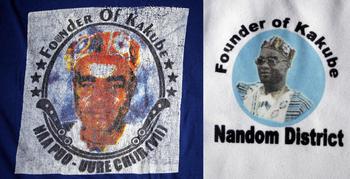
There continue to be challenges to legitimacy, however. For the celebration of Kakube in 2006, for instance, the Nandom Naa printed and distributed T-shirts that featured his portrait and the words ‘Nandom Naa: Founder of Kakube’ (see Figure 4). This roused the anger of those sections of the chiefly house that had contested his taking office. Matters had come to a head in 2004, when the other major contestant, the late Rear Admiral Kevin Dzang, was arrested in order to prevent him and his entourage from entering the Kakube grounds in chiefly regalia. While the Nandom Naa presented himself as the ‘spiritus rector’ of the festival, his chiefly opponents insisted that Kakube as a post-harvest family ritual had been around since time immemorial and could not be ‘founded’ by anybody. The Nandom Naa never claimed to have authored the family ritual, but insisted that he was the one who had turned Kakube into a public festival. However, the title ‘Founder of Kakube’ did not make these fine distinctions and the contestants eventually presented their claim before court, even though they could not prevent the Nandom Naa from continuing to celebrate the festival.Footnote 21 To an extent, the contestants’ claim exposed some of the contradictions of authorship and cultural authority inherent in the official narrative on the festival's origins.
Kakube shirts showing the Nandom Naa. On the left is the 2006 shirt that resulted in a legal challenge to the claim that Puoure Chiir was the ‘Founder of Kakube’; on the right is the 2013 version emphasizing ‘ownership’ and also celebrating the award of district status to Nandom. There is also a difference in the quality of both printing and material, with the 2006 version being a lightweight T-shirt and 2013 a more substantial polo shirt. Photos: Trevor Wiggins.

Generally, Kakube established itself firmly as a traditional chiefly festival, greatly helped by the Nandom Naa's increasing involvement in regional and national chieftaincy affairs as well as various highly visible political appointments. To name just the most important ones: in 1991, Dr Imoro was a member of the Consultative Assembly that drew up the new constitution; in the 1990s, he was chairman of the National Forestry Commission; from 1994 to 2000, he was a member of the Council of State; between 1995 and 2000, he served as vice president of the National House of Chiefs; and since 2012 he has been president of the Upper West Regional House of Chiefs. The cultural festival in Nandom, often covered by national media, contributed to visibly enhance his legitimacy as paramount chief, and thus supported his aspirations in the national arena. In turn, his various offices in national chieftaincy institutions allowed him to attract more and distant paramount chiefs to his durbar. Coming with their own dance groups and large entourages, they turned the occasion into an increasingly colourful celebration of chiefly authority and splendour, thus boosting the Nandom Naa's image at home.
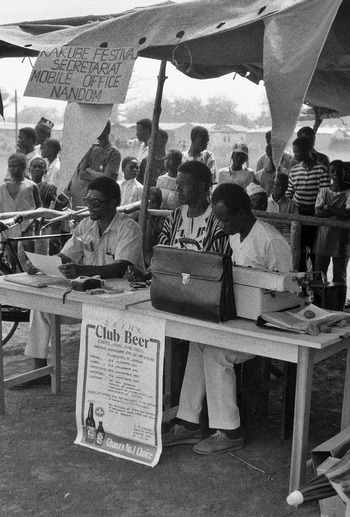
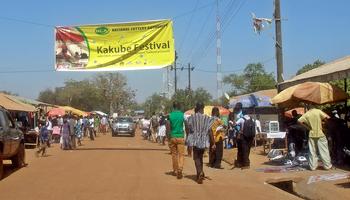
However, as the festival has become more prominent, the requirements of an administratively managed ‘accountable’ event and of a chiefly festival of largesse and redistribution have become more difficult to reconcile. Resulting incipient conflicts that began in the 1990s have become more prominent and outspoken in the past decade or so (see Figure 5). It is revealing that it was impossible to get accurate figures about festival finances, and that the information varied greatly according to the informant. In the eyes of the Nandom Naa and his organizing committee, the festival is based on the principle of redistribution, controlled solely by the Nandom Naa, who subvents expenditures, if necessary, ‘from his own pockets’, as he puts it. Funds are needed to organize the festival infrastructure, supply prizes for competitions and gifts for distinguished visitors, and, most importantly, entertain the numerous guests – each visiting paramount chief, for instance, is given a ram, and important politicians are presented with traditional smocks (iconic Northern Ghanaian dress). The dance groups and musicians are provided with accommodation, food, drink and transport. All chiefs and sub-chiefs of the Nandom Traditional Area are expected to contribute grain (or their equivalent in cash), and each divisional chief has to provide a ram. These contributions alone would not suffice to run the festival, so further sources of support are sought. From the mid-1990s, using his prominence as vice president of the National House of Chiefs, the Nandom Naa was able to attract financial support from private companies such as breweries, mobile phone enterprises and the National Lottery (see Figure 6). Additional funds are provided by the district assembly, the sitting member of parliament, and the regional commission on culture. Official donors, however, generally request clear financial statements of income and expenditure, and the extent to which statements provided by the Kakube committee are accepted as a complete audited public record is variable.
By 1994, the Kakube Organizing Committee also needs a formal bureaucratic presence on the festival grounds. Photo: Carola Lentz.

A corporate sponsorship banner for the National Lottery Authority in Nandom town in 2013. Photo: Carola Lentz.

Lack of financial transparency was also the major reason that ‘Nandome in the diaspora’, as the labour migrants and educated elites working outside the Nandom area now often call themselves, put forward when explaining why they were reluctant to support the festival financially. Furthermore, they wanted to have a greater say in the running of the festival and suggested that it adopt a stronger development agenda. Soon after the establishment of the festival, a group of educated migrants from Nandom, organized in the Nandom Youth and Development Association (NYDA), founded in 1979, challenged the Nandom Naa's sole authority over Kakube. The NYDA saw its task as providing assistance and sociability for Nandome away from home as well as supporting development in the home area. In the first years of its existence, the association attracted large crowds of migrants and villagers to attend its annual ‘home-coming’ meetings in Nandom during the Christmas holidays, but it lost leverage towards the mid-1990s (Lentz Reference Lentz2006: 228–51). With regard to Kakube, NYDA activists acknowledged that they could not ‘take over the celebration because the festival is supposed to be celebrated by the people at home’, but they were convinced that they should and could help get Kakube ‘publicized, patronized, and to help people to understand the significance of it’.Footnote 22 The Nandom Naa, in turn, believed that the NYDA executive wanted to use the Kakube Festival only to promote its own agenda. When the NYDA proposed to shift the date of Kakube towards the Christmas period, which would have been more convenient for the educated migrants, the Nandom Naa argued that the festival had to adapt to the time schedule of the labour migrants who would help with the harvest in their home villages, but then, in early December, needed to return to the yam fields and other occupations in the south of Ghana. These migrants, the Nandom Naa claimed, were the mainstay of Kakube whereas the educated ‘elite’ would come only ‘to show their cars, their wealth and possessions’.Footnote 23 However, the Nandom Naa did eventually allow the NYDA national chairman to address the durbar of the 1991 Kakube Festival. At the same time, he firmly rejected the association's request to have stronger representation on the festival's organizing committee.
Recently, the new Nandom District Chief Executive insisted that the organizing committee should include representatives of the district assembly – an attempt at control that goes well beyond the NYDA's aspirations in the 1990s. As the District Chief Executive explained, the claim to more participation in festival affairs was justified because the assembly makes significant funds available for the running of the festival and because the elected district assembly men and women from villages of the Nandom area were also bearers and makers of local culture. Although some district assembly members were then integrated into the Kakube committee, however, the Nandom Naa continued to interact mainly with his own appointee and long-standing chairman of the committee, the designated successor to the divisional chief of Gegenkpe (next in command to the paramount chief). The Kakube committee was recruited as much according to criteria of chiefly hierarchy as to its members’ educational credentials and organizational skills. The District Chief Executive, by contrast, proposed democratic legitimation, by appointment through the district assembly, as an important base for committee membership.
The District Chief Executive acknowledged that Kakube is a ‘traditional festival’, founded by the Nandom Naa, and welcomed the ‘opportunity for us to learn traditionally’. But when commenting on the ‘key major stakeholders’ in the festival (and generally in district affairs), he put the state first, explaining that ‘modern administrative governance goes hand in hand with traditional governance’.Footnote 24 Drawing on the entrepreneurial language that has become a hallmark of recent neoliberal discourses on culture, he praised the festival for giving ‘an opportunity to market our district because it … draws a lot of people and stakeholders to Nandom’. Furthermore, the festival ‘provides an opportunity for central government, regional government and the district assembly to market our development agenda … for the district’. And finally, he regarded the festival as a ‘tool’ to increase ‘tourism’ and thus ‘boost the local economy’. Interestingly, the committee chairman appointed by the Nandom Naa assessed the positive economic effects of the Kakube Festival in similar terms, and commended the influx of ‘strangers’ who would set up new businesses and thus set examples that the local population would then emulate. However, he was sceptical with regard to the idea promoted by the district assembly members on the Kakube committee of using the festival for raising money for specific ‘Kakube projects’, such as a communal library or scholarships for ‘bright but needy’ students from Nandom.Footnote 25
So far, the Nandom Naa has been able to handle these challenges successfully, giving supporters of Kakube at least a token role in the running of the festival while keeping major decisions within his purview. A future question will be the extent to which the festival can continue to expand and develop without the chief being required to devolve some authority or relinquish direct control in significant areas to more apparently democratic institutions such as the District Chief Executive or assembly.
Creating Nandom's ‘own culture’: the development of Bewaa
The aesthetic strategies of Ghanaian cultural festivals such as Kakube have many publics to take into account. Dances and music presented must provide enjoyment and entertainment for local spectators, responding to their expectations with regard to basic generic conventions, and allowing them to identify with what they see as their own cultural traditions. On the other hand, the cultural performances must be interesting and intelligible for non-local and ethnically mixed audiences as well. Particularly during the interludes on durbar day, external visitors want to be entertained and take pleasure in the costumes, choreography, rhythms and bodily movements even if they do not understand the meaning of the lyrics, tunes or steps. Since the 1960s, the Ghana Dance Ensemble has demonstrated in its well-publicized performances that it can be most effective to develop one or two specific dances as a ‘sign’ or ‘icon’ of a cultural or linguistic group (Schauert Reference Schauert2015: 56–69; Shipley Reference Shipley2015: 76–80). Such a dance may then serve as a powerful link between local and national audiences. At the same time, navigating between local and non-local appreciations of a group's iconic dance can become challenging when, as in the case of Northern Ghana, the local dances are regarded by most Southerners as symbolizing ‘war-like, uncivilized traditions’ (Shipley Reference Shipley2015: 79). Local performers may then wish to develop their iconic dance in ways that modify such outside perceptions of their cultural heritage while still eliciting enthusiastic responses from local audiences.
In the case of the Kakube Festival, the organizing committee could draw on dance formats that had already been successfully developed by the previous chief and his advisers in the 1950s and 1960s. The festival thus reinforced a process of standardization already under way. The most important ‘traditional’ dance that had achieved an emblematic character and had become a central element of the festival was Bewaa – a dance that was deliberately evolved to demonstrate strength and ability combined with driving rhythms and innovative mixed-sex dancing. While drawing on the Nandom cultural heritage, it is also open to continuous innovation and ‘modernization’ in costume, choreography and bodily movement, making it attractive for a younger audience that seeks a local ‘tradition’ while also connecting with broader national and cosmopolitan styles of dress and movement. The development of Bewaa drew on roots outside the Nandom area: a dance called Bawa from the neighbouring chiefdom of Jirapa. How it became one of the most popular ‘indigenous’ dances of the Nandome is intimately connected with the desire of the Nandom paramount chiefs to represent their home area in the national arena – a development that was initiated by Polkuu Konkuu Kyiir, the current Nandom Naa's predecessor.
Polkuu was one of the first boys from Nandom to be enrolled in the colonial primary school in Lawra; in the 1940s he continued his education in the Senior Boys’ School at Tamale, at that time the capital of the Northern Territories of the Gold Coast, and eventually he became a teacher at the first government primary school in Nandom, which opened in 1946. Polkuu worked as a teacher for more than a decade, leaving his imprint on local formats of cultural education. Accounts from xylophone players and senior members of the chief's palace testify to Polkuu's ability as a dancer and musician (see also Gandah Reference Gandah and Lentz2008: 39). Polkuu was concerned with developing the school curriculum and formed a ‘cultural group’ at the new primary school. He called together local elders and asked about their traditional dances, but Polkuu's concept of a suitable performance form for the school's cultural group was not found directly in these traditions; rather, he (and others) were impressed by a group from Jirapa that performed Bawa, a recreational dance without ritual implications, and so decided to adapt this for use in Nandom.
Bawa had many similarities with existing Nandom dances, but Polkuu made some significant changes. He set out to make the dance faster and more exciting because he wanted a dance that the children could enjoy and that would show the fitness and strength of the Nandom people. He probably also had in mind that a chief, travelling to a durbar, would often take dancers and musicians along to perform, demonstrating the chief's wealth and power and offering entertainment while informally challenging other groups to perform better. Polkuu also introduced alternate male and female dancers – other dances were for men or women only. Even in the Nandom funeral dance (Bine), the movements of the men and the women are very different and they do not dance together, so Polkuu's innovation was very popular, especially with young people.
These changes were clearly a response to what Polkuu envisaged as the future role for Bewaa as part of a Nandom cultural performance. Through his schooling in Tamale, Polkuu had seen culture presented as performance and understood the requirements of this. He identified aspects of traditional dances that fitted his model of cultural presentation, and when the opportunity arose to create a new Nandom form that could be presented in a national arena on public occasions, he worked with local musicians and dancers to achieve this. After Polkuu became chief in 1958, Nandom Bewaa became even more popular as people learned the dance. Polkuu formed a performance group that competed at national level, becoming successful enough to be one of the Ghanaian acts included in the Soul to Soul Festival in 1971.Footnote 26 The Ghana Dance Ensemble, too, adopted Bawa/Bewaa as part of its basic repertoire (Shipley Reference Shipley2015: 78; Schauert Reference Schauert2015: 113). Given this history, one can see the motivation for using Bewaa as the title of the proposed Nandom cultural festival. Although this title was eventually not adopted, Bewaa is very evident in the Kakube Festival dance competition.
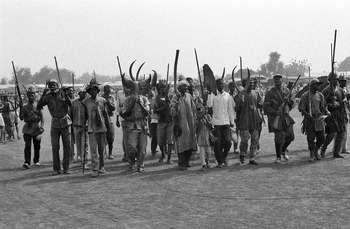
Despite its relatively recent creation, growing from its national recognition, Bewaa has become iconic in what local people regard as their ‘traditional culture’. In the 1990s, it was a sine qua non of Nandom culture that everyone knew, but it has now become a cultural activity – preserved, revised, taught and rehearsed specifically at the appropriate time of year. This is a telling example of the creation of a new cultural form out of existing materials for new performative contexts, and of recreating one's ‘own culture’ in the framework of the cultural politics of a modern nation state.Footnote 27 In the festival context, this sense of presenting distinctive cultural traditions was – and continues to be – supported by the participation in the festival of cultural groups from outside the Nandom Traditional Area (see Figure 7 and Videos 1 and 2). Some may perform their own version of Bewaa/Bawa (e.g. from Jirapa) whereas others will perform a different dance, such as Sebre from Lawra, thereby highlighting the specificity of a Nandom style and allowing the Nandome to showcase the fact that they are culturally different from their neighbours.
A group of hunters from Tizza (around 60 kilometres south of Nandom), visiting the Kakube Festival in 1994, showing both support for Nandom cultural performances and highlighting the differences. Photo: Carola Lentz.

Kakube: performing local culture in a national context
Having been created specifically for public events, Bewaa has always been a contextually sensitive form of ‘local’ culture. The Nandom Sekpere group, for instance, adapted their style according to where they were performing. Some songs were composed specifically for different audiences, such as the Bewaa songs in the Twi language for when the Nandom group visited Southern Ghana. When the group performed at the 1971 Soul to Soul Festival in Accra, the beat was heavier and slower, echoing the disco style of Western music of that time.Footnote 28 Given this careful choreography of cultural markers, it is not surprising that Kakube performances of Bewaa also show evidence of evolution according to the context.
The initial evolution of Bewaa used elements of music and dance to make the Nandom version manifestly different from the Jirapa model while maintaining ‘traditional’ links with both Nandom and the region. Some of the changes made by Polkuu have already been mentioned; other elements emerged at that time or soon after. The jingles worn on the legs of male dancers to emphasize the dance step are location specific. Jirapa dancers wear them on both legs while Nandom dancers have jingles only on their left leg, something that can still be seen as a distinguishing feature at the Kakube Festival. There may also be a musical reason for this. Nandom songs often have a line length of six beats, so each couplet of twelve beats fits over three repetitions of the kpagru Footnote 29 time-keeping pattern. Jirapa songs, on the other hand, tend to have the song lines matching the four beats of the kpagru, so jingles on one leg that emphasize every other beat fit better with the Nandom songs.
The words of songs are significant: some draw on existing songs, such as that originally composed in the 1920s by Nandom women praising Naa Boro for making the roads (Gandah Reference Gandah and Lentz2009: 80) but updated to praise the ‘Nandom Naa’. Other songs would be specifically composed for an occasion and contain current and very local references, often drawing on the songs that women composed for Kari (a recreational dance/music practised exclusively by women, now seldom seen unless as a performance). Songs composed since 2000 have been exclusively for Kakube, praising the chief, most recently celebrating the award of district status, and generally reworking earlier songs with a ‘feel-good’ factor.
Kakube has also shown changes in the music and dance content since its inception. Some Nandom music and dance forms were included for religious or practical reasons, and some recreational and work genres – such as women's Kari and Nuru dancing or songs for grinding grain by hand – were demonstrated at the festival only in its early days. By the end of the 1990s, just four categories remained in the Kakube competition: Bewaa,Footnote 30 Bine (funeral dancing), singing groups and xylophone playing. In the competition for the best xylophone player, performers were originally required to demonstrate their skill in both Bine and Bewaa forms, but since 2006 only Bine has been required and the number of entrants to the class has declined.
The judges (usually four) for the Kakube competition are selected in conjunction with the National Commission on Culture because they have
that set of skills of judgement. For example, in our judges, we have somebody who is highly specialized in health, recreation and sport … You may find that somebody may not be a Dagao but he will be able to judge Dagaba people because he knows that, as the xylophone plays, ‘This is the way you need to dance, and we expect to see A, B, C and D in your dancing. In the absence of that, then you are losing a mark.’Footnote 31
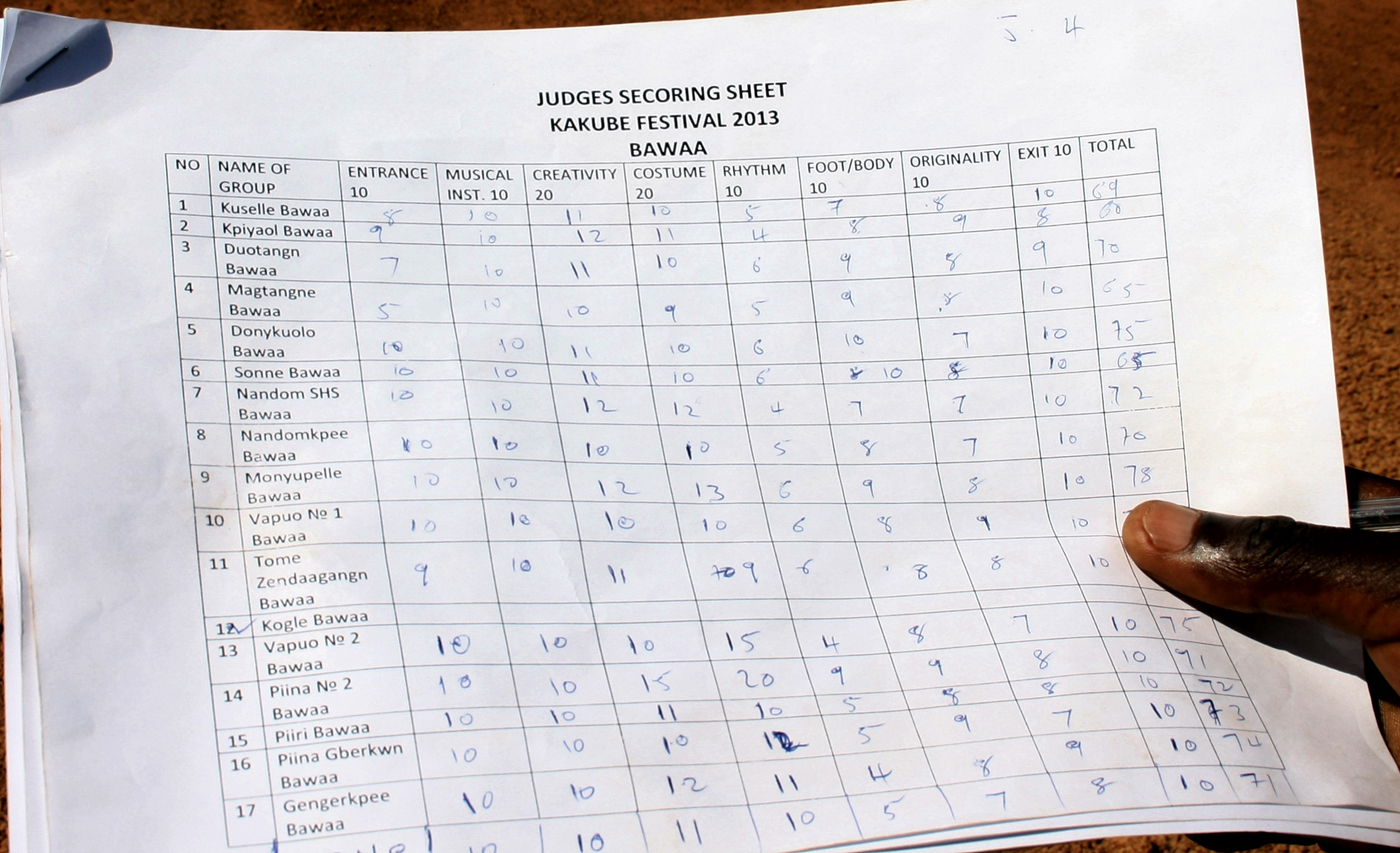
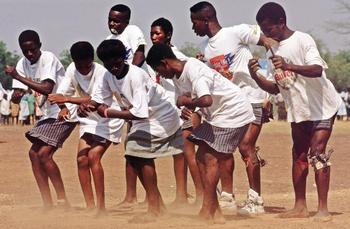
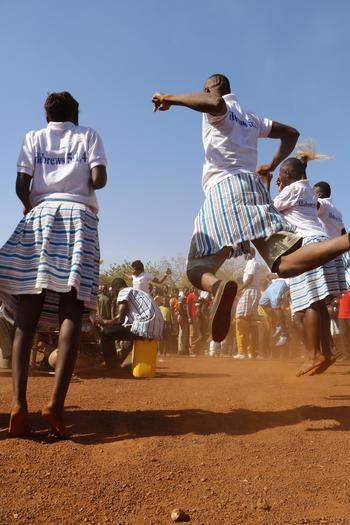
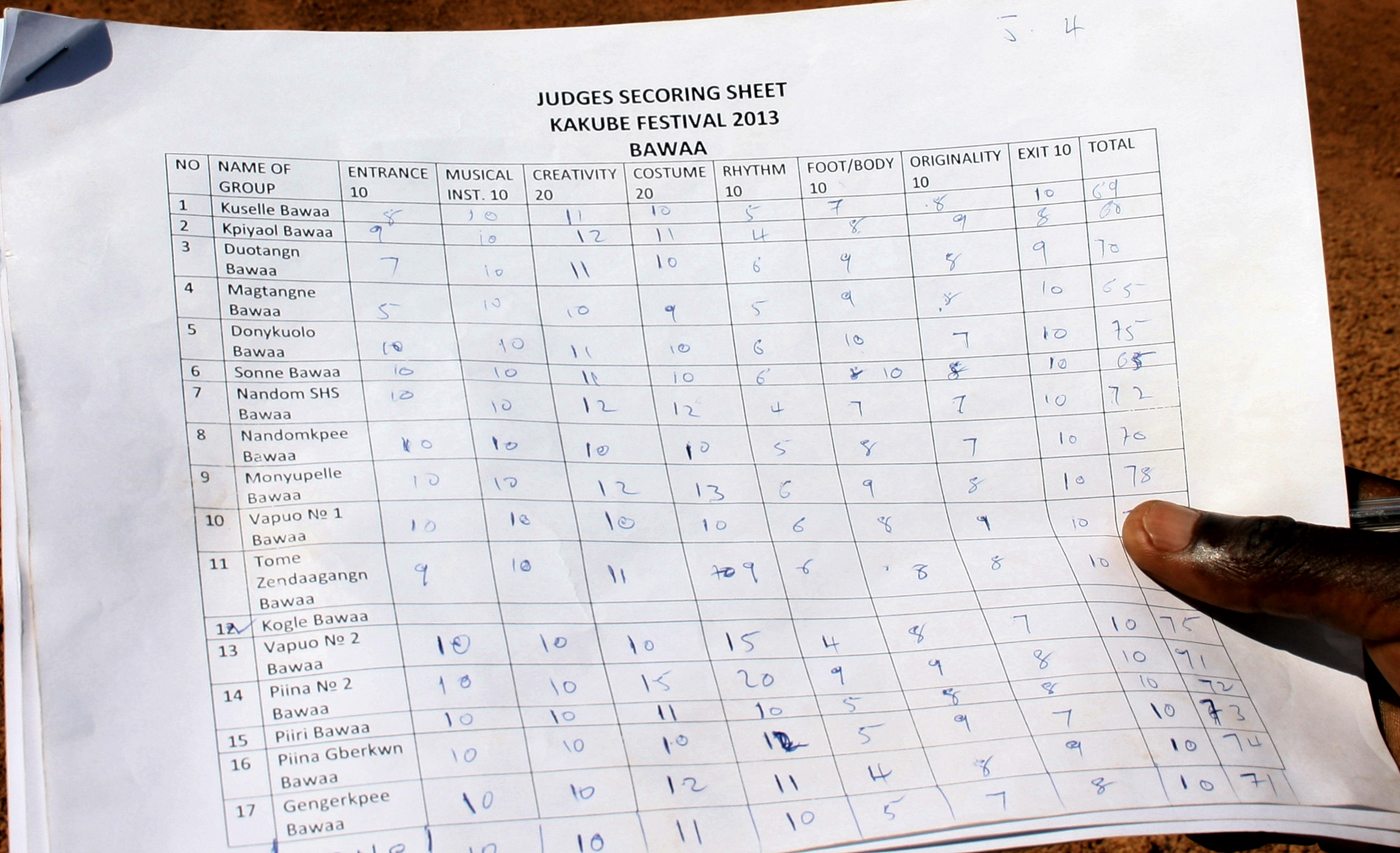
At Kakube, marks are awarded for a number of aspects of the performance: ‘Entrance, Musical Instruments, Creativity, Costume, Rhythm, Foot/Body, Originality, and Exit’ (see Figure 8). So the judges work with national criteria of excellence that could, in theory, be applied to every dance/music performance, but they may have little specific knowledge of local styles. ‘Costume’ as an area of marking is double-weighted, which has led to fewer groups wearing individual local costume and more adopting uniform printed T-shirts, often with the name of the sponsor (see Figures 9, 10 and 11). The presence of these areas in the judging of the Kakube Festival jury means that groups must maintain excellence across a broader spread. No team can win only by having good songs and performing them well. Whereas a village performance is essentially about enjoyment, recreation and entertainment, adjudication at Kakube has more resonance with processes of formal education and examinations.
A judge's score sheet for the dance competition in 2013. Photo: Trevor Wiggins.
In 1994, the costume of the dancers is quite mixed, and the audience feels that the occasion still allows for spontaneous participation (the woman dancing on the right). Photo: Carola Lentz.

The way that the ‘corporate T-shirt’ becomes an acceptable and even aspirational costume over more traditional attire is seen in this group from 1996. Photo: Trevor Wiggins.

In 2015, costumes have become more standardized, often with self-printed T-shirts and showing a variety of cultural markers. The striped skirts are locally woven cloth that is used to make the traditional batakari smock, while the polo shirts have the group name on the front (Zambo Bourbine group) and a Biblical reference on the reverse. The text from Hebrews is: ‘For every high priest taken from among men is ordained for men in things pertaining to God, that he may offer both gifts and sacrifices for sins; and no man taketh this honour unto himself, but he that is called of God, as was Aaron.’ Photo: Trevor Wiggins.

Formal education is also seen in the increasing presence of dance groups from senior secondary schools – a development that has become more prominent in the past decade or so. As many children in town now admit that they cannot join in the local dances and fewer young people learn to play the xylophone to a good standard, schools have an increasing role in teaching local culture. Bewaa groups that have been formed at some schools typically perform on speech day, prize-giving and similar ritual occasions, often alongside other school activities such as the cadet corps. A primary motivation here is the representation of the school in the public arena. The increasing involvement of schools in the Kakube competition is an indicator of the more general processes of standardization, bureaucratization and professionalization that the Kakube Festival has experienced since its creation.Footnote 32
Typical of the recent trends towards a polished performance and of the ‘festivalization’ of the dance performances was the introduction, in 2013, of a very loud commentary over the PA system, mainly in English but also in Dagara, by the chairman and vice chairman of the organizing committee – often louder than the xylophone music or singing of the performing groups. A PA system has always been needed at Kakube, primarily to amplify speeches, singing groups or individual performers, as well as to enable organizers to call for or end the performance of groups over the general noise. What was new in 2013 was that it offered a running commentary, partly in Dagara and partly in English, of the sort more commonly heard at sports events (heard on Video 4). This type of commentary has several functions and effects: it organizes and controls the groups, exhorting them to come on stage and keep to their limited time slot; it sets out to encourage them; and it explains the groups and dances to the audience, announcing the village or school the group comes from, but also what cultural content is presented, with the aim of presenting ‘our own culture’ to spectators from outside Nandom. More generally, the commentary sets out to control the sonic area, in addition to the control of content and space already established. It invokes, through the commentary, the imagined and present, national or even international audience that the organizers of the festival have in mind when thinking about how best to showcase ‘our own local culture’.
Kakube has influenced performers in two ways: it has evolved a standardized winning formula marked according to a set of specific weighted criteria; and this, in turn, has influenced practices in each village as the winners each year represent an adjudged and replicable version of excellence. Kakube is instrumental in actively retaining those practices that adapt best to a competitive cultural performance context and are able to compete when evaluated against national criteria. However, it is important to keep in mind that even the process of standardization that the ‘festivalization’ of selected cultural genres propelled has not eliminated the complex shading and mixing of cultural elements that characterize the north-west of Ghana. To define what exactly constitutes the diacritical features of ‘our own culture’ remains a multi-layered and contested process.
Conclusion
This article has explored how a cultural festival has been created, and subsequently developed, in the context of changing national cultural policies, but also varying local politics of chieftaincy, youth associations and state institutions such as the district administration. Drawing on our combined insights from an anthropological and a musicological perspective, and benefiting from observations of the festival during a quarter of a century, we have shown how the principal ‘founder’ of the festival, the Nandom Naa, and his supporters had to navigate between the bureaucratic requirements of state events, political agendas that used the festival for ‘development’ and building a new district, and expectations associated with traditional chiefly festivals of largesse and redistribution. We have also discussed how the quest to showcase local cultural heritage for the appreciation of local audiences as well as to assert a presence in the national cultural arena has motivated the creation of innovative aesthetic formats, and how particular elements of music or dance have been used as iconic indicators of location, tradition and innovation.
Summing up, we argue that the Kakube Festival has been successful because it has served a multiplicity of purposes. It has developed into a ‘home-coming’ festival and a showground for meeting people, an occasion for public representation and political competition, a forum to promote development, and a celebration allowing for popular entertainment. It has also provided commercial opportunities, and the influx of an ever increasing number of traders and merchants during the festival period has, in turn, drawn ever larger crowds of visitors – success breeding success. This development has become increasingly visible in the past decade in the context of the neoliberal economic environment, and more widely shared by Nandome through the mobile phone networks that arrived in the town in the past twelve years.
In a way, the Kakube Festival has helped create the very community whose traditions it claims to showcase. There are several dimensions to this. First, by participating in the Kakube Festival, dance groups and chiefs from a broad cross-section of villages around Nandom publicly declare their allegiance to the Nandom Traditional Area. Second, participation in the competition has led to a certain standardization of diacritical features of ‘our own culture’. Third, Kakube constitutes a large annual gathering of people from the Nandom Traditional Area, including numerous labour migrants and public servants working and living in other parts of the country. It offers an intense experience of lived unity and commonality, and allows the creation of new social bonds between villages as well as between home-town people and the diaspora. Kakube thus created, and continues to create, a new sense of ‘we Nandome’. This, in turn, made the quest for an administrative district a popular project; for the Nandom District Chief Executive, Baba Kuupiel, this was even one of the most important functions of Kakube, namely to fill the need for a social gathering that would bring people together from different villages, reunite migrants and those who stay at home, and create links between the elite and the broader population.Footnote 33
It might be argued that Kakube has been more successful, relatively speaking, than new festivals in neighbouring chiefdoms because of some elements of good fortune. While in neighbouring chiefdoms (Jirapa, Lambussie, Lawra) there was generational change and succession conflicts in the 1990s and 2000s, the Nandom Naa was consistently in office and guaranteed a certain continuity, despite the initially strong challenges to his legitimacy. Given that he spent more than thirty years away from home, he had not as much cultural authority as his more locally rooted predecessors and some other paramount chiefs in the region. But he acquired a wider world view and, after his return to Nandom, became a skilful politician in the arena of chieftaincy, and his important roles in national chieftaincy institutions supported the profile of Kakube.
Furthermore, the creation of the Kakube Festival in 1989 and its subsequent evolution was able to benefit from national initiatives to recognize, support and create new ‘traditional’ festivals that presented Ghana's cultural heritage as a vehicle for ‘development’. Kakube was able to compete successfully with the existing Lawra Kobine Festival, not least because the Nandom Naa managed to steer the festival through times of party political contest more flexibly than the late Lawra Naa, who was known as a firm supporter of one political party. Once Kakube drew considerable crowds and became an attractive event for government officials and budding politicians wishing to promote their agendas, it became difficult for further festivals in immediately adjacent areas to establish a national profile, attract funding, and draw guests other than ‘home-comers’.
Finally, Bewaa, as one of the main forms of culture performed at Kakube, was created with attributes of public performance in mind and has proved a flexible vehicle that is able to demonstrate a traditional heritage and markers of a specific location that can be understood from different perspectives. It is exotically Ghanaian for the foreigner, representative of the Upper West for Ghanaians, and identifiably from Nandom for Upper West residents. Kakube has become a symbol of prestige, representing the local community in the wider national, and even international, arena.
Supplementary materials
The videos referred to in this article are available with the online version at <https://doi.org/10.1017/S0001972016000759>.