Studies of textile production are a mainstay of discussions about craft production, economic development, and imperial control in Postclassic Mesoamerica. It is most common for studies to link trends in textile production at one or two sites to local political changes, particularly the growth of regional states or empires (Ardren et al. Reference Ardren, Kam Manahan, Wesp and Alonso2010; Brumfiel Reference Brumfiel1980, Reference Brumfiel1997; Fauman-Fichman Reference Fauman-Fichman1999:208). A number of studies have also attempted to place their findings in a regional (Brumfiel Reference Brumfiel, Gero and Conkey1991; Hernández Álvarez and Peniche May Reference Hernández Álvarez and May2012) or macroregional (Baron Reference Baron2018; King Reference King2011) comparative perspective. Such regional work is primarily oriented toward identifying contexts with unusually high quantities of evidence for textile production. Yet, the choice to produce a craft good beyond the level needed for household provisioning is only one of three options available to producers. The other options, broadly conceived, are to produce to the level needed for household provisioning (including meeting religious, tribute, and other social obligations) or to produce less than needed and rely on goods acquired from other more specialized producers to make up the difference. The latter two scenarios have very different implications for the development of market systems and economic specialization. Household-level choices among these three alternatives are a result of both individualized factors (household composition, availability of arable land, alternative crafts) and broader systemic factors (the reliability of a market system, the degree to which the political economy rewards the production of surplus).
I use a dataset of 52 cases from Postclassic western Mesoamerica, each representing a single phase-component at an excavated site, to establish regional and temporal trends in the quantity of evidence for textile production. These trends are then used to identify possible regions of deliberate over- and underproduction. At the macroregional scale, this dataset primarily addresses system-level factors that affect changing levels of textile production. I then illustrate how regional patterns can be used in conjunction with more detailed household-level data to interpret the relatively low levels of evidence for textile production at the Middle-Late Postclassic site of Calixtlahuaca.
Textiles and Politics
Textiles played an important role in prehispanic political economies. Standardized lengths of cloth functioned as a form of currency and were commonly required items for tribute payments for the Aztec Empire (Berdan Reference Berdan1987; Berdan and Anawalt Reference Berdan and Anawalt1992 [1541]:154). Imperial tribute demands were relatively modest, likely on the order of a single cotton manta per year per family (Gutiérrez Reference Gutiérrez, Hirth and Pillsbury2013; Hicks Reference Hicks, Hodge and Smith1994). Such imperial demands were placed atop the taxes required by local city-state governments (Smith Reference Smith, Monson and Scheidel2015) and the basic textile needs of the household, which likely included social obligations, as well as physical necessities. Because textiles were used to meet both the immediate needs of the household and its obligations to the state, the baseline level of textile production required per household may have varied based on tax obligations to various levels of the political hierarchy. That said, surplus is culturally defined. Increases in production relative to biological minimums (analytical surplus) may be absorbed into existing family or political obligations and not be perceived as surplus (historical surplus) while still retaining the potential for social consequences (Morehart Reference Morehart2014).
More concretely, archaeological evidence for textile production increased over the Postclassic period, clearly demonstrating an analytical surplus. There are two competing hypotheses for this increase: voluntary participation in a growing market economy (Smith and Heath-Smith Reference Smith, Heath-Smith, Hodge and Smith1993) and the need to meet rising tax demands, particularly those imposed by the Aztec Empire (Brumfiel Reference Brumfiel1997). These represent two possible consequences of surplus production, although the two differ in the degree of importance of economic and political factors, respectively. Moreover, voluntary growth in textile production is beneficial for commoners, whereas rising tax demands are negative. Because households may have produced textiles for both reasons, these hypotheses are separate, independently testable explanations, rather than mutually exclusive positions. I contribute to this discussion by considering the timing of textile production intensification and its geographic relationship to the growth of the Aztec Empire and other states.
Craft Production and Distribution
The identification and analysis of market systems require a consideration of production, exchange, and consumption at multiple geographic scales (Feinman and Nicholas Reference Feinman, Nicholas, Garraty and Stark2010). In an extension of Hirth's (Reference Hirth1998) household distributional approach, Stark and Garraty (Reference Stark, Garraty, Garraty and Stark2010) propose a regional equivalent, referred to as the “regional production-distribution approach.” They claim that societal exchange mechanisms can be inferred from the distribution and scale of production relative to the distribution of the finished product. Evidence for production above the household level, particularly unevenly distributed production—paired with a broad distribution of the finished product—indicates economic interdependence across the region. The absence of storehouses or other centralized redistributive facilities and the inclusion of everyday goods in the distribution system suggest that economic interdependence took the form of market reliance, rather than state redistribution. This is especially true for cases where production and distribution zones cross known political boundaries. Stark and Garraty (Reference Stark, Garraty, Garraty and Stark2010) advocate for the comparative consideration of regional-, site-, and household-level evidence for both production and consumption patterns (e.g., Feinman and Nicholas Reference Feinman, Nicholas, Garraty and Stark2010; Stark and Ossa Reference Stark, Ossa, Garraty and Stark2010).
Markets and other distribution mechanisms can operate on different spatial scales (Smith Reference Smith, Garraty and Stark2010), so the study of the organization of production should also consider production at multiple scales, including the household, site, and regional levels. Individual household intensification of production (e.g. because of household composition, status, or occupation) may lead to production primarily for a local market or for both local and more distant consumers.
In contrast, site- or regional-level specialized production is intrinsically oriented toward supplying external consumers. In the absence of such specialization, households (or sites), by necessity, provide for themselves many of the goods they need. This may either limit the development of markets or be caused by a lack of markets. There may be low levels of intrasite variation in craft production, but such variation should not be great. There also should be little evidence for interregional exchange of nonluxury goods. In contrast, in cases of site or regional specialization, specialists may rely on market exchange to supply goods that they do not produce in sufficient quantity. In this situation, higher levels of inter-site variation in craft production should be expected among sites in a region. Additionally, entire regions may specialize in the production of particular goods, leading to increased evidence for interregional exchange. This latter position was first formulated as the “Central Mexican Symbiotic Region” (Sanders Reference Sanders and Willey1956), and the idea of increasing economic interdependence leading to specialization continues to be commonly held (e.g., Blanton and Fargher Reference Blanton, Fargher, Babones and Chase-Dunn2012; Brumfiel Reference Brumfiel1980).
The degree to which households seek to self-provision is likely related to the reliability of alternate means of acquiring basic necessities (Demps and Winterhalder Reference Demps and Winterhalder2019; Hirth Reference Hirth and Hirth2009). This means that household decisions concerning specialization can provide information about the reliability of alternate means of access to other goods. I consider regional scale patterning in evidence for textile production through a comparison of textile tool frequencies at a wide range of sites. I then present Calixtlahuaca as an example of how these regional patterns can be applied to the interpretation of site-level data.
Craft Production
Most Mesoamerican craft production is organized at the household level, falling into Peacock's (Reference Peacock1982:8–11) categories of household production, household industry, and individual workshops. Similarly, when considered in terms of Costin's (Reference Costin and Schiffer1991) spectrum of variation in craft production, Mesoamerican cases are usually independent, dispersed, kin-based, and part-time, with forays toward attached specialization for higher-value crafts (Feinman Reference Feinman, Skibo and Feinman1999; Inomata Reference Inomata2001). This apparent homogeneity masks variations in the organization of craft production. As a result, Hirth (Reference Hirth and Hirth2006, Reference Hirth and Hirth2009) and Shimada (Reference Shimada2007) have proposed two dimensions that better characterize the variation characterizing Mesoamerican craft production: the periodicity of crafting and the number of crafts practiced. Many sites in Postclassic central Mexico are clear examples of multicrafting, with most households with evidence for superhousehold craft production producing more than one type of good. Thus, an increase in textile production could result from either an increase in household-based multicrafting or a reorganization of production into workshops.
An important consideration is that the technologies used in Mesoamerican textile production were not sensitive to economies of scale, limiting options for intensification. An individual could produce more textiles by spending more time working, but other than making small gains based on skill, there was no way to produce more textiles per person-hour worked. As a result, increasing textile production will change only the intensity (from part-time to full-time) of production in Costin's terms; however, according to Hirth, it also will increase the periodicity and number of crafts practiced. Increased production, therefore, is not the result of greater efficiency, but instead stems from investing more person-hours. This process of increasing overall production quantities, regardless of whether there are accompanying technological or organizational changes, is often referred to as “intensification” in the archaeological literature. I follow this usage, although in the stricter economic sense of the term, any increase in textile production results from extensification (more producers), rather than intensification (more efficient production). This, in turn, implies greater consumption of the tools needed for production. Because of the limited way in which an increase in textile production can occur, the frequency of textile production tools, averaged over an occupation phase, is therefore a reasonable indicator of production intensity.
Distribution and Consumption Patterns
In contrast to the household focus of craft production, distribution networks in Postclassic Mesoamerica were complex and well developed. The Postclassic period saw two cycles of increased economic interaction (Berdan Reference Berdan, Smith and Berdan2003), likely linked to political developments in both cases. Smith (Reference Smith, Smith and Berdan2003) argues that Postclassic trade goods can be grouped into five categories: necessities, widely traded goods, regionally specific goods, goods with specialized uses, and luxuries. Within this framework, textiles are generally considered widely traded goods, with highly decorated clothing classified in the luxury category. I argue that this is an accurate description of the role of raw cotton and cotton textiles, but that maguey textiles should more accurately be considered a regionally specific good because there is little evidence that they were traded outside of the highlands. The Aztec Empire required payments in maguey textiles only from those highland areas where the fiber was cultivated (Huster Reference Huster2019). In contrast, payments in cotton textiles were required from both cotton-growing and non-cotton-growing areas, presumably creating a secondary market for this textile type.
Demand for textiles was likely caused by three factors: basic household needs (clothing, social obligations), market demand for textile goods either for direct use or for use as currency, and taxation from the local to imperial levels. The first factor is likely to have remained relatively constant over time, whereas the latter two are subject to change. The relative importance of the latter two factors can be roughly estimated by comparing the degree of change across known political boundaries. Unfortunately, the production, distribution, and consumption of ancient textiles are difficult to measure because textiles are preserved only under unusual conditions. Indirect correlates of textiles, especially the tools used to produce them, must be sought by the archaeologist.
Archaeological Correlates of Textile Production
Textile production in prehispanic Mesoamerica focused on two primary fibers, cotton and maguey/agave (Parsons Reference Parsons, Spence, Parsons and Parsons1972), with additional use of minor fibers (McCafferty and McCafferty Reference McCafferty and McCafferty2000). Cotton textiles were considered higher in value than those produced from maguey. Textile production involved the intial harvesting and cleaning of fibers, drop-spinning fibers into thread, weaving thread into cloth, and, in some cases, dying, stamping, or embroidering cloth for decoration.
The differences between cotton and maguey begin with their ranges of cultivation. Cotton can be grown only in the warmer, wetter regions of Mesoamerica. Varieties of maguey, in contrast, can be cultivated in all except the most tropical parts of the region (Gentry Reference Gentry1982:4, 58; Purseglove Reference Purseglove1968:347–348; Stark et al. Reference Stark, Heller and Ohnersorgen1998), but it is most intensively grown in the arid or semiarid highlands where its reliability as a food, beverage, and fuel source makes it a valuable multipurpose crop (Parsons and Darling Reference Parsons, Darling, Barker and Gilbertson2000). Once grown, both plant species are processed. Cotton bolls must be carded to remove seeds. Maguey fiber is separated from the pulp by decomposition (submerging in water), scraping, or both (Camposeco M. Reference Camposeco M.1994:35–39; Mendoza Cerón and Canger Reference Mendoza Cerón and Canger1993:19–46). In the prehispanic period, the separation of maguey fibers was accomplished using tabular basalt scrapers (Parsons and Parsons Reference Parsons and Parsons1990).
The next stage is spinning. In prehispanic times, only hand-spinning techniques were used. Following the Parsonses' ethnoarchaeological work (Parsons and Parsons Reference Parsons and Parsons1990; M. Parsons Reference Parsons, Spence, Parsons and Parsons1972), researchers divide spindle whorls into two weight classes, associating lighter whorls with cotton processing and heavier ones with maguey processing (Fauman-Fichman Reference Fauman-Fichman1999:Appendix A; King Reference King2011). Technically, the key functional variable of whorls is the moment of inertia, which is a function of both weight and shape of an object (Ibarra et al. Reference Ibarra, Corral and Cano2018). McCafferty (Reference McCafferty1992:529–530) argues that spindle whorl weights are more accurately associated with whether the spindle was supported (small) or free-hanging (larger), but there is a strong correlation between long-fiber maguey and free-hanging spinning, and short-fiber cotton and supported spinning (Ibarra et al. Reference Ibarra, Corral and Cano2018). Supported spinning also uses small bowls to control the spindle (Smith and Hirth Reference Smith and Hirth1988). In Morelos, miniature bowls with internal wear are associated with other evidence for cotton processing, but comparable bowls are not found in coastal Oaxaca, another cotton-producing area. Spinners there may have used gourds or other perishable materials instead of ceramic bowls (King Reference King2011). Whorls also may be made of materials with varying degrees of perishability, including unfired clay, vegetables, wood, reworked sherds, stone, and fired clay (Beaudry-Corbett and McCafferty Reference Beaudry-Corbett, McCafferty and Ardren2002; Parsons and Parsons Reference Parsons and Parsons1990). I limit discussion in this article to whorls made of fired clay. Before the Postclassic, the distribution of ceramic whorls is not well documented, despite widespread evidence for the existence of textiles in figurines and murals (Follensbee Reference Follensbee2008; Stark et al. Reference Stark, Heller and Ohnersorgen1998). This suggests that applying my results to other periods or regions lacking a widespread tradition of fired clay whorls should be attempted very cautiously.
The final stage is weaving. Prehispanic weaving was performed using backstrap looms. These looms consist only of a set of sticks in various sizes, relying on the body weight of the weaver, rather than a frame, to provide tension. Sets of rods and battens, interpreted as weaving tools, are occasionally recovered from archaeological contexts (e.g., McCafferty and McCafferty Reference McCafferty and McCafferty1994). They are usually made or bone or other less perishable materials and may represent anomalous rather than standard sets of weaving tools. Similarly, bone and copper needles and awls for sewing are occasionally recovered, but not at levels consistent with their assumed level of use (Kwoka Reference Kwoka2016).
In summary, in Postclassic archaeological contexts in western Mesoamerica, the most common tools associated with cotton production are small spindle whorls and spinning bowls. The most common tools associated with maguey textile production are tabular basalt scrapers and large spindle whorls.
Regional Trends in Textile Production
Variations in textile production strategies can be identified through a comparison of cases across Mesoamerica. Such data can be used to identify the ranges of production intensities characteristic of particular regions, the production of specific fibers, or temporal periods. If there is any such patterning, interpretations of household reliance on outside producers or household provisioning for textiles should take this variation into account.
Because fired clay spindle whorls are the most common textile production tool reported by archaeologists, I focus exclusively on them. For comparisons among projects, whorl frequencies must be standardized by some factor (King Reference King2011). The most widely applicable method of data standardization is calculating the ratio of the number of spindle whorls per overall sherds excavated. In cases where only rim sherd counts are reported, I have multiplied rim counts by 10 to estimate total sherd counts (see Stark et al. [Reference Stark, Boxt, Gasco, González Lauck, Hedgepeth Balkin, Joyce, King, Knight, Kruger, Levine, Lesure, Mendelsohn, Navarro-Castillo, Neff, Ohnersorgen, Pool, Mark Raab, Rosenswig, Venter, Voorhies, Williams and Workinger2016] for data on the stability of sherd fragmentation rates at Mesoamerican sites). Because there may be some archaeologically invisible use of perishable whorls at these sites, the frequencies reported here should be seen as minimums with an uncertain error range.
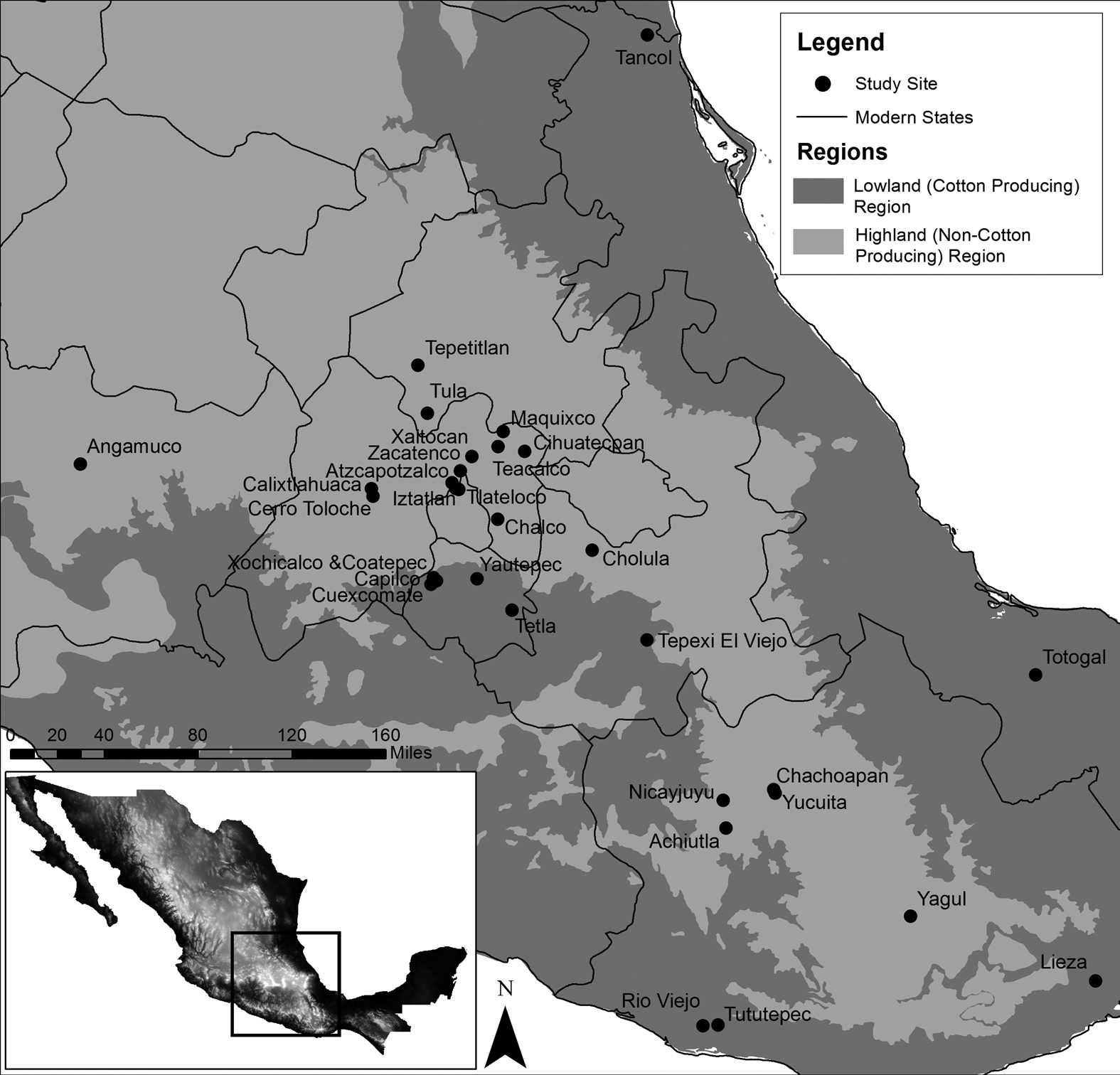
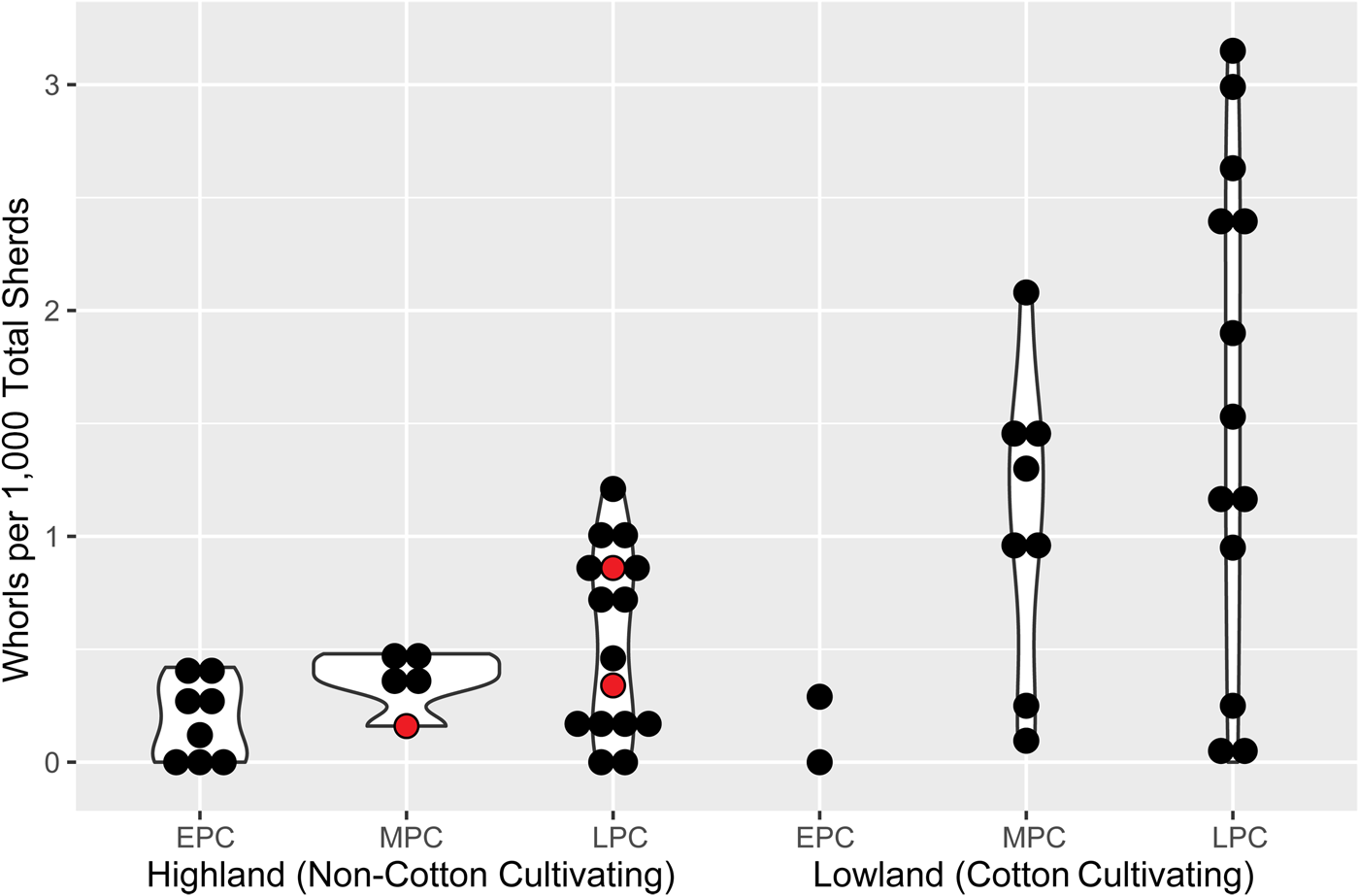
This study uses sherd-count standardized whorl frequencies from 52 cases, each representing one phase from one site, covering a wide range of western Mesoamerica (Figure 1). All the components are from excavated contexts with at least 1,000 total sherds to minimize variation caused by collection methodology and sample size. The range of resulting whorl frequencies can be seen in Figure 2. It should also be noted that these frequencies are at the household or site level and that frequencies based on highly specific contexts (e.g., middens) may not be comparable. Survey projects were excluded because of variation in collection procedures; cemetery contexts also were excluded. Phase assignments are based on the authors’ attributions, to the highest degree of specificity possible. This results in a few general Postclassic (PC) components, but most components are assigned to one of three primary divisions—Early (EPC), Middle (MPC), or Late (LPC)—of the Postclassic and a few components to subdivisions of the Late Postclassic: Late Postclassic-A (LPC-A) and Late Postclassic-B (LPC-B). The full dataset used in this study, including whorl counts, sherd counts, whorl frequencies, and source citations, can be found in Supplemental Table 1.
Study site locations relative to cotton-producing and non-cotton-producing regions.

Spindle whorl frequencies per 1,000 sherds at 52 Postclassic site components, divided by region and phase. Light gray dots indicate data points from Calixtlahuaca. The three MPC-LPC lowland cases are plotted for both phases, potentially increasing the degree of apparent overlap. (Data from Supplemental Table 1.) (Color online)

Variation by Phase, Region, and Fiber
The dataset shows variation based on temporal phase, cultivation region (i.e., cotton growing or not), and fiber type spun. First, production generally increased over time. This can be seen in Figure 2, which shows that EPC components are clustered at the lower end of the range of observed values, with the range expanding upward for each subsequent phase. The relatively narrow range of whorl frequencies found across both highland and lowland regions during the EPC suggests that this range is characteristic of a baseline level of production for household self-sufficiency. Household demand for basic clothing and bedding needs would have been relatively stable, and when combined with the importance of textile production to the expression of female identity (McCafferty and McCafferty Reference McCafferty and McCafferty2000), basic household-level production should be spatially and temporally widespread. The EPC is characterized by relatively low levels of state organization in most of the study regions; towns may have been subject to a city-state, but with the exception of Hidalgo and the northern Basin of Mexico (Blomster Reference Blomster and Blomster2008; Jimenez Betts Reference Jimenez Betts2018:Figure 6.13; Smith and Montiel Reference Smith and Montiel2000; Stark and Eschbach Reference Stark and Eschbach2018), it is unlikely that most were subject to significant taxes beyond that level. As a result, a level of production characterized by a discard rate of 0.5 whorls or less per 1,000 sherds can be considered indicative of this level of production when it occurs during later phases.
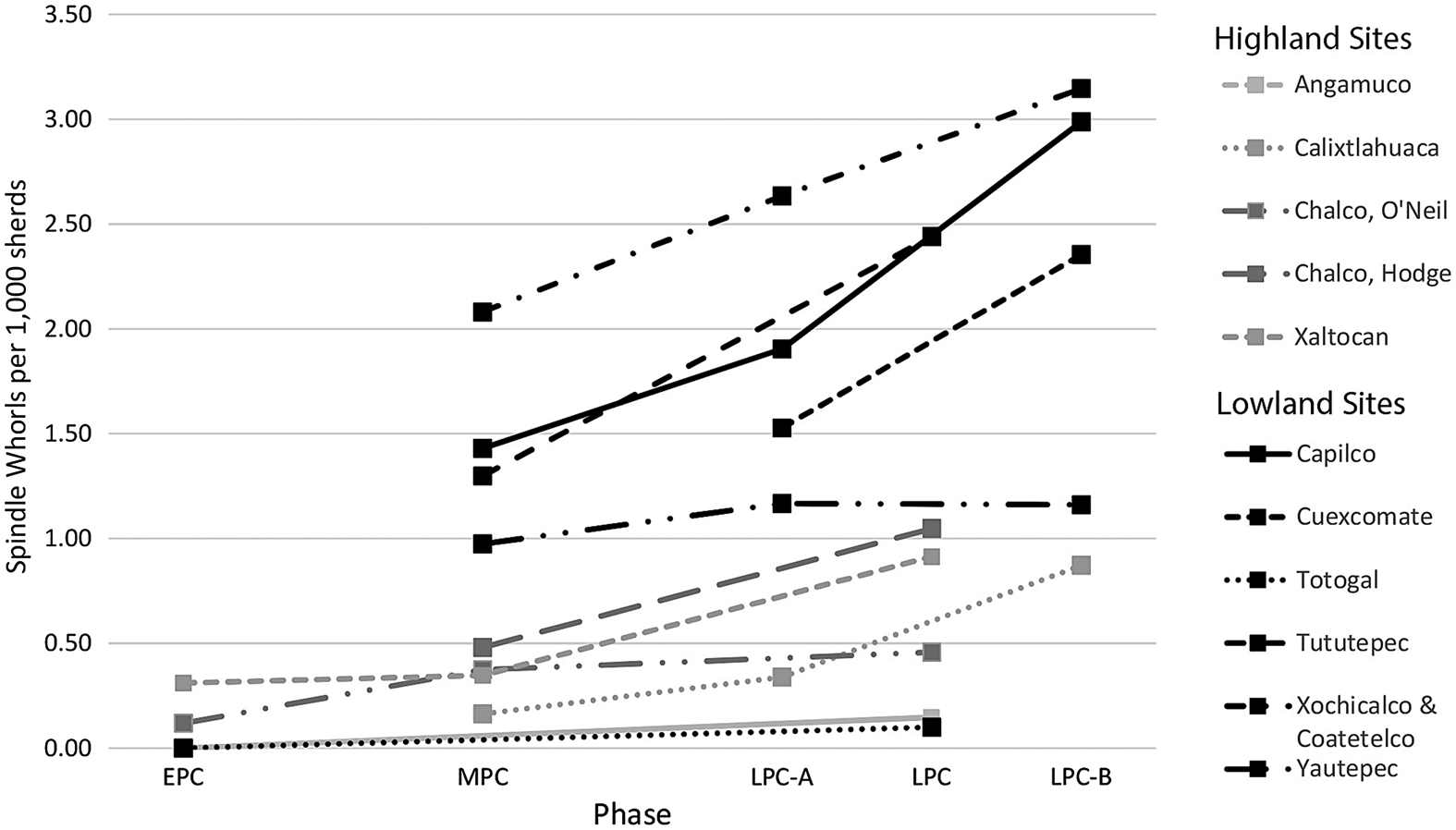
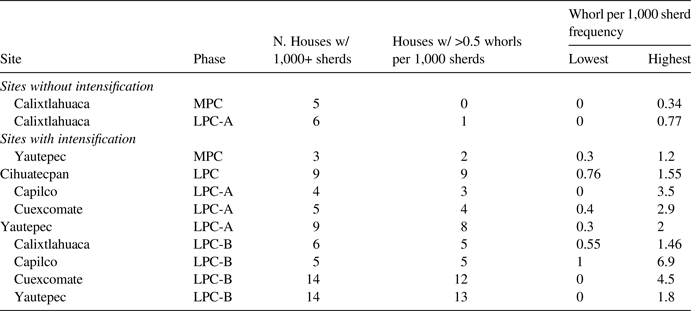
At all sites with multiphase data, the frequency of spindle whorls per 1,000 total sherds increased consistently over time (Figure 3). This means that growth in production occurred at existing sites, rather than through the establishment of new, highly specialized sites. Additionally, when intensification of production occurs at a site, it is widespread among households at that site. Projects where whorl frequencies can be calculated for multiple contemporaneous households that individually meet the same 1,000-sherd sample size requirements (Table 1) show that it is relatively rare for individual households at “unspecialized” sites to have whorl frequencies above 0.5 per 1,000 total sherds (1/11 cases) and for individual households at sites with higher average whorl frequencies to have frequencies below 0.5 whorls per 1,000 sherds (8/69 cases). This demonstrates the relatively dispersed organization of textile production and the tendency for intensification to occur at the site or regional level, rather than just at the individual household level. It also provides support for considering cases with a single excavated house as generally representative of their broader site and phase.
Whorl frequencies over time at multiphase sites. (Data from Supplemental Table 1.)

Ranges of Intrasite Variation in Whorl Frequencies per 1,000 Sherds from Sites with Multiple Excavated Houses.

Note : Cases from excavated households with more than 1,000 sherds at each site. Data for Cihuatecpan from Evans (Reference Evans1988:Table 1.4) and for Morelos sites from Fauman-Fichman (Reference Fauman-Fichman1999:Tables 17–19, 23).
Second, there are clear regional differences between lowland (cotton-growing) and highland (non-cotton-growing) regions. During the EPC, production levels were similar in lowland and highland areas, but textile production increased earlier, more frequently, and to higher levels in lowland areas. In the lowlands, the initial appearance of production above the household self-sufficiency levels characteristic of the EPC occurs during the MPC, but in the highlands, production above household levels does not occur until the LPC. In the lowlands, higher proportions of the total sites also fall above the household production level. The upper end of textile production range may be lower in the highlands either because of the lower overall demand for maguey textiles or because maguey textiles occur as part of a suite of maguey products (sap, sugar, pulque, construction material, fuel), whereas cotton is a single-product specialization.
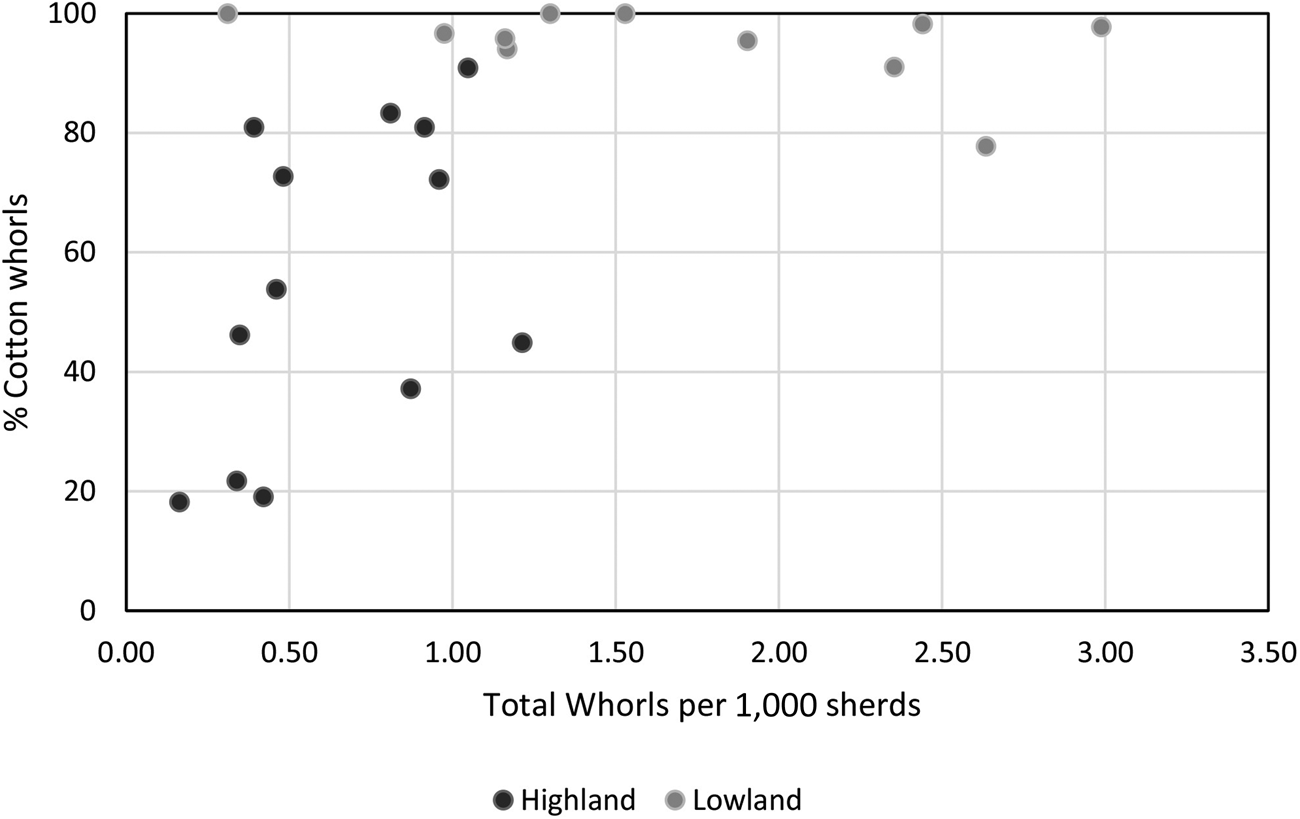
Third, the proportion of cotton whorls (relative to total whorls) at a site is associated with production intensity in highland areas, but not in lowland areas (Figure 4). Most of the whorls recovered in lowland, cotton-producing regions are cotton whorls, but the opposite is not true: many highland sites also have high (>50%) proportions of cotton whorls. At highland sites, there is a correlation (R 2 = 0.23) between the proportion of cotton whorls and the overall level of evidence for textile production. This suggests that the intensification of textile production in the highlands was largely driven by the spinning of imported cotton, rather than local maguey fiber. Because of the clear pattern of these factors, all three should be considered when evaluating a particular site or region for evidence of over- or underproduction relative to local needs.
Percentage of cotton whorls versus total whorl frequency per 1,000 total sherds for highland and lowland regions for cases with more than five whorls identifiable by fiber.

Discussion of General Trends
Based on the temporal patterning of intensification, textile production for domestic use, with or without modest additional taxation, produces a discard rate of less than 0.5 whorls per 1,000 total sherds. Given the macroregional trend of increasing textile production during the Postclassic, I expect gradually increasing production over time, both at individual sites and within regions. Specialization is represented by increases above this level, taking into consideration both fiber and time period. Hypothetically, local underproduction due to market reliance would result either in a decrease in production from earlier periods or a site that remained at EPC production levels in subsequent periods. There are no multiphase sites that show a reduction in production. In contrast, there are a few LPC sites whose whorl-to-sherd ratios are more characteristic of the EPC; these include clusters of sites in the southern Basin of Mexico and highland Oaxaca, as well as regions represented by a single site (Totogal on the Gulf Coast, Angamuco for West Mexico, and Calixtlahuaca in the Toluca Valley). The southern basin cluster probably does represent the intentional underproduction of textiles. There, people may have focused instead on the production of food to supply Tenochtitlan, as hypothesized by Brumfiel (Reference Brumfiel, Gero and Conkey1991). In the other regions additional sites are needed to determine whether they also represent clusters of underproduction. Given that the relative lack of spinning tools in highland Oaxaca has been noted by researchers there (Gorenstein Reference Gorenstein1973:49; Lind Reference Lind1987:77), I expect that area to represent an additional cluster of underproduction. In contrast, given the traditional importance of cotton production on the Gulf Coast and the high frequencies of spindle whorls in survey collections of LPC sites (Stark et al. Reference Stark, Heller and Ohnersorgen1998), I would be surprised if Totogal proved to be characteristic of that larger region. Based on the Relaciones Geograficas, Hirth (Reference Hirth, Hirth and Pillsbury2013) found a similar pattern for colonial period trade in raw cotton, with pairings between individual supply and demand regions, rather than a fully integrated network among all suppliers and producers. Given the widespread presence of cotton whorls outside of cotton-cultivating regions, the Postclassic also must have seen the widespread trade in cotton in multiple forms, from raw cotton to thread to finished cloth.
The data can also be used to evaluate hypotheses for the general trend toward increased textile production. If the increase was primarily due to increased tax demands, adjacent sites with the same geographic and political conditions should show similar increases in production. In contrast, increases in production due to market demand would have offered individual communities more flexibility in deciding to increase production. The latter situation is most clearly demonstrated among sites in Morelos, which do not show simultaneous intensification, even among the geographically adjacent sites of Cuexcomate, Capilco, and Xochicalco. If intensification had been driven by tax demands, this set of adjacent, similarly sized small sites, which are in similar ecological settings and were likely subject to the same city-state, should have had comparable responses to the Aztec conquest (the LPC-A to LPC-B transition). They do not.
As a special note on previous interpretations, Cihuatecpan, which has been considered to be a specialized maguey product producer (Evans Reference Evans and Blanton2005), has the greatest relative frequency of whorls of any highland site in the dataset. This supports Evans's interpretation. In contrast, the UA-1 compound at Cholula, which has been interpreted as a specialized textile production context (McCafferty and McCafferty Reference McCafferty and McCafferty2000), probably is not, but the temporal assignments for that compound are not very specific, leaving the possibility that more intensive production was present but was limited to a single phase. Finally, survey projects that yield whorl-to-sherd ratios far above those seen in excavated contexts are likely incomparable because of differences in recovery techniques.
The applicability of these general regional patterns to the intensity of textile production can be best demonstrated with a case study. I present data from the site of Calixtlahuaca, in which detailed household and site-level data on the organization and level of production can be compared to broader regional trends. As a finer-grained dataset, it allows for a consideration of how individual households organized their responses to regional pressures.
Calixtlahuaca
Calixtlahuaca is located in the Toluca Valley of Central Mexico, which is directly west of the Basin of Mexico and is about 300 m higher in elevation. Rainfall is more than 800 mm per year. Because of its elevation, cotton cultivation is not possible, but maguey cultivation is common. In addition to the textile production tools discussed in this article, excavations at the site also produced large quantities of burned daub with maguey stalk impressions, demonstrating the plants’ use as construction material (Karabowicz Reference Karabowicz2009:39–42). During the colonial period, maguey was important enough that local individuals bequeathed maguey plants in their wills and sued each other over ownership (Noguez Reference Noguez and Boone2005; Pizzigoni Reference Pizzigoni2007:68–73, 197–200).
Calixtlahuaca was the dominant city-state in the Toluca Valley before the Triple Alliance conquest of the region in the mid-1470s. Afterward, it was integrated into the province of Tollocan and lost political prominence. The site was occupied from AD 1100–1530. This period is divided into three ceramic phases: the MPC Dongu phase (AD 1130–1380), the LPC-A Ninupi phase (AD 1380–1450), and the LPC-B Yata phase (AD 1450–1530; Huster and Smith Reference Huster and Smith2015). Located primarily on the terraced slopes of Cerro Tenismo, the maximum area of the site was approximately 264 ha (Novic Reference Novic2015:59). Calixtlahuaca has scattered groups of monumental architecture, diverging from the Postclassic norm of a single monumental core. Work in the 1930s by Jose García Payón (Reference García Payón, de Magrelli and Castañeda1979:183–210) exposed the palace, a circular pyramid, and several additional groups of platforms, pyramids, and small altars.
In 2007, the Calixtlahuaca Archaeological Project excavated 27 locations across the site. The excavations included a core domestic sample of six household components (one phase from one house) dating to each of the three phases, as well as terrace, ravine, and other nonhousehold contexts. I refer to these as the household and nonhousehold samples. Houses at the site consist of one or two rooms built of adobe or wattle and daub on stone footings. They are surrounded by areas of exterior stone pavement. There is little evidence for craft specialization at the site. Most households show low levels of biface production and bipolar processing, probably for their own use, and the variability in ceramic attributes and paste compositions is consistent with a large number of small-scale producers (Huster Reference Huster2016:178–226). Similarly, there were only three possible spindle whorl molds recovered during excavations, and none of the whorls themselves were exact matches to each other, suggesting that they were not mass produced at the site. The large overall sample size, good chronological control, and multiple households for each period allow the comparison of the level and organization of textile production both within and across time periods.
Textile Production at Calixtlahuaca
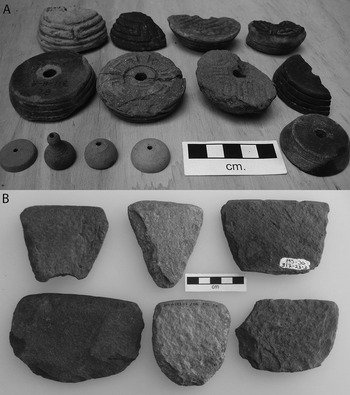
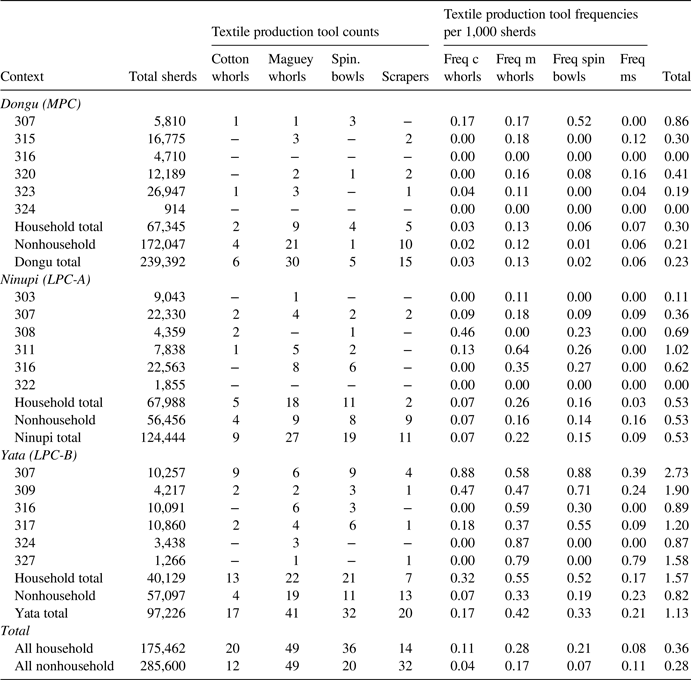
Evidence of textile production at Calixtlahuaca includes four types of artifacts: small whorls and spinning bowls associated with cotton, and large whorls and tabular basalt scrapers associated with maguey (Table 2). The spindle whorls are described in Huster (Reference Huster2013). Cotton whorls from Calixtlahuaca are comparably sized and shaped to those from Morelos and the Basin of Mexico, although the decoration is limited to simple incised or stamped elements. Many cotton whorls are inconsistent with local ceramic paste colors, suggesting that they were imported. Similarly, most spinning bowls are either imported or imitation Aztec Black-on-Orange. The maguey whorls at the site are comparable in size to those from the Basin of Mexico, but they feature distinctive decorative patterns. The most common type is a truncated cone with a highly polished black surface incised with four sets of parallel lines that approximate concentric circles. A minority of maguey whorls match designs from the Basin of Mexico and may have been imported (Figure 5a). Tabular basalt scrapers (desfibradores) are common at the site (Figure 5b).
Textile production tools from Calixtlahuaca: (a) large and small spindle whorls; (b) tabular basalt scrapers. (Photo by the Calixtlahuaca Archaeological Project.)

Textile Production Tool Counts and Sherd-Standardized Frequencies at Domestic and Nondomestic Contexts at Calixtlahuaca by Household and Phase.

The degree of specialization in textile production at the site can be evaluated using three measures: overall temporal trends in production intensity, interhousehold variation in production, and the spatial distribution of textile production within the site. The first measure allows a comparison of Calixtlahuaca to the regional trends in textile production discussed earlier, whereas the second and third measures permit a determination of the organization of household-level production at the site.
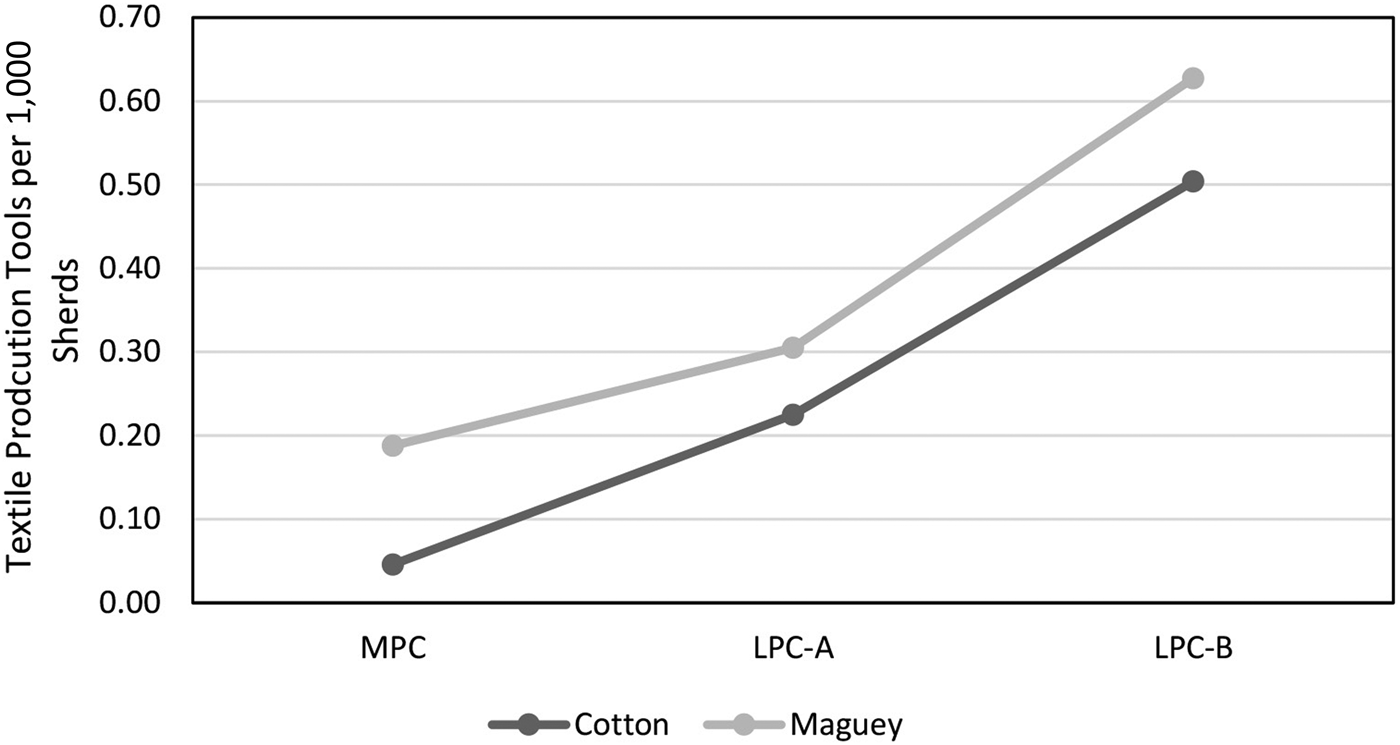
The first measure shows that the site conforms to the broader regional pattern, with a strong trend toward increasing production over time (Figure 6). This increase is present for both fiber types across all three periods. Additionally, there is consistently more evidence for maguey textile production than for cotton production in both household and nonhousehold contexts. According to tribute records in the Codex Mendoza, the Tollocan province, which included Calixtlahuaca, produced large quantities of maguey textiles; tribute requirements included four times as many maguey mantas as cotton mantas (Berdan and Anawalt Reference Berdan and Anawalt1992 [1541]:f 33 r).
Textile production tool frequencies at Calixtlahuaca by phase.

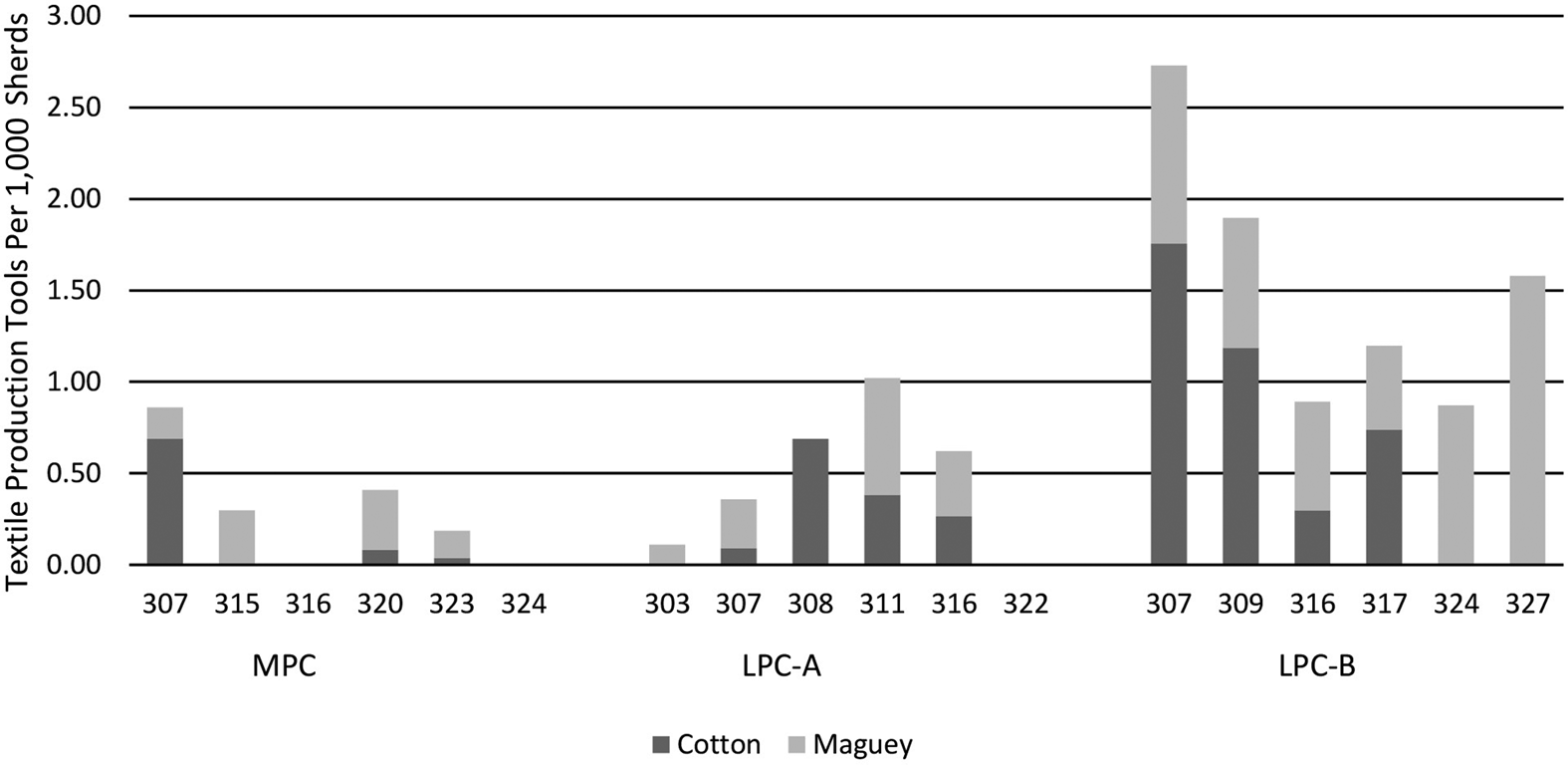
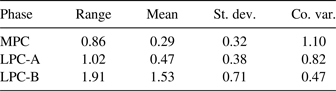
The distribution of production among households, the second measure, shows mixed results (Table 3 and Figure 7). The absolute range and the standard deviation of the frequency of textile production tools increased over time, but the coefficient of variation dropped from each phase to the next. This indicates that the apparent increase in interhousehold variation is largely a function of rising total levels of production. Although there is some variation among households in the frequency of spinning tools, there are no extreme outliers that fall more than two standard deviations from their phase mean. Given the low frequencies of all the artifact types under consideration, a single missed artifact could dramatically change the spinning-tool frequency of many of the smaller household components. As a result, it is imprudent to overanalyze the interhousehold variation in the dataset. There is a gradual increase in the ubiquity of spinning tools among households over time (from four, to five, to six out of six households from each phase), but this may be a result of recovery bias caused by higher overall frequencies in later phases, as well as small sample sizes. The overall picture is one of widespread production for cotton and maguey textiles among households. Increases in production over time remain widely distributed, a pattern that is most consistent with the intensification of production within the household, rather than the reorganization of production into specialist producers or workshops. This is consistent with the organization of production at other Postclassic sites in Central Mexico that have data for multiple households (Evans Reference Evans and Blanton2005; Fauman-Fichman Reference Fauman-Fichman1999:214–219).
Textile tool frequencies by household component and phase at Calixtlahuaca.

Household Means, Standard Deviations, and Coefficients of Variation of Textile Production Tool Frequencies at Calixtlahuaca by Phase.

The spatial distribution of textile production within the site, the third measure, shows distinctly different patterns for maguey and cotton production. Cotton is a fiber spun with the aid of a supporting bowl, so cotton-spinning sessions must be performed at a single location. In contrast, there are ethnographic accounts of women spinning maguey at more than one place and even while walking (Parsons and Parsons Reference Parsons and Parsons1990). As a result, I expect that evidence for cotton spinning would be concentrated around houses, and evidence for maguey spinning could be more widely dispersed. This can be evaluated archaeologically by comparing the contexts associated with houses, and presumably with near-structure domestic activities, with all other datable contexts: agricultural terraces, canal fill, and redeposited or otherwise less secure contexts. Based on this comparison, maguey whorls are recovered in household contexts at 1.6 times the frequency of nonhousehold contexts, whereas cotton-processing tools are approximately 2.7 times more frequent in household contexts. This suggests that although both fiber types were more commonly spun near houses, the pattern was less absolute for maguey spinning. Maguey scrapers are more frequent in nonhousehold contexts, which suggests that the initial stages of processing may have taken place away from the immediate household area. Given that this spatial pattern continued across all three phases, it is unlikely that there were substantial changes to the spatial organization of textile production caused by changes in the demand for other tasks.
Discussion of Textile Production at Calixtlahuaca
When considered against the comparative dataset, the site of Calixtlahuaca fits comfortably within the broader highland patterns of later and generally lower levels of production than are seen in the lowlands. During the MPC and LPC-A, the residents of the site produced textiles at a level consistent with household self-sufficiency. Only during the LPC-B, following the Aztec conquest of the site, does textile production move above this range. Although the apparent lack of intensification during the LPC-A could be seen as evidence of underproduction, I argue against this for two reasons. First, Calixtlahuaca is the only highland site in the dataset with a chronology that divides the LPC. Thus, it is possible that other highland sites intensified textile production on a comparable schedule, but that the timing is being masked by their lower chronological resolution. Second, Calixtlahuaca also has the highest frequency of maguey whorls relative to cotton whorls of all sites—highland or lowland—in the comparative sample for each period. If maguey textile production either has lower visibility or is less amenable to intensification, then the apparent lag of Calixtlahuaca behind the general regional trend may be a product of the intensive production of maguey textiles, rather than the local underproduction of cotton textiles caused by market reliance. More tellingly, the low levels of cotton textile production at the site indicate low levels of access to networks of raw cotton exchange.
The increase in production at the site once it came under Aztec rule was likely caused by a combination of market opportunities and increased taxation. Higher taxes should have yielded a substantially larger increase in maguey production than in cotton production, because maguey was what was requested as payment. Instead, production of the two fibers increased at approximately the same rate. This suggests that residents produced additional maguey textiles to meet tribute demands and simultaneously took advantage of improved access to raw cotton to produce textiles for trade, albeit at levels far below what is seen for lowland areas. This provides support for both the argument in Smith and Heath-Smith (Reference Smith, Heath-Smith, Hodge and Smith1993) that increased textile production was driven by the market and the position in Brumfiel (Reference Brumfiel1997) that it was driven by state demands. Nonetheless, increases in production did not result in changes to its organization. The temporal lag in the intensification and the high degree of specialization in maguey textile production at Calixtlahuaca emphasize the need to consider regional contexts and fiber-specific variation as factors in production intensification.
Conclusions
In this article, I emphasize the importance of considering local underproduction of a given good as a complement to studies of craft specialization. Rising production alone may result from multiple causal factors, including increased consumer demand or widespread economic stress, and the resulting surplus may be channeled many different ways. In contrast, patchy increases in specialization, particularly those accompanied by the underproduction of the same good in adjacent areas, suggest the presence of a robust, reliable, market economy and the development of interdependence. Establishing the probable presence of local underproduction requires a nuanced evaluation of average levels of baseline production and of regional or macroregional patterns of variation around that mean. For textiles, baselines for household maintenance can be established by calculating broad regional production levels, especially during periods with relatively low levels of social complexity. For crafts where archaeological evidence provides information about consumption and production, baselines can also be evaluated using ratios of production to consumption.
For textile production in Postclassic Mesoamerica, this process can be seen in the juxtaposition between the strong overall rising trend in textile production and the presence of sites that seem to fall far above or below typical production levels for their environmental zone. This is especially true for the Late Postclassic period. The broader trend was likely driven by household responses to a combination of market development and increasing tax burdens. This is because increases in textile production cross-cut temporal and geographic political units. Given that increasing levels of textile production are a macroregional phenomenon not accompanied by other evidence of economic stress, this increase likely represents extensive economic growth of the sort that Morris (Reference Morris2004) argues for ancient Greece and that Stark and colleagues (Reference Stark, Boxt, Gasco, González Lauck, Hedgepeth Balkin, Joyce, King, Knight, Kruger, Levine, Lesure, Mendelsohn, Navarro-Castillo, Neff, Ohnersorgen, Pool, Mark Raab, Rosenswig, Venter, Voorhies, Williams and Workinger2016) propose for lowland Mesoamerica. This growth was facilitated by an increased reliance on regional-scale market networks. One example of such a network appears in the cluster of lower-than-expected textile production at sites in the southern Basin of Mexico and higher-than-expected production in adjacent areas of Morelos. Together, these clusters strongly suggest reliance on market exchange for the distribution of goods between a linked pair of regions. The Mixteca Alta and Coastal Oaxaca regions may form another such pairing.
Calixtlahuaca provides an example of how general trends can be used to interpret levels of craft production for specific cases. This case study also emphasizes the need to consider confounding factors. The site exhibits modest evidence for the later intensification of textile production that might be expected from the general highland model; an uncritical evaluation of this evidence could conclude it was a case of local underproduction caused by market reliance. The actual cause of the observed low levels of textile production at the site is more likely its extreme focus on maguey textile production, rather than the more even ratio of cotton and maguey production seen at many other highland sites. Intensive production of maguey is a broader form of specialization, likely resulting in the multicrafting of multiple maguey-based products. Future work should attempt to disentangle the production patterns of the two different fiber types.
I have demonstrated the utility of a regional production-distribution approach to the study of craft production, distribution, and consumption. Both the methodological approach and specific findings presented here are broadly applicable to other artifact classes and geographic or temporal settings. It would be illuminating to compare the degree of regional specialization in textiles described here with the degree of regional specialization of other crafts during the same time periods. Is textile production an outlier because of the high demand for the resulting product, or is it part of a larger pattern of regional specializations? More broadly, when and where do particular patterns of regional specialization occur, and do these correlate with other evidence for particular systems of economic or political organization?
Supplemental Materials
Supplemental material for this article is available at https://doi.org/10.1017/laq.2019.74.
Supplemental Table 1. Spindle Whorl Counts and Sherd-Count Standardized Whorl Frequencies in 52 Postclassic Site Components.
Acknowledgments
I thank the researchers whose published data allowed for the compilation of this comparative dataset. Initial data collection for this paper was supported by an NSF dissertation grant (Award #1205738). The Calixtlahuaca Archaeological Project was supported by the NSF (Awards #0618462, #0924655). Arizona State University and El Colegio Mexiquense provided institutional support. Michael Smith, Bradford Andrews, and four anonymous reviewers provided helpful comments on drafts of this article; any remaining errors are my own.
Data Availability Statement
Data on the Calixtlahuaca whorls are available on tDAR (ID: 391587). Artifacts from the Calixtlahuaca Archaeological Project are currently stored at the Colegio Mexiquense, Zinacantepec, Mexico. Contact Michael Smith (Michael.E.Smith.2@asu.edu) for access to Calixtlahuaca datasets or physical collections.