



1 Introduction
Let
 $\lfloor x\rfloor $
denote the integer part of
 $x\in \mathbb {R}$
. Fix any integer
 $b\geq 2$
. For all
 $x\in \mathbb {R}$
,
 $a\in \{0,1,\ldots ,b-1\}$
, and real numbers
 $l>0$
, we define
 $$\begin{align*}A_b(l;a,x)= \# \{d\in {\mathbb{Z}} \colon 0\leq d\leq l, \ \lfloor b^d x\rfloor \in a+b\mathbb{Z} \}. \end{align*}$$
If
 $x= \sum _{d=-m}^\infty c_d b^{-d}$
is the b-adic expansion of a given real number x, then
 $A_b(l;a,x)$
is equal to the number of
 $d\in [0,l]$
such that
 $c_d=a$
. We say that x is simply normal to base b if for each
 $a\in \{0,1,\ldots , b-1\}$
, we have
 $$\begin{align*}\lim_{l\to \infty} A_b (l;a,x)/l = 1/b. \end{align*}$$
Borel showed that almost all real numbers are simply normalFootnote
1
to base b for all
 $b\geq 2$
in 1909 [Reference Borel1]; however, the simple normality for many non-artificial numbers, such as
 $\pi , e, \log 2$
, and
 $\sqrt {2}$
is unknown. In this article, we do not determine whether
 $2^{p/q}$
is simply normal, but we discover a relation between
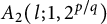 $A_2(l;1,2^{p/q})$
and a mean value of the Riemann zeta function on vertical arithmetic progressions. Let
 $\zeta (s)$
denote the Riemann zeta function.
Theorem 1.1 Let p and q be relatively prime integers with
 $1\leq p<q$
. Then we have
 $$\begin{align*}A_2(l;1, 2^{p/q}) = \frac{l}{2} - \frac{1}{2\pi i } \sum_{0<|n|\leq 2^l } \zeta\left(\frac{2 n\pi i}{\log 2}\right) \frac{e^{2n\pi i p/q} }{n} +o(l)\quad (\text{as } l\to\infty), \end{align*}$$
where l runs over positive real numbers. Especially, we have
 $$ \begin{align} \lim_{l\to \infty} \frac{1}{l}\sum_{0<|n|\leq 2^l } \zeta\left(\frac{2 n\pi i}{\log 2}\right) \frac{e^{2n\pi i p/q} }{n} =0 \end{align} $$
if and only if
 $2^{p/q}$
is simply normal to base
 $2$
.
It is unknown whether
 $A_2(l;1, 2^{p/q})/l$
converges as l tends to infinity. Theorem 1.1 also reveals that the limit on the left-hand side of (1.1) exists if and only if
 $A_2(l;1, 2^{p/q})/l$
converges. Moreover, if we have
 $$ \begin{align} \limsup_{l\to\infty} \frac{1}{l} \left\lvert \frac{1}{2\pi i} \sum_{0<|n|\leq 2^l } \zeta\left(\frac{2 n\pi i}{\log 2}\right) \frac{e^{2n\pi i p/q} }{n} \right\rvert<\beta \end{align} $$
for some real number
 $\beta \in (0,1/2]$
, then
 $ 1/2-\beta < A_2 (l;1,2^{p/q})/l < 1/2+\beta $
holds for sufficiently large
 $l>0$
.
It is natural to investigate a mean value of the Riemann zeta function on arithmetic progressions to verify (1.1) or (1.2). When
 $0<\Re (s_0)<1$
, there is research on asymptotic formulas of
 $\sum _{0\leq n<M} \zeta (s_0 + idn)$
. For example, Steuding and Wegert firstly studied the asymptotic formulas for all
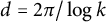 $d=2\pi /\log k$
with
 $k\in \mathbb {Z}_{\ge 2} $
[Reference Steuding and Wegert9, Theorem 1.1]. Furthermore, in [Reference Özbek and Steuding6, Reference Özbek and Steuding7], Özbek and Steuding showed that for all
 $s_0\in \mathbb {C}$
with
 ${\Re (s_0)\in (0,1)}$
 $$ \begin{align} \lim_{M\to\infty} \frac{1}{M}\sum_{0\leq n<M}\zeta\left(s_0+ind\right)= \begin{cases} (1-k^{-s_0})^{-1} & \text{ if }d=\frac{2\pi r}{\log k},\ r\in \mathbb{N},\ k\in \mathbb{Z}_{\ge 2}, \\ 1 & \text{ otherwise}. \end{cases} \end{align} $$
When
 $d=2\pi r/\log k$
for some
 $k\in \mathbb {Z}_{\ge 2}$
and
 $r\in \mathbb {N}$
, it is assumed that r is the smallest integer for which such a value k exists. They also gave similar asymptotic formulas on more general arithmetic progressions [Reference Özbek and Steuding7]. We get the following: none obtained asymptotic formulas on
 $\Re (s_0)=0$
.
Theorem 1.2 Let k be an integer not less than
 $2$
. For every real number
 $l\geq 2$
, we have
 $$ \begin{align} \frac{1}{2\pi i }\sum_{0<|n|\leq k^l} \zeta \left(\frac{2n\pi i}{\log k}\right) \frac{1}{n}=O_k(1). \end{align} $$
The summations in (1.1) and (1.4) are slightly different from (1.3), and hence we have to pay attention when comparing them. In Remark 2.2, we will see, essentially by (1.3), that for all
 $p,q\in \mathbb {N}$
,
 $k\in \mathbb {Z}_{\ge 2}$
, and
 $\sigma _0\in (0,1)$
 $$ \begin{align} \lim_{l\to \infty} \frac{1}{l}\sum_{0<|n|\leq k^l } \zeta\left(\sigma_0+\frac{2n\pi i}{\log k}\right) \frac{e^{2n\pi i p/q}}{n}=0. \end{align} $$
Therefore, from Theorem 1.1, transferring (1.5) with
 $k=2$
to the case
 $\sigma _0=0$
is equivalent to verifying the simple normality of
 $2^{p/q}$
. Moreover, we can consider Theorem 1.2 a successful transfer (1.5) with
 $p=q=1$
to
 $\sigma _0=0$
.
There is also work on discrete high moments of the Riemann zeta function. Good showed asymptotic formulas for the fourth moment on vertical arithmetic progressions belonging to the right half of the critical strip [Reference Good2]. Kobayashi presented the ones for the second moments of
 $\zeta (1/2+in)$
[Reference Kobayashi4]. We do not study relations between problems on digits and the high moments of the Riemann zeta function. In the future, it would be interesting if we discovered their connections. Further, we only focus on the Riemann zeta function in the article. It would be attractive if we disclosed connections between problems on digits and other zeta functions, such as the Dirichlet L-function, Hurwitz zeta function, Dedekind zeta function, multiple zeta function, etc.
Notation 1.3 Let
 $\mathbb {N}=\{1,2,3,\ldots \}$
. For every
 $m\in \mathbb {Z}$
, we define
 $\mathbb {Z}_{\ge m}$
as the set of integers not less than m. For
 $x\in \mathbb {R}$
, let
 $\{x\}$
denote the fractional part of x, and
 $\|x\|$
denote the distance from x to the nearest integer. Let
 $\log _k x$
be
 $\log x/\log k$
for every
 $x>0$
and integer
 $k\geq 2$
.
We say that
 $f(x)=g(x)+o(h(x))$
(as
 $x\to \infty $
) if for all
 $\epsilon>0$
there exists
 $x_0>0$
such that
 $|f(x)-g(x)|\leq h(x)\epsilon $
for all
 $x\geq x_0$
. If
 $x_0$
depends on some parameters
 $\epsilon , a_1,\ldots ,a_n$
, then we write
 $f(x)=g(x)+o_{a_1,\ldots , a_n}(h(x))$
. We also say that
 $f(x)=g(x)+O(h(x))$
for all
 $x\geq x_0$
if there exists
 $C>0$
such that
 $|f(x)-g(x)|\leq Ch(x)$
for all
 $x\geq x_0$
. If C depends on some parameters
 $a_1,\ldots , a_n$
, then we write
 $f(x)=g(x)+O_{a_1,\ldots ,a_n}(h(x))$
for all
 $x\geq x_0$
. We state
 $f(X) \ll g(X)$
and
 $f(X) \ll _{a_1,\ldots , a_n} g(X)$
as
 $f(X)=O(g(X))$
and
 $f(X)=O_{a_1,\ldots , a_n}(g(X))$
respectively, where
 $g(X)$
is nonnegative. In addition, we state
 $f(X)\asymp g(X)$
if
 $f(X)\ll g(X)\ll f(X)$
.
Let us fix p and q as relatively prime integers with
 $1\leq p\leq q$
. Let k be an integer greater than or equal to
 $2$
which is not a qth power of an integer if
 $q\geq 2$
. We consider the parameters p, q, and k as constants. Thus, we omit the dependencies of these parameters.
2 A preliminary discussion and proof of Theorem 1.1
In this section, we will observe that the following theorem implies Theorem 1.1. In addition, we will introduce a certain arithmetic function which plays a key role in the proof.
Theorem 2.1 Let p and q be relatively prime positive integers with
 $1\leq p< q$
. Let
 $k\geq 2$
be an integer which is not a qth power of an integer. Then we have
 $$ \begin{align} \sum_{0\leq d\leq l} \{ k^{d+p/q} \} = \frac{l}{2} -\frac{1}{2\pi i }\sum_{0<|n|\leq k^l} \zeta\left(\frac{2n\pi i}{\log k}\right) \frac{e^{2n\pi i p/q}}{n}+o_{p,q,k}(l) \quad (\text{as }l\to \infty ), \end{align} $$
where l runs over positive real numbers.
We aim to give a proof of Theorem 2.1. Roughly speaking, by substituting
 $p=q=1$
in Theorem 2.1, the first term
 $l/2$
on the right-hand side of (2.1) vanishes and we obtain Theorem 1.2. In Section 6, we will prove Theorem 1.2 by verifying the substitution. In Section 7, we will prove Theorem 2.1.
Remark 2.2 To compare our results with (1.3), let us give a proof of (1.5). We define
 $C_d(s_0)$
as the right-hand side of (1.3) for
 $0<\Re (s_0)<1$
. Then, for all
 $l\in \mathbb {N}$
, we have
 $$ \begin{align*} &\frac{1}{2\pi i}\sum_{0<|n|\leq k^l } \zeta\left(\sigma_0+\frac{2n\pi i}{\log k}\right) \frac{e^{2n\pi i p/q}}{n} \\ &\quad= \frac{1}{2\pi i} \sum_{a=0}^{q-1} e^{2a\pi i p/q} \sum_{\substack {0<|n|\leq k^l \\ n\equiv a \text{ mod }q }} \zeta\left(\sigma_0+\frac{2n\pi i}{\log k}\right) \frac{1}{n}. \end{align*} $$
Let
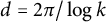 $d=2\pi /\log k$
. We take
 $a\in \{0,1,\ldots ,q-1\}$
. Then, by (1.3), partial summation, and
 $\zeta (\overline {s})=\overline {\zeta (s)}$
, for each sufficiently large
 $M\in \mathbb {N}$
, we have
 $$ \begin{align*} &\sum_{\substack{0<|n|\leq M \\ n \equiv a \text{ mod } q } } \frac{\zeta(\sigma_0+ind)}{n} \\ &= \sum_{\substack{1\leq n\leq \frac{M-a}{q} } } \frac{\zeta(\sigma_0+i(qn+a)d)}{qn+a} - \sum_{\substack{1\leq n \leq \frac{M+a}{q} } } \frac{\zeta(\sigma_0-i(qn-a)d)}{qn-a} \\ &=\biggl(C_{qd}(\sigma_0+iad) - \overline{C_{qd}(\sigma_0-iad )}\biggr) \frac{\log M}{q} +o_{\sigma_0}(\log M)\\ &=o_{\sigma_0}(\log M), \end{align*} $$
and hence we conclude (1.5).
Lemma 2.3 For all
 $l\in \mathbb {N}$
, we have
 $$\begin{align*}\sum_{0\leq m\leq l}\{2^{m+p/q}\}=A_2(l;1,2^{p/q})+O(1). \end{align*}$$
Proof Let
 $\sum _{d=0}^\infty c_d2^{-d}$
be the binary expansion of
 $2^{p/q}$
. Then, for all
 $m\geq 0$
, we have
 $$\begin{align*}\{2^{m+p/q}\}= \{2^{m} 2^{p/q}\}=\left\{\sum_{d=0}^\infty c_d2^{m-d}\right\}=\sum_{d=m+1}^\infty c_d2^{m-d}=\sum_{d=1}^\infty c_{m+d}2^{-d}, \end{align*}$$
and hence
 $$ \begin{align*} \sum_{0\leq m\leq l}\{2^{m+p/q}\} &=\sum_{0\leq m\leq l}\sum_{d=1}^\infty c_{m+d}2^{-d} =\sum_{1\leq k\leq l}c_k\sum_{j=1}^k2^{-j}+\sum_{l+1\leq k}c_k\sum_{j=k-l}^k2^{-j}\\ &=\sum_{1\leq k\leq l}c_k(1-2^{-k})+\sum_{l+1\leq k}c_k2^{-k+l+1}(1-2^{-l-1})\\ &=\sum_{0\leq k\leq l}c_k+O(1) =A_2(l;1,2^{p/q})+O(1).\\[-42pt] \end{align*} $$
Proof of Theorem 1.1 assuming Theorem 2.1
Fix arbitrary integers
 $1\leq p<q$
with
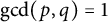 $\gcd (p,q)=1$
. By combining Theorem 2.1 with
 $k=2$
and Lemma 2.3, we obtain Theorem 1.1.
For every positive real number l, we define
 $$\begin{align*}A(l) =\sum_{\substack{0\leq d\leq l}} \{k^{d+p/q} \}. \end{align*}$$
The goal of proving Theorem 2.1 is to obtain an asymptotic formula of
 $A(l)$
. For all
 $\alpha>1$
and
 $\Re (s)>0$
, we define
 $$ \begin{align} \varphi(\alpha,s)=\sum_{n=0}^\infty \alpha^{-ns}=\frac{1}{1-\alpha^{-s}}. \end{align} $$
We set
 $$ \begin{align*} b(n)=b_k(n)= \begin{cases} 1-k & \text{if } k\mid n ,\\ 1 & \text{otherwise}. \end{cases} \end{align*} $$
Furthermore, for all
 $\Re (s)>1$
, we define
 $$\begin{align*}\eta(s)=\eta_k(s):=\sum_{n=1}^\infty\frac{b_k(n)}{n^s}=(1-k^{1-s})\zeta(s). \end{align*}$$
Remark that
 $\eta _k(s)$
is coincident with the eta function
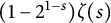 $(1-2^{1-s})\zeta (s)$
if
 $k=2$
. Then for every
 $\Re (s)>1/q$
, it follows that
 $$ \begin{align*} \varphi(k,qs)\eta(qs) &=\left(\sum_{n=0}^\infty\frac{1}{k^{qns}}\right)\left(\sum_{n=1}^\infty\frac{b(n)}{n^{qs}}\right) =\left(\sum_{n=1}^\infty\frac{f(d)}{d^s}\right)\left(\sum_{n=1}^\infty\frac{g(d)}{d^s}\right), \end{align*} $$
where
 $$ \begin{align*} f(d):= \begin{cases} 1 & \text{if } \exists n\in {\mathbb{Z}}_{\ge 0} \text{ s.t. } d=k^{qn},\\ 0 & \text{otherwise}, \end{cases}\quad g(d):= \begin{cases} b(n) & \text{if } \exists n\in {\mathbb{Z}}_{>0} \text{ s.t. } d=n^q,\\ 0 & \text{otherwise}. \end{cases} \end{align*} $$
For every
 $n\in \mathbb {N}$
, we define
 $h(n)=\sum _{d\mid n } f(d)g(n/d)$
. Then the Dirichlet multiplication leads to
 $$ \begin{align} \varphi(k,qs)\eta(qs)=\sum_{n=1}^\infty \frac{h(n)}{n^s}. \end{align} $$
Lemma 2.4 For every
 $x\geq 2$
, we have
 $$ \begin{align} \sum_{1\leq n\leq x}h(n)=(k-1)\sum_{\substack{0\leq d\leq q^{-1}\log_k x}}\{x^{1/q}/k^d\}+ O(1). \end{align} $$
Proof By the definition of
 $f(\cdot )$
and
 $g(\cdot )$
, it follows that
 $$\begin{align*}h(n) =\sum_{d\mid n} f(d)g(n/d) = \sum_{\substack{d\geq 0 \\ k^{qd}\mid n}} g(n/k^{qd}), \end{align*}$$
and hence
 $$\begin{align*}\sum_{1\leq n\leq x}h(n)=\sum_{1\leq n\leq x}\sum_{\substack{d\geq0 \\ k^{qd}\mid n}}g(n/k^{qd})=\sum_{0\leq d\leq q^{-1}\log_k x}\sum_{1\leq n\leq x/k^{qd}}g(n). \end{align*}$$
In addition, the definitions of
 $g(\cdot )$
and
 $b(\cdot )$
yield
 $$ \begin{align*} \sum_{1\leq n\leq x/k^{qd}}g(n) &=\sum_{1\leq j^q\leq x/k^{qd}}b(j)=\sum_{1\leq j\leq x^{1/q} /k^{d}} b(j)= \lfloor x^{1/q}/k^d \rfloor- k\lfloor x^{1/q}/k^{d+1} \rfloor \\ &= -\{x^{1/q}/k^d\}+k\{x^{1/q}/k^{d+1} \}. \end{align*} $$
Therefore, we conclude (2.4).
By applying Lemma 2.4 with
 $x=k^{ql+p}$
and
 $l\in \mathbb {N}$
, we observe that
 $$ \begin{align} \begin{aligned} \sum_{1\leq n\leq x} h(n) &= (k-1)\sum_{0\leq d\leq l }\{ k^{(l-d)+p/q} \} +O(1)\\ &=(k-1)\sum_{0\leq d\leq l } \{k^{d+p/q} \} +O(1)=(k-1)A(l)+O(1), \end{aligned} \end{align} $$
and hence, the mean value of
 $h(n)$
is directly connected to
 $A(l)$
.
3 Outline of the proof of Theorem 2.1
For simplicity, we do not consider the case
 $q=1$
in this section. Thus, the integers p and q are relatively prime with
 $1\leq p<q$
, and k is an integer larger than or equal to
 $2$
which is not a qth power of an integer. Let
 $l\in {\mathbb {N}}$
be a sufficiently large parameter, and let
 $x=k^{ql+p}$
. We will first apply Perron’s formula to obtain an asymptotic formula of
 $\sum h(n)$
.
Lemma 3.1 (Perron’s formula)
Let
 $\alpha (s)$
be the Dirichlet series of the form
 ${\alpha (s)=\sum _{n=1}^\infty a_n n^{-s}}$
. Let
 $\sigma _a$
be the abscissa of absolute convergence of
 $\alpha (s)$
. If
 $c>\max (0,\sigma _a)$
,
 $x>0$
, and
 $T> 0$
, then we have
 $$\begin{align*}\sum_{1\leq n\leq x}\hspace{-5pt}{}^\prime a_n =\frac{1}{2\pi i} \int_{c-iT}^{c+iT} \alpha(s) \frac{x^s}{s} ds +R \end{align*}$$
and
 $$\begin{align*}R\ll \sum_{\substack{x/2<n<2x\\ n\not=x}}|a_n|\min\left(\frac{x}{T|x-n|},1\right) +\frac{4^{c}+x^{c}}{T}\sum_{n=1}^\infty\frac{|a_n|}{n^c}, \end{align*}$$
where
 $\sum _{1\leq n\leq x}^{\prime }$
indicates that if x is an integer, then the last term is to be counted with weight
 $1/2$
.
Proof See [Reference Montgomery and Vaughan5, Theorem 5.2, Corollary 5.3].
Recall that the corresponding Dirichlet series of
 $h(n)$
is
 $\varphi (k, qs) \eta (qs)$
from (2.3). Therefore, for
 $c>1/q$
and
 $T>0$
, Lemma 3.1 with
 $a_n=h(n)$
implies
 $$ \begin{align} \sum_{1\leq n\leq x}\: h(n) = \frac{1}{2\pi i} \int_{c-iT}^{c+iT} \varphi(k,qs) \eta(qs) \frac{x^s}{s} ds+(\text{errors}). \end{align} $$
The summation
 $ \sum _{1\leq n\leq x}$
should be written as
 $ \sum _{1\leq n\leq x}'$
, but we ignore the gaps between these sums. Let us also skip to evaluate all the errors. In Section 4, we will do a precise discussion on (3.1). By the definitions of
 $\varphi $
and
 $\eta $
,

Let
 $c=c(l)>1/q$
and
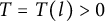 $T=T(l)>0$
be suitable parameters. By substituting
 $x=k^{ql+p}$
, the equations (2.5) and (3.1) yield that
 $$\begin{align*}(k-1) A(l) = \sum_{1\leq n\leq k^{ql+p} } h(n) +O(1)=\frac{1}{2\pi i} \int_{c-iT}^{c+iT} \Phi (s; k^{ql+p}) ds+(\text{errors}). \end{align*}$$
We shall apply the residues theorem similarly to the analytic proof of the prime number theorem (see [Reference Montgomery and Vaughan5, Chapter 6]). We move the vertical integral from
 $\int _{c-iT}^{c+iT}$
to
 $\int _{\sigma -iT}^{\sigma +iT}$
for some fixed
 $\sigma <0$
, where we will take
 $\sigma =-1/(2q)$
in Section 6. The residues of
 $\Phi (s;k^{ql+p})$
are
 $$ \begin{align} \left\{ \begin{aligned} \displaystyle{(1-k)\zeta\left(\frac{2n\pi i}{\log k}\right) \frac{e^{2n\pi i p/q}}{2n\pi i}} &\quad \text{at}\quad s=\frac{2n\pi i}{q\log k} \text{ for } n\neq 0,\\ (k-1)\frac{l}{2} +O(1) &\quad \text{at}\quad s=0. \end{aligned} \right. \end{align} $$
We will observe (3.2) in Section 4 (Lemma 4.1) and Section 5. Therefore, by applying the residue theorem,
 $$ \begin{align} \begin{aligned} A(l)&= \frac{1}{2\pi i(k-1)} \int_{c-iT}^{c+iT} \Phi(s; k^{ql+p}) ds+(\text{errors})\\ &= \frac{l}{2} -\frac{1}{2\pi i }\sum_{0<|n|\leq \frac{q\log k}{2\pi }T} \zeta\left(\frac{2n\pi i}{\log k}\right) \frac{e^{2n\pi i p/q}}{n}\\ &\hspace{50pt}+\frac{1}{2\pi i(k-1)} \int_{\sigma-iT}^{\sigma+iT} \Phi(s;k^{ql+p}) ds+(\text{errors}). \end{aligned} \end{align} $$
We will calculate the errors in Section 5 (Lemmas 5.2 and 5.5, and Proposition 5.6).
We now recall the functional equation of the Riemann zeta function, since we will apply it to
 $\zeta (qs)$
which appears as a factor of
 $\Phi $
.
Lemma 3.2 For every
 $s\in \mathbb {C}\setminus \{1\}$
, we have
 $\zeta (s) =\chi (s) \zeta (1-s)$
, where
 $\chi (s)=2^{s-1}\pi ^s\sec (\pi s/2)/\Gamma (s)$
. Further, for any fixed
 $\sigma \in \mathbb {R}$
and for
 $t\geq 1$
, we have
 $$\begin{align*}\chi(s)= \left(2\pi/ t \right)^{\sigma+it-1/2}e^{i (t+\pi/4)}\left(1+O\left(\frac{1}{t}\right)\right). \end{align*}$$
Proof See [Reference Titchmarsh10, Equations (2.1.8) and (4.12.3)].
By applying Lemma 3.2, we see that
 $$ \begin{align*} \frac{1}{2\pi i(k-1)} &\int_{\sigma-iT}^{\sigma+iT} \Phi(s;k^{ql+p}) ds \\ &\qquad= \frac{1}{2\pi i(k-1)} \int_{\sigma-iT}^{\sigma+iT} \frac{1-k^{1-qs}}{1-k^{-qs}} \chi(qs) \zeta(1-qs) k^{s(ql+p)} \frac{ds}{s}. \end{align*} $$
In addition, for every
 $\Re (s)<0$
, we observe that
 $$ \begin{align} \frac{1-k^{1-qs}}{1-k^{-qs}}&=(k^{1-qs}-1)\cdot \frac{k^{qs}}{1-k^{qs}}=(k^{1-qs}-1) \left(\sum_{m=1}^\infty k^{qms} \right)\\ \nonumber &= \sum_{m=1}^\infty (k^{1-qs}-1)\cdot k^{qms} = \sum_{m=1}^\infty k\cdot k^{(m-1)qs} - \sum_{m=1}^\infty k^{qms} = \sum_{m=0}^\infty a_m k^{qms}, \end{align} $$
where
 $a_0=k$
, and
 $a_m=k-1$
for every
 $m\geq 1$
. Therefore, by choosing
 $\sigma =-1/(2q)<0$
,
 $$ \begin{align*} &\frac{1}{2\pi i(k-1)} \int_{\sigma-iT}^{\sigma+iT} \Phi(s;k^{ql+p}) ds\\ &=\sum_{m=0}^\infty \sum_{n=1}^\infty \frac{a_m}{2\pi i (k-1)} \int_{\sigma-iT}^{\sigma+iT} k^{qms} n^{qs-1}k^{s(ql+p)} \chi(qs)\frac{ds}{s}\\ &=\sum_{m=0}^\infty \sum_{n=1}^\infty \frac{a_m}{2\pi (k-1)} k^{-(m+l+p/q)/2} n^{-3/2} \int_{-T}^{T} (k^{m+l+p/q} n )^{iqt} \frac{\chi(-1/2+iqt)}{-1/(2q)+it } dt. \end{align*} $$
In Section 6, we will apply the following lemmas to calculate exponential integrals to find an asymptotic formula of the above integral.
Lemma 3.3 (the first derivative test)
Let
 $F(x)$
be a real differentiable function defined on
 $[a,b]$
such that
 $F'(x)$
is monotonic throughout the interval
 $[a,b]$
. Suppose that there exists
 $M>0$
such that for every
 $x\in [a,b]$
, we have
 $|F'(x)|\geq M$
. Then
 $$\begin{align*}\left\lvert \int_a^be^{iF(x)}dx\right\rvert \leq\frac{4}{M}. \end{align*}$$
Proof See [Reference Titchmarsh10, Lemma 4.2].
Lemma 3.4 (the second derivative test)
Let
 $F(x)$
be a twice differentiable real function defined on
 $[a,b]$
. Suppose that there exists
 $r>0$
such that for every
 $x\in [a,b]$
, we have
 $|F"(x)|\geq r$
. Then
 $$\begin{align*}\left\lvert \int_a^be^{iF(x)}dx\right\rvert \leq \frac{8}{r^{1/2}}. \end{align*}$$
Proof See [Reference Titchmarsh10, Lemma 4.4].
Lemma 3.5 (the stationary phase method)
Let
 $F(x)$
be a real-valued function defined on
 $[a,b]$
which is differentiable up to the third order. Suppose that there exist
 $\lambda _2, \lambda _3>0$
and
 $A>0$
such that for every
 $x\in [a,b]$
, we have
 $$ \begin{align} 0<\lambda_2 \leq -F"(x) < A \lambda_2 \end{align} $$
 $$ \begin{align} |F"'(x)| <A\lambda_3. \end{align} $$
Let
 $F'(c)=0$
, where
 $c\in [a,b]$
. Then
 $$ \begin{align*} \int_a^b e^{iF(x)} dx &= (2\pi)^{1/2} \frac{e^{-\pi i/4 +iF(c)} }{|F"(c)|^{1/2}} +O(\lambda_2^{-4/5}\lambda_3^{1/5} )\\ &\quad +O\left(\min\left(|F'(a)|^{-1},\lambda_2^{-1/2} \right)\right) +O\left(\min\left(|F'(b)|^{-1},\lambda_2^{-1/2} \right)\right). \end{align*} $$
Proof See [Reference Titchmarsh10, Lemma 4.6].
By applying Lemmas 3.3–3.5 in Section 6, we will show that
 $$ \begin{align} \frac{1}{2\pi i(k-1)} \int_{\sigma-iT}^{\sigma+iT} \Phi(s;k^{ql+p}) ds=\frac{(q-1)l}{2} -\sum_{0\leq m\leq (q-1)l} \{k^{m+l+p/q} \}+(\text{errors}). \end{align} $$
Here the errors on the right-hand side contain
 $$ \begin{align} \sum_{0\leq m\leq (q-1)l} \min \left( \frac{1}{2}, \frac{C}{lk^{(q-1)l-m}\|k^{m+l}\cdot k^{p/q} \|}\right) \end{align} $$
for some constant
 $C>0$
. The error (3.8) comes from the following partial Fourier sums of the saw-tooth function.
Lemma 3.6 Let
 $\psi (y)$
be the saw-tooth function, that is,
 $$\begin{align*}\psi(y)= \begin{cases} \{y\}-1/2 & \mathrm{if}\ y\notin \mathbb{Z},\\ 0 & \mathrm{if}\ y\in \mathbb{Z}. \end{cases} \end{align*}$$
Then for every
 $K\in \mathbb {N}$
and
 $y\in {\mathbb {R}}$
, we have
 $$\begin{align*}\left\lvert \sum_{k=1}^K \frac{\sin (2\pi ky)}{\pi k}+\psi(y)\right\rvert \leq \min \left(\frac{1}{2}, \frac{1}{(2K+1)\pi |\sin \pi y|}\right). \end{align*}$$
Proof See [Reference Montgomery and Vaughan5, Lemma D.1].
To investigate lower bounds for
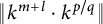 $\|k^{m+l}\cdot k^{p/q} \|$
in (3.8), we will apply Ridout’s theorem in Section 7. Let
 $\gamma $
be an arbitrarily small positive real number. By the theorem, for every
 $a\in \mathbb {Z}$
and
 $0\leq m\leq (q-1)l$
, we have
 $$ \begin{align} \left\lvert k^{p/q}- \frac{a}{k^{m+l}} \right\rvert \gg_{\gamma,k,p,q} k^{-(1+\gamma) (m+l)}, \end{align} $$
where the implicit constant is ineffective. By applying (3.9), we will show that (3.8) is small enough. Therefore, combining (3.3) and (3.7) presents
 $$ \begin{align*} \sum_{0\leq m\leq l} \{k^{m+p/q}\}= \frac{ql}{2} &-\frac{1}{2\pi i }\sum_{0<|n|\leq \frac{q\log k}{2\pi }T} \zeta\left(\frac{2n\pi i}{\log k}\right) \frac{e^{2n\pi i p/q}}{n} \\ &-\sum_{0\leq m\leq (q-1)l} \{k^{m+l+p/q} \}+(\text{errors}), \end{align*} $$
which completes
 $$\begin{align*}A(ql) = \frac{ql}{2}-\frac{1}{2\pi i }\sum_{0<|n|\leq \frac{q\log k}{2\pi }T} \zeta\left(\frac{2n\pi i}{\log k}\right) \frac{e^{2n\pi i p/q}}{n} +(\text{errors}). \end{align*}$$
Interestingly, we discover a relation between
 $$\begin{align*}\sum_{0\leq m\leq l} \{k^{m+p/q}\} \quad \text{and}\quad -\sum_{0\leq m\leq (q-1)l} \{k^{m+l+p/q} \} \end{align*}$$
through the functional equation
 $\zeta (qs)= \chi (qs) \zeta (1-qs)$
, one of the key ingredients of the proof.
We organize the remainder of the article as follows. In Section 4, we apply Perron’s formula and calculate the residues of
 $\Phi (s)$
. In Section 5, we move the vertical integral from
 $\int _{c-iT}^{c+iT}$
to
 $\int _{\sigma -iT}^{\sigma +iT}$
for some fixed
 $\sigma <0$
and provide (3.3). Section 6 shows (3.7) using the functional equation, and Lemmas 3.3–3.5. At last, in Section 7, we complete the proof of Theorem 2.1.
4 Applying Perron’s formula and the residue theorem
From this section, we also consider the case
 $q=1$
. Recall that we fix arbitrary integers
 $k\in \mathbb {Z}_{\ge 2}$
, p, and q with
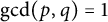 $\text {gcd}(p,q)=1$
and
 $1\leq p\leq q$
. Assume that k is not a qth power of an integer if
 $q\geq 2$
. From here on l will always denote a sufficiently large positive integer, and let
 $x=k^{ql+p}$
. Let
 $T\geq 2$
be a sufficiently large parameter. We will choose
 $T\asymp lk^{ql}$
. Let
 $c>1/q$
be a parameter that depends on x. We will choose
 $c=1+1/\log x$
later. By Lemma 3.1 (Perron’s formula) and the definition of
 $h(n)$
, we obtain
 $$ \begin{align} \sum_{1\leq n\leq x}\hspace{-5pt}{}^\prime h(n) = \frac{1}{2\pi i} \int_{c-iT}^{c+iT} \varphi(k,qs) \eta(qs) \frac{x^s}{s} ds+R, \end{align} $$
where
 $$ \begin{align} R\ll \sum_{\substack{x/2<n<2x\\ n\not=x}}|h(n)|\min\left(\frac{x}{T|x-n|},1\right) +\frac{4^{c}+x^{c}}{T}\sum_{n=1}^\infty\frac{|h(n)|}{n^c}. \end{align} $$
To transfer the vertical line of the integral, we should investigate the poles and residues of
 $\varphi (k, qs) \eta (qs) x^s/s$
. Recall that
 $\Phi (s)=\Phi (s;x)=\varphi (k,qs) \eta (qs) x^s/s$
.
Lemma 4.1 Let
 $s_n= 2n \pi i / (q\log k)$
for every
 $n\in {\mathbb {Z}}$
. The function
 $\Phi (s)$
has a pole at
 $s=s_n$
for every
 $n\in {\mathbb {Z}}$
. In addition, for every
 $n\in {\mathbb {Z}} $
, the residue of
 $\Phi (s)$
at
 $s=s_n$
is
 $$\begin{align*}\left\{ \begin{aligned} \frac{1}{q\log k}\cdot \frac{\eta(qs_n)}{s_n}x^{s_n} & \quad\mathrm{if}\ n \neq 0, \\ (k-1)\frac{\log x}{2q\log k} +O(1) &\quad \mathrm{if}\ n =0. \end{aligned} \right. \end{align*}$$
Proof By recalling (2.2), we have
 $$\begin{align*}\varphi(k,qs)=\sum_{n=0}^\infty \frac{1}{k^{qs}} =\frac{1}{1-k^{-qs}}. \end{align*}$$
Thus, the function
 $\varphi (k,qs)$
has a simple pole at
 $s=s_n$
for every
 $n\in {\mathbb {Z}}$
. For every
 $0<|s-s_n|<\epsilon $
, we have
 $$ \begin{align*} \varphi(k, qs) &=\frac{1}{1-k^{-q(s-s_n)}}\\ &=\frac{1}{q(\log k)(s-s_n)}\cdot\frac{1}{1-\frac{q\log k}{2}(s-s_n)+O(|s-s_n|^2)}\\ &=\frac{1}{q(\log k)(s-s_n)}\left(1+\frac{q\log k}{2}(s-s_n)+O(|s-s_n|^2)\right)\\ &=\frac{1}{q(\log k)(s-s_n)}+\frac{1}{2}+O(|s-s_n|), \end{align*} $$
which implies that the residue of
 $\varphi (k,qs)$
at
 $s=s_n$
is equal to
 $1/(q\log k)$
. Therefore, for every
 $n\in {\mathbb {Z}} \setminus \{0\}$
, the residue of
 $\Phi (s)$
at
 $s=s_n$
is equal to
 $$ \begin{align*} \frac{1}{q\log k}\cdot \frac{\eta(qs_n)}{s_n}x^{s_n}. \end{align*} $$
When
 $n=0$
, for every
 $0<|s|<\epsilon $
, we have
 $$ \begin{align*} \Phi(s) &=\left(\frac{1}{q(\log k)s}+\frac{1}{2}+O(|s|)\right)(\eta(0)+q\eta^\prime(0)s+O(|s|^2))\left(\frac{1}{s}+\log x+O(|s|)\right)\\ &=\frac{\eta(0)}{q\log k}\frac{1}{s^2} +\left(\frac{\eta(0)\log x+q\eta^\prime(0)}{q\log k}+\frac{\eta(0)}{2} \right) \frac{1}{s} +O(1). \end{align*} $$
Since
 $\eta (0)=(1-k)\zeta (0)=(k-1)/2$
, the residue of
 $\Phi (s)$
at
 $s=s_0(=0)$
is
 $$\begin{align*}(k-1)\frac{\log x} {2q\log k}+O(1).\\[-48pt] \end{align*}$$
Let
 $\sigma _0$
be a negative constant depending only on q. We will choose
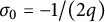 $\sigma _0=-1/(2q)$
later. Let
 $\delta $
be a sufficiently small absolute constant belonging to
 $(0,1/2)$
, and we define
 $$\begin{align*}\mathcal{T}=\mathcal{T}_{\delta}:=\bigsqcup_{n=0}^\infty\left(\frac{2n\pi}{q\log k}-\delta,\frac{2n\pi}{q\log k}+\delta\right). \end{align*}$$
To avoid the poles of
 $\Phi (s)$
, if necessary, we assume that
 $T\in [2,\infty )\setminus \mathcal {T}$
. Then, by applying the residue theorem and (4.1), we obtain
 $$ \begin{align} \sum_{n\leq x}{}^\prime h(n)=(k-1)\frac{\log x}{2q\log k}+\frac{1}{q\log k}\sum_{0<|s_n|\leq T}\frac{\eta(qs_n)}{s_n}x^{s_n}+R+S_0+S_1+O(1), \end{align} $$
where

5 Evaluation of upper bounds for R and S
Lemma 5.1 For every
 $n\in \mathbb {N}$
and real number
 $c>1/q$
, we have
 $$ \begin{align} |h(n)|\leq (k-1)\left(q^{-1}\log_k n+1\right), \end{align} $$
 $$ \begin{align} \sum_{n=1}^\infty \frac{|h(n)|}{n^{c}} \leq (k-1)\varphi(k,cq) \zeta(cq). \end{align} $$
Proof We have (5.1) immediately since the definition of
 $h(n)$
implies
 $$ \begin{align} |h(n)|\leq\sum_{\substack{d\geq0\\ k^{qd}\mid n}}(k-1)\leq \sum_{0\leq d\leq q^{-1}\log_k n}(k-1)\leq(k-1)\left(q^{-1}\log_k n+1\right). \end{align} $$
We also obtain (5.2) easily since for every real number
 $c>1/q$
,
 $$\begin{align*}\sum_{n=1}^\infty \frac{|h(n)|}{n^{c}} = \sum_{n=1}^\infty \frac{1}{n^c} \left\lvert \sum_{d \mid n } f(d)g(n/d)\right\rvert \leq \left( \sum_{n=0}^\infty \frac{1}{k^{qnc}}\right)\left(\sum_{n=1}^\infty \frac{k-1}{n^{qc}}\right).\\[-42pt] \end{align*}$$
Lemma 5.2 We have
 $$\begin{align*}R\ll \frac{x\log x}{T}+\frac{x^c}{(cq-1)T} \end{align*}$$
uniformly in
 $l\in {\mathbb {N}}$
,
 $T\geq 2$
,
 $1/q<c<2$
.
Proof Let

Then, by (4.2), we have
 $R\ll R_1+R_2$
. We first evaluate the upper bounds for
 $R_2$
. Lemma 5.1 leads to
 $$\begin{align*}R_2\leq (k-1)\frac{x^c}{T}\varphi(k,cq)\zeta(cq)\ll\frac{x^c}{(cq-1)T}. \end{align*}$$
For evaluating upper bounds for
 $R_1$
, we see that
 $$\begin{align*}\frac{1}{T|1-n/x |}=1\iff n=x (1\pm T^{-1})=:U^{\pm}. \end{align*}$$
Thus, by setting
 $$\begin{align*}R_{11}= \sum_{x/2<n\leq U^{-}}\left\lvert \frac{x h(n)}{x-n}\right\rvert, \quad R_{12}=\sum_{U^{+}\leq n<2x}\left\lvert \frac{x h(n)}{x-n}\right\rvert, \quad R_{13}= \sum_{\substack{U^{-}<n<U^{+};\\ n\not=x}}|h(n)|, \end{align*}$$
we have
 $R_1=(R_{11}+R_{12})/T +R_{13}$
. The first inequality of (5.3) leads to
 $$\begin{align*}R_{11}\leq (k-1) x\sum_{x/2<n\leq U^{-}}\frac{1}{x- n} \sum_{\substack{d\geq0\\ k^{qd}\mid n}}1\leq (k-1) x\sum_{1\leq n<x}\frac{1}{x- n} \sum_{\substack{d\geq0\\ k^{qd}\mid n}}1. \end{align*}$$
In addition, by recalling
 $x=k^{ql+p}\in {\mathbb {Z}}$
, we obtain
 $$ \begin{align*} \sum_{1\leq n<x}\frac{1}{x- n} \sum_{\substack{d\geq0\\ k^{qd}\mid n}}1 &= \sum_{1\leq n\leq x-1}\frac{1}{x- n}\sum_{\substack{d\geq0\\ k^{qd}\mid n}}1 =\sum_{\substack{d\geq0,m\geq1\\ 1\leq mk^{qd}\leq x-1}}\frac{1}{x-mk^{qd}}\\ &=\sum_{0\leq d\leq q^{-1}\log_k(x-1)}\frac{1}{k^{qd}} \sum_{1\leq m\leq\frac{x-1}{k^{qd}}}\frac{1}{x/k^{qd}- m}\\ &=\sum_{0\leq d\leq q^{-1}\log_k(x-1)}\frac{1}{k^{qd}}\sum_{1\leq m\leq \left\lfloor \frac{x}{k^{qd}} \right\rfloor-1}\frac{1}{x/k^{qd}- m}, \end{align*} $$
where we apply the property
 $x/k^{qd}= k^{(l-d)q+p} \in {\mathbb {Z}}$
for every
 $0\leq d\leq l$
at the last equation. Therefore, we have
 $$\begin{align*}R_{11}\ll x\sum_{0\leq d\leq q^{-1}\log_k(x-1)}\frac{\log (x/k^{qd})}{k^{qd}} \ll x\log x. \end{align*}$$
Similarly, we also obtain
 $$ \begin{align*} R_{12} &\leq x \sum_{x+1\leq n<2x}\frac{1}{n- x}\sum_{\substack{d\geq0\\k^{qd}\mid n}}1\\ &=x\sum_{\substack{0\leq d\leq q^{-1}\log_k(2x)}}\frac{1}{k^{qd}} \sum_{x+1\leq mk^{qd}<2x}\frac{1}{m- x/k^{qd}}\\ &\ll x\sum_{\substack{0\leq d\leq q^{-1}\log_k(2x)}}\frac{\log(x/k^{qd}) }{k^{qd}} \ll x\log x. \end{align*} $$
Furthermore, Lemma 5.1 implies
 $$\begin{align*}R_{13}=\sum_{\substack{U^{-}<n<U^{+}\\ n\not=x}}|h(n)|\leq(k-1)(q^{-1}\log_k x+1)\sum_{\substack{U^{-}<n<U^{+}\\ n\not=x}}1. \end{align*}$$
Recall that
 $x\in {\mathbb {Z}}$
; hence if
 $U^{+}-U^{-}<1$
, the above sum on the most right-hand side is
 $0$
. Therefore, we have
 $$\begin{align*}\sum_{\substack{U^{-}<n<U^{+}\\ n\not=x}}1\leq U^{+}-U^{-}=x((1+T^{-1})-(1-T^{-1}))\ll\frac{x}{T}. \end{align*}$$
Combining the upper bounds for
 $R_{11}, R_{12}, R_{13}$
, we have
 $R_{1}\ll (x\log x)/T$
, and hence
 $$\begin{align*}R\ll R_1+R_2\ll \frac{x\log x}{T}+\frac{x^c}{(cq-1)T}.\\[-42pt] \end{align*}$$
Corollary 5.3 By choosing
 $c=1+1/\log x$
and
 $T\gg x\log x$
, we have
 $R\ll 1$
.
Let us next give an upper bound for
 $S_1$
.
Lemma 5.4 For every
 $t\geq t_0>0$
uniformly in
 $\sigma \in \mathbb {R}$
,
 $$ \begin{align*} \zeta(\sigma+it)\ll \begin{cases} 1 & (\sigma\geq 2), \\ \log t & (1\leq \sigma\leq 2),\\ t^{(1-\sigma)/2}\log t & (0\leq\sigma\leq 1 ),\\ t^{1/2-\sigma}\log t & (\sigma\leq0). \end{cases} \end{align*} $$
Proof See [Reference Ivić3, Theorem 1.9].
Lemma 5.5 Let
 $\sigma _0$
be a constant depending only on q satisfying
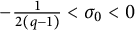 $-\frac {1}{2(q-1)}<\sigma _0 <0$
, where we define
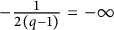 $-\frac {1}{2(q-1)}=-\infty $
if
 $q=1$
. Let
 $x\geq 2$
,
 $T\in [2,\infty )\setminus \mathcal {T}_\delta $
, and
 $c=1+1/\log x$
. Assume that
 $T\asymp x\log x$
. Then, we have
 $S_1\ll 1$
uniformly in such x and T.
Proof By the definition of
 $S_1$
, it follows that
 $$ \begin{align*} S_1 &=\frac{1}{2\pi i}\int_{\sigma_0}^c\varphi(k,q(\sigma+iT))\eta(q(\sigma+iT))\frac{x^{\sigma+iT}}{\sigma+iT}d\sigma\\ &-\frac{1}{2\pi i}\int_{\sigma_0}^c\varphi(k,q(\sigma-iT))\eta(q(\sigma-iT))\frac{x^{\sigma-iT}}{\sigma-iT}d\sigma. \end{align*} $$
Since
 $\varphi (k,q(\sigma +iT)),\varphi (k,q(\sigma -iT))\ll 1$
for every
 $(\sigma ,T)\in [\sigma _0,c]\times {\mathbb {R}}\setminus \mathcal {T}$
, the Schwarz reflection principle of
 $\zeta (s)$
and
 $\eta (s)=(1-k^{1-s})\zeta (s)$
imply
 $$ \begin{align} S_1 \ll \frac{1}{T}\int_{q\sigma_0}^{qc}|\zeta(\sigma+iqT)|x^{\sigma/q}d\sigma. \end{align} $$
Further, we decompose the right-hand side of (5.4) into three integrals as

Lemma 5.4 implies that
 $$ \begin{align*} S_{11} &\ll \displaystyle{\int_{q\sigma_0}^{0} T^{-\sigma-1/2}x^{\sigma/q}\log T d\sigma}, \\ S_{12} &\ll \displaystyle{\int_{0}^{1}T^{-1/2-\sigma/2 }x^{\sigma/q}\log T d\sigma}, \\ S_{13} &\ll \displaystyle{\int_{1}^{qc} T^{-1}x^{\sigma/q} \log T d\sigma}. \end{align*} $$
For
 $S_{13}$
, by the choices of T and c, we have
 $S_{13} \ll T^{-1} x^{c} \log T\ll 1$
. For
 $S_{11}$
, by using
 $T\asymp x\log x$
, we see that
 $$ \begin{align*} S_{11} &\ll T^{-1/2} \log T \int_{q\sigma_0}^0\left(x^{1/q}T^{-1}\right)^{\sigma} d\sigma\\ & \ll x^{-1/2}(\log x)^{1/2}\int_{q\sigma_0}^0\left(x^{1-1/q}\log x\right)^{-\sigma}d\sigma\\ &\ll x^{-1/2}(\log x)^{1/2}\cdot \frac{x^{-(q-1)\sigma_0}(\log x)^{- q\sigma_0}}{\log x}\\ &=x^{-1/2-(q-1)\sigma_0}(\log x)^{-1/2-q\sigma_0}. \end{align*} $$
The most right-hand side is
 $\ll 1$
since
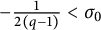 $-\frac {1}{2(q-1)}<\sigma _0$
. For
 $S_{12}$
, in a similar manner,
 $$\begin{align*}S_{12} \ll x^{-1/2}(\log x)^{1/2} \int_{0}^1 \left( x^{1/2-1/q} (\log x)^{1/2} \right)^{-\sigma} d \sigma. \end{align*}$$
In the case
 $q=1$
, since
 $1/2-1/q=-1/2$
, we have
 $$\begin{align*}S_{12} \ll x^{-1/2} (\log x)^{1/2} \frac{x^{1/2} (\log x)^{-1/2}}{\log x}\ll 1. \end{align*}$$
In the case
 $q\geq 2$
, since
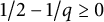 $1/2-1/q\geq 0$
, we also obtain
 $S_{12}\ll x^{-1/2}\log x \ll 1$
, completing the proof of Lemma 5.5.
Proposition 5.6 Let
 $\sigma _0$
be as in Lemma 5.5. Then, we have
 $$ \begin{align*} \sum_{\substack{0\leq d\leq l}} \{k^{d+p/q} \} &=A(l) =-\frac{1}{2\pi i }\sum_{0<|n|\leq \frac{q\log k}{2\pi} T} \zeta\left(\frac{2n\pi i}{\log k}\right) \frac{e^{2n\pi i p/q}}{n} \\ &\qquad+S_{\sigma_0}(l,T)+O(1)+ \begin{cases} 0 & \quad\mathrm{if}\ p=q=1,\\ l/2 & \quad\mathrm{otherwise} \end{cases} \end{align*} $$
uniformly in
 $l\in \mathbb {N}$
and
 $T\geq 2$
with
 $T\asymp lk^{ql}$
, where

Proof By Corollary 5.3 and Lemma 5.5, the equation (4.3) implies that
 $$ \begin{align} \sum_{n\leq x}{}^\prime h(n)=(k-1)\frac{\log x}{2q\log k}+\frac{1}{q\log k}\sum_{0<|s_n|\leq T}\frac{\eta(qs_n)}{s_n}x^{s_n}+S_0+O(1) \end{align} $$
for
 $T\in [2,\infty )\setminus \mathcal {T}$
and
 $T\asymp x\log x$
. The equation (2.5) leads to
 $$\begin{align*}\sum_{n\leq x}{}^\prime h(n)= \sum_{n\leq x}h(n) -\frac{h(k^{ql+p})}{2}= (k-1)A(l)- \frac{h(k^{ql+p})}{2} + O(1). \end{align*}$$
If
 $q=1$
, then
 $p=1$
and we obtain
 $$ \begin{align*} h(k^{ql+p})&= h(k^{l+1})= \sum_{\substack{d\geq 0\\ k^d\mid k^{l+1}} } g(k^{(l-d)+1}) \\ &= \sum_{0\leq d\leq l+1} b(k^{(l-d)+1})=(1-k)(l+1)+1. \end{align*} $$
When
 $q\geq 2$
, we recall that
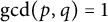 $\gcd (p,q)=1$
, and k is not a qth power. Therefore, by combining the definitions of
 $h(n)$
and
 $g(n)$
, we obtain
 $$\begin{align*}h(k^{ql+p})= \sum_{\substack{d\geq 0\\ k^{qd}\mid k^{ql+p}} } g(k^{q(l-d)+p}) = \sum_{0\leq d\leq l} g(k^{q(l-d)+p})=0. \end{align*}$$
Thus, the left-hand side of (5.5) is
 $$ \begin{align*} (k-1)A(l)+O(1)+ \begin{cases} (k-1)l/2 & \quad\text{if } p=q=1,\\ 0 & \quad\text{otherwise}. \end{cases} \end{align*} $$
Further, recalling that
 $s_n=2n\pi i/(q\log k)$
and
 $x=k^{ql+p}$
, we have
 $$ \begin{align*} 1-k^{1-qs_n}= 1-k,\quad x^{s_n}=k^{s_n(ql+p)}=e^{2n\pi i p/q}, \end{align*} $$
and hence
 $$\begin{align*}\frac{1}{q\log k}\sum_{0<|s_n|\leq T}\frac{\eta(qs_n)}{s_n}x^{s_n}= -\frac{k-1}{2\pi i }\sum_{0<|n|\leq \frac{q\log k}{2\pi} T} \zeta\left(\frac{2n\pi i}{\log k}\right) \frac{e^{2n\pi i p/q}}{n}. \end{align*}$$
Therefore, we have
 $$ \begin{align*} A(l) = -\frac{1}{2\pi i }\sum_{0<|n|\leq \frac{q\log k}{2\pi} T} \zeta\left(\frac{2n\pi i}{\log k}\right) \frac{e^{2n\pi i p/q}}{n}+ \frac{S_0}{k-1}+O(1)+ \begin{cases} 0 & \quad\text{if } p=q=1,\\ l/2 & \quad\text{otherwise} \end{cases} \end{align*} $$
for
 $T\in [2,\infty )\setminus \mathcal {T}$
and
 $T\asymp x\log x$
. We can remove the condition
 $T\notin \mathcal {T}$
. Indeed, for sufficiently large
 $T\geq 2$
, we observe that
 $$ \begin{align*} \sum_{{T<|s_n|\leq T+1}}\frac{\eta(qs_n)}{qs_n}x^{s_n}\ll\frac{|qs_n|^{1/2+\epsilon}}{T}\ll T^{-1/2+\epsilon}. \end{align*} $$
In addition, if T satisfies
 $T\asymp x\log x$
, then
 $$ \begin{align*} &\int_{\sigma_0+iT}^{\sigma_0+i(T+1)}\varphi(k,qs)\eta(qs)\frac{x^s}{s}ds\ll x^{\sigma_0}\int_T^{T+1} \left\lvert \frac{\zeta(q\sigma_0+iqt)}{\sigma_0+it}\right\rvert dt\\ &\ll x^{\sigma_0}\int_T^{T+1}t^{-1/2-q\sigma_0}dt \ll x^{\sigma_0}T^{-1/2-q\sigma_0} \ll x^{-1/2-(q-1)\sigma_0}(\log x)^{-1/2-q\sigma_0}\ll 1, \end{align*} $$
where
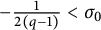 $-\frac {1}{2(q-1)}<\sigma _0$
leads to the last inequality. Therefore, we conclude Proposition 5.6.
6 Applying the functional equation to S and the proof of Theorem 1.2
This section gives proofs of Theorem 1.2 and the following theorem.
Theorem 6.1 Suppose
 $1\leq p<q$
and
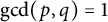 $\gcd (p,q)=1$
. For every integer
 $l\geq 2$
and real number
 $T\asymp lk^{ql}$
, we have
 $$\begin{align*}A(\log_k T )= \frac{\log_k T}{2} -\frac{1}{2\pi i }\sum_{0<|n|\leq \frac{q\log k}{2\pi} T} \zeta\left(\frac{2n\pi i}{\log k}\right) \frac{e^{2n\pi i p/q}}{n}+\sum_{0\leq m\leq \log_k(Tk^{-l}) } E_m(l) +O(1), \end{align*}$$
where
 $E_m(l)$
satisfies
 $$ \begin{align} |E_m(l)| \leq \min \left(\frac{ 1}{2},\ \frac{B}{ l k^{(q-1)l -m} |\sin(\pi k^{m+l+p/q} )| } \right) \end{align} $$
for some constant
 $B>0$
depending only on k, p, and q.
Lemma 6.2 Let
 $s=\sigma +it$
. Fix any
 $\sigma <0$
. For
 $t\geq 1$
, we have
 $$\begin{align*}\frac{\zeta(qs)}{s}=e^{-i\pi /4}\cdot \left(\frac{2\pi}{q}\right)^{q\sigma-1/2} \cdot t^{-1/2-q\sigma} \sum_{n=1}^\infty n^{q\sigma-1} \left(\frac{2n\pi e}{qt} \right)^{qit}+ O(t^{-3/2-q\sigma}). \end{align*}$$
Proof Lemma 3.2 implies that for
 $t\geq 1$
,
 $$ \begin{align*} \frac{\zeta(qs)}{s} &= \frac{1}{it}\left(\frac{1}{1+\sigma/(it) } \right) \cdot \left(\frac{2\pi}{qt} \right)^{q\sigma+qit-1/2}e^{i (qt+\pi/4)} \zeta(1-q\sigma-qit) \left(1+O\left(\frac{1}{t}\right)\right) \\ &= \frac{1}{it} \cdot \left(\frac{2\pi}{qt} \right)^{q\sigma+qit-1/2}e^{i (qt+\pi/4)} \zeta(1-q\sigma-qit) \left(1+O\left(\frac{1}{t}\right)\right)\\ &= e^{-i\pi /4}\cdot \left(\frac{2\pi}{q}\right)^{q\sigma-1/2} \cdot t^{-1/2-q\sigma} \sum_{n=1}^\infty n^{q\sigma-1} \left(\frac{2n\pi e}{qt} \right)^{qit}\left(1+O\left(\frac{1}{t}\right)\right)\\ &=e^{-i\pi /4}\cdot \left(\frac{2\pi}{q}\right)^{q\sigma-1/2} \cdot t^{-1/2-q\sigma} \sum_{n=1}^\infty n^{q\sigma-1} \left(\frac{2n\pi e}{qt} \right)^{qit}+ O(t^{-3/2-q\sigma}).\\[-44pt] \end{align*} $$
We take any integer
 $l\geq 2$
and any real number
 $T\asymp lk^{ql}$
.
Lemma 6.3 Let
 $(a_m)_{m\geq 0}$
be the sequence in (3.4). For every
 $m\in \mathbb {Z}_{\geq 0}$
and
 $n\in \mathbb {N}$
, let
 $\alpha _{m,n}=\alpha _{m,n}(l)=k^{l+m+p/q}n \pi $
. For every
 $t\in [1,T]$
, we define

Then we have
 $$ \begin{align} \begin{aligned} &(k-1)S_{-1/(2q)}(l,T) \\ &=\frac{1}{2\pi^{3/2}} \sum_{n=1}^\infty \sum_{m=0}^\infty n^{-1} a_m \alpha_{m,n}^{-1/2} q \cdot \Re \left(e^{-i\pi/4}\int_{1}^{T} e^{iF_{m,n}(t)} dt\right)+O(1). \end{aligned} \end{align} $$
Proof For every
 $\Re (s)<0$
, by (3.4), we recall that
 $$ \begin{align*} &\frac{1-k^{1-qs}}{1-k^{-qs}}= \sum_{m=0}^\infty a_m k^{mqs}. \end{align*} $$
We now choose
 $\sigma =-1/(2q)$
. Then for
 $s=\sigma +it$
(
 $t\in [-1,1]$
), we have
 $$\begin{align*}\frac{\zeta(qs)}{s}\cdot\frac{1-k^{1-qs}}{1-k^{-qs}}k^{(ql+p)s}\ll_{k,p,q} k^{-l/2}\ll 1. \end{align*}$$
By applying Lemma 6.2, for
 $s=\sigma +it$
(
 $t\in [1,T]$
), we have
 $$ \begin{align*} &\frac{\zeta(qs)}{s}\cdot\frac{1-k^{1-qs}}{1-k^{-qs}}k^{(ql+p)s}\\ &= \sum_{n=1}^\infty \sum_{m=0}^\infty a_m k^{mqs} k^{(ql+p)s}e^{-i\pi /4}\cdot \left(\frac{2\pi}{q}\right)^{-1} n^{-3/2} \left(\frac{2n\pi e}{qt} \right)^{qit}+ O(k^{-l/2} t^{-1})\\ &= \frac{1}{2\pi} \sum_{n=1}^\infty \sum_{m=0}^\infty n^{-3/2} a_m k^{-(m+l+p/q)/2}q \cdot e^{-i\pi /4} \left(\frac{2k^{m+l+p/q}n\pi e}{qt} \right)^{qit}+ O(k^{-l/2} t^{-1})\\ &=\frac{1}{2\pi^{1/2}} \sum_{n=1}^\infty \sum_{m=0}^\infty n^{-1} a_m \alpha_{m,n}^{-1/2}q \cdot e^{-i\pi /4} \left(\frac{2\alpha_{m,n}e}{qt} \right)^{qit}+ O(k^{-l/2} t^{-1}), \end{align*} $$
and hence the Schwarz reflection principle leads to the following:
 $$ \begin{align*} (k-1)S_\sigma(l,T) &=\frac{1}{2\pi i}\int_{\sigma-iT}^{\sigma+iT}\frac{\zeta(qs)}{s}\cdot\frac{1-k^{1-qs}}{1-k^{-qs}}k^{(ql+p)s}ds\\ &=\frac{1}{2\pi^{3/2}} \sum_{n=1}^\infty \sum_{m=0}^\infty n^{-1} a_m \alpha_{m,n}^{-1/2} q \cdot \Re \left(e^{-i\pi/4}\int_{1}^{T} \left(\frac{2\alpha_{m,n}e}{qt}\right)^{qit} dt\right).\\ &\quad +O(1)+O\left(k^{-l/2}\int_1^Tt^{-1}dt\right). \end{align*} $$
Since
 $T\ll lk^{ql}$
, it follows that
 $$\begin{align*}k^{-l/2}\int_1^Tt^{-1} dt \ll k^{-l/2} \log T \ll 1. \end{align*}$$
By the definitions of
 $\alpha _{m,n}$
and
 $F_{m,n}(t)$
, we obtain Lemma 6.3.
Let
 $m\in \mathbb {Z}_{\geq 0}$
and
 $n\in \mathbb {N}$
. Let
 $c=c_{m,n}=2\alpha _{m,n}/q=2k^{m+l+p/q}n\pi /q$
. Since
 ${F'(t)= q\log (2\alpha _{m,n}/(qt))}$
, we have
 $F'(t)=0$
if and only if
 $t=c$
. Let
 $\delta>0$
be a sufficiently small absolute constant. It is enough to choose
 $\delta =1/4$
. We define
 $$\begin{align*}U=U_{m,n}= \min (1/2, \alpha_{m,n}^{-1/2} (m+l)^{1+\delta} n^{\delta}). \end{align*}$$
Then, we have
 $$ \begin{align} \sum_{n=1}^\infty \sum_{m=0}^\infty n^{-1} \alpha_{m,n}^{-1/2} U_{m,n}^{-1} \ll 1. \end{align} $$
Let us decompose the sum on the right-hand side of (6.2) into three sums as follows:

Lemma 6.4 We have
 $S_{01}\ll 1$
.
Proof Take any
 $(m,n)\in \mathbb {Z}_{\geq 0}\times \mathbb {N}$
with
 $T \leq c_{m,n}(1-U_{m,n})$
. Then, each
 $t\in [1,T]$
satisfies
 $$\begin{align*}|F'(t)| \geq q\log \left(\frac{1}{1-U} \right) \gg U. \end{align*}$$
Therefore, by Lemma 3.3, we obtain
 $$ \begin{align*} \left\lvert \int_{1}^{T} e^{iF_{m,n}(t)} dt\right\rvert \ll U^{-1}, \end{align*} $$
and hence (6.3) implies that
 $$ \begin{align*} S_{01}= \underset{T\leq c_{m,n}(1-U_{m,n}) }{\sum_{n=1}^\infty \sum_{m=0 }^\infty} n^{-1} a_m \alpha_{m,n}^{-1/2} q \cdot \Re \left(e^{-i\pi/4}\int_{1}^{T} e^{iF_{m,n}(t)} dt\right) \ll 1.\\[-52pt] \end{align*} $$
Lemma 6.5 We have
 $S_{02}\ll 1$
.
Proof We discuss the case
 $c(1-U)<T\leq c(1+U)$
. Let
 $$\begin{align*}J=\{(m,n)\in {\mathbb{Z}}_{\geq 0} \times {\mathbb{N}} \colon T/(1+U_{m,n})\leq c_{m,n} <T/(1-U_{m,n})\}. \end{align*}$$
Take any
 $(m,n)\in J$
. Then, the following inequalities hold:
-
(1)
 $c_{m,n}\asymp T$
;
-
(2)
$0\leq m\leq (q-1)l +\log _k l+O(1)=\log _k (Tk^{-l})+O(1)$
; -
(3)
$n \asymp Tk^{-(l+m)}$
; -
(4)
$\alpha _{m,n} \asymp T$
.




Indeed, (1) is trivial by
 $U\leq 1/2$
and the choice of
 $(m,n)$
. Also, (2) immediately follows from
 $k^{m+l}\ll c_{m,n}\asymp T$
and
 $T\asymp l k^{ql}$
. In addition, (1) and the definition of
 $c_{m,n}$
imply (3) and (4).
By the choice of
 $U_{m,n}$
, (2), (3), and (4), we obtain
 $$\begin{align*}U_{m,n} \asymp \min( 1/2, T^{-1/2+\delta} l^{1+\delta} k^{-\delta(m+l)} ). \end{align*}$$
Further, by the definition of J, n satisfies
 $$ \begin{align} \frac{qT}{2k^{m+l+p/q}\pi (1+U) } \leq n < \frac{qT}{2k^{m+l+p/q}\pi (1-U) }. \end{align} $$
The number of n’s satisfying (6.4) is at most
 $$\begin{align*}\ll 1+ UTk^{-m-l}\ll 1+ T^{1/2+\delta} l^{1+\delta} k^{-(1+\delta)(m+l)}. \end{align*}$$
Since
 $F_{m,n}"(t)=-q/t$
, Lemma 3.4 with
 implies that
 $$\begin{align*}\int_1^T e^{iF_{m,n}(t)} dt \ll T^{1/2}. \end{align*}$$
Therefore, by (2), (3), and (4), we have
 $$ \begin{align*} S_{02}&= \underset{(m,n)\in J }{\sum_{n=1}^\infty \sum_{m=0 }^\infty} n^{-1} a_m \alpha_{m,n}^{-1/2} q \cdot \Re \left(e^{-i\pi/4}\int_{1}^{T} e^{iF_{m,n}(t)} dt\right) \\ &\ll \sum_{0\leq m \leq (q-1)l+\log_k l+O(1)} T^{-3/2} k^{m+l} \sum_{\substack {n\in {\mathbb{N}} \text{ with (6.4)} \\ (m,n)\in J} } T^{1/2} \\ &\ll \sum_{0\leq m \leq (q-1)l+\log_k l+O(1)} T^{-1} k^{m+l}( 1+ T^{1/2+\delta} l^{1+\delta} k^{-(1+\delta)(m+l)}). \end{align*} $$
By simple calculation and
 $T\asymp lk^{ql}$
, the above is
 $\ll T^{-1}T + T^{-1/2+\delta }l^{1+\delta } \ll 1$
.
Lemma 6.6 We have
 $$\begin{align*}\frac{S_{03}}{2\pi^{3/2}} = \sum_{0\leq m\leq \log_k(Tk^{-l})+O(1)}a_m \sum_{\substack{n\in \mathbb{N}\\ c_{m,n}(1+U_{m,n})<T }} \frac{\sin (2\alpha_{m,n} )}{n\pi } +O(1 ). \end{align*}$$
Proof Take any
 $(m,n)\in {\mathbb {Z}}_{\geq 0}\times {\mathbb {N}}$
with
 $T>c_{m,n}(1+U_{m,n})$
. We have
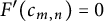 $F'(c_{m,n})=0$
and
 $c_{m,n}\in [1,T]$
. Further, we also get
 $$ \begin{align} 0\leq m\leq (q-1)l +\log_k l+O(1)=\log_k (Tk^{-l})+O(1) \end{align} $$
since
 $k^{m+l}\ll c_{m,n} \ll lk^{ql}$
. To apply Lemma 3.5, check (3.5) and (3.6). It follows that
 $$\begin{align*}F"(t) = -q/t,\quad \text{and} \quad \quad F"'(t)= q/t^2. \end{align*}$$
Therefore, for every
 $t\in [c(1-U),c(1+U)]$
, we obtain
 $$\begin{align*}|F"(t) | \asymp c^{-1}, \quad \text{and} \quad |F"'(t)| \ll c^{-2}. \end{align*}$$
In addition,
 $|F'(c(1-U) )|$
,
 $|F'(c(1+U))|\gg U$
. Thus, by
 $U\gg c^{-1/2}$
, Lemma 3.5 leads to
 $$ \begin{align} \int_{c(1-U)}^{c(1+U)} e^{iF(t)} dt &=(2\pi)^{1/2} \frac{e^{-\pi i/4 +iF(c)} }{|F"(c)|^{1/2}} +O(c^{4/5}c^{-2/5} )+O\left(\min\left(U^{-1},c^{1/2} \right)\right) \nonumber\\ &= 2\pi^{1/2} e^{-\pi i/4} e^{2i\alpha_{m,n} } \alpha_{m,n}^{1/2}/q + O(c^{2/5}) +O(U^{-1}). \end{align} $$
By Lemma 3.3, we obtain
 $$ \begin{align} \left\lvert \int_{c(1+U)}^T e^{iF(t)} dt \right\rvert \ll U^{-1}, \quad \left\lvert \int_{1}^{c(1-U)} e^{iF(t)} dt \right\rvert \ll U^{-1}. \end{align} $$
Combining (6.3), (6.6), and (6.7), we have
 $$ \begin{align*} \frac{S_{03}}{2\pi^{3/2}} &=\frac{1}{2\pi^{3/2}} \underset{c_{m,n}(1+U_{m,n}) <T }{\sum_{n=1}^\infty \sum_{m=0 }^\infty} n^{-1} a_m \alpha_{m,n}^{-1/2} q \cdot \Re \left(e^{-i\pi/4}\int_{1}^{T} e^{iF_{m,n}(t)} dt\right) \\ &= \frac{1}{2\pi^{3/2}} \underset{c_{m,n}(1+U_{m,n}) <T }{\sum_{n=1}^\infty \sum_{m=0 }^\infty} n^{-1} a_m \alpha_{m,n}^{-1/2} q \cdot \Re \left(\frac{2\pi^{1/2}}{i} e^{2i\alpha_{m,n}} \alpha_{m,n}^{1/2}/q \right)+O(1) \\ &= \sum_{0\leq m\leq \log_k(Tk^{-l})+O(1)}a_m \sum_{\substack{n\in \mathbb{N}\\ c_{m,n}(1+U_{m,n})<T }} \frac{\sin (2\alpha_{m,n} )}{n\pi } +O(1) , \end{align*} $$
where we apply (6.5) to restrict the range of the summation.
Proof of Theorem 1.2
Let k be an integer not less than
 $2$
and let
 $p=q=1$
. Take an arbitrary real number
 $l'\geq 2$
. Let l be the integer satisfying
 $l\leq l'-\log _k l' <l+1 $
. Choose
 $T= \frac {2\pi }{\log k} k^{l'}$
. Then it follows that
 $T \asymp k^{l'} = l' k^{l'-\log _k l'} \asymp l k^{l}$
. By combining Proposition 5.6 with
 $\sigma _0=-1/2$
and Lemmas 6.3–6.6, we obtain
 $$ \begin{align*} 0&=\sum_{0\leq m\leq l}\{k^{m+1}\}=A(l)\\ &= -\frac{1}{2\pi i } \sum_{0<|n|\leq \frac{\log k}{2\pi} T } \zeta \left(\frac{2n\pi i}{\log k}\right) \frac{1}{n} \\ &\hspace{30pt}+ \sum_{0\leq m\leq \log_k(Tk^{-l}) +O(1)} \frac{a_m}{k-1} \sum_{\substack{n\in \mathbb{N}\\ c_{m,n}(1+U_{m,n})<T}} \frac{\sin (2\alpha_{m,n})}{n\pi} +O(1). \end{align*} $$
We have
 $\sin (2\alpha _{m,n})=0$
since
 $\alpha _{m,n}=\pi k^{l+m+1}n\in \pi \mathbb {Z}$
for all integers
 $m\geq 0$
and
 $n\geq 1$
. Therefore, we obtain
 $$\begin{align*}0= -\frac{1}{2\pi i} \sum_{0<|n|\leq k^{l'}} \zeta \left(\frac{2n\pi i}{\log k}\right) \frac{1}{n} +O(1), \end{align*}$$
which completes the proof of Theorem 1.2.
Proof of Theorem 6.1
Take arbitrary integers k, p, and q satisfying
 $k\geq 2$
,
 $1\leq p<q$
, and
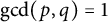 $\gcd (p,q)=1$
. By Lemmas 6.3–6.6, we obtain
 $$\begin{align*}(k-1)S_{-1/(2q)}(l,T) = \sum_{m\leq \log_k(Tk^{-l}) +O(1)}a_m \sum_{\substack{n\in \mathbb{N}\\ c_{m,n}(1+U_{m,n})<T }} \frac{\sin (2\alpha_{m,n} )}{n\pi } +O(1). \end{align*}$$
Lemma 3.6 with
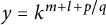 $y=k^{m+l+p/q}$
implies that
 $$\begin{align*}\sum_{\substack{n\in \mathbb{N}\\ c_{m,n}(1+U_{m,n})<T }} \frac{\sin (2\alpha_{m,n} )}{n\pi } = -\psi(k^{m+l+p/q} ) + E_{m}(l), \end{align*}$$
where
 $E_m(l)$
satisfies

Since
 $c_{m,n}=2k^{l+m+p/q}n\pi /q$
,
 $T \asymp lk^{ql}$
, and
 $U\leq 1/2$
, we get
 $K_m \gg lk^{(q-1)l -m }$
, leading to (6.1). Therefore,
 $(k-1)S_{-1/(2q)}(l,T)$
is
 $$ \begin{align*} &= \sum_{0\leq m \leq \log_k(Tk^{-l}) +O(1)} (k-1) \left(\frac{1}{2} - \{k^{m+l+p/q} \} +E_m(l)\right) + O(1)\\ &= (k-1)\left(\frac{ \log_k(Tk^{-l})}{2} -\sum_{0\leq m\leq \log_k(Tk^{-l})} \{k^{m+l+p/q} \}+\sum_{0\leq m\leq \log_k(Tk^{-l})} E_m(l) \right)+O(1). \end{align*} $$
By Proposition 5.6 with
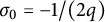 $\sigma _0=-1/(2q)$
, we have
 $$ \begin{align*} A(l) &=\frac{l} {2}-\frac{1}{2\pi i }\sum_{0<|n|\leq \frac{q\log k}{2\pi} T} \zeta\left(\frac{2n\pi i}{\log k}\right) \frac{e^{2n\pi i p/q}}{n} + \frac{ \log_k(Tk^{-l})}{2}\\ &\hspace{30pt} -\sum_{0\leq m\leq \log_k(Tk^{-l})} \{k^{m+l+p/q} \}+\sum_{0\leq m\leq \log_k(Tk^{-l})} E_m(l)+O(1), \end{align*} $$
which completes the proof of Theorem 6.1 since
 $$\begin{align*}A(l)+ \sum_{0\leq m\leq \log_k (Tk^{-l})} \{k^{m+l+p/q}\} = A(\log_k T )+O(1).\\[-46pt] \end{align*}$$
7 Ridout’s theorem and the completion of the proof of Theorem 2.1
Theorem 7.1 (Ridout’s theorem)
Let
 $\alpha $
be any algebraic number other than 0; let
 $P_1,\ldots , P_s$
,
 $Q_1,\ldots , Q_t$
be distinct primes; and let
 $\mu $
,
 $\nu $
, and c be real numbers satisfying
 $$\begin{align*}0\leq \mu \leq 1,\quad 0\leq \nu \leq 1,\quad c>0. \end{align*}$$
Let a and b be restricted to integers of the form
 $$\begin{align*}a=a^{*}P_1^{\rho_1}\cdots P_s^{\rho_s},\quad b = b^{*}Q_1^{\sigma_1}\cdots Q_t^{\sigma_t}, \end{align*}$$
where
 $\rho _1,\ldots , \rho _s$
,
 $\sigma _1,\ldots , \sigma _t$
are nonnegative integers and
 $a^*$
,
 $b^*$
are integers satisfying
 $$\begin{align*}0<a^* \leq ca^{\mu},\quad 0<b^* \leq cb^{\nu}. \end{align*}$$
Then if
 $\kappa>\mu +\nu $
, the inequality
 $0 <| \alpha -a/b|< b^{-\kappa }$
has only a finite number of solutions in a and b.
Proof See [Reference Ridout8].
We have the following corollary by substituting
 $\mu =1$
,
 $\nu =0$
, and
 $c=1$
.
Corollary 7.2 Let
 $\alpha $
be any algebraic irrational number. Let
 $Q_1,\ldots , Q_t$
be distinct primes. Let b be an integer of the form
 $$ \begin{align} b=Q_1^{\sigma_1}\cdots Q_{t}^{\sigma_t}, \end{align} $$
where
 $\sigma _1,\ldots , \sigma _t$
are nonnegative integers. Then for any
 $\epsilon>0$
, there exists
 $C>0$
such that
 $|\alpha -a/b |\geq Cb^{-1-\epsilon }$
for every
 $a\in \mathbb {Z}$
and b of the form (7.1).
Proof of Theorem 2.1
Let
 $\gamma>0$
be an arbitrarily small constant. Let
 $l'$
be a sufficiently large real number. Take a positive integer l such that
 $ql \leq l' -\log _k l' < ql+q$
. Choose
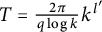 $T=\frac {2\pi }{q\log k}k^{l'}$
. Then we obtain
 $$\begin{align*}T= \frac{2\pi}{q\log k}k^{l'} = \frac{2\pi}{q\log k}l' k^{l'-\log_k l' } \asymp lk^{ql}. \end{align*}$$
Since we have
 $l'=\log _k T +O(1)$
, Theorem 6.1 leads to
 $$ \begin{align*} A(l') &=A(\log_k T)+O(1)\\ &= \frac{\log_k T }{2} -\frac{1}{2\pi i }\sum_{0<|n|\leq \frac{q\log k}{2\pi}T } \zeta\left(\frac{2n\pi i}{\log k}\right) \frac{e^{2n\pi i p/q}}{n}+\sum_{0\leq m\leq \log_k(Tk^{-l}) } E_m(l) +O(1), \end{align*} $$
where
 $E_{m}(l)$
satisfies (6.1). By the choice of T, we observe that
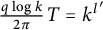 $\frac {q\log k}{2\pi }T=k^{l'}$
and
 $$\begin{align*}\log_k(Tk^{-l})=(q-1)l + O(\log l)=\log_k(Tk^{-l})=(q-1)l + O(\log l'). \end{align*}$$
By
 $E_m(l)\ll 1$
, we obtain
 $$\begin{align*}A(l')=\frac{l'}{2}-\frac{1}{2\pi i }\sum_{0<|n|\leq k^{l'} } \zeta\left(\frac{2n\pi i}{\log k}\right) \frac{e^{2n\pi i p/q}}{n}+\sum_{0\leq m\leq (q-1)l } E_m(l) +O(\log l'). \end{align*}$$
Since
 $|\sin \pi x|\gg \|x\|$
, for every
 $0\leq m\leq (q-1)l$
, we have
 $$\begin{align*}E_{m}(l)\leq \min \left( \frac{1}{2}, \frac{C}{lk^{(q-1)l-m}\|k^{m+l}\cdot k^{p/q} \|}\right) \end{align*}$$
for some constant
 $C>0$
. By substituting
 $\alpha :=k^{p/q}$
,
 $b:=k^{m+l}$
, and
 $\epsilon :=\gamma $
in Corollary 7.2, we obtain
 $$ \begin{align} \|k^{m+l}\cdot k^{p/q}\|\gg_\gamma k^{-\gamma (m+l)}. \end{align} $$
Therefore, the inequality (7.2) yields that
 $$\begin{align*}\sum_{0\leq m \leq \frac{(q-1-\gamma)l}{1+\gamma} } E_{m}(l) \ll_\gamma \sum_{0\leq m \leq \frac{(q-1-\gamma)l}{1+\gamma}} l^{-1} k^{(\gamma+1)m-(q-1-\gamma)l } \ll_\gamma 1. \end{align*}$$
Also, we obtain
 $$\begin{align*}\sum_{\frac{(q-1-\gamma)l}{1+\gamma}<m \leq (q-1)l} E_{m}(l)\ll \gamma ql, \end{align*}$$
where the implicit constant does not depend on
 $\gamma $
. Therefore, we have
 $$\begin{align*}\sum_{0\leq m\leq (q-1)l} E_{m}(l)=O_\gamma(1) +O(\gamma l ). \end{align*}$$
By combining the above estimates, we obtain
 $$\begin{align*}A(l')= \frac{l'}{2} -\frac{1}{2\pi i }\sum_{0<|n|\leq k^{l'}} \zeta\left(\frac{2n\pi i}{\log k}\right) \frac{e^{2n\pi i p/q}}{n}+O(\gamma l') +O_\gamma(1) +O(\log l'), \end{align*}$$
which implies that
 $$\begin{align*}\lim_{l'\to \infty} \frac{1}{l'}\left\lvert A(l') - \frac{l'}{2} +\frac{1}{2\pi i }\sum_{0<|n|\leq k^{l'}} \zeta\left(\frac{2n\pi i}{\log k}\right) \frac{e^{2n\pi i p/q}}{n} \right\rvert \ll \gamma. \end{align*}$$
By choosing
 $\gamma \to 0$
, we conclude Theorem 2.1.
Acknowledgements
We are grateful to the referee for providing us with helpful and insightful comments.



