Introduction
More than half a million tonsillectomies are completed each year in the United States for patients under the age of 15, making this otolaryngology procedure among the most prevalent surgeries conducted in the specialty.Reference Bohr and Shermetaro1 The most common indications for surgical removal of the tonsils are recurrent or chronic tonsillitis and sleep-disordered breathing.Reference Han, Bergman, Harley and Harley2–Reference Randall4 Historically, tonsillectomies were done by cold dissection techniques.Reference MR, Salehi, Hosseini, Hassanzadeh-Taheri, Meghdadi and Hassanzadeh-Taheri5, Reference Karimi, Safaee, Bastaninejad, Dabiran, Masoumi and Moravej Salehi6 This method was popular until the 1960s. However, the addition of new devices, such as monopolar or bipolar electrocautery, Harmonic scalpel (HS) (Ethicon Inc., Cincinnati, OH, USA), Ligasure (LS) seal (Valleylab, Boulder, CO, USA), radiofrequency coblation and CO2 lasers, led to a shift in using energy devices for tonsillectomies.Reference Karimi, Safaee, Bastaninejad, Dabiran, Masoumi and Moravej Salehi6, Reference VG, Jervis and Falagas7 In contrast to cold dissection, ‘hot’ techniques implement thermal energy to cut tissues.Reference Pynnonen, Brinkmeier, Thorne, Chong and Burton8 Today, surgeons who use cold dissections often utilise monopolar or bipolar electrocautery for haemostatic coagulation, combining both cold and hot techniques for tonsillectomies.Reference Pynnonen, Brinkmeier, Thorne, Chong and Burton8 Research has revealed significant variations in operative time, peri-operative bleeding, post-operative pain and complications across these different techniques.Reference VG, Jervis and Falagas7
In 2018, the BiZact (BZ) tonsillectomy device (Medtronic, Minneapolis, Minnesota, USA) was approved by regulatory bodies for clinical use in the United States.Reference Bohr and Shermetaro10, Reference Falz, von Lücken, Münscher and Möckelmann9 The handheld device has scissor-like jaws at the tip of a 12 cm shaft that allows it to deliver bipolar thermal energy to targeted tissues.Reference Falz, von Lücken, Münscher and Möckelmann9, Reference Tierney, Harrison, Hodge and Carney11 The BZ instrument, developed from the LS device, distinguishes itself with curved jaws that enhance access to the tonsillar bed, offering an improvement over the original design.Reference Chuang, Jones, Quail, Whitfield and Ahluwalia12 One standout aspect of the device is its functionality to seize targeted tissues and continuously monitor their resistance. This allows the bipolar energy to self-regulate, ensuring the precise denaturation of collagen and elastin in connective tissue and blood vessels.Reference Krishnan, Stepan, Du, Padhye, Bassiouni and Dharmawardana13 As a result of its properties, surrounding tissues are less susceptible to damage. Its versatility also allows the surgeon to coagulate, seal and cut tissues, which may improve operative time and potentially reduce surgical haemorrhage.Reference Falz, von Lücken, Münscher and Möckelmann9, Reference Krishnan, Stepan, Du, Padhye, Bassiouni and Dharmawardana13 One study suggested similar rates of post-tonsillectomy haemorrhage (PTH) between the BZ device and the coblator (Smith & Nephew, Watford, UK), while another study cited decreased PTH when comparing BZ to bipolar diathermy.Reference Chuang, Jones, Quail, Whitfield and Ahluwalia12, Reference Ni, McAuliffe, HK, Patel and Terk14
The current literature on the BZ has compared its use to other techniques, such as bipolar diathermy, coblation and cold dissection for tonsillectomies. Bipolar diathermy has two forceps prongs that deliver low-voltage and high-amperage electrical energy to targeted tissues for coagulation.Reference Chuang, Jones, Quail, Whitfield and Ahluwalia12, Reference Baigrie, FN and Buicko15 Coblation, also known as cold ablation, passes radiofrequency energy through saline to create charged ions that dissect tonsils with temperatures around 40–70°C.Reference Metcalfe, Muzaffar, Daultrey and Coulson16 Finally, cold tonsillectomy typically uses a scalpel, Metzenbaum scissors, Fisher tonsil dissector, tying snare, suction cautery, sponge and knots for dissection and haemostasis.Reference Bohr and Shermetaro1 Overall, the objective of this systematic review is to answer the following PICO question: in adult and paediatric tonsillectomies, how efficacious and safe is the BZ device, and how does it compare to other approaches or devices for tonsil surgery?
Materials and methods
Literature search and study selection
This systematic review was conducted with reference to the Preferred Reporting Items for Systematic Reviews and Meta-Analysis (PRISMA) guideline.Reference Page, McKenzie, Bossuyt, Boutron, Hoffmann and Mulrow17 Three medical databases, which included PubMed, Embase and Web of Science, were employed to retrieve articles for this systematic review. Two authors (KD and EK) inputted broad search terms and phrases into these databases in July 2024 to collect relevant studies for this systematic review. The search terms used were: ‘Tonsillectomy’, ‘BiZact’, ‘Electrocautery’, ‘Bipolar’, ‘Coblation’, ‘Hot Dissection’ and ‘Cold Dissection’. These terms were combined using Boolean operators ‘AND’ and ‘OR’ in various configurations. The full search phrases and methodologies are demonstrated in Appendix 1. These search methodologies yielded 599 results on PubMed, 1027 results on Embase and 19 results on Web of Science. An overview of the article screening and retrieval process for this systematic review is portrayed in Figure 1. Inclusion criteria for this review included studies that examined the BZ device for tonsillectomies. Exclusion criteria encompassed articles that referenced the BZ device but lacked reports on clinical outcomes, studies that did not specifically evaluate the BZ device, those focusing on surgeries other than tonsillectomies and publications not written in English. This review has not been registered, and data is available upon request.
PRISMA Flow DiagramReference Page, McKenzie, Bossuyt, Boutron, Hoffmann and Mulrow17

Data extraction
The initial screening of articles was performed by two independent reviewers (KD and EK), where any conflicts during this process were resolved with the help of a senior reviewer (JLB). After inputting the search terms into the three databases, the authors first evaluated the articles for the relevancy of their titles and abstracts. Irrelevant articles were eliminated, and the full-length manuscript of the remaining studies was examined by the authors. Information such as author name, publication year, patient characteristics and tonsillectomy outcomes (surgical time, pain scores, intra-operative bleeding, PTH, etc.) were collected from these full-length articles. The characteristics and overall outcomes of these individual studies are shown in Table 1.
Characteristics and outcomes of articles examining BiZact tonsillectomy

Quality assessment
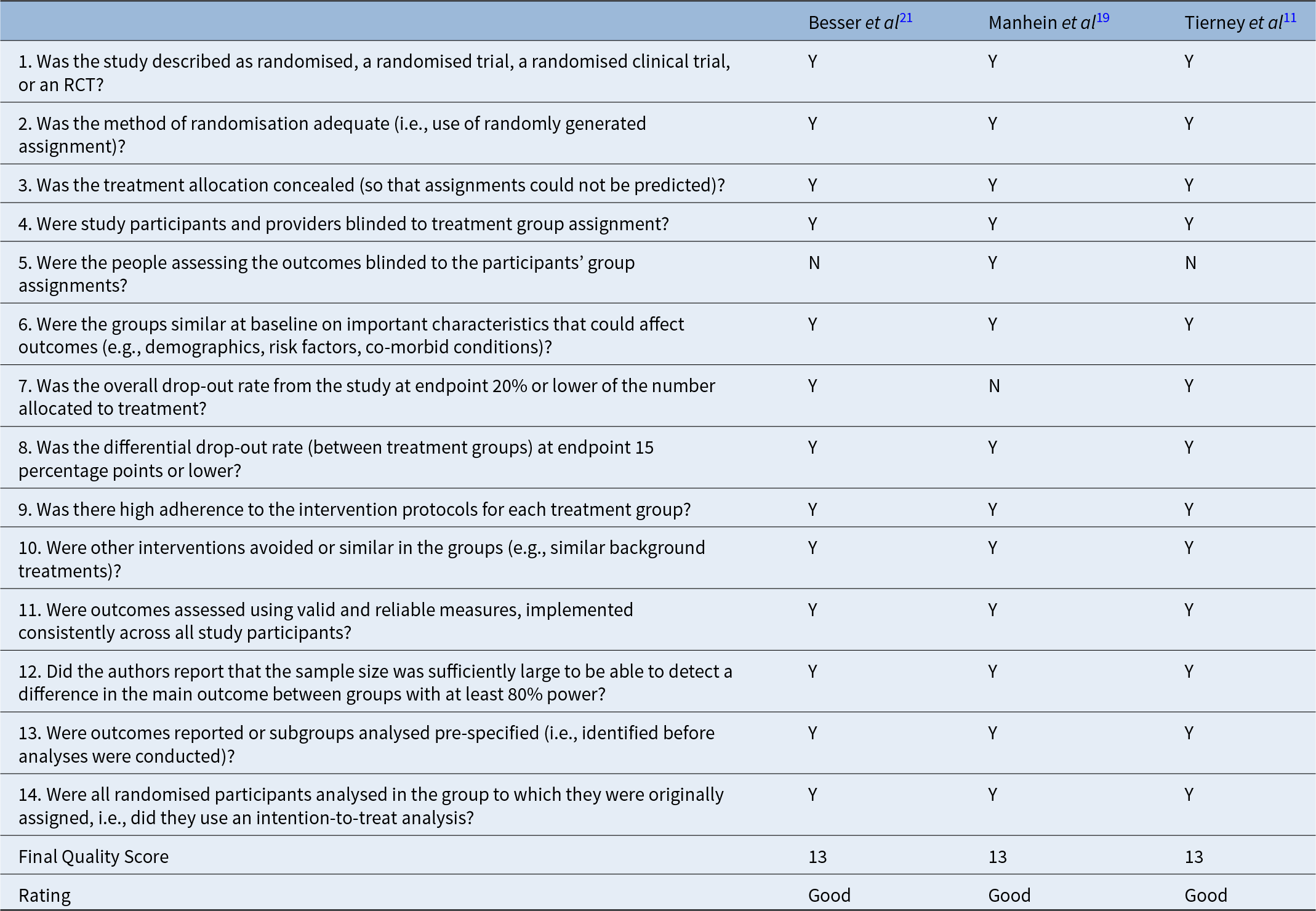
The risk of bias for the eight articles included in this systematic review was determined by two independent researchers (KD and EK), using the National Institute of Health (NIH) Study Quality Assessment tool.18 The risk of bias assessment tools for controlled intervention studies (randomised controlled trials) and observational cohort studies contained 14 questions each (Tables 2 and 3).
Risk of bias assessment of randomised controlled trials

Risk of bias assessment of observational studies

Quality was categorised based on scores: 11–14 indicated high quality, 7–10 indicated moderate quality and 0–6 indicated low quality. For case-control studies, the tool included 12 questions, with scores of 9–12 being considered high quality, 6–8 being considered moderate quality and 0–5 being considered low quality (refer to Table 4).
Risk of bias assessment of case-controlled studies

Results
Characteristics of included studies
After screening through 1645 articles across PubMed, Embase and Web of Science, 8 studies were included in this systematic review. These 8 papers produced a total of 5000 patients, where 3346 patients underwent BZ tonsillectomy.Reference Falz, von Lücken, Münscher and Möckelmann9, Reference Tierney, Harrison, Hodge and Carney11–Reference Ni, McAuliffe, HK, Patel and Terk14, Reference Manhein and Raeder19–Reference Besser, Grasl, Meyer, Schnoell, Bartosik and Brkic21 The other patients underwent cold dissection with electrocautery, coblation or bipolar electrocautery. The average age of these patients ranged from 7.44 to 28.9 years old. It is important to note that two papersReference Han, Bergman, Harley and Harley20, Reference Krishnan, Stepan, Du, Padhye, Bassiouni and Dharmawardana13 in this systematic review solely examine BZ tonsillectomy, while the other six papersReference Falz, von Lücken, Münscher and Möckelmann9, Reference Tierney, Harrison, Hodge and Carney11, Reference Chuang, Jones, Quail, Whitfield and Ahluwalia12, Reference Ni, McAuliffe, HK, Patel and Terk14, Reference Manhein and Raeder19, Reference Besser, Grasl, Meyer, Schnoell, Bartosik and Brkic21 compared the device to other techniques. Two papers compared BZ to bipolar electrocauteryReference Chuang, Jones, Quail, Whitfield and Ahluwalia12, Reference Manhein and Raeder19, two compared BZ to coblationReference Tierney, Harrison, Hodge and Carney11, Reference Ni, McAuliffe, HK, Patel and Terk14 and two compared BZ to cold dissection.Reference Falz, von Lücken, Münscher and Möckelmann9, Reference Besser, Grasl, Meyer, Schnoell, Bartosik and Brkic21
Study quality
The risk of bias for the eight articles was assessed using the National Institute of Health (NIH) Study Quality Assessment tool.18 After evaluation, it was determined that six papers were of good quality and two papers were of fair quality.
Operative time
Five of the eight studies included in this systematic review discussed the operative time of the BZ device, including those that compared the surgical time of the BZ instrument to other techniques.Reference Falz, von Lücken, Münscher and Möckelmann9, Reference Tierney, Harrison, Hodge and Carney11, Reference Krishnan, Stepan, Du, Padhye, Bassiouni and Dharmawardana13, Reference Manhein and Raeder19, Reference Besser, Grasl, Meyer, Schnoell, Bartosik and Brkic21
Falz et al. reported a statistically significant decrease in surgical time when comparing the BZ to cold dissection.Reference Falz, von Lücken, Münscher and Möckelmann9 The surgical time for the BZ device was 5.7 ± 2.6 minutes compared to 19.3 ± 6.7 minutes for cold dissection, p < 0.001.Reference Falz, von Lücken, Münscher and Möckelmann9 Besser et al. examined 48 patients, performing BZ tonsillectomy on one tonsil and cold-steel dissection with bipolar electrocautery on the contralateral tonsil.Reference Besser, Grasl, Meyer, Schnoell, Bartosik and Brkic21 The researchers documented a surgical time of 307.5 ± 162.4 seconds for the BZ side compared to 516.1 ± 300.8 seconds for the cold-steel side, with a p-value of 0.015.Reference Besser, Grasl, Meyer, Schnoell, Bartosik and Brkic21
Manhein et al. compared the BZ to bipolar diathermic scissors, reporting shortened operative time with the BZ device.Reference Manhein and Raeder19 In this study, 34 tonsillectomy patients who received the BZ device had a mean surgical time of 11.4 ± 2.8 minutes, which was significantly less than the 17.2 ± 4.6 minutes in the group who underwent bipolar scissors, p < 0.001. The investigators calculated the duration of anaesthesia as well, citing decreased anaesthetic time in the BZ group compared to the bipolar diathermic scissor group (17.2 ± 4.0 vs 22.2 ± 6.1 minutes, p < 0.001).Reference Manhein and Raeder19 The reduction in anaesthetic time highlights the finding that the mean surgical duration was considerably shorter in the BZ group compared to the bipolar diathermic scissor group.
However, one study reported no statistically significant operative time difference when comparing the BZ to coblation therapy for tonsillectomy.Reference Tierney, Harrison, Hodge and Carney11 The investigators reported that the procedure time for the BZ group was 420 (IQR: 360–480) seconds compared to 420 (IQR: 360–532) seconds, p = 0.31.Reference Tierney, Harrison, Hodge and Carney11
Krishnan et al. examined 186 paediatric and adult patients who underwent tonsillectomies with the BZ device.Reference Krishnan, Stepan, Du, Padhye, Bassiouni and Dharmawardana13 The total median surgical time for the paediatric patients was 4.8 minutes (range: 2.75–13 minutes) and the surgical time for adult patients was 5.6 minutes (range: 1.5–26.5 minutes).Reference Krishnan, Stepan, Du, Padhye, Bassiouni and Dharmawardana13
Post-operative pain scores
Five studies compared the pain scores of patients who underwent BZ tonsillectomy versus other techniques or devices.Reference Falz, von Lücken, Münscher and Möckelmann9, Reference Tierney, Harrison, Hodge and Carney11, Reference Krishnan, Stepan, Du, Padhye, Bassiouni and Dharmawardana13, Reference Manhein and Raeder19, Reference Besser, Grasl, Meyer, Schnoell, Bartosik and Brkic21
The studies employed different pain scales, including the Numeric Rating Scale (NRS) and the Visual Analogue Scale (VAS), both of which are measured on a 10-point scale. Falz et al. gave patients an NRS pain scale with scores ranging from 0–10, where the article reported that there was no significant pain difference between the BZ and cold dissection during the first 3 post-operative days.Reference Falz, von Lücken, Münscher and Möckelmann9 However, they did report lower pain scores on the fourth post-operative day in the cold dissection group versus the BZ group, and the researchers employed the Mann–Whitney U test to evaluate differences between the two groups (U = 1513.00, Z = 2.203, p = .028).Reference Falz, von Lücken, Münscher and Möckelmann9 Besser et al. did not find any significant difference in pain between the BZ technique and cold-steel dissection, although pain was generally higher on the control side with mean differences of less than 10 units between the 2 groups.Reference Besser, Grasl, Meyer, Schnoell, Bartosik and Brkic21
Tierney et al. collected pain scores from patients for 14 post-operative days using the VAS tool with scores ranging from 0–10.Reference Tierney, Harrison, Hodge and Carney11 The article reported that BZ patients had a statistically significant higher pain score on post-operative day 1 but lower pain scores on post-operative days 7 and 11. On day 1, the BZ patients had a pain score of 4.8 (IQR: 1.6) compared to a score of 3.6 (IQR: 1.9) for coblation patients, p = 0.043. However, on days 7 and 11, the BZ patients had pain scores of 5.1 (IQR: 2.0) and 2.9 (IQR: 1.9) respectively, which were less than the scores of 6.4 (IQR: 2.1) and 4.1 (IQR: 2.5) for the coblation patients respectively.Reference Tierney, Harrison, Hodge and Carney11
Manhein et al. also evaluated post-operative pain in patients for two weeks.Reference Manhein and Raeder19 Unlike Tierney et al.Reference Tierney, Harrison, Hodge and Carney11, the NRS pain score was used in this article instead, although 0 still represented no pain and 10 still represented extreme pain.Reference Tierney, Harrison, Hodge and Carney11, Reference Manhein and Raeder19 Overall, the researchers found similar NRS pain scores between the BZ group and the bipolar diathermic scissor group, with the scores being 3.98 ± 2.27 and 3.32 ± 1.97 for the two groups respectively at discharge.Reference Manhein and Raeder19 The authors also reported that the amount of fentanyl used immediately after surgery in the recovery room was 29.9 ± 29.9 µg in the BZ and 12.1 ± 19.4 µg in the bipolar groups.Reference Manhein and Raeder19
Krishnan et al. retrieved pain score diaries from 54 patients over an 8-day period. Scores ranged from 0–10, with the median score being 6, 7, and 5 on days 1, 3, and 8, respectively.Reference Krishnan, Stepan, Du, Padhye, Bassiouni and Dharmawardana13
Intra-operative blood loss
Five articles discussed bleeding during and after tonsillectomy, with four studies specifically comparing the BiZact to other methods.Reference Falz, von Lücken, Münscher and Möckelmann9, Reference Krishnan, Stepan, Du, Padhye, Bassiouni and Dharmawardana13, Reference Manhein and Raeder19, Reference Manhein and Raeder19, Reference Besser, Grasl, Meyer, Schnoell, Bartosik and Brkic21 Falz et al. reported statistically significant less blood loss during surgery in the BZ group compared to cold knife dissection.Reference Falz, von Lücken, Münscher and Möckelmann9 For patients in the BiZact group, 72.8 per cent had 0–<10 ml blood loss, 24.7 per cent had 10–<50 ml blood loss and 2.5 per cent had more than 50 ml blood loss. This is decreased compared to the cold dissection group which had 11.3 per cent, 52.2 per cent and 36.3 per cent of its patients with 0–<10 ml blood loss, 10–<50 ml blood loss and more than 50 ml blood loss, respectively.Reference Falz, von Lücken, Münscher and Möckelmann9 The Mann–Whitney U test was performed by the authors to compare the differences between the cold dissection and BZ groups (U = 794.00, Z = -8.664, p < .001).Reference Falz, von Lücken, Münscher and Möckelmann9 Besser et al. reported decreased intra-operative blood loss on the tonsil side that underwent the BZ technique, with the suction volume being 43 ± 44.5 ml and cotton weight being 2.7 ± 2.6 mg.Reference Besser, Grasl, Meyer, Schnoell, Bartosik and Brkic21 The tonsil side that underwent cold dissection had a suction volume of 132.2 ± 193.4 and a cotton weight of 6.8 ± 7.2 mg. Additionally, the time to achieve haemostasis was shorter on the BZ side, requiring 72.4 ± 151.7 seconds, compared to 177.0 ± 189.4 seconds on the control side.Reference Besser, Grasl, Meyer, Schnoell, Bartosik and Brkic21
Manhein et al. found statistically significant decreased intra-operative blood loss in BZ patients compared to bipolar diathermy scissor patients, reporting that 52 per cent of BZ cases did not have intra-operative bleeding compared to 28 per cent of patients in bipolar diathermy cases, p = 0.015.Reference Manhein and Raeder19
Tierney et al. observed that BZ patients had increased bleeding during surgery compared to coblation patients, p < 0.001. It is important to note that the authors reported near-zero blood loss in both groups, with the median being 0 ml for the two devices.Reference Tierney, Harrison, Hodge and Carney11
Krishnan et al. reported that among its 186 patients who underwent surgery with the BZ device, 38.2 per cent of patients had less than 1 ml of blood loss, 43.5 per cent of patients had between 1 ml to 10 ml blood loss and 2.7 per cent of cases had more than 10 ml blood loss.Reference Krishnan, Stepan, Du, Padhye, Bassiouni and Dharmawardana13
Post-operative blood loss
Seven papers examined post-tonsillectomy haemorrhage in patients after surgery.Reference Falz, von Lücken, Münscher and Möckelmann9, Reference Tierney, Harrison, Hodge and Carney11–Reference Ni, McAuliffe, HK, Patel and Terk14, Reference Han, Bergman, Harley and Harley20, Reference Manhein and Raeder19 Several papers referenced the Stammberger classification to categorise the severity of post-operative haemorrhage. In these papers, the Stammberger grading tool was employed to classify the severity of PTH, ranging from Grade A1 (no coagulum with dry wound) to Grade C (excessive bleeding requiring general anaesthesia).Reference Dharmawardana, Chandran, Elias, Kao and Ooi22 Among patients who underwent tonsillectomy in Falz et al.Reference Falz, von Lücken, Münscher and Möckelmann9, 37.7 per cent (26/69) of those using the BZ tool experienced secondary post-tonsillectomy bleeding, with 10.1 per cent (7/69) classified as Grade C, while 30.5 per cent (25/82) of patients in the cold dissection group experienced similar bleeding, with 8.5 per cent (7/82) classified as Grade C. These percentages are derived from 69 patients in the BZ group and 82 patients in the cold dissection group due to missing information from the expected 81 and 102 patients, respectively.Reference Falz, von Lücken, Münscher and Möckelmann9
In Manhein et al., the authors reported no significant differences in post-operative bleeding when comparing the BZ to bipolar scissors.Reference Manhein and Raeder19 Due to some patients being lost in follow-up after surgery, out of 28 patients in the BZ group, 75 per cent did not have post-tonsillectomy bleeding, 7.14 per cent had 1 bleeding episode and 14.3 per cent had admission to hospital (no surgery) for bleeding. In the bipolar group, out of 26 patients, 73 per cent did not have bleeding, 11.5 per cent had 1 bleeding episode, 7.69 per cent had admission to hospital (no surgery) for bleeding and 3.8 per cent required re-operation.Reference Manhein and Raeder19
Unlike Manhein et al.Reference Manhein and Raeder19, Chuang et al. found that the BZ device demonstrated a decreased likelihood of PTH when compared to the bipolar diathermic device, with odds ratio = 0.64, p = 0.04.Reference Chuang, Jones, Quail, Whitfield and Ahluwalia12 In this study, 43/805 (5.3%) of BZ cases and 45/551 (8.2%) of bipolar cases experienced admission to hospital for PTH. The authors also conducted a further analysis of the odds ratio for PTH by excluding Stammberger A1 events and found a more significant reduction in PTH in the BZ group compared to the bipolar group, with an odds ratio of 0.42 (p = 0.003). Furthermore, only 0.2 per cent of the BZ patients required return to the operating theatre compared to 1.5 per cent of bipolar cases, (OT=0.17, p =0.02).Reference Chuang, Jones, Quail, Whitfield and Ahluwalia12
Tierney et al. did not find a statistically significant difference in post-operative bleeding in the BZ versus coblation groups, although there was a generally higher prevalence of post-operative haemorrhage in the BZ group.Reference Tierney, Harrison, Hodge and Carney11 In this study, 19.4 per cent of patients in the BZ group experienced post-tonsillectomy bleeding while only 6.7 per cent of patients in the coblation group experienced PTH. Further subgroup analysis using the Stammberger classification showed that there were 6.5 per cent, 6.5 per cent and 6.5 per cent of BZ patients who had Grade A, B, and C PTH, respectively. In coblation patients, 3.3 per cent, 0 per cent and 3.3 per cent had Grade A, B, and C PTH, respectively.Reference Tierney, Harrison, Hodge and Carney11 This study contrasts with Ni et al., who reported that PTH requiring hospitalisation occurred less in BZ compared to coblation cases, where PTH occurred in 2.48 per cent of BZ cases and 4.68 per cent of coblation cases.Reference Ni, McAuliffe, HK, Patel and Terk14
Mao et al. examined 1717 consecutive cases of BZ tonsillectomy and reported 1 case of primary PTH Grade C.Reference Han, Bergman, Harley and Harley20 The prevalence of secondary PTH occurred in 5.9 per cent of the 1717 patients, with 79.4 per cent being Grade A, 8.9 per cent being Grade B, 11.8 per cent being Grade C and readmitted into the operating theatre, and 1 per cent being Grade D requiring blood transfusion. They found PTH was likely to occur on days 5–6.Reference Han, Bergman, Harley and Harley20
Krishnan et al. reported zero primary PTH cases and 8/186 (4.3%) having secondary PTH, with 2 cases being Grade C and requiring return to the operating theatre.Reference Krishnan, Stepan, Du, Padhye, Bassiouni and Dharmawardana13
Discussion
This systematic review provides a comprehensive search and overview of the BZ device for tonsillectomies. Results comparing the BZ device to other techniques, such as cold dissection, bipolar diathermy and coblation were examined as well. Overall, the findings from the eight studies included in this systematic review indicate that the BZ tonsillectomy technique is an effective alternative to traditional methods for performing tonsillectomies.Reference Falz, von Lücken, Münscher and Möckelmann9, Reference Tierney, Harrison, Hodge and Carney11–Reference Ni, McAuliffe, HK, Patel and Terk14, Reference Manhein and Raeder19–Reference Besser, Grasl, Meyer, Schnoell, Bartosik and Brkic21 According to Falz et al.Reference Falz, von Lücken, Münscher and Möckelmann9 and Manhein et al.Reference Manhein and Raeder19, the BZ device demonstrated a shorter operative time compared to conventional cold dissection and bipolar electrocautery. Research shows that surgical site infections affect 27 per cent of tonsillectomy cases, with 58 per cent occurring within 30 days of the procedure.Reference Cheng, Chen, Soleas, Ferko, Cameron and Hinoul23 Although prolonged operative time has been associated with an increased infection risk in longer surgeriesReference Chen, Roman, Sosa and Judson24, its relevance to mucosal procedures like tonsillectomy remains unclear, and minor variations in operative time are unlikely to have a significant impact. Nevertheless, reducing surgical time may still provide benefits, including minimising tissue exposure and lowering the risk of contamination.Reference Chen, Roman, Sosa and Judson24
A possible explanation for shortened operative time with the BZ tonsillectomy technique is its ability to cut, separate, seal and coagulate tissue within the same manoeuvre.Reference Chuang, Jones, Quail, Whitfield and Ahluwalia12 Cold dissection involves the staged use of various steel instruments for dissecting, and a separate step of achieving haemostasis.Reference Nunez, Provan and Crawford25, Reference Wienerroither, Hammer, Kornprat, Schrem, Wagner and Mischinger26 Otolaryngologists are able to perform all of these tasks without switching instruments when using the BZ device, compared to cold dissection or bipolar diathermy which require the use of multiple tools.Reference Falz, von Lücken, Münscher and Möckelmann9, Reference Brenner, Shenson, Rose, Valdez, Takashima and Ahmed27 When compared to bipolar electrocautery, the custom-fit and conforming tips of the BZ device are likely to promote a faster surgical time as well. The BZ tips are designed to conform closely to the tonsillar bed, allowing for precise targeting and efficient tissue dissection.Reference Bohr and Shermetaro10 This precision reduces the need for extensive manoeuvring around the tonsils, which is often required with bipolar electrocautery.Reference Bohr and Shermetaro10, Reference Chuang, Jones, Quail, Whitfield and Ahluwalia12
The use of the BZ device extends beyond tonsillectomies. One study examined the use of the BZ device for endoscopic sinonasal tumours and found significantly decreased mean surgical time with this tool compared to a microdebrider for inverted papillomas, citing fewer interruptions due to its multifunctional design and effective ergonomics.Reference Bohr and Shermetaro10 However, Tierney et al. found no significant difference in operative time between the BZ device and coblation for tonsillectomies.Reference Tierney, Harrison, Hodge and Carney11 Some studies have demonstrated that coblation results in faster procedures compared to electrocautery alone, likely due to the lower operating temperatures (60 °C to 70 °C) of the radiofrequency current in a saline medium.Reference Li, Guo, Yang and Ni28 These lower temperatures minimise the time required for tissue ablation and haemostasis. Given that the BZ device also operates at similar temperatures at around 60 °C, this potentially explains the comparable surgical times observed between the 2 techniques.Reference Manhein and Raeder19, 29 This contrasts with monopolar or bipolar electrocautery, which can reach temperatures of 400 °C to 600 °C, potentially increasing thermal spread, prolonging cooling time, and raising the risk of complications.3° Additional benefits of the BZ device include its simple setup, as it does not require saline for operation, and its ability to simultaneously seal and divide tissue, minimising the risk of instrument blockage.Reference Tierney, Harrison, Hodge and Carney11
This systematic review does not reveal any conclusions on the effectiveness of the BZ device in reducing post-operative pain when compared to other techniques. A majority of the studies used the NRS or VAS tools to assess pain, where a majority of the studies recorded pain within 14 days following tonsillectomy.Reference Haefeli and Elfering31 Pain scores for patients who underwent BZ tonsillectomy and other techniques varied on given days across the individual studies. For example, Falz et al. only reported increased pain scores in patients undergoing BZ tonsillectomy on day 4 compared to cold dissection.Reference Falz, von Lücken, Münscher and Möckelmann9 Tierney et al. reported that BZ had increased pain scores on day 1, but decreased scores on days 7 and 11 when compared to coblation.Reference Tierney, Harrison, Hodge and Carney11 Manhein et al. did not find a significant difference in pain between the BZ and bipolar diathermic groups, but did report a greater requirement of fentanyl administration following surgery in the BZ patients.Reference Manhein and Raeder19 Overall, the findings across these studies do not provide a definitive conclusion on whether the BZ device reduces or increases post-operative pain compared to other methods. There are, however, potential mechanisms through which the BZ device could help reduce post-operative pain. The instrument is designed to have a thermal spread of less than 1 mm, and one article shared that compared to monopolar electrocautery, the BZ device produces less external heat (123.9 ± 10.0 °C versus 79.6 ± 2.4 °C respectively).Reference Besser, Grasl, Meyer, Schnoell, Bartosik and Brkic21, 32 Its temperature-controlled capabilities help prevent unintentional injury to surrounding tissues.Reference Chuang, Jones, Quail, Whitfield and Ahluwalia12, Reference Besser, Grasl, Meyer, Schnoell, Bartosik and Brkic21, Reference Brenner, Shenson, Rose, Valdez, Takashima and Ahmed27, 32
Intra-operative bleeding was found to have been decreased with the use of the BZ technique across three studiesReference Falz, von Lücken, Münscher and Möckelmann9, Reference Manhein and Raeder19, Reference Besser, Grasl, Meyer, Schnoell, Bartosik and Brkic21; conversely, intra-operative bleeding was increased in one studyReference Tierney, Harrison, Hodge and Carney11 comparing it to other methods. Two studies compared the BZ to cold dissection with bipolar electrocautery,Reference Falz, von Lücken, Münscher and Möckelmann9, Reference Besser, Grasl, Meyer, Schnoell, Bartosik and Brkic21 and one study compared it to bipolar diathermic scissorsReference Manhein and Raeder19. The BZ device provides immediate haemostasis at the touch of a button, allowing physicians to swiftly coagulate bleeding tissue without the need to switch instruments, thereby saving time. Additionally, its design enables it to fully encircle and seal vessels, unlike other methods that cannot perform such functionality.Reference Chuang, Jones, Quail, Whitfield and Ahluwalia12 Although Tierney et al. did report increased bleeding in BZ patients, the articles did note that there was nearly 0 ml blood loss between the BZ and coblator.Reference Tierney, Harrison, Hodge and Carney11 Overall, a majority of patients across these individual studies had less than 10 ml of bleeding under BZ tonsillectomy.
A majority of the post-tonsillectomy haemorrhages reported across the individual studies were secondary haemorrhages, meaning that the bleeding occurred beyond 24 hours following surgery.Reference Xu, Jin, Wu, Chen, Li and Zhang33 In general, there were low rates of PTH following BZ tonsillectomy, ranging from 4.3 per cent to 37.7 per cent of BZ cases. Of the papers that compared BZ to other methods, only Chuang et al. reported a statistically significant decrease in PTH for BZ patients when compared to bipolar diathermic scissors.Reference Chuang, Jones, Quail, Whitfield and Ahluwalia12 Although Falz et al.Reference Falz, von Lücken, Münscher and Möckelmann9 and Tierney et al.Reference Tierney, Harrison, Hodge and Carney11 did not report any statistical significance, both articles did find higher prevalence of PTH in BZ tonsillectomy versus cold dissection with bipolar electrocautery and coblation techniques, respectively. The rate of bleeding reported by Falz et al. is notably higher than in other studies. The authors attribute this partly to their exclusive focus on adult patients, who are at higher risk of post-tonsillectomy bleeding (PTB) compared to children.Reference Falz, von Lücken, Münscher and Möckelmann9, Reference Ikoma, Sakane, Niwa, Kanetaka, Kawano and Oridate34, Reference Sarny, Ossimitz, Habermann and Stammberger35 Additionally, the adult cohort primarily consisted of individuals with recurrent infections, which may pose a greater bleeding risk than tonsillar hypertrophy. However, potential bias exists due to incomplete data, as PTB data for the BiZact group was available for only 69 out of 81 patients.Reference Falz, von Lücken, Münscher and Möckelmann9 Similarly, PTB data for the cold dissection group was available for only 82 out of 102 patients, also introducing the potential for bias.Reference Falz, von Lücken, Münscher and Möckelmann9 Most of the BZ PTH cases were Stammberger Grade A with minimal blood loss.
This systematic review highlights the BZ device as a promising and effective option for performing tonsillectomies. It is important to consider the cost of the BZ device. One study suggested that in Australia, the cost for BZ use is approximately AU $275 compared to AU $30 with bipolar use.Reference Chuang, Jones, Quail, Whitfield and Ahluwalia12, Reference Stepan, Huang, Huynh, Xie, CM and Ooi36 Coblation has been estimated to cost around AU $315.Reference Tierney, Harrison, Hodge and Carney11 In paediatric adenoidectomy, the BZ device may necessitate an additional AU $50 for a disposable bipolar tool or a suction monopolar instrument, whereas coblation devices are already capable of performing adenoidectomy without the need for supplementary instruments.Reference Tierney, Harrison, Hodge and Carney11 However, given that the average cost to use operating theatres in Australia is AU $42 per minute and the mean cost of operating theatre time in California is US $36–$37, with some places charging up to US $133, cost averaging may balance out since BZ tonsillectomy can offer shorter surgical time when compared to other modalities.Reference Chuang, Jones, Quail, Whitfield and Ahluwalia12, Reference Childers and Maggard-Gibbons37–Reference Mizumoto, Cristaudo and Hendahewa39 Falz et al. reported an almost 13.6-minute shorter operative time in BZ tonsillectomy versus cold dissection with bipolar electrocautery.Reference Falz, von Lücken, Münscher and Möckelmann9 Other benefits of BZ tonsillectomy include reduced intra-operative bleeding, which in turn reduces hospital stays, cost and complications for patients undergoing surgery.Reference Randall40, Reference Rajagopalan, Chouhan, Pandia, Lamsal and Rath41 More studies are needed to better understand the effects of post-operative pain and PTH in BZ tonsillectomy versus other techniques.
A limitation of this systematic review is the small sample size when comparing the BZ device to specific alternatives. For example, a meta-analysis was not feasible because the current literature includes only two articles comparing BZ to cold dissection with electrocauteryReference Falz, von Lücken, Münscher and Möckelmann9, Reference Besser, Grasl, Meyer, Schnoell, Bartosik and Brkic21, two articles comparing it to bipolar tonsillectomyReference Chuang, Jones, Quail, Whitfield and Ahluwalia12, Reference Manhein and Raeder19 and two articles comparing it to coblationReference Tierney, Harrison, Hodge and Carney11, Reference Ni, McAuliffe, HK, Patel and Terk14. The differences between these devices prevent the pooling of data, making it difficult to draw a definitive conclusion on how BZ compares to each one individually. Furthermore, out of the eight articles included in this systematic review, only three of them were randomised control trialsReference Tierney, Harrison, Hodge and Carney11, Reference Manhein and Raeder19, Reference Besser, Grasl, Meyer, Schnoell, Bartosik and Brkic21, which may reduce the generalisability of our results.
Although the findings suggest potential benefits of the BZ device, including faster operative times and reduced intra-operative blood loss compared to cold steel and bipolar scissors, these conclusions are constrained by the limited number of studies and the focus on specific devices. As a result, these comparisons may not reflect the full spectrum of surgical contexts. For instance, coblation in paediatric tonsillectomy offers an intracapsular technique, which is associated with lower pain and bleeding rates.Reference Walner, Miller, Villines and Bussell42 In contrast, the BZ device is designed for extracapsular tonsillectomy, making it unsuitable for use in the intracapsular technique.Reference Krishnan, Stepan, Du, Padhye, Bassiouni and Dharmawardana13 Additionally, variability in study design, surgeon skill and patient factors may influence the results. Surgeon experience with other techniques can influence outcomes with the BiZact, as familiarity with established methods may affect the learning curve and adaptation to the new tool, introducing potential bias. For example, one study found that adenotonsillectomy efficiency was highest among attendings, followed by fellows and then residents, reflecting how expertise impacts performance and may skew comparisons between techniques.Reference Leader, Wiebracht, Meinzen-Derr and Ishman43 To better establish the benefits of the BiZact, more randomised controlled trials comparing it to a broader selection of surgical instruments and techniques are needed.
Furthermore, another limitation is that some studies report minimal to no blood loss following tonsillectomy, which raises concerns about the accuracy of the claims. Given that some degree of blood loss is expected in tonsillectomy cases, these reports complicate the comparison of outcomes between the BZ device and other surgical techniques, particularly when zero blood loss is asserted without clear documentation or quantification.
Lastly, only three medical databases were used to retrieve articles, and it is possible that articles not indexed in these databases were missed from our search.
Conclusion
The BZ instrument represents a promising new technique that may enable physicians to perform faster tonsillectomies while potentially reducing intra-operative bleeding. Although the experience of surgeons is the primary factor influencing the efficiency and complications of surgeries, the availability of the BZ tool is a valuable addition to the medical community. Future directions for this research could include the addition of a meta-analysis; however, we currently lack sufficient studies in the literature to compare the BZ to specific techniques such as cold dissection, bipolar electrocautery or coblation.
Acknowledgements
None.
Financial support
None.
Competing interests
The authors declare no competing interests.
Ethical statement and informed consent
The study was conducted in accordance with the Declaration of Helsinki The Institutional Review Board at the Kirk Kerkorian School of Medicine at UNLV was not required because this study was a systematic review and meta-analysis, which did not involve live participants. The requirement for informed consent was waived because of the retrospective design.
Appendix 1: Full Search Terms for Systematic Review
Search Terms for PubMed:
(Tonsillectomy OR “Tonsil Surgery” OR “Tonsil Removal” OR “Tonsillar Surgery”) AND (“Bizact” OR “Bizact Device” OR “Bizact Tonsillectomy” OR “Electrocautery” OR “Bipolar” OR “Coblation” OR “Cold Dissection” OR “Hot Dissection”)
Search Terms for Embase:
(‘tonsillectomy’/exp OR tonsillectomy OR ‘tonsil surgery’ OR ‘tonsil removal’ OR ‘tonsillar surgery’) AND (‘bizact’/exp OR ‘bizact’ OR ‘bizact device’ OR ‘bizact tonsillectomy’ OR ‘electrocautery’/exp OR ‘electrocautery’ OR ‘bipolar’ OR ‘coblation’/exp OR ‘coblation’ OR ‘cold dissection’/exp OR ‘cold dissection’ OR ‘hot dissection’)
Search Terms for Web of Science:
(Tonsillectomy OR “Tonsil Surgery” OR “Tonsil Removal” OR “Tonsillar Surgery”) AND (“Bizact” OR “Bizact Device” OR “Bizact Tonsillectomy” OR “Hot Dissection”)
web of science