

Only a few months after the triumph of the Apollo 11 mission, the National Aeronautics and Space Agency (NASA) found itself at a crossroads. For much of the previous decade, the Agency and its staff had tirelessly worked to fulfill the 1961 pledge of a lunar landing by the late President John F. Kennedy. With that goal achieved, bureaucrats, elected officials, scientists, representatives from private industry, and citizens all jockeyed to advance their positions on NASA’s future priorities. Many of these stakeholder groups were particularly interested in refocusing at least a part of NASA’s energy away from the stars and toward a pressing set of social problems back on Earth.Footnote 1 NASA’s involvement during the 1970s in interagency health programs such as the Space Technology Applied to Rural Papago Health Care (STARPAHC) built off the intertwined Great Society ideas of health, economic justice, and social equity, as well as seeking to demonstrate the agency’s value to American society far beyond its traditional focus on space exploration.Footnote 2 Recent aerospace historians have enriched our knowledge of how NASA both sought out and reluctantly accepted a larger social role, but NASA’s influence on health equity, however, has not received as much attention.Footnote 3
This article focuses on how efforts to improve health among the isolated Papago people of Arizona became an important point of intersection between NASA, the Department of Health, Education and Welfare (HEW)’s Indian Health Service (IHS), private defense contractors, and Native Americans.Footnote 4 While much of the federal government’s health care research after World War II focused on funding treatments and cures for specific diseases through grants administered by the National Institutes of Health, programs such as STARPAHC represented a complementary effort to improve the delivery of health care to help make the results of disease-specific research available for the public.Footnote 5
Building off a long tradition of public-private cooperation in both space-related and health science research, officials at the White House and administrators at NASA and HEW understood that a robust cooperative effort with the private sector was necessary to improve health-care delivery, especially around new areas like telemedicine, in order to build and maintain capacity through the creation of communications networks, mobile health clinics, and the training of health professionals. At NASA, this multistakeholder partnership enabled the agency to advance its own technology development goals while helping to serve a broader national interest. Thus, the STARPAHC story highlights cooperative efforts among the federal government, citizens, and private industry to improve health-care delivery for a vulnerable Native population during the twilight of the Great Society. The Papago are now known as the Tohono O’odham people, but we have chosen to use the Papago name to keep the terminology consistent with how our historical actors would have described themselves and the tribe.
We also hope the STARPAHC case study of multistakeholder cooperation helps to inform the present. Currently, NASA is once again in a time of institutional change after the end of the Space Shuttle program, with the agency’s reliance on Russia to transport astronauts to the International Space Station, and eagerly awaited commercial crew capability. The way NASA leaders previously thought about its mission and potential larger contributions to society may offer its current leaders a new set of ways to think about NASA’s terrestrial contributions for the twenty-first century. Ultimately, STARPAHC illuminates a key feature of these multi-stakeholder partnerships that made for successful public policy—each was driven by a blend of altruistic goals and immediate self-interest that shaped the project outcomes in ways that were wholly unpredicted by participants and are still being felt today.
Native American Health and Space-Related Health Technology
Beginning in the 1940s, a perceived shortage of health care facilities and health care providers encouraged the federal government to pass legislation such as the Hill-Burton Act in the hopes that an increased supply of both would mean better health for all Americans.Footnote 6 By the mid-1960s, this model reached its fullest expression under President Lyndon Johnson’s Great Society.Footnote 7 Increasing the supply of hospitals and medical professionals was politically viable, but it was also costly and labor intensive, especially when extending better facilities and care to traditionally underserved populations such as rural and Native Americans. Uneven health outcomes undermined the promises of equity and opportunity that underpinned the growth of the liberal state. Thus, a variety of different federal agencies including the Office of Economic Opportunity, HEW, and the IHS focused on providing more and better health care to underserved populations.Footnote 8
Native American health was especially challenging, since it was intimately linked to the larger question of how the relationship with the federal government would be defined in its policy toward Native American tribes; a policy that, while frequently oppressive, also struggled to reconcile tribal demands for political independence and cultural respect. Health care was an important ground on which this complex relationship was articulated. After the Civil War, the federal government built a number of hospitals for the tribes.Footnote 9 The 1934 Indian Reorganization Act tried, with limited success, to balance the “conflicting goals of Indian autonomy and assimilation.”Footnote 10 In 1953, the U.S. Congress passed Public Law 280, which aimed to integrate Indians into broader U.S. society and forced Native Americans to be ruled by state laws. Neither the individual states nor the tribes were enthusiastic about this “termination” policy; since no additional funding was provided to the states for Native peoples, it removed federal recognition of the tribes, and it minimized the trustee role of the federal government.Footnote 11 This policy was eventually replaced by self-determination under the Nixon administration in an effort to find a middle path between termination and excessive dependence.Footnote 12 Even in the midst of termination policy, Native American health care still was an area of federal concern. In 1955, the IHS was established within HEW. This agency built on earlier efforts by the Public Health Service and the Social Security Administration to address Native Americans’ medical needs.
Even though the IHS assumed a primary role in providing health care on reservations, its mission was often complemented by efforts from a range of other federal agencies concerned with health and antipoverty efforts.Footnote 13 Dr. James Shaw, the first IHS director, who served from 1955 to 1962, focused on improving clinical-care and prevention programs as well as reducing the gulf between patients and medical facilities. From 1962 to 1965, Dr. Carruth Wagner, the second IHS director, emphasized training and management skills for all IHS personnel. Under Dr. E. Stuart Rabeau’s leadership from 1966 to 1969, the IHS instituted an innovative training center for Native Americans to take on more health-care responsibilities in their communities. Rabeau also believed in the use of scientific data in decision-making and created the IHS’s Office of Research and Development (ORD), which took on an important later role with STARPAHC.Footnote 14
By the late 1960s, Rabeau and other IHS officials understood that interagency cooperation was essential. IHS’s 1970–75 strategic plan claimed that “it is no longer possible or realistic for a single agency to develop broad-based program plans within a vacuum for the Indian community. An agency must take into consideration the entire spectrum of federal, state, local, and tribal governmental resources, along with those of the private sector, that have relevance to its program efforts.” This same plan also argued: “The mission is to assure a total health services system for meeting the needs of Native American and Alaska Natives. The goal is to raise the health level of the Native American and Alaska Native people to the highest possible level. The objectives for achieving this goal are to be accomplished emphasizing Indian [and] Alaska Native involvement and participation to the fullest extent with full utilization of available public and private resources.”Footnote 15 In recent years, the literature on IHS history and the often-contested Indian-federal relationship has expanded.Footnote 16
Despite the creation of the IHS, health disparities remained far more pronounced for Native peoples. In 1969, for example, the rates of accidental injury and death were substantially higher among Native Americans and Alaska Natives than among the general population, infant mortality after leaving the hospital was higher than the general population, and life expectancy was nearly six years lower. High rates of infectious diseases such as tuberculosis also posed a continuing threat to Native American and Alaskan Natives’ health.Footnote 17 Health disparities and improving health care for Native Americans more generally became important rallying points for tribal activists and more radical groups such as the American Indian Movement (AIM).Footnote 18 Both groups understood that the linkage of health and economic opportunities was essential for Native peoples to build social and economic equality.
Efforts to improve the health of Native Americans intersected with a larger push to share technology and management structures across the federal government and throughout private industry that reached a crescendo during the final years of the Great Society. The Federal Council for Science and Technology brought together a range of agencies including NASA and HEW to “promote cooperation in planning Federal R&D (research and development) programs by the agencies, and to assist in advancing and strengthening the scientific efforts of the U.S.”Footnote 19 The embrace of systems planning offered tribal leaders and federal health officials another potential path for helping to narrow these health disparities. This also opened the door for the federal government to outsource some of the technical work of creating these new types of solutions to private-sector partners such as Boeing, General Electric (GE), and Lockheed Missiles and Space Corporation (LMSC), since each of these companies had extensive experience with systems planning and project management that complimented the efforts that agencies such as NASA and HEW had with managing public outreach and citizen participation.Footnote 20
In September 1969, another high-level coordinating body, the Space Science and Technology Panel of the President’s Science Advisory Committee, submitted a report titled “The Next Decade in Space.” This report, which was made public the following year, noted that NASA was facing two key questions: (1) “how shall the Nation use these new space capabilities?” and (2) “in which direction shall these capabilities be expanded for the future?” The answer, at least according to this group, was to recommend that “the Nation’s program for the next decade in space focus on the advantages that space abilities can bring to the peoples of the world. Emphasis should be placed on reaping the rewards in terms of basic new scientific knowledge and applications of value to man’s life on earth.”Footnote 21
How effective advisory bodies such as the President’s Science Advisory Panel and the Federal Council for Science and Technology were for sharing information is unclear, especially for a complex issue such as health care. For example, as part of the annual budgetary process, members gathered to hold “preview days,” which allowed White House officials to get a sense of what projects or areas were important for each agency. Preview days also provided an opportunity for agencies to get a sense of what other parts of the government were working to find areas of potential collaboration. However, in a 1971 memorandum for the record written after observing the FY 1973 Office of Science and Technology Heath Services Preview Day, General J.W. Humphreys, M.D., NASA’s Director of Life Sciences, noted that simply bringing groups together did not mean they always shared the same definition of how to advance a singular idea. “It became apparent,” he noted, “that there is no health care system in the context that NASA uses the term within the civilian sector in the United States. Each agency is dreaming up components and testing them mostly without any measurement of the effectiveness except subjective ones.” This lack of uniformity meant, lamented Humphrey, that “R&D in health services delivery terms really means to think up an idea and then demonstrate it.”Footnote 22
Humphrey’s observation about the understanding by many federal agencies, with regard to the new meaning of R&D, was particularly important for building health system capacity. The use of numerous small-scale demonstration projects, designed to test a particular piece of technology or management idea, was an important way that private and governmental actors advanced medical knowledge. A project-based approach to research and development had several advantages over a high-level interagency cooperation. One of the most important was that it provided a tangible link between federal agencies, the private sector, and the on-the-ground constituency that was looking for specific services. Moreover, a project-based approach provided measurable outcomes and the opportunity to hone specific technologies. When all of these were taken together, especially when projects or technologies brought jobs or measurable health improvements to specific congressional districts, they provided an impetus to continue to develop certain areas over others.
After setting NASA on a path to the successful Apollo lunar landings, NASA Administrator James Webb resigned in 1968 and was succeeded by Thomas Paine. Paine was in charge when the Space Task Group submitted its report in September 1969 outlining three potential major new directions for NASA in human spaceflight (Space Shuttle, space station, and an expedition to Mars), but there was only funding for the Space Shuttle Program. But even immediately after the triumph of the July 1969 Apollo 11 lunar landing, NASA officials realized that they would no longer have a bottomless checkbook. Turnover in the Administrator’s suite (Paine was succeeded by James C. Fletcher in April 1971), combined with some institutional soul-searching, meant that NASA was surveying a variety of options for its next major program.Footnote 23
Telemedicine as a Solution to Terrestrial and Space-Based Health Issues
The focus on telemedicine as a shared solution for health issues in remote rural areas and in space started with several successful demonstration projects in the 1950s and 1960s in Nebraska, Massachusetts, New Hampshire, and Vermont—all of which gained national attention for their use of television and/or microwave communications technology to provide medical education, remote diagnosis, and consultations.Footnote 24 The limited size of these demonstration projects, however, meant that none by itself became an important node for developing the type of scale needed for a larger national demonstration of the potential of telemedicine.
While NASA did not have a large interest in the improving the health of underserved populations during the 1960s, the agency did enter the 1970s with a long-standing interest in remote health monitoring and satellite communications, much of which was a legacy of several successive human space programs. Promoting telemedicine activities on Earth, while planning for future human spaceflight, appeared to be one of several ways that the agency could meet both its own future program goals and the challenge laid out by the Space Science and Technology Panel and other actors within the Nixon Administration who were encouraging a more practical return on investment for space science.Footnote 25 In other words, NASA’s interest in telemedicine in the early 1970s was twofold: improving remote health care for crews in space and to retain societal relevance by contributing to health care for underserved populations.
With the launch of the Applications Technology Satellite (ATS) communication satellite (ATS-1) by NASA in 1966, and the subsequent experiments conducted cooperatively by the agency and HEW to improve rural health, the potential scale for telemedicine projects were greatly enlarged. At first, it was not clear what role this satellite would play in telemedicine promotion—it was not until 1971 that ATS-1 was used to connect nine isolated Alaskan villages with physicians located far outside the range of the two-way radio communications system that had been previously used.Footnote 26 This meant that tribal community health aides could gain access to cutting-edge health knowledge and specialist services. According to telemedicine scholars and practitioners Rashid L. Bashshur and Gary W. Shannon, the ATS experiment, despite “its limited capacities,” nevertheless resulted in more contact between the villages and doctors and more “episodes of illness” being diagnosed than in the four villages (control group) where satellite ground stations were not installed.Footnote 27
The launch of ATS-6 in the spring of 1974 intensified the interagency commitment to satellite-oriented telemedicine. Much larger than the ATS-1 satellite, ATS-6 allowed for the transmission of video and spawned the Health Education Technology (HET) experiments. This package of experiments included a strengthened commitment to the ongoing Alaska projects, as well a range of other experiments, including the use of video for medical education in Appalachia on the West Coast.Footnote 28 Later in 1974, NASA announced that ATS-6 would also participate in the joint U.S. and Soviet Apollo-Soyuz mission helping to “provide data, voice and television coverage from Apollo for more than half of each orbit.”Footnote 29
There was also a public relations benefit that came with these programs, which helped each agency to appeal to appropriators. Elected officials and the general public praised NASA and its partners for the ATS-6 and the HET experiments. On March 21, 1975, Senator Hubert Humphrey (D-MN) entered a brief statement and article about the ATS program into the Congressional Record. Humphrey was not the only member of Congress to call attention to the relationship between ATS, interagency cooperation, and telemedicine. Senator Frank Moss (D-UT), Senator Walter Mondale (D-MN), and Representative Olin Teague (D-TX) all made mention of it in the Congressional Record during 1974 or 1975. Often accompanying these mentions were reproductions of articles designed to inform the public about the program.Footnote 30
A critical reason why the HET experiments were greeted with enthusiasm by elected officials, agency staffers, and the private sector is that they reinforced the role of the state as a provider of services for Americans left outside the rising tide of prosperity, while simultaneously paralleling the rethinking of the federal–state private-sector relationship that occurred as the Creative Federalism of the Johnson years transitioned to the New Federalism of the Nixon Administration.Footnote 31 By bringing together federal, local, and tribal actors into a shared conversation with the private sector, new solutions to the nagging health-care inequalities that marred full citizenship were not just possible but were actively being created. Moreover, a cooperative model that spread out the costs and the benefits was attractive in an age when budgets were being cut and missions were being shrunk as the postwar exuberance of the 1950s and 1960s started to meet the harsh realities of the changing global economy of the 1970s.Footnote 32
The HET experiments were not the only way that NASA was interested in utilizing telemedicine during the 1970s. The Integrated Medical and Behavioral Laboratories and Measurement Systems or (IMBLMS) program was evolving along a separate track and was designed to test how to transmit health information back to Earth during human spaceflight. IMBLMS was developed and managed at NASA’s Manned Spacecraft Center (later the Johnson Space Center) in Houston and had evolved in several phases since 1965.Footnote 33 With much of the hardware development work moving along at a sufficient pace during the late 1960s, NASA and its contractors were anxious to move forward with the third phase of IMBLMS—finding a terrestrial test bed. However, the process of creating a proposal to move to this phase took several years. By the early 1970s, when the formal plans to create an external request for proposal were being finalized, the political and social climate surrounding programs such as IMBLMS had evolved away from one that simply sought technical solutions to one that sought to link the development of new technologies to social progress.Footnote 34 And while ATS, and IMBLMS in its earliest iteration, was not tied directly to Papago health, nevertheless it helped to demonstrate the way that interagency partnerships could address the health of vulnerable populations—an important goal for Great Society health programs while at the same time helping to develop the technology needed for continued space exploration (See Figure 1).
This direct tie between NASA’s telemedicine efforts and the health of the Papago would soon change as the agency sought to find a terrestrial test bed for the technology. In fact, IMBLMS soon became an important point of cooperation between NASA and other agencies concerned with the potential of telemedicine. Like the ATS program, which involved sharing NASA technology (in this case satellite access) with HEW to address rural health needs, testing IMBLMS technology in a terrestrial setting could also help to improve potential health outcomes for underserved populations. Moreover, as a member of high-level technology transfer bodies within the federal government and the private sector, NASA’s plans to develop telemedicine capacity were well known, and while this occurred several months before formal pressure from the Nixon White House emerged to document interagency cooperation, it is likely that senior staff at both agencies knew that this would be a priority of the president.Footnote 35
Following a January 1971 National Academy of Engineering (NAE) meeting, NASA and HEW attempted to define their working relationship around IMBLMS. Making these relationships work among different agencies, private contractors, and Native Americans required a delicate balancing act. The transition between the technology development phase and the terrestrial testing phase of IMBLMS makes this clear. In 1971, NASA issued a Request for Procurement Approval Plan, which was designed to start the process of site selection. In this document, procurement officers noted that “the performance of the Phase B contracts the above firms [GE and LMSC] has placed them in a preeminent position as they are the only firms to have conducted development on the systems concept of IMBLMS.”Footnote 36
In April 1972, NASA and HEW representatives developed a general framework for what type of data they should collect on each site. The extensive list was divided into four main categories: (1) Geographic Data, (2) Population Characteristics, (3) Existing Health Facilities, and (4) Area Facilities. Each category included breakdowns of climate features, population demographics, existing hospitals, and economic development data.Footnote 37
At a higher policy level, on June 9, 1971, Deputy Administrator George Low directed Edgar Cortright, the director of the NASA Langley Research Center, to conduct a study on what nonaerospace technological problems NASA might best tackle and to report back within a month.Footnote 38 Cortright finished his study in late June and concluded that NASA could indeed contribute to many nonaerospace technology areas, including environmental monitoring, health-care services, transportation needs, and urban needs.Footnote 39 NASA chose to direct attention to high-technology and system design in the arenas of health care and housing. The next month, NASA Administrator James Fletcher sent an internal NASA report, entitled “Applying NASA Capabilities to National Goals,” to Donald Rice, the head of the Office of Management and Budget, to pass along to Nixon adviser John Ehrlichman.Footnote 40
The next year, a June 1972 letter from NASA Johnson Space Center Director of Life Sciences Richard Johnston noted, “In attempting to develop our relationship with the Department of Health, Education, and Welfare, I am suggesting that we invite them to take the lead in site selection activities.”Footnote 41 A joint site selection board with representatives from the two agencies was convened in late 1972 with a “final decision by the Administrator, Health Services Mental Health Administration,… expected about February 5, 1973.”Footnote 42 This meant that HEW would act as “a single point of contact for IMBLMS site selection” and should “designate a preferred site.” Moreover, MSC proposed that HEW personnel chair the site-selection working group and serve as a co-chair, along with Dr. Charles Berry from NASA, of the full site-selection board.Footnote 43 Thus, the White House, NASA, and HEW were able to point to ATS satellites as an example of interagency cooperation in a cost-effective manner to expand health-care access for vulnerable populations. Moreover, NASA was also able to use its success in telemedicine to make a case for why testing IMBLMS mattered for the future of the agency.
While early documents specified that GE and LMSC were going to do the site-section work, several more companies became involved, including IBM and Boeing. LMSC and Boeing emerged as the primary contractors for site selection with Boeing conducting preliminary identification of potential sites and LMSC helping to create the evaluation process for a “a joint NASA/DHEW site selection board,” which “was chosen in June, 1972.”Footnote 44 By November 1972, a HEW-led model for site selection was in place. Wilson was named the chair of the site-selection working group, which “developed detailed requirements for a test site,” presumably with the input of the Boeing and LMSC report. Regional HMSA offices were responsible for distributing the criteria to potential communities of interest. NASA retained an important role, with representatives on both the site-selection working group and on the final site-selection board, including both Berry and Richard Johnston from NASA.Footnote 45
One of the key questions that emerged was what criteria would be used to select a terrestrial testbed. Since both NASA and HEW were involved, the site had to meet both agencies’ operational goals, which included not just a remote location where telemedicine could be of actual service, but one where health disparities existed and a demonstrated case for improving health outcomes could clearly be made. Even though Boeing was not responsible for the final location decision, its report did spell out many of the criteria that the site selection board would eventually use to choose the Papago Reservation in southern Arizona as the terrestrial test. Boeing’s criteria for effectiveness in a potential test site included robust community cooperation with both patients and health-care providers, and the community’s willingness and ability to absorb the project’s costs after two years. The company’s ideal site would have moderate weather year-round, with existing roads and utilities. A minimum population of approximately ten thousand residents was deemed necessary to ensure the validity of the pilot project, with about twenty daily patients for the mobile unit and forty for the satellite clinic. Trained medical and information technology professionals needed to be already available, of course, as well as a hospital with an emergency room. Further, line-of-sight communications with a minimal number of relay stations was a technical requirement. Not least, under the “mores and folkways” heading, the Boeing report called for a population that was “generally desirous of western medical care.”Footnote 46
On the Ground with STARPAHC
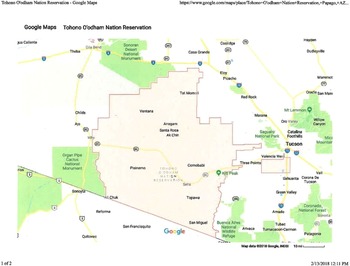
In the 1960s and early 1970s, the Papago reservation in Arizona was approximately 4,300 square miles, with a population of about eight to ten thousand people spread among seventy-five small villages (see Figure 2).Footnote 47 There was no public transportation on the reservation and only a small number of residents owned cars or trucks.Footnote 48
IMBLMS mission logo (Source: NASA).

Papago Indian Reservation, Southern Arizona (Source: Google Maps).

The Papago tribe had gained a special reputation for addressing its own health care needs. This was attributable largely to tribal chair Thomas Segundo. Based in part on his initiative, the tribe and the IHS established a Community Health Representative (CHR) program nationally in 1968.Footnote 49 The CHR program also drew on a prototype effort involving the Northern Cheyenne, which provided that tribe with its first full-time staff of health professionals. It was designed to go beyond a transfer of responsibility for health care and reflected the larger goal of Native American self-determination, also in keeping with AIM.Footnote 50 These CHRs “served as guides or cultural interpreters,” given the rather different attitudes toward health and medical care among Native American and “Western” cultures. This blending of traditional and Western medicine dramatically helped to improve health outcomes on the reservation including public health indicators such as increased life span and decreased infant mortality.Footnote 51 It was also a success in that hundreds of CHRs from more than sixty-five tribes were rapidly trained and employed in their communities. The CHR program helped HEW to counter its reputation as imposing policy from the top down by showing that the agency could embrace culturally relevant care processes.
The CHR program was only the start of a concerted effort by the Papago to address health disparities. For the next several years, the tribe built health programs that focused on nutritional improvement, mental health, alcoholism, and ear infections (later expanded to a more comprehensive program focused on “on identifying and attacking endemic and epidemic diseases”). Each of these programs eventually established a cooperative framework “based on the traditional Papago group decision-making process, whose primary objective was consensual agreement of all concerned parties. It was called the Bith Haa, literally clay or cooking pot.” According to Rashid Bashshur, the tribe’s Executive Health Staff owes at least part of its genesis to the Bith Haa model.Footnote 52 Moreover, it was the presence of this strong health staff, overseeing existing programs aimed at improving the tribe’s health, that provided at least a partial justification for NASA’s decision to locate STARPAHC on the reservation.Footnote 53
Even before STARPAHC, the Papago already had some experience with telemedicine. In 1971, the University of Arizona had conducted a short-lived telemedicine project that was funded by the U.S. Office of Economic Opportunity.Footnote 54 From January 1972 to June 1973, this project was to link five of nine reservations throughout Arizona to a hub in Phoenix, and eventually to the medical facilities at the University of Arizona in Tucson. The goals were to demonstrate the feasibility of telemedicine in Arizona and to apply advanced communications technology to problems of health in rural and geographicallly disperse areas.Footnote 55
Boeing had identified the reservation as one of several potential sites of interest in its report, and it appears that representatives from NASA did visit in the spring of 1972.Footnote 56 The response to the site by Boeing appeared to be lukewarm. The site-selection report cautioned, “It is technically feasible to test IMBLMS… at this site. It should be noted, however, that due to the remote location and limited local facilities such as telephone, power, and other supporting facilities normally available in the civil sector, additional expenditures are required if this site is chosen.”Footnote 57 That fall, the head of the IHS’s Office of Research and Development and the Papago chairman jointly submitted an application to be considered as an IMBLMS test site.Footnote 58
Papago tribal leaders visited sites in Boston and NASA MSC in Houston as a step in solidifying the tribal leaders’ decision. In late March 1973, NASA and HEW managers notified Papago tribal leaders that their site had been selected.Footnote 59 IHS head Emery Johnson believed that ORD’s track record of good cooperation with the Papago made those groups key.Footnote 60 While the area was quite remote, physician assistants were already available and were legally and culturally accepted. There was a definite medical need, and thus potential to improve significantly the overall public health of the Papago. Basing the project there also seemed financially feasible.Footnote 61
On April 17, 1973, HEW Secretary Caspar Weinberger announced that the Papago site had been selected for this telemedicine partnership and the project name became STARPAHC. Within a few weeks, the Papago Tribal Council passed a formal resolution to implement STARPAHC. It took some time for the project to be staffed and trained appropriately, and to get its technology up and running, so the project did not begin operations until May 1975.Footnote 62
STARPAHC was planned to have two years of design, assembly, and testing and then two years of operations and evaluation. Officials initially envisioned terminating the STARPAHC experiment at the end of 1976, but it lasted another four months to the end of April 1977, when NASA transferred responsibility to IHS OR&D. Rabeau had previously written to Norm Belasco, the NASA STARPAHC Project Officer, promising to pick up funding.Footnote 63 Compared with other, much larger aerospace projects, the funding for STARPAHC was a relatively modest $4.2 million. NASA agreed to spend $3.35 million, IHS ORD contributed $868,000 for medical equipment, and a $37,000 grant from HEW. (HEW intended to augment that with an additional $400,000, which would have brought the total to $4.6 million).Footnote 64
The project promised a more substantial involvement by specific federal agencies toward building a durable health infrastructure on the reservation. LMSC’s original concept was to create Area Health Services Field Units (AHSFU) for local use, and then combine these in a national network.Footnote 65 While the AHSFU concept was never fully implemented, it did, however, result in the IHS training more Native Americans to fill health-care roles in the field.
As built, STARPAHC consisted of four main physical components on the ground: (1) the control center at an IHS hospital in Sells, Arizona, (2) a clinic in Santa Rosa, Arizona, (3) the Mobile Health Unit (MHU), and (4) a referral center at an IHS hospital in Phoenix. A relay station was also constructed on Mount Quijotoa. Built in 1960, the Sells hospital had approximately forty beds to serve the Papago community, spread over about 3 million acres. Equipped with an emergency room and an outpatient clinic, hospital staff also referred patients for more specialized care or to nursing facilities. It also had an established, solid working relationship with the IHS Office of Research and Development.Footnote 66 Santa Rosa is approximately thirty-five miles north of Sells, both within the reservation, while Phoenix is about one hundred miles North of Santa Rosa. Sells had a population of less than three thousand but was considered the tribal capital.Footnote 67
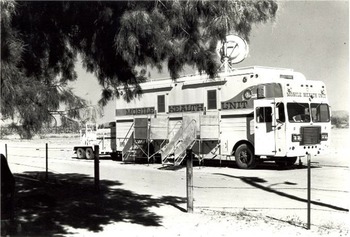
The heart of STARPAHC was the MHU, which the Papago Executive Health Council helped design (see Figure 3) and which a Papago Community Health Medic (CHM) typically staffed. The MHU was a large mobile home that was specially outfitted with equipment such as an exam table, x-ray machine, basic laboratory instruments, including a microscope, and refrigerator that was driven around the reservation as needed.Footnote 68 It also changed the relationship between patient and provider—now the provider could come to the patient, helping to make routine screenings and preventative care a more important part of the patient’s overall health. In addition, the frontline provider was a native Papago, ensuring cultural sensitivity with more specialized medical expertise available remotely. One of the first two Papago CHMs became the first provider to run the MHU; STARPAHC provided a modicum of professional health care training and career opportunities for the Papago.Footnote 69 Moreover, the technology did not fully keep pace with the expectations. For example, in the mid-1970s, it took approximately 90 seconds to send an x-ray via the phone line, but it was clear.Footnote 70 As a presentation from NASA medical officers noted, “The projected level of health care available from the field unit may be favorably contrasted with that now generally available to the average citizen of our country. It far exceeds that available to most persons in rural or remote areas and that available to many of those in the inner cities.”Footnote 71
STARPAHC Mobile Unit (Source: NASA).

The deployment and operation of STARPAHC had both positive and negative outcomes. For example, NASA gained significant understanding of how the telemedical technology could be deployed and used, which was extremely valuable to NASA’s efforts to push the boundaries of human space flight. The lessons learned served as a platform for future telemedicine initiatives domestically and internationally. But, as with any large-scale project, STARPAHC also had some downsides. Detractors claimed that it was too costly and complicated. In fact, several years after the project had concluded, Higgins et al. noted that the costs based on the initial investment were higher per visit—34 percent higher—when using the Mobile Health Clinic.Footnote 72 In addition, some providers felt the equipment was unreliable and interrupted the normal workflow.Footnote 73
Among the Papago, there were other complaints. A 1975 letter from the tribe’s new vice chairman, Michael Rios, to NASA’s Richard Johnston echoed the “guinea pig” language used by the press. In a disheartened closing paragraph, Rios claimed: “But STARPAHC is here, thanks to ORD, and the proud Papago people are here. I guess to be used as ‘guinea pigs’ in the interest of science and mankind. So we’ll have to learn to live with it for 2 years or more, just as we have learned to live with (Dr. [Stuart] Rabeau) the famous ORD [Indian Health Service Office of Research and Development] and its INTERESTING projects.” Earlier in the letter, Rios had made additional “demands” from NASA: that the agency pay for more ambulances and train the Papago health professionals; and, at the Sells hospital, purchase updated technology for project ambulances, and set aside 10 percent of the total “project cost… toward the establishment of a Papago Health Services Education Program.” Part of Rios’s concern was that the program was not providing adequate economic mobility for members of the tribe that would last beyond the STARPAHC. Another part of his concern was that more Papago health professionals, trained on NASA dollars, could help provide a legacy of culturally competent care.Footnote 74
Johnston’s response to Jacob Escalante, the tribal chair, about Rios’s letter was sympathetic but firm—the agency was doing everything it could to promote Papago health, and while several tribal members had been hired to staff various parts of the project, “funds were and are limited.” STARPAHC was an opportunity for the tribe, argued Johnston: “All of the equipment in STARPAHC has been tested and used successfully in medical/health settings prior to STARPAHC. The new aspect of STARPAHC is that no other telemedicine project is so extensively equipped and geographically dispersed. The Papagos, for a change, will be the first beneficiaries of a system of communication to support improved health care.” As for the issue of employment and its lasting impact, Johnston deferred, noting that national legislation on health-professional training was being considered by Congress.Footnote 75
Medical privacy was another concern, one that foreshadowed more current issues about electronic health records in the digital age. ORD worked with the Bell Aerospace Company to set up an early Health Information System (HIS) that enabled IHS medical practitioners to maintain more comprehensive medical records for Papago patients, an advantage for the providers, but the Papago were concerned that their medical histories would become virtual open books.Footnote 76 Another broader concern was that Rabeau and ORD often instituted programs that were technically solid but that did not necessarily meet tribes’ needs per se. In this light, STARPAHC was a prime example of a “technology push” effort that was overkill and not cost-effective.Footnote 77
In February 1976, Ralph Antone, a member of the Executive Health Staff, responded to charges that the tribe was being treated like a “guinea pig,” or were being “ripped off” by NASA and HEW: “Those ‘bleeding hearts,’ he chuckled. ‘If there is anyone getting ripped off, it sure isn’t my people, it’s the government. We are getting the best health care available for free. How is that a ripoff?”Footnote 78 Antone’s sentiments were the result of a planning process that worked hard to integrate the tribe at each step. In fact, as Bashshur’s evaluation of the project notes, tribal representatives had a substantial amount of control over the planning, and even the administration of the program, including controlling access of nontribal members of the project team to the reservation itself. Tribal representatives worked to help protect sacred sites on the reservation and to blunt the physical impact of the technology by being involved in the road-construction process and infrastructure maintenance. The tribe also had final sign-off on public relations efforts, including photos and press pieces promoting the project.Footnote 79
Conclusion
While STARPAHC was a notable, little-known example of telemedicine research, it was also a significant, early attempt to utilize interagency cooperation to improve health outcomes for a minority population, as well as to justify NASA’s continued investment in technology designed to support new frontiers in human spaceflight. From a policy-history perspective, perhaps the key feature of STARPAHC was the innovative interagency and intercultural collaboration among NASA, IHS, the Papago, and LMSC. The STARPAHC case study has particular resonance to NASA’s current situation. In 2011, the Agency ceased Space Shuttle operations and currently has no way to launch humans into space from U.S. soil (NASA relies on the Russian Soyuz launch vehicle to send astronauts to the International Space Station). With the lack of this high-profile capability, some analysts decry the lack of a clear mission for NASA, just as the early 1970s was a time of extended transition for NASA.Footnote 80
Assessing the benefits and costs to its individual partners is more complex. For the Papago, the program provided a modicum of access to modern scientific medicine in a remote location, jobs, and infrastructure investment. However, many Papago found the attitudes of IHS, NASA, and LMSC personnel to be patronizing and culturally insensitive. From the NASA perspective, a relatively small amount of funding enabled some early telemedicine research and some initial forays into going beyond its “core mission” of aerospace research and development to technology transfer that served other social purposes. STARPAHC may well have been seen by many NASA personnel as an opportunity to “kill two birds with one stone.” NASA biomedical personnel understandably wanted ways to monitor astronauts’ health remotely, but the agency’s capabilities to do so before the digital revolution were decidedly limited. The remoteness of the Papago community represented a good technical opportunity to test such systems on the ground. Second, the opportunity to provide a tangible benefit to the Papago also was appealing. Thus, STARPAHC indeed may be considered a case of technology push with good, although not altruistic, intentions.
For IHS, it was a “resounding success” in delivering health care to remote populations that lacked physicians. STARPAHC set the stage for forty IHS telemedicine programs as of 2007, making telemedicine one of its most important contributions to Native American health.Footnote 81 And for private contractors, this relatively small project turned out not to be a gateway to other projects outside its aerospace and defense traditional area of expertise. Of course, STARPAHC participants could hardly have imagined how telemedicine would expand tremendously with the advent of the internet in the late twentieth and twenty-first centuries.
Even before the Apollo Moon landings concluded in 1972, NASA personnel and others were reassessing the agency’s raison d’être and looking for compelling new missions. The Nixon Administration’s notion of “applying NASA capabilities to urgent national needs” gained favor within Washington, DC, and was a partial precursor to the notion of “technology transfer” approximately two decades later. Thus, the political and cultural times presented a “policy window” that could be a “win, win, win” for NASA, the IHS, and the Papago.Footnote 82
STARPAHC is also a notable and early case study in what is now termed “stakeholder engagement.” Again, cooperation with the Papago was particularly attractive because they were and remain a small minority population (a tribe of approximately ten thousand people) within another minority (Native Americans). Since the 1970s, NASA and the federal government writ large have gradually prioritized “outreach” and improving relations with all sorts of minority populations. Moreover, NASA has a long history of engaging international partners and this necessitates sensitivities toward different cultures.Footnote 83 Working with the Papago on STARPAHC, NASA personnel soon encountered a whole set of different attitudes toward nature, science, and medicine. This has particular resonance for NASA personnel who have collaborated with Russian colleagues after the end of the Cold War on the International Space Station, an achievement of international cross-cultural cooperation perhaps even more than a technological success. Similarly, public administration scholar W. Henry Lambright notes that while the ambitious goals of the Apollo lunar landing program were certainly technically feasible, achieving these goals was not a given, and the real reason for this program’s success was the successful management of the necessarily large and diverse organizations by NASA administrator James E. Webb.Footnote 84
STARPAHC was neither the bold new frontier of health care that some people envisioned, nor a purely negative example of federal paternalism that its detractors asserted. Ultimately, its policy legacy is best viewed in terms of cooperation with diverse groups of stakeholders more than aerospace research and development, telemedicine, or Native American history. Given declining federal nondefense budget challenges, continually increasing U.S. spending on health care, and increasing interest in “leveraging” federal investments through teaming and cooperative public-private partnerships, the STARPAHC story is worth considering as a small-scale case study that offers some larger instructive insights on creating innovative partnerships when resources are scarce.