


Since 2005, Chinese outbound direct investment (ODI) has sustained unprecedented growth. Globally, Chinese ODI reached US$118 billion in 2015, making China the world's third largest outbound investor behind the United States and Japan.Footnote 1 In addition, what is noticeable is the striking international expansion of Chinese firms into developed economies. According to China's Ministry of Commerce (MOFCOM), the stock of Chinese ODI in developed economies grew from less than US$0.5 billion in 2005 to US$153.7 billion in 2015, accounting for 40 per cent of China's overall ODI stock.Footnote 2
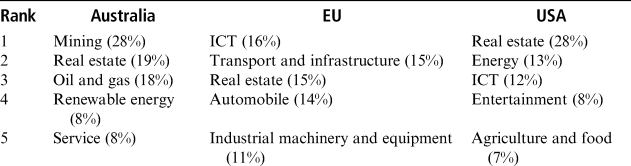
The growth of Chinese investment has raised apprehension in developed economies and prompted enquiry into what facilitated such impressive growthFootnote 3 and the reorientation of Chinese ODI away from its traditional destination of developing economies.Footnote 4 The presence of Chinese firms in European countries, North America and Australia started to overtake investment in developing countries from the late 2000s. Relative sector distribution of Chinese firms began to vary across countries with a decline in traditional investment areas such as manufacturing, mining and engineering and more in services, technologies and know-how (Table 1). Instead of entering through wholly owned subsidiaries or greenfield investment, Chinese firms increasingly used joint ventures and mergers and acquisitions (M&A).
Industry Distribution of Chinese ODI in Australia, the EU and the USA, 2010–2016

Source:
KPMG and University of Sydney 2017; Seaman, Huotari and Otero-Iglesias Reference Seaman, Houtari and Otero-Iglesias2017; Rhodium 2017.
The increasing entry of Chinese firms into developed economies has captured public and academic attention; however, little research has been done on their post-investment strategies. Research from the ex-ante perspective revolves around how China's institutional background affects the motivations and entry modes of Chinese firms in overseas markets. International relations research contends that the Chinese state controlled Chinese ODI with the aim of bolstering its geo-strategic influence.Footnote 5 Economic and business studies emphasize the role Chinese firms’ home markets and institutions played in their search for resources, strategic assets and “catching up” with global multi-national enterprises.Footnote 6 As developed countries became target markets, concerns were raised over the post-investment adaptability of Chinese firms. In developed economies, there is no government support to make up for a lack of strategic positioning and thus Chinese companies would be exposed to the risks of failure.Footnote 7 These discussions suggest the need for post-investment organizational changes. What motivates Chinese firms to change and their ability to cope with the specific market and institutional challenges is a new field of research.
This paper enriches existing internationalization theories by using Australia as a case study to explore the contextual features underlying the motivations and strategies of Chinese firms in developed economies.Footnote 8 From an institutional perspective, we examine how both home and host-country governance and policies influence business strategies.Footnote 9 Instead of looking for a generic model for “catching up,” we assume that ex-post strategies of Chinese firms depend on the specific institutional frameworks and institutional match between China and the host country. In line with institutional and evolutionary economics, we anticipate that when government intervention recedes, Chinese firms will respond strategically on the basis of their previous domestic and international experience by creating distinctive capabilities and new business routines adapted to suit specific host country environments.
Australia offers a rich context for studying the post-investment strategies of Chinese firms because of the volume and breadth of Chinese ODI. Over a period of some ten years, Australia has become a leading recipient country of Chinese ODI.Footnote 10 For the decade between 2007 and 2016, we are able to draw on a comprehensive dataset of over 400 Chinese investment projects in Australia to trace the market changes from the initial mining investment boom to the subsequent widening of investment into broader sectors. This parallels a strategic shift in ODI governance policies in China and Australia. We investigate the corporate strategies of Chinese firms in Australia by drawing on interviews with 22 Chinese enterprises of different sizes and from different industries.
China's Changing Investment in Australia
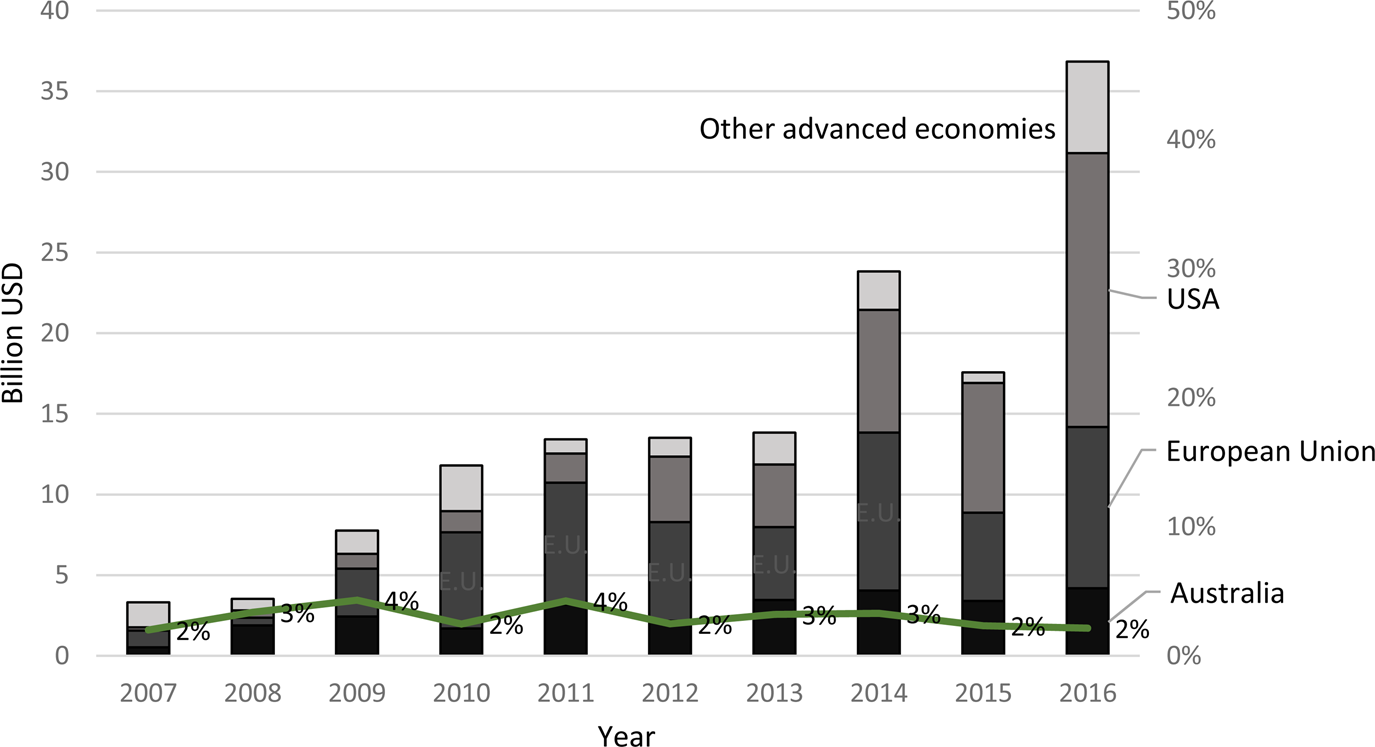
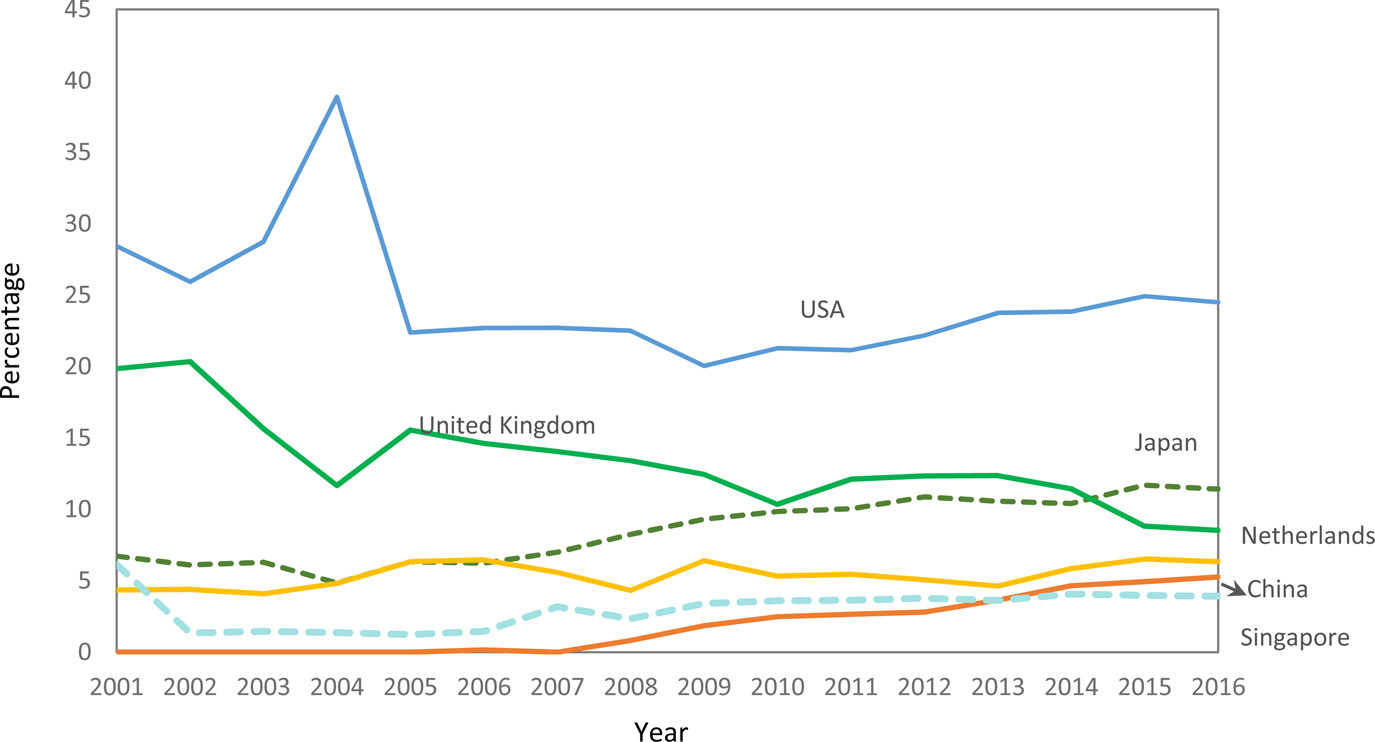
Compared with other developed economies of similar market size, Australia has a remarkable record of receiving Chinese ODI. According to MOFCOM statistics, Chinese firms have continuously invested in direct investment in Australia over the 10-year period between 2007 and 2016 (Figure 1). In terms of volume, Chinese ODI to Australia is just behind that flowing to the United States and the European Union (Figure 2). The actual investment flows are likely to be higher as MOFCOM figures do not include direct investment into Australia which has been channelled through tax haven jurisdictions or third country special purpose investment vehicles.Footnote 11 The growth of Chinese ODI in Australia is also reflected in the increase of China's ODI stock in Australia. China has emerged as a significant new source of foreign direct investment in Australia as its share of the total foreign investment stock increased from 0.1 per cent in 2007 to 5.3 per cent in 2016.Footnote 12


While official ODI statistics produced by MOFCOM and the Australian Bureau of Statistics (ABS) give macro-based statistics, firm-level micro-data have become increasingly important for analysis that captures heterogeneity across enterprises. In order to analyse Chinese ODI in Australia in detail (i.e. by geographical unit, firm size and industry), we use the KPMG and University of Sydney dataset for its wide coverage of Chinese investment projects in Australia. Unlike official data from MOFCOM and ABS, this project-level dataset allows identification of the sectors Chinese firms seek in their operations in Australia as well as the ownerships of these firms and is regarded as the largest and most comprehensive dataset of Chinese ODI in Australia.Footnote 13 The dataset contains 403 investment projects and includes specific information on entry mode, sector and Chinese firms since 2007. The only other firm-level dataset available is the ORBIS database managed by Bureau Van Dijck.Footnote 14 However, the ORBIS database focuses more on the business records of all types of foreign businesses (i.e. profit/loss statements of branches, subsidiaries and representative offices), instead of foreign investment activities by subsidiaries. An examination of the KPMG and University of Sydney project-level data sheds light on three major trends that have changed Chinese ODI in Australia in recent years.
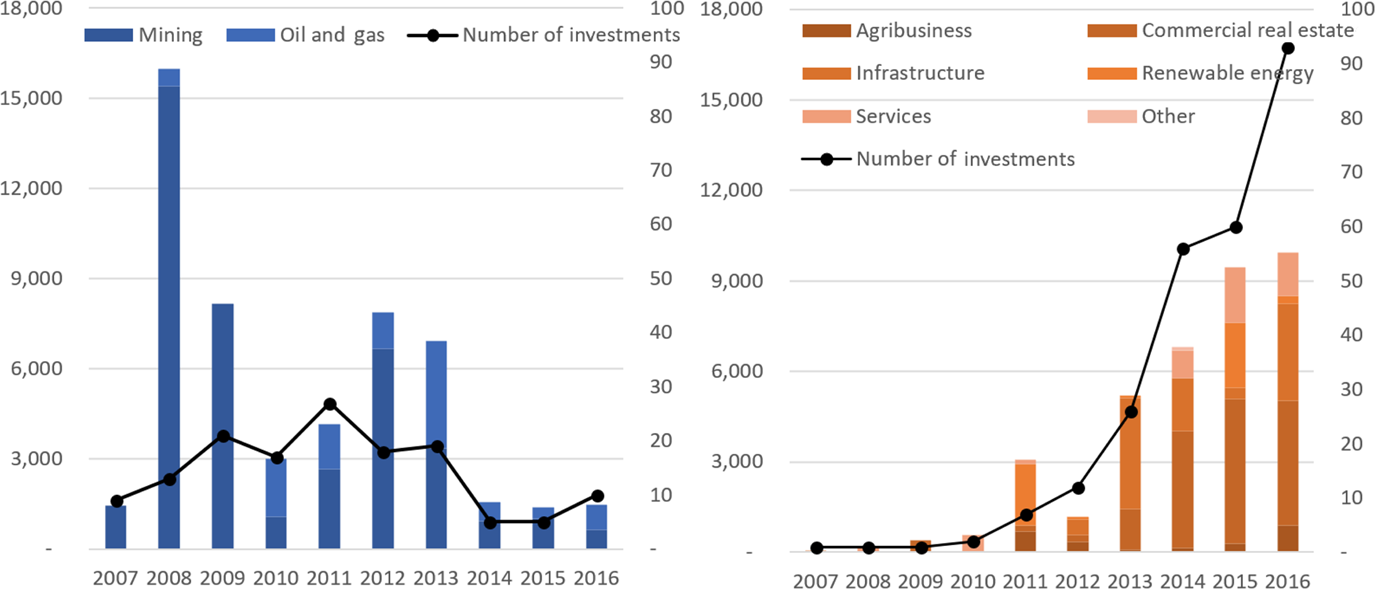
First, as Figure 3 illustrates, the sector allocation of the 403 recorded investments shows a marked diversification of investment from mining and energy into new areas such as real estate, agribusiness, renewable energy, health and infrastructure since 2012. The economic restructuring in China during this period accelerated this transition by making consumer-related ODI more attractive and easier compared with the earlier resource boom period. In terms of investment value, the share of investment in mining and energy in total Chinese ODI dropped from 88 per cent between 2007 and 2011 to 37 per cent between 2012 and 2016. In terms of number of projects, 57 out of 304 investment projects were recorded in mining and energy between 2012 and 2016, compared with 87 out of 99 between 2007 and 2011. For Australia's relatively specialized economy, the speed of achieving this wide sector diversification was remarkable. Japanese ODI in Australia, for example, has taken four decades to similarly expand and spread across different industries.Footnote 15
The Diversification of Chinese ODI in Australia by Industry, 2007–2016
Source:
KPMG and University of Sydney 2017.

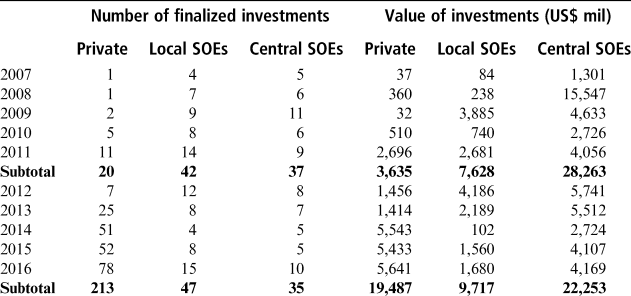
The second trend is a shift in the ownership of Chinese firms that conduct ODI in Australia. Contrary to the popularly held view that Chinese ODI is mostly conducted by state-controlled enterprises with government-sanctioned monopoly status,Footnote 16 Chinese ODI in Australia is increasingly being conducted by private firms and local state-owned enterprises (SOEs) without any monopoly status (Table 2). Between 2007 and 2011, “national champion” central state-owned enterprises dominated Chinese ODI in investment value and number of projects, with a volume of US$11.3 billion. Since 2012, investment by private firms and local SOEs from a diversity of regions in China totalled US$ 29.2 billion over five years. In 2016, 93 out of 103 completed investment projects were undertaken by private enterprises and local SOEs, compared to 5 out of 10 in 2007.
Chinese ODI in Australia by Firm Ownership, 2007–2016

Source:
KPMG and University of Sydney 2017.
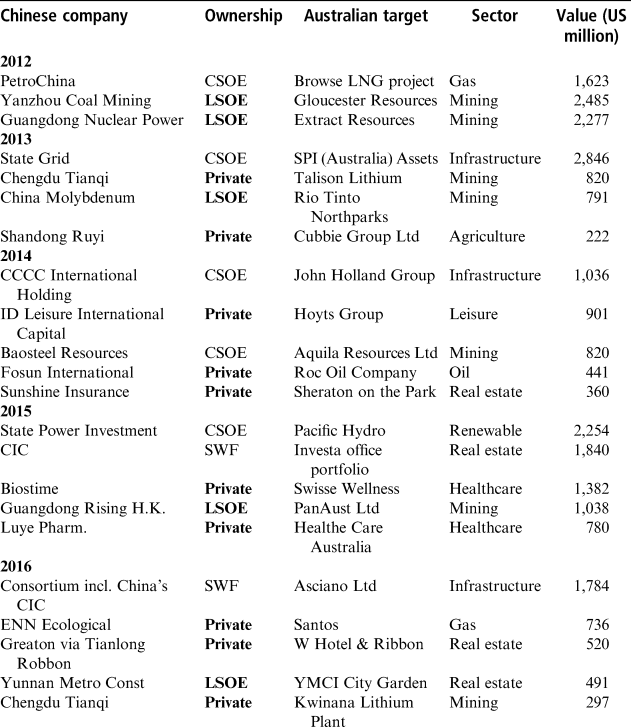
Chinese firms in Australia can therefore no longer be regarded as monolithic entities. Although national champion SOEs still feature with very large investments in infrastructure and resources, our list of selected M&As (Table 3) shows that major M&As were also made by private firms such as Biostime, Luye Medical Group, Chengdu Tianqi and local SOEs such as Yankuang, China Molybenum and Yuannan Metro Construction. The major reasons behind the rise of private enterprises and local SOEs are evidently the sectoral changes of Chinese ODI in Australia. Central SOEs no longer monopolize specific sectors. The increasing role of Chinese private and local SOEs also reflects ownership diversification in China's domestic economy, which has given rise to new organizational forms.Footnote 17 These firms do not enjoy officially sanctioned monopolies in industries controlled by the central government, such as natural resources; they face intense competition from local and foreign-invested firms.Footnote 18
Major M&A by Chinese Firms in Australia, 2012–2016

Source:
KPMG and University of Sydney, various years.
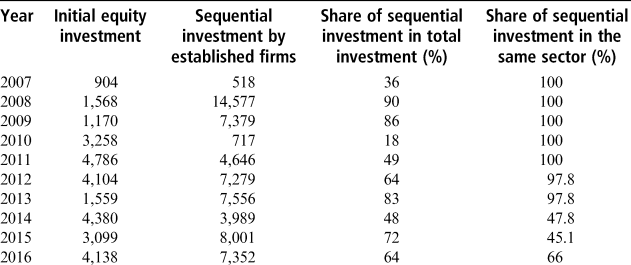
A third remarkable feature of Chinese ODI in Australia is the surprisingly large proportion of repeat investments or sequential entries by Chinese firms. During the mining investment boom, Chinese central SOEs used large volume repeat investments to expand their access to resources in the same industry.Footnote 19 Since 2012, locally established Chinese private firms and local SOEs have been expanding into existing or new industries. A common pattern is to pour investment into core business sectors or sectors with low entry barriers, then follow this with investment in higher quality projects within their core business or other noncore business sectors after a learning period. Between 2012 and 2016, two-thirds, or 66 per cent, of all Chinese investment (in value terms) in Australia was in the form of sequential investments made by established firms (Table 4). Most of the sequential investments were small scale and directed towards new industries. In 2014 and 2015, more than half of all new investment by established firms went into new industries (Table 4).
Investment in Australia by Chinese Firms (US$ mil)

Source:
KPMG and University of Sydney, various years.
Different researchers have linked sectoral diversification of firms to their domestic development trajectory. Weiwen Li and colleagues argue that Chinese firms used diversification to overcome institutional constraints.Footnote 20 According to Desmond Ng, diversification enables firms to exploit arbitrage opportunities and capture first mover advantages in fast changing environments.Footnote 21 Chinese investors in Australia engage in such sequential investment as their familiarity with the Australian host market increases. The behaviour and experience of these firms resonate with the observations Bruce Kogut and Sea Jin Chang made decades earlier in their analysis of Japanese direct investment in the United States. They found that initial investment was followed by waves of additional, typically higher quality investment, which were linked to increasing competitive advantages.Footnote 22
The Evolving Governance of Chinese ODI in China and Australia
The institutional environments in China and Australia are determinants of China's continuous ODI surge in Australia, but the precise nature of their impact is under-researched. Neo-institutional theory posits that institutions influence enterprise activities by creating incentivesFootnote 23 and that “economic models are specific to particular constellations of institutional constraints that vary through time and cross-sectionally in different economies.”Footnote 24 As a result, any attempt to explore a firm's overseas strategies requires an understanding of the institutional framework in which the firm is embedded.Footnote 25 This includes home country as well as host country institutions, and their implementation, which form the overall governance of ODI. As the Australian case shows, home country institutions as much as host country institutions influence firms’ ODI decisions and post-entry operation by formal and informal constraints and incentives.
Changes in governance of ODI in China
China's ODI regime has traditionally used administrative approvals and foreign currency control to direct the scale and scope of Chinese ODI.Footnote 26 Since 2012, there has been a strategic shift in ODI governance, which is characterized by a gradual withdrawal of central state intervention and a more facilitating government approach to ODI. This gradual withdrawal of the Chinese central state occurred as the large-scale resources investment undertaken by central SOEs no longer dominated Chinese ODI. At the same time, smaller SOEs and private firms, attracted by the market opportunities, steered investment into new sectors in Australia.
As the volume of non-SOE investment started to grow, the Chinese central state relaxed its approach towards reviewing and approving outbound investments.Footnote 27 The administrative approval process was streamlined and decentralizedFootnote 28 and local governments were encouraged to seek growth through ODI. Interjurisdictional competition among local governments over overseas investment projects led by local SOEs and private sector enterprises enhanced local support for ODIFootnote 29 to the degree that firms were able to bypass regulatory barriers.Footnote 30 China's foreign currency regime was also further liberalized. Prior to 2012, Chinese companies faced restrictions in accessing foreign currency to fund international investment.Footnote 31 Only when the central government ended the compulsory foreign exchange settlement and sales system (waihui qiangzhi jiesuan zhidu 外汇强制结算制度) in 2012 were domestic firms able to buy or use their self-earned foreign exchange for outbound investment.
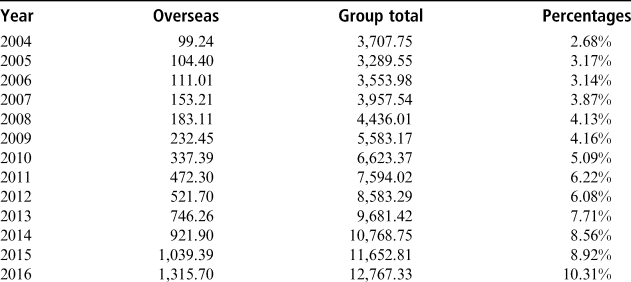
Between 2010 and 2015, China's State Administration of Foreign Exchange (SAFE) issued several guidelines on external guarantees to improve the availability of commercial loans for ODI (neibao waidai 内保外贷). Improvements to the availability of commercial loans especially benefited private enterprises and local SOEs, which had previously had difficulties in accessing the policy bank loans reserved for large SOEs. The exact volume of external guarantee loans is unknown. We use overseas loans and advances as an estimate because they represent corporate lending by Chinese banks overseas, most of which was made to Chinese firms. Table 5 shows that the volume of loans and advances to overseas customers for the Industrial and Commercial Bank of China, China's largest bank by total assets, tripled from 472.3 billion yuan in 2011 to 1,315.7 billion yuan in 2016, accounting for 10.31 per cent of the group's total loans. Statistics published by the Australian Prudential Regulation Authority (APRA) show that between 2012 and 2017 loans and advances by Chinese banks in Australia grew more than threefold from about $10 billion to $32 billion.Footnote 32
Industrial and Commercial Bank of China's Overseas Loans and Advances (billion yuan)

Source:
Industrial and Commercial Bank of China annual reports, 2005–2017, http://www.icbc-ltd.com/ICBCLtd/Investor%20Relations/Financial%20Information/Financial%20Reports/.
In addition to shaping ODI through formal policies and regulations, informal government support also incentivized local SOEs to be more market driven in their ODI. Specialized bureaucracies such as the State-owned Assets Supervision and Administration (SASAC) strengthened the management accountabilityFootnote 33 and professionalization of SOE investors.Footnote 34 Internal reference reports propagated risk control and economic returns in overseas investment and publicized examples of failed investments in Australia such as Chinalco's attempt to acquire Rio Tinto, the termination of Sinosteel's Weld Range Project and CITIC Pacific's huge debt burden incurred from the Sino Iron project.Footnote 35 In addition, professional support for investment in Australia was made available through regular updates of Investment in Australia Guidelines, which was published by MOFCOM. The Chinese embassy in Australia edited reference books with specific advice for Chinese investors in Australia.Footnote 36
The central government's gradual easing of policies not only facilitated ODI but also helped change its direction. Initially, central state-owned enterprises were the main beneficiaries of streamlined administrative procedures and financial support. The decentralization of approval processes and commercialization of finance helped local SOEs and private enterprises to seek overseas growth opportunities and circumvent domestic market restrictions.Footnote 37 At the policy level, the shift in economic direction under the new government from 2012 created new demand for overseas consumer products, which Chinese firms, with enterprise savings rates among the highest in the world, were quick to exploit, especially in countries such as Australia with stable and mature institutions and products in high demand in China's domestic market.Footnote 38
Changes in governance of ODI in Australia
The Australian government's approach has changed from one of reluctant acceptance during the mining investment phase to one of facilitation and pro-active regulation since 2012 when non-mining investment started to lead the charge. Australia's acceptance of Chinese ODI was supported by bipartisan political consensus, which only occasionally became politicized. As a result, Australia has a track record of supporting Chinese ODI.Footnote 39 Compared with other developed economies, Australia's regulatory framework on the whole has been relatively liberal. Its competition regime and hosts of other regulations are structured in ways to encourage foreign investors to operate in a commercial manner.Footnote 40 This is partly because Australia's policy on foreign investment has, historically, been relatively open and welcoming.Footnote 41 More significantly, Australia has a closer trade relationship with China than with any other economy. Australia's export volume to China was AUD 93 billion in 2016, accounting for nearly one-third of Australia's total export volumes.Footnote 42 The economic complementarity between Australia and China is substantial, with very few areas of competition.
With regards to formal elements, the China–Australia Free Trade Agreement (ChAFTA) has made it much easier for Chinese private firms to invest in Australia. Concluded in 2014 and in force by the end of 2015, the ChAFTA made Australia one of the few developed economies (along with Singapore, Korea and New Zealand) to have signed a free trade agreement with China. The ChAFTA lifted the threshold for screening of Chinese private (non-SOE) investment in Australia's non-sensitive sectors by the Treasury's Foreign Investment Review Board (FIRB) from AUD 248 million to AUD 1.078 billion. This was a crucial development in the evolution of the Australian ODI regime as most Chinese private investment is below the AUD 1.078 billion threshold. This regulatory change gave private enterprises a cost advantage over SOEs, which face FIRB scrutiny for all investments irrespective of volume. In addition, the ChAFTA provided legally binding commitments to facilitate trade and investment through market liberalization and governance norms, the first such improvements since the Australia–China Bilateral Investment Treaty was signed in 1988. The short investment chapter in the ChAFTA gave Chinese investors national treatment and guaranteed investment protection (Article 9.3).Footnote 43 Such arrangements incentivized Chinese private enterprises to invest.
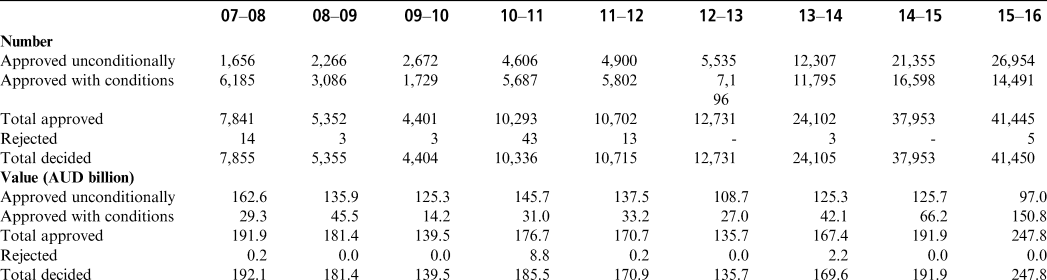
Chinese SOE investment did not receive any non-screening threshold in the ChAFTA and therefore the increasing number of investment proposals by Chinese SOEs became a central concern for Australia's foreign investment regulator.Footnote 44 In Australia's regulatory framework, all investment by foreign SOEs irrespective of volume is automatically examined by the FIRB. While outright rejections of SOE acquisition proposals are rare (see Table 6), the FIRB has increasingly used approval conditions to shape the corporate governance of SOEs and restrict non-commercially driven objectives. Key conditions introduced include localization requirements, governance requirements and shared-ownership requirements, such as joint venture structures. For example, the FIRB does not support vertical integration of supply chains in resources industries by Chinese SOEs and other multinational companies. Decisions in relation to Chinese acquisitions, such as the acquisition by Yanzhou Coal Mining Company Limited of Felix Resources Limited in 2009, included provisions to ensure that the core management of the company was Australian; a number of board members resided in Australia; natural resource assets were marketed and sold at “arms-length terms with reference to international benchmarks”; and Chinese ownership was less than 70 per cent.Footnote 45
Applications Decided by FIRB (Proposed Investment)

Source:
Foreign Investment Review Board annual reports, https://firb.gov.au/about-firb/publications.
The FIRB guidance for Chinese investors created incentives in regards to ownership and localization. Private investors are advantaged by exemption from FIRB approval as long as they come under the threshold defined by the ChAFTA. State-owned investments of any size and private investments above the approval thresholds will be guided by the FIRB towards localization in their corporate governance. The commitment of the FIRB to use approval conditions to address national interest concerns is regularly articulated in its annual reports and has led to a growing proportion of applications being approved, subject to conditions. Table 6 gives a snapshot of the FIRB's increased usage of conditions to manage SOE investment. Between 2012 and 2016, the number of approvals with conditions nearly tripled to 14,491 in 2015–2016. Approvals with conditions represent over 57 per cent of the total value of approvals in 2015–2016. Although the FIRB does not provide a breakdown by country of origin, the proportion of Chinese investment applications under the “approved with conditions” category is likely to be high, as Chinese applications to the FIRB since 2014 are in first position, both in terms of numbers as well as volume.
At the state level, governments in Australia are aiming to attract Chinese investment for major infrastructure projects as well as for regional and rural industries and thus are willing to facilitate Chinese ODI. The move from a position of budget surplus to budget deficit in most states during the global financial crisis period has accelerated this shift. State governments have adopted measures to reduce government debt and increase growth including through initiatives to attract Chinese investment. Such initiatives include high-level visits by leading state politicians to Chinese provinces. These visits are usually followed by informal arrangements between provincial and state governments to promote investment activities and outreaches to emerging Chinese infrastructure companies for projects such as transport, energy, tourism, health and commercial building. These state-level initiatives, involving local firms and usually targeted at local-level state partners in China, have the potential to facilitate investment flows particularly from private enterprises and local SOEs in China.
In summary, the gradual co-evolution of regulatory regimes in China and Australia has created local incentives for Chinese investors in Australia, specifically for private firms and local SOEs, to enter the Australian market in new industries. Unlike traditional resource-seeking central SOEs, these smaller investors could not draw on Chinese state funding but instead were encouraged to cooperate locally with resident Chinese banks and build networks to overcome their liabilities of foreignness. The Australian regulatory regime reinforced these incentives by reducing compliance costs for private investors and requiring private and SOE investors to localize by controlling the local integration of management and operations.
Corporate Strategies of Chinese Firms in Australia
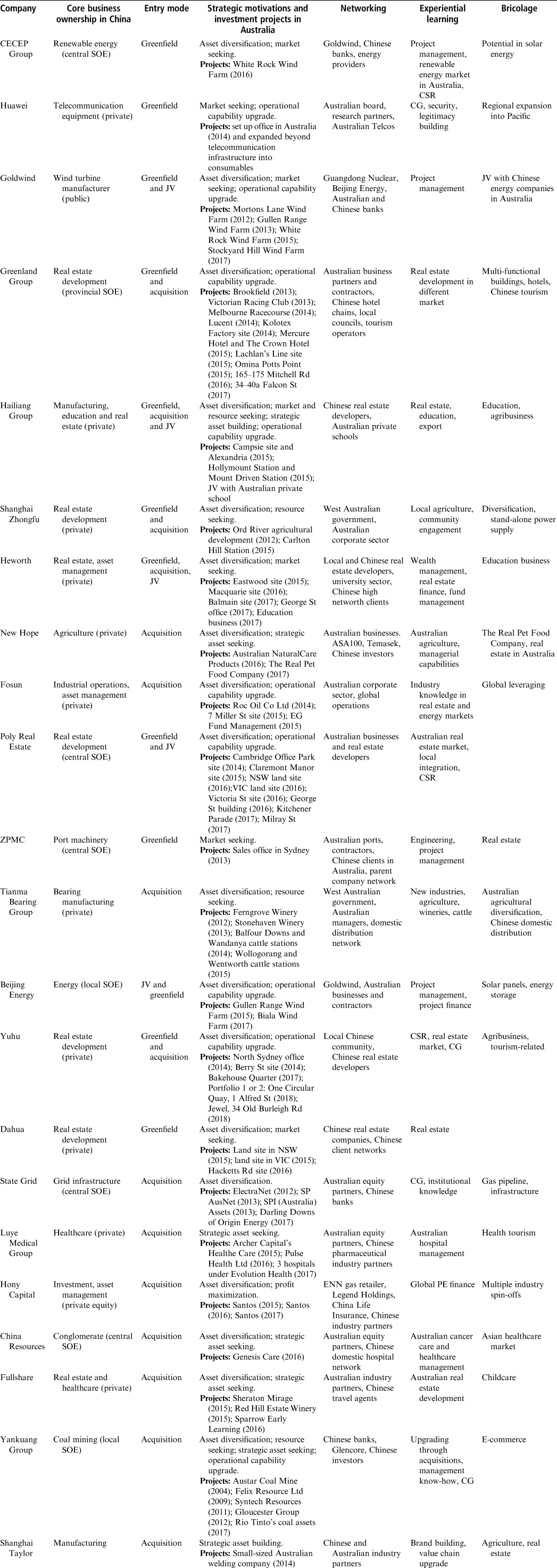
The market and institutional changes affected the economic rationale for ODI from individual firms’ perspectives, mostly notably their motivations and strategies. We turn to the theory of the firm to discuss corporate strategies and capabilities of Chinese firms by drawing on findings from two rounds of interviews, conducted between 2012 and 2017. In particular, we conducted semi-structured interviews with executives from 22 Chinese companies, including original founders and senior executives in China and Australia, in the first study of its kind. The longitudinal nature of our study offers some important insights into shifts over time in investment strategies and adaptation of Chinese firms to host economies. A summary profile of the companies is shown in Table 7. While acknowledging the ongoing investment by central SOEs during this period, we focus on the emergence and influence of entrepreneurial private firms and local SOEs, which have become the mainstay of Chinese ODI, as discussed above. We concentrate on the economic rationale of organizational responses to market and institutional changes.Footnote 46 Specifically, we explore the following questions: do firms have new motivations for investment? How do they operate in developed markets such as Australia, in spite of their lack of organizational capabilities? Do the changes in markets and institutions since 2012 allow for new roles for Chinese subsidiaries in Australia?
Summary of Company Profiles and their Post-investment Strategies

New motivations: asset diversification, strategic asset seeking and capability building
Under the state-driven model during the mining investment boom, resource seeking was the main motivation for Chinese firms investing in Australia. The typical investors in this period, usually SOEs, acquired assets for resource offtake as their role was to achieve production targets imposed by their headquarters.Footnote 47 Throughout this period, Australia accounted for around 40 per cent of China's iron ore imports, a greater percentage than any other country.Footnote 48 After 2012, as Chinese investment widened into broader sectors, this motivation and approach became obsolete. Many of the respondents we interviewed believed that resource seeking was giving way to new motivations (Table 7).
Of the 22 case study companies we interviewed, 18 confirmed that their investment was for asset diversification, in line with Raphael Amit and Joshua Livnat's view that international diversification into mature markets can improve overall corporate performance by creating a stable cash flow, lowering operational risk and increasing leverage and profitability.Footnote 49 Chinese firms facing institutional constraints in the domestic market also use international diversification of assets to hedge against domestic political risks.Footnote 50 For example, rapid expansion in Australia was part of state-owned company Poly Real Estate's strategic plan to increase its overseas asset base to 5 per cent of its total asset base by 2020. This was the case for most of those companies we interviewed. While bigger companies tended to be guided by long-term targets, smaller ones were more driven by opportunities and trial and error based on economic returns. In this context, Australia's demonstrated economic resilience and political and social stability provided powerful incentives for newly globalizing Chinese firms to invest.
Strategic asset seeking is another well-documented motivation for Chinese ODI. Chinese firms, in spite of their overall size of employment and revenue (see Table 3 for illustration), usually lack well-known brands, management expertise and technology application. Acquiring strategic assets is one way for Chinese firms to address their competitive disadvantages.Footnote 51 Out of the 22 case study companies, seven referred to strategic asset seeking as their main motive. In contrast to investing in Europe and the United States, which are target markets for acquiring advanced technologies,Footnote 52 Australian firms have a more specific reputation among Chinese investors for service orientation and technology application and utilization rather than innovation. This is supported by the general image of Australia as a “green and clean” provider of agricultural products and health services. According to our interview, for example, Chinese company New Hope's acquisition of Australian Real Pet Food was driven by the Australian company's solid track record of up-to-date technology and industry know-how as well as its good reputation in Australia. New Hope had observed Australian Real Pet Food over some time and planned to leverage the ownership of an established Australian company in order to grow into this expanding market in China and internationally.
A notable new motivation for Chinese firms to invest in Australia was localized learning and capability building. Ten of our case firms identified capability building as their main motivation for investing in Australia. Australia's mature institutional environment, its relatively small market size, physical isolation and the presence of local and international firms allowed Chinese firms with limited international experience to use Australia as a testing ground for trialling products and skills.Footnote 53 Geographic proximity and overlapping time zones with China and a multicultural work force made Australia a convenient location for Chinese firms to apply advanced technologies in new institutional environments. Huawei, for example, rather than setting up R&D facilities, invested in Australia to build up institutional capabilities. As John Lord, the chairman of Huawei Australia, put it: “We're developing a model [in Australia] … once that model is mature, that model will be exported to other regions and countries around the world, so that's the first step of us moving out.”Footnote 54 In 2011, Huawei Australia created a local board of directors – the company's first local board anywhere in the world – to address transparency concerns. Smaller and resource constrained companies were also using the capability-building mode of investment. As the CEO of the private company Hailiang Australia summarized, “we don't have an endless supply of money to acquire top international brands. We can't manage them either. The investment allows us to build local networks and understand the market, but more importantly, build up our own brand and capabilities.”Footnote 55
The emergence of strategic orientation and entrepreneurial subsidiaries
The transition from state-controlled to corporate-driven Chinese ODI entailed changes to managerial strategies, decision making and governance of local subsidiaries. Our interviews with Chinese companies in Australia indicate that in order to survive competition, subsidiaries had to think creatively to formulate business initiatives that provided practical and effective solutions to the pressing problems they faced in their local markets. During the mining and energy investment phase of Chinese ODI, in spite of the large-scale investment, local subsidiaries were usually small in staff numbers and limited in their decision-making powers.Footnote 56 The changes in institutional and market drivers since 2012 have exposed subsidiaries to more competition and required them to be more competitive and actively interact in the Australian market. While these subsidiaries were newcomers to local competition in the host market, they were now under pressure to learn fast as Australian and Western firms had until then occupied these sophisticated competitive markets. Gradually, Chinese parent firms adjusted their strategic control and encouraged more entrepreneurial subsidiaries. This approach gave subsidiary managers discretion to take strategic initiatives in response to local circumstances.
According to our case study interviews, in order to maintain strategic control while enabling local initiatives, Chinese firms increasingly appointed qualified agents who were especially trusted by headquarters to head these entrepreneurial subsidiaries. For example, the local CEO positions in Huawei Australia were rotated among a group of global senior managers every four years. In the case of SOEs, more senior headquarter executives were appointed as local CEOs. This arrangement provided ongoing strategic communications and trust between subsidiaries and headquarters. Private companies mostly appointed trusted family members with professional backgrounds to manage the foreign subsidiaries. This structure enabled a fast response to local opportunities while ensuring that the Australian subsidiary was fully integrated into the group's network.
Significance of dynamic capabilities
The commercial motivation for ODI and empowerment of local subsidiaries do not necessarily mean that subsidiaries were capable of coping with the specific market challenges faced in Australia and addressing their overall “liabilities of foreignness.” Extant research identifies three main sources of “liabilities of foreignness.” First, the lack of operational capabilities, i.e. experienced managers, remains a major obstacle for Chinese firms wishing to expand in developed economies.Footnote 57 Second, differences in markets as well as cultural and institutional distance weaken the ability of Chinese firms to compete with Western firms.Footnote 58 Last but not least, Chinese firms are in a disadvantaged position in terms of their perceived legitimacy by host country stakeholders.Footnote 59
The liabilities of foreignness not only point to Chinese firms’ weakness in operational capabilities but also to their difficulties in catching up with competitors from developed economies where competitive advantages are traditionally determined by accumulated critical resources like intellectual property rights and optimized operational capabilities.Footnote 60 David Teece, Gary Pisano and Amy Shuen's dynamic capabilities model provides one perspective on how Chinese firms that lack deep organizational capabilities could compensate for their disadvantages.Footnote 61 This model emphasizes that newcomer firms may catch up with incumbents through continuously modifying their routines and resources to fit with the rapidly changing environment.Footnote 62 Chinese firms operating in advanced economies developed and employed dynamic capabilities in order to compensate for their weak operational competences, which put them at a disadvantage in the first place. Instead, they used dynamic capabilities strategically to modify their routines and resources and to create local competitive advantages in spite of their lack of operational capabilities. Examining Chinese case companies in Australia, we find firms used three types of dynamic capabilities to bypass operational weaknesses and create competitive advantages in the host market (as shown in Table 6). We see these dynamic capabilities drawing on the domestic experience Chinese firms gained through the reform period: use of multiple networks, experiential learning and the reconfiguration of assets. The following analysis focuses on each of these aspects.
Embedding in multiple network configurations
Our findings show Chinese firms tuned their networking capabilities to fit the Australian market by establishing collaborative links with the local subsidiaries of other Chinese companies in Australia (see Table 7). Wind farm developer Beijing Energy, for example, forged close links with existing Chinese wind farm developers in Australia. These networks helped Beijing Energy to gain access to strategic information and build a reputation in the Australian market that attracted the attention of Australian firms. Similarly, Greenland established strategic alliances with other Chinese developers in Sydney. Even though some of these Chinese developers were Greenland's competitors, the collaboration raised Greenland's standing sufficiently to partner with prestigious local institutions. In addition, Chinese firms were capable of extending their networks to include Australian partners. One successful example is the Shandong-based Luye Medical Group. The group acquired Australia's third largest private hospital operator, Healthe Care, in 2015 to gain access to Healthe Care's local networks of hospitals and doctors and its strong links with health funds, which enabled Greenland to rapidly expand its business in China and Asia.
A small number of Chinese firms were capable of building networks in China and extending them into Australia as a way to compensate for their weakness in local organizational capabilities. Wind turbine manufacturer Goldwind, for example, entered Australia in the early 2010s when the market was dominated by large global firms such as Vestas, GE and Siemens. According to our interviews with Goldwind, upon entry, the firm faced significant brand and legitimacy challenges. In response, Goldwind cultivated unique network links with energy firms back in China to entice them to enter the Australian market. These energy firms, including major SOEs like CECEP and Guangdong Nuclear Power, invested in wind farms developed by Goldwind and helped to establish a local reputation for Goldwind. While these networks originated in China, they became embedded in Australia and provided Goldwind with a unique source of local competitiveness. Goldwind could not have attained this status by relying purely on upgrading their operational capabilities to the level of their local competitors.
There is ample research to show that Chinese firms have some distinct advantages in networking. China's weak formal institutions compound distortions in incentives. Most Chinese firms use networks to gain a competitive advantageFootnote 63 by having members engage in reciprocal, preferential and mutually supportive actions that stabilize economic activities.Footnote 64 Chinese firms also use networks as a strategic mechanism to overcome resource disadvantages, information asymmetryFootnote 65 and the lack of formal finance.Footnote 66 The frequent usage of networks has several implications. First, transaction costs of networking can be significantly reduced, owing to the scale of application. Second, the iterative process of networking in their domestic market provides Chinese firms with advantages for engaging in networking activities in Australia, creating distinct capabilities compared with local and Western firms.
Accelerating experiential learning through sequential investment
In the second phase of internationalization, rather than using sequential investment to gain resource control, some of our interviewed companies had used sequential investment to accelerate experiential learning and seize opportunities to upgrade their capabilities. When asked about the incentives for firms to learn through sequential investment, our interviewees’ response was, “Why would we not? This is what we have been doing all the time in China.” Similar to networking capabilities, Chinese entrepreneurial firms have developed distinct advantages in experiential learning in their domestic market. Because of the weaknesses in China's innovation systems such as low investment in public R&D and weak protection of intellectual property rights,Footnote 67 Chinese firms have tended to develop highly flexible business models with an emphasis on experiential learning, quantifiable gains and low risk, rather than investing in long-term R&D per se.Footnote 68 These experiential learning capabilities are geared towards rapid commercialization and have enabled Chinese companies to absorb know-how and upgrade capabilities in an ongoing incremental fashion that has allowed for flexibility and resilience in the face of rapidly changing markets.
In Australia, entrepreneurial Chinese firms have used experiential learning to combine domestic and local know-how to gain specific technical or cost advantages, such as technical leapfrogging, over local competitors (see Table 7). The more important strategic aspect of this learning was that it could traverse borders through new combinations of, for example, technological and management learning. As Chinese firms repeatedly engaged in experiential learning in the domestic market, they had less organizational inertia in acquiring new knowledge and transmitting complex knowledge across borders. A good example of the use of experiential learning can be seen in the Shandong-based coal company, Yankuang Group. According to interviews with Yankuang, the firm entered the Australian market by acquiring Austar, a small, low-quality coal mine, and used it to learn “the Australian way” of local operation in preparation for several major acquisitions. In 2017, after acquiring Coal & Allied, one of the best managed coal assets from Rio Tinto, Yankuang made a surprise move by merging its Australian management structure with Coal & Allied. A top Yankuang Australia executive called this “a transformative acquisition” for Yankuang, one which gave the company a radical upgrade of its management capabilities while at the same time making it Australia's largest thermal coal producer.Footnote 69
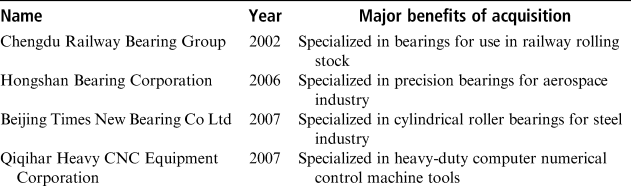
Besides using sequential investments to upgrade capabilities, our interview data suggest that Chinese firms also used sequential investments to integrate market knowledge and diversify into new industries. As suggested by John Mathews, experiential learning has enabled Chinese firms to catch up and upgrade their capabilities in their highly dynamic domestic environment.Footnote 70 Turning learning into a transformational experience made it a dynamic capability which could compensate Chinese firms for their lack of operational capabilities. With a track record of transformational learning experiences, Hangzhou-based Tianma Bearing Group (TMB) exemplified experiential learning over time. Starting in Western Australia, Tianma Bearing, following its successful acquisition of a major Australian premium winery, rapidly expanded its scale of operations by acquiring additional wineries in South Australia. It went on to acquire two cattle stations in Queensland to further expand its knowledge of Australian agriculture and exploit new opportunities in China. Tianma Bearing's expansion strategy in Australia mirrored its development path in China. Between 2002 and 2007, Tianma Bearing went through four cycles of acquisition-based transformation, at the end of which the group operated in multiple specialized markets, with eight subsidiaries across China (Table 8).
Main Acquisitions Made by TMB in the 2000s

Tianma's experience resonates with the findings of interviews with other Chinese companies in Australia, particularly private firms that did not face headquarter administrative restrictions on diversification. Experiential learning through sequential acquisitions enabled Chinese firms such as Tianma to rapidly gain new and situation-specific knowledge with small losses and immediate feedback and exploit new opportunities through first mover advantages.
Reconfiguring resources
Reconfiguring resources and strategic assets is a core element of dynamic capabilities. In the first phase of internationalization, Chinese firms’ low-cost strategies to meet operational targets set by headquarters often militate against creativity and the pursuit of new opportunities. For the second phase, a commonly held view among our interviewees was that management tasks involved not just solving operational issues but also turning opportunities into advantages through reconfiguring existing resources and orchestrating assets into optimal configurations. This was done by exploiting physical, social or institutional inputs that other firms ignored (slack) and creatively combining them with resources for different applications.Footnote 71 In the Chinese domestic context, this is reminiscent of the concept of “bricolage,” which was developed by French anthropologist Claude Levi-Strauss to describe the skill of using whatever resources are at hand and recombining them to create something new.Footnote 72 In the organizational context, bricolage activities often refer to the ability of resource-constrained firms to overcome limitations imposed by dominant definitions of the resource environment and get things done.
The traditional Western approach to resource reconfiguration is one that is well planned and within fixed organizational boundaries.Footnote 73 In contrast, the Chinese approach is characterized by flexible organizational boundaries. Several examples demonstrate how Chinese companies, particularly private ones, survive and even flourish by taking an entrepreneurial approach by recombining and reusing the slack resources at hand in Australia (see Table 7). According to our interviews, this slack included financial capital, physical resources (land, buildings), intangible resources (IP, managerial skills) and social capital (relationships) across Australia and China. How Hailiang Group reconfigured its assets provides a good example. After entering Australian real estate in 2015, Hailiang branched out into agriculture and education. For its expansion into agriculture in Australia, Hailiang was able to turn to the slack in its supermarket businesses in China, which were a spinoff from large-scale real estate development. The supermarkets enabled Hailiang to overcome the problems of finding distribution channels faced by most Australian agricultural exporters. For its expansion into education in Australia, Hailiang was able to take up the slack from its Australian real estate operations to create assets for its partnership with Australian schools, who needed building investment and development. Hailiang entered into several joint venture agreements with Australian private schools by providing capital and building expertise, while the Australian schools supported Hailiang's fast growing global education business in China and other continents.
Wind turbine manufacturer Goldwind offers another example of reconfiguration and asset orchestration. As discussed above, Goldwind entered Australia through small-scale wind farms and successfully sold them to Chinese energy companies. Owing to policy uncertainties at the time, local banks were reluctant to finance wind farms. To overcome this constraint, Goldwind Australia exploited its existing network linkages with Chinese energy companies to offer them flexible joint venture arrangements. This way, Goldwind offered comprehensive Australian risk management solutions to major Chinese energy companies and at the same time gained access to their capital and finance during the early stages of wind farm development in Australia. The economies of scale attained in these joint ventures through low cost capital and large wind farm development secured a strong competitive position for Goldwind. Summarizing Goldwind's business model in Australia, its vice-president in Australia explained: “this is a new model we developed for the Australian market. It was a recombination of existing and new resources and optimized our outcomes.”Footnote 74
Goldwind's case illustrates the ability of Chinese firms to flexibly recombine resources. These skills in reconfiguring resources reflect the demands of the dynamic Chinese markets for which they were developed. In these markets, where institutional settings were underdeveloped and chronic uncertainties prevailed, resource-constrained Chinese firms had to adapt by constantly reconfiguring their resource endowments to form new capabilities as well as by shifting resources into new markets or away from their existing markets.Footnote 75 This ongoing reconfiguration helped them to overcome the potential opportunistic behaviour of partners and competitors.
To sum up, our findings suggest that by localizing their operations and individually and collectively developing dynamic capabilities, Chinese firms have gained entrepreneurial opportunities in the Australian market. They acquired their underlying dynamic capabilities during the economic reform process in China, but were unable to deploy them as long as they were constrained by central state control. We find that their capabilities are dynamic, as described by David Teece, in that they can compensate for their lack of organizational capabilities to gain competitive advantages.Footnote 76 Our findings suggest that developing and projecting dynamic capabilities are entrepreneurial processes that are institutionally and commercially embedded in the local host environment and require considerable autonomy on the part of the local subsidiaries.
Improved performance
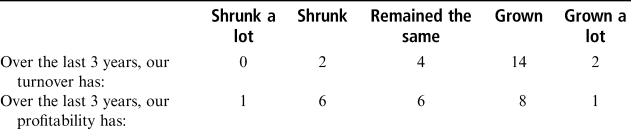
The success of the dynamic capabilities strategy is visible in the improved performance of Chinese firms. As part of our interviews, we investigated the performance of Chinese subsidiaries in Australia. Performance was measured by asking the top managers of 22 Chinese firms in Australia to respond to a five-point scale. The use of subjective, perceptual measures of performance is well supported in the literature and has been shown to be highly correlated with objective, accounting-based measures.Footnote 77 Table 9 provides a representation of our findings. It is evident that the internationalization path of Chinese firms varies and that some firms are doing better than others. It was also somewhat surprising to find that, contrary to cases of earlier failures in developed markets, two-thirds (16) of the case study companies indicated that their turnover had grown over the last three years, and nearly half (9) stated that their profitability had grown. These findings suggest that by using dynamic capabilities, some Chinese firms do overcome their initial liabilities of foreignness in Australia.
Subsidiary Performance in Australia

Conclusions and Implications
Australia's exceptional status as a leading recipient country of Chinese ODI has motivated us to explore the transition from the initial phase of central government-driven resource investment to the second phase of market-driven diversification into new industries by private and local state-owned Chinese investors. Our study is the first to examine how economic policy changes and institutional changes in China and Australia co-evolved with the corporate strategies and capabilities of Chinese investors.
Our findings suggest that the conventional assumption that globalizing Chinese firms are pursuing generic catch-up strategies with incumbent firms from developed economies needs to be contextualized in two specific ways. One is to take account of the host country market and institutional environment. We find that Chinese firms reacted quickly to changes in market opportunities, such as new demands from China's consumption-oriented economic policies. The other type of contextualization that our findings suggest is that Chinese firms overcame their comparative disadvantage not only by upgrading their operational capabilities but more importantly by mobilizing the entrepreneurial dynamic capabilities that enabled them to turn market structures and procedures to their advantage. The individual and collective entrepreneurial approaches of Chinese investors drew on their domestic experiences. For host market competitors, this approach could be disruptive and catch incumbent competitors off-guard. Alternatively, Australian firms were able to join Chinese business networks and gain access to the large Chinese domestic market and Chinese supply chains.
From a governance perspective, our findings imply that host country institutions can successfully incentivize Chinese firms to commercially and structurally integrate with the host economy. Our study strongly supports the contextualization theory proposed by Shaker Zahra, Harry Sapienza and Per Davidsson, which suggests that the dynamic capabilities and entrepreneurialism of Chinese firms in host markets are context dependent and contingent on the institutional setting in both home and host markets.Footnote 78 While this also applies to firms in mature economies, Chinese firms are more adaptable not only because of the fast market changes in their home country but also because having to overcome the liabilities of foreignness gives them an additional incentive to adapt. This implies host country governments should create institutional incentives to steer Chinese investment into desired industries and modes of governance rather than take a firm-based interventionist approach.
Australia is special in this context, largely because Chinese investment has strong incentives to localize, unlike in Europe, where Chinese investment is seen in terms of technology transfer, or the United States, where geostrategic competition has moved into the foreground. Within Australia's economy, which is complementary to the Chinese economy through the absence of competition, Chinese firms have developed new forms of localization and capabilities that have enabled them to successfully compete in specific industries. This ability to operate in a mature market environment will eventually be transferable to other similarly developed markets. One recurrent theme in our research was that Chinese firms described Australia as a doorway to advanced technologies, management and knowledge, and a testing ground for global capability building before entering major Western markets.
Our analysis offers insights for the future of Chinese investment in Australia. Since the end of 2017, China has tightened capital controls and regulatory restrictions on overseas investments. In addition, geopolitical considerations are playing an ever increasing role in the Australian perception of Chinese investment, especially central SOE investment. These institutional changes will drive shifts in the governance of ODI in China and Australia, particularly if the institutional environment for Chinese outbound investment becomes more restrictive in China and developed Western countries, including Australia. However, our analysis shows that Chinese investors with entrepreneurial capabilities will dynamically modify the way in which they operate in the Australian market and make use of the institutional elements to work around restrictions in the same way in which they have dealt with the constant institutional change in the Chinese domestic market. Our findings highlight that the dynamic capabilities of Chinese firms should not be underestimated. Their locally oriented and entrepreneurial subsidiaries can increase local competition and bring disruptions as well as opportunities to host country markets.
Acknowledgement
We are grateful to the Business School and China Studies Centre, University of Sydney, for funding support.
Biographical notes
Wei LI is a lecturer in international business at the University of Sydney Business School. Her research looks at the globalization of Chinese enterprises, specifically post-investment strategies and corporate social responsibility strategies in advanced economies. She has also published extensively on sustainability and renewable energy in China.
Hans HENDRISCHKE is professor of Chinese business and management at the University of Sydney Business School. His main research interests are the emergence of China's private enterprise sector and the global expansion of Chinese enterprise activity, including its investment in Australia.