THE ISSUE
In recent years there has been much discussion among managers of heritage sites about the best normative framework to maximize their protection. Leaving structures unoccupied or unused, such as the museum cities of the Soviet Union, does not seem to work, because the small problem that would be noticed by a resident or frequent user can be ignored and become a major problem. Suitable reuse is promoted as an alternative, but that may produce problems of overuse and rapid deterioration. How can these sites be well preserved and accessible to the public but avoid irretrievable damage that will deprive future generations of the resource? Natural sites have parallel problems: They must be managed to deal with natural threats and disasters (fire, drought, earthquake, influx of exotic species) and at the same time be available for public access, which may greatly increase the risk to those sites.
One suggested solution is the idea of sustainable heritage development. The concept is meant to draw attention to the long-term effects of management decisions. It also relates to providing connections between local populations and sites, so they are committed guardians of the sites. In an ideal situation, proper management may also provide them with a long-term income and prepare future economic security for the next generation.
However, how does one actualize sustainable heritage development? What legal or other normative framework will best promote it?
Since the second semester of 2003, Patrick O'Keefe and I have been conducting a course in International Heritage Law as one subject of a postgraduate course in Sustainable Heritage Development at the Australian National University (ANU), Canberra. The course is designed for postgraduate students and is multidisciplinary, this being intended to make use of as many different professional skills as possible and also to enable midcareer professionals to network widely.
Although this article hopes to contribute some insights into the debates on site management, it also hopes to illustrate how such a multidisciplinary course can produce very useful exchanges of views and open up new possibilities.
THE MECHANICS OF DIALOG
The course is multimodal: Students begin with an intensive week of five 7-hour sessions that introduce them to the course, facilitators, and each other and is made up of lectures by the facilitators, discussions, video and computer presentations, as well as guest speakers. They also receive a paper brick of documentation for this subject, mainly UNESCO conventions and other documents as well as some case summaries. The course is then presented online with one topic per week for 12 weeks. There is a short assignment each week as well as an essay at the end of the semester. Twenty percent of the course is assessed on contribution to the online discussion. Although the assignment and essay must be structured, the discussion is quite free ranging and open to move in any direction. Each topic sets out a few issues to start the discussion, but students are free to bring in anything they like that arises out of the course or they have found elsewhere.
In Topic 8 in the first semester (first half of 2006), the students were studying the work of organizations other than UNESCO. They had already studied the UNESCO Convention concerning the Protection of the World Cultural and Natural Heritage 1972 and the UNESCO Recommendation concerning the Safeguarding of the Beauty and Character of Landscapes and Sites 1962. Next they were introduced to the European Landscape Convention 2000, which came into force on March 1, 2004, whose protective provisions are not restricted to outstanding landscapes. The critical difference between these instruments is that the World Heritage Convention operates on a list of particularly important sites, as does much national legislation (scheduled in the United Kingdom, classified in France). The 1962 recommendation and the European Landscape Convention do not, applying to all sites. In recent years there has been criticism of the World Heritage List on several counts:
It encourages overuse of fragile sites and structures to their ultimate damage.
It encourages dedication of exiguous budgets on a few iconic sites to the loss of regional and local heritage so important to the local community.
Despite management plans, economic development, sometimes of the most crass kind, is promoted and disfigures the very sites that it seems most important to protect.
THE DISCUSSION
Having read the normative instruments and become familiar with the debate, students were asked to discuss the following:
How important is it to protect “ordinary” as well as the “outstanding”? How would this affect protection in your own country? How much national budget should go towards the care of iconic sites, and how much towards more general management?
The web site discussion in the following text shows just how much value can be added to such a course by drawing on the very different educational and cultural backgrounds of the students: archaeology, management, economics, communications, law, museum conservation and mediaeval studies from many different cultural backgrounds. (Profiles of the discussants are included at the end of the discussion.)
To reflect the informal and spontaneous nature of the discussion, minimal editing has been undertaken. Readers are asked to tolerate the side comments—it shows the way the discussion flowed. Any unfamiliar terms are either explained in a footnote or are in the Concise Oxford English Dictionary.
Finally, this is a debate in the professional community with which many disciplines must engage. I hope that others will contribute to a discussion on this dilemma for protection in coming issues of the International Journal of Cultural Property. For example, do the same criteria for protection and the distinction between ordinary and extraordinary apply in the same way to all sorts of sites—archaeological sites, historic cities, natural sites, sites embodying history such as battlefields, sites embodying spiritual values, and so on? How would an economist rate the importance of such a distinction between ordinary heritage sites and outstanding heritage sites? How can local community support be mobilized for ordinary as well as extraordinary sites? And how can the known disadvantages of recognition as outstanding (overuse, poor management, more rapid deterioration) be minimized? I invite all those interested in these issues to contribute to a development of this discussion.
Charmaine Hastings
Good morning all, I'm going to start off topic 8's discussion by saying I've found this one a little bit confusing. I think I understand the gist of cultural landscapes and their preservation or renewal, however, I think I need some examples of “ordinary” v. significant landscapes, as it seems to me they can be just about anything! Could it, for example, be an industrial area on the outskirts of a city? If some other works in the area were going to take place, and the relevant consultations prior to those works showed that the public did not consider it impacting on their well-being or leisure (because it was outside the main urban area), does this mean that all areas are considered ordinary landscapes worthy of consideration in the planning context, even if the consideration shows they do not impact on the happiness of the residents? It might depend on the legislation of the individual States party to the European Landscape Convention, so perhaps I need to look further. However, if I've missed something glaringly obvious, please point it out to me!
On the actual discussion questions, in my opinion it is important to protect both ordinary as well as the outstanding. If I use the example of my home town of Maryborough, Queensland, as with many Queensland cities, this has an industrial area right at the outskirts, which doesn't affect the aesthetics of the actual urban area but which tourists and locals have to drive through on the main entry to the town; and it is quite an eyesore. This could be upgraded, trees planted, and the whole city entrance be made much more attractive for the purposes of tourism.
In terms of the actual township itself, it has a number of historic buildings that are heritage listed. It is important both for tourism and the general enjoyment of locals that the historic structures and facades of the township are maintained. One particular area—Wharf Street precinct, which houses the old court house, bond store, Queensland's oldest post office (complete with a clock tower in which a large ball was once dropped to mark the time), and customs house—has been preserved as such, with old-fashioned lamp posts, regular night time market stalls recreated from old fashioned market carts, and other yearly historic events focussed on that area.

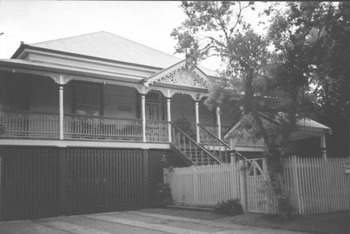
Typical “Old Queenslander.” Photo provided by C. Hastings
Whereas at the time the McDonald's was built, it had to comply with building in a (semi)Queenslander style, the other “main” parts of town have been dotted with two dollar shops with lairy banners and a hideous new shopping complex in all-concrete style, which is largely as a result of those counsellors that want to prove the city is modernizing at the expense of maintaining the historic landscape.
The residential areas themselves have one of the largest concentrations of historic Queenslander style high-set wooden houses and tiny wooden “workers' cottages”; and there has been some effort to preserve these, especially with the introduction of a weekly bus tour, walking tours, and specialised tours around the city to those most well-preserved. With the increase in Maryborough houses being bought for relocation to other areas such as Brisbane, as they represented excellent cost for size, historic and aesthetic value, a group was set up in protest and I believe there are now restrictions on this practice. There is also an annual prize for the best “before and after” maintenance or preservation of a private home and business, with quite good prizes. This is sponsored by local businesses including trades and paint shops, who offer the services of replacing traditional wrought iron pieces, decorated timber pieces and a host of “historic Queenslander” paint colour combinations. There are a number of new suburbs with all brick homes, but I think it would be wonderful if those streets in town with a majority of quality examples of the traditional styled Queenslanders could remain without the stark contrast of brick homes dotted sporadically amongst them. Alternatively, the town could go down the route of Braidwood,1
A historic town in southern New South Wales with several historic buildings of importance and an interesting historic streetscape.
On the issue of cost, perhaps iconic sites such as Uluru2
Uluru (Ayer's Rock) is a world-famous Australian icon, a huge red rock (remains of a meteor) rising starkly above the desert in the center of Australia. It is incorporated in the Uluru-Kata Juta World Heritage site.
I think preservation of ordinary landscapes is an excellent idea, and one that could improve the living standards and enjoyment of all Australians. Reaching consensus on what should be preserved or upgraded while maintaining a diversity of urban and rural landscapes would perhaps be the biggest challenge.
Emma Lees
Thanks Charmaine! What a really great start to discussion. I'll have to make it up north to re-see the Queenslander houses after your reflections.
I also think it is very important to protect “ordinary” as well as the “outstanding.” The reading of “European Landscape Convention, Florence by Maguelonne Dejeant-Pons3
Dejeant-Pons, “The European Landscape Convention, Florence.”
It has been interesting to notice in our readings how indigenous groups may value the landscape/environment “in totality” and have traditional laws and customs regarding this, whereas protection under law in westernised systems seems to have been piece by piece. Only now are we developing legislation to recognise the holistic intrinsic relationships of both “ordinary” and “outstanding” of heritage. One term used by the New South Wales (NSW) Heritage Office (in its “Cultural Landscapes Charette Background Paper”4
A charette is a process of developing a long-term vision for a town, and the planning structure with which to implement that vision, through extensive community involvement.
In Australia there are many levels of Heritage protection and statutory listings—National, State, Local. There also seems to be a great many bodies with an interest in the protection of what would be classified “landscapes”—i.e., those areas affected by an interaction of natural/ human cultural factors whether of “ordinary” or “outstanding” value. (I have found this website useful in looking at links to Government, NGOs, Laws etc.: http://www.heritage.gov.au).
For example in New South Wales, the NSW Heritage Office—http://www.heritage.nsw.gov.au/01_index.htm—is a body that:
- works with communities to help them identify their important places and objects (State AND Local significance);
- provides guidance on how to look after heritage items;
- supports community heritage projects through funding and advice;
- maintains the NSW Heritage Database, an online list of all statutory heritage items in NSW (if it is on this list it can be protected legally). Cultural landscapes, bridges, streets, industrial complexes are amongst those listed to be protected.
The 2003 “Cultural Landscapes Charette Background Paper” was prepared by the NSW Heritage Office to talk about protection and management issues of cultural landscapes; and, as you say Charmaine, these cultural landscapes seem to include almost anything! The paper says cultural landscapes “include homesteads and farmlands, as well as remnant native vegetation, Aboriginal sites and places, wetlands, early settlements, disused cemeteries, defunct industrial complexes, and so on.” Part of the issue is defining and recognising, I think, and having communities realise the value in the landscape and then in its management. This paper is available at http://www.heritage.ndw.gov.au/.
The paper does say that there has been a lack of recognition for specific cultural landscape management and protection in the past. Various potential funding sources for landscape management in local government, the Heritage Council of NSW, Commonwealth Tax incentives, Open Garden Schemes, or carefully considered tree planting and revegetation schemes with Landcare are mentioned.5
Landcare is a national voluntary community movement of approximately 4000 groups that aim to improve natural resource management practices. Landcare operates largely in rural Australia, involving up to 40% of farmers, who manage 60% of the land and 70% of the nation's diverted water.
I am not sure what the government budget is at the moment in regards to the breakup of heritage funding—but I do agree with Charmaine that it is important to spend on “ordinary” sites an amount which reflects the large body of community value placed in these areas. Perhaps a lot of “general management” and protection of ordinary sites comes out of individual and community pockets through volunteer and community run programmes—because these people value it too much to wait for government funding!!
Charmaine
Hello all, just a quick note to let you all know about a TV program on tonight that is dealing with people's different perceptions of Britain's huge concrete building structures. Interestingly, the excerpt says the architects considered them “a step towards a more humane urban environment.” I thought it might be interesting in the context of our landscapes discussion, if you're interested.
“I Love Carbuncles” 10:00pm Tuesday, April 11, 2006 ABC (Australian Broadcasting Commission)
Britain is dotted with massive concrete buildings, which many people, including Prince Charles, loathe. They're often called ‘brutalist’ buildings—a derisive-sounding term that actually comes from the French for raw concrete, beton brut. Love or hate them, their sheer scale means you can't ignore them.
To many these buildings are intimidating and ugly. Yet the architects of ‘brutalism’ saw them as joyous and playful, a step towards a more humane urban environment.
Brutalism took off in the UK in the aftermath of the World War II, when Britain faced a huge rebuilding task. At the heart of the movement was a vision of cities in the sky—new complexes like Le Corbusier's Unité d'habitation in Marseille—where people would live, shop, play sports and enjoy communal facilities. Concrete was the new wonder-material. Planners and politicians liked it because it was cheap and quick; architects used it to create sculptural, flowing shapes, and revelled in its rough, raw texture.
The leading brutalist architects shared a mission: they wanted people to experience space in a new way. They were also supposed to encourage a new kind of socialising—warmer, less formal, and class-bound. The brutalist dream was a profoundly democratic one.
Instead of embracing the new architecture, many people recoiled from it. What went wrong?
Kim Selling
Wish I could have seen that TV program on concrete Brutalist architecture, Charmaine! It reminded me forcefully of the time I lived in Sweden. Sweden also went through a massive postwar boom of building massive concrete apartment blocks, which are ubiquitous in most Swedish cities including Stockholm and Gothenburg. Sweden is famed for its strong social-democratic government, which was at its apex in the 60s and 70s and the epitome of a successful welfare state: a world leader in creating communal living situations. However, these concrete blocks really are an eyesore (and I love a lot of modernist architecture); and the utopian ideal in many ways failed as people became atomised in their concrete cells, and many became ghetto areas inhabited by migrants and refugees.
I lived in one such concrete conglomerate in Gothenburg where they had attempted to liven them up and reinstate more of a sense of community by painting the buildings in pastel colours (unfortunately, I don't have the photos with me to show you). It was quite extraordinary in its own way! The happiness-invoking colours were supplemented by communal gardens where people could have their own little patch to grow vegetables, and there was even a small farm with pigs and horses and chickens that the kids loved. It was still a bit of a ghetto, but many students had also begun to colonize these areas and were revitalizing them through that “cool” youth factor, slumming it. I tell you, it was the best slum I have ever lived in, and much more well-planned, cosy, convenient, and clean than many a student dive in Sydney! However, I rarely saw my neighbours, so the communal aspect was still missing.
Emma
All this brings to mind some of the debates around Sydney's expansion in the western suburbs, where many of the housing estates lack those “social spaces” in between the back to back avenues of bricked homes—areas which can grow into “cultural landscapes.” Socially, this does play havoc I think with people's sense of place and connection.
Although do you think human beings adapt and create these spaces for themselves wherever they are? Hence the reason such “ordinary” landscapes can resonate so strongly for people?
It also reminds me of a story I heard once on Radio National about a woman's experience of moving to Canberra in the early days, just after it was all planned out, built, and waiting for the people to inhabit and for the trees to grow. She commented that she used to drive the hour or whatever it is to Queanbeyan just so she could sit and look at a more random slightly deteriorated rusted old peeling paint view of shops, signage, etc.—a “cultural landscape” that was not so sterile and pristine, and unlived.
Thanks Charmaine and Kim! Perhaps those communal gardens of Sweden would be a great idea in the housing estates out west of Sydney. They are a great idea anywhere really—I know that they do exist dotted and tucked in between buildings in other parts of the city. Hhhmmm, don't know about the pastel buildings though! Personally, I am not so keen on concrete… .
Lisa Addison
I liked your discussion examples, Charmaine and Emma … and I agree with you—I think it is a good idea to protect both “ordinary' and “outstanding” sites. Ordinary sites can hold cultural heritage significance to a local community, and therefore protection is important so that significance/meaning of the sites are not lost through unbridled development, etc.
“Outstanding” sites may well have local, national, regional and possibly international significance, but may have other features which are worthy of protection such as aesthetics, rare plants and animals, outstanding structures, etc.
It was interesting for me when I did these Topic 8 readings, I was at my Dad's house in a town called Kiama on the South Coast of NSW; there had been local council elections and a major battle in the council is between the “greens” and the property developers about the extent of development in Kiama. I think you could say that Kiama is somewhere between “ordinary” and “outstanding” and there are sections of it that should be protected from development. Kiama is known (at least in the Sydney/Illawarra region) for being a “beautiful place,” mostly due to its coastal location with green, dairy cow grazing farmlands extending from the town up to the escarpment, which has substantial rainforest. The land is “damaged” in that much of the red cedar was logged in the 19th century, and the pastures are where there was once native vegetation. The dairy farms on the pastures were one of the first industries to develop in this area, but these farmers have had their market cut (deregulation of milk industry) and are finding salvation(?) in selling off their farms to property developers. Now, large tracts of this land are covered in houses. Apart from the aesthetic, environmental, historic, and social significance of these pastures, there are some particular structures which are characteristic of the European settlers here—dry stone walls demarcating properties—ordinary but significant to this area. In some paddocks are rows of Illawarra Cabbage Palm trees—there aren't too many of these left, and they are a lovely variation in the landscape.
I think for these ordinary sites, the local councils should be responsible for sustainable planning to retain the character of their town/city for both the resident's amenity and to make the place interesting for visitors. However, the work of the local councils could be supported by the national heritage and environment policies, and councils could apply for grants to assist with larger protection projects. As far as the national budget goes, it really should be focused on the more outstanding sites—say 60% of the budget (as these possibly require more work to maintain?) and 40% being spent on the general management, grants to other less outstanding sites.
Thanks for the tip on the programme about “Brutalist” architecture, Charmaine; I am sorry I missed it! Anyhow, I'm glad you raised it because this is a topic I've been very interested for several years. I went to some conferences of the Historic Houses Trust of the NSW/Australian Institute of Architects. One was called “Fibro to Opera House—Conserving mid-20th century architecture”—which was originally held as a bit of a “wake” after the NSW State Office Block was demolished (it was of the Brutalist style).
There are some publications available through the NSW historic houses trust from this conference if anyone else is really interested…. But regardless of the details, there is a strong movement coming from architects and town planners to protect examples of both outstanding, experimental, landmark, and vernacular architecture. One of the papers presented was about the heritage listing of a group of fibro6
Fibro, also known as asbestos cement, was a building material of whitish color and uniform thickness with a smooth surface. The fibrous material used in its manufacture can often be seen embedded in the outer surface. Widely used for cheap construction in Australia, it has now been banned because of the health hazards of the minute fibers that cause fatal lung diseases. Fibro constructions are now being demolished because of their danger to public health.
McMansions, a term coined in the United States to describe the outsize mansions burgeoning there since the 1980s. In Australia it refers to the aspiration to have the biggest house on the smallest site at the lowest price. Constructed by speculative builders on a concrete slab, they are often accompanied by triple garages, faux facades (six or more that can be fitted to the same interior: faux French Provincial, Tuscan, Georgian, Federation, Victoriana, Colonial, American Colonial, Australian Traditional, or Modern) and tiny backyards, they have been are described as cavernous trophy homes built on a bulldozed-bare, handkerchief-sized lots, typically with wow factors such as big garage doors, big front doors with vaulted entries, porticos and columns, big windows with stick-on fake windowpane strips, stick-on shutters, stick-on chimneys, glassy towers, gazebos, and gable ornamentation galore. Usually ecologically unsound, with no eaves to protect from heat, they require air-conditioning, curtains, and blinds for privacy and other outlays to make them comfortable to live in.
Emma
Sorry Charmaine—re-reading what I wrote it comes across that I wasn't interested in concrete, and therefore wasn't so interested in a reply from you! Not at all. But I think the description you gave of the show, and Lisa's comments give a pretty good idea anyway… .
Pity that Gaudi couldn't have gotten his hand involved with all that free form concrete. Not so brutal.
And Lisa—I REALLY REALLY hope that McMansion-lovers in 50 years time are too busy watching commercial television to fight for any type of heritage listing!!
I'm beginning to think also that “ordinary” sites do become protected simply through long and loud fighting by community. Because even a well-off state like Australia has limited funds available to protect all sites equally and so there have to be priorities.
Wei Liao aka “Ivy”
Dear all, what an exciting discussion you have been having! The pity is I missed the program too, I hope I can find the relevant summary on the ABC web site.
I agree with your idea that both ordinary and outstanding landscapes should be protected. But it can't only depend on the national budget but should encourage engagement from various different levels. Here, incentives play an important role. There is an international prize that could be awarded to local and regional authorities, mentioned in Reading 4.8
Priore, “Le projet de convention.” He proposed that an international prize, the European Landscape Label, could be awarded to local and regional authorities in recognition of their efforts.
For ordinary landscapes, local governments have a significant role in stimulating the communities' involvement and business investment. I agree with Lisa's opinion on the local councils' work.
It seems that the question tries to separate the national budget into two parts. I take a different view. I think the conception of “ordinary” and “outstanding” are conceptions based on our current knowledge. With some new discoveries and increasing wealth, the ordinary ones may get refreshed treatment. In a pragmatic way, more money should be invested to outstanding sites, but in some poor places, it is hard for local government and communities to raise enough funds to do the protection. They may prefer to apply it to solve other problems first, such as poverty and employment.
What may be a serious problem is the local authorities' awareness and willingness on protection, as there may be a trade-off in the financial plan. I think it might be better to set up a third of the national budget as a “trust fund,” which allows direct applications from community organizations for protection of important “ordinary” sites that are endangered or lack support.
In my opinion, how much national budget should go towards the care of iconic sites and towards more general management should be based on a survey of the need in different countries. It should also think about the current public awareness and the possibility of corporate sponsorship.
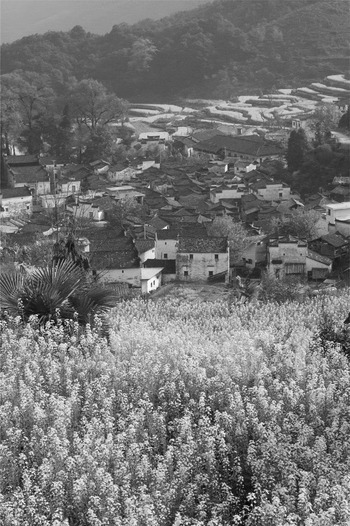
It is interesting that the definition of “landscape” is extended from monuments to buildings and then to the surroundings. This is, for the Western model, a progress towards a holistic system. But I doubt that whether it can also work in reverse: from surroundings to buildings. Recently, I received some images from my ex-colleague who took some photos of a small town named Wuyuan. This place is famous for its fields of rapeseed. These yellow fields and the rural buildings with white walls and grey roofs form a uniquely beautiful view. However, there are few historic characteristics and it's rather “ordinary.” While some of the buildings may have been there since the Qing Dynasty,9
Chinese imperial dynasty ruling from 1644 to 1911.

Village of Wuyuan in northern Jiangxi Province, which lies in the centre of the “tourist golden triangle” formed by the Yellow Mountain (Anhui Province), Mt. Lushan, and Jingdezhen, China's “Porcelain Capital” (Jiangxi Province). This area is known as the “most beautiful countryside in China,” and is home to at least 50 old villages. Photo courtesy of Sun Junjun, Zhongshan Economic Daily.
In addition, I'd like to introduce a Chinese traditional model in landscape design: Feng-Shui. This model has been influencing the property development and landscape building for a long time. Sometimes it is hard to judge whether it is superstition, as some “masters” are indeed liars. However, the principles of building a harmonious relationship between human beings and the environment are really good at structuring a comfortable living environment. See the link: http://www.turenscape.com/paper/show.asp?ID=34&type=&ClassID=0/.
Nicole Donato
One very important sentence in Article 1 of the European Landscape Convention 2000 constitutes part of the answer to question about the protection of “ordinary” as well as the “outstanding” “landscape … is the result of the action and interaction of natural and/or human factors.”
There are two main reasons identified that refer to the protection of the “ordinary” as well as the “outstanding.” One reflects the importance of a landscape site in relation to an event in history that took place on that site. For example, a field where an old farm is located was the original location of a battle that shaped many events of a war. An example would be the Monastery of Montecassino where the landscape surrounding the monastery is protected in memory of the battles that took place in the Second World War II. Although the immediate surroundings of the Monastery may not be of significance physical beauty, it is important in the perspective of historical dimensions, hence, it is protected also for those reasons.10
See http://www.officine.it/montecassino/main_i.htm (accessed April 2006).
The second reason a site of protection may be “ordinary” is also related to the “promotion” of its cultural significance. For example, such thinking methodology has not so much been taken into consideration in many cities of Australia. In the 1950s, 1960s, and 1970s there were widespread building demolitions and reconstructions taking place within Melbourne and Sydney. Sadly, many of the buildings being demolished were part of the Victorian era; hence, gathered together those buildings produced some emotive traditional landscape displaying the traditional building structures of the Victorian era.
Little was known in those years of “construction revolution” that those buildings would have been culturally important, resonating with the fine craftsmanship involved in the construction of buildings of the Victorian era. Nonetheless, the city skyline of cities like Melbourne and Sydney has changed drastically in the last century, so much so that immigrants coming to Australia for the first time by boat, docking at one of the piers in the Australian capital cities back in the 1930s, would find it hard to recognise the skyline nowadays.
Another factor to consider is also the financial market pressure faced by property owners. Many inner suburbs properties have now increased value. Many organisations are involved in heritage conservation of those sites. The “Heritage Council of Victoria” provides legal protection for heritage places and objects identified as being of significance to the State of Victoria, Australia. It operates in accordance with the “Victorian Heritage Act.”
Australia may not be jurisdictionally part of the “European Landscape Convention,” however, it does have legal instruments for the protection of buildings and surroundings.
- While local government protects buildings and places of local historical significance by identifying them in local planning schemes, the “Australian Heritage Council” is the principal adviser to the Australian Government on heritage matters. The Council assesses nominations for the National Heritage List and the Commonwealth Heritage List and compiles the Register of the National Estate.
- The “National Trust” is a lobby group that identifies historic places, buildings, and towns of historic significance. However, the “National Trust” classification does not provide legal protection for heritage places.
The view of the Federal government is rather different from that of the State Government. There is clear disparity in funding between different heritage areas, and this is especially reflected in some of the comments about the perceived priority given to some areas. One comment in the assessment of the management of World Heritage areas, for example, indicated that there was the appearance of “A Team World Heritage Areas (WHA),” such as the Kakadu area and the Tasmanian Wilderness, and “B Team WHAs,” which include three New South Wales properties.11
Standing Committee on Environment and Heritage, House of Representatives, Inquiry into a Sustainability Charter for Australia. http://www.aph.gov.au (accessed April 2006).
A further criticism of the provision of Commonwealth funds for state-managed areas was identified in a recent evaluation of the World Heritage Unit's operation. The evaluation found that funds have tended to be directed to major problem areas or obvious bottlenecks rather than supporting model approaches.12
Evaluation Report: World Heritage Management Arrangements, Department of the Environment, Sport and Territories, November 1995, http://www.deh.gov.au (accessed April 2006).
Although each State is responsible for the protection of its cultural environment, with the power of their own legal instruments, the Environment Protection and Biodiversity Conservation Act 1999 protects the environment, particularly matters of National Environmental Significance. One of the main responsibilities of the Act is to ensure the protection of “important natural and cultural places.”13
Environment Protection and Biodiversity Conservation Act 1999, Department of the Environment and Heritage. http://www.deh.gov.au (accessed April 2006).
No funds will ever be sufficient if every individual in Australia does not contribute to the protection and integration of cultural places within the everyday planning, whether for commercial purposes or for personal purposes.
Brendan Cassar
I am currently involved in an informal committee made up of UNESCO, non-governmental organizations (NGOs), the government and a few other stakeholders concerning the preservation of the architectural or cultural landscape of Kabul in Afghanistan. It is currently the case that Kabul and Herat are under particular threat from rampant development and the bulldozing of “ordinary” architecture to be replaced by Dubai-inspired concrete and glass buildings and other buildings inspired by the combination of Iranian, Pakistani and Indian cultural diffusion (multi-coloured concrete and stone tiles with painted facades in a combination of colours, two and three storeys high, integrating Islamic and Indian themes with Graeco-Roman columns).
These “palaces” are replacing essentially traditional mudbrick buildings and older palatial type structures in mudbrick and stone that preserve the cultural character of the cities. Many of us—including a substantial representation of Afghan opinion—don't like these new buildings, though we understand that they are the current cultural expression of opulence and are symbolic of the reconstruction process for many Afghans. They, too, may come to represent a particular and important period in Afghanistan's history though we may deplore them now.
In short, the process is basically unstoppable in totality for various political, economic, and cultural reasons. However, we are trying to build opinion to preserve certain parts within the old city at least, that reflect an ordinary, established cultural landscape situated on the Kabul river. This will become increasingly important when the rest of Kabul has disappeared under concrete and a rainbow of marble.
However, the existing legal framework protects only a few of its monuments and in any case the government has little authority or will to stop such new construction projects. The World Heritage Convention may yet save the old city of Herat, if and when it is nominated, but Kabul was already too far gone before the war even started.
In regard to money, there is currently one donor who is interested in such a project and who has substantial influence. It is not the case here that funds will have to be diverted from the preservation of outstanding buildings or cultural landscapes such as the Bamiyan valley, because the government is donor dependant in any case and UNESCO cannot spend money on this project unless it receives funding specifically for that purpose.
If we can find money to preserve and restore both outstanding and ordinary spaces within the old city of Kabul and also get the government to legislate and enforce the legislation, we may be able save something of Kabul's past. It is also hoped that we can begin small projects in local building techniques for the restoration and that such areas could become tourist attractions in the future and therefore more sustainable.
Kim
In regard to the protection of “ordinary” landscapes, I am having problems with the concept of what constitutes “ordinary” in the first place. Ordinary means commonplace, not special. But by singling out a place for protection, this automatically accords it a special value, hence making it extraordinary, perhaps even “outstanding.” I don't believe that ALL cultural property is worth preserving, precisely because of the need for (and inevitability of) cultural change. The problem with trying to protect “ordinary” sites is where to draw the line—who is to determine what is ordinary, yet simultaneously special or iconic enough of ordinariness to require extra conservative efforts? Perhaps I'm being pedantic in dicing up the terminology… .
Emma
Just a few thoughts on the concept of ‘ordinary’ within cultural landscape protection—I too find it a bit confusing to know where the line gets drawn between ‘ordinary’ that is granted special protection and ‘ordinary’ that isn't.
I also think that perhaps it is an unfortunate choice of terminology. Although ordinary does mean commonplace and not special, it does also mean ‘usual’, ‘regular’, ‘normal.’ Colloquial usage may link it to being ‘boring.’ Perhaps in this case ‘ordinary’ is defined by what it isn't. It's whatever is left over from the really outstanding. A bit more subtle in its appeal, and maybe difficult for locals and others to articulate because it just ‘is.’ It's the everyday. It's what you miss once the high-rise or other type of intrusion takes place.
Maybe the concept should be looked at in a different light. Maybe the ‘ordinary’ place/landscape is not so much singled out for protection (although that is our tangible result we assess)—but rather it is the PROCESS of a more democratic localised approach to a sustainable spatial development that is being singled out for protection and recognition.
Perhaps it is the start of the ‘imaginative change’ that you talk of, Kim, towards sustainable practice respecting the environment and quality of life; practices not driven solely by profit motives.
I think it does say in our notes that it was a convention that had as its major goals the furtherance of certain social and environmental goals by improving quality of life of Europe's inhabitants—that the conservation and protection of the actual cultural and natural heritage within the landscape would be a by-product.
In terms of which ‘ordinary’ landscape is granted that ‘extra-ordinary’ level of protection—it is the ‘ordinary’ folk and their aspirations that are given ‘extraordinary’ consideration and rights to define the characteristics (of landscape/of their quality of life) they would wish to be protected.
Charmaine
Hey, great discussions on this topic everyone, it certainly is an interesting one, isn't it?
Emma, you definitely should visit Maryborough (everyone should!), and even though I grew up there it took living away for quite some time and travelling the world to appreciate how unique the city really is. I'm only sorry I missed the colourful World Town Crier Championships that were hosted there last year.
Thanks also for clarifying what can be considered landscapes; from your research it seems to be any landscape, and I found your and Kim's discussions interesting in analysing the terminology of “ordinary” landscapes and the purpose of protecting them. I agree that it seems to be part of approaching planning in a new way, to incorporate factors such as the environment and aesthetics and not just economics.
I also thought it was a good observation that perhaps a lot of the budget for protection of cultural landscapes and sites may in fact come from the community and especially volunteers, who contribute a lot of in-kind resources, through their time, effort, and expertise.
Lisa, I recently visited Kiama again for the first time in many, many years, and thought what a beautiful location and town it was. It's interesting to hear of the associated surrounding land issues. I worked in the dairy section of the Agriculture Department for a few years, and the pressure to sell prime land close to regional centres is seeing more and more dairy farmers selling up to developers who more often than not subdivide the traditional green pasture landscape. Another big pressure is to move into other industries such as beef cattle, or blue-gum plantations in the case of southern Australia.
Unfortunately, in small cities like Kiama and Maryborough, the councils are often more focused towards development than protection or facelifts, maybe because they have only recently experienced the economic growth of other areas and are now trying to “catch up” and prove they can build concrete masses and shoulder-to-shoulder housing estates just like the rest. Ivy, your suggestion about giving community organisations the chance to allocate funding as they see appropriate is a creative approach, and as you say, gives the role to those who will value cultural heritage above any economic agendas—I like it! (Your photos of the yellow fields and grouped white houses were beautiful, by the way.)
Kim, I'm glad to hear of the Swedish painted apartments. When I lived in England I found the white, white, and more white rows of Victorian townhouses (most grey due to pollution) and brown concrete very drab during winter, and on a trip to Ireland noticed how their use of different colours on each house in a lot of little towns, coupled with bright window flower boxes, made the world of difference to my mood in such dreary weather.
The architecture show on last week was quite interesting, but the host was very pro-Brutalism, and couldn't understand why more weren't heritage listed to protect that unique phase of architecture. I think the concept of an urban space incorporating living units, shops, restaurants, etc. to create small communities was quite interesting, but the actual use of brute concrete was quite unaesthetic in my opinion. The show focused on one such large concrete structure being demolished due mainly to structural reasons, but the opinion on the street was in favour of knocking it down in any case.
Excuse my ignorance, but what are McMansions? Does that refer to the new trend of buying or building the biggest house the budget will allow?
From the thoughts shared on this topic, it certainly seems that a delicate balance needs to be found between allowing people the comforts of modern day life (and indeed creating our own cultural heritage to reflect the fashions and lifestyle of today—and, to use Brendan's phrase, which I really liked, the current cultural expression of opulence), and preserving a window of the lifestyles of past generations—to maintain the cultural heritage, appreciate discontinued styles, preserve the aesthetics of certain eras, and learn from past mistakes.
Emma
Thanks Nicole and Brendan—perhaps one day I can make it to Afghanistan to see the things you describe Brendan.
During January 2006 I helped a couple of friends with an artist run festival/cultural exchange held in Sydney (I came in more at the end after all the funding dramas). Here is a shortened description:
‘Gang’ Festival is an artist-run festival and creative exchange program showcasing the work of over 15 autonomous and collaborative arts communities in Australia and Indonesia.
Pronounced ‘Gung,’ the concept Gang draws from the Indonesian word for alleyway, a critical artery in Kampung culture, where local trade and communities thrive in close proximity to one another; also drawing from the English meaning of the word to describe an exciting cross-cultural collaboration between a large number of art workers who situate their work on the margins of commercial art practice in Australia and Indonesia.
Without going into too much detail, there are many artist run initiatives/studios/warehouses/exhibition spaces dotted around inner-city Sydney that have been, and continue to be, threatened by rampant development. (The “Black Wattle Bay” art studios and cafe that used to exist in Glebe14
An inner-city suburb of Sydney with some fine Edwardian and Victorian houses and some workmen's cottages of the same vintage.
The culmination of the festival was a street festival that took place in the alleyways around Chippendale. Art was hung on walls and garage doors, there were buskers, performance, street puppetry, Indonesian cuisine, etc. etc.
It was a total transformation of a fairly nondescript block in the inner city for that short period of time, and there was much praise from the residents who were amazed at the community atmosphere and “cultural landscape”(?) that was rigorously created right where they lived.
Artist-run spaces that become a hub for really diverse creative activity in Sydney are having to fight very hard to remain viable in the face of bigger budget activity. If those “ordinary” older warehouses and studios get knocked down and renovated into apartments, then there is nowhere for spontaneous creative activity to take shape.
Lyndel and Patrick
How to distinguish between ordinary and exceptional landscapes? Well, if you run a system of listing, you have to. An ordinary landscape can be anything. I (Lyndel) remember being very depressed coming into Birmingham on the train through acres of rusting machinery from the early Industrial Revolution. On the other hand, to an engineer it (or some of it) may be a fascinating site. My rule of thumb might be, if everyone finds it depressing, then something should be done to improve the aesthetics and add to the enjoyment of life. You gave wonderful examples from Maryborough, early Canberra, and I especially like Kiama, as my great grandparents arrived from Germany in 1855 and settled there. I agree that it has a very beautiful natural position, but I am a bit saddened to hear of modern “developments.” Probably it is becoming a dormitory area for Wollongong.
Further along Emma suggests that we should be looking at “process” here. This seems a good idea. We cannot list everything, and listing may have financial and legal implications that we do not want for every site. But places that are meaningful, whether or not they are “outstanding” for some reason or other, may need to be preserved to keep people attached to their context. The destruction of small local mosques and town squares in places like Bosnia had a terribly traumatising impact on the inhabitants, even though these places may not have been aesthetically or architecturally exceptional or even significant. Another approach is to look at places whose absence (or destruction) will cause pain—this represents the emotional landscape of its inhabitants and is part of the need for belonging that all human beings have.
One big problem is the lack of understanding and sensitivity to planning and preservation in local councils, although several of you pointed out the importance of their role. About 25 years ago, one of the local councils in a shire close to Toowoomba15
City in Southeast Queensland, about 120 km west of Brisbane.
Lisa's point about having examples from every age, including the fibro (as long as it can be made safe) seems to be very important, and preserving visible layers of history is certainly the view of ICOMOS. I heard from one local counsellor here that an elderly former counsellor always use to say, “Always look forward, never look back!” and on that basis, development was always approved!
Emma's point about the importance of the local community is very pertinent. This is a case where a determined group can often arrange the salvage of a historic site if they really believe in it. I know several in this area—most importantly, “Glengallen,” one of the earliest homesteads in this area that was neglected for years and its fittings gradually stolen or vandalised but was rescued with a bicentennial16
In 1988 Australia commemorated the bicentenary of British settlement in Australia.
What a fascinating article, Wei Liao, on Feng Shui! You may be interested to know that the architect who planned our current house (built three years ago) had made a study of Feng-shui. What he said to us was, that a lot of the rules were devised for the particular regions where the principles of Feng Shui were developed (e.g., the idea that there should be no direct passage from front to back through the house because that would let demons in) fitted very appropriately into a windy and dusty landscape, where opening the front door would lead to dust all over the house unless there was a blocking wall in front of it. This recalls the well-known anthropological thesis that social and religious practices often are consistent with practical and environmental necessities. This is certainly true of Australian Aboriginal society (e.g., the sacredness of animal totems in various tribes created reserves for species preservation). Very beautiful landscape pictures of the village of Wuyuan too—definitely to be preserved!
Nicole's example of the destruction of many traditional Victorian precincts in Sydney and Melbourne is instructive. Both had wonderful Victorian, beautifully crafted buildings in the CBDs (central business districts) which were destroyed. What is left is towered over by new structures completely out of scale with them. Could we have preserved at least some intact? In Sydney this might have been more difficult than in Melbourne, because of the geography of the harbour. If we saved all the older buildings near the water, development would have to move further and further South, eventually displacing the busiest part of the city away from its focal point. But the result has been the loss of a very beautiful (golden Sydney sandstone) precinct of outstanding historical importance, which would have been one, if not the only such one remaining, of British colonial adaptive architecture and a huge asset, aesthetically and economically.
Brendan's example from Kabul is sobering, but the key is in his last paragraph: It is essential to get people to understand that the uniqueness of a city's architecture and traditional forms is one of the vital things that attracts tourists. It is much cheaper to see Dubai architecture in Dubai than in Kabul. And Kabul has such a long history and distinctive forms. The other point he makes (also made by Charmaine) is that it is essential to preserve some precincts as a whole, not individual structures dotted about a completely inconsistent landscape than the one they were built for. Let's hope your prospective donor will help this process: Perhaps the area could immortalise the donor's name in one of the structures? Would it be possible to run an ICOMOS meeting in Kabul for all the nouveaux riches on the “best architecture in Kabul”?
Emma's idea of “artist-run” areas is a wonderful creative way to bring life into uninspiring landscapes and great economy in the long run.
All in all, a wonderful, instructive discussion from which we also learnt—just the way it should be!
A Postscript from Brendan
About a role for ICOMOS in relation to Kabul. Absolutely, there is a role for ICOMOS and any other organization with weight and credibility. However, any such mission cannot compel the government of a sovereign state to take the measures advised. It is easy to criticise UNESCO and other bodies for not being more effective, but ultimately the steps must be taken by the government concerned. The only possible sanction would be the withdrawal of funds from certain projects—but that is a step which is also difficult, and of course, has other drawbacks. However other pressures do sometimes work… .
Herat's ordinary and extraordinary architecture, for instance, had amazingly survived the wars in Afghanistan largely intact. There was less war damage because the authorities in Herat were able to shrewdly navigate their way through the minefield of Afghan politics and avoid the total destruction wrought against Kabul for instance.
Ironically, in the post conflict period, this city is being destroyed by short-sighted development. UNESCO has voiced its unease with the situation, as have many others, but with little impact to date.
Some powerful people are destroying Herati architecture to invest large sums of money in multistorey buildings that remain unoccupied. Thus, it is not only about education, awareness raising of the value of the architecture or its potential to create wealth from tourism in the years to come etc., it's also about politics and powerful interest groups.
Nonetheless, we will all keep trying, and the more political weight we can lend to the argument the more likely something positive can be done. There was a moratorium on construction in Kabul's old city for several years though this is now wavering and more buildings are beginning to disappear and be replaced. Pressure is mounting from many sides and in Herat it's worse because the whole city was more or less historically intact until as recently as 2001/2002.
Maybe getting the Herat Old City World Heritage listing (in danger!) as soon as possible is the answer for Herat and not the opposite as critics suggest? The World Heritage Listing of Bamiyan is taken seriously and is functioning successfully for the time being. It is not a question of stopping development in a country that desperately needs it, but more about where and how that development takes place with foresight and long-term planning that benefits all and not merely a few as is currently the case.
The comments have clearly made me think about the issue and articulate some of the problems.
A Postscript from Charmaine
Also, just by way of an update or postscript to the discussion for your interest, the heritage awards I mentioned for Maryborough restoration projects made the local papers recently:
Front page of The Maryborough Herald, Wednesday 17 May 2006 “Maryborough celebrated its heritage values last Friday night with the annual gala event—the Heritage Awards. Tradespeople, apprentices, property owners, manufacturers, retailers and service providers were all recognised for their achievements in the Heritage City. Most accolades went to the restoration of Baddow House.”
Baddow House is a private Heritage Listed residence on the original site of the Maryborough township (down river from the CBD's present location) which the most recent owners have spent about $2 million on restoring to its former glory. I was reminded of Baddow House with some of your comments about recovering property taken from “Glengallen” homestead in the Toowoomba area Lyndel.
One of the major jobs of renovating to reflect the original condition was to replace the balustrade which was rumoured to have been removed during WWII to provide cast iron for the war effort. The owners used photos taken prior to the war to start a search to find replacement panels which were as close to the originals as possible.
After starting to advertise nation wide for similar panels, they happened to visit to a local small engineering firm, which had some balustrade salvaged from the old foundry when it closed in the early 60s. It turned out to be identical to the original; and a mould was made and nearly 400 new powder coated panels were produced from an aluminium alloy.
CONCLUSION
The informality of this discussion should not mask the number of issues the students raised and the applications of the concepts to environments that were familiar to them. In the course of the discussion, it is possible to see the increasing sophistication and refinement of ideas and a true learning process and exchange going on. The commitment of the students to the course was exciting, and their feedback at the end of the semester very satisfying. For such a diverse group, the collaboration was powerful
A NOTE ON THE PARTICIPANTS
Lisa Addison is a conservator, currently working at the National Gallery of Australia where she looks after the preventive conservation aspects of the collection. She has been working in the field of practical objects conservation for more than 10 years, including working as a sculpture and monuments conservator throughout Australia and in New Zealand and as an objects conservator in public institutions including the Powerhouse Museum, the Australian War Memorial, the Australian Museum, the Art Gallery of New South Wales, as well as with smaller regional galleries and museums. Lisa was senior art handler/conservator with the New Parliament House Art Collection for several years where she managed the conservation and installation of works of art and exhibitions. Since 2000 Lisa has worked each season as conservator at the Jebel Khalid archaeological excavation in Syria and has also worked on archaeological excavations in Cyprus and in Australia. Lisa wants to apply her skills and experience to assist in protecting cultural heritage in the broader community.
Brendan Cassar has been working in an NGO in Kabul, Afghanistan, primarily concerned with the rehabilitation of the collections of the National Museum of Afghanistan and the documentation of significant sites and monuments around the country. He is currently working in the UNESCO Office in Kabul. An archaeologist by training, he is very interested to hear people's thoughts on the various issues that this course aims to cover and to see how these might be applied to the work he's involved in there.
Nicole Donato lives in Melbourne, has studied a Bachelor of Business, majoring in Economics and Human Resource Management at Swinburne University of Technology, and this semester enrolled in a master's degree in Sustainable Heritage Development at ANU. She currently works in the court system of the State of Victoria. Of Italian descent, she is interested in Australasian and Italian heritage. She has been involved in various voluntary organizations addressing social issues for some time, and became interested in the area of heritage management by attending courses and conferences held in conjunction with the International Humanitarian Law (IHL) department of the International Red Cross involving military law and heritage protection. She currently contributes articles to the official free newsletter of the IHL department of Australia Red Cross (Victoria).
Charmaine Hastings currently lives in Canberra and has been working at the Commonwealth Department of Agriculture for 4 years. She comes from Maryborough in Queensland and studied business management at the University of Queensland. She spent 2 years living in London where she worked on professional development of English barristers for the General Council of the Bar and for an events company, which gave her insight into functions as diverse as the Chelsea Flower show, Queen's Club Tennis tournament, Ascot races, and the functions of the Tate Gallery.
Emma Lees was born in Sydney and lived in New Zealand for 11 years. She has a Bachelor of Arts degree in Communications from University of Technology, Sydney, and is also a trained graphic prepress operator and high-end digital retoucher. Her particular interest is with textiles and weaving cultures. Inspired by the mix of craft/art/design/sociocultural history, she joined the Hand Weavers and Spinners Guild NSW in 2003; and has travelled to New Zealand and remote regions of Bhutan in order to take tuition in various weaving techniques. She would like to continue work that promotes and develops textile cultural heritages.
Kim Selling, born in Sydney of Swedish and Chinese-Malaysian parentage, is currently an assistant professor of English language at Nagoya University of Commerce and Business in Nagoya, Japan. Nomadic by nature, she still thinks of Sydney as home. She majored in interdisciplinary medieval studies at the University of Sydney and completed her doctorate there in 2005, exploring the convergence of medievalism, environmentalism, and contemporary western spirituality in fantasy literature. Her ongoing interest in cultural heritage led her to pursue the Masters of Sustainable Heritage Development at ANU, where she hopes to contribute toward fostering genuine intercultural dialog and understanding in a practical way.
Wei Liao (Ivy) comes from Zhongshan city (hometown of Dr. Sun Yetsun), Guangdong Province, in the Peoples' Republic of China. She was born on Hainan Island and spent her childhood in Hainan, Hunan, and Guangdong. She graduated as Bachelor of Laws in South China Normal University in 2004. She worked as a journalist after graduation and is now studying for a Master's degree in Sustainable Heritage Development and Management at ANU. Her desire to go further in cultural affairs brought her to Australia, and she is doing the course because she is interested in cultural festivals and museums. In Australia, she has been a volunteer in the National Museum, the National Multicultural Festival, and the National Capital Exhibition Centre. Her current study has intrigued her to promote Chinese cultural heritage.
Online teaching also reaches great distances. This semester's students were resident in Japan, Afghanistan, Canberra, Melbourne, and Sydney; and the facilitators live in Toowoomba, Queensland. Previous semesters have included students living in Brisbane, Townsville, Viet Nam, Japan, Republic of Korea, Thailand, and Hong Kong as well as Sydney and Canberra.