Introduction
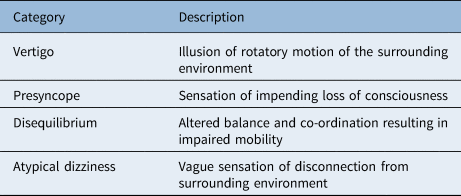
The ability to maintain balance requires a finely-tuned interplay of sensory and proprioceptive information. Dizziness is a non-specific symptom, self-reported by approximately 20 per cent of those of working age,Reference Dros, Maarsingh, van der Horst, Bindels, Ter Riet and van Weert1,Reference Yardley, Owen, Nazareth and Luxon2 with increased incidence seen in older adults.Reference Agrawa, Carey, Hoffman, Sklare and Schubert3–Reference Gopinath, McMahon, Rochtchina and Mitchell6 It can be classified as vertigo, presyncope, disequilibrium or atypical dizziness (Table 1).Reference Post and Dickerson7,Reference Drachman and Hart8 The prevalence of each varies with age: vertigo predominates in middle-aged patients, but multifactorial disequilibrium and presyncope are more common in older adults.Reference Yardley, Owen, Nazareth and Luxon2,Reference Tinetti, Williams and Gill9
Categories of dizziness*

*Adapted from Drachman and HartReference Drachman and Hart8 and Tinetti et al.Reference Tinetti, Williams and Gill9
The pathology underlying balance disorders is wide-ranging and includes peripheral vestibular disorders (like benign paroxysmal positional vertigo (BPPV)), central disorders (such as vestibular migraine, cerebrovascular disease, space occupying lesions), cardiovascular disease (such as orthostatic hypotension), vestibular migraine, and ocular and somatosensory disorders. The severity of balance symptoms varies from causing occasional inconvenience to severely impeding activities of daily living,Reference Neuhauser, Von Brevern, Radtke, Lezius, Feldmann and Ziese10–Reference Chawla and Olshaker12 causing severe distress and disruption to life. It is therefore paramount that patients presenting with imbalance receive an accurate and timely diagnosisReference Froehling13 to allow prompt treatment of underlying conditions.
Despite often being considered a ‘heartsink’ presentation,Reference Byrne14 most patients accessing primary care with dizziness are adequately managed by their general practitioner.Reference Jayarajan and Rajenderkumar15 Referral for specialist advice is required in 9–13 per cent of cases, with 69.6 per cent of patients being referred to ENT.Reference Jayarajan and Rajenderkumar15 Cardiology and neurology are the next most common referral destinations.Reference Jayarajan and Rajenderkumar15 Referrals are considered ‘multifactoral’ in nature in 35–85 per cent of cases,Reference Bath, Walsh, Ranalli, Tyndel, Bance and Ryan16 although presumed underlying otological disorders predominate.Reference Jayarajan and Rajenderkumar15–Reference Bird, Beynon, Prevost and Baguley19
The age-old adage of the medical history forming the basis of diagnosisReference Hampton, Harrison, Mitchell, Prichard and Seymour20 is exemplified in the investigation of the dizzy patient; many are appropriately managed based on clinical assessment alone.Reference Colledge, Barr-Hamilton, Lewis, Sellar and Wilson21–Reference Jahn and Dieterich23 However, multifactorial aetiology may render the diagnosis elusive. On average, dizzy patients are reviewed by 4.5 different specialists before finally receiving a diagnosis.24
Tailored investigations and specialist vestibular function testing can direct management.Reference Neuhauser, Von Brevern, Radtke, Lezius, Feldmann and Ziese10,Reference Colledge, Barr-Hamilton, Lewis, Sellar and Wilson21,Reference Craighero, Casselman, Safronova, De Foer, Delanote and Officiers25 Vestibular function testing assesses vestibular organ function as well as central sensory integration using a combination of screening tests.Reference Cohen and Kimball26 The Dix–Hallpike test carries an 80 per cent sensitivity in diagnosing BPPV,Reference Dros, Maarsingh, van der Horst, Bindels, Ter Riet and van Weert1 seeking to elicit symptoms through characteristic head rotation. Static positional testing places the patient in a series of recognised positions to identify spontaneous nystagmus triggered by both central and vestibular pathology.Reference Roberts, Bittel and Gans27 Caloric testing provokes the vestibulo-ocular reflex, permitting independent assessment of each lateral semicircular canal. The Clinical Test of Sensory Interaction on Balance helps quantify attempts to control posture in a variety of sensory environments.Reference Cohen, Blatchly, Gombash and Di Fabio28 The entire procedure requires at least 20 minutes and assesses patients standing on different surfaces with variable visual input.Reference Khattar and Hathiram29 The Nijmegen questionnaire screens for hyperventilation syndrome by identifying breathing dysfunction, a proxy for psychological causes of dizziness.Reference Humphriss, Baguley, Andersson and Wagstaff30 Video head impulse testing requires a supine patient to fixate on a visual target while the examiner rotates their head 30° to each side while watching for nystagmus through video capture.Reference Halmagyi, Chen, MacDougall, Weber, McGarvie and Curthoys31 Finally, videonystagmography uses video goggles and infrared techniques to track eye movements to differentiate central and peripheral causes of imbalance.Reference Falls32
As vestibular function testing continues to evolve and the prevalence of imbalance increases in line with an ageing population, it is important to identify the impact of vestibular function testing on the diagnosis and management of disequilibrium. This retrospective study sought to address whether referral for specialist balance testing directly influences diagnosis and how it impacts patient management.
Materials and methods
This retrospective study examined consecutive patients referred for vestibular function testing at the Queen Elizabeth Hospital, Birmingham, between 1 January 2018 and 30 June 2018. Electronic patient records were used to collect data regarding the source of referral, patient demographic data and the preliminary balance diagnosis documented in the letter to the general practitioner following specialist assessment in clinic and in the vestibular function testing referral letter. For the purpose of this study, the source of referral was divided into referrals from ‘otologists’ and ‘non-otologists’. Non-otologists included neurologists and general ENT consultants or registrars. ‘Pre-vestibular function testing balance diagnosis’ was defined as the proposed balance diagnosis during the initial assessment in clinic documented by the assessing clinician in the letter to the general practitioner and/or the referral letter for vestibular function testing.
Vestibular function testing in our hospital is carried out by an audiologist with subspecialist interest in balance, following protocols provided by the British Society of Audiology. The service is UK Accreditation Service accredited and peer-reviewed quarterly. In our balance service, the vestibular function testing protocol begins with an extensive clinical balance history, followed by the Nijmegen test, Clinical Test of Sensory Interaction on Balance, the Video Head Impulse Test, videonystagmography, direct observation, the Dix–Hallpike test and static positional testing. Caloric testing is performed if indicated. A Nijmegen test score greater than 23 is considered indicative of hyperventilation syndrome as per local protocol. Patients with a clinical diagnosis of superior canal dehiscence are evaluated using a different test protocol that includes vestibular evoked myogenic potential testing and were excluded for the purposes of this study.
Vestibular function testing results are reported as per standard local protocol and interpreted in conjunction with the detailed clinical balance history taken at the beginning of the consultation. Conclusions of findings as well as a suggested underlying diagnosis are reported where possible. This includes diagnoses that are reached based on a clear clinical history alone, in the absence of abnormal findings during vestibular function testing (as might be the case, for example, in conditions such as Ménière's disease or migraine). Additionally, a diagnosis of an underlying ‘psychological cause’, particularly persistent postural perceptual dizziness, is considered in light of a strong clinical history in conjunction with an abnormal Nijmegen score. A post-vestibular function testing balance diagnosis was defined as the diagnosis documented by the balance specialist within the report produced following both the clinical balance history and vestibular function testing.
The post-vestibular function testing balance diagnosis was then compared with the pre-vestibular function testing balance diagnosis. Finally, data were collected regarding clinical management following vestibular function testing according to six possible categories: further investigation, further ENT follow up, referral to another specialty, commencement of balance physiotherapy, commencement of ENT treatment or discharge. Additionally, magnetic resonance imaging (MRI) reports were reviewed for any patients referred for imaging following the initial assessment in the specialist clinic or who had undergone such investigation within the past five years.
Risk ratios, together with their confidence intervals, were calculated using MedCalc (Ostend, Belgium) statistical analysis software to enable statistical comparison between the accuracy of pre-vestibular function testing balance diagnoses between referrals from otologists versus non-otologists and whether a pre-vestibular function testing suspected diagnosis was provided versus not being provided.
Results
During our study period, 101 patients were referred for vestibular function testing. Mean age at referral was 55 years (median, 58 years; range, 18–97 years), with 41 patients (40.6 per cent) aged over 65 years. Seventy patients (69.3 per cent) were female. Vestibular function testing referrals originated from otologists (90.1 per cent, n = 91), other ENT specialists (7.9 per cent, n = 8) and neurologists (2.0 per cent, n = 2). In total, 69 patients (68.3 per cent) had a documented ‘pre-vestibular function testing balance diagnosis’ that was recorded by the assessing clinician at the time of the initial clinical visit in either a letter to the general practitioner or a vestibular function testing referral letter. More than one possible pre-vestibular function testing balance diagnosis was mentioned in 20.8 per cent (n = 21) of cases.
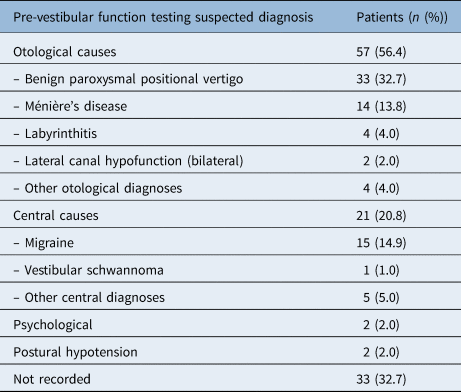
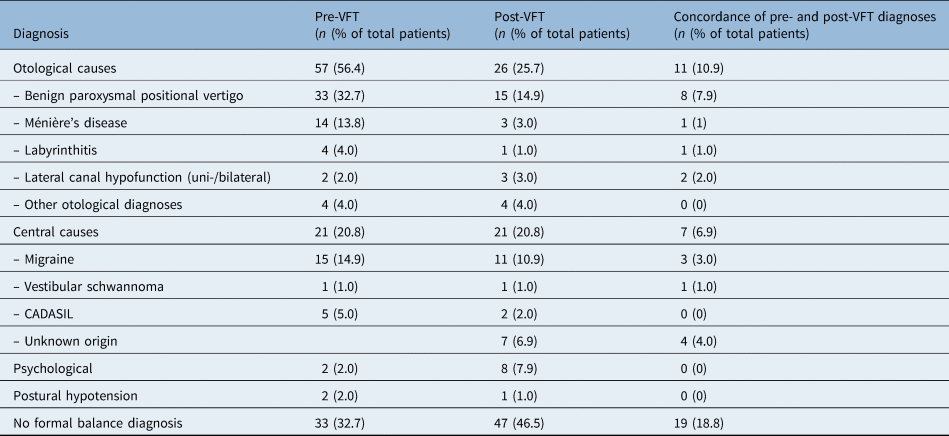
Documented pre-vestibular function testing balance diagnoses are outlined in Table 2. Prior to formal balance testing, BPPV, Ménière's disease and migraine were the most suspected diagnoses. Thirty-one (93.9 per cent) patients referred with suspected BPPV had documentation of Dix–Hallpike testing either within the referral letter or the original clinic letter. ‘Other otological diagnoses’ included lateral semi-circular canal fistula (n = 1), superior semi-circular canal dehiscence (n = 1), vestibular hypofunction following Ramsay Hunt syndrome (n = 1) and previous surgical labyrinthectomy (n = 1). Migraine was the presumed diagnosis in 75 per cent (n = 15) of patients referred with a suspected central cause of vestibular disturbance. ‘Other central diagnoses’ included multiple sclerosis (n = 1), hydrocephalus (n = 1), malformation of the foramen magnum (n = 1), neurosarcoidosis (n = 1) and cerebral autosomal dominant arteriopathy with subcortical infarcts and leukoencephalopathy (n = 1).
Pre-vestibular function testing suspected diagnoses*

*Some patients had more than one suspected diagnosis; therefore total number of diagnoses is greater than the total number of patients
Seven patients (6.9 per cent) required an MRI of the internal acoustic meatus following their initial specialist clinic appointment; none of these identified new pathology that would aid a balance diagnosis. Fifty-nine patients had already undergone MRI of the internal acoustic meatus within the previous 5 years, of which 86.4 per cent (n = 57) were normal. The remainder confirmed pre-existing central diseases, such as multiple sclerosis and vestibular schwannoma (n = 5, 7.6 per cent), or highlighted age-related atrophy and small vessel changes (n = 4, 6.1 per cent).
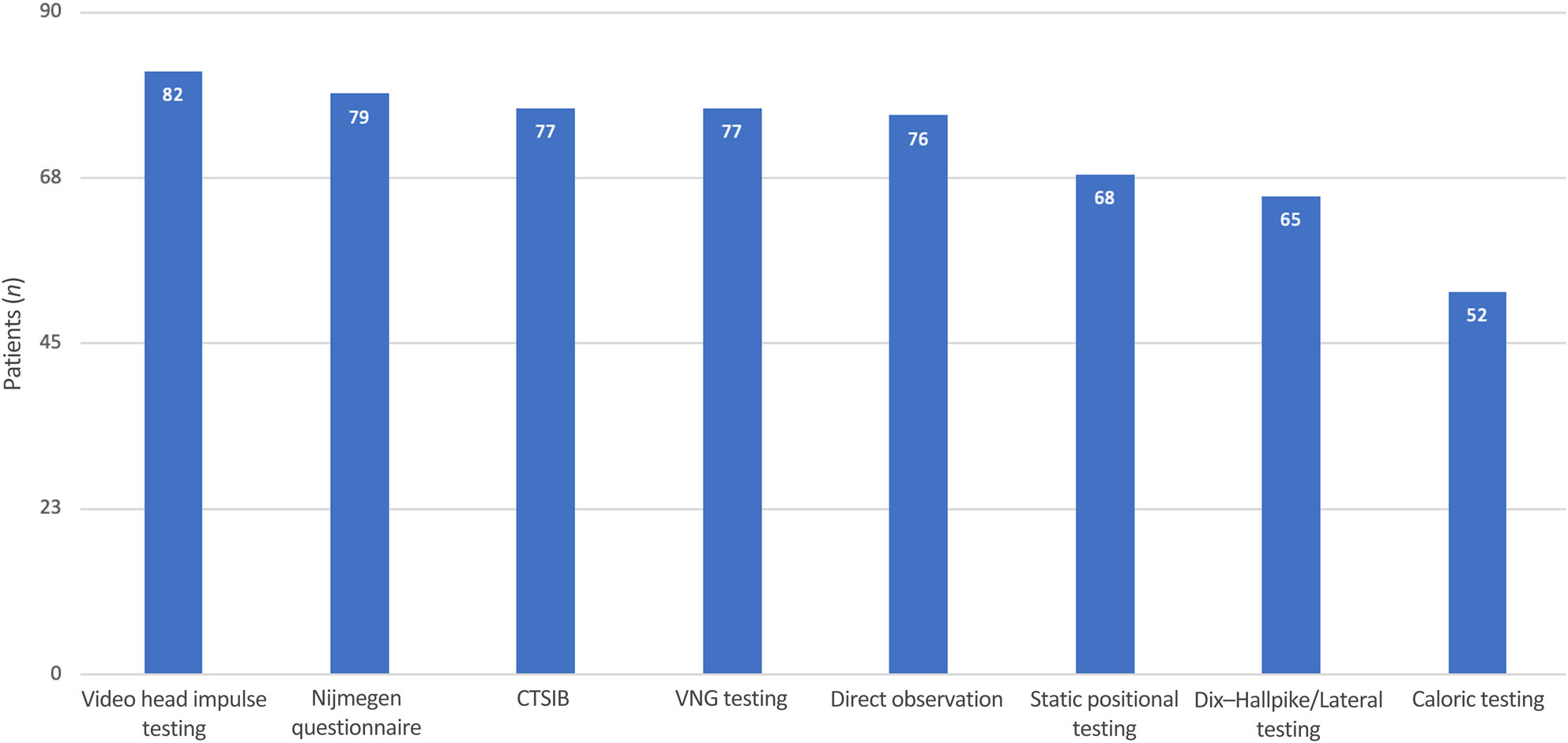
Figure 1 outlines the balance tests performed during vestibular function testing. Twenty-two patients (21.8 per cent) underwent all 8 balance tests. Video head impulse testing was performed most frequently (n = 82, 81.2 per cent), and caloric testing was performed least often (n = 52, 51.5 per cent). Nijmegen questionnaires were completed by 79 patients (78.2 per cent), with 27 (35.1 per cent) achieving a score greater than 23, indicative of hyperventilation syndrome.
Graph of balance tests performed. CTSIB = Clinical Test of Sensory Interaction on Balance; VNG = videonystagmography.

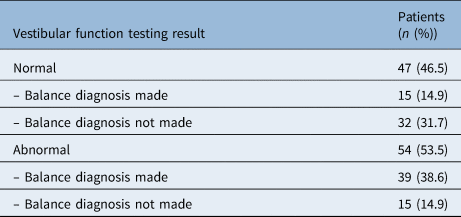
Vestibular function testing was abnormal for 54 patients (53.5 per cent) (Table 3). A post-vestibular function testing balance diagnosis was documented by the assessing balance scientist for 54 patients. Some patients were given diagnoses of ‘central’ or ‘psychological’ causes despite normal vestibular function testing, and in others no formal balance diagnosis was provided despite abnormal vestibular function testing because their symptoms were considered ‘multifactorial’.
Results of vestibular function testing

Following vestibular function testing, a balance diagnosis was achieved for 54 patients (53.5 per cent) (Table 4). The majority of diagnoses constituted otological causes (n = 26, 25.7 per cent). Benign paroxysmal positional vertigo was diagnosed in 15 patients (14.9 per cent), Ménière's disease was confirmed in 3 patients (3.0 per cent) and labyrinthitis in 1 patient (1.0 per cent). ‘Other otological diagnoses’ included lateral semicircular canal fistula (n = 1), right peripheral lesion (n = 1), bilateral vestibular failure (n = 1), and left vestibular weakness (n = 1). One fifth of post-vestibular function testing diagnoses identified underlying central causes (n = 21, 20.8 per cent), with a diagnosis of migraine being made most frequently (n = 11, 10.9 per cent). In seven patients who had a post-vestibular function testing diagnosis of ‘central cause’, no clear underlying aetiology was identified; these patients were subsequently referred to neurology or discharged. Overall, vestibular function testing identified a psychological cause underlying the imbalance presentation in eight patients. Seven of these patients had a Nijmegen score of more than 23 (one patient did not complete the questionnaire). However, a positive Nijmegen score was not a statistically significant predictor of a diagnosis of psychological aetiology (risk ratio, 4.89; 95 per cent confidence interval (CI), 0.64–37.63; p = 0.13).
Balance diagnoses made pre-vestibular function testing and post-vestibular function testing, and concordance between pre- and post-vestibular function testing diagnoses*

*Some patients had more than one suspected diagnosis; therefore, the total number of diagnoses is greater than the total number of patients. Percentages are calculated based on the number of patients, not the total number of diagnoses. VFT = vestibular function testing; CADASIL = cerebral autosomal dominant arteriopathy with subcortical infarcts and leukoencephalopathy
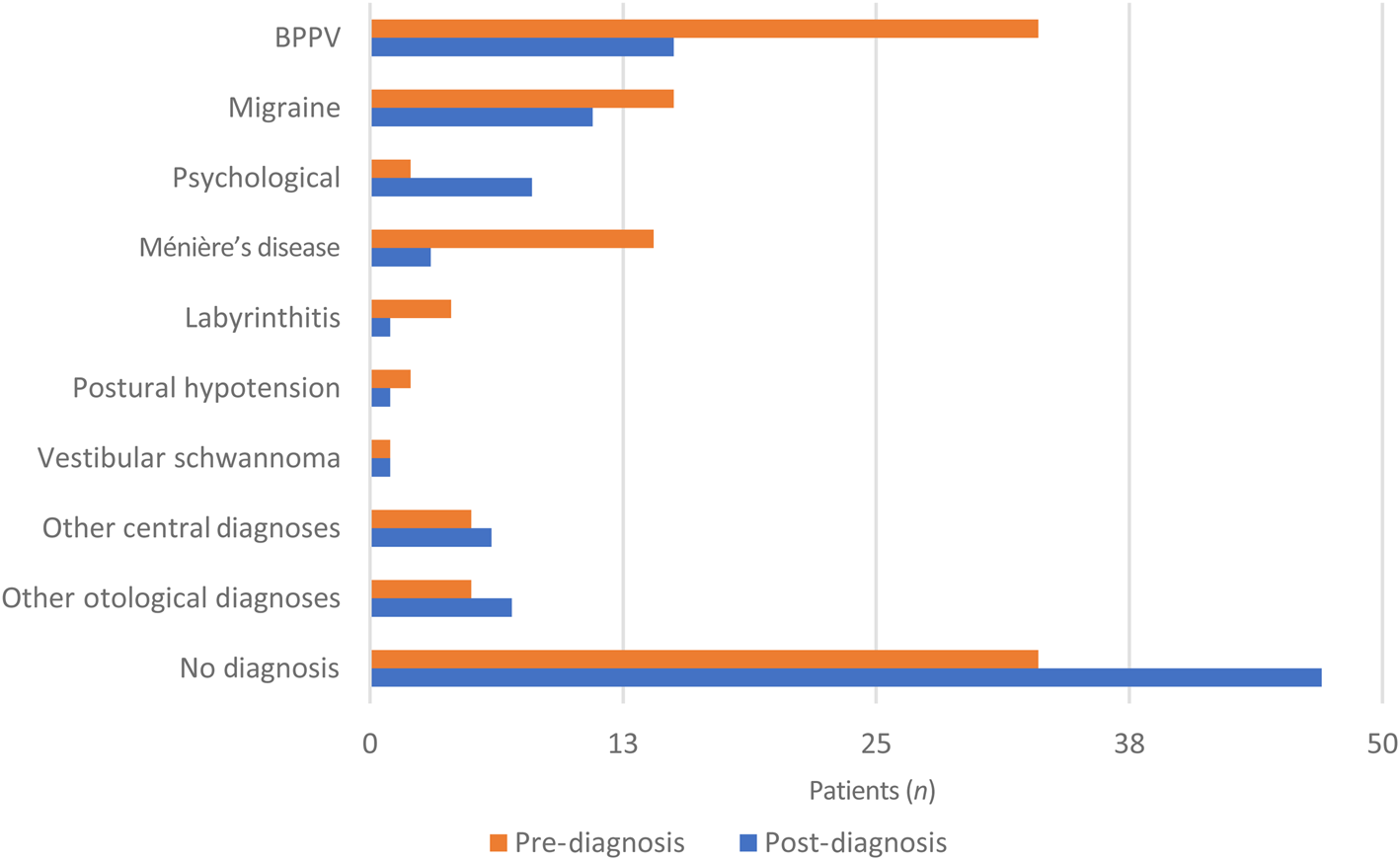
Pre-vestibular function testing balance diagnoses were confirmed for 32.4 per cent of patients (22 out of 69; Figure 2). Benign paroxysmal positional vertigo was the suspected pre-vestibular function testing balance diagnosis for 33 patients, but post-vestibular function testing, only 8 (24 per cent) of these patients were confirmed to have BPPV. Similarly, Ménière's disease was the suspected pre-vestibular function testing balance diagnosis in 14 (21.4 per cent) cases, but only 3 were diagnosed with Ménière's disease following vestibular function testing. Twenty-one patients had pre-vestibular function testing balance diagnoses of central causes, and this diagnosis was confirmed for 8 patients (38.1 per cent) following vestibular function testing. Migraine was the suspected pre-vestibular function testing balance diagnosis for 15 patients but was only confirmed following vestibular function testing for 3 (20 per cent) of these patients. Eight patients were diagnosed with vestibular migraine following vestibular function testing, but they were originally referred with suspected Ménière's disease (n = 2), BPPV (n = 3) or labyrinthitis (n = 3). Overall, pre-vestibular function testing diagnoses were confirmed for 11 (10.9 per cent) otological causes and 7 (6.9 per cent) central causes. Thus, the diagnosis changed following vestibular function testing for 64 patients (63.4 per cent) (Table 4).
Comparison of pre- and post-vestibular function testing diagnoses. BPPV = benign paroxysmal positional vertigo

There was no statistical difference between the accuracy of pre-vestibular function testing balance diagnoses (where proffered) between all referrals from otologists and non-otologists (risk ratio, 0.7268; 95 per cent CI, 0.29–1.85; p = 0.5027), even when comparing individual diagnoses of suspected BPPV, Ménière's disease and vestibular migraine. If no pre-vestibular function testing suspected diagnosis was provided, vestibular function testing was significantly more likely to be inconclusive compared with patients referred with a pre-vestibular function testing suspected diagnosis (71.9 per cent vs 47.8 per cent; risk ratio, 1.50; 95 per cent CI, 1.08–2.09; p = 0.015).
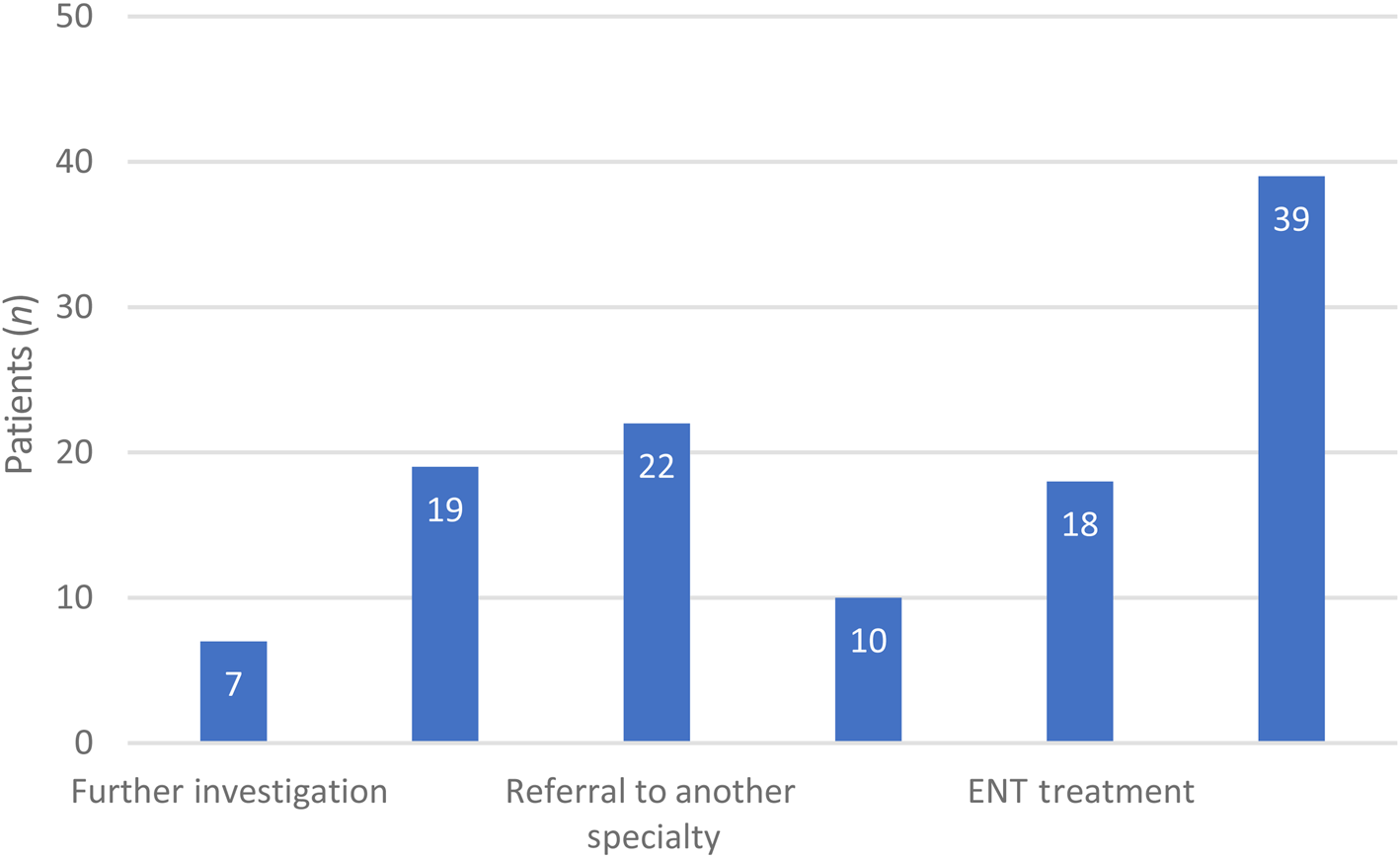
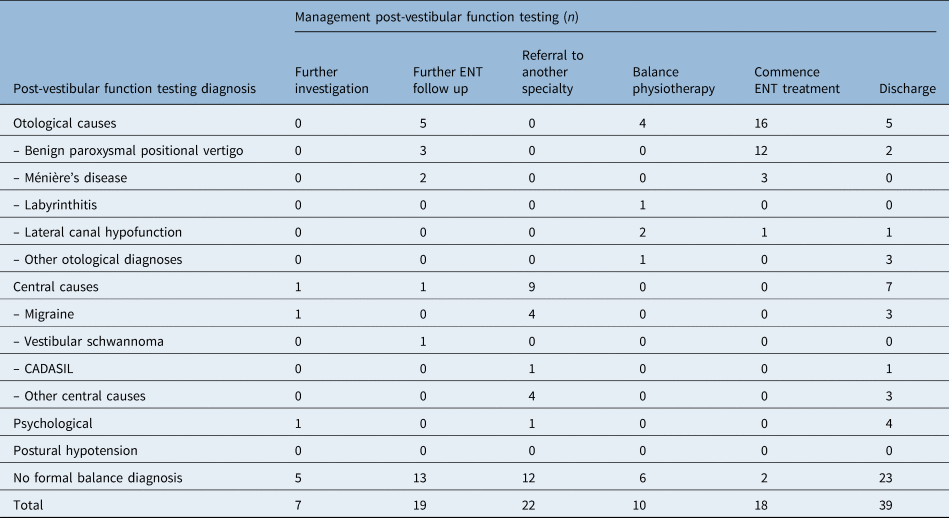
Following vestibular function testing, 39 patients (38.6 per cent) were discharged (Figure 3). Twenty-two were referred to another specialty (such as neurology, falls clinic, ophthalmology, neurophysiology). The majority (72.7 per cent, n = 8) of patients with migraine were referred to neurology or their general practitioner for commencing prophylaxis management. Treatment was commenced for 17.8 per cent of patients (n = 18), and included Epley manoeuvres (61.1 per cent, n = 11), betahistine (16.7 per cent, n = 3), intratympanic gentamicin injection (11.1 per cent, n = 2), Vannucchi–Asprella manoeuvre (5.6 per cent, n = 1) or referral for the barbeque roll manoeuvre (5.6 per cent, n = 1). Of note, 10 patients had more than one possible management outcome (such as further investigation in addition to referral to another specialty) (Table 5).
Further management post-vestibular function testing.

Management post-vestibular function testing according to diagnosis

CADASIL = cerebral autosomal dominant arteriopathy with subcortical infarcts and leukoencephalopathy
Discussion
The process of untangling the multifactorial pathology underlying complex imbalance is challenging. Posture is mediated by sensory input, central processing and motor output. Deterioration of any facet of this infrastructure can affect overall balance control. The pathophysiology of imbalance is often multifactorial and exacerbated by advancing age.Reference Furman, Raz and Whitney33 Thresholds for vestibular perception rise significantly after 40 years of age,Reference Rey, Clark and Merfeld34 requiring balance to be maintained by an increasing reliance on visual and proprioceptive sensory inputs. However, these also deteriorate with age; visual acuity, accommodation, depth perception and contrast sensitivity all decline over time.Reference Gittings and Fozard35 This is further compounded by an increased incidence of age-related ophthalmic pathology, such as glaucoma and cataract formation.Reference Kahn, Leibowitz, Ganley, Kini, Colton and Nickerson36 Proprioception also declines with ageingReference Thelen, Brockmiller, Ashton-Miller, Schultz and Alexander37 and is often complicated by age-related joint diseaseReference Park, Ko, Hong, Ok and Lee38 and peripheral neuropathy.Reference Van Deursen and Simoneau39
Additionally, balance may be further impeded as central processing declinesReference Van Iersel, Hoefsloot, Munneke, Bloem and Olde Rikkert40 and sarcopenia develops in older age.Reference Lexell, Taylor and Sjöström41,Reference Whipple, Wolfson and Amerman42 Ageing is often accompanied by a greater likelihood of more serious pathology, such as cerebrovascular disease, and other co-morbidities, such as diabetes, cardiovascular disease or Parkinson's disease, all of which can detrimentally affect balance.Reference Dros, Maarsingh, van der Horst, Bindels, Ter Riet and van Weert1,Reference Jayarajan and Rajenderkumar15,Reference Sloane, Dallara, Roach, Bailey, Mitchell and McNutt17 Interestingly, healthy individuals are better able to compensate for the deterioration of vestibular function seen with ageing. Vestibular function testing in a healthy, asymptomatic older adult population, for example, has demonstrated a significant prevalence of abnormal results, despite the lack of reported balance symptoms.Reference Davalos-Bichara and Agrawal43 Thus, the ability to mask underlying age-related vestibular deterioration may add a layer of complexity when attempting to reach a balance diagnosis in symptomatic patients.
Our retrospective analysis of 101 patients referred for vestibular function testing confirms a substantial volume of referrals during the 6-month period studied. High volumes of referrals for specialist vestibular testing and rehabilitation for patients presenting with imbalance have previously been reported, but it is dependent on the referral setting. Piker et al.Reference Piker, Schulz, Parham, Vambutas, Witsell and Tucci44 examined data from 30 different academic or community-based ENT clinics across North America. They identified a range of 3–72 per cent in the proportion of patients presenting with imbalance being referred for vestibular function testing. Interestingly, the likelihood of referral for vestibular function testing doubled in clinics based in academic units.
Although imbalance is confounded by and seen more frequently with advancing age, we demonstrated a mean age of 55 years, with a ratio of 2.3:1 female-to-male preponderance. This matches previous reports. Piker et al. studied 12 468 patients referred with dizziness and found a mean age of 56 years,Reference Piker, Schulz, Parham, Vambutas, Witsell and Tucci44 although no gender distribution was reported. A prospective cohort study by Arya and Nunez of 91 patients referred to a vertigo clinic reported a mean age of 52.6 years and a female-to-male ratio of 1.9:1.Reference Arya and Nunez45 Given the higher prevalence of balance pathology seen in older adults,Reference Agrawa, Carey, Hoffman, Sklare and Schubert3–Reference Gopinath, McMahon, Rochtchina and Mitchell6 a mean age of 52–56 years for patients referred for vestibular function testing might seem unexpected. It may, however, merely suggest greater diagnostic uncertainty in younger and middle-aged patients presenting with balance problems and thus requiring specialist investigation with vestibular function testing. Piker and JacobsonReference Piker and Jacobson46 reported a similar mean age of 46.4 years and gave valid consideration to older patients presenting with symptoms of ‘unsteadiness’ and ‘falling’. Such patients are more likely to be diagnosed with ‘multifactorial’ imbalance; however, BPPV is considerably more common in this age category and may not present with truly vertiginous symptoms.
In our study, only 7 per cent of balance patients were referred for MRI of the internal acoustic meatus, compared with 20 per cent reported elsewhere.Reference Arya and Nunez45 However, over half (58.4 per cent) of our cohort had undergone MRI of the internal acoustic meatus within the past 5 years, which may explain our low rate of referral for this investigation. A total of 86.4 per cent (n = 57) of our cohort undergoing MRI of the internal acoustic meatus within 5 years of referral for balance referral had normal imaging. This contrasts with Mankekar et al.Reference Mankekar, Jeha, Erbele, Klumpp, Sevy and Mehta47 who reported a 50.9 per cent positive predictive value for abnormal MRI in patients with central vestibular pathology. Such discrepancy may be attributable to our small cohort of patients with central causes (20.8 per cent, n = 21) or our small numbers of patients referred for further imaging following their initial specialist clinic appointment (6.9 per cent, n = 7).
Caloric testing was the least frequently performed vestibular function test (n = 52, 51.5 per cent). In our unit, caloric tests are performed last in the series of tests carried out during vestibular function testing. Caloric tests are omitted if a positive video head impulse test has already confirmed peripheral weakness or if they are contraindicated (such as after abnormal tympanometry). Caloric testing is often not well tolerated, and a diagnosis has frequently already been formed based on a combination of preceding tests within our vestibular function testing protocol.
To our knowledge, this is the first study examining balance diagnoses attained by specialists prior to referral for vestibular function testing and comparing these to post-vestibular function testing diagnostic outcomes. Overall, 68.3 per cent of patients had a documented pre-vestibular function testing balance diagnosis, with more than one possible pre-vestibular function testing balance diagnosis suggested in 20.8 per cent of cases. Otological causes were suggested in more than half of our patients (56.4 per cent), and central causes in one fifth (20.8 per cent). The prevalence of BPPV (32.7 per cent), Ménière's disease (13.8 per cent) and labyrinthitis (4 per cent) was overestimated in pre-vestibular function testing diagnoses, whereas psychological aetiology was underestimated (2 per cent). Most vestibular function testing referrals originated from otologists (52.5 per cent). This may explain why common otological conditions were suggested most frequently and were overestimated in pre-vestibular function testing referral, as opposed to neurological or psychological aetiologies. Interestingly, the cohort in the study by Arya and NunezReference Arya and Nunez45 of 91 balance diagnosis patients reviewed either by a consultant neuro-otologist (61 per cent) or junior ENT clinician (39 per cent) also demonstrated that otologists tended to over-diagnose peripheral vestibular disease relative to conditions they are less accustomed to (such as migraine).
In our study, the balance diagnosis achieved following vestibular function testing changed for 64 patients (63.4 per cent), with a formal balance diagnosis reached in 54 patients (53.5 per cent). Interestingly, fewer balance diagnoses were achieved for patients following vestibular function testing than had been suggested clinically before vestibular function testing. This appears contradictory. Clinical diagnosis of disequilibrium is complex, often confounded by its underlying multifactorial aetiology.Reference Yardley, Owen, Nazareth and Luxon2,Reference Tinetti, Williams and Gill9 In the authors’ trust, only patients with ambiguous diagnoses are referred for vestibular function testing. Thus, the initial diagnostic conclusion reached following first clinical consultation stands to be corrected for patients undergoing vestibular function testing. However, vestibular function testing may be complicated by visual and/or proprioception pathology and may not always provide a categorical diagnosis.Reference Gittings and Fozard35,Reference Van Deursen and Simoneau39 In such cases, abnormal findings would be documented but deemed inconclusive; therefore, patients are given a ‘multifactorial’ diagnosis. Furthermore, some pathology may be reliant on clinical diagnosis, such as Ménière's disease. Vestibular function testing may well normalise during quiescent disease phases.
Suspected pre-vestibular function testing diagnoses were confirmed in one third of cases (32.4 per cent). There was no statistical difference between the accuracy of suspected diagnoses from otologists compared with non-otologists (risk ratio, 0.7 × 268; 95 per cent CI, 0.29–1.85; p = 0.5027), although numbers of referrals from non-otologists were small. Interestingly, if no suspected diagnosis was provided before vestibular function testing, vestibular function testing was significantly more likely to be normal or inconclusive compared with patients referred with a suspected pre-vestibular function testing diagnosis (71.9 per cent vs 47.8 per cent; risk ratio, 1.50; 95 per cent CI, 1.08–2.09; p = 0.015). This might suggest that when clinicians are able to formulate a diagnosis before vestibular function testing, there is a higher likelihood of an underlying pathology compared with when they are unable to suggest an underlying diagnosis. This work needs further investigation to substantiate our findings and hypotheses.
Our analyses confirmed that, in cases where vestibular function testing was able to clarify the underlying diagnosis (n = 54, 53.5 per cent), peripheral vestibular pathology predominated (n = 26, 48.1 per cent), mirroring previous reports.Reference Bath, Walsh, Ranalli, Tyndel, Bance and Ryan16,Reference Arya and Nunez45,Reference Lee, Jones, Corcoran, Premachandra and Morrison48 We found vestibular function testing assisted in distinguishing between BPPV (14.9 per cent), Ménière's disease (3.0 per cent) and migraine (10.9 per cent), which are not always straightforward to determine clinically.Reference Liu and Xu49,Reference Lempert and Neuhauser50 Overall, our most common balance diagnoses were BPPV (14.9 per cent), migraine (10.9 per cent) and psychological causes (7.9 per cent). Compared with other studies, we identified relatively few cases of Ménière's disease through vestibular function testing (3 per cent): Arya and Nunez identified Ménière's disease in 21 per cent of 91 cases,Reference Arya and Nunez45 and Muelleman et al. confirmed Ménière's disease in 23 per cent of 2079 patients.Reference Muelleman, Shew, Subbarayan, Shum, Sykes and Staecker51 Our low incidence of patients diagnosed with Ménière's disease following vestibular function testing re-emphasises this condition as a clinical diagnosis of exclusion. The majority of Ménière's disease patients will have normal vestibular function testing if tested between attacks. Despite this, three patients were ‘diagnosed’ with Ménière's disease following vestibular function testing, suggesting too great an emphasis was placed on caloric outcomes as even canal paresis is not indicative of Ménière's disease. Piker et al.Reference Piker, Schulz, Parham, Vambutas, Witsell and Tucci44 reported Ménière's disease was identified by vestibular function testing in 12.3 per cent of patients, although they identified BPPV (14.5 per cent) as the most prevalent vestibular disorder in their series, matching our findings. The large cohort of patients in the study by Muelleman et al.Reference Muelleman, Shew, Subbarayan, Shum, Sykes and Staecker51 referred for balance assessment suggested similar prevalence of BPPV (19.1 per cent), although higher rates of vestibular migraine (19.3 per cent).
Some patients were diagnosed with ‘central’ or ‘psychological’ causes despite normal vestibular function testing, highlighting the holistic approach of our balance scientists. Prior to formal vestibular function testing, the patient's clinical history is revisited. Thus, the clinical diagnosis of vestibular migraine incorporates normal vestibular function testing along with a broader clinical assessment. Similarly, normal vestibular function testing may support other diagnoses of exclusion. A Nijmegen score of more than 23 was not a statistically significant predictor of psychological scores for dizziness in our series, although our balance team recognises dysfunctional breathing may co-exist with peripheral or central vestibular weakness. The 16 items of the Nijmegen questionnaire overlap with symptoms of panic disorder,Reference Humphriss, Baguley, Andersson and Wagstaff30 which may be related to dizziness. The emerging maladaptive functional syndrome of persistent postural-perceptual dizziness recognises the complex interaction between psychological and otological causes of dizziness.Reference Seemungal and Passamonti52 In conjunction with a strong history, clinical examination and reciprocal patient discussion, normal vestibular function testing may aid diagnosis of a suspected psychological origin for patients’ symptoms and allow signposting to appropriate resources. Although the original induction event for persistent postural-perceptual dizziness may not have been vestibular in origin, our balance service supports all persistent postural-perceptual dizziness sufferers, not just those with vestibular triggers.
• This retrospective analysis of patients referred for vestibular function testing confirmed a substantial volume of referrals
• Benign paroxysmal positional vertigo (BPPV), Ménière's disease and labyrinthitis were over-estimated in pre-vestibular function testing diagnoses
• Psychological aetiology was under-appreciated
• Suspected pre-vestibular function testing diagnoses were confirmed in one third of cases
• The most common balance diagnoses were BPPV, migraine and psychological causes
• A formal balance diagnosis is not achievable in all patients, even with the aid of vestibular function testing
Vestibular rehabilitation is safe and effectiveReference Mcdonnell and Hillier53 and arguably forms the keystone of management for peripheral vestibular pathology.Reference Wrisley and Pavlou54 Benign paroxysmal positional vertigo is common and can be successfully treated with simple repositioning manoeuvres.Reference Gold, Morris, Kheradmand and Schubert55,Reference Prokopakis, Vlastos, Tsagournisakis, Christodoulou, Kawauchi and Velegrakis56 In our trust, cases of BPPV are treated in clinic and not routinely referred for vestibular function testing. However, occasionally, BPPV may occur alongside or be difficult to distinguish from other peripheral vestibular diseases like Ménière's disease.Reference Gross, Ress, Viirre, Nelson and Harris57,Reference Riga, Bibas, Xenellis and Korres58 In such instances, vestibular function testing might aid diagnosis and management. Our results support this: a suspected diagnosis of BPPV was made in 34 patients before vestibular function testing. Vestibular function testing confirmed this diagnosis in 24 per cent thereof and highlighted a further 7 cases of BPPV that had been referred for vestibular function testing with other suggested diagnoses.
Similar to Ménière's disease, vestibular migraine is a clinical definition that may prove difficult to diagnose.Reference Hilton and Shermetaro59 In our series, 15 patients had a pre-vestibular function testing diagnosis of vestibular migraine, which was ‘confirmed’ following negative vestibular function testing in 3 cases. Our balance specialists identified migraine as the underlying cause of imbalance in a further 11 patients following careful repetition of the clinical history on a background of negative vestibular function testing. Neuro-otological balance pathology is often redeemable once correctly identified,Reference Lopez-Escamez, Gamiz, Fernandez-Perez and Gomez-Fiñana60–Reference Strupp, Thurtell, Shaikh, Brandt, Zee and Leigh63 which is particularly relevant for vestibular migraine in younger patients.Reference Lempert, Neuhauser and Daroff64 Most patients (72.7 per cent, n = 8) diagnosed with migraine following vestibular function testing required specialist referral for consideration of vestibular suppressants and migraine prophylaxis. Thus, vestibular function testing becomes particularly important in cases of imbalance that are not easily diagnosed clinically.
Meanwhile, it is important to remember that those referred for vestibular function testing only represent a small proportion of patients assessed and treated for dizziness. The vast majority are managed without referral for vestibular function testing; 69 per cent of dizzy patients are diagnosed and managed by their general practitioner,Reference Jayarajan and Rajenderkumar15 and only a small subset are referred to secondary care.Reference Lempert, Neuhauser and Daroff64 For a minority of cases, vestibular function testing can help clarify ambiguous presentations that are difficult to articulate or diagnose. Provocation tests during vestibular function testing can helpfully recreate patient symptoms. Establishing an early diagnosis affords suitable management, which may help prevent associated falls and related conditions.24 Additionally, patients with a better understanding of their diagnosis are more empowered to implement recommended management plans.24
Although this single-centre study has a limited sample size, thus potentially reducing substantial inferences on management outcomes, it provides a useful insight into the journey for balance patients referred for vestibular function testing.
Conclusion
Bipedal gait is intrinsically unstable and requires entire organ systems to maintain its function. When any of these fails, imbalance ensues. Diagnosing the underlying aetiology of complex imbalance is challenging but can be assisted with judicious use of vestibular function testing. Our study highlights that a formal balance diagnosis is not achievable in all patients, even when vestibular function testing has been performed.
Additionally, we found specialist neuro-otologists over-diagnose otological aetiologies and underestimate psychological aetiologies in complex cases of dizziness. In these cases, vestibular function testing was able to assist diagnosis and inform subsequent management. More research is needed to look at the correlation of pre- and post-vestibular function testing balance diagnoses, as well as management outcomes of complex balance cases, to enable appropriate use of vestibular function testing and timely initiation of appropriate treatment. The current coronavirus disease 2019 pandemic has undoubtedly provided a challenge for vestibular function testing, necessitating new strategies to support this important vestibular service.
Competing interests
None declared